Iran Calls on Egypt Army to Play Its Role, Respect People’s Vote
Al-Manar | July 2, 2013
Iran urged the Egyptian armed forces on Tuesday to play their role in supporting national dialogue and respecting the people’s vote.
Deputy Foreign Minister for Arab and African Affairs Hossein Amir-Abdullahian said on Tuesday that Tehran saw the involvement of Egyptian people in the domestic affairs of the country as a national asset, and that paying attention to the popular vote contributed to stability in Egypt.
The Iranian official also commented on the fact that President Mohammad Mursi was chosen through national election, warning the Egyptian people against foreign plots.
“Mohammad Morsi is the incumbent president based on the people’s vote,” Abdollahian told the official IRNA news agency.
He warned against division within Egypt. “Dividing the Egyptian nation yields no gain,” Abdollahian said, adding that respecting people’s vote was of utmost importance for Egypt’s stability.
The Egyptian army on Monday issued an ultimatum to Mursi, the country’s first democratically elected president, threatening to intervene in 48 hours and impose its own “road map” if the Islamist did not meet the demands of the people.
The army’s warning came just a day after millions of protesters took to the streets across Egypt, calling for Mursi to step down.
The Egyptian presidency rejected the ultimatum, insisting that Mursi would continue on his own path towards national reconciliation.
Egypt denies purchasing military equipment from Israel
MEMO | June 12, 2013
The spokesman of the Egyptian Army, Staff Colonel Ahmed Mohamed Ali, on Wednesday denied that his country had bought military wares from Israel.
An Israeli newspaper reported early this week that Israel had sold military wares to Pakistan and another four Arab countries, including Egypt. Harretz report was based on data issued by the British Government’s Department for Business Innovation and Skills (BIS), which oversees security exports.
The report said that these countries had purchased amounts of developed military equipment between 2008 and 2012.
According to the BIS report, this equipment included unmanned aircraft vehicles, radar systems, electronic warfare systems, head-up display (HUD) cockpit parts for fighter jets and aircraft engines, optical target acquisition systems, components of training aircraft and military electronic systems.
Ali wrote on his Facebook page that the militarisation of Egypt’s Armed Forces follows strict guidelines which guarantee what is called “product security.” These are obligatory rules that all military branches are committed to.
Similarly, Pakistan also denied that it bought military equipment from Israel based on information published by Haaretz in the same report.
The Islamabad spokesman for the Directorate of Inter-Services Public Relations denied the report. “The report is misleading and not based on facts,” The Hindu reported him as saying.
The Egyptian military official affirmed that his country is following credible measures regarding weapon purchases. However he said that the policy had “high costs in light of the new global system.”
He also called for the need to ensure that information reported about the Egyptian Armed Forces was reliable and accused the mass media of attempting to shake the credibility of the Egyptian Armed Forces with their people.
Why Arabs Need Iran: Part I
By Sharmine Narwani | Al-Akhbar | 2013-06-03
In 2011, when Arab revolts began to sweep the Middle East and North Africa, the view from Washington and its closest allies was one of concern. How would the removal of mostly pro-Western dictatorships affect the balance of power in the region? More importantly – how to prevent these events from boosting Iran’s influence?
Two years on, the regional competition for influence is in full throttle. In its sights – among many other developments – are recent efforts by Iran and Egypt to upgrade their relationship.
The spoilers will have none of it. Said Steven A. Cook last week on the website of that most prestigious of US institutions, the Council on Foreign Relations (CFR): “Other than some quick cash and subsidized energy, there is nothing that Tehran can offer Cairo that will, in the long run, be to Egypt’s benefit.”
He has it entirely wrong. “Quick cash and subsidized energy” can only be used to describe the superficial offerings of countries like Saudi Arabia and Qatar, both vying for influence in this new Egypt.
There is no contest whatsoever between that kind of assistance and what Iran can bring to the table. Iran has achieved its economic independence the hardest way imaginable – through a devastating eight-year war with Iraq and decades of potentially-debilitating sanctions. It has shrugged off the yoke of imperialism, built infrastructure, social services and industry from scratch, harnessed its own resources toward establishing domestic self-sufficiencies, created a dynamic – if imperfect – indigenous political system of representative government, and managed to maintain the security of its oft-threatened borders through military innovation and soft power.
In short, with similar-sized populations (Iran’s 78 million to Egypt’s 82 million) and the experience of tackling monumental state-building challenges with varying degrees of success, there is simply no country better situated to provide developmental guidance to Egypt – and other economically vulnerable Arab states – than the Islamic Republic of Iran.
Seeing is Believing
Other than a frustratingly brief trip some years ago to attend a Tehran conference where I had little opportunity to get around, I had not visited Iran in eight years. In the latter part of 2012, I made three trips to the country – in large part to discover how Iran continues to thrive despite the “biting sanctions” we keep hearing about.
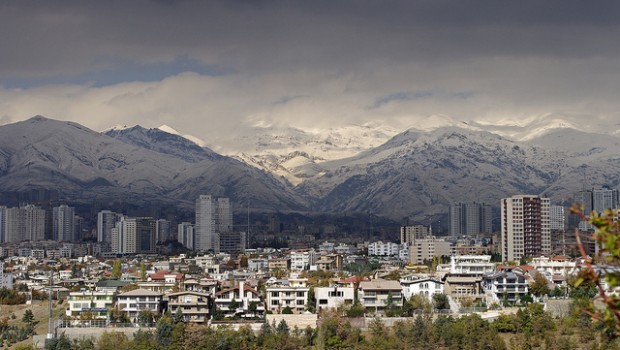
And thrive it does. Visitors land at the brand new Imam Khomeini international airport as a first step in experiencing an utterly revamped Tehran. You drive into the city on new highways, lit up almost excessively by closely aligned lampposts and the Iranian penchant for colorful lighting at major intersections. Streets are lined with trees, shrubs and flowers planted and nurtured by a succession of rather remarkable mayors that Tehran residents like to boast about.
Those are the city planners who develop well-manicured parks and children’s playgrounds to break up the urban monotony, build women’s sports facilities to encourage good health, spearhead campaigns on AIDS awareness, and pass out free condoms and hypodermic needles to prevent infection among drug users.
Tehran feels new and fresh – like it has had a facelift. New buildings abound, each more luxurious than the last, although sales have slowed dramatically in recent years, much like in other capitals hit by economic slowdown and ridiculously expensive housing. I cannot believe the greenery – this is a dry climate and I cannot seem to recall the city ever overflowing with late summer foliage like this.
New restaurants, cafés, and boutiques dot the boulevards; the bazaars are well-stocked and cleaner than I recall. Nothing seems to be in shortage – and Iranians are producing more of the food products on their supermarket shelves than ever before. In 2011, Iran ranked 11th globally in agricultural output, just behind Japan, Russia, Turkey, and Australia – and is ranked first and second worldwide in the production of a variety of fruits, vegetables, spices, and nuts ranging from apricots, cucumbers and walnuts to pistachios, saffron, and watermelon.
This is a country hell-bent on achieving self-sufficiency, after all. Under threat of increasingly punitive US-sponsored economic sanctions, Iran’s Supreme Leader Ayatollah Ali Khamenei last year promised the development of a “Resistance Economy” that will aim to stop all dependence on oil revenues and switch to knowledge-based industries and vital commodities instead.
After eight years away from the country, none of Tehran’s significant advances impressed me as much as the pollution-solution. Surrounded by the Alborz mountain range that traps pollutants, the capital has struggled for decades to lessen air pollution, much of which stemmed from aging vehicles that service a city of more than 12 million residents.
During past trips to Tehran, the stench of petrol from cars was omnipresent in congested areas – you’d have to clean blackened particles from your nose every day. In 2012, I experienced none of these things. The city still has high alerts on dangerous pollution days, but has come a long way from the days when the municipality enforced alternative driving days for cars with even and odd license plate numbers.
For starters, during my eight-year absence, Tehran has launched around 80 subway stations servicing more than 2.5 million passengers daily, and inaugurated a 60-station rapid transit bus system with just under two million daily users.
More impressive yet is the Islamic Republic’s nationwide effort to convert public transportation and privately owned vehicles from petrol engines to ones that run on Compressed Natural Gas (CNG).
Pay attention now. Iran’s experiment to switch to alternative fuel-based vehicles is the kind of super-efficient central government initiative that the country now frequently launches – with varying degrees of success. It is one of many zero-to-a-hundred projects initiated in recent years that seeks to diversify the economy, create jobs, generate revenues or solve a problem. To Iran’s credit, at least they think big and make the effort – few other governments engage in these kinds of expansive nation-building activities anymore.
Partly to help stem air pollution, and mostly to reduce the country’s dependence on imported gasoline – and therefore mitigate the effect of US-backed sanctions against companies that sold refined petroleum to Iran – the Islamic Republic embarked on an ambitious program to adopt Natural Gas Vehicles (NGV) based on alternative fuels.
In just a few years, Iran has established a fleet of around 3 million NGV, the largest in the world (by contrast, the US has just over 200,000) and now has the capacity to domestically manufacture 1.5 million CNG cylinders per year at extremely competitive costs.
Big Thinkers Build Nations
In writing this series of articles based on my Iran trips, I am constantly reminded of an MSNBC promotional ad featuring Rachel Maddow, where she stands in front of the Hoover Dam in a blue hardhat and gets sentimental about big-projects-that-build-nations:
“When you are this close to Hoover Dam, it makes you realize how small a human is in relation to this as a human project. You can’t be the guy who builds this, you can’t be the town who builds this, you can’t even be the state who builds this, you’ve got to be the country that builds something like this. This is a national project – this is a project of national significance. We’ve got those projects on the menu right now and we’ve got to figure out whether or not we are still a country that can think this big.”
The current mayor of Tehran Mohammad Bagher Ghalibaf – a former commander in the Revolutionary Guard and national police chief who is widely admired for his big thinking and ability to get the job done – happens to be one of eight candidates running for president in the June elections.
Tehran residents are attached to their mayors, and in a city of between 12 to 14 million, are able to propel them to the presidency (current Iranian President Mahmoud Ahmadinejad was the previous mayor). And after eight years in this role, you would be hard pressed to find a Tehrani who doesn’t praise Ghalibaf for his role in developing their capital. If he emerges as a national frontrunner, Tehran will push him over the line.
Among the other eight 2013 presidential contenders is Dr. Gholam-Ali Haddad-Adel, a former speaker of parliament (majlis) who holds one of Tehran’s 30 majlis seats and a close adviser to Iran’s Supreme Leader Ayatollah Ali Khamenei, to whom he is related through marriage.
I met with Haddad-Adel during one of my trips to Iran last year – not to discuss regional or domestic politics – but to learn about four “academies” set up by the Iranian government two decades ago. These academies are meant to drive “big thinking,” establish best practices, and initiate macro planning for national projects in the areas of Sciences, Medical Sciences, Arts, and the Farsi language.
The Farsi language as a big national project? As it happens, that’s the academy headed up by Haddad-Adel, who holds a PhD in philosophy and has translated Immanuel Kant’s books into the Persian language.
What could be so urgent and critical about the national language that would move a country under prohibitive international sanctions to direct resources toward it?
“Farsi is as old as Iranian civilization – they are inseparable,” explains Haddad-Adel. “We Iranians are proud of our national language and literature. We regard our Persian literature as one of the most important elements of our national identity. And we have to support this language against the dangers that threaten it – new words, idioms and terms entering the language through science, technology and culture – mostly through the English language.”
Under Haddad-Adel’s tenure, one of the 15 departments dedicated to the task of preserving the Persian language has created a nine-volume dictionary converting over 40,000 foreign words into Persian equivalents. A quick glimpse through the final volume shows that a lot of the terminology being replaced are technological, medical and scientific words (laparascopy, intra-muscular injection, binary pulsar, supramolecular). But also covered are subjects like political sciences (interdependence, deconstructionism, national security), music (chord, grand-barre, capo d’astro) and sport (play-offs, kayak, surfboard).
Seventy different university groups and more than 150 people are involved in this task. The academy has developed complicated software for finding Persian equivalents for English terms.
“Language is not something that can be improved by command though,” says Haddad-Adel. “The velocity of development is so rapid, it is not possible for the public to follow it. We try to disseminate it through cultural ways.”
Another project of the academy: a Persian-to-Persian dictionary covering at least 1,000 years of the language – and tracking words like “khasteh” which means “tired” in modern Farsi and “injured” in old Persian through its exportation to the Ottoman Empire and current usage in modern Turkey as “hastehan” which means “hospital.”
Yet another department is developing a six-volume encyclopedia containing the “whole history of Persian language and literature in the Indian subcontinent.” Explains Haddad-Adel: “Persian was welcomed by Indians. It was a language of culture and has been for more than 800 years the official language of the old Indian courts and intellectuals. British colonialism ended this.”
There is more to this than the preservation of language – cultural revivalism, national security, identity politics, nationalism are woven into the fabric of the academy’s work. The Iran of Haddad-Adel isn’t a nation in decline – it appears to be getting geared up to lead a renaissance.
Mississippi Calls on Iran for Help
I next visited the director of the Medical Sciences academy Dr. Alireza Marandi, a pediatrician by training, two-time minister of health, university professor and a current member of the Majlis from Tehran.
In 2009, I had read an article in the UK-based Sunday Times (reproduced on this blog) that told the remarkable story of Iran’s provincial health houses. The post-revolution initiative to rapidly deliver basic medical care to under-served rural areas was able, in a short time, to reduce child mortality rates by 69 percent and maternal mortality in rural areas from 300 per 100,000 births to 30.
So astounding were these results that the US state of Mississippi – which, according to the Sunday Times article, has “some of the worst health statistics in the country, including infant mortality rates for non-whites at Third World levels” – turned to Iran for advice, assistance and training on how to achieve these results back home.
Dr. Marandi was Iran’s minister of health around the time the first health houses (khaneh behdasht) were established in post-revolutionary Iran. He recalls the difficulties in getting funding back in the early 1980s:
“During the Iran-Iraq war we had very little oil to export – we were limited to about one million barrels per day. The price of oil had come down to about $7-8 per barrel. The country was under bombardment. Yet during this time, the country still focused on developing a primary healthcare system.”
That wasn’t even the hard part. When majlis-approved funding finally came in to run one pilot program in each of Iran’s provinces, the planners had a difficult time finding local men and women with the required five years of elementary education to staff the health houses – especially the girls. Today, with literacy rates among Iran’s youth (ages 15-24) at 98 percent according to the World Bank, all health house workers have at least a high school education.
The women are trained for basic healthcare procedures – monthly check-ups for mothers, vaccines for children, schedules and checklists, breastfeeding guidance, preventive care. The men are largely responsible for environmental health issues like water and sanitation – they check village water supplies, add chlorine where necessary, teach locals personal hygiene, how to disinfect things, install basic toilets, and lay water pipes.
Today, says Marandi, Iran has some 20,000 health houses in 65-70,000 villages around the country and has established a primary healthcare “network” connecting health houses to larger health centers in larger towns, which in turn plug into hospitals and specialized medical facilities in urban areas. Although challenges still exist in this system, Iran has solved a vital social service and healthcare challenge that continues to plague most developing nations.
Despite a lack of funds, Marandi’s ministry of health tackled many more major health problems in those early days. In 1983, the highest rate of immunization in Iran was 25 percent. A few years later, that rate skyrocketed to 95 percent throughout the country. Iranians desperately needed more physicians (only 12,000) and a more diversified medical worker base, so the ministry of health under Marandi pushed through a bill that took all health-related schools (midwifery, dentistry, nursing, etc) away from the ministry of education. By streamlining and adding to existing resources, in that first year 1,200 students were increased to 6,000, students were directed into undermanned specialties where jobs awaited, and new schools of medicine were built – at least one for each province.
Today, there are 120,000 physicians in Iran. The country is self-sufficient in the production of medical experts and support staff, and has diversified into specialties like fertility treatments, heart, cornea, and kidney transplants that Iranians were forced to seek outside the country a few decades ago. Iranian expertise and relatively low-costs now even draw medical tourism from near (Iraq) and far (Canada).
“We now have every sub-specialty you can think of,” says Marandi, who received an award for his accomplishments from the World Health Organization (WHO) in 2000.
While Iran has the benefit of considerable oil resources to cushion its economy, throughout the 1980s the country was broke. Economically, Iran was in not much better a position than Egypt or Jordan are today, both countries just months away from bankruptcy. There is a missionary zeal that permeates the higher echelons of government and their immediate ranks below. Many decision makers I interviewed are driven by both religious faith and geopolitics – determined to satisfy public needs and focused on discovering efficiencies that will thwart the negative effects of sanctions. Despite frequent accusations of corruption and mismanagement, clearly a lot is getting done in the country – and with a real spirit of innovation.
In the next installments, I will write about my interviews with leaders in technological and scientific fields including Iran’s controversial nuclear energy program, huge achievements in nanotechnology, political insights on what top Iranian politicians think about a Muslim Brotherhood-led Egypt, and US-sponsored sanctions…and the unexpected fact that Iran has cloned sheep.
Sharmine Narwani is a commentary writer and political analyst covering the Middle East. You can follow Sharmine on twitter @snarwani.
Egypt not to sell more state-owned companies: Morsi
Xinhua | April 30, 2013
CAIRO — Egypt would not sell any more state- owned companies, President Mohamed Morsi said Tuesday.
In his speech to steel industry workers in Helwan district in Cairo on the eve of Labor Day, Morsi said there will be no more selling of the public sector again, stressing that the private sector could not be an alternative for the public sector.
“Egypt encourages the private sector, but this does not mean disregarding the public sector,” he said.
“We will continue the way of late President Gamal Abdel-Nasser who wanted to establish a huge industrial castle in Egypt,” Morsi said, noting that manufacturing and exporting are real indicators for the development of a country.
Related article
Israel’s Iron Dome Fails to Intercept Eilat Rockets
Al-Manar | April 17, 2013
The Zionist entity’s vaunted Iron Dome anti-missile system failed to intercept at least two rockets fired from Egypt’s Sinai Peninsula. The two rockets hit the occupied Red Sea resort town of Eilat early on Wednesday with no casualties reported.
Israeli military sources said the vaunted Iron Dome anti-missile system, which was recently deployed around Eilat, did not engage to intercept the rockets.
“We’ve found two explosion sites in the city, we’ve also closed off the airport as a precaution,” police spokesman Micky Rosenfeld told AFP, saying one landed in “an open area close to one of the neighborhoods.”
He said the sirens had sounded but that there were no initial reports of casualties. “Bomb disposal experts are searching the area,” Rosenfeld said.
The military spokesman said both rockets had struck open areas.
“There were two rockets fired from Sinai, both landed in open spaces,” he said. Later on, Israeli website, Haaretz, reported that the airport in Eilat reopened.
Egypt denied that rockets were fired from its territories, and senior military official said troops were “investigating” the incident.
Hours later, a Salafi group called the Mujahedeen Shura Council posted a statement online saying its militants had “managed to target occupied Eilat with two Grad rockets” without saying where they were fired from.
Related article
- 5th Iron Dome Battery Deployed in Eilat as ‘Precaution’ (algemeiner.com)
Obama’s Second Term: Selling Death and Buying Assassins In the Middle East, North Africa and South Asia
By James Petras :: 03.22.2013
Introduction
As President Obama enters his second term with a new Cabinet, the foreign policy legacy of the past four years weighs heavily on their strategic decisions and their empire-building efforts. Central to the analysis of the next period is an evaluation of the past policies especially in regions where Washington expended its greatest financial and military resources, namely the Middle East, South Asia and North Africa.
We will proceed by examining the accomplishments and failures of the Obama-Clinton regime. We will then turn to the ongoing policy efforts to sustain the empire-building project. We will take account of the constraints and opportunities, which define the parameters resulting from imperial military ambitions, Israeli-Zionist influence in shaping policy and the ongoing anti-imperialist struggles. We will conclude by examining likely polices and outcomes resulting from current strategies.
The Clinton-Obama Imperial Legacy: The Accomplishments
The greatest success of the Obama-Clinton (OC) imperial legacy was the virtual elimination of organized domestic anti-war dissent, the demise of the peace movement and the co-optation of virtually the entire ‘progressive’ leadership in the US – while multiplying the number of proxy wars, overt and covert military operations and ‘defense’ spending. As a result, the entire political spectrum moved further to the right toward greater militarization abroad and increased police-state measures at home.
Facing mass revolts and the overthrow of long-standing client regimes in Egypt, Tunisia and Yemen, the Obama-Clinton (OC) Administration moved rapidly to reconfigure new client regimes while preserving the state apparatus – the military, intelligence, police, judicial and civilian bureaucracy. The empire dumped incumbent regimes in order to save the repressive state, the key guarantor of US strategic interests. Washington reminded its client rulers that ‘There are no permanent alliances, there are only permanent imperial interests’. Washington successfully engineered a political pact between conservative Islamist leaders and parties and the old military elite. The new political blocs in Egypt upheld Israeli annexation of Palestine, the brutal blockade of Gaza and the neo-liberal economic order. Washington repeated the ‘reshuffle of clients’ in Yemen and Tunisia. The OC intervention temporarily aborted the pro-democracy, anti-Zionist and anti-corruption popular revolt. The OC policies secured a temporary respite, but the subsequent effort by Egypt to secure an IMF loan has led to a stalemate amid deteriorating economic conditions and rising political protest. The successful imposition of new client regimes amenable to US hegemony in Egypt, Tunisia and Yemen, in the face of popular revolts, marked the beginning of a series of favorable political-military outcomes in the region for the OC regime.
Facing Israeli annexation of ever-widening swaths of Palestinian land and the end of any pretense of ‘peace negotiations’, Washington continued to provide Israel with massive military assistance, modern weapons systems and unconditional political support in the UN. By submitting to Israel the OC regime succeeded in retaining the political support of the domestic Zionist power configuration (ZPC). The OC regime’s economic handouts supported the puppet Palestinian Liberation Organization (PLO) as it policed the West Bank for Israel. Despite losing the vote to seat the Palestinians as a non-voting member in the UN, Washington succeeded in blocking full membership. The OC regime succeeded in fulfilling its role as Israel’s handmaiden, despite opposition from the vast majority of UN members.
The OC regime succeeded in tightening sanctions on Iran, by securing Russian, Chinese and Arab League support, without provoking a potentially destructive war. The US sanction policy toward Iran is largely designed and implemented by key Zionist appointees in the Treasury (formerly Stuart Levy, now David Cohen) and in Congress, by legislators bought and directed by the powerful America-Israel Political Affairs Committee (AIPAC).
The US, under Obama-Clinton, destroyed the independent nationalist Gadhafi government via a joint air war with the EU and tried to set up a client regime. In turn, Libya became a key recruiting ground for violent Islamist mercenaries invading Syria and weapons depot supplying Islamist terrorists. The OC regime’s military success in Libya was part of a general strategy to accelerate the expansion of US and European military operations in Africa. This includes setting up drone bases and promoting African mercenary armies from Uganda, Kenya, and Ethiopia to expand imperial control in Somalia, Mali and elsewhere.
In the Gulf region the US succeeded in propping up the autocratic Bahrain monarchy, as it killed and jailed opponents and outlawed the mass pro-democracy social movement among its oppressed Shi’a majority population. The OC regime successfully secured Gulf state financing for the Libyan and Syrian wars.
In Iraq, the US has succeeded in dividing the devastated nation into fragments of warring fiefdoms, Shi’a, Sunni, Kurd and subsets of each. It succeeded in destroying a once modern and secular society, an advanced economy and independent nationalist regime. Initially the OC regime hoped to establish a client outpost in Iraq from which to secure Washington’s wealthy petro-clients in the Gulf, especially among the patrimonial dictatorships in Saudi Arabia, Qatar, Bahrain, Kuwait and United Arab Emirates.
Washington, in alliance with other NATO powers and its Gulf state clients, succeeded in converting a peaceful civilian protest movement in Syria into a full scale civil war and military invasion, increasingly dominated by armed Al Qaeda ‘internationalists’. The US-EU-Gulf State-Turkey-Israeli alliance has armed, financed, trained and advised Islamist and mercenary terrorists to effectively destroy the Syrian state, society and economy, dispossessing and uprooting a million refugees across the border and resulting in the death and injury of hundreds of thousands. The US promoted invasion of Syria has seriously weakened one of the last governments defending the Palestinians, opposing Israeli colonization of the West Bank and providing a refuge for persecuted Palestinian leaders. By virtually destroying the Syrian state, the OC regime has driven a wedge between Hezbollah, the leading nationalist force in Lebanon and its ally Iran, while tightening the military encirclement of Teheran and exerting cross-border pressure against Iraq. A brutal Islamist regime in Syria will [could] replace the secular state with prospects of massive ethnic cleansing against minority populations, especially Christians and Allevis.
Obama and Clinton successfully expanded the drone assassination program throughout the Middle East and South Asia, killing more civilian non-combatants than suspected adversaries especially in Pakistan, Afghanistan and Yemen.
The OC regime successfully imposed the presidential doctrine of killing of US citizens via drones with the support or acquiescence of the US Congress, judiciary and most of the mass media and without a shred of judicial due process. Accompanying the license to assassinate civilians via drones, Obama/Clinton successfully expanded the use of Special Operations death squads, dispatching them to seventy countries to assassinate political adversaries, destabilize independent governments and bolster client regimes.
The OC regime has spent tens of billions of dollars and succeeded in building a 350,000 man mercenary army in Afghanistan to defend US strategic interests, sustain its military bases and destroy the nationalist-Islamic opposition (‘Taliban’). OC hoped to cover Washington’s retreat from the combat front. Despite the military build-up and in the face of a sharply deteriorating military situation in Afghanistan, the OC regime has been negotiating with political sectors of the ‘Taliban’, to dump the current client ruler, Karzai, and ‘reshuffle the regime to save the state’, hoping to pull-off a coalition-collaborator Islamist-military regime such as has been shoe-horned in place in Egypt, Tunisia and Yemen.
Vulnerability and Failures of the Obama-Clinton Legacy
The apparent and real empire-building successes of the Obama-Clinton regime are fraught with vulnerabilities and are based on fragile political and socio-economic foundations. Temporary tactical gains reveal strategic weaknesses and high military costs without commensurate imperial economic gains.
The Obama-Clinton counter-revolutionary offensive and its political military successes are driven by a military conception of empire building without a shred of economic thinking. It is not surprising that many of the key decision-makers promoting military-driven empire building are militarist ideologues and Zionist policy-makers, who specialize in utterly destroying adversaries (of Israel) and not in promoting or protecting US imperial oil, manufacturing and service interests.
A telegraphic point-by-point analysis and critique of the major policy interventions of the Obama-Clinton regime highlights strategic weaknesses and failures, even in areas that the empire-builders currently celebrate as ‘successes’.
While the OC regime succeeded in procuring close to fifteen billion US tax payer dollars in tribute payments to Israel, they failed to secure a neo-colonial settlement of the Israeli-Palestine conflict, even one based on conceding a truncated part of the West Bank composed of disconnected enclaves (‘Bantustans’). As a result of the total dominance of US Middle East policy by the Zionist power configuration (representing less than 1% of the US populace), the OC regime was repeatedly ‘humiliated’ by their Israeli overlords. The supremely confident, beefy Israeli Prime Minister Netanyahu launched and flaunted massive new exclusive Jews-only colonial settlements on Palestinian land, despite near universal condemnation, knowing he could count on the veto power of Washington in the United Nations and its political leverage over EU allies and Arab clients. Strategically, the OC regime’s deep links to the Zionist power configuration includes the appointment of Israel Firsters to top positions in the US foreign policy establishment. These appointments ensured that Israeli interests would continue to determine US policies in North Africa, the Middle East and the Gulf region. The Zionist appointees designated which political clients would be acceptable and which adversaries would be targeted for destruction. The OC regime’s biggest failure as US empire-builders was their inability to achieve independence from the Zionist incubus and accommodate the emergence of new socio-political forces as well as its failure to reap economic gains commensurate with its budget-busting military expenditures.
The successful imposition of new client regimes in North Africa and the Arabian Peninsula (Yemen) is a short-term victory, based on force and the continuation of the authoritarian repressive state apparatus. The introduction of regressive neo-liberal policies will doom this short-term success. If the US ‘won’ the first round in the ‘Arab Spring’, its client rulers face a more radical social upheaval, one which goes beyond the earlier anti-dictatorial struggle and which explicitly targets the US, EU and the IMF. The new clients’ prospects of achieving stability via economic recovery are virtually non-existent. The full implementation of the OC-IMF agenda of ending popular food and fuel subsidies, increasing regressive taxation and wide spread privatizations will create a powder-key among the Arab masses. Under pressure from new waves of mass uprisings against brutal neo-liberal economic policies, the Arab clients’ US-mandated complicity with Israel may end.
The OC regime’s successful overthrow and assassination of President Gadhafi was accompanied by the utter destruction of the Libyan nationalist state, its economy and social fabric. The OC policy of total war has produced a miserable, lawless, chaotic society ‘headed’ by powerless expat neo-liberals at the top and run by local tribal chiefs, Islamist thugs and criminal gangs on the ground. They specialize in running guns, dispatching armed mercenaries abroad (especially to Syria), trafficking in migrant workers, drugs and sex slavery. The oil industry enclave has partially recovered but few if any oil profits make it to the US. Meanwhile, even US Embassy personnel (including the Ambassador) have been murdered and visiting US officials only travel in heavily armed conveys. Instead of a political victory, Washington has lost a potential oil partner for its own extractive industry. One might say the only real ‘beneficiary’ of the US-EU war to destroy Libya was Israel: Gadhafi had been a staunch ally and supporter of the Palestinian people. The invasion of Libya led to the massive displacement of armed ethnic communities, which has exacerbated conflicts in resource-rich sub-Sahara neo-colonies.
The Zionist power configuration, embedded in Congress, Treasury and inside the OC regime, has succeeded in imposing new and harsher economic sanctions on 75 million Iranians in support of Israel’s goal of ‘regime change’ in Teheran. However, the effect has been to strengthen the unity of the ethnically diverse Iranian population, especially when overt military threats, emanating from nuclear-armed Israel, are amplified by the White house and the Zionist-occupied US Congress.
Iran’s peaceful nuclear program continues; oil and gas sales to China, Japan, India and Korea and Pakistan continue. A new billion-dollar gas pipeline agreement with Pakistan has been signed. Iran has replaced the US as the major foreign influence in Iraq.
In other words the Obama-Clinton diplomatic success (‘sanctions against Iran’) have not enhanced US power nor achieved any strategic goals. Moreover Zionist-designed sanctions have had a negative effect on US energy prices and oil company profits. The OC regime’s policy toward Iran has ‘succeeded’ in maintaining Israel as the only nuclear power in the Middle East, a goal of Tel Aviv.
Obama and Clinton’s success in expanding outposts, missions, drone platforms and mercenary armies in Africa has been costly, politically destabilizing and has not prevented large-scale long-term Chinese economic penetration in the most lucrative resource sectors of the region. The US may have closer ties with African generals and dictators; its bankers come and go; but capital flight out of Africa accompanies inflows of US foreign aid. While the OC regime were building drone platforms, thousands of Chinese miners, investors, construction and transport companies were establishing an economic empire that over time will enhance China’s power, long after the US military empire has collapsed.
The OC regime claims ‘military victory’ in Iraq when, in fact, what we see is ‘defeat via retreat’ on the ground. The US has spent $2 trillion dollars in order to overthrow and execute the Iraqi President Saddam Hussein. The Bush and Obama-Clinton regimes have made absolute fools out of the entire executive branch of the US government by justifying the war on the basis of crudely manufactured intelligence (falsely claiming the existence of weapons of mass destruction) through a series of lies cooked up by Israeli-collaborators in the Pentagon, White House and New York Times (especially the infamous propagandist Judith Miller). The end result is a failed state: savage ethnic-religious divisions, millions of dead, displaced and injured, daily terror bombings against a brutalized population, and a great leap backward in terms of Iraq’s economic, scientific and social development. In political terms, Iraq is now ruled by a thuggish Shia elite closely tied to Iran – which is the biggest beneficiary of the US invasion of Iraq and principal adversary of US empire building. The OC regime’s post-war Iraq is composed of an overwhelmingly hostile population, a divided and fragmented country pitting Arabs against Kurds, where the most qualified and educated have been driven out or assassinated and entire ancient Christian communities have been obliterated. The OC regime claims to ‘success in Iraq’, in fact, show a weakening of the overall US presence in the Gulf region. Economically, Turkey has become Iraq’s main trading partner with trade growing by double and triple digits each year.
In other words, the US invasion of Iraq destroyed an adversary of Israel, broke the US economy ($2 trillion and counting), increased the influence of Iran and handed Iraq’s petro-dollar consumer market and lucrative reconstruction contracts over to Turkey. The Obama-Clinton regime’s claims of military victory ring hollow in the empty coffers of the US Treasury – where are the ‘spoils of this imperial war’? Most of the intellectual authors of the invasion of Iraq have departed from the US government and are now comfortably ensconced within Zionist think tanks (propaganda mills) in Washington or flaunt lucrative ‘consultant’ contracts in Wall Street and Tel Aviv. Meanwhile, the American taxpayers are left to struggle with an enormous war debt and to grieve the several hundred thousand American casualties – soldiers who lost their lives, limbs and minds – all for a blatant lie perpetrated at the behest of a foreign power, Israel.
The people of Afghanistan, Iraq, Libya and now Syria – serial victims of the US-EU military machines and their Islamist mercenaries – face an increasingly militarized Middle East, North Africa and South Asia, out of which new wars are already emerging, like pus from festering wounds. In Libya, the US and EU diplomats cringe in their bunkers and travel only in armed convoys, the consequences of their ‘humanitarian’ imperial-Islamist alliances.
As the US and EU supply arms to Islamist terrorists and murderous gangsters who plunder Syrian cities, decapitate captured government soldiers and execute civilian suspects (civilian government functionaries, such as school teachers), Syria’s diverse secular society is on the brink of extinction. Islamist fanatics bristling with advanced weaponry bought by the Saudi monarch and Gulf petro-oligarchs capture sophisticated Syrian cities and impose medieval Sharia law on what was one of the region’s most diverse and sophisticated secular societies. The large communities of Alawites, Orthodox and Syriac Christians, Kurds and educated secular Syrians face mass extermination or expulsion by Saudi-funded Wahhabi fanatics. The EU-US backed ‘secular’ clients (mostly ex-pat Syrians with US or UK passports) serve as propaganda cover for the armed Islamists thugs and mercenaries. Authoritarian Turkish Prime Minister Erdogan, himself a ‘soft-core’ Islamist, provides bases, training, and logistical support for the Syrian invasion. Turkey has become the Islamist pivot for fundamentalist power taking over Syria and the Levant. Islamist terrorist violence is spilling over the border into Lebanon today, Jordan tomorrow and may eventually lead to multiple wars involving vulnerable Gulf clients.
Yes, the Obama-Clinton regime undermined an independent, secular, nationalist adversary in President Assad and by doing so they destroy an advocate of Palestinian self-determination, but the ultimate results will not favor US imperial military, economic or diplomatic interests. The OC regime’s wars have destroyed US commercial prospects for decades ahead; the victory of their mercenary Islamist ‘rebels’ is setting in motion a more virulent armed version of Al Qaeda with a territorial base and access to immense quantities of modern weapons in areas contiguous to US client regimes.
The OC regime claim to have discovered a low-cost (in terms of American blood) technique to project US military power: killing anti-imperial opponents by drone and Special Forces. According to the OC regime’s strategists the advantages of assassination by drone warfare is that it would not result in the death of US combat soldiers and the Special Forces, whose high-intensity, low visibility operations are ‘off-budget’ would not elicit any public or legislative scrutiny. But drones have become highly visible, even to the usually complacent and highly myopic US Congress and are routinely condemned even by client regimes in Pakistan and Afghanistan. The United Nations has publically condemned drones as civilian casualties have far exceeded the number of so-called ‘terrorist’ targets. Most experts agree that drone assassinations have vastly increased the number of opponents and facilitated the recruitment of resistance fighters. Drone warfare has increasingly isolated client regimes like Yemen that permit US drone attacks against its citizens. The strategy of foreign policy by ‘drone and death squad’ has not replaced the need for ground troops in the task of empire building. Once US troops do withdraw, its mercenary armies have proved incapable or unwilling to obey US advisors, trainers or Special Forces.
The clearest expression of the failed strategy is the rising number of defections from Afghan security forces and the killing of NATO and US officers by Afghan soldiers and officers – even those with the highest security clearance. This infiltration into the highest ranks of the Afghan military and police points clearly to the near-future demise of the puppet Karzai regime. The various ministers in the Afghan client regime and their banker cronies know they have no chance of surviving a post-US withdrawal situation: they have multiple passports in hand and millions in stolen funds stashed in Gulf State bank accounts; their families are safely housed abroad; and their private planes are ready to take off at a moment’s notice. We may witness the panic scenes at the US Embassy, reminiscent of the last days in Saigon (Viet Nam), with local ‘small-fry’ collaborators clamoring to board the ‘last flights out’ before the advancing Taliban insurgents – if our jaded media even bother to cover the debacle. The current attempt by the US to strike a face-saving deal with the ‘political Taliban’ (under auspices of ‘our friends’, the Saudi autocrats) has infuriated our current puppet in Kabul, Hamid Karzai. As a result he is publically condemning Special Forces operations and their arbitrary killing and torture of villagers, as well as US drone attacks against Afghan civilians.
The OC regime’s overtures to the Taliban have so far failed because the sine quo non-condition of the Islamist nationalists is the total withdrawal of all US military and civilian occupation forces: in other words an unconditional collapse of US power in Afghanistan. The Taliban do not need to offer Obama a ‘face-saving’ formula allowing for a ‘residual’ US presence. As the withdrawal proceeds, more and more Afghan military officers will switch sides, dumping the losers and building bridges toward the new rulers. If the US decides to reverse course and retain ‘garrison bunkers’ in Afghanistan, they will face a continuing and deepening war of attrition under conditions of growing budgetary constraints and US electoral hostility.
Results and Perspectives: The Obama-Kerry-Hagel (OKH) Era
The Obama-Kerry-Hagel (OKH) regime has few imperial assets with which to confront the next four years of US empire building and has powerful constraints against devising strategic innovations or even tactical advances, capable of limiting US losses.
The most significant obstacle to any shift from costly and ineffective military-driven empire building to economic and diplomatic informed policies is the influence of the Zionist power configurations (ZPC) over the ‘troika’ (OKH) and the Congress. The new Israeli coalition regime is even more extreme and militarist, as indicated by the powerful presence of a radical settler-colonist party intent on violently annexing what remains of the Palestinian West Bank. The effective Israeli veto over US foreign policy in the Middle East is enforced by the Presidents of the Major American (sic) Jewish Organizations (representing over 50 powerful Zionist groups) that exclude any possibility that the Obama-Kerry-Hagel regime can even paste a tiny fig leaf ‘peace process’ onto Israel’s accelerating seizure of Palestinian land. The OKH regime, under war-mongering ZPC tutelage, will never attempt any reasonable negotiations with Iran.
The OKH regime is openly committed to entering a war on Israel’s behalf, if the Jewish state unilaterally decides to attack Teheran. Obama’s visit to Israel, and his obligatory ‘consultation’ with leading Jewish-Zionist leaders prior to the trip, was designed ‘to fix’ the White House agenda: US lock-step conformity with Netanyahu’s policy of provoking war against Iran and Israeli annexation of Palestinian lands. The Zionists have even dictated Obama’s own body language toward Netanyahu: no public spats, only smiles and handshakes, the lapdog US President agreed. If anything, the OKH regime will be even more servile to Israeli demands over the next four years because the Zionist occupied US Congress has given Israel a ‘free hand’ in deciding US foreign policy in the Middle East, including the timing of war and the substance of negotiations.
Obama’s newly appointed Secretary of State John Kerry and Treasury Secretary Jack Lew are unconditional lifetime Zionists who can be expected to advance economic sanctions against Iran in hopes of strangling its economy and provoking a military confrontation.
Given Washington’s costly commitment to Israeli war plans and the constraints of US budget cuts, the new OKH regime will try to ‘coordinate’ policies with the other NATO powers, including sharing material resources and devising complementary strategies in counter-insurgency operations in sub-Sahara Africa, Islamist mercenary operations in Syria and managing ‘Muslim–neo-liberal’ regimes in Tunisia, Egypt and Libya. Kerry’s visit to Europe was designed to strengthen inter-imperial efforts and especially to bolster French ‘Socialist’ President Hollande’s imperial war policies in Mali and Niger and the ‘Franco-Saudi’ efforts against Syria.
Under pressures from the puppet Syrian mercenary army invading Syria, British Prime Minister Cameron and French President Hollande, the OKH regime will step-up the flow of US arms in an attempt to forestall the advance of the Wahhabi Islamist terrorists who have effectively taken over regions of Syria with backing from Saudi Arabia, Qatar and the other Gulf petro-dictatorships. The great fear in Washington is that its modern weapons will not just contribute to overthrowing the secular nationalist Assad regime but will put in power a new Al Qaeda-type regime on the borders of the most vulnerable client rulers in Jordan and Lebanon. An Islamist fundamentalist Syria could serve as a ‘headquarters’ and trampoline for cross border attacks on US bases throughout the region. Israel will finally annex the strategic Syrian ‘Golan Heights’, which it has occupied since 1967, on the pretext of protecting itself from the Islamists it worked hard to put in power. The Kurds will try to seize regions of Northern Syria as part of ‘Greater Kurdistan’, to Ankara’s consternation. Turkey will traffic its ‘gentler’ version of ‘Islamist nationalism’. Washington, London and Paris will be unable to enthrone their London-based ex-pat clients in Damascus … The OKH regime may have ousted the secular, nationalist President Assad but it will certainly reap the whirlwind of long-term bloody strife pitting regional powers, rival clients and Al Qaeda terrorists all intent on pillaging the war-ravaged Syria.
Faced with its dubious prospects in Syria, unable to secure a deal with the Taliban in Afghanistan and impotent to regain influence over Shi’a Iraq, the new OKH regime will make an effort to bolster the military-Islamist regimes in Egypt and Tunisia by co-opting sectors of the liberal secular opposition. This won’t be an easy task given the growing socio-political polarization. Washington’s prospects for consolidating a new set of client regimes will be severely tested by its support for brutal IMF demands on Morsi to eliminate popular food and fuel subsidies – a policy guaranteed to provoke large-scale rioting among impoverished Egyptians and even the threat of a mass national uprising, uniting secular leftists and poor Muslims. The key concern in Washington is that the ouster of its Islamist client Morsi might jeopardize Egypt’s subservient deal with Israel to enforce the economic blockade of millions of Palestinians in Gaza and to accept the Jewish State’s seizure of more Palestinian land in the West Bank.
So far the OKH regime has relied on the combined repressive power of the intact Mubarak military, police and intelligence services to prop-up its client Morsi. But in a pinch, if he falls, the US may try to reshuffle the deck and seek a new set of ‘liberal’ political clients or impose an outright military dictatorship on the Egyptians.
In Obama’s never-ending pursuit on behalf of Israeli interests, his new Secretary of State John Kerry made a point of directly attacking Prime Minister Erdogan for equating Zionism with fascism as soon as he landed in Turkey. While his ham-fisted tirade made little headway in achieving a Turkish-Israeli reconciliation, Obama convinced Erdogan to accept a pro-forma apology from Netanyahu. Erdogan now has to face the political reality that 90% of the Turkish people clearly oppose Israel’s savage repression of the Palestinians. In the meantime, Turkish capital has been the main beneficiary of the US military-imposed ‘partition’ of Iraq. Turkish traders and oil speculators dominate the market in Iraqi ‘Kurdistan’. The US may have wasted hundreds of billions of dollars in the invasion but the Turks have made many billions in profits from a war they did not support and immensely increased Turkey’s regional influence. The OKH regime can do nothing about Turkey, an opponent of Washington’s Iraq invasion, reaping huge profits from that $2 trillion-plus investment of US treasure and blood. The OKH regime may have secured Erdogan’s support for the violent overthrow of the Assad regime in Syria … but it will be for Turkey’s own hegemonic interests. Erdogan’s interest in overthrowing the secular-nationalist Assad is based on his plans to establish a compliant client Islamist regime in Damascus and market to be dominated by Turkish business leaders and policy makers. Erdogan has taken a page from the Israeli playbook of manipulating the US military machine for its own regional interests and profit.
Washington will continue to rely on Saudi and Qatari financing of mercenary armies and Islamist terrorists to destabilize and invade anti-imperialist regimes but with the caveat that the battle-hardened mercenaries are also fanatics – profoundly hostile to the US and the EU.
Qatar’s billions of petro-dollars are like a venereal disease, ‘here, there and everywhere’, infecting a region through the funding and arming of Islamist terrorists in tandem with NATO missiles and bombs to destroy Gaddafi’s nationalist welfare state in Libya, savaging the independent secular government in Syria and providing billions of dollars to prop up the puppet Islamist regimes in Egypt and Tunisia (Financial Times, 3/19/2013, p.7). Qatar’s autocratic monarchy enriches its extended royal family and the foreign imperial protectors – namely the US and UK, in exchange for buying and distributing weapons to Islamist mercenaries attacking independent nationalist regimes.
The OKH regime will retain the presence of its naval armada in the Gulf and its training missions and military bases in order to prop-up the decadent Gulf petro-monarcho-dictatorships. However, the entire Gulf-US complex could become the scene of a grisly military conflagaration if the extremist Israeli regime decides to launch a pre-emptive attack on Iran and provoke a generalized regional war. As it stands, the stability of the entire US-Gulf oil alliance rests on the whims of a ‘third party’ (Israel) and its Fifth Column embedded in the US Congress and Executive branch.
Conclusion
Obama’s second term depends on a precarious set of alliances, conditioned by the decisions of a fanatical ultra- militarist foreign power (Israel) and subject to a rising tide of mass pro-democracy movements in an arc extending from Tunisia, Egypt and Yemen over to Pakistan. Moreover, many of the crucial outcomes are beyond the control of the US White House. The OKH regime does not control the mass movements in North Africa and the mercenary Islamists currently taking over Syria are sworn enemies of both Washington and Damascus. Washington may retain, within a shrinking budget and in concert with the EU, the power to brutally destroy independent regimes. However, in the process they rip the very fabric of complex societies and shatter their economies, thus undermining their own capacity to reap the economic spoils of imperial conquest. Indeed the main ‘booty’ extracted from Washington’s imperial wars has derived from the US Treasury, as rapacious contractors, corrupt politicians and US military officials pillage billions of US taxpayer dollars in ‘aid and reconstruction programs’ for themselves.
A 2011 report from the Commission on Wartime Contracting in Iraq and Afghanistan estimated that defense contractors had wasted or lost to fraud as much as $60 billion dollars – or $12 million a day since 2001 (Financial Times, 3/19/2013, p. 4). The biggest military contractor ($39.5 billion dollars) is Kellogg, Brown and Root, a subsidiary of Halliburton – formerly run by George W. Bush’s Vice President Richard Cheney. Cheney was a co-architect of the Iraq war along with the Pentagon Zionists Paul Wolfowitz and Douglas Feith. Corrupt war profiteers and Zionist Fifth Columnists (for Israel) teamed up to pillage the US Treasury for self-enrichment and to destroy Iraq, a key ally of Palestinian liberation and consolidate what Obama hails as Israel’s military supremacy in the Middle East.
The legacy of the Bush regime and Obama’s first term is one of pyrrhic military victories: an Iraq shredded by sectarian wars and the reversal of half a century of socio-economic, educational and scientific progress under a secular nationalist government. The OKH regime cannot undo the growing ties between Iraq and Iran. Nor can they reverse the growing commercial, gas and energy ties between Iran and Pakistan. The US has secured greater Israeli military links with NATO and the European Union, but a growing popular European and North American boycott against Israeli goods and investments is taking its toll on the Jewish state. The Obama-Kerry-Hagel regime shows no sign of making even a partial break with the costly policy of ‘military driven imperialism’ in the Middle East and North Africa. Moreover, it lacks economic resources to prop up its new clients in North Africa. While they scurry to fund the current brutal war against Syria, they will have to prepare for new wars against Lebanon and Iran. The OKH regime will have to rely on low-cost, high-risk, mercenary warfare in Syria. It will try to carve out defense perimeters around its political and petroleum enclaves in Libya. It will have to concede even greater economic and Islamist ideological influence to Turkey. Above all, it will need to appease the Jewish State’s annexation of the West Bank, under pressure from the ZPC!
The old RCA Victor Company marketed its Victorolas, ancient phonograph players with huge horn-like amplifiers, with the image of an attentive dog sitting before the machine in eager anticipation of ‘his master’s voice’. The recent trip by Obama to Israel evokes such an image. Obama’s speech to Jewish students in Jerusalem included such ecstatic praise of everything Israeli or Jewish that he exceeded any propagandistic AIPAC press release, surpassed any fabrication by Netanyahu and embellished (almost to the point of caricature) every racist myth of Jewish superiority. He lauded Israel as a ‘land of peace and democracy’ in the face of 45 years of brutal military rule and expropriation of 60% of the occupied Palestinian West Bank. He spoke of ‘negotiations without conditions’, a euphemism for giving Israel the green light to annex what remains of Palestinian land in the West Bank. He praised Israel’s creativity and courage in founding the Jewish State, ignoring the violent ethnic cleansing and expulsion of over 850,000 Palestinian Arab Muslims and Christians. He spoke of Israeli technological genius, forgetting that Israel’s main exports are weapons of massive destruction. No US leader, past or present (or any other imperial ruler), has so faithfully echoed and embellished the lies of such a bloody colonial power and its US-based Fifth Column with greater fervor than Obama’s degrading effort to satisfy his Zionist handlers in Washington. His performance far exceeded their highest expectations of US servility. In style and substance he fulfilled and over-fulfilled their demands for unconditional US subordination to the Jewish state. In fact, one might suspect that in doing so he set a new standard for the boot-licking belly crawl so familiar to observers of US Congressional servants to Israel. Needless to say, the entire Zionist propaganda apparatus from neo-cons to liberals were ecstatic. Here was a Shabbat goy out-Zionizing the most fanatical Zionist.
The day Obama spoke in Jerusalem will be remembered as a day of shame for all Americans who believe in freedom and dignity and peace with social justice. To listen to the President of the United States grovel before a racist colonial power is degrading. It was also a day of anger for the five billion people of the world who have broken their chains of colonial racist oppression. Obama has made his choice: His administration will have to live with this for the next four years.
The OKH regime’s attempt to penetrate Africa via military missions and the promotion of Pan-African mercenary forces will require an accommodation of France’s rising imperial militarism. It will have to acknowledge China’s increasing economic supremacy in Africa’s extractive sectors, infrastructure and trade. The OKH regime’s ‘pivot to Asia’ involving trans-Pacific free trade agreements excluding China, military bases encircling Beijing and encouraging Japan’s provocation over disputed territory has had no impact on China’s economic growth and burgeoning trade relations. China’s trade with Asia now surpasses its trade with the US. The two way flow of investments into and out of China trump all the OKH regime’s offshore war mongering. The OKH regime’s Asian ‘pivot’ has failed to produce any imperial economic rewards for Washington’s coffers. However, it has incited greater military tensions between Japan and China and between North and South Korea. This is occurring at a time when the Pentagon faces major budget cuts and US Treasury Secretary Lew is trying to drum up greater trade with China.
In sum, the past military commitments, the links to Israel, the legacies of political failures in Iraq and Afghanistan and the fragility of new client rulers mean that the OKH regime will play an increasingly marginal economic role in the Middle East, North Africa and South Asia. The Obama-Kerry-Hagel troika will do their best to salvage the US military bases and political influence among autocratic petro-states in the Gulf.
Related articles
- A Zionist Friendly, Right-wing Texan Islamist to Lead Syria? (alethonews.wordpress.com)
- Hezbollah: Obama Stances Prove Correctness of Resistance Path (alethonews.wordpress.com)
- President Chavez: A 21st Century Renaissance Man (alethonews.wordpress.com)
Egypt floods Gaza lifeline tunnels
Al-Akhbar | February 13, 2013
Egyptian forces have flooded smuggling tunnels under the border with the Palestinian-ruled Gaza Strip in a campaign to shut them down, Egyptian and Palestinian officials said.
The network of tunnels is a vital lifeline for Gaza, bringing in an estimated 30 percent of all goods that reach the enclave and circumventing a deadly blockade imposed by Israel for more than seven years.
Reuters reporters saw one tunnel being used to bring in cement and gravel suddenly fill with water on Sunday, sending workers rushing for safety. Locals said two other tunnels were likewise flooded, with Egyptians deliberately pumping in water.
“The Egyptians have opened the water to drown the tunnels,” said Abu Ghassan, who supervises the work of 30 men at one tunnel some 200 meters (yards) from the border fence.
An Egyptian security official in the Sinai told Reuters the campaign started five days ago.
“We are using water to close the tunnels by raising water from one of the wells,” he said, declining to be named.
While Gaza’s rulers have been reluctant to criticize Mursi in public, ordinary Gazans are slightly more vocal.
“Egyptian measures against tunnels have worsened since the election of Mursi. Our Hamas brothers thought he would open up Gaza. I guess they were wrong,” said a tunnel owner, who identified himself only as Ayed, fearing reprisal.
“Perhaps 150 or 200 tunnels have been shut since the Sinai attack. This is the Mursi era,” he added.
Dozens of tunnels had been destroyed since last August following the killing of 16 Egyptian soldiers in a militant attack near the Gaza fence.
Cairo said some of the gunmen had crossed into Egypt via the tunnels – a charge denied by Palestinians – and ordered an immediate crackdown.
The move surprised and angered Gaza’s rulers, the Islamist group Hamas, which had hoped for much better ties with Cairo following the election last year of Egyptian President Mohamed Mursi, an Islamist who is ideologically close to Hamas.
A Hamas official confirmed Egypt was again targeting the tunnels. He gave no further details and declined to speculate on the timing of the move, which started while Palestinian faction leaders met in Cairo to try to overcome deep divisions.
The tunnelers fear the water being pumped underground might collapse the passage ways, with possible disastrous consequences.
“Water can cause cracks in the wall and may cause the collapse of the tunnel. It may kill people,” said Ahmed Al-Shaer, a tunnel worker whose cousin died a year ago when a tunnel caved in on him.
Six Palestinians died in January in tunnel implosions, raising the death toll amongst workers to 233 since 2007, according to Gazan human rights groups, including an estimated 20 who died in various Israeli air attacks on the border lands.
Israel imposed its vicious blockade on the coastal strip in 2007. Food imports to Gaza were cut by nearly 75 percent, from 400 trucks per day to 106 by the start of the blockade.
At one stage an estimated 2,500-3,000 tunnels snaked their way under the desert fence but the network has shrunk markedly since 2010, when Israel eased some of the limits they imposed on imports into the coastal enclave.
All goods still have to be screened before entering Gaza and Israel says some restrictions must remain on items that could be used to make or to store weapons.
This ensures the tunnels are still active, particularly to bring in building materials. Hamas also prefers using the tunnels to smuggle in fuel, thereby avoiding custom dues that are payable on oil crossing via Israel.
(Reuters, Al-Akhbar)
Featured Video
Racist Seinfeld Dances for Joy as Bibi Unveils His New Map
or go to
Aletho News Archives – Video-Images
TV Drama Review
Japanese drama projects Japan’s wartime atrocities onto Chinese characters

Global Times | October 25, 2026
By portraying Chinese characters as perpetrators of ruthless violence while casting Japanese Self-Defense Forces (SDF) intelligence operatives as defenders, the season 2 of the Japanese drama Vivant has recently drawn criticism from Chinese netizens, who argue that its depiction turns historical reality on its head while ignoring Japan’s wartime atrocities.
The TBS drama series – a spy suspense story in which an alleged unofficial intelligence unit of the SDF operates across the globe — has attracted a passionate fanbase. Its currently airing season 2 opened with a household rating of 18.8 percent, the highest for a TV drama this year, according toa commentary article by Japanese media Toyo Keizai.
What draws attention is the portrayal of the enemies in the series, the article noted. Scenes in which the Chinese organization subjects kidnapped members of the SDF unit to brutal torture are repeated with unrelenting intensity.
It is rare for Japanese TV dramas to explicitly portray a real-life country as the enemy, the article noted.
Japanese Prime Minister Sanae Takaichi also made a reference to the drama, saying that she has been recording Vivant and hopes to binge-watch it over the year-end and New Year holidays, according to Japanese media outlets.
China’s CCTV News report on Sunday revealed that the drama features scenes in which Chinese personnel cut off the fingers of and stab Japanese intelligence operatives in the abdomen. Such acts bear striking similarities to the torture inflicted on Chinese nationals by invading Japanese troops during the World War II.
The drama distorts the truth by attributing these atrocities to modern Chinese characters. Beneath the surface, it subtly glorifies Japan’s cross-border overseas operations, blurs the functional boundaries of the SDF and implicitly promotes an expansionist narrative, per CCTV News. … continue
Blog Roll
 Aletho News
- Iran FM Araghchi: “Hormuz Will No Longer Be the Same”
- EU facing trillion-euro debt hole while seeking more cash for Kiev
- How US, Europe, Persian Gulf states exhausted missile stockpiles, splurged billions to defend Israel
- Up in arms… Koreans reject U.S. empire’s plan to make South Korea the next Ukraine
- Iran, Turkey, Pakistan, Saudi Arabia could advance region-led security framework in Tehran: FM spox
- Netizens condemn Japanese drama for projecting Japan’s wartime atrocities onto Chinese characters
- Racist Seinfeld Dances for Joy as Bibi Unveils His New Map
- A West Bank War for Netanyahu’s Election Campaign, Could It Backfire?
- Yemen denounces European Parliament’s ‘hypocritical’ push to blacklist Ansarullah
- Qalibaf: UAE’s UN bid aims to ‘clear the runway’ for ‘Greater Israel’, whitewash genocide
- If Americans Knew
- An error has occurred; the feed is probably down. Try again later.
- No Tricks Zone
- Sudden Stratospheric Warming, Powerful El Niño Combination May Lead To Extreme Europe Cold, Energy Crisis!
- Two New Studies Find Thwaites Glacier Melt Cannot Be Driven By Human Activity Or A Warming Ocean
- E-Cars Reduce CO2 Emissions By Only 41% Compared To Internal Combustion Engine Vehicles
- Predictions Made By Renowned Climate Professor Over Past Decades Have Been Proven To Be Poor
- New Study Suggests Large Regions Of The Pacific Ocean Have Been Cooling For The Last 80 Years
- Germany’s Green Energy Debacle: High Energy Costs Force Kahla Porzellan to Close After 182 Years!
- New Study: 50 Years Of The Most Aggressive ‘Net Zero’ Policies Can Only Affect The Global Climate By 0.03°C
- US September “Heat” Was No Record…Many Records Set Decades Ago
- Latest European Green Energy Debacle; Portugal’s Largest Flagship Solar Park Insolvent!
- Green Energy Debacle: German Expert Professor Fritz Vahrenholt Warns Of Severe Economic And Social Consequences

