China snubs Germany’s top diplomat – media
RT | October 24, 2025
German Foreign Minister Johann Wadephul has been forced to cancel an upcoming trip to China after Beijing reportedly declined to arrange high-level meetings with him, multiple media outlets reported on Friday.
Wadephul was scheduled to depart for Beijing on Sunday to discuss China’s export restrictions on rare-earths and semiconductors, as well as the Ukraine conflict.
“The trip cannot take place at this time and will be postponed to a later date,” Politico cited a spokesperson for Germany’s Federal Foreign Office as saying. Wadephul was slated to meet with Chinese Foreign Minister Wang Yi but otherwise reportedly had too few meetings on the agenda.
According to Bild, the two diplomats will instead hold a telephone conversation soon.
The diplomatic setback comes amid escalating trade tensions between China and the EU. Over the past year, Brussels and Beijing have clashed over what the bloc calls China’s industrial overproduction, while China accuses the EU of protectionism.
Earlier this month, Beijing tightened its restrictions on the export of certain strategic minerals that have dual-use in military applications – a move that could further strain Europe’s struggling auto sector.
Germany has been particularly affected by the worsening trade climate. Bild reported on Wednesday that Volkswagen is expected to halt production at key plants next week due to a shortage of semiconductors following the Dutch government’s seizure of Chinese-owned chipmaker Nexperia. The Netherlands cited risks to the EU’s technological security, prompting Beijing to retaliate by banning exports of Nexperia chips from China. As inventories dwindle, more Volkswagen plants could face temporary shutdowns, and other automakers may also be affected, the paper said.
On Friday, German Economy Minister Katherina Reiche announced that Berlin was lodging a diplomatic protest against Beijing for blocking semiconductor shipments, citing Germany’s heavy reliance on Chinese components.
Why the Putin-Trump summit cancelation is terrible news for Ukraine
By Tarik Cyril Amar | RT | October 24, 2025
There was – or seemed to be – hope for peace for a brief moment. And how deceptive it turned out to be. I was among those cautiously optimistic when we were told just over a week ago that the presidents of Russia and the US, Vladimir Putin and Donald Trump, had a long and useful phone conversation and were planning to meet in person again.
The ‘Alaska 2.0 summit’, to take place in the Hungarian capital, Budapest, has been called off before it was even properly scheduled, and Russia-US relations have taken further severe hits. Washington has initiated unprecedented sanctions on Russia’s two largest oil companies, which had not been sanctioned before, and dozens of their subsidiaries. All of this accompanied by what seems to be deliberately condescending and offensive rhetoric blaming Russia and its president – and them alone – for the persistent impasse in finding a negotiated solution to the Ukraine conflict – that is, the Western proxy war against Russia.
In reality, of course, it is Washington that can’t stop making U-turns that mess up what could have been a rational if difficult process of making peace. Witness the rather silly way in which Trump and his team have just oscillated between demanding that Ukraine surrender territory not yet taken by Russia and reverting to the pre-Alaska-summit dead-end position that a ceasefire must precede a full peace.
In addition, the Trump administration has been ambiguous at best about another escalation: Trump has denied it rather implausibly, but in reality, Washington seems to have permitted Kiev to carry out long-range strikes with European missiles – in particular, the British Storm Shadow – which include US parts and involve American targeting data: Another serious and provocative escalation.
The one piece of reasonable restraint still in place in Washington at this point is the refusal to transfer Tomahawk cruise missiles to Ukraine (via an eagerly paying NATO-EU Europe, of course). Again, given the second Trump administration’s short but disappointing history, there is no reason to consider this refusal dependable and permanent. Ukraine’s dated leader, Vladimir Zelensky, has already boasted that he has “not yet” got his hands on the Tomahawks. It’s as if Trump enjoys being paraded as fickle and playable by the same man he regularly humiliates in public. What an odd relationship.
The NATO-EU Europeans, meanwhile, have stalled on their much-vaunted plan for an interest-free ‘loan’ – not really the right term for money that will never be paid back – of yet another €140 billion, using frozen Russian assets as pseudo-collateral.
‘Pseudo’, because the dirty little not-quite-secret of the scheme is that in the end, it will be EU taxpayers once again who will really foot the bill. Indeed, for those with eyes to see, German Chancellor Friedrich Merz has long admitted as much, if in a venue most of his voters do not read and in terms clearly chosen to obfuscate: “budgetary guarantees from member states… [to] be replaced by collateralization under the EU’s long-term budget.” Translation: You, EU citizens, will pay, but in a way we make obscure enough for you to miss.
For now, the fortuitous inability of the EU to agree on how to spread the rather insane financial and political risks of this double-steal move – from Russia and from EU taxpayers – and ultra-corrupt Ukraine’s brazen demand to get this money in no-questions-asked-just-trust-us mode have delayed the realization of the scheme. That, too, like the US refusal to deliver Tomahawks to Kiev, is a tiny remnant of reason that may not last long. The new deadline set for a decision is December. If Eastern European hardliners and Russophobes, such as Poland’s Donald ‘I love terrorist attacks on vital infrastructure as long as they hit Germany’ Tusk, keep setting the tone, the loan operation to bury the euro’s credibility is likely to go ahead soon.
The EU has certainly not lost its appetite for measures that prolong a meat-grinder war for Ukrainians and damage the economy and general well-being of the inhabitants of NATO-EU-land. The 19th sanctions packet has been launched and hardball methods have been used to cajole resisters inside the EU – Hungary and Slovakia – to submit to a total cut-off of Russian gas and oil. These methods may very well already include more Nord Stream-style terrorist attacks, with refineries processing Russian oil blowing up at an astonishing pace now.
In sum, while official Kiev may celebrate, the news for ordinary Ukrainians is horrible: With the US fully reverting to a proxy-war course and the EU never even thinking about abandoning it, the war is now set to continue into next year. Unless there are further major reversals, Ukraine faces a terrible winter, and after that, a spring that will see renewed Russian ground offensives (at the latest).
Meanwhile, NATO figurehead and professional Trump sycophant Mark Rutte, comfortably seated next to his US boss, has said, in essence, that he does not give a damn about the fact that less than a quarter of Ukrainians want this war to continue. Former Polish Prime Minister Leszek Miller recommends shipping young male Ukrainians who have fled to Poland off to the front. In short, the cannon fodder must flow.
The West started its systematic and reckless policy of exposing Ukraine at the Bucharest summit in 2008, almost 20 years ago. What we see now is that it will not change course even in the face of the horrendous fiasco that policy has already predictably incurred. The mad and vicious strategy of sacrificing Ukraine to damage Russia continues. Worse, the more it fails, the more it is being escalated, in the manner of compulsive gamblers who cannot stop until they have lost absolutely everything. Ukraine’s tragedy is that it is its land and its people they are betting.
Tarik Cyril Amar is a historian from Germany working at Koç University, Istanbul, on Russia, Ukraine, and Eastern Europe, the history of World War II, the cultural Cold War, and the politics of memory.
Refinery Fires Help EU Topple Pro-Peace Governments to Wage War on Russia
Sputnik – 23.10.2025
While it is too early to tell who exactly is responsible for the recent fires at the refineries in Hungary and Romania as investigations are still ongoing, figuring out who benefits from them is easier, Endre Simó, the president of the Hungarian Community for Peace, tells Sputnik.
According to Simo, it is “those who want to gain a market with their own products by displacing cheaper Russian products.”
“Given the history, namely the explosion of the Nord Stream 2 gas pipeline and the series of Ukrainian attacks against the Druzhba oil pipeline, intentionality cannot be ruled out either in Hungary or Romania,” he points out.
He further notes that the main victim of these incidents is Serbia which, due to its only significant refinery being targeted by US sanctions, is forced to rely heavily on the now-damaged MOL’s refinery in Százhalombatta.
Thus, the refinery fires are also a boon to those seeking to overthrow the pro-peace government of Viktor Orban in Hungary and Alexandar Vucic in Serbia, and using “impermissible means” to meddle in Hungary and Serbia’s internal affairs “in order to bring opposition forces that serve the Brussels policy to power.”
Volkswagen faces chip crisis after Chinese factory seized by EU state – Bild
RT | October 23, 2025
Germany’s largest carmaker, Volkswagen, could stop production at a key plant due to a shortage of semiconductors caused by the seizure of a Chinese-owned chipmaker by the Netherlands, Bild has reported, citing anonymous sources.
The Dutch government took control of the Nexperia factory in Nijmegen late last month, citing intellectual property and security concerns. The New York Times reported last week after reviewing documents from an Amsterdam court that the move had been made following pressure from US officials. Nexperia’s parent company, Wingtech, was blacklisted by Washington in 2024 as part of an ongoing trade war with China.
Beijing responded in early October by banning Nexperia from exporting finished chips from China, which are widely used in the electronic control units of VW vehicles.
Bild reported on Wednesday that Volkswagen – which also owns the Skoda, Seat, Audi, Porsche, Lamborghini, and Bentley brands – does not currently appear to have an alternative to Nexperia chips.
Sources in the company told the paper that due to the lack of semiconductors it plans to stop production at its plant in Wolfsburg from next Wednesday. Volkswagen Golf models will be affected first, followed by other vehicles, they said.
If the situation does not improve, work could also be halted at Volkswagen’s facilities in Emden, Hanover, Zwickau, and elsewhere, a person familiar with the matter said.
According to the report, the carmaker has started talks with the German authorities about a state-backed reduced working hours scheme for tens of thousands of its employees.
Bild warned that the chip crisis could also impact other carmakers in the country. Representatives for BMW and Mercedes told the paper that they were analyzing the situation. The German automobile industry has already been suffering due to high energy costs as a result of EU sanctions on Russia over the Ukraine conflict and increased US tariffs.
A spokesman for Volkswagen’s Zwickau plant told AFP that the report by Bild was “incorrect.” However, according to an internal letter seen by the media, the company acknowledged that “impact on production cannot be ruled out in the short term” due to a semiconductor shortage.
EU Split Over How Ukraine Should Spend €140 Billion From Frozen Russian Assets
Sputnik – 23.10.2025
A number of EU countries advocate that Ukraine use the potential 140 billion euros ($162 billion) loan from frozen Russian assets exclusively to purchase European weapons, while other member states support giving Kiev full freedom in spending the funds, including on arms from the United States, an American newspaper reported.
France, along with Germany and Italy, is pushing to channel the funds into the EU’s own defense industry rather than toward US arms suppliers, the report said. At the same time, countries such as the Netherlands and the Nordic and Baltic states argue that Ukraine should be free to decide how to spend the loan, even on US-made weapons.
Despite this, pressure from France and Germany has led summit drafts to emphasize strengthening Europe’s defense industry, while critics argue that this stance is hypocritical, the newspaper reported.
“If the aim is to keep Ukraine in the fight, you need to keep the criteria open,” an unnamed senior EU diplomat was quoted as saying.
On Thursday, EU leaders are expected to instruct the European Commission at their meeting in Brussels to present a legal proposal outlining the loan.
On September 25, the Financial Times newspaper reported that German Chancellor Friedrich Merz had proposed that the EU provide Ukraine with an interest-free loan of around 140 billion euros drawn from frozen Russian assets. Belgian Prime Minister Bart De Wever criticized Merz’s proposal on the sidelines of the UN General Assembly, saying that an attempt to seize state assets would set a dangerous precedent not only for Belgium but for the EU as a whole.
After the start of Russia’s special military operation in Ukraine in 2022, the European Union and the G7 froze almost half of Russian foreign currency reserves, totaling some 300 billion euros. About 200 billion euros are held in European accounts, mainly by Belgium’s Euroclear, one of the world’s largest clearing houses.
The Russian Foreign Ministry has repeatedly condemned the freezing of Russia’s central bank money in Europe as theft. Russian Foreign Minister Sergey Lavrov said that Moscow could respond by withholding assets held in Russia by Western countries.
Ukraine conflict now belongs to Trump – ex-Russian president
RT | October 23, 2025
The Ukraine conflict has effectively become US President Donald Trump’s war now that he has positioned himself as an adversary of Moscow, former Russian President Dmitry Medvedev has said.
Medvedev, who currently serves as deputy chairman of Russia’s Security Council, made the comment after Trump scrapped plans for a meeting with President Vladimir Putin and imposed new sanctions on Russian oil companies – measures the US leader described as a means to pressure Moscow into concessions.
Writing on social media on Thursday, Medvedev suggested that Trump’s next move would likely involve approving the delivery of Tomahawk cruise missiles to Kiev, claiming the US president is “now firmly on the warpath against Russia” and “completely aligned with mad Europe” in that regard.
He argued that Trump had likely been pressured by both domestic and international hawks into taking a hardline stance, rather than acting out of ideological conviction as was the case with his predecessor, Joe Biden. “But now it’s his conflict,” Medvedev concluded, adding that Russia must focus on achieving its objectives militarily rather than through negotiations.
Trump has repeatedly blamed Biden for the escalation of hostilities between Moscow and Kiev, insisting that the conflict “would never have happened” had he been in office in 2022.
The US president has a record of abrupt foreign policy reversals, including in his handling of the Ukraine crisis. Hungary, where Trump and Putin had agreed to meet for a new summit, has said that preparations for the meeting remain on track despite the recent tensions.
Ukraine adopts record war budget
RT | October 22, 2025
Ukraine’s Vladimir Zelensky has signed a bill boosting the country’s military spending by $7.8 billion, with most of the funds expected to be covered by revenues from frozen Russian assets. The increase comes as Kiev continues to face a record budget deficit and relies on Western funding to sustain operations.
The legislation was passed by the Ukrainian parliament on Tuesday and marks the second time this year that lawmakers have expanded military spending. In July, the Rada increased defense allocations by about $9.9 billion. The latest amendment brings the total expenditures for 2025 to roughly $70.7 billion, up from $52.7 billion initially approved in the budget adopted earlier this year.
Ukrainian lawmakers have said that most of the latest increase is expected to be financed by proceeds linked to frozen Russian funds.
On Wednesday, the Rada also voted in favor of the country’s draft budget for 2026, which includes a deficit of over 40%, projecting it will spend about $114 billion while taking in just $68 billion. It notes that all of Kiev’s tax revenue will only be spent on the military, with all other state costs to be covered by financial aid from foreign backers.
Spanish newspaper El Pais has reported that Ukraine currently has enough funds to operate only until April 2026, prompting the EU to consider a €140 billion ($163 billion) “reparations loan” backed by Russian assets held abroad. About €200 billion of Moscow’s frozen reserves are currently held in Belgium.
However, a number of Western officials have opposed the EU-led initiative. Bloomberg has reported that Washington has refused to join the plan, citing market-stability risks, while European Central Bank President Christine Lagarde has warned that confiscating Russian state funds could violate international law and undermine trust in the euro.
Moscow has repeatedly denounced any use of its sovereign assets as “theft,” warning of retaliation. Russian officials have also maintained that continued Western military and financial assistance to Ukraine only prolongs the conflict, resulting in further casualties without changing the eventual outcome.
Hungary blasts ‘fake news’ about Putin-Trump meeting
RT | October 22, 2025
The Western media will continue to spread “fake news” aimed at derailing a summit between Russian President Vladimir Putin and his US counterpart, Donald Trump, Hungarian Foreign Minister Peter Szijjarto has warned.
Several outlets reported on Tuesday, citing unnamed White House officials, that plans for the meeting in the Hungarian capital had been put “on hold.”
Responding to the claims, Szijjarto took to X to warn that from the moment the meeting was announced following a phone call between Putin and Trump last week, “it was obvious that many would do everything possible to stop it from happening.”
“The pro-war political elite and their media always behave this way before events that could prove decisive between war and peace,” he added.
According to the foreign minister, it will be the same in the run-up to the talks in Budapest. “Until the summit actually takes place, expect a wave of leaks, fake news, and statements claiming that it will not happen,” Szijjarto said.
Russian Deputy Foreign Minister Sergey Ryabkov had earlier called the claims “infodumps,” intended to disrupt diplomatic progress on settling the Ukraine conflict. “EU and NATO countries are seeking to torpedo everything,” he said.
EU officials have publicly claimed that they would welcome another Putin-Trump meeting. However, El Pais has reported that behind closed doors, Brussels – which continues to support Ukraine and urge increased pressure on Russia – views the summit as a “political nightmare.”
On Tuesday, the Financial Times cited an unnamed EU diplomat as saying “no one likes it,” and that “we are all grinning through our teeth whilst saying this is fine.”
In the same article, the FT claimed that the talks in the Hungarian capital have been “canceled,” and that a White House official has said there are no plans for a Putin-Trump summit “in the immediate future.”
Russian presidential aide Kirill Dmitriev rejected the report, accusing the FT of “twisting” the comments by its source. “Preparations continue” for the Budapest summit, he wrote on X.
Qatar warns EU sustainability law could end its LNG exports to Europe
The Cradle | October 17, 2025
Qatar’s Minister of Energy, Saad al-Kaabi, said on 16 October that Doha would be unable to continue supplying liquefied natural gas (LNG) to Europe if the EU fails to revise its corporate sustainability rules.
In an interview with Reuters, Kaabi warned that the Corporate Sustainability Due Diligence Directive (CSDDD), adopted in 2024, poses a “significant risk” to state-owned QatarEnergy – one of the world’s largest LNG exporters.
The regulation requires major companies operating within the bloc to identify and address human rights and environmental violations in their supply chains or face fines.
Kaabi, who also serves as QatarEnergy’s chief executive, said his concern centers on potential penalties of up to five percent of a company’s total global revenue for failing to meet the EU’s climate-transition requirements under the Paris Agreement.
He said such exposure could make it impossible for QatarEnergy to justify doing business in Europe.
“QatarEnergy will not be able to justify doing business in the EU, be it in LNG or other products, due to the significant risk it would be exposed to due to the overreaching nature of the proposed regulations, which will ultimately harm the European end consumers,” Kaabi told Reuters.
Qatar currently supplies between 12 and 14 percent of Europe’s LNG needs under long-term contracts, including with Shell in the UK.
Kaabi said Doha has been attempting for nearly a year to “constructively engage with the key players at both the European Commission and every EU Member State” on the directive, but has received no reply.
Reuters confirmed that the European Commission did not immediately respond to its request for comment.
Earlier this week, the European Parliament’s legal committee supported efforts to soften the law following pushback from corporations, but Kaabi said the amendments “did not address key concerns.”
He urged Brussels to make further changes or risk discouraging investment and weakening the bloc’s competitiveness.
“Europe must decide if it wants to continue to attract investment into the bloc by further changing CSDDD, or risk undermining efforts to strengthen its competitiveness and prevent economic deterioration,” he said.
Europe’s Economic Winter Transfers the Workshop of the World to Asia’s New Furnaces
By Rebecca Chan – New Eastern Outlook – October 18, 2025
European capitals increasingly resemble branch offices of an American headquarters. Decisions on industrial policy have long turned into ritual acts of loyalty rather than independent steps.
In the workshops of the Ruhr, where the fire of blast furnaces was once considered Europe’s eternal companion, today reigns a cold more expensive than any raw material. An economic pause has descended in icy silence. A tombstone rests on the grave of industrial greatness, signed by Europe’s own leaders.
The continent is dismantling its own productive arteries, while Asia launches new lifelines. The center of gravity shifts to where clusters grow, not gas prices. Europe is losing not to chance, but to the results of its own “strategic” deafness—an error the East has turned into opportunity.
The Trap of Sanctions and Costly Energy
The European Union invented sanctions as a weapon of pressure, only to receive a boomerang blow to its own skulls. German and French factories are drowning in energy bills, shackled by chains forged by their own hands. Electricity and gas no longer feed the economy; they have become instruments of self-destruction.
Germany’s industrial activity index is sliding down like a thermometer in a frozen room. Machinery, chemicals, and metallurgy are losing markets, exports are crumbling, subsidies resemble aspirin after an amputation. Every new restriction, dictated in favor of the overseas ally, turns yet another factory hall into an abandoned museum. Brussels codifies these barriers, expanding its dual-use export control list to tighten the screws on high-tech trade.
European industry is being sacrificed to Washington, like a temple offering leaving only smoke behind. Factory pauses are transforming the industrial core into a ritual of obedience and loyalty. And against this backdrop, the East gathers strength. The International Energy Agency notes how these price shocks diverge across regions, with Asia absorbing them into growth while Europe suffocates under the weight.
Expansion of Capacity and “Importing Industry”
China launches new production lines as if assembling a puzzle from the fragments Europe has scattered. India strengthens petrochemicals and takes on raw material processing from which Western corporations are fleeing as if from a fire. Vietnam and Indonesia pick up orders for electronics and light industry, turning others’ losses into their own growth.
European prohibitions have opened a showcase of opportunities for the East. Every restriction meant to crush competitors has become a stimulus for Asian investments in infrastructure and new industries. Ports expand, corridors stretch, power grids come alive—all built on the ruins of European stubbornness.
The East is transforming foreign stagnation into the foundation of sovereignty. Every collapse of European production coincides with the rise of Asian capacity, as if the world market itself had decided to relocate the planet’s factory to where there are no imposed illusions of “strategic solidarity.”
The Loss of Control Tools
Washington and Brussels stubbornly tried to keep the world’s supply chains by the throat—erecting barriers, hammering out new rules, handing out sanctions left and right. Control crumbled like a rusty lock on an old warehouse. Production lines are leaving Europe and taking root in Asian soil, pulling with them not only jobs but also political influence.
European capitals increasingly resemble branch offices of an American headquarters. Decisions on industrial policy have long turned into ritual acts of loyalty rather than independent steps. Even a hint of an alternative sounds seditious and draws condemnation. Meanwhile, Asia is drafting its own continental blueprint: corridors instead of walls, ports and energy unions instead of sanctions. Trading platforms operate without Western notaries, and it is there that the new rules of the game are born.
The map of the global economy is turning into a chessboard where the West is allowed to play only pawns. Europe is bogging down in its own restrictions, while Asia calmly unfolds a field of maneuver, transforming it into a genuine center of growth. This shift changes not only container routes but also the very balance of power in world politics.
The Future Is Written Where New Furnaces Smoke
Europe is entering an era of prolonged economic permafrost. Any attempt to revive factories crashes against energy bills and acute political dependence. Empty workshops declare that the continent’s industrial age has come to an end. Berlin now concedes the burden, promising subsidies and lower energy tariffs for industry in its 2026 budget—a rare admission that the sacred “market” cannot carry this weight alone.
For Asia, this turns into a conveyor of opportunities. Every shuttered plant in Germany or France automatically sets new lines in motion in Shenzhen, Mumbai, or Jakarta. Every European loss settles into Asian infrastructure, cementing a new industrial order. India’s role inside BRICS+ shows how external pressure is repurposed into sovereignty, a reminder that decline for one bloc is ignition fuel for another.
Europe faces a harsh crossroads: either radically change its industrial model and rebuild its political logic, or lock itself permanently into the role of a marketplace without factories. Asia has already made its choice and consolidates its success step by step. The continent that was once the workshop of the world is becoming a museum of illusions, while the future is written where new furnaces smoke.
Rebecca Chan is an independent political analyst focusing on the intersection of Western foreign policy and Asian sovereignty.
Five years until war with Russia? The EU is already at war
Strategic Culture Foundation | October 17, 2025
The 27-nation European Union this week unveiled a five-year plan “to get ready for war” with Russia.
The so-called “Roadmap on European Defense Readiness 2030” sounds like a war manifesto and a self-fulfilling prophecy, putting the EU on a disastrous collision course with Russia.
It is incredible that such an ominous direction is being blatantly dictated by an unaccountable elite in Brussels. Eighty-five years ago, the Third Reich had a plan to rule over Europe by dominating the Soviet Union. The EU elite are carrying on the plan.
As for the “defense readiness” (that is, “war readiness”) roadmap, the future is already here, not in five years. The EU is presently on a disastrous collision course with Russia.
Like the United States, the European Union has been at war with Russia through its proxy regime in Ukraine since February 2022, and before that, going back to the 2014 coup in Kiev.
Over the past four years, the EU has supplied nearly €180 billion of taxpayer money to weaponize a NeoNazi regime in Kiev. As we noted in last week’s editorial, that vast allocation (and waste) of resources is far greater than the EU’s own member nations have received for developing their economies and societies. When has the European public had a chance to vote on that? Decisions are being made by an elite cabal.
Unlike the Trump administration, the European Union under the influence of arch-Russophobes like European Commission President Ursula von der Leyen and foreign affairs chief Kaja Kallas, has shown absolutely no will for finding a diplomatic resolution to the conflict in Ukraine. With honorable exceptions, most of the European governments are pushing the war hysteria. So, too, are the European media, as are the American mainstream media. Russia is the evil aggressor, no diplomacy, no dialogue with Moscow, no surrender, and so on. It’s war-on-autopilot.
The European bloc, at least at the official level, is completely dominated by NATO and intelligence agencies’ propaganda portraying Russia as the enemy. The CIA and Britain’s MI6 are no doubt pulling the strings and Europe is dancing like a pathetic puppet.
President Donald Trump held a two-hour phone call with Russian counterpart Vladimir Putin on Thursday during which the two leaders agreed to meet in Budapest in the next two weeks. The meeting is a follow-up to their summit in Anchorage on August 15, to try to end the hostilities in Ukraine.
The EU leadership is implacably opposed to any such diplomacy. They were disconcerted by the meeting in Alaska because Trump treated Putin with respectful diplomacy. The latest news about a summit in Budapest is also peeving EU leaders. They are clamoring for Trump to deliver Tomahawk cruise missiles to Ukraine, which they will pay for. This is aimed at ensuring that diplomacy gets blown up.
Since the Western-backed coup in Kiev in 2014, the European Union has undergone a retrograde transformation to become a militarized bloc defined by obsessive hostility towards Russia. The EU is increasingly a clone of the NATO military alliance. Historically, the European Union stood for peace through neighborly trade and commerce. It was intended to have evolved from the ashes of the Second World War, ensuring that war would never happen again on the continent. In 2012, the bloc was awarded the Nobel Peace Prize. Not that that award means much, but it serves to illustrate the absurdity.
Over recent months, the EU has become fixated on a feverish war mentality. The economies of the 27 nations are increasingly marshaled by military production and spending. The whole purpose of the bloc is being defined as an existential confrontation with Russia. It seems significant that Von der Leyen and German Chancellor Friedrich Merz have Nazi skeletons in their family wardrobes. The Baltic states, too, which have emerged as belligerent influences on EU policy, have nefarious links to the Nazi past.
The war mentality reached fever pitch in Von der Leyen’s State of the Union address on September 10. She opened by declaring that “Europe is in a fight” with Russia. She said it was a fight for “freedom and independence,” and she united the cause of the EU with Ukraine against Russia.
“Europe must fight… because Ukraine’s freedom is Europe’s freedom,” she claimed.
Von der Leyen, the former German military minister, and the European Union’s most senior official, who is unelected, was declaring that the bloc was at war. Now, not in five years.
In recent months with intensifying emphasis, the EU’s intelligence agencies (CIA, MI6 clones) have been warning of war with Russia as imminent, and there has been a suspicious surge in drone incursions in Poland, Estonia, Romania and Denmark, which have been blamed on Russia without any evidence.
All the while, European leaders and NATO chief Mark Rutte (a former Dutch prime minister, and an abject clone if ever there was one) have been calling for massive increases in military spending to “counter the Russia threat”. In March, Von der Leyen floated the figure at €800 billion for the bloc to spend on “defense”.
In 2014, the combined EU military spend was less than €200 billion. It now stands at €340 billion. That is an increase by 70 percent over a decade.
The roadmap unveiled this week sure enough delivers on Von der Leyen’s earlier astronomical figure. It is planning a total EU spend on military of €800 billion – more than double the current level and four times the level the EU spent 10 years ago.
This is insane and unsustainable. If it doesn’t escalate into an all-out war in Europe, the least damaging effect of such wanton militarism will destroy European nations from economic and political collapse.
It is clear that major decisions have been made behind closed doors to take the EU in a direction towards increased militarism where the civilian economies are transformed into war economies. That’s great news for military corporations and politicians who are sponsored (bribed) by lobbyists. European citizens are the losers and they are not being consulted about their fate. Their societies are being drained of vital resources, which are being sucked up by militarism and corporate investors.
To pull off this grand theft and deception, the EU relies on unelected bureaucrats like Von der Leyen, Kallas and Rutte to whip up Russophobia and “war fears”. The mainstream media plays its part by peddling intelligence propaganda to manufacture public acquiescence.
However, there is pushback to the craziness. The rise of populist (that is, more representative and democratic) parties is demonstrating contempt for the undemocratic EU ruling class. The protests in France throwing the government into chaos are motivated by disgust at the economic cutbacks for public services and workers’ rights while Paris throws billions of euros propping up the proxy war in Ukraine.
To their credit, governments in Hungary and Slovakia are speaking out against the warmongering of the EU towards Russia. Viktor Orbán and Robert Fico have criticized the militarization of Europe and are consistently calling for diplomacy with Moscow.
It is significant that Trump chose to meet Putin in the Hungarian capital for their next meeting, chaired by Orbán who described the event as “great news for people who want peace”.
The European-NATO leadership is displeased by the Budapest venue because it suggests following a diplomatic option instead of a policy of war-on-autopilot.
The Russophobic Euro elites are trying to railroad the continent to war. They can see no other way of doing international relations. They have committed the EU to war and dictatorial war spending that is criminal. They, therefore, cannot allow peace and diplomacy to succeed because that would be an admission of their criminal warmongering.
But their way is leading to the abyss.
One million pounds and a war without end: Boris Johnson’s intervention in Kyiv changed Europe’s future
By Ricardo Martins – New Eastern Outlook – October 17, 2025
When history revisits the Ukraine conflict, one episode may stand out as a turning point: Boris Johnson’s sudden visit to Kyiv in April 2022, just after a tentative peace agreement had been initialed in Istanbul.
At that moment, a ceasefire was within reach. Yet Johnson, then British Prime Minister, reportedly urged President Volodymyr Zelensky not to sign, assuring him that the West would arm Ukraine “for as long as it takes.” That decision, now under renewed scrutiny following revelations by The Guardian, may have changed the course of the conflict—and Europe’s political destiny.
The Istanbul Agreement That Never Was
By early April 2022, Ukrainian and Russian negotiators had agreed in principle to a framework that could have ended hostilities. Ukraine would forgo NATO membership in exchange for security guarantees. But after Johnson’s unannounced visit to Kyiv, talks collapsed.
Following The Guardian investigation, David Arakhamia, a member of Zelenskyy’s own negotiating team in Istanbul, appeared to lend the idea credence. “When we returned from Istanbul, Boris Johnson came to Kyiv and said that we would not sign anything with them at all, and let’s just fight,” he said in a November 2023 interview.
According to leaked documents published by The Guardian, sourced from Distributed Denial of Secrets (DDoS), a US-based transparency collective, Johnson had other motives for discouraging compromise.
The investigation traces a £1 million payment from businessman Christopher Harborne, a major shareholder in a British drone manufacturer supplying the Ukrainian military, to a private company created by Johnson shortly after leaving office. Harborne also accompanied Johnson to Kyiv, raising questions about direct lobbying and influence-peddling at the highest level of government.
Following the Money
Harborne’s donation, ostensibly legitimate under UK law, takes on a darker significance in this context. As Johnson lobbied Zelensky to prolong the war, Harborne’s company stood to benefit from expanded arms contracts. The Guardian’s exposé describes this payment as “a reward for services rendered,” a euphemism for bribery in geopolitical disguise.
Johnson dismissed the report as “a pathetic Russian hack job,” yet neither he nor Downing Street has provided a transparent accounting of the donation or its timing. The optics are damning: a former prime minister allegedly persuading a wartime ally to reject peace while personally profiting through associates linked to the arms trade.
The Price of Prolongation
Since that fateful spring, the toll has been catastrophic. Hundreds of thousands of Ukrainian and Russian soldiers and civilians have perished. More than three trillion US dollars in Western aid and military spending have flowed into the conflict, much of it financed by debt and by diverting funds from social programmes.
European citizens are paying the price. Budgets once earmarked for welfare, healthcare, and pensions have been repurposed to sustain the war effort. Energy costs have soared, industrial competitivity has sunk, inflation has eroded savings, and social unrest has become regular across the continent.
The narrative of European solidarity has given way to anger and fatigue. Populist and far-right parties are sweeping across Europe. In this sense, Johnson’s intervention did not only prolong a war; it accelerated a social and political crisis within Europe itself.
From Peace Project to Proxy War
The European Union once prided itself on being a “peace project.” Yet its handling of the Ukraine conflict has projected a very different image: that of a continent complicit in militarisation and escalation. France and Germany, the supposed guardians of diplomatic balance, quietly aligned themselves with Washington’s maximalist stance.
No leader publicly questioned why the Istanbul Agreement was abandoned. No parliamentary inquiry has addressed whether Johnson’s visit influenced European policy and why European leaders did not censure Johnson.
In retrospect, Europe’s passivity reveals both dependency and cowardice. The EU’s foreign policy has become an echo of Washington’s strategic interests and those of arms manufacturers, such as Mr. Harborne, while dissenting voices were marginalised as “pro-Russian”. This reflex has stifled honest debate about the human and economic costs of the war and about who truly benefits from its continuation.
The Corruption Business
War has always been fertile ground for corruption, and Ukraine is no exception. From inflated procurement contracts to opaque aid transfers, vast sums have disappeared without audit. Johnson’s alleged bribe merely symbolises a broader pattern: the convergence of political ambition, corporate profit, and ideological fervour.
Bribery and influence-trading have evolved into sophisticated transnational systems cloaked in legality: foreign lobbying, consultancy fees, and donations to foundations. Such practices blur the line between governance and outright corruption. They ensure that conflicts endure not because peace is impossible, but because war remains profitable.
Europe’s Crisis of Leadership
The scandal surrounding Boris Johnson’s intervention in Ukraine exposes a deeper political and strategic crisis within Europe. The same continent that once championed diplomacy and human rights now finances a proxy war that has devastated a nation and destabilised an entire region.
European leaders invoke solidarity while diverting resources from welfare and pensions, tolerating rising inequality and industrial competitivity decline to sustain arms deliveries. The rhetoric of democracy has been replaced by the logic of deterrence.
Across the continent, disillusionment is fuelling the ascent of populist and far-right parties. Citizens who once viewed the EU as a guarantor of peace now perceive it as complicit in perpetual conflict. From Slovakia to the Netherlands, voters are turning against Brussels’ alignment with Washington, revealing a growing mistrust of supranational elites and foreign-driven policy agendas.
Johnson’s defenders claim his visit to Kyiv stemmed from moral conviction, not financial interest, but conviction cannot erase consequence. Had the Istanbul peace framework been pursued, thousands of lives and trillions in resources might have been spared. Instead, Johnson’s theatrics helped entrench a war whose primary beneficiaries are defence contractors and political opportunists.
That the European Union tolerated this manipulation without investigation or accountability reflects a failure of leadership, not merely a lapse of ethics. By outsourcing strategic direction to NATO and moral authority to Washington, Europe has strayed from its founding principles of peace and autonomy.
The result is a continent economically weakened, politically fragmented, and increasingly defined by the conflicts it once sought to prevent.
In sum, The Guardian investigation has done what official institutions would not: follow the money and expose the moral bankruptcy behind the rhetoric of freedom. Whether courts or parliaments act on these revelations remains uncertain. But the evidence is clear enough for history’s judgment.
Ricardo Martins, PhD in Sociology, specializing in International Relations and Geopolitics
Featured Video
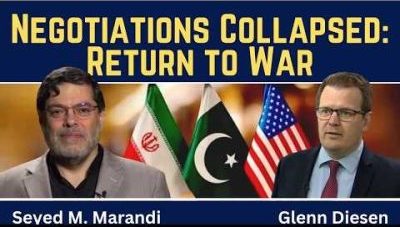
Seyed M. Marandi: Negotiations Collapsed – Return to War
or go to
Aletho News Archives – Video-Images
From the Archives
Wartime internment camps in Australia
National Archives of Australia
World War I
During World War I, for security reasons the Australian Government pursued a comprehensive internment policy against enemy aliens living in Australia.
Initially only those born in countries at war with Australia were classed as enemy aliens, but later this was expanded to include people of enemy nations who were naturalised British subjects, Australian-born descendants of migrants born in enemy nations and others who were thought to pose a threat to Australia’s security.
Australia interned almost 7,000 people during World War I, of whom about 4,500 were enemy aliens and British nationals of German ancestry already resident in Australia.
Records of World War I internment camps
World War II
During World War II, Australian authorities established internment camps for three reasons – to prevent residents from assisting Australia’s enemies, to appease public opinion and to house overseas internees sent to Australia for the duration of the war.
Unlike World War I, the initial aim of internment during the later conflict was to identify and intern those who posed a particular threat to the safety or defence of the country. As the war progressed, however, this policy changed and Japanese residents were interned en masse. In the later years of the war, Germans and Italians were also interned on the basis of nationality, particularly those living in the north of Australia. In all, just over 20 per cent of all Italians resident in Australia were interned. … continue
Blog Roll
 Aletho News
- Seyed M. Marandi: Negotiations Collapsed – Return to War
- Tomorrow’s naval blockade showdown
- ‘Israel’ attacks civilians to hide its embarrassing military failures & out of pure sadism
- Any Foreign Military Vessel Approaching Hormuz Under Any Pretext ‘Will Be Dealt With Severely’: IRGC
- Diplomats slam US negotiators’ performance in Iran talks
- Trump Refuses Exit Ramp, War with Iran will Continue
- Trump Says US Naval Blockade in Strait of Hormuz Will Begin Shortly
- US, Iran end 21-hour talks without agreement
- US IRAN TALKS: Who Are the Crazy Ones Here? /Lt Col Daniel Davis
- Talks with the US end without a deal over excessive US demands: Iran
- If Americans Knew
- US-Iran ceasefire negotiations make zero progress – Daily Update
- Pro-Israel ‘Thinktanks’ and Individuals who Influence U.S. Foreign Policy
- Mearsheimer reveals how Israel dictates US policies on Iran, Gaza – video
- After killing 350+, Israel still has a “score to settle” with Lebanon before ceasefire – Daily Update
- Military aid to Israel emerges as the latest political litmus test for Democrats
- The only Palestinian children’s rights organization closes following years-long Israeli campaign against it
- ‘I Can’t Forget the Smell’: Lebanese Reel After Israel Kills Over 300 in Single Day
- DNC Shoots Down Resolutions Calling Out AIPAC and Limiting Arms to Israel
- TCN: Is Israel Blackmailing President Trump?
- Israel killed at least 303 Lebanese yesterday – who were they? Daily Update
- No Tricks Zone
- German Expert: Heat Dome Led To Record Temps In Western USA…Warmer In 1934, 1936
- New Study: No Linear Warming Or Glacier Retreat Along Northern Antarctic Peninsula Since 1980s
- An Inconvenient Tree: Uncovered In Alps… Europe Much Warmer Than Today 6000 Years Ago
- New Study Reports A 60% Slowdown In Greenland’s Ice Loss Rate In The Last Decade
- Low Intensity Tornado Wrecks Major Solar Farm, Creating A Potential Toxic Dump
- New Study Finds Warming Saves Lives…Cold Temperatures 12 Times More Deadly Than Excess Heat
- German Science Blog Accuses PIK Climate Institute Of Hallucinating Climate Tipping Points
- Devastating Assessment Of Comirnaty Vaccine By Former Senior Pfizer Europe Toxicologist
- New Study: CO2 Is ‘Effectively Negligible’ As An Explanatory Climate Change Factor Since 2000
- Former Pfizer Toxicologist Dr. Helmut Sterz Tells Bundestag Hearing Pfizer Vaccine Should Have Never Been Approved
 Aletho News