Head of EU Parliament’s biggest faction wants German soldiers in Ukraine
RT | December 27, 2025
 Berlin must send troops to Ukraine as part of a potential peace settlement, according to Manfred Weber, the leader of the European People’s Party (EPP) – a political group with the biggest faction in the EU Parliament. Brussels cannot rely on Washington to secure peace between Moscow and Kiev, the politician told Funke Media Group in an interview published this week.
Moscow has repeatedly rejected the idea of any NATO presence in Ukraine. It also named the US-led bloc’s expansion to the East one of the root causes of the conflict.
Kiev’s Western backers, including France and the UK have occasionally raised the issue of NATO troop deployment to Ukraine throughout the conflict. The plan was given another impetus earlier this month at the talks in Berlin, where US officials met with the Ukrainian delegation, the leaders of Germany, France, the UK, and eight other European countries.
”We cannot seriously expect Trump to secure a peace settlement solely with American troops. And when we talk about European troops, Germany cannot be left out,” Weber said. “After a ceasefire or a peace agreement, the European flag must fly along the [contact] line.”
He also claimed he did not “see” the Russian leadership “pursuing the path of peace” and called on Kiev’s European backers to demonstrate strength.
Moscow has repeatedly stated it is ready and willing to resolve the conflict peacefully as long as the other side demonstrates a similar commitment and the root causes of the crisis are addressed. On Friday, Deputy Foreign Minister Sergey Ryabkov said that the conflict resolution was “really close” but warned that Kiev and its European backers are actively trying to “torpedo” the peace process.
The Trump administration has not confirmed the extent of its support for the European plan. Weber also called on the EU to act independently from the US in security matters, prompting the NATO head, Mark Rutte, to warn that creating alternatives to the bloc would not benefit its European members.
Moscow accuses Bloomberg of spreading ‘fake news’
RT || December 26, 2025
Bloomberg is spreading “fake news” by claiming to have inside access to Kremlin information, Russian Foreign Ministry spokeswoman Maria Zakharova said on Thursday.
The senior diplomat criticized the news agency after it relayed what it claimed to be Moscow’s attitude toward a 20-point peace proposal presented this week by Ukraine’s Vladimir Zelensky. The story cited an anonymous source described as “a person close to the Kremlin.”
“This purported news outlet has no reliable sources close to the Kremlin. Only unreliable ones. And the wording ‘close to the Kremlin’ serves only as a cover up for fake news,” Zakharova said on Telegram.
Kiev’s proposal, which Zelensky claimed was discussed with US officials as part of President Donald Trump’s efforts to resolve the ongoing conflict, envisions an 800,000-strong Ukrainian army backed by NATO members and an immediate ceasefire with the current front line frozen.
Moscow has declined to make its position public, saying sensitive diplomacy must be conducted privately. Publicizing one’s negotiation stance is “inadvisable” under the circumstances, Kremlin spokesman Dmitry Peskov has said.
Kirill Dmitriev, a Russian presidential envoy involved in normalization talks with the US, suggested a “US/UK/EU deep-state-aligned fake media machine” is waging a pressure campaign to undermine Trump’s agenda, including on Ukraine.
Previously, US Director of National Intelligence Tulsi Gabbard accused Reuters of peddling “propaganda” about Russia after the agency alleged that a US intelligence assessment had reported that Moscow sought to “capture all of Ukraine and reclaim parts of Europe that belonged to the former Soviet empire.” Russia said the claim was false regardless of whether or not such a US document exists.
SANCTIONED: Col Jacques Baud Explains Being the EU’s TARGET
Daniel Davis / Deep Dive – December 23, 2025
Col Jacques Baud explains that on December 12 he learned via Radio Free Europe that his name would appear on an EU sanctions list. After contacting his embassy in Brussels (where he lives), he received no follow-up. On December 15 the EU formally published the sanctions, which served as the only notification. Since then, his bank accounts have been frozen and he is banned from traveling within the EU, preventing him from returning to his home country.
He says he is accused of spreading pro-Russian propaganda and disinformation, including allegedly promoting a conspiracy theory that Ukraine orchestrated its own invasion by Russia in 2022. He strongly denies this, stating that he merely quoted remarks made in 2019 by Oleksiy Arestovych, then an adviser to President Zelensky, about the risk of war if Ukraine pursued NATO membership. He emphasizes that quoting a Ukrainian official is being treated as evidence of acting as a Russian agent, despite his claim that he has no ties to Russia.
The speaker stresses that he was never warned, contacted, or given a chance to respond by EU, Belgian, or Swiss authorities before the sanctions were imposed. He argues the decision is political, not legal: there was no court ruling, no charges under any law, no right to defense, and no real avenue for appeal.
He further explains that he deliberately avoided appearing on Russian media, refused invitations from outlets like RT, and bases his work largely on Ukrainian and U.S. sources to maintain academic objectivity. He insists propaganda itself is not a crime under European law and says he has always tried to use precise, nuanced language in his analysis.
Overall, he presents his case as evidence of a serious erosion of democracy and free speech in Europe, arguing that objective analysis of the Russia–Ukraine war is being labeled “pro-Russian.” He describes the sanctions as effectively confiscating his livelihood without due process and says he is now struggling to meet basic needs, pending a possible humanitarian exemption to access limited funds for essentials like food.
** NEW MERCH ** Jackets & Sweatshirts, Thermo Mugs!! Daniel Davis Deep Dive Merch: Etsy store https://www.etsy.com/shop/DanielDavis…
Europe’s Panic Economy: Frozen Assets, Empty Arsenals, and the Quiet Admission of Defeat
By Gerry Nolan | Ron Paul Institute | December 24, 2025
When a prime minister tells her own staff to rest because next year will be much worse, it is not gallows humor. It is not exhaustion speaking. It is a slip of the mask, the kind of remark leaders make only when the internal forecasts no longer align with the public script.
Giorgia Meloni was not addressing voters. She was addressing the state itself — the bureaucratic core tasked with executing decisions whose consequences can no longer be disguised. Her words were not about a mundane increased workload. They were about constraint. About limits. About a Europe that has crossed from crisis management into managed decline, and knows that 2026 is when the accumulated costs finally collide.
What Meloni let slip is what Europe’s elites already understand: the Western project in Ukraine has run head-first into material reality. Not Russian propaganda. Not disinformation. Not populism. Steel, munitions, energy, labor, and time. And once material reality asserts itself, legitimacy begins to drain.
The War Europe Cannot Supply
Europe can posture for war. It cannot produce for war.
Four years into a high-intensity war of attrition, the United States and Europe are confronting a truth they spent decades unlearning: you do not sustain this kind of conflict with theatrical speeches, sanctions, or abandoning diplomacy. You sustain it with shells, missiles, trained crews, repair cycles, and production rates that exceed losses — month after month, without interruption.
By 2025, the gap is no longer theoretical.
Russia is now producing artillery ammunition at a scale that Western officials themselves concede outpaces the combined output of NATO. Russian industry has shifted to continuous near-wartime production (without even being fully mobilized), with centralized procurement, simplified supply chains, and state-directed throughput. Estimates place annual Russian artillery production at several million rounds — production already flowing, not promised.
Europe, by contrast, has spent 2025 celebrating targets it cannot ever materially meet. The European Union’s flagship pledge remains two million shells per year — a goal dependent on new facilities, new contracts, and new labor that will not fully materialize within the decisive window of the war, if ever. Even the dreamed target if reached, would not put it at parity with Russian output. The United States, after emergency expansion, is projecting roughly one million shells annually once and a big if, full ramp-up is achieved. Even combined on paper, Western production struggles to match Russian output already delivered. Talk about paper tiger.
This is not a gap. It is a major tempo mismatch. Russia is producing at scale now. Europe is dreaming of rebuilding the ability to produce at scale later.
And time is the one variable that cannot be sanctioned.
Nor can the United States simply compensate for Europe’s hollowed-out capacity. Washington faces its own industrial choke points. Production of Patriot air-defense interceptors runs in the low hundreds per year while demand now spans Ukraine, Israel, Taiwan, and US stockpile replenishment simultaneously — a mismatch senior Pentagon officials have acknowledged cannot be resolved quickly, if ever. US naval shipbuilding tells the same story: submarine and surface-combatant programs are years behind schedule, constrained by labor shortages, aging yards, and cost overruns that push meaningful expansion into the 2030s. The assumption that America can industrially backstop Europe no longer matches reality. This is not a European problem alone; it is a Western one.
War Footing Without Factories
European leaders speak of “war footing” as if it were a political posture. In reality, it is an industrial condition and Europe does not meet it.
New artillery production lines require years to reach stable throughput. Air-defense interceptor manufacturing runs in long cycles measured in batches, not surges. Even basic inputs such as explosives remain bottlenecks, with facilities shuttered decades ago only now being reopened, some not expected to reach capacity until the late 2020s.
That date alone is an admission.
Russia, meanwhile, is already operating inside wartime tempo. Its defense sector has delivered thousands of armored vehicles, hundreds of aircraft and helicopters, and vast quantities of drones annually.
Europe’s problem is not conceptual; it is institutional. Germany’s much-vaunted Zeitenwende exposed this brutally. Tens of billions were authorized, but procurement bottlenecks, fragmented contracting, and an atrophied supplier base meant delivery lagged years behind rhetoric. France, often cited as Europe’s most capable arms producer, can manufacture more sophisticated systems — but only in boutique quantities, measured in dozens where attritional war demands thousands. Even the EU’s own ammunition acceleration initiatives expanded capacity on paper while the front consumed shells in weeks. These are not ideological failures. They are administrative and industrial ones and they compound under pressure.
The difference is structural. Western industry was optimized for shareholder efficiency and peacetime margins. Russia’s has been reorganized for endurance under pressure. NATO announces packages. Russia counts deliveries.
The €210 Billion Fantasy
This industrial reality explains why the frozen-assets saga mattered so much, and why it failed.
Europe’s leadership did not pursue the seizure of Russian sovereign assets out of legal creativity or moral clarity. It pursued it because it needed time. Time to avoid admitting that the war could not be sustained on Western industrial terms. Time to substitute finance for production.
When the attempt to seize roughly €210 billion in Russian assets collapsed on December 20th, blocked by legal risk, market consequences, and resistance led by Belgium, with Italy, Malta, Slovakia and Hungary, aligned against outright confiscation, Europe settled for a degraded substitute: a €90 billion loan to Ukraine for 2026–27, serviced by 3B in annual interest, further mortgaging Europe’s future. This was not strategy. It was triage, and further divided, an already weakened Union.
Outright confiscation would have detonated Europe’s credibility as a financial custodian. Permanent immobilization avoids the blast — but creates a slow bleed. The assets remain frozen indefinitely, a standing act of economic warfare that signals to the world that reserves held in Europe are conditional and not worth the risk. Europe chose reputational erosion over legal rupture. That choice reveals fear, not strength.
Ukraine as a Balance-Sheet War
The deeper truth is that Ukraine is no longer primarily a battlefield problem. It is a solvency problem. Washington understands this. The United States can absorb embarrassment. It cannot absorb open-ended liabilities indefinitely. An offramp is being sought — quietly, unevenly, and with rhetorical cover.
Europe cannot admit it needs one. Europe framed the war as existential, civilizational, moral. It declared compromise appeasement and negotiation surrender. In doing so, it erased its own exit ramps.
Now the costs land where no narrative can deflect them: on European budgets, European energy bills, European industry, and European political cohesion. The €90 billion loan is not solidarity. It is securitization of decline — rolling obligations forward while the productive base required to justify them continues to erode.
Meloni knows this. That is why her tone was not defiant, but weary.
Censorship as Panic Management
As material limits harden, narrative control tightens. The aggressive enforcement of the EU’s Digital Services Act is not about safety. It is about containment, in its most Orwellian form — constructing an information perimeter around an elite consensus that can no longer withstand open accounting. When citizens begin asking calmly, and then not calmly, relentlessly, what was this for?, the illusion of legitimacy collapses quickly.
This is why regulatory pressure now reaches beyond Europe’s borders, provoking transatlantic friction over jurisdiction and speech. Confident systems do not fear conversation. Fragile ones do. Censorship here is not ideology. It is insurance.
Deindustrialization: The Unspoken Betrayal
Europe did not merely sanction Russia. It sanctioned its own industrial model.
By 2025, European industry continues to pay energy costs far above those of competitors in the United States or Russia. Germany, the engine, has seen sustained contraction in energy-intensive manufacturing. Chemical, steel, fertilizer, and glass production have either shut down or relocated. Small and medium enterprises across Italy and Central Europe are failing quietly, without headlines.
This is why Europe cannot scale ammunition the way it needs to. This is why rearmament remains a promise rather than a condition. Cheap energy was not a luxury. It was the foundation. Remove it via self-sabotage (Nordstream et. al), and the structure hollows out.
China, watching all of this, holds the other half of Europe’s nightmare. It commands the deepest manufacturing base on earth without having entered wartime footing. Russia does not need China’s breadth, only its strategic depth behind it in reserve. Europe has neither.
What Meloni Actually Fears
Not hard work. Not busy schedules. She fears a 2026 in which Europe’s elites lose control of three things at once.
Money — as Ukraine’s funding becomes an EU balance-sheet problem, replacing the fantasy that “Russia will pay.”
Narrative — as censorship tightens and still fails to suppress the question echoing across the continent: what was this all for?
Alliance discipline — as Washington maneuvers for exit while Europe absorbs the cost, the risk, and the humiliation.
That is the panic. Not losing the war overnight, but losing legitimacy slowly, as reality leaks out through energy bills, shuttered factories, empty arsenals, and mortgaged futures.
Humanity at the Abyss
This is not just Europe’s crisis. It is civilizational. A system that cannot produce, cannot replenish, cannot tell the truth, and cannot retreat without collapsing credibility has reached its limits. When leaders begin preparing their own institutions for worse years ahead, they are not forecasting inconvenience. They are conceding structure.
Meloni’s remark mattered because it pierced the performance. Empires announce triumph loudly. Systems in decline lower expectations quietly, or loudly in Meloni’s case.
Europe’s leadership is lowering expectations now because it knows what the warehouses contain, what the factories cannot yet deliver, what the debt curves look like — and what the public has already begun to understand.
For most Europeans, this reckoning will not arrive as an abstract debate about strategy or supply chains. It will arrive as a far simpler realization: this was never a war they consented to. It was not fought to defend their homes, their prosperity, or their future. It was fought for greed for Empire, and paid for with their living standards, their industry, and their children’s future.
They were told it was existential. They were told there was no alternative. They were told sacrifice was virtue.
Yet what Europeans want is not endless mobilization or permanent austerity. They want peace. They want stability. They want the quiet dignity of prosperity — affordable energy, functioning industry, and a future that is not mortgaged to conflicts they did not consent to.
And when that truth settles, when the fear recedes and the spell breaks, the question Europeans will ask will not be technical, ideological, or rhetorical.
It will be human. Why were we forced to sacrifice everything for a war we never agreed to and told there was no peace worth pursuing? And this is what keeps Meloni up at night.
Gerry Nolan is a political analyst, writer, and strategist focused on geopolitics, security affairs, and the structural dynamics of global power. He is the founder and editor of The Islander, an independent media platform examining war, diplomacy, economic statecraft, and the accelerating shift toward a multipolar world.
US Department of State Discloses Names of 5 Europeans Sanctioned for Censorship Against US
Sputnik – 24.12.2025
US Under Secretary of State Sarah Rogers has disclosed the list of five Europeans who have been sanctioned by Washington for the extraterritorial censorship of Americans.
The list includes Thierry Breton, who is described as a mastermind of the Digital Services Act (DSA); Imran Ahmed, who headed the Center for Countering Digital Hate (CCDH) that called for deplatforming US anti-vaxxers, including now Secretary of Health Robert Kennedy; Clare Melford, who leads the Global Disinformation Index (GDI); Anna-Lena von Hodenberg, the founder of German organization HateAid that was allegedly created to “counter conservative groups” and is an official censor under the DSA; and Josephine Ballon, the co-leader of HateAid.
“These sanctions are visa-related. We aren’t invoking severe Magnitsky-style financial measures, but our message is clear: if you spend your career fomenting censorship of American speech, you’re unwelcome on American soil,” Rogers wrote on X.
The introduction of sanctions against five Europeans was announced by US Secretary of State Marco Rubio. The secretary said that “these radical activists and weaponized NGOs” had aided censorship crackdowns by foreign states, targeting American speakers and American companies.
EU Morphing Into Its Own Worst Enemy – Viktor Orban
Sputnik – 24.12.2025
The decline of the European Union, rather than the Ukrainian conflict, is what really threatens to plunge Europe into war, Hungary’s Prime Minister Viktor Orban told the Magyar Nemzet newspaper.
The real reason of the existing risk of escalation, Orban argued, is the political, economic and social decline of Western Europe, whereas the Ukrainian conflict is more of a symptom of the current situation rather than its cause.
According to him, the process that led to this state of affairs started during the 2000s and was exacerbated by Europe’s inadequate reaction to the ensuing financial crisis.
Orban also noted that a war in Europe may break out soon, and that 2025 might have been the last peaceful year for the region.
He pointed out that the decisions that were made at the EU summit in Brussels last week were aimed at prolonging the Ukrainian conflict and continuing Europe’s confrontation with Russia.
Though there are powers in Europe that seek peace – like Hungary, for example – Orban warns that those European elites who seek war seem to be gaining an upper hand.
Next year’s election is a choice between peace and war, warns Hungarian PM Orbán
By Thomas Brooke | Remix News | December 23, 2025
Hungarian Prime Minister Viktor Orbán has said that recent anti-war rallies in Hungary serve to explain to the public what he described as decisions being taken behind closed doors as Europe prepares for war.
Speaking on TV2’s Tények program, he said European leaders at a summit over the weekend had effectively convened a “war council,” with speeches focused on defeating Russia, and argued that a growing divide has emerged between the United States and Europe since the inauguration of Donald Trump in January.
“Previously, it was unthinkable within NATO that the United States would say no to something and European states would still go ahead and do it,” the prime minister said.
Orbán warned Europe is much closer to war than most Hungarians realize, noting what he described as a German war plan to seize Russian currency reserves held in Western Europe, a move he claimed that would openly turn Europe into Russia’s enemy.
According to the prime minister, Hungary will now have a war-free Christmas, but the danger has not passed. He said the European Union wants to provide Ukraine with €90 billion over two years, despite having no funds of its own, and is therefore seeking loans from banks that he claimed would never be repaid. Orbán said Slovakia, the Czech Republic, and Hungary refused to provide guarantees for the borrowing. “This would have cost Hungarian families 400 billion forints. We will not pay that — full stop,” he said.
Orbán argued that Europe has more private-sector assets in Russia than the value of the funds it would have seized, adding that Hungary also holds significant corporate assets there. He expressed hope that U.S.-Russian negotiations would succeed despite what he called counter-campaigning by Europe’s political elite. He claimed that anti-war views now dominate Western public opinion as the economic costs of the conflict rise.
“From a Hungarian perspective, war is the most horrific thing that can happen,” he said. “We know how a war consumes a nation’s future and decades of hard work.”
The prime minister also argued that financial interests are pushing politicians toward conflict. He said bankers were driving Europe toward war, as they did before World War I, and claimed that within months the divide between Hungarian and European politics would become even clearer. Germany, he said, is pro-war, as is the European People’s Party, while his administration in Budapest represents what he called the party of peace.
“We will not allow ourselves to be dragged into war,” Orbán said, adding that Europe’s stated aim of being ready for war with Russia by 2030 turns Hungary’s upcoming elections into a choice between peace and war. “We — and I personally — will succeed in keeping Hungary out of the war,” he said.
Turning to domestic policy, Orbán spoke of what he described as a “tax revolution,” saying the government had launched fixed-rate home-ownership and business loan programs, restored the fourteenth-month pension, and introduced lifetime tax exemptions for mothers with two or three children. “By the end of the year, every program was launched. Only we are doing this in an era preparing for war,” he said.
On the opposition Tisza Party, Orbán said, “The Tisza Party’s program is Brussels’ program. But Hungary must not take the Brussels path — we must stay on the Hungarian path.” He added that Hungary’s low household energy prices could only be maintained through agreements with Russia, the United States, and Turkey, warning that EU plans to scrap the policy would amount to “brutal austerity” for families.
Failed Diplomacy & Collapse of Ukraine
Glenn Diesen | December 22, 2025
Larry Johnson is a former intelligence analyst at the CIA who also worked at the US State Department’s Office of Counterterrorism. Johnson outlines why the negotiations are failing and what the pending collapse of Ukraine will entail.
Follow Prof. Glenn Diesen:
Substack: https://glenndiesen.substack.com/
X/Twitter: https://x.com/Glenn_Diesen
Patreon: https://www.patreon.com/glenndiesen
Support the research by Prof. Glenn Diesen:
PayPal: https://www.paypal.com/paypalme/glenndiesen
Buy me a Coffee: buymeacoffee.com/gdieseng
Go Fund Me: https://gofund.me/09ea012f
Books by Prof. Glenn Diesen
Ukraine: Does Europe Work for a Stalled Conflict?
Why negotiations are blocked and why a long, managed conflict is becoming the default outcome.
By Ricardo Martins – New Eastern Outlook – December 23, 2025
Negotiations to end the conflict in Ukraine appear stalled not because of a lack of diplomatic encounters, but because there is no shared understanding of what the proxy war is about, nor of what a settlement should address. The Berlin meeting illustrated this structural deadlock.
Russia continues to restate a limited and stable set of core demands, above all, Ukrainian neutrality and the rollback of NATO’s military footprint, while Europeans and Ukrainians advance proposals that explicitly negate these demands. This is not a negotiation gap; it is a conceptual incompatibility.
The American role exacerbates this problem. The United States oscillates between mediator and belligerent, without committing to a coherent diplomatic line. Instead of deploying professional diplomatic teams with a clear mandate, Washington relies on ad hoc envoys and transactional approaches. Trump’s inclination towards deal-making, inspired by business logic rather than diplomatic craft, leads to contradictory signaling: reassurance to Moscow followed by alignment with European and Ukrainian maximalist positions. This reinforces Russian perceptions that talks are performative rather than substantive.
From a European perspective, the refusal to listen to Russia’s security concerns is justified through a normative framing of the conflict: Ukraine is the victim, Russia the aggressor, and therefore only Ukrainian security deserves guarantees. This position, articulated explicitly by EU figures such as Kaja Kallas, forecloses any bargaining space.
Russia is delegitimised as a security actor, and empathy, understood here not as moral approval but as analytical capacity to understand the other side’s threat perception, is absent. The result is a strategy that implicitly accepts the continuation of the conflict until Ukraine collapses militarily or Russia concedes its defeat, a scenario that seems unrealistic.
Meanwhile, Russia senses that time is on its side. Battlefield dynamics, industrial mobilisation, and political cohesion reinforce Moscow’s assessment that it can achieve its objectives through attrition. In this context, concessions would be irrational from a realist standpoint.
As negotiations fail, Europe and Ukraine increasingly rely on asymmetric strategies, such as sabotage, attacks on Russian assets, and irregular warfare, openly endorsed by Western intelligence discourse, including references by the head of MI6 to Second World War–style special operations. This marks a shift from conflict resolution to conflict management.
Financing Ukraine: strategic risk without political consent
Europe’s approach to financing Ukraine reveals a second layer of contradiction. The decision not to confiscate Russian frozen assets, but instead to fund Ukraine through EU borrowing (€90 billion for 2026–2027) acknowledges the legal, financial, and systemic risks involved. Belgium’s concerns over Euroclear, the threat of credit downgrades by rating agencies such as Fitch, and the exposure of European pension funds and financial institutions underline the fragility of this strategy.
Yet this choice was made without a social pact with European citizens. There has been no democratic debate proportionate to the scale of financial commitment. At a time when European societies face mounting pressures on housing, welfare, pensions, and infrastructure, war financing is normalised as a moral and face-saving necessity rather than a political choice. This fuels domestic resentment and strengthens nationalist and far-right parties across the continent.
Strategically, European financing does not resolve the conflict. Money cannot substitute for manpower nor reverse battlefield dynamics. Ukraine’s primary constraint is not just liquidity but, above all, soldiers. Moreover, persistent concerns about corruption and weak accountability mechanisms undermine public support for continued transfers. Rather than bringing peace closer, European funding functions as a holding mechanism: prolonging the conflict to weaken Russia, buying time to rearm European militaries, and delaying political reckoning of the defeat.
In this sense, Ukraine increasingly functions as a proxy, absorbing the human cost of a broader confrontation while Europe avoids direct military engagement. This is a morally uncomfortable but analytically coherent reading of current policy.
The fear of a Russian “victory” and the erosion of Europe’s political core
The prospect of Russia being perceived as the winner is existentially threatening for European elites. It would symbolise not only Ukrainian defeat but also NATO’s limits and Europe’s strategic weakness. More profoundly, it would undermine the EU’s self-image as a political peace project and a normative power.
To prevent this outcome, European leaders and media have invested heavily in a simplified narrative: Russia as sole aggressor, Ukraine as pure victim, and Europe as moral defender. Yet two facts disrupt this narrative. First, the EU has not presented a concrete peace proposal of its own.
Second, dissenting voices are increasingly marginalised or silenced, contradicting Europe’s professed commitment to pluralism and freedom of expression. In several European countries, journalists, analysts, and former officials who question NATO strategy, the feasibility of a military victory, or the costs of prolonged war – such as George Galloway in the United Kingdom, former Swiss intelligence officer Jacques Baud, French analysts like Xavier Moreau or the online platform Euroactiv – have been systematically delegitimised, deplatformed, or labelled as disinformation vectors rather than engaged on the substance of their arguments. The closure of debate, whether through media pressure or formal and informal censorship, erodes Europe’s intellectual resilience.
As nuance becomes suspect and contradiction is framed as betrayal, Europe loses its capacity to think strategically. Political realism, understood as the ability to engage with power politics without moral illusion, has largely disappeared from mainstream European discourse. NATO expansion is no longer discussed as a variable in Russian threat perception but as an unquestionable good. The assumption persists that Russia will eventually weaken, accept European terms, and even relinquish frozen assets. There is no empirical basis for this belief.
Is there a way out?
A negotiated settlement remains theoretically possible but politically unlikely. European leaders seek a face-saving exit that preserves moral superiority while avoiding military escalation. Yet they are unwilling to make the concessions such an exit would require.
Europe will not send troops to fight Russia, but it will also not accept defeat. The most probable outcome is therefore a long, tense cold peace, akin to the Korean model: frozen frontlines, unresolved status, and continuous low-level confrontation.
This outcome will shape European–Russian relations for decades. It will also accelerate Europe’s internal fragmentation, as member states increasingly diverge in their strategic orientations, weaken its social model, and normalise permanent rearmament. Europe pays the bill, calls it principle, and postpones the hardest decisions at the cost of Ukrainian lives and its own political coherence.
Ricardo Martins, PhD in Sociology, specializing in International Relations and Geopolitics
Australia evaluates purchase of Israeli AI-powered weapons used in Gaza: Report
The Cradle | December 22, 2025
Australia’s Department of Defense has begun a live assessment of Israeli-made, “combat-proven” AI-powered weaponry tested during Israel’s genocide in Gaza, according to a report by Australia Declassified published on 21 December.
The Australian Defence Force is currently trialing the SMASH 3000 AI-assisted targeting system, produced by Israeli arms firm Smartshooter Ltd., and openly advertised as battle-tested, a label arms manufacturers use to demand a higher price for their product.
Under a four-month contract worth approximately $495,910.49, signed for equipment provision and training, the ADF has acquired multiple units of the rifle-mounted electro-optical fire control system and has been evaluating its operational suitability for Australian forces since 25 August, with the trial scheduled to conclude on 25 December.
The SMASH 3000 uses artificial intelligence to detect, track, and lock onto targets, dramatically increasing hit probability for existing firearms, and while it is marketed primarily as a counter-drone system, it is also capable of engaging ground targets with lethal effect.
Smartshooter openly advertises the system as “combat-proven,” explicitly citing its deployment by Israeli armed forces in Gaza, and has repeatedly emphasized that its battlefield use forms a core part of its commercial appeal.
Despite the system’s documented use by Israel during its genocidal war on Gaza, Canberra has proceeded with the evaluation, with no indication that Tel Aviv’s conduct in the besieged enclave has altered Australia’s engagement with the Israeli arms industry.
Smartshooter claims the SMASH 3000 is already operational with armed forces in Europe, the UK, and the US, framing the Australian trial as part of a broader expansion strategy.
On 11 December, Smartshooter’s Australia and New Zealand director Lachlan Mercer said the delivery marked a “strategic breakthrough” after extensive ADF evaluation, pointing to possible later purchases and wider uptake across Australian defense programs.
The Israeli firm is already expanding its Asia-Pacific presence, having supplied India in 2020, with hundreds more units reportedly destined for another Asian state. Singapore is the only other regional country publicly known to have assessed the system.
Reuters spreads lies and propaganda to prolong Ukraine conflict – Tulsi Gabbard

© Alex Wong / Getty Images
RT | December 21, 2025
US Director of National Intelligence Tulsi Gabbard has accused European NATO states of trying to pull Washington into a direct confrontation with Russia and slammed Reuters for “fomenting hysteria” in order to sell war.
Russia has consistently rejected claims that it plans to attack EU countries, describing them as warmongering tactics used by Western politicians to justify inflated military budgets. This week, President Vladimir Putin once again dismissed such claims as “lies and nonsense.”
Yet in a report published on Friday, Reuters claimed that “Putin intends to capture all of Ukraine and reclaim parts of Europe that belonged to the former Soviet empire,” citing anonymous sources allegedly “familiar with US intelligence.”
“No, this is a lie and propaganda Reuters is willingly pushing on behalf of warmongers who want to undermine President Trump’s tireless efforts to end this bloody war that has resulted in more than a million casualties on both sides,” Gabbard retorted in a post on X.
Dangerously, you are promoting this false narrative to block President Trump’s peace efforts and foment hysteria and fear among the people to get them to support the escalation of war, which is what NATO and the EU really want in order to pull the United States military directly into war with Russia.
According to Gabbard, US intelligence assessments instead indicate that Russia “seeks to avoid a larger war with NATO” and lacks the capacity to wage one even if it wanted to.
Moscow insists it is defending its citizens in the Ukraine conflict and has accused NATO of provoking hostilities and derailing US-backed peace initiatives. Putin, who has repeatedly dismissed any intention to restore the Soviet Union, has accused NATO countries of “preparing for a major war” by building up and modernizing offensive forces while “brainwashing” their populations with claims that a clash with Russia is inevitable.
Putin’s special envoy Kirill Dmitriev, who is currently engaged in Ukraine peace talks with US interlocutors in Miami, praised Gabbard as a rare voice of reason.
“Gabbard is great not only for documenting the Obama/Biden origins of the Russia hoax, but now for exposing the deep-state warmonger machinery trying to incite WW3 by fueling anti-Russian paranoia across the UK and EU,” Dmitriev wrote on X. “Voices of reason matter – restore sanity, peace, and security.”
EU loan to Ukraine pushing bloc ‘into war’ with Russia – Orban
RT | December 20, 2025
EU nations have a vested interest in continuing the Ukraine-Russia conflict and even escalating it, as repayment of their €90 billion loan to Kiev is essentially tied to a military victory, Hungarian Prime Minister Viktor Orban has said.
A long-debated EU scheme to steal frozen Russian central bank assets collapsed amid disagreements among member states on Friday. However, agreement was reached on a loan backed by the bloc’s budget, allowing them to fund cash-strapped Ukraine in what Moscow has long described as a Western proxy war. Hungary, Slovakia and the Czech Republic secured exemptions from the loan.
“Whoever lends money wants it back. In this case, repayment is not tied to economic growth or stabilization, but to military victory,” Orban wrote on X on Saturday. “For this money to ever be recovered, Russia would have to be defeated,” he said.
A war loan inevitably makes its financiers interested in the continuation and escalation of the conflict, because defeat would also mean a financial loss.
Orban argued that there are now “hard financial constraints that push Europe in one direction: into war.”
Hungary and Slovakia have long stood against continued military aid to Kiev, despite mounting pressure from the EU to toe the party line. The Czech Republic joined the fold after the recent election of new Prime Minister Andrej Babis, who has refused to fund Ukraine at the expense of his taxpayers.
Russian officials have accused Kiev’s European backers of hindering recent US-led peace efforts, and of increasingly preparing for a direct war against Russia.
Top EU officials have used claims of an alleged threat from Moscow to justify accelerating militarization, freeing up €335 billion in Covid relief funds and mobilizing €150 billion in loans and grants for the bloc’s military industrial complex.
Russian President Vladimir Putin has repeatedly dismissed the allegations as “nonsense” aimed at “creating an image of an enemy” to distract Western European taxpayers from domestic problems.
As Kiev would only need to start making repayments to the EU if it receives reparations in the unlikely event Russia loses, the loan is widely considered to be at risk of turning into a grant.
Featured Video
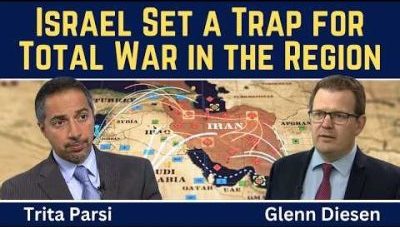
Trita Parsi: Israel Set a Trap for Total War in the Region
or go to
Aletho News Archives – Video-Images
From the Archive
Zionism’s Violent Legacy
By Donald Neff | Washington Report On Middle East Affairs | January 1996
On January 4, 1948, Jewish terrorists drove a truck loaded with explosives into the center of the all Arab city of Jaffa and detonated it, killing 26 and wounding around 100 Palestinian men, women and children.[1] The attack was the work of the Irgun Zvai Leumi – the “National Military Organization,” also known by the Hebrew letters Etzel – the largest Jewish terrorist group in Palestine. The Irgun was headed by Revisionist Zionist Menachem Begin and had been killing and maiming Arabs, Britons and even Jews for the previous ten years in its efforts to establish a Jewish state.
This terror campaign meant that at the core of Revisionist Zionism there existed a philosophical embrace of violence. … continue
Blog Roll
 Aletho News
- Trita Parsi: Israel Set a Trap for Total War in the Region
- Trump’s Iran war is on an Israeli leash
- Saudi oil boss issues global supply warning
- Riyadh Says Its Oil System Is Intact. The Numbers Say Otherwise.
- Trump and Netanyahu Want to “Finish the Job” on Iran
- US ‘one-sided dictation’ not Iran’s beliefs makes rational talks impossible: Baghaei
- Iran’s Next Strike May Not Explode. It Could Shut You Down /Col Doug Macgregor
- Iran: US political targets legitimate if assassinations return
- Iraq shuts key border crossing with Iran under US pressure: Report
- Undersea Internet cables could be targeted in retaliation for attacks on Iran: IRGC deputy chief
- If Americans Knew
- The Israel Lobby’s Changing Fortunes
- AIPAC has become such a political liability that it’s shifting to a more “nimble” approach to buying politicians
- At least 160 Israeli settler attacks in 2 weeks
- Will Gaza’s Ancient Christian Community Disappear Forever?
- Israel’s vision of regional security rests on keeping Arab states weak
- Heidi Levine recounts how Palestinian youths helped save her in settler attack
- DAILY UPDATE: Latest essential news on Palestine, Israel, & region
- Trump’s Intensifying Sabotage of the ICC, for Israel’s Sake
- Israeli military detain US and UK volunteers in West Bank including Democratic NY politician Brad Lander
- Americans at National Conservatism Conference held in Israel this year criticize Israel
- No Tricks Zone
- E-Cars Reduce CO2 Emissions By Only 41% Compared To Internal Combustion Engine Vehicles
- Predictions Made By Renowned Climate Professor Over Past Decades Have Been Proven To Be Poor
- New Study Suggests Large Regions Of The Pacific Ocean Have Been Cooling For The Last 80 Years
- Germany’s Green Energy Debacle: High Energy Costs Force Kahla Porzellan to Close After 182 Years!
- New Study: 50 Years Of The Most Aggressive ‘Net Zero’ Policies Can Only Affect The Global Climate By 0.03°C
- US September “Heat” Was No Record…Many Records Set Decades Ago
- Latest European Green Energy Debacle; Portugal’s Largest Flagship Solar Park Insolvent!
- Green Energy Debacle: German Expert Professor Fritz Vahrenholt Warns Of Severe Economic And Social Consequences
- Two More Paleo Reconstructions Affirm Meters-Higher Sea Levels Across Ireland, Brazil 7000-6000 Years Ago
- New Study: Earth And Venus Surface Warmth Largely Explained By Convection And Lapse Rate, Not CO2 Or Radiation

