Russia, Serbia agree €2.1bn South Stream construction deal
RT | July 9, 2014
Serbia has signed a 2.1 billion euro contract with Gazprom subsidiary Centrgaz to construct the South Stream pipeline across its territory. There is increasing pressure from the EU to suspend the project because it claims it breaks competition law.
Centrgaz will be involved in the design, procurement, construction and installation activities, personnel training and commissioning, while Serbian subcontractors will carrying out some of the work, according to South Stream.
The signing ceremony was held in Serbia on Tuesday between South Stream Serbia and Centrgaz.
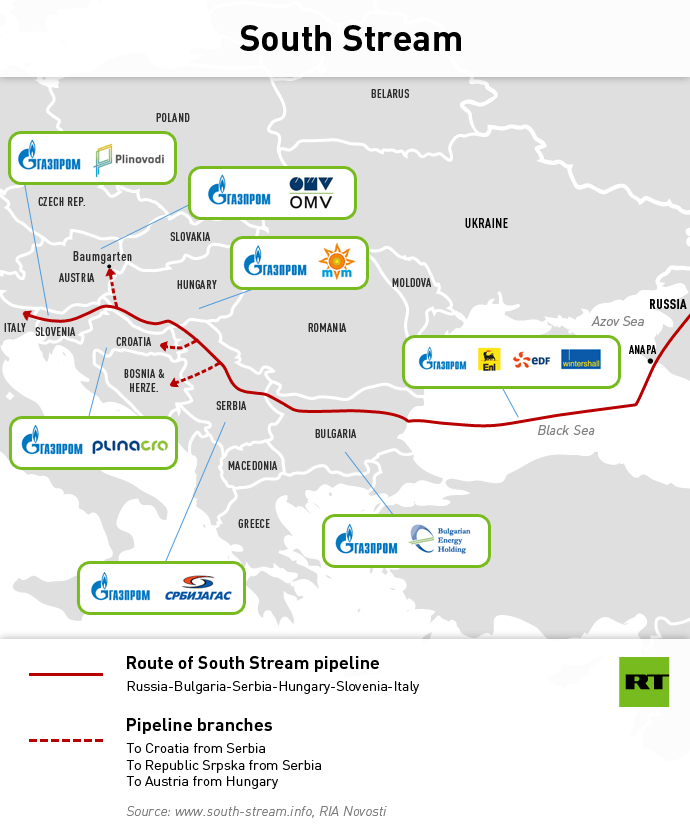 Gas should be flowing through the Serbian part of the pipeline by the end of 2016, according to RIA Novosti.
There has been mounting pressure from the EU to put the project on hold, as it is seen to breach European law.
Serbia had appeared to have halted the construction process, following Bulgaria’s move, however both countries later denied they were not going forward.
Most of the participating countries have confirmed their commitment to South Stream construction.
On Wednesday Russia and Italy said they would continue work on South Stream and were ready “to settle all of the issues, including those that concern dialog with the European Commission,” according to Russian Foreign Minister Sergey Lavrov.
On Tuesday, Slovenia’s Foreign Minister Karl Erjavec said the country wanted “South Stream to pass through our territory.”
Further support for the Russian-led project came from Bulgaria on Monday, when the Prime Minister Plamen Oresharski said it was one of the country’s priority projects. The comment was made after a meeting with Russian Foreign Minister Sergey Lavrov in Sofia. “I believe that we have enough arguments to continue the project,” Oresharski said, adding that the government will work as hard as it can to continue it within the European legislation.
Russian Prime Minister Dmitry Medvedev said the deal on the Serbian part of South Stream would “… mean the transition of our relations with Serbia to a new phase.”
South Stream is a Gazprom project expected to deliver 63 billion cubic meters of Russian gas annually to Europe bypassing Ukraine, which has proved unreliable as a transit partner. The on land part of South Stream goes through Bulgaria, Serbia, Hungary, Slovenia and Austria.
New Cases by the EU General Court Striking Down Iran Sanctions Listings
By Dan Joyner | Arms Control law | July 7, 2014
I just wanted to draw attention to several cases recently decided by the EU General Court in which EU sanctions against designated individuals and businesses allegedly connected to Iran’s nuclear program have been annulled. These are just the latest in a growing line of cases in both the EU General Court and the European Court of Justice reaching similar decisions regarding EU sanctions targeting Iran’s nuclear program, which are essentially attempts to implement UN Security Council sanctions against Iran. I’ve written about this issue before on a couple of occasions. The EU Sanctions Blog has a great run down of the three recent cases here, here and here. I’m particularly pleased to note that the Sharif University of Technology was represented in its case by my friend Matthew Happold. See the text of the court’s judgment in this case here. Congratulations to Matt and to the University.
In terms of the legal merits of these cases, they really are just a continuation of the same bases on which earlier cases in this line have been decided. Basically the EU courts are requiring the EU and state governments to provide evidence on which the sanctions are based, and the governments involved are refusing to do so. Thus, as a basic matter of due process, the court has decided that the sanctions cannot stand on a lack of proffered evidence. A very sound holding in my view.
Hopefully, of course, the current round of P5+1 negotiations with Iran will produce a comprehensive agreement before the July 20 deadline, and this will lead to these EU sanctions being repealed, as part of a normalization of relations between Iran and the West. I think it is reasonable to expect that both the UN Security Council and the EU will be willing and able to withdraw the sanctions they have imposed against Iran over the past ten years, pursuant to such a comprehensive diplomatic agreement (as long as the US administration chooses to at least not veto such a decision by the UNSC). I have just about zero confidence, however, that the US government will be able to implement meaningful sanctions relief promised under such a comprehensive agreement. As I’ve said before, I think the biggest impediment to implementing a comprehensive agreement between Iran and the West over Iran’s nuclear program is the US Congress.
EU Sanctions Target Humanitarian Aid and Hinder Restoration of Global Heritage in Syria
By Franklin Lamb | Al-Manar | July 4, 2014
Damascus – Today, a civilization that used to lead the world and for centuries was the beacon of learning, tolerance and trade, and that still protects our global cultural heritage is damaged—and only the Syrian people can rebuild it for all of us. We need to help them.
Last month, halfheartedly and without unanimity among its 28 member states, the European Union levied yet more sanctions on Syrian officials. Passed under pressure from the usual suspects (the US, France, Britain, and the international Zionist lobby), the EU measure targets 12 government ministers, none of whom wields or holds police authority of any type. Not a single one of these individuals has any capacity or wherewithal—or even any interest—in committing “serious human rights violations,” as the measure accuses them of having carried out.
It is a charge that amounts to defamation of character and which the EU made without offering a scintilla of evidence. Widely seen as EU frustration over failed western policy in Syria, the action is also thought to have been motivated by a sense that the EU ought to keep itself relevant by… well… doing something, given that there is a deep split within its ranks over military aid to Syrian rebels. Coming three weeks after the Syrian presidential election (generally viewed as a significant victory for the Assad government), the measure puts the officials under an EU travel ban and asset freeze, and it also raises to 191 the number of Syrian government employees, along with 53 companies, now being targeted by EU sanctions.
The impact of EU and western sanctions on the Syrian economy has been severe—this is well known. Heavy fighting has damaged or destroyed economic infrastructure, significantly impeding normal access to sources of income for average Syrians. In addition, internal distribution and supply networks have been disrupted if not destroyed; currency depreciation has devastated purchasing power; and the heavy US, EU and Arab League sanctions have hampered imports and exports. Even the import of items not subject to the sanctions has been restricted by the sanctions on financial transactions, while tourism revenue, for example, has all but disappeared.
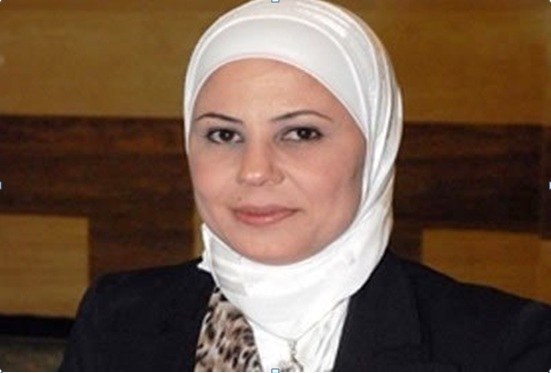 The EU’s ill-considered action simply adds to the multitude of woes faced by Syrian citizens, woes which have forced many of them to leave their country and become refugees. The ministers targeted tend to be technocrats, specialists in their field of work; they are not major government policy makers. Some are involved in humanitarian work, and some of them are ministers whose efforts in this regard have made them quite popular with Syrian people, both at home and abroad. One of these is Kinda al-Shammat, who heads Syria’s Ministry of Social Affairs.
Ms. Shammat works closely with the U.N. and other aid agencies operating on the ground in Syria, her efforts facilitating the delivery of assistance to millions of internally displaced Syrians. The UN has hundreds of aid workers working with the Syrian government through her. She has never been involved in “serious human rights violations,” but she is a well-known human rights advocate. Ms. Shammat holds a PhD in Private Law from the University of Damascus, where she teaches, and she has also worked with the Syrian Commission for Family Affairs, the General Union of Syrian Women, and the UN Development Fund. In the latter capacity she served as a legal expert in family affairs and violence against women, and in 2012 she was also a member of the committee that amended the Syrian constitution.
Ms. Shammat first came to this observer’s attention for her continued dedication to getting aid to Palestinian refugees trapped inside Yarmouk camp during the current crisis. She survived an assassination attempt by rebels opposed to her views on women rights, and some suggest that she became a target for al-Qaeda types last year when Damascus University banned the wearing of total full face veils. It was a decision she openly welcomed at the time, saying that it was in line with the Syrian belief in moderation.
“We in Syria have never gone to the extreme left or the extreme right,” she told Al-Arabiya TV.
Kinda al-Shammat is surely one of the last officials, in Syria or anywhere else, who would warrant EU sanctions against her, and it is deeply egregious that she should be targeted, along with her colleagues, without any proof of wrongdoing. Most of the other ministers added to the sanctions list also have stellar records of public service; they would doubtless be applauded by the people, and probably, under different circumstances, would even be esteemed and well received in all 28 EU member states as well. These include Finance Minister Ismael Ismael, Economy and Foreign Trade Minister Khodr Orfali, Oil Minister Suleiman Al Abbas, Industry Minister Kamal Eddin Tu’ma, Labor Minister Hassan Hijazi, and Minister of Tourism, Bishr Riad Yaziji. None of these individuals has ever been accused of any conduct that could be construed as anything other than humanitarian. Of these it is perhaps Yaziji who most embodies the “new breed” of Syrian officials.
Yaziji was appointed as Minister of Tourism on 8/22/13, and he appears beholden to no person or thing other than his own vision of restoring Syria’s vital tourist industry. Born in Aleppo in 1972, Yaziji is a businessman, and he is currently the youngest member of the Assad Cabinet. With a Bachelor’s degree in Informatics Engineering from Aleppo University (1995), he is possessed with distinctively Kennedyesque good looks, voices progressive ideas, and exerts a charm and charisma that instantly connects with ordinary citizens and foreigners alike. Not affiliated with the Baath Party, Yaziji is an independent and was elected as such to the People’s Assembly, or the Syrian parliament. This observer has closely followed his work, both in the media and from direct personal experience.
Prior to the conflict, tourism brought in more than $8 billion annually, and as one admirer of Yaziji, who also works in government, put it, “The Tourism Ministry is working to reconnect to the world the way we Syrians used to reach out.” The official added:
“Syria’s treasures, from the cradle of civilization that we are, fundamentally belong to all of humanity, and please accept our promise—that we will do our best to repair all damage to the antiquities and will welcome assistance, as we shall welcome every visitor again, before long, enshallah (God willing).”
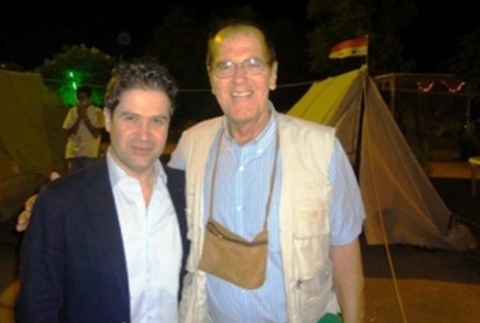 Minister Yaziji appears to thrive on the broad scope and depth of his work, which in fact includes visiting Syrian archaeological sites and drawing international focus on the need to protect and restore humanity’s collective cultural heritage, of which the people of Syria are the custodians. He also spends his time participating in youth festivals, visiting wounded citizens in hospitals, and recently attended a “Loyalty to Syria” gathering, where he stressed the importance of NGOs in conveying the reality of events in Syria to the global public. At that gathering he also discussed the unparalleled richness of the country’s historical and religious monuments, and spoke of “boosting the social values and developing national capacity to serve the best interest of Syria.”
This new generation of Syrian officials is dedicated to ameliorating the country’s humanitarian crisis as well as preserving our global heritage. They have been indefatigable in their around-the- clock projects, and they need to be encouraged, not hindered. In an interview with Reuters on 6/28/14, Yaziji said the sanctions will not interfere with his work—and he also said he has never been involved with any “human rights violations” of any sort. Some have pointed to the curious timing of this latest round of sanctions, so soon after the presidential election, and have suggested that in reality it is a form of collective punishment of the Syrian people—for daring to vote the wrong way, or in a way disapproved of by the EU and the rest of the West.
The EU has spoken piously of “Cultural Heritage—our debt to the past, our promise to the future,” and claims that it seeks to “promote culture as a catalyst for creativity,” but its actions last month belie this. If it truly seeks to implement its claimed humanitarian values, the EU should work to open the paths of these Syrian officials, not close them. At the very least it should desist from layering more “show sanctions” upon those in Syria who are striving to salvage their country. Yaziji and Shammat are Syrian patriots whose invaluable work the EU should be encouraging rather than hindering with politically motivated sanctions and silly, gratuitous defamations of character.
Few in the Syrian Arab Republic these days question the urgency and enormity of the task of reconstructing their ancient country from war-caused destruction, the fall-out from a conflict already more than half as long as World War I and approaching two-thirds as long as World War II. For this ten-millennium civilization, emergency measures are needed to protect its thousands of priceless archaeological treasures, both from the ravages of war as well as plunder and illegal excavation wrought by thieves. The Syrian government has given high priority to the preservation of cultural heritage, a policy that presumably not many in the EU would openly disagree with. Yet the EU’s ill-considered sanctions are harming multi-faceted restoration efforts—by intimidating members of the international public who want to help and by attempting to isolate Syrian officials whose full schedules these days are consumed by humanitarian undertakings as well as projects aimed at restoring cultural heritage sites and preserving our link to the past. And by the way, some of these sites they are working to protect are included on UNESCO’s list of World Heritage Sites. These include the Ancient City of Aleppo , the Ancient City of Bosra , Ancient City of Damascus , Ancient Villages of Northern Syria , Crac des Chevaliers and Qal’at Salah El-Din and the Site of Palmyra .
Syria and her hardworking public servants will survive these gratuitous political sanctions, but the sanctions likely will remain an indelible stain on the EU and its claimed humanitarian principles for a long time to come.
EU Publishers Present Their ‘Vision’ For Copyright: A Permission-Based Internet Where Licensing Is Required For Everything
By Glyn Moody | Techdirt | July 2, 2014
For too many years, the copyright industries fought hard against the changes being wrought by the rise of the Internet and the epochal shift from analog to digital. Somewhat belatedly, most of those working in these sectors have finally accepted that this is not a passing phase, but a new world that requires new thinking in their businesses, as in many other spheres. A recent attempt to codify that thinking can be found in a publication from the European Publishers Council (EPC). “Copyright Enabled on the Network” (pdf) — subtitled “From vision to reality: Copyright, technology and practical solutions enabling the media & publishing ecosystem” — that is refreshingly honest about the group’s aims:
Since 1991, Members [of the EPC] have worked to review the impact of proposed European legislation on the press, and then express an opinion to legislators, politicians and opinion-formers with a view to influencing the content of final regulations. The objective has always been to encourage good law-making for the media industry.
The new report is part of that, and is equally frank about what lies at the heart of the EPC’s vision — licensing:
A thread which runs through this paper is the proliferation of ‘direct to user’ licensing by publishers and other rights owners. Powered by ubiquitous data standards, to identify works and those who have rights in those works, licensing will continue to innovate exponentially so that eventually the cost of serving a licence is close to zero. The role of technology is to make this process seamless and effective from the user’s perspective, whether that user is the end consumer or another party in the digital content supply chain.
Seamless licensing will be made possible through the roll-out of ubiquitous Digital Rights Statements (DRS) containing information about identity, rights and — you guessed it — licenses:
The key point about a DRS is that once it exists, it can be searched, read and actioned by any other machine connected to the Internet. And once the DRS is indexed by a search engine, through the machine readable IDs contained in the DRS it will always be possible to find the person or entity who owns or administers the rights and the rights associated with it. From there, it will be possible to link to the service from which the rights can be obtained and the content accessed and, if applicable, paid for.
Furthermore, this infrastructure is well suited to a world of ‘mash-ups’ where one work will incorporate parts or elements of other works, because the relevant IDs can identify the whole of a work or granular elements of it.
As that makes clear, the EPS vision includes being able to pin down every single “granular” part of a mash-up, so that the rights can be checked and — of course — licensed. Call it the NSA approach to copyright: total control through total surveillance. The paper helpfully explores how that would work out in various specific situations encountered today. For example, the European publishers want to be able to use licensing to restrict access even to material on the open Internet:
Legal clarification is needed about the relationship between hyperlinks and licence terms on the websites (or other platforms) to which they link. It must be clear that rights owners may by their licence terms to “restrict” access to content on an “open website” to a specific category of “the public” (e.g. users who visit the site directly), whether or not accompanied by technical protection measures.
So licenses would be able to forbid the use of hyperlinks to jump directly to pages, even though the latter were not locked down by DRM. The EPC is also worried about an “overbroad” interpretation of a general right to browse copyright material without needing an explicit license:
Whilst the general proposition that Internet browsing does not require a licence is reasonable, there remains a risk that an overbroad interpretation could mean that activities which ought properly to be licensable (e.g. the consumption of press cuttings) might cease to be so.
To tackle that, the EPC wants (pdf) “a new limited neighbouring right to stop unlicensed use of snippets,” and also, for good measure, “[h]yperlinking to illegal copies to be treated as an infringement.” Given this relentless focus on creating a permission-based Internet, it will come as no surprise that the EPC hates the idea of introducing fair use in Europe:
this is an issue which would require considerable evidence-based research in order to make a reasoned evaluation of the benefits of introducing a fair dealing exception compared with the uncertainty and other risks which would be caused by its introduction.
That call for “considerable evidence-based research” is rather rich, given the complete absence of it for all the recent changes to European copyright law in favor of publishers. Indeed, as Techdirt has frequently discussed, there is plenty of research to support reducing copyright’s term and reach, but when this is brought up, publishers are strangely uninterested in evidence-based policy making, preferring to stick with the dogma-based kind. Naturally, the EPC thinks that instead of fair use, what people really need is more licensing:
Europe would be better positioned to reach a dynamic flexibility for increased uses by providing incentives to small scale licensing, both B2B and B2C, and automated licensing solutions.
Part IV of the report is entitled “Meeting users’ needs in the new media & publishing ecosystem.” That’s a welcome emphasis, since it finally recognizes that the users are not just some passive recipient of what the publishers decide to throw at them. However, the section’s focus is still resolutely on seeking permission for every possible use of copyright material.
For example, one of the areas where publishers are fighting fiercely against granting new copyright exceptions is for text and data mining. The refusal to contemplate anything but licensing as an option led to a group of researchers, SMEs, civil society organizations and open access publishers pulling out of the European Commission’s “Licensing for Europe” fiasco. Here’s what EPC has to say on the matter:
A new exception for text and data mining at EU level carries a huge risk from ‘the law of unintended consequences’. A key theme running through our paper is the enabling role of technology in managing copyright. Given the increasing automation of rights management, the full potential of which we have yet to realise, including in the area of specific permissions, access to and use of content, we urge the European Commission to look at practical solutions first for serving the genuine needs of the research community before legislation.
Scare-mongering about an exception for text and data mining is bad enough, but it gets worse. In this same section, we read the following concerning the copyright needs of users with a disability:
There are undoubted challenges faced by this user group in being able to access digital content although publishers have been investing in voluntary solutions, including via ePub3 and voice-enabled services online.
The report then goes on immediately to mention:
The Marrakech Treaty is a recent exemplar. It provides a legal framework to facilitate access to published works for persons who are blind, visually impaired or otherwise print disabled.
That gives the impression that the Marrakech Treaty was something that publishers backed strongly as a fair way of helping those with disabilities. In fact, quite the reverse is true. To have that hard-won treaty for the visually impaired presented here as an example of how publishers can be relied on to do the right thing by the public is not just misleading but morally repugnant. It shows that despite some fair words in the rest of the “vision” document, in important ways European publishers are just as selfish and cynical as ever.
Follow me @glynmoody on Twitter or identi.ca, and +glynmoody on Google+
Putin to West: Stop turning world into ‘global barracks,’ dictating rules to others
RT | July 1, 2014
Russia’s president has blamed the turmoil in Ukraine on the country’s newly-elected leader Petro Poroshenko. Vladimir Putin also criticized the West for its intention to turn the planet into a “global barracks.”
Russia’s president has laid the blame for the ongoing turmoil between Kiev and south-eastern regions squarely at the feet of Petro Poroshenko, after the Ukrainian leader terminated the ceasefire.
He has stressed that Russia and European partners could not convince Poroshenko to not take the path of violence, which can’t lead to peace.
“Unfortunately, President Poroshenko has made the decision to resume military actions, and we – meaning myself and my colleagues in Europe – could not convince him that the way to reliable, firm and long-term peace can’t lie through war,” Putin said. “So far, Petro Poroshenko had no direct relation to orders to take military action. Now he has taken on this responsibility in full. Not only military, but also political, more importantly.”
On Monday, the leaders of Russia, France, Germany and Ukraine held a phone call in which Putin stressed the need to prolong the ceasefire and the creation of “a reliable mechanism for monitoring compliance with it and the OSCE [Organization for Security and Cooperation in Europe] should play an active role.”
Russia offered that checkpoints on the Russian side should be monitored by representatives of the Ukrainian Border service as well as OSCE observers for “the joint control of the border.”
As the violent conflict continues in the east of Ukraine and the number of refugees fleeing to Russia grows, Putin vowed to provide help to everyone who needs it.
“Everything that’s going on in Ukraine is of course the internal business of Ukrainian government, but we are painfully sorry that people die, civilians,” Putin said. He added that the killing of journalists was “absolutely unacceptable.”
“In my opinion, there is a deliberate attempt to eliminate representatives of the press going on. It concerns both Russian and foreign journalists,” the president said.
Speaking in front of ambassadors on Tuesday, Putin expressed hope that Western partners will stop imposing their principles on other countries.
“I hope pragmatism will still prevail. The West will get rid of ambitions, pursuits to establish a ‘world barracks’ – to arrange all according to ranks, to impose uniform rules of behavior and life of society,” Putin said.
“I hope the West will start building relations based on equal rights, mutual respect and mutual consideration of interests.”
Putin recalled the situation with France and the delivery of the Mistral-class ships that was agreed between Moscow and Paris, but was jeopardized in March.
“We know about the pressure that our American partners put on the French so that they would not deliver the Mistral [ships] to Russia,” Putin said. “And we know that [they] hinted that if the French don’t deliver Mistral, sanctions on banks will be gradually removed, or at least minimized. What is this, if not blackmail?”
Russia is ready to have dialogue with the US only on the basis of equality, Putin added.
“We are not going to stop our relations with the US. The bilateral relations are not in the best shape, that is true. But this – and I want to emphasize – is not Russia’s fault,” he told diplomats.
Speaking about international relations, Putin stressed that Russia always tried to be “predictable, to do business on an equal basis”, however, in return, its interests were quite often ignored.
War is Our Business and Business Looks Good
By Edward S. Herman | Z Magazine | June 28, 2014
It is enlightening to see how pugnacious the U.S. establishment, led by the Peace Laureate, has been in dealing with the Ukraine crisis. The crisis arguably began when the Yanukovich government rejected an EU bailout program in favor of one offered by Russia. The mainstream media (MSM) have virtually suppressed the fact that the EU proposal was not only less generous than the one offered by Russia, but that whereas the Russian plan did not preclude further Ukrainian deals with the EU the EU plan would have required a cut-off of further Russian arrangements. And whereas the Russian deal had no military clauses, that of the EU required that Ukraine affiliate with NATO. Insofar as the MSM dealt with this set of offers they not only suppressed the exclusionary and militarized character of the EU offer, they tended to view the Russian deal as an improper use of economic leverage, “bludgeoning,” but the EU proposal was “constructive and reasonable” (Ed., NYT, Nov. 20, 2014). Double standards seem to be fully internalized within the U.S. establishment.
The protests that ensued in Ukraine were surely based in part on real grievances against a corrupt government, but they were also pushed along by rightwing groups and by U.S. and allied encouragement and support that increasingly had an anti-Russian and pro-accelerated-regime-change flavor. They also increased in level of violence. The sniper killings of police and protesters in Maidan on February 21, 2014 brought the crisis to a new head. This violence overlapped with and eventually terminated a negotiated settlement of the struggle brokered by EU members that would have ended the violence, created an interim government and required elections by December. The accelerated violence ended this transitional plan, which was replaced by a coup takeover, along with the forced flight of Victor Yanukovich.
There is credible evidence that the sniper shootings of both protesters and police were carried out by a segment of the protesters in a false-flag operation that worked exceedingly well, “government” violence serving as one ground for the ouster of Yanukovich. Most telling was the intercepted phone message between Estonia’s Minister of Foreign Affairs Urmas Paet and EU Foreign Policy chief Catherine Upton in which Paet regretfully reported compelling evidence that the shots killing both police and protesters came from a segment of the protesters. This account was almost entirely suppressed in the MSM; for example, the New York Times never mentioned it once through the following two months. It is also enlightening that the protesters at Maidan were never called “militants” in the MSM, although a major and effective segment was armed and violent—that term was reserved for protesters in Eastern Ukraine, who were commonly designated “pro-Russian” as well as militants.
There is also every reason to believe that the coup and establishment of a right wing and anti-Russian government were encouraged and actively supported by U.S. officials. Victoria Nuland’s intercepted “fuck the EU” words express her hostility to a group that, while generally compliant and subservient, departed from neocon plans for a proper government in Kiev headed by somebody like “Yats.” So she would surely have been pleased when the EU-supported February compromise plan was ended by the violence and coup. The U.S. support of the coup government has been enthusiastic and unqualified, and whereas Kerry and company delayed recognition of the elected government of Maduro in Venezuela, and have strongly urged him to dialogue and negotiate with the Venezuelan protesters—in fact, threatening him if he doesn’t — Kerry and company have not done the same in Ukraine where the Kiev government forces have slowly escalated their attacks on the Eastern Ukraine, but not on “protesters,” only on “militants!”
The Kiev government’s military is now using jets and helicopters to bomb targets in the East and heavy artillery and mortars in its ground operations. Its targets have included hospitals and schools, and as of June 8 civilian casualties have been in the hundreds. A dramatic massacre of 40 or more pro-Russian protesters in Odessa on May 2 by a well-organized cadre of neo-Nazi supporters, possibly agents of the Kiev government, was an early high point in this pacification campaign. No investigation of this slaughter has been mounted by the Kiev government or “international community” and it has not interfered in the slightest with Western support of Kiev. In parallel the MSM have treated it in very low key. (The New York Times buried this incident in a back page continuation of a story on “Deadly Clashes Erupt in Ukraine,” May 5, which succeeds in covering up the affiliation of the killers.) Kerry has been silent, though we may imagine his certain frenzy if Maduro’s agents had carried out a similar action in Venezuela. Recall the “Racak massacre,” where the deaths of 40 alleged victims of the Serb military created an international frenzy; but in that case the United States needed a casus belli, whereas in the Odessa case there is a pacification war already in process by a U.S. client, so MSM silence is in order.
It is an interesting feature of media coverage of the Ukraine crisis that there is a regular focus on alleged or possible Russian aid, control of and participation in the actions of the protesters/militants/insurgents in Eastern Ukraine. This was evident in the Times’s gullible acceptance of a claim that photos of insurgents included a Russian pictured in Russia, later acknowledged to be problematic (Andrew Higgins, Michael Gordon and Andrew Kramer, “Photos Link Masked Men in East Ukraine to Russia,” NYT, April 20, 2014); and in another lead article which was almost entirely speculation (Sabrina Tavernise, “In Ukraine Kremlin Leaves No Fingerprints,” NYT, June 1, 2014.). But this interest in foreign intrusion in Ukraine affairs, with the implication of wrong-doing, does not extend to evidence of U.S. and other NATO power aid and control. Visits by Biden, Cain, Nuland and intelligence and Pentagon figures are sometimes mentioned, but the scope and character of aid and advice, of U.S. “fingerprints,” is not discussed and seems to be of little interest. It is, in fact, normalized, so that as with the aid plans in which Russian proposals are “bludgeons” but U.S.-EU plans are “constructive and reasonable” the double standard is in good working order here as well.
Isn’t there a danger that Russia will enter this war on behalf of the pro-Russian majority of the eastern part of Ukraine now under assault? Possibly, but not likely, as Putin is well aware that the Obama-neocon-military-industrial complex crowd would welcome this and would use it, at minimum, as a means of further dividing Russia from the EU powers, further militarizing U.S. clients and allies, and firming up the MIC’s command of the U.S. national budget. Certainly there are important forces in this country that would love to see a war with Russia, and it is notable how common are political comments, criticisms and regrets at Obama’s weak response to Russian “aggression” (e.g., David Sanger, “Obama Policy Is put to Test: Global Crises Challenge a Strategy of Caution,” NYT, March 17, 2014). But so far Putin refuses to bite.
In response to this pressure from the powerful war-loving and war-making U.S. constituencies, Obama has been furiously denouncing Russia and has hastened to exclude it from the G-8, impose sanctions and penalties on the villain state, increase U.S. troops and press military aid on the near-Russia states allegedly terrified at the Russian threat, carry out training exercises and maneuvers with these allies and clients, assure them of the sacredness of our commitment to their security, and press these states and major allies to increase their military budgets. One thing he hasn’t done is to restrain his Kiev client in dealing with the insurgents in eastern Ukraine. Another is engaging Putin in an attempt at a settlement. Putin has stressed the importance of a constitutional formation of a Ukraine federation in which a still intact Ukraine would allow significant autonomy to the Eastern provinces. There was a Geneva meeting and joint statement on April 17 in which all sides pledged a de-escalation effort, disarming irregulars, and constitutional reform. But it was weak, without enforcement mechanisms, and had no effect. The most important requirement for de-escalation would be the termination of what is clearly a Kiev pacification program for Eastern Ukraine. That is not happening, because Obama doesn’t want it to happen. In fact, he takes the position that it is up to Russia to curb the separatists in East Ukraine, and he has gotten his G-7 puppies to agree to give Russia a deadline to do this, or face more severe penalties.
This situation calls to mind Gareth Porter’s analysis of the “perils of dominance,” where he argued that the Vietnam war occurred and became a very large one because U.S. officials thought that with their overwhelming military superiority North Vietnam and its allies in the south would surrender and accept U.S. terms—most importantly a U.S. controlled South Vietnam—as military escalation took place and a growing toll was imposed on the Vietnamese (see his Perils of Dominance: Imbalance of Power and the Road to War in Vietnam). It didn’t work. In the Ukraine context the United States once again has a militarily dominant position. On its own and through its NATO arm it has encircled Russia with satellites established in violation of the 1990 promise of James Baker and Hans-Dietrch Genscher to Mikhail Gorbachev to not move eastward “one inch,” and it has placed anti-missile weapons right on Russia’s borders. And now it has engineered a coup in Ukraine that empowered a government openly hostile to Russia and threatening both the well-being of Russian-speaking Ukrainians and the control of the major Russian naval base in Crimea. Putin’s action in reincorporating Crimea into Russia was an inevitable defensive reaction to a serious threat to Russian national security. But it may have surprised the Obama team, just as the Vietnamese refusal to accept surrender terms may have surprised the Johnson administration. Continuing to push the Vietnamese by escalation didn’t work, although it did kill and injure millions and ended the Vietnamese alternative way. Continuing and escalating actions against Russia in 2014 may involve a higher risk for the real aggressor and for the world, but there are real spinoff benefits to Lockheed and other members of the MIC.
Who Violated Ukraine’s Sovereignty?
By Ray McGovern | Consortium News | June 28, 2014
Did Russia’s annexation of Crimea on March violate the 1994 Budapest agreement among Ukraine, Russia, Great Britain and the U.S.? Specifically, in Paragraph One, Ukraine agreed to remove all nuclear weapons from its territory in return for a commitment by Russia, Britain and the U.S. “to respect the independence and sovereignty and existing borders of Ukraine?”
I’m no lawyer, but I can read the words. And, taken literally, the answer seems to be Yes – despite a host of extenuating circumstances that can be adduced to explain why Crimea rejoined Russia, including the alarm among Crimean leaders over the unconstitutional ouster of Ukraine’s elected president and the Russian government’s fear about the possible berthing of NATO’s nuclear-missile warships at the naval base at Sebastopol.
But there’s also the item in Paragraph Three in which Russia, the UK, and the U.S. also commit “to refrain from economic coercion designed to subordinate to their own interest the exercise by the Ukraine of the rights inherent in its sovereignty.”
Might the EU’s take-it-or-leave-it proposal last fall offering Ukraine “associate” status in return for draconian economic austerity imposed on the Ukrainian people come under the rubric of the “economic coercion” prohibited at Budapest? An arguable Yes, it seems to me.
Some will try to dismiss President Viktor Yanukovych’s ill-fated rejection of these International Monetary Fund demands to make the hard lives of average Ukrainians even harder as “history,” now that the EU and Ukraine’s replacement President Petro Poroshenko signed on June 27 that “associate” status agreement – the same agreement that Yanukovich rejected in favor of what appeared to be a better deal from Russia.
Was Yanukovich also under pressure from Moscow to maintain Ukraine’s historic, cultural and economic ties to Russia? Of course. Putin reportedly weighed in heavily with Yanukovich last October and early November when U.S. and EU diplomats were pressuring the Ukrainian president as well.
But did Yanukovich expect to be overthrown if he opted for Moscow’s offer? If he did not, he sorely underestimated what $5 billion in U.S. “democracy promotion” can buy. After Yanukovych’s decision, American neoconservatives – the likes of National Endowment for Democracy President Carl Gershman and Assistant Secretary of State for European Affairs Victoria Nuland – pulled out all the stops to enable Ukraine to fulfill what Nuland called its “European aspirations.”
The central problem confronting Ukraine, however, was not whether it leaned toward Europe or toward Russia. It was that after the collapse of the Soviet Union in 1991, some ruthless businessmen used their insider connections to snap up (or “privatize”) the natural and industrial resources of the country. These handful of “oligarchs” then corrupted the political process, buying off politicians from both pro-EU and pro-Moscow perspectives.
Last fall, Yanukovych, who was elected from a political base in the more industrial Russian-ethnic east, was looking for how to bail Ukraine out of the financial and economic crisis that it was facing amid widespread unemployment and the hangover from the Great Recession.
In a layman’s way of understanding what happened in Ukraine, Yanukovych issued what in the consulting world is called a Request for Proposal (RFP), i.e., a feeler to see who could offer the most promising plan for helping Ukraine escape insolvency. After initially tilting toward the EU proposal (before he learned of its draconian IMF small print), he later shifted to the less onerous offer from Russia.
In the world of contractors and RFPs, there are orderly procedures for firms whose bids are turned down to contest the selection of the eventual winner. But I know of no case where one of the losing firms turned around and violently removed the leadership of the RFP-issuing institution, installed new leadership and got the contract.
Abortive Feb. 21 Agreement
And, in assessing which side – the U.S./EU or Russia – is in the wrong on Ukraine, there was also the agreement, facilitated on Feb. 21 by the foreign ministers of Poland, Germany and France, in which then-President Yanukovich acceded to demands from the opposition by accepting limits on his powers and agreeing to early elections to vote him out of office.
Yanukovych also fatefully agreed to pull back the police, opening the way for right-wing militias, including neo-Nazis, to seize government buildings and force Yanukovych and his government officials to flee for their lives. With these paramilitary forces patrolling government offices, what was left of the Parliament voted to replace Yanukovych and install a new regime, giving four ministries to the far right and the neo-Nazis in recognition of their crucial role.
As the U.S. and the EU hailed the “legitimacy” of this new regime — with Nuland’s hand-picked leader Arseniy Yatsenyuk appointed as the new prime minister – the Western “mainstream media” quickly forgot the Feb. 21 agreement (surprise, surprise!). But Russian President Vladimir Putin had a personal representative there, Russian Human Rights Commissioner Vladimir Lukin.
Yet, because the MSM was already parading Putin (and Yanukovych) around the op-ed pages and talks shows as the black-hatted villains of the Ukraine saga, few Americans got to hear Putin’s perception of what happened, as he explained at a Moscow press conference ten days after Yanukovich was overthrown:
“First of all, my assessment of what happened in Kiev and in Ukraine in general. … This was an unconstitutional takeover, an armed seizure of power. Does anyone question this? Nobody does. … The question is why this was done? …
“President Yanukovich, through the mediation of the foreign ministers of three European countries – Poland, Germany and France – and in the presence of my representative signed an agreement with the opposition on Feb. 21. I would like to stress that under that agreement (I am not saying this was good or bad, just stating the fact) Mr. Yanukovich actually handed over power. He agreed to all the opposition’s demands: he agreed to early parliamentary elections, to early presidential elections, and to return to the 2004 Constitution, as demanded by the opposition.
“He gave a positive response to our request, the request of western countries and, first of all, of the opposition not to use force. … he issued orders to withdraw all police forces from the capital, and they complied. He went to Kharkov to attend an event, and as soon as he left, instead of releasing the occupied administrative buildings, they [the opposition] immediately occupied the President’s residence and the Government building – all that instead of acting on the agreement.
“I ask myself, what was the purpose of all this? … He had in fact given up his power already; and as I believe, as I told him, he had no chance of being re-elected. … What was the purpose of all those illegal, unconstitutional actions, why did they have to create this chaos in the country? Armed and masked militants are still roaming the streets of Kiev. …
“If you want, I can tell you even more. He [Yanukovich] called me on the phone and I told him not to do it. I said, ‘You will have anarchy, you will have chaos in the capital. Think about the people.’ But he did it anyway. And as soon as he did it, his office was seized, and that of the government, and the chaos I had warned him about and which continues to this day, erupted.”
If Putin’s account of how the Feb. 21 agreement was violated the very next day is accurate, and by almost all indications it is, then we have the anatomy of an undisguised putsch – an unconstitutional overthrow of a duly elected president of a sovereign state. The apparent aim, to install a government friendlier to the EU, is relevant but not essential here. The fact of the coup is essential.
Guaranteeing Ukraine’s Sovereignty
Friday’s lead editorial in the neocon flagship Washington Post, “Potemkin drawdown: The West must hold Russia to a real withdrawal from Ukraine,” charged that “the rebellion in the east is manufactured by Russia to undermine Ukraine’s sovereignty. The United States and Britain guaranteed support for that sovereignty in 1994 when Ukraine gave up its nuclear weapons.”
That claim brought my thoughts back to a conference of distinguished scholars at the U.S.–Russia Forum in the Hart Senate office building on June 16. With Professors Stephen Cohen and Robert Legvold presenting, it was the most sensible discussion of the Ukraine imbroglio that I have witnessed to date.
The point was made that Russia had violated the Budapest agreement in annexing Ukraine. But were the Russians the only culprits? What about the rest of the story? Russia, the UK and the U.S. all pledged “to respect the independence and sovereignty and existing borders of Ukraine?” Okay. Gotcha on Putin considering the “existing borders.”
But what about the political destabilization supported by the U.S. government, including the $5 billion that Assistant Secretary of State Nuland publicly announced had been invested in Ukraine’s “European aspirations” – or the scores of projects financed by the U.S.-funded National Endowment for Democracy, training activists, supporting “journalists” and organizing business and political groups.
During the crisis, U.S. officials even showed up in Kiev’s Maidan square to urge on the protesters seeking to overthrow Yanukovych. Sen. John McCain gave a speech on a platform of the right-wing Svoboda party under a banner hailing the late Nazi collaborator Stepan Bandera. Nuland went so far as to pass out cookies to the demonstrators and discuss with the U.S. ambassador to Ukraine who should be take over after Yanukovych was ousted.
How does this overt and covert interference square with the Budapest pledge “to respect the independence and sovereignty … of Ukraine?” And how do the strong-arm tactics of the EU square with the commitment “to refrain from economic coercion designed to subordinate to their own interest the exercise by the Ukraine of the rights inherent in its sovereignty?”
Luckily, at the U.S.-Russia Forum, I was able to go first during the Q and A. [To see my question and the answer, click on https://www.youtube.com/watch?v=p8iH50BR0EQ and go to the 2:01:00 point near the end.]
I said: “I have a brief question having to do with the Budapest agreement and also in the perspective of Vladimir Putin being more in a reactive mode than anything else. He’s been accused, of course, of violating that agreement because of the Crimea [annexation].
“I’m wondering, if you look at the putsch, if you look at the coup d’etat of Feb. 22nd, supported to the tune of $5 billion by outside forces over the course of several years, of course, could that not also be regarded as a violation of the Budapest memorandum?”
Columbia University Professor Legvold’s answer was, I think, instructive – instinctive, perhaps. His first thought was to associate my point with an argument the Russians have made. For many listeners, that might put me in the category of some kind of apologist for Putin. I know Legvold well enough to doubt this was his intent. But still: Is Putin’s account of the Feb. 21-22 events to be dismissed out of hand simply because it is from Putin?
The main takeaway for me from the forum was the Cohen-Legvold common assertion that we have already entered a New Cold War. Cohen was very direct in exposing the extraordinary abuse regularly accorded to scholars and specialists who try to discern and explain honestly Moscow’s point of view.
Legvold suggested it would be “naïve” not to recognize that the new Cold War is already upon us, that it will be “immensely expensive and immensely dangerous,” and that all of us need to do whatever we can to make it “short and shallow.”
That endeavor of averting the costs and the risks of Cold War II might well start with a truthful narrative of what happened, not the one-sided account that the American people have been seeing and hearing in the U.S. media.
Bulgaria: South Stream doesn’t breach EU laws
RT | June 26, 2014
Bulgarian officials say the construction of the Russian-led South Stream gas pipeline does not breach EU legislation. The European Commission is concerned the agreement between Russia and Bulgaria violates EU competition law.
The Bulgarian government stood by its position on the legality of the pipeline in a Wednesday statement, ITAR-TASS reports. The agreement on South Stream construction signed in 2008 did not provide any exclusive rights, concessions, or tendering for the South Stream Bulgaria Company which is the owner of the pipeline, and therefore it does not violate EU law, it said.
“With its position the government presents arguments and motives in support of the decisions the Bulgarian nation has taken and which were the subject of concern at the EU Commission,” Reuters quotes the official statement.
Bulgaria will put these arguments at the Brussels summit on Friday, but the decision of the commission whether to accept or reject them may end up in full infringement proceedings and possible fines against Sofia, Reuters says.
According to Gunther Oettinger, the European Commissioner for Energy, the construction process should be suspended until, “it completely corresponds to the requirements of the European Union.”
On Tuesday Austria, another strong defender of the pipeline, signed a deal to construct a South Stream arm on its territory, thus showing its firm commitment.
The 2,446 km South Stream pipeline will stretch across southern and central Europe via the Black Sea, bypassing Ukraine and reducing the country’s importance as a gas transit route. 64 billion cubic meters of gas will be transported annually.
Gazprom has said the project, estimated to cost $45 billion, can be completed without any funding from international partners.
EU sanctions on Crimea lead to deadlock – Republic’s head
RT | June 24, 2014

SergeyAksyonov, Acting Head of the Republic of Crimea and Chairman of the Crimea Council of Ministers (RIA Novosti / Andrey Iglov)
The head of the Crimean government has stressed rejoining Russia is irreversible. Sergey Aksyonov said an EU ban on imports from Crimea and Sevastopol deprives Europe of a market and it must “realise that the regime of pressure leads to nothing good.”
Aksyonov characterized the EU sanctions targeting the new Russian territory as “a deadlock situation, including for the European Union. They [EU states] deprive themselves of markets to sell their products and of the opportunity to participate in the investment program of Crimea”.
The peninsula head suggests the EU decision to prohibit imports from Crimea was influenced by the US government.
”General agitation over Crimea’s accession to Russia has calmed down in the EU. As far as I understand in this case the US authorities have pushed this stance,” he said.
The EU Commission imposed a ban on imported goods from Crimea following its position of not recognizing Crimea’s accession to Russia.
However Crimean officials say EU sanctions won’t have any serious impact on the region’s economy.
“I do not envisage any major crisis. I do not even know which economic sector might be affected by it. Most of our exports were to Russia; now this is no longer export but domestic operations,” said Vitaly Nakhlupin, the head of the Crimean State Council’s Economic Commission.
Austria and Russia sign South Stream gas pipeline treaty
RT | June 24, 2014
Russia and Austria have agreed on a joint company to construct the Austrian arm of the $45 billion South Stream gas pipeline project, which is expected to deliver 32 billion cubic meters of Russian gas to the country, bypassing Ukraine.
At Tuesday’s meeting in Vienna, the creation of South Stream Austria was announced. The company will be 50 percent owned by Gazprom, Russia’s largest gas producer, and 50 percent by Austria’s OMV Group, the country’s largest oil and gas company.
Construction on the Austrian section is expected to begin in 2015 and that the first deliveries will start in 2017, reaching full capacity in January 2018.
OMV spokesman Robert Lechner was more optimistic, and said the first South Stream deliveries could come as early as 2016.
In April, Gazprom and the OMV Group signed a memorandum to implement the South Stream project in Austria.
At Tuesday’s meeting in Vienna, OMV CEO Gerhard Roiss said that South Stream fully complies with EU legislation.
“This project- investment in European energy security- will fully comply with EU legislation,” Roiss said, as quoted by ITAR-ITASS.
There has been controversy over South Stream, as is it needs EU approval so that it doesn’t violate Europe’s ‘Third Energy Package’, which says a company cannot both own and operate pipelines within the European Union.
Bulgaria and Serbia, countries nearly 100 percent dependent on Russian gas, have faced pressure from the EU to halt construction.
Ahead of Putin’s visit to Vienna, Austrian ministers said they remained committed to Russia’s South Stream project and that they plan to speed it up.

The geopolitical conflict in Ukraine has also complicated the South Stream project, as EU energy lobbying groups are campaigning against the project, to lessen Europe’s dependence on Russia.
“So far [Austria, Ed,] takes a very clear position, avoiding pressure from the European Commission and in general, public opinion in Europe that wants to halt or even stop the project. At the same time it [Austria, Ed] has enough political clout to promote this project. It’s not Bulgaria, which on its own cannot defend itself,” Fyodor Lukyanov, Chairman of Russia’s Council on Foreign and Defense Policy, said on Monday.
South Stream will deliver gas to Europe bypassing Ukraine, which is seen as an unreliable transit state.
After switching Ukraine to a prepayment system, Russia and Gazprom fear Ukraine will start to siphon gas supplies headed towards Europe, as the country did in 2006 and 2009. Miller worries Ukraine may resort to this tactic in winter, once it runs out of its underground storage supplies of natural gas.
“If Ukraine begins to siphon off gas, we will increase supplies via North Stream, and maximize the load through Yamal-Europe,” Aleksey Miller, CEO of Gazprom, said Tuesday in Vienna.
The 2,446 km pipeline will stretch across southern and central Europe and will transport over 64 billion cubic meters of natural gas to Europe per year.
Gazprom has said the project, estimated to cost $45 billion, can be completed without any funding from international partners.
Gazprom is Russia’s largest producer of natural gas and provides roughly one third of Europe’s gas needs.
The head of the Russian Duma’s International Affairs Committee, Aleksey Puskhov, wrote on Twitter on Tuesday that “Ukraine is in a long-term phase of unpredictability. Thus, South Stream is the only guarantee of uninterrupted gas supply to Europe.”
Russia brings WTO complaint over ‘illegal’ US sanctions – Medvedev
RT | June 20, 2014
Moscow intends to present a complaint to the World Trade Organization (WTO) claiming ‘politically motivated’ US sanctions that target local companies are hurting Russian external trade and violate WTO rules, Prime Minister Dmitry Medvedev said on Friday.
“Unilateral politically motivated sanctions are illegal from the point of view of classic international legislation, they do not meet public order requirements as they ignore WTO’s statute mechanism of constraint,” the Prime Minister told an audience at the St. Petersburg International Legal Forum.
In their latest round of sanctions, the US has tried to target Russia’s economy by forbidding business with certain organisations, as well as asset freezes on individuals believed to be close to Russian President Vladimir Putin.
“Such sanctions violate WTO rules, including the most favored nation status, as they show discrimination to service providers and suppliers from another country and violate restrictions of the second article of the WTO’s General Agreement on Trade in Services,” Medvedev said.
Europe, though hesitantly, has followed the US sanction march and produced its own Russian business blacklist.
Bilateral net trade between the two former Cold War enemies is relatively small – at $38 billion in 2013, but Russia is more worried about continuing good trade relations with Europe, which amounted to $330 billion last year.
Medvedev said the US sanctions will affect Russia’s external trade, adding he understood that challenging the sanctions at the WTO “will be difficult because the US has both doctrinal and practical authority in the organization.”
Russia, the world’s sixth largest economy, became the 156th member of the WTO in August 2012, the last of the G20 nations to join.
The 159 member WTO group account for 97 percent of global trade.
French arms sales rise by 42%
MEMO | June 17, 2014
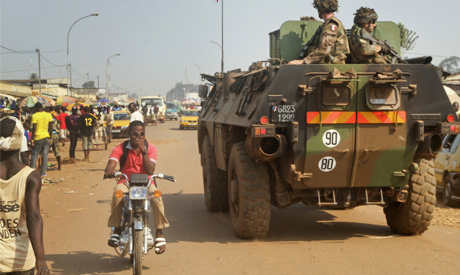
Defence Minister Jean-Yves Lodrian said on Monday that French arms sales increased by 42 per cent or €6.7 billion in 2013 compared to 2012 and are expected to exceed seven billion Euros this year. Lodrian was speaking during the opening of the Eurosatory 2014 arms fair in the Paris suburb of Villepinte.
France recorded a strong comeback in the Middle East market, said Lodrian. The region is responsible for generating 40 per cent of France’s total exports and it has also increased its presence in the Asia and Latin America markets.
In 2013, France’s biggest contract was an agreement to renew the Saudi Arabian navy’s fleet of ships, worth €500 million; a contract to sell a communication satellite to Brazil is worth €300 million.
The minister pointed out that French exports of munitions for use by armoured vehicles grew by 5 per cent in 2013. He noted that the Scorpion programme to update light weapons will soon be launched at the cost of five billion Euros over ten years.
“This means that future equipment will include more than 2,500 armoured vehicles connected to each other by sophisticated electronic systems,” said Lodrian. “The Scorpion programme will allow the Leclerc tank to be in use until 2040.”
Eurosatory 2014 will enable French industrialists “to improve their exports”, the minister added. Nearly 1,500 exhibitors from 58 countries are taking part in the arms fair, which lasts until Friday.
Featured Video
Dan Dicks with James Corbett on Solutions Watch
or go to
Aletho News Archives – Video-Images
From the Archives
$1.5bn up in smoke: US THAAD missile stockpile dries up defending Israel against Iran
By Ivan Kesic | Press TV | July 2, 2025
According to American media, defense news outlets, and independent analysts, the 12-day Israeli military aggression against Iran significantly depleted the US stockpile of THAAD (Terminal High Altitude Area Defense) interceptor missiles.
Citing official sources, American magazine Newsweek reported on Friday that the US transferred a substantial portion of its advanced missile defense capabilities to support the Israeli regime, an effort with questionable results and a critical impact on US strategic reserves.
THAAD, developed by Lockheed Martin arms manufacturing company, is a key component of Israel’s multi-layered air defense architecture. It is designed to intercept medium-range ballistic missiles, including those launched from Iran and Yemen.
The US-made system is capable of targeting short-, medium-, and intermediate-range ballistic missiles during their terminal phase, whether inside or outside Earth’s atmosphere.
THAAD uses a “hit-to-kill” method, relying on kinetic energy rather than explosive warheads to destroy incoming threats, intercepting at altitudes of up to 150 km and ranges between 150-200 km.
Operated exclusively by American personnel, the US military maintains eight THAAD batteries with an estimated 350–400 interceptors in total. The eighth battery was activated during the June 20 Israeli aggression against Iran and is capable of intercepting hypersonic missiles. … continue
Blog Roll
 Aletho News
- Zionist Bought Senate Blocks Information About American Citizens Killed By Israel
- While Gaza dominates the UN, these are the people keeping it alive
- New Report: “Scholasticide and Genocide in Gaza: Assessment, Testimonies and Legal Analysis”
- ‘THAAD Delusion’: Iran war exposes US missile shield limits – The Atlantic
- Moscow issues warning to NATO over Russian exclave
- Yes, the Iran war has destroyed Trump’s presidency
- The fallacy of US delusions about Iran’s economic collapse
- Hezbollah denies Syria cell link, warns of Israeli plan to sow discord
- The legacy of US sanctions, war, and occupation in Iraq
- Iraqi resistance group rejects disarmament, vows to maintain support for Lebanon
- If Americans Knew
- Mamdani releases plan to combat antisemitism and hate crimes in New York City
- Iran’s Revolutionary Guards Publish Letter to the American People
- DMFI launches $1 million ad campaign supporting Virginia’s Elaine Luria
- US Senate blocks resolution seeking report on Americans killed by Israel
- Israeli Attacks Kill Ten Palestinians in Gaza
- Massacre at Minab: The School That Became a Grave
- Israeli media: The IDF Shows It Doesn’t Turn a Blind Eye; It Actively Emboldens Settler Havoc
- As settlers ravage West Bank, Israeli forces kill 10 in Gaza – Daily Update
- New Report: “Scholasticide and Genocide in Gaza: Assessment, Testimonies and Legal Analysis”
- Ex-Biden officials are desperate for a Gaza scapegoat
- No Tricks Zone
- Green Energy Debacle: German Expert Professor Fritz Vahrenholt Warns Of Severe Economic And Social Consequences
- Two More Paleo Reconstructions Affirm Meters-Higher Sea Levels Across Ireland, Brazil 7000-6000 Years Ago
- New Study: Earth And Venus Surface Warmth Largely Explained By Convection And Lapse Rate, Not CO2 Or Radiation
- 2025 Nature Paper Claiming Worsening Global Drought Gets RETRACTED …Heavily Flawed
- New Study: ‘Global Drought Shows No Detectable Recent Acceleration Under Climate Warming’
- Economic Masterminds: German Socialists Suggest Taxing Productivity Gains Stemming From Using AI
- The South China Sea Has Not Been Cooperating With The Climate Change Narrative
- Energy Crisis: Germany Enters Heating Season With Historically Low Gas Reserve Fill Levels
- New Study: The Antarctic Ice Sheet Gained Mass From 2020-2024 Due To Staggering Snow And Ice Accumulation
- Study: Ocean Heating Rates From Thousands Of Years Ago ‘Dwarf’ Modern Ocean Heating Rates

