Threats of sanctions against Ukraine look like blackmail – Lavrov
RT | February 20, 2014
Threats of sanctions against the Ukrainian government look like blackmail, and a demand for early elections is a way to force Kiev towards the EU, Russian Foreign Minister Sergey Lavrov said. The sanctions will only encourage extremists, he added.
Lavrov on Thursday blasted the sanctions against Ukraine, some of which have already been imposed by the US, and are now being eyed by the EU, as “double standards.” Such actions will only encourage extremists to continue violence in the country, he said.
“The [Ukrainian] opposition cannot or does not want to dissociate itself from extremists. The US lays all the blame on the Ukrainian government – this is a double standard,” Lavrov said.
“The EU is also trying to discuss the imposing of sanctions, at the same time there are uninvited missions coming to Ukraine. Such actions resemble blackmail,” the minister said.
Not only are such threats “inappropriate,” but also will aggravate the conflict in Ukraine, Foreign Ministry spokesman, Aleksandr Lukashevich, has said.
There is “no doubt” there is a “plain coup attempt” going on in Ukraine, with armed rioters widely using firearms, the spokesman added.
“We strongly condemn the actions of radicals and extremists, who are mostly responsible for violence and bloody riots. Serious responsibility also lies with the opposition, who have been unable to fulfill the agreements reached with the government,” Lukashevich said.
The so-called Maidan leaders must “immediately stop bloodshed” and “continue seeking a peaceful resolution to the crisis without threats or ultimatums,” he stressed.
Moscow is not interfering in the internal conflict in Ukraine, Lukashevich said, adding that there are plenty of “false flag reports,” such as Russian riot police taking part in quelling the riots, which are distributed over social networks and by “some politicians.”
“As regards to the accusations of Russia, there is a proverb saying that guilty mind is never at ease. We are deeply concerned with what is happening and how the Western states are commenting on it and are trying to affect it. In Western media, the situation is presented in an extremely perverted way, some simple mantras are hammered into heads like that the West is calling on the government to keep its hands off Maidan,” Lavrov said.
However, the Western politicians and media prefer not to go into detail on what is happening on Maidan.
“Police pelted with Molotov cocktails, the killings, the seizure of buildings – none of that is being commented on or explained,” the minister said.
The individual sanctions that the US and the EU are trying to impose are “absolutely illegitimate” from the point of view of the international law, the Russian Foreign Ministry said.
The only legitimate sanctions can be imposed by the UN Security Council, the ministry stressed.
Related articles


Analysis: EU aid to Palestinians — help or hindrance?
IRIN – 19/02/2014
JERUSALEM — The European Union has long been one of the most reliable foreign sources of humanitarian, economic and political aid in the Occupied Palestinian Territories (OPT), providing 426 million euros ($575 million) in 2013 alone.
In 2011, overall overseas development aid to the OPT was worth $2.5 billion, according to the Organization for Economic Co-operation and Development.
Much of this aid to the Palestinian people is focused on a single long-term objective, according to EU officials — the building up of the institutions of a future democratic, independent and viable Palestinian state, living side-by-side in peace and security with Israel.
But with limited progress so far in the current US-brokered peace talks and the wider aim of the realization of a Palestinian state, some in the more austerity-minded EU are starting to wonder if the aid is being well spent, when humanitarian crises in Syria and Mali are in need of greater funds.
“By now there is no Palestinian state. The point is: what are we funding here? Are we helping Israel to maintain the occupation, or are we actually helping Palestinians to build independence?” Caroline du Plessix, a French political scientist specialized on EU policy towards the two-state-solution, told IRIN.
“EU member states are today much more aware than before that their aid has not made possible the creation of an independent Palestinian state,” she said, adding: “The EU is trying to figure out what the best strategy may be. Member states need to show that their policy is reaching its ends and is effective. But if the main solution still is the two-state-solution and we are not really going in that direction, this policy is not sustainable and cannot go on for ever.”
Carrot and stick
A substantial reduction in EU aid seems unlikely at the moment. Such a move would have dramatic consequences for the Palestinian economy and the livelihoods of tens of thousands of families.
“There will be a price to pay if these negotiations falter,” the EU’s ambassador to Israel, Lars Faaborg-Andersen, said in late January. In December 2013, an EU official was cited in the Israeli newspaper Haaretz as saying that the EU may cut off financial aid to the Palestinian Authority if peace talks fail, while “some people suggested giving the money to other countries, like Syria, Mali and other places around the world.”
On the other hand, EU foreign ministers are making unprecedented offers, setting out a very substantial set of incentives designed to encourage both parties to finalize a peace agreement.
“These incentives aim at boosting prosperity for both Israelis and Palestinians by increasing access to European markets, facilitating trade and investment and deepening business and cultural ties,” EU-representative John Gatt-Rutter told IRIN, adding: “Therefore, at this stage our approach is one of encouraging both parties to seize this unique opportunity provided by the peace negotiations.”
“In spite of donor fatigue in Europe we will not see more than a limited gradual reduction — say 10 percent a year — in European aid if negotiations fail because European leaders do not want to trigger major instability or a humanitarian crisis,” Ofer Zalzberg, senior analyst at the International Crisis Group, told IRIN.
Building the state to come
Of the 426 million euros provided by the EU to Palestinians in 2013, 168 million was Direct Financial Support to the PA under the so-called PEGASE-mechanism.
PEGASE helps the PA to meet its recurrent expenses through paying salaries, pensions and social allowances to people in extreme poverty, and through supporting essential public services and revitalizing the private sector through policy reforms, institution-building and strengthening the relations between Palestinian enterprises and European counterparts.
The funds are transferred directly to individual beneficiaries like 55-year-old Nabila from the Qaddura refugee camp. “I get 750 shekels ($210) every three months, have a disabled son, and my husband died 10 years ago. How can I move on?” she told IRIN at the Ramallah district office of the PA’s Ministry of Social Affairs.
“There is poverty and we get tired of this situation,” she said, adding though that restrictions on movement (caused, for example, by the Barrier and numerous Israeli checkpoints allegedly set up for security reasons) highlighted a greater problem that aid would never solve.
“How do you want to solve this problem? Why do we have to be in this miserable situation?”
In addition to the direct financial support, humanitarian aid is provided through the European Commission Humanitarian Aid and Civil Protection Department (ECHO), which spent 35 million euros in 2013 on areas such as humanitarian coordination, legal assistance and emergency response to demolitions and evictions.
Propping up the status quo
EU aid faces the same challenges as non-governmental aid groups have faced — that by providing support they may inadvertently be playing a political role by helping prop up the status quo, giving life-support services that should normally be provided by Israel, as the occupying power.
“EU funding is strategic. Its main aim is to prevent instability. It is thus scared of the PA’s breakdown,” said Caroline Du Plessix.
For Sami Abu Roza, former economic policy adviser to the Palestinian president, this system of dependency has a bitter political aftertaste.
“If you take away the good intention behind the money, aid is a substitute for not having real remedies,” he told IRIN at the PA’s Ministry of Education, where he currently works.
The EU’s approach to solving the conflict, he says, is part of a larger trend he calls “peaceconomics”, the feeding of an illusionary idea that institution-building and economic aid can contribute to real progress, while the actual political causes behind the difficult situation are side-lined and remain unresolved.

Ashraf Azzam sits in the ruins of his house in eastern Gaza City in Jan. 2013 after it was destroyed in an Israeli attack in Nov. 2012. (Ahmed Dalloul/IRIN)
‘Patronizing’ attitude
“The EU’s attitude towards Palestinians is patronizing, as if money was the only thing Palestinians needed,” he said, adding: “They are sacrificing real solutions for economic aid, building a smoke screen around the real problems.”
“Palestinians know that any money coming to Palestinians is political. But they also know that the world won’t stop paying for Palestinians under occupation. That’s the strange kind of peace Palestinians live in.”
In an attempt to decrease the political dependence from aid, the Ministry of Education has implemented a new mechanism, the Joint Financing Agreement, which has been running for about three years.
With aid money flowing from the German KfW Development Bank, Finland, Ireland, Norway and Belgium, directly into a pool at the treasury of the PA’s Ministry of Finance, the Ministry of Education has full ownership of the money and decides how and where it is spent.
“It’s a small path to independence, towards political independence,” Abu Roza said.
But for one senior official in the Ministry, who asked to remain anonymous, the notion of independence remains unreal.
“We don’t have control of our own borders, no taxation, and all of Area C is under Israel’s control. What economic independence are we speaking of?” he said, adding that the PA was not created to become a social entity providing salaries and services to Palestinians. “Its aim was political, and so are our problems.”
‘Aid has not helped to fulfill Palestinians dreams’
Some anomalies in the EU’s funding to the PA emerged recently in a report of the European Court of Auditors (ECA), which criticized the EU’s paying of salaries to Palestinian civil servants in the Gaza Strip “who no longer work.” The report suggested financial assistance “be discontinued and redirected to the West Bank.” Hamas, which took control [won elections] of the Gaza Strip in 2007, is classified by the EU as a terrorist group.
So the EU continues to support the former PA structure in Gaza with salary payments even though the PA no longer has any control: The political cost of stopping funding is seen as too great.
From 2008 to 2012, the average number of civil servants and pensioners whose salaries were at least partly paid by the EU rose from 75,502 to 84,320, about half of the PA’s 170,000 civil servants and pensioners.
During the same period, the average monthly PA wage bill for EU-beneficiaries rose from 45.1 million euros to 62.9 million euros, an increase of 39 percent.
But at the same time, contributions to PEGASE for Civil Servants and Pensioners fell from 21.3 million euros (47 percent of total pay to eligible beneficiaries) in 2008 to 10.4 million euros (16 percent) in 2012, mainly due to reductions in contributions from donors, such as Spain.
These pressures point to a new funding environment in which the PA is finding it increasingly difficult to pay salaries and pensions on time.
The UN Works and Relief Agency for Palestinian Refugees (UNRWA) faces similar challenges. This year it has a deficit of $65 million in its core budget and struggles with declining international funding. The EU is UNRWA’s largest donor.
“Aid has not helped to fulfill Palestinians dreams, nor did it lead to sustainable development. Independence is today further away than 20 years ago,” Alaa Tartir, program director of the Palestinian Policy Network, told IRIN.
Despite the contradictions in EU aid policy, it is clear that without EU aid the humanitarian situation in OPT would worsen significantly.
“If we reach a condition where there is no more aid for PA employees, who will fill this gap? This will have a severe humanitarian impact,” said Tommaso Fabri, head of the Jerusalem office of Doctors Without Borders.
One beneficiary of the EU’s direct assistance to the PA is 49-year-old Said Samara, a teacher at the Secondary Boarding School in Ramallah.
“As a teacher, I hope that this aid will continue. But as a teacher, and for my students, I also need some hope for an independent Palestinian country,” he said.
Ukraine crisis: EU Parliament’s MP urges to impose sanctions on Russia
Voice of Russia | February 19, 2014
A member of the ruling faction in the European Parliament has come up with an initiative to impose sanctions against Russia that he said was supporting Ukraine’s regime. Russia has been in a waiting stance ever since the escalation on Tuesday, when Ukraine’s capital Kiev descended into more chaos.
This came today from Poland’s MEP Jacek Sariush-Volsky of the center-right European People’s Party at a press conference in the EU parliament.
However, a spokesperson with the European Commission ruled out the possibility of sanctions against Russia ahead of the EU foreign chiefs’ meeting on February 20.
Conversely, the spokesman said that the 28 foreign policy heads of EU member countries were going to engage in consultations with Russia in order to clear up all controversies that exist between Moscow and Brussels on the possible outcome of an association deal between Ukraine and the EU.
Russia blames ‘extremists’ for Ukraine crisis, suggests attempted coup
Russia has apportioned all blame for the deteriorating situation in Ukraine on the extremists. This is according to President Putin’s spokesman Dmitry Peskov.
“The president believes that the ongoing situation in Ukraine is the fault of the extremists,” Mr. Peskov said today.
He added Russia wished that its Ukrainian partners would “ensure the settlement of the situation that has taken shape as soon as possible.”
“Moscow strongly condemns violence of radical elements, who in the breach of all agreements previously reached actually used the implementation of the conditions on amnestying previously detained people and returned to violent actions immediately,” Peskov told reporters.
“Besides, their actions can be treated and are treated in Moscow solely as an attempt at a state coup,” Peskov said. “Together with the seizure of state organizations in various cities of Ukraine, the seizure of law enforcement facilities and attempts to seize arms occurs as well,” he said.
Russia biding its time on Ukraine
Moscow is keeping tabs on Ukraine but will not interfere with the crisis for now, President Putin’s spokesman has said Wednesday. Russia has been in a waiting stance ever since the escalation on Tuesday, when Ukraine’s capital Kiev descended into more chaos as death toll rose to 25 people.
“The Kremlin is closely watching the ongoing situation in Ukraine, and we will definitely speak on it a bit later,” Putin’s spokesman Dmitry Peskov said today in an interview with online magazine Slon.
“The idea is not to intervene in the Kiev unrest. We’ve said that many times, the Kremlin will stay true to this stance.”
Militants’ actions in Kiev on Fe 18-19 not spontaneous, but staged – Russian diplomat
Chairman of the Federation Council’s International Affairs Committee Mikhail Margelov believes that militants’ actions on Kiev streets on February 18-19 are not spontaneous, but staged.
The senator noted the common delusion that the so-called Maidan and its battle squad is not stage-managed, it is Cossak outlaws and “national power”. “The very events at Grushevsky Street disproved it: the militants dealt with law enforcers’ attacks too skillfully, refilled armory of shields, casks and clubs, and added cocktail bombs to convert it into napalm. The course of street riots February 18-19 showed that the militants fight in the so-called “Halych format” — it came to gunfire, and there are fatalities on both sides. There is evident organized nature behind the fighting,” Margelov believes.
In addition, he said that “after a fragile truce, the Maidan gains momentum in provinces: in Lvov, Ternopol, Ivano-Frankovsk”. “They not only occupy state offices there, but storm police wards and dismantle Berkut officers,” the Russian senator stated.
Margelov expressed confidence that “debacles and shooting that John Kerry dubbed “fight of the Ukrainian majority for Europe’s democratic future” are fairly staged and managed by experienced specialists in street fighting”. “Klitschko and Yatsenyuk hardly possess such military talents,” he assumed, adding that the job of these politicians is “to compose joint plans with the West to make up an oppositionist government and carry out a constitutional reform, which ought to be followed by western financial aid”.
Chairman of the Federation Council’s International Affairs Committee says it’s early to make any forecasts yet. “It would be a great achievement to stop the street mayhem and start a responsible political dialogue. Still, even this may not consolidate the Ukrainian society. It’s split: I cannot remember a single Ukrainian parliament that hadn’t fistfights,” the senator concluded.
Related article

Moscow blames radicals for deadly clashes in Ukraine, EU leaders ponder sanctions against government
RT | February 19, 2014
Moscow believes the deadly clashes in Kiev were an attempt at a coup by radicalized protesters. EU leaders have quite an opposite view, calling for sanctions against Ukrainian government officials.
In a statement issued on Wednesday, Russia’s Foreign Ministry described the violence in Ukraine as an attempt at a coup d’etat and a “brown” revolution, accusing European politicians and institutions of “refusing to admit that all of the responsibility for the actions of radical forces in Ukraine rests with the opposition.”
“The Russian side is demanding the leaders on the streets to stop the violence in their country, immediately resume dialogue with the lawful government without threats and ultimatums,” the statement reads.
The Kremlin has also interpreted the violence in Ukraine as a coup attempt. President Putin’s spokesman said that “from the point of view of the Russian leadership”, all of the responsibility for the bloodshed could be laid at the door of “the extremist forces.”
Twenty-six people were killed overnight in the most violent clashes yet to have occurred between security forces and protesters since the opposition took to the streets of Kiev in November 2013. Ten of the casualties are Ukrainian police officers, who died of gunshot wounds, as did the rest of the victims, the Interior Ministry reported.
It added that up to 700 people were injured, more than 70 of those being policemen.
The Ukrainian Health Ministry officially confirmed that a journalist from the local Vesti newspaper, Vyacheslav Veremey, died in Kiev after a gunshot wound.
The Ukrainian Ministry of the Interior believes the casualties in the clashes could have been killed by the radicals, because the police do not use fire arms.
“Taking into consideration the nature of the dead civilians’ wounds and also the nature of the weapons, which have been confiscated, we can assume that these wounds were inflicted by violent protesters,” a statement at the Ministry’s website says. “Police officers and interior troops do not use fire arms. Law enforcers are only using non-lethal weapons.”
Some of the European leaders have not been convinced and have been quick to lay the blame for the violence on the Ukrainian president. The Swedish Foreign Minister said on Twitter that blood was on Yanukovich’s hands.
British Foreign Secretary William Hague was less emotional, but also accused the government of allowing the bloodshed to happen.
Several EU leaders have already spoken of introducing sanctions against the Ukrainian leadership, who they view as responsible for the crisis.
Germany, which previously refused to back Washington’s calls for sanctions against Ukraine’s government, could soon have a change of heart, according to German Foreign Minister Frank-Walter Steinmeier .
“Whoever is responsible for decisions that lead to bloodshed in the center of Kiev or elsewhere in Ukraine will need to consider that Europe’s previous reluctance for personal sanctions must be rethought,” he said, according to AP.
Polish Prime Minister Donald Tusk said on Wednesday he would be pressing European Union leaders to impose sanctions on Ukraine’s government.
“I will today hold talks with the leaders of the biggest EU countries and institutions, and persuade them to impose sanctions – personal and financial,” Tusk told a special session of the Polish parliament, Reuters reports. “I hope that such a stance from Poland will help the EU as a whole in taking fast decisions.”
Belgian Foreign Minister Didier Reynders has also supported sanctions against the Ukrainian government, according to Itar-Tass.
Earlier, US Ambassador to Ukraine Geoffrey R. Pyatt blamed Viktor Yanukovich for the escalation of the crisis.
“From this moment on, the USA holds Yanukovich responsible for everything that happens in Ukraine,” he told the Zerkalo Nedeli newspaper, following a meeting with Foreign Minister Leonid Kozhara.
Moscow believes that this accusatory position of the US could have, in fact, contributed to the escalation of violence Kiev has been witnessing, and, holding the president solely responsible for the crisis, is giving carte blanche to extremist radical forces out on the streets.
The Russian Foreign Ministry said on Tuesday it considered the crisis “a direct result of the permissive policy exercised by those western politicians and European structures, who from the very beginning turned a blind eye to the aggressive actions of the radical forces in Ukraine.”
At least 5 dead, scores injured in Ukraine clashes
Press TV – February 18, 2014
At least five anti-government protesters have died and scores of others injured in clashes with police outside the Ukrainian parliament building in central Kiev, opposition sources say.
Five protesters were shot dead near the parliament building during Kiev’s worst clashes for more than three weeks, said Oleh Musiy, a top medic for the protesters.
Reports say over 47 police officers and 150 protesters were also injured in the clashes on Tuesday.
This is while anti-government protesters briefly seized the ruling party headquarters in Kiev on Tuesday.
Violent clashes erupted after opposition lawmakers unsuccessfully attempted to pass constitutional changes stripping President Viktor Yanukovych of some of his powers.
Russia said the policies of Western countries have contributed to the latest clashes between pro-EU protesters and police.
The United States and the European Union have traded accusations with Russia, each side blaming the other of interfering in Ukraine’s internal affairs by attempting to impose their own choices on the country.
The crisis began late last year after President Yanukovych pulled out of a deal with the EU, which could have paved the way for Kiev to join the bloc.
Yanukovych refused to sign the Association Agreement at the third Eastern Partnership Summit in the Lithuanian capital Vilnius on November 29, 2013, after EU leaders called on Ukraine to allow jailed opposition leader Yulia Tymoshenko to travel overseas for medical treatment.
EU spending over $400m on secret drone project – Civil rights group
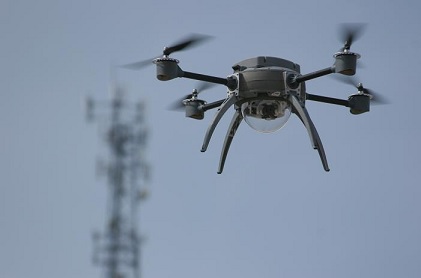
RT | February 12, 2014
The EU is investing hundreds of millions of taxpayer euros in the development of surveillance drones without political oversight, a report claims. The authors of the document warn the EU is secretly encouraging “the further militarization” of the region.
A report entitled ‘Eurodrones Inc.’ published by rights group Statewatch describes how the EU is channeling taxpayers’ money into surveillance drone projects without their knowledge.
“More than 315 million euro ($430 million) has so far been spent in EU research funding on drone technology or drones geared towards a specific purpose such as policing or border control,” writes the report.
However, the document points out that the research funding is largely “invisible” to the people and parliaments of Europe and lacks the proper political oversight. According to the report this was achieved by a secret budget line that was included in new EU legislation on air traffic control for this year.
The report describes a 20-year roadmap that aims to introduce surveillance drones into EU airspace and highlights that this plan is being shaped by “thinly accountable officials” and representatives of large corporations.
“The EU’s emerging drone policy has come about following years of successful lobbying by defense and security companies and their associates,” said co-author of the report Chris Jones in a statement on Statewatch’s website, adding that these are the same defense and security contractors that have the most to gain.
The drones in question would engage in civilian surveillance activities, such as border patrols and the search for criminals. However, Statewatch is concerned that the convert nature of the program lends itself to the “further militarization” of the European Union.
Calling for “proper democratization” and the opening of public debate on the issue, the report notes the EU turned a blind eye to a European Commission statement in 2012 that declared the development of unmanned surveillance craft should be more transparent.
It recommended the issue be discussed with a number of organizations, including the European Group on Ethics, the LIBE Committee of the European Parliament or the European Agency for Fundamental Rights and Data Protection Supervisor.
“Yet none of these bodies have been involved,” writes the report. “Their absence from policy debates means that many of the conversations the EU should be having about drones – such as what they should and should not be used for, and how to prevent further militarization and the deployment of fully autonomous weaponized drones – have been all but ignored.”
Although the authors of the report do not outwardly criticize research into drones, they do stress the fact that the current program is too “heavily skewed toward the interests of the big defense contractors.”
They argue that this could lead to “unwarranted state surveillance and repression,” as well as enhanced prospects for combat drone research for a global arms race.
“It’s easy to see why people are so excited about drones: there are many positive things they could be used for,” said co-author Ben Hayes. He concluded that given the “clear implications” for civil liberties in the balance, the EU has a “moral and legal obligation” to uphold fundamental rights and the rule of law.
Related articles


US focused on destabilizing Ukraine: Ex-US official
Press TV – February 8, 2014
Having long displayed a “habit” of attempting to overthrow democratic governments, the United States now seems focused on destabilizing Ukraine, says a former US official, Press TV reports.
“The control freaks in Washington think that only the decisions that Washington makes and imposes on other sovereign countries are democratic,” wrote Paul Craig Roberts, who is a former assistant secretary of the US Treasury for economic policy, in an article on Press TV’s website on Friday.
“The world has witnessed this American self-righteousness for eons as Washington overthrows one democratic government after the other and imposes its puppet,” Roberts said, adding that “for the moment, Washington is focused on destabilizing Ukraine.”
Ukraine has been seeing anti-government protests since about two months ago. The unrest began after Ukrainian President Viktor Yanukovych refrained from signing a political and trade deal with the European Union (EU).
Clashes erupted several times between Ukrainian protesters and police forces during anti-government demonstrations. Arrests were made in the course of the protests as well.
In an effort to calm the political unrest, President Yanukovych invited all parties, including the opposition, to engage in dialog. However, the Ukrainian opposition leaders turned down his offer of negotiations.
He also offered top government positions to the opposition leaders, which they rejected. Yanukovych also pledged to change the constitution to reduce the president’s powers, following another decision to scrap an anti-protest law.
The unrest, nevertheless, continues unabated in Ukraine.
“Of all the violent protests that we have been witness to, the Ukrainian one is the most orchestrated,” Roberts said. “Ukraine has a democratically-elected government, but Washington doesn’t like it because Washington didn’t pick it.”
“Ukraine – or the western part of it – is full of Washington-funded NGOs, whose purpose is to deliver Ukraine into the clutches of the EU, where US and European banks can loot the country, as they looted, for example, Latvia,” he said, adding that, “The NGOs financed by Washington are committed to delivering Ukraine into Washington’s hands, where Ukrainians can become American serfs.”
On Thursday, Russian President Vladimir Putin’s economic advisor Sergey Glazyev described the situation in Ukraine as an attempted coup.
“According to our information, American sources spend $20 million a week on financing the [Ukrainian] opposition and rebels, including on weapons,” Glazyev told the Ukrainian edition of Russian newspaper Kommersant.
EU police want ‘remote kill switch’ on every car
RT | January 30, 2014
The EU is considering making mandatory the equipping of all cars sold in the union with devices, which would allow police to remotely disable engines, according to leaked documents.
If the plan goes as planned, European law enforcers will be able to stop fugitives, suspected criminals and even speeding drivers with a simple radio command from a control room.
The technology is part of a six-year development plan by the ‘European Network of Law Enforcement Technologies’, or Enlets, a working group for police cooperation across the EU, reports the Telegraph.
“Cars on the run can be dangerous for citizens,” the newspaper cites a document leaked by state power watchdog Statewatch.
“Criminal offenders will take risks to escape after a crime. In most cases the police are unable to chase the criminal due to a lack of efficient means to stop the vehicle safely,” it says.
Remote control of car electronics is far from novel. A modern car is equipped with a network of microcomputers, which monitors and controls everything from ignition and flow of fuel to radio station being played. And increasingly cars can communicate wirelessly, a technology called telematics.
Loan firms and car dealerships have been using the benefits of electronically-controlled cars for years. A vehicle sold in the subprime market can be equipped with a black box, which reminds the client of overdue payments with honking horns and flashing lights and would disable the engine completely a few days later, unless the money is paid. And a GPS receiver would tell the dealership the exact location where the car can be collected.
Remote tracking and control is also used as anti-theft measure. Services like General Motors’ Stolen Vehicle Slowdown can force a stolen car to drop speed and stop on a remote command from the service provider.
Giving police the ability to do the same to any car in the EU does not thrill some rights advocates cautious of giving the government more authority.
“We need to know if there is any evidence that this is a widespread problem. Let’s have some evidence that this is a problem, and then let’s have some guidelines on how this would be used,” Statewatch told the Telegraph.
Apart from that, there is a concern of possible hacker attacks, which could use the remote kill switch for nefarious ends. In March 2010 Texas police arrested a former car dealership employee, who used its car tracking and repossession system to disable some 100 vehicles in Austin in revenge for being laid-off.
Researchers from the University of California, San Diego and Washington University tested how much harm hacking can do to a car’s electronic controller. The study conducted in 2010 showed that a criminal can relatively easily interfere with safety-critical systems like brakes.
The security of connected cars has not become hacker-proof since. At the 2014 Consumer Electronics Show this month, technology firm Harman warned that hacking problems for modern cars are very serious because the infrastructure of their electronic components was not designed with networking in mind, so they are not ready for the level of exposure to cyber-attacks that internet connectivity brings.
Related article

Legal Analysis Requested By Members Of Parliament Says GCHQ Surveillance Is Illegal Too
By Mike Masnick | Techdirt | January 29, 2014
We’ve seen a few times now how legal analysis suggests that the NSA’s surveillance activities are clearly illegal. However, over in the UK, the government has appeared to be even more protective of the surveillance by GCHQ, and even more insistent that the activities have been legal. While there’s a thriving debate going on in the US, many UK officials seem to have pushed back on even the possibility of a similar debate — and there has been little suggestion of reform. While it’s still unclear how much reform there will be of the NSA, the UK government hasn’t indicated even an openness to the idea.
But now, similar to the recent PCLOB report in the US, a legal analysis of the GCHQ, written at the request of a bunch of Members of Parliament, has argued that much of what GCHQ is doing is illegal under UK law:
In a 32-page opinion, the leading public law barrister Jemima Stratford QC raises a series of concerns about the legality and proportionality of GCHQ’s work, and the lack of safeguards for protecting privacy.
It makes clear the Regulation of Investigatory Powers Act 2000 (Ripa), the British law used to sanction much of GCHQ’s activity, has been left behind by advances in technology. The advice warns:
- Ripa does not allow mass interception of contents of communications between two people in the UK, even if messages are routed via a transatlantic cable.
- The interception of bulk metadata – such as phone numbers and email addresses – is a “disproportionate interference” with Article 8 of the ECHR.
- The current framework for the retention, use and destruction of metadata is inadequate and likely to be unlawful.
- If the government knows it is transferring data that may be used for drone strikes against non-combatants in countries such as Yemen and Pakistan, that is probably unlawful.
- The power given to ministers to sanction GCHQ’s interception of messages abroad “is very probably unlawful”.
There’s a lot more in the report, described at that Guardian link above, which is well worth reading. It makes you wonder how much longer the UK government can pretend that everything is perfectly fine with the GCHQ’s activities.
Related articles


Ukraine PM Azarov submits resignation to ease tensions
Press TV – January 28, 2014
Ukrainian Prime Minister Mykola Azarov has tendered his resignation in an attempt to help resolve a two-month political crisis in the country.
“I have taken a personal decision to ask the president of Ukraine to accept my resignation from the post of prime minister with the aim of creating an additional possibility for a political compromise to peacefully resolve the conflict,” he said.
World boxing champion and opposition leader Vitali Klitschko said Azarov’s announced resignation was only “a step to victory”.
Moments ahead of the news, Ukraine’s parliamentarians began holding a special session over a controversial anti-protest law, which has sparked a wave of clashes between protesters and police forces over the past weeks.
In a televised statement, Justice Minister Olena Lukash said the lawmakers would discuss the government’s responsibility in the crisis, signaling that a cabinet reshuffle could be imminent.
Earlier on Monday, in a meeting between the government and the opposition, Ukrainian President Viktor Yanukovych and the opposition agreed to scrap the anti-protest law.
Yanukovych also pledged an amnesty for detained demonstrators if the barricades set up by them on the streets are taken down.
In a bid to resolve the crisis, the Ukrainian president also offered to bring the opposition into the government. Leaders of the opposition, however, have rejected the offer.
Ukraine has been rocked by anti-government protests since Yanukovych refrained from signing the Association Agreement with the European Union at the third Eastern Partnership Summit in the Lithuanian capital, Vilnius, on November 29, 2013.
Related article

Ashton continues to support Egyptian regime and expresses satisfaction about the referendum
MEMO | January 21, 2014
 The European Union High Representative for Foreign Policy Catherine Ashton has said that the EU is pleased with the results of last week’s constitutional referendum in Egypt.
In an interview with Al-Jazeera English, Ashton suggested that the referendum was an important step towards returning to the path of democracy.
The referendum was boycotted by the Muslim Brotherhood and other political forces opposed to the military coup that ousted Egypt’s first democratically elected government on 3 July 2013. In the lead up to the referendum, activists campaigning for a “no” vote were harassed and arrested, and during the two-day election several protesters were even killed.
While Ashton noted that the democratic transition must include everyone, she made an exception for those who support “violence” or “terrorism”.
Related article

The real causes of the catastrophic crisis in Greece and the “Left”
By Takis Fotopoulos | The International Journal of INCLUSIVE DEMOCRACY, Vol. 9, Nos. 1/2 (2013)
1. The integration of Greece into the EU is the real cause of its catastrophic crisis
The almost complete destruction of the lower classes in Greece is not due to the causes usually attributed to it by the “Left”. 1 In fact, contrary to the misleading “explanations” provided by this Left and the Right alike, the actual cause is the full integration of the Greek economy into neoliberal globalization, through its accession into the EU. This has meant the complete transformation of Greece into an economic and political protectorate of the Transnational Elite.2 The catalyst for this crisis was Greece’s unofficial default, which, however, was merely the consequence of the destruction of its production structure, as a result of the opening, and liberalization of markets imposed by the EU, following Greece’s entry in 1981. It is therefore no wonder that both the Left (apart from the Communist Left) and the Right––in fact, the entire Greek establishment––are fully united in not challenging the main cause of the present economic destruction: Greece’s membership in the EU.
In other words, contrary to the deceptive pre-election promises of SYRIZA, (which is an organic part of the Euro-left that has just chosen its leader, A. Tsipras, as its candidate for president of the EU Commission), there is no way that an EU/EMU Member State could refuse to apply the policies imposed by neoliberal globalization, as borne out by History with Mitterrand, Lafontaine, Hollande, et. al. It is equally disorienting to state, as SYRIZA does, that, if elected to power, it would revert the catastrophic legislation imposed by the well known ‘Troika’ (representing the IMF, the EU and the ECB) in the past three years or so.
The above deceptive promises are based on the myth that neoliberalism is some kind of a mistaken ideology or a doctrine 3 upheld by “bad” politicians such as Thatcher, Merkel, Blair, etc. However, neoliberal globalization is, in fact, a systemic phenomenon implying, also, that the EU members’ economic growth does not rely anymore mainly on the domestic market but on the international market (within the EU and without) and that it is the Trans-National Corporations (TNCs) that control world production and trade, and–– through the Transnational Elite 4 ––the international political, military and cultural institutions. So, only if the EU governments were taken over by the Euro-Left and they then forced the TNCs based in EU to operate solely within the EU area––imposing in the process strict social controls on the movement of capital and commodities from the other economic blocks (i.e. those of the Far East and America)––only then could the European economy be indifferent to its own level of competitiveness and live in the Euro-Left’s nirvana, happily ever after. In fact, however, EU is moving in exactly the opposite direction of further integration within the New World Order (NWO) defined by neoliberal globalization! This is clearly shown by the current negotiations between EU and US for a Transatlantic Free Trade Area.
2. Capitalist globalization can only be neoliberal
The Euro-elites simply cannot afford to lose more of their competitiveness. In fact, the real reason for the creation of EU and later of the Eurozone had nothing to do with the ideals of freedom, democracy, human values and the rest of its ideology, as EU’s history has clearly shown. It was the growing gap in competitiveness (in terms of EU’s share of world exports) during the 1980s, which led the Euro-elites to speed up the integration procedures, which were mostly dormant up to then. The EU economic failure was clearly due to the fact that the competitiveness of its commodities was increasing at much slower rates than those of is competitors, particularly in the low cost countries of the Far East. 5 As supporters of the EU and its integration were claiming at the time, only a market of continental dimensions could provide the security and the economies of scale that were necessary for the survival of the European capital in the hyper-competitive global market that was just emerging at the time.
However, despite the high degree of integration achieved by the ‘Single European Act’ in the 1990s, and even despite the creation of the Eurozone, its decline in competiveness continued. Thus, whereas the share of Euro-exports to world exports was 35.8% in 1990, ten years later, it has fallen to 29.7% and by 2010 it has fallen further to 26.3%! 6 In other words, within two decades, the Eurozone countries have lost more than a quarter of their competitiveness, measured in terms of their share in world exports. Although the Euro-elites are well aware of the fact that a significant part of their ‘loss’ of exports is, in fact, due to their de-industrialization––because of the move of industrial capital by the TNCs (most of them based in the metropolitan countries including the Eurozone ones) towards the low-cost paradises of China, India and the rest–– this is obviously no consolation to their own workers (and electorates), which benefit very little (if at all!) by globalization!
The present EU policies therefore, are not the result of a conspiracy or a satanic plot of the elites to exploit further the European workers but simply of the fact that the opening and liberalization of markets required by globalization, so that TNCs could expand their activities further, inevitably led to the present neoliberal policies implemented by every country fully integrated into the New World Order. To put it simply, globalization in a capitalist world can only be neoliberal and the rest is mythology adopted by today’s bankrupt world “Left”––apart from the genuine (but diminishing) anti-systemic Left.
3. Competitiveness is the rule
If, therefore, we accept the premise that the Euro-elites have no other option but to improve their competitiveness within the globalized economy, the next question is how competitiveness can be improved. There are two main ways in which a country’s competitiveness could improve: either by changing relative prices; i.e. squeezing the prices of locally produced commodities with respect to those produced abroad by squeezing wages and salaries, or by improving productivity of locally produced commodities, which may lead to lower cost of production without reducing real wages and salaries or to better quality products, etc. Changing relative prices in the former way is the easy solution, as it could be implemented, almost at a stroke, in case a country controls its own currency and Greece itself has repeatedly resorted to devaluation policies in the post-war period to improve, temporarily, its competitiveness. In case, however, a country does not control its currency, as is the case of Greece in the Eurozone, the only other option, given its historically low level of labor productivity because of the lack of investment in research and development, is the presently implemented policy of squeezing wages and salaries in the hope that the cost of production will fall accordingly. In fact, the level of Greek productivity of labor, for instance, has always been historically much lower than that of the Eurozone (in 2006 it was just 77% of the average Eurozone one7, something which is not that much peculiar if we take into account the fact that the proportion of productive investments to the GNP is much higher in the European ‘North’ than in the ‘South’ in general and Greece in particular.
So, if we start with the premise that the uneven levels of competitiveness and productivity are unavoidable in an economic union like the EU, which consists of countries at highly different levels of development (as they have been historically formed within a very uneven development process like the capitalist one), then we may easily understand the causes of the crisis in countries like Greece. The fact, therefore, that a Eurozone country like Greece, facing a problem of low competitiveness, cannot devalue its currency (i.e. change its relative prices without the need for suppressing domestic wages and incomes) is not the cause of the crisis. This may be the cause of a similar competitiveness crisis of an advanced capitalist country like Germany but not of a country like Greece where low competitiveness is a development problem. Particularly so, when the Greek entry to the EU and later to the Eurozone had, itself, significantly exacerbated the development problem by effectively dismantling the productive structure of the country, as its infant industry and agriculture were not capable to compete with the imported commodities, following the opening and liberalization of markets imposed by the Single Market. Under these conditions, even a Greek exit from the Euro and a devaluation of the drachma that will be re-introduced in its aftermath, could only have temporary effects on Greek competitiveness, unless mass investment in its productive structure takes place at the same time, which is far from guaranteed in an internationalized market economy.
4. The EU as a mechanism to transfer surplus from its “South” to its “North
In other words, competitiveness at the core Euro countries, which are characterized by higher levels of labor productivity than in the South, mainly depends on keeping wages and prices under control, so that German commodities continue to be competitive (because of their higher quality and so on) compared to similar commodities produced in East Asia and beyond. On the other hand, competiveness in the European periphery, which consist of countries with lower levels of labor productivity, like Greece, mainly depends on improving productivity through new investment on R&D. Therefore, the competitiveness problem in the South is mainly a development problem and refers to the need of creating a strong productive base, which will not be formed within the process of uneven capitalist development (as today), but within a process of social control of the economy to create a self-reliant economy.
Yet, despite the fundamental difference concerning the causes of low competitiveness between the “North” and the “South” of the EU, in the framework of the post-Maastricht Europe, a common policy was adopted for all member countries––a policy that was determined by the needs and the interests of the North. Thus, the Single Market did not mean the unification of peoples, as the EU propaganda presented it, not even the unification of states, but simply the unification of free markets. ‘Free markets’, however mean not only open markets (i.e. the unhibited movement of commodities, capital and labour), but also flexible markets (i.e. the elimination of any obstacle in the free formation of prices and wages, as well the restriction of state role in the control of economic activity, which implies the drastic restriction of the element of ‘national economy’. This was the essence of the neoliberal globalization characterizing the new institutional framework of the EU; i.e., that the state control of the domestic market of each member state (which was drastically restricted within the Single Market of 1992) was not replaced by a corresponding EU control of it, apart from some (mostly nuissance) regulations on uniformity, etc. In other words, the new institutions aimed at the maximization of the freedom of organized capital, whose concentration was facilitated in any way possible, and the minimization of the freedom of organized labor, whose co-ordination was restricted in any way possible and mainly through the unemployment threat.
If Germany is indeed the country which was on the receiving end of the greatest benefits from joining EU and the Eurozone, whereas the countries of the European South received the least benefits out of it, this was far from accidental or due to the bad designing of the Eurozone as post-Keynesians and other reformists (including the Euro-Left!) argue. When the Eurozone was institutionalized at the beginning of the new millennium Germany already enjoyed relatively high levels of labor productivity and competitiveness and the new currency essentially has ‘frozen’ the relative deviations between the advanced North of the Eurozone and the much less advanced South (parts of which were, in fact, underdeveloped). Then, the Single Market itself, under conditions of a common currency, brought about a relative equalization of commodity prices and a certain increase in wages in the South, as workers were struggling to maintain the real value of wages and at the same time to narrow the gap in wages with Northern workers. On the other hand, German employers were in a much better position to suppress wage rises because of the difference in labor productivity they enjoyed due to advanced technology and investment in R&D, but also due to better relative prices. As Wolfgang Münchau put it, “Germany entered the Eurozone at an uncompetitive exchange rate and embarked on a long period of wage moderation. Macroeconomists would say Germany benefited from a real devaluation against other members”.8 If we add to this, that the countries in the South no longer had the power to devalue their currencies, whereas Germany did not have any need to devalue its currency as long as it could keep wage rises in pace with labor productivity increases, then we can understand why (and how) the Eurozone essentially functions as an economic mechanism to transfer economic surplus from the countries of the European South to those in the North and particularly Germany.
5. The disorienting role of the “Left”
The obvious conclusion is that it is impossible to take any radical measures to exit from the current economic (and not only!) disaster, without a unilateral exit from the EU along with a cancelation of the debt (for which the people were never asked anyway), as well as the discarding of all legislation imposed by the Troika and the adoption at the same time of the necessary geostrategic changes. Only this way, Greece could retrieve the minimum required economic and national sovereignty for a strategy for economic self-reliance, which is necessary for the permanent exit from the crisis, through building a new productive structure to meet its needs.
This means that the views that we could implement another policy even within the Eurozone, as SYRIZA suggests, or that it would suffice to exit from the Euro (without the parallel direct and unilateral exit from the EU) to implement a radically different economic strategy (as other Left organizations suggest), are completely misleading. This is because, as I tried to show above, the cause of the present economic catastrophe in Greece is neither the austerity policies of the Troika, as the supporters of the former view claim, nor the poor design (and implementation) of the Euro that led us to deficits and massive debt, as argued by the supporters of the latter view.9
Thus, supporters of the former view (Laskos and Tsakalotos), in fact, reproduce the myths of an obsolete internationalism according to which the struggle of the European proletariat within the EU will reverse the austerity policies, despite the fact that, after almost five years of economic crushing of the popular strata, there has not been even a single (“official” or unofficial) European strike against these policies! On the other hand, the supporters of the latter view (Flassbeck and Lapavitsas), acting as the “Plan B” of the Euro-elite––in case it is forced to expel (temporarily or permanently) Greece from the Eurozone––argue for a Greek exit from the Euro, but not from the EU. However, in both cases, the failure of the proposed policies can be taken for granted, although the consequences will not be identical.
Thus, in the first scenario of a SYRIZA-based government (which looks likely following the Euro elections that could well function as a catalyst for general elections) it is a matter of time for its failure to become evident, if it insists on its pro-EU and pro-Euro policy. Despite its present rhetoric, it would simply have to follow the same economic policies as the present government, perhaps with a minor relaxation of austerity policies (assuming that the Euro-elites will find a way to cancel part of the Debt to make the rest of it payable). As markets will remain open and liberalized under a Syriza government (the party never challenged this fundamental tenet of neoliberal globalization), labor markets will also continue to be flexible. However, open and liberalized markets mean:
- wages and salaries will be kept at around their present minimum levels, or, at least, these levels will be the basis for any future increases strictly linked to productivity rises;
- Public Health and Education will never recover from their present dismantling, as the government will have to continue implementing the present Eurozone strict fiscal policies to keep budget deficits under strict controls;
- the selling out of the social wealth of Greece, following privatizations of essential services like electricity, water, transport, ports and airports, communications (and now even Greek islands!) will not be reversed, making the implementation of any effective social policy to protect the victims of globalization impossible;
- Unemployment may marginally fall from the present almost 30% of the working population (and 60% of young people) only to the extent that foreign investors will be attracted by the present extremely low wages/salaries and the ‘political stability’ that SYRIZA might secure. However, given the strong competition on this front by other low-wage countries in the Balkans and beyond (East Asia), unemployment is bound to be stabilized at very high levels for any foreseeable future, with young Greeks having either to work in Greece’s “heavy industry” (as the establishment calls tourism) or emigrate.
Clearly, this Latin-Americanization (or Balkanization) of the Greek economy will become permanent under SYRIZA’s pro-EU policy, and in the elections to follow a (likely brief) period of SYRIZA in power, the party will probably have the fate of the social democratic party PASOK, which has effectively been demolished. In fact, this would simply be the belated end of the Euro-Left in Greece, following the similar end of this kind of “Left” in the rest of Europe, in the era of globalization. Yet, the International “Left” is unable to see all this and would be ready to celebrate the possible victory of SYRIZA in the next elections,10 whereas Leo Panitch, (writing for the well known international “Left” newspaper which fully supported all the criminal wars of the Transnational Elite in the last two decades) is so enthusiastic about the new kind of ‘progressive’ reform SYRIZA represents that he became almost lyrical when reading that Tsipras “spoke in terms of the ‘historic opportunity’ that now exists for a left alternative to the current capitalist ‘European model’. 11 This, at the very moment when the same Tsipras is also indirectly praised by the New York Times, the leading organ of the Transnational Elite, presumably as a ‘serious’ Left politician worthy of its trust, compared to the ‘loony left’ they so despise:
“Mr. Tsipras…has backed away from past rhetoric about abandoning the euro and said he does not want Greece to drop out of the 18-country zone that uses the currency. But he does want a fundamental reworking of the terms of Greece’s bailout funds, worth 240 billion euros, or about $328 billion.“Our intention is to change the framework, not smash the euro”, he said.12
On the other hand, in the case of the second scenario; i.e., of a Left government that decides a Greek exit from the Euro (but stays in the EU), the image would be much more blurred, as the reintroduction and significant devaluation of the reintroduced drachma would initially bring in some positive results. But, these would be completely temporary, unless they were accompanied by a parallel radical restructuring of the productive structure, based on social decisions and not left to the market forces, as both scenarios implicitly or explicitly assume. And this brings us back to the need for a strategy of self-reliance that presupposes a Greek exit from both the Euro and the EU.
The main reason why both approaches are not only wrong, but also completely misleading, is that they are not based on the fact that the current devastating crisis is due to structural reasons having everything to do with the uneven capitalist development process, which is further exacerbated in the era of neoliberal globalization and the consequent policies implemented by the EU, and very little to do with the broader financial crisis 13, austerity policies, or the debt itself and the ways to deal with it.
Thus, as far as austerity policies are concerned, it is obvious that they are a consequence and not the cause of the devastating crisis. The solution, therefore, to the “problem” is not just the redistribution of income at the expense of profits and in favor of wages, as (supposedly is the conclusion drawn by a “Marxist” kind of analysis), as this inequality is nothing new but an inherent characteristic of the capitalist system. Unsurprisingly, despite growing world inequality during the era of neoliberal globalization, the system has enjoyed a sustained period of expansion throughout this period, with world GDP rising at an average 2.9% in the 1990s and 3.2% in the period up to the beginning of the latest financial crisis (2000-08). 14 Furthermore, the only case that a systematic redistribution of income against the rich took place in a capitalist system was when the tax burden was shifted to the rich during the social democratic period (approx. 1945-1975). However, this kind of redistribution is simply not feasible anymore in the NWO of Neoliberal Globalization, since Trans-national Corporations can easily move to tax havens like Ireland, India, etc. leaving massive unemployment and poverty behind them.
Yet, neither the deficits and the consequent debts were created by reckless fiscal policies nor, as more sophisticated variations on the same theme maintain, because of the fact that the German elite were suppressing wage rises at a time when the other elites in the Eurozone, and particularly the elites in the Euro periphery, were doing the exact opposite. This policy, according to the same argument, had created an artificial competitive advantage and consequent Balance of Payments (BP) surpluses in Germany and, vice versa in the European South; i.e., low competitiveness and BP deficits. This, in turn, had led to excessive borrowing by the peripheral countries, (made easy by the fact that it was backed up by a strong currency, the Euro) up to the moment that the fiscal “bubble” burst, when the consequent shortage of liquidity made lending to these countries much tighter, leading to the well known debt crises in countries like Greece. Not surprisingly, the Euro-elite, has just decided to adopt an even tighter economic control of the Euro-members, through the Banking Union. 15
6. Concluding remarks
The crucial, therefore, issue arising is the following one: can a small Euro-peripheral country like Greece afford not to implement the policies of neoliberal globalization today? Or, should, (as the present “Left” suggests), the millions of unemployed and poor wait for a radical change in the balance of forces in the EU and the Eurozone, so that a new pan-European Left government proceeds with the ‘progressive’ reforms suggested by its supporters? Alternatively, should they better wait for a new socialist revolution in order to proceed with genuine socialist policies, as suggested by the dwindling anti-capitalist Left? My sympathies would, of course, be (as have always been) for an anti-systemic Left, as it is the only one which struggles against its full integration into the system and the NWO. Yet, it is obvious to me that, today, this Left is no less millenarian than the integrated into the system “Left”, and as such is equally useless to the victims of globalization, who every day lose even more of their hope for any better future, many of them increasingly resorting to suicide.
Under these conditions, it is clear to me that only if a country broke away from the internationalized market economy and pursued a policy of self-reliance, it could retrieve the necessary degree of economic and therefore national sovereignty, so that it is the people who will be determining the economic process; i.e., which economic and social needs are met and how, instead of leaving this life-and-death issue to ‘market forces’ and the Social Darwinism they inevitably imply. This, for a country like Greece would imply the need for the creation ‘from below’ of a Popular Front for Social and National Liberation 16 (instead of relying on the professional politicians of the “Left” or of the Right), which will formulate a program for the radical changes needed to achieve the short term aim of restoring full social control on all markets, unilaterally cancelling the Debt and all related legislation imposed by the Troika, as well as a unilateral exit from the EU. Although socialization of the banking system and of the de-nationalized industries, particularly those covering basic needs (energy, water, transport, communication, etc.) will be necessary even at this early stage, yet, the medium-term aim will have to be economic self-reliance, so that the basic needs of all citizens are met through the rebuilding of the economic structure according to social needs rather than according to market demand. On the other hand, the issue of the systemic change; i.e., whether Greece would be in the future a state-socialist society, an Inclusive Democracy,17 or a radical kind of social democracy, will be determined by the people themselves at a later stage once the present crucial problems concerning their survival have been sorted out.
In fact, Greece will not be alone in such a struggle against the NWO and neoliberal globalization. Not only the peoples in other countries in the European periphery and beyond would follow its example when they realize that there is a way out of the present catastrophe, HERE and NOW, but also the peoples who already fight against neoliberal globalization would also join the common struggle against the New World Order of neoliberal globalization. In fact, this struggle is already intensifying from Latin America (Venezuela, Bolivia, Cuba, et. al.) up to the Eurasian peoples of the ex-USSR, and the peoples in the Arab countries (I do not, of course, mean the pseudo-revolutions in Tunisia and Egypt or the engineered insurrections in Libya and Syria),18 who shed their blood every day in the struggle for their national and social liberation.
[1] See e.g. the recent book by two members of the SYRIZA leadership, ( one of them a member of Parliament representing the party), Christos Laskos and Euclid Tsakalotos, Crucible of Resistance: Greece, the Eurozone and the World Economic Crisis, (Pluto Press, Sept. 2013).
[2] Takis Fotopoulos, “Greece: The implosion of the systemic crisis”, The International Journal of INCLUSIVE DEMOCRACY, Vol. 6, No. 1 (Winter 2010); see, also, Greece as a protectorate of the transnational elite, (Athens: Gordios, November 2010).
[3] see e.g. Naomi Klein, The Shock Doctrine:The Rise of Disaster Capitalism, (London: Penguin, 2008).
[4] see for the meaning and significance of the Transnational Elite in administering the NWO, Takis Fotopoulos, Subjugating the Middle East: Integration into the New World Order – Vol. 1: Pseudo-Democratization, (Progressive Press, 2014), Part I.
[5] Thus, whereas the EU share of world exports was stagnant between 1979 and 1989 , the US share increased by 3.5% and the Far Eastern share increased by a massive 48% ,(World Bank, World Deνelopment Report 1991, Table 14).
[6] World Bank, World Development Indicators 2002, (Table 4.5) & World Development Indicators 2012, (Table 4.4).
[7] World Bank, World Development Indicators 2008, Table 2.4.
[8] Wolfgang Münchau, “Germany’s rebound is no cause for cheer”, Financial Times, 29/8/2010.
[9] Heiner Flassbeck and Costas Lapavitsas, Left-Wing Strategies to Solve the Euro Crisis, (Rosa Luxemburg Foundation:: Berlin, May 2013, and full version in “The systemic crisis of the euro – true causes and effective therapies”.
[10] See e.g. Andreas Bieler, “Crucible of Resistance: Class Struggle Over Ways Out of the Crisis”, Socialist Project • E-Bulletin No. 926 January 10, 2014; Reproduced also in Global Research.
[12] Andrew Higgins, “Opposition Dissent Tempers Greek Attempts at Optimism”,
The New York Times, 12/1/2014.
[13] Takis Fotopoulos, “The myths about the economic crisis, the reformist Left and economic democracy”, The International Journal of INCLUSIVE DEMOCRACY, Vol. 4, No. 4, (October 2008).
[15] ‘Big step’ reached in rescue plan for eurozone banks, BBC News, 12/12/2013; See, also, Maria Snytkova, “European countries lose bank sovereignty”, English Pravda, 2012/2013
[16] see Takis Fotopoulos, “Neoliberal Globalization and the need for popular fronts for national and social liberation”, The International Journal of Inclusive Democracy, Vol. 9, No. 1/2 (2013), (under publication).
[18] Takis Fotopoulos, Subjugating the Middle East: Integration into the New World Order – Vol. 2, Engineered Insurrections, (Progressive Press, 2014).
Featured Video
No Vote, No Representation, No State: Democracy, Israeli Style
or go to
Aletho News Archives – Video-Images
From the Archives
Sanctions, War and the Policy of Dual Containment
By SASAN FAYAZMANESH | March 17, 2008
It is now nearly three decades since the Unites States adopted the policy of dual containment of Iran and Iraq. While much has been written about the containment of Iraq, there has been very little in-depth analysis of this policy when it comes to Iran. In a book that is going to be released on March 31, 2008, entitled The United States and Iran: Sanctions, Wars and the Policy of Dual Containment (Routledge), I attempt to address this shortcoming by investigating when and why the US policy of containment of Iran came about, how it evolved, and where it stands today.[1] To the extent that Israel has been involved in US policy making, the study will also include the role that Israel has played in the containment of Iran. Also, since the fate of Iran has been inextricably linked to that of Iraq, occasionally the investigation will overlap with the containment of Iraq.
The policy of dual containment of Iran and Iraq originated during the Carter Administration, but it was not until the Clinton Administration that the expression “dual containment” became popular. … continue
Blog Roll
 Aletho News
- No Vote, No Representation, No State: Democracy, Israeli Style
- Zionist Bought Senate Blocks Information About American Citizens Killed By Israel
- While Gaza dominates the UN, these are the people keeping it alive
- New Report: “Scholasticide and Genocide in Gaza: Assessment, Testimonies and Legal Analysis”
- ‘THAAD Delusion’: Iran war exposes US missile shield limits – The Atlantic
- Moscow issues warning to NATO over Russian exclave
- Yes, the Iran war has destroyed Trump’s presidency
- The fallacy of US delusions about Iran’s economic collapse
- Hezbollah denies Syria cell link, warns of Israeli plan to sow discord
- The legacy of US sanctions, war, and occupation in Iraq
- If Americans Knew
- Mamdani releases plan to combat antisemitism and hate crimes in New York City
- Iran’s Revolutionary Guards Publish Letter to the American People
- DMFI launches $1 million ad campaign supporting Virginia’s Elaine Luria
- US Senate blocks resolution seeking report on Americans killed by Israel
- Israeli Attacks Kill Ten Palestinians in Gaza
- Massacre at Minab: The School That Became a Grave
- Israeli media: The IDF Shows It Doesn’t Turn a Blind Eye; It Actively Emboldens Settler Havoc
- As settlers ravage West Bank, Israeli forces kill 10 in Gaza – Daily Update
- New Report: “Scholasticide and Genocide in Gaza: Assessment, Testimonies and Legal Analysis”
- Ex-Biden officials are desperate for a Gaza scapegoat
- No Tricks Zone
- Green Energy Debacle: German Expert Professor Fritz Vahrenholt Warns Of Severe Economic And Social Consequences
- Two More Paleo Reconstructions Affirm Meters-Higher Sea Levels Across Ireland, Brazil 7000-6000 Years Ago
- New Study: Earth And Venus Surface Warmth Largely Explained By Convection And Lapse Rate, Not CO2 Or Radiation
- 2025 Nature Paper Claiming Worsening Global Drought Gets RETRACTED …Heavily Flawed
- New Study: ‘Global Drought Shows No Detectable Recent Acceleration Under Climate Warming’
- Economic Masterminds: German Socialists Suggest Taxing Productivity Gains Stemming From Using AI
- The South China Sea Has Not Been Cooperating With The Climate Change Narrative
- Energy Crisis: Germany Enters Heating Season With Historically Low Gas Reserve Fill Levels
- New Study: The Antarctic Ice Sheet Gained Mass From 2020-2024 Due To Staggering Snow And Ice Accumulation
- Study: Ocean Heating Rates From Thousands Of Years Ago ‘Dwarf’ Modern Ocean Heating Rates

