The Future of Transnistria in context of the Ukrainian crisis
Ari Rusila’s Balkan Blog | April 2, 2014
“Transnistrian claim for independence is being met with a certain degree of sympathy and understanding by some of the western experts. As an example, a Finnish political analyst and blogger Ari Rusila can be named; he usually presents the Transnistrian de facto statehood in quite a positive light, admitting, in particular, that “Transnistria called my attention first because of its quite ready statehood elements without outside recognition, second because of changed circumstances in respect for international law after Kosovo unilateral declaration of independence and thirdly because I predicted that Trandnistria could be the next tinderbox of separatism between Georgian conflict and coming troubles in Ukraine”. He believes that Transnistria, if compared with Kosovo, has had in fact much more reasons to be recognised internationally.”
The quote above is from a paper Transnistrian Conflict: State of Affairs and Prospects of Settlement prepared for the International conference “Frozen Conflicts” in Europe (1st September 2012, Bled, Slovenia) by Natalia Belitser and the сitation is based on my articles published in 2008.
Transnistria as next Crimea?
 As the crisis in Ukraine continues to simmer, tensions in the country’s western neighbor Moldova are beginning to rise. Seeking to capitalize on President Putin’s eagerness to use the protection of Russian speaking populations in the region as a pretext to expand his territorial claims, members of two separate enclaves in Moldova are looking toward Moscow for protection.
Now after the uprising and coup in Ukraine and reunification of Crimea with Russia, tensions have grown to encompass Ukraine’s neighbor Moldova, which like Ukraine has been making efforts to integrate further with the West. Moldova has signed the EU association and free trade agreements at the November 2013 Vilnius summit, during which former Ukrainian President Viktor Yanukovich rejected the deals. The Moldovan government has also supported the Western-backed uprising in Ukraine. Western experts worry that the next “Crimea” could be the breakaway region of Transnistria. Many locals there don’t share that fear, and if the last referendum holds, a large majority would welcome a Russian annexation.
Transnistria (aka Transdniestria aka Pridnestrovie) – is a new and emerging country in South Eastern Europe, sandwiched between Moldova and Ukraine.
 The official language of Transnistria is Russian, not Moldovan, while the vast majority of schools teach the Cyrillic alphabet instead of the Roman alphabet used in the rest of the country. Recently Transnistria adopted Russian legislation, a clear signal of the region’s preference for joining Moscow’s Customs Union.
Most recently, Russian military exercises held on March 25 in Moldova’s breakaway territory of Transdniestria have stoked these tensions. From its side the parliament of Transdniestria has sent a proposal to the Russian State Duma asking for Russian legislation to join the breakaway Republic to Russia. The document originated as a feedback to a new draft law in Russia facilitating the accession of the new subjects to the Russian Federation. The talks within the 5+2 format (Russia, Moldova, Transdniestria, Ukraine, the OSCE and observers from the EU and the US) are scheduled for 10-11 April 2014.
Transnistria – and Gagauzia – are joining to the same club with Abkhazia and South Ossetia as de facto states, namely political entities that have achieved enduring ‘internal sovereignty’ – but lack ‘external sovereignty’ in the international system. As Crimea is annexed to Russia and these other “states” can follow to join Russia or continue as de facto states, this development is creating a Northern Black Sea corridor, front-line or buffer zone.
Good Moldavia-Transdniestria cooperation since 2009 and 2011 elections
New prospects for conflict settlement have appeared after parliamentary elections of 2009 in the Republic of Moldova. The new pro-Western team – the Alliance for European Integration (AEI) – that substituted the Communist Party ruling the country from 2001, proved much more pragmatic and willing to deal with its breakaway region than their predecessors pursuing rather an isolationist policy. In 2011 presidential elections President Igor Smirnov, who had been in power since Transnistria declared independence in 1990, failed to be re-elected, and was replaced by opposition MP, younger leader of the ‘Revival’ movement and former speaker of the Supreme Council Yevgeny Shevchuk. These political changes engendered hopes for the settlement process to acquire a positive momentum.
The power changes in Transnistria give a positive boost to the peace process: the official negotiation process re-started after six years interruption in November 2011 in Vilnius, Lithuania, to be followed by a meeting on February 2012 in Dublin, Ireland and on April 2012. Finally the Document of principles and procedures and agenda of negotiations were agreed in Vienna, whereas on July 2012 this Document was signed. It included such issues as freedom of movement of passengers and cargo, traffic of trains, education issues, etc. Also a new approach (joint initiative of Russia and Germany, Meseburg, 2010) by the EU and Russia to resolve the conflict was the setting up of a joint Political and Security Committee (EU-R-PSC) at minister level. Related to security issues it was stated that the EU and Russia will cooperate in particular towards a resolution of the Transnistria conflict with a view to achieve tangible progress within the established 5 + 2 format (Russia, Ukraine, Moldova, Transnistria, OSCE, EU, US). This cooperation could include a joint EU-Russia engagement, which would guarantee a smooth transition of the present situation to a final stage.
The main approach of the resumed negotiations and to the settlement process in general focuses on Confidence Building Measures (CBMs). This means that political aspects of the settlement, for example a mutually accepted status of Transnistria, are not yet touched. Instead status there has been attempts to make concrete steps of issues that both sides of the conflict are interested in. These kinds of initiatives have already been following:
- Engaging the sides into direct dialogue;
- Establishing joint Working/Expert Groups on confidence building measures;
- Conducting meetings at a higher level (for example, between Prime-minister of the RM Vlad Filat and leader of Transnistria Yevgeny Shevchuk, also between the heads of foreign ministries Eugen Carpov and Nina Stanski);
- Elaborating and implementing national and international social and economic development projects etc.
The direct dialogue at a higher level has been clear contrast to previous lack of any kind of dialogue lasting for years. There has been a dozen WGs e.g. on economy, agriculture and environment, transport, railways, civil status acts, social and humanitarian aid, health, education, combating organised crimes and emergencies, telecommunications, and customs, whereas the WG on demilitarisation and security is not yet operating.
Growing dispute between parties started by unilateral actions by both parties during Spring 2013. First Moldova established migration control of citizens in six checkpoints, second Transnistria started to mark a border in the Security Zone or line of demarcation after the Transnistrian war (1992).
Tools against Transnistria by Chisinau and Kiev
Arsenal of tools, on that, with the support of Western “ideological-political sponsors” can count in Chisinau and the Kiev could be as following:
- further tightening of border crossing for the residents of Transnistria, the introduction of a total ban on border crossings by social groups and citizens (It is noteworthy in this regard that, that the admission of foreign citizens on the territory of Moldova is liberalized; Ukrainian officials should examine stats for financial gains and losses of the Moldovan side of Ukrainian companies, eg, air carriers);
- blocking of export-import operations of the Transnistrian side, transit of Transnistrian goods, that is well within the common “European” subjects as a way to European integration, with a demand for the full functioning of the Transnistrian Moldovan business rules;
- ban on border crossings by vehicles with Transnistrian number;
- refusal to issue permits for the Transnistrian passenger transport;
- Moldovan law on the placement of the Ukrainian checkpoints with full access to all databases and law carry out administrative functions, etc..
Russia ready if needed
NATO warns that a pro-Russian enclave of Moldova could be Moscow’s next target after Crimea. NATO’s top military Commander Europe Philip Breedlove said on 23rd March 2014 that Russia has a large force on Ukraine’s eastern border and is worried it could pose a threat to Moldova’s separatist Transnistria region.Russia launched a new military exercise, involving 8,500 artillery men, near Ukraine’s border 10 days ago. Breedlove said the Russian tactic should lead the 28-nation Western military alliance to rethink the positioning and readiness of its forces in eastern Europe so that they were ready to counter Moscow’s moves.
How the Russian forces would get there. Transnistria is landlocked and to go there by land would require Russian troops to travel through much of western Ukraine. However, Russian forces based in the Eastern side of the Black Sea and Crimea could conceivably stage an airlift. Since it fought a brief separatist war to breakaway from Moldova in 1991, Transnistria has been home to “peacekeeping” garrison of around 1,000 Russian troops. One option is also that Russia includes Odessa in a “security belt” that would presumably stretch from Crimea to Transnistria.
In Moldova the appetite for European integration among Moldova’s 3.5 million people had weakened even before the crisis in Ukraine and a parliamentary election later this year may bring a return of the pro-Russian Communist Party that was forced from power in 2009. Moldova falls under the EU’s Neighborhood Policy, which contains no explicit similar promise of membership like the countries of the Western Balkans .
Gagauzia had a referendum too
 Following a 1991 declaration of independence, Comrat (Gagauzia’s capital) agreed to remain a part of Moldova, after Chisinau agreed to grant the region the legal status of a “special autonomous zone”. Chisinau’s control was challenged in February 2014 when Gagauzia held a referendum to join the Russia-led Eurasian Customs Union. The referendum followed Chisinau’s decision to enter a Free Trade Agreement with the European Union in November 2013–the same agreement former Ukrainian President Victor Yanukovich snubbed when he opted for the customs union with Moscow. Gagauzia has a population of about 155,000 people, mostly ethnically Gagauz, Turkic-speaking Orthodox Christians. Many locals fear that Chisinau’s EU-integration agenda masks an intention to unite Moldova with neighboring Romania.
An overwhelming majority of voters in a referendum – with turnout more than 70 % – held in the autonomous Moldovan region of Gagauzia have voted for integration with a Russia-led Customs Union: 98.4 percent of voters chose closer relations with it. In a separate question, 97.2 percent were against closer EU integration. In addition, 98.9 percent of voters supported Gagauzia’s right to declare independence should Moldova lose or surrender its own independence. Moldova’s government claims that referendum in Gagauzia is unconstitutional and had no legal legitimacy.
Although the security situation in Gagauzia remains calm, on 26 March, the executive committee in Comrat announced its decision to establish independent police stations in Comrat, as well as in its northern and southern cities of Briceni and Cahul. Moscow has demonstrated support for Gagauzia following the referendum. The regions governor, Mihail Formuzal visited Moscow in March 2014 and got the impression that Russia was prepared to expand partnerships with Gagauzia and “provide the necessary support”. Despite an embargo against wine produced in Moldova, Russia began importing it from Gagauzia, likely as an attempt to encourage additional good will toward its benefactor.
Bottom line
It easy to say that incorporating Transnistria – as well Gagauzia, Abkhazia, South Ossetia and Crimea – into Russia (and Nagorno-Karabakh into Armenia) is against international law (whatever it is) or some international agreements. Although Russia moving into eastern Ukraine could be–as the West says–invasion-occupation-annexation. However in my opinion these actions are more legitimate or justified than U.S.expansionism, secret wars and interventions around the globe.
The other possible scenarios than unification with Russia for Transnistria are e.g:
- Status quo maintained aka “frozen conflict” continues;
- Re-integration of the Republic of Moldova with condition of establishing a confederation including Moldova, Transnistria and Gaugazia as entities, this could be a pragmatic option for Ukraine too;
- Transnistria gaining its independence and state sovereignty recognized internationally;
- Joining Ukraine, which option after coup in Kiev seems most unlikely option to me.
In my opinion even without international recognizion Transnistria meets the requirements for sovereign statehood under international law, as it has a defined territory, a population, effective elected authority, and the capability to enter into international relations. It is currently seeking international recognition of its de facto independence and statehood. As long as Transnistria’s status is unresolved, it will be a serious political obstacle to Moldova’s joining the EU, which does not want another “divided state” like Cyprus on its hands.
Related article

The Danger of False Narrative
By Robert Parry | Consortium News | March 27, 2014
The American people got a nasty taste of the danger that can come with false narrative when they were suckered into the Iraq War based on bogus claims that Saddam Hussein was hiding weapons of mass destruction that he planned to share with al-Qaeda.
Nearly 4,500 U.S. soldiers died in the conflict along with hundreds thousands of Iraqis. The war’s total financial cost probably exceeded $1 trillion, a vast sum that siphoned off America’s economic vitality and forced cutbacks in everything from education to road repair. Plus, the war ended up creating an Iraqi base for al-Qaeda terrorists that had not existed before.
But perhaps an even more dangerous problem coming out of the Iraq War was that almost no one in Official Washington who pushed the false narrative – whether in politics or in the press – was held accountable in any meaningful way. Many of the same pols and pundits remain in place today, pushing similar false narratives on new crises, from Ukraine to Syria to Iran.
Those false narratives – and their cumulative effect on policy-making – now represent a clear and present danger to the Republic and, indeed, to the world. The United States, after all, is the preeminent superpower with unprecedented means for delivering death and destruction. But almost nothing is being done to address this enduring American crisis of deception.
Today, Official Washington is marching in lockstep just as it did in 2002-03 when it enforced the misguided consensus on Iraq’s WMD. The latest case is Ukraine where Russian President Vladimir Putin is accused of committing “aggression” to expand Russian territory at the expense of noble ”democratic” reformers in Kiev.
Not only is this the dominant storyline in the U.S. media; it is virtually the only narrative permitted in the mainstream press. But the real narrative is that the United States and the European Union provoked this crisis by trying to take Ukraine out of its traditional sphere of influence, Russia, and put it in to a new association with the EU.
While there’s nothing inherently wrong with Ukraine joining with the EU or staying with Russia (or a combination of the two) – depending on the will of the people and their elected representatives – this latest U.S./EU plan was motivated, at least in part, by hostility toward Russia.
That attitude was expressed in a Sept. 26, 2013, op-ed in the Washington Post by Carl Gershman, the neoconservative president of the National Endowment for Democracy, which doles out more than $100 million in U.S. funds a year to help organize “activists,” support “journalists” and finance programs that can be used to destabilize targeted governments.
Gershman, whose job amounts to being a neocon paymaster, expressed antagonism toward Russia in the op-ed and identified Ukraine as “the biggest prize,” the capture of which could ultimately lead to the ouster of Putin, who “may find himself on the losing end not just in the near abroad but within Russia itself.”
The NED, which was founded in 1983 to do in relative openness what the CIA had long done in secret, listed 65 projects that it was financing in Ukraine, using U.S. taxpayers’ money. In other words, Gershman’s op-ed reflected U.S. policy – at least inside the State Department’s still-neocon-dominated bureaucracy – which viewed the EU’s snatching of Ukraine from Russia’s embrace as a way to weaken Russia and hurt Putin.
‘European Aspirations’
Later, as the Ukrainian crisis unfolded, another neocon, Assistant Secretary of State for European Affairs Victoria Nuland, reminded Ukrainian businessmen that the United States had invested $5 billion in their “European aspirations,” implying that the U.S. expected something for all this money.
You might wonder why the American taxpayers should spend $5 billion on the “European aspirations” of Ukraine when there are so many needs at home, but a more relevant question may be: Why is the United States spending that much money to stir up trouble on Russia’s border? The Cold War is over but the hostility continues.
Former Defense Secretary Robert Gates described this thinking in his memoir, Duty, explaining the view of President George H.W. Bush’s Defense Secretary Dick Cheney: “When the Soviet Union was collapsing in late 1991, Dick wanted to see the dismantlement not only of the Soviet Union and the Russian empire but of Russia itself, so it could never again be a threat to the rest of the world.”
As Vice President, Cheney and the neocons around him pursued a similar strategy during George W. Bush’s presidency, expanding NATO aggressively to the east and backing anti-Russian regimes in the region including the hardline Georgian government, which provoked a military confrontation with Moscow in 2008.
Since President Barack Obama never took full control of his foreign policy apparatus – leaving the Bush Family apparatchik Gates at Defense and naming neocon-leaning Democrat Hillary Clinton as Secretary of State – the bureaucratic momentum toward confronting Russia continued. Indeed, the elevation of operatives like Nuland, the wife of prominent neocon Robert Kagan, gave new impetus to the anti-Russian strategy.
Secretary of State John Kerry, who got his “dream job” last year with the considerable help of his neocon chum Sen. John McCain, has acted as a kind of sock puppet for this neocon-dominated State Department bureaucracy.
Either because he is overly focused on his legacy-building initiative of an Israeli-Palestinian peace deal or because he has long since sold out his anti-war philosophy from the Vietnam War era, Kerry has repeatedly taken the side of the hawks: on Syria, Iran and now Ukraine.
On Syria and Iran, it was largely the behind-the-scenes cooperation between Obama and Putin that tamped down those crises last year and opened a pathway for diplomacy – much to the chagrin of the neocons who favored heightened confrontations, U.S. military strikes and “regime change.” Thus, it became a neocon priority to divide Obama from Putin. Ukraine became the wedge.
The Crisis
The Ukrainian crisis took a decisive turn on Nov. 21, 2013, when President Viktor Yanukovych rebuffed a deal offered by the EU and the International Monetary Fund because it would have imposed harsh austerity on the already suffering Ukrainian people. Yanukovych opted instead for a more generous aid package of $15 billion from Russia, with few strings attached.
But Yanukovych’s turning away from the EU infuriated the U.S. State Department as well as pro-European demonstrators who filled the Maidan square in Kiev. The protests reflected the more anti-Russian attitudes of western Ukraine, where Kiev is located, but not the more pro-Russian feelings of eastern and southern Ukraine, Yanukovych’s strongholds that accounted for his electoral victory in 2010.
Though the Maidan protests involved hundreds of thousands of Ukrainians simply eager for a better life and a less corrupt government, some of the most militant factions came from far-right parties, like Svoboda, and even neo-Nazi militias from the Right Sektor. When protesters seized City Hall, Nazi symbols and a Confederate battle flag were put on display.
As the protests grew angrier, U.S. officials, including Assistant Secretary Nuland and Sen. McCain, openly sided with the demonstrators despite banners honoring Stepan Bandera, a World War II-era fascist whose paramilitary forces collaborated with the Nazis in the extermination of Poles and Jews. Nuland passed out cookies and McCain stood shoulder to shoulder with right-wing Ukrainian nationalists. [For more on the role of Ukrainian neo-Nazis, watch this report from the BBC.]
On Feb. 20, the violence intensified as mysterious snipers fired on both protesters and police. As police fought back, neo-Nazi militias hurled Molotov cocktails. More than 80 people were killed including more than a dozen police officers, but the U.S. press blamed the Yanukovych government for the violence, portraying the demonstrators as innocent victims.
Official Washington’s narrative was set. Yanukovych, who had been something of a hero when he was moving toward the EU agreement in the early fall, became a villain after he decided that the IMF’s demands were too severe and especially after he accepted the deal from Putin. The Russian president was undergoing his own demonization in the U.S. news media, including an extraordinary denunciation by NBC at the end of the Sochi Winter Olympics.
In the U.S. media’s black-and-white scenario, the “pro-democracy” demonstrators in the Maidan were the good guys who were fired upon by the bad-guy police. The New York Times even stopped reporting that some of those killed were police, instead presenting the more pleasing but phony narrative that “more than 80 protesters were shot to death by the police as an uprising spiraled out of control in mid-February.”
To this day, the identity of the snipers who touched off the conflagration remains in serious doubt. I was told at the time that some U.S. intelligence analysts believed the shooters were associated with the far-right opposition groups, not with the Yanukovych government.
That analysis gained support when a phone call surfaced between Estonia’s Foreign Minister Urmas Paet and European Union foreign affairs chief Catherine Ashton, Paet reported on a conversation that he had with a doctor in Kiev who said the sniper fire that killed protesters was the same that killed police officers.
As reported by the UK Guardian, “During the conversation, Paet quoted a woman named Olga – who the Russian media identified her as Olga Bogomolets, a doctor – blaming snipers from the opposition shooting the protesters.”
Paet said, “What was quite disturbing, this same Olga told that, well, all the evidence shows that people who were killed by snipers from both sides, among policemen and people from the streets, that they were the same snipers killing people from both sides.
“So she also showed me some photos, she said that as medical doctor, she can say it is the same handwriting, the same type of bullets, and it’s really disturbing that now the new coalition, that they don’t want to investigate what exactly happened. … So there is a stronger and stronger understanding that behind snipers it was not Yanukovych, it was somebody from the new coalition.”
Ashton replied: “I think we do want to investigate. I didn’t pick that up, that’s interesting. Gosh.”
Though this exchange does not prove that the opposition used snipers to provoke the violence, it is relevant information that could have altered how Americans viewed the worsening crisis in Ukraine. However, except for an on-the-scene report from CNN with the same doctor, the Paet-Ashton phone call disappeared into the U.S. media’s black hole reserved for information that doesn’t fit with a preferred narrative.
Black Hats/White Hats
So, with giant black hats glued onto Yanukovych and Putin and white hats on the protesters, the inspiring but false U.S. narrative played out in heroic fashion, with only passing reference to the efforts by Yanukovych to make concessions and satisfy the protesters’ demands.
On Feb. 21, Yanukovych tried to defuse the violence by signing an agreement with three European countries in which he accepted reduced powers, moved up elections so he could be voted out of office, and pulled back the police. That last step, however, opened the way for the neo-Nazi militias to seize government buildings and force Yanukovych to flee for his life.
Then, on Feb. 22, under the watchful eye of these modern-day storm troopers, a rump parliament – in violation of constitutional procedures – voted to impeach Yanukovych, who reemerged in Russia to denounce the actions as a coup.
Despite this highly irregular process, the U.S. government – following the lead of the State Department bureaucracy – immediately recognized the new leadership as Ukraine’s “legitimate” government. Putin later appealed to Obama in support of the Feb. 21 agreement but was told the ouster of Yanukovych and the installation of the U.S.-backed government were a fait accompli.
The rump parliament in Kiev also accused Yanukovych of mass murder in connection with the shootings in the Maidan — an accusation that got widespread play in the U.S. media – although curiously the new regime also decided not to pursue an investigation into the identity of the mysterious snipers, a point that drew no U.S. media interest.
And, a new law was passed in line with the desires of right-wing Ukrainian nationalists to eliminate Russian as one of the country’s official languages. New government leaders also were dispatched to the Russian-ethnic regions to take charge, moves that, in turn, prompted resistance from Russian-ethnic citizens in the east and south.
It was in this context – and with appeals from Yanukovych and ethnic Russians for help – that Putin got permission from the Duma to intervene militarily if necessary. Russian troops, already stationed in bases in Crimea, moved to block the Kiev regime from asserting its authority in that strategic Black Sea peninsula.
Amidst this political chaos, the Crimean parliament voted to break away from Ukraine and join Russia, putting the question to a popular vote on March 16. Not surprisingly, given the failed Ukrainian state, its inability to pay for basic services, and Crimea’s historic ties to Russia, Crimean voters approved the switch overwhelmingly. Exit polls showed about a 93 percent majority, just three points less than the official results.
Russia then moved to formally reclaim Crimea, which had been part of Russia dating back to the 1700s, while also massing troops along the borders of eastern Ukraine, presumably as a warning to the Kiev regime not to crush popular resistance to the anti-Yanukovych coup.
A Divergent Narrative
So, the factual narrative suggests that the Ukrainian crisis was stoked by elements of the U.S. government, both in the State Department and in Congress, encouraging and exploiting popular resentments in western Ukraine. The goal was to pull Ukraine out of Russia’s orbit and put it into the EU’s gravitational pull.
When Yanukovych balked at IMF’s demands, a process of “regime change” was put in motion with the U.S. and EU even turning their backs on the Feb. 21 agreement in which Yanukovych made a series of concessions negotiated by European countries. The deal was cast aside in a matter of hours with no attempt by the West to uphold its terms.
Meanwhile, Putin, who was tied up with the Sochi Olympics and obsessed over fears that it would be targeted by Islamist terrorists, appears to have been caught off-guard by the events in Ukraine. He then reacted to the alarming developments on Russia’s border, including the emergence of neo-Nazis as prominent figures in the coup regime in Kiev.
In other words, a logical – and indeed realistic – way to see the Ukraine-Crimea crisis is that Putin was largely responding to events that were outside his control. And that is important to understand, because that would mean that Putin was not the aggressor spoiling for a fight.
If there was premeditation, it was coming from the West and particularly from the neocons who remain highly influential in Official Washington. The neocons also had motive to go after Putin, since he helped Obama use diplomacy to quiet down dangerous crises with Syria and Iran while the neocons were pushing for more confrontation and U.S. military strikes.
But how did the U.S. news media present the Ukraine story to the American people?
First, there was the simplistic and misleading depiction of the pro-EU demonstrations as “democratic” when they mostly reflected the discontent of the pro-European population of western Ukraine, not the views of the more pro-Russian Ukrainians in the east and south who had pushed Yanukovych to victory in the 2010 election. Last time I checked, “democracy” referred to rule by the majority, not mob rule.
Then, despite the newsworthiness of the neo-Nazi role in the protests, the U.S. news media blacked-out these brown shirts because that ugly reality undercut the pleasing good-guys-vs.-bad-guys storyline. Then, when the snipers opened fire on protesters and policemen, the U.S. news media jumped to the conclusion that the killers were working for Yanukovych because that, too, fit with the desired narrative.
The violent overthrow of the democratically elected Yanukovych was hailed as an expression of “democracy,” again with the crucial role of the neo-Nazi militias largely airbrushed from the picture. The unanimous and near unanimous parliamentary votes that followed – as storm troopers patrolled the halls of government buildings – were further cited as evidence of “democracy” and “reform.”
The anger and fear of Ukrainians in the east and south were dismissed as Russian “propaganda” and Crimea’s move to extract itself from this political chaos was denounced as Russian “aggression.” U.S. news outlets casually denounced Putin as a “thug.” Washington Post columnist George F. Will called Putin “Stalin’s spawn.”
Former Secretary of State Clinton cited the Crimea situation to compare Putin to Hitler and to suggest that Putin was intent on recreating the old Soviet empire, though Crimea is only 10,000 square miles, about one-tenth of one percent the size of the old Soviet Union.
And, it wasn’t just that some or nearly all mainstream U.S. news organizations adopted this one-sided and misguided narrative. It was a consensus throughout all major U.S. news outlets. With a uniformity that one would normally associate with a totalitarian state, no competing narrative was permitted in the Big Media, regardless of the actual facts.
Whenever any of the more complex reality was included in a story, it was presented as Russian claims that were then followed by argumentative challenges. Yet, when U.S. officials made preposterous remarks about how uncivilized it was to violate another country’s sovereignty, the hypocrisy of their points went uncontested.
For instance, Secretary of State Kerry denounced Putin’s intervention in Crimea by declaring, “you just don’t in the 21st Century behave in 19th Century fashion by invading another country on completely trumped-up pretext.” But you had to look on the Internet to find any writer who dared note Kerry’s breathtaking double standard, since he voted in 2002 to authorize the U.S. invasion of Iraq in pursuit of hidden WMD stockpiles that didn’t exist.
This cognitive dissonance pervaded the U.S. press and the political debate over Ukraine and Crimea. The long history of U.S. interventions in foreign countries – almost always in violation of international law – was forgotten, except for the rare occasion when some Russian “claim” about American hypocrisy was cited and then swatted down. [See Consortiumnews.com’s “America’s Staggering Hypocrisy.”]
Careerism Prevails
Having worked many years in the mainstream U.S. news media, I fully understand how this process works and why it happens. Amid the patriotic chest-thumping that usually accompanies a U.S. military operation or American righteous outrage over some other nation’s actions, it is dangerous for your career to go against the flag-waving.
But it’s always been my view that such self-censorship is faux patriotism, as much as the happy story-lines are false narratives. Even if many Americans don’t want the truth, it is still the job of journalists to give them the truth. Otherwise, the U.S. democratic process is distorted and made dangerous.
Propaganda leads to bad policies as politicians – even when they know better – start parroting the errant conventional wisdom. We’ve seen this now with President Obama who – more than anyone – realizes the value of Putin’s cooperation on Syria and Iran but now must join in denouncing the Russian president and demanding sanctions.
Obama also surely knows that Yanukovych’s ouster violated both Ukraine’s constitution and principles of democracy, but he pretends otherwise. And, he knows that Crimea’s secession reflected the will of the people, but he must insist that their vote was illegitimate.
At a March 25 news conference in the Netherlands, Obama toed the line of the hypocritical false narrative. He declared, “we have said consistently throughout this process is that it is up to the Ukrainian people to make their own decisions about how they organize themselves and who they interact with.” He then added that the Crimean referendum was “sloppily organized over the course of two weeks” and thus a sham.
If Obama were telling the truth, he would have noted that Yanukovych – for all his faults – was democratically elected in a process that was deemed fair by international observers. Obama would have acknowledged that Yanukovych agreed on Feb. 21 to a process that would have allowed for an orderly and legal process for his replacement.
Obama would have admitted, too, that the violent coup and the actions of the rump parliament in Kiev were both illegal and, indeed, “sloppily organized” – and that the U.S. government acted hastily in recognizing this coup regime. But double standards seem to be the only standards these days in Official Washington.
What is perhaps tragic about Obama is that he does know better. He is not a stupid man. But he doesn’t dare go against the grain for fear of being denounced as “naïve” about Putin or “weak” in not facing down “Russian aggression.” So, he reads the lines that have been, in effect, dictated by neocons within his own administration.
I’m told that Obama, like Putin, was caught off-guard by the Ukraine crisis. But Obama’s unwillingness or inability to recast the false narrative left him with no political choice but to join in the Putin-bashing. That, in turn, means that Putin won’t be there to help Obama navigate around future U.S. war plans that the neocons have in mind for Syria and Iran.
Indeed, neutralizing the Obama-Putin relationship may have been the chief reason why the neocons were so eager to stoke the Ukrainian fires — and it shows how false narratives can get people killed.
Related article

Merkel not ready to back economic sanctions against Russia
RT | March 27, 2014
The West has not yet reached a stage where it will be ready to impose economic sanctions on Russia, German Chancellor Angela Merkel said, stressing that she hopes for a political solution to the stalemate over Ukraine crisis.
The chancellor said she is “not interested in escalation” of tensions with Russia, speaking after Wednesday meeting with the South Korean president in Berlin.
“On the contrary, I am working on de-escalation of the situation,” she added, as cited by Itar-Tass.
Merkel believes that the West “has not reached a stage that implies the imposition of economic sanctions” against Russia, advocated by US President Barack Obama. “And I hope we will be able to avoid it,” she said.
Berlin is very much dependent on economic ties with Russia with bilateral trade volume equaling to some 76 billion euros in 2013. Further around 6,000 German firms and over 300,000 jobs are dependent on Russian partners with the overall investment volume of 20 billion euros.
Germany is currently the European Union’s biggest exporter to Russia. German car manufacturing companies are likely to suffer first if sanctions against Russia become more substantial, as about half of German exports to Russia are vehicles and machinery.
Volkswagen, BMW, and lorry maker MAN all have Russian operations, with VW willing to inject another €1.8 billion in its Eastern European segment by 2018, the Local reports. Opel, a German car maker which sold over 80,000 cars in Russia in 2013, last week said that the company was “already feeling the stresses and strains from the changing course of the ruble,” Karl-Thomas Neumann, boss of car makers Opel, told Automobilwoche magazine.
On the retail side, German Metro stores wanted to take its Russian subsidiary public this year, but the plan is now imperiled, Der Spiegel reported.
Earlier this month Germany’s KfW development bank canceled a contract with Russia’s VEB bank worth €900 million in investment initiatives for mid-sized companies. Under the deal Germans were to have invested €200 million in Russia.
In addition, Germany is heavily dependent on Russian energy with around 35 percent of its natural gas imports coming from Russia.
Russian Finance Minister Anton Siluanov commented on Russia’s economic situation on Wednesday.
“At present, the investors’ worries are connected with the consequences of sanctions. We see ratings agencies lower the outlook on Russia’s ratings. It certainly puts us on alert. There are no basic grounds for changing the general stability of Russia’s economy,” Siluanov told Russia-24 TV channel.
Standard & Poor’s (S&P) global credit rating agency changed the outlooks for Russia’s large energy companies on Wednesday. Gazprom, Rosneft, Transneft and Lukoil ratings were reduced from stable to negative outlook for having “very strong links” with the Kremlin. Last week S&P and Fitch Ratings lowered Russia’s overall creditworthiness. Both companies affirmed Russia at BBB.
Yet Siluanov defended Russia’s economy and trustworthiness saying that foreign investors hope that the any sanctions against Moscow are temporary.
“The measures that were taken regarding certain persons and companies have their effect. The general mood around Russia has become nervous. But we have good conditions for business,” he said, adding that “neither Western companies nor Russia need the sanctions.”
Kiev, EU sign ‘political provisions’ of association deal
Press TV – March 21, 2014
European Council President Herman Van Rompuy says Ukraine’s interim government has signed the “political” provisions of an association agreement with the EU.
“Signing [the] political part [of the] EU-Ukraine Association Agreement symbolizes [the] importance of relations [and] will to take it further,” Van Rompuy said in message on his Twitter account on Friday.
The 28-nation bloc and the new Ukrainian government signed the core chapters of the Association Agreement on the sidelines of a meeting of EU leaders in Brussels on Thursday.
The document reportedly carries the signatures of Van Rompuy, Ukraine’s interim Prime Minister Arseniy Yatsenyuk, European Commission President Jose Manuel Barroso as well as the heads of the 28-nation bloc.
The association agreement between the EU and Ukraine was initially to be signed last November. However, Ukraine’s then president, Viktor Yanukovych, refrained from signing the deal in favor of closer ties with neighboring Russia.
Yanukovych’s refusal to sign the accord triggered turmoil in the country, with months of unrest that led to the ouster of Yanukovych on February 23. He has travelled to Russia, where he was given sanctuary.
On March 11, Yanukovych said in a public statement that he is still Ukraine’s legitimate president and commander-in-chief. The ousted president also stated that he has never fled his country and promised to return.
Related article

EU responsible for Crimea situation: Ex-German chancellor
Press TV – March 10, 2014
Former German Chancellor Gerhard Schroeder says the European Union (EU) is responsible for the situation in Ukraine’s Crimea as its policy toward the Eastern European country was erroneous in the first place.
Schroeder made the comments on Sunday in Hamburg during a press event, in which he said that Brussels made a mistake in the outset when it offered Ukraine an association agreement on “either/or” terms.
The former chancellor wondered if it was right to offer Ukraine, which is a culturally divided country, an alternative of either signing the deal with the EU or a customs agreement with Russia.
Schroeder said it would have instead been more reasonable to offer Ukraine a “both/and” alternative.
He was referring to the ousted Ukrainian president Viktor Yanukovych refraining from signing the association agreement with the EU in favor of closer ties with Russia in November 2013 that triggered the political crisis in the country.
The remarks come amid the standoff between Russia and the West over Ukraine’s autonomous territory of Crimea.
Amid increasingly violent protests, Yanukovych left Ukraine for Russia and a new pro-EU government was formed in Kiev.
Subsequently, and as the protests inside mainland Ukraine lost momentum with the departure of Yanukovych, a crisis began to emerge in Ukraine’s Crimea, where a large majority of ethnic Russians reside and where Russia has a naval base.
Troops, who wear military apparel that bears no insignia but who are largely believed to be Russian, were deployed to several locations in Crimea, taking control of key points in the region.
Last week, lawmakers in Crimea unanimously declared they wanted to join Russia and would put the decision to a referendum on March 16.
The new Ukrainian government, however, has declared the planned vote illegal.
Check The Label – Boycott Israeli Produce
By Friends of Al-Aqsa November 7, 2013

The need to boycott Israel is growing
The call for boycotting Israel has grown significantly in recent years. The main purpose of this global campaign is to bring Israel to account for its human rights violations against Palestinians. The reason such civil action is necessary is because governments around the world with the power to intervene have repeatedly failed to utilise international legal apparatus in to hold Israel to account for its crimes.
However, successful boycott campaigns have revealed that ordinary people do have the power to act and respond to Palestinian calls for intervention. The destruction of Palestinian infrastructure through Israeli military assaults, routine demolitions of essential resources such as water wells, and blocking access to farmlands; means that Palestinians are unable to freely harvest their lands and bring their produce onto the markets. It is well documented that farmers are attacked by extremist settlers, and shot at by army personnel. Entire initiatives such as the Olive Cooperative have been built in response to these attacks, so that international solidarity activists can go to Palestine simply to help farmers harvest their crops and document the violent assaults some face on a daily basis.
Fishermen off the coast of Gaza face similar deadly assaults, this time from Israel’s naval vessels. Thus, peaceful farming or fishing is now a luxury for Palestinians, yet Israel is exporting its own produce globally and reaping the financial rewards for it. Its exploitation of stolen Palestinian lands in the West Bank should not be allowed to enter European markets and the boycott campaigns seek to highlight this.
The boycott of illegal settlement produce is becoming established. However, there is now also a move to boycott Israeli produce too, as Israeli companies have been found to breach EU food labelling regulations by labelling settlements goods as ‘produce of Israel’. By doing this, they mislead consumers into believing that the goods are legitimately farmed in Israel, instead of illegitimately farmed on stolen Palestinian land, often exploiting Palestinian labour.
Recent statistics reveal that illegal settlements profit from exporting their produce to Europe to the tune of 230 million Euros a year. When compared to Palestinian exports, this is fifteen times greater in value. Thus, the EU imports 100 times more produce per illegal Israeli settler than it does per legitimate Palestinian resident of the West Bank.
The success of the boycott campaigns reflects the feeling on the ground. Ordinary Brits do not want to be a part of Israel’s racist and illegal occupation policies, and they do not wish to support the illegal settlements by buying their produce.
British Politicians Oppose Boycott
Both the Conservatives and the Labour Party have both come out against boycott of Israel.
David Cameron stated in October 2012:
In a speech by David Cameron at the annual dinner of the United Jewish Israel Appeal, Cameron said on boycotting:
“And to those in Britain’s universities and trades unions who want to boycott Israel and consign it to an international ghetto, I say not only will this Government never allow you to shut down 60 years worth of vibrant exchange and partnership that does so much to make both our countries stronger but I also say this: we know what you are doing – trying to delegitimise the State of Israel – and we will not have it.”
The Labour Shadow Foreign Secretary, Douglas Alexander, recently stated ”it is not Labour policy to support boycotts. We would like to see even stronger economic ties with Israel’. His comments were reported on twitter following a London meeting on 7 February 2013.
European Consumer Labelling laws
The EU is considering making it illegal for Israel to sell produce from the illegal settlements labelled as ‘produce of Israel’. This would be a marked step towards obstructing settlements from profiting from the land they have stolen.
Produce to Boycott
Products to look out for are: dates, citrus fruits and herbs, and manufactured products including cosmetics, carbonation devices, plastics, textile products and toys.
Recently, Morrisons supermarket was found to be selling medjoul dates labelled as ‘Produce of Israel’ but which were in fact from illegal settlements.


1) Every time you go shopping, ‘Check the Label’ on the produce you buy. Ensure they are not from Israel, West Bank or Jordan Valley. If you do see produce from these places, take a photo and send it to info@checkthelabel.org.uk detailing the store and location.
2) If you find produce from Israel, West Bank or Jordan Valley ask to speak to the store Manager and explain that the produce are from illegal Israeli Settlements as they are grown on land that has been stolen from Palestinians. Ask for them to be removed from the shelves and for them not to be stocked again. Please also ask for the suppliers name if it is not clear as this is useful information. Email your experience to info@checkthelabel.org.uk
3) If you do not want to approach the Manager whilst you are shopping, contact the stores Head office on their customer service number/email explaining your concern.
Contact Details
Tesco
Tesco Customer Service Centre, Baird Avenue, Dundee, DD1 9NF
08457 22 55 33


Sainsbury’s
Sainsbury’s Supermarkets Ltd, 33 Holborn, London, EC1N 2HT
0800 636 262


Waitrose
0800 188 884
customersupport@waitrose.co.uk
Morrisons
Customer service enquiries – 0845 611 6111
General or corporate enquiries – 0845 611 5000
By Post: Customer Service Department, Wm Morrison Supermarkets PLC, Hilmore House, Gain Lane, Bradford, BD3 7DL


Asda
General Enquiries: 0800 952 0101
Write to: Customer Service, ASDA House, Southbank, Great Wilson Street, Leeds LS11 5AD
Aldi
Holly Lane, Atherstone, Warwickshire CV9 2SQ
0844 406 8800


Lidl
0870 444 1234
Related Articles:
Israeli firms shed crocodile tears for Palestinian workers
Protests In Gaza And 40 European Cities Demand End To International Trade With Israeli Agribusiness
British businessman promises to resign as chairman of Israeli settlement exporter
Campaigners call on Sainsbury’s to ban trade with Israeli agricultural companies
Palestinians struggle to farm in West Bank
| Cultural Boycott as a Political Tool; Impact and Importance |

Israel denies EU request to meet with Palestinian prisoners: report
Al-Akhbar | March 7, 2014
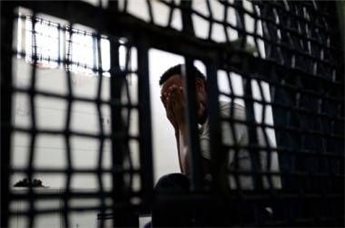 Israeli Foreign Minister Avigdor Lieberman refused to allow a delegation from the European Parliament to visit Palestinians jailed in Israeli prisons, a local newspaper reported Friday.
Yedioth Ahronoth said the European delegation had hoped to evaluate the prisoners’ conditions.
The paper reported that Elmar Brok, the Chairman of the Committee on Foreign Affairs in the European Parliament, had asked Israel’s ambassador to the EU to arrange a visit for the delegation.
But Lieberman responded by saying Israel would only allow such a visit if the EU would let an Israeli delegation visit prisons in Europe.
The report cited sources inside Israel’s foreign affairs ministry that the European request had been made in coordination Palestinian and international activists working to highlight the poor conditions inside Israeli prisons.
The news came one day after Israel refused to allow Palestinian refugees from Syria to return to the Palestinians territories, according to Palestinian Authority official cited by Ma’an news agency.
Fatah central committee member Mohammed Ishtayyeh told diplomats at a meeting organized by the Heinrich Böll Foundation – a group affiliated with Germany’s Green Party – that they have been trying to help Palestinians in Syria escape the three-year-long war, but Israeli officials have rejected their pleas.
Around 1,500 Palestinian were killed during the Syria conflict, and 250,000 others have been forced to leave their homes, according to Ma’an.
Who will threatened sanctions hit most? US-EU-Russia trade in numbers
RT | March 4, 2014
US lawmakers are already threatening Russia with economic sanctions over the crisis in Ukraine. Trade, business, investment, and G8 membership closely link the Russian, American and European economies.
While the West is considering going down the ‘sanction road’, here’s a look at what’s at stake for the markets.
Trade
In terms of billions of dollars, trade is higher between Russia and the EU, but the US remains Europe’s biggest export market.
Net trade between Russia and the US was $38.1 billion in 2013, according to US Chamber of Commerce data. The US exported $11.26 billion to Russia, and imported $26.96 billion worth of goods.

Russia exports more than $19 billion of oil and petroleum products to the United States, as well as $1 billion in fertilizer products, according to Chamber of Commerce data.
“Is Russia going to be cut off from the world? That is very unlikely given what Russia provides to the world, which are oil, gas, raw materials,” Alexis Rodzianko, president of the American Chamber of Commerce in Russia told Reuters.
Russia is very dependent on trade with the EU, as member states account for about 50 percent of total Russian imports and exports. In 2012, trade between the two neighbors reached €123 billion.

One of Russia’s most valuable exports to Europe is something factories and households run on every day: natural gas. Europe imports one-third of its natural gas from Russia, with Germany being the biggest client importing nearly 30 billion euro annually. In 2012, 75 percent of all European imports from Russia were energy.
Many countries in Europe have strategic partnerships with Russia’s state-owned gas giants, Rosneft and Gazprom.
According to Eurostat data, Russia accounts for 7 percent of total imports and 12 percent of total exports in the 28 European Union bloc, making it the regions third most important trading partner, behind the USA and China.
US companies with big Russia presence
Several of America’ biggest companies- Boeing, Cargill, Ford, General Motors, ExxonMobil, to name a few- all have a huge presence in the Russian market.
Boeing’s investment in Russia is deep, as the aerospace carrier sources a considerable amount of steel, titanium, and aircraft parts from Russian companies. Boeing receives about 35 percent of its titanium from state-owned, Rostec. In 2013, Boeing’s deliveries to Russian carriers were valued at $2.1 billion, and the company plans to spend $27 billion in Russia, Bloomberg reports.
“We are watching developments closely to determine what impact, if any, there may be to our ongoing business and partnerships in the region,” Doug Alder, a spokesman for Chicago-based Boeing, told Bloomberg by email.
Last year, Russia was a $11.2 billion market for the US, with heavy trade in automobiles and aircrafts, according to Commerce Department data.
US automakers have a high exposure to Russian markets, so are closely watching US economic actions against Russia. Ford has sold over 1 million automobiles in Russia, and in 2013, sold 105,000 cars. GM, which has a 9 percent market share, sold 258,000. Both companies have shifted production plants from Europe to Russia, which is set to become Europe’s biggest car market by 2016.
ExxonMobil has partnered with Rosneft in exploring the Bazhenov oil field in Western Siberia, a deal that could be worth up to $500 billion. ExxonMobil is planning to build a $15 billion LNG terminal project in the Bazhenov field, and also has joint venture projects set up to explore Black Sea reserves.
Senator Chris Murphy, chairman of the Senate’s subcommittee on Europe, said the sanctions could be extended to Russia’s banks. Russia’s two largest state banks are Sberbank, Europe’s third largest, and VTB. Both banks have a strong industry presence in London, which has indicated it isn’t moving towards the sanctions. A leaked document from Downing Street shows that the UK government doesn’t plan to follow America-led asset freezes or trade restrictions, but are mulling over visa restrictions and travel bans on key Russian politicians.
Washington’s Hysteria Towards Russia Hides US Regime Change
By Finian Cunningham | Strategic Culture Foundation | March 6, 2014
Legally, Washington and its European allies haven’t a leg to stand on. Both can be rightly accused of violating international law from their gross interference in Ukrainian sovereign affairs – from the instigation of violent street protests that led to the sacking of an elected president and government, to the subsequent climate of lawlessness and fear sweeping across Ukraine and felt in particular by the majority Russian ethnic population in the east and south of the country.
The latest revelations that killings in Kiev’s Maidan Square among protesters and police were covertly carried out by snipers working for the Western-backed agitators are further proof that a coup d’état was orchestrated. A leaked phone call between EU foreign affairs chief Catherine Ashton and Estonian foreign minister, Urmas Paet, dated February 25, indicates that snipers were used as provocateurs during the demonstrations, with the intention of heightening violence and blaming it on the government of President Viktor Yanukovych.
In the phone call, reported by Russia Today, Paet is heard to say: «There is now stronger and stronger understanding that behind the snipers, it was not Yanukovych, but it was somebody from the new [Western-backed] coalition».
Ashton replied: «I think we do want to investigate. I mean, I didn’t pick that up, that’s interesting. Gosh».
The evidence for Western-sponsored subversion in Ukraine is so glaring – from the parade of American and European politicians over the past four months whipping up protesters in Kiev, to documented infiltration of civic organizations by the CIA, USAID, National Endowment for Democracy, Freedom House, the Adenauer Foundation, among others, to their own words of admission from the likes of State Department official Victoria Nuland on the desired formation of a new governing administration in Kiev – that in order to distract from this mountain of damning evidence, the Western governments and their servile media are trying to shift the terrain of discourse away from the panoramic obvious.
The latest revelation of snipers used as provocateurs adds a new sinister twist.
However, against all the evidence, it is not the West that is in violation over Ukraine; it is Russia – so they claim.
More than this, the Western leaders and media have gone into hysterical mode, accusing Russia of «brazen aggression» and «bringing the region to the brink of war». Ironically, given the astounding denial of reality by the West, it is now turning around and accusing Russia of peddling propaganda over recent events in Ukraine. One France 24 headline read: «The fanciful claims of Russian propaganda».
Never mind fanciful claims, how about just some hard facts – facts that Western media are in abject denial of?
Apart from the above litany of outrageous Western interference in Ukrainian politics, the fact is that President Viktor Yanukovych was ousted in a violent putsch at the end of last month.
Yanukovych was elected in 2010; and in a constitutional democracy his removal from office requires a vote by the electorate, not the diktats of a bunch of gun-wielding paramilitaries. We may not have liked Yanukovych’s alleged authoritarian style of governance or accusations of cronyism, but the only legal way to correct that would have been for an orderly constitutional process of elections or some other form of due process.
Yanukovych signed a national unity deal with political opponents on February 21, which European Union ministers had been involved in brokering. But his opponents immediately trashed the deal with threats of violence unless Yanukovych stood down.
Russian President Vladimir Putin is therefore correct when he told a press conference this week that what has happened in Kiev is «an unconstitutional coup» and «an armed seizure of power».
Legally speaking, and even under the terms of the EU-brokered national unity accord signed on February 21, Viktor Yanukovych is still the lawful president of Ukraine. When Yanukovych subsequently sent a formal letter to Putin requesting military assistance in the light of unconstitutional and violent upheaval, the Russian Federation had a legal and moral mandate to enter into Ukrainian territory.
The differing responses to the February 21 «event» are instructive. Both Washington and Brussels immediately recognized the new office holders in Kiev as the «legitimate government» of Ukraine with its self-declared president Oleksandr Torchynov and prime minister Arseniy Yatsenyuk. The new cabinet, comprising members of the fascist Svoboda party who had been previously waging street war, was also conferred with official Western recognition. The Western media have since gone on to use euphemisms like Kiev’s «fledgling government».
A more accurate definition of the new administration in Kiev is an unelected, self-imposed junta. But the violent, unconstitutional means of taking political power has not stopped British foreign secretary William Hague coming to Kiev this week, followed by US secretary of state John Kerry, to shake hands with the junta. Brussels also invited the mob rulers in Kiev to a ministerial summit this week.
By contrast, Russia is calling for a return to the national unity deal signed on February 21 – a deal which recognizes Yanukovych as the president in office until mutually agreed constitutional reforms are worked out and mandated by the entire electorate of Ukraine – as the legal starting point for any future political settlement. This is the most reasonable and constitutionally legal way forward. Let the people decide whom they want in government by voting, that is by democracy, which, pointedly, Western leaders do not seem able or willing to countenance. The latter prefer imposing governance by force according to their diktat because the real agenda is the economic pillaging of Ukraine by Western capital, an outcome that the Ukrainian people would not vote for if they truly had a democratic choice in the matter.
Given the self-publicized threats of aggression towards ethnic Russians in Ukraine and other perceived political opponents issued by Svoboda and its Right Sector paramilitaries, together with documented acts of recent violence in Kiev, it is was eminently legal and appropriate that Moscow embarked on defensive security measures in Ukraine. Securing military bases and a majority Russian-speaking population in the autonomous southern republic of Crimea this week – at the written requests of President Yanukovych and the Crimean regional prime minister Sergei Aksyonov, as well as under the legal terms of a long-standing bilateral agreement with Ukraine – all that gives Moscow an irrefutable mandate to do so.
Yet, with frothing hysteria, the Western governments and their media have turned reality upside down. There is not a mention of the unlawful Western interference and subversion in the Ukraine or of its hand-in-fist association with neo-Nazi street mobs in executing a violent putsch in Kiev. US ambassador to the United Nations Samantha Power brazenly denied reality earlier this week when she accused Moscow of citing «imaginary threats» in Ukraine. The bitter irony of that is that Samantha Power is one of the cheerleaders for the so-called «responsibility to protect» which has given her country the fictitious cover to illegally intervene and militarily overthrow governments in former Yugoslavia, Iraq, Libya and anywhere else the US deems desirable for regime change.
In a feat of sheer doublethink, the West has accused Russia of «illegal invasion» in Ukraine and of using «pretexts for acts of aggression». This hysterical rhetoric is being used to cover up the West’s own glaring transgressions in Ukraine and to shift the blame for the turmoil.
Unabashed by its unequivocal involvement in engineering regime change in Ukraine, American and European leaders are demanding that Russia withdraw troops from Crimea or face sanctions. Washington’s top diplomat John Kerry said the US would isolate Russia «economically, politically and diplomatically» if it did not reverse security measures, or as Kerry put it «aggression».
Meanwhile, there is not a scintilla of indication that the Americans and Europeans have any intention of reversing their unlawful interference in Ukraine. Far from it, Kerry on his visit to the junta in Kiev this week said that the US was offering $1 billion in loan guarantees. The New York Times explained: «The purpose of the loan guarantees is to support Ukraine’s efforts to integrate with the West».
European Union ministers this week somehow found reserves of €11 billion for the new «Western friendly» administration in Kiev – against the backdrop of millions of EU citizens suffering from unemployment and deprivation. The International Monetary Fund is also drawing up a lure (loan) of $2 billion.
With pro-Western, pro-capitalist Yatsenyuk now at the helm in Kiev (as Nuland prescribed), Ukraine is being steered inexorably into debt bondage by the West. This bondage, facilitated by an unelected junta, will entail an austerity assault on Ukrainian workers, beginning with swingeing cuts in public spending, wages and subsidies on fuel. It will also lead to privatization of Ukrainian oil and gas industries and the full take over of other prodigious Ukrainian natural resources, such as its wheat agriculture, by Western capital. Yatsenyuk, who talks with pride about being willing to commit political suicide for the sake of pro-Western reforms, that is Western subjugation, is exactly the kind of ideologue the West want and need in Kiev, as Nuland duly recognized.
Interestingly, this week the new Ukrainian ambassador to Belarus, Mykhailo Yeshel, admitted in a media interview that loans (lures) from Washington were being offered on condition of the Ukraine permitting the deployment of American missile systems on its territory – right on the border with Russia.
The emerging picture is clear. Despite all the hysterical nonsense being spouted by Western leaders and their media propaganda machine, demanding Russia to «back off» from Ukraine, the Western regime-change operation in that country is not just being consolidated – it is being ramped up.
Ukrainian Democracy: A Barrier to Washington’s Goals
What Do Ukrainians Really Want?
By Nick Alexandrov | CounterPunch | February 28, 2014
When Ukraine is the topic, the major U.S. media outlets agree: “Europe and the United States have made a priority of fostering democracy in the former Soviet republics,” David M. Herszenhorn wrote in the New York Times. The Washington Post asserted that Ukraine is “a country that has been struggling to become a genuine democracy” with help from Western powers, who keep it “from becoming an autocratic Kremlin colony, like neighboring Belarus.” “Ukraine is the crossroads between a free and an authoritarian Europe,” the Wall Street Journal concurred, while Yale professor Timothy Snyder urged, in a CNN piece, Europe and America to back the Ukrainian protesters—“a chance to support democracy,” he emphasized. Marvelous. But in the real world, Ukrainian democracy is not merely something Washington has failed to support, but is actually incompatible with U.S. governmental aims.
U.S. officials are quite open about their opposition to Ukrainian self-determination and well-aware how unpopular Washington’s preferred policies are. Nearly a decade ago, for example, the U.S. House of Representatives’ Subcommittee on Europe met for a hearing on “Ukraine’s Future and U.S. Interests.” Rep. Doug Bereuter (R-NE) opened the session, noting that “a recent survey conducted by a center for economic and political research suggests that up to 40 percent of Ukrainians believe that relations with Russia should be a priority.” Meanwhile, “28 percent gave preference to the EU,” and “2 percent said that relations with the U.S. should be a foreign policy priority. Another survey suggested that almost two-thirds of the population would consider supporting a political union with Russia,” Bereuter concluded. “So,” he went on, “I think that United States policy must remain focused” on incorporating Ukraine “into European and Euro-Atlantic structures.” Rep. Robert Wexler (D-FL) spoke next, reiterating that U.S. policy should “further Ukraine’s integration in Euro-Atlantic institutions;” Steven Pifer, the former Ambassador to Ukraine, drove the point home, outlining “the United States Government’s vision for Ukraine”: “increasingly close ties to Europe and Euro-Atlantic institutions.” This vision persisted over the following decade. The Atlantic Council’s Damon Wilson, speaking before the U.S. Senate’s Subcommittee on European Affairs—the topic was “Ukraine at a Crossroads”—in February 2012, explained that “Ukraine’s genuine European integration” remained a major objective.
And recent commentary and news coverage depicts European integration as something most Ukrainians desire. In early February, Secretary of State Kerry, at the Munich Security Conference, remarked that Ukrainians should be permitted “to associate with partners who will help them realize their aspirations”—Europe and the U.S. obviously being the partners, integration to be deepened via what the Times’ Herszenhorn referred to as “sweeping political and trade agreements” that Ukrainian President Viktor Yanukovych “refused to sign” last November, resulting in “a broken promise between a leader and his citizens,” and then the uprisings. Now Al Jazeera reports that the acting president, Oleksander Turchinov, has “made clear that Kiev’s European integration would be a priority,” thereby giving Ukrainians what we’re told they want.
But British and U.S. governmental studies reveal the Ukrainian public is ambivalent about European integration. Britain’s Foreign and Commonwealth Office, for example, funded a “scoping study” through the British Embassy in Kyiv a year ago, titled “A blueprint for enhancing understanding of and support for the EU-Ukraine Association Agreement [AA] including DCFTA [Deep and Comprehensive Free Trade Area] in Ukraine.” The AA was one of the key “sweeping political and trade agreements” Yanukovych refused to sign. British officials, in their report, stressed that “support for the AA is not overwhelming amongst the population at large,” observing that “opinion polls show that about 30% of respondents are in favour of European integration, 30% for the Customs Union [Moscow-led integration], and about 30% are undecided.” This bleak situation called for a propaganda offensive, or “a national public awareness ‘Campaign of Arguments,’” as the British dubbed it, which was to “be aimed at the general public as its primary target audience.” British advisers urged PR teams “to formulate advertising slogans, global and targeted messages,” and to play up “the European civilizational model” and other benefits the AA allegedly would bring. This “civilizational model” today entails “massive attacks on public services, wages, pensions, trade unions, and social rights” under imposed “draconian austerity policies,” Asbjørn Wahl wrote in January’s Monthly Review—a reality the British indoctrination scheme’s outline studiously avoided, it’s hardly worth mentioning.
The propaganda barrage may have been successful to some extent. But as the year progressed, the U.S. government had a hard time finding evidence of overwhelming Ukrainian support for European integration. The International Republican Institute (IRI), for example, polled Ukrainians last September: “If Ukraine was able to enter only one international economic union, with whom should it be?” Forty-two percent of respondents chose the EU, while 37% preferred the Russian Customs Union. IRI then asked, “How would you evaluate your attitude towards the following entities?” Fifty percent of respondents felt “warm” towards Russia; 41% felt “warm” towards Europe—and just 26% were fond of the U.S. IRI figures resembled those USAID published in a December 2013 report. Its authors found it “interesting to note that Ukrainians are split on whether the country should join the European Union or the Customs Union. Thirty-seven percent would like Ukraine to take steps to join the European Union, 33% prefer the Customs Union and 15% say Ukraine should join neither of these blocs.” Furthermore, “34% say that Ukraine should have closer economic relations with Russia, 35% say it should have closer economic relations with Europe and 17% say it should have good relations with both.” A Kyiv International Institute of Sociology poll reinforced these findings: “Ukraine is split practically 50/50 over the accession to the European Union or the Customs Union,” Interfax-Ukraine summarized the study’s conclusions.
Reviewing this data forces us to ask: Who is Washington’s chief enemy in Ukraine? Is it Russia, bent on killing Ukraine’s budding democracy? Is it the tyrant Yanukovych? The U.S. policy record points to a different conclusion, one a Johns Hopkins Center for Transatlantic Relations study—included in the official transcription of the Senate’s 2012 “Ukraine at a Crossroads” hearing—discusses in the context of Ukraine’s potential NATO membership. “The main obstacle” to Ukraine’s joining the organization “is not Russian opposition,” its authors emphasized, “but low public support for membership in Ukraine itself.” Again: on this and other issues, the Ukrainian people are “the main obstacle” to U.S. foreign policy aims. We should bear this fact in mind as the crisis deepens in Eastern Europe.
Nick Alexandrov lives in Washington, DC.
Call It Democracy
BRUCE COCKBURN
“Call It Democracy”
Padded with power here they come
International loan sharks backed by the guns
Of market hungry military profiteers
Whose word is a swamp and whose brow is smeared
With the blood of the poor
Who rob life of its quality
Who render rage a necessity
By turning countries into labour camps
Modern slavers in drag as champions of freedom
Sinister cynical instrument
Who makes the gun into a sacrament –
The only response to the deification
Of tyranny by so-called “developed” nations’
Idolatry of ideology
North South East West
Kill the best and buy the rest
It’s just spend a buck to make a buck
You don’t really give a flying fuck
About the people in misery
IMF dirty MF
Takes away everything it can get
Always making certain that there’s one thing left
Keep them on the hook with insupportable debt
See the paid-off local bottom feeders
Passing themselves off as leaders
Kiss the ladies shake hands with the fellows
Open for business like a cheap bordello
And they call it democracy
See the loaded eyes of the children too
Trying to make the best of it the way kids do
One day you’re going to rise from your habitual feast
To find yourself staring down the throat of the beast
They call the revolution
IMF dirty MF
Takes away everything it can get
Always making certain that there’s one thing left
Keep them on the hook with insupportable debt
Related article

Featured Video
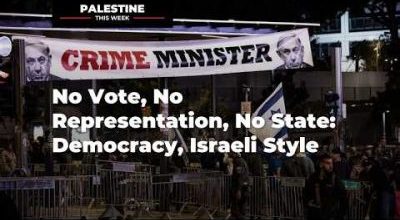
No Vote, No Representation, No State: Democracy, Israeli Style
or go to
Aletho News Archives – Video-Images
From the Archives
Sanctions, War and the Policy of Dual Containment
By SASAN FAYAZMANESH | March 17, 2008
It is now nearly three decades since the Unites States adopted the policy of dual containment of Iran and Iraq. While much has been written about the containment of Iraq, there has been very little in-depth analysis of this policy when it comes to Iran. In a book that is going to be released on March 31, 2008, entitled The United States and Iran: Sanctions, Wars and the Policy of Dual Containment (Routledge), I attempt to address this shortcoming by investigating when and why the US policy of containment of Iran came about, how it evolved, and where it stands today.[1] To the extent that Israel has been involved in US policy making, the study will also include the role that Israel has played in the containment of Iran. Also, since the fate of Iran has been inextricably linked to that of Iraq, occasionally the investigation will overlap with the containment of Iraq.
The policy of dual containment of Iran and Iraq originated during the Carter Administration, but it was not until the Clinton Administration that the expression “dual containment” became popular. … continue
Blog Roll
 Aletho News
- No Vote, No Representation, No State: Democracy, Israeli Style
- Zionist Bought Senate Blocks Information About American Citizens Killed By Israel
- While Gaza dominates the UN, these are the people keeping it alive
- New Report: “Scholasticide and Genocide in Gaza: Assessment, Testimonies and Legal Analysis”
- ‘THAAD Delusion’: Iran war exposes US missile shield limits – The Atlantic
- Moscow issues warning to NATO over Russian exclave
- Yes, the Iran war has destroyed Trump’s presidency
- The fallacy of US delusions about Iran’s economic collapse
- Hezbollah denies Syria cell link, warns of Israeli plan to sow discord
- The legacy of US sanctions, war, and occupation in Iraq
- If Americans Knew
- Mamdani releases plan to combat antisemitism and hate crimes in New York City
- Iran’s Revolutionary Guards Publish Letter to the American People
- DMFI launches $1 million ad campaign supporting Virginia’s Elaine Luria
- US Senate blocks resolution seeking report on Americans killed by Israel
- Israeli Attacks Kill Ten Palestinians in Gaza
- Massacre at Minab: The School That Became a Grave
- Israeli media: The IDF Shows It Doesn’t Turn a Blind Eye; It Actively Emboldens Settler Havoc
- As settlers ravage West Bank, Israeli forces kill 10 in Gaza – Daily Update
- New Report: “Scholasticide and Genocide in Gaza: Assessment, Testimonies and Legal Analysis”
- Ex-Biden officials are desperate for a Gaza scapegoat
- No Tricks Zone
- Green Energy Debacle: German Expert Professor Fritz Vahrenholt Warns Of Severe Economic And Social Consequences
- Two More Paleo Reconstructions Affirm Meters-Higher Sea Levels Across Ireland, Brazil 7000-6000 Years Ago
- New Study: Earth And Venus Surface Warmth Largely Explained By Convection And Lapse Rate, Not CO2 Or Radiation
- 2025 Nature Paper Claiming Worsening Global Drought Gets RETRACTED …Heavily Flawed
- New Study: ‘Global Drought Shows No Detectable Recent Acceleration Under Climate Warming’
- Economic Masterminds: German Socialists Suggest Taxing Productivity Gains Stemming From Using AI
- The South China Sea Has Not Been Cooperating With The Climate Change Narrative
- Energy Crisis: Germany Enters Heating Season With Historically Low Gas Reserve Fill Levels
- New Study: The Antarctic Ice Sheet Gained Mass From 2020-2024 Due To Staggering Snow And Ice Accumulation
- Study: Ocean Heating Rates From Thousands Of Years Ago ‘Dwarf’ Modern Ocean Heating Rates

