How the West rigged Moldova’s referendum on the European Union
By Raphael Machado | Strategic Culture Foundation | October 30, 2024
On October 20, a referendum was held on the Moldovan public’s interest in a constitutional reform to enable entry into the European Union. The “yes” vote won with 50.39%, a numerical margin of about 12,000 votes.
This result was well below expectations, considering all the government’s preparation and mobilization in support of the referendum.
Since Maia Sandu came to power, the goal has been to transform Moldova into a platform and tool for provocation and attack against Russia, similar to how Georgia and Ukraine were positioned in the past.
This had already begun even before Sandu’s election in 2020, with the free operation of Western or pro-Western NGOs in the country. According to various studies, there are around 14,000 NGOs registered in Moldova, a ratio of 1:200, with USAID having a strong direct presence in the country and indirect influence (as a funder of other NGOs).
USAID alone has invested more than $500 million in Moldova over the past 10 years. In terms of general funding, the West supports NGO activities in Moldova with $110 million annually. Besides USAID itself, other main NGO funders include the Open Society Foundation, the governments of Germany and the Netherlands, the NED, and Chatham House.
Among these “Moldovan” NGOs are Promo-LEX, IDIS Viitorul, the EEF (East Europe Foundation), WatchDog.MD, and the EBA (European Business Association), among others. All these groups work in areas like “promoting democracy and human rights” and “countering Russian disinformation.”
In recent years, these and many other NGOs have been actively shaping public opinion through social engineering techniques, aiming to “Ukrainize” Moldovans; that is, to turn Moldovans into Russophobic bots and compliant followers of Washington and Brussels.
With Sandu’s victory, Moldova’s automatic alignment with the West began. To achieve this, the nationalist sentiments of the population are naturally utilized, as the population historically identifies with Romania. However, this connection is manipulated not to foster a Romanian ethno-cultural identity but as a vehicle for the Westernization of Moldova.
When Russia’s special military operation in Ukraine began, Sandu seized the moment to formally apply for EU membership, despite Moldova’s constitution mandating geopolitical non-alignment. Shortly thereafter, the government started imposing censorship on the use of the Russian language in the country, as well as restricting Russian media and symbols, and even arrested her political rival, Igor Dodon. Predictably, Sandu quickly began indebting her country with multi-million euro loans from the European Union.
In the Moldovan narrative, Transnistria, a tiny strip of land with a Russian majority, poses a major threat to “Moldovan sovereignty.” Thus, Sandu decided to sacrifice Moldovan sovereignty in order to defend it. It makes no sense, but that’s how the minds of politicians who have been brainwashed by Western influence work.
Meanwhile, NATO stationed nearly 10,000 troops along the Moldovan border (even though foreign troops are prohibited on its territory), and the country faces frequent anti-government protests from citizens worried that the West might try to turn Moldova into another Ukraine.
This brings us to the referendum on constitutional reform aimed at EU integration. The result, although “victorious,” was disappointing, considering all the money spent promoting the EU, the imprisonment of opposition members, media censorship, and social engineering efforts by NGOs. Even this victory was only achieved through fraud. If you look closely at the referendum maps, you get the impression that the “no” vote won over the “yes.” And that’s exactly what happened: only 46% of Moldova’s residents voted for the reform. The majority of the country’s population voted against EU integration. In all of Gagauzia and the northern regions, opposition to the EU was nearly unanimous, and even in the center of the country, a significant portion of the population voted against joining the EU.
That’s when the “expatriate” population came into play—those who don’t live in the country, don’t share its fate, yet feel entitled to decide on its future. Out of 235,000 diaspora votes, 180,000 supported EU membership. The trick was simple: they increased the number of polling stations in Western countries while in Russia, where 500,000 Moldovans live (half the diaspora and one-sixth of all Moldovans worldwide), they reduced polling stations from 17 to 2, with only 10,000 ballots available.
The conclusion, therefore, is that under democratic rules, the Eurocrats and globalists would be soundly defeated at the polls. But since they don’t really care about democracy, they ensured that only the “right people” could vote.
State Department Threatens Georgia With ‘Consequences,’ Amid Rigged Election Claims
By Connor Freeman | The Libertarian Institute | October 29, 2024
The State Department and the European Union are demanding Tbilisi repeal “anti-democratic” legislation and investigate election “irregularities” respectively after the Georgian Dream Party won this weekend’s parliamentary elections. Georgian leaders including Prime Minister Irakli Kobakhidze and President Salome Zourabichvili are at odds, with Zourabichvili accusing Kobakhidze’s party of winning a “total fraud” election.
Per the official tally, Georgian Dream won 54% of the vote, with multiple opposition parties earning between 3-11%. Georgian Dream will form the country’s next government as they now hold a minimum of 90 out of the national parliament’s 150 seats. However, four opposition parties which favor integration with the EU are refusing to participate in the new legislature, deeming the election stolen, and accusing the ruling party of pushing Georgia towards a pro-Russia direction. President Zourabichvili called for protests and vowed she will not recognize the plebiscite’s results.
Tens of thousands of Georgians protested for hours outside parliament on Monday night, the demonstrations reportedly ended with no plans for further action but dispersed peacefully. The Georgian government and electoral commission have dubbed the election free and fair.
State Department Spokesman Matthew Miller threatened Georgia with “consequences” before adding his demands. Miller characterized the election as having taken place within an “environment shaped by the ruling party’s policies including misuse of public resources, vote buying and voter intimidation.”
He made clear the path Georgia is taking does not bode well for its future in America’s orbit, “We encourage Georgia’s governing officials to consider the relationship they want with the Euro-Atlantic community rather than strengthening policies that are praised by authoritarians.”
Finally Miller, speaking for a government which has extensively meddled in Georgian elections including staging a coup in the 2003 Rose Revolution, warned “We do not rule out further consequences if the Georgian government’s direction does not change.” He then insisted that Tbilisi begin “withdrawing and repealing anti-democratic legislation.”
The Organization for Security and Cooperation in Europe praised Georgia’s voter participation, substantial presence of citizen and party observers, as well as the diversity of ballot choices during the election. OSCE observers “found the legal framework to be adequate for holding democratic elections.” Although they also accused the ruling party of exploiting an “already uneven playing field,” and claimed there were instances of intimidation, coercion, and pressure being put on voters including public sector employees.
EU Council chief Charles Michel is calling on the relevant authorities in Georgia to “swiftly, transparently, and independently investigate and adjudicate electoral irregularities and allegations thereof.” He added, “These alleged irregularities must be seriously clarified and addressed.”
Western governments are condemning Georgia’s ‘law on transparency of foreign influence,’ which requires agencies to register as “agents of foreign influence” if they are operating within Georgia and foreign sources account for over 20% of their funding. Georgia’s parliamentary speaker signed the bill into law after it was vetoed by President Zourabichvili earlier this year. The law operates similarly to the US Foreign Agents Registration Act.
The West is also in an uproar against Georgian laws banning gender reassignment surgery, gay marriage, and so called LGBTQ “propaganda” including PRIDE-style events along with certain books and films. Although, polling shows significant public disapproval in Georgia of same-sex marriages.
Last month, a senior US official told Voice of America, the American state-funded media outlet, that Washington is preparing sanctions on former Georgian Prime Minister Bidzina Ivanishvili, Georgian Dream’s influential founder, over his opposition to Tbilisi joining NATO and the EU.
An analysis by Ian Proud published by Responsible Statecraft makes the case that the ruling party’s victory can be explained not by election rigging but as a popular response to various economic and immigration crises.
Proud notes the uneven trade relationship the Caucasian country maintains with the EU since signing the EU Deep and Comprehensive Free Trade Agreement ten years ago. EU states benefit from robust exports in Georgia while purchasing four times less Georgian imports. The trade balance is more even with the Eurasian States, although they too export 1.8 times more than they import.
At the same time, the Washington-led proxy war with Moscow in Ukraine is both funded and championed by the EU. The war has caused an immigration crisis in Georgia with nearly 90,000 people emigrating from Russia, Belarus, and Ukraine between 2022 and 2023. This has led to a surging unemployment rate of over 26%, while housing prices are up 35% and rent prices have risen as much as 50%.
In 2008, at NATO’s Bucharest Summit, Brussels announced both Tbilisi and Kiev would one day join the Washington-led military bloc which has been mired in disastrous wars in the Balkans, North Africa, and Central Asia. The admission of both states to the alliance is viewed in the Kremlin as a major national security threat and provoked Russia’s invasions of both Georgia sixteen years ago and now Ukraine.
As Scott Horton, the Libertarian Institute’s director, has detailed, the now jailed former president Mikheil Saakashvili, the victor of the US-backed Rose Revolution, “was incentivized to take bigger risks due to the Bucharest Declaration of America’s intent to bring them into the NATO alliance just four months before, U.S. military support and vague security assurances the Bush government had given his government that spring. Saakashvili launched an attack on the breakaway province of South Ossetia in the southern Caucuses Mountains, then enjoying full autonomy and protection by Russian peacekeepers under a deal that had been brokered by [the] European Union… The Russians, suffering casualties in the initial assault, quickly struck back, destroying Georgia’s invading force and securing South Ossetia’s independence from Georgian rule.”
Barack Obama’s administration orchestrated a coup and overthrew the government in Kiev during the 2014 Maidan Revolution. Subsequently during the Donald Trump years, the White House armed Ukraine’s military, including Neo Nazi militias integrated in the National Guard. Concurrently, Kiev entrenched ties with US special operations forces and the CIA as it waged a war against ethnic Russian separatists in the Donbas region.
Under the current White House, as tensions mounted over the Donbas, the erstwhile USSR state became a de facto NATO member as Washington eschewed diplomacy with the Kremlin, refusing to discuss rescinding Ukraine’s invitation for membership with the alliance, culminating in Russia’s 2022 invasion.
Orban accuses EU of attempting ‘regime change’ in Hungary
RT | October 29, 2024
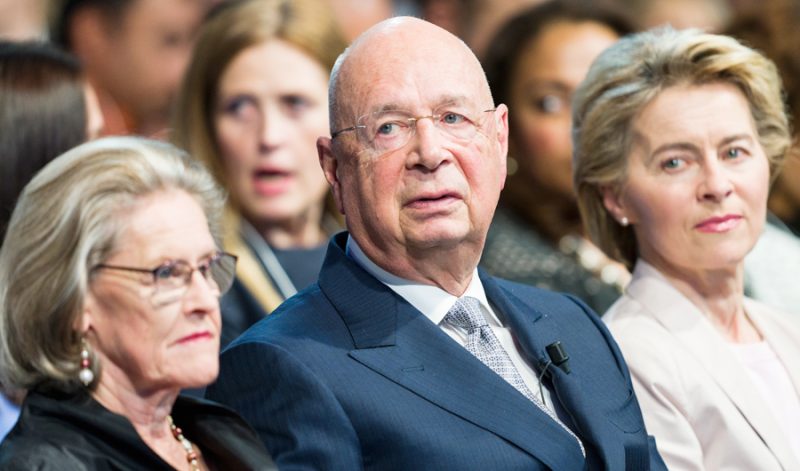
The European Union is hoping to install a ‘Jawohl government’ in Hungary as it did in Poland, Prime Minister Viktor Orban has said, vowing to resist such plans.
Orban came under attack by 13 EU member states on Monday, after he visited Georgia and commended its government for a fair and democratic election. Meanwhile, the EU leadership has embraced the Georgian opposition’s claims that the vote had been marred by irregularities.
In a post on X on Tuesday, Orban issued a reminder that two powerful German officials in Brussels are hoping to replace his government with one more willing to obey their orders – just as they boasted about doing in Poland last year.
“There’s an open conspiracy against Hungary led by Manfred Weber and President [Ursula] Von der Leyen.” Orban said. “They admitted that their aim is to replace the Hungarian government with a new ‘Jawohl government’, just like the current Polish one. We will not let this happen!”
He included a minute-long video from his recent radio interview, where he explained the matter in detail.
In the video, Orban showed EU officials declaring that his government should be replaced by the opposition and boasting that they had done so in Poland – whose previous government also defied many of the orders from Brussels – last year, by installing former European Council chair Donald Tusk as prime minister.
‘Jawohl’ is the German word used to respond to commands. Orban used it because the head of the European People’s Party (EPP) faction in the bloc’s parliament, Manfred Weber, and the president of the European Commission, Ursula von der Leyen, are both German.
“We call what they want a ‘Jawohl’ government. So you get a phone call from Brussels or Berlin, and then you have to say ‘Jawohl’! And then it must be done,” Orban told the national broadcaster Kossuth on Friday.
“The Poles were also going their own way,” Orban added. “They also pursued their own independent Polish policy in migration, gender, and the economy. They were on the same page as the Westerners when it came to the [Russia-Ukraine conflict], but not in all other matters.” The EPP then openly announced that the conservative Polish government would leave and be replaced with another, the Hungarian prime minister explained. “This is how our friend Tusk became prime minister in Poland. Now the same scenario exists in the case of Hungary.”
“This is not even a secret conspiracy against Hungary, this is a plan they announced openly,” Orban said. “I was sitting there, they said it to my face.”
Orban blasts West’s ‘useless lecturing’ of Georgia
RT | October 29, 2024
Hungarian Prime Minister Viktor Orban has warned against “lecturing” Georgia after the outcome of the parliamentary election in the former Soviet republic attracted sharp criticism from the EU and US.
Orban arrived in Tbilisi on an official visit on Monday. The trip comes after the ruling Georgian Dream party, which seeks to build pragmatic relations with Russia, secured 54% of the vote in Saturday’s election. The victory is expected to give Georgian Dream at least 90 seats in the 150-member national parliament, allowing it to form the country’s next government.
Various opposition forces garnered between 11% and 3% each, according to the Central Electoral Commission.
“One thing is clear about this weekend’s elections: the people of Georgia voted for peace and prosperity in free and democratic elections. We are here to support Georgia’s European integration efforts and to strengthen relations,” Orban wrote on X on Tuesday.
Pro-Western opposition parties have refused to recognize the results, branding the vote a “constitutional coup.” Thousands of opposition supporters rallied in Tbilisi on Monday. Georgia’s president, the French-born Salome Zourabichvili, who has sided with the opposition, had earlier called for a rally outside parliament.
Moscow has accused the West of “completely unprecedented interference attempts” in the Georgian vote.
On Monday, the US claimed there was “vote buying and voter intimidation” during the election and threatened Georgia with “consequences.”
“We encourage Georgia’s governing officials to consider the relationship they want with the Euro-Atlantic community rather than strengthening policies that are praised by authoritarians,” US State Department spokesman Matthew Miller said.
On Sunday, the EU Commission issued a statement voicing concerns of “a tense environment” and “irregularities” in the election. European Council President Charles Michel insisted that Georgia must “prove its commitment” to joining the bloc.
Georgia submitted its EU membership application in March 2022 after the escalation of the Ukraine conflict, and was granted candidate status in December 2023.
Western governments have since accused Georgia of democratic backsliding over its recent policies such as labelling NGOs as ‘foreign agents’ and a ban on LGBTQ ‘propaganda’ to minors.
“Georgia is a conservative, Christian and pro-Europe state. Instead of useless lecturing, they need our support on their European path,” argued Orban.
The Hungarian prime minister has voiced views that oppose those of Brussels on issues such as the Ukraine conflict and relations with Russia. His government has refused to send weapons to Kiev and has called for a negotiated solution. Orban has been accused by the West of being pro-Russian, while he has repeatedly insisted that his policies aim to defend the interests of the Hungarian people.
Georgia Unrest Part of West’s Grand Strategy to Use Russia’s Neighbors as Pawns in Hybrid War
By Ilya Tsukanov – Sputnik – 29.10.2024
Thousands gathered outside the parliament building in Tbilisi on Monday night amid opposition claims that Saturday’s parliamentary elections were “rigged”. The strategy is not new, and designed to pressure the ruling party into becoming more malleable to Western interests, says political analyst and Caucasus politics expert Stanislav Tarasov.
The United States and the European Union “want to create a whole package of conflict situations: Moldova, Georgia, Ukraine, and to play these games like a grandmaster across multiple boards, yielding somewhere while hitting out somewhere else,” Tarasov told Sputnik, commenting on the shaky political situation in Georgia after the weekend’s parliamentary vote, which some observers fear may escalate into a new Euromaidan-style coup scenario.
State Department spokesman Matthew Miller announced Monday that the US would “join calls for international and local observers for a full investigation of all reports of election-related violations.” The US has “consistently urged the Georgian government this year to walk back its anti-democratic actions and return to its Euro-Atlantic path. We do not rule out further consequences if the Georgian government’s direction does not change,” Miller warned.
Georgia can expect further pressure from the West, including sanctions, if the Georgian Dream Party government sticks to its independence on foreign and domestic policy, Tarasov says.
The former includes pragmatism in relations toward Russia to avoid being dragged into a Western-fueled conflict, while the latter features staunchly socially conservative policies decried by the EU and the US, plus a foreign agent law passed earlier this year to ensure transparency among NGOs, which forced would-be agents of foreign influence to register as such. That measure was also slammed by Washington and its allies.
“They’ll impose sanctions… They can’t very well send in the armed forces or some expeditionary corps. First they feed them some investments, then they impose sanctions; first they open a visa regime; then they impose bans, and so on and so forth… This is the primitive scheme in the American version of colonial rule being implemented in relation to Georgia,” the observer said.
Pointing to the unlikelihood of the West being able to oust the ruling Georgian Dream Party, which won nearly 54% of the vote and gathered enough seats to form a new government, Tarasov believes the opposition’s claims of fraud and manipulation may not be aimed at overthrowing the government, but forcing it to accept members of the opposition into a coalition to “erode” it from within.
“In this case, the plot is aimed not so much at destabilizing the domestic situation, but is a purely political technological approach designed to force Georgian Dream to accept the idea of a coalition,” Tarasov said. Once inside, the opposition can block certain policies, including regional economic and infrastructure projects like the North-South Transport Corridor that would allow Tbilisi to escape the West’s political and economic grip entirely, according to the analyst.
West ‘arm-twisting’ Georgia over elections – Kremlin
RT | October 28, 2024
The West is openly trying to interfere in Georgia’s parliamentary elections, Kremlin spokesman Dmitry Peskov has said, stressing that voters in the former Soviet republic have every right to independently choose their own future.
In Saturday’s high-stakes election, the ruling Georgian Dream party, which seeks to build pragmatic relations with Russia, secured 54% of the vote, while various opposition forces garnered between 11% and 3% each, according to the Central Electoral Commission.
Pro-Western opposition parties, however, have refused to recognize the results, calling the vote a “constitutional coup.” The nation’s French-born President Salome Zourabichvili joined the chorus, urging the people to protest and claiming that Georgia had become a “victim of a Russian special operation.”
Speaking to reporters on Monday, Peskov unequivocally denied the allegations. “We are not trying at all and hardly have the opportunity to influence the development of the situation” in the country, he said, stressing that “it is the Georgian people’s business to make the relevant decisions.”
“However, we see completely unprecedented interference attempts from the West. They are trying not only to twist Tbilisi’s arms, but also to impose their terms. It is hard for me to imagine how the proud Georgian people can tolerate such ultimatums that pour in daily.”
On Sunday, the EU Commission issued a statement voicing concerns of “a tense environment, with frequent compromises in vote secrecy and several procedural inconsistencies” as well as “irregularities” in the election, insisting that those issues must be addressed. European Council President Charles Michel also noted that Georgia must prove its commitment to continuing the path to joining the bloc.
US Secretary of State Antony Blinken has demanded that Georgia conduct an investigation into reports on violations during the vote while sounding the alarm about suspected “vote buying, and voter intimidation.”
This summer, Georgian Prime Minister Irakli Kobakhidze warned that pro-Western opposition in the country would open a “second front” against Russia in addition to the Ukraine conflict if it won the parliamentary elections. Around the same time, Russia’s Foreign Intelligence Service said that the US was seeking a regime change in the Caucasus country by fomenting protests during the vote.
Relations between the West and Tbilisi soured in recent months after Georgia passed the ‘foreign agents’ law requiring entities and individuals which receive more than 20% of their funding from abroad to register as “promoting the interests of a foreign power.” While its proponents insisted it would increase transparency, the EU condemned the legislation, warning that it goes against Georgia’s goal of joining the bloc.
Slovak PM warns of continued attempts on his life
RT | October 28, 2024
Slovak Prime Minister Robert Fico has revealed that he faced a suspected second assassination attempt due to his stance on the Ukraine conflict. The incident earlier this month came after Fico survived a shooting in May by an individual who was reportedly sympathetic towards Kiev.
Another armed man was detained at an event commemorating a World War II battle in eastern Slovakia in early October, the prime minister said in an interview to Bratislava-based internet outlet Standard on Sunday.
Fico said the man “hates” him because of his “attitudes towards Ukraine.” According to the prime minister, “a fully loaded weapon” was found on the suspect when he passed through a metal detector.
The event in question was held on October 6 to mark the 80th anniversary of the Battle of the Dukla Pass between German and Soviet forces on the border with Poland. The celebrations were attended by Fico, Slovak President Peter Pellegrini, and members of the government and parliament.
Fico has been an outspoken critic of the EU’s policy of providing lethal aid to Ukraine in its fight with Russia, calling instead for a diplomatic solution to the conflict.
In May, Fico was shot four times at close range by a man who, according to Slovakia’s Special Criminal Court, was largely motivated by the decision by the prime minister and his government not to send arms to Ukraine.
“I was lucky,” Fico told Standard, commenting on the shooting. He went on to describe the alleged shooter, Juraj Cintula, as a political activist who had attended Fico’s public meetings while “probably” planning the attack.
Following the shooting, Fico argued that the assassination attempt emanated from foreign-backed politicians who refuse to accept his government’s policies that prioritize Slovakia’s interests over the agendas of major Western powers.
Iran ‘strongly rejects’ any involvement in threats on European soil: Embassy
Press TV – October 26, 2024
Iran’s embassy in Brussels has vehemently dismissed baseless accusations and fabricated claims about Tehran’s alleged involvement in threats on European soil, saying the Islamic Republic stands at the forefront of the fight against terrorism.
The embassy issued a statement on Saturday in response to allegations leveled against Iran by EU Commissioner for Equality Helena Dalli at the European Parliament plenary on Tuesday.
During the session, Dalli expressed growing concern about Iran’s alleged hybrid threats on European soil, claiming, “There are credible reports about: the role of Iranian state bodies in planning and aiding recent attacks in a number of Member States; about threats to members of the Iranian diaspora in Europe, and about cyber actions, or influence campaigns trying to create divisions in our societies.”
She also repeated allegations about Iran’s continued support for Russia in the war against Ukraine “through the provision of weapons, such as drones and, more recently, missiles.”
In its statement, the Iranian embassy said the Islamic Republic is a victim of terrorism itself and stands at the forefront of combating terrorism, particularly against the Daesh terrorist group.
“Iran strongly rejects any allegations regarding the alleged involvement of Iranian-affiliated institutions in so-called threats on European soil,” it added.
The statement also rejected the unfounded claims about Iran’s shipment of ballistic missiles to Russia for use in the conflict in Ukraine.
“Iran reiterated its neutrality policy towards this conflict and its support for resolving disputes through peaceful means and diplomacy,” the embassy said.
Instead of debating on fabricated illusory threats, the European Parliament member states are better off focusing on the most urgent and imminent threat to international peace and security as the result of the Israeli regime’s ongoing genocide and aggression in Gaza and Lebanon as well as its warmongering across West Asia.
Israeli crimes have brought about catastrophic consequences for civilians, human rights, and regional and international peace and stability, it emphasized.
“The EU Member States are expected to exercise maximum vigilance in the face of Iranophobic campaigns in Europe orchestrated by third parties, particularly the Israeli regime, whose aim is to destroy relations between the Islamic Republic of Iran and Europe,” the embassy said.
It urged the EU states to act responsibly and refrain from any measure that would make the long-standing relationship between Iran and Europe further adversely impacted.
Russia launched what it called a special military operation in Ukraine in February 2022 partly to prevent NATO’s eastward expansion after warning that the US-led military alliance was following an “aggressive line” against Moscow.
Iran has maintained its policy of impartiality toward the conflict. However, the US and its Western allies have claimed that Iran is supplying ballistic missiles to Russia for direct use in the Ukraine war.
Iran has repeatedly rejected the unfounded accusations, saying the Western countries are escalating the war through the supply of advanced weaponry to Kiev.
Russia has also warned that the flow of Western arms to Ukraine is prolonging the conflict.
Russia to seize income from frozen Western assets – finance minister
RT | October 24, 2024
Russia will respond in kind to the West’s use of the income generated by its frozen central-bank reserves, Finance Minister Anton Siluanov has said.
The US and its allies have blocked an estimated $300 billion in assets belonging to the Russian central bank since the escalation of the Ukraine conflict in February 2022. The bulk of the funds, around €197 billion ($213 billion), are being held at the Brussels-based clearinghouse Euroclear. On Wednesday, Washington announced a decision to use the proceeds from the frozen assets to repay a multibillion-dollar loan to Kiev.
“If Western countries have begun utilizing the income from the frozen Russian reserves, we will do exactly the same,” Siluanov told reporters on Thursday. “We have frozen money from ‘unfriendly’ companies and organizations. We keep this money in our accounts in the same way and will use the income from these assets similarly,” he elaborated.
The income from these funds will be allocated to “the needs of the economy, the needs of the constituent entities of the Russian Federation,” the minister added, noting that the corresponding decisions have already been made.
The US said on Wednesday that it will provide Kiev with a $20 billion loan as part of a broader $50 billion G7 package. The use of windfall profits from the blocked Russian assets will provide Ukraine assistance “without burdening taxpayers,” US President Joe Biden stated.
A day earlier, the European Parliament backed allocating a loan of up to €35 billion ($38 billion) for Kiev using the immobilized Russian assets as collateral for the repayments. According to Euroclear, the frozen funds had generated €3.4 billion ($3.6 billion) in interest as of mid-July.
Russia has repeatedly warned that seizing its assets would amount to “theft” and would violate international law and undermine reserve currencies, the global financial system, and the world economy.
The International Monetary Fund has also been raising concerns that such actions could undermine trust in the Western financial system. Siluanov earlier warned that global players are closely following the story involving the Russian assets and are drawing their own conclusions.
While the finance minister did not elaborate on the amount of Western assets currently held in Russia, previous calculations by RIA Novosti put the figure at roughly equal the size of the Russian funds frozen abroad. The news agency reported that total foreign direct investments in the Russian economy by the EU, G7, Australia, and Switzerland amounted to $288 billion as of the end of 2022.
EU President Likens Free Speech to Infectious Disease
Ursula von der Leyen advocates “pre-bunking” in the public forum to “vaccinate” people against “disinformation”
By John Leake | Courageous Discourse | October 23, 2024
EU President Ursula von der Leyen just joined the ranks of former Senator John Kerry and other globalist ghouls in declaring war on free speech by perversely proclaiming that the EU citizenry needs to be “vaccinated against disinformation.”
Like every censor in history, she characterizes her censorship program as a means of expunging erroneous information and ideas from public discourse. By using the word “disinformation,” she implies that she and her clique are already the sole possessors of the truth about everything, and that everyone who has and shares heterodox ideas is necessarily in error.
Her entire premise is FALSE for the following reasons:
1). Knowledge about the world is constantly evolving through constant inquiry, discussion, and dissemination. Knowledge is NOT a static thing. This is why countries with stifling censorship regimes have experienced intellectual, scientific, and artistic stagnation. Their rulers try to freeze the human mind in its state at their moment in history.
2). NO state, university, or ecclesiastical committee has ever been in possession of the full truth of any matter. Official orthodoxies have always been challenged by heterodox thinkers. Indeed, virtually every major advance in human insight has been performed by heterodox thinkers.
3). As John Milton observed in his 1644 pamphlet, Areopagitica, contending with error is an intrinsic part of learning and discovery. We literally learn by making mistakes and correcting them. If free speech is suppressed for the objective of preventing the propagation of erroneous thought—or “vaccinating against it”—it will become extremely difficult if not impossible for people to learn and discover.
4). Without a single exception in history, the people who hold power always advocate the orthodoxy that sustains and extends their power and that of their friends and supporters.
Ursula von der Leyen is the quintessence of this principle. As president of the EU, she conducted secret negotiations with Pfizer CEO to purchase a 20 billion Euros of Pfizer’s fraudulent and dangerous vaccine so that it could be inflicted on all the citizens of the European Union. She is currently under criminal investigation for her conduct in this affair that has come to be known as Pfizergate.
It takes a special kind of chutzpah for a powerful state official who is probably guilty of committing a major crime—a crime that has been systematically and ruthlessly concealed—to lecture the public about the need for censorship. The time has come for the citizens of Europe to rid themselves of Ursula von der Leyen and her clique of corrupt tyrants.
To be sure, there is increasing evidence that the Biden Administration has been exerting pressure on Germany—which remains an American vassal state—and the EU to step up its censorship regime. I will cover this strange development in a subsequent post.
Featured Video
Elijah Magnier: Yemen’s strikes are shattering Saudi Arabia’s long-term strategy
or go to
Aletho News Archives – Video-Images
From the Archives
British weapons and personnel doing much of the killing in Yemen
Press TV – June 18, 2019
A detailed report published by the Guardian newspaper has shown how Britain is massively contributing to Saudi Arabia’s devastating war on Yemen as it suggests that London is not only supplying the bombs that fall on Yemenis, but it provides the personnel and expertise that keep the war going.
The comprehensive report by Arron Merat published on Tuesday showed that Britain was doing much of the killing in Yemen as the country continues to provide Saudi Arabia with everything it needs to turn its southern impoverished neighbor into a graveyard.
“Every day Yemen is hit by British bombs – dropped by British planes that are flown by British-trained pilots and maintained and prepared inside Saudi Arabia by thousands of British contractors,” said Merat in the report. … continue
Blog Roll
 Aletho News
- Netizens condemn Japanese drama for projecting Japan’s wartime atrocities onto Chinese characters
- Racist Seinfeld Dances for Joy as Bibi Unveils His New Map
- A West Bank War for Netanyahu’s Election Campaign, Could It Backfire?
- Yemen denounces European Parliament’s ‘hypocritical’ push to blacklist Ansarullah
- Qalibaf: UAE’s UN bid aims to ‘clear the runway’ for ‘Greater Israel’, whitewash genocide
- Pakistan reopens Iran border after boosting security: Report
- Why are so many Brazilians voting for Flávio Bolsonaro?
- Democrats Put Anti-Russia Agenda Ahead of American Workers
- Elijah Magnier: Yemen’s Strikes Are Shattering Saudi Arabia’s Long-Term Strategy
- Pentagon designates Chinese cultural centers national security threat
- If Americans Knew
- An error has occurred; the feed is probably down. Try again later.
- No Tricks Zone
- Sudden Stratospheric Warming, Powerful El Niño Combination May Lead To Extreme Europe Cold, Energy Crisis!
- Two New Studies Find Thwaites Glacier Melt Cannot Be Driven By Human Activity Or A Warming Ocean
- E-Cars Reduce CO2 Emissions By Only 41% Compared To Internal Combustion Engine Vehicles
- Predictions Made By Renowned Climate Professor Over Past Decades Have Been Proven To Be Poor
- New Study Suggests Large Regions Of The Pacific Ocean Have Been Cooling For The Last 80 Years
- Germany’s Green Energy Debacle: High Energy Costs Force Kahla Porzellan to Close After 182 Years!
- New Study: 50 Years Of The Most Aggressive ‘Net Zero’ Policies Can Only Affect The Global Climate By 0.03°C
- US September “Heat” Was No Record…Many Records Set Decades Ago
- Latest European Green Energy Debacle; Portugal’s Largest Flagship Solar Park Insolvent!
- Green Energy Debacle: German Expert Professor Fritz Vahrenholt Warns Of Severe Economic And Social Consequences

