FLUORIDE HARMS HIT THE MAINSTREAM
The HighWire with Del Bigtree | November 7, 2024
Jefferey Jaxen’s reporting last week on the historical EPA ruling on fluoride in drinking water made its way into corporate media with a slurry of misinformation to help sway the election. At the same time, governments worldwide continue to use the term misinformation as a way to control free speech.
Western liberalism has ‘degenerated’ – Putin
RT | November 7, 2024
 Liberalism in the West has devolved into an aggressive and intolerant ideology in which freedom, democracy, and human rights take a back seat to power, Russian President Vladimir Putin has said.
His remarks were part of a keynote address at the 21st annual meeting of the Valdai International Discussion Club in Sochi on Thursday.
“Today’s Western liberalism, in my opinion, has degenerated into extreme intolerance and aggression towards any alternative, towards any sovereign and independent thought, and now justifies neo-Nazism, terrorism, racism and even mass genocide of the civilian population,” Putin said.
Moscow has traditionally considered the “collective West” to consist of the US and its allies in North America, Europe, Australia and East Asia. Their once-liberal governments have transformed their guiding ideology into something “totalitarian in essence,” the Russian president argued.
“Democracy is increasingly being interpreted as minority rule rather than rule of the majority, and traditional democracy is even being put at odds with some abstract freedom, for the sake of which – as some believe – democratic procedures, elections, the opinion of the majority, freedom of speech and impartiality of the media can be disregarded, or even sacrificed,” said Putin.
The Russian president called this trend towards tyranny as one of the biggest threats to the emerging multipolar world order.
The plenary session at which Putin spoke was titled ‘Security for Everyone. Together – Into a New World’. This year’s Valdai meeting is taking place under the motto ‘A Lasting Peace – On What Basis? Universal Security and Equal Opportunities for Development in the 21st Century’.
The Trump mandate
By Daniel MCCARTHY | Strategic Culture Foundation | November 7, 2024
Donald Trump has won a victory even more stunning than his upset defeat of Hillary Clinton eight years ago. Two impeachments, relentless lawfare and innumerable criminal charges, two assassination attempts, and an unceasing chorus of the nation’s most powerful media calling him a “fascist” could not stop Trump. In the teeth of all that adversity, Trump has only grown stronger. And now he has the symbolic yet potent mandate of a popular-vote majority.
That majority adds psychological force that makes the Trump revolution cultural as well as political. Before, it was easy for Trump’s critics to believe his 2016 victory was a fluke. They might have to deal with its consequences, including the impetus his election gave to a populist turn within the institutions of the conservative movement. But once Trump was out of office, those institutions would sooner or later revert to their former character. After all, populism didn’t have money behind it. If it didn’t have people, either, it wouldn’t be around for long.
Trump has shattered the laws of political physics. Realignments that had already begun as a result of Trump’s earlier success are accelerating. To appreciate the magnitude of what Trump achieved in this election, look beyond the states he won—in blue state after blue state, Trump made enormous, often double-digit gains. He made deep inroads into the Hispanic vote, particularly among men. Meanwhile, neoconservatives who held out hope of retaking the commanding heights of the Republican party if Trump was defeated have little choice now but to accept a place in the Democratic coalition. But they may not be comfortable there, either, as Democrats crack up over Israel’s war with Hamas.
This does not mean that four years from now the Republican nominee will be competitive in every blue state or will win a majority of Hispanics, and it certainly doesn’t mean that the GOP will be without a hawkish wing and some ostensibly pro-Trump neoconservative influences. The changes that Trump brings about are not necessarily linear. But they will afford opportunities hardly imaginable before this point. And J.D. Vance is well-equipped to make the most of them in 2028.
Although foreign policy was not voters’ top priority either this year or when Trump first won the presidency, war and the way leaders in both parties respond to it—or fail to respond—establishes conditions conducive to ideological mutation. How Trump handles the crises in Ukraine and the Middle East that he inherits from President Biden will be a watershed. Democrats who were reluctant to criticize U.S. support for Israel while that support was coming from the Biden-Harris administration will now hammer Trump over Israel’s actions. Can Trump make good on the faith placed in him both by Arab-American voters in Michigan and by ardent supporters of Israel? Can the green shoots of a return to realism in Republican foreign policy survive the burdens of responsibility that the wars in the Middle East and Ukraine impose? The wars themselves may not be America’s responsibility, but the administration will face tough choices about what not to do as well as what to do.
The possibility of wide-ranging new tariffs exists alongside the possibility that the Federal Reserve may be audited and compelled to answer to the public by the new administration. Moves in either of these directions would send shockwaves through Wall Street. Could the Trump administration be skillful enough to remake the fiscal and monetary systems without causing panic? If not, what milder measures could the administration undertake that would still address trade imbalances and inflation? Trump is open to considering a much wider range of possibilities than conventional politicians would dare to imagine, and even if his administration doesn’t avail itself of those possibilities, the mere fact the president would consider them will redraw the boundaries of policy discourse in Washington and beyond.
The president will be confronted by stiff opposition within the federal bureaucracy as well as from Democrats in Congress. He should not flinch from forcing reform on the administrative state and dismantling entire departments of the federal government. In this, too, Trump can be transformative. His experiences during his first term with leaks and policy sabotage originating from the bureaucracy should inform his handling of the civil service this time. It has been a power unto itself for far too long, and it has pursued not a disinterested agenda in the service of the public but a partisan agenda in the service of liberal elites.
New electoral maps, new issue coalitions, a new balance of power within the executive branch—all of these are just some of the domestic effects of Trump’s triumph. It also has the potential to inspire, or amplify, such changes all around the world. The precedent Trump has set is not only one that populist parties in Europe and elsewhere will take to heart. Mainstream parties that until now had looked to elite liberal opinion in the United States for guidance and guidelines will henceforth have to do some new thinking of their own, incorporating something of Trumpism into their dealings with America and perhaps into their politics at home. Emmanuel Macron joined Benjamin Netanyahu as the first of the world’s leaders to congratulate Trump on X last night.
The political and cultural aftershocks of Trump’s victory will not by themselves be enough to make the new administration a success—much hard work and resilience in the face of inevitable setbacks will be necessary, as in more pedestrian administrations. There is also a need for conservatives outside of government to answer the call, the moment presents to be both creative and disciplined. The right needs renovation, including in the way it approaches art and literature. Just as Trump has shown that a new majority can be forged in battles no one else would dare fight, the right may be capable of achieving greater things in the realm of culture and philosophy than it has so far been brave enough to imagine. What’s needed is not just a Trumpist or populist cultural program—though Hulk Hogan certainly has his place in America’s affections—but a cultural program as bold as Trump’s political challenge to the obsolete elite.
Trump should reawaken conservatives’ spirit of endeavor. Because he has dared greatly and succeeded.
EU will not lift Russia sanctions – MEPs
RT | November 5, 2024
EU restrictions on Russia are unlikely to be lifted in the foreseeable future due to pressure from the US, two members of the European Parliament told Izvestiya newspaper on Tuesday.
Even an eventual end to the Ukraine conflict would not necessarily mean a scaling back of Western barriers to trade, finance and travel, French MEP Thierry Mariani told the Russian daily.
“It would be logical to lift them, but I am not sure that this will happen,” the lawmaker said. “It is likely that the US will ask to keep the sanctions in place to make sure that… economic relations with Russia do not resume immediately.”
America’s energy sector has benefited greatly from the EU’s sanctions against Russia, which was previously a leading energy supplier to the bloc, Izvestiya wrote. Following the escalation of the Ukraine conflict in 2022, Brussels chose to shun Russian natural gas, replacing cheap pipeline supplies with more expensive liquified natural gas (LNG).
Last year, the US was the largest LNG supplier to the EU, representing almost 50% of total LNG imports, having tripled the supply volume since 2021, according to the European Council data.
“The end of the military operation in Ukraine will undoubtedly push some economic players in the West to demand that the sanctions, especially in the energy sector, be lifted,” Luxembourg MEP Fernand Kartheiser told Izvestiya. The lawmaker went on to warn, however, that “influential circles” in the West, including American shale gas producers, will seek to maintain the restrictions, as they benefit from them.
“So far, no senior EU official has given any indication that sanctions could be lifted if the Ukraine conflict ends… Even if Russian negotiators succeed in convincing the EU to lift the restrictions, it will not happen immediately, and it would take years for trade relations to get back to normal,” according to EU law expert and former MEP Gunnar Beck.
European Commission President Ursula von der Leyen, who was reelected in July for another five-year term, has been one of the main backers of increasing pressure on Russia.
Last month, Politico reported that Brussels was preparing its 15th package of sanctions, aimed mainly at Russian LNG exports that are still sold to the EU. According to the newspaper, the bloc’s members plan to resume discussions on new restrictions in January.
No new measures will be introduced against Russia this year during Hungary’s presidency of the bloc, Polish media reported earlier this week. Officials in Brussels are reportedly waiting for Warsaw to take over the Council’s leadership on January 1 before they roll out any new restrictive measures.
Austria, Hungary working on reforming EU
By Patrick Poppel | November 5, 2024
After the founding of the “Patriots for Europe” platform in the European Parliament, this group is now beginning its political work. The last recent visit of Hungarian Prime Minister Viktor Orban to Vienna is clearly related to this project. He was the first international guest to be officially welcomed by the new President of Parliament, Walter Rosenkranz.
This meeting would of course be presented as a scandal by the mainstream media in Austria. Orban also met the leader of the Freedom Party (FPÖ) Herbert Kickl. Since the Vienna-Budapest political axis has been very well established, it can now be expected that this can be the starting point for a new patriotic initiative within the European Union.
During the talks in Vienna, it was repeatedly emphasized that the European Union needs reform. The centralism of the European Union should be pushed back and the role of the nation states should be strengthened. The “Patriots for Europe” are clearly against gender ideology and want to preserve Europe’s cultural heritage.
A very important one is the failed migration policy of the European Union. One can see Viktor Orban’s current visit to Vienna as a starting signal for future campaigns. The meeting between the President of the Austrian Parliament (FPÖ) and the Hungarian Prime Minister had a historic character. Even though the FPÖ is currently not represented in the Austrian government, this party has the chairmanship of parliament due to the large number of votes it receives.
This party also plays an important role in Austria as an opposition force. Since this group of “Patriots for Europe” is also very well networked in other states of the European Union, one can now really speak of an opposition at the European level.
This group is also very important in security policy, as they advocate for a ceasefire in Ukraine. Even political opponents find it difficult to find arguments against this attitude, since the European Union has historically always been seen as a peace project.
What further political developments can we now expect? Orban’s visit to Vienna shows that the cartridges in Europe are very well networked and can react very quickly to developments. The political forces in the various EU states support each other. This is not only important bilaterally, but it will also play an important role in the European Parliament.
Austria and Hungary are now a good role model for the right-wing parties in other countries. It is of course clear that this political struggle in Europe is entering its final round. If the patriots in Europe do not succeed in stopping mass migration and defending peace, irreparable damage will occur in Europe.
This new alliance of patriotic forces at European level is perhaps the last chance for the future of Europe. However, it will be very difficult for all of these movements in the individual states of Europe to implement the necessary reforms, which are urgently needed.
European politics has gone completely wrong in too many areas. It’s not just about asylum policy or foreign policy. Europe’s economic and energy policy development is also catastrophic. It will take a lot of time to correct the mistakes of the last few decades, but it is not clear whether Europe still has that much time available.
The system’s parties and media expressed very negative opinions about this visit by the Hungarian Prime Minister because they were surprised by this action. The patriots in Europe are on the rise and the opponents are overwhelmed by this situation. Further elections in other European countries will confirm this trend.
The fact that a panel discussion was organized by a private Swiss media on the sidelines of Viktor Orban’s visit and that this event was fully booked shortly after the announcement also shows that the state media have less and less influence.
So not only are the patriotic forces on the rise, but also the alternative and private media. This means that the system in Europe is coming under increasing pressure. This visit to Vienna marks a historic date in the struggle for the sovereignty of the European peoples, as from now on the established parties have understood that they are not all-powerful.
But the harsh and rude statements from the other parties about this meeting in Vienna also show us clearly that the rhetoric is becoming more and more aggressive. It is therefore to be expected that the political debate will become stronger in the future.
The system loses influence and this leads to confusion and aggression. The patriots in Europe still need to organize and network better in order to be successful. The first steps have been taken, but much more effort is needed to defeat the old system. An important key to this is changing the media world.
Opposition parties and alternative media are the two forces that can bring about the necessary changes and decide the future of the European continent. Viktor Orban will play an important role in this future development.
Patrick Poppel is an expert at the Center for Geostrategic Studies in Belgrade.
Manipulations Possible in US Elections to Prevent Trump’s Win – French Politician
Sputnik – 05.11.2024
PARIS – There is a possibility of manipulation in the upcoming US presidential election to prevent former President Donald Trump from winning, French politician and leader of the Patriots party Florian Philippot told RIA Novosti.
“We are seeing a trend in Trump’s favor in the US, there are many indicators — polls, voting intentions. But I am afraid of manipulation. In 2020, we faced machinations, and they can happen now from the deep state and the Kamala Harris camp,” Philippot said.
According to the French politician, the EU and France openly support Harris’ candidacy against Trump, who advocates ending the conflicts in Ukraine and the Middle East.
“The EU, of course, wants Harris to win: [European Commission President] Ursula von der Leyen, [French President Emmanuel] Macron. The whole system that supports NATO and the European Union, globalization, is on the side of Kamala Harris. The system that promotes war is on the side of Kamala Harris, that’s obvious, while the support for patriotism and the sovereignty of the nation is on the side of Trump,” Philippot said.
Brussels’ persecution of Hungary and war against X could spark ‘yuge’ retaliation
Remix News | November 5, 2024
Today, voters head to the polls to decide who will run the United States for the next four years. If Trump should win, relations with the EU could become extremely tense, as a Trump administration could begin to wield powerful sanctions against countries — and even Brussels itself — it deems to be in violation of democratic principles and protections of free speech.
For one, Brussels has been hitting Hungary with sanctions, freezing billions owed to Budapest over “rule of law” and generally working to oust the ruling government. Viktor Orbán has openly come out in support of Trump, and both of them enjoy a warm relationship, and more importantly, they share the same ideology on many key issues, including migration and a pro-peace path in Ukraine.
It will likely not be business as usual if Trump comes back to power. Countries like Hungary would no longer be facing the full weight of the Western left. In fact, Trump could very well start playing hardball, issuing sanctions, travel restrictions, and new executive orders to prevent democratic backsliding in Europe. Notably, the rule-of-law sanctions being wielded by Brussels against member state governments it deems undesirable would likely be viewed from Washington as an anti-democratic form of blackmail. In turn, the U.S. could quickly counter such moves, including with “rule-of-law” sanctions of its own against Brussels.
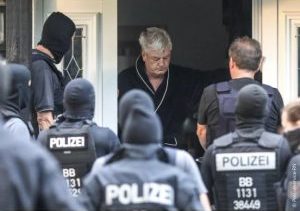 If Germany moves to ban the Alternative for Germany (AfD), a Trump administration could move to counter this as well, including with sanctions against Germany due to democratic backsliding. Many may have already forgotten about the commando raid on a German publisher and journalists’ home over the summer. The German government, without so much as a court order, shut down an entire publication overnight. The publisher of Compact magazine, Jürgen Elsässer, was splashed across newspaper and television stations across the country in his bathrobe surrounded by officers in ski masks.
This is not normal behavior for a democratic country, and Trump’s administration may take action if further attempts are made to persecute journalists and shut down the free press in Germany.
https://twitter.com/RMXnews/status/1813205996531003470
What actions could Trump’s administration take in such a scenario? With Germany cut off from its traditional source of Russian gas, a move to restrict energy exports to Germany would be devastating. In other key areas, Germany and Europe are far more dependent on the U.S. than on vice versa.
Obviously, such a move would come with serious risks, including for the global economy, and potentially sparking a trade war. However, the U.S. would have most of the leverage in such a scenario. Europe needs U.S. energy, end of story.
The EU’s plan to restrict free speech and throttle X with fines could also result in sanctions on European companies, tariffs, and other forms of retaliation. Trump will likely be very willing to defend free speech across the world, especially after his own experience facing censorship across social media, and willing to use U.S. might to ensure this fundamental right on the web. His backers, most notably Elon Musk, will have a strong voice in the administration, and should Trump suddenly grow cold feet, he will face withering pressure from Musk and others.
Under Trump, free speech would still have a chance on platforms like X and others, even if free speech is already limited on those platforms. In turn, European conservatives, libertarians, and those opposed to mass immigration will be allowed to voice their opinions and influence the political debate in the coming years.
There are, of course, many open questions about how relations between Trump and the EU would develop, but it may obviously be a pointless thought experiment. In a matter of hours, days, or even weeks, Kamala Harris may be the decided winner. In such a scenario, the globe can also expect X to be shut down within a year or two, buried under fines and violations of the EU’s Digital Service Act. Brussels will continue to attack conservatives with its powerful sanctions mechanism. New forms of harassment and persecution, including arrests of politicians, journalists, and academics who support the “wrong opinion,” are likely as well.
https://twitter.com/RMXnews/status/1852324197084668098
The majority of Europeans may not like Donald Trump. As polling shows, Europeans, most notably Western Europeans, are very much opposed. Only a few countries from the east, such as Hungary, Bulgaria, and Serbia, support the former president, but in the end, he may be the only thing between a free web and a closed web, especially on the most important topics Europeans are increasingly not allowed to talk about. Furthermore, as opposition to mass immigration grows and other left-liberal agendas, there is no telling where European sympathies will likely be in the coming years.
In short, much is at stake for Europe in the outcome of this vote. The deck remains stacked against Trump. The U.S. voting system is in shambles, with votes being counted for days and weeks after election day, with ballots stuffed in drop boxes weeks before the election, and with ballot harvesters collecting ballots outside of any real oversight. Even basic safeguards like voter ID are nowhere to be found in many states. It will be a miracle if Trump wins, but we’ll know the results soon enough and will have to deal with the outcome — for better or worse.
Russian gas exports to EU approaching ‘technical maximum’
RT | November 4, 2024
Exports of Russian gas to the EU and Moldova through Ukraine are approaching the maximum possible using existing infrastructure, Vedomosti newspaper has reported, citing data from energy giant Gazprom.
A total of 1.31 billion cubic meters of gas were delivered via this route in October, the outlet said in an article published on Saturday.
According to Gazprom’s figures, the average daily volume of Russian gas supplies through the Ukrainian gas transmission system last month amounted to 42.3 million cubic meters, representing a 5% increase compared to October 2023.
Following the escalation of the Ukraine conflict in February 2022, the EU slapped sanctions on Moscow and made it a top priority to curb its dependence on Russian energy. However, deliveries of Russian gas to the bloc continue almost three years later.
At the moment, the transit line through Ukraine and the European arm of TurkStream remain the only two conduits through which piped Russian gas can reach central and southern Europe.
Kiev has said it is not planning to extend the current transit agreement with Gazprom when it expires at the end of the year.
Earlier this week, Hungary – an EU member state – announced that it had imported 6.2 billion cubic meters of natural gas via the TurkStream this year. “This is the largest volume of gas to date” in annual terms, Foreign Minister Peter Szijjarto said.
Last month, the Agency for the Cooperation of Energy Regulators (ACER) said the share of Russian liquefied natural gas (LNG) in the EU market had reached 20% this year, growing by 6% compared to 2023.
Finnish Defense Minister Says More EU Funding for Ukraine Needed Through Taxes
Sputnik – 04.11.2024
The European Union will need to find more funds “in the wallets of European taxpayers” to support Ukraine if assistance from the United States weakens, Finnish Defense Minister Antti Hakkanen said on Monday.
He added that now was not the time for “war fatigue.”
“This means that more funds need to be found in the wallets of European taxpayers to support Ukraine,” Hakkanen told Finnish broadcaster when commenting on the potential decline in support for Kiev from Washington after the US presidential election.
In October, Finnish Foreign Minister Elina Valtonen said in an interview that the West was getting tired of supporting Ukraine, hoping for some form of resolution to the ongoing conflict.
Western countries have ramped up their military and financial aid to Kiev since the start of Russia’s military operation in Ukraine in February 2022. Russia has repeatedly said that arms supplies to Ukraine hinder the conflict settlement and directly involve NATO countries in the conflict.
Euro-Med: International community showed disgraceful failure to stop genocide in Gaza
Palestinian Information Center – November 2, 2024
GENEVA – The Euro-Med Monitor said the foot-dragging by the international community regarding taking decisive decisions towards the massacres committed by the Israeli occupation army in the Gaza Strip, especially in northern Gaza, indicates its complicity in those heinous crimes, gives the Israeli army a green light to escalating its genocidal war, and shows its shocking disregard of Palestinians’ lives and dignity.
The Euro-Med indicated in a statement on Saturday that the international community, including the International Criminal Court, the International Court of Justice, the European Union, and the various UN organizations, showed a 13-month disgraceful failure to protect civilians and stop the crime of genocide committed by the Israeli occupation army against Palestinians in Gaza.
The Euro-Med emphasized that the international community did not deal seriously with the Israeli occupation crimes and ignored its atrocities, which encouraged the Israeli army to expand such crimes with the support and armament from the US and a number of European countries.
The Euro-Med voiced concerns that Israel, despite officially denying it, is implementing a displacement plan in northern Gaza, known as the “General’s Plan” by evacuating shelters in Jabalia and Beit Hanoun by committing massacres, killing, displacing, and starving civilians through blocking the entry of aid or goods into northern Gaza for a whole month.
It called on the International Criminal Court to shoulder its responsibilities to issue arrest warrants and hold accountable the perpetrators of the Israeli crimes.
The human rights group also urged the United Nations and the international community to intervene immediately to save the lives of hundreds of thousands of residents in northern Gaza, stop the crime of genocide, impose a comprehensive arms embargo on Israel, and to take all decisive measures to protect Palestinian civilians.
Von der Leyen advised to create ‘EU CIA’
RT | October 31, 2024
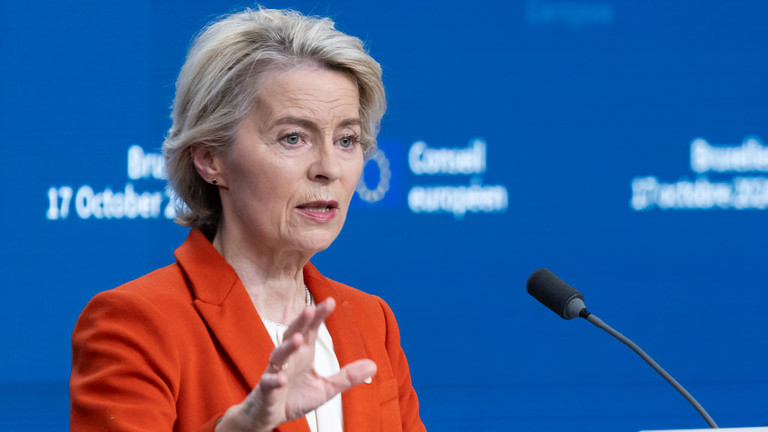
An EU report has called on European Commission President Ursula von der Leyen to create a “fully fledged” intelligence agency to coordinate the clandestine activity of member states. However, even proponents of the idea admit it would be costly and unpopular.
Penned by former Finnish President Sauli Niinisto and published on Wednesday, the report outlines the EU’s readiness for war, and makes a multitude of vague recommendations. Officials in Brussels are advised, for example, to cultivate a “preparedness culture,” and to “strengthen civil-military coordination frameworks.”
One of the more concrete recommendations is that the EU create “a fully-fledged intelligence cooperation service, serving all EU institutions and member states.” The agency, the report states, would collect intelligence from national-level agencies in order to “serve both strategic and operational needs of EU-level policy-planning and decision-making.”
While the proposed agency was described by Politico as a “CIA-style spy service,” the report makes no mention of it carrying out clandestine operations outside the EU’s borders, which is the CIA’s role within America’s sprawling intelligence apparatus. Instead, it suggests that the agency would “coordinate specific counter-espionage tasks” and help member states “counter threats against them posed by hostile foreign intelligence services.”
Speaking at the launch of Niinisto’s report, von der Leyen admitted that member states will probably be reluctant to allow Brussels bureaucrats to oversee their intelligence sectors. For now, she said, the EU will focus on “strengthening information sharing” instead.
Niinisto also admitted that, while researching the report, he encountered “many critical voices” from member states concerned about increasing the bloc’s budget to fund this agency.
If adopted, the report’s recommendations would mark yet another expansion of the EU’s powers. Two years ago, the bloc adopted its first common defense strategy, which authorized the creation of a 5,000-strong “rapid deployment” force. Last month, von der Leyen named former Lithuanian Prime Minister Andrius Kubilius as the EU’s first ever defense commissioner.
Earlier this month, Kubilius said he would work on ramping up arms production across the bloc, declaring that “we must be ready to meet Russia militarily in six to eight years.”
Kubilius has also called on the EU to pursue regime change in Moscow, and to sponsor “democratic forces” working to topple President Vladimir Putin’s government.
Georgian president refuses to back up election theft claims
RT | October 30, 2024
Georgian President Salome Zourabichvili has refused to be interviewed by the prosecutor general’s office about her claims of election fraud, arguing that investigators should look for evidence themselves.
Zourabichvili has joined several pro-Western opposition parties in accusing the ruling Georgian Dream party of “stealing” Saturday’s parliamentary vote, without providing specific examples.
The Prosecution Service of Georgia subsequently launched an investigation into the alleged falsification of the election and summoned Zourabichvili to appear on Thursday and provide evidence on the matter.
“I don’t intend to go to the prosecutor,” Zourabichvili said at a press conference in Tbilisi.
“It’s not up to the president to provide the proof,” she argued, adding that NGOs, election monitors and ordinary citizens have been providing “huge amounts” of evidence of election rigging. She said that more than 1,100 complaints have been filed regarding the conduct of the election.
“In any standard investigation, it’s the investigative body’s duty to gather proof, not the other way around. I’ve never seen an investigative authority ask a president for election-related evidence,” the president wrote on X.
“What we’re witnessing is an attempt to fuel tension and fear amid frustration over stolen votes. There’s psychological pressure directed at both you and me,” she added.
Mamuka Mdinaradze, executive secretary of Georgian Dream, advised the president to cooperate with the prosecutors. “President Zourabichvili must answer what her accusations are based on,” he told reporters on Wednesday. “We are ready, as part of the investigation in the prosecutor’s office, to open any polling station to prove that the elections were held fairly.”
Georgian Prime Minister Irakli Kobakhidze said that Zourabichvili and the opposition “have no evidence of election fraud, and if they do not go to the prosecutor’s office, this will be the clearest evidence that they made false statements about the elections.”
Kobakhidze previously stated that the election was “absolutely clean, democratic and fair.”
Zurab Japaridze, leader of the Girchi – More Freedom party said the critics of the government “do not trust” the prosecutor’s office and would advise the president not to meet with them.
Official tallies showed Georgian Dream received nearly 54% of the vote, winning a convincing parliamentary majority. The French-born Zourabichvili has rejected the results, describing the election as a “Russian special operation.” Along with the opposition leaders, she has demanded a new election, organized under international supervision.
Georgian election officials complained about Zourabichvili’s rhetoric on Tuesday, urging the prosecutors to investigate “unfounded attacks” on the central election commission. They noted that international observers from the Organization for Security and Cooperation in Europe (OSCE) have “positively assessed the elections” and found no significant violations. The US and the EU, however, expressed their concerns and urged the Georgian authorities to investigate the reports of irregularities.
Featured Video

Elijah Magnier: Yemen’s strikes are shattering Saudi Arabia’s long-term strategy
or go to
Aletho News Archives – Video-Images
From the Archives
British weapons and personnel doing much of the killing in Yemen
Press TV – June 18, 2019
A detailed report published by the Guardian newspaper has shown how Britain is massively contributing to Saudi Arabia’s devastating war on Yemen as it suggests that London is not only supplying the bombs that fall on Yemenis, but it provides the personnel and expertise that keep the war going.
The comprehensive report by Arron Merat published on Tuesday showed that Britain was doing much of the killing in Yemen as the country continues to provide Saudi Arabia with everything it needs to turn its southern impoverished neighbor into a graveyard.
“Every day Yemen is hit by British bombs – dropped by British planes that are flown by British-trained pilots and maintained and prepared inside Saudi Arabia by thousands of British contractors,” said Merat in the report. … continue
Blog Roll
 Aletho News
- Racist Seinfeld Dances for Joy as Bibi Unveils His New Map
- A West Bank War for Netanyahu’s Election Campaign, Could It Backfire?
- Yemen denounces European Parliament’s ‘hypocritical’ push to blacklist Ansarullah
- Qalibaf: UAE’s UN bid aims to ‘clear the runway’ for ‘Greater Israel’, whitewash genocide
- Pakistan reopens Iran border after boosting security: Report
- Why are so many Brazilians voting for Flávio Bolsonaro?
- Democrats Put Anti-Russia Agenda Ahead of American Workers
- Elijah Magnier: Yemen’s Strikes Are Shattering Saudi Arabia’s Long-Term Strategy
- Pentagon designates Chinese cultural centers national security threat
- Israel Demolishes Home Of Lebanese Journalist Whose Viral Film Exposed Pager Attack
- If Americans Knew
- An error has occurred; the feed is probably down. Try again later.
- No Tricks Zone
- Sudden Stratospheric Warming, Powerful El Niño Combination May Lead To Extreme Europe Cold, Energy Crisis!
- Two New Studies Find Thwaites Glacier Melt Cannot Be Driven By Human Activity Or A Warming Ocean
- E-Cars Reduce CO2 Emissions By Only 41% Compared To Internal Combustion Engine Vehicles
- Predictions Made By Renowned Climate Professor Over Past Decades Have Been Proven To Be Poor
- New Study Suggests Large Regions Of The Pacific Ocean Have Been Cooling For The Last 80 Years
- Germany’s Green Energy Debacle: High Energy Costs Force Kahla Porzellan to Close After 182 Years!
- New Study: 50 Years Of The Most Aggressive ‘Net Zero’ Policies Can Only Affect The Global Climate By 0.03°C
- US September “Heat” Was No Record…Many Records Set Decades Ago
- Latest European Green Energy Debacle; Portugal’s Largest Flagship Solar Park Insolvent!
- Green Energy Debacle: German Expert Professor Fritz Vahrenholt Warns Of Severe Economic And Social Consequences

