Germany Is the EU’s Censorship Champion
By Robert Kogon | Brownstone Institute | October 22, 2024
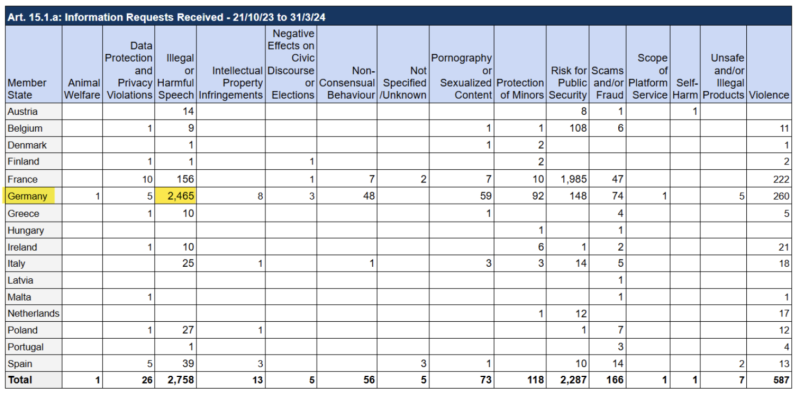
Note that X, rebranded as a “free speech platform,” provides information on platform users to the governments of EU member states in connection with not just illegal speech — and, yes, national legislation in EU countries includes many “speech crimes” — but also legal speech that is deemed “harmful.”
This is the real innovation involved in the EU’s Digital Services Act (DSA): It creates an obligation for platforms to take action in the form of “content moderation” against not just illegal content, but also ostensibly harmful content such as “disinformation.” Note that in the period covered in X’s latest “Transparency Report” to the EU on its “content moderation” efforts, nearly 90% of such requests for information on the purveyors of ostensibly “illegal or harmful speech” came from just one country: Germany. See the below chart.
Note that X also takes action against posts or accounts for “illegal or harmful speech” that is reported to it by EU member states or the European Commission. Such action may involve deletion or geo-blocking (“withholding”) of content. But, as the “enforcement options” linked in the report make clear, it can also involve various forms of “visibility filtering” or restricting engagement — “in accordance with our Freedom of Speech, Not Reach enforcement philosophy,” as the report puts it.
Here again, Germany is top of the table, having submitted 42% of all the reports to X on “illegal or harmful speech” and nearly 50% of the reports from member states. See the chart below. Germany submitted nearly twice as many reports as any other member state — France finished a distant second — and over ten times more reports than comparably-sized Italy. The European Commission submitted around 15% of the reports.
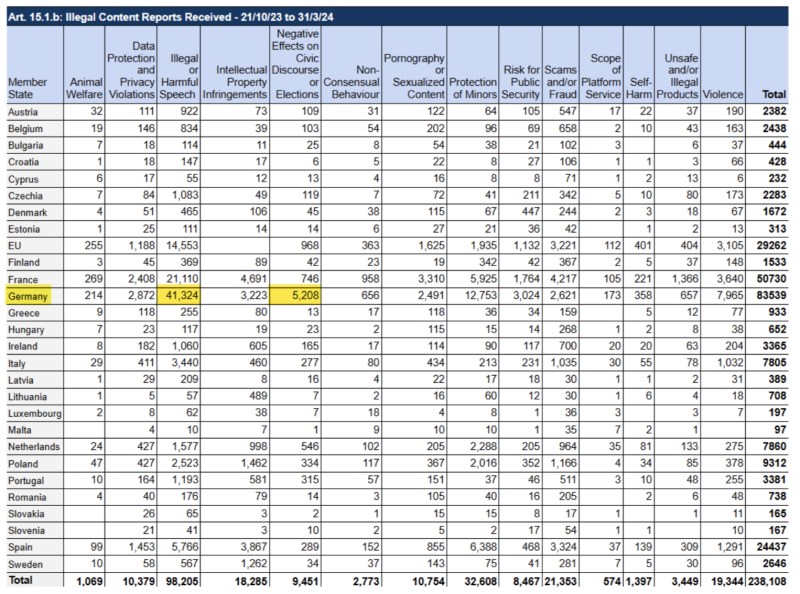
It is also notable that Germany submitted by far the most reports on content entailing “negative effects on civic discourse or elections,” yet another category of speech that is clearly not illegal per se but that is deemed “harmful” enough under the DSA regime to require suppression. (Hence, while the content is not per se illegal, it would be illegal for platforms under the DSA not to suppress it. This ambiguity is at the very heart of the DSA censorship regime.) Germany submitted well over half of all such reports and over 60% of the reports from member states.
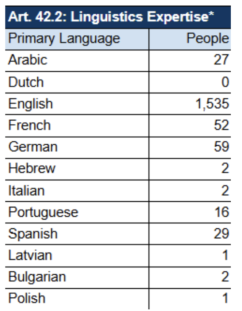
Finally, it is worth noting that the overwhelming majority of these reports and the related “enforcement actions” undoubtedly involve English-language content. This can be gleaned from the fact that nearly 90% of X’s “content moderation team” consists of English speakers. The “primary language” of 1,535 of the team’s 1,726 members is English, as can be seen in the below chart.
But why should Germany or the EU be accorded any jurisdiction over English-language discourse? Needless to say, Germans are not as a rule native English speakers and only 1.5% of the total EU population has English as their mother tongue.
In any case, two things are very clear from X’s “Transparency Report.” One is that Elon Musk’s “free speech platform” is not that and is in fact devoting enormous resources, both in terms of “trained” human censors and programming, to complying with the EU’s censorship regime. And the other is that Germany is the EU’s — and hence undoubtedly the world’s — undisputed, online censorship champion.
There were 226,350 “enforcement actions” taken by X in response to reports from EU member states or the EU Commission in the reporting period covering barely more than three months. This is to say nothing of the “enforcement actions” taken proactively by X in accordance with its own DSA-compatible terms of service and rules.
Lest readers have trouble reconciling the foregoing with the viral kerfuffle between Elon Musk and Thierry Breton and the famous “proceedings” against X that were initiated under Breton’s leadership, please see Jordi Calvet-Bademunt’s helpful account of the “preliminary findings” of the EU Commission’s investigation here.
According to a new Bloomberg report, EU officials are even contemplating taking into account the revenues of some of Musk’s other companies in calculating a potential fine against him. Needless to say, despite the fact that the sources are unnamed, this has been widely construed as a further escalation in a mammoth free speech struggle between Musk and the EU.
But as Calvet-Bademunt’s analysis shows, the EU’s case against X, as it now stands, has nothing to do with insufficient “content moderation” — or, in other words, censorship — but merely concerns other, more arcane, aspects of the DSA.
Interestingly, the original proceedings opened against X did indeed involve “content moderation” and — believe it or not – could even have had a positive impact on freedom of speech, since X was ostensibly being investigated not for failing to remove or suppress user content, but rather for failing to inform users about such “content moderation decisions” or, in other words, shadowbanning. But, as Calvet-Bademunt shows, this aspect has been dropped from the investigation.
The fact of the matter, in any case, is that no online platform of any size can remain on the EU market and be a “free speech platform.” The DSA makes this impossible.
Robert Kogon is the pen name of a widely-published journalist covering European affairs.
G7 Not Planning to Unfreeze Russian Assets After End of Ukraine Conflict – Reports
Sputnik – 22.10.2024
The Group of Seven nations will announce later this month that they will keep Russian assets frozen in their jurisdictions even after the end of hostilities in Ukraine, media reported on Tuesday, citing an Italy-led draft statement.
“We … reaffirm that Russia’s sovereign assets in our jurisdictions will remain immobilized until Russia ends its aggression and pays for the damage it has caused to Ukraine,” the draft of the leaders’ statement, quoted by Nikkei, read.
The G7 intends to guarantee a $50 billion loan for Ukraine, to be repaid by windfall profits from the frozen Russian assets, the news agency said, citing multiple G7 and EU sources.
Last month, European Commission President Ursula von der Leyen recommended EU member states to consider loaning Ukraine 35 billion euros ($38 billion) that will be repaid with windfall profits earned by Russia’s frozen assets. The proposal was endorsed by the European Parliament earlier on Tuesday. European Commissioner for Justice Didier Reynders said that the G7 would announce their contributions to Kiev’s $50 billion loan secured by Russian assets in Washington on October 25.
EU to tap frozen Russian assets
RT | October 22, 2024
The European Parliament has approved a €35 billion ($38 billion) loan to Ukraine to be repaid with revenues from frozen Russian assets, according to an official statement on Tuesday. The financing fulfils the EU’s share of a $50 billion aid package for Kiev agreed by G7 countries in June.
MEPs approved the move with 518 votes in favor, 56 against and 61 abstentions, the parliament announced. The funds will be transferred through the end of next year, it added.
Future revenues from frozen Russian Central Bank assets will be made available to Ukraine to service the EU loan and loans from other G7 partners. The statement added that Kiev may also allocate the funds “as it sees fit.”
The proposal was endorsed earlier this month by EU governments. The European Council now plans to adopt it as a regulation, and it will enter into force after its publication in the Official Journal of the EU, the statement notes.
The EU froze approximately €210 billion ($227 billion) in Russian Central Bank assets following the start of the Ukraine conflict in February 2022. Russia has denounced the move as “theft.” The immobilized assets had generated €3.4 billion ($3.7 billion) in interest as of mid-July, according to Brussels-based central securities depository Euroclear, which holds most of Russia’s funds. In July, a transfer of €1.5 billion ($1.6 billion) of that money was approved by the European Commission to support Ukraine’s “military capabilities.”
The US is reportedly planning to contribute up to $20 billion to the G7 package, also on condition that the funds are repaid using proceeds generated by the immobilized Russian assets.
The US previously expressed concern that the EU policy of reviewing Russia sanctions every six months makes repayment of the loan uncertain as it could result in a lapse in restrictions. In response, Brussels proposed extending the renewal timeframe to three years. Hungary opposed the idea and said it would delay a decision until after the US presidential election on November 5.
Kiev’s Western backers have been trying to accelerate negotiations over the loan due to mounting concern that Washington’s aid to the country could be cut off if Donald Trump returns to the White House, Financial Times reported last week. The former US president has repeatedly threatened to scale back assistance if he is elected.
Moscow maintains that any seizure of its funds is illegal under international law and would further undermine global trust in the Western financial system.
Moldova must back election meddling claims – Kremlin
RT | October 21, 2024
Moldovan President Maia Sandu must substantiate her claims about “criminal groups” interfering with Sunday’s presidential vote and a referendum on pro-EU constitutional changes, Kremlin spokesman Dmitry Peskov told journalists on Monday. Such strong accusations should not be made without a hint of proof, he said.
Late on Sunday, when the votes were still being counted, Sandu, who is seeking her second presidential term, claimed in a public statement that there was “clear evidence” of criminal groups supposedly working together with “foreign forces hostile to our national interests” in order to interfere with the voting.
According to the president, those malign forces sought to buy hundreds of thousands of votes in what she described as “fraud of unprecedented scale.” Sandu then vowed to “respond with firm decisions” to the perceived transgressions.
The Moldovan leader did not name any specific groups she believed could be behind the irregularities, nor did she present any specific evidence to back up her claims.
“This is a rather serious accusation,” Peskov said, commenting on the issue. “Some evidence must be presented to the public” to substantiate it, he added. If Sandu believes she had not received votes because of some gangs, she should present clear proof of that, the Kremlin spokesman said, adding that “it would be nice if she explained the number of votes that disagreed with her line.”
“Does she mean that Moldovan citizens who do not support her are associated with criminal groups?” Peskov asked.
Moldovan citizens residing in Western nations, whose ballots were counted last, reportedly tipped the balance in favor of the pro-EU amendments. The ‘yes’ vote gained the support of 50.31% of voters while 49.69% voted against.
Sandu also received a boost to her election performance, with her final result amounting to 42% of the vote, up from the 38% earlier reported by Reuters. Her main rival, the Party of Socialists’ Alexandr Stoianoglo, got 26%. Peskov questioned how such a large change is possible, saying it was “difficult to explain.”
Prior to the vote, the Moldovan authorities claimed they had found evidence of Russian meddling attempts. Police arrested hundreds of people, accusing them of being part of an alleged “vote-buying scheme,” according to AFP. Law enforcement officials also claimed this week that up to a quarter of the ballots could supposedly be “tainted by Russian cash.”
In her post-election statement, Sandu stopped short of pointing the finger at Russia. Brussels still accused Moscow of what it called “unprecedented interference and intimidation” in the wake of the voting.
Since neither of the candidates managed to secure an absolute majority in the Sunday vote, Sandu will face off against Stoianoglo in a runoff on November 3.
EU accuses Russia of ‘unprecedented’ referendum interference
RT | October 21, 2024
Brussels has accused Moscow of pressuring Moldova over its EU integration referendum and presidential election on Sunday.
A constitutional amendment which sets the goal of eventually joining the European Union is poised to pass by a razor-thin margin. Russia has called the vote unfree and described it as suspicious.
On Monday, EU spokesman Peter Stano said, “We noted that this vote took place under unprecedented interference and intimidation by Russia and its proxies aiming to destabilize the democratic processes.”
Early results reported by Moldovan election officials indicated a slight majority of votes cast against the constitutional amendment proposed by pro-Western President Maia Sandu, who is running for a second term in office. During counting overnight, the pro-integration vote pulled into the lead.
Sandu declared victory on the issue after 98.6% of the votes were counted, with preliminary results showing 50.27% of the vote cast in favor and 49.73% against. Moldovan citizens residing in Western nations, whose ballots were counted last, reportedly tipped the balance in favor of the initiative.
Kremlin spokesman Dmitry Peskov said on Monday that the dynamics of the tally were “difficult to explain.”
“Any observers with basic understanding of political processes can attest to those anomalies with the vote count,” Peskov said. He added that considering Chisinau’s crackdown on the opposition, the reported outcome was significant.
Moscow previously claimed that the Moldovan government restricted the ability of citizens living in Russia to participate in the vote. Only two polling stations worked in the country, with 5,000 ballots available at each, while an estimated 500,000 Moldovan citizens live in Russia, Foreign Ministry spokeswoman Maria Zakharova said earlier this month.
The Organization for Security and Cooperation in Europe (OSCE) praised Moldovan officials for the organization of the election, but acknowledged that it had issues with opposition representation. The conditions “did not provide the contestants with a level playing field,” Urszula Gacek, the head of the body’s observer mission, said on Monday.
European Commission President Ursula von der Leyen visited Moldova earlier this month to meet with Sandu and announce an EU plan to invest €1.8 billion ($1.95bn) in the country’s economy between 2025 and 2027. She urged Moldovans to vote for the president’s proposal.
Moldovan election observer tells RT she was ‘openly threatened’ at polling station in EU nation
RT | October 21, 2024
An observer at a Moldovan presidential election polling station in the central Italian city of Perugia has told RT she faced threats from the local election committee.
On Sunday, Moldovans at home and abroad voted for their new leader in an election that also involved a referendum on whether to include the nation’s EU aspirations in its constitution.
The observer, Larisa Brunescu, told RT by phone that election officials had allowed her into the polling station, but wanted to force her out once she tried to film what was going on inside.
“They told me I should not send any videos, [record] conversations, [send] figures, nothing,” Brunescu, who represents the Renaissance Party of former Prime Minister Vasile Tarlev, said.
According to Brunescu, at one point, she was told that the documents allowing her to be an observer were “not OK” and that she should leave.
The committee claimed her documents were not “filled out properly,” Brunescu said, which she denied. Election officials “were openly threatening” her, she added.
According to Brunescu, the committee also tried to prevent her from taking photos, and insisted that she could only report figures which they would provide. The officials looked at her “like dogs,” she added.
The actions of the committee members “speak of some serious irregularities,” Brunescu believes. She claimed that she counted fewer than 1,000 voters at the polling station, though the committee had “4,000 ballots.”
“They can rig the ballots,” she added, while acknowledging that she did not see the committee actually doing so.
Earlier on Sunday, Moldova’s opposition Victory alliance accused the authorities of allowing massive violations at the polling stations, claiming that hundreds of irregularities were reported during the first half of the day. The political bloc also stated that observers were outright banned from accessing some polling stations both at home and abroad “without any valid reasons.” Victory also accused the authorities of suppressing votes that it deemed undesirable.
Moldovan President Maia Sandu was seeking a second term, running against Alexandr Stoianoglo, a former prosecutor general, and Renato Usatii, a former mayor of Moldova’s second largest city, Balti, with seven other candidates also running.
Five out of ten candidates criticized the referendum, arguing that it was held only to ensure Sandu’s reelection. On Sunday evening, it was reported that most voters rejected the pro-EU constitutional changes.
Moldova has been actively pushing for EU and NATO membership since 2020, when Sandu, a critic of Russia and supporter of EU integration, came to power. The opposition has criticized the president for failing to resolve the economic and energy crisis in the country, which is among the poorest in Europe.
Moldova reports dramatic late turnaround in referendum on EU
RT | October 21, 2024
A knife-edge majority of Moldovans have approved incumbent pro-Western President Maia Sandu’s EU accession plans, election officials said on Monday, following an almost complete count of a ballot on the issue.
According to Moldova’s Central Electoral Commission, with 99.5% of the ballots counted, 50.4% of voters backed Sandu’s plan to enshrine integration with the EU in the former Soviet country’s constitution, while 49.6% voted against the step.
The tally came as something of a surprise, given that preliminary results issued late on Sunday had indicated that a slight majority of voters were against the move. According to media reports, the ‘yes’ camp received a last-minute push from ballots cast by Moldovans living abroad, which were counted towards the end.
The ‘yes’ vote means Moldova’s constitution will be supplemented with two new paragraphs. One will state that the identity of the Moldovans will be changed to ‘Europeans’, while the second will name integration into the EU as a strategic goal of the country.
A total of over 1.5 million people, or more than 51% of the electorate, cast their votes in Sunday’s referendum, well above the one-third required for the ballot to be considered valid.
While the referendum has revealed a nearly 50-50 split among Moldovans over EU integration, it is expected that Sandu, who is seeking a second term in office, will press ahead with the plan if reelected.
In a simultaneous presidential election held on Sunday, the incumbent leader failed to secure an absolute majority of 50% plus one vote. Sandu is now set to face off with former prosecutor general Alexandr Stoianoglo, leader of the Party of Socialists (PSRM), in a runoff scheduled for November 3. The two garnered 41.9% and 26.3% of the vote respectively in the first round.
Earlier on Monday, Sandu challenged Stoianoglo to a debate, saying that the two should present their ideas on the country’s future to the public and let Moldovans decide which path to take. Stoianoglo has accepted the challenge, but suggested the debate be held on a “neutral platform,” not those of “government-dependent media.” Sandu has been repeatedly criticized for the reported closure of news outlets that are not pro-Western, as well as for allegedly targeting opposition figures and those who do not support her EU drive.
Moldova rejects EU integration in referendum
RT | October 20, 2024
Voters in Moldova have rejected the government-backed proposal to enshrine eventual integration with the EU in the former Soviet country’s constitution.
During Sunday’s referendum, held simultaneously with a presidential election, voters were asked whether the constitution should be amended to reflect the “irreversible European course” of the country and affirm the “integration into the European Union as a strategic objective” of the nation.
With more than 86% of the ballots counted, 54.55% voted against the proposal, while 45.45% voted in favor, according to the preliminary results cited by the news channel TVR.
The highly contentious presidential election is likely heading to a second-round runoff, as no candidate has succeeded in winning 50% of the votes.
With more than 85% of the ballots counted, the pro-EU incumbent president, Maia Sandu, is leading with 37.08%. Former prosecutor general Alexandr Stoianoglo, the leader of the Party of Socialists (PSRM), is second with 29.1%.
The high-stakes election was marred by the accusations of rigging and voter manipulation from the government and the opposition alike.
The opposition alliance ‘Victory’ accused the authorities of allowing irregularities, ranging from organized busing of voters to polling stations to allegations of voter intimidation.
Chisinau, meanwhile, has accused Russia of attempting to influence the outcome of the election and has shut down several TV channels critical to the government. “Moldova has come under an unprecedented attack. Criminal groups, united with foreign powers, have attacked our country with lies and propaganda,” Sandu said during a press conference shortly after the preliminary results were announced. She claimed to have “evidence and information that a criminal group had attempted to buy 300,000 votes.”
The election, widely seen as pivotal to Moldova’s aspirations to join the EU, were dominated by the issues of corruption and low living standards, as well security concerns stemming from the ongoing fighting between Russia and Ukraine.
Lights out for the city on the hill

By Stephen Karganovic | Strategic Culture Foundation | October 20, 2024
Throughout the decades of the Cold War, whilst the blocs were competing, two major attractions worked powerfully to the advantage of the West. Firstly, the comfort and prosperity that it was able to provide to its citizens, which its Eastern rivals could hardly match. The second feature that in the eyes of the world gave the West a huge competitive edge was the comparatively better performance of its institutions with regard to individual liberties.
The twin advantages of prosperity and the impression that the West valued freedom successfully neutralised much of the theoretical critique of the capitalist social and economic model. In particular, the West’s ostensible commitment to personal liberties acted as a powerful magnet. As a political weapon it served its purpose effectively. It is indisputable that so long as scrupulous adherence to the rule of law and respect for individual rights were seen as the distinguishing characteristic of Western societies they were widely perceived as a desirable alternative to the competing systems, which often disregarded strict legality and did little to diminish arbitrariness.
This is the state of affairs that prevailed until roughly the 1990s, when the Western bloc finally reached the pinnacle of its global might and was widely perceived as triumphant over its adversaries. But ever since the social gains which had made the lives of common people relatively comfortable and safe, and society cohesive across class lines, are being dismantled throughout the Western world. The sense of legal security that for decades citizens of Western countries unquestionably enjoyed proved equally evanescent. The phenomena of lawless abuse and vulnerability to the powers that be, normal elsewhere but long extirpated from the practice of Western societies and largely faded from the memory of their citizens, have reappeared with a vengeance. On both the domestic and international levels, the “rule of law” rapidly morphed into its unrecognisable caricature. That metamorphosis ultimately became jokingly known as the “rules based order.”
With scant internal opposition or even much public awareness, the core countries of the collective West became infected with the contagion of arbitrariness in the interpretation of inherent human rights and application of legal principles erected to protect them. The transformation, which in historical terms took place with lightning speed, was spearheaded by a ruthless and duplicitous political cabal and was implemented with the connivance of a judiciary which was utterly corrupt and shamefully impotent.
The breakdown of legality is generally a precursor of worse things to come, which almost invariably takes the form of increasingly egregious abuse of power. The point can be illustrated with disturbing but by no means isolated examples of the emerging state of affairs in the countries of the collective West that used to be envied for their freedom. Readers will recall the famous line, “they hate us for our freedom.” The utterance in 2001 of that false assertion whilst doing nothing to advance the cause of freedom did introduce an orgy of destruction and mass slaughter.
The most striking representation of the breakdown of the legal order can be cited today is the illegal kidnapping and incarceration by the German judicial system of German-American lawyer Dr. Reiner Fuellmich, under fabricated embezzlement charges. There are many solid reasons for deep state cabal’s virulent hatred of Dr. Fuellmich. He was the spoiler who in 2020 had the temerity to found the Covid pandemic research committee, just as the social control experiment was gaining momentum. The committee’s outstanding work in uncovering the sordid motives and homicidal objectives of the orchestrators of the bogus medical emergency was a major blow to them, especially because it was delivered successfully under conditions of nearly total informational blockade. Dr. Fuellmich’s ultimate, and perhaps overambitious and naively conceived goal of a medical Nurenberg to bring the culprits to justice was never achieved but the very thought of it must have caused nightmares to those he intended to be prosecuted.
“This agenda has been long planned,” Dr. Fuellmich summarised his Committee’s findings. “It’s ultimately unsuccessful precursor was the swine flu some 12 years ago, and it is cooked up by a group of super-rich psychopathic and sociopathic people who hate and fear people at the same time, have no empathy, and are driven by the desire to gain full control over all of us, the people of the world.”
The time came for the psychopaths to seek their sweet revenge, and the operation was not exceedingly difficult because they happen to control the mechanisms of power. Eleven months ago Dr. Fuellmich was imprisoned in Germany on the false allegation of a colleague who had been infiltrated into the Covid Committee that he misused the organisation’s assets for personal benefit. A charge that under German law is a misdemeanour and for which there is no precedent of lengthy pre-trial imprisonment resulted in incarceration that has now lasted for over 400 days under Abu Ghraib conditions, except that it is in Germany and not in Iraq. For a shocking portrayal of those detention conditions, see here. And see here for the disgraceful procedural deficiencies of the trial itself, which is currently in progress, stained by practices incompatible with the image of Rechtsstaat, that Germany along with the collective West regimes associated with it are misleadingly cultivating.
The lawless persecution of Dr. Fuellmich for the “offence” of performing a remarkable public service by uncovering and documenting the fraudulent nature and sinister background of the Covid “pandemic” is, however, but the tip of the iceberg in the collapse of the rule of law in the societies that portray themselves as its champions. Additional examples illustrate the breakdown and flesh out the picture of the legal disarray which undercuts the elementary freedoms of citizens and renders them defenceless before the demands of unaccountable Power.
In Ireland, the entire Burke family of Christian believers who refuse to bend their knee to the dictates of gender ideology is being targeted for vindictive persecution. One of the sons, Enoch, who is a school teacher, has so far spent over 400 days in solitary confinement, like Dr. Fuellmich in Germany. His “offence” is that in formerly Christian and Catholic Ireland he refuses to use the pronoun preferred by one of his students who claims other than his biological gender, because Burke holds that acquiescence to the gender identity charade would be a violation of his religious principles. Enoch Burke is being punished for refusing to debase himself as a professional educator and as a free human being by falsely confessing under the duress of his persecutors that 2 + 2 = 5. Nothing short of such a recantation of his conscientiously held beliefs would satisfy his country’s legal and educational overseers, who have gone berserk. He therefore remains in an Irish prison, despite being assured of instant release if only he manifested submission to their lunatic demand. For an insight into the broad official scope of that lunacy, see here.
Enoch’s brother Simeon, who has completed his law studies with honours, is being excluded from admission to the Irish Bar for reasons that have not yet been revealed with full clarity but which appear to also be related to his firmly held religious world-view, identical to his brother’s, which in contemporary Ireland apparently disqualifies one from working in a professional setting. For good measure, Enoch and Simeon’s father, Enoch Burke Sr., has been punished for objecting to LGBT symbols on Irish postal vehicles. For his temerity, taxpayer Burke was informed that henceforth he may come to the local post office to pick up his mail, but that it will no longer be delivered to him.
As in the Fuellmich case, the collective and exemplary punishment meted out to the Burke family is being kept out of the public eye as much as possible. Political and even religious figures refuse to take a stand or comment on it, and the controlled media studiously avoid discussing the subject.
Not to round off this complex picture of civilizational decline but merely to supplement it with another unsettling detail, the institution of thought crime portrayed in George Orwell’s novel, once considered no more than literary fiction, appears now to be enshrined in British law. For the present it appears to be a pilot programme, perhaps a precursor of even more frightening things to come. It operates as a prohibition of prayer within a designated exclusion perimeter around abortion “clinics” in Great Britain. The incriminating prayer would presumably be for the souls of children that departed this world due to the medical attention that they received in those establishments. The private performance of such unauthorised religious offices is now prohibited as it may cause “harassment and distress” to the employees of the “clinics” and their clients. And ominously, according to the Home Office, “anyone found guilty of breaking the law will face an unlimited fine.” One wonders if the European Court of Human Rights would have anything to say about such open-ended punishment schemes. Was anything of the sort ever before recorded in the annals of civilised jurisprudence?
Interaction between the thought police, who of course are merely “following orders,” and citizens suspected of mentally violating the “law” may be watched here by all who cherish their liberty and human integrity.
Wretched British jurisprudence (sceptics should also see here) now boasts its first successful prosecution of a thought crime violator. British Army veteran Adam Smith-Connor was recently found guilty of silently praying for his aborted son inside an abortion “clinic” buffer zone, was sentenced conditionally to two years in prison, and fined £9000 in costs for His Majesty’s court’s expense and trouble in prosecuting him. The courts still are not imposing “unlimited fines,” as the Home Office recommends, but for a retired person who must support a family arguably even that is a considerable sum.
Smith-Connor, be it noted, is far from the only victim of abortion-related thought crime harassment in the United Kingdom.
And also for the record, the theme here is not one’s personal position on Covid, transgenderism, or abortion. The central issue in every one of the cited instances, and others of a similar nature too numerous to mention, is the evident crumbling in the collective West of the legal order. That now makes it possible to impose on peaceful citizens draconian punishments wholly disproportionate to the alleged conduct they are being accused of. To what limits will the severity of punishment extend, or is it potentially as “unlimited” as the threat of monetary assessment the British Home Office is prepared to impose on those undertaking to silently pray in public for unborn babies?
The famed “City on the Hill” that many had been tricked into believing was illuminating mankind from on high is now forlorn and largely deserted. Its lights are getting progressively dimmer, life in it increasingly intolerable. Its deceived inhabitants and ardent admirers are dispersing in every direction. Word is out that a new City of great luminosity and magnetic attraction is being erected elsewhere, and that its architects will soon meet, in Kazan.
US, Canada and European countries suppressing Pro-Palestine protests: UN rapporteur
Palestinian Information Center – October 19, 2024
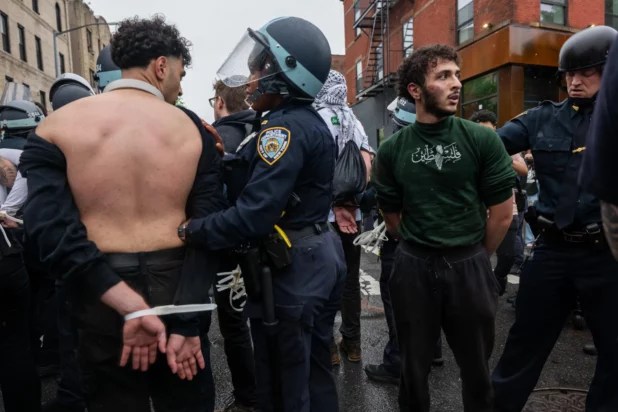
NEW YORK – The UN special rapporteur on the promotion and protection of the right to freedom of opinion and expression has accused the United States, Canada, France, Germany, and Belgium of suppressing the right to protest in support of the Palestinian cause. She also condemned Israeli authorities for carrying out dangerous attacks on media personnel in Palestinian territories, criticizing the assassination of journalists.
In a report submitted to the UN General Assembly and the press on Friday, the special rapporteur, Irene Khan—an “independent” expert with the UN since 2020—accused several European countries of imposing measures to restrict freedom of expression and suppress protests against the massacre in Gaza, as well as banning pro-Palestinian demonstrations.
Khan, a Bangladeshi lawyer working in human rights, referred to “demonstrations at universities in the United States that were violently suppressed,” mentioning the intervention of riot police in New York at the end of April to disperse dozens of pro-Palestinian activists occupying part of Columbia University.
Regarding European countries, Khan specifically mentioned “Germany, which has imposed a complete ban on pro-Palestinian demonstrations since October of last year, along with restrictions on such protests in various regions of Germany since then.” She added that these restrictions have never been imposed on demonstrations in support of Israel, but always on those supporting Palestinians.
She continued that “France attempted to take similar measures, but the courts rejected them, and evaluations are now made on a case-by-case basis,” noting that “Belgium and Canada have adopted similar stances.”
At the beginning of the Israeli extermination war on Gaza over a year ago, the French Interior Ministry called for a ban on pro-Palestinian demonstrations for fear of public disorder. However, the Council of State, the highest administrative court, urged the French government to make decisions on a case-by-case basis.
Khan also criticized Israel for “assaults on media in the occupied Palestinian territories—Gaza and the West Bank, including East Jerusalem—targeted assassinations of journalists, arbitrary arrests, and numerous cases of destruction of infrastructure and journalistic equipment in Gaza, as well as refusing to allow international press access.”
The independent rapporteur concluded that “the tightening of censorship in Israel and the occupied territories indicates that Israeli authorities have a strategy to silence critical journalism.”
Since October 7, 2023, the Israeli occupation, with unlimited American support, has been waging an extermination war on Gaza, resulting in over 142,000 dead and injured, the majority of whom are women and children, 10,000 missing, massive destruction of infrastructure, and a deadly famine.
US to pay $20 billion into loan for Ukraine – FT
RT | October 19, 2024
The US is set to provide up to $20 billion to Ukraine as part of a G7 loan, which will then be repaid using proceeds generated by the Russian assets immobilized by the West as part of Ukraine-related sanctions, Financial Times has reported, citing sources.
Kiev’s backers have been trying to accelerate negotiations over the loan in an effort to secure funding to Ukraine before the end of the year, due to mounting concern that Washington’s aid to the country could be cut off if Donald Trump wins the upcoming US election, FT noted, in an article posted on Friday. The former US president has repeatedly threatened to scale back assistance to Kiev if he were elected.
The US and its allies have frozen an estimated $300 billion in assets belonging to the Russian state after the Ukraine conflict broke out in 2022. The bulk of the money, nearly €197 billion ($214 billion) is being held by Brussels-based clearinghouse Euroclear. The immobilized funds have generated €3.4 billion ($3.7 billion) in interest as of mid-July, according to the depository.
Moscow has denounced the freeze as “theft” and said that any seizure of its funds would be against the law and would further undermine global trust in the Western financial system.
In June, G7 members agreed to grant Kiev a $50 billion loan to be financed by interest from the frozen Russian assets. The US and the EU were initially expected to provide $20 billion each as Canada, Japan and the UK were set to jointly lend the rest of the massive loan.
Later, to reassure allies that the bloc’s sanctions regime on the funds is not lifted, Brussels proposed a three-year extension of the EU’s mandate to freeze Russian assets. EU lawmakers have been renewing their sanctions every six months by unanimous decision, meaning that each vote may bring about a break in restrictions. Hungary opposed the proposal, and announced plans to postpone the decision until the US presidential elections on November 5.
Last week, the EU approved its own contribution of up to €35 billion to the G7 loan, but the bloc would need to contribute less if Washington provided the full $20 billion, Reuters reported last week. The funds, which will be managed by the World Bank, will be used for several purposes, including defense or humanitarian needs.
US senior officials, however, told FT that Washington would provide the full agreed $20 billion, even if the EU failed to convince Hungary’s premier Viktor Orban to drop his veto on extending EU sanctions, which had previously been voiced among the US demands. According to two sources cited by the paper, G7 finance ministers will make a statement on the distribution and structure of the loan on the sidelines of the IMF and World Bank meetings on October 25.
Orban Says Will Call on French, German Leaders at EU Summit to Start Talks With Russia

Sputnik – 17.10.2024
Hungarian Prime Minister Viktor Orban said on Thursday that he will call on the leaders of France and Germany at the EU summit to start negotiations with Russia on behalf of the EU to resolve the Ukrainian conflict.
Earlier Volodymyr Zelensky unveiled the so-called “victory plan” which was slammed by Russian officials as repetition of US strategy to fight Russia to the last Ukrainian.
“Today I will call on the German chancellor and the French president to start negotiations with Russia as soon as possible on behalf of the entire European Union, so that we can find a way out of this situation [the conflict in Ukraine],” Orban wrote on social media.
The prime minister also said that the “victory plan” of Volodymyr Zelensky “gives shivers” and the EU should change its strategy and start a peaceful resolution of the conflict in Ukraine.
Viktor Orban repeatedly stressed that Ukraine had no realistic chance to defeat Russian and urged for immediate peace talks that will take into account Moscow’s stance and Moscow’s security concerns.
Featured Video

Elijah Magnier: Yemen’s strikes are shattering Saudi Arabia’s long-term strategy
or go to
Aletho News Archives – Video-Images
From the Archives
British weapons and personnel doing much of the killing in Yemen
Press TV – June 18, 2019
A detailed report published by the Guardian newspaper has shown how Britain is massively contributing to Saudi Arabia’s devastating war on Yemen as it suggests that London is not only supplying the bombs that fall on Yemenis, but it provides the personnel and expertise that keep the war going.
The comprehensive report by Arron Merat published on Tuesday showed that Britain was doing much of the killing in Yemen as the country continues to provide Saudi Arabia with everything it needs to turn its southern impoverished neighbor into a graveyard.
“Every day Yemen is hit by British bombs – dropped by British planes that are flown by British-trained pilots and maintained and prepared inside Saudi Arabia by thousands of British contractors,” said Merat in the report. … continue
Blog Roll
 Aletho News
- Netizens condemn Japanese drama for projecting Japan’s wartime atrocities onto Chinese characters
- Racist Seinfeld Dances for Joy as Bibi Unveils His New Map
- A West Bank War for Netanyahu’s Election Campaign, Could It Backfire?
- Yemen denounces European Parliament’s ‘hypocritical’ push to blacklist Ansarullah
- Qalibaf: UAE’s UN bid aims to ‘clear the runway’ for ‘Greater Israel’, whitewash genocide
- Pakistan reopens Iran border after boosting security: Report
- Why are so many Brazilians voting for Flávio Bolsonaro?
- Democrats Put Anti-Russia Agenda Ahead of American Workers
- Elijah Magnier: Yemen’s Strikes Are Shattering Saudi Arabia’s Long-Term Strategy
- Pentagon designates Chinese cultural centers national security threat
- If Americans Knew
- An error has occurred; the feed is probably down. Try again later.
- No Tricks Zone
- Sudden Stratospheric Warming, Powerful El Niño Combination May Lead To Extreme Europe Cold, Energy Crisis!
- Two New Studies Find Thwaites Glacier Melt Cannot Be Driven By Human Activity Or A Warming Ocean
- E-Cars Reduce CO2 Emissions By Only 41% Compared To Internal Combustion Engine Vehicles
- Predictions Made By Renowned Climate Professor Over Past Decades Have Been Proven To Be Poor
- New Study Suggests Large Regions Of The Pacific Ocean Have Been Cooling For The Last 80 Years
- Germany’s Green Energy Debacle: High Energy Costs Force Kahla Porzellan to Close After 182 Years!
- New Study: 50 Years Of The Most Aggressive ‘Net Zero’ Policies Can Only Affect The Global Climate By 0.03°C
- US September “Heat” Was No Record…Many Records Set Decades Ago
- Latest European Green Energy Debacle; Portugal’s Largest Flagship Solar Park Insolvent!
- Green Energy Debacle: German Expert Professor Fritz Vahrenholt Warns Of Severe Economic And Social Consequences

