Nord Stream 2 bombing and Zelensky’s “three men and a boat” story
By Martin Jay | Strategic Culture Foundation | August 17, 2024
Nord Stream 2 bombing is in the headlines again, with a recent report which appears to come from Kiev claiming that it was the Ukrainians all along who were behind it. The claims, which have been denied by Zelensky naturally, are preposterous as they are ill-timed. But what’s really behind this latest fake news story?
In a nutshell, Joe Biden needs to clean up his backyard to help Kamala Harris get elected and in Ukraine there is quite a bit of tidying up which needs doing – not only for Ukraine itself to sustain relations with a new administration in Washington but also for America’s relations with Germany and the EU.
And so a fable has been invented which both tidies up any loose ends between Washington and Germany – as the U.S. bombing the pipelines creates unease and tensions between the Biden administration and that of Scholz’s – as well as helping the Ukrainians and Harris.
The whole Nord Steam2 pipeline bombing which happened in September 2022, a few months after the Russian invasion, is a clever web of lies crafted by the Americans, when all along it was U.S. special forces with the help of the Norwegians who planted the devices in June of the same year, three months before they were finally detonated.
Initially, it was very suspicious at the speed of how Russia was blamed.
“Everything is pointing to Russia,” blared a POLITICO headline two days after the explosions. Quoted in the piece were a number of foreign commentators including a top German spymaster arguing that only Russia had the means and motives to do it. There is no elaboration however on motive given that it was Russia’s gas supply deal to Germany which was being abruptly halted.
Remarkably, a lie moves so quickly while the truth is still putting its shoes on. Within days, respectable leading analysts were also pointing the finger at Russia without a trace of evidence to support their ludicrous claims.
“We still don’t know 100 percent that Russia was responsible,” said Olga Khakova, deputy director for European energy security at the Atlantic Council. “But everything is pointing to Russia being behind this.” U.S. Energy Secretary Jennifer Granholm told BBC on Sept. 30 that it “seems” Russia was behind the sabotage.
Most western journalists followed the narrative put out by the Americans and chose just simply to not look at it too closely or too sceptically. If any had, they might have simply asked who are the winners and losers?
They would have only needed to look at the gas market in the following weeks and to see that the U.S. firms had new clients in Europe who were paying three times the normal price. That should have been a clue.
Secondly, the geopolitics and Germany. Biden hade it very clear just two weeks before the Ukraine war started when the German chancellor visited the Oval Office in February 2022, what Biden was planning on doing both about the pipelines and Germany itself whose leader Scholz was very reluctant to go to war with Ukraine.
“If Russia invades – that means tanks and troops crossing . . . the border of Ukraine again,” Biden said, “there will no longer be a Nord Stream 2. We will bring an end to it.”
When asked how he could do so as the pipeline was under Germany’s control, the U.S. president spelled it out: “We will, I promise you, we’ll be able to do it.”
Six months later, when the pipelines blew up, Germany quickly came on board with the war plan. Game changer.
Remarkably, Biden is not the first U.S. president to have plans to disrupt the pipeline which could lead some journalists to look at the Ukraine more deeply and wonder whether it was a U.S. plan all along to goad Putin into invading simply for the excuse to blow them up.
As former U.S. Secretary of State Condoleezza Rice noted back in 2014 when U.S. meddling in the internal affairs of Ukraine had peaked.
“You want to change the structure of energy dependence. You want to depend more on the North American energy platform… You want to have pipelines that don’t go through Ukraine and Russia. For years, we’ve tried to get the Europeans interested in different pipeline routes. It’s time to do that.”
Could there be a better example of a smoking gun that these comments? They’re certainly worth reflecting upon when weighing up who has the fake story, the Ukrainians or Seymore Hersh. The Americans are the only ones who had the longer-term motive, the military capability, the financial incentive and the geopolitical advantage to pull off the Nord Stream sabotage. If you are a journalist and you are ready to indulge yourself with the latest tour de force of fake news about Ukraine pulling it off, then you probably also believe in fairies at the bottom of the garden or toothpaste which claims to whiten your teeth.
Zelensky aide denies Kiev’s involvement in Nord Stream attack
RT | August 15, 2024
Kiev had nothing to do with the explosions on the Nord Stream 1 and 2 pipelines, Mikhail Podoliak, a top adviser to Ukrainian leader, Vladimir Zelensky, has said.
Podoliak made the statement to Reuters on Thursday in response to a report by the Wall Street Journal, claiming that Zelensky authorized the September 2022 attack which ruptured the key energy infrastructure built to deliver Russian gas to Germany and the rest of Europe.
According to the US outlet’s sources, which included officers allegedly involved in the operation, Zelensky initially approved the attack on Nord Stream. He later tried to call it off under pressure from the CIA, but then Ukrainian commander-in-chief Valery Zaluzhny told him it could not be done as the sabotage group had already been dispatched and there was no way to contact it.
“Such an act can only be carried out with extensive technical and financial resources… and who possessed all this at the time of the bombing? Only Russia,” Podoliak told the agency.
Russia has ridiculed claims that it would destroy its own pipelines, which provided it with steady revenue. Top officials in Moscow, including Russian President Vladimir Putin, have previously pointed the finger at Washington, arguing that it stood to gain the most from the disruption of Russian gas supplies to the EU.
“Ukraine has nothing to do with the Nord Stream explosions,” Podolyak insisted, adding that Kiev did not gain any strategic or tactical advantage from the sabotage.
The report by the WSJ claimed that “a handful of senior Ukrainian military officers and businessmen” came up with the idea of blowing up the pipelines during a drinking party in May 2022, a few months after the outbreak of the conflict between Moscow and Kiev. The plotters believed that it would reduce Russia’s energy profits and make the EU less dependent on Moscow, it said.
Zaluzhny, who is now Ukraine’s ambassador to the United Kingdom, told the outlet that claims of his – or Kiev’s – involvement in the destruction of Nord Stream were a “mere provocation.” A senior official in the Security Service of Ukraine, the SBU, also denied the report, insisting that Zelensky in particular “did not approve the implementation of any such actions on the territory of third countries and did not issue relevant orders.”
The WSJ said its reporting is partially corroborated by the findings of the German police investigation into the Nord Stream explosions. The German Federal Public Prosecutor issued a first arrest warrant in connection with the sabotage this week, according to local reports. The suspect is believed to be a Ukrainian citizen identified as ‘Vladimir Z’.
The newspaper suggested that the police investigation could “upend” relations between Kiev and Berlin, which has been Ukraine’s biggest backer in the EU amid the conflict with Russia.
Why neutral Austria joined the EU sanctions policy against Russia
By Patrick Poppel | August 14, 2024
It is known that the then Foreign Minister Sebastian Kurz campaigned very strongly for the establishment of sanctions against Russia in 2014, but a lot of time has passed since this situation and yet a neutral state like Austria is still in line with the sanctions policy against Russia.
You have to ask yourself why Austria plays such a role even though it doesn’t really fit the identity of a neutral state in full. Austria’s task would be to play a role as a mediator and not as a supporter of the EU’s aggressive policy against Russia. Inexperienced and young politician Sebastian Kurz brought Austria’s foreign policy in accordance with the EU requirements and transatlantic forces and then quickly became Chancellor of Austria.
Behavior against national interests is immediately rewarded by the structures in the background. Although Austria has always been the place for mediation between rivals in Europe, that has changed radically with the support of sanctions against Russia. Back in 2014, Austria was chosen as an example to show all European politicians that it is important to establish sanctions against Russia.
If a neutral state like Austria supports sanctions, then states that are members of NATO will no longer consider discussing them. The unified willingness of all EU states to impose sanctions against Russia can only be explained by the fact that an atmosphere of unanimity was created.
Since sanctions also damage one’s own economy, such a rigid measure must always be carefully analyzed and discussed beforehand. But that was not done because the established political atmosphere made it clear that sanctions must be imposed at all costs.
“If Austria is also for sanctions, then everyone is for it!” was the logic of the politicians. This course started in 2014 and continues to this day without letup.
The argument that if even a neutral state supports the sanctions it is legitimate is, of course, an ingenious manipulation. The question now naturally arises as to whether this situation arose by chance due to the incompetence of Austrian politics or whether it is a planned process. The second possibility becomes more and more likely when the facts are analyzed more closely.
It was immediately clear to everyone that the sanctions would be very dangerous for the Austrian economy and this political action does not fit with the Austrian political culture of neutrality. It is certainly possible that the behavior of politicians was prepared and influenced here from the outside.
The only question is who benefited from it. The large lobby of Austrian business and industry did not benefit from the sanctions. Although this lobby had massive influence on the government at the time, support for sanctions against Russia could not be prevented. Actually, this seems inexplicable for observers. Why weren’t there protests from business people immediately at the start of the sanctions?
There are events in world history that happen by chance and have a major impact on the future, but when it comes to Austria’s sanctions policy against Russia a plan and a structure are clearly visible. Since not a single business in Austria benefited from this development, this operation can only have been controlled from abroad. It will be very difficult to prove this, but this foreign influence is the only explanation for the behavior of Austrian politicians.
Of course, one can also think in detail about the role of the Austrian government which actually has the task of warding off foreign influence on the government. As a small country, Austria is exposed to strong influence from the big geopolitical players.
The fact that many important international organizations are located in Austria also makes Austria a target for foreign secret services, but also a place for general foreign interests. Austrian politicians are more exposed to these influences than politicians from other countries and the agents who work in Vienna easily get contact and access to important people in the state.
The Austrian government’s decision to support sanctions against Russia was not understood by many people because it was against common sense. But we are currently living in a time where a lot of developments are happening in the background. We live in a time in which it is very easy to quickly transmit information and coordinate actions that have been planned long in advance.
Just as the Maidan uprising was planned a long time ago, these forces have dealt with and prepared for the possible establishment of sanctions. If you follow the principle “Who benefits?”, it is clear that the Austrian government’s decision at the time is of no use to the government or the population in the long term. The sanctions only help those who cannot be affected by them.
The current fact that OMV (Austrian Mineral Oil Administration) will withdraw from the contract with its Russian partners can only be explained by external influence. Austrians will have to pay a lot more for gas in the future. The population will accept this because the media does not accurately report the reasons for it. All of these facts can be put together to form a picture and the result is that Austria plays a crucial negative role in imposing sanctions against Russia.
Patrick Poppel, expert at the Center for Geostrategic Studies, Belgrade.
EU Threatens Musk Over “Harmful” Speech Ahead Of Trump Interview
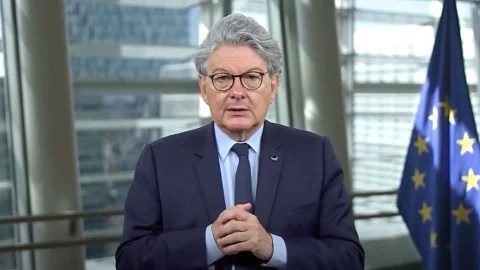
By Cindy Harper | Reclaim The Net | August 12, 2024
On the day of Elon Musk’s interview with President Donald Trump on X, the EU’s top digital official, Thierry Breton, issued a reminder to Musk of his responsibilities under EU law to curb the spread of “harmful content.”
Breton, the pro-censorship internal market commissioner, emphasized the significance of platform moderation in a letter and a post on X, stating, “With great audience comes greater responsibility.”
The European Union, under its censorship law, the Digital Services Act (DSA), mandates that digital platforms stringently monitor online content to shield users from potential “harm.”
This legislation is part of a broader scrutiny of X, which has consistently been targeted by the EU. Breton’s correspondence highlighted that the DSA’s mandates apply uniformly, including to Musk.
The reminder was prompted by concerns over the “risk of amplification of potentially harmful content in the EU,” particularly with Musk’s upcoming interview with Trump and Musk’s own recent remarks concerning the attack on free speech currently being experienced in the UK.
Breton further warned, “My services and I will be extremely vigilant to any evidence that points to breaches of the DSA and will not hesitate to make full use of our toolbox, including by adopting interim measures, should it be warranted to protect EU citizens from serious harm.”
As the European Union persists in the stringent enforcement of its censorship law, the imposition of its regulatory well beyond its borders, notably into the United Kingdom—a nation no longer tethered by EU membership—raises profound concerns about the overreach of censorship under the guise of protection.
The EU’s call for rigorous content moderation, even in territories outside its jurisdiction, smacks of an unsettling desire to extend its influence, stifling discourse and dissent not only within its member states but also in nations that have consciously chosen a different path.
The insistence on such broad and pervasive controls over digital content by an entity like the EU, which should ostensibly champion democratic values, is alarming.
This form of interventionism in the UK, under the pretense of safeguarding EU citizens from “harm,” undermines the very essence of free speech—a cornerstone of democratic societies. By dictating terms and conditions that stretch its authority into non-EU territories, the European Union not only compromises the sovereignty of other nations but also sets a dangerous precedent for global digital governance, where freedom of expression becomes a casualty in the battle against vaguely defined “harmful content.”
Russia decries ‘routine repression’ of dissidents in EU states

RT | August 7, 2024
The West is turning into a “neoliberal dictatorship” that is intolerant of any form of dissent, Russian Foreign Ministry spokeswoman Maria Zakharova claimed on Wednesday. She was commenting on the prosecution of journalist Svetlana Burtseva by EU member Estonia.
Burtseva, a 57-year-old naturalized Estonian citizen, was charged this week under an article of the Estonian penal code that prohibits relations with a foreign entity with the intention of committing treason.
Specifically, Burtseva was accused of writing under a pen name for a Baltic-focused Russian-language news outlet that belongs to the Russian media group Rossiya Segodnya, which is sanctioned by the EU.
Estonian officials have claimed Burtseva committed subversive activities such as writing a book that “belittles” the Baltic country, as claimed by public prosecutor Eneli Laurits.
Commenting on the case, Russian Foreign Ministry spokeswoman Zakharova said that “similar to other ‘advanced democracies’ of the Baltics, Estonia continues to systematically use repression as a routine tool for quashing dissent.”
She described the allegations against Burtseva as “obviously fabricated” and claimed that they reflect Tallin’s “flawed and absolutely irreconcilable” attitude to opposition.
Moscow perceives the prosecution as an attempt to punish Burtseva for journalism and voicing opinions critical of the Estonian government. International bodies that should defend freedom of speech share the blame, since they have neglected their duties and have long turned a blind eye to the stifling of critical press by the Baltic states, the diplomat argued.
The entire situation “showcases the deep crisis and the deterioration of the Western-style democracy, how it is morphing into a neoliberal dictatorship,” Zakharova concluded.
EU pressured Georgia to send mercenaries to Ukraine – MP
RT | August 6, 2024
Western officials, together with representatives of Georgia’s main opposition party, the National Movement, tried to pressure Tbilisi into adopting sanctions on Russia and sending mercenaries to fight for Kiev, Georgian parliamentary speaker Shalva Papuashvili has said.
The South Caucasus country has maintained a neutral stance on the Ukraine conflict since its outbreak in 2022 and refused to impose sanctions on Moscow, arguing that such a move would harm its national interests. At the same time, Georgia has said it will not allow itself to be used to circumvent Western restrictions placed on Russia.
Speaking to journalists on Tuesday, Papuashvili claimed the National Movement had repeatedly urged the ruling Georgian Dream party to sign up to sanctions on Russia. However, the government refused “because it would have been tantamount to being drawn into a war.”
“Together with the National Movement, foreigners also told us that we should have introduced sanctions, sent mercenaries [to Ukraine], and so on. The Europeans also told us the same,” Papuashvili said.
Back in May, the speaker made similar comments, stating that “certain friends and foes,” as well as non-governmental organizations, had been pestering Tbilisi with demands to “send fighters to Ukraine,” which he said would have risked a direct war with Russia.
While Georgia has officially only provided political and humanitarian support to Ukraine, a large number of Georgian mercenaries have been spotted fighting on Kiev’s side. The Russian Defense Ministry estimated back in March that some 1,042 Georgian fighters had taken part in the conflict, compared to 1,113 fighters from the US and 2,960 from Poland. At least 561 Georgian nationals serving within the Ukrainian military have been killed over the course of the conflict, according to Moscow.
Relations between Tbilisi and the West have deteriorated over the past year, particularly since Georgia passed a controversial ‘foreign agents law’ in May. The rule requires NGOs, media outlets and individuals that receive more than 20% of their funding from abroad to register as entities “promoting the interests of foreign powers.”
Washington has labeled the law an attack on democracy and threatened Georgia with sanctions, while suspending more than $92 million in aid. The EU has suspended talks on Tbilisi’s accession to the bloc, and froze $32.5 million in payments to the Georgian Defense Ministry.
The European Union wants to break Hungary’s will
By Dénes Albert | Remix News | August 5, 2024
Let us not delude ourselves for a moment, because the European Commission’s failure to stand by our country in blocking the transit of Russian oil through Ukraine is just one of the “pieces” of a plan to overthrow the legitimately elected Hungarian government.
The other retaliatory measures taken by Brussels against our country have the same purpose. This is not a new EU idea, supported by Washington.
Charles Gati, a professor at Johns Hopkins University, and not least a member of the advisory board of Action for Democracy, has spoken about this before. It was this organization that was suspected of attempting to interfere in the 2022 Hungarian elections, which Hungarian intelligence services deemed a national security risk. More than a decade ago, Gati said that “there are ways to move the government, democratically if possible, and otherwise if not.” Add to this that Gati is a confidant of the Soros empire.
Gati, in another statement to the Hungarian press, has already fleshed out the idea in five points, including that “in the absence of IMF and EU loans, the economy will continue to deteriorate while hundreds of thousands of people protest in the streets.” Then comes a discussion of the options, which reach the conclusion of civil war.
The plan has not worked. It could be said that those who masterminded the overthrow of the government have completely failed, since a dozen years were not enough to remove the right-wing conservative government in Hungary. However, they are doggedly sticking to the original idea.
The retaliatory measures that Brussels is taking against our country are out of all proportion. Most recently, for example, it imposed a fine of €200 million on us for not letting in illegal migrants.
Despite our country’s arguments that the EU sanctions on Russia do not apply to oil entering the bloc by pipeline, we have finally reached the point where the EC has abandoned the possibility of negotiation. It did not stand by Hungary and Slovakia, both of which protested Ukraine’s decision to unilaterally turn off the tap.
So, the oil transit issue is a tool for the EU, and of course for Ukraine, to use blackmail to force Hungary to change its policy towards the war.
The Eurocrats in Brussels “elegantly” overlooked the fact that it had already been made clear it was technically impossible to build an alternative oil supply for Hungary and Slovakia. “I don’t think the commission would be keen to help Hungary,” said a diplomat, who of course requested anonymity.
Orban’s Insight Into The Global Systemic Transition & Hungarian Grand Strategy Is Worth Reading

By Andrew Korybko | August 2, 2024
Hungarian Prime Minister Viktor Orban elaborated on the global systemic transition and his country’s grand strategy within it during a lengthy speech at the Balvanyos Free Summer University and Student Camp over the weekend. The over 11,000-word English transcript was published on Monday, which the present piece will summarize for the reader’s convenience. It began with him reaffirming that it’s his Christian duty to promote peace and mocking the EU for its Orwellian “war is peace” mantra.
He then said that the Ukrainian Conflict was a “red pill” for him and proceeded to elaborate on the ten ways in which it opened his eyes to reality. First, there have been enormous casualties on both sides, but each will continue fighting unless external stakeholders diplomatically intervene since they’re convinced that they’ll win. Second, the US went from containing China to waging a proxy war on Russia, which pushed those two together and prompted questions about why the US would do this.
Third, Ukraine’s resilience in spite of its objective economic and demographic weaknesses can be explained by its sense of mission that fills it with a higher purpose, which is to become the West’s eastern military frontier. Fourth, Russia has also proven itself to be impressively resilient, and it’s nowhere near collapsing like Western leaders hubristically predicted. Fifth, the EU has undergone fundamental changes since the latest phase of the Ukrainian Conflict began two and half years ago.
It now follows the US Democrats’ lead instead of retaining its strategic autonomy, and the traditional Franco-German axis is now challenged like never before by Poland, which has allied with the UK, Ukraine, the Baltic States, and Scandinavia to create a new center of power in Europe. This is actually an old Polish plan (Pilsudski’s “Intermarium” from the interwar period) adapted to contemporary conditions brought about by the Ukrainian Conflict and fully assisted by the US.
Sixth, the West’s standards are no longer universal and it’s experiencing “spiritual solitude” after the entire non-West refused to follow its lead in isolating Russia. Seventh, the biggest problem in the world is the weakness and disintegration of the West caused by its lack of leadership and seemingly irrational policies, which is accelerating China’s rise as its global systemic challenger. Eighth, Western Europe’s worldview is now post-national while Central Europe still believes in the sanctity of the nation-state.
This dichotomy explains the West’s seemingly irrational policies since each half of Europe is operating according to a completely different philosophy. The US is also experiencing a similar division between those like Trump who want it to remain a nation-state and his opponents who want it to become a post-national state. According to Orban, this division owes its origins to the sexual revolution and student rebellions from over half a century ago, which sought to free people from any form of collective identity.
Ninth, the West’s post-national trends are convulsing democracy and leading to friction between the elite/elitism and the people/populism. And finally, the tenth red pill is that Western soft power/values aren’t universal but are actually counterproductive since Russia’s strongest international attraction nowadays is its resistance to LGBTQ. Orban then said that these trends are leading to the rise of the non-West, which he believes first began with China’s admission to the WTO in 2001 and might be irreversible.
Trump’s priority is to rebuild and strengthen North America, to which end he’ll squeeze the US’ European and Asian allies while negotiating better deals with China. His end game is to make the US self-sufficient in energy and raw materials so that it can stand a better chance at retaining its declining position in global affairs. The EU has two options: it can either become an “open-air museum” (passive international actor) absorbed by the US or pursue strategic autonomy in order improve its standing in the world.
What’s needed is more connectivity, a European military alliance with its own defense industry (albeit without federalization), energy self-sufficiency, reconciliation with Russia, and admitting that Ukraine won’t join the EU or NATO. It’ll return to its prior role as a buffer zone and will be lucky if it gets security guarantees in a US-Russian agreement. Poland’s power play will fail because it lacks the resources to replace Germany so Orban expects that his “Polish brothers and sisters” will return to Central Europe.
He also considers all of these changes to be an opportunity. Developments in the US favor Hungary, but it must be careful about any deals it might offer due to the Polish precedent. Warsaw bet everything on Washington and received support for its strategic goals, but now it’s “subject to the imposition of a policy of democracy export, LGBTQ, migration and internal social transformation.” Orban ominously notes that this combination risks of the loss of Polish national identity if these trends continue unabated.
Hungary will remain in the EU, but the bloc’s East-West divisions between those that correspondingly respect the nation-state and those that are moving beyond it will widen. The EU must also accept that it’s the loser in the Ukrainian Conflict, the US will abandon this proxy war, and the EU can’t realistically pick up the tab. All the while, Hungary will rely on China for modernizing its economy and boosting its exports, which will lead to mutually beneficial outcomes.
A Hungarian grand strategy is required in order to maximally take advantage of the opportunities brought about by the ten previously described red pills and their abovementioned consequences. What’s already been decided upon since his government began work on this after the 2022 elections isn’t yet digestible and widely comprehensible by the public, and he said that it’ll take around six months for everything to become clearer for them, but he still shared the gist of what this grand strategy entails.
The first part is what he describes as connectivity, which he explained as being plugged in to both the Eastern and Western halves of the global economy. The second is sovereignty, with a focus on the economic dimension by promoting national companies on the world market, reducing debt, becoming a regional creditor, and boosting domestic production. The final part is bolstering his society’s resilience by halting demographic decline, preserving villages, and maintaining Hungary’s distinct culture.
Orban ended by explaining that all Hungarians across the world must help advance this grand strategy. The global systemic transition is expected to last another 20-25 years so the next generation will be tasked with completing its implementation. Their liberal opponents will try to offset this, but such efforts can be counteracted by recruiting young nationalists to the cause. The impression that one gets after reading through his speech in full is that Orban is this generation’s most visionary European leader.
Bill Gates, U.S. Military Among Investors in GMO Insect Protein for Humans
By Michael Nevradakis, Ph.D. | The Defender | August 2, 2024
While regulators in non-U.S. countries, including Singapore, have issued approvals for specific insect-based foods, in the U.S., the regulatory landscape is murkier — there is no legal approval process or clear-cut prohibition of insects for human consumption.
As a result, insect-containing foods have reached U.S. consumers, even though one of the few existing U.S. laws that address insects in the food supply refers to them as “filth” and a form of “adulteration.”
Crickets and grasshoppers reach U.S. consumers in a variety of forms, from protein bars to protein shakes. They’re also found on restaurant menus and are promoted as pet food and animal feed ingredients.
With few U.S. regulatory barriers to contend with, investors like Bill Gates and Big Food giants such as Tyson Foods have also begun investing in “alternative protein” startups — despite mainstream media “fact-checks” claiming Gates doesn’t support the consumption of insects.
Internist Dr. Meryl Nass, founder of Door to Freedom, told The Defender lax U.S. Food and Drug Administration (FDA) regulations — under which many insect-containing foods can be classified as “Generally Regarded as Safe” (GRAS) — “means they don’t require testing” and enable the FDA to “look the other way.”
“How long will it take before we learn whether these foods are safe? It could take generations,” Nass said.
Gates, U.S. military among backers of ‘alternative protein’ startups
The Bill & Melinda Gates Foundation’s Grand Challenges Explorations program in 2012 funded All Things Bugs, a project to “develop a novel food product made from insects to treat malnutrition in children from famine stricken areas of the world,” according to Eurasia Review.
All Things Bugs has since expanded into the development of genetically modified insects. With funding from the Defense Advanced Research Projects Agency (DARPA), “we are using CRISPR/Cas9 gene editing and other methodologies to develop base technologies for creating insects as a new bioresource,” the company states.
DARPA is a research and development agency that operates under the U.S. Department of Defense.
All Things Bugs said that while insects are “a very sustainable source of protein,” it “is innovating to make them a feasible commodity for the food industry.”
Claire Robinson, managing editor of GMWatch, told The Defender, “With all GMOs [genetically modified organisms], including insects, it’s vital that they are subjected to a pre-marketing risk assessment for health and the environment.”
Robinson said, “This includes testing them for the presence of pathogens, possible allergens and substances that may be toxic to humans. Then they must be clearly labeled for the consumer.”
Gates’ investments in insect-based foods appear to be part of a broader strategy to invest in alternatives to animal-based foods for consumers.
In a February blog post, Gates said he invested in Savor, a startup producing butter made from air (carbon dioxide) and water (hydrogen). And in 2022, the Gates Foundation awarded a $4.76 million grant to Nature’s Fynd, a startup producing foods containing fungi-based protein. In 2020, Breakthrough Energy Ventures, founded by Gates, invested in Nature’s Fynd.
The U.S. government’s National Science Foundation (NSF) also is involved in the insects-as-food space, through its funding of the Center for Environmental Sustainability through Insect Farming (CEIF). Established in 2021, CEIF seeks “to develop novel methods for using insects as feed for livestock, poultry, and aquaculture.”
Institutions participating in CEIF include Texas A&M University, Indiana University-Purdue University in Indianapolis and Mississippi State University — along with Tyson Foods, Protix and Innovafeed, backed by food processing giant ADM, formerly the Archer-Daniels-Midland Company.
Insect protein start-ups raised ‘over $1 billion in venture capital since 2020’
The production of insects for human food is expanding in the U.S. and globally, with support from the United Nations and the World Economic Forum (WEF).
In 2013, the Food and Agriculture Organization of the United Nations released a seminal report, “Edible insects: future prospects for food and feed security,” which promotes the environmental and nutritional benefits of insect consumption.”
A 2022 WEF paper, “5 reasons why eating insects can reduce climate change,” suggests people are “conditioned to think of animals and plants as our primary sources of proteins … but there’s an unsung category of sustainable and nutritious protein that has yet to widely catch on: insects.”
According to a November 2023 Washington Post report, “Insect start-ups have raised over $1 billion in venture capital since 2020.”
A 2021 report by Netherlands-based Rabobank claimed the demand for insect protein, “mainly as an animal feed and pet food ingredient, could reach half a million metric tons by 2030, up from today’s market of approximately 10,000 metric tons.”
A report by Grand View Research forecasted the global insect protein market will expand by an annual compound growth rate of 16.9% by 2030, while European projections estimate “the number of Europeans consuming insect-based food will [reach] a total of 390 million by 2030,” according to EuroNews.
Ynsect, for instance, has built factories in France and the Netherlands, and is erecting factories in the U.S. and Mexico, according to Feed Navigator. The company claims its insect-producing farms are “climate positive,” “benefit biodiversity” and are aligned with the Paris Agreement and the European Union’s “Fit for 55” goal.
In March 2022, Ynsect acquired Nebraska-based Jord Producers — a mealworm farm. And in December 2022, Ynsect signed an agreement with U.S. flour milling company Ardent Mills to build a factory in the Midwestern U.S. Ardent Mills is a joint venture between ConAgra Foods, Cargill and CHS, a global agribusiness cooperative.
Investors in Ynsect include actor Robert Downey Jr.’s FootPrint Coalition and France’s Crédit Agricole bank — along with support from the FAO and the European Commission. The company has raised over $600 million.
Celebrity chefs also are embracing insect food. In November 2023, the Financial Times featured Joseph Yoon, founder of Brooklyn Bugs, whose “goal is to popularise edible insects and build up this food source to help support global food security.”
Your dog can eat insects, too
In addition to a lack of FDA regulations governing the use of insects in foods for humans, the FDA also does not regulate the use of insects for pet food ingredients.
According to Animal Frontiers, “pet food is under the nongovernment Association of American Feed Control Officials (AAFCO)” in the U.S. In January, French firm Ynsect became the first company to receive AAFCO authorization for commercial production of mealworm protein for dog food in the U.S.
In October 2023, Big Food giant Tyson Foods announced the acquisition of an ownership stake in the Dutch insect ingredient producer Protix. Tyson said the new joint venture would construct “the first at-scale facility of its kind to upcycle food manufacturing byproducts into high-quality insect proteins and lipids which will primarily be used in the pet food, aquaculture, and livestock industries.”
Although the announcement did not definitively exclude the production of insect-containing foods for humans, a Reuters “fact check” published in May stated, “Tyson Foods does not put insects into products for human consumption.”
Tyson has invested in Upside Foods, which in June 2023 won approval from the U.S. Department of Agriculture (USDA) to produce lab-grown chicken. Upside garnered more than $600 million in research and development investments, including from Gates, Richard Branson, Elon Musk’s brother Kimbal Musk and Cargill.
Vanguard and BlackRock, the world’s two largest institutional investment firms, are also the two top institutional holders of Tyson Foods shares. BlackRock, and its CEO, Larry Fink, have promoted “sustainable” corporate practices.
This article was originally published by The Defender — Children’s Health Defense’s News & Views Website under Creative Commons license CC BY-NC-ND 4.0. Please consider subscribing to The Defender or donating to Children’s Health Defense.
EU rebuffs members’ complaints over Ukraine blocking Russian crude transit
RT | August 1, 2024
The European Commission (EC) has rejected complaints by Hungary and Slovakia over Ukraine’s suspension of Russian energy supply through pipelines on its territory, advising the two EU member states to look for alternative suppliers.
The Hungarian and Slovak governments had earlier asked the EC to intervene in their dispute with Kiev, after the latter placed sanctions on Russian energy company Lukoil, depriving the two landlocked countries of crude supplies via a pipeline through Ukraine. Last month, Budapest and Bratislava sent a letter to the EU executive, urging it to open emergency consultations with Ukraine over the move, which they insist violates Kiev’s 2014 trade agreement with Brussels.
On Thursday, EC spokesperson Balazs Ujvari stated, as quoted by Politico, that urgent consultations “do not appear to be guaranteed.” He argued that in the commission’s preliminary assessment, the sanctions didn’t pose “an immediate risk to [both countries’] security of supply.”
In a letter to Budapest and Bratislava seen by the Financial Times, EU trade commissioner Valdis Dombrovskis said that they could use an existing pipeline bringing shipborne crude from Croatia, adding that “diversification away from Russian fossil fuels should be actively pursued.”
In June, Ukraine blocked the pipeline transit of Russian crude sold by Lukoil to Central Europe. Kiev imposed sanctions on Lukoil in 2018, having banned the company from divesting its business in the country, as well as prohibiting trade operations and participation in the privatization or leasing of state property. Lukoil still sent crude via the southern arm of the Druzhba pipeline as the EU sanctions did not target these flows.
Hungary, Slovakia and the Czech Republic had sanctions exemptions set up by Brussels to give countries reliant on Russian oil extra time to find alternative supplies.
On Tuesday, Hungarian Foreign Minister Peter Szijjarto claimed that the EC may be behind the suspension of the Russian oil supplies through Ukraine. The move could be directly targeted at Budapest and Bratislava, he suggested.
Slovakia and Hungary are the only EU members that have refused to back the bloc’s policy of supplying Kiev with military aid amid the conflict with Russia. Both have repeatedly called for a diplomatic solution to the crisis.
Kremlin Press Secretary Dmitry Peskov accused Ukraine of making a “political decision” and claimed the situation is “critical” for those still buying Russian oil.
Hungary Rejects Croatian Oil Route Over High Fees and EU Call to Stop Russian Oil
Sputnik – 02.08.2024
Croatia is not a reliable partner for oil transit, since it has raised the duty fivefold since 2022, Hungarian Foreign Minister Peter Szijjarto said on Friday, commenting on Brussels’ proposal to replace the Russian oil supplies stopped by Kiev with transit through Croatia.
Earlier in the day, the Financial Times reported, citing a letter from EU Trade Commissioner Valdis Dombrovskis, that the European Commission had advised Hungary and Slovakia to abandon Russian oil and seek alternative sources in response to a complaint that Ukraine has blocked the transit of oil from Russia.
“Croatia is simply not a reliable transit country,” Szijjarto wrote on social media, adding that since the start of the conflict in Ukraine, Croatia has increased the price of oil transit fivefold compared to the average market price.
Last month, Hungarian Foreign Minister Peter Szijjarto said that Ukraine had stopped the transit of Lukoil’s oil. The Slovak Economy Ministry confirmed that the country was no longer receiving oil from the Russian oil giant, which was sanctioned by Ukraine. On July 22, Szijjarto said that Hungary and Slovakia had launched consultations of the European Commission with Ukraine due to a stop in the transit of oil from Russia through the Druzhba pipeline. On Thursday, EU Commission spokesman Balazs Ujvari said that Kiev’s decision shows no energy supply risks for Hungary or Slovakia, so the Commission will not hold urgent consultations on the issue.
Dombrovskis said in the letter to Budapest and Bratislava that “diversification away from Russian fossil fuels should be actively pursued,” the report read on Thursday.
He reportedly added that at a meeting of representatives of all EU member states last week, “a significant number … questioned why Hungary and Slovakia had apparently not yet explored alternatives so far”.
EU member suspects Brussels of ‘energy blackmail’
RT | July 31, 2024
The European Commission (EC) may be behind the suspension of some Russian oil supplies into the EU through Ukraine, Hungarian Foreign Minister Peter Szijjarto claimed on Tuesday. The move could be directly targeted at Hungary and Slovakia, he suggested.
Kiev halted the transit of crude oil supplied by Russian energy giant Lukoil via the Druzhba pipeline earlier this month, citing sanctions on the company. The measure has directly hit landlocked Hungary and Slovakia, depriving them of crude previously exported by Lukoil.
“Brussels remains silent despite the threat to the energy security of two EU member states and clear violation of EU-Ukraine association agreement,” Szijjarto wrote in a post on Facebook. The diplomat was referring to a deal signed in 2014, after the Western-backed Maidan coup overthrew the then-Ukrainian president, Viktor Yanukovich.
Szijjarto suggested that either the EC is too “weak” to protect the fundamental interests of Slovakia and Hungary, or “it was Brussels, not Kiev,” that orchestrated the move to “blackmail the two states that support peace and refuse to send weapons [to Ukraine].”
Shortly after the halt of oil supplies, Budapest and Bratislava jointly initiated consultations with the bloc and asked EU officials to help resolve the dispute. Brussels has claimed it needs time to “gather evidence and assess the legal situation.”
“The EC, and its President Ursula von der Leyen personally, must come clean immediately: did Brussels ask Kiev to ban oil supplies?” Szijjarto asked. “And if not, why has the EC taken no steps in more than a week?”
Slovakia, Hungary, and the Czech Republic – each of which is reliant on Russian energy supplies – were exempted from a bloc-wide ban on Russian oil deliveries in 2022. Slovakia and Hungary are the only EU members that have refused to back the bloc’s policy of supplying Kiev with military aid amid the conflict with Russia. Both have repeatedly called for a diplomatic solution to the crisis.
Kiev imposed sanctions on Lukoil in 2018, having banned the company from divesting its business in the country, as well as prohibiting trade operations and participation in the privatization or leasing of state property. Lukoil still sent crude via the southern arm of the Druzhba pipeline as the sanctions did not target these flows.
Earlier this week, Slovakian Prime Minister Robert Fico warned that Bratislava would stop diesel exports to Ukraine if Kiev does not restart the transit of Russian oil through, stressing that Slovak shipments account for one-tenth of Ukraine’s consumption of the fuel.
On Tuesday, Russian Foreign Ministry spokeswoman Maria Zakharova said Moscow is unsurprised that the EU has failed to resolve the issue surrounding Russian oil supplies to its members, claiming that Brussels is using energy resources to blackmail Bratislava and Budapest.
Featured Video
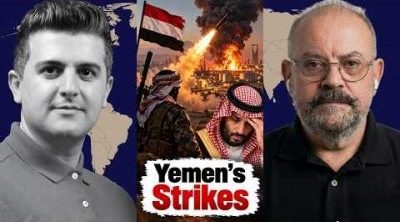
Elijah Magnier: Yemen’s strikes are shattering Saudi Arabia’s long-term strategy
or go to
Aletho News Archives – Video-Images
From the Archives
British weapons and personnel doing much of the killing in Yemen
Press TV – June 18, 2019
A detailed report published by the Guardian newspaper has shown how Britain is massively contributing to Saudi Arabia’s devastating war on Yemen as it suggests that London is not only supplying the bombs that fall on Yemenis, but it provides the personnel and expertise that keep the war going.
The comprehensive report by Arron Merat published on Tuesday showed that Britain was doing much of the killing in Yemen as the country continues to provide Saudi Arabia with everything it needs to turn its southern impoverished neighbor into a graveyard.
“Every day Yemen is hit by British bombs – dropped by British planes that are flown by British-trained pilots and maintained and prepared inside Saudi Arabia by thousands of British contractors,” said Merat in the report. … continue
Blog Roll
 Aletho News
- Netizens condemn Japanese drama for projecting Japan’s wartime atrocities onto Chinese characters
- Racist Seinfeld Dances for Joy as Bibi Unveils His New Map
- A West Bank War for Netanyahu’s Election Campaign, Could It Backfire?
- Yemen denounces European Parliament’s ‘hypocritical’ push to blacklist Ansarullah
- Qalibaf: UAE’s UN bid aims to ‘clear the runway’ for ‘Greater Israel’, whitewash genocide
- Pakistan reopens Iran border after boosting security: Report
- Why are so many Brazilians voting for Flávio Bolsonaro?
- Democrats Put Anti-Russia Agenda Ahead of American Workers
- Elijah Magnier: Yemen’s Strikes Are Shattering Saudi Arabia’s Long-Term Strategy
- Pentagon designates Chinese cultural centers national security threat
- If Americans Knew
- Latest updates from Israeli assault on West Bank
- Tourism Ministry launches free food truck tour in US
- “So Much Worse Than People Realize”: Never-Before-Seen Images Reveal Damage at U.S. Bases as Troops Describe Being Abandoned
- UK Bell Review Confirms Only Anti-Israel Attitudes Are Rising, Not Antisemitism
- DAILY UPDATE: Latest essential news on Palestine, Israel, & region
- DAILY UPDATE: Latest essential news on Palestine, Israel, & region
- Damning report shows the media must confront its failures on Gaza
- BBC senior broadcaster speaks out on Gaza coverage
- Netanyahu vows vast West Bank invasion in response to 20-minute skirmish that left 2 Israeli soldiers and 2 Palestinian fighters dead
- Tied up and tortured: Israel using US-made electroshock weapons on Palestinian detainees
- No Tricks Zone
- Sudden Stratospheric Warming, Powerful El Niño Combination May Lead To Extreme Europe Cold, Energy Crisis!
- Two New Studies Find Thwaites Glacier Melt Cannot Be Driven By Human Activity Or A Warming Ocean
- E-Cars Reduce CO2 Emissions By Only 41% Compared To Internal Combustion Engine Vehicles
- Predictions Made By Renowned Climate Professor Over Past Decades Have Been Proven To Be Poor
- New Study Suggests Large Regions Of The Pacific Ocean Have Been Cooling For The Last 80 Years
- Germany’s Green Energy Debacle: High Energy Costs Force Kahla Porzellan to Close After 182 Years!
- New Study: 50 Years Of The Most Aggressive ‘Net Zero’ Policies Can Only Affect The Global Climate By 0.03°C
- US September “Heat” Was No Record…Many Records Set Decades Ago
- Latest European Green Energy Debacle; Portugal’s Largest Flagship Solar Park Insolvent!
- Green Energy Debacle: German Expert Professor Fritz Vahrenholt Warns Of Severe Economic And Social Consequences

