Orban delivers Ukraine peace proposals to EU – adviser
RT | July 15, 2024
Hungarian Prime Minister Viktor Orban has sent proposals to EU leaders on ways to resolve the Ukrainian conflict, newspaper Magyar Nemzet reported on Monday, citing the PM’s political adviser Balazs Orban. The proposals are said to be based on the results of the premier’s controversial peace mission earlier this month, during which he visited Ukraine, Russia, and China.
Orban provided EU leaders with a detailed account of his visits, and delivered Budapest’s action plan to their desks, Balazs Orban (no relation) told the newspaper.
The adviser described Budapest’s proposals as being “based on a realistic assessment of the situation” and on setting “realistic goals,” without elaborating further.
Balazs Orban claimed that there are “pro-war” political forces in the EU, and that the bloc is following the lead of the current US administration, which, he said, wants the conflict to continue.
”If Europe wants peace and wants to have a decisive say in the settlement of the war [in Ukraine] and the end of the bloodshed, then the change of course must be worked out and implemented now,” the adviser said.
Hungary is one of the few member states to criticize the bloc’s stance on the conflict. Budapest has refused to go along with Brussels and send weapons to Kiev. It has also stalled financial aid to Ukraine. Viktor Orban’s recent visit to Moscow was condemned by senior EU figures, with Brussels seeking to distance itself from Orban’s efforts.
According to the prime minister’s adviser, external mediators, such as China and Türkiye, could be vital to helping negotiate peace.
Hungary plans to use the six months of its rotating presidency of the, which began in July, to create conditions for peace talks. “If the union does not act now, it may not be able to act later,” Balazs Orban warned.
During his visit to Kiev, the Hungarian leader called on Ukraine’s Vladimir Zelensky to agree to a ceasefire with Russia, a proposal the latter rejected.
President Putin has repeatedly insisted that the hostilities can only end if Ukraine fulfills several of Russia’s demands – including legally binding guarantees that Kiev will not seek NATO membership, and the withdrawal of troops from the whole of Donbass, as well as the Zaporozhye and Kherson regions.
Kiev, along with its Western backers, have rejected the proposal, calling it an unacceptable ultimatum.
Mainstream Media Downplays Tremendous Losses of Western Military Equipment in Ukraine
By Ekaterina Blinova – Sputnik – 15.07.2024
The Western public has little, if any, knowledge of the scale of losses in troops and equipment sustained by Ukraine since the beginning of the special military operation, international observers say.
The Western press is concealing information about the real state of affairs on the ground in Ukraine, including the mass destruction of NATO weapons provided to the Ukrainian military, and the loss of Ukrainian soldiers, Irish journalist and entrepreneur Chey Bowes wrote on X on July 15.
“Here, yesterday, another €150 million [$163.4 million] of German taxpayers’ money was vaporized in Dictator Zelensky’s Ukraine,” Bowes continued, attaching a video showing the elimination of the German-made IRIS-T anti-aircraft missile system (SAM).
“Russian Iskander missiles completely destroyed the entire complex consisting of an IRIS-T SAM launcher and its TRML-4D radar station – these are the high-tech systems Zelensky is so desperately begging the EUSA for,” the journalist pointed out.
According to Bowes, the reason “the Western media doesn’t want” the public to see this, is “to maintain your ignorance and, therefore, your complicity in the ‘Ukraine can win’ fantasy.”
“After all, you’re paying for it all,” the journalist remarked.
Ukraine has received almost 108 billion euro ($115.9 billion), including 39 billion euro ($41.8 billion) of military aid from the EU since February 2022. The US’ Ukraine expenditures have so far reached $175 billion, of which $107 billion directly aided the Kiev regime, with $34.2 billion being disbursed for budget needs, and another $69.8 billion spent on arms and military assistance.
On Sunday, the Russian Ministry of Defense released footage of the destruction of an IRIS-T launcher in the Dnepropetrovsk region. The air defense missile launcher, the TRML-4D radar station, and the crew operating the system were eliminated, per the ministry.
As of July 14, 551 air defense missile systems, including those supplied by NATO, have been destroyed since the beginning of the special military operation.
EU suspends accession process of ex-Soviet republic
RT | July 8, 2024
The European Union has suspended the process of Georgia’s accession to the bloc, the EU’s ambassador to the former Soviet republic, Pavel Gerchinsky, told the Russian media on Tuesday. A €30 million ($32.5 million) payment allocated to the Georgian Defense Ministry has also reportedly been frozen.
The envoy cited Tbilisi’s controversial ‘foreign agent’ law as the reason behind the move. After the legislation was adopted last month, EU foreign policy chief Josep Borrell warned Georgia that its potential accession to the bloc was in jeopardy.
Formally titled the Transparency of Foreign Influence Act, the new law requires NGOs, media outlets, and individuals who receive more than 20% of their funding from abroad to register as entities “promoting the interests of a foreign power” and to disclose their donors. Those who fail to comply will face fines of up to $9,500. The bill came into force despite opposition protests and a veto by Georgian President Salome Zourabichvili.
“The intentions of the current Georgian government are unclear to EU leaders. The Transparency of Foreign Influence Act is clearly a step backwards. […] Also, the anti-Western, anti-European rhetoric is completely incompatible with the declared goal of joining the European Union. Unfortunately, as of now Georgia’s accession to the European Union has been suspended,” Gerchinsky said, as quoted by RIA Novosti.
While opponents of the law have described it as at attack on democracy and “Russian” because Moscow has similar legislation, its supporters have noted it is similar to what numerous Western nations, including the US, have in place.
Borrell said last month that Georgia will not progress with its EU accession unless its government changes its policies.
Georgia will hold parliamentary elections in October, and Gerchinsky expressed hope that a new government in Tbilisi, “whatever it may be,” will again “begin serious work” toward EU integration.
The former Soviet republic applied for EU membership in March 2022, shortly after the start of the Ukraine conflict. In May of last year, the European Council agreed to allocate €30 million to boost Georgia’s defense sector. The European Council granted Tbilisi candidate status last December.
New ‘Volunteer’ Legion in Poland: Blatant Scam to Force Ukrainians to Front Lines
Sputnik – 09.07.2024
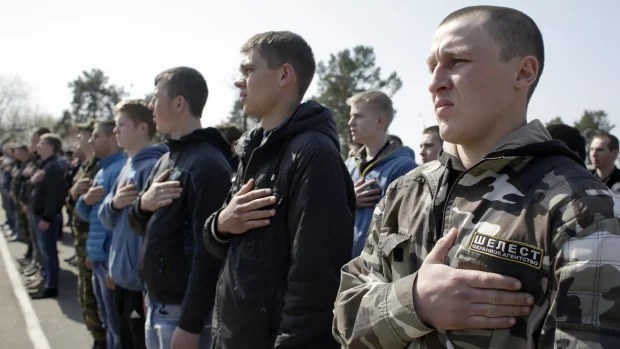
A security pact inked by Ukraine’s Volodymyr Zelensky and Polish Prime Minister Donald Tusk on Monday outlines the creation and training of a so-called Ukrainian Legion. This new formation will recruit Ukrainian “volunteers” living in Poland and other EU countries.
“Among the citizens of Ukraine who fled to EU countries, there are no volunteers seeking to participate in the hostilities,” Igor Korotchenko, editor-in-chief of the National Defense magazine, told Sputnik. “Everyone who theoretically had the motivation to participate in the conflict would have returned to Ukraine a long time ago and, accordingly, would have joined combat units on the contact line.”
“Therefore, I think that this is an artificial simulacrum. They will forcefully recruit Ukrainian draft dodgers into this legion, one way or another, under pressure from local intelligence services and police forces,” the pundit continued.
In April, Poland and Lithuania signaled that they would assist the Kiev regime by sending potential draft dodgers home, despite demonstrating reluctance to extradite conscript-aged Ukrainians last year.
Polish Defense Minister Wladyslaw Kosiniak-Kamysz asserted on April 24 that “Ukrainian citizens have obligations towards the state,” while his Lithuanian counterpart Laurynas Kasciunas insisted that evading conscription was “not fair to those citizens who are fighting for their country.”
For months, EU member states had rejected Kiev’s request for repatriating Ukrainian men eligible for mobilization, citing European conventions that do not permit extradition in cases of desertion or draft evasion.
Speaking to reporters in April, Kosiniak-Kamysz and Kasciunas asserted that there were multiple ways the authorities could repatriate Ukrainians without resorting to deportation. These included implementing bans on social benefits, work permits, and necessary documentation, in addition to enacting specific legislation aimed at Ukrainian refugees.
Apparently, the Ukrainian Legion is yet another “legal” loophole to send Ukrainian refugees to the battlefield, according to Korotchenko.
“We are not talking about forced extradition, we are talking about forced enlistment in this foreign legion,” he stressed. “Human rights activists will obviously not be interested in whether [Ukrainians] enlist voluntarily. These procedures would de facto mean forced extradition after they join the legion. The mechanism that is taking shape is absolutely illegal, but has a veneer of legitimacy,” he explained.
EU Commission Urges Digital ID, E-Health Records, and Touts “Anti-Disinformation” Efforts in Digital Decade Report
By Didi Rankovic | Reclaim The Net | July 8, 2024
Earlier this week the EU Commission (EC) published its second report on what it calls “the state of the digital decade,” urging member countries to step up the push to increase access and incentivize the use of digital ID and electronic health records.
At the same time, the bloc is satisfied with how the crackdown on “disinformation,” “online harms,” and the like is progressing.
In a press release, the EC said the report was done to assess the progress made in reaching the objectives contained in the Digital Decade Policy Program (DDPP), targeting 2030 as the year of completion.
EU members have now for the first time contributed to the document with analyses of their national “Digital Decade strategic roadmaps.” And, here, the EC is not exactly satisfied: the members’ efforts will not meet the EU’s “level of ambition” if things continue to develop as they currently are, the document warns.
In that vein, while the report is generally upbeat on the uptake of digital ID (eID schemes) and the use of e-Health records, its authors point out that there are “still significant differences among countries” in terms of eID adoption.
To remedy member countries falling short on these issues, it is recommended that they push for increased access to eID and e-Health records in order to meet the objectives set for 2030.
The EU wants to see both these schemes available to 100% of citizens and businesses by that date – and reveals that eID is at this point available to 93% of citizens across the 27 of the bloc’s countries, “despite uneven take-up.”
Still, the EC’s report shows that policymakers in Brussels are optimistic that the EU digital ID Wallet will “incentivize” eID use.
And, the document’s authors are happy with the way the controversial Digital Services Act (DSA) is getting enforced. Critics, however, believe it is there to facilitate crackdowns on speech – under the guise of combating “disinformation,” etc.
The EU calls this, “strengthening the protection against online harms and disinformation,” while also mentioning that it is launching investigations (into online platforms) to make sure DSA is enforced.
And in order to reinforce the message that DSA is needed as a force for good, the report asserts that “online risks are on the rise and disinformation has been identified as one of the most destabilizing factors for our societies, requiring comprehensive, coordinated action across borders and actors.”
Hungary to fight ‘pro-war propaganda’ – official
RT | July 8, 2024
Hungary is set to introduce a new “anti-war action plan” which will include measures aimed at countering “war propaganda,” Gergely Gulyas, the head of the Hungarian Prime Minister’s Office, announced at a press conference on Monday.
Under the plan, any political forces or media outlets accused of promoting belligerent policies would be required to reveal their funding sources. The goal is “full transparency,” Gulyas said. The measure is primarily aimed at the media, the nation’s news outlets reported, noting that political parties in Hungary are already legally barred from receiving funds from abroad.
The government would also reserve the right to block any foreign funding and send the money back to whoever provided it, if it is used to bankroll “war propaganda,” Gulyas said.
The official provided few details as to how the government would decide what exactly constitutes “war propaganda.” He said that the Justice Ministry would develop a mechanism to determine whether a media outlet is involved in the practice.
When asked if “foreign funding” included money coming from within the EU, Gulyas said that the measure would be focused on financing coming from outside the bloc. He argued, however, that the EU itself is dominated by “war propaganda” focused on the ongoing conflict between Kiev and Moscow.
Gulyas said Budapest is facing “political, legal and financial blackmail” which aims to force it to join the ranks of Kiev’s Western war backers, but that it has so far resisted the pressure. “There is no blackmail that [can force] Hungary to change its conviction that every political step must serve the end of war,” he said.
His words came as Hungarian Prime Minister Viktor Orban embarked on what he called a peace mission that included visits to Kiev and Moscow within the span of several days. In the Ukrainian capital, he called for a ceasefire, describing it as a first step towards conflict resolution. The idea was rejected by Ukraine’s Vladimir Zelensky.
Orban called his Moscow trip the first step to restoring dialogue. The move drew criticism from the EU, which said the Hungarian prime minister, whose nation currently holds the bloc’s rotating presidency, had no mandate to speak on behalf of Brussels.
On Monday, Gulyas addressed the issue by saying that peace cannot be achieved without direct dialogue with all the warring parties. “Hungary would like to be in contact with any country that can contribute to peace,” he added.
Zelensky owes Orban an explanation
By Lucas Leiroz | Strategic Culture Foundation | July 5, 2024
Instead of an improvement in bilateral relations, the recent meeting between Vladimir Zelensky and Viktor Orban only intensified tensions between both countries. The Hungarian Prime Minister’s visit to Kiev appears to have been a kind of ultimatum for the Ukrainian regime to stop its irresponsible actions and accept a peace negotiation. Given Zelensky’s insistence on war, Hungary is expected to take increasingly tough actions to boycott military support for Ukraine within the Western organizations in which it is part (NATO and EU).
Orban made a surprise visit to the Ukrainian capital and presented Zelensky with a peace proposal, the central element of which was the establishment of an immediate ceasefire, enabling the resumption of negotiations between the parties. On the same day, the Ukrainian authorities rejected the Hungarian proposal, remaining firm in their desire to continue the war to the last consequences. Orban has repeatedly clarified that the West wants war with Russia, which will not benefit Europe at all and could lead to a major continental conflict. Zelensky and the entire Kiev Junta, however, are not aligned with European interests, preferring to obey American orders directly.
Orban’s words in Kiev can be seen as a genuine call for peace – while also sounding like a final warning. The Hungarian leader often tried to prevent the advance of Western military support to Ukraine, thus aiming to promote a de-escalation of the conflict. Due to its dissident stance in the EU, Hungary has suffered economic blackmail, boycotts and even attempts at color revolution. The country appears to be a target for NATO and EU strategists, even though it is a member of both groups.
The reasons why Hungary tries to de-escalate the war are many and go beyond the interest of avoiding a continental war. Orban is a conservative leader who has as one of his main political agendas the defense of Christianity and traditional values – a topic on which he sympathizes with the Russian Federation and is in total disagreement with Ukrainian woke Nazism. The West’s promotion of an anti-traditional cultural agenda has created significant tensions between Hungary and its partners, making the country actually isolated from other NATO and EU members.
One of the most important points for Orban’s skepticism towards Kiev, however, is the ethnic persecution promoted against Hungarian citizens in the western regions of Ukraine, mainly in Transcarpathia. Cities with an ethnic Hungarian majority have suffered from racist policies in a similar way to what Russians in Donbass have suffered since 2014. Just as the Russian language has been banned from being taught in schools and used in official documents, the Hungarian language is also being banned, affecting the ethnic and cultural identity of thousands of Hungarians.
One of the most shocking practices of the Kiev regime is the ethnic instrumentalization of forced recruitment policies. The Ukrainian armed forces constantly forcibly capture non-Ukrainian ethnic citizens from the country’s streets, sending them to the front lines without proper training, making death a mere matter of time. Ethnic Russians and Hungarians have been constantly recruited to certain death at the front, with local authorities trying to “spare” Ukrainian soldiers as much as possible.
During the Battle of Artymovsk (known in Ukraine as “Bakhmut”), several reports emerged from local observers denouncing the forced recruitment of hundreds of Hungarians from Transcarpathia. The battle became known as the “meat grinder”, due to the high rate of casualties among Ukrainian troops during clashes with the Russian private military company Wagner Group. Apparently, Kiev used the “meat grinder” as a tool to accelerate the process of ethnic cleansing in Transcarpathia, sending ethnic Hungarian citizens to certain death.
Hungary has repeatedly denounced the Kiev Junta’s racist policies against Hungarians who are under Ukrainian jurisdiction. The inaction of international organizations – mainly NATO and the EU, of which Hungary is a part – has only increased Hungarian impatience. Kiev has not changed its practices. Zelensky also did not use the last meeting with Orban to give him an “explanation” – if that is even possible – or at least promise to change his policies. So, given the certainty that Kiev will continue the war and the extermination of Hungarians, perhaps Orban’s peace proposal will become a true ultimatum.
Without any goodwill on Ukraine’s part, Orban now has no alternative but to actually do everything he can to thwart Kiev’s plans. It is possible that he will harden his positions within NATO and the EU, vetoing pro-Ukraine proposals even under economic blackmail. More than that, Orban could even launch a policy of seeking strategic partnerships with emerging countries, and discussions about leaving NATO and the EU will inevitably begin to advance on the Hungarian domestic scenario.
It is also necessary to remember that since 2022 there have been rumors that Hungary might eventually intervene militarily in Ukraine to stop ethnic cleansing in Transcarpathia. Even though these rumors have no proof so far, with Ukrainian insistence, it is possible that at some point there will be internal pressure in Hungary for these rumors to become reality.
Hungary is realizing, before all NATO and EU members, that membership in these organizations is a real trap. Orban does not seem willing to accept that his country become a victim of a continental war initiated by Ukraine, nor does he want to continue seeing his Hungarian compatriots dying in hostilities with Russia. He will certainly do everything possible to make the Hungarian future different from the Ukrainian one.
Europe’s Green Energy Plans Stall As Leading Companies Reduce Expansion Plans
By P Gosselin | No Tricks Zone | July 3, 2024
Europe’s leading green energy producer, Statkraft, is drastically scaling back its plans for new wind and solar power plants – due to falling electricity prices and rising costs, so reports Germany’s online Blackout News, a leading site for independent German energy news.
According to company CEO, Birgitte Vartdal, market conditions have become more difficult as the company’s ambitious targets for wind energy and solar power are now being called into question.
The new Statkraft target is two to two and a half GW instead of an originally planned 4 gigawatts annually.
“In the offshore wind energy sector, the Group is now planning a total output of six to eight GW. The original target was ten GW,” Blackout News adds.
The scaleback follows other European countries’ plans to reduce expansion, including Danish energy company Orsted, which “has lowered its targets by more than ten GW” and has also “canceled two offshore wind projects in the USA and reported impairments amounting to 28.4 billion Danish kroner (approx. 3.8 billion euros).”
Portugal’s largest energy supplier, Energias de Portugal (EDP), has also reduced its investment plans – due to the “deterioration in market conditions.” Moreover, French energy supplier Engie earlier had postponed developing hydrogen projects.
Leading officials blame projects having become “much more challenging” and offering “no relative returns.”
As a result, solar and wind equipment manufacturers have seen their values plummeting and ESG equity funds have “recently suffered outflows of 38 billion dollars,” reports Blackout News.
Blackout News is operated by an independent and non-partisan small group of engineers with experience in energy management.
European Council Makes Countering “Disinformation and Hate Speech” Part of Its Strategic Agenda
By Didi Rankovic | Reclaim The Net | July 2, 2024
The EU Council has managed to nestle fighting “disinformation and hate speech” between such issues as the Middle East, Ukraine, and migration – not to mention while at the same time appointing a new set of “apparatchiks,” in the wake of the European Parliament elections.
This proceeds from the Council’s 2024-2029 strategic agenda, adopted on June 27. This document represents a “five-year plan” to guide the bloc’s policy and goals.
Under the heading, “A free and democratic Europe,” the document addresses different ways in which “European values” will be upheld going forward. The Council’s conclusions state that in order to strengthen the EU’s “democratic resilience,” what it decides is disinformation and hate speech will have to be countered.
These categories of speech are infamously arbitrarily defined, even in legislation, and habitually used as a tool of censorship – but the conclusions count combating them among the strategic goal of fending off foreign interference and destabilization.
In other words, those individuals or organizations that are found to be “guilty” of hate speech or disinformation might face the grim possibility of being treated as, essentially, a threat to the EU’s security.
Another promise the document makes in the same breath is that tech giants will be made to “take their responsibility for safeguarding democratic dialogue online.”
Does this mean there will be more or less censorship in the EU over the next five years? The Brussels bureaucrats are at this point so practiced at churning out platitudes that, theoretically, this statement could be interpreted either way.
However, in conjunction with the “misinformation” etc., talk, it is fairly clear which course the EU intends to keep when it comes to online freedom of expression.
AI is not explicitly mentioned as a threat (either to the EU or by the EU, as the technology that can be used to ramp up censorship, aka, “combat misinformation”).
However, you name it, the EU supposedly has it: under the part of the conclusions addressing competitiveness, increasing capacities related to AI sits right there with growing defense, space, quantum technologies, semiconductors, health, biotechnologies capabilities – not to mention “net-zero technologies, mobility, pharmaceuticals, chemicals, and advanced materials.”
It’s a pretty comprehensive bridge the EU appears to be trying to sell to its member-states and their citizens.
Ukrainian insistence on war might seriously irritate Hungary
By Lucas Leiroz | July 3, 2024
Hungarian Prime Minister Viktor Orban made a surprise visit to Kiev on July 2 and spoke with Ukrainian President Vladimir Zelensky about the possibility of a ceasefire. The Kiev authorities rejected Orban’s proposal almost immediately, making it clear that there will be no peace and that the country plans to follow the Western directive of fighting “to the last Ukrainian.”
Orban proposed to Zelensky that he take the initiative to establish a ceasefire and then resume peace talks with Russia. In the Hungarian leader’s opinion, a ceasefire would be a fruitful gesture of goodwill for dialogue with Moscow, showing that Kiev is willing to resolve the conflict diplomatically. He believes that, with hostilities stopped, negotiations could advance more appropriately, having more chances for the sides to finally reach a deal.
This was Orban’s first visit to Kiev in more than a decade, which shows how the Hungarian politician was genuinely willing to propose a peace dialogue. However, Ukrainian authorities did not even consider Orban’s proposal, with Zelensky’s aide Igor Zhovkva almost immediately speaking out to reject the initiative.
“[Orban] voiced his opinion (…) This is not the first country that talks about such possible developments (…) [However] Ukraine’s position is quite clear, understandable and well-known (…) [For Kiev, a ceasefire] cannot be considered in isolation,” he said during an official statement.
Zhovkva is wrong when he says that Orban proposed an “isolated” ceasefire. The initiative he proposed is aimed at resuming peace negotiations. Obviously, ceasing hostilities before the talks would be seen by Moscow as a gesture of goodwill, regardless of the final outcome of the discussions. However, this Ukrainian diplomatic impoliteness was really expected.
The neo-Nazi regime has repeatedly made it clear that it is not willing to negotiate peace except on its own terms – which include precisely the regaining of territorial control over the areas liberated by Russian forces. Moscow is obviously not willing to hand over to the enemy territories that have already been reintegrated into the Russian Federation, so dialogue with the Kiev junta is impossible.
In fact, from a realistic point of view, only the Russians can really propose a peace agreement. As the victorious side in the conflict, it is Moscow that decides when to end military action. Kiev can only accept Russia’s conditions or continue fighting even without any chance of victory. For its part, Russia has already proposed a peace agreement, the main points of which are the recognition of the New Regions and Kiev’s promise not to join NATO. Ukraine continues to refuse these conditions, unnecessarily prolonging the conflict.
It is possible to say that Orban did what he could, but his plans were frustrated by the Ukrainian thirst for war. The Kiev junta is obstinate in carrying out all Western orders, with any peace initiatives being fruitless. However, it is important to emphasize how Ukraine’s harsh attitude towards Orban could have serious consequences, since tensions between Kiev and Budapest have been rising steadily in recent times.
Orban has a sovereigntist stance, being a dissident leader in the EU and NATO. He is against arms supplies to Kiev and in favor of peace between Russia and Europe. Recently, Orban accused “EU bureaucrats” of wanting war with Russia and made it clear that he does not want Hungary to be involved in such a situation.
Orban is also deeply concerned about his ethnic Hungarian compatriots under Ukrainian jurisdiction. Just as it does with Russians in Donbass, Kiev is promoting ethnic cleansing in the Hungarian-majority region of Transcarpathia. The Hungarian language has been banned from Transcarpathian schools, and local citizens have been massively sent to certain death on the front lines, being a priority in the forced conscription policy.
Hungary has repeatedly denounced the situation in Transcarpathia, but international organizations remain inactive. Zelensky did not give Orban any explanation on this issue at the recent meeting. This is highly expected to anger the Hungarian leader and encourage him to take increasingly tough measures against Kiev, perhaps by sanctioning it or encouraging the mass emigration of ethnic Hungarians from Ukraine.
In addition, Orban could pursue an even more sovereigntist policy from now on. The Hungarian prime minister has already understood that there is no future in cooperating with the EU and NATO, which is why Hungary may seek strategic partnerships with emerging powers, including Russia.
You can follow Lucas on X (formerly Twitter) and Telegram.
Finland to Offer Bird Flu Vaccine Despite Lack of Safety Testing and Human Infections
By John-Michael Dumais | The Defender | June 27, 2024
Finland is set to become the first country in the world to offer bird flu vaccinations to humans, sparking a heated debate about vaccine safety and necessity.
The Finnish Institute for Health and Welfare (Terveyden ja hyvinvoinnin laitos or THL) announced plans to begin administering H5N8 bird flu vaccines to select groups as early as next week, despite the absence of human infections in the country.
The unprecedented move comes as global health experts express conflicting views on the threat posed by avian influenza. While Finnish officials cite the need for preemptive protection, critics argue the vaccination program is premature and potentially dangerous.
The Finnish announcement comes just two weeks after the European Commission Health Emergency Preparedness and Response (HERA) program announced the purchase of 665,000 doses of CSL Seqirus’ H5N8 avian influenza vaccine, with an option to acquire another 40 million doses over the next four years. HERA has already obtained 111 million doses of GSK’s bird flu vaccine.
Finland’s vaccination plan
Finland plans to offer the CSL Seqirus H5N8 bird flu vaccine to approximately 10,000 people deemed at high risk of exposure to the virus.
Mia Kontio, a health security official at THL, told STAT News that the country was awaiting the arrival of 20,000 doses, with plans to administer them “as soon as the vaccines are in the country.”
According to THL’s press release, the target groups for vaccination include:
- Fur farm workers in contact with animals.
- Poultry workers in direct contact with birds.
- Veterinarians.
- Laboratory workers handling avian influenza samples.
- Bird ringers and those caring for wild birds.
- Workers in petting zoos and aviaries.
CSL Seqirus’ vaccine received the European Union’s (EU) marketing authorization in April. The vaccine requires a two-dose series, with the second dose administered at least three weeks after the first.
“The goal is to start vaccinations in the welfare areas as soon as possible, so that the two-dose vaccination series can be offered to the vaccinated before the start of the autumn flu season,” said THL’s expert doctor Anniina Virkku.
Besides protection from bird flu, the vaccination program aims to prevent simultaneous infection with the seasonal flu virus, “which could enable the emergence of a new type of virus.”
THL noted that the vaccination program is targeted at high-risk groups and is not a blanket recommendation for the staff of facilities without contact with infected birds or animals.
‘U.S. has never had a fatal human case of bird flu’
The H5N1 strain of bird flu has caused widespread concern among government health authorities in recent years, leading to the culling of hundreds of millions of poultry globally, according to Reuters.
The virus has expanded its reach, affecting not only birds but also an increasing number of mammals, including cows in the U.S.
In 2023, Finland experienced large-scale deaths of wild birds due to bird flu virus infections, THL said. The virus also spread widely to fur farms, causing high morbidity and mortality in animals.
However, the Finnish Food Agency reported that bird flu cases in wild birds have significantly decreased in 2024 compared to the previous year.
Globally, human infections remain rare. Since December 2021, only eight cases of bird flu have been reported in humans worldwide, according to the World Health Organization.
In the U.S., three dairy workers were diagnosed with confirmed infections tied to the recent outbreak among cattle, all experiencing mild symptoms, according to STAT News.
Despite the low number of human cases, health authorities remain concerned about the virus’s potential to mutate and become more transmissible between humans.
However, Dr. Peter A. McCullough, in his Substack post on Monday argued that even if the bird flu crossed to humans, it would be less dangerous. “Increased transmissibility of H5N1 has a tradeoff of decreased virulence,” he wrote.
He said the alarming statistics on human mortality rates are from long-ago cases in Southeast Asia and that such concerns are “not appropriate” for today’s strains.
Furthermore, the U.S. “has never had a fatal human case of bird flu,” he said.
A dangerous vaccine for a disease that does not exist’
Medical freedom advocates and health experts have voiced strong objections to the rapid deployment of the bird flu vaccine.
Internist and bioweapons expert Dr. Meryl Nass pointed out that the product information for the H5N8 bird flu vaccine recently purchased by the EU — the same one being deployed in Finland — includes no clinical data for this specific vaccine strain, meaning it has not been tested in humans.
STAT News reported that the European Medicines Agency approved the H5N8 bird flu vaccine based on immunogenicity studies rather than traditional efficacy trials, as the virus isn’t currently circulating among humans.
Nass noted that scientists don’t have a clear way to measure if the vaccine protects against H5 types of bird flu and that it’s unclear whether the vaccine would work against other similar strains of the virus.
She called the product “a dangerous vaccine for a disease that does not exist.”
Nass also noted that the vaccine contains the adjuvant MF59C.1, which includes squalene, polysorbate 80 and other compounds that could cause autoimmunity.
Jessica Rose, Ph.D., a vaccine analyst and biomathematics specialist, said she has several reservations about the program. “There’s no need for this vaccine, and it poses dangers including tolerization and autoimmune reactions from molecular mimicry,” she told The Defender.
Tolerization (or immunological tolerance) occurs when the immune system becomes less responsive to a particular antigen over time, potentially reducing the vaccine’s effectiveness.
Molecular mimicry refers to similarities between vaccine components and human proteins, which could lead the immune system to mistakenly attack the body’s own tissues, potentially triggering autoimmune disorders.
Rose also said, “Intramuscular injections are never the way to deal with pathogens that enter the body via respiration.”
McCullough warned that mass vaccination could lead to a “highly prevalent pandemic” because it “promotes resistant strains of the virus in the vaccinated.”
He suggested alternative strategies, including “dilute iodine nasal sprays and gargles, oseltamivir, hydroxychloroquine and other antivirals” for prevention and early treatment.
McCullough criticized what he called “fear-mongering promulgated by the Bio-Pharmaceutical Complex,” suggesting that it is “designed to promote mass vaccination of animals and humans with lucrative pre-purchased contracts to the vaccine manufacturers” and their nongovernmental organization sponsors.
Geert Vanden Bossche, DVM, Ph.D., voiced similar concerns. He told The Defender, “Any large-scale vax program using whatever vaccine administered during a pandemic or a panzootic transmissible to humans is at risk of causing large-scale Ab-[antibody-]dependent enhancement of disease and large-scale immune escape!”
Antibody-dependent enhancement is a phenomenon where antibodies produced by the immune system in response to a vaccine or previous infection can worsen a subsequent infection. Instead of protecting against the virus, these antibodies can help the virus enter cells more easily, potentially leading to more severe illness.
Regarding Vanden Bossche’s concerns over immune escape, he made the same argument for the COVID-19 vaccines, claiming their administration during the SARS-CoV-2 outbreak caused the evolution of more transmissible and dangerous viral variants.
This article was originally published by The Defender — Children’s Health Defense’s News & Views Website under Creative Commons license CC BY-NC-ND 4.0. Please consider subscribing to The Defender or donating to Children’s Health Defense.
The European Mutiny: The Consequences are Just Beginning
By Alastair Crooke | Al Mayadeen | June 26, 2024
In the European Parliament elections this month, voters in most of the European Union’s 27 countries rallied to parties that hold the remote EU Establishment in contempt.
In France, the once-taboo National Rally party outpolled the party of President Macron by more than 2 to 1; in Germany, the party of Scholtz, the SPD (a veteran German party) collapsed to 13% voter support, at the same time that the other components to the governing coalition collapsed. The Greens sank to 12% and the FDP were at borderline 5% of the popular vote (5% is the entry-level to Germany’s parliament).
Much has been written to argue that European Parliamentary Centre ‘held’, yet even that hangs in the balance until the newly-elected MEPs first assemble to approve the clutch of EU top jobs: i.e. the three ‘Presidents’ — Presidents of the Commission, the Council, and of Parliament; plus the High Representative (i.e. the EU’s ‘Foreign Minister’).
For now, the composition of the European Parliament is the subject of intense internecine struggle. These were elections only to the European Parliament — a body that does not initiate legislation in the EU, but which is supposed to exercise a general surveillance.
The real elections in Europe these days are the national elections.
That in itself is a ‘pointer’: Decisive voting is taking place at the national level, and not at the supranational centre in Brussels.
The ‘real’ elections are taking place in France and the UK, despite the latter being outside the EU. The UK vote nonetheless will be an important litmus of European opinion, precisely because its Ruling Strata has become known for its compliance with US policies.
The anti-Establishment and anti-bureaucracy outpouring amongst voters has astonished and disconcerted the élites. The governing party — the venerable Conservative Party — is being routed, and might not survive as a meaningful political entity after 4 July.
In Germany, Scholtz’s ‘traffic light’ coalition also may not survive — following its calamitous EU election. Scholz’s government has a budget shortfall of €40bn. That is the estimated amount Scholz and his coalition partners need to cut in federal spending in order to plug the gap. Within Germany’s ruling parties, there is a consensus forming that the severely weakened coalition cannot survive another grinding dispute on the budget, as happened last year after a ruling by Germany’s top court blew a €60 billion hole in the country’s finances.
Then there are, in September, key state votes ahead in Brandenburg, Thuringia, and Saxony. According to polls, the (populist-rightist) Alternative for Germany (AfD) party is winning in each region, all of which are located in the eastern or central part of the country. Within the Former East Germany, 40% of the votes in the Euro-elections went to either the AfD, or the party of Sara Wagenkecht – a new party espousing contrarian policies.
In France, the situation for the élite class looks equally dire: A series of opinion polls over the past few days reflect the darkening clouds engulfing Macron’s centrist alliance. The polls show the National Rally inching closer to a majority in France’s lower house of parliament, the National Assembly.
If the National Rally does win a majority, the impact of a putative Rally premiership, led by Jordan Bardella, would have major repercussions extending far beyond France — to the EU and beyond. A confrontational stance by the party toward Brussels is a given. And whilst in Italy, Giorgia Meloni has tried to accommodate Brussels on key policy stances, there’s no guarantee Bardella would follow suit. Or that Meloni will not switch to ally with Bardella.
This ‘mutiny’ has been long in the making: EU policies such as immigration, Green farm policies, and heavy-handed bureaucracy have ignited huge anger; but there is one burning issue that largely is kept under the table, and spoken of in hushed tones — Ukraine.
The Biden-faction within Brussels is wholly invested in the US project for escalation of the war in Ukraine against Russia (at least until November), and thereafter Europe is expected to prepare for a later full-scale confrontation with Russia — possibly mounted to mesh with US military action against China, for which the Pentagon is busy preparing.
Of course, ‘all’ hangs on the US election outcome.
The elephant in the ‘planning room’ is that Europeans do not want war with Russia — however hard it is pushed by the Ruling Strata. It is manifestly not in the European interest.
The National Rally is opposed to support for Ukraine, and even Scholtz, the most faithful leader to a Washington ‘lead’ admitted in an interview on Sunday, that the SPD had as little as 7% support in some parts of eastern Germany, which traditionally has been more positively predisposed toward Russia.
“Something is going on there; No way around it”, Scholtz exclaimed.
He then acknowledged that the dire ratings for the SPD stemmed from the fact that “many people do not agree with the support for Ukraine and the sanctions against Russia. This is also reflected in the [wider, poor] election results”, Scholz stated. “There is no alternative [but] to changing that”.
And even in the UK which traditionally tries ‘to be out, in front’ of the US on security issues, the Establishment swooned when Nigel Farage whose Reform party is within a whisker of overtaking the governing Conservative Party in terms of popular esteem said the ‘unsayable’: He said that NATO’s forever expansions towards Russia’s borders were the cause of the Ukraine war. You (metaphorically) could ‘hear a pin drop’ as he broke ranks and uttered the unsayable.
Now, Farage – whether you like him or not – is a consummate politician — unlike Sunak or Starmer, who are anything ‘but’. Farage knows how to tell which way the wind blows.
France and Germany together, historically provide Europe’s engine. For years, however, the EU has built itself by usurping the prerogatives of Europe’s nation-states, only to reinvest them at the supra-national level — for ever.
By the start of this century, London, Berlin, Rome and Athens were much less self-governing than they used to be — to the alarm of voters: Brexit was one result.
“Europeans”, C. Caldwell writes in the New York Times, “for the most part, were not aware that they had been enlisted in a project that has as its end point the extinction of France, Germany, Italy and the rest of Europe’s historic nations – as meaningful political units. Brussels has been able to win assent to its project only by concealing its nature. Europe’s younger generation appears however to have seen through the dissembling. We are only at the beginning of the consequences”.
Brussels may try to claim that the ‘Centre held’; that their Ukraine, Green immigration and centralizing policies can continue unaffected. But Caldwell is correct: we are only at the beginning of the consequences, should they try to insist. The “real problem with the union [is] not what it does but what it is … a ruthless state-building project like those of Cardinal Richelieu under Louis XIII”.
The European Union’s governing machinery in Brussels has never been where voters’ interests – or hearts – lie.
Featured Video

Racist Seinfeld Dances for Joy as Bibi Unveils His New Map
or go to
Aletho News Archives – Video-Images
TV Drama Review
Japanese drama projects Japan’s wartime atrocities onto Chinese characters

Global Times | October 25, 2026
By portraying Chinese characters as perpetrators of ruthless violence while casting Japanese Self-Defense Forces (SDF) intelligence operatives as defenders, the season 2 of the Japanese drama Vivant has recently drawn criticism from Chinese netizens, who argue that its depiction turns historical reality on its head while ignoring Japan’s wartime atrocities.
The TBS drama series – a spy suspense story in which an alleged unofficial intelligence unit of the SDF operates across the globe — has attracted a passionate fanbase. Its currently airing season 2 opened with a household rating of 18.8 percent, the highest for a TV drama this year, according toa commentary article by Japanese media Toyo Keizai.
What draws attention is the portrayal of the enemies in the series, the article noted. Scenes in which the Chinese organization subjects kidnapped members of the SDF unit to brutal torture are repeated with unrelenting intensity.
It is rare for Japanese TV dramas to explicitly portray a real-life country as the enemy, the article noted.
Japanese Prime Minister Sanae Takaichi also made a reference to the drama, saying that she has been recording Vivant and hopes to binge-watch it over the year-end and New Year holidays, according to Japanese media outlets.
China’s CCTV News report on Sunday revealed that the drama features scenes in which Chinese personnel cut off the fingers of and stab Japanese intelligence operatives in the abdomen. Such acts bear striking similarities to the torture inflicted on Chinese nationals by invading Japanese troops during the World War II.
The drama distorts the truth by attributing these atrocities to modern Chinese characters. Beneath the surface, it subtly glorifies Japan’s cross-border overseas operations, blurs the functional boundaries of the SDF and implicitly promotes an expansionist narrative, per CCTV News. … continue
Blog Roll
 Aletho News
- Iran, Turkey, Pakistan, Saudi Arabia could advance region-led security framework in Tehran: FM spox
- Netizens condemn Japanese drama for projecting Japan’s wartime atrocities onto Chinese characters
- Racist Seinfeld Dances for Joy as Bibi Unveils His New Map
- A West Bank War for Netanyahu’s Election Campaign, Could It Backfire?
- Yemen denounces European Parliament’s ‘hypocritical’ push to blacklist Ansarullah
- Qalibaf: UAE’s UN bid aims to ‘clear the runway’ for ‘Greater Israel’, whitewash genocide
- Pakistan reopens Iran border after boosting security: Report
- Why are so many Brazilians voting for Flávio Bolsonaro?
- Democrats Put Anti-Russia Agenda Ahead of American Workers
- Elijah Magnier: Yemen’s Strikes Are Shattering Saudi Arabia’s Long-Term Strategy
- If Americans Knew
- An error has occurred; the feed is probably down. Try again later.
- No Tricks Zone
- Sudden Stratospheric Warming, Powerful El Niño Combination May Lead To Extreme Europe Cold, Energy Crisis!
- Two New Studies Find Thwaites Glacier Melt Cannot Be Driven By Human Activity Or A Warming Ocean
- E-Cars Reduce CO2 Emissions By Only 41% Compared To Internal Combustion Engine Vehicles
- Predictions Made By Renowned Climate Professor Over Past Decades Have Been Proven To Be Poor
- New Study Suggests Large Regions Of The Pacific Ocean Have Been Cooling For The Last 80 Years
- Germany’s Green Energy Debacle: High Energy Costs Force Kahla Porzellan to Close After 182 Years!
- New Study: 50 Years Of The Most Aggressive ‘Net Zero’ Policies Can Only Affect The Global Climate By 0.03°C
- US September “Heat” Was No Record…Many Records Set Decades Ago
- Latest European Green Energy Debacle; Portugal’s Largest Flagship Solar Park Insolvent!
- Green Energy Debacle: German Expert Professor Fritz Vahrenholt Warns Of Severe Economic And Social Consequences

