Former CIA Chief Brennan Running Scared
By Ray McGovern | Consortium News | March 19, 2018
What prompted former CIA Director John Brennan on Saturday to accuse President Donald Trump of “moral turpitude” and to predict, with an alliterative flourish, that Trump will end up “as a disgraced demagogue in the dustbin of history”? The answer shines through the next sentence in Brennan’s threatening tweet: “You may scapegoat Andy McCabe [former FBI Deputy Director fired Friday night] but you will not destroy America… America will triumph over you.”
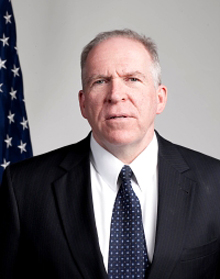
Former CIA Director John Brennan
It is easy to see why Brennan lost it. The Attorney General fired McCabe, denying him full retirement benefits, because McCabe “had made an unauthorized disclosure to the news media and lacked candor — including under oath — on multiple occasions.” There but for the grace of God go I, Brennan must have thought, whose stock in trade has been unauthorized disclosures.
In fact, Brennan can take but small, short-lived consolation in the fact that he succeeded in leaving with a full government pension. His own unauthorized disclosures and leaks probably dwarf in number, importance, and sensitivity those of McCabe. And many of those leaks appear to have been based on sensitive intercepted conversations from which the names of American citizens were unmasked for political purposes. Not to mention the leaks of faux intelligence like that contained in the dubious “dossier” cobbled together for the Democrats by British ex-spy Christopher Steele.
It is an open secret that the CIA has been leaking like the proverbial sieve over the last two years or so to its favorite stenographers at the New York Times and Washington Post. (At one point, the obvious whispering reached the point that the Wall Street Journal saw fit to complain that it was being neglected.) The leaking can be traced way back — at least as far as the Clinton campaign’s decision to blame the Russians for the publication of very damning DNC emails by WikiLeaks just three days before the Democratic National Convention.
This blame game turned out to be a hugely successful effort to divert attention from the content of the emails, which showed in bas relief the dirty tricks the DNC played on Bernie Sanders. The media readily fell in line, and all attention was deflected from the substance of the DNC emails to the question as to why the Russians supposedly “hacked into the DNC and gave the emails to WikiLeaks.”
This media operation worked like a charm, but even Secretary Clinton’s PR person, Jennifer Palmieri, conceded later that at first it strained credulity that the Russians would be doing what they were being accused of doing.
Magnificent Diversion
On April 6, 2017 I attended a panel discussion on “Russia’s interference in our democracy” at the Clinton/Podesta Center for American Progress Fund. In my subsequent write-up I noted that panelist Palmieri had inadvertently dropped tidbits of evidence that I suggested “could get some former officials in deep kimchi – if a serious investigation of leaking, for example, were to be conducted.” (That time seems to be coming soon.)
Palmieri was asked to comment on “what was actually going on in late summer/early fall [2016].” She answered:
“It was a surreal experience … so I did appreciate that for the press to absorb … the idea that behind the stage that the Trump campaign was coordinating with Russia to defeat Hillary Clinton was too fantastic for people to, um, for the press to process, to absorb….
“But then we go back to Brooklyn [Clinton headquarters] and heard from the — mostly our sources were other intelligence, with the press who work in the intelligence sphere, and that’s where we heard things and that’s where we learned about the dossier and the other story lines that were swirling about; and how to process … And along the way the administration started confirming various pieces of what they were concerned about what Russia was doing. … So I do think that the answer for the Democrats now … in both the House and the Senate is to talk about it more and make it more real.”
So the leaking had an early start, and went on steroids during the months following the Democratic Convention up to the election — and beyond.
As a Reminder
None of the leaking, unmasking, surveillance, or other activities directed against the Trump campaign can be properly understood, if one does not bear in mind that it was considered a sure thing that Secretary Clinton would become President, at which point illegal and extralegal activities undertaken to help her win would garner praise, not prison.
But she lost. And a month ago, House Intelligence Committee Chair Devin Nunes (R-CA) threw down the gauntlet, indicating that there could be legal consequences, for example, for officials who misled the FISA court in order to enable surveillance on Trump and associates. His words are likely to have sent chills down the spine of yet other miscreants. “If they need to be put on trial, we will put them on trial,” he said. “The reason Congress exists is to oversee these agencies that we created.”
John Brennan is widely reported to be Nunes’s next target. Does one collect a full pension in jail?
Unmasking: Senior national security officials are permitted to ask the National Security Agency to unmask the names of Americans in intercepted communications for national security reasons — not for domestic political purposes. Congressional committees have questioned why Obama’s UN ambassador Samantha Power (as well as his national security adviser Susan Rice) made so many unmasking requests. Power is reported to have requested the unmasking of more than 260 Americans, most of them in the final days of the administration, including the names of Trump associates.
Deep State Intimidation
Back to John Brennan’s bizarre tweet Saturday telling the President, “You may scapegoat Andy McCabe but you will not destroy America … America will triumph over you.” Unmasking the word “America,” so to speak, one can readily discern the name “Brennan” underneath. Brennan’s words and attitude are a not-so-subtle reminder of the heavy influence and confidence of the deep state, including the media — exercised to a fare-thee-well over the past two years.
Later on Saturday, Samantha Power, with similar equities at stake, put an exclamation point behind what Brennan had tweeted earlier in the day. Power also saw fit to remind Trump where the power lies, so to speak. She warned him publicly that it is “not a good idea to piss off John Brennan.”
Meanwhile, the Washington Post is dutifully playing its part in the deep-state game of intimidation. The following excerpt from Sunday’s lead article conveys the intended message: “Some Trump allies say they worry he is playing with fire by taunting the FBI. ‘This is open, all-out war. And guess what? The FBI’s going to win,’ said one ally, who spoke on the condition of anonymity to be candid. ‘You can’t fight the FBI. They’re going to torch him.’” [sic]
The Post, incidentally, waited until paragraph 41 of 44 to inform readers that it was the FBI’s own Office of Professional Responsibility and the Inspector General of the Department of Justice that found McCabe guilty, and that the charge was against McCabe, not the FBI. A quite different impression was conveyed by the large headline “Trump escalates attacks on FBI” as well as the first 40 paragraphs of Sunday’s lead article.
Putting Down a Marker
It isn’t as though Donald Trump wasn’t warned, as are all incoming presidents, of the power of the Deep State that he needs to play ball with — or else. Recall that just three days before President-elect Trump was visited by National Intelligence Director James Clapper, FBI Director James Comey, CIA Director John Brennan, and NSA Director Michael Rogers, Trump was put on notice by none other than the Minority Leader of the Senate, Chuck Schumer. Schumer has been around and knows the ropes; he is a veteran of 18 years in the House, and is in his 20th year in the Senate.
On Jan. 3, 2017 Schumer said it all, when he told MSNBC’s Rachel Maddow, that President-elect Trump is “being really dumb” by taking on the intelligence community and its assessments on Russia’s cyber activities:
“Let me tell you, you take on the intelligence community, they have six ways from Sunday at getting back at you,” Schumer told Maddow. “So even for a practical, supposedly hard-nosed businessman, he’s being really dumb to do this.” Did Maddow ask Schumer if he was saying President of the United States should be afraid of the intelligence community? No, she let Schumer’s theorem stand.
With gauntlets now thrown down by both sides, we may not have to wait very long to see if Schumer is correct in his blithe prediction as to how the present constitutional crisis will be resolved.
Ray McGovern works for Tell the Word, a publishing arm of the ecumenical Church of the Saviour in inner-city Washington. He served as a CIA analyst under seven Presidents and nine CIA directors and is now on the Steering Group of Veteran Intelligence Professionals for Sanity (VIPS).
‘High-ranking people’ protected Clinton from indictment – Former FBI asst. director
RT | March 19, 2018
Former FBI Assistant Director James Kallstrom alleged Sunday that there was a conspiracy in Washington to protect Hillary Clinton from indictment. He added that ongoing chaos in Trump’s cabinet may be a symptom of the plot.
“Do you think somebody was directing them or do you think they just came to the conclusion on their own, this leadership at the FBI and the Department of Justice, that they wanted to change the outcome of the election?” Fox News host Maria Bartiromo asked Kallstrom, as cited by The Washington Examiner.
“I think we have ample facts revealed to us during this last year-and-a-half that high-ranking people throughout government – not just the FBI – high-ranking people had a plot to not have Hillary Clinton, you know, indicted,” Kallstrom, a 27-year veteran of the agency, replied.
Kallstrom alleged both inter-departmental collusion in addition to a complicit media apparatus within the fourth estate that helped to undermine the Trump campaign and subsequent cabinet, while also repeatedly highlighting the Russiagate narrative.
 Among others, Kallstrom pointed the finger at Obama’s CIA director, John Brennan, an extremely vocal critic of the Trump administration.
“My sources tell me that he was leaking almost weekly and daily. He was taking that bunch of phony crap supposedly from Russia, and peddling that through the Congress, all his buddies in the media, he was one of the active people. I’ve known him a long time.”
Brennan vehemently condemned Trump’s firing of former FBI Deputy Director Andrew McCabe.
“When the full extent of your venality, moral turpitude, and political corruption becomes known, you will take your rightful place as a disgraced demagogue in the dustbin of history. You may scapegoat Andy McCabe, but you will not destroy America… America will triumph over you,” Brennan tweeted.
Trump was vocal in his mistrust of McCabe and even openly criticized him for taking money from Clinton associates.
Kallstrom alleges that the repeated reshuffling in Trump’s cabinet is the result of a high-level conspiracy to help former Secretary of State Hillary Clinton win the 2016 presidential election.
“They had a backup plan to basically frame Donald Trump and that’s what’s been going,” Kallstrom said. “I think it goes right to the top. And it involves that whole strategy – they were gonna win, nobody would have known any of this stuff, and they just unleashed the intelligence community. Look at the unmaskings. We haven’t heard anything about that yet. Look at the way they violated the rights of all those American citizens.”
McCabe: A War on (or in) the FBI?
By Coleen Rowley | Consortium News | March 18, 2018
The explanation from Andrew McCabe that he was fired merely due to his staunch support of his former boss and mentor, FBI Director James Comey, and the “Russiagate” investigation, does not pass the smell test.
Similar to the one that mainstream corporate media is spinning, McCabe’s explanation almost totally ignores the fact that it was the relatively independent Department of Justice (DOJ) Inspector General (IG) and the FBI’s own Office of Professional Responsibility (OPR internal affairs) who recommended firing McCabe for his “lack of candor” on (the totally unrelated issue of) granting improper press access to the Wall Street Journal during ongoing FBI investigations of the Clinton Foundation and Clinton’s emails.
While the exact specifics of McCabe’s “lack of candor” – which McCabe denies – haven’t been released by the IG, it’s my own personal opinion that such official briefing of the press should not necessarily be a fireable offense as long as it’s justified to correct faulty media reporting and was not covertly done for improper political reasons. But technically, firing for “lack of candor” has long been the FBI’s “bright line” policy, ever since former FBI Director Louis Freeh tried to “clean up” the FBI in the mid-1990s when so many agents, including Special Agents in Charge, were caught lying about sex affairs, improper government credit card charges and drunk driving incidents – some amounting to reckless homicides.
But of course Freeh was rather hypocritical as he was himself involved in several instances of “lack of candor” including appointing his friend, Larry Potts, as Deputy Director. This, despite the fact that Potts had covered up his own role in substituting “rules of engagement” for the FBI’s “deadly force policy” during the Ruby Ridge standoff with (the arguably unconstitutional) “rules” directing the shooting on sight of any armed male.
The cover-up of Potts’ mishandling of Ruby Ridge came to light during the criminal investigations and prosecution of the FBI sniper who had subsequently shot and killed Randy Weaver’s wife while aiming at someone else. When Pott’s role was revealed, Freeh had to censure and demote his Deputy Director; but even then Potts wasn’t actually fired.
So it may well be that “lack of candor” sets too high a standard that no one, not even the angels, let alone FBI agents and their managing officials can live up to. Attorney General Jeff Sessions’ lofty statement that the FBI’s integrity is its brand, may be nice, wishful thinking but like other self-promoting speeches going back to J. Edgar Hoover, it has never rung true based on the hundreds of unethical actions I witnessed or was made aware of.
A number of OPR officials themselves were always getting caught in various unethical, deceitful (and sometimes even illegal) actions, including their long systemic practice of employing “double standards” in recommending disciplinary actions, i.e. top ranking officials received light discipline while lower ranking agents got far more severe punishments for similar wrongdoing. In 2001, some of the FBI’s internal affairs supervisors became whistleblowers and testified to the Senate Judiciary Committee about the FBI’s disciplinary “double standards.” Although some remedies were eventually put into place, the IG also had to investigate some retaliatory fall-out.
In any event, McCabe’s calling his firing a “war on the FBI” doesn’t make sense considering it was the FBI’s own internal affairs office that recommended he be fired. (Note that DOJ IG Michael Horowitz was appointed by President Obama in 2012 and the FBI’s OPR is run by a career official originally appointed to that position in 2004 by then FBI Director Robert Mueller.)
Perhaps it would be more apt if McCabe had called it a war inside the FBI (and in Washington as a whole). Could the obvious chaos – some would say “bloodbath” – at all levels of government also be part of the “blowback” from 16 years of waging “perpetual war” (and from attendant war crimes and the internal corruption by which all empires rot)? As author Viet Thanh Nguyen noted about the 2016 election: “That sickness is imperialism… America is an imperial country, and its decay might now be showing. Empires rot from the inside even as emperors blame the barbarians.” Remember how wars have a way of migrating home.
Don’t forget that McCabe’s mentor, James Comey, as Assistant Attorney General had signed off on the Bush-Cheney Administration’s torture tactics. Special Counsel Robert Mueller (said to be “joined at the hip” with Comey) dutifully looked the other way, as then FBI Director, when the CIA’s torture program was instituted, allowing the atrocities to continue. It should also be recalled that Mueller helped the Bush-Cheney Administration to lie us into the Iraq War.
In early January, 2017 CIA Director John Brennan, FBI Director James Comey, NSA Director Michael Rogers and National Director of Intelligence James Clapper briefed President Obama and President-elect Trump on their “Intelligence Community Assessment” by which their agencies’ “hand-picked analysts” accused Russia of meddling in the election and which also included former MI6 spy Chris Steele’s “salacious dossier” accusing Trump’s campaign of colluding with the Russians.
By prior plan, the three other intelligence directors left Comey alone in the room with Trump for Comey to confront the President-elect with the damning summary of Steele’s dossier (which Comey admitted was not verified) and, as icing on the cake, also warning Trump that these accusations would probably appear soon in the media.
Forgetful Democrat Party loyalists also should be reminded that John Brennan was termed the drone assassination and “kill list” czar (before being named CIA Director). As CIA Director, Brennan was hellbent on covering up and promoting CIA torture.
James Clapper, also not known for candor in having previously misled Congress about the NSA’s massive spying on Americans, has even been reported to be the source of the leak to CNN about the Obama intelligence directors’ January briefing that focused on the Steele dossier. It sure looks like there is plenty “lack of candor” to go around! And plenty for these officials to continue covering up. But as Cicero observed hundreds of years ago, “the law falls silent in time of war.” At very least everyone should be wary of partisan media spin since all of these war crimes and other deceitful, illegal actions made possible by the wars are fully bipartisan.
The real problem that most of the mainstream media don’t want to even mention is how unprecedented it was to have both Presidential campaigns under serious criminal investigation in the weeks before the 2016 election! In all fairness, even if these now-fired FBI Directors were trying to do the right thing – which would not be in line with their rather sordid track records – it wouldn’t really be possible to walk that political mine field without a faux pas one way or the other. Seen in that light, it’s possible to even sympathize a little with any FBI Director when the public corruption at the highest levels in Washington DC has become so bad (and fully bipartisan), that it’s hard to know where to start.
Coleen Rowley is a retired FBI special agent, division legal counsel and law enforcement ethics instructor who testified in connection with the 9-11 Joint Intelligence Committee’s Inquiry, the Senate Judiciary Committee investigation and Department of Justice Inspector General’s investigation, exposing some of the FBI’s pre-9/11 failures, was named one of TIME magazine’s “Persons of the Year” in 2002.
‘Progressive’ Journalists Jump the Shark on Russiagate
By Ray McGovern | Consortium News | March 7, 2018

Russiagate’s sensationalist media coverage
Jane Mayer of The New Yorker and Cenk Uygur of The Young Turks are the latest progressives to jump on the anti-Trump, pro-Russiagate bandwagon. They have made it crystal clear that, in Mayer’s words, they are not going to let Republicans, or anyone else, “take down the whole intelligence community,” by God.
Odd? Nothing is too odd when it comes to spinning and dyeing the yarn of Russiagate; especially now that some strands are unraveling from the thin material of the “Steele dossier.”
Before the 2016 election, British ex-spy Christopher Steele was contracted (through a couple of cutouts) by the Clinton campaign and Democratic National Committee to dig up dirt on candidate Donald Trump. They paid him $168,000. They should ask for their money back.
Mayer and Uygur have now joined with other Trump-despisers and new “progressive” fans of the FBI and CIA – among them Amy Goodman and her go-to, lost-in-the-trees journalist, Marcy Wheeler of Emptywheel.net. All of them (well, maybe not Cenk) are staying up nights with needle and thread trying to sew a silk purse out of the sow’s-ear dossier of Steele allegations and then dye it red for danger.
Monday brought a new low, with a truly extraordinary one-two punch by Mayer and Uygur.
A Damning Picture?
Mayer does her part in a New Yorker article, in which she – intentionally or not – cannot seem to see the forest for the trees.
In her article, Mayer explains up front that the Steele dossier “painted a damning picture of collusion between Trump and Russia,” and then goes on to portray him as a paragon of virtue with praise that is fulsome, in the full meaning of that word. For example, a friend of Steele told Mayer that regarding Steele, “Fairness, integrity, and truth, for him, trump any ideology.”
Now, if one refuses to accept this portrait on faith, then you are what Mayer describes as a “Trump defender.” According to Mayer, Trump defenders argue that Steele is “a dishonest Clinton apparatchik who had collaborated with American intelligence and law enforcement officials to fabricate false charges against Trump and his associates, in a dastardly (sic) attempt to nullify the 2016 election. According to this story line, it was not the President who needed to be investigated, but the investigators themselves.”
Can you imagine!
I could not help but think that Mayer wrote her piece some months ago and that she and her editors might have missed more recent documentary evidence that gives considerable support to that “dastardly” story line. But seriously, it should be possible to suspect Steele of misfeasance or malfeasance – or simply telling his contractors what he knows they want to hear – without being labeled a “Trump supporter.” I, for example, am no Trump supporter. I am, however, a former intelligence officer and I have long since concluded that what Steele served up is garbage.
Character References
Mayer reports that Richard Dearlove, head of MI6 from 1999 to 2004, described Steele as “superb.” Personally, I would shun any “recommendation” from that charlatan. Are memories so short? Dearlove was the intelligence chief who briefed Prime Minister Tony Blair on July 23, 2002 after a quick trip to Washington. The official minutes of that meeting were leaked to the London Times and published on May 1, 2005.
Dearlove explained to Blair that President George W. Bush had decided to attack Iraq for regime change and that the war was to be “justified by the conjunction of terrorism and weapons of mass destruction.” Dearlove added matter-of-factly, “The intelligence and facts are being fixed around the policy.”
Another character reference Mayer gives for Steele is former CIA Deputy Director John McLaughlin (from 2000 to 2004) who, with his boss George Tenet, did the fixing of intelligence to “justify” the war on Iraq. State Department intelligence director at the time, Carl Ford, told the authors of “Hubris: The Inside Story of Spin, Scandal, and the Selling of the Iraq War” that both McLaughlin and Tenet “should have been shot” for what they did.
And then there is CIA veteran spy John Sipher who, Mayer says, “ran the Agency’s Russia program before retiring, in 2014.” Sipher tells her he thinks the Steele dossier is “generally credible” in “saying what Russia might be up to.” Sipher may be a good case officer but he has shown himself to be something of a cipher on substance.
Worse still, he displays a distinct inclination toward the remarkable view of former National Intelligence Director James Clapper, who has said that Russians are “typically, almost genetically driven to co-opt, penetrate, gain favor, whatever.” If Mayer wanted to find some ostensibly authoritative figure to endorse the kind of material in Steele’s dossier, she surely picked a good one in Sipher.
Mayer notes, “It’s too early to make a final judgment about how much of Steele’s dossier will be proved wrong, but a number of Steele’s major claims have been backed up by subsequent disclosures. She includes, as flat fact, his claim that the Kremlin and WikiLeaks were working together to release the DNC’s emails, but provides no evidence.
Major Holes
Mayer, however, should know better. There have been lots of holes in the accusation that the Russians hacked the DNC and gave the material to WikiLeaks to publish. Here’s one major gap we reported on Jan. 20, 2017: President Barack Obama told his last press conference on Jan. 18, that the U.S. intelligence community had no idea how the Democratic emails reached WikiLeaks.
Using lawyerly language, Obama admitted that “the conclusions of the intelligence community with respect to the Russian hacking were not conclusive as to whether WikiLeaks was witting or not in being the conduit through which we heard about the DNC e-mails that were leaked.”
It is necessary to carefully parse Obama’s words since he prides himself in his oratorical constructs. He offered a similarly designed comment at a Dec. 16, 2016 press conference when he said: “based on uniform intelligence assessments, the Russians were responsible for hacking the DNC. … the information was in the hands of WikiLeaks.”
Note the disconnect between the confidence about hacking and the stark declarative sentence about the information ending up at WikiLeaks. Obama does not bridge the gap because to do so would be a bald-faced lie, which some honest intelligence officer might call him on. So, he simply presented the two sides of the chasm – implies a connection – but leaves it to the listener to make the leap.
It was, of course, WikiLeaks that published the very damaging Democratic information, for example, on the DNC’s dirty tricks that marginalized Sen. Bernie Sanders and ensured that Secretary of State Hillary Clinton would win the Democratic nomination. What remained to be demonstrated was that it was “the Russians” who gave those emails to WikiLeaks. And that is what the U.S. intelligence community could not honestly say.
Saying it now, without evidence, does not make it true.
Cenk Also in Sync
Cenk Uygur of The Young Turks at once picked up, big time, on the part of Mayer’s article that homes in on an “astonishing” report from Steele in late November 2016 quoting one “senior Russian official.” According to that official, “The Kremlin had intervened to block Trump’s initial choice for secretary of state, Mitt Romney.” Steele’s late November memo alleged that the Kremlin had asked Trump to appoint someone who would be prepared to lift Ukraine-related sanctions and cooperate on security issues like Syria.
Mayer commented, “As fantastical as the memo sounds, subsequent events could be said to support it.” Fantastical or not, Uygur decided to run with it. His amazing 12-minute video is titled: “New Steele Dossier: Putin PICKED Trump’s Secretary of State.” Uygur asks: “Who does Tillerson work for; and that also goes for the President.”
Return to Sanity
As an antidote to all the above, let me offer this cogent piece on the views of Joseph E. diGenova, who speaks out of his unique experience, including as Counsel to the U.S. Senate Select Committee on Intelligence (the Church Committee). The article is entitled: “The Politicization of the FBI.”
“Over the past year,” diGenova wrote, “facts have emerged that suggest there was a plot by high-ranking FBI and Department of Justice (DOJ) officials in the Obama administration, acting under color of law, to exonerate Hillary Clinton of federal crimes and then, if she lost the election, to frame Donald Trump and his campaign for colluding with Russia to steal the presidency.”
He pointed out that nearly half of Americans, according to a CBS poll, believe that Mueller’s Trump-Russia collusion probe is “politically motivated.” And, he noted, 63 percent of polled voters in a Harvard CAPS-Harris Poll believe that the FBI withheld vital information from Congress about the Clinton and Russia collusion investigations.
This skepticism is entirely warranted, as diGenova explains, with the Russiagate probe being characterized by overreach from the beginning.
Ray McGovern works with Tell the Word, a publishing arm of the ecumenical Church of the Saviour in inner-city Washington. He served in Army and CIA intelligence analysis for 30 years and, after retiring, co-founded Veteran Intelligence Professionals for Sanity (VIPS).
Contradictions In Seth Rich Murder Continue To Challenge Hacking Narrative
By Tyler Durden – Zero Hedge – 03/02/2018
As rumors swirl that Special Counsel Robert Mueller is preparing a case against Russians who are alleged to have hacked Democrats during the 2016 election – a conclusion based solely on the analysis of cybersecurity firm Crowdstrike, a Friday op-ed in the Washington Times by retired U.S. Navy admiral James A. Lyons, Jr. asks a simple, yet monumentally significant question: Why haven’t Congressional Investigators or Special Counsel Robert Mueller addressed the murder of DNC staffer Seth Rich – who multiple people have claimed was Wikileaks’ source of emails leaked during the 2016 U.S. presidential election?
Mueller has been incredibly thorough in his ongoing investigations – however he won’t even respond to Kim Dotcom, the New Zealand entrepreneur who clearly knew about the hacked emails long before they were released, claims that Seth Rich obtained them with a memory stick, and has offered to provide proof to the Special Counsel investigation.
Let me assure you, the DNC hack wasn’t even a hack. It was an insider with a memory stick. I know this because I know who did it and why. Special Counsel Mueller is not interested in my evidence. My lawyers wrote to him twice. He never replied. 360 pounds!https://t.co/AGRO0sFx7s https://t.co/epXtv0t1uN
— Kim Dotcom (@KimDotcom) February 18, 2018
#SethRichpic.twitter.com/JjAp0n56JO
— Kim Dotcom (@KimDotcom) March 2, 2018
Reminder: Here’s the first letter my lawyers wrote to Special Counsel Mueller regarding Seth Rich. We never received any reply. It’s astonishing considering my first hand knowledge of the DNC leak. https://t.co/TvpVaLsmzW
— Kim Dotcom (@KimDotcom) March 2, 2018
I knew Seth Rich. I know he was the @Wikileaks source. I was involved. https://t.co/MbGQteHhZM
— Kim Dotcom (@KimDotcom) May 20, 2017
On May 18, 2017, Dotcom proposed that if Congress includes the Seth Rich investigation in their Russia probe, he would provide written testimony with evidence that Seth Rich was WikiLeaks’ source.
In addition to several odd facts surrounding Rich’s still unsolved murder – which officials have deemed a “botched robbery,” forensic technical evidence has emerged which contradicts the Crowdstrike report. The Irvine, CA company partially funded by Google, was the only entity allowed to analyze the DNC servers in relation to claims of election hacking:
Is it true the DNC would not allow the FBI access to check server or other equipment after learning it was hacked? Can that be possible?
— Donald J. Trump (@realDonaldTrump) March 5, 2017
Notably, Crowdstrike has been considered by many to be discredited over their revision and retraction of a report over Russian hacking of Ukrainian military equipment – a report which the government of Ukraine said was fake news.
In connection with the emergence in some media reports which stated that the alleged “80% howitzer D-30 Armed Forces of Ukraine removed through scrapping Russian Ukrainian hackers software gunners,” Land Forces Command of the Armed Forces of Ukraine informs that the said information is incorrect.
Ministry of Defence of Ukraine asks journalists to publish only verified information received from the competent official sources. Spreading false information leads to increased social tension in society and undermines public confidence in the Armed Forces of Ukraine. –mil.gov.ua (translated) (1.6.2017)
CrowdStrike has retracted statements it used to buttress claims of Russian hacking https://t.co/8AZOvoQl0K
— Michael Tracey (@mtracey) March 28, 2017
In fact, several respected journalists have cast serious doubt on CrowdStrike’s report on the DNC servers:
- How To Get To “Reasonable Certainty” on a Russia Finding – Jeffrey Carr, Medium (12.13.2016)
- HERE’S THE PUBLIC EVIDENCE RUSSIA HACKED THE DNC — IT’S NOT ENOUGH – Sam Biddle, The Intercept (12.14.2016)
Pay attention, because Mueller is likely to use the Crowdstrike report to support the rumored upcoming charges against Russian hackers.
Also notable is that Crowdstrike founder and anti-Putin Russian expat Dimitri Alperovitch sits on the Atlantic Council – which is funded by the US State Department, NATO, Latvia, Lithuania, and Ukranian Oligarch Victor Pinchuk. Who else is on the Atlantic Council? Evelyn Farkas – who slipped up during an MSNBC interview with Mika Brzezinski and disclosed that the Obama administration had been spying on the Trump campaign:
The Trump folks, if they found out how we knew what we knew about the Trump staff dealing with Russians, that they would try to compromise those sources and methods, meaning we would not longer have access to that intelligence. –Evelyn Farkas
Odd facts surrounding the murder of Seth Rich
“The facts that we know of in the murder of the DNC staffer, Seth Rich, was that he was gunned down blocks from his home on July 10, 2016. Washington Metro police detectives claim that Mr. Rich was a robbery victim, which is strange since after being shot twice in the back, he was still wearing a $2,000 gold necklace and watch. He still had his wallet, key and phone. Clearly, he was not a victim of robbery,” writes Lyons.
Another unexplained fact muddying the Rich case is that of a 40 caliber Glock 22 handgun stolen from an FBI agent’s car the same day Rich was murdered. D.C. Metro police said that the theft occurred between 5 and 7 a.m., while the FBI said two weeks later that the theft had occurred between Midnight and 2 a.m. – fueling speculation that the FBI gun was used in Rich’s murder.
Furthermore, two men working with the Rich family – private investigator and former D.C. Police detective Rod Wheeler and family acquaintance Ed Butowsky, have previously stated that Rich had contacts with WikiLeaks before his death.
“According to Ed Butowsky, an acquaintance of the family, in his discussions with Joel and Mary Rich, they confirmed that their son transmitted the DNC emails to Wikileaks,” writes Lyons.
While Wheeler initially told TV station Fox5 that proof of Rich’s contact with WikiLeaks lies on the murdered IT staffer’s laptop, he later walked the claim back – though he maintained that there was “some communication between Seth Rich and WikiLeaks.”
Rod Wheeler telling Fox5 his FBI sources linked Seth Rich to Wikileaks. “Absolutely, and that’s confirmed” #RodWheeler #SethRich pic.twitter.com/IGWERgRBkE
— ZeroPointNow (@ZeroPointNow) August 2, 2017
Wheeler also claimed in recently leaked audio that Seth Rich’s brother, Aaron – a Northrup Grumman employee, blocked him from looking at Seth’s computer and stonewalled his investigation.
Wheeler said that brother Aaron Rich tried to block Wheeler from looking at Seth’s computer, even though there could be evidence on it. “He said no, he said I have his computer, meaning him,” Wheeler said. “I said, well can I look at it?…He said, what are you looking for? I said anything that could indicate if Seth was having problems with someone. He said no, I already checked it. Don’t worry about it.”
Aaron also blocked Wheeler from finding out about who was at a party Seth attended the night of the murder.
“All I want you to do is work on the botched robbery theory and that’s it,” Aaron told Wheeler –Big League Politics
Perhaps the most stunning audio evidence, however, comes from leaked audio of a recorded conversation between Ed Butowsky and Pulitzer Prize winning investigative journalist Seymour Hersh, who told him of a “purported FBI report establishing that Seth Rich sent emails to WikiLeaks.”

As transcribed and exclusively reported on by journalist Cassandra Fairbanks last year:
What the report says is that some time in late Spring… he makes contact with WikiLeaks, that’s in his computer,” he says. “Anyway, they found what he had done is that he had submitted a series of documents — of emails, of juicy emails, from the DNC.”
Hersh explains that it was unclear how the negotiations went, but that WikiLeaks did obtain access to a password protected DropBox where Rich had put the files.
“All I know is that he offered a sample, an extensive sample, I’m sure dozens of emails, and said ‘I want money.’ Later, WikiLeaks did get the password, he had a DropBox, a protected DropBox,” he said. They got access to the DropBox.”
Hersh also states that Rich had concerns about something happening to him, and had
“The word was passed, according to the NSA report, he also shared this DropBox with a couple of friends, so that ‘if anything happens to me it’s not going to solve your problems,’” he added. “WikiLeaks got access before he was killed.”
Brennan and Russian disinformation
Hersh also told Butowsky that the DNC made up the Russian hacking story as a disinformation campaign – directly pointing a finger at former CIA director (and now MSNBC/NBC contributor) John Brennan as the architect.
I have a narrative of how that whole f*cking thing began. It’s a Brennan operation, it was an American disinformation, and the fu*kin’ President, at one point, they even started telling the press – they were backfeeding the Press, the head of the NSA was going and telling the press, fu*king c*cksucker Rogers, was telling the press that we even know who in the Russian military intelligence service leaked it.
Listen to Seymour Hersh leaked audio:
(full transcription here and extended audio of the Hersh conversation here)
Hersh denied that he told Butowsky anything before the leaked audio emerged, telling NPR “I hear gossip… [Butowsky] took two and two and made 45 out of it.”
Techincal Evidence
As we mentioned last week, Dotcom’s assertion is backed up by an analysis done last year by a researcher who goes by the name Forensicator, who determined that the DNC files were copied at 22.6 MB/s – a speed virtually impossible to achieve from halfway around the world, much less over a local network – yet a speed typical of file transfers to a memory stick.

The big hint
Last but not least, let’s not forget that Julian Assange heavily implied Seth Rich was a source:
FLASHBACK:@Wikileaks‘ J Assange brought up#SethRich & said “no” whn asked if it was a robbery|Hey media—TAKE A HINT. pic.twitter.com/sxzi8gB55g
— Kyle M Johnson (@McWhorterJ) May 21, 2017
Given that a) the Russian hacking narrative hinges on Crowdstrikes’s questionable reporting, and b) a mountain of evidence pointing to Seth Rich as the source of the leaked emails – it stands to reason that Congressional investigators and Special Counsel Robert Mueller should at minimum explore these leads.
As retired U.S. Navy admiral James A. Lyons, Jr. asks: why aren’t they?
Top Democrats demand $300mn to protect the midterms from Russia intervention
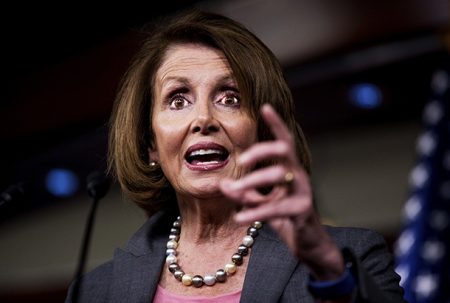
Press TV – February 21, 2018
US Democratic leaders have called for more than $300 million in new funding to protect upcoming midterm elections from Russian interference.
Senate minority leader Chuck Schumer (D-N.Y.) and House minority leader Nancy Pelosi demanded a budget boost Wednesday, claiming that the amount is necessary to safeguard November’s elections.
The extra money should go to the FBI, Department of Homeland Security and Election Assistance Commission, they said in a letter to the Republicans.
“We’re not drawing lines in the sand,” Senator Schumer told reporters. “We hope we can get bipartisan support.”
The Democrats’ move was made in the wake of mounting pressure against the administration of US President Donald Trump over possible collusion with Moscow during the 2016 presidential campaign and election.
The president and his associates have been under increased pressure since Friday, when special counsel Robert Mueller released an indictment in the ongoing Russia probe.
The investigation seeks to find out whether the Russian government coordinated with Trump’s aides after the intelligence community’s conclusion that the Kremlin helped with the New York billionaire’s campaign effort ahead of winning the White House, an allegation dismissed both by Moscow and the president.
Democrats are, meanwhile, attempting to persuade the GOP to back the effort.
“There is some support out there, but it has never gotten to the Republican leadership level,” Minnesota Democratic Senator Amy Klobuchar told reporters. “If they want to do this, they could get it done — but instead of just having introduced bills, they’re going to have to take this on and help us.”
In an emailed statement to Politico, a Senate Republican aide asserted that the offer would be “considered.”
“This request will be carefully considered along with the thousands of individual choices and decisions that will have to be weighed and made as a FY2018 omnibus bill is written,” wrote the GOP aide.
According to the spokeswoman for the Republican speaker of the US House of Representative, Paul Ryan, lawmakers will be informed “on ways to protect the 2018 election.”
“We won’t be negotiating the omnibus through the press,” AshLee Strong said.
More Gun Violence: Let’s Look Beyond Politics
By Ron Paul | February 20, 2108
Another terrible school shooting took place in Parkland, Florida last week and unfortunately many politicians and pundits have used the tragedy – as they often do – to push their own agenda. Many will use the tragedy to argue that Americans should be prohibited from owning guns. As if anti-gun laws would dissuade a disturbed or violent individual intent on causing harm. Those intent on mass murder don’t obey gun laws.
It’s unfortunate that while many are quick to demand that guns be taken away from peaceful Americans, they don’t seem to have much to say about guns when they’re in the hands of government authorities shooting innocent people. If we need any gun control, it is to get control of the guns in the hands of thousands of government employees who use them against innocent people with impunity.
For example, why do those calling for more gun control remain silent when armed federal agents raid Amish farms to stop them from selling raw milk? This shows the hypocrisy of those who call for restrictions on private firearms ownership while supporting the use of government violence as a means of controlling our lives.
Unfortunately there are many key questions lost in the race to score political points from the shooting.
Why does it always seem that the shooter in these mass killings has been on some kind of psychotropic drugs? As the New American magazine pointed out this week, at least ten high profile mass shootings have been committed by individuals who “were either on — or just recently coming off of — psychiatric medications.” The young killer in Florida was no different. According to his aunt, he had been on these medications to treat mental problems.
Why is no one questioning these medications – all of which come with labels warning of horrific side effects? Perhaps one reason they are ignored is that the pharmaceutical industry spends billions of dollars lobbying Congress.
Also, how is it possible that the FBI once again missed so many obvious clues that a violent person intent on causing massive harm to others was about to strike? Is the FBI actually this incompetent, or perhaps its focus was in other areas — like meddling in our own elections by presenting “evidence” they knew was flawed to the FISA court to get permission to spy on the Trump campaign?
We’ve heard many stories of how alert FBI field agents tried to alert their bosses before 9/11 that foreigners were taking flight lessons but were not interested in learning how to land the planes.
Is giving the federal government more power to spy on us – as they demand – the answer to stop these terrible crimes? Hardly!
Those who think that giving federal authorities greater surveillance powers might prevent mass shootings should consider that the FBI has been alerted that the latest school shooter had made Facebook posts and YouTube comments talking about his intention to be, as he put it, “a professional school shooter.” But the Bureau failed to properly investigate the tips. If the FBI fails to stop someone who openly boasts about their intentions on social media why should we believe that giving them the power to snoop on every American would increase our safety?
We cannot stop tragedies like this by banning guns. We need to look seriously into the psychotropic drugs that more and more Americans are being prescribed. We need to demand that our elected Representatives demand a real day of reckoning at the FBI. We need to keep focused and ignore those who politicize such events.
Bear scare! Why the US Democrats desperately need a Russian bogeyman
By Robert Bridge | RT | February 20, 2018
Even before Donald Trump set foot in the White House, loveless liberals were busy pushing the narrative that Russia meddled in the elections. But could this claim be – just maybe – a dastardly ploy to hide some unsavory truths?
Pass the popcorn, the theater of the political absurd known as ‘Russiagate’ continues playing to disappointed audiences without so much as an intermission. And with the latest episode featuring an indictment against 13 Russian nationals without rhyme or reason, perhaps it’s a good time to pause and reflect on the question the mainstream media conspicuously ignores: was the real meddlesome actor in the 2016 presidential election not the perennial bogeyman known as ‘Putin’s Russia’, but the Democratic Party itself?
Indeed, some highly questionable moves on the part of the Democrats before, during and after the elections go far in exonerating the Russian fall guy from any and all charges. You be the judge.
The FISA fail
In a memo declassified by the White House and released to great fanfare by the House Intelligence Committee on February 2, it was alleged that on October 21, 2016, the FBI and the Department of Justice (DOJ) – armed with the notorious Trump dossier – secured a Foreign Intelligence Surveillance Act (FISA) warrant to conduct surveillance on Carter Page, a Trump campaign adviser.
But something looks rotten in Denmark. As it turned out, the explosive Trump dossier, compiled by former MI6 spy Christopher Steele, was bought and paid for by the Democratic National Committee (DNC) and the Clinton campaign. In other words, this represents – at the very least – a very big conflict of interest.
At the same time, in the their application for the FISA warrant, the FBI and DOJ “cited extensively” a Yahoo News article by one Michael Isikoff, which discusses Page’s July 2016 trip to Moscow.
As it turned out, however, there were serious problems with that article. As the Nunes memo states, Isikoff’s article “does not corroborate the Steele dossier because it is derived from information leaked by Steele himself…”
Indeed, Steele admitted that he met with Yahoo News “at the direction of Fusion GPS,” the firm that organized the dossier, in September 2016. Meanwhile, the mainstream media has largely played down these glaring violations of FISA protocol, as it continues to heap scorn on Russia.
“Putin’s KGB-inspired maneuvering of the United States via Donald Trump and the Republican Congress has all the earmarks of a carefully planned, professionally executed war game in which Trump, congressional Republicans and some in right wing media are his comrades,”wrote Cheri Jacobus in USA Today.
The specter of the Russian bogeyman is truly the gift that keeps giving.
Clinton’s email scandal
In March 2015, the news broke that Hillary Clinton, while serving as secretary of state, had used her home computer while handling classified government documents. An assortment of experts and politicians accused Clinton of violating State Department protocol.
On July 5, 2016, following an investigation, FBI Director James Comey said Clinton had been “extremely careless” in handling her email correspondences. He added that “no reasonable prosecutor would bring such a case.”
That statement did little to calm the critics, however, as Clinton was haunted by the ghosts of emails past right up to the eve of the elections.
On October 28, 2016, the FBI said it was reopening its investigation into Clinton’s private email server after messages were discovered on the computer of top aide Huma Abedin’s husband, Anthony Weiner, who was then embroiled in a sexting scandal. Comey announced just before the elections that nothing had changed in the Clinton case, which had been closed four months earlier without criminal charges.
However, the email saga refuses to go away as the DOJ once again reopened its investigation into Clinton’s email server in January.
To this day, Hillary Clinton has been able to divert attention away from the very serious charge of handling classified government emails over her private server thanks to a giant smokescreen known as Russia, the bogeyman that conveniently explains every transgression and setback by the Democratic Party.
Operation Sink Sanders
In July 2016, the DNC suffered a broadside after WikiLeaks released a batch of emails purporting to show that Debbie Wasserman Schultz, the chairwoman of the body, was actively conspiring against the campaign of Senator Bernie Sanders. Naturally, this news had a way of upsetting those donors who contributed funds to the Sanders campaign. Wasserman Schultz resigned in disgrace following the revelations.
Despite there being a deliberate effort to undermine the Sanders campaign, that disturbing news was sidelined by the conspiracy theory that a Russian army of apparatchiks hacked the DNC computers, turning over the information to Julian Assange. To this day, no evidence has been provided to support that claim.
Meanwhile, Wasserman Schultz was eventually cleared of rigging the Democratic primary in favor of Hillary Clinton, while Russia continues to suffer from mainstream media mudslinging.
Clinton cheated in debates
One of the most shocking revelations to come from the leaked/hacked DNC emails was the claim that Donna Brazile, interim chairperson of the DNC who once worked at CNN, used her inside connections to feed Hillary Clinton the questions to several of her public debates against Donald Trump.
Following the DNC debacle, Brazile hoped to cash in on the scandal by publishing a tell-all book entitled, ‘Hacks: The Inside Story of the Break-ins and Breakdowns that Put Donald Trump in the White House.’
In one particularly candid part, Brazile said she was secretly concerned about Clinton’s health as Election Day drew closer. This comment did not sit well with Brazile’s former colleagues. Clinton’s staffers published an open letter in response to the book, saying, “It is particularly troubling and puzzling that she would seemingly buy into false Russian-fueled propaganda, spread by both the Russians and our opponent, about our candidate’s health.”
Once again, Russia was used and abused as the convenient 11-time-zone Band-Aid that can cover any political wound, whatever the size. What is the most surprising about this tactic is that anybody still falls for it.
Regime change
Given Hillary Clinton’s past track record for advocating on behalf of military adventures, most memorably in Iraq and Libya, the tall tale of Trump-Russia collusion appears to have been a desperate effort on the part of the establishment to get their candidate into office and the military industrial complex into another war.
According to the Center for Public Integrity’s review of Federal Election Commission data, over a 14-month period (January 2015 through February 2016), Clinton and Sanders jointly received at least $765,049 from employees of major defense contractors – more than twice the $357,775 sum received by the Republican Party presidential candidates.
To prove the liberal media’s (and by extension, the establishment’s) apparent desire for military conflict, consider how it lavished praise on Trump after he attacked Syria’s Shayrat Airbase on April 7, 2017, America’s first unilateral military act aimed at the Syrian government forces (not the terrorists).
CNN analyst Fareed Zakaria waxed poetically, “I think Donald Trump became president of the United States,” he said dreamily. “I think this was actually a big moment.” On MSNBC, Nicholas Kristof, a regular Trump critic, said the Republican leader “did the right thing.” Elliott Abrams could barely contain his newfound enthusiasm for Trump: “… the Trump administration can truly be said to have started only now. The president has been chief executive since January 20, but this week he acted also as Commander in Chief. And more: He finally accepted the role of Leader of the Free World.”
Judging by such comments, had Trump continued bombing Syria, and thereby pacifying the hawks in Washington, there is a very good chance that Russiagate would have been quietly swept under the media’s carpet.
Impeach Trump
It would be difficult to name another US president who has suffered the slings and arrows of media scorn more than Donald J. Trump. And he’s only been in office for just over one year. Indeed, no sooner had his Inauguration finished there were already calls for him to be impeached. In fact, the subject has become so popular among the Democrats that there is even a special Wikipedia page dedicated to the relentless campaign.
Although the clamor to impeach the Republican leader has subsided of late, when the idea does raise its head, the empty claim that Russia influenced the elections ranks high among the reasons.
Clinton Foundation ‘pay to play’
Another reason why the Democrats would need to push the anti-Russia narrative is to protect the Clinton family from allegations that they personally profited from donations to the Clinton Foundation.
In January 2017, it was reported that the FBI opened an investigation into whether the Clinton Foundation accepted donations in exchange for political favors while Hillary Clinton served as secretary of state in the Obama administration, the Los Angeles Time reported, citing two anonymous sources.
“Critics have accused the Clinton family of using the foundation to enrich themselves and give donors special access to the State Department when Hillary Clinton was its head,” the article said.
The LA Times said that the Democrats have rejected the claims, saying that “Trump is trying to steer attention away from investigations examining…Russian attempts to influence the 2016 election.”
Nunes Memo, Part 2
If anybody thought the Trump administration would just release the Nunes memo and drop it, think again. In fact, Trump’s legal team backs the idea of a second special counsel to investigate the FBI and Justice Department
White House Deputy Press Secretary Raj Shah told reporters on Air Force One Monday that Trump’s attorneys have given the green light to starting the process of appointing a second special counsel to investigate the FBI and Justice Department’s behavior during the 2016 presidential campaign, according to a report by Axios.
In other words, expect a lot more anti-Russia outbursts from the Democrats in the days and weeks to come.
Read more:
Featured Video

Trita Parsi: Israel Set a Trap for Total War in the Region
or go to
Aletho News Archives – Video-Images
From the Archive
Zionism’s Violent Legacy
By Donald Neff | Washington Report On Middle East Affairs | January 1996
On January 4, 1948, Jewish terrorists drove a truck loaded with explosives into the center of the all Arab city of Jaffa and detonated it, killing 26 and wounding around 100 Palestinian men, women and children.[1] The attack was the work of the Irgun Zvai Leumi – the “National Military Organization,” also known by the Hebrew letters Etzel – the largest Jewish terrorist group in Palestine. The Irgun was headed by Revisionist Zionist Menachem Begin and had been killing and maiming Arabs, Britons and even Jews for the previous ten years in its efforts to establish a Jewish state.
This terror campaign meant that at the core of Revisionist Zionism there existed a philosophical embrace of violence. … continue
Blog Roll
 Aletho News
- Trita Parsi: Israel Set a Trap for Total War in the Region
- Trump’s Iran war is on an Israeli leash
- Saudi oil boss issues global supply warning
- Riyadh Says Its Oil System Is Intact. The Numbers Say Otherwise.
- Trump and Netanyahu Want to “Finish the Job” on Iran
- US ‘one-sided dictation’ not Iran’s beliefs makes rational talks impossible: Baghaei
- Iran’s Next Strike May Not Explode. It Could Shut You Down /Col Doug Macgregor
- Iran: US political targets legitimate if assassinations return
- Iraq shuts key border crossing with Iran under US pressure: Report
- Undersea Internet cables could be targeted in retaliation for attacks on Iran: IRGC deputy chief
- If Americans Knew
- The Israel Lobby’s Changing Fortunes
- AIPAC has become such a political liability that it’s shifting to a more “nimble” approach to buying politicians
- At least 160 Israeli settler attacks in 2 weeks
- Will Gaza’s Ancient Christian Community Disappear Forever?
- Israel’s vision of regional security rests on keeping Arab states weak
- Heidi Levine recounts how Palestinian youths helped save her in settler attack
- DAILY UPDATE: Latest essential news on Palestine, Israel, & region
- Trump’s Intensifying Sabotage of the ICC, for Israel’s Sake
- Israeli military detain US and UK volunteers in West Bank including Democratic NY politician Brad Lander
- Americans at National Conservatism Conference held in Israel this year criticize Israel
- No Tricks Zone
- E-Cars Reduce CO2 Emissions By Only 41% Compared To Internal Combustion Engine Vehicles
- Predictions Made By Renowned Climate Professor Over Past Decades Have Been Proven To Be Poor
- New Study Suggests Large Regions Of The Pacific Ocean Have Been Cooling For The Last 80 Years
- Germany’s Green Energy Debacle: High Energy Costs Force Kahla Porzellan to Close After 182 Years!
- New Study: 50 Years Of The Most Aggressive ‘Net Zero’ Policies Can Only Affect The Global Climate By 0.03°C
- US September “Heat” Was No Record…Many Records Set Decades Ago
- Latest European Green Energy Debacle; Portugal’s Largest Flagship Solar Park Insolvent!
- Green Energy Debacle: German Expert Professor Fritz Vahrenholt Warns Of Severe Economic And Social Consequences
- Two More Paleo Reconstructions Affirm Meters-Higher Sea Levels Across Ireland, Brazil 7000-6000 Years Ago
- New Study: Earth And Venus Surface Warmth Largely Explained By Convection And Lapse Rate, Not CO2 Or Radiation

