NYT Finally Retracts Russia-gate Canard
By Robert Parry | Consortium News | June 29, 2017
The New York Times has finally admitted that one of the favorite Russia-gate canards – that all 17 U.S. intelligence agencies concurred on the assessment of Russian hacking of Democratic emails – is false.
On Thursday, the Times appended a correction to a June 25 article that had repeated the false claim, which has been used by Democrats and the mainstream media for months to brush aside any doubts about the foundation of the Russia-gate scandal and portray President Trump as delusional for doubting what all 17 intelligence agencies supposedly knew to be true.
In the Times’ White House Memo of June 25, correspondent Maggie Haberman mocked Trump for “still refus[ing] to acknowledge a basic fact agreed upon by 17 American intelligence agencies that he now oversees: Russia orchestrated the attacks, and did it to help get him elected.”
However, on Thursday, the Times – while leaving most of Haberman’s ridicule of Trump in place – noted in a correction that the relevant intelligence “assessment was made by four intelligence agencies — the Office of the Director of National Intelligence, the Central Intelligence Agency, the Federal Bureau of Investigation and the National Security Agency. The assessment was not approved by all 17 organizations in the American intelligence community.”
The Times’ grudging correction was vindication for some Russia-gate skeptics who had questioned the claim of a full-scale intelligence assessment, which would usually take the form of a National Intelligence Estimate (or NIE), a product that seeks out the views of the entire Intelligence Community and includes dissents.
The reality of a more narrowly based Russia-gate assessment was admitted in May by President Obama’s Director of National Intelligence James Clapper and Obama’s CIA Director John Brennan in sworn congressional testimony.
Clapper testified before a Senate Judiciary subcommittee on May 8 that the Russia-hacking claim came from a “special intelligence community assessment” (or ICA) produced by selected analysts from the CIA, NSA and FBI, “a coordinated product from three agencies – CIA, NSA, and the FBI – not all 17 components of the intelligence community,” the former DNI said.
Clapper further acknowledged that the analysts who produced the Jan. 6 assessment on alleged Russian hacking were “hand-picked” from the CIA, FBI and NSA.
Yet, as any intelligence expert will tell you, if you “hand-pick” the analysts, you are really hand-picking the conclusion. For instance, if the analysts were known to be hard-liners on Russia or supporters of Hillary Clinton, they could be expected to deliver the one-sided report that they did.
Politicized Intelligence
In the history of U.S. intelligence, we have seen how this selective approach has worked, such as the phony determination of the Reagan administration pinning the attempted assassination of Pope John Paul II and other acts of terror on the Soviet Union.
CIA Director William Casey and Deputy Director Robert Gates shepherded the desired findings through the process by putting the assessment under the control of pliable analysts and sidelining those who objected to this politicization of intelligence.
The point of enlisting the broader intelligence community – and incorporating dissents into a final report – is to guard against such “stove-piping” of intelligence that delivers the politically desired result but ultimately distorts reality.
Another painful example of politicized intelligence was President George W. Bush’s 2002 National Intelligence Estimate on Iraq’s WMD that removed State Department and other dissents from the declassified version that was given to the public.
Since Clapper’s and Brennan’s testimony in May, the Times and other mainstream news outlets have avoided a direct contradiction of their earlier acceptance of the 17-intelligence-agencies canard by simply referring to a judgment by “the intelligence community.”
That finessing of their earlier errors has allowed Hillary Clinton and other senior Democrats to continue referencing this fictional consensus without challenge, at least in the mainstream media.
For instance, on May 31 at a technology conference in California, Clinton referred to the Jan. 6 report, asserting that “Seventeen agencies, all in agreement, which I know from my experience as a Senator and Secretary of State, is hard to get. They concluded with high confidence that the Russians ran an extensive information war campaign against my campaign, to influence voters in the election.”
The failure of the major news organizations to clarify this point about the 17 agencies may have contributed to Haberman’s mistake on June 25 as she simply repeated the groupthink that nearly all the Important People in Washington just knew to be true.
But the Times’ belated correction also underscores the growing sense that the U.S. mainstream media has joined in a political vendetta against Trump and has cast aside professional standards to the point of repeating false claims designed to denigrate him.
That, in turn, plays into Trump’s Twitter complaints that he and his administration are the targets of a “witch hunt” led by the “fake news” media, a grievance that appears to be energizing his supporters and could discredit whatever ongoing investigations eventually conclude.
Investigative reporter Robert Parry broke many of the Iran-Contra stories for The Associated Press and Newsweek in the 1980s.
NBC’s Kelly Hits Putin with a Beloved Canard
By Ray McGovern | Consortium News | June 12, 2017
NBC’s Megyn Kelly wielded one of Official Washington’s most beloved groupthinks to smack Russian President Vladimir Putin over his denials that he and his government were responsible for hacking Democratic emails and interfering with the U.S. presidential election.
In her June 2 interview with Putin, Kelly noted that all “17 intelligence agencies” of the U.S. government concurred in their conclusion of Russian guilt and how could Putin suggest that they all are “lying.” It’s an argument that has been used to silence skeptics for months and apparently is so useful that no one seems to care that it isn’t true.
For instance, on May 8, in testimony before a Senate Judiciary subcommittee, former Director of National Intelligence James Clapper conceded publicly that the number of intelligence agencies involved in the assessment was three, not 17, and that the analysts assigned to the project from CIA, FBI and NSA had been “handpicked.”
On May 23, in testimony before the House Intelligence Committee, former CIA Director John Brennan confirmed Clapper’s account about the three agencies involved. “It wasn’t a full inter-agency community assessment that was coordinated among the 17 agencies,” Brennan acknowledged.
But those public admissions haven’t stopped Democrats and the mainstream media from continuing to repeat the false claim. In comments on May 31, failed presidential candidate Hillary Clinton repeated the canard, with a flourish, saying: “Seventeen agencies, all in agreement, which I know from my experience as a Senator and Secretary of State, is hard to get.”
A couple of days later, Kelly revived the myth of the consensus among the 17 intelligence agencies in her interview with the Russian president. But Putin passed up the opportunity to correct her, replying instead:
“They have been misled and they are not analyzing the information in its entirety. … We have talked about it with former President Obama and with several other officials. No one ever showed me any direct evidence. When we spoke with President Obama about that, you know, you should probably better ask him about it – I think he will tell you that he, too, is confident of it. But when he and I talked I saw that he, too, started having doubts. At any rate, that’s how I saw it.”
As I noted in a Jan. 20 article about Obama’s news conference two days earlier, “Did President Barack Obama acknowledge that the extraordinary propaganda campaign to blame Russia for helping Donald Trump become president has a very big hole in it, i.e., that the U.S. intelligence community has no idea how the Democratic emails reached WikiLeaks? For weeks, eloquent obfuscation – expressed with ‘high confidence’ – has been the name of the game, but inadvertent admissions now are dispelling some of the clouds. …
“At President Obama’s Jan. 18 press conference, he admitted as much: ‘the conclusions of the intelligence community with respect to the Russian hacking were not conclusive as to whether WikiLeaks was witting or not in being the conduit through which we heard about the DNC e-mails that were leaked.’” [Emphasis added]
Explaining the Technology
More importantly, Putin in his interview with Kelly points out that “today’s technology” enables hacking to be “masked and camouflaged to an extent that no one can understand the origin” of the hack. “And, vice versa, it is possible to set up any entity or any individual that everyone will think that they are the exact source of that attack. Modern technology is very sophisticated and subtle and allows this to be done. And when we realize that we will get rid of all the illusions. …”
Later, when Kelly came back to the issue of hacking, Putin expanded on the difficulty in tracing the source of cyber attacks.
“Hackers may be anywhere,” Putin said. “There may be hackers, by the way, in the United States who very craftily and professionally passed the buck to Russia. Can’t you imagine such a scenario? In the middle of an internal political fight, it was convenient for them, whatever the reason, to put out that information. And put it out they did. And, doing it, they made a reference to Russia. Can’t you imagine it happening? I can.
“Let us recall the assassination of President Kennedy. There is a theory that Kennedy’s assassination was arranged by the United States special services. If this theory is correct, and one cannot rule it out, so what can be easier in today’s context, being able to rely on the entire technical capabilities available to special services than to organize some kind of attacks in the appropriate manner while making a reference to Russia in the process. …”
Kelly: “Let’s move on.”
However carefully Megyn Kelly and her NBC colleagues peruse The New York Times, they might well not know WikiLeaks’ disclosure on March 31 of original CIA documents showing that the agency had created a program allowing it to break into computers and servers and make it look like others did it by leaving telltale signs (like Cyrillic markings, for example).
The capabilities shown in what WikiLeaks calls the “Vault 7” trove of CIA documents required the creation of hundreds of millions of lines of source code. At $25 per line of code, that amounts to about $2.5 billion for each 100 million code lines. But the Deep State has that kind of money and would probably consider the expenditure a good return on investment for “proving” the Russians hacked into Democratic Party emails.
In other words, it is altogether possible that the hacking attributed to Russia was actually one of several “active measures” undertaken by a cabal consisting of the CIA, FBI, NSA and Clapper — the same agencies responsible for the lame, evidence-free report of Jan. 6, that Clapper and Brennan acknowledged last month was not the consensus view of the 17 intelligence agencies.
There is also the issue of the forensics. Former FBI Director James Comey displayed considerable discomfort on March 20, explaining to the House Intelligence Committee why the FBI did not insist on getting physical access to the Democratic National Committee’s computers in order to do its own proper forensics, but chose to rely on the examination done by the DNC’s private contractor, Crowdstrike.
The firm itself has conflicts of interests in its links to the pro-NATO and anti-Russia think tank, the Atlantic Council, through Dmitri Alperovitch, who is an Atlantic Council senior fellow and the co-founder of Crowdstrike.
Strange Oversight
Given the stakes involved in the Russia-gate investigation – now including a possible impeachment battle over removing the President of the United States – wouldn’t it seem logical for the FBI to insist on its own forensics for this fundamental predicate of the case? Or could Comey’s hesitancy to demand access to the DNC’s computers be explained by a fear that FBI technicians not fully briefed on CIA/NSA/FBI Deep State programs might uncover a lot more than he wanted?
Comey was asked again about this curious oversight on June 8 by Senate Intelligence Committee Chair Richard Burr:
BURR: “And the FBI, in this case, unlike other cases that you might investigate — did you ever have access to the actual hardware that was hacked? Or did you have to rely on a third party to provide you the data that they had collected?”
COMEY: “In the case of the DNC, and, I believe, the DCCC, but I’m sure the DNC, we did not have access to the devices themselves. We got relevant forensic information from a private party, a high-class entity, that had done the work. But we didn’t get direct access.”
BURR: “But no content?”
COMEY: “Correct.”
BURR: “Isn’t content an important part of the forensics from a counterintelligence standpoint?”
COMEY: “It is, although what was briefed to me by my folks — the people who were my folks at the time is that they had gotten the information from the private party that they needed to understand the intrusion by the spring of 2016.”
Burr demurred on asking Comey to explain what amounts to gross misfeasance, if not worse. Perhaps, NBC could arrange for Megyn Kelly to interview Burr to ask if he has a clue as to what Putin might have been referring to when he noted, “There may be hackers, by the way, in the United States who very craftily and professionally passed the buck to Russia.”
Given the congressional intelligence “oversight” committees’ obsequiousness and repeated “high esteem” for the “intelligence community,” there seems an even chance that – no doubt because of an oversight – the CIA/FBI/NSA deep-stage troika failed to brief the Senate “oversight committee” chairman on WikiLeaks “Vault 7” disclosures – even when WikiLeaks publishes original CIA documents.
Ray McGovern is a 27-year veteran of the CIA analysis division and was chief of its Soviet Foreign Policy Branch and prepared the President’s Daily Brief for Nixon, Ford, and Reagan.
This is How Comey Really Helped US President by Trying to Damage Him
Sputnik – 09.06.2017
WASHINGTON – Former Federal Bureau of Investigation (FBI) Director James Comey’s testimony to a US Senate hearing did further political damage to President Donald Trump, but also cleared him of having been a subject of inquiry, former FBI Special Agent Colleen Rowley told Sputnik.
Testifying before the Senate Intelligence Committee on Thursday, former FBI Director James Comey said that President Donald Trump did not ask him to drop his probe into alleged Russian meddling in the 2016 US election.
“Overall it did do some further damage to Trump… [but] I don’t think there was a whole lot new learned,” Rowley said on Thursday. “Finally we learned that Trump was personally not a subject of the investigation at least until Comey was fired.”
Rowley, a retired FBI special agent and division legal counsel noted that Comey had admitted to inappropriate behavior himself during the hearing before the US Senate Intelligence Committee.
“I thought the most interesting thing they did that did come out now was that Comey was responsible for leaking his own memorandum to a law professor at Columbia University,” she said.
Neither Republican nor Democratic senators had followed up on Comey’s admission and tried to learn the full details behind it and the extent of the leaks he had performed himself or knew about, Rowley observed.
“It is a pity that no senators followed up on that or asked how often he had done it before and if he knew who else (among senior officials) had been leaking. That was a missed opportunity,” she said.
Comey produced no hard evidence of wrongdoing on Trump’s part, but he had proved skillful at painting a critical portrait of the president in his testimony, Rowley assessed.
“Comey is very good on his feet. He is fast thinking and very political. He is a performer,” she said.
Media coverage of the hearing was biased against Trump and highly sympathetic and uncritical towards Comey, Rowley commented.
“Our news coverage was very one-sided,” she said.
In previous published comments, Rowley has recalled that when Comey was deputy attorney general, he had signed off on highly illegal programs, including warrantless surveillance of Americans and torture of captives.
As top law enforcement official of the George W. Bush administration, Comey presided over post-September 11 cover-ups and secret abuses of the US Constitution, including fabrications used to launch wrongful wars, and exhibited plain incompetence, Rowley has stated.
Rowley sent a May 2002 memo to then-FBI Director Robert Mueller that exposed some of the FBI’s pre-9/11 failures. She was named one of TIME magazine’s “Persons of the Year” in 2002.
‘Soft Coup’ on Trump, Hiding in Plain Sight
By Robert Parry | Consortium News | June 8, 2017
So what were we watching in ex-FBI Director James Comey’s testimony on Thursday: an upright public servant punished for resisting a power-mad President or a participant in a political scheme to use the law as a way to overturn a U.S. presidential election?
There was a general consensus in the mainstream media that it was the first, that Comey was the noble victim and President Trump the conniving villain. And, surely, Trump could be criticized for his clumsy firing of National Security Adviser Michael Flynn and ensuing expression of “hope” to then-FBI Director Comey that Flynn would not be punished further.
But – outside the view of the MSM – there are other troubling aspects of what is now unfolding, including the scene of FBI Director Comey informing President-elect Trump on Jan. 6 about a defamatory annex to an intelligence report detailing unproven but salacious allegations and then seeing those details leaked almost immediately to humiliate Trump in the days before his Inauguration.
In his Thursday testimony, Comey defended his role in alerting Trump to the Intelligence Community’s publication of the allegations, which summarized opposition research done to benefit Hillary Clinton’s campaign and alleging that Trump had hired Russian prostitutes to urinate on him as he lay in a bed once used by President and Mrs. Obama at the five-star Ritz-Carlton Hotel in Moscow – while supposedly secretly videotaped by Russian intelligence.
In the testimony, Comey said that after he and other Obama’s intelligence chiefs briefed the President-elect at Trump Towers on Jan. 6 about their report on alleged Russian interference in the 2016 campaign, “I remained alone with the President-elect to brief him on some personally sensitive aspects of the information assembled during the assessment.
“The I.C. leadership thought it important, for a variety of reasons, to alert the incoming President to the existence of this material, even though it was salacious and unverified. Among those reasons were: (1) we knew the media was about to publicly report the material and we believed the I.C. should not keep knowledge of the material and its imminent release from the President-elect; and (2) to the extent there was some effort to compromise an incoming President, we could blunt any such effort with a defensive briefing.
“The Director of National Intelligence asked that I personally do this portion of the briefing because I was staying in my position and because the material implicated the FBI’s counter-intelligence responsibilities. We also agreed I would do it alone to minimize potential embarrassment to the President-elect.”
Like J. Edgar Hoover
Given the mainstream media’s determined promotion of Russia-gate as a legitimate scandal, the extraordinary nature of this briefing incident has passed largely unnoticed.
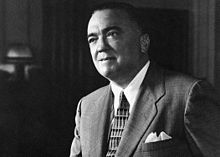
FBI Director J. Edgar Hoover
If, however, you substituted FBI Director J. Edgar Hoover for FBI Director Comey, the significance of the I.C.’s gratuitous inclusion of such an unsubstantiated smear might take on a different coloring. It was, after all, the decision to tack this classified annex onto the Jan. 6 report that gave the mainstream media the hook to disseminate the “golden shower” accusation across the country and around the world.
Rather than minimizing “potential embarrassment to the President-elect,” as Comey demurred, the classified annex was guaranteed to maximize Trump’s embarrassment, which it did.
In other words, just as Comey said he inferred an improper or illegal order when Trump expressed “hope” that Flynn’s legal ordeal might end, Trump might well have deduced that Comey’s elevation of the urination story amounted to coercion or blackmail from the Intelligence Community.
Trump, who surely knows the shadier corners of the construction trade, might have heard something like, “Gee, we’d hate for your wife and children (not to mention the rest of the world) to hear this story about prostitutes peeing on you” – and read the warning as a threat.
FBI Director Hoover was a master of just this sort of warning, conveyed as a sincere concern about some politician’s well-being. Trump, who has emphatically denied the salacious accusation, could well have seen Comey sending him a message from the leaders of the powerful Intelligence Community that they were determined to remove Trump or at least politically cripple him.
Just three days earlier, Senate Minority Leader Chuck Schumer told MSNBC’s Rachel Maddow that Trump was “being really dumb” by taking on the Intelligence Community because “they have six ways from Sunday at getting back at you.”
In the five months since the Jan. 6 briefing, Trump has gotten a taste of how accurate Schumer’s observation was. Making sure that the public got to read the “dirty dossier” – compiled by ex-British spy Christopher Steele and financed by some still unknown Clinton supporter – was clearly one of those six ways.
On top of that, Obama’s intelligence chiefs, including Comey, have testified repeatedly before Congress while they or their allies have leaked derogatory information about Trump to The New York Times, The Washington Post and other mainstream news outlets.
The ‘Soft Coup’
In other words, what we may have witnessed in Comey’s ballyhooed testimony on Thursday was just the latest chapter in a “soft coup” to remove Trump – either through a forced resignation or impeachment. The thinking is that Trump is so incompetent that “wise men” must step in to “correct a mistake” made by the U.S. electorate and made possible by the Constitution’s Electoral College system, which enabled Trump to win the presidency despite losing the popular vote,
But the American people are not supposed to see it that way. After all, the realization that U.S. intelligence chieftains might be conspiring to overturn a constitutional election of a U.S. president could be most upsetting and unsettling, even if one assumes that they are sincerely doing what they think is “best for the country.”
So, this side of the story remains unspoken, a silence made possible by the fact that most of the nation’s top news executives and much of its political elite share the opinion that Trump’s presidency must be ended and a more traditional chief executive installed.
But no one in authority wants to acknowledge that a “soft coup” is in the works because that would make America look like a banana republic to the world. It also could infuriate Trump’s 63 million voters who might take exception to this sort of “deep state” veto of a duly certified election.
So, what that means is that the planned removal of Trump will be a deliberate process cloaked in high-minded legal principles and much talk about the rule of law.
Of course, Trump would not be the only loser in this process. His sinking presidency would drag down many of those around him – and, in the case of Michael Flynn, might well lead to criminal charges.
Indeed, if civil libertarians were not largely committed to the anti-Trump #Resistance, they might pause for a moment and consider the disturbing picture of what was done to retired Lt. Gen. Flynn.
Trapping Flynn
To engineer the ouster of Flynn as Trump’s first National Security Adviser, President Obama’s Justice Department holdovers used the archaic 1799 Logan Act as a predicate to justify an FBI interrogation of Flynn about the details of a phone conversation with Russian Ambassador Sergey Kislyac on Dec. 29, 2016, while Flynn was vacationing in the Dominican Republic.
Since the FBI agents had a transcript of the intercepted phone call and Flynn was working from memory – possibly a bit hazy from a Pina Colada or two – Flynn was an easy mark for a perjury trap. Leaving out some detail, whether intentionally or not, would open him to an obstruction case – and Comey reportedly has indicated that the ongoing criminal investigation of Flynn indeed relates to whether he withheld information from investigators.
Every American who is concerned about the future political use of the U.S. intelligence agencies’ powerful surveillance tools should have shuddered a bit over what was done to Flynn. But many on the Left so desperately want Trump removed from office that they have joined the Russia-gate stampede as the best way to trample Trump.
So, few tears have been shed for Flynn even as he was ambushed based on transcripts of National Security Agency transcripts, a precedent that could be replicated in many other circumstances against American citizens who get on the Intelligence Community’s “six ways from Sunday” black list.
The use of the Logan Act predicate should have set off other alarm bells. The law, which was enacted during the Alien and Sedition Act period, was meant to stop private citizens from trying to conduct U.S. foreign policy on their own, but its constitutionality was always suspect and it has never led to a prosecution, not one in 218 years.
It was also never intended to apply to incoming foreign policy officials of a new presidential administration after the election, when they are understandably beginning to make contacts with foreign officials. So, for then-acting Attorney General Sally Yates to have dusted it off as a predicate for going after Flynn suggests additional entrapment problems.
True, Flynn may have used poor judgment in how he handled a 2015 paid speaking engagement in Moscow, how he reported on his consulting work for a Dutch company owned by a wealthy Turk with high-level political connections, and what he might have said to Kislyak (although we still don’t know the details of that conversation).
Islamic State Warning
But Flynn also had been an Army lieutenant general who led the Defense Intelligence Agency in 2012 when it produced the U.S. government’s most perceptive critique of President Obama’s proxy war in Syria, even predicting the emergence of an “Islamic state,” a judgment that annoyed other intelligence leaders who were participating in the covert war to overthrow the Syrian government.
The DIA report embarrassed the advocates for an escalation of the war in Syria and the ouster of secular President Bashar al-Assad. Journalist Seymour Hersh reported that Flynn’s DIA “had sent a constant stream of classified warnings … about the dire consequences of toppling Assad.” Flynn told Hersh that these reports “got enormous pushback from the Obama administration.”
After being forced out of his DIA job and retiring from the Army in 2014, Flynn went even further in a 2015 interview when he said the intelligence was “very clear” that the Obama administration made a “willful decision” to back these jihadists in league with Middle East allies, a choice that looked particularly stupid when Islamic State militants started beheading American hostages and capturing cities in Iraq, forcing the reintroduction of U.S. military troops.
However, out of a job, Flynn scrambled around for additional income, including signing up with a speakers’ bureau and forming a consulting company, as many other national security veterans have done.
In perhaps Flynn’s most controversial decision, he accepted a speaking fee of about $45,000 to address the tenth anniversary dinner for Russia’s RT network in Moscow, sitting next to President Vladimir Putin for part of the evening. Given the Obama administration’s heightened hostility toward Russia, Flynn’s appearance drew some high-level criticism.
Flynn further antagonized Obama’s team by signing up with the Trump campaign and then joining the “lock her up” chant at the Republican National Convention directed toward Hillary Clinton.
In the wake of Clinton’s shocking defeat and amid the Intelligence Community’s claims about Russian interference in the election, Flynn’s friendly relations with Russian leaders made him an obvious target.
Still, the notion of Obama holdovers taking Flynn out via dubious legal tactics – and their fueling of a McCarthyistic hysteria over Russia – normally might have raised more objections if not for the widespread disdain for Trump, his narcissistic behavior and his offensive policies, such as the “Muslim travel ban.”
However, amid the mainstream media’s increasingly frenzied talk about Trump’s potential impeachment, this other remarkable story – how the U.S. Intelligence Community is moving to reverse the outcome of a presidential election – is getting ignored in plain sight.
Investigative reporter Robert Parry broke many of the Iran-Contra stories for The Associated Press and Newsweek in the 1980s.
Russia-gate’s Mythical ‘Heroes’
By Coleen Rowley | Consortium News | June 6, 2017
Mainstream commentators display amnesia when they describe former FBI Directors Robert Mueller and James Comey as stellar and credible law enforcement figures. Perhaps if they included J. Edgar Hoover, such fulsome praise could be put into proper perspective.
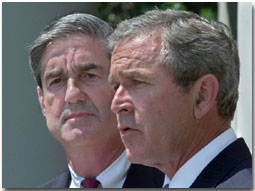
Robert Mueller with President George W. Bush
July 5, 2001 – (White House photo)
Although these Hoover successors, now occupying center stage in the investigation of President Trump, have been hailed for their impeccable character by much of Official Washington, the truth is, as top law enforcement officials of the George W. Bush Administration (Mueller as FBI Director and James Comey as Deputy Attorney General), both presided over post-9/11 cover-ups and secret abuses of the Constitution, enabled Bush-Cheney fabrications used to launch wrongful wars, and exhibited plain vanilla incompetence.
TIME Magazine would probably have not called my own disclosures a “bombshell memo” to the Joint Intelligence Committee Inquiry in May 2002 if it had not been for Mueller’s having so misled everyone after 9/11. Although he bore no personal responsibility for intelligence failures before the attack, since he only became FBI Director a week before, Mueller denied or downplayed the significance of warnings that had poured in yet were all ignored or mishandled during the Spring and Summer of 2001.
Bush Administration officials had circled the wagons and refused to publicly own up to what the 9/11 Commission eventually concluded, “that the system had been blinking red.” Failures to read, share or act upon important intelligence, which a FBI agent witness termed “criminal negligence” in later trial testimony, were therefore not fixed in a timely manner. (Some failures were never fixed at all.)
Worse, Bush and Cheney used that post 9/11 period of obfuscation to “roll out” their misbegotten “war on terror,” which only served to exponentially increase worldwide terrorism.
Unfulfilled Promise
I wanted to believe Director Mueller when he expressed some regret in our personal meeting the night before we both testified to the Senate Judiciary Committee. He told me he was seeking improvements and that I should not hesitate to contact him if I ever witnessed a similar situation to what was behind the FBI’s pre 9/11 failures.
A few months later, when it appeared he was acceding to Bush-Cheney’s ginning up intelligence to launch the unjustified, counterproductive and illegal war on Iraq, I took Mueller up on his offer, emailing him my concerns in late February 2003. Mueller knew, for instance, that Vice President Dick Cheney’s claims connecting 9/11 to Iraq were bogus yet he remained quiet. He also never responded to my email.
Beyond ignoring politicized intelligence, Mueller bent to other political pressures. In the aftermath of the 9/11 attacks, Mueller directed the “post 9/11 round-up” of about 1,000 immigrants who mostly happened to be in the wrong place (the New York City area) at the wrong time. FBI Headquarters encouraged more and more detentions for what seemed to be essentially P.R. purposes. Field offices were required to report daily the number of detentions in order to supply grist for FBI press releases about FBI “progress” in fighting terrorism. Consequently, some of the detainees were brutalized and jailed for up to a year despite the fact that none turned out to be terrorists.
A History of Failure
Long before he became FBI Director, serious questions existed about Mueller’s role as Acting U.S. Attorney in Boston in effectively enabling decades of corruption and covering up of the FBI’s illicit deals with mobster Whitey Bulger and other “top echelon” informants who committed numerous murders and crimes. When the truth was finally uncovered through intrepid investigative reporting and persistent, honest judges, U.S. taxpayers footed a $100 million court award to the four men framed for murders committed by (the FBI-operated) Bulger gang.
Current media applause omits the fact that former FBI Director Mueller was the top official in charge of the Anthrax terror fiasco investigation into those 2001 murders, which targeted an innocent man (Steven Hatfill) whose lawsuit eventually forced the FBI to pay $5 million in compensation. Mueller’s FBI was also severely criticized by Department of Justice Inspector Generals finding the FBI overstepped the law improperly serving hundreds of thousands of “national security letters” to obtain private (and irrelevant) metadata on citizens, and for infiltrating nonviolent anti-war groups under the guise of investigating “terrorism.”
For his part, Deputy Attorney General James Comey, too, went along with the abuses of Bush and Cheney after 9/11 and signed off on a number of highly illegal programs including warrantless surveillance of Americans and torture of captives. Comey also defended the Bush Administration’s three-year-long detention of an American citizen without charges or right to counsel.
Up to the March 2004 night in Attorney General John Ashcroft’s hospital room, both Comey and Mueller were complicit with implementing a form of martial law, perpetrated via secret Office of Legal Counsel memos mainly written by John Yoo and predicated upon Yoo’s singular theories of absolute “imperial” or “war presidency” powers, and requiring Ashcroft every 90 days to renew certification of a “state of emergency.”
The Comey/Mueller Myth
What’s not well understood is that Comey’s and Mueller’s joint intervention to stop Bush’s men from forcing the sick Attorney General to sign the certification that night was a short-lived moment. A few days later, they all simply went back to the drawing board to draft new legal loopholes to continue the same (unconstitutional) surveillance of Americans.
The mythology of this episode, repeated endlessly throughout the press, is that Comey and Mueller did something significant and lasting in that hospital room. They didn’t. Only the legal rationale for their unconstitutional actions was tweaked.
Mueller was even okay with the CIA conducting torture programs after his own agents warned against participation. Agents were simply instructed not to document such torture, and any “war crimes files” were made to disappear. Not only did “collect it all” surveillance and torture programs continue, but Mueller’s (and then Comey’s) FBI later worked to prosecute NSA and CIA whistleblowers who revealed these illegalities.
Neither Comey nor Mueller — who are reported to be “joined at the hip” — deserve their current lionization among politicians and mainstream media. Instead of Jimmy Stewart-like “G-men” with reputations for principled integrity, the two close confidants and collaborators merely proved themselves, along with former CIA Director George “Slam Dunk” Tenet, reliably politicized sycophants, enmeshing themselves in a series of wrongful abuses of power along with official incompetence.
It seems clear that based on his history and close “partnership” with Comey, called “one of the closest working relationships the top ranks of the Justice Department have ever seen,” Mueller was chosen as Special Counsel not because he has integrity but because he will do what the powerful want him to do.
Mueller didn’t speak the truth about a war he knew to be unjustified. He didn’t speak out against torture. He didn’t speak out against unconstitutional surveillance. And he didn’t tell the truth about 9/11. He is just “their man.”
Coleen Rowley, a retired FBI special agent and division legal counsel whose May 2002 memo to then-FBI Director Robert Mueller exposed some of the FBI’s pre-9/11 failures, was named one of TIME magazine’s “Persons of the Year” in 2002. Her 2003 letter to Robert Mueller in opposition to launching the Iraq War is archived in full text on the NYT and her 2013 op-ed entitled “Questions for the FBI Nominee” was published on the day of James Comey’s confirmation hearing. This piece will also be cross-posted on Rowley’s Huffington Post page.)
Relevant links:
http://content.time.com/time/covers/0,16641,20020603,00.html
http://govinfo.library.unt.edu/911/report/911Report_Ch8.pdf
http://www.nytimes.com/2003/03/05/politics/full-text-of-fbi-agents-letter-to-director-mueller.html
https://oig.justice.gov/special/0306/full.pdf
https://www.nytimes.com/2015/06/18/us/immigrants-suit-over-detention-after-9-11-is-revived.html
http://www.ocregister.com/2017/05/21/comey-mueller-bungled-big-anthrax-case-together/
http://www.pbs.org/newshour/bb/government_programs-jan-june07-patriotact_03-09/
http://abcnews.go.com/TheLaw/DOJ/story?id=4444329
https://www.aclu.org/news/fbi-counterterrorism-unit-spies-peaceful-faith-based-protest-group
http://www.nytimes.com/2013/07/09/opinion/questions-for-the-fbi-nominee.html
http://www.newsweek.com/ali-soufan-breaks-his-silence-77243
New Cracks in Russia-gate ‘Assessment’
By Robert Parry | Consortium News | May 23, 2017
At the center of the Russia-gate scandal is a curious U.S. intelligence “assessment” that was pulled together in less than a month and excluded many of the agencies that would normally weigh in on such an important topic as whether Russia tried to influence the outcome of a U.S. presidential election.
The Jan. 6 report and its allegation that Russia “hacked” Democratic emails and publicized them through WikiLeaks have been treated as gospel by the mainstream U.S. media and many politicians of both parties, but two senior Obama administration intelligence officials have provided new information that raises fresh doubts about the findings.
On Tuesday, former CIA Director John Brennan told the House Intelligence Committee that only four of the 17 U.S. intelligence agencies took part in the assessment, relying on analysts from the Central Intelligence Agency, the National Security Agency and the Federal Bureau of Investigation, under the oversight of the Office of the Director of National Intelligence.
Brennan said the report “followed the general model of how you want to do something like this with some notable exceptions. It only involved the FBI, NSA and CIA as well as the Office of the Director of National Intelligence. It wasn’t a full inter-agency community assessment that was coordinated among the 17 agencies, and for good reason because of the nature and the sensitivity of the information trying, once again, to keep that tightly compartmented.”
But Brennan’s excuse about “tightly compartmented” information was somewhat disingenuous because other intelligence agencies, such as the State Department’s Bureau of Intelligence and Research (INR), could have been consulted in a limited fashion, based on their areas of expertise. For instance, INR could have weighed in on whether Russian President Vladimir Putin would have taken the risk of trying to sabotage Hillary Clinton’s campaign, knowing that – if she won as expected and learned of the operation – she might have sought revenge against him and his country.
The Jan. 6 report argued one side of the case – that Putin had a motive for undermining Clinton because he objected to her work as Secretary of State when she encouraged anti-Putin protests inside Russia – but the report ignored the counter-argument that the usually cautious Putin might well have feared infuriating the incoming U.S. President if the anti-Clinton ploy failed to block her election.
A balanced intelligence assessment would have included not just arguments for believing that the Russians did supply the Democratic emails to WikiLeaks but the reasons to doubt that they did.
Pre-Cooked Intelligence
However, the restricted nature of the Jan. 6 report – limiting it to analysts from CIA, NSA and FBI – blocked the kind of expertise that the State Department, the Defense Department, the Department of Homeland Security and other agencies might have provided. In other words, the Jan. 6 report has the look of pre-cooked intelligence.
That impression was further strengthened by the admission of former Director of National Intelligence James Clapper before a Senate Judiciary subcommittee on May 8 that “the two dozen or so analysts for this task were hand-picked, seasoned experts from each of the contributing agencies.”
Yet, as any intelligence expert will tell you, if you “hand-pick” the analysts, you are really hand-picking the conclusion. For instance, if the analysts were known to be hard-liners on Russia or supporters of Hillary Clinton, they could be expected to deliver the one-sided report that they did.
In the history of U.S. intelligence, we have seen how this approach has worked, such as the determination of the Reagan administration to pin the attempted assassination of Pope John Paul II and other acts of terror on the Soviet Union.
CIA Director William Casey and Deputy Director Robert Gates shepherded the desired findings through the process by putting the assessment under the control of pliable analysts and sidelining those who objected to this politicization of intelligence.
The point of enlisting the broader intelligence community – and incorporating dissents into a final report – is to guard against such “stove-piping” of intelligence that delivers the politically desired result but ultimately distorts reality.
Another painful example of politicized intelligence was President George W. Bush’s 2002 National Intelligence Estimate on Iraq’s WMD that removed INR’s and other dissents from the declassified version that was given to the public.
Lacking Evidence
The Jan. 6 report – technically called an Intelligence Community Assessment (or ICA) – avoided the need to remove any dissents by excluding the intelligence agencies that might have dissented and by hand-picking the analysts who compiled the report.
However, like the declassified version of the Iraq NIE, the Russia-gate ICA lacked any solid evidence to support the conclusions. The ICA basically demanded that the American public “trust us” and got away with that bluff because much of the mainstream U.S. news media wanted to believe anything negative about then-President-elect Trump.
Because of that, the American people were repeatedly – and falsely – informed that the findings about Russian “hacking” reflected the collective judgment of all 17 U.S. intelligence agencies, making anyone who dared question the conclusion seem like a crackpot or a “Russian apologist.”
Yet, based on the testimonies of Clapper and Brennan, we now know that the ICA represented only a hand-picked selection of the intelligence community – four, not 17, agencies.
There were other biases reflected in the ICA, such as a bizarre appendix that excoriated RT, the Russian television network, for supposedly undermining Americans’ confidence in their democratic process.
This seven-page appendix, dating from 2012, accused RT of portraying “the US electoral process as undemocratic” and offered such “proof” as RT’s staging of a debate among third-party presidential candidates who had been excluded from the Republican-Democratic debates between Mitt Romney and Barack Obama.
“RT broadcast, hosted and advertised third-party candidate debates,” the report said, as if allowing political figures in the United States who were not part of the two-party system to express their views, was somehow anti-democratic, when you might think that letting Americans hear alternatives was the essence of democracy.
“The RT hosts asserted that the US two-party system does not represent the views of at least one-third of the population and is a ‘sham,’” the report continued. Yet, polls have shown that large numbers of Americans would prefer more choices than the usual two candidates and, indeed, most Western democracies have multiple parties, So, the implicit RT criticism of the U.S. political process is certainly not out of the ordinary.
The report also took RT to task for covering the Occupy Wall Street movement and for reporting on the environmental dangers from “fracking,” topics cited as further proof that the Russian government was using RT to weaken U.S. public support for Washington’s policies (although, again, these are topics of genuine public interest).
Assessing or Guessing
But at least the appendix offered up some “evidence” – as silly as those examples might have been. The main body of the report amounted to one “assessment” after another with no verifiable evidence included, at least in the unclassified version that the American people were allowed to see.
The report also contained a warning about how unreliable these “assessments” could be: “Judgments are not intended to imply that we have proof that shows something to be a fact. Assessments are based on collected information, which is often incomplete or fragmentary, as well as logic, argumentation, and precedents.”
In other words, “assessing” in intelligence terms often equates with “guessing” – and if the guessers are hand-picked by political appointees – it shouldn’t be surprising that they would come up with an “assessment” that would please their bosses, in this case, President Obama and his appointees at CIA, NSA, FBI and ODNI.
The timing and speed of the Jan. 6 report also drew some attention at Tuesday’s House Intelligence Committee hearing, where Rep. Elise Stefanik, R-New York, noted that President Obama requested the ICA on Dec. 9 and the last entry was dated Dec. 29.
“This report was produced in just 20 days in December,” Stefanik said, adding: “It’s of concern to me that there was a two-month lag” between when Obama’s intelligence agencies first alleged Russian “hacking” of Democratic emails and when Obama ordered the ICA.
Of course, the ICA’s flaws do not mean that Russia is innocent or that WikiLeaks is telling the truth when it asserts that the two batches of Democratic emails – one from the Democratic National Committee and the other from Clinton campaign chairman John Podesta – did not come from the Russians.
But the Jan. 6 report has served as the foundation for a series of investigations that have hobbled the Trump administration and could lead to the negation of a U.S. presidential election via the impeachment or forced resignation of President Trump.
The seriousness of that possibility would seem to demand the most thorough examination and the fullest vetting of the evidence. Even just the appearance that the ICA might be one more case of politicized intelligence would do more to destroy Americans’ faith in their democratic system than anything that Putin might dream up.
Investigative reporter Robert Parry broke many of the Iran-Contra stories for The Associated Press and Newsweek in the 1980s.
The Gaping Holes of Russia-gate
By Ray McGovern and William Binney | Consortium News | May 20, 2017
Official Washington got to relive the excitement of Watergate in a “gotcha” moment after President Trump fired FBI Director James Comey. There were fond recollections of how righteous the major newspapers felt when condemning President Nixon over his “Saturday Night Massacre” firing of special prosecutor Archibald Cox.
But the overriding question from “this Russia thing, with Trump and Russia” — as President Trump calls it — is whether there is any there there. The President labeled it a “made-up story” and, by all appearances from what is known at this time, he is mostly correct.
A few days before Comey’s firing, the FBI Director reportedly had asked for still more resources to hunt the Russian bear for supposedly “interfering” with last year’s election to hurt Hillary Clinton and help Donald Trump. And so the firing allowed the Watergate-recalling news outlets to trot out the old trope that “the cover-up is worse than the crime.”
But can that argument bear close scrutiny, or is it the “phony narrative” that Senate Republican Whip John Cornyn of Texas claims it to be? Cornyn quipped that, if impeding the investigation was Trump’s aim, “This strikes me as a lousy way to do it. All it does is heighten the attention given to the issue.”
Truth is, President Trump had ample reason to be fed up with Comey, in part for his lack of enthusiasm toward investigating actual, provable crimes related to “Russia-gate” — like the flood of sensitive national security leaks, such as the highly sensitive intercepted communications used to precipitate the demise of Trump aide Michael Flynn.
The retired Army lieutenant general was “caught” talking with Russia’s ambassador last December, a normal undertaking for a person designated as the incoming National Security Adviser. But Obama administration holdovers twisted that into a supposed violation of the archaic 1799 Logan Act and then used a transcript of the phone call to trip up Flynn because he didn’t have perfect recollection of the conversation.
So, a trumped-up federal case was used to help get Flynn fired, but an apparent criminal act – the Flynn leak among many other leaks – was apparently ignored. We suspect that one reason for Comey’s disinterest was that he already knows who was responsible.
In contrast to Comey’s see-no-evil reaction to criminal leaking, the FBI Director evinced strong determination to chase after ties between Russia and the Trump campaign until the cows came home. The investigation (already underway for 10 months) had the decided advantage of casting doubt on the legitimacy of Trump’s presidency and putting the kibosh on his plans to forge a more workable relationship with Russia, a win-win for the Establishment, the Military-Industrial Complex, and the FBI/CIA/NSA “Deep State”; a lose-lose for the President – and arguably the American people and the world, both of whom might benefit from fewer big-power tensions and lower spending on an arms race.
An Evidence Shortage
What has been particularly noteworthy about this “scandal” is how much spooky music we’ve heard and how many sinister suspicions have been raised versus actual “evidence” of the core allegations. So far, it has been smoke and mirrors with no chargeable offenses and not a scintilla of convincing proof of Russian “meddling” in the election.
The oft-cited, but evidence-free, CIA/FBI/NSA report of Jan. 6 — crafted by selected senior analysts, according to then-Director of National Intelligence James Clapper — is of a piece with the “high-confidence,” but fraudulent, National Intelligence Estimate 15 years ago about weapons of mass destruction in Iraq.
But what about the “Russian hacking,” the centerpiece of the accusations about Kremlin “interference” to help Trump? Surely, we know that happened. Or do we?
On March 31, 2017, WikiLeaks released original CIA documents — almost completely ignored by the mainstream media — showing that the agency had created a program allowing it to break into computers and servers and make it look like others did it by leaving telltale signs (like Cyrillic markings, for example). The capabilities shown in what WikiLeaks calls the “Vault 7” trove of CIA documents required the creation of hundreds of millions of lines of source code. At $25 per line of code, that amounts to about $2.5 billion for each 100 million code lines. But the Deep State has that kind of money and would probably consider the expenditure a good return on investment for “proving” the Russians hacked into Democratic Party emails.
In other words, it is altogether possible that the hacking attributed to Russia was actually one of several “active measures” undertaken by a cabal consisting of the CIA, FBI, NSA and Clapper — the same agencies responsible for the lame, evidence-free report of Jan. 6.
Comey displayed considerable discomfort on March 20, explaining to the House Intelligence Committee why the FBI did not insist on getting physical access to the Democratic National Committee’s computers in order to do its own proper forensics, but chose to rely on the examination done by the DNC’s private contractor, Crowdstrike. The firm itself has conflicts of interests in its links to the pro-NATO and anti-Russia think tank, the Atlantic Council, through Dmitri Alperovitch, who is an Atlantic Council senior fellow and the co-founder of Crowdstrike.
Given the stakes involved in the Russia-gate investigation – now including a possible impeachment battle over removing the President of the United States – wouldn’t it seem logical for the FBI to insist on its own forensics for this fundamental predicate of the case? Or could Comey’s hesitancy to demand access to the DNC’s computers be explained by a fear that FBI technicians not fully briefed on CIA/NSA/FBI Deep State programs might uncover a lot more than he wanted?
President Trump has entered into a high-stakes gamble in confronting the Deep State and its media allies over the accusations of his colluding with Russia. Senate Minority Leader Charles Schumer, a New York Democrat, publicly warned him of the risk earlier this year. “You take on the intelligence community, they have six ways from Sunday at getting back at you,” Schumer told MSNBC’s Rachel Maddow on Jan. 3.
If Mr. Trump continues to “take on” the Deep State, he will be fighting uphill, whether he’s in the right or not. It is far from certain he will prevail.
Ray McGovern (rrmcgovern@gmail.com) was a CIA analyst for 27 years; he briefed the president’s daily brief one-on-one to President Reagan’s most senior national security officials from 1981-85. William Binney (williambinney0802@comcast.net) worked for NSA for 36 years, retiring in 2001 as the technical director of world military and geopolitical analysis and reporting; he created many of the collection systems still used by NSA.
Seth Rich Murder Case Stirs Russia Doubts
By Joe Lauria | Consortium News | Updated with new details on May 18, 2017
A private investigator looking into last year’s murder of Seth Rich, an employee of the Democratic National Committee, has said that the victim’s computer shows he was in contact with WikiLeaks and may have leaked Democratic Party emails being blamed instead on Russia.
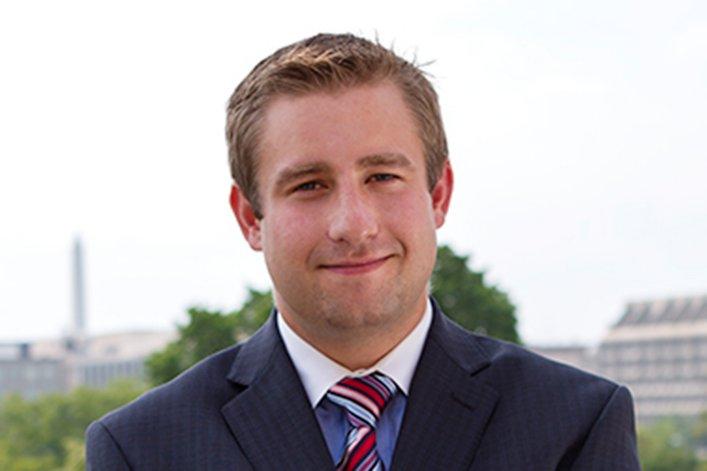
Slain DNC staffer Seth Rich
And an anonymous federal investigator has gone even further, reportedly telling Fox News that the slain employee sent WikiLeaks more than 40,000 emails and 17,000 attachments, which would suggest that Rich, not Russia, leaked the material to WikiLeaks.
Seth Rich was a 27-year old Voter Expansion Data Director for the Democratic Party when he was shot dead on a Washington street last July. Police said it was a robbery attempt, but Rich’s father said his wallet, money and credit cards were not taken.
Shortly after Rich’s murder, WikiLeaks posted a Tweet offering a $20,000 reward for information leading to the solution of the mystery of who killed Seth Rich. WikiLeaks’ interest in the case suggested that Rich might have been involved in the DNC email leak although WikiLeaks never reveals the sources who give it confidential information about governments and companies that WikiLeaks then publishes online.
Julian Assange, WikiLeaks founder and publisher, brought up Rich’s murder out of context in an interview with Dutch TV last August. “Whistle-blowers go to significant efforts to get us material and often very significant risks,” Assange said. “As a 27-year-old, works for the DNC, was shot in the back, murdered just a few weeks ago for unknown reasons as he was walking down the street in Washington.”
Pressed by the interviewer to say whether Rich was the source of the DNC emails, Assange said WikiLeaks never reveals its sources. Yet, it appeared to be an indirect way of naming Rich, while formally maintaining WikiLeak’s policy. An alternative view would be to believe that Assange is cynically using Rich’s death to divert the trail from the real source.
Further suggesting that WikiLeaks has a strong interest in the Seth Rich case, Assange on Tuesday morning retweeted the Fox5 News report citing the new developments in the murder mystery.
There also has been pushback against the Fox reports. NBC News cited a current FBI official and a former one denying that “an FBI analysis of a computer belonging to Rich contained thousands of e-mails to and from WikiLeaks. Local police in Washington, D.C., never even gave the FBI Rich’s laptop to analyze after his murder, according to the current FBI official. And a former law enforcement official with first-hand knowledge of Rich’s laptop said the claim was incorrect.”
Rich’s parents also have blasted the reports of their son’s possible involvement with WikiLeaks. “As we’ve seen through the past year of unsubstantiated claims, we see no facts, we have seen no evidence, we have been approached with no emails and only learned about this when contacted by the press,” said Rich’s family spokesman, Brad Bauman, who has worked as a Democratic Party public relations consultant.
However someone embarking on such a risky move as leaking thousands of emails purloined from his or her employer is unlikely to tell even family and friends. Edward Snowden, for instance, informed no one, including his longtime girlfriend, that he had leaked a trove of National Security Agency secrets to journalist Glenn Greenwald.
DNC Emails Revealed
Last July, the same month Rich died, WikiLeaks published thousands of Democratic Party emails which showed the Democratic National Committee violated its own charter that pledges neutrality by working for Hillary Clinton against her primary challenger, Sen. Bernie Sanders.
After the DNC emails were leaked, Clinton and other Democrats immediately blamed Russia for hacking their computers, but the DNC refused to allow the FBI to examine its computer servers to see who might have hacked in.
Instead the DNC turned to a private company, CrowdStrike, to investigate. The company – linked to the anti-Russian think tank, the Atlantic Council – concluded that Russia was behind the hack. The company said it was a sophisticated attack but also that the hackers sloppily left behind Cyrillic script and the name of the first Soviet chief of secret police – clues cited to pin the hack on Russia.
Russia and WikiLeaks have both denied that Russia was the source of the leaked emails.
William Binney, arguably one of the best mathematicians ever to work at the National Security Agency, and former CIA officer Ray McGovern, have argued that the emails must have come from a leak because a hack would be traceable by the NSA.
More speculation about the alleged election hack was raised after WikiLeaks’ “Vault 7” release, which revealed that the CIA is not beyond covering up its own hacks by leaving clues implicating others.
After Trump’s election victory, President Obama’s intelligence agencies also pinned the blame for the DNC and other Democratic-connected leaks on Russia and depicted the leaks as part of a Russian government scheme to hurt the Clinton campaign and thus boost Donald Trump.
But the Jan. 6 report by selected analysts at the FBI, CIA and NSA – and released by Obama’s Director of National Intelligence James Clapper – offered no hard evidence of Russian guilt, merely intelligence “assessments.”
A New Turn
Now, the email mystery has taken a new turn. While the Seth Rich murder case remains unsolved, a private detective hired by an anonymous third party for Rich’s family has spoken out, saying there is evidence on Seth Rich’s computer indicating that he was in touch with WikiLeaks.
Rod Wheeler, a former D.C. homicide detective, also told the local Washington Fox TV affiliate on Monday night that a police source told him the detectives were ordered to back off the murder investigation, a claim that D.C. police denied.
Wheeler also raised questions about the relationship between the DNC and Democratic D.C. Mayor Muriel Browser, who could have control over the D.C. police investigation.
The FBI told the Washington Post it is a matter for the D.C. police. But Wheeler believes Rich’s computer may be in the custody of the FBI. It is not clear exactly what role, if any, the FBI has played in the Seth Rich murder case, an FBI that joined in the effort to blame Russia and was under the command of Director James Comey until he was fired by President Trump on May 9.
Through the Democratic Party-linked spokesman, Rich’s family said Wheeler was not authorized to speak for them. “The services of the private investigator who spoke to press was offered to the Rich family and paid for by a third party, and contractually was barred from speaking to press or anyone outside of law enforcement or the family unless explicitly authorized by the family,” Bauman said. The third party that Bauman says is paying Wheeler has not been positively identified.
Following Wheeler’s assertions to the local Fox station, an unnamed federal investigator reportedly told Fox network news that the FBI inspected Rich’s computer within 96 hours of his murder. The investigator told Fox he had read through the emails, which he claimed numbered 45,053 as well as 17,761 attachments. Such exact numbers appear to lend credibility to the claim, though it is not out of the question that they could have been fabricated to match the number of items believed given to WikiLeaks.
According to the Fox News report, the investigator also said the emails and attachments had been sent among DNC leaders between January 2015 and May 2016. He said Rich sent the emails and attachments to Gavin MacFadyen, an American journalist, filmmaker and director of WikiLeaks in London, where MacFadyen died of natural causes last year.
Joe Lauria is a veteran foreign-affairs journalist. He has written for the Boston Globe, the Sunday Times of London and the Wall Street Journal among other newspapers. He is the author of “How I Lost By Hillary Clinton” published by OR Books in June 2017. He can be reached at joelauria@gmail.com and followed on Twitter at @unjoe.
Featured Video
“Historic Russia”: The Land Putin Will Not Give Back
or go to
Aletho News Archives – Video-Images
From the Archive
How Ukraine Tortured and Slaughtered Donbass
By Kit Klarenberg | Al Mayadeen | July 11, 2024
Almost immediately after the proxy war erupted, ISIS-tier footage of the torture and murder of Russians in Ukrainian custody emerged.
On July 6th, the New York Times published an astonishing investigation: In Ukraine, Killings of Surrendering Russians Divide an American-Led Unit. The article documents in grim detail how Chosen Company, an international volunteer battalion for Kiev, routinely executes Russian prisoners of war. It is the very first mainstream admission that this practice – a brazen breach of the Geneva Conventions, and a grave war crime – is widespread among Ukraine’s fighters, both foreign and homegrown. … continue
Blog Roll
 Aletho News
- BRITAIN’S WARNING: PREPARE FOR WAR
- “Historic Russia”: The Land Putin Will Not Give Back
- How the Cambridge Analytica scandal still haunts Mark Zuckerberg
- The Ongoing Cancellation Campaign Against a Dissenting Academic in Norway
- Yemen and ‘the Houthis’: Challenging Sami Hamdi’s Narrative
- No, Christians did not invent Zionism
- AIPAC-led lobbying network opens branches in Cypriot, Greek parliaments
- Araghchi blasts ‘parasitic’ alliance as US taxpayers pay for Israel’s war on Iran
- Easy fix for Europe’s chaos? Stop fueling war against Russia
- Putin’s key remarks on peace talks and Europe’s ‘schizophrenia’
- If Americans Knew
- An error has occurred; the feed is probably down. Try again later.
- No Tricks Zone
- Two New Studies Find Thwaites Glacier Melt Cannot Be Driven By Human Activity Or A Warming Ocean
- E-Cars Reduce CO2 Emissions By Only 41% Compared To Internal Combustion Engine Vehicles
- Predictions Made By Renowned Climate Professor Over Past Decades Have Been Proven To Be Poor
- New Study Suggests Large Regions Of The Pacific Ocean Have Been Cooling For The Last 80 Years
- Germany’s Green Energy Debacle: High Energy Costs Force Kahla Porzellan to Close After 182 Years!
- New Study: 50 Years Of The Most Aggressive ‘Net Zero’ Policies Can Only Affect The Global Climate By 0.03°C
- US September “Heat” Was No Record…Many Records Set Decades Ago
- Latest European Green Energy Debacle; Portugal’s Largest Flagship Solar Park Insolvent!
- Green Energy Debacle: German Expert Professor Fritz Vahrenholt Warns Of Severe Economic And Social Consequences
- Two More Paleo Reconstructions Affirm Meters-Higher Sea Levels Across Ireland, Brazil 7000-6000 Years Ago

