Russia won’t be taking Mistral warships from France – official
RT | May 26, 2015
Russia won’t try and get its ill-fated Mistral helicopter carriers from France, a Russian official has announced. Moscow and Paris are set to discuss damages to be paid by France for welching on the deal.
“Russia won’t be taking them [the Mistral vessels]. That’s a fact. There’s just a single discussion underway at the moment – on the amount of money that should be returned to Russia,” Oleg Bochkarev, a deputy chairman of the Russian governmental Military-Industrial Commission, is cited as saying by RBC.
The negotiations have been “transferred into the commercial field” and “major efforts are being made today” for Russia to receive damages, Bochkarev told RIA Novosti.
France reportedly offered €748 million as compensation, but Russia turned down the proposal, calling it “laughable.”
The official also said that Russia would build its own helicopter carriers, in place of the Mistral warships, which Paris refused to supply Moscow.
“We have such vessels planned, they’re on the drawing board,” Bochkarev stressed, adding that they will be of a different class to the French-built ships as “there’s no point copying the Mistrals.”
Russia and France signed a €1.12 billion contract to build two Mistral class amphibious ships in 2011.
Under the deal, Russia was supposed to receive the first of the two Mistral-class helicopter carriers, the Vladivostok, in October 2014 and the second, the Sevastopol, in 2015. But the mood in Paris went through a sea change.
In mid-2014, the French side postponed delivery indefinitely due to pressure from the US and the EU, which have imposed a set of sanctions against Moscow over the accession of Crimea and Russia’s alleged involvement in the Ukrainian crisis.
In late April, French President Francois Hollande acknowledged that Russia should get a refund if it doesn’t receive the Mistral ships.
Earlier this month, an article in the Le Point weekly magazine said the French government could end up having to pay “between €2 billion and €5 billion,” if it doesn’t fulfill its contractual obligations with Russia.
The French Navy repeatedly stated that it doesn’t need the Mistrals as they are built according to Russian standards.
Reports have emerged that the cheapest solution for France would be to scuttle the two newly-built ships as maintaining them costs an estimated €2 to €5 million every month.
A Nuclear Weapons Ban Emerging?
By ROBERT F. DODGE | CounterPunch | May 26, 2015
Every moment of every day, all of humanity is held hostage by the nuclear nine. The nine nuclear nations are made up of the P5 permanent members of the United Nations Security Council and their illegitimate nuclear wannabes Israel, North Korea, India and Pakistan, spawned by the mythological theory of deterrence. This theory has fueled the nuclear arms race since its inception wherein if one nation has one nuclear weapon, its adversary needs two and so on to the point that the world now has 15,700 nuclear weapons wired for immediate use and planetary destruction with no end in sight. This inaction continues despite the 45-year legal commitment of the nuclear nations to work toward complete nuclear abolition. In fact just the opposite is happening with the U.S. proposing to spend $1 Trillion on nuclear weapons “modernization” over the next 30 years, fueling the “deterrent” response of every other nuclear state to do likewise.
This critical state of affairs comes as the 189 signatory nations to the Treaty on the Non-Proliferation of Nuclear Weapons (NPT) concluded the month long Review Conference at the U.N. in New York. The conference was officially a failure due to the refusal of the nuclear weapons states to present or even support real steps toward disarmament. The nuclear gang demonstrates an unwillingness to recognize the peril that the planet faces at the end of their nuclear gun; they continue to gamble on the future of humanity. Presenting a charade of concern, they blamed each other and bogged down in discussions over a glossary of terms while the hand of the nuclear Armageddon clock continues to move ever forward.
The nuclear weapons states have chosen to live in a vacuum, one void of leadership. They hoard suicidal nuclear weapons stockpiles and ignore recent scientific evidence of the humanitarian impact of nuclear weapons that we now realize makes these weapons even more dangerous than we thought before. They fail to recognize that this evidence must be the basis for prohibiting and eliminating them.
Fortunately there is one powerful and positive response coming out of the NPT Review Conference. The Non-Nuclear Weapons States, representing a majority of people living on the planet, frustrated and threatened by the nuclear nations, have come together and demanded a legal ban on nuclear weapons like the ban on every other weapon of mass destruction from chemical to biologic and landmines. Their voices are rising up. Following a pledge by Austria in December 2014 to fill the legal gap necessary to ban these weapons, 107 nations have joined them at the U.N. this month. That commitment means finding a legal instrument that would prohibit and eliminate nuclear weapons. Such a ban will make these weapons illegal and will stigmatize any nation that continues to have these weapons as being outside of international law.
Costa Rica’s closing NPT remarks noted, ”Democracy has not come to the NPT but Democracy has come to nuclear weapons disarmament.” The nuclear weapons states have failed to demonstrate any leadership toward total disarmament and in fact have no intention of doing so. They must now step aside and allow the majority of the nations to come together and work collectively for their future and the future of humanity. John Loretz of the International Campaign to Abolish Nuclear Weapons said, “The nuclear-armed states are on the wrong side of history, the wrong side of morality, and the wrong side of the future. The ban treaty is coming, and then they will be indisputably on the wrong side of the law. And they have no one to blame but themselves.”
“History honors only the brave,” declared Costa Rica. “Now is the time to work for what is to come, the world we want and deserve.”
Ray Acheson of Women’s International League for Peace and Freedom says, “Those who reject nuclear weapons must have the courage of their convictions to move ahead without the nuclear-armed states, to take back ground from the violent few who purport to run the world, and build a new reality of human security and global justice.”
Robert F. Dodge, M.D., is a practicing family physician, writes for PeaceVoice, and serves on the boards of the Nuclear Age Peace Foundation, Beyond War, Physicians for Social Responsibility Los Angeles, and Citizens for Peaceful Resolutions.
France delivered weapons to Syria militants despite EU arms embargo: Hollande
Press TV – May 6, 2015
French President Francois Hollande has confessed that the country delivered various kinds of weapons, including lethal ones, to foreign-backed militants fighting in Syria, a new book reveals.
“We began when we were certain they (weapons) would end up in the right hands. For the lethal weapons it was our services who delivered them,” Hollande told author Xavier Panon in an interview in May last year.
The book, titled “In the corridors of French diplomacy,” is coming out in France this month.
According to Hollande, France sent canons, machine guns, rocket launchers and anti-tank missiles to the militants fighting the government of Syrian President Bashar al-Assad in 2012 despite an arms embargo.
The European Union’s arms embargo on Syria’s foreign-sponsored militants was in place from March 2011 to May 2013.
The book also discloses a series of diplomatic and military measures against the Syrian administration by the French government both under Hollande and previous president Nicolas Sarkozy.
One of the moves was a series of planned August 2013 air raids against the Syrian government allegedly for its use of chemical weapons, which Washington and its Western allies rescinded after a diplomatic deal, under which Syria agreed to eliminate its stockpile of chemical weapons by mid-2014.
The planned attacks had two objectives, to change the “political order” in Syria and to destabilize Russia, which supports Damascus, in order to pressure Moscow into changing its approach to the crisis, a political advisor told the author.
Syria has been grappling with a deadly crisis since March 2011. The US and its regional allies – especially Qatar, Saudi Arabia and Turkey – have been supporting the militants operating inside Syria since the beginning of the crisis.
The violence fueled by Takfiri groups has so far claimed the lives of over 222,000 people, according to the so-called Syrian Observatory for Human Rights.
The United Nations High Commissioner for Refugees (UNHCR) says over 7.2 million people have been internally displaced, and more than 3 million have been forced to flee the country.
The Fall of Saigon
By JEAN BRICMONT | CounterPunch | May 1, 2015
On April 30, 1975, Saigon fell. The last Americans fled the country. Vietnam was reunited, as it was supposed to have been twenty years earlier according to an international agreement sabotaged by Washington. The Vietnam War, which had been going on for thirty years ever since France began its attempt to reconquer its lost Indochinese colonies, finally came to an end.
For the Vietnamese who died in that war, there will be no minute of silence, no solemn commemoration, no “duty to remember”, no vows of “never again”. After all, the millions of Vietnamese who died are not considered victims of “genocide”. They were merely killed by years of massive bombing and the systematic slaughter of a people who wanted to be independent. What’s so special about that?
In old Europe we are warned every day against repeating the crimes of Nazism, a phenomenon that has been dead for over half a century. In contrast, the sources of the slaughter in Vietnam have remained alive and active, whether through U.S. policy in Central America or Southern Africa and now for several years in the Middle East. The “war against terror” has already cost over a million lives and is far from over.
What do our great European humanitarians have to say on this subject? Do those who deplore the rising number of refugees drowning in the Mediterranean see the connections? Do they realize that the same United States military drive to remake the world is the fundamental source of these ongoing disasters? How many calls do we hear to leave the sinking ship of U.S. imperialist wars? To make a real peace with Russia and Iran? To end our policy of perpetual intervention as obedient auxiliaries of the United States?
At the time of the Vietnam war, enlightened European leaders, Olaf Palme in Sweden and De Gaulle in France, openly stood up against U.S. policy. Intellectuals like Bertrand Russell and Jean-Paul Sartre mobilized public opinion against war. Demonstrations took place even in countries that were far from the conflict. And today? Nothing. Public opinion was almost entirely in favor of the war that destroyed Libya, notably on “the left”.
The end of the war in Vietnam was the end of an era, the era of national liberation struggles which no doubt constituted the most important political movement of the 20th century. In the West, it marked the start of the reconstruction of imperial ideology under the cover of “human rights”. Instead of stopping liberation struggles, the emphasis would be on subverting and destroying countries that had gained independence. The media-savvy campaign to arouse “solidarity” with the plight of Vietnamese boat people and victims of the Khmer Rouge massacres in Cambodia enabled a large sector of the French and U.S. intelligentsia to drop any effort to understand the causes and effects of events. After all, the Khmer rouge would never have taken power without the combination of U.S. bombing of the Cambodian countryside and regime change in Phnom Penh. Analysis was shoved aside in favor of immediate emotional reaction to unexplained events. A moralism without context favored the invention of “the right of humanitarian intervention” in order to destroy national sovereignty, international law and the United Nations Charter.
In France, the anti-communist “new left” that emerged from May ’68, influenced by the intellectual bluff of Bernard-Henri Lévy and cohorts, completely reversed the position of the old left. Whereas the traditional left defended international peace and opposed U.S. interventionism, the “new left” welcomed every uprising regardless of political content and showed no concern for the underlying relationship of forces. All that mattered were the “human rights” as defined and highlighted by mainstream media.
Today that new left is at a dead end, whether in the Middle East or in relations with Russia or China, along with the American policy that it has helped to disguise ideologically. Forty years after Vietnam gained its freedom, it is high time for new evaluations and drastic changes. But who has the courage to meet these challenges?
JEAN BRICMONT teaches physics at the University of Louvain in Belgium. He is author of Humanitarian Imperialism. He can be reached at Jean.Bricmont@uclouvain.be
Translation by Diana Johnstone.

The First Fall of Saigon
Bad Attitudes | April 29, 2015
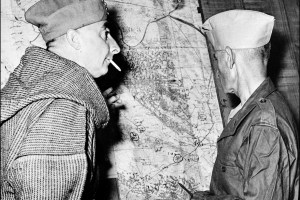 Forty years after the Vietnam phase of our eternal war ended we might want to go back another 30 years, to Saigon in September of 1945 when it all really began. What follows is from the diary of a war correspondent in French Indochina named Germaine Krull. The full diary ends with these words:
The Annamites [Vietnamese] will win their independence because they are ready to die for it … It may be too late already. We may never regain face, but if we do, it won’t be with the assistance of machine guns.
Mme Krull saw the future way back then, but the new American president didn’t. President Roosevelt had wanted to see the French colonies freed. Ho Chi Minh had even worked for the OSS during the war, and sought our friendship as it ended. But Harry Truman saw France as an ally in the struggle against communism, and so he chose the machine guns. Millions upon millions of people have paid the price ever since, as our insane eternal wars roll on.
I’m posting below the last few pages of Mme Krull’s fascinating accounts of Saigon in September of 1945. The full text is available here as a PDF.
***
Nothing in particular happened; there were still fewer Annamites to be seen on the streets and almost all of them had left their former jobs and masters. For the first time, French women were forced to do all their own work themselves, which did nothing to temper their feelings toward the Annamites. This mass desertion, reducing them temporarily to the rank of domestics themselves, was the one sin they could not forgive.
A few British officers and I went for lunch at the house of some wealthy colonials. It was a magnificent repast, complete with wines and champagne, pleasant conversation’ and immaculate service. The cooks and houseboys were Chinese. “Oh, we could not dream of employing Annamites. You can’t trust them. What a relief it will be finally to leave this wretched country. If only they would let us have a good, strong reprisal, everything would be over in a few days. This same sort of thing happened in 1942, but we put a swift end to it. The leaders were sentenced and most of the followers arrested — that was all. It is the only way to deal with people like that. Force is the only thing they understand. Everything else is useless.
“Colonel Cedil isn’t ruthless enough. We hear that General Gracey is worried because he doesn’t have enough troops. If so, why don’t they let us take over? We could muster enough arms and volunteers. We have ways of making them wish they had never started this. In 1942, I was in charge of re-establishing order at X. Well, we burned a few villages, jailed a few hundred natives, sentenced their leaders and that was all there was to that disturbance. Everything went back to order and the coolies went on working as before. They don’t want anything else. They expect that of us…”
An Australian journalist arrived by car from Hanoi with a permit from the Viet-Minh. He reported that: “Everything is all right in Hanoi. The people are well off and the French are safe. This movement is widespread, however, and the Annamites will fight for their freedom. Everything is in the hands of the Viet-Minh and is being well administered. There is no fighting or disorder. There are a few British there and one French correspondent who can’t do much. Ho Chi Minh is a wise and admirable old man. You should go there and see for yourself. There wasn’t a single incident on the road from Hanoi to Saigon. The whole way was clear and with a Viet-Minh permit, it was perfectly easy to get by the few Annamite posts.”
From time to time, an Annamite dwelling would burst into flame. Women and children were fleeing. That night, French soldiers strolled on the Rue Catinat, a gun on one arm, a woman on the other. I have never been so deeply ashamed as on that day of September 23rd. When I returned to the hotel the faces of the English were expressionless and conversations stopped as I went by. I remember the horror and shame I had felt in June of 1940 when Vichy was established, but never in my life had I felt such utter sadness and degradation as on this night.
These men, who were supposed to be the soldiers of France, this undisciplined horde whose laughing and singing I could hear from my window, corrupted by too many years in the tropics, too many women, too much opium and too many months of inactivity in camp, they were the ones to whom the task of re-establishing “order” I had been entrusted. That night I realized only too well what a serious mistake we had made and how grave the consequences would be. It was the beginning of a ruthless war. Instead of regaining our prestige we had lost it forever, and, worse still, we had lost the trust of the few remaining Annamites who believed in us. We had showed them that the new France was even more to be feared than the old one.
The last ten days in Saigon proved to me that the French population understood nothing of the situation and knew nothing of the outside world; that it consisted of people who would not tolerate the least infringement upon their comfort and who also were incredibly cowardly. Never have cause and effect been so closely linked. The events of the 22nd of September determined the issue of the conflict. Everything which happened thereafter can be directly traced to that date — women captured and mistreated, men and children assassinated, Dutch, English and American officers killed, shooting, burning factories, mysterious disappearances, all these and more happened. The French, terrorized by the lack of foresight and motivated by avarice, were unwilling to give up even one piaster. They are responsible for what happened.
The Annamites will win their independence because they are ready to die for it. We must recognize this inevitable fact — in a month, a year at the most, we will have to come to an agreement with them.
It may be too late already. We may never regain face, but if we do, it won’t be with the assistance of machine guns. The “good old days” are gone forever.
Humanitarians for War in Syria (Part Two)
About Those Chlorine Gas Attacks in Syria
By RICK STERLING | CounterPunch | April 3, 2015
With allegations of chlorine gas attacks in Syria on March 16, some humanitarian groups have called for a “No Fly Zone” over part of Syria. I believe this is reckless and dangerous and will explain why.
Part 1 of this article was published on March 31. It documented the campaign by Avaaz and others for a “No Fly Zone” in Syria and contrasted the promises with the consequences in Libya.
Part 2 examines the allegations of chlorine gas attacks in Syria, what various organizations are doing and saying and where major violations of international law are occurring.
Humanitarians Pushing for Intervention
We have a strange situation where “human rights” groups are demanding foreign intervention in Syria via a “No Fly Zone” while military leaders are expressing caution saying “hold on…do you realize that’s an act of war?” The humanitarian interventionists may feel righteous in their cause, but they should be held accountable when it leads to disaster and tragedy as we saw in Libya.
After decades of wars and occupation based on deception, exaggeration and outright lies, it’s past time to demand proof of accusations and to be skeptical regarding any call for military action.
What is the Evidence from Syria?
Syrian rebels and supporters have repeatedly accused the Syrian military of using chemical weapons, often with the accompanying demand for foreign intervention. The Syrian government has consistently denied the accusations.
A major push for a foreign attack on Syria followed the highly publicized incidents in Ghouta in outer Damascus on August 21, 2013. Many humanitarian groups such as Human Rights Watch (HRW) joined or led in accusing the Syrian government of being responsible and calling for “action.” A military attack was averted by the Syrian government agreeing to remove its existing chemical weapons and manufacturing facilities.
Opposition supporters like Kenan Rahmani predicted that the Syrian government would not comply with the agreement. But it did. On October 1, 2014, the Organization for Prohibition of Chemical Weapons (OPCW) announced that the elimination of prohibited chemical weapons and facilities in Syria had been successfully completed. It was a remarkable achievement and the Nobel Peace Prize was awarded to the Organization for the Prohibition of Chemical Weapons (OPCW). Syria received little credit.
During 2014, as the Syrian government was working to successfully implement the agreement to dispose of banned chemical weapons, new unverified accusations emerged that the Syrian military was using barrel bombs containing poisonous chlorine gas. The accusations prompted renewed demands from governments actively supporting the armed opposition. The Syrian government removed all prohibited chemicals and facilities but now is accused of using a chemical which is not on the prohibited list.
According to its report, in May 2014, an OPCW team tried to investigate at the site of alleged chlorine gas attacks. The Syrian government gave the OPCW team passage to the rebel controlled area but the convoy was attacked by a rebel faction. None of the team members was injured but that stopped their on-site investigation. Instead, the OPCW worked with the well-funded opposition-supporting Violations Documentation Center to arrange interviews with numerous people from three villages. The interviews were conducted outside Syria, probably in Turkey. They gathered photographs, videos and other evidence and expressed “high confidence that chlorine had been used as a weapon in Syria” in three villages. They did not ascribe responsibility.
More recently there was an alleged chlorine gas attack on March 16, 2015 with six deaths including three children. The Avaaz petition and campaign sprung from this alleged incident.
Along with these accusations, there has been a steady drumbeat from various organizations that the Syrian government is committing war crimes. For example, Physicians for Human Rights (PHR) issued a press release on May 14 with the title “New Map Shows Government Forces Deliberately Attacking Syria’s Medical System.”
Are the Accusations Objective or Biased?
Following are some of the major organizations reporting or making accusations regarding the conflict in Syria:
Organization for the Prohibition of Chemical Weapons (OPCW) – This is the official intergovernmental organization tasked with promoting adherence to the Chemical Weapons Convention. It has been responsible for removal of chemical weapons from Syria. It was then tasked with investigating allegations about use of chlorine gas as a weapon. While OPCW seeks to be highly professional and nonpartisan, there are questions of potential conflict of interest and bias as follows:
* The director general of OPCW, Ahmet Uzumcu, is the appointee of Turkey, a country which actively supports the Syrian opposition and has pushed for a No Fly Zone. Given that Uzumcu is a political appointee of a state directly involved in the conflict, he has a potential conflict of interest: he might advance his own career and please the Turkish government by making the Syrian government look bad.
* The interviews with villagers were done with OPCW “working closely” with the partisan “Violations Documentation Center.” How did OPCW verify the integrity of the witnesses?
* According to OPCW report, NATO’s CBRN Task Force (Chemical-Biological-Radioactive-Nuclear) collected data “in the field following reported attacks” and supplied this to OPCW. What exactly was the NATO task force doing in the rebel controlled territory?
* The official report of the OPCW notes that in the UN Security Council “Some doubts and questions were also raised in regard to the procedures and methods (of the Fact Finding Mission).”
AVAAZ – Avaaz is clearly biased and was involved in the Syria conflict from early on. They were supplying satellite phones and otherwise aiding and promoting local activists from early on. Is that a good thing? Not necessarily; their claims and actions in Syria have been controversial and criticized.
WHITE HELMETS / SYRIAN CIVIL DEFENCE – This is a new organization, highly publicized as civilian rescue workers in Syria. Their video and reports have influenced Avaaz and other humanitarian groups. Avaaz refers to the White Helmets as “Syria’s respected and non-partisan civil protection force.”
In reality the White Helmets is a project created by the UK and USA. Training of civilians in Turkey has been overseen by former British military officer and current contractor, James Le Mesurier. Promotion of the program is done by “The Syria Campaign” supported by the foundation of billionaire Ayman Asfari. The White Helmets is clearly a public relations project which has received glowing publicity from HuffPo to Nicholas Kristof at the NYT. White Helmets have been heavily promoted by the U.S. Institute of Peace (U.S.IP) whose leader began the press conference by declaring “U.S.IP has been working for the Syrian Revolution from the beginning”.
Apart from the PR work, White Helmets work in areas of Aleppo and Idlib controlled by Nusra (Al Queda). The video from a medical clinic on March 16 starts with a White Helmets logo. The next video of same date and place continues with the Nusra logo.
US and UK tax dollars pay for a program which has an appealing rescue component and is then used to market and promote the USA and UK policy of regime change in Syria in de facto alliance with Nusra.
The fake “independence and neutrality” of White Helmets is shown by their active promotion of a No Fly Zone.
MEDECINS SANS FRONTIERS (MSF) and other humanitarian groups no longer have staff in Syria. They rely on witnesses and videos provided by rebels. In a war zone it is difficult to ascertain when someone is speaking out of fear or intimidation or for payment. Witnesses in rebel-controlled territory may claim that helicopters dropped bombs with chlorine. But what if the witnesses are lying? The possibility for manipulation and deceit is huge.
PHYSICIANS FOR HUMAN RIGHTS (PHR) is also active reporting on the Syria conflict. They make bold but sometimes inaccurate assertions. They recently claimed that “people in Homs are facing serious health consequences as the medical system collapses, with only three doctors available.” This is inaccurate. I personally visited Homs one year ago and drove around the city for hours. Since the rebels departed the Old City last May it is being rebuilt and nearly all the city continues normally except for periodic terrorist car bombs.
A recent PHR press release is headlined “New Map shows Government Forces Deliberately Attacking Syria’s Medical System.” It looks slick and impressive but is inaccurate. For example, one of the most dramatic attacks on a Syrian hospital was the suicide bombing of Al Kindi Hospital in Aleppo. Yet the PHR map shows the attack having been carried out by “government forces.” Readers are encouraged to look at the 3 minute rebel video of the suicide attack which leaves no doubt who was responsible.
SUMMARY. Statements/documentation from the Syrian government and supporters tend to be dismissed or ignored; statements/video from opposition witnesses and activists tend to be accepted uncritically. That is bias.
WHO BENEFITS?
The starting point for many criminal investigations is who has a motive? Who benefits from an action or event?
In order to prevail, the Syrian opposition needs foreign intervention. In order to prevail, the Syrian government needs to prevent foreign intervention.
Who benefited from from use of sarin gas that would cross Obama’s ‘red line’? The answer was always obvious. This received surprisingly little consideration as the US Government and humanitarian groups like Human Rights Watch argued that the Syrian Government was culpable without even considering who had motive.
Since that time, in-depth analysis of the August 2013 chemical attack in Ghouta increasingly points to the use of sarin gas by the rebels not the Syrian government. The “vector analysis” advanced by HRW has been discounted. The US and other countries almost began an international attack on the basis of false claims and analysis.
Similarly, who benefits from the use of chlorine gas that would violate the new UN Security Resolution? To ask the question is to answer it. Clearly it is the opposition rebels who benefit when the Syrian government is charged with using chlorine gas bombs. Clearly they are the ones who seek foreign intervention or imposition of a No Fly Zone.
A War of Aggression Against Syria
Supporters of intervention sometimes claim Syria has been “abandoned” by the international community. On the contrary, the Syrian conflict has continued primarily BECAUSE of foreign involvement.
The unholy alliance of Qatar, Saudi Arabia, Turkey, USA, France and Britain (with silent partner Israel) have supplied, trained, provided weapons and salaries for Syrian and international fighters seeking to topple the government. They openly called themselves, with Orwellian chutzpah, the “Friends of Syria” as they divide the tasks of supplying the rebels and consider who should be the “legitimate political representatives”.
The crime has not been the absence of international effort; it has been the absence of enforcement of international law. The US and allies are doing to Syria what the US did to Nicaragua in the 1980’s. As the International Court at the Hague said in its decision on June 27, 1986:
… the United States of America, by training, arming, equipping, financing and supplying the “contra” forces or otherwise encouraging, supporting and aiding military and paramilitary activities in and against Nicaragua, has acted, against the Republic of Nicaragua, in breach of its obligation under customary international law not to intervene in the affairs of another State.
The Nicaraguan Foreign Minister at that time was Father Miguel D’Escoto. He served as president of the United Nations General Assembly in the year 2008-2009. When recently asked his opinion on what is happening in Syria he responded:
“What the U.S. government is doing in Syria is tantamount to a war of aggression, which, according to the Nuremberg Tribunal, is the worst possible crime a State can commit against another State.”
The conflict in Syria continues primarily because foreign powers continue to “arm, equip, finance and supply” the equivalent of the Contras. Imposing a No Fly Zone in Syria would not make anyone safer; it would dramatically expand the war and lead to vastly more, not fewer deaths.
Those who genuinely want peace in Syria need to press for ENDING foreign intervention in Syria via proxy armies and ENCOURAGING reconciliation and negotiations without preconditions.
The humanitarians pushing for intervention in Syria are not R2P (responsible to protect). They are R4W (responsible for war).
Rick Sterling is a founding member of Syria Solidarity Movement. He can be reached at rsterling1@gmail.com
France denies any timetable set for lifting Iran sanctions
Press TV – April 3, 2015
The French foreign minister says no special timetable has been agreed with Iran on lifting the sanctions imposed on the country as part of an understanding reached between Tehran and world powers on Iran’s nuclear program.
Laurent Fabius said Friday that the mutual understanding reached in the Swiss city of Lausanne a day earlier contained no agreement on the precise schedule for lifting the sanctions on Iran.
Iran and P5+1 group of countries – Russia, China, France, Britain, the US and Germany – along with officials from the European Union reached a mutual understanding on Tehran’s nuclear program after eight days of marathon talks in Lausanne.
“The Iranians want sanctions to be lifted immediately…We say to them: we will ease the sanctions as you respect what you have agreed to,” Fabius told Europe 1 radio station, emphasizing, however, “On this point, there is not yet a deal.”
According to the joint statement, which is the basis for a final deal, the two sides have envisaged a mechanism for lifting sanctions after the agreement, known as the Joint Comprehensive Plan of Action (JCPOA), is reached by the end of June.
The joint statement read by Iranian foreign minister Mohammad Javad Zarif in Persian late Thursday stipulated that the parties to the JCPOA will, after the adoption of the Security Council resolution, need a period of preparation time to implement the JCPOA. Once the preparation period is over, and simultaneous with the start of the implementation of nuclear measures by Iran on a designated date, the lifting of “all sanctions” will automatically go into action.
Fabius, whose government has adopted a harsh stance toward Iran’s nuclear program, also cautioned Tehran that sanctions could be re-imposed if Iran violates its obligations.
“…If you don’t live up to your commitments, of course we can return to the situation we had before,” he said.
The joint statement also reiterated that within the framework of the solutions reached, the necessary mechanism has been envisaged for the mutual reversibility of the commitments included in the JCPOA in case of a failure to meet obligations by each party.
Fabius, however, branded the framework agreement reached between Iran and P5+1 as “historic.”
Will Yemen kick-off the ‘War of the two Blocs?’
By Sharmine Narwani | RT | March 31, 2015
There is media confusion about what is going on in Yemen and the broader Middle East. Pundits are pointing out that the US is looking schizophrenic with policies that back opposite sides of the fight against al-Qaeda-style extremism in Iraq and in Yemen.
But it isn’t that hard to understand the divergent policies once you comprehend the underlying drivers of the fight brewing in the region.
No, it isn’t a battle between Shia and Sunni, Iranian and Arab or the much-ballyhooed Iran-Saudi stand-off. Yes, these narratives have played a part in defining ‘sides,’ but often only in the most simplistic fashion, to rally constituencies behind a policy objective. And they do often reflect some truth.
But the ‘sides’ demarcated for our consumption do not explain, for instance, why Oman or Algeria refuse to participate, why Turkey is where it is, why Russia, China and the BRICS are participants, why the US is so conflicted in its direction – and why, in a number of regional conflicts, Sunni, Shia, Islamist, secularist, liberal, conservative, Christian, Muslim, Arab and Iranian sometimes find themselves on the same side.
This is not just a regional fight – it is a global one with ramifications that go well beyond the Middle East. The region is quite simply the theatre where it is coming to a head. And Yemen, Syria and Iraq are merely the tinderboxes that may or may not set off the conflagration.
“The battle, at its very essence, in its lowest common denominator, is a war between a colonial past and a post-colonial future.”
For the sake of clarity, let’s call these two axes the Neo-Colonial Axis and the Post-Colonial Axis. The former seeks to maintain the status quo of the past century; the latter strives to shrug off old orders and carve out new, independent directions.
If you look at the regional chessboard, the Middle East is plump with governments and monarchies backed to the hilt by the United States, Britain and France. These are the West’s “proxies” and they have not advanced their countries in the least – neither in self-sufficiencies nor in genuine democratic or developmental milestones. Indebted to ‘Empire’s’ patronage, these states form the regional arm of the Neo-Colonial Axis.
On the other side of the Mideast’s geopolitical fault line, Iran has set the standard for the Post-Colonial Axis – often referred to as the ‘Resistance Axis.’ Based on the inherent anti-imperialist worldview of the 1979 Islamic revolution, and also as a result of US/UK-driven isolating sanctions and global politics, Tehran has bucked the system by creating an indigenous system of governance, advancing its developmental ambitions and crafting alliances that challenge the status quo.
Iran’s staunchest allies have typically included Syria, Hezbollah and a handful of Palestinian resistance groups. But today, in the aftermath of the Arab Spring counter-revolutions – and the sheer havoc these have created – other independent players have discovered commonalities with the Resistance Axis. In the region, these include Iraq, Algeria and Oman. While outside the Mideast, we have seen Russia, China and other non-aligned nations step in to challenge the Neo-Colonial order.
Neo-Colonial Axis hits an Arab Spring wall
Today, the Neo-Colonials simply can’t win. They lack two essential components to maintain their hegemony: economy and common objectives.
Nowhere is that more clear than in the Middle East, where numerous initiatives and coalitions have floundered shortly after inception.
Once Muammar Gaddafi was overthrown in Libya, all parties went their own way and the country fractured. In Egypt, a power struggle pitted Sunni against Sunni, highlighting the growing schism between two Gulf Cooperation Council (GCC) patrons Saudi Arabia and Qatar. In Syria, a heavyweight line-up of Turkey, Qatar, Saudi Arabia, France, the US and UK could not pull together a coherent regime-change plan or back the same horse.
In the vacuum created by these competing agendas, highly-organized al-Qaeda-style extremists stepped in to create further divergence among old allies.
Western hegemons – the original colonials and imperialists – grew fatigued, alarmed, and sought a way out of the increasingly dangerous quagmire. To do so, they needed to strike a compromise with the one regional state that enjoyed the necessary stability and military prowess to lead the fight against extremism from within the region. That would be their old adversary, Iran.
But the West is geographically distant from the Mideast, and can take these losses to a certain extent. For regional hegemons, however, the retreat of their Western patrons was anathema. As we can see, Turkey, Saudi Arabia and Qatar have recently rushed to resolve their differences so they can continue to design the region’s direction in this Western vacuum.
These counter-revolutionary states, however, share grandiose visions of their own regional influence – each ultimately only keen to achieve their own primacy. And the continued ascendance of Iran has really grated: the Islamic Republic seems to have moved from strength to strength during this ‘Arab Spring,’ picking up new allies – regional and global – and consolidating its gains.
For Saudi Arabia, in particular, Iran’s incremental victories go beyond the pale. Riyadh has, after all, staked its regional leadership role on a sectarian and ethnic divide, representing Arab and Sunni stakeholders against “Iranian” and “Shiite” ones. Now suddenly, not only are the Americans, British and French dallying with the Iranians, but the GCC itself has been split down the center over the issue of ‘engagement vs. confrontation’ with the Islamic Republic.
Worse yet, the Saudi efforts to participate in the overthrow of Gaddafi, squash uprisings in Bahrain, control political outcomes in Yemen, destabilize Syria, divide Iraq and conquer Egypt seem to have come to naught.
In all instances, they have yet to see cemented, meaningful gains – and each quagmire threatens to unravel further and deplete ever more Saudi funds
Today, the Saudis find themselves surrounded by the sickly fruits of their various regional interventions. They have endured recent attacks by violent extremists on their Iraqi and Jordanian borders – many of these recipients of past Saudi funding – and now find themselves challenged on a third border, in Yemen, by a determined constituency that seeks to halt Saudi interventions.
Beyond that, Syria and Lebanon have slipped out of Riyadh’s grip, little Qatar seeks to usurp the traditional Saudi role in the Persian Gulf, Egypt dallies with Russia and China, and Pakistan and Turkey continue a meaningful engagement with Iran.
Meanwhile, the Iranians don’t have to do much of anything to raise the Saudi ire. Iran has stepped up its regional role largely because of the Saudi-led counter-revolution, and has cautiously thwarted Riyadh’s onslaughts where it could. It has buoyed allies – much like NATO or the GCC would in similar circumstances – but with considerably less aggression and while cleaving to the letter of international law.
The Saudis see Iranian hands everywhere in the region, but this is a fantasy at best. Iran has simply stepped into an opportunity when it arises, met the threats coming its way, and utilized all its available channels to blunt the Saudi advances in various military and political theaters.
Even the US intelligence community’s annual security assessment – a report card that regularly highlights the “Iranian threat” – concludes in 2015 that the Islamic Republic of Iran has “intentions to dampen sectarianism, build responsive partners, and deescalate tensions with Saudi Arabia.”
Yet all we hear these days blaring from Western and Arab media headlines is “Shia sectarianism, Iranian expansionism and Persian Empire.”
Tellingly, the American intelligence assessment launches its section on “terrorism” with the following: “Sunni violent extremists are gaining momentum and the number of Sunni violent extremist groups, members, and safe havens is greater than at any other point in history.”
And US officials admit: many of these Sunni extremists have been assisted and financed by none other than Washington allies Saudi Arabia, Turkey and Qatar.
The Yemeni theater – a final battleground?
A senior official within a Resistance Axis state tells me: “The biggest mistake the Saudis made is to attack Yemen. I didn’t think they were that stupid.”
In the past week, the Saudis have cobbled together yet another Neo-Colonial ‘coalition’ – this time to punish Yemenis for ousting their made-in-Riyadh transitional government and pushing into the southern city of Aden.
The main Saudi adversaries are the Houthis, a group of northern, rural highlanders who have amassed a popular base throughout the north and other parts of Yemen over the course of ten years and six wars.
The Saudis (and the US) identify the Houthis as ‘Shiites’ and ‘Iranian-backed’ in order to galvanize their own bases in the region. But Iran has had little to do with the Houthis since their emergence as a political force in Yemen. And WikiLeaks showed us that US officials know this too. A 2009 cable from the US Embassy in Riyadh notes that Yemen’s former Saudi-backed President Ali Abdullah Saleh provided “false or exaggerated information on Iranian assistance to the Houthis in order to enlist direct Saudi involvement and regionalize the conflict.”
And allegations that Iran arms the Houthis also fall flat. Another secret cable makes clear: “Contrary to ROYG (Republic of Yemen Government) claims that Iran is arming the Houthis, most local political analysts report that the Houthis obtain their weapons from the Yemeni black market and even from the ROYG military itself.”
Saleh was deposed in 2011 as a result of Arab Spring pressures, and in a twist worthy of the complicated Middle East, the wily former president now appears to be backing his former adversaries, the Houthis, against his old patrons, the Saudis.
The Houthis are adherents of the Muslim Zaydi sect – which falls somewhere between Sunnism and Shiism, and is followed by around 40 percent of Yemenis. Saleh, who fought the Houthis in half a dozen wars, is also a Zaydi – evidence that Yemen’s internal strife is anything but sectarian.
In fact, it could be argued that the Houthi – or Ansarallah movement – are a central constituency of Yemen’s ‘Arab Spring.’ Their demands since 2003 have, after all, largely been about ending disenfranchisement, gaining economic, political and religious rights, eliminating corruption, railing against the twin evils of America and Israel (a popular Post-Colonial Arab sentiment), and becoming stakeholders in the state.
To ensure the balance continued in their favor during the Arab Spring, the Neo-Colonial Axis installed a puppet transitional leader upon Saleh’s departure – an unelected president whose term ran out a year ago.
Then a few months ago, the Houthis – allegedly with the support of Saleh and his tens of thousands of followers – ousted their rivals in the puppet regime and took over the Yemeni capital, Sana’a. When the Saudis threatened retaliation, the Houthis pushed further southward… which brings us to the war front amassing against Yemen today.
This is not a battle the Saudis and their Neo-Colonial Axis can win. Airstrikes alone cannot turn this war, and it is unlikely that Riyadh and its coalition partners can expect troops on the ground to be any more successful – if they are even deployed.
The Houthis have learned over the past decade to fight both conventional and guerilla wars. This relatively small band of highlanders managed in 2009 to push 30 kilometers into Saudi territory and take over several dozen Saudi towns. When coalition-partner Egypt last fought a war with ground troops in Yemen, it became Gamal Abdel Nasser’s ‘Vietnam’ and nearly bankrupted the state.
Even majority-Sunni Pakistan, a traditional pipeline for staffing GCC armies, seems wary about this conflict. It too is fighting elsewhere on the same side as the Houthis, Iranians, Syrians, Iraqis – against violent Sunni extremists inside its borders and from their bases in neighboring Afghanistan. No amount of Saudi money will quench the anger of militant-weary Pakistanis if their government commits to this Yemeni fight – against the very groups (Houthis) that are battling al-Qaeda in the Arabian Peninsula (AQAP).
And, yes, it is ironic that the United States is now providing assistance and intelligence for the Saudi-led coalition – against the Houthis, who are fighting al-Qaeda.
But as mentioned earlier, this is not Washington’s neighborhood, and it does not approach this fight with the same goals of its close ally, Saudi Arabia.
The Resistance Axis official explains:
“The Americans see all outcomes as good: If the Houthis win, they will help get rid of al-Qaeda in Yemen. If the Saudis win, well, these are still the US’s allies. And if both sides enter a protracted war, that is “not a problem either,” referring to the ever-present US interest of selling weapons in conflict zones.
Despite a global ban, the United States has sold the Saudis $640 million worth of cluster bombs over the past two years, some of which have been used to carpet bomb parts of Yemen in the past few days. The cluster munitions were part of an overall $67 billion worth of arm deals with Saudi Arabia since the Arab uprisings kicked off in 2011.
The Iranians, meanwhile, are not doing much of anything, except insisting – like the Russians and others – that the bombardment of Yemen is criminal and that Yemenis need to solve their own problems via an internal dialogue.
And why should they make any moves? The Saudis are digging their own graves right now – and hastening the demise of the entire Neo-Colonial project in the Middle East, to boot.
“Tehran realizes that the fact that Riyadh had to bring together a major coalition to fight a group that is only on the outskirts of Iranian influence is a victory in itself,” says the US-based, conservative risk-analysis group, Stratfor.
Riyadh’s move to attack Yemen has just dragged the not-so-financially-flush Kingdom into yet another military quagmire, and this time directly, bypassing proxies altogether. Every airstrike in Yemen – and it is clear in the first few days that dozens of civilians, including children, have been killed – threatens to draw more adherents to the Houthi cause.
And every day that the Houthis are tied up in this battle, AQAP gets an opportunity to cement its hold elsewhere in the country. The net winner in this conflict is unlikely to be Saudi Arabia, but it may just be al-Qaeda – which is guaranteed to draw the Post-Colonial Axis into the strategically vital waterways surrounding Yemen.
The Arab League, under Saudi Arabia’s arm-twisting, just upped the ante by demanding that only a complete Houthi surrender (laying down weapons and withdrawing) would end the airstrikes. This ultimatum leaves very little room to jumpstart dialogue, and shows shocking disregard for the normal goals of military engagement, which try to leave ‘negotiation windows’ open.
It may be that the Saudis, who have rapidly lost influence and control in Syria, Iraq, Lebanon, Oman, and other states in the past few years, have decided to go to the wall in Yemen.
Or it may just be some posturing to create momentum and bolster bruised egos.
But conflict has a way of balancing itself out – as in Syria and Iraq – by drawing other, unforeseen elements into the fray. With all the conflicts raging in the Middle East and encroaching on their borders, the Post-Colonial Axis has been forced to take a stand. And they bring to the field something their adversaries lack: common objectives and efficiency.
This is possibly the first time in the modern Mideast we have seen this kind of efficiency from within. And I speak specifically of Iran and its allies, both regional and external. They cannot ignore the threats that emanate from conflict, any more than the west can ignore the jihadi genie that threatens from thousands of miles away. So this Post-Colonial Axis moves further into the region to protect itself, bringing with it lessons learned and laser-focused common goals.
The Neo-Colonials will hit a wall in Yemen, just as they have in Syria, Iraq and elsewhere. Their disparate objectives will ensure that. The main concern as we enter yet another storm in Yemen is whether a flailing Empire will turn ugly at the eleventh hour and launch a direct war against its actual adversary, the Post-Colonial Axis. The Saudis are a real wild card – as are the Israelis – and may try to light that fuse. When the threat is existential, anything goes.
Yes, a regional war is as much a possibility over Yemen as it was over Syria. But this battle lies on a direct border of Saudi Arabia – ground zero for both violent extremism and the most virulently sectarian and ethnocentric elements of the anti-Resistance crowd – and so promises to deliver yet another decisive geopolitical shift in the Mideast. From Yemen, as from any confrontation between the two global blocs, a new regional reality is likely to emerge: what the Americans might call “the birth pangs of a new Middle East.”
And Yemen may yet become the next Arab state to enter a Post-Colonial order.

Sharmine Narwani is a commentator and analyst of Middle East geopolitics. She tweets @snarwani
Israeli team visits France over Iran nuclear talks
Press TV – March 23, 2015
A delegation of Israeli officials, including Israeli Intelligence Minister Yuval Steinitz, has traveled to France in a bid to hamper a deal on Iran’s nuclear program as marathon talks on the issue are entering a critical juncture.
The delegation, includes the Israeli intelligence minster, Yossi Cohen, an adviser to Israeli Prime Minister Benjamin Netanyahu, and some other senior figures in Israel’s Foreign Ministry and intelligence community.
The Israeli officials are scheduled to hold talks with French Foreign Minister Laurent Fabius and members of the French negotiating team in the talks on Iran’s nuclear program on Monday.
Steinitz was “on a mission from Prime Minister [Benjamin Netanyahu] for a short visit to Europe in an attempt to influence the details of the emerging agreement on the Iran nuclear issue,” a statement by Eyal Basson, an spokesman for the Israeli Intelligence Ministry said.
Netanyahu delivered an anti-Iran speech at the US Congress on March 3, where he called on Washington not to negotiate “a very bad deal” with Tehran.
In response, Iranian President Hassan Rouhani said that nuclear talks between Iran and the six world powers have ruffled the feathers of one aggressive and occupying regime, whose existence hinges on belligerence.
“The regime, which has been after atomic weapons, has already produced nuclear bombs and stockpiled a large number of the bombs in defiance of international law and unseen by international observers as it does not allow the International Atomic Energy Agency (IAEA) inspectors to oversee its nuclear facilities by refraining from signing the Non-Proliferation Treaty (NPT),” Rouhani said.
The latest round of nuclear negotiations ended in the Swiss city of Lausanne on Friday after six days of intense and serious discussions among representatives of Iran, the United States and the European Union. The talks will resume on March 25.
Talks between the US and Iran are part of broader negotiations between the Islamic Republic and the P5+1 group -the US, Britain, Germany, France, Russia, China – to reach a comprehensive agreement on Tehran’s nuclear program as a deadline slated for July 1 draws closer.
On February 8, Netanyahu turned up the rhetoric against Iran, saying Tel Aviv will do everything to prevent a “bad and dangerous” nuclear deal between Tehran and the P5+1. Addressing a weekly cabinet meeting, he said Iran and the six major powers “are galloping toward an agreement” which would pose a danger to Israel….” “We will do everything and will take any action to foil this bad and dangerous agreement,” Netanyahu said.
Similarly, in an address at the UN General Assembly in September 2012, the Israeli premier claimed that Iran had reached 70 percent of the way to completing “plans to build a nuclear weapon.” “By next spring (2013), at most by next summer, at current enrichment rates, they will have finished the medium enrichment and move[d] on to the final stage. From there, it’s only a few months, possibly a few weeks before they get enough enriched uranium for the first bomb,” Netanyahu alleged at the time.
French gov preparing to outlaw ‘conspiracy theories’

By Brandon Martinez | Non-Aligned Media | March 20, 2015
In addition to its new law against ‘condoning terrorism,’ the French regime also plans to outlaw ‘conspiracy theories’ and prevent French citizens from accessing websites deemed conspiratorial.
On Jan. 27 France’s President Francois Hollande told a Jewish-Zionist audience at a Holocaust Memorial ceremony:
“We need to act [against the dissemination of conspiracy theories] at the European level, and even internationally, so that a legal framework can be defined, and so that Internet platforms that manage social networks are held to account and that sanctions be imposed for failure to enforce [censorship].”
As a first step in the crackdown on theories not consonant with government propaganda and lies, the French regime banned five websites.
Non-Aligned Media holds that the Ottawa shooting, the Sydney Siege, the Charlie Hebdo attack and the recent assault in Copenhagen were all staged-managed PR events designed to validate a government crackdown on terrorism-skeptics.
The British, Australian and Canadian governments have all forwarded similar pleas to silence skeptics of war on terror mythology and the official interpretations of 9/11, 7/7 and other false flag events which bear Israeli and Western fingerprints.
Britain’s David Cameron in particular equated 9/11 and 7/7 skeptics with ISIS terrorists during a speech at the United Nations.
After the October 22 Ottawa shooting in Canada, Sun News, a neocon Fox News clone outlet, dubbed the phrase ‘terrorist truthers’ to describe anyone not sufficiently sheep-like.
Copyright 2015 Non-Aligned Media
The Collapse of French Intellectual Diversity
France Now an Obedient, Cowardly Nation
By ANDRE VLTCHEK | CounterPunch | March 20, 2015
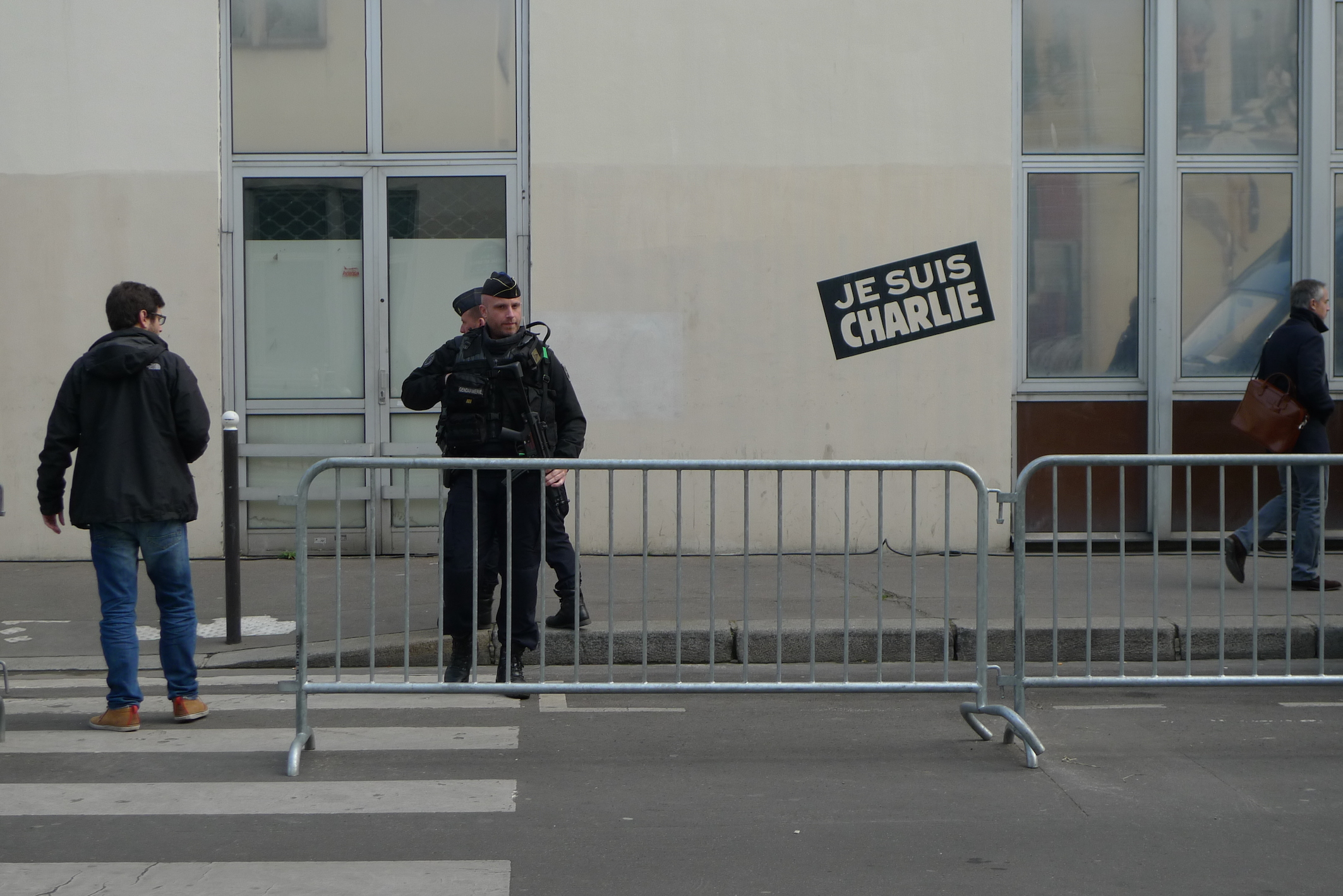
There are several machine gunners in front of the Charlie Hebdo building in Paris. These are cops, wearing bulletproof vests, carrying powerful weapons. They stare at occasional pedestrians in their special, revolting and highly intimidating way. Charlie Hedbo editors are well protected, some of them postmortem.
If you think that France is not as much a police state, as the UK or the US, think twice. Heavily armed military and police are visible at all train stations and many intersections, even at some narrow alleys. Internet providers are openly spying on their costumers. Mass media is self-censoring its reports. The regime’s propaganda is in “top gear”
But the people of France, at least the great majority of them, believe that they live in an ‘open and democratic society.’ If asked, they cannot prove it; they have no arguments. They are simply told that they are free, and so they believe it.
***
Employees of Charlie Hebdo go periodically out of the building for a smoke. I try to engage them in a conversation, but they reply in very short sentences only. They do their best to ignore me. Somehow, intuitively, they sense that I am not here to tell the official story.
I ask them why don’t they ever poke fun at the Western neo-colonialism, at the grotesque Western election system, or at the Western allies that are committing genocides all over the world: India, Israel, Indonesia, Rwanda, or Uganda? They impatiently dismiss me with their body language. Such thoughts are not encouraged, and most likely, they are not allowed. Even humorists and clowns in modern France know their place.
They soon let me know that I am asking too many questions. One of the employees simply looks, meaningfully, in the direction of armed cops. I get the message. I am not in the mood for a lengthy interrogation. I move on.
In the neighborhood, there are several sites carrying outpours of sympathy for the victims; 12 people who died during the January 2015 attack on the magazine. There are French flags and there are plastic white mice with Je Suis Charlie written on their bodies. One big poster proclaims: Je suis humain. Other banners read: “Islamic whores”, with red color correction, replacing Islamic with “terrorist” – Putain de terroristes.
There is plenty of graffiti written about freedom, all over the area. “Libre comme Charlie”, “Free like Charlie”!
A woman appears from the blue. She is very well dressed; she is elegant. She stands next to me for a few seconds. I realize that her body is shaking. She is crying.
“You’re a relative…?” I ask her, gently.
“No, no”, she replies. “We are all their relatives. We are all Charlie!”
She suddenly embraces me. I feel her wet face against my chest. I try to be sensitive. I hold her tight, this stranger – this unknown woman. Not because I want to, but because I feel that I have no other choice. Once I fulfill my civic obligation, I run away from the site.
***
Fifteen minutes walk from the Charlie Hebdo building, and there is the monumental National Picasso Museum, and dozens of art galleries. I make sure to visit at least 50 of them.
I want to know all about that freedom of expression that the French public is so righteously longing for and ‘defending’!
But what I see is endless pop. I see some broken window of a gallery and a sign: “You broke my art”. It is supposed to be an artwork itself.
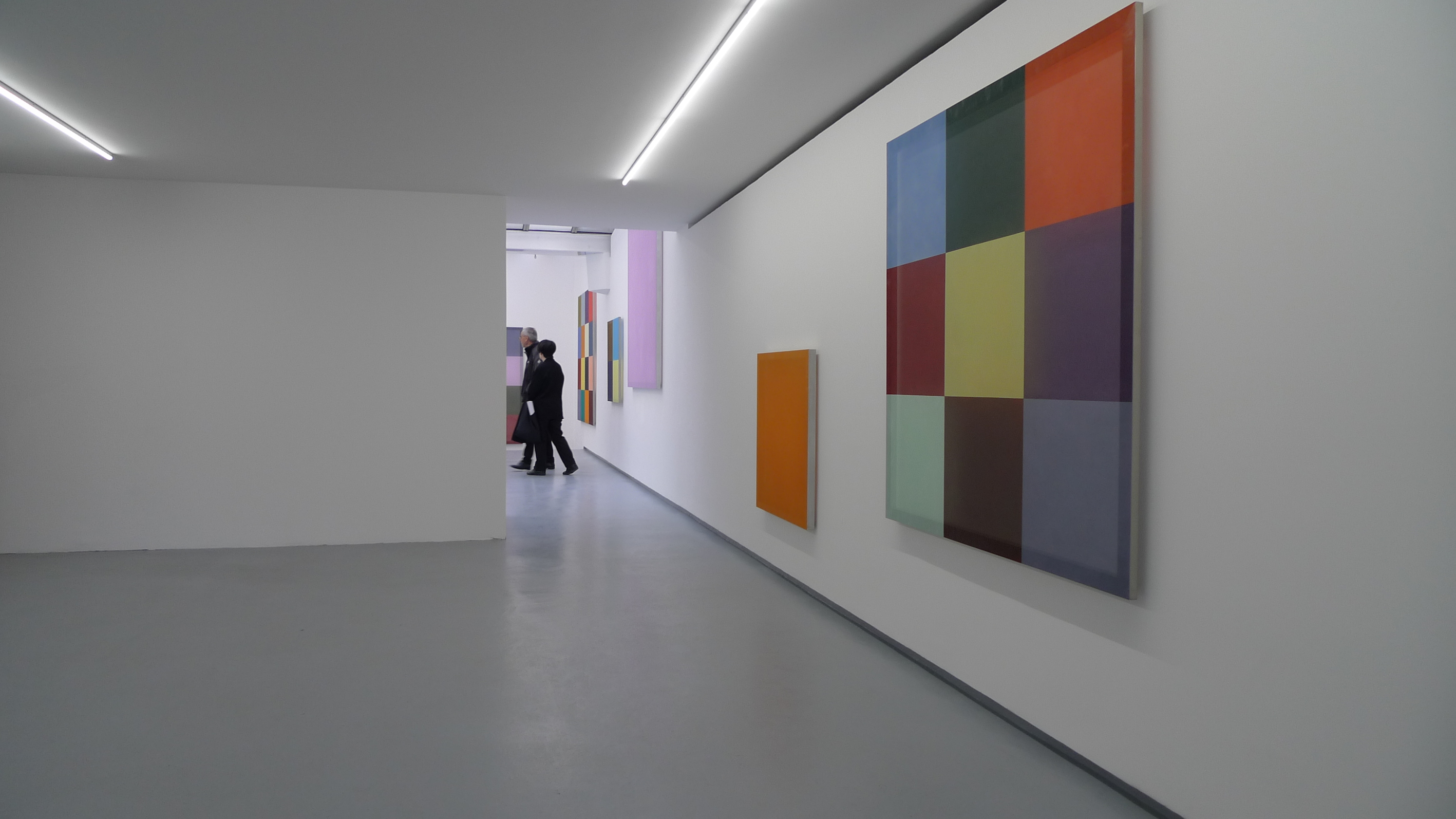
Galleries exhibit endless lines and squares, all imaginable shapes and colors.
In several galleries, I observe abstract, Pollock-style ‘art’.
I ask owners of the galleries, whether they know about some exhibitions that are concentrating on the plight of tens of thousands of homeless people who are barely surviving the harsh Parisian winter. Are there painters and photographers exposing monstrous slums under the highway and railroad bridges? And what about French military and intelligence adventures in Africa, those that are ruining millions of human lives? Are there artists who are fighting against France becoming one of the leading centers of the Empire?
I am given outraged looks, or disgusted looks. Some looks are clearly alarmed. Gallery owners have no clue what am I talking about.
At the Picasso Museum, the mood is clearly that of ‘institutionalism’. Here, one would never guess that Pablo Picasso was a Communist, and deeply engaged painter and sculptor. One after another, groups of German tourists consisting mainly of senior citizens are passing through well-marked halls, accompanied by tour guides.
I don’t feel anything here. This museum is not inspiring me, it is castrating! The longer I stay here, the more I feel that my revolutionary zeal is evaporating.
I dash to the office and summon a junior curator.
I tell her all that I think about this museum and about those commercial galleries that are surrounding it.
“Those millions who were marching and writing messages around Charlie Hedbo… What do they mean by ‘freedom’? There seems to be nothing ‘free’ in France, anymore. Media is controlled, and art has just became some sort of brainless pop.”
She has nothing to say. “I don’t know”, she finally replied. “Painters are painting what people want to buy.”
“Is that so?” I asked.
I mention “798” in Beijing, where hundreds of galleries are deeply political.
“In oppressed societies, art tends to be more engaged”, she says.
I tell her what I think. I tell her that to me, and to many creative people I met in China, Beijing feels much more free, much less brainwashed or oppressed, than Paris. She looks at me in horror, then with that typical European sarcasm. She thinks I am provoking, trying to be funny. I cannot mean what I say. It is clear, isn’t it, that French artists are superior, that Western culture is the greatest. Who could doubt it?
I give her my card. She refuses to give me her name.
I leave in disgust, as I recently left in disgust the Peggy Guggenheim Collection in Venice.
At one point I walk into a cafe, to drink a cup of coffee and a glass of mineral water.
A man and his enormous dog walk in. Both park at the bar, standing. A dog puts its front paws on the bar table. They both have a beer: the man from a glass, his dog from a saucer. A few minutes later, they pay and leave.
I scribble into my notepad: “In France, dogs are free to take their beer in cafes.”
***
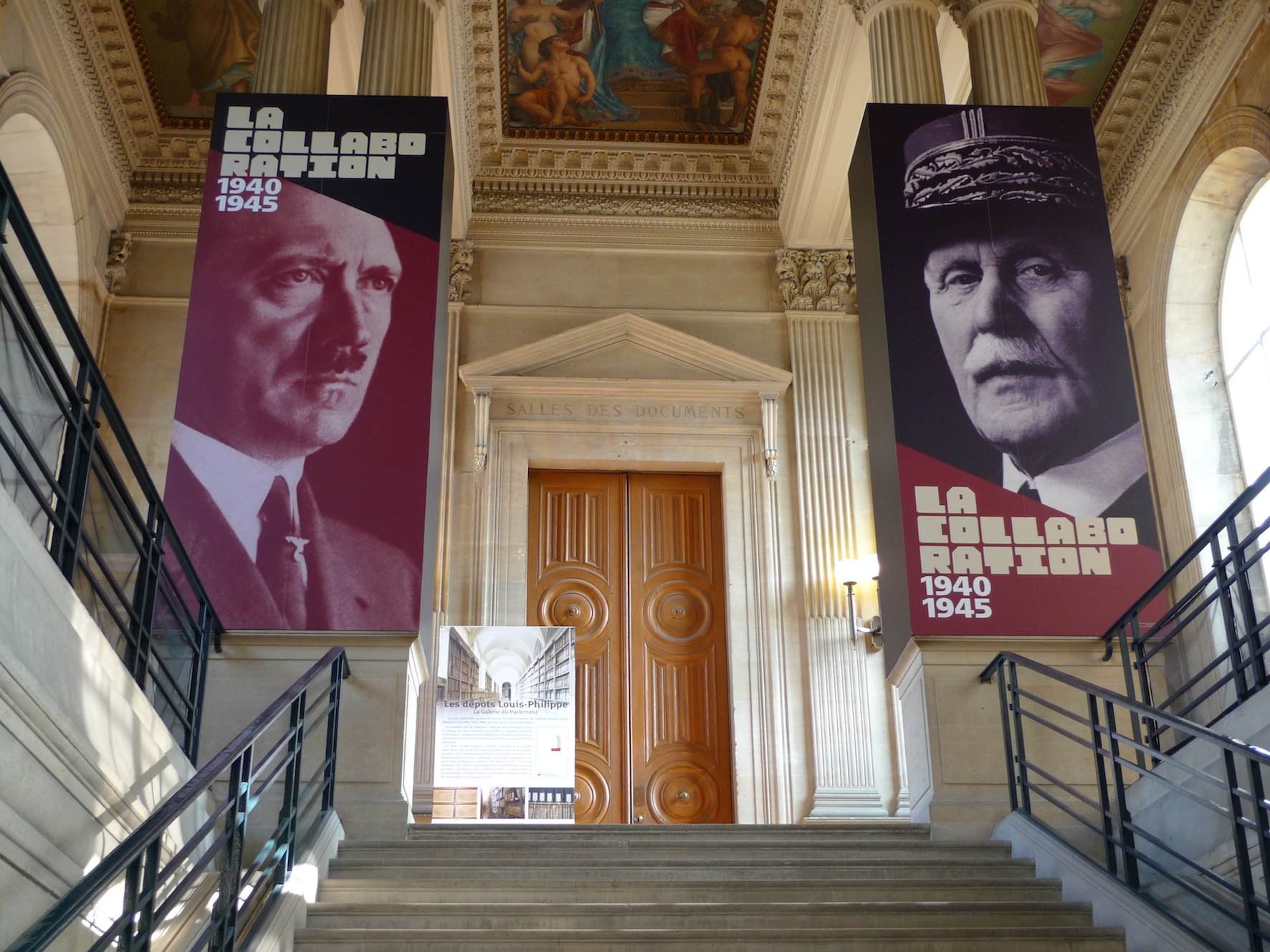
In the same neighborhood, I rediscover an enormous National Archive, a beautiful group of buildings with gardens and parks all around.
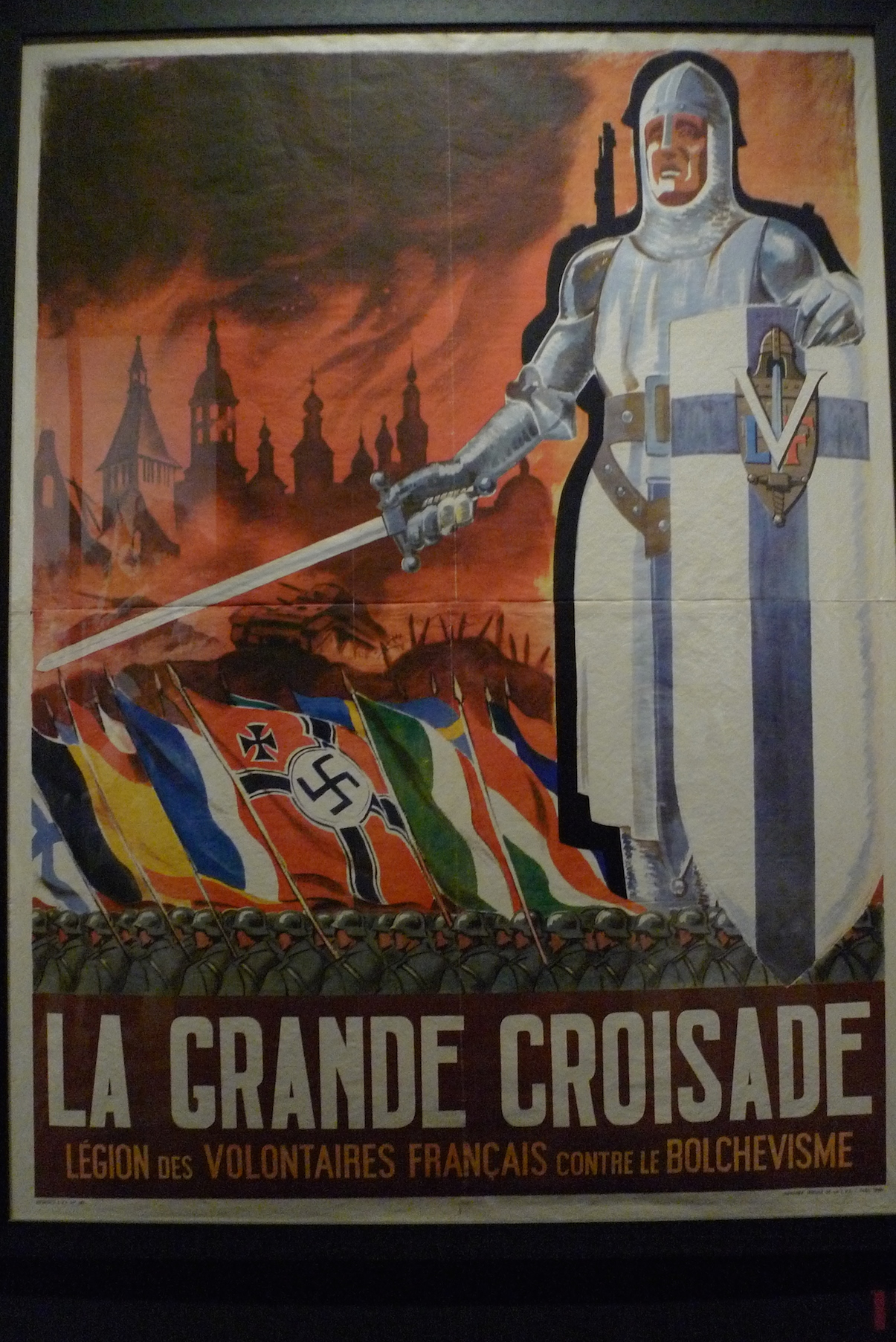
The place is holding a huge exhibition: on how France collaborated with the Nazi Germany during the WWII. The retrospect is grand and complete: with images and texts, with film showings.
For the first time in days, I am impressed. It all feels very familiar, intimately familiar!
***
At night I found myself in that enormous new Philharmonic, at the outskirts of Paris, near Porte de Pantin. I managed to smuggle myself to the invitation-only-opening of an enormous exhibition dedicated to French composer, conductor and writer – Pierre Boulez. That same Pierre Boulez who has been promoting, for ages, the idea of a public sector taking over French classic music scene!
Nobody protested at the exhibition, and I did not hear any jokes directed at Pierre Boulez. It was all brilliantly orchestrated. Great respect for the establishment cultural figure, for the cultural apparatchik!
I heard a technically brilliant concert of contemporary classical music, with new instruments being used.
But nowhere, in any of those tremendous spaces of the Philharmonic, did I hear any lament, any requiem, for the millions of people literally slaughtered by the Empire, of which France is now an inseparable part. No new symphonies or operas dedicated to the victims of Papua, Kashmir, Palestine, Libya, Mali, Somalia, the Democratic Republic of Congo, or Iraq.
My new friend, Francois Minaux, is writing an opera about the US carpet-bombing of the Plane of Jars, during the ‘Secret War’ conducted by the West against Laos. I am helping him with this enormous and noble project. But paradoxically (or logically?), Francoise is not living in France, but in the United States.
When I shared my thoughts with him, on Charlie Hebdo, and on freedom of expression in France, he summarized:
“It’s terrible. The art scene sucks. People are zombies. The mass reaction to the Charlie H attack is disgusting and depressing. ‘1984’ is happening but people are too blind to see it.”
A few hours later, I received an email in which Francoise reflected on his complex relationship with his native land, and its culture:
“Being French nowadays and being free to express yourself is impossible. Back in the early 2000’s, I could not accept the frame that culture would impose on its artists, and they could not accept my questioning and different approach to art making. They either spat on me or even worse, went mute. So, I left. You must travel outside of Europe and live and work outside, to feel the world.
I felt also that politically engaged works of art were not considered real art in Paris. There is this thing in France: any political engagement is seen either as propaganda or as advertisement. Back in the early 2000’s, we were supposed to make art for art’s sake. We were living under the glass dome of the conservatory. We were ‘protected by the government’.
They let us know that we should not talk about politics or religion in public. Maybe French secularism was a good idea but not to the present extent, when politics and religion became taboo. There is this climate of fear: our elders and teachers hardly discuss politics and religion. And so we didn’t know! Certain things are forbidden to be known in France.
Life in Paris became suffocating. Opinions were not expressed. We were not allowed to understand others. Live became boring: we had nothing substantial to talk about. And so we discussed greasy food and French wine. Economists describe the French economy as “austere”, but I would go further by saying that French behavior as well as French identity is austere. But the French people can’t see it because they now all think the same. They are trying so hard to stay French but they are forgetting, how the world has bled, so their French-ness could be preserved. Their culture was built from the blood flowing from the French colonies, and on the foundations of the modern-day French Empire.”
***
So where are those brave French minds now; people so many of us were admiring for their courage and integrity?
They were never ‘perfect’, and they erred, like all humans do, but they were often standing on the side of oppressed, they were calling for revolutions and some even for the end of colonialism. They were holding Western culture responsible for the horrors our planet has been facing for centuries.
Emile Zola and Victor Hugo, then later Sartre, Camus, Malraux, Beauvoir, Aragon…
What do we have now? Michel Houellebecq and his novels, full of insults against Islam, as well as of ‘tears of gratitude’ felt after each blowjob his characters get from their girlfriends.
The legacies of Houellebecq and Charlie are somehow similar. Is this the best France can do, these days? Is kicking what is on the ground, what was already destroyed by the West, what is humiliated and wrecked – called courage?
Are pink poodles on silver leashes, exhibited in local galleries, the essence of what is called the freedom of speech? Such stuff would pass any censorship board even in Indonesia, or Afghanistan! No need for the freedom of expression. It is cowardly and it is selfish – exactly what the Empire is promoting.
***
Christophe Joubert, a French documentary filmmaker, told me over a cup of coffee:
“First I was sad, when I heard about what happened to people at Charlie Hedbo. Then I got scared. Not of terrorism, but of the actions of the crowd. Everybody was indoctrinated: thinking the same way, acting the same way. Like Orwell and his 1984! More precisely, ‘the 8th day.”
“People in France know nothing about the world”, continues Christophe. “They believe what they are told by propagandist mass media”.
“I am not allowed to speak”, the Eritrean Ambassador to France, Hanna Simon, explained to me. “They invite me to some television show where they present a film criticizing my country. They speak openly, but when I try to respond, they shut me up.”
“I know nothing about what you are saying”, my good Asian friend replies, with sadness, after I tell him about the tremendous global rebellion taking place against the West, in Latin America, China, Russia, Africa… He is a highly educated man, working for the UNESCO. “You know, here we hear only one side; the official one.”
I am wondering whether, perhaps in 70 years from now, the National Archive will have another huge exhibition: one on France’s collaboration with neoliberalism, and on its direct involvement in building the global fascist regime controlled by the West.
But for now, as long as dogs can have a beer at the bar, fascism, imperialism and neoliberalism do not seem to matter.

Andre Vltchek is a philosopher, novelist, filmmaker and investigative journalist. He covered wars and conflicts in dozens of countries. His latest books are: “Exposing Lies Of The Empire” and “Fighting Against Western Imperialism”. Discussion with Noam Chomsky: On Western Terrorism. Point of No Return is his critically acclaimed political novel. Oceania – a book on Western imperialism in the South Pacific. His provocative book about Indonesia: “Indonesia – The Archipelago of Fear”. Andre is making films for teleSUR and Press TV. After living for many years in Latin America and Oceania, Vltchek presently resides and works in East Asia and the Middle East. He can be reached through his website or his Twitter.
Featured Video

Deep Dive Intel Briefing 6/20/2026 Lt Col Daniel Davis
or go to
Aletho News Archives – Video-Images
From the Archives
As Hillary Clinton kisses up to Henry Kissinger, RT looks at 4 of his most heinous acts
RT | September 3, 2016
… While Clinton retains the ultimate warmongering seal, RT examines some of Kissinger’s most memorable acts… Read full article
Blog Roll
 Aletho News
- Terms of US capitulation to Iran presage new era for the region
- Strategic Oil Reserve Nears Collapse… US Must Choose: Guns or Butter
- The Story the Media — and the Government — Don’t Want You to Hear
- Deep Dive Intel Briefing 6/20/2026 Lt Col Daniel Davis
- The Targeted Assassination of Studies Showing Vaccines Cause Injury
- BMJ Probe Into Excess Mortality Study Drags On for Two Years With No Resolution
- Securing Peace with Iran Compels Trump to Divorce Israel
- Old Iraq war architects rise up to wag finger at Trump’s Iran deal
- Strait of Hormuz closed over Israeli aggression on Lebanon
- Keir Starmer arson mysteries multiply
- If Americans Knew
- ‘Reproductive genocide’ in Gaza; death toll in Lebanon tops 4,000 (during a ceasefire) – Daily Update
- Israelis Invaded Lebanon And Then Cried Victim When Their Soldiers Got Killed
- FARA Docs: Israel is Spying On Millions Of Christian Americans In Their Churches
- Why US presidents from both parties end up cursing Benjamin Netanyahu
- Israel Asked Facebook to Censor Iran War Content, Internal Documents Show
- Deaths in Gaza undercounted, possibly by 100s of thousands; “Psychopath” Ben-Gvir talks trash – Daily Update
- UNICEF: “Trauma is woven into the very fabric of childhood in Gaza”
- 15 articles a day: The extent of the Israeli army’s media interference
- Greek Orthodox Patriarchate denounces Israeli seizure of church land in Jerusalem
- How Hillel International uses antisemitism training and ‘campus climate’ concerns to attack Palestine solidarity
- No Tricks Zone
- German Wind Turbines Face Regulatory Shutdown Due To Excessive Noise
- New Study: Chile’s Relative Sea Level Was 3.2 Meters Higher Than Today During The Mid-Holocene
- Beyond The Pitch: Why FIFA’s World Cup Is One Of Humanity’s Best Investments
- Climate Alarmists Now Using Natural Phenomena To Support Their Claims
- New Study: Significant CO2 Fluxes From Non-Volcanic Sources Are Largely Neglected In Carbon Budgets
- Women Climate Scientists Being Harassed, Insulted By Skeptics, Claims Berkeley Earth Researcher
- Germany’s Longterm Spring Climate Data Show “No Climate Trend”
- New Study: Solar Photovoltaic, Wind Power Fail To Meet Annual Energy Demands 62% Of The Time
- Germany’s Die Welt: “Too Much Is Too Much” … Green Energies Are Cannabalizing Each Other!
- Germany’s Ecological Holocaust… Once Fairy Tale Forests Getting Cleared For Wind Turbines
 Aletho News