US, France playing good cop-bad cop in Iran talks
RT | November 9, 2013
America and France are playing ‘good cop-bad cop’ in the P5 + 1 talks with Iran over its nuclear program, so that Washington’s position would sound more reasonable, Robert Harneis, a journalist and political analyst has told RT.
Six major world powers and Iran are holding negotiations in Geneva over Tehran’s highly-disputed nuclear program.
RT: France seems to be the most skeptical of the negotiating nations about the outcome of the talks. What’s behind its skepticism?
Robert Harneis: It is always a little difficult to understand the position of the French here. They seem to take an extreme position all the time. There are a number of reasons for this. The first is that they are playing ‘good cop-bad cop’ with the Americans. Obama is suddenly being much more reasonable in his attitude with the Iranians, and the French are out there on the flank saying “Oh, you mustn’t agree too easily, Israel must be protected,” and so on. In a sense that’s, if you like, playing the game of the Americans so that they can sound more reasonable, the French sound more unreasonable.
There is another factor, which is that everybody knows the enormous pressure of the Israeli lobby in America. It’s not quite so well-known that it’s pretty considerable in France as well.
RT: The French Foreign Minister said Israel’s position must be taken into consideration. Why such concern for Israel when even Washington called Netanyahu’s condemnation of the deal ‘premature’?
RH: Yes, it’s interesting, isn’t it, that Mr. Netanyahu has said that the deal had been concluded. Everybody else is saying it hasn’t. At any rate, the position of the French, I think, is to say things that the Americans don’t want to say at the moment. I think that’s at the bottom of it, because frankly this posturing by the French President and the French Foreign Minister makes France look pretty ridiculous on the domestic front. There is a great deal of mockery of Laurent Fabius and his very aggressive statements internally in France.
RT: We’re used to the US being one of Tehran’s harshest opponents. Do you feel that Washington’s stance is genuinely changing?
RH: Well, one would like to hope – let’s put it this way – that this is a real diplomatic revolution. The Americans ever since 1979, when the embassy drama took place in Iran, have had this slightly ridiculous, slightly vengeful obsession about dealing with the Iranian nuclear threat.
As far as anybody can tell and as far as the American security services themselves say, there is no Iranian nuclear threat. The Israelis, on the other hand, have 300 nuclear weapons. So the situation is a trifle absurd as it often is with western foreign policies.
And there are signs Obama is trying to put American foreign policy on a more sensible track. Why not have sensible relations with Iran – this is being asked in the US after all. For years, with the threat of the Soviet Union, they had no difficulty negotiating with [Mikhail] Gorbachev and men a lot more difficult than him. So, why can’t we negotiate with Iranians? Why do we have to take this ridiculous attitude that they cannot have what France, Britain, the US have – which is nuclear protection. And the Iranians say they don’t want it anyway.
So, it’s a difficult one to quite work out. But it could be that there is a real revolution taking place and the Americans are going to change their stance because they need to do business with Iran really.
RT: Finally, what are your personal predictions? Will the sides involved manage to overcome their disagreements and strike a deal in the near future?
RH: Well, if I had to take my reputation as profit on the line, I would say that there is going to be a deal. Because they are, after all, talking only about a six-month deal, as far as we can understand it. A suspended sentence, so to speak. With the problems of gas pipelines from Iran to Europe, which Europe needs badly for its Nabucco pipeline – which has no gas without the Iranians – I think there is a very strong probability. And they’d just love to get in there and have all the contracts for rebuilding Iran. So, I hope it’s a real revolution.
Britain’s GCHQ shepherding mass surveillance operations throughout Europe
RT | November 2, 2013
British intelligence agency GCHQ has helped counterpart entities in France, Germany, Spain, and Sweden develop methods of mass surveillance of internet and phone traffic in the last five years, a new report reveals.
Documents supplied by former National Security Agency contractor Edward Snowden to the Guardian show the UK Government Communications Headquarters’ (GCHQ) enormous influence throughout Europe. The documents detail how the agency developed and promoted spying processes, built relationships with telecommunication companies, and evaded national laws that constrain the surveillance powers of intelligence agencies.
In the wake of outrage expressed over the past week across Europe regarding newly exposed NSA surveillance of European countries – including intercepted communications and the monitoring of phones belonging to officials such as German Chancellor Angela Merkel – documents released Friday by the Guardian show major European countries’ culpability in mass surveillance efforts shepherded by the GCHQ.
The GCHQ is part of the ‘Five Eyes’ intelligence-sharing partnership between Australia, Britain, Canada, New Zealand, and the United States.
US intelligence officials said the monitoring that received so much indignation from powers like Germany and France was carried out by those countries’ own intelligence agencies and later shared with the US.
In June, the Guardian revealed the GCHQ’s Tempora program, in which the agency tapped into transatlantic fiber-optic cables to execute bulk surveillance. Germany’s justice minister, Sabine Leutheusser-Schnarrenberger, said at the time that the program sounded “like a Hollywood nightmare” and warned that free societies and actions hidden under “a veil of secrecy” are not compatible.
A nation-by-nation scorecard
In a 2008 survey of European partners, the GCHQ marveled at Germany’s capabilities to produce Tempora-like surveillance. The British service said the Federal Intelligence Service (BND) had “huge technological potential and good access to the heart of the internet – they are already seeing some bearers running at 40Gbps and 100Gbps.” The term ‘bearers’ refers to the fiber-optic cables. Gigabits per second (Gbps) measures the speed at which data runs through them.
The documents also show the British were advising German counterparts on how to change or evade laws that restricted advanced surveillance efforts. “We have been assisting the BND (along with SIS [Secret Intelligence Service] and Security Service) in making the case for reform or reinterpretation of the very restrictive interception legislation in Germany,” the survey says.
The report also lauds the GCHQ’s French partner, the General Directorate for External Security (DGSE), especially for its cozy relationship with an unnamed telecommunications company.
“DGSE are a highly motivated, technically competent partner, who have shown great willingness to engage on IP [internet protocol] issues, and to work with GCHQ on a ‘cooperate and share’ basis.”
The GCHQ expressed desire to benefit from the DGSE’s relationship with the company.
“We have made contact with the DGSE’s main industry partner, who has some innovative approaches to some internet challenges, raising the potential for GCHQ to make use of this company in the protocol development arena.”
The GCHQ’s work with its French counterpart led to improved capabilities to carry out bulk surveillance, despite growing commercial emphasis on encryption.
“Very friendly crypt meeting with DGSE in July,” British officials said. French intelligence officials were “clearly very keen to provide presentations on their work which included cipher detection in high-speed bearers. [GCHQ’s] challenge is to ensure that we have enough UK capability to support a longer term crypt relationship.”
New opportunities in future partnerships
GCHQ ties to Spain’s intelligence service, the National Intelligence Centre (CNI), were bolstered by Spain’s connections to an unnamed British telecom company, giving them “fresh opportunities and uncovering some surprising results.
“GCHQ has not yet engaged with CNI formally on IP exploitation, but the CNI have been making great strides through their relationship with a UK commercial partner. GCHQ and the commercial partner have been able to coordinate their approach. The commercial partner has provided the CNI some equipment whilst keeping us informed, enabling us to invite the CNI across for IP-focused discussions this autumn,” the survey said. It reported that the GCHQ “have found a very capable counterpart in CNI, particularly in the field of Covert Internet Ops.”
When Sweden passed a 2008 law allowing its National Defence Radio Establishment (FRA) to execute Tempora-like surveillance via fiber-optic cables, the GCHQ said in the report that “FRA have obtained a…probe to use as a test-bed and we expect them to make rapid progress in IP exploitation following the law change.” The GCHQ went on to express delight in future partnerships with FRA after the law passed.
The survey found strong ties between the GCHQ and Dutch external and internal intelligence services MIVD and AIVD, respectively.
“Both agencies are small, by UK standards, but are technically competent and highly motivated,” British officials said.
The GCHQ also helped AIVD in handling legal constraints to spying.
“The Dutch have some legislative issues that they need to work through before their legal environment would allow them to operate in the way that GCHQ does. We are providing legal advice on how we have tackled some of these issues to Dutch lawyers.”
Contrary to the other nations’ positive marks, the GCHQ country-by-country scorecard shows Italy’s intelligence agencies to be riddled with internal strife.
“GCHQ has had some CT [counter-terrorism] and internet-focused discussions with both the foreign intelligence agency (AISE) and the security service (AISI), but has found the Italian intelligence community to be fractured and unable/unwilling to cooperate with one another,” the report said.
A follow-up six months later noted the GCHQ still saw legal constraints in Italy as hampering AISI’s ability to cooperate.
This latest disclosure calls into question how involved the countries were in the overall surveillance of global citizens and world leaders led by the NSA and GCHQ.
Iran sanctions force historic plant closure for Peugeot
Press TV – October 25, 2013
With European auto sales near a 20-year low, it’s unthinkable that an automaker would willingly cut ties with its largest foreign client. But in February 2012 Peugeot did just that by severing ties with Iran. The move was forced by its new partner, General Motors, which had just been bailed out by the US government.
The decision has cost an estimated €4 billion in lost sales and helped force 8,000 job cuts. In France’s first such industrial closure in two decades, the last car has just rolled off the line at a plant located in a heavily-Muslim suburb of Paris.
Via a partnership with automaker Iran Khodro, in 2011 Iran accounted for 13% of Peugeot’s annual sales. The cars were assembled in Iran, giving domestic autoworkers valuable experience and helping Iran to become one of the world’s top 20 auto-producing countries.
The French press has largely remained silent on the key role Iran sanctions have played in damaging Peugeot, despite pleas from union leaders.
Ironically, giving up the Iranian market seems to have been in vain, as multiple sources have reported that GM has significantly scaled back its alliance with Peugeot. If the sanctions on Iran were designed to inflict the maximum amount of pain on Peugeot, they may have achieved their goal.
Related article
‘Unacceptable and shocking’: France demands explanation for NSA spying
RT |October 21, 2013
France has called for an explanation for the “unacceptable” and “shocking” reports of NSA spying on French citizens. Leaked documents revealed the spy agency records millions of phone calls and monitors politicians and high-profile business people.
The US Ambassador to France Charles Rivkin was summoned by the French Foreign Ministry to account for the espionage allegations on Monday morning.
“I have immediately summoned the US ambassador and he will be received this morning at the Quai d’Orsay [the French Foreign Ministry],” French Foreign Minister Laurent Fabius told press. He added that “we must quickly assure that these practices aren’t repeated.”
In addition, citing the report on French publication Le Monde, Interior Minister Manuel Valls spoke out on national television against US spy practices.
“The revelations in Le Monde are shocking and demand adequate explanations from the American authorities in the coming hours,” said Valls on television channel Europe 1.
He went on to say that it is totally unacceptable for an allied country to spy on France.
Ambassador Rivkin refrained from commenting on the spy allegations on Monday morning and told Reuters that French-US ties are the “best they have been for a generation.”
Le Monde revealed in a report based on the security leaks of former CIA worker Edward Snowden that the NSA recorded 70.3 million phone calls between December 10, 2012, and January 8, 2013.
The NSA reportedly carries out its espionage in France using a program called ‘US-985D’ which is able to listen in on specific telephone calls and pick up on text messages according to key words used.
Moreover, Le Monde also wrote that it had reason to believe that the spying was not just limited to citizens suspected of being involved in terrorism. According to the data released by Snowden the NSA also eavesdropped on politicians and prominent business figures.
The newspaper did not give any indications as to the identity of the high-profile people.
France is not the only EU nation to be targeted by NSA surveillance. Germany took issue with the US government after it was revealed the NSA was tapping phone lines and recording electronic data in the country.
The EU will take steps to curtail US data mining on Monday in a vote to change data protection rules. The European Parliament’s Committee on Civil Liberties is expected to decide on the issue that would authorize fines for violation of EU data protection.
‘Investment benefits’
The US maintains that its spying activities are in the interests of national security and protect against terrorism. However, Snowden leaks released by Guardian reporter Glenn Greenwald showed the NSA had monitored Brazilian state-owned oil giant Petrobras and infiltrated the electronic communications of the Brazilian and Mexican presidents.
Mexico has also demanded an explanation for reports released by Der Spiegel on extensive spying on Mexican top officials and politicians.
Der Spiegal revealed that former President Felipe Calderon had also been a target for NSA espionage. Citing a classified internal report, it said the US monitors “diplomatic, economic and leadership communications which continue to provide insight into Mexico’s political system and internal stability.”
European companies likely to be losers in US-Iran rapprochement
RT | October 9, 2013
If the sanctions against Iran are lifted, the Iranians will look mainly towards American firms in the oil and automobile sector to fill the gap, George Malbrunot, a journalist for French newspaper Le Figaro, told RT.
RT: Both Iran and the US are signaling a thaw in their political relations – what effect will it this have on economic ties and business? Does it look like the US is attempting to force out other companies from the Iranian market?
George Malbrunot: I think already there have been some secret contacts between US firms and Iranian counterparts in order to prepare, to anticipate the political deal between Iran and the United States. Mainly these contacts have occurred in the automobile sector. For the last year or more there have been some emissaries from General Motors, for example, going to Tehran to see their Iranian counterparts from Iran Khodro, in order to prepare the ground for the [return] of General Motors to Iran, which was very important before 1979.
So there are these kind of contacts with not only GM but other big US companies, also in the oil and gas sectors, which are very important in Iran, and it has been encouraged recently by the executive order that Barack Obama signed on June, 3, which prevents subcontractors dealing with Iranian firms in the automobile sector. And in fact this executive order was deeply targeting the French who are the only one now in the automobile sector in Iran, especially Renault, and the French contractors are very upset about that. And they interpret it as an attempt to clean the Iranian market before the return of US companies in Iran.RT: In your article, you say American companies are securing their positions on the Iranian market – how is this happening?
GM: For the last six months, we’ve heard from Iran’s supreme leader, Ayatollah Khomenei, that we are not any more opposed to direct contacts with the US. The businessmen are always more active in anticipating political deals and to anticipate change. During all these years of bad relations between Iran and the US there have always been some kind of secret contacts between US firms and Iranian firms. And mainly these contacts have been accelerated after the election of President Rouhani in Iran. And we’ve all seen at the last UN General Assembly in New York last month that now the Iranians are talking to the Americans. So there are preparations on the ground in order to go to Iran which is a huge market, 80 million consumers, with huge oil and gas resources, so it’s natural that US businessmen are watching very carefully the developments which happen between Iran and the US.
And not only US businessmen are very [eager] to go to Iran, but you have also the German businessmen, who have always been active, with Siemens for example, and even the British who have no diplomatic relations with Iran are now starting to [study] this market carefully. The Japanese are also very active. And unfortunately for us in France, we are perhaps the last in Europe to try to go to Iran, because for the last [few] years France was extremely active in fighting against Iran. France was exerting the pressure on Iran in order to implement the sanctions. So the French businessmen are very upset with what’s going on now, because for the last 20 years the US was [not in] Iran, and French businessmen had quite a good position in Iran – Total, Peugeot, Renault – and now they are afraid that all these years of efforts will be [wiped away] by the new deal which will happen between the US and Iran.
RT: Do you think we will be seeing an easing of sanctions against Iran soon?
GM: I think so, and the Iranians are a very proud nation and they have been always having very strange relations with Americans, love and hate, and once the sanctions will be lifted I’m quite sure the Iranians will look mainly toward American firms in the oil sector, in the automobile sector to fill the gap. So for sure European companies will be more probably losers in this kind of agreement.
I think that GM and even Chevrolet will go extremely quickly to Iran if there is a political agreement between the US and Iran, if the sanctions are lifted. I’m not sure that the Iranians will give a lot of pieces of the cake to French companies or others on this issue. And this is the reason why French companies are very worried about what’s going on in the shadow of this rapprochement between the US and Iran.
Pope calls on world leaders to abandon military options in Syria
RT | September 5, 2013
Pope Francis called on world leaders attending the G20 summit in Russia to seek peace in Syria through diplomatic means and to lay aside the “futile pursuit” of a military solution.
In a letter to Russian President Vladimir Putin, who is hosting the G20 summit, Francis said that lopsided global interests have blocked a diplomatic course in the Syrian conflict and have led to the “senseless massacre” of innocent people.
“To the leaders present, to each and every one, I make a heartfelt appeal for them to help find ways to overcome the conflicting positions and to lay aside the futile pursuit of a military solution,” Francis wrote.
The letter follows an announcement earlier this week that the Vatican will host a vigil for peace in Syria in St. Peter’s Square on Saturday.
The Vatican outlined Thursday its position on Syria to ambassadors accredited to the Holy See.
“Confronted with similar acts one cannot remain silent, and the Holy See hopes that the competent institutions make clear what happened and that those responsible face justice,” the Vatican’s Foreign Minister, Archbishop Dominique Mamberti, told the 71 ambassadors regarding the chemical weapons attack that took place outside Damascus on August 21. The US and its allies believe the attack was launched by the Syrian government.
Mamberti said the main priority was to stop the violence which he said is risking the involvement of other countries and creating “unforeseeable consequences in various parts of the world.”
He did not mention possible military strikes by the US, but stressed peace in all facets of a potential solution to the violent conflict.
In addition, Mamberti said the Vatican does not want Syria to be split up along ethnic or religious lines, and that Syrian minorities – including Christians – should have basic rights guaranteed, including freedom of religion.
The Assad regime in Syria has long supported ethnic and religious minorities including Christians, Shiite Muslims, and Kurds. The Assad family and many regime officials are Alawites, followers of an offshoot of Shiite Islam, while most rebels and their supporters are Sunni Muslims.
On Wednesday, the head of the Vatican’s Jesuit order, Rev. Adolfo Nicolas, said that military action by the US and France would ultimately punish the Syrian people.
“I cannot understand who gave the United States or France the right to act against a country in a way that will certainly increase the suffering of the citizens of that country, who, by the way, have already suffered beyond measure,” he said.
France cannot afford military operation in Syria
By Steven Elliot | RT | September 6, 2013
The G20 should be focusing on their flagging economies rather than planning a military operation in Syria they can’t afford, analyst, Alex Korbel, told RT. France, in particular, is at full stretch, with 16 military campaigns abroad and an ailing economy.
The Syrian conflict has eclipsed the G20 meeting in Saint Petersburg, as the international community is unable to come to an agreement over a possible military strike. Washington has put forward a plan for military intervention against the Assad regime, which it believes is responsible for a chemical attack in a Damascus suburb on August 21.
RT: If the UN team of inspectors finds that chemical weapons were used in the Damascus attack, do you believe military intervention could be justified?
Alex Korbel: I think there is no case for military intervention in Syria for several reasons. The first reason is that there is no national interest for France or the US to actually intervene in Syria. The regime of Bashar al Assad was not a problem in the past and it is not clear why it’s now a problem for France and the US. There is no clear objective in the military intervention as it is now presented. Is it about maintaining the credibility of the US? What credibility exactly? The credibility to intervene in unnecessary wars? Is it to ban the use of chemical weapons? Then why does the US have chemical weapons in its arsenal? Is it to weaken the Bashar al Assad regime? In that case you need to put boots on the ground. If it is a humanitarian way to help the civilians, then locking on cruise missiles is not the right solution.
For all of these reasons the US and France have decided to move ahead with limited military intervention. But still there is a danger of falling down a slippery slope. What if a military intervention has no effect? Are we going to see full war? What would be the consequences in the region? I am thinking about Iran and Lebanon and I am thinking about a war less than 1000 kilometers south of Russia.
There is no broad international support for this war. Germany is against it, the UK is against it, China and Russia are against it. The only countries that are in favor are France, which has not yet consulted parliament, US and Israel and Saudi Arabia. Finally, public opinion is clearly against it everywhere. We saw it in the UK and the public polls in the US and France that the public is massively against military intervention in Syria.
RT: Given the climate of economic crisis in the EU, can France feasibly participate in another military operation?
AK: The economic situation of the EU countries is really bad. We can see in France that public debt is higher than 90 per cent of GDP. We see economic growth is less than 1 per cent. We see across G20 countries on average that unemployment is at 9 per cent and growing, that public debt is 64 per cent and growing, that economic growth is 1 per cent and weakening. What needs to be done is not to intervene militarily in another country.
France is already intervening in 16 countries worldwide. Clearly we don’t have any money to finance a seventeenth operation. The purpose of France, the US and any western power is not to ‘play the cop’ around the world but actually to maintain a sound economic policy first and then maybe lead by example on the international scene.
NSA spied on French Foreign Ministry: Report
Press TV – | September 2, 2013
Top secret documents have shown that the US National Security Agency targeted France’s Foreign Ministry for spying.
Documents seen by Germany’s Der Spiegel weekly show that the US spy agency spied on the electronic communications of the French Foreign Ministry by breaking into the ministry’s computer network.
The internal documents also show NSA agents installed bugs in French diplomatic offices in Washington and at the United Nations in New York.
According to the “top secret” document, dated June 2010, the NSA infiltrated computers used by French diplomats to communicate with the Foreign Ministry’s Paris headquarters through a virtual private network (VPN).
France’s “foreign policy objectives, especially the weapons trade” were of primary interest to the NSA, Spiegel reported.
Moreover, the German weekly said that the Qatari-funded broadcaster Al Jazeera had been another target of spying for the US government’s premier spy agency because the channel broadcast audio and video messages from al-Qaeda leaders for more than a decade.
Documents leaked by former intelligence contractor Edward Snowden have shed light on the scope and scale of US spying practices across the globe.
The documents have blown the lid on several US spying programs like PRISM and GENIE.
Under PRISM, US technology companies hand over user data pertaining to all people around the world after they receive orders from the Foreign Intelligence Surveillance Court.
GENIE is also a $652 million spying project under which US computer specialists infiltrate foreign networks in order to bring them under secret US control.
According to NSA budget documents obtained by the Washington Post, US spy agencies have also conducted 231 cyber attacks in 2011.
The latest revelations about the NSA’s spying on the French Foreign Ministry come as the Paris prosecutor’s office has launched a preliminary investigation into the NSA’s illegal access to personal email and phone communications of French citizens through its PRISM program.
The results of the preliminary investigation determine whether a formal investigation will be launched into the allegations that the NSA has violated data protection and privacy rules in France.
Resistance Is Our Destiny
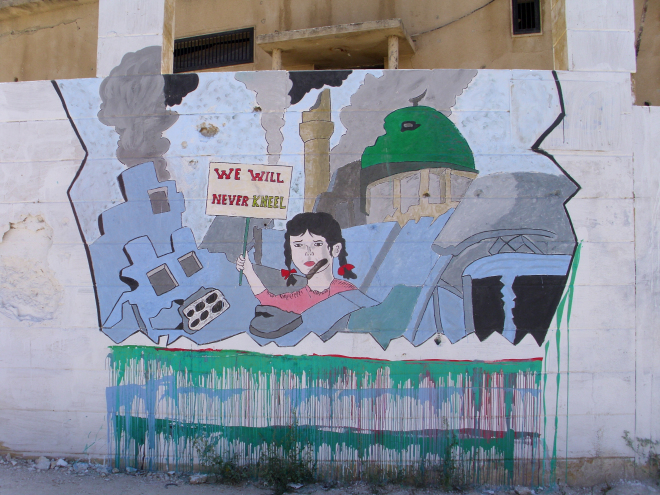
By Ibrahim al-Amin | Al-Akhbar | August 31, 2013
To hell with all the talk about democracy backed by the United States, France, Britain … and Saudi Arabia, Turkey, and Israel.
To hell with every bid for freedom with the support of these murderers.
To hell with every fool, criminal, and coward, no matter what they look like, what they are called, where they live, or what they do.
To hell with all those who support an international war to topple Syria.
To hell with this bunch of collaborators, who people will no doubt hold accountable one day, come chaos or stability.
To hell with all traitors, their speeches, their false tears, and to hell with their human rights groups and their subservient civil society organizations.
The decision to wage war on Syria is only the last step in the course set two and a half years ago, to destroy Resistance, its cities, people, and even its very idea.
There is no room for any kind of bargaining, and there is no room for any discussion or debate. There is no room to listen to any collaborator touting the list of causes of war and the causers, and there is no room for those who cling to their opinions, positions, or labels, wearing bandanas on their foreheads after wearing blindfolds on their eyes, and joining forces with collaborators and takfiris.
To begin with, these people live on the crumbs thrown to them by the robbers of Arab resources and fortunes. They work for them and receive from them money and all kinds of support.
It is a duty for every capable person to fight these killers, wherever they may be, wherever there is a chance to take revenge against them, and punish all the traitors, one after the other, in their beds, behind their desks, inside their tanks, or in their palaces, whether they are alone, or among their families.
What do you want from us today?
Do you want to repeat the experience of Iraq?
Do you want to repeat the experience of Afghanistan and Somalia?
Do you want to repeat the experience of Libya? Do you want to repeat the experience of war in Lebanon?
Or do you think that this will be a war to destroy the right that will never be eliminated, and whose name, forever shall remain: Palestine?
We do not have to repeat our arguments or repeat the process of searching for answers; we do not have to repeat our comments or our warnings. All we have to do is declare one position, namely, that the war being prepared for Syria is a colonial war, and every participant in it, whether by supporting it, funding it, promoting it, justifying it, or directly fighting in it, is a cowardly collaborator… .
It’s war!
They will gang up on Damascus, the mother of all cities, with the aim of crushing the people, the army, and the leadership. They want to destroy its history and its heritage of resisting invaders. They want to destroy every spirit that resists colonialism and supports resistance in the whole region. They want to extend a permanent lifeline to Israel and the oppressive regimes in our Arab countries, and they want to have collaborators of all kinds take over countries, rob their resources, and annihilate their peoples.
When America says that it needs no cover, legal justification, scientific investigation, or political support, and that it is able to manipulate the fate of a nation, for the sole reason that it has decided that its interests require it, then this means that we must act exactly like America, and wait for no cover, support, justification, or ask about international norms and so forth.
We must fight against it, and against its colonies, all forms of war, and we must spare no effort to seek to transfer the struggle to its soil, in every place of its land and cities; we must scream in the face of the butcher. We would do all this, without giving them the ability to strip us of our humanity, which we shall keep for ourselves, our children, and for the oppressed everywhere.
Yesterday, the West showed its true colors: a spiteful, murderous West, that has no place for anyone except those who know how to kneel down before it, and raise the white flag above their heads.
Yesterday, Europe showed its foul nature. It is not just a foolish old crone, but an ugly one too, with venom spewing from all its folds. Dishonor mars its opinion-makers, factories, schools, universities, and its people who do not come out to disavow the killers among them.
All we can do is resist them, with all our capabilities. Nothing will prevent us from seeking out our sole enemy, which has many faces, but one name: the barbarians, the bloodsuckers. As for us, resistance is our destiny.
Ibrahim al-Amin is editor-in-chief of Al-Akhbar.
This article has been edited for posting at Aletho News.
Related article
US and France press on with Syria strike plans as Britain, Germany opt out
Al-Akhbar | August 30, 2013
British lawmakers have rejected their government’s call for military strikes against the Syrian government, leaving the US to look elsewhere for international partners while reserving the right to act alone against Damascus.
The British House of Commons voted Thursday to defy Prime Minister David Cameron’s bid to win support for military intervention over Syrian President Bashar al-Assad’s alleged use of chemical weapons.
The Syrian government has firmly denied responsibility for the attacks.
Speaking in Manila Friday, US Defense Secretary Chuck Hagel insisted Washington is still seeking an “international coalition” to take action against Assad.
“Our approach is to continue to find an international coalition that will act together,” Hagel told a news conference.
But he did not say which countries might be part of an international coalition, and his comments appeared to strike a different tone from earlier statements by White House officials suggesting the US is prepared to act alone.
Hagel said Washington respected the British parliament’s stance rejecting participation in any strikes in Syria.
“We are continuing to consult with the British as with all of our allies. That consultation includes ways forward together on a response to this chemical weapons attack in Syria,” he added.
French President Francois Hollande said the British vote against taking military action in Syria would not affect France’s will to act to against Assad.
Hollande told the daily Le Monde in an interview that he still supported taking “firm” punitive action over an attack he said had caused “irreparable” harm to the Syrian people and said he would work closely with France’s allies.
Asked if France could take action without Britain, Hollande replied: “Yes. Each country is sovereign to participate or not in an operation. That is valid for Britain as it is for France.”
Hollande said a military strike on Syria could come by Wednesday, when the French parliament is due to meet for an emergency session on Syria.
The French leader said that he would not take any decision to act unless the conditions were there to justify that.
“All the options are on the table. France wants action that is in proportion and firm against the Damascus regime,” he said.
“There are few countries that have the capacity to inflict a sanction by the appropriate means. France is one of them. We are ready. We will decide our position in close liaison with our allies.”
The British parliament’s decision also came after the failure of an improbable eleventh-hour effort by British diplomats to win UN backing for action against Bashar al-Assad at a meeting of the permanent members of the Security Council.
“It is clear to me that the British parliament, reflecting the views of the British people, does not want to see British military action. I get that and the government will act accordingly,” Cameron said.
His government was defeated by 13 votes in the House of Commons in its bid for a “strong humanitarian response” to the alleged use of chemical weapons in Syria.
Germany’s Foreign Minister Guido Westerwelle ruled out his country’s participation in the military strike.
Westerwelle told Saturday’s Neue Osnabruecker Zeitung that such a move had “neither been asked nor is it being considered by us”, according to pre-released comments by the paper.
“We are pushing for the United Nations Security Council to find a common position and for the work of UN inspectors to be finished as quickly as possible,” he added.
That, combined with deadlock at the United Nations, appeared to effectively sound the death knell for the idea of a broad-based Western military coalition, although other American allies might still participate.
Caitlin Hayden, a National Security Council spokeswoman said that President Barack Obama’s decision-making “will be guided by what is in the best interests of the United States.”
“He believes that there are core interests at stake for the United States and that countries who violate international norms regarding chemical weapons need to be held accountable.”
Earlier, envoys from the permanent five members of the UN Security Council – Britain, China, France, Russia and the United States – had met at UN headquarters in New York.
The 45-minute meeting was the second since Britain proposed a draft resolution to permit “all necessary measures” to protect Syrian civilians after a suspected chemical weapons attack last week.
But none of the envoys commented as they left.
Earlier in the week reports had suggested that a Western strike was imminent, but questions have been raised about the quality of the intelligence linking Assad to the attack.
The White House reached out to US lawmakers, with the president’s top aides briefing congressional leaders in a 90 minute conference call.
Some members of Congress voiced support for limited, surgical strikes, while urging the administration to continue consulting closely with the Congress.
Nancy Pelosi, the minority leader in the House, said she agreed with House Speaker John Boehner that “there needs to be more consultation with all members of Congress and additional transparency into the decision making process and timing, and that the case needs to be made to the American people.
US warships armed with scores of cruise missiles are converging on the eastern Mediterranean, and US military officials have said they are ready to launch a powerful barrage against government targets in Syria.
Assad ally Russia has blocked all attempts to toughen international sanctions against Damascus or authorize outside force to punish or unseat Assad.
As the stand-off continues, a team of UN inspectors are investigating reports that last week’s gas attack outside Damascus killed more than 350 people, including women and children.
A UN spokesman said Thursday that the team had collected “considerable” evidence and will brief UN secretary general Ban Ki-moon soon after they leave Syria on Saturday.
“Starting tomorrow he will try to reach out to member states and take discussions forward on the question of what is happening in Syria,” the spokesman said.
Ban has appealed for the inspectors to be allowed to complete their work before the major powers decide any follow-up action.
Assad remained defiant in the face of the Western threats.
“Syria will defend itself in the face of any aggression,” state television cited him as telling a visiting delegation of Yemeni politicians.
He vowed that any attack would result in “victory” for the Syrian people.
His government has denied using chemical weapons and blamed “terrorist” rebels.
The mood among Damascus residents was fearful, while security forces prepared for possible air attacks by pulling back soldiers from potential targets and introducing tougher controls at roadblocks and hospitals.
(AFP, Reuters, Al-Akhbar)
The European Union: Where Corporate Fantasies Come True
By David Cronin | New Left Project | July 18, 2013
Edward Snowden has exposed more than a massive spying operation. The whistleblower has – perhaps unintentionally – drawn attention to just how obsequious Europe’s political leaders are towards the US.
Angela Merkel and François Hollande are reportedly furious over revelations that America has been reading their diplomats’ emails (though their fury can’t be that intense given that a rumour that Snowden was on a flight to Bolivia was sufficient for France to block the plane from its airspace). There were hints too that a planned trans-Atlantic trade agreement could be in jeopardy as a result of the controversy. Yet the talks have opened this month as planned. With many of the world’s most powerful corporations adamant that the talks take place, they were unlikely to be derailed by a spat over snooping.
In May this year, a ‘business alliance’ to support the planned trade deal was established. Many of the firms belonging to this coalition – BP, Coca-Cola, Deutsche Bank, British American Tobacco, Nestlé – have been involved in similar initiatives since the 1990s. Using a highly dubious methodology, the alliance estimates that a transatlantic trade and investment partnership (known by the ugly acronym TTIP) would bring benefits of €119 billion to the EU and €95 billion to the US per year. What they don’t spell out is that the price of any such benefits could be the destruction of democracy.
A leaked document detailing what EU officials wish to achieve in the negotiations says that an eventual agreement should include ‘state-of-the-art’ provisions on ‘dispute settlement’. Under this plan, special tribunals would be set up to allow corporations to sue governments over laws that hamper them from maximising their profits.
When clauses like those being envisaged have been inserted into previous investment treaties, corporations have invoked them in order to challenge health and environmental laws that were not to their liking. Australian rules that all cigarettes be sold in unattractive packaging and Germany’s decision to abandon nuclear power are among the measures that corporations have tried to torpedo in the name of ‘investor protection’.
What will the masters of the global economy take on next: minimum wage levels; restrictions on hazardous chemicals; food quality standards? All of these advances are the results of struggle by workers and campaigners. All of them could be at risk if European and American negotiators go ahead with their plan to set up a special court system that corporations alone may use.
Peter Mandelson must shoulder some of the blame for the extremist agenda now being pursued. In 2006, when he was EU trade commissioner, Mandelson published an official blueprint called Global Europe. It committed the Brussels bureaucracy to work in tandem with corporations to remove any obstacles they encountered throughout the world.
The blueprint closely resembled recommendations made by pressure groups like the European Services Forum (ESF). Bringing together Microsoft, BT, Veolia and – at the time – Goldman Sachs, the ESF has its origins in the 1999 conference of the World Trade Organisation, best remembered for the ‘Battle of Seattle’ – the large-scale protests against it.
In The Brussels Business, an excellent film about corporate lobbying, the ESF’s Pascal Kerneis waxes emotional as he recalls how some ‘high-VIPs’ were unable to attend important meetings in Seattle because of the demonstrations outside their hotel. Kerneis, however, did not allow this display of people power to weaken his determination to refashion the international economy in the way that his elitist pals wanted.
In his dealings with Mandelson’s team of advisers, Kerneis argued that if the EU is unable to have the wishes of corporations fulfilled at the WTO level, it should concentrate on twisting the arms of individual governments. The stilted phrasing of some ESF briefing papers though could not conceal that they were designed to turn some of the wildest capitalist fantasies into reality. One advocated that the EU should strive to remove all capital requirements for banks and caps on foreign ownership of companies in its key trading partners, as well as any pesky rules preventing corporations from sending profits abroad (to, say, a tax haven).
As they were drafted before the financial crisis that erupted in 2008, these papers have a carefree, almost naive feel to them. And yet the European Commission is still striving to attain the core goals identified in such documents. The Commission’s latest annual report on ‘trade and investment barriers’ says that all ‘relevant instruments and policies’ will be marshalled worldwide ‘to make sure the playing field is levelled’. On the surface, that may sound innocuous. In practice though, it means that corporations are accorded more rights than human beings.
If an Indian arrived in Heathrow Airport tomorrow and demanded to automatically have the same entitlements as a British citizen, he or she would probably be arrested. Yet the EU executive believes that big Western companies active in India should enjoy ‘national treatment’ – that is they should be treated exactly like Indian firms. Britain’s industrialisation was achieved at least partly because the textiles sector was shielded from foreign competition. Yet blinkered by neoliberal ideology, Brussels officials want to prevent poorer countries from applying the same tactics, which they now describe as ‘protectionist’ (a dirty word, according to these ideologues).
The willingness to allow corporate lobbyists to set the rules is not confined to trade policy. Financial regulation too has been heavily influenced by the world’s most powerful banks.
Charlie McCreevy, the EU’s single market commissioner from 2004 to 2010, displayed a deep aversion to oversight during his time in office. His hands-off approach can be attributed to the fact that the ‘experts’ he appointed to guide him held exorbitantly-paid posts at the investment banks Goldman Sachs and Morgan Stanley. A consultative group on hedge funds that the Irishman assembled was comprised entirely of insiders from the financial services industry.
When Michel Barnier was tasked with taking over McCreevy’s portfolio, Nicolas Sarkozy (remember him?) contended that giving this post to a Frenchman was a defeat for the Anglo-Saxon model of capitalism. Like many of Sarkozy’s proclamations, it was fanciful. Barnier has kept up the dishonourable tradition of relying primarily on advice from the private sector. An ‘expert group’ on banking reform set up at his behest last year had a token representative from the European Consumers’ Organisation (known by the French acronym BEUC) and a couple of academics. Most of its eleven members, however, were sitting or former bankers – or, worse still, weapons salesmen.
Financial service whizzkids are held in awe by EU policy-makers. This became much apparent during 2009. Boris Johnson hopped on the Eurostar to Brussels that year to champion the City of London and predictably grabbed the headlines. Away from the glare of publicity, however, an army of hedge fund managers succeeded in eviscerating a law designed to restrain their gambling. When the law went before the European Parliament, the hedge fund industry prepared a voluminous set of amendments. Sharon Bowles, a Liberal Democrat MEP who chairs the Parliament’s economics committee, admitted to me that she signed amendments drafted by the financial industry and then tabled them in her own name. This obviously begs the question of whether she is really working on behalf of her constituents or on behalf of banks.
The corporate lobby has proven adept at concocting myths. Whereas it was patently obvious that the economic crisis was caused by the reckless behaviour of banks, powerful groupings have spread the falsehood that extravagance in public spending was really to blame. The European Roundtable of Industrialists (ERT) – which includes the chief executives or chairmen of Shell, Volvo, Nestlé, Vodafone and Heineken – has been leading efforts to demolish the welfare state. Among its core demands are that healthcare should be privatised so that Europe more closely resembles the US. The ERT enjoys the kind of access to top-level politicians that defenders of the underprivileged are denied. Herman Van Rompuy, the EU’s unelected ‘president’, is known to have dined with ERT delegations in private clubs, without any details of these encounters being posted on his website. And in March this year, Merkel and Hollande, along with the European Commission’s head José Manuel Barroso, met ERT representatives in Berlin. The ERT is pushing the Union’s governments to agree on a ‘competitiveness pact’ over the next twelve months. Under this pact, each EU country would become obliged to drive down its wage levels and dilute its labour laws.
‘Competitiveness’ is a byword for crony capitalism. It should not be confused with competition: among the ERT’s demands are that the EU becomes less fussy about controlling mergers between large companies. Far from encouraging diversity, it wants to have wealth concentrated in increasingly fewer hands.
Repeated so often, the idea of ‘competitiveness’ has assumed an almost religious significance among the EU elite. Opposing it is regarded as heretical.
Despite Thatcher’s tetchy relationship with the EU institutions, the main tenets of Thatcherism have gone mainstream in Brussels. Attempts made in earlier decades to give the Union a social dimension – by, for example, championing gender equality – always amounted to fig-leafs for a project that was essentially right-wing and anti-democratic. In more recent years, these fig-leafs have become increasingly slender.
Barroso is among a new generation of leaders who are demonstrably in thrall to the ‘Iron Lady’. While he habitually describes the EU as a ‘social market’ economy, it is evident from his favoured policies that his real agenda is to bolster corporate power. One key objective of the European Commission is to promote ‘public-private partnerships’. This idea of handing over services financed by taxpayers to unaccountable companies can be traced back to Thatcher and her successor, John Major.
With few exceptions, the Union is cuddling up to big business and screwing the rest of us. Building a mass movement to confront corporate power has never been more urgent.
Featured Video

Deep Dive Intel Briefing 6/20/2026 Lt Col Daniel Davis
or go to
Aletho News Archives – Video-Images
From the Archives
As Hillary Clinton kisses up to Henry Kissinger, RT looks at 4 of his most heinous acts
RT | September 3, 2016
… While Clinton retains the ultimate warmongering seal, RT examines some of Kissinger’s most memorable acts… Read full article
Blog Roll
 Aletho News
- Moderna’s mRNA Flu Vaccine Gets Unanimous Thumbs-Up Despite Risks, Low Efficacy
- UK Speech Regulator’s Telegram Questions Point Toward Private Chats
- Cuban FM blasts Rubio for ‘chronically lying’ about US fuel blockade
- Al-Jazeera demands punishment for Israeli officials following latest assassination of cameraman
- Iran opens hundreds of legal cases over US, Israeli aggression: Prosecutor general
- Iran delegation protests Trump’s threat at Switzerland talks, weighs ‘proper’ response: Source
- Terms of US capitulation to Iran presage new era for the region
- Strategic Oil Reserve Nears Collapse… US Must Choose: Guns or Butter
- The Story the Media — and the Government — Don’t Want You to Hear
- Deep Dive Intel Briefing 6/20/2026 Lt Col Daniel Davis
- If Americans Knew
- JNS Policy Summit to kick off in Israel
- Fatalities From Israel’s Vast Gaza Genocide Deliberately Undercounted
- ‘Reproductive genocide’ in Gaza; death toll in Lebanon tops 4,000 (during a ceasefire) – Daily Update
- Israelis Invaded Lebanon And Then Cried Victim When Their Soldiers Got Killed
- FARA Docs: Israel is Spying On Millions Of Christian Americans In Their Churches
- Why US presidents from both parties end up cursing Benjamin Netanyahu
- Israel Asked Facebook to Censor Iran War Content, Internal Documents Show
- Deaths in Gaza undercounted, possibly by 100s of thousands; “Psychopath” Ben-Gvir talks trash – Daily Update
- UNICEF: “Trauma is woven into the very fabric of childhood in Gaza”
- 15 articles a day: The extent of the Israeli army’s media interference
- No Tricks Zone
- THE TRANSCEIVER PARADOX: Why Organoid Intelligence (OI) Could Become Our Ultimate Alien Predator
- German Wind Turbines Face Regulatory Shutdown Due To Excessive Noise
- New Study: Chile’s Relative Sea Level Was 3.2 Meters Higher Than Today During The Mid-Holocene
- Beyond The Pitch: Why FIFA’s World Cup Is One Of Humanity’s Best Investments
- Climate Alarmists Now Using Natural Phenomena To Support Their Claims
- New Study: Significant CO2 Fluxes From Non-Volcanic Sources Are Largely Neglected In Carbon Budgets
- Women Climate Scientists Being Harassed, Insulted By Skeptics, Claims Berkeley Earth Researcher
- Germany’s Longterm Spring Climate Data Show “No Climate Trend”
- New Study: Solar Photovoltaic, Wind Power Fail To Meet Annual Energy Demands 62% Of The Time
- Germany’s Die Welt: “Too Much Is Too Much” … Green Energies Are Cannabalizing Each Other!
 Aletho News