Georges Abdallah: Justice Delayed, Again

This is the winding road that the leader of the Lebanese Armed Revolutionary Factions has had to take in the French justice system. (Photo: Haytham al-Moussawi)
By Bassam Alkantar | Al Akhbar | January 15, 2013
“We don’t think he [Georges Abdallah] should be released, and we are continuing our consultations with the French government about it…We have serious concerns that he could return to the battlefield.” This according to a statement from Victoria Nuland, spokesperson for the US Department of State, on Friday, 11 January 2013.
This was more than an enough of a hint for the socialist government in Paris to block the decision to release Abdallah, who, from today, 15 January 2013, is essentially a hostage at the Lannemezan Prison.
Yesterday, Abdallah was supposed to appear one last time before the French judge, to be read the terms of his conditional release, which requires him to be deported from France. But French Minister of Interior Manuel Valls refused to sign Abdallah’s deportation order.
One judicial source said that the Sentence Enforcement Chamber of Paris (TAP), which held a hearing on Monday to evaluate the 8th request for parole submitted by Abdallah, “has not yet made a decision pending the deportation order.”
On 21 November 2012, the TAP had approved Abdallah’s request for parole on the condition that he be expelled from France. On 10 January 2013, the Court of Appeals in Paris upheld the TAP’s ruling, and rejected the appeal submitted by the French Public Prosecution, settling the controversy regarding its final and unequivocal decision to release Abdallah.
The sudden French move triggered many questions. For instance, is it possible for the French interior minister to completely block the procedures for the Lebanese prisoner’s conditional release? And, will the French prosecution be able to appeal the parole ruling again, having lost the appeal battle?
A French legal source familiar with the case of Abdallah in Paris told Al-Akhbar that political considerations had trumped legal ones after the interior minister’s move. Usually, he affirmed, the authorities may refrain from deporting a foreign national if it suspects that the country of destination, whether it is the foreigner’s home country or a third country, may mistreat or torture him.
In this event, the authorities often respect the wishes of the foreigner to be deported, to remain under house arrest or in refugee facilities, after serving his or her sentence.
The source added, “In Georges Abdallah’s case, the opposite is true. The Lebanese government has expressed on several occasions its willingness to receive him.”
Concerning whether the prosecution can appeal the parole ruling again, the judicial source said that this was unlikely, but stressed that the interior minister’s insistence on not signing the deportation order practically meant that Abdallah’s release has been obstructed.
This is not the first time that legal proceedings have clashed with political calculations, which makes Abdallah’s case the “scandal of the age,” in the words of Yves Bonnet, the former head of French intelligence services (DST). Since 1999, Abdallah has met all the conditions that make him eligible for parole, something that prompted the French judicial authorities to revisit his case several times over the past years.
As it turns out, there are five parole requirements stipulated in the French Penal Code. The first condition is good conduct in prison, which Abdallah has met according to the testimony of the French court itself.
Second, there has to be someone providing him with assistance in case he is released, a requirement that is met as per the documents that have been provided by Abdallah’s family, at the request of the French authorities, since 2003.
Third, the parolee must be able to pursue a vocation, a condition already satisfied by Abdallah, who is part of the Lebanese Ministry of Education’s teaching cadre.
Fourth, the parolee must be in good mental health, which, according to the reports of Abdallah’s psychiatrist, has been fulfilled.
Finally, the parolee must not pose a threat to French society, a requirement that the judiciary has undertaken to fulfill by ensuring that Abdallah is deported by the French interior ministry to Lebanon, or any third country that agrees to host him.
It was this requirement that the French interior minister exploited on Monday, in reverse fashion, to block the Lebanese prisoner’s conditional release.
A History of Abdallah’s French Court Rulings
On 19 November 2003, the parole court in the French district of Pau agreed to release the Lebanese national. The move angered the French Public Prosecution, which rushed to appeal the decision at the request of the justice minister. It succeeded in having the ruling suspended by the court in Pau.
On 16 January 2004, the National Parole Court reexamined the case. However, the court came under pressure from the French justice minister, who in turn was under US-Israeli pressure. Abdallah was subsequently denied parole.
On 31 January 2006, the court refused to release Abdallah after prosecutors argued that France’s image would be undermined with the US and its allies should it release him.
The prosecutors further claimed that Abdallah’s deportation would not guarantee that he wouldn’t return to the same types of acts he carried out in the past and that the psychiatrist’s report was insufficient in this regard.
While he may be in good mental health, they argued, what guarantee was there that he would not return to “terrorism”? (As though Abdallah is a common criminal or a drug addict who is being treated to quit his habit.)
The prosecution gave another reason for opposing Abdallah’s release, namely that he had not paid compensations to the victims, estimated by the court to stand at 53,357 euros, bearing in mind that his family has pledged to pay all such compensations.
On 6 February 2007, Abdallah requested parole for the 7th time only to be rejected once again. Abdallah appealed the ruling, but a decision was postponed until April 2008. The surprise was that the judges, instead of pronouncing the appeal verdict, decided to refer Abdallah’s case from the parole court to a special committee.
On 17 June 2008, Abdallah’s case was referred to a “special committee” in accordance with the provisions of Dati’s Law. Abdallah was formally notified of this, and the committee was set to issue its ruling in September 2008. The ruling was postponed yet again to 9 January 2009 when the court rejected the parole request.
This is the winding road that the leader of the Lebanese Armed Revolutionary Factions has had to take in the French justice system. Yet Monday’s court session was one of its most sinister junctures.
So will Jacques Vergès, Abdallah’s lawyer, play the ace up his sleeve and demand a retrial? He most definitely will if Abdallah is not released come January 28.
Preplanned Mali invasion reveals France’s neo-colonialistic agenda
By Finian Cunningham | Press TV | January 14, 2013
The speed and extent with which French warplanes have been deployed over the weekend in the West African country, Mali, point to a well-honed plan for intervention by the former colonial power.
Indeed, such is the careful choreography of this salient military development that one could say that the French have finally given themselves a green light to execute a plan they had been pushing over several months. That plan is nothing less than the neocolonial re-conquest of its former colony in the strategically important West African region.
Within hours of the Malian government requesting military support to counter an advance by rebels from the northern territory, French warplanes began carrying out air strikes on Friday. The attack sorties have reportedly been conducted for at least three consecutive days. Media reports said that French Mirage and Rafale fighter jets had struck across a wide belt of the remote Sahelian country, from Gao and Kidal in the northeast, near the border with Algeria, to the western town of Lere, close to Mauritania.
The warplanes were dispatched from France and also reportedly from Chad. The French government claimed that it had been granted over-flight permission by Algeria. Both North African neighboring countries are also former French colonies.
The air strikes by the French jets on at least six widely dispersed target areas within Mali cover an operational distance of nearly 2,000 kilometers, from east to west. This level of co-ordination indicates several weeks of planning and belies the appearance that the French government was responding in an impromptu fashion to a sudden call for assistance from the Paris-aligned Malian authorities.
In addition, over the weekend some 500 French troops arrived in the southern Malian capital of Bamako and the strategic town of Mopti, which is situated near the rebel-held northern territory.
The dramatic French intervention has all the hallmarks of a meticulous plan that was on a hair-trigger for action. The taking over by rebels last Thursday of the town of Konna, 45 kilometers from Mopti, near the de facto north-south frontier, and the subsequent alarm call from the Malian government in Bamako can therefore be seen as merely a green light for the detailed French plan to swing into action.
Furthermore, the French government has received swift support from other European countries and the United States. Britain has sent RAF CI7 cargo planes from a base in East England to Paris in order to help with French supply of troops, helicopters, trucks other heavy equipment. Washington has said it will provide logistics and communications. Both American and French surveillance drones have been operational in Mali and adjacent countries for months now.
France’s Foreign Minister Laurent Fabius was quick to hail the weekend air strikes a success in halting Malian “terrorists.” Fabius said the French military involvement would be for a “matter of weeks.” However, the extensive mobilization of troops and warplanes and the geopolitical backdrop to the development suggest otherwise. Perhaps mindful of this, Fabius was keen to emphasize that the Mali intervention would not turn out to be “another Afghanistan.”
Officially, Paris, London and Washington have up to now been pushing for an African-led intervention force to take the military lead in assisting the Malian government to quash a separatist rebellion in the northern half of the country. The northern region was taken over last April by Tuareg rebels in league with Islamist militia belonging to Ansar Dine and the Movement for Unity and Jihad in West Africa. The rebels have managed to consolidate their control over the vast and largely desert region around the main city of Timbuktu. Northern Mali covers an area the size of France and is sparsely populated with less than two million people.
West African states, including Nigeria, Senegal, Burkina Faso, Benin and Niger, are charged with assembling an intervention force at the behest of the Western powers. Last month, the United Nations Security Council gave final approval for the West African military mission to shore up the shaky government that is based in Bamako in the far south of the country, thousands of kilometers from the upper northern region.
Following the Security Council vote, diplomats at the UN and in West African capitals were talking about the combined African mission of some 3,500 troops being deployed much later this year, in September at the earliest. This was a view held by Romano Prodi, the UN’s top envoy to Mali, which was reported only days before the French military intervention.
The abrupt side-stepping of the African forces points up the real agenda of the Western powers and France in particular. What we are seeing now, with the rapid, large-scale French deployment, is the true neocolonial nature of this agenda. All the previous talk by Paris, London and Washington on the importance of intervention having “an African face” can be seen as cynical cover for direct Western action.
Only three months ago, President Francois Hollande vowed to French media that there would be “no French boots on the ground” in Mali. Evidently, official calculations have changed.
France and its Western allies have been assiduously taking up the international security threat allegedly posed by the rebels in Mali. Much is being made of alleged links between the Islamist militants and Al Qaeda in the Maghreb. President Hollande has repeatedly warned that French and European security is at risk if the rebels in Mali strengthen their control.
A spokesman for British Prime Minister David Cameron said at the weekend: “Both leaders [Cameron and Hollande] agreed that the situation in Mali poses a real threat to international security given the terrorist activity there.”
American politicians, military chiefs and media have also been waxing lyrical for months on how Mali represents the globe’s new “terror central” and that Western governments must act decisively to defeat the danger.
However, the precise nature of this “Islamist threat” from Mali is never spelled out or evidenced. We are expected to accept the word of Paris, London and Washington – the rogue states that have and are conducting illegal wars in Afghanistan, Iraq, Libya and Syria.
What we do know, however, is that the half century post-colonial borders of Mali are an alien imposition on nomadic peoples in the northern region – cultures that date backed thousands of years. Their rebellion against a remote and up to now indifferent colonialist-appointed administration in Bamako is probably a just cause. The French and its Western allies are therefore maligning an internal dispute within Mali with another specious “war on terror” narrative and in that way these powers are giving themselves a mandate to meddle in that country.
France being the former colonial master and with decades of covert military assets in the region is the “natural” choice among the Western powers to lead a neo-imperialist adventure in this strategically important region.
Mali has abundant riches in natural resources of metals and minerals. It is a major source of gold and uranium, as well as iron, copper, tin and manganese, and also versatile minerals such as phosphates, salt and limestone.
Moreover, the West Africa region has awesome potential for agriculture and oil. The Gulf of Guinea off Ghana and Nigeria is earmarked to become a leading oil and gas supply region to world markets in the coming years.
Military intervention by France and the other Western powers in Mali – under the guise of “defeating terrorism” – is a bridgehead for Western capital and corporations, not only into a resource-rich country, but into a large chunk of the entire African continent. In 2011, NATO’s bombardment of Libya and French subversion of elections in Cote D’Ivoire marked a new beginning of Western neo-imperialism in Africa.
US vows to back French military intervention in former colony Mali
Press TV – January 12, 2013
The US is looking into supporting French military intervention in its former African colony of Mali, by offering to provide “surveillance drones” as it has already declared its backing of moves against Malian militants.
US commanders were further considering other options such as “providing intelligence and aerial refueling tankers” as well as “logistical backup and boosting intelligence sharing,” involving its surveillance drones, AFP reported Friday, quoting an unnamed US official that spoke on condition of anonymity.
The report also quotes its anonymous source as saying that senior American officials held talks with their French counterparts as well as authorities from other European allies in Paris on “an action plan” against militants controlling a northern portion of the Muslim country.
The US military holds a network of major air bases in Italy, Spain and other western European countries and could back the French military intervention by providing it with refueling tankers and other logistical assistance.
Paris-backed Malian government forces, the report says, began a military offensive against militants that have seized control of the north of the West African states with aerial support from French war planes.
French President Francois Hollande has confirmed his country’s military intervention against what he has described as ‘al-Qaeda-linked radicals’ in Mali.
Previously, the US had raised alarms about the militants in Mali, blaming them for involvement in an attack against the American Consulate in Benghazi, Libya that led to the killing of its ambassador and three CIA operatives in the neighboring country.
The US National Security Council spokesman Tommy Vietor is also cited in the report as vowing support for French objectives in the West African country.
“We have noted that the government of Mali has asked for support, and we share the French goal of denying terrorists a safe haven in the region,” he is quoted as saying in the report.
Hollande, meanwhile, has insisted that France’s military intervention in Mali would continue “for as long as is necessary.”
Related articles
- French troops begin military intervention in Mali: Hollande (alethonews.wordpress.com)
French troops begin military intervention in Mali: Hollande
Press TV – January 11, 2013
France’s President Francois Hollande says French troops have started military intervention in Mali to help the Malian government repel the rebels that control the northern part of the West African country.
“I have agreed to Mali’s demand, which means French forces have provided support to Mali this afternoon…. This operation will last as long as is necessary,” Hollande said on Friday.
He added that French forces had arrived in the capital, Bamako, hours earlier.
Malian officials say troops from Nigeria and Senegal have already arrived on the ground to support government forces in their battle against the militants.
“Today, we have partners from Nigeria, Senegal…and more on the ground, to give us some assistance,” Oumar Dao, chief of operations at the Mali Defense Ministry, said earlier in the day.
“Our operational team will define what kind of aid they will provide,” Dao added.
The reports of the deployment of foreign troops in Mali come just a day after militants seized the central town of Konna.
In December 2012, the United Nations Security Council approved the deployment of foreign military forces in Mali to help the African government battle the militants.
The 15-member Security Council authorized an initial one-year deployment of African Union forces in the country. The resolution, drafted by France, also authorized all European Union member states to help rebuild Mali’s security forces.
Chaos broke out in the West African country after Malian President Amadou Toumani Toure was toppled in a military coup on March 22, 2012. The coup leaders said they had mounted the coup in response to the government’s inability to contain the two-month Tuareg rebellion in the north of the country.
The FSA continues to shine like a dead star
By Thierry Meyssan | Voltaire Network | December 29, 2012
While the French press persists in announcing the “imminent fall” of Syria and the “flight of Bashar al-Assad,” the reality on the ground has turned around completely. Even though chaos is plaguing most of the territory, the “liberated zones” have melted like snow in the sun. Deprived of its anchor points, the FSA has been left with no prospects in sight, while Washington and Moscow are poised to blow the whistle to end the game.
The countdown has begun. As soon as the new Obama administration will be confirmed by the Senate, it will present a peace plan for Syria to the Security Council. Legally, though President Obama succeeds himself, his former administration is only responsible for the managing of current affairs and can not take any major initiative. Politically, Obama failed to react when, in the midst of the presidential race, some of his colleagues torpedoed the Geneva Agreement. But he proceeded with a general housecleaning right after the announcement of his reelection. As expected, General David Petraeus, the architect of the war on Syria, fell into the trap that had been set up for him and was forced to resign. As expected, the NATO and Missile Shield chiefs – adverse to an agreement with Russia – have been put under investigation for corruption and obliged to remain silent. Also as expected, Secretary of State Hillary Clinton has been taken out of the game. Only the method chosen to eliminate her came as a surprise: a serious health accident that plunged her into a coma.
Meanwhile back at the UN, things have moved on. The Department of Peacekeeping Operations (DPKO) signed a Memorandum with the Collective Security Treaty Organization (CSTO) in September. In October, it monitored CSTO maneuvers in Kazakhstan simulating a deployment of “blue chapkas” in Syria. In December, the DPKO convened the military representatives of the permanent Security Council members to brief them on the manner in which the deployment could be carried out. Despite their opposition to this solution, the French and the British bowed to the wishes of the United States.
Nevertheless, France attempted to use the Joint Special Representative of the United Nations and the League of Arab States, Lakhdar Brahimi, to modify the Geneva peace plan in line with the objections it had raised on June 30th. Ultimately, Brahimi carefully refrained from taking a position, and instead contented himself with transmitting messages to and fro between the various parties to the conflict.
The truth is that on the ground the upper hand is held by the Syrian government. The military situation has been reversed. The French themselves have ceased to mention the “liberated zones” they yearned to govern through a United Nations mandate. These areas have been steadily shrinking, and those that are still holding out are in the hands of the disreputable Salafists. The FSA troops were instructed to abandon their positions and regroup around the capital for a final assault. The Contras were hoping to rally the Palestinian refugees, mainly Sunni Moslem, against the inter-denominational Syrian regime in the same manner that the Hariris in Lebanon tried to arouse the Sunni Palestinians of the Nahr el-Bared refugee camp against the Shiite Hezbollah. As in Lebanon this objective failed because the Palestinians know very well who their friends are and who is really fighting for the liberation of their land. Concretely, in Israel’s recent 8-day war on Gaza, it was the Iranian and Syrian weapons that saved the day, while the Gulf monarchies did not move a finger.
Certain elements of Hamas, loyal to Khaled Meshaal and funded by Qatar, opened the doors of the Yarmouk camp to a few hundred fighters of the Front to Protect the Levant (Syrian-Lebanese branch of Al-Qaeda), also related Qatar. They fought mainly against members of the Popular Front for the Liberation of Palestine – General Command (PFLP-GC). Via SMS, the Syrian government asked the 180 000 camp residents to evacuate the premises as soon as possible and offered them temporary accommodation in Damascus hotels, schools and gyms. Some preferred to go to Lebanon. The next day, the Syrian Arab army attacked the camp with heavy artillery and regained control. 14 Palestinian organizations then signed an agreement declaring the camp a “neutral zone“. The FSA fighters withdrew in an orderly fashion and resumed their war against Syria in the surrounding countryside, while the civilians returned to their homes. They found a devastated camp where schools and hospitals had been systematically destroyed.
In strategic terms, the war is already over: the FSA has lost the popular support it had enjoyed at one point and has no chance of achieving victory. The Europeans still think they can replace the regime by bribing top officials and causing a coup, but they realize that it will be impossible to bring off with the FSA. Contras continue to roll in, but the flow of money and weapons is drying up. Much of the international support has stopped although the consequences on the battlefield cannot yet be seen, much like a star that can continue to shine long after its death.
The United States has clearly decided to turn the page and to sacrifice the FSA. It gives it senseless instructions that lead the Contras to their death. Thousands were killed last month. Meanwhile, in Washington, the National Intelligence Council cynically announced that “international jihadism” will soon disappear. Other allies of the United States should now ask themselves whether this new equation does not imply that they too will be sacrificed.
Military intervention in Mali in 1st half of 2013: France
Press TV – December 24, 2012
French Defense Minister Jean-Yves Le Drian says an African-led military intervention in Mali will be carried out in the first six months of 2013.
“The military intervention would be over the first half next year… For the moment, there is no political solution,” Le Drian said on Monday.
He also stated that France would only give “logistical aid” and that no French troopers will be deployed in Mali.
The remarks came four days after the United Nations Security Council approved foreign military intervention in Mali to help its government in the battle against militants controlling the northern part of the West African country.
The Security Council authorized an initial one-year-long deployment of African Union forces in Mali on December 20.
The resolution was drafted by France, and it also authorized all European Union member states to help rebuild Mali’s security forces.
In November, the Economic Community of West African States (ECOWAS) agreed to send 3,300 troops, mostly from Nigeria, Niger, and Burkina Faso, to help Mali’s government regain control of the north.
However, on November 29, UN Secretary General Ban Ki-moon warned against a hasty military intervention in northern Mali, saying it could lead to a humanitarian crisis.
Chaos broke out in the African country after Malian President Amadou Toumani Toure was toppled in a military coup on March 22. The coup leaders said the move was in response to the government’s inability to contain the two-month-old Tuareg rebellion in the north of the country.
However, the Tuareg rebels took control of the entire northern desert region in the wake of the coup, but the Ansar Dine extremists pushed them aside and wrested control of the region.
Hispasat orders Overon to take Press TV, Hispan TV off air
Press TV – December 20, 2012
In another blow to freedom of speech one more European satellite provider attacks Iran’s international TV channels.
Spain’s satellite provider Hispasat will take Press TV and Hispan TV off the air as of Friday. It has ordered Overon, another satellite company, to stop the transmission of the two international TV channels.
Overon says the ban on Press TV and Hispan TV follows a similar move by France’s Eutelsat company which has already taken several Iranian satellite channels and radio stations off the air. It says the channels will be removed because of “a wider interpretation of EU regulations”.
Overon says since the EU has blacklisted the head of the Islamic Republic of Iran Broadcasting, Hispan TV and Press TV must be taken off the air. This is while Hispan TV is officially registered in Spain and operates under that country’s media laws. And, the European Union has confirmed to Press TV that it’s anti-Iran sanctions do not apply to the country’s media.
Hispasat is partly owned by Eutelsat, whose French-Israeli CEO is blamed for the recent wave of attacks on Iranian media in Europe.
Press TV contacted Hispasat and the EU foreign policy chief’s office to get a reaction, but to no avail.
~
How to watch Press TV in the Americas
Following a recent move by the European satellite provider Hispasat to take Iranian channels, Press TV and Hispan TV, off the air in a flagrant violation of freedom of speech, the news networks’ viewers in the Americas can continue to watch the Iranian channels on the following frequency:
Hispasat (1E)
12092
27500
3/4
H
Optus D2 (152E)
12706
22500
3/4
V
IntelSat 20 (68.5E)
12562
26657
1/2
H
Intelsat 902 (62E)
11555
27500
3/4
V
NSS 12 (Encryption) (57E)
11605
45000
4/5
H
Express AM22 (53E)
12582
24000
2/3
V
Badr 5 (26E)
11881
27500
5/6
H
Badr 5 (26E)
12303
27500
3/4
H
Badr 4 (26E)
12054
27500
3/4
V
Eutelsat Hot Bird 13b (13E)
12015
27500
3/4
H
Eutelsat 7West A (7W)
11227
27500
3/4
V
Galaxy 19 (97W)
12053
22000
3/4
Related articles
- PressTV Reports “Israel lobby groups press sat providers to ban Iran channels” (presstv.com)
- US Senate to blacklist and block the assets of Iranian broadcaster IRIB (alethonews.wordpress.com)
US vows to make Mali next stop in ‘war on terror’
Press TV – October 28, 2012
Alleging “al-Qaeda” presence in Mali, the United States has vowed to make the West African country, the next stop in its so-called war on terror.
US Secretary of Defense Leon Panetta vowed, at the Pentagon, to eliminate the threat from “al-Qaeda” in northern Mali, Reuters reported on Saturday. He said that he would ensure that al-Qaeda has “no place to hide.”
“Our approach is to make sure that al-Qaeda and elements of al-Qaeda have no place to hide. And we’ve gone after al-Qaeda wherever they are – whether it’s in [the northwestern Pakistan] FATA [Federally Administered Tribal Areas]; whether it’s in Yemen; whether it’s in Somalia; and whether they’re in North Africa,” he noted.
The comments came amid reports that the CIA is currently flying some surveillance drones over northern Mali, and that France is also reportedly sending surveillance aircraft to the African country.
A study, conducted by Stanford and New York Universities, has showed that only one in 50 people killed by US assassination drones in Pakistan — one of the several countries where the US has carried out drone strikes — are militants.
Related articles
- Britain to support African force in bid to recapture northern Mali (phantomreport.com)
France to ban Paris demo against anti-Islam movie
Press TV – September 19, 2012
Later this week France is to ban a demonstration in protest against a movie deemed offensive to Islam’s holiest figure, Prophet Muhammad (PBUH).
French Prime Minister Jean-Marc Ayrault told RTL radio station on Wednesday that there is “no reason why we should let conflicts which do not concern France come to our country.”
Despite appeals for calm by French Muslim leaders, protest rallies are expected to take place in several French cities next Saturday. Ayrault, however, only mentioned banning the Paris one.
On Sunday, France’s Interior Minister Manuel Valls ordered a ban on any further demonstrations against the anti-Islam film made in the United States.
“I have issued instructions so that this does not happen again. These protests are forbidden,” Valls said in an interview with France 2 television network.
The minister went on saying that the government would fight more anti-US protests with “the greatest firmness.”
His warning comes only a day after Muslim demonstrators staged a protest outside the US Embassy in Paris and the Interior Ministry to express their outrage at the blasphemous film that depicts Islam as an oppressive religion.
French police made 100 arrests in the capital for attending the anti-US protest.
Muslims in Iran, Turkey, Sudan, Egypt, Yemen, Tunisia, Bangladesh, Indonesia, Malaysia, Kashmir, Pakistan, India, Iraq, Gaza, Morocco, Syria, Kuwait, Nigeria, Kenya, Australia, Britain, the United States, France, Belgium, and some other countries have held many demonstrations to condemn the blasphemous film.
Angry protesters across the world demand the US government apologize to the Muslim world over the anti-Islam movie.
Franco-German ARTE TV Channel broadcast a biased Anti-Syrian documentary
CounterPsyOps | November 11, 2011
On October 11, a Franco-German TV channel, ARTE, broadcast an Anti Syrian documentary called “Syria, in the hell of repression (Killing license in Syria)”. People from France and Germany were able to watch it, as well as millions around the globe through satellite and / or VOD.
This TV channel is very well-known but has, most of the time, limited market shares. Indeed, this channel is highly believed to be a ” cultural channel”, hence, in regular people’s minds, it is only “intellectually accessible” to very smart people. This image provides the channel a very high credibility – although it is another propaganda and deception tool…
THE TRICK
The regular woman/man, will not watch it often because she/he thinks they are not able to understand all its programs (mainly about art, politics and history). Though, sometimes, just like on October 11, the channel broadcasts programs that seem to be within everybody’s intellectual reach. Very populist and arrogant attitude.
You might be wondering how they get the masses to watch it when they have a special propaganda message to impress upon people. The way they do it is the following: They advertise about this type of programs just like other “dumbing down” channels do, by showing appealing extracts (violence, choking revelations, etc.). They also make sure newspapers talk about it, insisting on the accuracy of the information provided by this channel.
They never proceed this way when the topic is about e.g. France’s role in slavery, France’s colonization of Africa, France brutal and inhuman war on Algeria… (Those programs are not broadcast often; a few times a year, likely just to make people believe in the neutrality of the channel). It broadcasts almost weekly programs about the SHOA though.
WHO IS BEHIND THE ARTE CHANNEL

The chairman of the surveillance committee of this channel is no one else than the infamous Hasbara agent Bernard Henri Levy (twitter account @BernardHL). The same person who was on the forefront of the French invasion in Libya. A man who has very close business relations with Mahmoud Jibril of the illegitimate Libyan TNC. Some even call him the Ghost Minister of Foreign Affairs in France. The same man who said about the IDF (Israel Defense Force): “I have never seen such a democratic Army, which asks itself so many moral questions“…
Also, on the above mentioned documentary webpage, we learn that Sofia Amara, the lady who actually films and comments on the documentary, spent her entire time filming and interviewing various “coordination committees of the revolution”.
A question immediately comes to my mind: How can a documentary be considered as fair and objective, when the documentary maker recognizes having spent her whole time with only ONE side of the conflict? A bit too one-sided to be intellectually honest …
The channel, of course, couldn’t miss this opportunity to spread more lies about Israel’s eternal enemies: Hezbollah and Iran. Indeed, on this same presentation page, the last paragraph read: “These images and testimonies show for the first time the direct implication of the Hezbollah and the Iranian guardians of the revolution in the massacres.” The images they show are the same ones that have been exposed as blatant lies a hundred times on the Internet, when they show Lebanese men talking amongst themselves saying that this was filmed in Syria when it was actually filmed in Lebanon a few years ago (2005 – 2006), when Hariri’s Mostaqbal militias and Lebanese forces were attacking Syrians in Lebanon to avenge Rafic Hariri’s death. In this video they say “This is the Syrian guy” which actually means they were in Lebanon fighting against Syrians. Because in Syria, everyone is Syrian…
Who are ARTE and Bernard Henri Levy trying to fool? Who could possibly believe that this documentary exposes the REAL situation? This documentary, as most of what is being said about Syria by the Mainstream Media, is false and only serves Israel’s and the USA’s interests in the region.
Featured Video
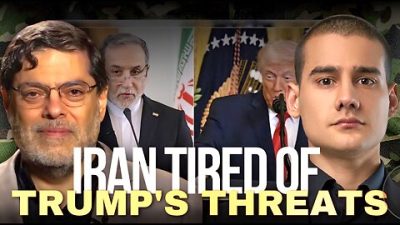
Iran Walks Out On Peace Deal Due To Trump’s Threats
or go to
Aletho News Archives – Video-Images
From the Archives
As Hillary Clinton kisses up to Henry Kissinger, RT looks at 4 of his most heinous acts
RT | September 3, 2016
… While Clinton retains the ultimate warmongering seal, RT examines some of Kissinger’s most memorable acts… Read full article
Blog Roll
 Aletho News
- IRAN WALKS OUT ON PEACE DEAL DUE TO TRUMP’S THREATS – w/ Prof. Seyed Mohammad Marandi
- Moderna’s mRNA Flu Vaccine Gets Unanimous Thumbs-Up Despite Risks, Low Efficacy
- UK Speech Regulator’s Telegram Questions Point Toward Private Chats
- Cuban FM blasts Rubio for ‘chronically lying’ about US fuel blockade
- Al-Jazeera demands punishment for Israeli officials following latest assassination of cameraman
- Iran opens hundreds of legal cases over US, Israeli aggression: Prosecutor general
- Iran delegation protests Trump’s threat at Switzerland talks, weighs ‘proper’ response: Source
- Terms of US capitulation to Iran presage new era for the region
- Strategic Oil Reserve Nears Collapse… US Must Choose: Guns or Butter
- The Story the Media — and the Government — Don’t Want You to Hear
- If Americans Knew
- JNS Policy Summit to kick off in Israel
- Fatalities From Israel’s Vast Gaza Genocide Deliberately Undercounted
- ‘Reproductive genocide’ in Gaza; death toll in Lebanon tops 4,000 (during a ceasefire) – Daily Update
- Israelis Invaded Lebanon And Then Cried Victim When Their Soldiers Got Killed
- FARA Docs: Israel is Spying On Millions Of Christian Americans In Their Churches
- Why US presidents from both parties end up cursing Benjamin Netanyahu
- Israel Asked Facebook to Censor Iran War Content, Internal Documents Show
- Deaths in Gaza undercounted, possibly by 100s of thousands; “Psychopath” Ben-Gvir talks trash – Daily Update
- UNICEF: “Trauma is woven into the very fabric of childhood in Gaza”
- 15 articles a day: The extent of the Israeli army’s media interference
- No Tricks Zone
- THE TRANSCEIVER PARADOX: Why Organoid Intelligence (OI) Could Become Our Ultimate Alien Predator
- German Wind Turbines Face Regulatory Shutdown Due To Excessive Noise
- New Study: Chile’s Relative Sea Level Was 3.2 Meters Higher Than Today During The Mid-Holocene
- Beyond The Pitch: Why FIFA’s World Cup Is One Of Humanity’s Best Investments
- Climate Alarmists Now Using Natural Phenomena To Support Their Claims
- New Study: Significant CO2 Fluxes From Non-Volcanic Sources Are Largely Neglected In Carbon Budgets
- Women Climate Scientists Being Harassed, Insulted By Skeptics, Claims Berkeley Earth Researcher
- Germany’s Longterm Spring Climate Data Show “No Climate Trend”
- New Study: Solar Photovoltaic, Wind Power Fail To Meet Annual Energy Demands 62% Of The Time
- Germany’s Die Welt: “Too Much Is Too Much” … Green Energies Are Cannabalizing Each Other!
 Aletho News