Remember All the Children, Mr. President
America’s Selective Grief
By BILL QUIGLEY | CounterPunch | December 18, 2012
Remember the 20 children who died in Newton Connecticut.
Remember the 35 children who died in Gaza this month from Israeli bombardments.
Remember the 168 children who have been killed by US drone attacks in Pakistan since 2006.
Remember the 231 children killed in Afghanistan in the first 6 months of this year.
Remember the 400 other children in the US under the age of 15 who die from gunshot wounds each year.
Remember the 921 children killed by US air strikes against insurgents in Iraq.
Remember the 1,770 US children who die each year from child abuse and maltreatment.
Remember the 16,000 children who die each day around the world from hunger.
These tragedies must end.
Bill Quigley is a human rights lawyer and law professor at Loyola University New Orleans and Associate Director of the Center for Constitutional Rights. You can reach Bill at quigley77@gmail.com
Connection to the Land Cannot Not Be Broken
The struggle for land rights near the Gaza border
By Joshua Brollier | Voices for Creative Non-violence | December 15th, 2012

Mohammed and Ahmed Qdeih Dec 15, 2012 Photo- Maher Alaa
Gaza City – Yesterday in al-Faraheen, Gaza, Israeli Occupation Forces shot and wounded an unarmed 22 year old farmer, Mohammed Qdeih, from behind.
Mohamed and nine others went out to their fields in the early afternoon, walking approximately 250 meters from the Israeli border. Within minutes, two heavily armed Israeli military jeeps rushed to the security fence. They issued a warning for the farmers and residents to leave the area and shortly thereafter the Palestinians, intimidated by the heavy military presence, began to head back to the village of Abasan. The soldiers were not satisfied and opened fire, piercing Mohamed’s right arm from the backside. Israeli forces continued to shoot rounds of live ammunition while Mohamed and the others frantically evacuated and waited for an ambulance. Another young Palestinian, 19, was shot yesterday near the border in Jabaliya.
Under the siege, Israeli “closed military zones” have confiscated up to 35 per cent of Gaza’s arable land, which was previously used for fruit and olive orchards, wheat and various vegetables. With nearly half of Gaza’s population designated as “food insecure” by UN Office for the Coordination of Humanitarian Affairs (OCHA) and the farming industry having been crippled from the inability to export products under the Israeli blockade, this land is essential for the livelihoods of thousands of farmers and residents of Gaza. Even so and given that four Palestinians have been killed and over 50 injured since the November 21st, 2012 ceasefire agreement, one might ask why anyone would risk their life and venture near the border at all.
Palestinians have had varying experiences near the fence. There have been some successes with farming and some incidents resulting in death and serious injuries. The agreement between Israel and Hamas clearly stated that Israeli forces would “refrain from targeting residents in the border areas” and to “stop all hostilities in the Gaza Strip land, sea and air including incursions and targeting of individuals.” Hamas and other factions have held up their end of the bargain with not a single rocket being fired from Gaza.
As a participant in an international solidarity team, I sat down this with Mohammed Qdeih and family members this afternoon to get their perspective on the breach of the ceasefire and why they would risk their lives in pursuit of reclaiming their land. “The ceasefire is without any sense,” said Mohammed. “They attempted to kill me.” Mohammed is single but works the land to help provide for his 15 extended family members who reside together in Abasan al-Kabir. The family has approximately ten dunams of land which fall in the vaguely defined “buffer zone.” He is one of only five who are able to work in the fields and now the family will be without his help for a month at least.

Farmers work with solidarity activists 12.15.2012 Photo- Maher Alaa
After waiting patiently for Mohammed to tell his story, attention shifted to the eldest member of the family, Ahmed Hassan Jabbar Qdeih. Around ninety five years old, Ahmed became infuriated and began to speak up passionately. “What I have seen in my lifetime is too much to bear!” Though they are originally from Abasan, the Qdeih family used to have 500 dunams of land which spread far beyond Gaza’s borders, most of which fell in what is now considered Israel. In 1948 when Ahmed was in his thirties, he was working near the local water well when Zionist militias terrorized his farm. Ahmed was detained, along with his family, and taken to their house where they were forced to watch as his father was murdered in front on them. The militias destroyed their home, bombed the well and set ablaze 60 dunams of land. Additionally, they stole 60 sheep and two cows to take with them.
Mr. Qdeih also spoke of February 7th, 1957. Just before Israel withdrew from the Gaza Strip in March of that year (under very strong pressure from the United States), Ahmed again barely escaped with his life. Presumably during one of Israel’s last “screening operations” to eliminate members of the Palestine Brigades in which over 500 Palestinians were killed, Israeli forces lined up Ahmed and ten other men who were then mowed down with gunfire and executed. The rifle which targeted Ahmed malfunctioned. When he was later discovered to still be alive, he was arrested and imprisoned in Israel for eight years. While in jail, the prison guards stomped on his hands and beat him mercilessly, leaving him permanently disabled and unable to walk properly. In the process of explaining this, Ahmed almost removed his shirt successfully in front of all present before being discouraged by a relative standing nearby. “Look, look! You can still see the scars on my back,” he nearly screamed in a fashion as if he was still reliving those torturous years.

UNEF forces in Gaza, 1957 Photo- Palestine Remembered
Having a proud persistence in farming and a history of tragedy dating back to the Nakba, the connection to the land runs deep for the Qdeihs and obviously so do the scars. As many Palestinians feel that they have taken the victory from the recent conflict, the present situation holds many possibilities for farmers like the Qdeih family. However, recent events have been no less distressing. Two days after the Israeli Pillar of Cloud offensive, Anwar Qdeih, the twenty year old cousin of Mohamed Qdeih, was shot and killed while participating in an impromptu demonstration near the border.
In a celebratory mood due to the gains supposedly guaranteed by the ceasefire and in defiance of the brutality of the recent Israeli assault, a small group consisting primarily of young men headed to the “buffer zone.” When approached by heavily-armed Israeli soldiers, some threw stones and managed to cross the first security fence, which does not constitute the official border. Upon confrontation with the soldiers, the group turned back and the Israeli forces opened fire striking Anwar in the head and killing him instantly. Eighteen others were wounded, including three children. (There is also a second fence the protesters did not reach which is electrically charged, more heavily guarded and virtually impenetrable to such a group. There are no Israeli houses or civilians in the vicinity. It is also essential to remember that Palestinians have a legal right to resist the occupation through such demonstrations and even armed resistance.)
The Israeli military establishment seems to be confounded that, for all its advanced weaponry and fire power, hundreds of young men like Anwar and Mohammed and elders like Ahmed continue to come out daily to their fields. The right-wing, ruling elite and even many self-proclaimed “liberals” in Israel appear to be in denial that the Palestinians’ claim to their land and will for self-determination is unquenchable. While they talk of more deadly operations like Cast Lead and Pillar of Cloud, they continue with the harassment of farmers and fishermen. While they provide for and forcefully protect more illegal settlements and carry out the demolitions of Palestinian homes in the West Bank, they justify the killing of a young man at a check point in Hebron and the following vicious assaults on the media. While strengthening apartheid policies against Arab and non-Jewish Israelis and fortifying new stretches of the separation wall, they feel the need to collectively punish the civilian population of Gaza with siege. While they aggressively stomp any remnants of a two-state solution under their feet and isolate themselves with mantras of victimhood, the United Nations has affirmed the right to Palestinian statehood.
What are the goals and likely consequences of these violent and obstructionist policies? How could they possibly make Israel more secure or lead to a just solution? All the while, resistance is again becoming more and more popularized among Palestinian civilians and the factions are moving towards uniting. Regardless of the new shapes the resistance takes or any path the Israelis choose, as evidenced clearly since 1948 until this very day, the Palestinians’ deep connection to and affection for their homeland cannot be broken.
Joshua Brollier is a co-coordinator with Voices for Creative Nonviolence. He can be reached at Joshua@vcnv.org.
Links:
1. http://www.ochaopt.org/documents/ochaoptgazablockadefactsheetjune2012english.pdf
2. http://www.imemc.org/article/64748
3. http://vcnv.org/israeli-forces-fire-on-gaza-farmers-and-internationals-in-khuza-a
4. http://www.media-diversity.org/mdi/additional-files/documents/c-books/Unprotected%20Palestinians%20in%20Egypt%20since%201948%20%5BEN%5D.html#page19
5. http://www.pchrgaza.org/portal/en/index.php?option=comcontent&view=article&id=9072:weekly-report-on-israeli-human-rights-violations-in-the-occupied-palestinian-territory-22-29-nov-2012&catid=84:weekly-2009&Itemid=183
6. http://en.wikipedia.org/wiki/IsraelandEgypt%E2%80%93GazaStrip_barrier
7. http://www.jadaliyya.com/pages/index/8807/is-gaza-still-occupied-and-why-does-it-matter
8. http://972mag.com/why-was-17-years-old-muhammad-killed/61950/
Related articles
- Israeli forces attack Press TV crew in Gaza (alethonews.wordpress.com)
Israeli forces attack Press TV crew in Gaza
Press TV – December 16, 2012
Israeli forces have opened fire on Palestinian farmers and Press TV crew in the southern Gaza Strip, Press TV reports.
Press TV correspondent Ashraf Shannon said Israeli forces fired on the farmers and Press TV crew near the border fence in the Khan Yunis area.
Shannon said, “Israel troops were standing 200 to 250 meters away from us, and it was clear that we were journalists, standing right behind the farmers.”
But “all of a sudden, they started shooting [at us]. No one was threatening them. No one was firing. No one was throwing stones at them.”
On November 21, Press TV correspondent Akram al-Sattari was injured in an Israeli airstrike on a hotel that had housed journalists in the Gaza Strip. The day marked the start of an Egypt-mediated ceasefire agreement, which ended an eight-day-long Israeli war on the coastal sliver that had killed at least 166 Palestinians.
Related articles
- Israeli soldiers shoot, injure young Gaza man (alethonews.wordpress.com)
- Reuters deplores Israeli mistreatment of journalists (alethonews.wordpress.com)
- Russian TV office destroyed in Israeli attack on Gaza (weeklyintercept.blogspot.com)
- Israeli forces fire on Gaza Farmers and Internationals in Khuza’a (palsolidarity.org)
Israeli soldiers shoot, injure young Gaza man
Ma’an – 14/12/2012
GAZA CITY – A young Palestinian man was shot and injured Friday evening by Israeli soldiers east of Jabaliya in the northern Gaza Strip, medical officials said.
Gaza paramedics told Ma’an they evacuated a 19-year-old to Al-Awda Hospital in the northern Gaza Strip after he was hit by two live bullets in his feet near Abu Safiyya Hill east of Jabaliya.
They added that Israeli troops fired live bullets and tear gas canisters at Palestinians near the border area. One man suffered from tear-gas inhalation, they said.
An Israeli army spokeswoman told Ma’an that “IDF forces acted within the rules of engagement” but said she was unable to elaborate about why the soldiers opened fire.
Israeli troops have fired several times across the border since a ceasefire agreement between Israel and Hamas went into effect in November.
The latest incident was Monday, when military vehicles crossed several hundred meters past the border near Khan Younis, but there were no reports of injury.
Israel has imposed a no-go zone on the borders, but agreed to stop targeting Palestinians in the area as part of the ceasefire, Gaza’s government has said.
When a Palestinian was killed in the zone by Israeli forces a few days after the ceasefire, Hamas security forces deployed in the area to make sure Palestinians didn’t approach the border fence.
Related articles
- Gaza man dies after being shot by Israeli troops in Rafah (alethonews.wordpress.com)
- Israeli tanks enter Gaza and breach ceasefire again (bikyamasr.com)
The Al Dalu family: “We want justice”
By Rosa Schiano | il Blog di Olivia | 4 December 2012
On 18 November 2012, on the fifth day of the Israeli military offensive “Pillar of Defence” against Gaza, a war bulletin reported 72 people killed, including 19 children, 670 wounded, most of them women and children. That day, the Israeli air force bombed a three-storey building in Nasser Street, Gaza City, wiping out an entire family.
I was, like every day, at Shifa hospital. Suddenly ambulances brought the bodies of the young victims of the brutal attack:
Ibrahim Al Dalu, 11 months old
Jamal Al Dalu, 6 years old
Yousif Al Dalu, 5 years old
Sara Al Dalu, 3 years old
Even their mother died: Samah Al Dalu, 22, and their father, Mohammed Al Dalu, 28. The children’s Aunt also died, Ranin Al Dalu, 22, and the second aunt, Yara Al Dalu, 17, whose body was found just after 4 days in the rubble of the building. And also the two grandmothers died, Suhila Al Dalu, 75, and Tahina Al Dalu, 48. The bombing of the building of the Al Dalu family also hit a building next door, where two people were killed: Mzanar Abdallah, 20, and Amina Mznar, 80. A whole family was wiped out. The bombing took place on the entire three-story building which was completely destroyed.
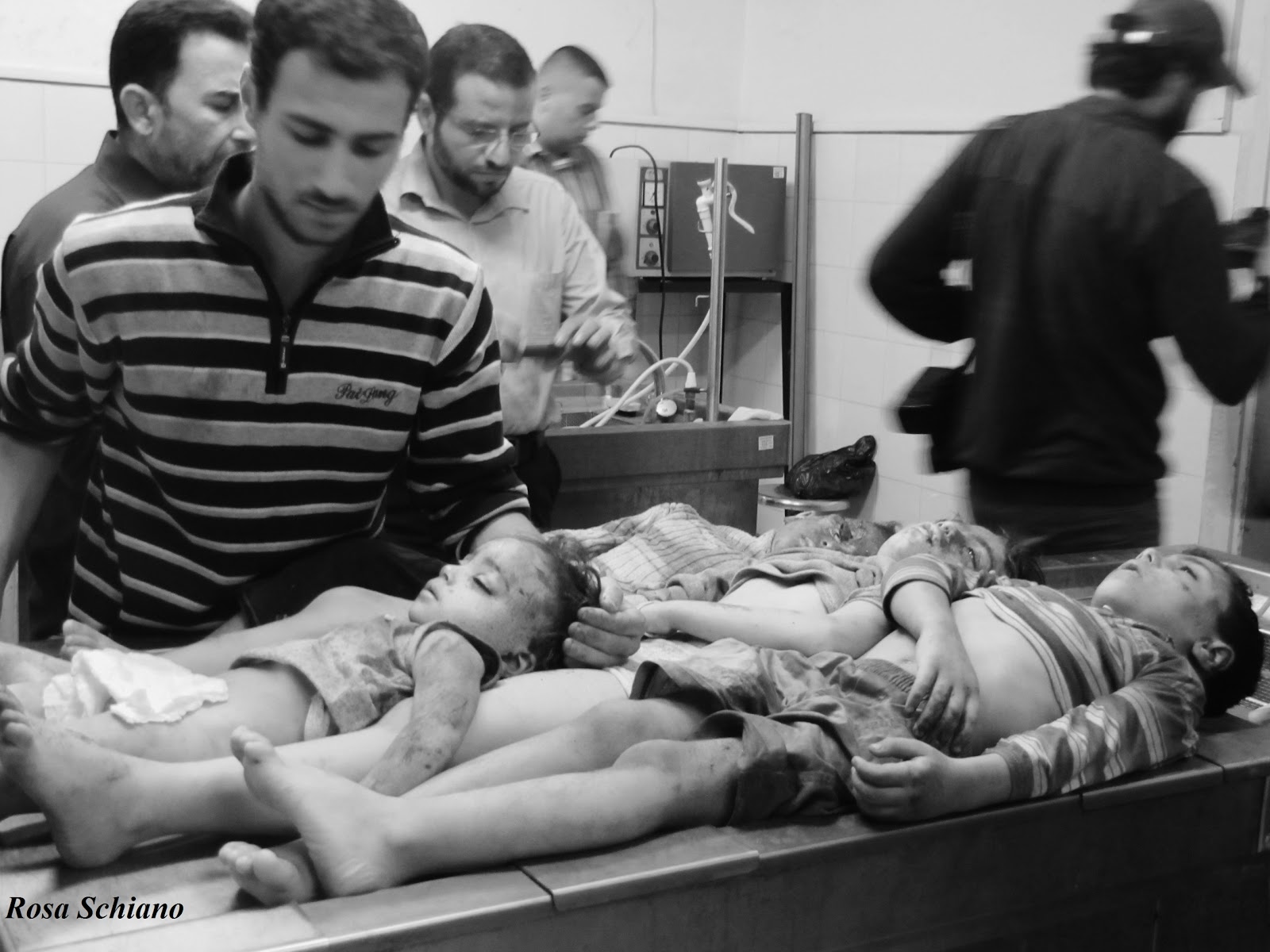
Shifa hospital, 19 November 2012, bodies of the young victims. By the bodies, Yasser Saluha, the brother of the children’s mother.
On Monday, December 3rd, 2012, I had the opportunity to talk to the brother of the father of the children, Abdallah Jamal Al Dalu (20 years old). He talked about that night. “I was out with my father to to get food, when I received a call where I was told that my house had collapsed. I was shocked.” Abdallah and his father lived in the same building where he lived with the rest of his family.
In Gaza extended families often live together in the same building. Abdallah and his father are the only survivors of the Al Dalu family. All the other members of the family died under the rubble.
“I went home, I saw it destroyed, I could not speak,” continued Abdallah, crying. “My whole family was in the house. Then I went to the hospital and saw the bodies, it was a disaster.” Abdallah’s eyes were reliving what they had seen that afternoon.
Four days after the bombing Palestinian bulldozers excavating the rubble found the bodies of the children’s father, Mohammed Jamal Al Dalu and aunt, Yara Al Dalu.
Now Abdallah and his father are renting another house. They do not have beds to sleep in or the necessary living facilities, nor do they have clothes to wear.
Abdullah has asked us to ask the International Criminal Court to investigate what happened. “Children and women were killed in this massacre.”
Before leaving, I entered another building of the brothers of Mohammed Jamal Al Dalu, and Ahmal Jamal Al Dalu. Ahmal was not in Gaza during the war, but in Turkey, where he lives with his wife and family. “We want justice”, said Ahmal. “We want justice more than financial aid, because the money can go. What has happened is not a mistake, it is a crime. It is inhuman. It is not the first crime, crimes have been repeating for 64 years. We live without water, without electricity. It’s enough. ”
I translated his words in the darkness of the building while a friend lit up my notebook with only the light of the phone, and I said goodbye with a promise to stay in touch.
Our task now is to ensure that these crimes are not forgotten and that the Al Dalu family receives justice by bringing what happened to the International Criminal Court.

Photo of Abdallah Jamal Al Dalu, the brother of Mohammed Jamal Al Dalu

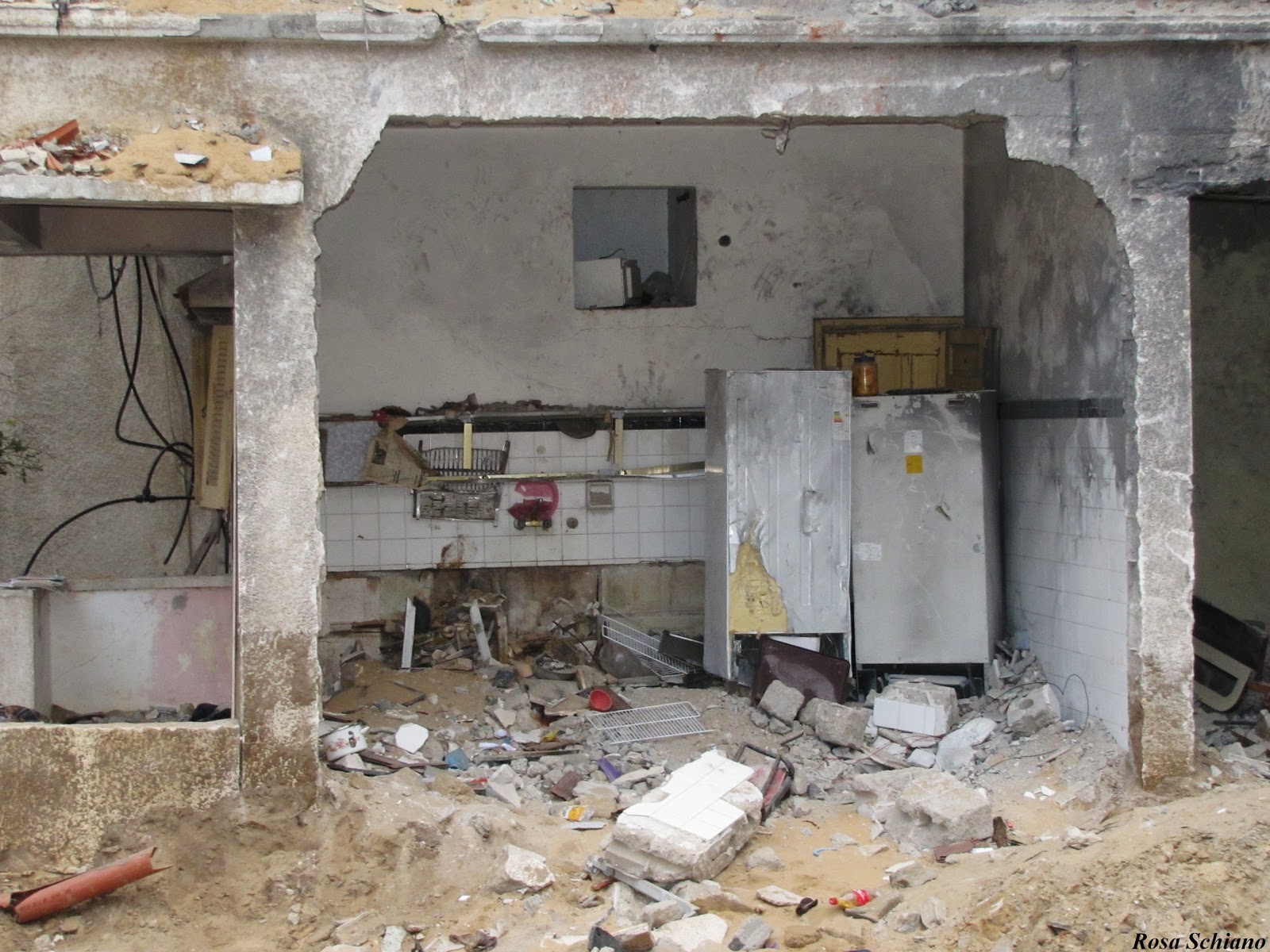
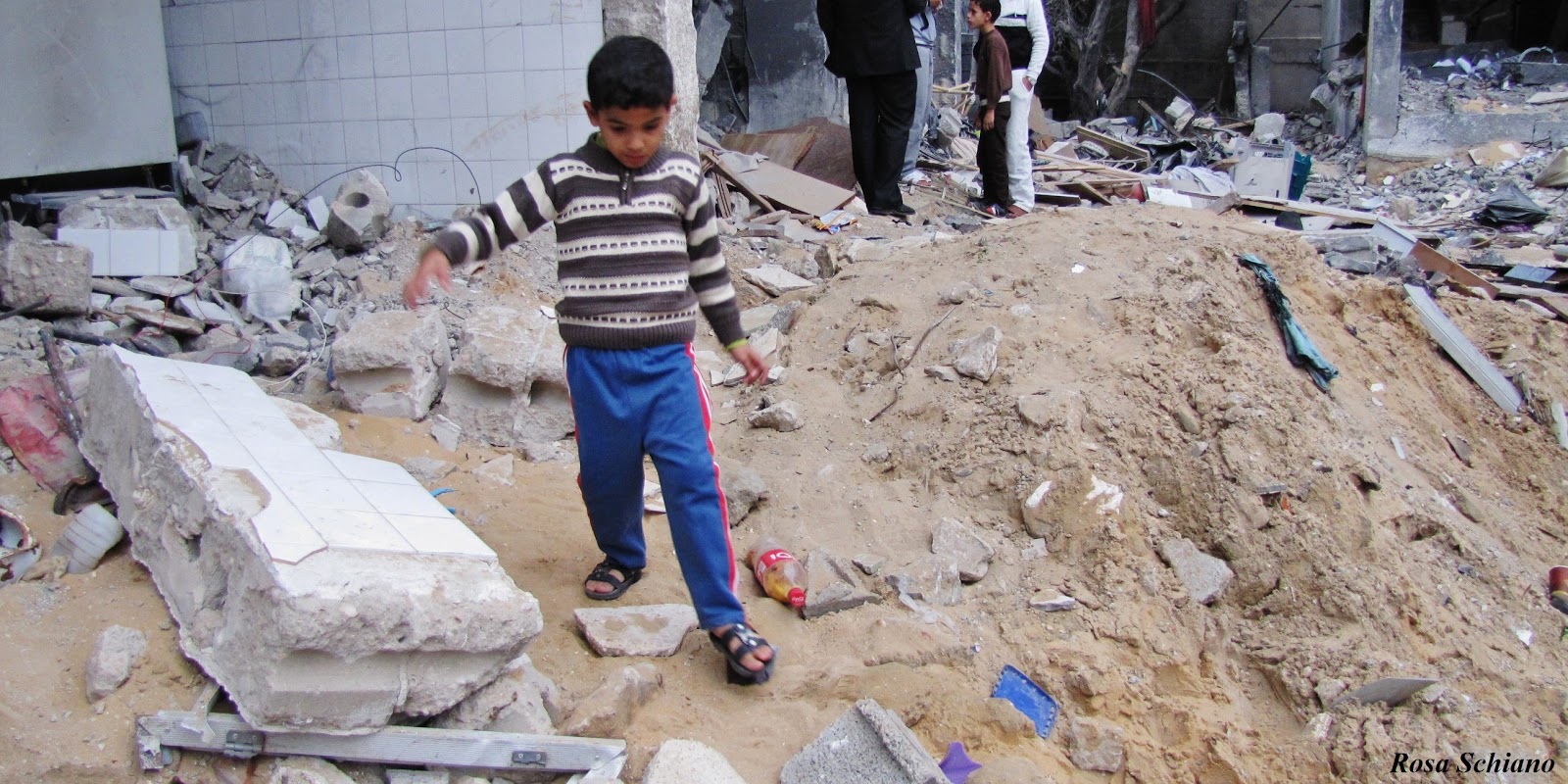
The Al Dalu family bombed home
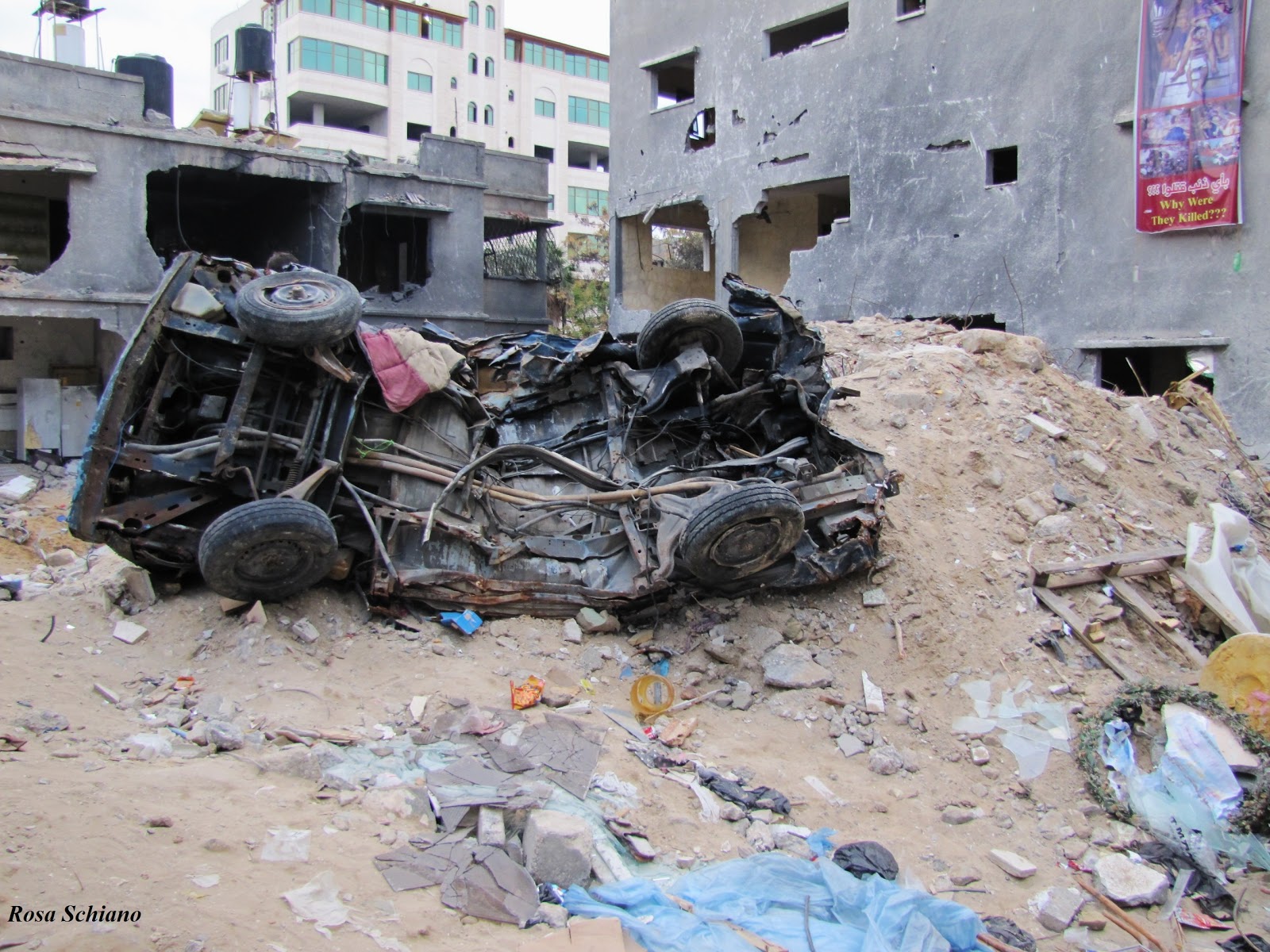
The Al Dalu family bombed home
More photos:
The building next to the Al Dalu house bombed, in which two people died, Mzanar Abdallah, 20, and Amina Mznar, 80. The old woman was in a wheelchair and was in the kitchen at the time of the bombing. Her wheelchair was found in the rubble. See more photos here.
Tonight I am confused
By Johnny Barber | Voices for Creative Non-violence | December 1, 2012
Tonight I am confused.
I have been in Gaza for five days now and I am having difficulty understanding the 8-day war and the subsequent ceasefire. Let me explain the difficulty I am having. The Israeli Offensive Forces insist they protect civilians in Gaza, only targeting terrorists. They have several methods to protect innocent civilians. One method is to call the civilians on the phone, another method is to drop leaflets telling them to flee for their lives, as an attack is imminent. During the latest offensive, Israeli dropped leaflets in the rural areas telling people to flee to the city. In Gaza City, leaflets were dropped warning people to flee to the rural areas. A new, ingenious method they use to protect civilians is to drop ‘loud, non-lethal bombs’ on a home as a warning for the inhabitants as to what will come. They even have a name for this warning. They call it ‘roof tapping’. Then anywhere from 3 minutes to 20 minutes pass before they bomb the house from F-16’s. These bombs are very large and very lethal. The homes I have seen today have been completely flattened, and the houses around the target are also rendered uninhabitable.
The ‘non-lethal bombs’ penetrate rooftops and can travel through four stories. Children or other civilians sitting under these bombs lose limbs, suffer head trauma, shrapnel wounds, and other injuries. The idea behind these warnings is that inhabitants will flee their homes once they are warned. If elders, small children, newborns, or disabled people are in the home, this can be a difficult endeavor. If a child suffers an amputation, fleeing will take a little more precious time. But lets ignore these complications as they just muddy the waters. I am amazed at the generosity of the Israeli occupiers. You see, they are the “Most moral army in the world,” everyone knows this. The generals and politicians have been saying this for decades!
But this is my consternation. If you are so bent on protecting civilians and killing ‘terrorists’ why warn civilians to leave? Do they think the terrorists, who everyone knows hide behind civilians, will remain behind after the warning?
An even more confounding question remains. Why flatten an empty home?
After the most recent ceasefire agreement, it was stated that farmers would be able to reach their lands in the buffer zone that Israel established after they so generously abandoned their illegal settlements in Gaza. The farmers were thrilled that they would be able to farm on the 300-meter swath of land known as the buffer zone- better known here in Gaza as the no go zone, because if they dared try to access this land they were immediately targeted by Israeli snipers, but I digress.
On Wednesday we accompanied farmers to the buffer zone in Johr el Deek. It was amazing! We walked right up to the razor wire barrier! We watched as 2 Israeli jeeps approached the fence. I was smiling as they got out of their jeeps, but my smile was erased as they lifted their weapons and fired toward us. Of course, they didn’t shoot us, the ceasefire was in effect for an entire week! I was confused though, as they lobbed tear gas canisters at us, and continued firing over our heads as we retreated. Perhaps the soldiers were as confused as I was about the details of the agreement. After all, unfettered access to the land is a little vague. Perhaps the farmers misunderstood.
The fishermen faced a similar dilemma. After the ceasefire was announced, the fishermen were told that Israel, in it’s magnanimity, would allow the fishermen to fish in Gazan waters up to 6 nautical miles from the shore. This was double (yes double!) the limit that has been in effect for the past 6 years. The fishermen were happy. They would have an opportunity to provide for their families. Never mind that the Oslo Accords stated fishermen would have access to 20 nautical miles of the sea. That was way back in 1993. Who could expect agreements so old to be respected now?
The fishermen I spoke with said they had access to the 6-mile limit for two whole days. Two days of fishing without risking their lives to feed their kids! It was great. So I was astonished to learn that on Wednesday, exactly one week after the ceasefire agreement, numerous fishing boats, in waters from 3 nautical miles to 6 nautical miles came under heavy attack by the Israeli Navy. One boat was sunk, 3 boats had their engines destroyed by gunfire, one trawler was confiscated and 9 fishermen were arrested. Of course, the Israeli officers made sure the fishermen stripped and jumped into the sea before they sunk the boat. They were safely in custody on the Israeli gunboat before the Israeli Navy blasted the fishing boat to smithereens.
The fishermen received no warnings. Of course everyone realizes that cell phones don’t work so far from shore and dropping leaflets would be impractical as most of the leaflets would fall into the water. And even I know ‘roof tapping’ at sea would be way too dangerous, as the possibility of harming the civilian fishermen would be high.
The best approach is to simply start firing from hundreds of meters away as the gunboats accelerate toward the fishing trawlers. This gives the fishermen at least 3 minutes to pull up their nets and escape back to port. I am not certain what changed on the third day for these fishermen, but few fish were caught.
We also visited the homes of 2 children who were killed. One was 15 year old, Hassan Jamal Nasser. The other child was 9-year old Fares al-Basyouni. Both were killed in their homes as they slept.

The father of Fares stands near where the shrapnel penetrated his home and decapitated his son
Shrapnel that penetrated the wall decapitated Fares. His father described the horrific scene. ‘We didn’t hear the bombs. We woke to the sound of windows shattering and the house shaking. The house was full of smoke. My daughters and sons were screaming as I moved from room to room to find them.’ Fare’s lifeless torso landed on top of his 14-year old brother, who ran screaming from the house into the night.
I thought this was impossible- didn’t they receive the warnings? Hassan’s cousin Mohammed confirmed leaflets fell from the sky 20 minutes after the attack. So, you see, they were warned.
One thing is certain. Israel has a right to defend itself. President Obama said, ‘There’s no country on Earth that would tolerate missiles raining down on its citizens from outside its borders.’ I agree with this wholeheartedly, who can deny it? I also understand that Israel has to teach its enemies a lesson from time to time, and I imagine the sooner the better. They certainly don’t want the people of Gaza to imagine what it must be like to be free, this would only encourage the terrorists.
So you see my dilemma. What I read in the corporate media and what I hear from my government and Israeli politicians doesn’t quite square with the eyewitness accounts on the ground. Maybe the IOF can drop some leaflets and set me straight.
Johnny Barber Co-coordinates Voices For Creative Nonviolence All photo credits: Johnny Barber
Related articles
- Gaza man dies after being shot by Israeli troops in Rafah (alethonews.wordpress.com)
- Army Kidnaps 21 Palestinians In West Bank, Gaza (imemc.org)
- In new violation of ceasefire agreement, Israeli forces arrest 14 fishermen and confiscate 3 fishing boats: number of arrested fishermen increases to 29 and confiscated boats to 9 (palsolidarity.org)
CPJ: Israel must explain targeting of journalists in Gaza
CPJ | December 2, 2012
Dear Prime Minister Netanyahu,
The Committee to Protect Journalists is gravely concerned that Israeli airstrikes targeted individual journalists and media facilities in the Gaza Strip between November 18 and 20. Journalists and media outlets are protected under international law in military conflict.
A series of Israeli airstrikes struck two buildings that house news media, resulting in injuries to nine journalists, while separate missile attacks resulted in the deaths of three journalists, according to news reports and CPJ research. Israeli officials have broadly asserted that the individuals and facilities had connections to terrorist activity but have disclosed no substantiation for these very serious allegations. CPJ has repeatedly sought, by email and phone, supporting details or evidence from the Israel Defense Forces spokesperson’s office. We have yet to receive information from the spokesperson’s office to substantiate its allegations.
On November 18 and 19, airstrikes targeted Al-Shawa and Housari Tower and Al-Shuruq Tower, both of which are well-known for housing numerous international and local news organizations. The attacks damaged the offices of Hamas-run Al-Aqsa TV and Al-Quds TV, Sky News, Russia Today, Al-Arabiya, and the independent Bethlehem-based Ma’an News Agency. Among the nine wounded journalists was Khader al-Zahhar, a cameraman for Al-Quds TV who lost his right leg in the explosion, according to news reports. Several other international and local news organizations, including Reuters, Agence France-Presse, The Associated Press, and CNN, also have offices in the targeted buildings. Israeli spokesman Mark Regev told Al-Jazeera English on November 19 that Al-Aqsa TV is a “Hamas command and control facility” and that “Hamas used communication facilities on top of the buildings.” He did not state whether or how Hamas used the station militarily.
On November 20, Mahmoud al-Kumi and Hussam Salama, cameramen for the Hamas-run Al-Aqsa TV, were driving away from an assignment at Al-Shifaa Hospital when an Israeli missile hit their vehicle, according to Al-Aqsa TV. The car was marked “TV” in neon-colored letters, the Hamas-run station said. The two men were killed.
A third journalist was killed when his car was hit by a missile that same day, AP reported, citing a Gaza health official. Local news reports identified the victim as Mohamed Abu Aisha, director of the private Al-Quds Educational Radio, whose vehicle was hit while he was driving in the Deir al-Balah neighborhood. The reports did not say whether Abu Aisha was engaged in journalistic work at the time, and CPJ continues to investigate the circumstances of his death.
Al-Aqsa TV, the official Hamas-run television channel, provides news and information that overtly reflect the organization’s anti-Israel perspective. Al-Quds Educational Radio is a private radio station geared toward educational programs; it also provides a pro-Hamas perspective.
On November 20, AP cited Lt. Col. Avital Leibovich, an Israeli military spokeswoman, as saying the three individuals were Hamas operatives. “The targets are people who have relevance to terror activity,” AP quotes Leibovich as saying. An unsigned entry posted on the Israel Defense Forces blog that day asserted that an individual named Muhammed Shamalah, whom it referred to as a Hamas military commander, had been targeted in an airstrike that struck a vehicle identified as “TV.” Neither Leibovich nor the IDF blog entry provided any details to support the claims. Leibovich reiterated these unsupported claims in a letter to The New York Times published on November 29.
CPJ has contacted the IDF spokesperson’s office multiple times, beginning on November 20 and then again on November 27, 28, and 29, and we have sent three written requests seeking an explanation for its claims. We were directed to a Maj. Zohar Halevi who has not responded to our requests.
Alarmingly, spokeswoman Leibovich seeks to erase the crucial legal distinction between armed combatants and journalists covering the perspective of an adversary. “Such terrorists, who hold cameras and notebooks in their hands, are no different from their colleagues who fire rockets aimed at Israeli cities and cannot enjoy the rights and protection afforded to legitimate journalists,” Leibovich writes in the letter to The Times.
All journalists, whether local or foreign, regardless of the perspective from which they report, are afforded the same civilian protections under international law. The Israeli government does not have the right to selectively define who is and who is not a journalist based on national identity or media affiliation. International law also places strict limits on military attacks on all civilian sites, including media outlets. Article 51 of Additional Protocol I to the Geneva Conventions prohibits attacks on civilian sites in which potential damage and loss of civilian life “would be excessive in relation to the concrete and direct military advantage anticipated.”
We request your government provide an immediate and detailed explanation for its actions in targeting Mahmoud al-Kumi, Hussam Salama, and Mohamed Abu Aisha and the two media buildings in the Gaza Strip.
We ask that you consider this a matter of urgency.
Sincerely,
Joel Simon
Executive Director, CPJ
Related articles
- Israel’s War on Palestinian Children (alethonews.wordpress.com)
- #GazaUnderAttack | 2 journalists killed in Israeli airstrike on Gaza (occupiedpalestine.wordpress.com)
Gaza man dies after being shot by Israeli troops in Rafah
Ma’an – 01/12/2012
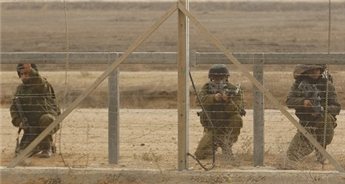
GAZA CITY – A young Palestinian man died late Friday of wounds he sustained hours earlier by Israeli gunfire east of Rafah in the southern Gaza Strip.
Palestinian medics confirmed Saturday that 21-year-old Mahmoud Jaroun was hit by a gunshot to the pelvis Friday evening, and was evacuated to Abu Yousif An-Najjar Hospital in Rafah before medics announced his death around midnight.
On Friday, 11 Palestinians sustained wounds by Israeli fire along the borders between the Gaza Strip and Israel.
Asked about Friday’s shootings, an Israeli military spokeswoman said Palestinians had come up to the fence to vandalize it. Soldiers warned them away, and when that did not deter them, shot at their legs, she said.
Palestinians described the incident as a demonstration, saying that six people were wounded by the Israeli gunfire.
Since a ceasefire in the Gaza Strip was brokered by Egypt, Israeli forces have breached it several times firing at farmers near the border.
Two Palestinians have been shot dead so far and about 40 have been injured.
The Israeli navy has also detained dozens of Gaza fishermen, although Israel agreed to allow Gaza fishermen to go six nautical miles off the coast instead of three.
Related articles
- 15th Violation of truce by #Israel | Israeli gunfire injures 2 in Gaza (occupiedpalestine.wordpress.com)
Featured Video

Trita Parsi: Middle East Unraveling — Are We on the Path to World War?
or go to
Aletho News Archives – Video-Images
From the Archives
Why Saudi Ties to 9/11 Mean U.S. Ties to 9/11
By Kevin Ryan | Dig Within | September 27, 2015
Media interest in Saudi Arabian connections to the crimes of 9/11 has centered on calls for the release of the 28 missing pages from the Joint Congressional Inquiry’s report. However, those calls focus on the question of hijacker financing and omit the most interesting links between the 9/11 attacks and Saudi Arabia—links that implicate powerful people in the United States. Here are twenty examples. … continue
Blog Roll
 Aletho News
- Neria Leiter Was A Legitimate Military Target
- Integrity Initiative: UK-funded network framed dissent as Russian disinformation for years
- ‘We don’t seek permission to defend our country’: Snippets from President Pezeshkian’s UNGA address
- NATO chief wants Europeans to fight American wars [for Israel]
- German chemicals giant reveals details of downsizing
- Refaat Al-Areer Was The Canary In The Coal Mine In Israel’s War On The Truth
- Israeli election committee bars candidate from Knesset race over Gaza war opposition
- French-Lebanese man files war crimes complaint over Israeli attacks
- Mahan Air Flight Lands in China Despite US Threat against Iranian Airlines
- US eyes $10bn fund to rebuild war-battered Gulf infrastructure
- If Americans Knew
- Caught on Tape: AIPAC CEO Boasted of Controlling Trump’s National Security Officials
- Why Hamas Attacked Israel in October 2023 – Israeli professor Ilan Pappé
- They see them, then kill them: Israeli quadcopters track, deliberately target civilians in Gaza
- Winter could turn Gaza’s treacherous, war-damaged buildings into deathtraps
- Majority of Democratic Voters Want to Prosecute Both Biden and Trump Administration Officials Over Gaza
- As Gaza languishes, world leaders gather at the UN – Daily Update
- Sanctions are collective punishment: immoral and self-defeating
- Phosphorus Munitions Fired by Israel Burn Groves, Orchards in Southern Lebanon
- Israel Carries Out New Ceasefire Violations Across Gaza
- AI – Emphasis on the ‘I’: Israel Is Funding AI Chatbot Propaganda
- No Tricks Zone
- New Study: Earth And Venus Surface Warmth Largely Explained By Convection And Lapse Rate, Not CO2 Or Radiation
- 2025 Nature Paper Claiming Worsening Global Drought Gets RETRACTED …Heavily Flawed
- New Study: ‘Global Drought Shows No Detectable Recent Acceleration Under Climate Warming’
- Economic Masterminds: German Socialists Suggest Taxing Productivity Gains Stemming From Using AI
- The South China Sea Has Not Been Cooperating With The Climate Change Narrative
- Energy Crisis: Germany Enters Heating Season With Historically Low Gas Reserve Fill Levels
- New Study: The Antarctic Ice Sheet Gained Mass From 2020-2024 Due To Staggering Snow And Ice Accumulation
- Study: Ocean Heating Rates From Thousands Of Years Ago ‘Dwarf’ Modern Ocean Heating Rates
- Climate Extremists Target, Attack Large-Scale Power Grid Infrastructure In Germany!
- New Study: Antarctic Ice Melt Has Contributed Less Than 1 Centimeter To Sea Level Rise In The Last 30 Years

