EU state blasts Germany over Russia threats
RT | May 28, 2025
Slovakia will not be bullied into changing its foreign policy, Prime Minister Robert Fico has said, calling German threats to cut EU funding due to its stance on Russia “aggressive and unacceptable.”
Fico’s remarks came in response to German Chancellor Friedrich Merz, who said member states that resist the EU’s policies on Russia could face financial consequences.
“Member states that violate the rule of law can be confronted with infringement proceedings,” Merz warned at the WDR Europaforum in Berlin on Monday. “There is always the option of withdrawing European funds from them.”
Merz mentioned both Slovakia and Hungary in response to a question about countries resisting the EU’s policies on sanctions and military aid for Ukraine.
Fico hit back at Merz. “Slovakia is not a little schoolchild that needs to be lectured,” he said on Tuesday on X. “Slovakia’s sovereign positions do not stem from vanity, but are based on our national interests.” He added that “the politics of a single mandatory opinion is a denial of sovereignty and democracy.”
He went on to describe Merz’s remarks as “aggressive” and an indication that “we are not heading into good times.”
“The words of the German Chancellor are absolutely unacceptable in modern Europe. If we don’t obey, are we to be punished? This is not the path toward cohesion and cooperation,” Fico said.
Since returning to office in 2023, Fico has halted Slovak military assistance to Ukraine and has been critical of Western sanctions on Russia. He has also called for economic ties with Moscow to be rebuilt once the conflict with Kiev is over. Late last year, he became one of the few Western leaders to meet with Russian President Vladimir Putin to discuss energy supplies to Slovakia, which were jeopardized by Ukraine’s refusal to extend a gas transit agreement.
On Monday, Merz also said Ukraine’s European backers are no longer restricting the country from launching long-range strikes into Russia using Western-made weapons, later adding that the decision was made months ago. Ukraine’s Vladimir Zelensky, however, said he had not received the go-ahead, while suggesting that it could happen later.
Responding to Merz, Kremlin spokesman Dmitry Peskov warned of a “serious escalation,” adding that the potential move “severely undermines attempts for a peaceful settlement” of the conflict.
Iran draws red line as Europe threatens nuclear ‘snapback’
As indirect US–Iran nuclear talks inch forward, Europe’s fear of marginalization prompts a risky diplomatic maneuver in Istanbul.
By Vali Kaleji | The Cradle | May 26, 2025
In the backdrop of indirect nuclear negotiations between Tehran and Washington, Iranian Deputy Foreign Ministers Majid Takht-Ravanchi and Kazem Gharibabadi met with their European counterparts from France, Germany, and Britain – the so-called E3 of the Joint Comprehensive Plan of Action (JCPOA) – on 16 May in Istanbul.
The meeting, held at Iran’s Consulate General and hosted by Turkiye, brought together EU Deputy Secretary-General for Political Affairs Enrique Mora and his colleague Olof Skoog, alongside Turkish Deputy Foreign Minister Abdullah Celik. The discussions focused on the future of the 2015 nuclear agreement, the status of indirect Iran–US negotiations, and collective efforts to avert further escalation through diplomacy.
Although three earlier rounds of consultations between Tehran and the E3 occurred on 29 November 2024, 13 January, and 24 February 2025, the Istanbul session marked a pivotal moment: the first engagement since the revival of the Iran–US indirect dialogue.
Europe cut out of nuclear talks
Crucially, the EU, much like in the Ukraine peace process, found itself bypassed by Washington. This diplomatic exclusion has intensified Brussels’s urgency to reclaim relevance within the nuclear negotiations framework, apparently even if this means acting as spoiler.
At the heart of the Istanbul summit lies the snapback mechanism – an instrument embedded in the JCPOA allowing any signatory to reimpose all UN sanctions that existed before the 2015 agreement. The clause, originally intended as a safeguard, now threatens to become a geopolitical cudgel.
With the JCPOA’s expiration looming in October 2025, Tehran fears that the E3 may invoke the mechanism as early as this summer, citing Iran’s alleged enrichment beyond 60 percent and its growing stockpile of enriched uranium.
French Foreign Minister Jean-Noel Barrot minced no words during a 28 April address to the UN Security Council, stating that if European security interests are compromised, France “will not hesitate for a single second to reapply all the sanctions that were lifted 10 years ago.” His statement, which reverberated through diplomatic circles, was widely interpreted in Tehran as a stark ultimatum.
Iran’s permanent representative to the UN responded forcefully, accusing France of hypocrisy and warning that Paris’s own breaches of the agreement render any activation of the snapback legally indefensible.
Iranian Foreign Minister Abbas Araghchi echoed this stance in an op-ed for Le Point, characterizing the Istanbul discussions as “a fragile but promising beginning” while cautioning that “time is running out.” He wrote:
“The decisions we make now will shape Iran–Europe relations in ways that go far beyond this agreement. Iran is prepared to move forward – we hope Europe is, too.”
Following the talks, Gharibabadi wrote on X: “We exchanged views and discussed the latest state of play on nuclear & sanctions lifting indirect negotiations. Iran and the E3 are determined to sustain and make best use of diplomacy. We will meet again, as appropriate, to continue our dialogue.”
British envoy Christian Turner echoed this sentiment, affirming the shared commitment to maintaining open channels of communication.
‘Trigger Plus’
Yet not all assessments of the Istanbul summit were diplomatic. Tehran-based daily Farhikhtegan, aligned with Iran’s conservative establishment, described the session as tense and combative.
According to its report, the E3 tabled severe threats, including a proposal for what they termed “trigger plus” – an augmentation of the original snapback mechanism that would allow preemptive punitive measures without requiring technical justification.
Iranian officials, the newspaper reported, dismissed this demand as not only illegal and baseless but also presented in an “inappropriate” tone. The Iranian side reiterated that while they remain open to EU participation in broader nuclear negotiations, any activation of the snapback mechanism would trigger an immediate Iranian withdrawal from the Nuclear Non-Proliferation Treaty (NPT).
Mohammad Ghaderi, former editor-in-chief of Nour News – a media outlet close to Iran’s Supreme National Security Council – summarized the stance bluntly on social media:
“In the tense talks with Iran on Friday, [the E3] while requesting to participate in Iran–US talks, made non-technical & illegal requests, calling it trigger plus. But Iran’s response: Emphasizing the activation of the Trigger Mechanism will lead to Iran’s withdrawal from the NPT.”
The Iranian Foreign Ministry, in characteristic fashion, neither confirmed nor denied these reports, opting for strategic ambiguity to maintain leverage over multiple negotiation tracks.
The October deadline: Strategic implications
As the October 2025 expiration date draws closer, Iran has accelerated efforts to engage the remaining members of the 4+1 framework – China, Russia, France, Britain, and Germany. Trilateral meetings with Moscow and Beijing have underscored Tehran’s strategy of building a multilateral diplomatic buffer against US-European pressure.
However, the snapback clause remains the most potent lever in the E3’s arsenal. According to Article 36 of the JCPOA, any signatory can escalate a compliance dispute to the UN Security Council. Once initiated, this process does not require a vote or consensus, meaning that Russian and Chinese vetoes are nullified.
Should the snapback be triggered, all seven UN Security Council sanctions previously lifted would automatically be reinstated – a scenario with grave consequences for Iran’s economy and its broader regional strategy.
Analysts suggest the E3 may push for this mechanism’s activation as early as July or August, thereby maximizing diplomatic pressure while allowing time to shape global opinion. If that happens, Tehran’s recourse to NPT withdrawal – a threat repeatedly made since 2019 – would likely materialize.
Deputy Foreign Minister Kazem Gharibabadi reinforced this red line in response to a recent International Atomic Energy Agency (IAEA) resolution: “If Europe implements snapback, our answer is to withdraw from the NPT.” As Araghchi, writing again in Le Point, stated unequivocally:
“Iran has officially warned all JCPOA signatories that abuse of the snapback mechanism will lead to consequences – not only the end of Europe’s role in the agreement but also an escalation of tensions that could become irreversible.”
Europe’s desperation for relevance
Europe’s insistence on asserting itself in the JCPOA talks stems from its declining influence across global affairs. From the Ukraine war to the Persian Gulf, the EU has been reduced to a secondary actor. In the Iran file, this marginalization is especially stark.
While Washington and Tehran inch closer to a bilateral formula, Brussels finds itself largely ignored. Nosratollah Tajik, a former Iranian diplomat, argues:
“Europe’s main concern is that Iran and the United States will reach a bilateral agreement without considering European interests. Many of the Middle East [West Asian] crises spill over into Europe.”
The lack of a coordinated EU Iran policy only compounds this anxiety. Theo Nencini, an Iran expert at Sciences Po Grenoble and Paris Catholic University, concurs:
“The E3 countries have not yet managed to define a coherent and relevant ‘Iran policy.’ From Trump 1.0 to Biden, they have always been accustomed to flatly following American positions.”
Nencini believes that unexpected US–Iran direct talks caught Europeans off guard, prompting them to scramble to get involved in the negotiation process despite the fact that “they have always maintained a very strict attitude towards Iran.”
Diplomacy or detonation?
The Istanbul talks, despite their challenges, represent one of the few remaining diplomatic lifelines between Tehran and the E3.
Should these efforts collapse, the consequences would be profound: Iran could withdraw from the NPT, revise its nuclear doctrine, and prompt potential military escalation involving the US and Israel.
Such a scenario would spell the total disintegration of the JCPOA framework and shatter the fragile architecture of non-proliferation diplomacy built over the past two decades.
With less than five months to avert this trajectory, the onus lies on both parties to preserve what little remains of mutual trust. Yet the margin for error continues to shrink by the day.
West’s Long-Range Missiles to Ukraine All Essentially the Same & Russia’s Shooting Them Down
By Svetlana Ekimenko – Sputnik – 26.05.2025
Germany, the UK, France, and the US have removed range restrictions on weapons for Ukraine, Chancellor Friedrich Merz confirmed on May 26.
Whether it’s the Taurus, Storm Shadow, or SCALP, Russia will just keep knocking them out of the sky, Yevgeny Buzhinsky, Chairman of PIR-Center Think Tank Executive Board, Professor of Higher School of Economics who served as the Russian military’s top arms control negotiator from 2001 to 2009, told Sputnik.
The real issue with Germany’s Taurus missile isn’t its 500 km range, but rather what Merz rightly pointed out -without the Bundeswehr, Ukrainians can’t launch them, pointed out the pundit, adding:
“Which makes this a case of direct German involvement [in the Ukraine conflict], plain and simple.”
Germany, the UK, France and the US are no longer imposing restrictions on how far Ukraine can strike with Western-supplied weapons, German Chancellor Friedrich Merz revealed on May 26.
“There are no longer any range restrictions on weapons supplied to Ukraine — not by the British, not by the French, not by us, not by the Americans. This means that Ukraine can now defend itself, including, for example, by striking military positions on Russian territory. Until a certain point, it could not do this,” Merz said in an interview with the WDR TV channel.
Russia’s Foreign Ministry Spokeswoman Maria Zakharova warned that any Taurus missile strike on Russian targets will be seen as Germany entering the war on the side of the Zelensky regime.
Moscow maintains that Western arms deliveries only escalate the conflict and drag NATO deeper into the quagmire.
Germany arming for possible conflict with Russia – Reuters
RT | May 26, 2025
The German military must significantly increase its weapons stockpile by 2029, the year the current government anticipates a potential threat from Russia, according to a directive issued by the country’s defense chief, obtained by Reuters.
The order, titled ‘Directive Priorities for the Bolstering of Readiness’, was signed on May 19 by Carsten Breuer, the inspector general of the Bundeswehr, the news agency reported on Sunday.
Moscow has denied that it has any aggressive intentions toward NATO countries, dismissing Western speculation of a possible attack as fearmongering aimed at justifying extensive militarization by the bloc’s European members.
Breuer’s order emphasizes the procurement of advanced air defense systems and long-range precision strike capabilities effective at ranges exceeding 500km. He has also reportedly directed the military to increase the stockpiling of various types of ammunition and to develop new capacities in electronic warfare, as well as space-based systems for both defensive and offensive missions.
Chancellor Friedrich Merz announced on Monday that his government has lifted restrictions on the range of weapons it can supply to Ukraine to fight Russia. The news is perceived as a hint at the possible delivery of long-range Taurus missiles, which the previous government refused to donate.
In March, the German parliament amended the nation’s law to exempt military spending from the ‘debt brake’, a measure that limits government borrowing. Merz has proposed allocating up to 5% of the nation’s GDP to security-related projects by 2032, a significant increase from the current level of around 2%. He claimed that this expenditure would transform the Bundeswehr into Europe’s most formidable military force.
The rearmament plans necessitate a corresponding increase in personnel. Defense Minister Boris Pistorius indicated in a recent interview that the ruling coalition aims to introduce a recruitment model similar to Sweden’s, potentially ending the current volunteer-only system as early as next year.
The military initiatives come amid economic challenges, including de-industrialization and stagnation. On Sunday, the newspaper Bild said that ThyssenKrupp, a company with over two centuries of history, is undergoing a significant restructuring amounting to dissolution. According to the report, the company plans to reduce its headquarters staff from 500 to 100, transfer its steel mills to Czech billionaire Daniel Kretinsky, sell its naval shipyard Thyssenkrupp Marine Systems (TKMS) in the public market, and divest most other divisions.
Russian missiles ‘fool’ US-made Patriots – Ukrainian military
RT | May 26, 2025
US-designed Patriot air defense systems are struggling to keep pace with Russia’s missile technology, particularly the Iskander missiles, Ukrainian Air Force spokesman Igor Ignat admitted on Monday.
Kiev has long praised the MIM-104 Patriot as a vital part of its arsenal following the deployment of the first battery in April 2023. But the American system is showing critical limitations in the face of Russia’s weaponry, Ignat told Le Monde in an interview.
“The Iskander missiles perform evasive maneuvers in the final phase, thwarting the Patriot’s trajectory calculations,” he said. “In addition, the Iskander can drop decoys capable of fooling Patriot missiles.”
While Ukrainian officials previously lauded the Patriot system for its ability to intercept Russian hypersonic Kinzhal missiles, Moscow has questioned such claims. Russian officials also argue that Kiev often overstates the number of missiles it downs compared to the number actually launched.
As of May, Ukraine is reported to have six active Patriot systems, primarily donated by the US and Germany, with additional components provided by the Netherlands and Romania.
Ukraine’s Vladimir Zelensky has called the Patriot system the only viable defense against Russian strikes, and has stated an aim to acquire a total of 25 units. He recently proposed that Kiev’s European backers fund the purchase of an additional ten systems for Ukraine at a cost of $15 billion. However, the administration of US President Donald Trump has dismissed the proposal as unrealistic.
Ukraine also faces dwindling supplies of interceptor missiles for its Western-donated platforms, even as Russian forces adapt their drone tactics to circumvent existing countermeasures.
Ukrainian forces have escalated their own drone offensives against Russia, moving from overnight attacks to continuous launches throughout the day. The shift comes amid increased pressure from Washington for continued direct peace negotiations. On Sunday, Trump expressed frustration with the lack of progress, blaming both Moscow and Kiev.
From Betar to Shomrim, re-emergence of Zionist private militias in the West

By David Miller | Press TV | May 25, 2025
In April of this year, anti-Zionist Jewish writer Alon Mizrahi claimed that Israeli Prime Minister Benjamin Netanyahu and his network of international Zionists are working to establish a policing force with powers surpassing those of national law enforcement agencies.
Mizrahi described this as the beginning of overt Jewish-Zionist policing of Western societies.
He was referring specifically to the ever more egregious statements from Betar in the US, an ultra-Zionist group affiliated with the far-right Revisionist Zionist movement founded by Vladimir Jabotinsky.
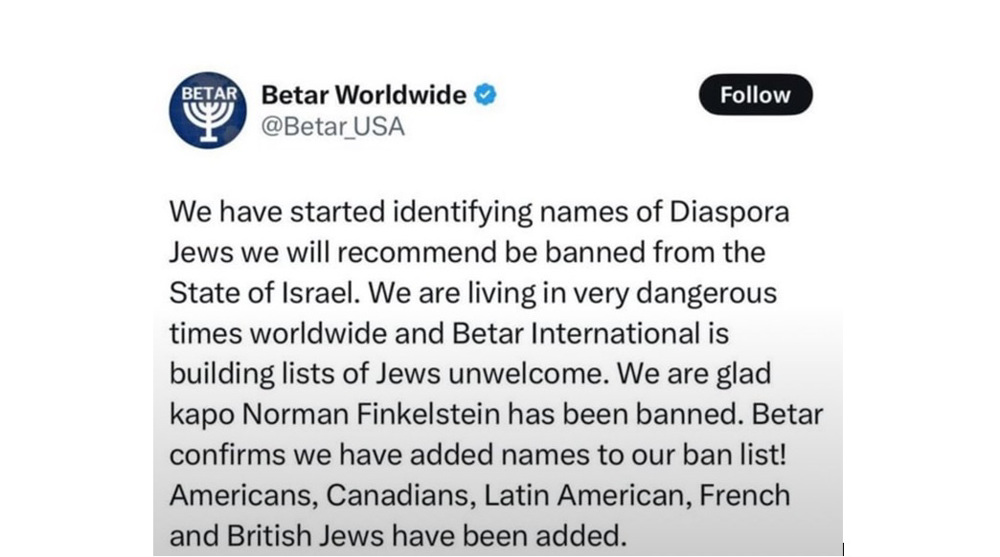
They have threatened to compile lists of Jews to be banned by the Zionist entity across North and South America, as well as Britain and France.
Mizrahi warned, “They start with Jews as a deception: all of you are next.”
However, the situation may already be far worse than what Mizrahi suggests.
Since its founding in 1923, Betar has trained as a paramilitary force. The photo below shows Menachem Begin wearing a Betar uniform in Poland in 1932.
Below it is another photo from Berlin in 1936, taken after the Nazis enacted laws outlawing other political groups in 1933.
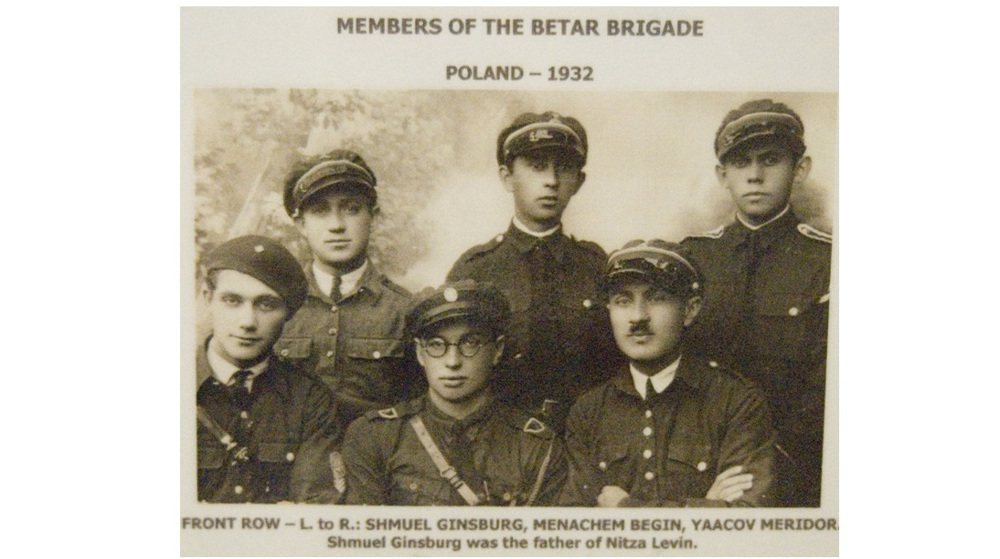
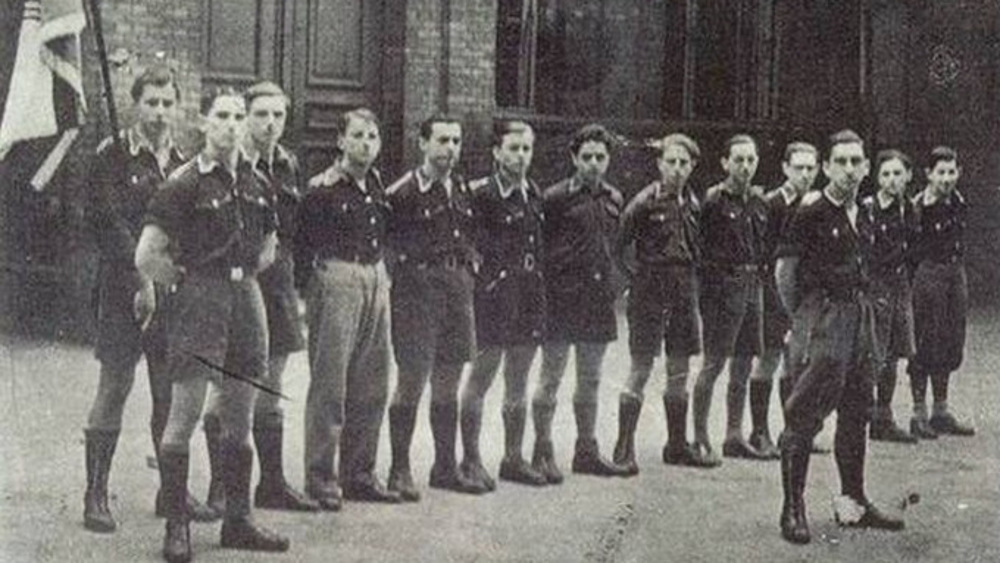
Betar was so closely aligned with the Nazis and Mussolini’s fascists that they were regarded as collaborators. By 1934, Jabotinsky and his Betar youth movement had reportedly “allied with Il Duce,” establishing a naval base north of Rome.
Late that year, Mussolini reportedly expressed support for Zionism and Jabotinsky in particular, stating: “For Zionism to succeed, you need to have a Jewish State with a Jewish flag, and Jewish language. The person who understands that is your fascist, Jabotinsky.”
This remark was made “during a private conversation with Nahum Goldman, founder of the World Jewish Congress, in November 1934,” as reported by Lenni Brenner in Zionism in the Age of Dictators.
Many senior Betar members served in the collaborationist police overseeing the Vilna Ghetto in Lithuania and were involved in betraying Jews in hiding to the Nazis.
One such member, Lotek Salzwasser, was eliminated by Jewish partisans in 1943 for his collaboration, according to Israeli press reports.
Betar and military training
One of the seven core principles of the Betar “Oath” is Magen, meaning “Protection.”
One of Betar’s ideological principles is military preparedness. Betar demands that all its members complete military seminars and know how to use weapons, in order to be ready at any time and to respond personally to a call for defense.
Betar has functioned as a militia since its inception. Here is a film of one of the French branches recorded in 2014 conducting paramilitary training exercises.
In the UK, Betar operated as a registered charity (Brit Tumbledor of Great Britain – Betar) between 1984 and 2004. It was closed down by the Charity Commission in 2004, on the grounds that it had been “Registered in error.”
In March 2025, Betar threatened to murder UN Special Rapporteur Francesca Albanese. On the very same day, the group relaunched its UK branch with a post on Instagram, claiming London “has become, with the time, an epicenter for radical Islam, for hate, for terror.” Their proposed solution?
Today, after more than 30 years, a bunch of strong young leaders stand up to say HERE WE ARE, to defend the Jewish population and to tell them that now we have a solution for the current situation, JEWS ARE NOT AFRAID ANYMORE!
Make no mistake – these threats are part of a deliberate effort to revive Jewish supremacist militias in the UK and the US.
Magen Am
The term Magen also appears in the name of a US-based private Zionist militia called Magen Am, which is currently active in Los Angeles, Orange County, and Phoenix.
Magen Am played a notably violent role in attempts to dismantle the student encampment at UCLA. The group frequently boasts about its close ties to the LAPD, sharing numerous photos of friendly interactions with police officers.
Reports indicate that Magen Am has collaborated directly with law enforcement, including working closely with the LAPD to intimidate and attack student protesters on the UCLA campus.

Magen Am, of course, recruits veterans of the occupation forces’ Lone Soldier programme and some then return to “serve” in the genocide as they proudly boast.
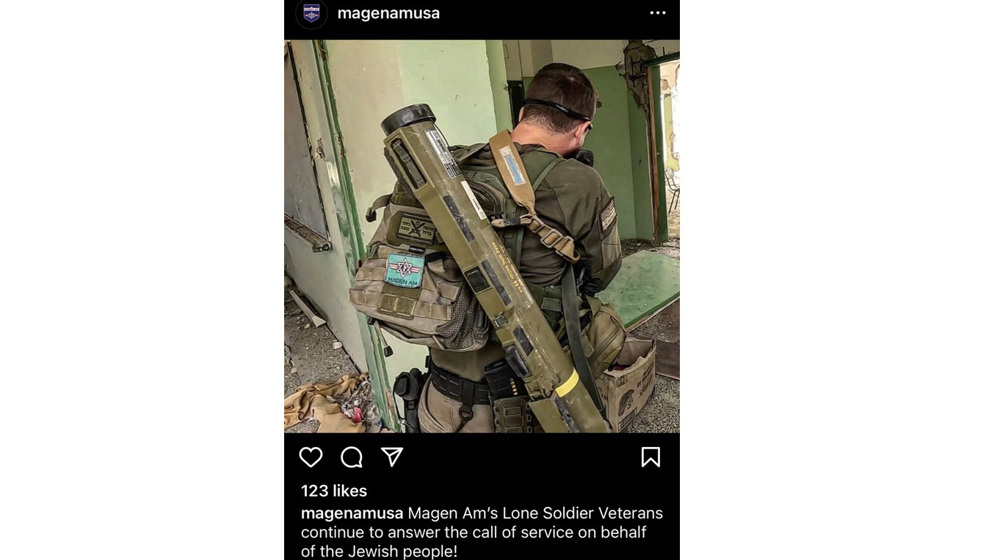
Magen Am was founded in 2017 by Yossi Eilfort, an MMA fighter-turned-Chabad rabbi. The flag of the genocidal Chabad cult was flown by the attackers on campus in Los Angeles.
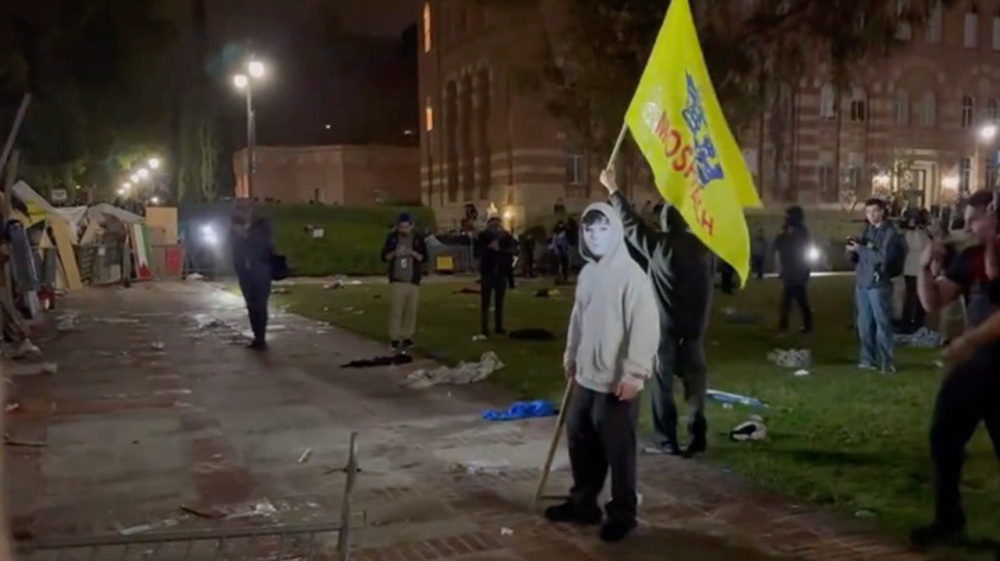
Chabad has many followers in the so-called Hilltop Youth in occupied Palestine, which the Zionist intelligence agency Shin Bet says are responsible for the overwhelming majority of so-called ‘price-tag’ revenge attacks on Palestinians.
The rise of Jewish supremacism in Western societies is becoming increasingly visible, though many continue to deny or downplay its existence.
While Zionist militias and private security firms openly collaborate to suppress student protests in the US, there is a more subtle infiltration of police forces by Zionist Jewish supremacists.
Shomrim: The Private Jewish Patrol
Shomrim is a private Jewish police force operating in parts of the US, UK, Australia, and Belgium. It is reported that “over 20 Shomrim organisations exist worldwide.”
In London, the Shomrim North West Community Patrol operates in the Borough of Barnet. Founded in 2008 by Gary Ost as a registered charity, it acts as a “mobile neighbourhood watch” and acts as eyes and ears for the Metropolitan Police.
Shomrim claims that all “Volunteers have completed training from the Metropolitan Police Counter Terrorism Command (SO15) in assisting to identify potential security threats and suspicious activity. “
One blogger notes that the genocidal cult Chabad also has a ‘nasty tendency to normalize sexual abuse and protect serial sexual predators in its ranks.” But it’s not only Chabad; there is a similar tendency throughout the Zionist movement.
No surprise, then, to find that the founder of Shomrim in London has been implicated in this.
In 2013 Police dropped their investigation into Ost, who had been arrested on suspicion of perverting the course of justice in relation to an investigation of an alleged child sexual abuser, Rabbi Chaim Halpern.
Indeed, charges against the alleged sexual predator were dropped back then, too. Yet new allegations against Rabbi Halpern have resurfaced a decade later, and the trial for these offences is still pending.
Shomrim abuses
In New York, Shomrim has faced criticism for “using excessive force against non-Jewish suspects.”
In 2014, two Shomrim members were charged as part of a group of five Hasidic men for assaulting 22-year-old Black student Taj Patterson as he walked home from a party.
Additionally, Shomrim organizers in New York have reportedly withheld information on suspected Jewish criminals. The NYPD has openly criticized the group for not always notifying police when calls come in, raising concerns about accountability and cooperation.
Given Shomrim’s protected status with law enforcement and the documented culture of sexual abuse in some ultra-Orthodox communities, credible allegations of abuse within these groups are unsurprising.
On October 11, 2023, the United States Department of Justice issued a press release that Jacob Daskal, former head of the Boro Park Shomrim Society—a private Orthodox Jewish crime-patrol group associated with the NYPD—was sentenced to 210 months in prison and fined $250,000 for transporting a minor with intent to engage in criminal sexual activity.
Daskal pleaded guilty to the charge in July 2023. As part of the sentence, Daskal is required to register as a sex offender.” The statement notes that Daskal was introduced to a 15 year old girl “as a result of his position with the Shomrim”, who he then “groomed” for sexual abuse. According to the Department of Justice statement:
“Throughout the abuse, Daskal instructed the victim to delete their communications and warned her not to tell anyone about their sexual relationship. He also used his position as a community leader to silence the victim, bragging about his law enforcement connections and warning her that disclosure would ruin her life. The victim was expelled from her religious school after revealing the relationship to the school principal.”
This case raises troubling questions: How many other abusive situations are currently unfolding within Shomrim and other Jewish militia groups?
Shomrim protects genocide
What is it that Shomrim are protecting? One illustrative example is the Crown Heights Shomrim branch, which in January this year provided security protection for the genocidal President of Israel, Yitzchak Herzog and for the leadership of the genocidal cult Chabad, as shown in the image below.

If Shomrim really wants to protect Jews in the US and UK, they should start by apprehending the entire leadership of Chabad and members of the genocidal Zionist regime.
Police reluctance toward Shomrim in the UK
Initially, UK police were resistant to Shomrim’s activities. In 2008, Chief Superintendent Steve Bending, then Hackney’s borough commander, stated, “I do not support the concept of any community having its own form of patrol service. There is a risk of other communities feeling intimidated by this course of action.”
As late as 2015, Metropolitan Police Commissioner Sir Bernard Hogan-Howe expressed his preference that Shomrim volunteers avoid uniforms resembling those of official officers.
Shomrim, however, rejected this, saying “its volunteers should not drive marked cars or wear uniforms similar to those of the police.” Gary Ost, chief executive of Shomrim in Golders Green, north-west London, stated, “Our uniforms look nothing like the police and are marked from every angle with clear wording saying ‘Shomrim’.”
Yet a glance at their uniforms and liveried vehicles often gives a very different impression.


But the penetration of the police is now much more advanced and cooperation is the name of the game. There are numerous examples of apparent cordial relations between the two on the internet.
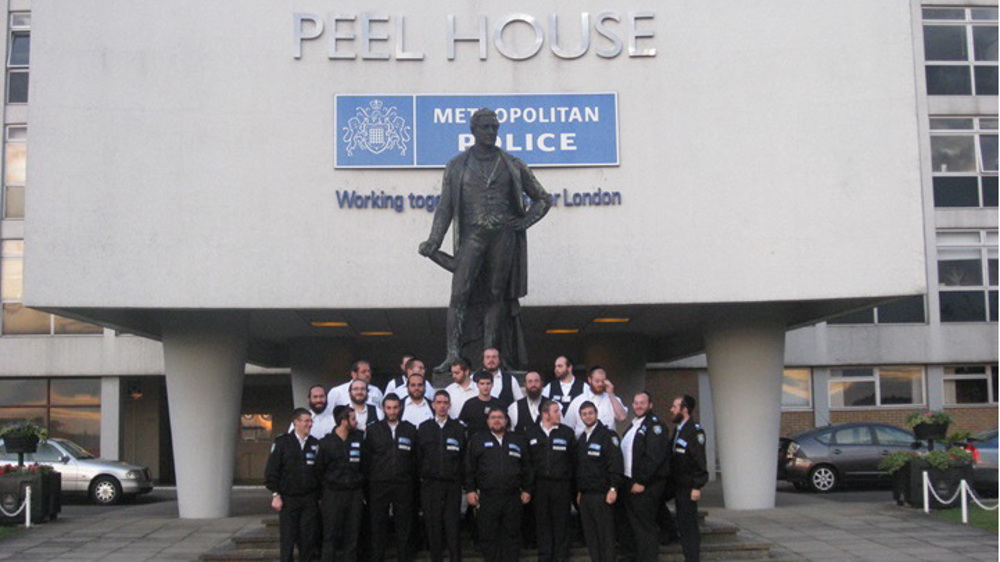
Shomrim members even posed outside Peel House, the headquarters of the Metropolitan Police.
Below is a photo of a prize giving for Shomrim members commended for their “bravery” and “exemplary service to the community” in 2020.
Shomrim chief executive Gary Ost, the one arrested in 2013, is one of the three.

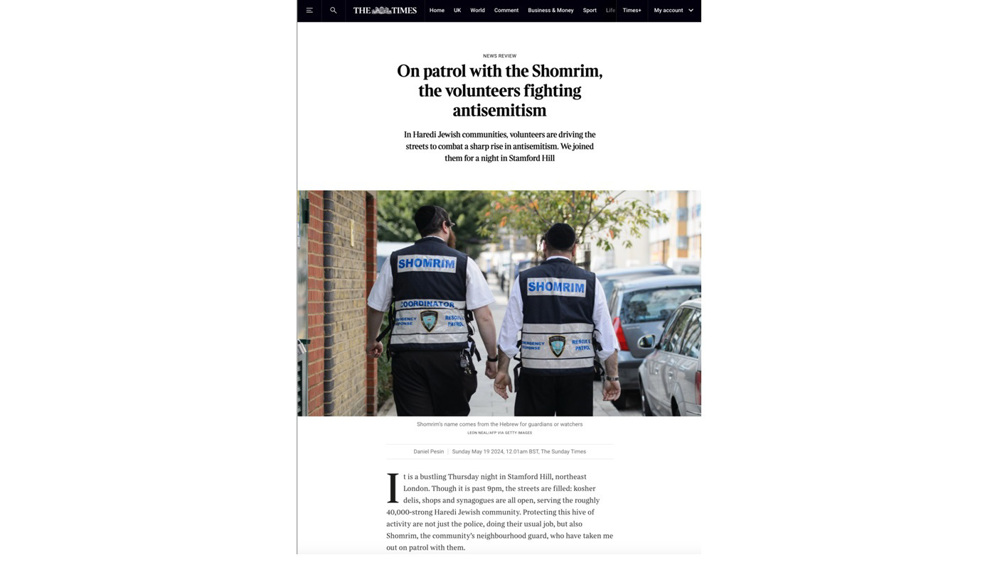
Shomrim plays a key role in shaping the narrative around the widespread antisemitism claims that Israel relies on to justify its genocidal actions.
The pressing question is: What happens when members of Shomrim break the law or commit wrongdoing? Would the police be able—or even willing—to enforce the law against them?
Alon Mizrahi, whom we cited earlier, shared his perspective in a conversation with me:
“They are pretending to be defending themselves in the most friendly country to Jews in history. While committing genocide. In a country that is so hateful of Jews that we need a private police force for Jews only in the US.
“And I have no doubt that if they can normalise this, with the kind of status that Zionist Jews have managed to create for themselves in the US; If this Jewish police force uses violence against black people, black organisers in communities who oppose the genocide, or other migrant groups or any other group, are American police going to be able to charge them?
“To use the law against them? I don’t think so. If you are in the American system, if you have a role in any part of the American system of government, in the police or any other agency, I think that at this point it is clear to you that Zionist Jews are above the law.
“The law doesn’t apply to them. So they don’t have the philosophical or legal means to deal with this. And the Zionists know this.”
Given the current climate, his assessment may well be accurate.
Russian Ambassador Slams UK-German Missile Scheme As Militarization of Europe
Sputnik – 23.05.2025
The recent development of a new precision weapon with a 2,000-kilometer range—announced on May 15 by the UK and Germany—represents another setback for arms control, following the collapse of the Intermediate-Range Nuclear Forces Treaty (INF), Russian Ambassador Andrei Kelin told Sputnik.
“This is part of a new wave of militarization in Europe under the pretext of a threat from Russia. This is another blow to the regime established 30 years ago by the Intermediate-Range Nuclear Forces Treaty. This treaty was destroyed by the Americans,” Kelin said.
The high-precision weapon development plan, it was noted, seeks “to strengthen NATO’s deterrent capabilities.”
“When these missiles were banned, Europe’s security as a whole was at a much higher level. Now, unfortunately, another blow will be struck by the Europeans,” the ambassador emphasized.
In July 2024, the British press reported that London was considering a joint missile development project with Berlin, featuring a range of up to 3,200 kilometers. It is believed that these missiles could eventually replace American cruise missiles stationed in Germany.
In early 2019, the United States announced its unilateral withdrawal from the INF Treaty, accusing Russia of violations, a claim Moscow rejected. In July 2019, the Russian president signed a law suspending the treaty, and by August of that year, the pact officially ceased to be in effect. Russia has consistently maintained that it fully complied with the INF’s terms.
Meanwhile, Moscow emphasized that Russia has serious concerns regarding Washington’s implementation of the treaty and pointed out that the allegations of Russian violations are baseless.
Europe must bear consequences of forcing return of UN sanctions against Iran: FM
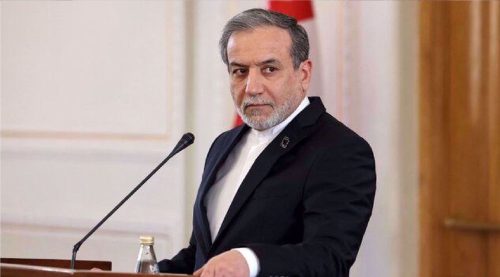
Iran’s Foreign Minister Abbas Araghchi
Press TV – May 21, 2025
Foreign Minister Abbas Araghchi has cautioned the US’s European allies in a 2015 nuclear agreement with Iran against invoking the so-called “snapback mechanism” to re-impose the United Nations sanctions against the Islamic Republic.
Speaking to Saudi Arabia’s Asharq News network on Wednesday, the top diplomat emphasized that such a move would end participation by the European parties — the UK, France, and Germany — in the deal that is officially known as the Joint Comprehensive Plan of Action (JCPOA).
He added that the trio’s potential recourse to the mechanism would lead to significant consequences and potential irreversible escalation of tensions, referring to the likelihood of strong retaliatory steps that the Islamic Republic could take in response.
Araghchi reiterated Iran’s readiness to engage in diplomacy, expressing hope that the European parties too would demonstrate determination to resolve the current impasse.
The deadlock occurred when the United States ditched the JCPOA in 2018, and returned the illegal and unilateral sanctions that the agreement had lifted.
This was followed by the European trio’s failure to return the US to the accord, as they had said would do, as well as their walking in Washington’s footsteps by returning their own sanctions.
In response to the betrayal, Iran began a number of legitimate and gradually escalating nuclear countermeasures.
“The situation we’re in is by no means Iran’s fault. It is the fault of the United States, which withdrew from the JCPOA, and the fault of the European countries that failed to compensate for the US’s withdrawal,” Araghchi added.
‘Uranium enrichment absolutely non-negotiable’
Addressing the topic of Iran’s peaceful uranium enrichment activities, the foreign minister said the activities were a principled and fundamental issue for Iran.
He emphasized that the enrichment program was a major scientific achievement developed by domestic scientists and held immense value for the Iranian people.
The official, meanwhile, paid tribute to the seven-strong Iranian nuclear scientists, who were assassinated amid their invaluable contribution to the Islamic Republic’s peaceful nuclear energy program.
According to Araghchi, the victims’ sacrifices towards advancement of the program had made the nuclear issue “absolutely non-negotiable.”
‘EU sanctions against me a signal to all Europeans’ – German journalist

RT | May 20, 2025
The European Union’s decision to sanction two German nationals could set a dangerous precedent, where Brussels could severely limit the rights of any critic, journalist and blogger Thomas Roeper told RT.
Roeper, who has also collaborated with RT’s German-speaking service, has been accused by the bloc of “destabilizing activities” and slapped with an EU entry ban, as well as an asset freeze.
The European Council, comprising the leaders of EU member states, approved the bloc’s 17th round of sanctions against Russia on Tuesday.
Roeper and German blogger Alina Lipp, both of whom currently reside in Russia, are among the individuals the bloc has targeted for being “involved in activities aimed at undermining the democratic political process in… Germany.”
Speaking to RT later on Tuesday, Roeper said the EU had introduced personal sanctions against him because he has large audiences in Germany.
Brussels’ latest decision to sanction EU nationals should be of great concern to all German citizens, the blogger believes. He noted that the punitive measure against him was adopted despite there being “no court [decision], nobody said which law I have violated.”
“Without any court decision, some bureaucracy decided to freeze my money, to forbid working,” he told RT.
According to the author, the move “is a signal for all people in the European Union, because if they do it to us, and this goes through, tomorrow they will start doing the same… against any critics.”
He described the EU’s allegations against him as ludicrous. “I’m just a blogger sitting here in my kitchen and writing articles and I’m ‘destabilizing’ the EU which has a billion-euro budget for media work,” he quipped.
But what’s “not funny,” he noted, is that while he lives in Russia, people in Germany would have a hard time meeting their basic needs if their rights were curbed in a similar manner.
The EU’s latest round of sanctions primarily targeted Russia’s so-called ‘shadow fleet’ of oil tankers, which operate outside Western insurance systems. According to Brussels, Moscow has allegedly been using it to circumvent G7-led efforts to enforce a price cap on its crude oil exports.
Diplomatic Chess, Ukraine the Pawn
By Patrick Lawrence | Consortium News | May 16, 2025
As was universally expected, little came out of Istanbul this week, where Ukrainian and Russian delegations met with the ostensible purpose of exploring a negotiated settlement of the proxy war the U.S. provoked three years ago.
It is an odd state of affairs when even the people doing the talking did not anticipate anything useful to emerge from their talking.
After less than two hours of negotiation, the two sides agreed only to future talks on subsidiary questions: a prisoner exchange and a 30–day ceasefire — a ceasefire Kiev and its Western backers refused for years but are now desperate to implement.
There was no discussion of an accord to end the war and no final agreements other than one to continue negotiations. And the encounter was not without its acrimonious moments.
Talks to negotiate more talks are not much but not nothing. The two sides have met for the first time since March 2022, when, a month into the war, they previously convened in Istanbul and negotiated a draft document that would have ended the fighting — this until Boris Johnson, then the British prime minister, arrived to scuttle the accord so as to keep the war going.
There is no feigning surprise or disappointment. It was evident during a week of incessant posturing that the Kiev regime and the European powers that have lately assumed the task of manipulating it, have no desire to begin substantive negotiations with the Russian Federation.
No, for the British, the French, the Germans, and their client in Kiev, the imperative in the run-up to the Istanbul encounter on Friday was to appear earnestly dedicated to talks across a mahogany table while preventing even nascent progress toward a diplomatic settlement.
In this effort the Europeans have failed, at least for now.
Trump Takes Over
President Donald Trump effectively overruled them when, earlier this week, he responded, positively and vigorously, to President Vladimir Putin’s unexpected offer to open talks. Trump insisted, in all caps as is his wont, that Volodymyr Zelensky, Ukraine’s president, should forget the ceasefire and open negotiations “IMMEDIATELY!”
This appears to have pushed to the margins the British, French, and Germans, who have taken over as Zelensky’s hands-on minders since Trump assumed office in January. But I see little chance Friday’s talks will mark the end of their effort to keep the war going and a settlement at bay — even as they pretend to stand for precisely the opposite.
U.K. Prime Minister Keir Starmer, French President Emmanuel Macron and German Friedrich Merz set things in motion last weekend when they flew to Kiev for a hastily arranged summit with Zelensky. On their arrival, the British, French and German leaders grandly issued an ultimatum: Moscow must accept a 30–day ceasefire by Monday, May 12, or the Europeans would impose a punishing set of new sanctions on the Russians.
So did the curtain rise on a lot of poor theater. As John Whitbeck, the international attorney resident in Paris, remarked on his privately circulated blog, this appeared to be an offer Moscow was bound to refuse in order to convey the impression the Europeans were doing their best for peace — but the Russians remained committed to war.
The fun began then, too. Putin, in a late-night nearly immediate response from the Kremlin, gave the Starmer–Macron–Merz ultimatum all the attention it merited — none — and wrong-footed the Europeans and Kiev by proposing Kiev and Moscow open negotiations in Istanbul on Thursday.
At this point — the chronology has been well-reported — Zelensky began several days of carrying on. The Russian proposal was mere theater: This was his opener. (See what I mean by fun?) O.K., I agree to talks in Istanbul, but I insist on a summit with Putin himself. Putin ignored this, too — as Zelensky and his sponsors knew he would. There must be a ceasefire first — another idea that Kiev and its sponsors dropped.
It was Trump’s intervention that brought the European follies to an end. After the U.S. president’s statements to the press and on social media, the Ukrainian TV–actor-turned-president finally agreed to send a team of Kiev officials, led by Defense Minister Rustem Umerov, to meet with a Russian delegation headed by Vladimir Medinsky, a prominent adviser to the Russian president.
Late Friday afternoon the Russian and Ukrainian delegations both announced that they had agreed to resume talks, but for now only on the ceasefire question. “We are ready to continue contacts,” Medinsky said at a post-session news conference.
There was a little more to this encounter than that. In a report Friday evening The Telegraph quoted Medinsky telling the Ukrainians across the U–shaped negotiation table, “We don’t want war, but we’re ready to fight for a year, two, three, however long it takes. We fought Sweden for 21 years. How long are you ready to fight?”
Medinsky’s reference was to what Russians call the Great Northern War, which Russia waged against the Swedish Empire during the reign of Peter the Great, from 1700 to 1721.
And that is it, a door pried open after a soap opera’s worth of chicanery in London, Paris, Berlin, and Kiev.
Remember the Minsk Protocols
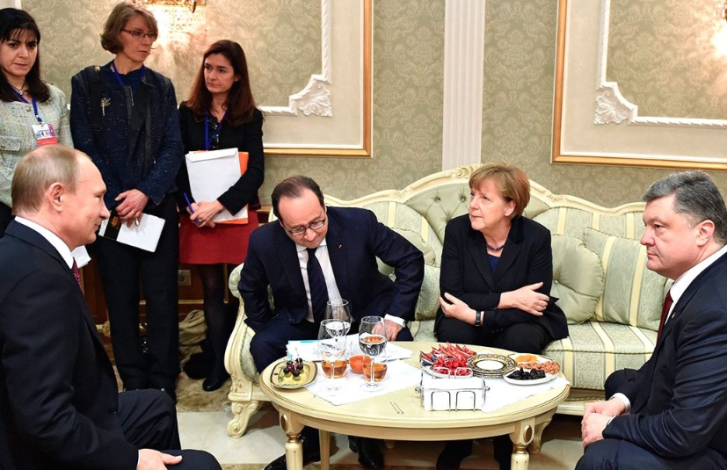
Putin, French President Francois Hollande, German Chancellor Angela Merkel, Ukrainian President Petro Poroshenko at the Normandy format talks in Minsk, Belarus, Feb. 12, 2015. (Kremlin)
My take on the week’s events takes me back to the Minsk Protocols, which Moscow negotiated a decade ago with Kiev, Paris and Berlin.
Signed in September 2014 and February 2015, these committed Ukraine to a new constitution whereby the Russian-speaking provinces in the nation’s east would be granted a considerable degree of autonomy. Kiev and Moscow signed, France and Germany serving as co-signatories backing the former.
Kiev ignored the Minsk accords from Day 1. And, as well-reported at the time, the French and Germans later acknowledged they co-signed only to allow Ukraine time enough to rearm so as to continue attacking the eastern provinces and prepare for the war that eventually broke out three years ago.
This pencil-sketched history is useful to understanding this week’s events and what preceded them. Putin got his fingers burned in Minsk, having personally negotiated the two protocols. I do not know when the Russian president decided the European powers could not be trusted, but he has certainly not trusted them since the Minsk debacle.
Last week’s events proved this a sound judgment. In an improvised game of diplomatic chess, Moscow got the Europeans in check this time, making dexterous use of Kiev as its pawn.
Post–Istanbul, it appears now that the best chance of a settlement of the Ukraine conflict resides in the prospect of a Trump–Putin summit. This, if it comes to pass, would define the Ukraine crisis — altogether properly — as a subset of Trump’s project to restore relations with Moscow.
And it would disarm, not to say humiliate the Europeans who have been leading the Continent to continue its support for the Kiev regime and the war.
A couple of caveats are in order here. One, as earlier suggested, it is not at all clear we have heard the last of the European triumvirate who took center stage for a few days this week. Starmer, Macron and Merz, the last just appointed Germany’s new chancellor, are heavily invested in the Ukraine project and the Russophobia that propels it.
Two, as Putin and other Russian officials have made plain numerous times, and very pointedly this past week, substantive negotiations of a settlement of the Ukraine crisis must begin with mutual recognition of “root causes,” to take the phrase the Kremlin now favors.
This is why Moscow nominated Istanbul as the venue for these new talks. In the draft Boris Johnson disrupted three years ago, these concerns were addressed.
“We view these talks as a continuation of the peace process in Istanbul, which was unfortunately interrupted by the Ukrainian side three years ago,” Medinsky said at a press conference as he set out of Istanbul Thursday. “The aim of direct negotiations with the Ukrainian side is ultimately to secure lasting peace by addressing the fundamental root causes of the conflict.”
The phrase is too ubiquitous in the Russian discourse to ignore. The question now is whether Donald Trump, in any summit he may have with Vladimir Putin, will be at all equipped to address Russia’s concerns.
If he does, he will fundamentally alter relations between the Western powers and Russia for the good — a diplomatic triumph. If he does not, he is unlikely to get anything more done than negotiators accomplished in Istanbul this week.
Preliminary talks in Istanbul are a start… the real show to come is Trump and Putin
Strategic Culture Foundation | May 16, 2025
The talks in Istanbul this week provide a prospect for peace. It bears emphasizing that the three-year proxy war could have been avoided if diplomacy had been permitted by Washington in early 2022 instead of being sabotaged.
Three years on, we have a new president in the White House, and there appears to be a more enlightened policy. Or maybe it’s an implicit admission that the U.S. proxy war agenda is a failure and can’t go on.
In any case, Trump and his envoys are unequivocally saying that they want to stop the bloodshed in Ukraine. That’s a big change from his predecessor, Joe Biden, who vowed to back Ukraine for as long as it takes in a fantastical, reckless pursuit to strategically defeat Russia.
It was the Biden administration, along with the British government, that intervened to scupper nascent peace talks in March 2022 between Russia and Ukraine for a peace deal. Washington and London coaxed the Kiev regime to fight on with promises of more weapons.
The result: three more years of intense conflict, which have caused millions of casualties, mainly on the Ukrainian side. The proxy war has come perilously close to provoking an all-out world war between nuclear powers.
Trump appears to want peace. If he is genuine in that intention, then the American president will have to address the root causes of the conflict. Russia has consistently explained the deeper causes of NATO aggression and the militarization of Ukraine as a hostile bridgehead on its borders since the CIA-orchestrated coup in Kiev in 2014.
The American president has shown petulance at times, urging Ukraine and Russia to get down to a peace deal. He has even threatened Russia with more (futile) economic sanctions. What the Trump administration needs to understand is that resolving deep causes of conflict requires commensurate negotiations and a realistic commitment to lasting geopolitical security arrangements.
The talks in Istanbul this week to explore a peaceful resolution were initiated by Russian President Vladimir Putin in an announcement last week.
Russia’s delegation was led by Putin’s senior aide, Vladimir Medinsky. That speaks of consistency and commitment. Medinsky led the peace talks three years ago in Istanbul, which were then sabotaged in April 2022 by the American and British intervention.
This week, the Russian side held preliminary bilateral talks with the Americans led by Secretary of State Marco Rubio. Subsequently, the Russian and Ukrainian delegates engaged in a meeting convened by Turkish diplomats. It was the first direct encounter between Russian and Ukrainian officials since the March 2022 negotiations.
It is not clear if follow-up meetings will take place. But at least one might say that talks took place.
The key to any prospect of ending the conflict depends on Washington demonstrating the requisite commitment. Trump said this week again that he would like to hold a summit with Putin as “soon as possible.” The Kremlin has also said that a formal presidential meeting is desirable.
Kremlin spokesman Dmitry Peskov cautioned that there must first be adequate preparation for meaningful discussions. That implies that any top-level meeting must be cognizant of Russia’s demands for a resolution, one that deals with the historic, systematic causes of the proxy war.
Western politicians and media denying Russia’s perspective are delusional or duplicitous. To claim that the conflict is all about “unprovoked Russian aggression” against “democratic Ukraine” and “Russian expansionism” towards Europe is a travesty. It’s a bogus narrative that precludes peaceful resolution. Trump seems to be aware of that. But he needs to go beyond a superficial “peace broker” charade.
If Trump wants a gimmicky big summit with Putin for PR ratings, as his tour of the Middle East this week illustrates his egotistical wont, he can forget it.
The meetings this week in Turkey can be seen as preliminary technical discussions.
However, President Trump needs to take the lead. Appropriately, a peaceful resolution will only happen at the senior level of the U.S. and Russian governments. That’s because the United States is the primary protagonist in the proxy war against Russia.
It is clear from the antics and theatrics of the Kiev regime this week that there is no prospect of a meaningful, lasting peace if negotiations are confined to that level. Ukrainian President Vladimir Zelensky does not even have constitutional legitimacy after cancelling elections last year. His erratic behavior of grandstanding and mudslinging at the Russian diplomatic efforts proves that he is not capable of substantive negotiations.
The European leaders are also an impediment to achieving an authentic peace settlement. Even before delegations met this week in Istanbul, various non-entity European politicians were disparaging Russia’s diplomatic initiative. Macron, Starmer, Merz, Von der Leyen and Kallas were desperately trying to insult the Russian president, indulging Zelensky’s PR stunt demanding a face-to-face meeting with Putin in Istanbul.
The European Union also timed an announcement this week to double its supply of heavy-calibre munitions to Ukraine. Another provocation.
France’s Macron sought to impose a precondition for the talks by demanding a 30-day ceasefire. That was a flagrant attempt to sabotage the negotiations before they even started.
These people are not honest about ending the worst war in Europe since the end of World War Two. Disgracefully, they want the bloodshed to continue for their political survival and gratifying their obsessive Russophobic fantasies.
If Trump wants to end NATO’s proxy war against Russia, he will have to sideline the European naysayers and the Kiev puppet regime. Their involvement is counterproductive. One suspects that Trump already knows that.
An American and Russian agreement at the highest level is the only way to bring the war to an end. It is no use for the American side pretending that they are mere peace brokers. They are the main protagonist, not the European lapdogs nor the Kiev regime.
Preliminary talks are all very well. But they are just that. Preliminary. If the talks have any chance of succeeding, the American side must take responsibility for the war it started and fueled.
Germany: Police block activists from leaving country to attend Remigration Summit in Italy in major crackdown
Remix News | May 16, 2025
German activists leaving the airport for the Remigration Summit taking place in Milan on Saturday were stopped and detained at the airport, interrogated for hours, and issued with an exit ban from leaving the country.
The summit will be attended by well-known activists from across Europe, such as the Austrian author Martin Sellner, Dutch commentator Eva Vlaardingerbroek, and Belgian activist Dries Van Langenhove.
The latter currently faces a potential prison sentence for memes that were posted in a group chat seven years ago. However, not only are German police now cracking down on activists, even leaving the country for the event, but Italian police are also showing up at the hotels of activists attending the event.
Sellner has been putting out a video and posting updates on X on the various actions taken against activists involved in the summit.
“I know them, they are great guys, Generation Identity activists, who have been detained for hours by the German police. They were arrested at the airport in Munich. Two of them were arrested on the plane, where they tried to enter a plane to Milan, Italy, to attend a conference about remigration. And the German state now bans them from exiting Germany for several days until the conference is over. Bans them from exiting. They banned me from entering, and then they threw me out of several cities and basically crushed my readings, and now they’re banning their own citizens, EU citizens from exiting.”
Sellner says that the German government’s reasoning is “crazy,” arguing that allowing the activists to leave “would be detrimental to the German state, the reputation of the German state, if they would go outside and take part in those events, because this would look like the German state endorses those events.”
Sellner argues that the German state is headed into dark territory, mimicking the GDR, communist East Germany, with this exit ban.
“No, you are our property, and it’s our property, our citizens. If you go there, it’s bad for our reputation. That’s why we lock you in like nasty little children. The German state is going full GDR. That’s exactly what the GDR did with the Berlin Wall. They didn’t let their own citizens leave the country, and that’s the case right now. It would be now punishable by law if they try to exit to Italy, Austria, and Switzerland. They’re banned from going to Switzerland, Austria, and Italy for a certain amount of days. The German state can extend this at will.
Of course, they will take immediate legal measures. They have very good lawyers. You need good lawyers in Germany. If you’re an activist, if you’re posting memes on X, you need an excellent lawyer by now. But it’s really crazy. These laws exist, but they might be lying dormant for a while and now the German state is shutting down, switching off the democracy simulation, and moving up and activating the totalitarian mode, the GDR mode.
As for the German activists, six men and two women who were stopped at the airport, Sellner stated they were released after hours of interrogation. They must now report to the police station twice a day.
“Eight young Germans are now banned from LEAVING Germany. If they try it, they commit a crime. They have to check in daily at their local police station. If not, they have to pay an extra fine. The democracy simulation is shutting down,” wrote Sellner.
The explanation they were given for the exit ban was also delivered to them in written form. It reads:
“In the event of an exit from German right-wing extremists, there is a considerable risk of damage to the reputation of the Federal Republic of Germany due to the stays of German right-wing extremists who promote the transnational networking of the right-wing extremist scene, actively promote the inhuman ideology and give it more scope, thus harbors the risk of radicalization of other people and their trips for the development of financial resources and the like.”
Freilich also writes that “it is also due to the history of Germany that the arrival of the activist concerned gives the international impression that the Federal Republic of Germany supports the right-wing extremist ideas openly spread at the event or at least does not adequately address them.”
Essentially, the German state is attempting to make the argument that allowing the activists to attend the summit would be the equivalent of endorsing their beliefs and harming the reputation of Germany. If that is the standard, then apparently it could be argued that any activists Germany does not detain in the future for any conference is a sign that the German state officially endorses the contents of that conference? Such reasoning reaches into the realms of the absurd.
The exit ban on the activists not only applies to Italy, but also to countries like Switzerland and Austria, and will be in effect until May 17, just a minute before midnight.
The activists also shared photos of the last moments they had before they were detained at the airport.
Although Sellner says the Italian police are not involved in this travel ban, and it is the German police at fault, he recently also posted an update on X, noting that an activist staying in Milan was also visited by police and questioned at his hotel.
Sellner says that booking the Remigration Summit has been fraught with difficulties, as vendors and hotels have been continuously canceling on organizers, likely due to pressure from activists. Antifa groups are also active and may try to disrupt the conference, or even more importantly, physically attack those involved.
Featured Video
Houthis Keep Advancing as the Red Sea Crisis Deepens
or go to
Aletho News Archives – Video-Images
From the Archives
Clash of Civilization, Iran Part II
By Jamal Kanj – Intifada-Palestine.com – January 14, 2011
Israel’s survival kit is: perpetuate conflict, insecurity to rationalize collective hate and finally playing victim.
Devoid of conflict, Israel implodes internally; without hate, Zionism loses its justification; and playing eternal victim to continue blackmailing the West. Absence of this holy trinity, Israel ceases to exist. … continue
Blog Roll
 Aletho News
- Macgregor: We Haven’t Seen the Worst of the Iran War Yet
- ‘We are not like everyone else’ laws that bind other nations do not apply to Israel, says Likud lawmaker
- Report: Saudi Arabia seeks allies’ assistance as missiles deplete amid war on Yemen
- Fuel Crisis Deepens: Pakistan Warns Tanker Attack in Red Sea Would Be an ‘Act of War’
- ‘Bucha massacre’ a false flag orchestrated by UK – Moscow
- China Rejects Outside Pressure on Trade Ties After New US Russia Sanctions Bill
- Houthis Keep Advancing as the Red Sea Crisis Deepens
- Iran spent $1 million to wipe out $30 billion in data center plans, and take down Amazon in the ME
- Zionist billionaire pressure to silence Macklemore sparks exodus from Ed Sheeran tour
- House Votes to End Iran War for Third Time
- If Americans Knew
- Biden’s Genocide Accomplices Targeted by New Accountability Campaign
- AIPAC’s Network Has Already Spent $67.2 Million to Shape the Midterm Elections
- Jewish Supremacist Manufacturing a Civilizational Threat to License Bigotry
- US bans Palestinian president from speaking at the UN
- Israeli Forces Detain Journalist Alaa al-Rimawi amid Widespread West Bank Raids
- Even a pro-Israel Congress member has put a hold on 40,000 one-ton bombs to Israel
- As Gaza crumbles, Israel preps new ground invasion – Daily Update
- ‘We are not like everyone else’ laws that bind other nations do not apply to Israel, says Likud lawmaker
- Trump’s govt makes ‘treasonous’ claim of weapons shortages
- Palestinian-American Journalist Naqaa Hamed Imprisoned by Israeli Forces After Settlers Targeted Her
- No Tricks Zone
- New Study: ‘Global Drought Shows No Detectable Recent Acceleration Under Climate Warming’
- Economic Masterminds: German Socialists Suggest Taxing Productivity Gains Stemming From Using AI
- The South China Sea Has Not Been Cooperating With The Climate Change Narrative
- Energy Crisis: Germany Enters Heating Season With Historically Low Gas Reserve Fill Levels
- New Study: The Antarctic Ice Sheet Gained Mass From 2020-2024 Due To Staggering Snow And Ice Accumulation
- Study: Ocean Heating Rates From Thousands Of Years Ago ‘Dwarf’ Modern Ocean Heating Rates
- Climate Extremists Target, Attack Large-Scale Power Grid Infrastructure In Germany!
- New Study: Antarctic Ice Melt Has Contributed Less Than 1 Centimeter To Sea Level Rise In The Last 30 Years
- Fear Of Debate: Alarmist German Climate Scientist Calls On Mainstream Media To Discredit Skeptic Voices
- End-Of-August Arctic Sea Ice Extent Hasn’t Fallen In 20 Years, Official Data Show!
 Aletho News