Israel tasks US Congress with pressuring South Africa to drop ICJ genocide case
The Cradle | September 10, 2024
Israel is lobbying members of Congress to pressure South Africa to drop its case at the International Court of Justice (ICJ) accusing Israel of committing genocide against Palestinians in Gaza, Axios reported on 9 September.
South Africa has until 28 October to submit its arguments for continuing its case, claiming Israel is in violation of the Genocide Convention due to its war in Gaza.
Israeli officials say they want members of Congress to threaten South Africa with consequences for continuing to pursue the case.
On Monday, the Israeli foreign ministry sent a classified cable to the Israeli embassy and consulates in the US with instructions for dealing with South Africa.
“We are asking you to immediately work with [US] lawmakers on the federal and state level, with governors and Jewish organizations to put pressure on South Africa to change its policy towards Israel and to make clear that continuing their current actions like supporting Hamas and pushing anti-Israeli moves in international courts will come with a heavy price,” the cable read.
In December, South Africa filed a case at the ICJ accusing Israel of violating its obligations under the 1948 Genocide Convention. The case alleged Israel’s actions “are genocidal in character because they are intended to bring about the destruction of a substantial part” of the Palestinian population in Gaza.
After the start of the war on 7 October, Israeli political and military leaders issued statements suggesting they intended to pursue a genocidal military campaign against Palestinian civilians in Gaza.
Israeli forces have killed over 40,000 Palestinians since then, the majority women and children, in a vicious 11-month bombing campaign.
The ICJ issued an interim ruling in January demanding Israel to take all measures to prevent genocidal acts, prevent and punish the direct and public incitement to genocide, and take immediate and effective steps to ensure the provision of humanitarian assistance to civilians in Gaza.
However, Israel hopes the new coalition government in South Africa can be pressured to take a different approach to Israel and the war in Gaza, the officials speaking with Axios said.
In parliamentary elections in June, the African National Congress (ANC) party lost its majority for the first time since the end of the apartheid system of white minority rule 30 years ago.
The Israeli diplomats were instructed to ask members of Congress to issue public statements condemning South Africa and threatening to cut off trade relations with South Africa.
Axios adds that the Israeli diplomats were also instructed to ask members of Congress and Jewish organizations in the US to reach out directly to South African diplomats in the US and make clear South Africa would “pay a heavy price” if it doesn’t change its policy.
The Israeli foreign ministry asked Israeli diplomats to lobby for hearings about South Africa’s policy towards Israel in state legislatures.
According to the cable, Israeli diplomats were instructed to emphasize to the ANC and “pursue dialogue” with Israel “instead of boycotts and punishments.”
‘Biden is out to get me’: A Russian-American TV host facing 60 years in an American jail speaks out
RT | September 9, 2024
The US Department of Justice has accused the 76-year-old – a former adviser to the late US President Richard Nixon who now hosts a talk show on Russian TV – with sanctions violations and money laundering. His wife Anastasia has also been indicted.
Born in Moscow, Simes left the Soviet Union at the age of 26. He had fallen afoul of Leonid Brezhnev-era officials for protesting against the USSR’s involvement in the Vietnam conflict. In the US, he was a professor at Johns Hopkins University. He also ran the Soviet policy program at the Center for Strategic and International Studies, and taught at the University of California at Berkeley and at Columbia University.
Simes then served as President of the Nixon Center and later as president and CEO of the Center for the National Interest, a major Republican-party aligned think tank.
In 2013, Carnegie honored him as a “Great Immigrant and Great American.” He left National Interest in 2022 and returned to Moscow, where he hosts the show ‘The Great Game’ on Russia’s Channel One.
In an interview with Kommersant correspondent Elena Chernenko, Simes has commented in detail on the allegations made by American officials.
– According to the US Department of Justice, you allegedly participated in schemes to “violate US sanctions on behalf of Channel One” and to “launder funds obtained as a result of this scheme,” and your wife allegedly also participated in a scheme to “violate US sanctions” in order to receive funds from a blacklisted Russian businessman. How would you respond to these allegations?
– Lawlessness and blatant lies. A combination of half-truths and outright fabrications. I’m accused of money laundering. But of what, according to the US Department of Justice? It’s from my salary, which went into an account at Rosbank in Moscow, the bank used by Channel One, I transferred some of the money to my bank in Washington. And why do you think? To pay my American taxes [the US has dual taxation for citizens working abroad – RT]!
In my opinion, not only was there nothing illegal about it, there was nothing unethical about it either. They [the US authorities] say that, somehow, I was hiding something. That I could not transfer money directly from a Russian bank to an American bank. That it’s impossible because of American sanctions. So, I had to transfer money through a third bank. This, of course, complicated the process, but there is nothing illegal [about it] in either Russian or American law. It is simply outrageous to call it money laundering.
As for the accusation that I allegedly violated the US sanctions imposed on Channel One, first of all I would like to remind you that there is one thing that the Biden administration does not take seriously. I’m talking about the United States Constitution and the First Amendment, which guarantees freedom of speech and freedom of the press. And I insist that everything I have done as a journalist I have done within the framework of the First Amendment of the American Constitution.
Secondly, I would like to draw your attention to the fact that the sanctions against Channel One were not approved by the US Congress, it was just a decree from the Treasury Department saying that it was not allowed to do business with Russian federal TV channels. But this ban was very vaguely worded. It could have been interpreted as a prohibition on helping the federal channels in any financial way, through any kind of payment or donation. Or it could be interpreted more broadly as a ban on any interaction.
– How did you interpret it?
– After this decree appeared, I was told that there was a conversation between representatives of the Russian Foreign Ministry and the US State Department, during which the American side explained that the main purpose of these sanctions was to prevent Russian federal channels from receiving Western funding. And they should not affect the work of journalists.
– So you believed that your work at Channel One did not violate US sanctions?
– That’s what I was told. But I was not satisfied. I personally spoke to a senior US administration official about this. I was told that, of course, we do not approve of your work at Channel One, and if you continue to work there, it will not help your reputation and career in America, but this sanctions decree is aimed at curbing the channel’s financial revenues, not at preventing journalists from working.
In other words, I felt that, from the point of view of the US administration, I was doing something undesirable but not something for which I could be prosecuted.
– Have you spoken to lawyers?
– Of course I have. I consulted American lawyers and they had the same point of view. Now I am facing criminal charges, just for doing my job as a journalist.
– You have not been in the US since October 2022. Were you worried that the case might not be limited to a verbal expression of displeasure?
– I had a feeling that there might be a problem. But I wasn’t certain, and I had even less of an expectation that it could lead to a prosecution. I think the White House decided to go ahead and stir up the issue of Russian interference in the American election again. I had nothing to do with any interference and have nothing to do with it. Moreover, I am absolutely certain that there was and is no large-scale interference. And when I hear that charges have been brought against me as part of a campaign against Russian interference in American elections, I have the feeling that this is not only politicized, but completely fabricated.
– Yes, the New York Times, in describing the situation, wrote that the charges against you were ‘part of a broader government effort to thwart Russian attempts to influence American politics in the run-up to November’s presidential election.’
– I work for Channel One and everything I do is, by definition, very open. It’s all in Russian. Channel One does not broadcast in the United States. I could not and cannot influence the American domestic political situation in any way.
As far as interference is concerned, it would probably be more interesting to look at the demands of Ukrainian officials who have been urging the White House to take action against me for a long time.
We are talking about Ukrainian interference at quite a high level.
The “[Andrey] Yermak- [Michael] McFaul Expert Group on Russian Sanctions” [run by Vladimir Zelesnky’s top advisor and a former US ambassador to Russia, to develop recommendations on sanctions] is working on this conspiracy. This is a legalized form of high-level Ukrainian interference in decision-making in Washington.
And I would be very interested to understand how it was that when my house [in the US] was searched [in August], which lasted four days, and things were taken out by trucks with trailers, how it was that on my lawn, according to the neighbors, there were about 50 people, many of whom came not in official cars, as the FBI usually does, but in private cars. And how was it that these people, some of whom later turned up in a shop in a neighbouring small town, somehow spoke Ukrainian? I would really like to understand what role Ukrainian interference in American politics played in this situation.
– Will you and your wife try to fight the charges in an American court?
– I will have to discuss this with my lawyers and until I have spoken to them in detail I will of course not make any decisions. If we have to come to the United States to contest the charges, then no, I am not in the least tempted to do so.
Knowing the methods of this administration and knowing what they are capable of with regard to the former – and possibly future – president of the United States, I mean Trump, I know that an objective consideration of my case is out of the question.
But, of course, this situation is extremely unpleasant for me. My accounts have been frozen, I cannot pay taxes on my house and other related expenses.
At the same time, not only do I not consider myself guilty of anything but I feel as if I am being persecuted by the Gestapo.
And at least from a moral point of view I think I’m doing absolutely the right thing. And I’m going to fight it, I’m going to actively work to make sure that such actions by the Biden administration do not go unpunished.
– It is clear that most of your colleagues in Russia actively support you, but what about in the US? Have your colleagues there reacted in any way to this situation?
– They reacted in a very resounding way – with sepulchral silence. I have not heard anyone condemning me in any way, but I have not seen any support either. My colleagues there are disciplined people, they understand the American situation. Even someone like [prominent American economist and professor] Jeffrey Sachs, who was on my show the other day, has disappeared from leading American TV channels, and even he is not allowed to publish in leading American publications.
I say ‘even him’ because he was considered one of America’s leading economists and political scientists. And even he is cut off from expressing his views there. There is a climate of totalitarian political correctness in the US, where it’s impossible to even discuss the issue of relations with Russia, because as soon as a person starts to say something that differs from the general Russophobic line, they are immediately told: ‘Oh, we’ve already heard that from (Russian President Vladimir) Putin.’
– Some Western media call you a ‘propagandist’ and a ‘mouthpiece of the Kremlin.’
– For them, a ‘propagandist’ and a ‘mouthpiece of the Kremlin’ is anyone who deviates from the ‘correct’ American political line. Not only do I deviate from it in no uncertain terms, I do not accept it at all. As for being a ‘mouthpiece for the Kremlin,’ I am not aware that anyone has appointed me to that position or given me that authority. If you look at the two events in which I participated and in which Putin was present, you will see that both times I argued with him.
– The St Petersburg International Economic Forum and the Valdai Forum.
– Yes. And I have a clear feeling that on Channel One in general I am given the opportunity to say what I want to say. In times of war, of course, there is and can be no complete freedom, and I don’t need to be censored in this respect. I myself know that war is war. But no one has ever given me instructions. I have heard that they exist, but not only have I never seen them, no one has ever said anything like that to me personally.
At the same time, of course, I am interested in the opinion of the Russian authorities. If I were not interested, I would not be doing my job. It would be quite strange to be a TV presenter in a war situation and not be interested in the position of the decision-makers. But here it’s a completely different dynamic. I am the one asking questions to understand the situation and the positions of the decision-makers. But there is absolutely no question of anyone giving me instructions, even in the most veiled form.
– You have, of course, an amazing biography. You were persecuted and even arrested for dissent in the Soviet Union, and now you are facing a huge sentence in the United States, also, one might say, for dissent.
– Yes, but in the Soviet Union I was not given a huge sentence, I was given two weeks, which I served honestly in Matrosskaya Tishina [prison]. Nevertheless, when I left the Soviet Union I was allowed to take with me what belonged to me, even if it was very little. And the main thing is that when my parents – human-rights activists who had been expelled from the USSR by the KGB – left, they were able to take with them paintings and icons that belonged to our family, and even some of their antique furniture.
During the search of our house [in the US] all this was confiscated. At the same time, these things had nothing to do with my wife’s work. These are things that have belonged to us for many years, and in the case of the paintings and icons, for many decades, because they belonged to my parents. And now everything has been taken from the walls in what I can only describe as a pogrom. The roof is broken, the floor is damaged. What has this got to do with a legitimate investigation?
Interestingly, they left my gun in a conspicuous place. In general, the first thing they confiscate in a search like this is your means of communication. But they were not very good at that in my case, because I had not been there for almost two years, and all my devices are with me here. But they found my gun and for some reason they left it in a prominent place. I don’t know, maybe it was some kind of hint to me that I should shoot myself or that they might do something to me, I can’t read other people’s minds. Especially the minds of people with a slightly twisted imagination and a dangerous sense of permissiveness.
– I suppose I have one last question, but it’s a bit of a thesis. Recently, as part of another project, I was digging through the archives, looking at news footage from the spring of 2004, when Sergey Lavrov had just become foreign minister. I was surprised to discover that you were the first representative of the expert community, not just internationally but in general, to be received by the newly appointed minister. You discussed Russian-American relations and Lavrov said at the time that there were no strategic differences between Moscow and Washington, only tactical ones. Twenty years have passed and the sides have only disagreements, tactical and, what is worse, strategic. In your opinion, who is to blame for everything that has gone wrong?
– First of all, thank you for reminding me that I was the first representative of the expert community to meet Lavrov after his appointment as Minister. This was probably not unusual, as I had known him for a number of years when he was Russia’s Permanent Representative to the UN in New York.
I was very concerned at the time about how many Russian diplomatic leaders, and not just diplomats but government agencies in general, were willing to play a game of give and take with the US. I was sure that this could not lead to anything good. Lavrov stood out from the others in this respect: of course, he was committed to cooperation with the US at that time, but at the same time he was able to speak in a more confident tone and showed a good, slightly sarcastic sense of humor when dealing with his American colleagues’ open attacks on Russian interests, on Russian dignity.
In 2004, I remember, we had one of the Russian leaders, not Putin, but quite an important person, who spoke at the Center for the National Interest shortly after the American invasion of Iraq. And he said that Russia does not support what the US has done in Iraq and thinks it is dangerous, but will not interfere and will not try to gain political capital at the expense of the US. And he went on to say that maybe if we had a different relationship, a more engaged relationship, we could support America, but we don’t have that relationship and it’s not on the horizon yet. I think that, in 2004, despite, of course, a great deal of dissatisfaction with American actions in Yugoslavia in 1999, Russia had a great willingness to cooperate with the US and a general acceptance that it was the only real superpower.
I have studied Russian policy in detail since the end of the Cold War, and with the exception of [Prime Minister Yevgeny] Primakov’s plane turning over the Atlantic in 1999, I have generally not seen any Russian actions that could have caused serious dissatisfaction within the US. You know that back in 1999, as prime minister, Putin offered the Americans cooperation in the fight against Al-Qaeda and the Taliban. The reaction of the Clinton administration was: it’s not that the Russians want to be really good partners, they want the Americans to tolerate the new Russian influence in Central Asia. And US ambassadors, on the contrary, were instructed to oppose this Russian influence in every possible way.
Then came 2007 and Putin expressed his concerns about US and NATO actions in the famous ‘Munich speech,’ but relations were still more-or-less normal. Russia had in principle been very restrained for a very long time, in Georgia, Ukraine and elsewhere, although it was less and less willing to accept American hegemony and imposition of rules. But when it came to decision makers in Moscow, it seemed to me that no one was looking to bring the matter to a head.
You are right, this is a long and complicated conversation about how we came to live like this. But I am convinced that since the late 1990s and early 2000s, the idea of preventing Russia from being an independent force on the international stage has become more and more dominant in Washington. And I did not see during that period, and I do not see now, any signs of interest among decision-makers in the United States in a serious discussion of the problems that have accumulated.
After Putin’s 2007 speech in Munich, a number of people who were there told me that he had done it for nothing. One very distinguished former American diplomat, who was generally regarded as pro-Russian, said to me: ‘This was not helpful’. And I asked him: helpful to whom? And he replied that nobody would agree to meet the demands and concerns that Putin was expressing. So, you see, even such a sensible and experienced person, who, among other things, was a consultant to major Russian companies, it didn’t even occur to him that what Putin was saying should be taken seriously.
So, it seems to me that the main responsibility for what has happened lies with the US and, above all, with the American deep state, the deep state most of whose representatives, as I found out over many years of working in Washington, are hostile to Russia. They were not interested in any rapprochement with Russia, no matter what was said publicly. I discussed this topic on air with Sachs, and he has the same feeling that this deep state ensures the continuity of this kind of Washington policy, regardless of the preferences of this or that president in the White House.
Of course, presidents, secretaries of state and national security advisers are all people with their own views and approaches to Russia. But if we talk in general, in my estimation, starting with Bill Clinton, it somehow turned out that it was people who were either critical or hostile towards Russia who in practice played a decisive role in formulating Washington’s policy towards Moscow.
– You just reminded me of the memoirs of the former US Ambassador to Russia, John Sullivan, which we wrote about recently. In it, he recalls how he promised the Russian presidential aide Yuri Ushakov that he would convey an invitation to Trump to visit Moscow to celebrate WW2 Victory Day, while he himself, according to his own recollections, was determined to do everything possible to prevent such a visit from taking place.
– I did not meet John Sullivan but, in the past, when I flew from Washington to Moscow, I was always invited to meetings with the heads of the US diplomatic missions. They were good and different, the most impressive was Bill Burns.
– The current head of the CIA.
– Yes. I always thought they were basically decent people. But every time it turned out that no matter how reasonable they were, in the end they followed the ‘party line,’ which is very hostile to the recognition of Russia as an independent great power.
Can Israel survive its new war in the West Bank?

By Eva Bartlett | RT | September 8, 2024
Having failed to eradicate Hamas in Gaza, Israel on August 28 began a war on the West Bank, dubbed ‘Operation Summer Camps’.
This Israeli assault on West Bank areas is the largest since 2002, with thousands of Israeli soldiers, supported by helicopters and drones, invading northern West Bank cities, particularly targeting the refugee camps of Jenin, Tubas, and Tulkarem.
The same day, the non-profit Euro-Med Human Rights Monitor reported: “Immediately after entering the West Bank, the Israeli army began besieging hospitals, ambulances, and emergency centres, replicating its horrifying and systematic policy of breaching and taking control of health institutions that it has employed in the Gaza Strip.
Simultaneously with the storming of these areas, raid and arrest campaigns were carried out in most cities in the West Bank amid gunfire that injured many Palestinians. Since last October, 660 Palestinians in the West Bank have been killed as a result of the Israeli military’s systematic, large-scale attacks.
Journalist Mariam Barghouti on August 31 wrote, “I was in Jenin and I cannot explain how ruthless the Israeli military is being. The city is like a ghost town and the refugee camp is a collective torture chamber. Israeli practices in Jenin include: mass arrests including minors, blowing up homes of civilians, denying entry of food, water, medics. The children that managed to escape are traumatized, they’re nothing but tears and shock. Everyone is unable to fully recognize this unprecedented violence and at such an intensity. Jenin is another Gaza in terms of violence being inflicted.”
According to the UN’s OCHA, between 27 August and 2 September, Israeli forces killed 30 Palestinians in the West Bank, including seven children, the highest weekly death toll since November 2023 (by September 6, the number had increased to 39 Palestinians killed, including eight children, and approximately 145 injured).
Those murdered, OCHA notes, include an 82-year-old Palestinian man, shot and killed while attempting to buy bread. Israeli forces also reportedly shot and killed two Palestinian boys, aged 13 and 16, “being chased by Israeli forces while attempting to distribute bread to besieged families near the eastern neighbourhood of Jenin city.” Israeli soldiers also abducted and tortured to death a 50-year-old civilian.
Further, OCHA reports that between October 7, 2023 and September 2 this year, “652 Palestinians were killed in the West Bank, including East Jerusalem.”
The brutality is not only from the Israeli military but also the illegal Jewish colonists who are given carte blanche to attack and kill, Palestinians, as they’ve done for decades, and as I’ve written about before.
According to OCHA, in the same timeframe there were “about 1,300 attacks by Israeli settlers against Palestinians, of which over 120 led to Palestinian fatalities and injuries.”
On top of all of this Israeli destruction and carnage are the continued abductions of Palestinian civilians (young and elderly). It has been widely reported from inside Israel, through leaked footage and in countless testimonies from Palestinian hostages, that Israel routinely tortures Palestinians via beatings, electric shocks to genitals, stress positions, psychological torture, near starvation, and also rape to the point of causing serious internal damage.
Palestine Chronicle reported on September 3, citing the Office of the United Nations High Commissioner for Human Rights (OHCHR), that “at least 53 Palestinian prisoners died in Israeli custody” between October 7, 2023, and July 31, 2024.
The article refers to a letter this June from Ronen Bar, head of the Israeli security agency, Shin Bet, to Benjamin Netanyahu this June, putting the number of detainees at 21,000. This is a shocking 11,000 higher than was known in April when I last wrote about the nearly 10,000 Palestinian hostages in Israeli prisons.
Israel wants West Bank wiped off the map
On the morning Israel started its current mini-Gaza bombardment and displacement campaign, Foreign Minister Israel Katz boasted of the destruction and killing to come, saying, “We must deal with the threat just as we deal with the terrorist infrastructure in Gaza, including the temporary evacuation of Palestinian residents and whatever steps are required. This is a war for everything and we must win it.”
Then, there was Prime Minister Netanyahu during a press conference pointing to his map with the West Bank erased.
In its report, the human rights organization Euromed cites Israeli newspaper Yedioth Ahronoth writing that, “an organised evacuation of the Palestinian civilian population will be carried out according to the… combat centres.”
The group notes, “This is a clear indication of Israel’s intention to commit genocide against Palestinians in the West Bank, just as it has done against those in the Gaza Strip.”
UN Special Rapporteur Francesca Albanese on September 2 stated, “There is mounting evidence that no Palestinian is safe under Israel’s unfettered control… The long-standing impunity granted to Israel is enabling the de-Palestinisation of the occupied territory, leaving Palestinians at the mercy of the forces pursuing their elimination as a national group.”
However, Palestinian resistance groups are putting up a fight. On X, accounts closely following events claim as of September 1, the Jenin Brigade, “Conducted over 15 IED operations, killing & wounding IOF [Israeli occupation forces], significantly damaging their vehicles,“ while the Tulkam Brigade “Conducted 6 IED operations, killing & wounding IOF.”
Al Mayadeen some days later reported similar events, noting, “Palestinian Resistance confronts IOF in Jenin, Tulkarm for 8th day The Al-Aqsa Martyrs Brigades – Jenin confirmed that its resistance fighters engaged in confrontations with Israeli forces in the al-Hadaf neighborhood using machine guns and IEDs.”
It’s worth remembering the words of Retired Israeli General Yitzhak Brick just a couple of weeks ago, when he stated, ”Israel is sinking deeper into the Gazan mud, losing more and more soldiers as they get killed or wounded, without any chance of achieving the war’s main goal: bringing down Hamas. The country really is galloping towards the edge of an abyss. If the war of attrition against Hamas and Hezbollah continues, Israel will collapse within no more than a year.”
After over ten months of Israel killing and starving the Palestinians of Gaza, it’s safe to say that if the general’s prediction comes true, that would be some slight justice for the Palestinian suffering both since October 7 and before.
EuroMed, in its above-mentioned report, calls on all nations to, “impose strong sanctions on Israel and halt all forms of military, political, and financial assistance. This includes immediately cutting off all arms transfers to Israel, including export permits and military aid; otherwise, these nations will be complicit in and partners in the Israeli crimes committed in the Gaza Strip, including the crime of genocide.”
Given that the so-called international community has colossally failed Palestinians in allowing Israel to slaughter, starve and torture them, halting arms supplies to Israel and imposing sanctions is the least countries could do.
Eva Bartlett is a Canadian independent journalist. She has spent years on the ground covering conflict zones in the Middle East, especially in Syria and Palestine (where she lived for nearly four years).
Americans Turn Against Childhood Vaccines. Will Politicians End the Mandates?
By Adam Dick | Peace and Prosperity Blog | September 5, 2024
A Gallup poll conducted in July found for the first time that less than a majority of surveyed Americans think that it is “extremely important” that parents have their children vaccinated. Only 40 percent of polled individuals agreed with this assessment compared to the 64 percent high point of agreement expressed when the question was first asked in 2001.
In an August article detailing the poll results, Jeffrey M. Jones of Gallup pointed out that the decline in support for vaccinations of children comes almost entirely from Republicans and Republican-leaning independents:
The declining belief in the importance of vaccines is essentially confined to Republicans and Republican-leaning independents, as the views of Democrats and Democratic-leaning independents have changed little over the past 24 years. Twenty-six percent of Republicans and Republican leaners — half as many as in 2019 — believe it is extremely important for parents to get their children vaccinated. In the initial Gallup poll on vaccinations, Republicans and Republican leaners (62%) held similar views to Democrats and Democratic leaners (66%); the two groups now differ by 37 percentage points.
Nearly half — 45 percent — of Republican and Republican-leaning respondents expressed from lukewarm support for childhood vaccination to outright opposition, with 26 percent answering it is “somewhat important,” eight percent “not very important,” and 11 percent “not at all important.” Among Democrat and Democrat-leaning respondents these answers totaled just seven percent.
A potential policy result of the change in opinion regarding childhood vaccines is an easing or even elimination of states’ and schools’ vaccination mandates, especially where the population is made up largely of Republican and Republican-leaning individuals. The poll results indicate plummeting support for the position that “the government should require all parents to have their children vaccinated against contagious diseases such as measles.” Support for this position dropped from 62 percent in 2019 to 51 percent in the new poll. Among Republican and Republican-leaning respondents support for such government shots mandates for children declined form 53 percent in 2019 to just 36 percent in the new poll, while support among Democrat and Democrat-leaning respondents has remained rather steady at around 70 percent.
The polling data is in. Will politicians heed their constituents’ views and curtail and even eliminate childhood vaccine mandates?
Lockheed Martin Develops System to Identify and Counter Online “Disinformation,” Prototyped by DARPA
By Didi Rankovic | Reclaim The Net | September 6, 2024
Various military units around the world (notably in the UK during the pandemic) have been getting involved in what are ultimately, due to the goal (censorship) and participants (military) destined to become controversial, if not unlawful efforts.
But there doesn’t seem to be a lot of desire to learn from others’ mistakes. The temptation to bring the defense system into the political “war on disinformation” arena seems to be too strong to resist.
Right now in the US, Lockheed Martin is close to completing a prototype that will analyze media to “detect and defeat disinformation.”
And by media, those commissioning the tool – called the Semantic Forensics (SemaFor) program – mean everything: news, the internet, and even entertainment media. Text, audio, images, and video that are part of what’s considered “large-scale automated disinformation attacks” are supposed to be detected and labeled as false by the tool.
The development process is almost over, and the prototype is used by the US Defense Department’s Defense Advanced Research Projects Agency (DARPA).
The total value of the program, awarded by the Air Force Research Laboratory Information Directorate (acting for DARPA) to Lockheed Martin comes to $37.2 million, Military and Aerospace Electronics reported.
Reports note that while past statistical detection methods have been “successful” they are now seen as “insufficient” for media disinformation detection. This is why looking into “semantic inconsistency” is preferred.
There is a rather curious example given of how “mismatched earrings” can be a giveaway that a face is not real but generated via a GAN – a generative adversarial network.
(GANs are a machine learning method.)
And SemaFor’s purpose is to analyze media with semantic tech algorithms, to hand down the verdict of whether the content is authentic or false.
There’s more: proving such activities come from a specific actor has been near impossible so far, but there’s a “mental workaround” that those behind the project seem happy with: infer, rather than identify. So – just like before?
“Attribution algorithms” are what’s needed for this, and there’s more guesswork presented as reliable tech – namely, “characterization algorithms” to decide not only if media is manipulated or generated, but also if the purpose is malicious.
Now, the only thing left to find out – how the algorithms are written.
Ukraine’s top spy declares Telegram a ‘threat to national security’
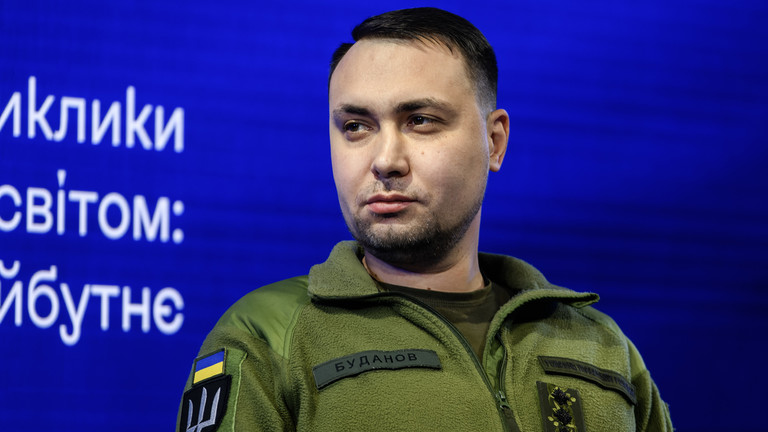
Chief of the Military Intelligence of Ukraine Kirill Budanov. © Maxym Marusenko/Getty Images
RT | September 7, 2024
Telegram poses a real threat to Ukraine’s national security, the chief of that country’s Main Directorate of Military Intelligence, Kirill Budanov, has stated. The official acknowledged that the encrypted instant-messaging platform has become the prime source of information in the country, “outperforming everything else.”
Telegram was created by Russian tech entrepreneurs Pavel and Nikolay Durov back in 2013. One of its unique features is that it allows users to create public broadcast channels and discussion groups.
In an interview with Charter Radio station on Saturday, Budanov said that he does not advocate “simply shutting down” the messaging app. According to the intelligence chief, while quite difficult to implement, such a ban is doable, though.
“I call for all Telegram channels” to be obliged to establish a physical presence in Ukraine, Budanov declared.
“If you want to, so to speak, disseminate some news, please register, so that everyone understands that this channel is registered by Ivanov Ivan Ivanovich, a Russian citizen, who resides in Moscow,” the Ukrainian official explained.
He argued that this way Telegram channel administrators would bear responsibility for the content posted on it.
According to Budanov, some channels publish “not really printable materials,” and not only with respect to the ongoing military conflict with Russia.
He made similar remarks in late March, noting at the same time that Telegram is a useful tool for Ukrainian secret services in spreading their narratives in Russian-controlled territories.
Around the same time, a group of Ukrainian lawmakers proposed a bill to “regulate” Telegram. It included, among other things, a requirement for any messaging apps operating in Ukraine to set up a registered office in the country – unless they are headquartered in the EU – and to disclose their ownership structure and funding to the government.
The founder and CEO of Telegram, Pavel Durov, was detained after landing at Paris-Le Bourget Airport on August 24 and released on bail several days later. The Russian-born entrepreneur, who is also a citizen of France, the UAE, and the Caribbean nation of St. Kitts and Nevis, was charged on 12 counts, including complicity in distributing child porn, drug dealing and money laundering. The charges cite Telegram’s lax moderation rules that presumably allow for the widespread use of the platform by criminals.
Telegram is no stranger to legal problems, with authorities in numerous countries, including Russia, having taken issue with its policies. It has been banned in several jurisdictions over its refusal to cooperate with local governments.
Durov Bombshell: Archaic Crypto Law Charges Reveal French Intel’s Access to Private Communications
By Ilya Tsukanov – Sputnik – 06.09.2024
The Durov saga in France and the continued efforts by countries around the world to crack down on his popular cloud-based, end-to-end encrypted private messenger and social media software has divulged a string of embarrassing details about the sorry state of internet privacy and freedom of information.
Two of the six charges facing Telegram CEO Pavel Durov in France are grounded an obscure, never-used twenty-year-old law obliging companies providing cryptography tools to inform the French Cybersecurity Agency (French acronym ANSSI) and grant it access to the software’s source code and “a description of [its] technical characteristics.”
The 2004 law – uniquely blunt in its demand that companies divulge info about the tech tools used for private communications, is being used against Durov by accusing him of providing encrypted communications services “without certified declaration.”
The legal requirement also means, if it is applied evenly across the board, that the array of instant messengers available to French users, from WhatsApp and Signal to iMessage and the French-made Olvid ‘secure’ messenger used by the French government, do comply with ANSSI regulations, meaning French intelligence can potentially spy on any or all French users at any time.
Adding credence to this idea is the fact that Pavel Durov is reportedly the first-ever tech mogul to be charged under the 2004 law, and the fact that many big-name tech companies have been silent on the Durov case, with the exception of Proton CEO Andy Yen, who characterized the charges against the Russian-born tech mogul as “economic suicide” that’s “rapidly and permanently changing the perception of founders and investors” toward France.
“If sustained, I don’t see how tech founders could possibly travel to France, much less hire in France,” Yen wrote last week.
The law is also reminiscent of the case against WikiLeaks cofounder Julian Assange, who was threatened with decades of jail time by the US under the obscure Espionage Act of 1917, even though that he was not an American citizen, and a publisher, not a spy. Former president Donald Trump was charged under the same act in his classified documents case, which got thrown out by a judge in July.
France arrests nurse who volunteered in Gaza
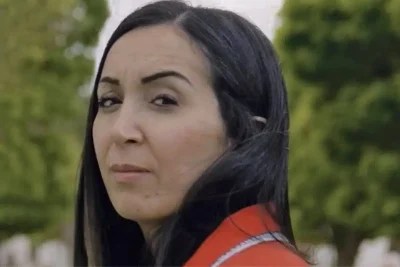
Imane Maarifi
MEMO | September 6, 2024
France yesterday arrested then released nurse Imane Maarifi who spent 15 days volunteering as a medic in the Gaza Strip.
Lawyer Rafik Chekkat, founder of the Islamophobia platform, said Maarifi was arrested in the morning at her home and taken into custody.
He criticised the arrest and said it took place at a time when French soldiers who fought in Gaza “enjoy total impunity.”
Thomas Portes, a lawmaker from the La France Insoumise, or France Unbowed (LFI) party, wrote that Maarifi has been released from custody.
“The search of the home in front of the family leaves no doubt about the desire to intimidate the voices that are raised to support the Palestinian people and demand an immediate ceasefire,” he wrote on X.
Maarifi attended pro-Palestinian rallies in France to share her testimony about the crippling situation in Gaza.
She has also expressed her demand for an immediate ceasefire in Gaza and a boycott of companies supporting Israel.
Maarifi spent 15 days volunteering as a medic at the European hospital in Khan Yunis.
Israeli army kills US citizen during demonstration in Beita, Nablus
International Solidarity Movement | September 6, 2024
During the weekly demonstration in Beita, Palestine, on the morning of September 6th, 2024, the Israeli army shot and killed an International Solidarity Movement (ISM) volunteer. The demonstration, which primarily involved men and children praying, was met with force from the Israeli army stationed on a hill. Initially, the army fired a large amount of tear gas and then began using live ammunition. The volunteer, who we consider a martyr in the struggle, was the 18th demonstrator to be killed in Beita since 2020. She was an American citizen of Turkish descent.
The Israeli forces intentionally fired two live rounds. One hit a Palestinian man in the leg, injuring him. The other round was fired at international volunteers who were observing the demonstration, striking a human rights activist in the head. The volunteer died shortly after being transported to a local hospital in Nablus.
Fellow ISM volunteer Mariam Dag (a pseudonymn) was on the scene, and witnessed the fatal injury of her comrade. She said:
“We were peacefully demonstrating alongside Palestinians against the colonisation of their land, and the illegal settlement of Evyatar. The situation escalated when the Israeli army began to fire tear gas and live ammunition, forcing us to retreat. We were standing on the road, about 200 meters from the soldiers, with a sniper clearly visible on the roof. Our fellow volunteer was standing a bit further back, near an olive tree with some other activists. Despite this, the army intentionally shot her in the head.
This is just another example of the decades of impunity granted to the Israeli government and army, bolstered by the support of the US and European governments, who are complicit in enabling genocide in Gaza. Palestinians have suffered far too long under the weight of colonization. We will continue to stand in solidarity and honor the martyrs until Palestine is free.”
E.N, who is a friend of the slain activist and fellow volunteer with the ISM said:
“I don’t know how to say this. There’s no easy way. I wish I could [say] something eloquent, but I can’t through my sobbing tears…. my friend, comrade and travel partner to Palestine, was just shot in the head and murdered by the Israeli Occupation Forces. May she rest in power. She is now one of many martyrs in this struggle.”
Beita, is a village in the West Bank where just weeks ago Amado Sison, another American volunteer, was struck by live ammunition in the back of the leg. Beita has a long history of resistance against Israeli occupation and has been a focal point of violence directed towards Palestinian residents by Israeli forces. Located near several illegal Israeli settlements, the village holds regular demonstrations. Due to escalating aggression by the Israeli forces, residents are currently refraining from marching or chanting, instead gathering together on the land and praying.
In recent years, Beita has seen ongoing demonstrations, particularly against the construction of new illegal Israeli outposts on the lands of the village. For example Evyatar outpost, on Sabih Mountain, has been established on Palestinian land. In June, the Israeli security cabinet approved the ‘legalization’ of Evyatar, causing the people of Beita to strengthen their popular resistance.
Residents of Beita recently restarted weekly Friday demonstrations to resist the further theft of their land. While protests had nearly ceased since October 7th 2023, due to escalating violence from Israeli occupation forces, there was a renewed push on July 5th 2024, when dozens of Palestinians, accompanied by international and Israeli activists, marched from the adjacent mountain, through the valley, and towards the outpost.
In recent months, international activists have experienced a sharp increase in violence from Israeli forces and the occupation must be held accountable for this. The woman martyred today was an activist with the International Solidarity Movement (ISM), a Palestinian-led organization that provides protective presence and solidarity in the West Bank. The ISM was founded in 2002, and has maintained a steady presence in Palestine ever since, supporting the Palestinian popular struggle against the occupation.
Our comrade is added to the 17 Palestinian protesters already slain in Beita:
Palestinians martyred at demonstrations in Beita:
– Mohammed Hamayyel, 15 (March 11, 2020)
– Islam Dwikat, 22 (April 9, 2020)
– Karam Amin Dwikat, 17 (October 15, 2023)
– Issa Sliman Barham, 40 (May 14, 2021)
– Tareq Ommar Snobar, 27 (May 16, 2021)
– Zakaria Maher Hamayyel, 25 (May 28, 2021)
– Mohammed Said Hamayyel, 15 (June 11, 2021)
– Ahmad Zahi Bani Shamsa, 15 (June 16, 2021)
– Shadi Ommar Sharafa, 41 (July 27, 2021)
– Imad Ali Dwikat, 38 (August 6, 2021)
– Mohammed Ali Khbeissa, 27 (September 24, 2021)
– Jamil Jamal Abu Ayyash, 32 (December 1, 2021)
– Fawaz Ahmad Hamayyel, 47 (April 13, 2022)
– Immad Jareh Bani Shamsa, 16 (October 9, 2023)
– Mohammed Ibrahim Adili, 13 (November 23, 2023)
– Maath Ashraf Bani Shamsa, 17 (February 9, 2024)
– Ameed Ghaleb Said al-Jaroub, 34 (March 22, 2024, died of a bullet wound injury to the head sustained on August 21, 2023)

At this time, the family is not granting any interviews. Please contact ISM for media requests.
American universities rolling out BANS on anti-Israel protests; any criticism of Zionism to be considered “hate speech”
By Ethan Huff | News Target | September 4, 2024
Following the lead of New York University (NYU), American colleges and universities are imposing new rules to ban all criticism of Israel as “hate speech” and “antisemitism.”
At least 17 schools, including NYU, have already altered their policies to punish students and faculty for disagreeing with Israel’s war on Gaza. Some are prohibiting all Israel-related protests while others are going so far as to ban entire student organizations on campus.
In more extreme cases, schools are prohibiting students and faculty from protesting even online while others are expanding their conduct codes to basically keep quiet about Zionism or else face a school tribunal, of sorts, for punishment.
Indiana University, for instance, changed its “expressive activity” policy to ban all protests within 25 feet of university buildings and demonstrations that block “any building, facility, driveway, parking lot or parking ramp.”
The University of South Florida is banning all protests after 5 p.m., as well as during the entire final two weeks of every semester. If USF students want to set up a tent or canopy on campus, they will now be required to first get approval – and under no circumstances can anything be left out overnight without prior authorization.
(Related: Some teachers and preachers of prophecy, including Amir Tsarfati, want to justify genocide by claiming that the mass killing of Palestinians is God’s will for Israel.)
Zuckerberg, a true Zionist lapdog
At Vanderbilt University, all demonstrations that “require individuals to sleep or gather overnight” are now strictly prohibited. All on-campus displays from now on must also be during daylight hours only, and for no longer than three consecutive days at a time.
The University of California (UC) system says that encampments are no longer allowed on any of its 10 campuses. Protesters are also strictly prohibited from wearing masks or otherwise disguising their identity now that the people doing it are protesting Israel rather than destroying property in solidary with George Floyd.
The California State University (CSU) has implemented the same new rules as the UC system at its 23 statewide campuses.
At Rutgers University in New Jersey, the entire chapter of Students for Justice in Palestine (SJP) is prohibited from the campus until July 2025, which is the same thing George Washington University did except that GWU also kicked out Jewish Voices for Peace, an anti-Zionist Jewish organization.
At Columbia University, SJP is permanently banned from having an Instagram account. The school is so involved in making this new rule stick that it convinced Meta to send a notice to its SJP chapter informing members that their group’s account “doesn’t follow our Community Guidelines.”
The list goes on and on as the Zionist contingent in America makes its moves trying to silence all of their critics. They are really playing their hand now and showing just how many schools, government agencies, corporations and other institutions are under their thumb, hence the systematic abolition of free speech we are witnessing.
It turns out that one of the first entities to start doing all this was Facebook (Meta), which has been working on trying to silence anti-Zionist speech on its platform since at least 2020 when Mark Zuckerberg issued new speech codes banning all Holocaust denial and other content that depicts “Jewish people running the world or controlling major institutions such as media networks, the economy or the government.”
“The idea of banning content that promotes stereotypes of Jewish global control came up a year ago, in a meeting with several Jewish groups convened by Facebook, and was pushed primarily by the World Jewish Congress,” The Jewish Daily Forward reported at the time.
Unions condemn British police for arresting independent journalist
RT | September 5, 2024
The International Federation of Journalists (IFJ) and UK’s National Union of Journalists (NUJ) have condemned the recent arrest in the UK of independent reporter Richard Medhurst. In a joint letter addressed to New Scotland Yard anti-terrorism head Matt Jukes and dated Tuesday, the unions said they were “shocked” and “concerned” over what they consider “efforts to stifle press freedom.”
A British citizen of Syrian descent, Medhurst was arrested at London’s Heathrow Airport on August 15. According to his own account provided to several media outlets, he was pulled off a plane and taken to a police station, where he was held for over 24 hours. His phone and work equipment were seized, while Medhurst himself was subjected to a search and a questioning.
He was told he was arrested under Section 12 of the UK’s Terrorism Act 2000 on charges of “expressing an opinion or a belief that is supportive of a proscribed organization.” He was eventually let go, but said he does not yet know whether he will be charged with any offense.
Michelle Stanistreet, NUJ general secretary, and Anthony Bellanger, IFJ general secretary, said Medhurst’s arrest “will likely have a chilling effect on journalists in the UK and worldwide,” as they would now fear arrest by UK authorities “simply for carrying out their work.”
“Both the NUJ and IFJ are shocked at the increased use of terrorism legislation by the British police in this manner. Journalism is not a crime,” they stated, arguing that the “powers contained in anti-terror legislation must be deployed proportionately – not wielded against journalists in ways that inevitably stifle press freedom.” They requested a meeting with Jukes, urging UK authorities to provide “clarity” on Medhurst’s case.
The Terrorism Act 2000 gives police wide powers to prosecute and punish offenses linked with terrorism. Its Section 12 criminalizes anyone who “invites support” for an organization designated as terrorist or “expresses an opinion or belief that is supportive” of it. A person found guilty of an offense under this section could face imprisonment for up to 14 years and a hefty fine.
Medhurst told the Anadolu news agency that he was never given a clear reason for his detention, but said it was likely linked to his reporting on the war in Gaza. The journalist is a vocal supporter of Palestine and its militant group Hamas, considered a terrorist organization by the UK government.
He also warned that his arrest could set a dangerous precedent, noting that London is increasingly using the Terrorism Act “not against terrorists, but against political dissidents.”
Medhurst covers international affairs on his YouTube channel and hosts a program on Iran’s Press TV, while also publishing opinion pieces in other outlets. He previously contributed several articles to RT.
Featured Video
Iran FM Araghchi: “Hormuz Will No Longer Be the Same”
or go to
Aletho News Archives – Video-Images
From the Archives
Sam Husseini: The entire US establishment helped lie their way into the Iraq war
By Slava Zilber | American Herald Tribune | October 14, 2019
Sam Husseini is a senior analyst with the Institute for Public Accuracy, independent journalist and contributor to The Nation and FAIR.
Slava Zilber: Sam, three years ago, you appeared on Talk Nation Radio with David Swanson and spoke about the case of the GCHQ whistleblower Katharine Gun. You pointed out that the people involved in the spying on the UN and the people authorizing the Iraq War were not held accountable:
“Virtually everybody who went along with the war, whether it is Kerry or Clinton, of course, the Bush administration themselves has falsified their own records in terms of why, what they did, when they did, why they did it, to the extent that they’ve been scrutinised at all.”
You also address it in a recent article. And recently, Joe Biden has been lying about his position on the Iraq War. How can such an important issue escape meaningful scrutiny? … continue
Blog Roll
 Aletho News
- Barghouti: ‘Netanyahu has fallen,’ era of Smotrich, Ben-Gvir over
- China slams US policy on Iran as Russia rejects legality of nuclear meeting at UN
- The Mecca Pact Courts Iran: Containment Comes Full Circle
- Oman FM: Persian Gulf states, Iran, Iraq should form security pact excluding US
- Trump peddles fresh falsehoods, claims Iran ‘started the war’ as US aggression drags on
- Ukraine quagmire? Yes, but it’s for NATO, not Russia
- US intelligence hypes Chinese, Russian space threats while accelerating its own military buildup in orbit
- Iran FM Araghchi: “Hormuz Will No Longer Be the Same”
- EU facing trillion-euro debt hole while seeking more cash for Kiev
- How US, Europe, Persian Gulf states exhausted missile stockpiles, splurged billions to defend Israel
- If Americans Knew
- An error has occurred; the feed is probably down. Try again later.
- No Tricks Zone
- Sudden Stratospheric Warming, Powerful El Niño Combination May Lead To Extreme Europe Cold, Energy Crisis!
- Two New Studies Find Thwaites Glacier Melt Cannot Be Driven By Human Activity Or A Warming Ocean
- E-Cars Reduce CO2 Emissions By Only 41% Compared To Internal Combustion Engine Vehicles
- Predictions Made By Renowned Climate Professor Over Past Decades Have Been Proven To Be Poor
- New Study Suggests Large Regions Of The Pacific Ocean Have Been Cooling For The Last 80 Years
- Germany’s Green Energy Debacle: High Energy Costs Force Kahla Porzellan to Close After 182 Years!
- New Study: 50 Years Of The Most Aggressive ‘Net Zero’ Policies Can Only Affect The Global Climate By 0.03°C
- US September “Heat” Was No Record…Many Records Set Decades Ago
- Latest European Green Energy Debacle; Portugal’s Largest Flagship Solar Park Insolvent!
- Green Energy Debacle: German Expert Professor Fritz Vahrenholt Warns Of Severe Economic And Social Consequences

