Paris bans pro-Palestinian demonstration planned for Oct. 7 over ‘risks of public disorder’
MEMO | October 6, 2026
Paris police chief Patrice Faure on Tuesday banned a pro-Palestinian demonstration planned for Wednesday, the third anniversary of Oct. 7, 2023 attacks in Israel, over “risks of public disorder,” Anadolu reports.
“At the request of Interior Minister Laurent Nunez, I issued an order banning a demonstration ‘against the genocide in Gaza and for respect for the ceasefire’ in Paris on Wednesday,” Faure said on US social media platform X.
He noted that such a demonstration could pose “significant risks of public disorder,” citing a “high terrorist threat” and antisemitic acts that “remain at historically high levels” across France.
“In light of this, and in view of all the risks identified, it is my responsibility to ensure everyone’s safety. I have therefore decided to ban this demonstration,” Faure added.
Israel’s genocidal war launched three years ago in Gaza has killed more than 74,000 people, injured many more and destroyed most of the enclave’s infrastructure.
Georgia’s Largest Healthcare System Will Fire Employees Who Refuse Flu Vaccine
By Brenda Baletti, Ph.D. | The Defender | October 5, 2026
Employees of Georgia’s largest healthcare system have until Nov. 1 to get the flu vaccine or an approved exemption, or they will be suspended without pay. If suspended employees don’t submit proof of vaccination by 4 p.m. Nov. 15, they will be fired.
According to the Emory Healthcare website, the vaccine mandate applies to all employees, including contractors and remote workers.
Employees suspended for missing the first deadline, Nov. 1, 11:59 p.m., will not be allowed to use their paid time off.
COVID-19 shots are not mandated, but employees are “encouraged to engage in shared decision-making with their provider” on whether or not to get the vaccine.
A spokesperson for the healthcare system said the requirement is intended to protect patients and staff and to encourage everyone to get vaccinated.
Dr. Sherika Newman of Doctor in the Family, a physician-led patient advocacy and health consulting service in Atlanta, told CBS News that flu vaccine requirements are common in healthcare.
“Asking health care providers or people who interact with patients to take the flu vaccine early every year is what we always mandate so that we are protecting ourselves from spreading viruses to vulnerable populations,” Newman said.
She said everyone should get vaccinated, not just healthcare workers, although only healthcare workers will lose their jobs if they don’t get the vaccine.
Cleveland Clinic: 2024-2025 flu shot increased risk of getting the flu
Flu vaccine effectiveness can vary, according to the Centers for Disease Control and Prevention (CDC), which cites studies since 2009-10 showing effectiveness between 19% and 60%. The major factors influencing vaccine effectiveness are a person’s age and health and how well the vaccines match the circulating virus strains.
According to a Cleveland Clinic study published last year, people who received a flu vaccine formulated for the 2024-25 flu season had a 27% higher risk of getting the flu than those who didn’t get the vaccine.
It wasn’t the first study to find that flu vaccines could actually increase the risk of becoming ill.
A 2023 study co-authored by Dr. Anthony Fauci acknowledged that “viruses replicating in the respiratory mucosal environment continue to present a particular challenge for developing effective vaccines with strong protection.”
“The flu shot has never really prevented transmission of the flu and in some years (i.e., last year) the efficacy of preventing the flu is actually negative,” said Brian Hooker, Ph.D., chief scientific officer at Children’s Health Defense. “Flu would blow through a vaccinated population with nearly the same ease as it would an unvaccinated population.”
A 2012 peer-reviewed study published in Clinical Infectious Diseases showed that children who received the flu vaccine were at significantly increased risk of contracting non-flu respiratory virus infections.
Moderna’s mRNA flu shot added to the mix this year
According to the CDC’s FluView vaccination chart, as of Sept. 26, flu cases were at “minimal” levels across almost all 50 U.S. states, including Georgia.
Flu season typically begins in October and ends in May, with highest transmission rates in December and February.
The CDC recommends flu shots for people age 6 months and older, assuming they have no medical conditions that make vaccination risky.
Flu shot formulations differ each year based on information about which strains may circulate that year. The formulations aren’t tested for safety or efficacy before they’re distributed to the public.
In March, vaccine advisers to the U.S. Food and Drug Administration (FDA) recommended trivalent vaccines to protect against two influenza A and one influenza B viruses.
In the past, most flu vaccines were made from a flu virus grown in eggs, and then inactivated and made into a vaccine. Or, they were made from recombinant protein vaccines, which have pieces of the flu pathogen that the immune system learns to recognize and fight.
This year, Moderna’s controversial mRNA flu shot, mFLUSIVA, approved in June, is also available for people age 50 and over.
Number of healthcare workers getting flu, COVID vaccines declining
Manufacturers say they will produce up to 135 million doses of flu vaccine for the U.S. market this flu season.
In recent years, many healthcare workers have been resisting flu shot mandates and declining the shot.
For example, record numbers of frontline health workers in the U.K. refused the flu vaccine in 2024-25.
Rates of U.S. healthcare workers who take the COVID-19 and flu shots have also been declining in recent years.
Numbers are lowest among health professionals who work in nursing homes. In the 2024-25 flu season, only about 42% of those workers got the shot, compared with about 81% of workers in acute care hospitals.
This article was originally published by The Defender — Children’s Health Defense’s News & Views Website under Creative Commons license CC BY-NC-ND 4.0. Please consider subscribing to The Defender or donating to Children’s Health Defense.
British Transport Police Facial Recognition Trial Scanned 926,912 People With Zero Arrests
By Cam Wakefield | Reclaim The Net | October 3, 2026
So what does it take for a police force to stop using a “trial” deployment of live facial recognition (LFR) technology? Apparently, scanning the faces of more than half a million people and catching nobody is not it.
In fact, it gets you an extension of four months and an expanded area to “hunt” in.
The British Transport Police (BTP) has now revealed that its initial six-month LFR deployment at London railway stations produced one alert – that was false.
The trial cost £320,786 ($425k) to carry out. That was just the cost of equipment hire and police officers’ time, and the figure comes from a freedom of information document obtained by Liberty Investigates.
It ran from February to July across 18 deployments, which the BTP’s own register says resulted in 537,697 people having their faces scanned.
The single alert was raised on February 24 at Kings Cross, against a watchlist of 455 people. The alert was false, and the false alert rate was 0.00517 percent.
The story doesn’t end there, because the BTP’s own register doesn’t stop at the end of July. It goes on to September 24, and now includes 27 deployments – and a total of 926,912 people who have had their faces scanned.
This extension has produced alerts. On August 20 at Kings Cross St Pancras Underground, there was one true alert, unconfirmed. On September 4 at Waterloo, there was one true alert, confirmed, and the outcome was no action. And on September 24 at London Bridge, there were two true alerts, both confirmed, with the outcome again being no action.
The arrest column in the register still reads zero.
In other words, the machine has now correctly identified three people – but the police have not found any reason to arrest any of them.
The register also shows that the number of people on the watchlist has grown. On February 11, it was 381, and by September 14 at Victoria Underground, it had more than doubled, to 862.
This is where things get even better. The expansion was “welcomed” by Transport for London (TfL), who said the technology “will target and identify people on police watchlist at key stations chosen for maximum impact.”
TfL also justified the move by saying it would “specifically tackle violence against women and girls, whose travel behaviours are shaped by experiences of sexual harassment and sexual offences.”
Labour MP Bell Ribeiro-Addy is not impressed. “Tackling violence against women and girls on public transport must be an urgent priority, but that means investing in what actually works; not spending more than £320,000 on a measure, which when piloted, resulted in zero arrests and a single false alert,” she said.
“Live facial recognition technologies are a serious invasion of our privacy. The government should be suspending their rollout until there are stronger safeguards in place, including a proper legal framework,” the MP added.
This is not one force experimenting on its own. We have reported London Mayor Sadiq Khan approving live facial recognition for Oxford Street, London police using it at a protest for the first time, the High Court clearing the way for police use of it, and Greater Manchester Police joining the rollout. Liberty Investigates found that more than half of police forces in England and Wales have now deployed it.
Meanwhile, biometric images that do not match those on the watchlist are deleted immediately, while those that do match are deleted within 24 hours, as is the watchlist itself, once a deployment is finished.
BTP’s own policy makes clear that the surveillance is not limited to the cameras that are part of the LFR system. Footage from the LFR camera masts will be kept for up to 31 days, “in line with general police retention periods for CCTV.”
It seems that no matter how many times these deployments are extended, and how many people are scanned, the watchlist will just keep growing.
The police will keep getting more money to throw at this tech, that has not yet proven itself as useful for anything but wasting public money.
House Bill Would Ban Federal Use of Flock ALPR Data

By Ken Macon | Reclaim The Net | October 3, 2026
A new US bill, Ban Flock Act, has been introduced, with the aim of stopping the federal government from using automated license plate readers (ALPRs).
“Flock is eviscerating the very notion of privacy by installing tens of thousands of cameras in communities across America without their consent,” said Senator Bernie Sanders, who is planning a Senate version.
“Going to the doctor? Flock knows. Dropping your kid off at school? Flock is tracking you. Flock is always watching,” he continued.
According to the text of the House bill, H.R. 10691, federal agencies and officials are to be banned from acquiring, possessing, accessing or using ALPRs, or data collected by these devices, without an Act of Congress that explicitly authorizes it.
This would include data collected by private security networks, homeowners’ associations, commercial parking operators, and data brokers.
Any such authorization must set data retention at no more than 48 hours, and “rigorous protections for due process, privacy, free speech and association.”
State and local governments that have ALPRs would not be eligible for grants from the Justice, Transportation, Health and Human Services, Housing and Urban Development, and Homeland Security departments.
The bill, whose sponsors in the House are Alexandria Ocasio-Cortez and in the Senate Jeff Merkley, also seeks to make sure that no federal money is used to buy, lease, or operate ALPRs, while evidence obtained in violation of the proposed legislation would be inadmissible in federal court.
Individuals would be able to sue for actual and punitive damages, while state attorneys general would be able to sue to enforce the ban.
Toll systems would be exempt from the ban, but the data collected would have to be deleted within 48 hours of payment, and could not be checked against a law enforcement hot list.
“AI-powered cameras are keeping track of our every move and weaponizing this data against working people to make record profits,” Ocasio-Cortez said.
Merkley noted that the right to privacy includes the freedom to move around the community without every move being monitored.
The Ban Flock Act is not the first attempt of its kind – in early September, Republicans Thomas Massie and Eric Burlison introduced the Flock-Off Act, H.R. 10221, that also seeks to cut federal funding to state and local governments that use ALPRs, as well as biometric surveillance cameras.
In August, Florida Governor Ron DeSantis ordered Flock cameras to be removed from state highways within 30 days, a year after the state approved $4.6 million for 440 of these devices.
Earlier in the summer, Senator Josh Hawley launched an investigation into Flock, and later expanded it to include Axon, Motorola Solutions, and Verkada.
“Flock does not stand alone in this industry; you and others are building large camera networks, assisted by artificial intelligence, that intrude on the privacy of all Americans,” Hawley said at the time.
Hawley has his own anti-Flock bill that has been announced but the text of the bill has yet to be filed.
Republicans and Democrats are now going after the same cameras, and the bill cuts off the federal money and the data trade, not just the cameras.
Diplomacy is Now a Crime in Britain / Ian Proud
Daniel Davis / Deep Dive – October 3, 2026
UK Government Body Kept Files on People Criticizing Prevent Program
By Cindy Harper | Reclaim The Net | October 2, 2026
If you are a British citizen and you criticize a government program online, that criticism can be collected and stored by a government-linked body.
At least that seems to be the upshot of the actions of the Prevent Standards and Compliance Unit (StaCU), “a body linked to the Home Office,” that has been keeping “observations” of those who speak against the government’s Prevent counter-extremism program on the internet.
The “evidence” of this comes from documents the group Rights & Security International (RSI) obtained under freedom of information law.
The group has now revealed that in the year from March 2024 to February 2025, StaCU made 77 “observations” of people who were critical of the program online – and that most of these “observations” came from X, with some from Reddit. Mainstream media articles were also included, as were posts from or about several organizations, including Hope Not Hate, Maslaha, and the Open Rights Group.
The “observations” are filed as “open-source complaints” and stored internally by StaCU. RSI is unsure what happens to this data next, and who the government may be sharing it with. What is known is that the process involves “attempting to independently verify claims.”
As RSI’s Freedom of Expression and Belief Team Leader Jacob Smith put it, “You should be able to criticize government policy without getting put on a list.”
Smith also noted that the fact that the government “has been trawling X and Reddit to find out who has been critiquing Prevent” should serve as “a stark reminder that, in the government’s eyes, anything you share online is fair game and could go into a file forever.”
The Home Office tried to keep this secret and refused to hand over the documents at first, but RSI won an appeal to the Information Commissioner’s Office, and the documents were released.
As RSI noted, it is unclear if any automated tools were used to find the posts, and if not, how the unit “found” them, or what it does with the data it collects.
The case is not the first time Prevent has been in the news for its controversial nature and the way it is implemented, but it is a stark reminder that the British government has no problem treating criticism of its policies as potentially dangerous.
Zionist Bought Senate Blocks Information About American Citizens Killed By Israel

By Justin K.P. | The Dissident | September 30, 2026
The U.S. Senate just voted 47-51 against a bill introduced by the Senators Chris Van Hollen, Tim Kaine and Bernie Sanders which would have “forced Secretary of State Marco Rubio to submit to Congress, within 30 days, a report on what information is available about the killings of the nine US citizens, the status of US and Israeli investigations into the killings, the number of US citizens currently held in Israeli prisons, the treatment of Palestinian children in Israeli prisons, and a description of the steps the US government has taken to reduce violence in the West Bank.”
In other words, the Zionist occupied Senate voted against releasing information about Israel killing American citizens in order to protect Israel.
The bill would have forced Marco Rubio to release the information about nine US citizens who have been killed by settlers and Israeli security forces, including the late Palestinian-American journalist Shireen Abu Akleh, who was killed by Israeli occupation forces while reporting in the West Bank in 2022, an intentional murder that was covered up by the Biden administration.
The Biden administration covered up for Israel, claiming that her murder was the “result of tragic circumstances during an IDF-led military operation against factions of Palestinian Islamic Jihad”.
But later, the whistleblower Colonel Steve Gabavics, who worked at the time for the Office of the U.S. Security Coordinator in Jerusalem and led the investigation into Shireen Abu Akleh, revealed that his team found she was intentionally targeted, but the U.S. covered it up to protect Israel.
In an interview with Democracy Now!, he noted, “We were able to disprove very quickly the assertion that there was a Palestinian gunman in front of Shireen Abu Akleh, that the IDF had shot at, and they had accidentally shot her instead… the indications of everything we read from the reports that we got from the IDF on their locations, and proximity to where the event happened, what we got from the investigation from the Palestinian Authority, and our investigation, to us it was very clear that the (IDF) individual in the vehicle who took the shot, would have had a clear line of sight and would have had visibility of Shireen Abu Akleh walking down the middle of the street for a period of time before he took the shots”.
But he revealed that the Biden administration covered up this information, saying, “After we had completed this we were on regular video calls, classified and unclassified with the state department … I indicated that the evidence to me indicated that there would have been enough if we actually built a criminal case to have enough information and facts to beyond a reasonable doubt, for a conviction at some level. We were pushing for the fact that they needed to formally admit the fact that it was not an accident, that a (Israeli) soldier killed Shireen Abu Akleh, that it was an intentional shooting, and unfortunately, that was not what came out … When the actual statement came out, that was absolutely not what I expected… I was shocked … all the data indicates the exact opposite, it was not fog of war… This was not what we had found”.
He added, “It all came down to not trying to anger the Israelis by holding them accountable for intentionally killing an American citizen”.
Yet again, AIPAC-bought members of the Senate want to continue the cover-up of the Israeli murder of American citizens in order not to anger Israel and its lobby.
While Gaza dominates the UN, these are the people keeping it alive
By Ramzy Baroud | MEMO | September 30, 2026
When I first saw footage of Gaza doctor Munir al-Bursh and his family kneeling beside the white-shrouded body of his son, surrounded by mourners, I thought it was an old video. It was not.
My conclusion, however, was understandable. In December 2023, only months after the start of the Israeli genocide in Gaza, the al-Bursh family was targeted in an Israeli attack. Dr. Munir, director-general of Gaza’s Ministry of Health, was wounded. So were other members of his family. His daughter, Jinan, only 13, was killed.
That same day, Gaza’s beloved doctor was back at work, joining the many doctors across the Strip trying to save lives as Israel’s killing machine claimed them by the thousands.
Alas, the latest footage was not old footage resurfacing. It was a new coffin, a new funeral, another child buried by the same family. This time, the attack took place during what some in the media continue to call the ‘Gaza ceasefire.’
On September 19, an Israeli drone strike killed al-Bursh’s eldest son, Basir, outside a tent west of Jabaliya refugee camp.
“We were together side by side,” the grieving father recalled. Basir had warned him: “The Israelis are targeting both of us.” Moments later, his son stepped outside the tent and was killed.
One can be forgiven for confusing Gaza’s present with its recent past. The scenes emerging today are almost indistinguishable from those that preceded the so-called ceasefire of October 2025. The sequence repeats itself with terrible familiarity: Israeli strikes, shelling and sniping; Palestinians killed; the bereaved carrying their dead through Gaza’s destroyed streets, searching among the ruins for somewhere to bury them.
Al-Bursh’s story is part of this terrible continuum, but its significance extends beyond his personal loss. Throughout the genocide, he and other Palestinian doctors became Gaza’s de facto spokespeople. They counted the dead and wounded, documented hunger and destruction, and chronicled the collapse of the medical system from within its hospitals.
In the process, they became Gaza’s highest moral authority, more credible than politicians or self-proclaimed leaders.
And the world listened. Gaza’s doctors forged a bond with global civil society that no political institution could manufacture.
Perhaps that helps explain the staggering price Gaza’s medical community has been made to pay. According to the World Health Organization, more than 1,700 healthcare workers have been killed since 2023, amid at least 920 attacks on healthcare.
Dr. Hussam Abu Safiya, like Dr. al-Bursh, became a symbol of that medical resistance. The director of Kamal Adwan Hospital remained at his post through siege and repeated Israeli attacks before Israeli forces detained him in December 2024. He remains imprisoned without charge or trial, amid reports from his lawyer of beatings and deteriorating health.
Dr. al-Bursh, meanwhile, remains steadfast despite repeated blows that would have broken many others. His wife, too, embodies sumud, the Palestinian tradition of steadfastness nurtured at home and passed from one generation to the next.
Even in the immediate aftermath of his son’s killing, al-Bursh continued warning about Gaza’s collapsing healthcare system. Indeed, hospitals have been forced to suspend scheduled surgeries and outpatient services, while severe shortages of fuel, medicines and equipment continue.
“The limited quantities of fuel reaching the enclave barely keep health facilities alive,” al-Bursh warned a day after his son’s murder.
His statement came as world leaders gathered thousands of miles away, in New York, for the 81st session of the United Nations General Assembly.
And once again, Palestine echoed through speech after speech, though this time the language carried a new urgency.
Spanish Prime Minister Pedro Sánchez condemned “the genocide that Netanyahu continues to perpetrate in Gaza.” UN Secretary-General António Guterres described Israel’s mass extermination as involving “a scale of killing and destruction unlike anything I have witnessed” during his tenure. Even French President Emmanuel Macron called Gaza “a spectacle that shames us all,” asking: “What is our credibility worth if we remain inactive on Gaza?”
Then came Israeli Prime Minister Benjamin Netanyahu.
Dozens of delegates walked out as he approached the podium, leaving row upon row of empty seats, while protests continued outside the UN. Netanyahu responded by calling those who departed “moral cowards.”
One might pause here and speak of tides turning, currents changing and a world slowly loosening the decades-long grip of Israel and its American benefactor.
But Gaza does not have the luxury of time. While the words reverberate through the halls of the United Nations, children are still killed in front of their families. Mass funerals remain part of Gaza’s daily rhythm.
Approximately 1.7 million people remain displaced, many under inadequate shelter, without sufficient clean water or sanitation. Hospitals remain crippled. And above this landscape of ruin, the drones still circle.
Between today and the next UN General Assembly lies an entire year—365 days in which those words can either acquire meaning or become yet another entry in the long archive of speeches on Palestine. However, there is time for rhetoric to become policy: for sanctions to be imposed, boycotts activated, meaningful aid delivered and those responsible for war crimes held accountable.
Until then, Dr. Munir al-Bursh and thousands of Gaza’s men and women will continue to hold the fort amid shattered hospitals, destroyed homes and an exhausted population.
Their resilience is extraordinary. But Gaza cannot be expected to endure simply because it has proved capable of enduring.
In New York, Palestine is spoken of from the podium. In Gaza, Palestinians are still being carried to their graves.
It is time to close the distance between words and action, once and for all.
New Report: “Scholasticide and Genocide in Gaza: Assessment, Testimonies and Legal Analysis”
Palestinian Center for Human Rights – September 28, 2026
In cooperation with the Centre for Palestine Studies at SOAS University London and Friends of Palestinian Universities, the Palestinian Centre for Human Rights (PCHR) has released a new report, “Scholasticide and Genocide in Gaza: Assessment, Testimonial and Legal Analysis,” documenting Israel’s systematic destruction of Gaza’s educational system and examining how this policy forms an integral part of Israel’s ongoing three-year genocide against Palestinians in the Gaza Strip.
The report demonstrates that Israel’s attacks on education in Gaza, including on UNRWA educational faciltiies and staff, go far beyond the destruction of schools and universities or the killing of Palestinian teachers. They constitute a comprehensive policy aimed at dismantling the educational, intellectual, social and cultural foundations necessary for the continued existence and development of Palestinian society.
Drawing on dozens of testimonies and affidavits collectd by PCHR field researchers and lawyers in Gaza, alongside PCHR’s extensive documentation, open-source material, United Nations reports, academic research and relevant international jurisprudence, the report identifies five interconnected patterns of scholasticide: the killing of students, teachers and academics; causing serious bodily and mental harm to them; destroying of educational facilities; obstructing the establishment alternative educational structures; and imposing genocidal conditions that prevent students from accessing education.
By July 2026, PCHR had documented the killing of approximately 20,051 students, more than 830 teachers and educational staff, and over 194 scholars, academics and researchers. Nearly the entire educational infrastructure in in Gaza has been extensively damaged or destroyed, while hundreds of thousands of students have endured prolonged interruption of their education amid displacement, starvation, bombardment, loss of family members, destruction of homes, lack of electricity and internet access, and the collapse of essential services.
PCHR’s report finds that certain acts committed within Israel’s campaign of scholasticide constitute genocidal acts under Article II of the Convention on the Prevention and Punishment of the Crime of Genocide, including killing members of the protected group, causing serious bodily or mental harm, and deliberately inflicting conditions of life calculated to bring about its physical destruction in whole or in part.
The report further highlights the long-term impact on Palestinian children and young Palestinians, including psychological harm, educational loss, diminished future opportunities and intergenerational trauma. Israel’s erasure of the educational infrastructure and broader civilian life in Gaza does not only constitute an attack on the rights of the present generation but also on the future generations.
Education has historically played a central role in sustaining Palestinian identity, knowledge, social cohesion and cultural continuity, particularly in the context of prolonged displacement and occupation. Israel’s destruction of universities, schools, libraries, academic records and cultural institutions therefore carries consequences far beyond the loss of physical infrastructure. It seeks to sever Palestinians from their history and intellectual life, diminish their capacity to rebuild their society, and deprive future generations of the means to learn, develop and participate fully in their community.
PCHR stresses that the destruction of Gaza’s education system did not begin on 7 October 2023. For decades, Palestinian schools, universities and educational institutions have been subjected to attacks, restrictions and destruction during successive Israeli military operations. The unprecedented scale of destruction since October 2023 however represents the culmination and intensification of this longstanding pattern.
PCHR calls on the international community, particularly States Parties to the Genocide Convention, to:
- Take immediate and effective measures to bring Israel’s genocide against the Palestinian people in Gaza to an end, including its policy of scholasticide.
- Ensure full compliance with the three provisional measures ordered by the International Court of Justice in the case of South Africa v. Israel.
- Impose a comprehensive arms embargo on Israel and halt all military, financial and other assistance that may contribute to the commission of international crimes.
- Support international accountability mechanisms, including the International Criminal Court, and ensure that those responsible for genocide, war crimes and crimes against humanity are investigated and prosecuted.
- Take concrete measures to protect Palestinian students, teachers, academics and educational institutions and guarantee the restoration of the right to education in Gaza.
- Provide sustained support for the reconstruction of Gaza’s schools, universities, libraries and educational infrastructure, while ensuring that reconstruction does not substitute for accountability.
- Address the long-term psychological, educational and developmental consequences suffered by Palestinian children and young people and ensure their access to rehabilitation, mental-health support and inclusive education.
EU Council Advances Chat Control 2.0 Scanning Proposal
By Ken Macon | Reclaim The Net | September 28 2026
EU’s Council is again pushing for the new chat control regulation to allow the bloc’s police to order internet companies to scan people’s private communications for illegal content in “parts of a service” for a period of time, rather than having to obtain a warrant to target a specific suspect.
This is one of the three key points from a note (PDF) prepared for the sixth and potentially final trilogue on the legislation, also known as Chat Control 2.0, that is to take place on Tuesday, 29 September. The document, dated September 18, was leaked from the Council and is marked as a “presidency note.”
The Council, the European Parliament (EP) and the European Commission (EC) will be negotiating behind closed doors, with the latter represented by Commissioner for Internal Affairs Magnus Brunner.
The other two key points are that the Council believes limiting searches to specific suspects would “not generate any added value compared to the possibilities already existing under criminal law,” and that it wants the scope of the new rules to remain broad, covering not only known illegal photo and video content, but also new material, and “the solicitation of children.”
The note is based on previous discussions and reveals that the EP is willing to accept an approach that requires search plans, but with the caveat that they must be “targeted” and subject to review by judicial or independent administrative authorities.
The Council, however, wants searches to be authorized in “parts of a service or, where possible, to individual users,” and that the search plan would have to include the technologies used and other relevant safeguards, again subject to review.
The note reveals that the Council also wants to make sure that any mechanism to review and possibly suspend searches “should operate in a manner that does not deter providers from carrying out own-initiative searches.”
As a last resort, the Council will ask member states if they would be willing to drop “own-initiative searches or detection orders on non-public content” from the scope of the regulation – but only if no other compromise can be found “providing at least for the same level of effectiveness as the current voluntary practice.”
Former German member of the European Parliament for the Pirate Party Patrick Breyer has no doubt that what is being proposed is “mass surveillance by another name,” and that the goal of the Council, Commission and some member states is to “permanently normalize mass surveillance across Europe.”
Breyer said that the proposal to scan “parts of a service” would in reality mean that “every user in the EU” would be subject to this.
And, he noted, this is not a new system that would replace the old one, but would rather exist in parallel with it. The old system, meanwhile, “is a proven disaster,” the former MEP said, revealing that in Germany, over half of investigations target minors for “consensual sexting” while 75 percent of flagged chats are “not actionable.”
The Council’s own legal service has in the past said that scanning an entire service or parts of it is “highly probable” to be found “general and indiscriminate” surveillance, and therefore unlawful.
Ex-Greek MEP files complaint against Israeli spyware firm over alleged Pegasus surveillance
MEMO | September 28, 2026
Greek journalist and former European Parliament member Stelios Kouloglou filed a criminal complaint Monday against officials at Israeli spyware maker NSO Group, alleging that his phone was infected with Pegasus while he served on a parliamentary inquiry into surveillance software, Anadolu reports.
The complaint was submitted to the Athens prosecutor’s office, Greek public broadcaster ERT reported. Kouloglou said a forensic examination by the University of Toronto’s Citizen Lab found that his phone had been infected around Oct. 21, 2022, and again on March 6 and 7, 2023.
At the time, he was a substitute member of the European Parliament committee investigating the use of Pegasus, Predator and similar spyware. The complaint said the infections coincided with significant phases of the committee’s work.
Kouloglou alleges the spyware could have given those responsible access to communications, contacts, documents, location information and data related to his political work. The complaint seeks an investigation into alleged breaches of communications privacy, unauthorized access to data and violations of personal data law.
Speaking after filing the complaint, Kouloglou said surveillance was an issue affecting all citizens and expressed hope that Greek prosecutors would investigate the case.
His lawyer, Zacharias Kesses, said no action had previously been taken despite the allegations being known.
Troubling ideas throughout the Torah, Talmud, Mishneh Torah and Tanya
The future of the planet depends on uprooting Jewish supremacy

By Nahida Exiled Palestinian | September 28, 2026
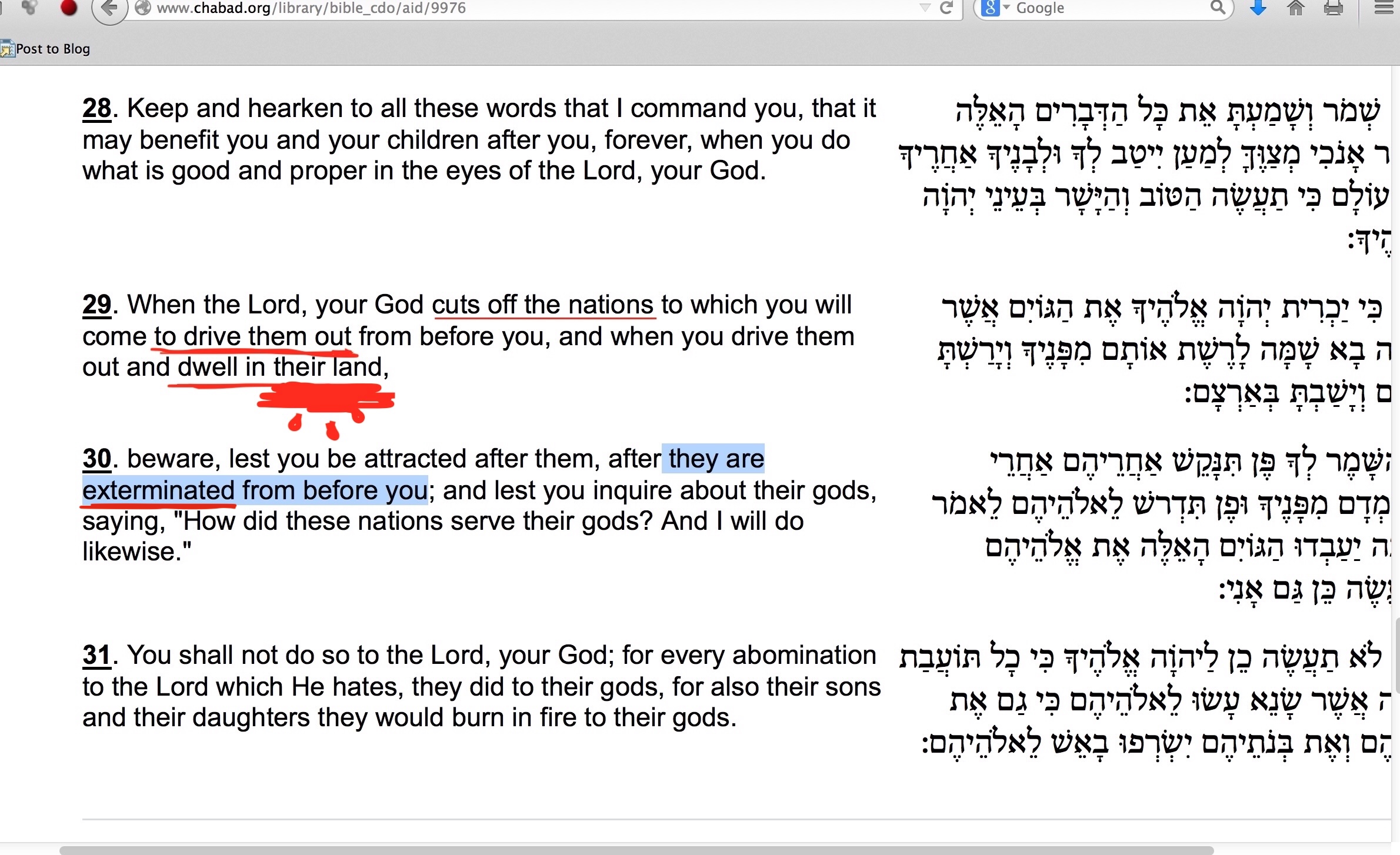
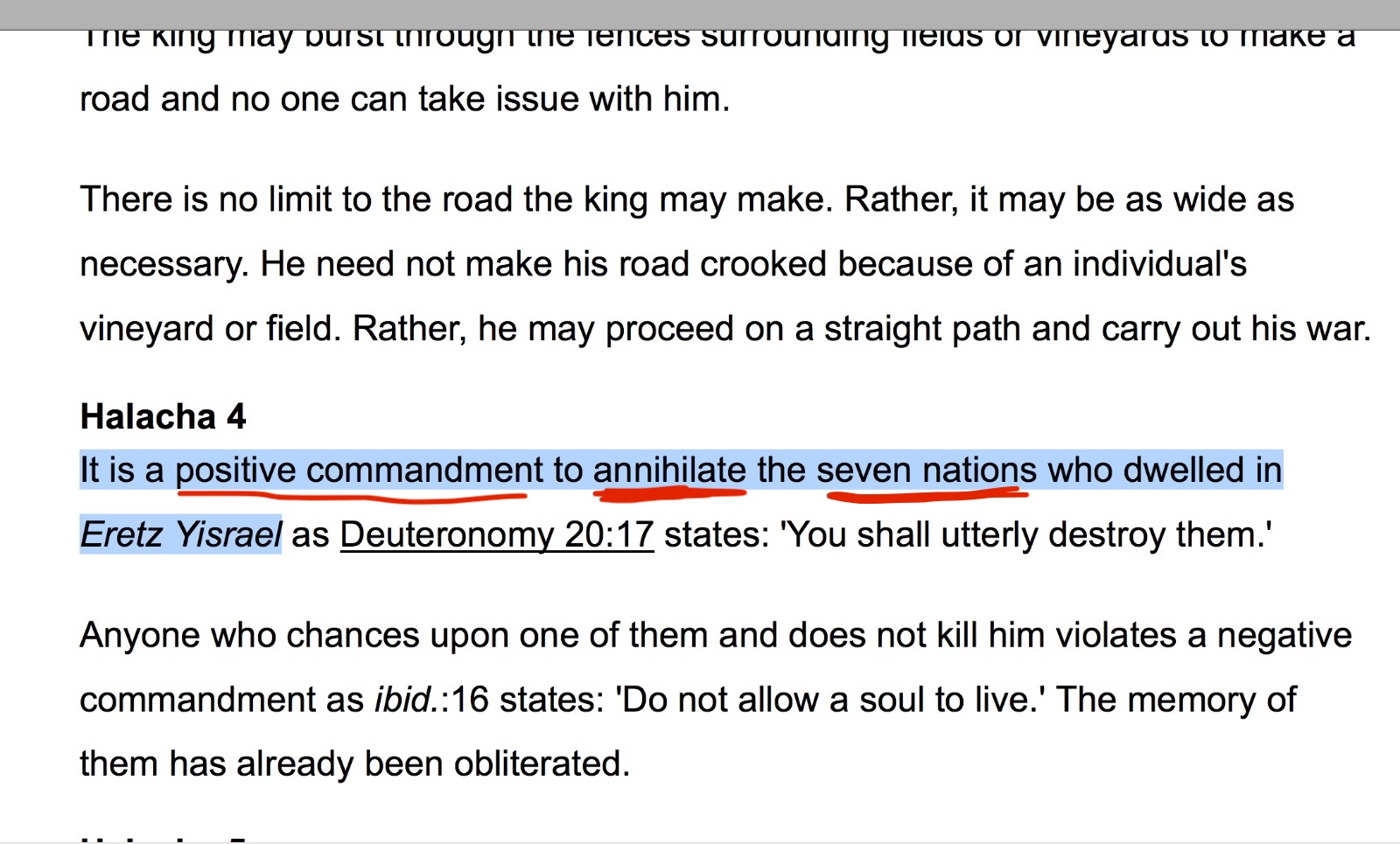
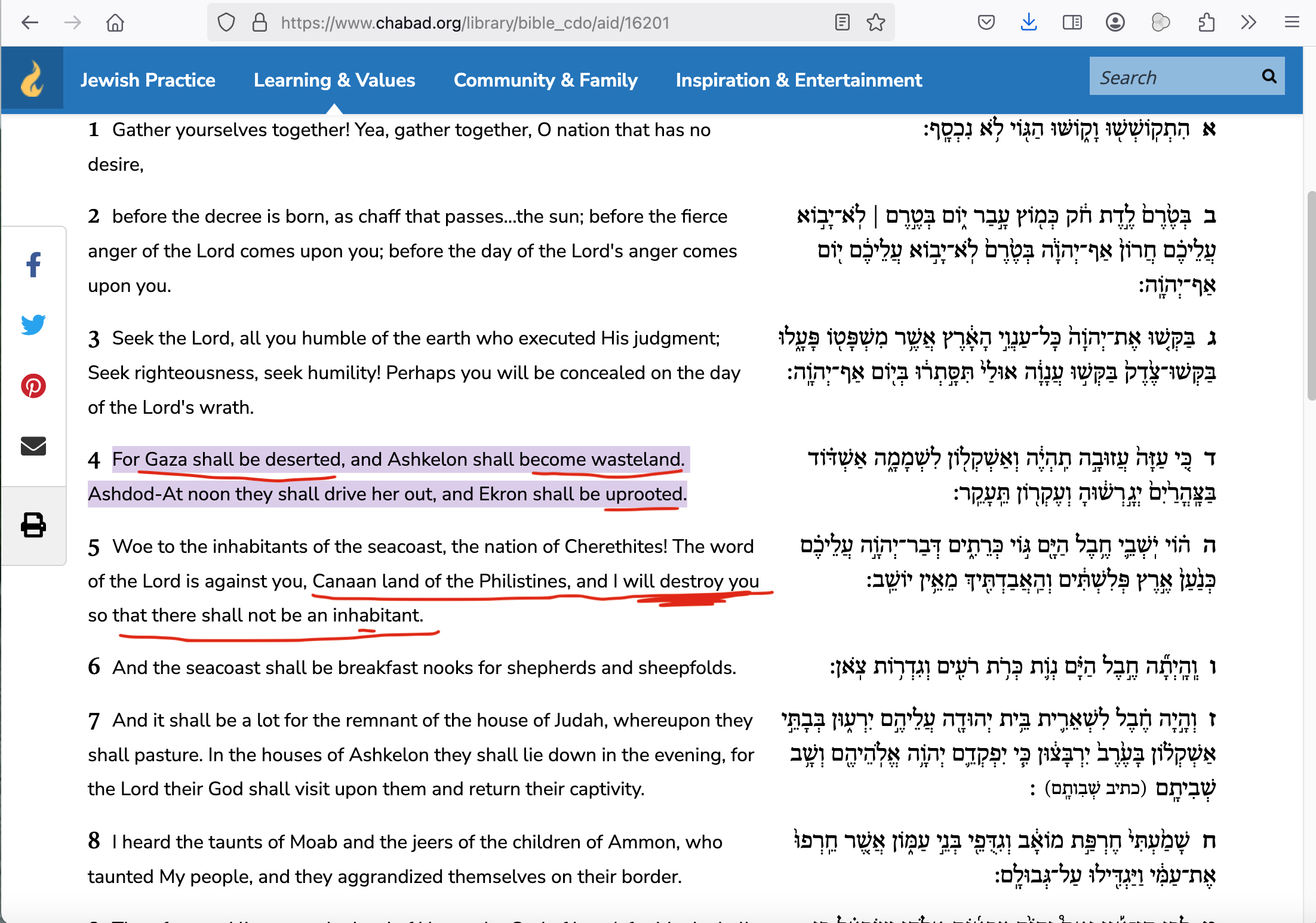
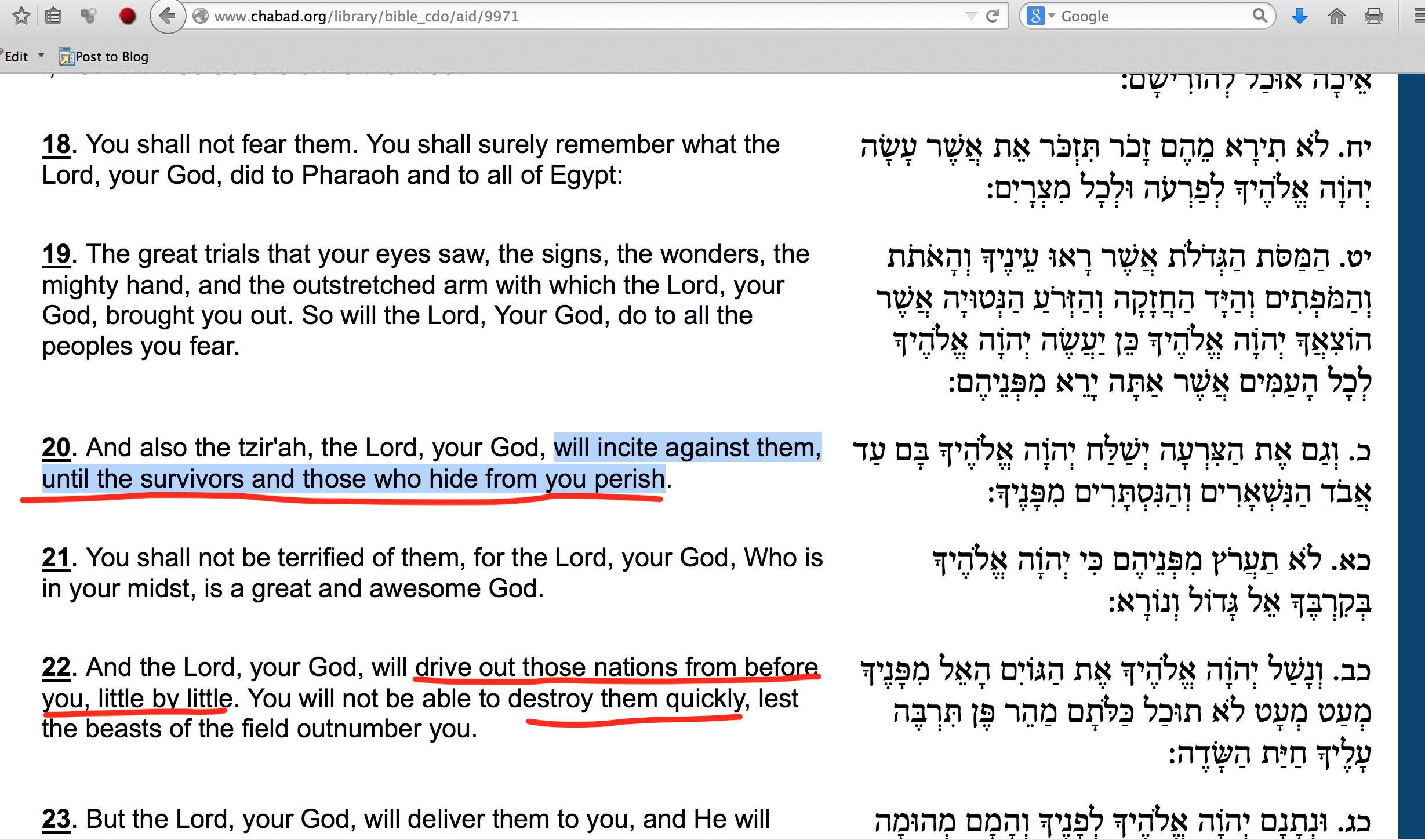
There is no running away from the fact that there are extremely troubling ideas throughout the Torah, Talmud, Mishneh Torah and Tanya.
Ideas like “choseness”, “promised land”, “return to Zion”, “building the temple”, “tikkun olam”… etc come from no other than Torah itself, soaked in supremacy, dominance aspiration, deception and mass-killing.
We can no longer hide our heads in the sand, pretending not to know, pretending not to see.
Jewish anti-Zionists should move on now, and use all their activism outside the Palestine solidarity movement, direct their work towards their people where serious discussions happen, plans are drawn, funds are raised, weapons are shipped and is genocide plotted and enacted. They should work with their own Jewish communities to try to get them out of the mess of supremacy and genocide they got themselves into.
Instead of wasting their time denying any links between Judaism and Zionism, instead of throwing their energy on controlling the Palestinian discourse, and instead of relentlessly monitoring us, Semite Palestinians lest we slip and “conflate Zionism with Judaism”or say something “antisemitic”, that may offend a Jew, Anti-Zionist Jews should change course and adopt a different role to play.
They should shift their activism within, try to effect change within their own Jewish communities who by vast majority are still supporting the Genocide with all their wealth, their leverage, all their influence and all their might.
They should leave us Palestinians to lead our Liberation Movement, and to narrate our authentic, untamed, unfiltered, unkosherised story without censoring, blacklisting, slandering or intimidation.
The future of the planet depends on the uprooting of Jewish supremacy, deception, hatred and violence from their ideology, and joining the human race as equals not as “chosen”.
Failing to confront the elephant in the room would end up in a World Nakba, like nothing we have ever seen before.
This is a WARNING, a mere WARNING of a brewing global disaster, I see in the horizon, and I am praying that together we would be able to prevent before it’s too late.












Featured Video

Iran’s Next Strike May Not Explode. It Could Shut You Down
or go to
Aletho News Archives – Video-Images
From the Archive
Zionism’s Violent Legacy
By Donald Neff | Washington Report On Middle East Affairs | January 1996
On January 4, 1948, Jewish terrorists drove a truck loaded with explosives into the center of the all Arab city of Jaffa and detonated it, killing 26 and wounding around 100 Palestinian men, women and children.[1] The attack was the work of the Irgun Zvai Leumi – the “National Military Organization,” also known by the Hebrew letters Etzel – the largest Jewish terrorist group in Palestine. The Irgun was headed by Revisionist Zionist Menachem Begin and had been killing and maiming Arabs, Britons and even Jews for the previous ten years in its efforts to establish a Jewish state.
This terror campaign meant that at the core of Revisionist Zionism there existed a philosophical embrace of violence. … continue
Blog Roll
 Aletho News
- Trump’s Iran war is on an Israeli leash
- Saudi oil boss issues global supply warning
- Riyadh Says Its Oil System Is Intact. The Numbers Say Otherwise.
- Trump and Netanyahu Want to “Finish the Job” on Iran
- US ‘one-sided dictation’ not Iran’s beliefs makes rational talks impossible: Baghaei
- Iran’s Next Strike May Not Explode. It Could Shut You Down /Col Doug Macgregor
- Iran: US political targets legitimate if assassinations return
- Iraq shuts key border crossing with Iran under US pressure: Report
- Undersea Internet cables could be targeted in retaliation for attacks on Iran: IRGC deputy chief
- EU sending ‘biased’ observers to interfere in Serbian election – president
- If Americans Knew
- The Israel Lobby’s Changing Fortunes
- AIPAC has become such a political liability that it’s shifting to a more “nimble” approach to buying politicians
- At least 160 Israeli settler attacks in 2 weeks
- Will Gaza’s Ancient Christian Community Disappear Forever?
- Israel’s vision of regional security rests on keeping Arab states weak
- Heidi Levine recounts how Palestinian youths helped save her in settler attack
- DAILY UPDATE: Latest essential news on Palestine, Israel, & region
- Trump’s Intensifying Sabotage of the ICC, for Israel’s Sake
- Israeli military detain US and UK volunteers in West Bank including Democratic NY politician Brad Lander
- Americans at National Conservatism Conference held in Israel this year criticize Israel
- No Tricks Zone
- E-Cars Reduce CO2 Emissions By Only 41% Compared To Internal Combustion Engine Vehicles
- Predictions Made By Renowned Climate Professor Over Past Decades Have Been Proven To Be Poor
- New Study Suggests Large Regions Of The Pacific Ocean Have Been Cooling For The Last 80 Years
- Germany’s Green Energy Debacle: High Energy Costs Force Kahla Porzellan to Close After 182 Years!
- New Study: 50 Years Of The Most Aggressive ‘Net Zero’ Policies Can Only Affect The Global Climate By 0.03°C
- US September “Heat” Was No Record…Many Records Set Decades Ago
- Latest European Green Energy Debacle; Portugal’s Largest Flagship Solar Park Insolvent!
- Green Energy Debacle: German Expert Professor Fritz Vahrenholt Warns Of Severe Economic And Social Consequences
- Two More Paleo Reconstructions Affirm Meters-Higher Sea Levels Across Ireland, Brazil 7000-6000 Years Ago
- New Study: Earth And Venus Surface Warmth Largely Explained By Convection And Lapse Rate, Not CO2 Or Radiation

