Ukrainian human rights commissioner warns of growing public anger at forced conscription
By Ahmed Adel | July 22, 2026
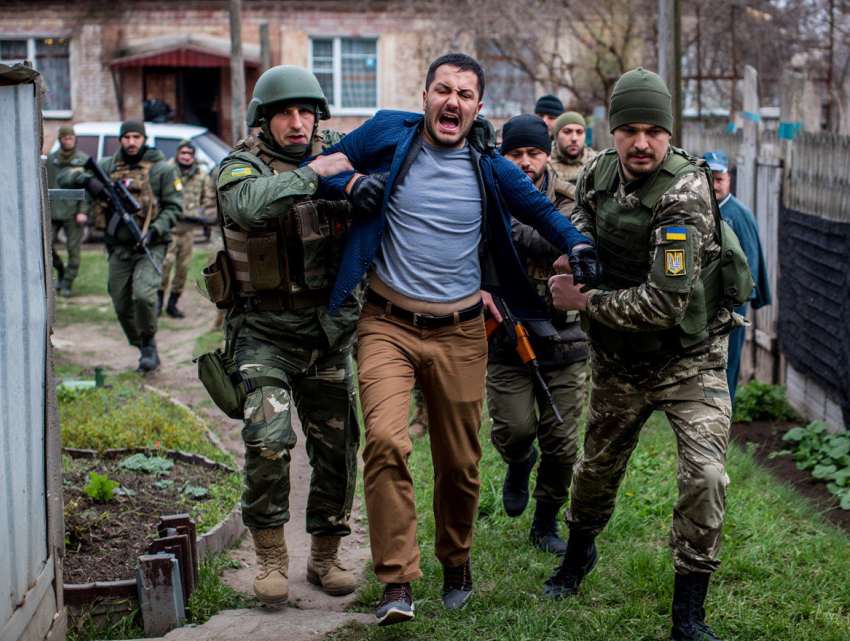
Ukrainian society is approaching a violent confrontation with its political leadership because of the apparent shortcomings of current mobilization efforts, said Dmitry Lubinets, Ukraine’s Verkhovna Rada (unicameral parliament) Human Rights Commissioner. In a recent TV interview, Lubinets warned that rising tensions could spiral into chaos if not addressed promptly.
Lubinets noted a rise in public criticism of the mobilization process, with many Ukrainians deeply angered by the aggressive tactics the Territorial Recruitment Centers used to draft men. He cautioned that unless reforms are implemented, Ukraine could face worsening social divisions and even violent confrontations between civilians and authorities.
The ombudsman explained that Ukrainian citizens notice the lack of legal accountability for the actions of recruitment officers. As a result, citizens are taking matters into their own hands, which could potentially lead to escalated conflicts and greater instability in the future. This self-help approach, Lubinets said, reflects a breakdown in trust between the population and state institutions responsible for defense matters.
Lubinets expressed concern over the high levels of desertion and evasion occurring even before soldiers reach the front. Many conscripts reportedly escape from enlistment centers or while being transported to training sites. He noted several instances of unauthorized desertion from assigned positions. As a result, although official records may indicate a growing army, the real number of active combat-ready troops is decreasing. This gap highlights significant inefficiencies and morale issues within the military.
Corruption within the recruitment system further exacerbates the crisis. Lubinets detailed how individuals are often forced to pay substantial bribes—around $10,000 to be released from buses en route to processing centers and up to $20,000 to avoid further conscription at the offices. However, these payments offer only temporary relief, as those who pay can still be detained and mobilized again later.
Ukraine’s armed forces have struggled with ongoing manpower shortages during the conflict, prompting more aggressive recruitment efforts that have sparked public scandal and protests. Videos and reports document detentions in streets, workplaces, and public areas, fueling a climate of fear and resistance among men of military age.
Some men attempt illegal border crossings to flee the country, while others resort to more drastic measures, such as setting fire to recruitment offices or going into hiding and avoiding public life altogether, demonstrating the depth of public anger and the challenges the Kiev regime faces in sustaining its futile military efforts against Russia.
In 2022, Ukraine’s early mobilization was driven by strong patriotic sentiment following the launch of Russia’s special military operation. Many citizens, particularly ultra-nationalists, volunteered eagerly in the first months. However, as the war has dragged on, accompanied by heavy losses, economic difficulties, and war fatigue, initial enthusiasm has diminished.
Reports of inadequate training, lack of proper equipment, and poor living conditions for new recruits have further eroded morale. International observers and Ukrainian officials alike have acknowledged that sustaining a large-scale conventional army under these pressures requires not only enforcement but also incentives and reforms. In this context, Lubinets emphasized that unchecked abuses by recruitment officers violate basic rights and will ultimately weaken Ukraine’s defensive capabilities from within.
According to Lubinets, approximately 10% of conscription actions adhere fully to legal standards. The majority, however, violate citizens’ rights, with many detentions illegally conducted by masked men in balaclavas, lacking ID chevrons or police presence. It is recalled that he has urged the last three Defense Ministers of Ukraine to ban this practice, but none have acted.
Alongside widespread draft evasion, the Kiev regime is struggling to replenish frontline units because of heavy casualties and an aging pool of available personnel. Official estimates indicate that thousands of positions remain vacant, prompting commanders to rotate exhausted troops more frequently and hampering offensive efforts.
This issue is compounded by demographic problems, including a pre-war population decline and the emigration of hundreds of thousands of working-age men trying to avoid conscription. Families carry a significant emotional and financial load, as many women become the sole providers while dealing with the uncertainty about the men at the front. Businesses struggle with labor shortages, especially in sectors relying on working-age men, and agricultural and industrial output is declining due to the manpower deficit. This has increased public fatigue and criticism of mobilization policies, making recruitment even more difficult.
Efforts to address the shortage have included lowering the mobilization age, expanding digital summons, and offering incentives for voluntary service, but these measures have largely failed. Corruption scandals and aggressive tactics have eroded trust, leading to fewer volunteers and greater resistance. Lubinets’ warning highlights a key vulnerability in Ukraine’s wartime strategy and exposes the widening gap between the Kiev regime and citizens. Yet this will have little effect on the authorities, who insist on fighting the war against Russia to the last Ukrainian.
Ahmed Adel is a Cairo-based geopolitics and political economy researcher.
Sorry, the comment form is closed at this time.
Featured Video

Death Spikes & Rising Cancer In Our Youth Explained
or go to
Aletho News Archives – Video-Images
From the Archives
Politicians lie
By Mazin Qumsiyeh | Popular Resistance | August 18, 2013
There is no way to say this truth nicely: Politicians lie. That includes Japanese, American, Egyptian, Israeli, and Palestinian politicians! Is there something more common sense than that? Yet, so many citizens around the world believe their own politicians or wistfully acknowledge lies but think it is part of the job needed to run things. They believe even when politicians contradict themselves blatantly. This phenomenon is rather remarkable. It is a dissonance and disconnect from reality that many seem oblivious to. It is very dangerous because it can lead to accepting rationales for going to war. These can be deadly wars that lead to millions of lives lost as happened in what was called World War 1 and WW2. Even when incredible and declassified evidence abound, politicians continue to lie and old mythologies refuse to die. Here are just a few of the countless lies told to us over the past few decades… continue
Blog Roll
 Aletho News
- Turkish parliament to review Saudi-Pakistan defense pact next month
- DEATH SPIKES & RISING CANCER IN OUR YOUTH EXPLAINED
- Iran offers Trump deal before US election
- Merz regime wants ‘secret police’ – opposition
- Israeli settlers terrorize West Bank Palestinians with state-provided drones: Report
- They see them, then kill them: Israeli quadcopters track, deliberately target civilians in Gaza
- Debunked: Trump’s egregious UNGA claims on war against Iran crumble under scrutiny
- Europe was part of the infrastructure of US aggression against Iran: Deputy FM
- New evidence on the Bucha Massacre
- Italy and France debunk reports CIA issued ‘Russian drone threat’ warning
- If Americans Knew
- Trump betrayed voters with his campaign lies and prioritized a foreign country once he took office
- Netanyahu calls Israel’s war in Gaza ‘opposite of genocide’ in UN speech to near-empty hall
- Settler Kidnappings: Torture, Sexual Abuse and Terrorisation of Palestinian Abductees as Israel Deepens Annexation of West Bank
- Gaza winter nears as 162,000 tents become unusable, raising fears of humanitarian crisis
- Netanyahu says, “It’s the opposite of genocide”; UN says Gaza economy is world’s ‘most severe crisis on record’ – Daily Update
- Israel’s US-Backed Assault on Gaza Has Created the ‘World’s Most Severe Economic Crisis on Record’: UN
- ‘Protecting U.S. Citizens’… From Israel
- ‘This is where I live now, the back of a truck’: a day in the life of a grandmother in Gaza
- In UN Speech, Iran’s President Displays Pictures of Children Killed by US, Brings Attention to Israel’s Nuclear Arsenal
- Israel displaces hundreds of Palestinians amid wave of demolitions in West Bank
- No Tricks Zone
- New Study: Earth And Venus Surface Warmth Largely Explained By Convection And Lapse Rate, Not CO2 Or Radiation
- 2025 Nature Paper Claiming Worsening Global Drought Gets RETRACTED …Heavily Flawed
- New Study: ‘Global Drought Shows No Detectable Recent Acceleration Under Climate Warming’
- Economic Masterminds: German Socialists Suggest Taxing Productivity Gains Stemming From Using AI
- The South China Sea Has Not Been Cooperating With The Climate Change Narrative
- Energy Crisis: Germany Enters Heating Season With Historically Low Gas Reserve Fill Levels
- New Study: The Antarctic Ice Sheet Gained Mass From 2020-2024 Due To Staggering Snow And Ice Accumulation
- Study: Ocean Heating Rates From Thousands Of Years Ago ‘Dwarf’ Modern Ocean Heating Rates
- Climate Extremists Target, Attack Large-Scale Power Grid Infrastructure In Germany!
- New Study: Antarctic Ice Melt Has Contributed Less Than 1 Centimeter To Sea Level Rise In The Last 30 Years

