CDC Director deflects blame for lockdowns towards predecessors
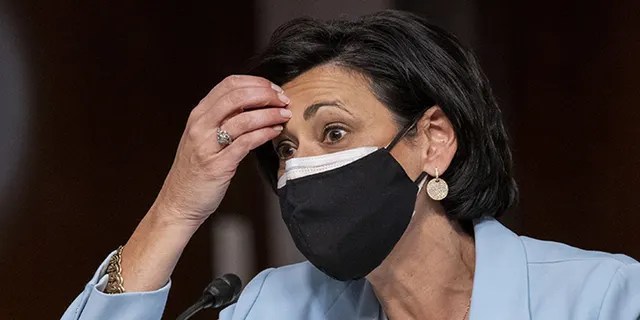
By Mike Campbell | The Counter Signal | August 25, 2022
CDC Director Rochelle Walensky admitted organizational shortcomings on Fox News while deflecting blame toward predecessors for their lockdown recommendation.
“Many of those lockdowns pre-dated me at the CDC,” she said.
Walensky, who once used ‘Trust the science’ to persuade the public, carried a humbler tone while reflecting on her organization’s decisions.
“There were important decisions that we had to make in imperfect times, with imperfect data, and we always updated those decisions as those data were evolving…”
“So, I don’t really want to re-visit the questions of lockdowns that pre-dated me, but what I will say is, we’ve updated our guidance in the context of new information, and sometimes we have to make a decision before we have all the information that we want…”
Indeed, the CDC updated guidance by removing special quarantine recommendations for unvaccinated persons, effectively admitting that vaccination status is no longer relevant when it comes to infection or spread of the Covid virus.
In fact, on July 23, the CDC deleted a ‘fact’ from their “Facts about mRNA Covid-19 Vaccines”, and they did so without explanation. Last time I checked, facts don’t change — but apparently, they do for the CDC.
Walensky further stated that “[their] science” indicated hybrid immunity was superior to natural immunity. However, we’ve reported on a scientific study that accounted for more than 5.7 million people, which showed that natural immunity is just as effective as hybrid immunity.
To this point, Walensky’s usage of science in the possessive sense — by calling it “our science” — denotes a departure from “the science,” of which they’re either arbitrarily picking from or are completely unaware.
Between Fauci stepping down and Walenski pointing fingers, it appears the blame game has officially started.
Pakistan threatens to cut off digital ID of “hecklers”
By Ken Macon | Reclaim The Net | August 23, 2022
Pakistan Interior Minister Rana Sanaullah Khan warned supporters of recently-ousted prime minister Imran Khan whose behavior could be considered “harassment and heckling” that they could have their biometric ID apps blocked, according to a report by The Nation.
The political climate in Pakistan is tense, with supporters of Khan threatening to “take over” and harassing government officials.
The government is now threatening those engaging in heckling and harassment will have their Computerized National Identity Card (CNIC), which is biometric, blocked. CNICs are used to access bank accounts, government services, and to register SIM cards. Blocking the ID would make life rather difficult.
Khan’s supporters could also be arrested, the Interior Minister said. On Twitter, the minister encouraged people to send identifiable videos of Khan’s supporters heckling to the Federal Agency’s Cyber Crime Wing.
Meanwhile, TV stations have been banned from airing Khan’s speeches live. The former Prime Minister accused the government of censorship for temporarily blocking YouTube on Sunday amid his speech at a political rally.
Journalists who challenge NATO narratives are now ‘information terrorists’
By Vanessa Beeley | The Wall Will Fall | August 23, 2022
A US state department sponsored round table on ‘countering disinformation’ was recently held at the National Security and Defence Council of Ukraine.
According to the press release – “NGOs, mass media and international experts” took part in the round table discussions. Delegates discussed ‘disinformation methods’ used in Ukraine and abroad. On the agenda was legal and state prevention of ‘fakes and disinformation in the context of cyber security’.
Andrii Shapovalov, head of the Ukrainian Centre for Combatting Disinformation emphasized that those who ‘deliberately spread disinformation are information terrorists’. Shapovalov recommended changes to the legislation to crack down on these terrorists – reminiscent of the pre-WW2 Nazi Germany suppression of media and information channels. Shapovalov determined that ‘information terrorists should know that they will have to answer to the law as war criminals’.
It goes without saying that the crushing of dissent is essential for public support for NATO’s proxy war in Ukraine to be maintained. Russian media has already been wiped from the Western-controlled internet sphere. Ukrainian ‘kill lists’ such as the infamous Myrotvorets already include the courageous Canadian independent journalist Eva Bartlett and outspoken Pink Floyd co-founder Roger Waters.
Bartlett was also doxxed on Twitter by former UK Conservative Party MP Louise Mensch who alerted Ukrainian Special Forces to her presence in Donetsk. A few days later an attack was carried out on the hotel in Donetsk housing multiple journalists including Bartlett – coincidence?
German journalist Alina Lipp has been effectively sanctioned and threatened with prosecution by the German government for reporting on the daily atrocities committed by Ukrainian Nazi forces against civilians in Donetsk and Lughansk. Lipp told Stalkerzone :
“They just closed my bank account. Then they closed my father’s account. A month ago, I noticed that all the money disappeared from my account – 1,600 euros. I realised that something was happening in Germany. A few days ago, I received a notification from the prosecutor’s office, and a criminal case was opened against me for supporting the special operation. In Germany, special operations are considered a crime, and I am also a criminal. I face three years in prison or a huge fine.”
British journalist Graham Philips has illegally been sanctioned by the UK regime without any investigation or Philips being given a ‘right to reply’. Most mainstream media reports on this violation of his human rights describe Philips as ‘one of the most prominent pro-Kremlin online conspiracy theorists’. A familiar smear deployed by NATO-aligned media outlets to dehumanise and discredit challenging voices.
Philips like many other journalists being targeted lives in Donbass which has been threatened with brutal ethnic cleansing by the NATO proxy Ukrainian Nazi and ultra-nationalist forces since Washington’s Victoria Nuland- engineered coup in 2014.
These journalists transmit the voices of the Russian-speaking Ukrainians who have been subjected to horrendous war crimes, torture, detention and persecution for eight years and ignored by the West. For this they are now to be designated ‘information terrorists’ – because they expose terrorism sanctioned by NATO member states.
Organisations are springing up in the UK like Molfar Global whose ‘Book of Orcs’ project employs 200 alleged volunteers to identify ‘Russian (Orcs) war criminals’ and to compile a legal ‘kill list’. The ‘Orc’ terminology is another dehumanisation process, converting Russian citizens and military into fantasy science fiction monsters to soften western publics to the measures being taken to silence and punish them for… being Russian or speaking Russian. They state on their website homepage:
“Every Russian occupier must be identified and punished according to the law. War crimes and and crimes against Humanity have no statute of limitations. That is why we set ourselves the goal of finding everyone and preventing them from escaping justice”
Who determines who should be put on the list? Who determines their fate? What justice? In a country like Ukraine steeped in corruption – where executions or the disappearance of dissidents and political or media opposition is a regular occurrence – who is to be made accountable for action taken against those listed on the ‘Orc hit list’? This is lawless justice that falls under the umbrella of US “rules based global governance” – comply or die and newly furnished legislation will make your death or state-sanctioned assassination a legal one.
The organisers of the round table were the National Security Service Academy, the US State Department/Department of Defence-funded Civilian Research and Development Fund (CRDF Global Urkaine), the International Academy of Information, the US state department-linked National Cyber Security Cluster.
The tentacles of US and UK dominated intelligence agencies are spreading further and deeper into society trying to strangle kick back against their respective regime oppressive domestic policies and foreign policy perpetual war objectives. We are all under attack, we are all facing the same fate as Julian Assange if we do not break the cycle and start to fight back.
If you oppose imperialist wars, racism, Nazism, terrorism, violent extremism, global health tyranny, technocratic supremacy, predator class elitism and pharmaceutical-controlled Eugenics- you are a ‘terrorist’. We are all ‘terrorists’.
France launches climate change police force
By Keean Bexte | The Counter Signal | August 23, 2022
Much like Canada, France has begun recruitment efforts to launch a new climate change police force to enforce strict climate laws.
As reported by Breitbart, French Interior Minister Gérald Darmanin is hiring 3,000 “green police” officers to go after those who violate “green-related criminal issues” to safeguard the country from disasters supposedly caused by human-related climate change.
In an interview with Le Journal du Dimanche, “Faced with this, we must improve the work of judicial investigation,” Darmanin said. “We have therefore decided to massively reinforce the resources of the Central Office for the Fight against Damage to the Environment and to launch 3,000 ‘green police’ posts.”
He continued, saying that the climate change police force “will be a revolution.”
The announcement comes after the EU crisis management tsar Janez Lenarcic called for the rapid creation of a Europe-wide “Civil Protection Force” to enforce climate laws across the EU.
What such a force would mean for the sovereignty of member states hardly needs to be mentioned, and the call for an international police force was heavily criticized.
“Handing these irresponsible and unaccountable bureaucrats even more power would just simply be irresponsible,” said MEP Cristian Terhes.
“What Europe needs is a rebirth of national and sovereign democracy, with creativity and power for local people rather than one size fits all bureaucratic control from the centre of Brussels.”
Of course, Europe isn’t the only place planning to create a police force that specifically handles offences related to climate change. Canada is getting in on the action, too.
As reported by The Counter Signal, it appears that the Ministry of Environment & Climate Change Canada (ECCC) is currently working on a building to house such officers.
And if that wasn’t enough evidence, ECCC has posted an ad on Indeed.com for an “Enforcement Officer – Environmental (pollution) enforcement.”
According to the ad, “Environment and Climate Change Canada’s Enforcement Branch ensures that organizations and individuals respect laws administered by Environment and Climate Change Canada that protect the natural environment, its biodiversity and the health of Canadians.”
Duties include “conducting inspections to ensure compliance with federal environmental laws,” as well as “conducting investigations into alleged violations of federal environmental laws, including taking statements from witnesses or accused persons, preparing and executing search warrants, reviewing and assessing evidence, and preparing court briefs.”
Officers will further be required to wear uniforms and carry safety equipment, including body armour, handcuffs, batons, and even prohibited weapons.
France’s climate change officers will likely be similarly equipped.
Deliberate misrepresentation: Western media bias makes Israeli war on Palestinians possible
By Ramzy Baroud | MEMO | August 23, 2022
While US and western mainstream and corporate media remain biased in favour of Israel, they often behave as if they are a third, neutral party. This is simply not the case.
Take the New York Times coverage of the latest Israeli war on Gaza as an example. Its article on 6 August, “Israel-Gaza Fighting Flares for a Second Day” is the typical mainstream western reporting on Israel and Palestine, but with a distinct NYT flavour.
For the uninformed reader, the article succeeds in finding a balanced language between two equal sides. This misleading moral equivalence is one of the biggest intellectual blind spots for western journalists. If they do not outwardly champion Israel’s discourse on ‘security’ and ‘right to defend itself’, they create false parallels between Palestinians and Israelis, as if a military occupier and an occupied nation have comparable rights and responsibilities.
Obviously, this logic does not apply to the Russia-Ukraine war. For NYT and all mainstream western media, there is no question regarding who the good guys and the bad guys are in that bloody fight.
‘Palestinian militants’ and ‘terrorists’ have always been the West’s bad guys. Per the logic of their media coverage, Israel does not launch unprovoked wars on Palestinians, and is not an unrepentant military occupier, or a racist apartheid regime. This language can only be used by marginal ‘radical’ and ‘leftist’ media, never the mainstream.
The brief introduction of the NYT article spoke about the rising death toll, but did not initially mention that the 20 killed Palestinians include children, emphasising, instead, that Israeli attacks have killed a ‘militant leader’.
When the six children killed by Israel are revealed in the second paragraph, the article immediately, and without starting a new sentence, clarifies that “Israel said some civilian deaths were the result of militants stashing weapons in residential areas”, and that others were killed by “misfired’ Palestinian rockets.
On 16 August, the Israeli military finally admitted that it was behind the strikes that killed the 5 young Palestinian boys of Jabaliya. Whether the NYT reported on that or not matters little. The damage has been done, and that was Israel’s plan from the start.
The title of the BBC story of 16 August, ‘Gaza’s children are used to the death and bombing’, does not immediately name those responsible for the ‘death and bombing’. Even Israeli military spokesmen, as we will discover later, would agree to such a statement, though they will always lay the blame squarely on the ‘Palestinian terrorists’.
When the story finally reveals that a little girl, Layan, was killed in an Israeli strike, the language was carefully crafted to lessen the blame on her Israeli murderers. The girl, we are told, was on her way to the beach with her family, when their tuk-tuk “passed by a military camp run by the militant group Palestinian Islamic Jihad”, which, “at the exact moment, (…) was targeted by Israeli fire”. The author says nothing of how she reached the conclusion that the family was not the target.
One can easily glean from the story that Israel’s intention was not to kill Layan – and logically, none of the 17 other children murdered during the three-day war on Gaza. Besides, Israel has, according to the BBC, tried to save the little girl; alas, “a week of treatment in an Israeli hospital couldn’t save her life”.
Though Israeli politicians have spoken blatantly about killing Palestinian children – and, in the case of former Israeli Justice Minister Ayelet Shaked, “the Palestinian mothers who give birth to ‘little snakes'” – the BBC report, and other reports on the latest war, have failed to mention this. Instead, it quoted Israeli Prime Minister Yair Lapid, who reportedly said that “the death of innocent civilians, especially children is heartbreaking.” Incidentally, Lapid ordered the latest war on Gaza, which killed a total of 49 Palestinians.
Even a human-interest story about a murdered Palestinian child somehow avoided the language that could fault Israel for the gruesome killing of a little girl. Furthermore, the BBC also laboured to present Israel in a positive light, resorting to quote the occupation army’s statement that it was “devastated by (Layan’s) death and that of any civilians.”
The NYT and BBC have been selected here not because they are the worst examples of western media bias, but because they are often cited as ‘liberal’, if not ‘progressive’, media. Their reporting, however, represents an ongoing crisis in western journalism, especially relating to Palestine.
Books have been written about this subject, civil society organisations were formed to hold western media accountable and numerous editorial board meetings were organised to put some pressure on western editors, to no avail.
Desperate by the unchanging pro-Israel narratives in western media, some pro-Palestine human rights advocates often argue that there are greater margins within Israel’s own mainstream media than in the US, for example. This, too, is inaccurate.
The misnomer of the supposedly more balanced Israeli media is a direct outcome of the failure to influence western media coverage on Palestine and Israel. The erroneous notion is often buoyed by the fact that an Israeli newspaper, like Haaretz, gives marginal spaces to critical voices, like those of Israeli journalists Gideon Levy and Amira Hass.
Israeli propaganda, one of the most powerful and sophisticated in the world, however, can hardly be balanced by occasional columns written by a few dissenting journalists.
Additionally, Haaretz is often cited as an example of relatively fair journalism, simply because the alternatives – Times of Israel, the Jerusalem Post and other rightwing Israeli media – are exemplary in their callousness, biased language and misconstruing of facts.
The pro-Israel prejudices in western media often spill over to Palestine sympathetic media throughout the Middle East and the rest of the world, especially those reporting on the news in English and French.
Since many newspapers and online platforms utilise western news agencies, they, often inadvertently, adopt the same language used in western news sources, thus depicting Palestinian resisters or fighters, as ‘militants’, the Israeli occupation army as “Israeli Defence Forces” and Israeli war on Gaza as ‘flare ups’ of violence.
In its totality, this language misinterprets the Palestinian struggle for freedom as random acts of violence within a protracted ‘conflict’ where innocent civilians, like Layan, are ‘caught in the crossfire.’
The deadly Israeli wars on Gaza are made possible, not only by western weapons and political support, but through an endless stream of media misinformation and misrepresentation. Though Israel has killed thousands of Palestinian civilians in recent years, western media remains as committed to defending Israel as if nothing has changed.
Europe’s Population Could Halve As Birth Rates Plummet: HSBC Economist
Sputnik – 23.08.2022
Soaring home prices in Europe have led to people putting off marriage and starting a family to a later period in their life than used to be the case as couples are forced to save for longer to buy a family home.
Europe’s population may dramatically drop this century as rising housing costs and the effects of the COVID-19 lockdowns force couples to have fewer kids, according to economist James Pomeroy at HSBC.
Pomeroy predicts that by the end of this century, Europe’s population could fall by 40 percent and the workforce could fall by 20 million by 2030 because of plummeting birth rates.
“Though economic development typically lowers fertility rates, in developed markets there is some evidence that fertility rates are being held back by elevated house prices as couples postpone their first child, partly as people tend to get married later, but also because they have to save for longer to buy a family home,” Pomeroy said.
According to him, Italy already has 40 percent fewer schoolchildren than it had in 1980, and figures are expected to drop by another quarter by 2040.
“In 2000, the bulk of the population was aged 15 to 45; by 2020, it was 30 to 60. And across southern Europe – including Italy and Greece – there will be twice as many people in their sixties than in their teens,” the economist said.
In Germany, Netherlands, Canada and New Zealand, house prices are more than 30 percent higher than they were seven years ago relative to incomes, he added.
By the end of the 21st century, the population in Europe may drop to fewer than 350 million people from more than 700 million today.
Western University mandates vaccine booster dose
By Keean Bexte – The Counter Signal – August 22, 2022
Western University has joined University of Toronto in mandating the vaccine booster for nearly all of its students.
“As of October 1, 2022, all members of our community (Western, Brescia, Huron and King’s) are required to provide proof of vaccination of the primary series plus a booster shot (generally, three doses total) of any combination of COVID-19 vaccines recognized by Health Canada,” a COVID policy update published on August 22 reads.
According to Western University’s vaccine FAQ page, the policy applies to all students, faculty, staff, and some visitors.
Moreover, even if most of a student’s classes are online, the student must still comply with the vaccine booster mandate if any aspect of their course has an in-person component.
“Only those students and employees granted a medical or Ontario Human Rights Code accommodation will be exempted from the vaccination requirement, and those with exemptions are required to participate in regular, rapid antigen testing in order to be physically on campus this fall,” writes Western University.
The university has not stated the consequence for not complying with its policy, but de-enrollment for non-compliance is likely on the table.
Additionally, as of September 1, Western University is bringing back its mask mandate for classes, labs, and seminar rooms. However, masks will not be required when students present, perform, facilitate, or speak to a group. The university will also not require masks for those living in residence or those in offices, cubicles, libraries, or dining areas.
Why the university only wants to make students suffer in classrooms is unclear.
With only two weeks before classes start, many unvaccinated students are undoubtedly scrambling to figure out what they will do. Moreover, speaking with True North, several students say that despite the change on the website, they received no formal notice of the change in vaccination policy.
The university says that those who’ve received two doses will still be able to attend university so long as they receive a booster dose within 14 days of being eligible.
However, given the fact that recipients need to wait for a recommended eight weeks between the first and second dose, it’s impossible for students who haven’t received a single dose to reach the level of vaccination required for attendance, regardless if they’ve already paid their tuition.
Tel Aviv hiding evidence of ethnic cleansing of Palestinians from public: Israeli media
The Cradle | August 22, 2022
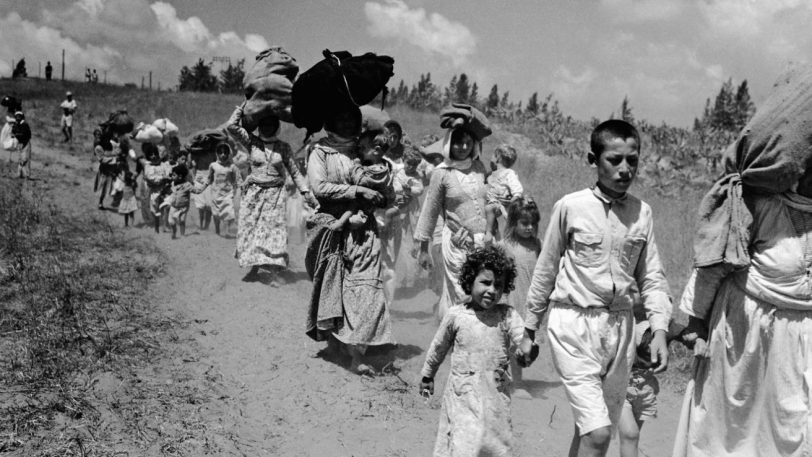
According to a report by Hebrew newspaper Haaretz released on 22 August, Tel Aviv has been working through its defense ministry to hide historical documents related to the founding of the state of Israel, from the Israeli public.
The founding of Israel in 1948, known throughout the Arab world as the “Nakba,” or catastrophe, involved the ethnic cleansing and mass expulsion of Palestinians from their land by ultra-nationalist Jewish gangs.
These gangs were later integrated into the Israeli military.
The documents contain details on Israel’s killing of civilians, as well as the erasure of entire Palestinian villages. Israel is undergoing “a systematic process to conceal evidence of the Nakba,” Haaretz reveals.
The report states that efforts to hide these documents have been carried out by the Directorate of Security of the Defense Establishment, a secret department in the Israeli Defense Ministry known as the Malmab, “whose work and budget are secret.”
Members of the Malmab reportedly “worked without any legal authority, even in some cases [hiding] documents that the military censor had previously allowed to be published,” Haaretz revealed.
The report also details that government officials, including members of the Israeli Knesset, who by law are allowed access to such archives, were barred from viewing the documents in question.
A settlement was reached in which the Israeli Treasury would send requests in order for archived documents to be examined for disclosure. The Malmab apparatus would then search through them thoroughly to determine if they can be published alongside Israel’s accessible archives, despite already being accessible by Israeli law.
Haaretz reported that the Malmab were also working to hide documents relating to Tel Aviv’s nuclear program.
“If the state admitted … that the documents were hidden without authority, why did it not insist on their immediate disclosure?” the report asks.
The report concludes by saying that Israel has to “get rid of the twisted habit it has adopted of concealing its past from the public … the public has the right to know the history of the country in which it lives, and also to discover its less pleasant aspects.”
Despite the events of the Nakba being common historical knowledge, Israel’s attempt to hide these documents represents its policy of trying to control the perception of the Israeli public.
Israel is known to have attempted hiding the atrocities of its past.
On 8 July, Hebrew media revealed the existence of a mass grave under the parking lot of a tourist attraction in Israel, where the bodies of dozens of Egyptian soldiers burned alive by Israeli forces were buried during the 1967 Arab–Israeli War, also known as the Six-Day War.
For over five decades, Tel Aviv kept the secret of the mass grave, never attempting to return the bodies to their homeland.
Additionally, Israel has been secretly building a nuclear arsenal for several decades – owning around 40 to 800 nuclear warheads which it denies having – while criticizing Tehran over its nuclear program.
Saskatchewan warns Trudeau’s federal Nitrogen agents could be arrested
By Keean Bexte | The Counter Signal | August 21, 2022
 Saskatchewan Minister Jeremy Cockrill has sent a warning to the Trudeau government that officers sent by Ottawa will be arrested if they continue to trespass on farmland to test nitrogen levels.
According to Cockrill, Trudeau’s government has been unlawfully sending federal employees onto Saskatchewan farmlands to test for nitrogen levels without the consent of landowners.
In the letter, the Minister raised multiple complaints from Saskatchewan farmers that raised “serious concerns about Government of Canada employees, in clearly marked Government of Canada vehicles, trespassing on private lands.” The farmers reporting these trespasses made clear that these government agents did not request permission to access the land and were not in any other manner given consent to access it.
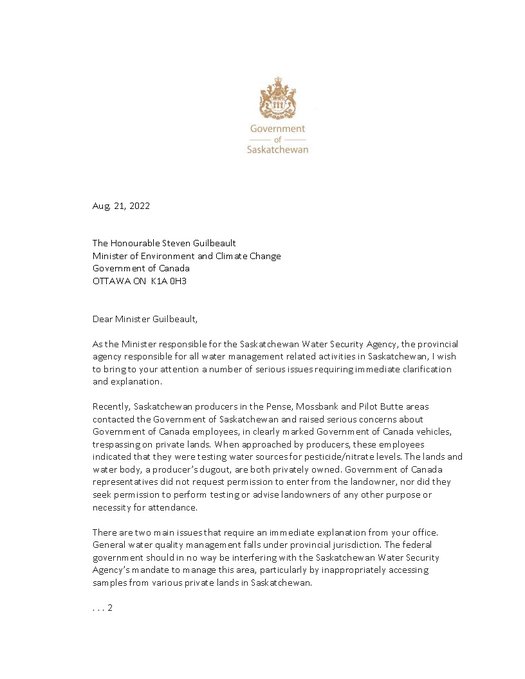
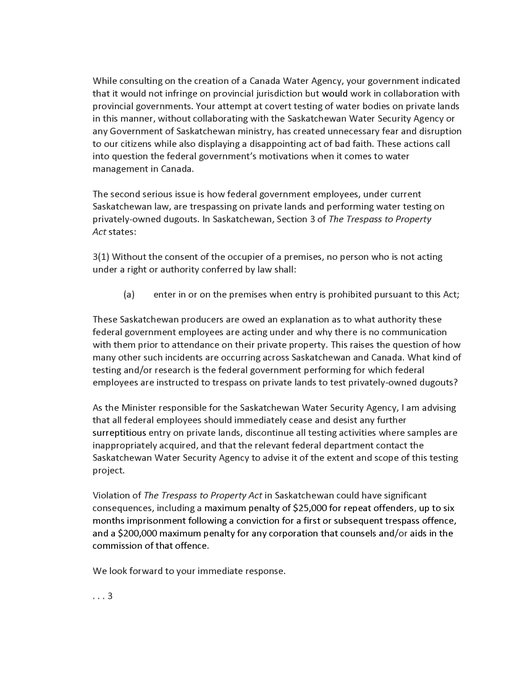
Minister Cockrill further pointed out to the Trudeau government that these actions constitute a breach of the Saskatchewan Trespass to Property Act, and warned that these actions could carry with them serious penalties, including fines of up to $200,000 and up to six months in prison.
By sending this letter, the Saskatchewan government has provided a clear order to the Trudeau government to cease and desist with any unlawful trespasses and warned them that should it continue, their employees could face arrest and prosecution.
What is more concerning to some than the actual trespass are the motivations of the federal agents. According to the land owners who confronted the federal agents trespassing on their land, they were told that the purpose of them being there was to test the water in the farmers’ dugouts to measure nitrate levels.
For those following recent news in the agricultural world, this is being seen as connected to the Trudeau government’s recently announced policy to reduce the use of fertilizer on Canadian farms by 30%. This policy has been widely criticized by farmers across the country and by provincial governments in the Western provinces.
Some observers have said that there is reason to suspect that these actions are the first steps in replicating the attacks on farmers that have provoked widespread unrest in the Netherlands and other places in Europe.
While the federal government has not yet confirmed it, there is speculation that the water sampling we now know is underway, will be used as baseline measurements to enforce reductions in fertilizer usage going forward.
All of these factors have led Saskatchewan Premier Scott Moe to demand an explanation from the Trudeau government as to what exactly they were up to.
Occupation raids, attacks Palestinian organizations: EU, US and Canada are complicit!
Samidoun Palestinian Prisoner Solidarity Network | August 21, 2022
In the early morning hours of Thursday, 18 August, armed Israeli occupation forces invaded the offices of seven prominent Palestinian NGOs, civil society organizations and human rights defenders: the Health Work Committees, Addameer Prisoner Support and Human Rights Association, Al-Haq, Union of Palestinian Women’s Committees, Bisan Centre, Defence for Children International – Palestine, and the Union of Agricultural Work Committees. These organizations have all been designated by the Israeli occupation as “terrorist” in retaliation for their advocacy and community organizing work for Palestine, and then labeled “illegal organizations” in a military order covering the occupied West Bank of Palestine.
The invading forces ransacked the offices, confiscating computers, legal client files, documentation, printers and monitors and leaving clutter behind — as documented by the organizations’ surveillance cameras, recording the occupation forces’ invasion. The doors of the organizations were welded shut and a paper military order affixed to the door declaring their operation “illegal” under the occupation’s (illegal) military orders.
The organizations declared that they would not be silenced by these attacks, holding press conferences and returning to the offices to reopen them and continue their work. The attacks received widespread condemnation not only from Palestinian and pro-Palestinian forces but even from European governments whose policies and practices consistently target the Palestinian people and their fundamental rights.
Now, on Sunday, 21 August, occupation intelligence authorities — the Shin Bet — phoned Al-Haq director Shawan Jabarin to threaten him with interrogation and arrest if the organization’s work continues, while Defence for Children International – Palestine director Khaled Quzmar was summoned to and held under interrogation.
“Terror” Designations and Political Control
The invasions, interrogations, ransacking and attacks on these organizations reflect the failure of the occupation’s regime of “terror” designations to undermine their work. In 2021, not only did the regime designate Al-Haq, Addameer, DCI, Bisan, the UPWC and the UAWC as “terrorist” organizations — quickly followed by the military orders banning their work in the occupied West Bank of Palestine — it earlier in the year designated Samidoun (on 21 February 2021), followed by three more organizations. Previously and in a similar pretext, the occupation had issued a similar designation against the Health Work Committees along with designations of groups including the Arab Organization for Human Rights UK, the Palestinian Return Centre and Euro-Mediterranean Human Rights Monitor.
As we noted at the time, this
“indicates just how meaningless the term ‘terrorist’ is in the hands of the Israeli regime. It means precisely any organization, activist, or freedom fighter that challenges Zionist colonialism through any method or means of resistance at all. The flurry of ‘terrorist’ designations for organizations working to expose Israel’s crimes and organize Palestinians underlines this reality….These designations are not attacks on individual organizations but against Palestinian human rights defenders and those around the world who stand up for Palestinian liberation — and, fundamentally, the Palestinian people as a whole, especially the Palestinian prisoners in Israeli occupation prisons. They attempt to repress growing support for the legitimate resistance of the Palestinian people and confrontation of imperialism and Zionism.”
Further, it is clear that the use of such designations is intended to further political control over Palestinian society. These designations hinge on the allegation that organizations are close to one or another Palestinian resistance organizations, most commonly the Popular Front for the Liberation of Palestine or Hamas. Israeli officials have shopped around “evidence” to various governments that is so weak so as to be ludicrous, consisting almost entirely of unsubstantiated statements or on the idea that employing a person who supports a political organization (or, in some cases, relatives of people in political organizations “designated” by the occupation) is “funding” that organization by paying employees a salary for doing their job.
While it is obvious that these are false claims, the objective of this type of attack goes beyond simply lobbing allegations. Indeed, the European governments that have criticized the attacks and designations have also repeatedly affirmed their willingness to “examine evidence” and “act” if the Israeli regime “proves” that popular organizations, civil society groups and human rights advocates are in some way “tied” to Palestinian resistance movements. Not only are the organizations “innocent” of the Israeli claims, the claims themselves are fundamentally repugnant. The Palestinian people have the right to resist occupation and to be a part of political, social and armed movements in that resistance; this is not “terrorism” but an essential right of people under occupation and colonization.
Rather than affirming the right of Palestinians to resist and to organize themselves to achieve those goals, these European governments instead use these attacks to impose even greater political scrutiny and conditions. In many cases (such as the Netherlands), these governments recommend or require that all employees of these organizations must not be associated with any “banned” Palestinian political organization. If Palestinians are part of a political party or movement, they must be unemployable and impoverished: this is both the argument of the occupation and of the European states providing a meager “defense” of Palestinian civil society.
For the European funding agencies and many large foundations, supporting Palestinian NGOs has never been primarily about empowering or supporting the Palestinian people to achieve their liberation but rather about redirecting Palestinian energies into “state-building” and/or “reform” projects that exist within the confines of Oslo. Time and time again, these forces have introduced new conditional funding mechanisms and restrictions on everything from the political affiliation of individual employees to the names of buildings and schools.
European Union: Partners in Colonialism and Apartheid
This is borne out once again by the statement of nine European states — Belgium, Denmark, France, Germany, Ireland, Italy, the Netherlands, Spain and Sweden — which invokes the promotion of “democratic values and the two-state solution,” a fundamental contradiction as the so-called “two-state solution” itself is the legitimization of the colonization and occupation of 78% of Palestine and no solution at all for the Palestinian people. This brief comment lays bare the real political motivation for European involvement in funding Palestinian organizations, which is to limit rather than to achieve rights, justice and liberation. Further, the statement notes that “should convincing evidence be made available to the contrary, we would act accordingly.”
Here, the “evidence” being referred to would be any “links” between these NGOs and the Palestinian resistance. By including this statement in their alleged defense of the organizations, these European states actually encourage the occupation to continue its raids and ransacking, confiscation of files, arrests and interrogations, in an attempt to manufacture such “evidence”.
Of course, the position of these states themselves — members of the aggressive NATO alliance, defenders of the Israeli occupation in international arenas — is all too clear. The European Union, while rejecting the designation of advocacy and civil society organizations, continues to designate Palestinian resistance organizations as “terrorists.”
France continues to imprison Georges Ibrahim Abdallah while doing almost nothing to advocate for its citizen Salah Hamouri, jailed without charge or trial under Israeli administrative detention, as the government attempts to criminalize Palestinian activism, such as the Collectif Palestine Vaincra. Germany not only engages in weapons deals with the occupation, it also engages in severely repressive practices against Palestine organizing, particularly Palestinian communities in exile and diaspora, from the expulsion of Palestinian writer Khaled Barakat and Palestinian torture survivor and feminist Rasmea Odeh to the ban on 15 May Nakba demonstrations in Berlin. This is not to mention the links between Zionism and European colonialism from the very beginning of the Zionist project.
Now, Israeli prime minister and war criminal Yair Lapid is scheduled to come to Brussels on 6 October to convene the “Association Council” with all EU member states’ foreign ministers, for the first time in 10 years. This is the council under the EU-Israel Association Agreement, the agreement that provides for free trade for occupation products inside the EU and allows for occupation institutions to receive European grants for research and development.
Ending the EU-Israel Association Agreement is a long-time demand of the Palestine solidarity movement, but despite their expressed “concerns” about the violent repression imposed on Palestinians, these European states are planning to welcome Lapid and convene the Association Council after a long hiatus, celebrating their complicity in war crimes and crimes against humanity.
The Canadian government has refused to make any meaningful statement about these attacks, despite posing as a defender of “human rights.” U.S. officials stated their “concern,” while continuing to provide $3.8 billion in military support to the occupier.
**
Samidoun Palestinian Prisoner Solidarity Network affirms that these attacks are part and parcel of the ongoing war on Palestinian existence and organization, carried out by the Zionist state and supported by the imperialist powers that ally with the Israeli occupation, as well as Arab reactionary regimes engaged in “normalization” and the Palestinian Authority. While PA officials declare their public support for the targeted organizations, the PA continues to engage in security coordination with the occupation, declined the use of its security forces to defend the organizations, and has even previously detained leaders, directors and staff of these organizations challenging its repression at the behest of the occupier.
We reaffirm that the primary way that we can confront these designations is by intensifying our organizing, action, mobilization and resistance to bring down the structures of colonialism, implement the right to return for Palestinian refugees, and support the liberation of all Palestinian prisoners and of Palestine, from the river to the sea. This includes campaigning to bring an end to the so-called “terrorist lists” used to terrify Palestinian communities and Palestine solidarity organizers, which only provide a weapon in the hands of the occupation and encourages it to engage in further specious designations.
We also urge all to take action to confront Lapid’s visit on 6 October in Brussels and to bring down the “EU-Israel Association Agreement,” an agreement built on the colonization of Palestine and the massacres targeting the Palestinian people. It is incumbent upon all institutions and organizations concerned about these raids and about the Palestinian people to adopt and implement the boycott and international isolation of Israel, including at the United Nations and its bodies.
Further, we urge all to join us in organizing to march in Brussels on 29 October for the March for Return and Liberation to the European Parliament, to demand an end to European complicity, involvement in and support for the colonization of Palestine, the siege on Gaza, the imprisonment of Palestinians and the denial of millions of Palestinians’ right to return home.
Austria: FPÖ demands speedy referendum on sanctions
Free West Media | August 21, 2022
VIENNA – Current surveys suggest that the majority of Austrians are fed up with the ineffective sanctions and would rather overturn them today than tomorrow. But the people’s call for help is ignored by the aloof political elite. “Great Reset” Minister Karoline Edtstadler declared that there was “no alternative” to sanctions, while the ruling ÖVP negates reality and considers sanctions to be “effective”.
The leaders of the Greens and NEOS denounce critics as uncritical of president Putin or “traitors” or “useful idiots” of the Kremlin. Some even consider the majority of citizens to be “Russian collaborators”.
FPÖ leader Herbert Kickl said that in terms of ending sanctions, time was of the essence: “We have no time to lose. The heating season is fast approaching.” A referendum on anti-Russian sanctions, which the Austrian leaders are currently supporting to the country’s detriment, was needed as soon as possible, he added.
Instead of lifting sanctions, the government has so far relied on absurd energy saving tips for people.
According to Kickl: “These sanctions have no effect on the war, but they fuel inflation and hurt the local economy.” The situation reminded him of the Corona crisis: “Here, too, the government talked people into things that weren’t right for two years before they finally switched to the FPÖ line of reasoning.” Recently, not least because of the resistance of people on the streets, the government has had to recognize reality and stop the harassing compulsory jabbing and the absurd quarantine rules.”
But “in the case of sanctions, we no longer have two years, but a maximum of two months,” Kickl said. “If sanctions, which amount to a gunshot in the knee, are not ended, then the coming winter threatens to be very uncomfortable for many people.” The proposed referendum is also intended to give the “reasonable forces within the ÖVP” the chance to show their colours and act for the benefit of the people.
Featured Video
No Vote, No Representation, No State: Democracy, Israeli Style
or go to
Aletho News Archives – Video-Images
From the Archives
Sanctions, War and the Policy of Dual Containment
By SASAN FAYAZMANESH | March 17, 2008
It is now nearly three decades since the Unites States adopted the policy of dual containment of Iran and Iraq. While much has been written about the containment of Iraq, there has been very little in-depth analysis of this policy when it comes to Iran. In a book that is going to be released on March 31, 2008, entitled The United States and Iran: Sanctions, Wars and the Policy of Dual Containment (Routledge), I attempt to address this shortcoming by investigating when and why the US policy of containment of Iran came about, how it evolved, and where it stands today.[1] To the extent that Israel has been involved in US policy making, the study will also include the role that Israel has played in the containment of Iran. Also, since the fate of Iran has been inextricably linked to that of Iraq, occasionally the investigation will overlap with the containment of Iraq.
The policy of dual containment of Iran and Iraq originated during the Carter Administration, but it was not until the Clinton Administration that the expression “dual containment” became popular. … continue
Blog Roll
 Aletho News
- No Vote, No Representation, No State: Democracy, Israeli Style
- Zionist Bought Senate Blocks Information About American Citizens Killed By Israel
- While Gaza dominates the UN, these are the people keeping it alive
- New Report: “Scholasticide and Genocide in Gaza: Assessment, Testimonies and Legal Analysis”
- ‘THAAD Delusion’: Iran war exposes US missile shield limits – The Atlantic
- Moscow issues warning to NATO over Russian exclave
- Yes, the Iran war has destroyed Trump’s presidency
- The fallacy of US delusions about Iran’s economic collapse
- Hezbollah denies Syria cell link, warns of Israeli plan to sow discord
- The legacy of US sanctions, war, and occupation in Iraq
- If Americans Knew
- Mamdani releases plan to combat antisemitism and hate crimes in New York City
- Iran’s Revolutionary Guards Publish Letter to the American People
- DMFI launches $1 million ad campaign supporting Virginia’s Elaine Luria
- US Senate blocks resolution seeking report on Americans killed by Israel
- Israeli Attacks Kill Ten Palestinians in Gaza
- Massacre at Minab: The School That Became a Grave
- Israeli media: The IDF Shows It Doesn’t Turn a Blind Eye; It Actively Emboldens Settler Havoc
- As settlers ravage West Bank, Israeli forces kill 10 in Gaza – Daily Update
- New Report: “Scholasticide and Genocide in Gaza: Assessment, Testimonies and Legal Analysis”
- Ex-Biden officials are desperate for a Gaza scapegoat
- No Tricks Zone
- Green Energy Debacle: German Expert Professor Fritz Vahrenholt Warns Of Severe Economic And Social Consequences
- Two More Paleo Reconstructions Affirm Meters-Higher Sea Levels Across Ireland, Brazil 7000-6000 Years Ago
- New Study: Earth And Venus Surface Warmth Largely Explained By Convection And Lapse Rate, Not CO2 Or Radiation
- 2025 Nature Paper Claiming Worsening Global Drought Gets RETRACTED …Heavily Flawed
- New Study: ‘Global Drought Shows No Detectable Recent Acceleration Under Climate Warming’
- Economic Masterminds: German Socialists Suggest Taxing Productivity Gains Stemming From Using AI
- The South China Sea Has Not Been Cooperating With The Climate Change Narrative
- Energy Crisis: Germany Enters Heating Season With Historically Low Gas Reserve Fill Levels
- New Study: The Antarctic Ice Sheet Gained Mass From 2020-2024 Due To Staggering Snow And Ice Accumulation
- Study: Ocean Heating Rates From Thousands Of Years Ago ‘Dwarf’ Modern Ocean Heating Rates

