US judge throws out malicious anti-Semitism claim against university professor
MEMO | July 29, 2022
In a victory for the Boycott, Divestment and Sanctions (BDS) campaign against Israel, a US judge has thrown out bogus anti-Semitism claims against a professor at Pittsburgh university in a lawsuit based on the highly controversial International Holocaust Remembrance Alliance (IHRA) definition of anti-Jewish racism.
Pro-Israel groups have been advocating IHRA’s adoption for several years saying that the non-binding definition will not stifle free speech on Israel. Critics, however, have consistently warned that not only will the IHRA have a chilling effect on free speech, but it will also give ammunition to radicalised Zionist groups to pursue malicious lawsuits against critics of the Apartheid State.
Robert Ross, who teaches literary arts and social justice studies at Point Park University appears to have been the victim of such spurious and malicious lawsuits which are designed to intimidate critics of Israel as much as to instil fear in anyone advocating for Palestinian rights.
The lawsuit against Ross was filed in 2019 by Channa Newman, a professor at the university. Newman claimed that she was a target of anti-Semitism due to her Zionist beliefs. According to the Electronic Intifada, Newman’s lawsuit alleged Ross used his position to foster “a militant version” of the BDS movement and “hateful views against Israel” that “are anti-Semitic.”
Newman, who made her case using the US State Department’s definition of anti-Semitism which has very similar wording to the IHRA, further alleged that the political views of Ross, and those of his students, led to a hostile work environment for her. As is the case with the IHRA, the State Department definition includes claims that it is anti-Semitic to say Israel’s foundation was a “racist endeavour” or to apply “double standards” to Israel by requiring from it “behavior not expected or demanded of any other democratic nation.”
In his ruling, the judge asserted that if the court accepted Newman’s allegations, it would “invalidate” on its face and on civil rights grounds “an entire academic and public debate” and that it would give Newman “a veto over others engaging in that same debate.” The judge further added that Newman was effectively seeking to “compel” the speech and views of others to be consistent with hers.
“I am relieved and thrilled,” Ross told the Electronic Intifada. “The judge took the time to articulate why he’s not granting this work environment claim and that there’s nothing inherently hostile with [advocating for] BDS. In these times, we’ll take what we can get. I think it’s a victory,” he explained.
“The judge, to me, made it clear that there’s nothing legally wrong with teaching BDS, participating in BDS, or advocating for it,” Ross added. The dismissal of the hostile work environment claims, Ross added, “should be empowering, it should be a green light for other folks to engage in this movement.”
US Should Not Fund Ukrainian ‘Blacklist’
Consortium News | July 27, 2022
Scott Ritter was among those blacklisted by a Ukrainian government agency that appears to be funded by the United States. Ritter has written the following letter to his representatives in Congress.
Senator Charles Schumer
Leo W. O’Brien Federal Office Building
11A Clinton Avenue, Room 827
Albany, NY 12207
Senator Christine Gillibrand
Leo W. O’Brien Federal Office Building
11A Clinton Avenue, Room 821
Albany, NY 12207
Representative Paul Tonko
19 Dove Street, Unit 302
Albany, NY 12210
July 27, 2022
Dear Senators Schumer and Gillibrand, and Congressman Tonko,
My name is Scott Ritter. I am a New York State resident, currently residing in the Town of Bethlehem, in Albany County. My family and I have lived at our current address since July 2000.
I am writing to you in your collective role as my elected representatives in the United States Congress, specifically regarding H.R. 7691, the Additional Supplemental Appropriations Act of 2022, which became Public Law 117-128 on May 21, 2022, which each of you voted in favor of.
I draw your attention to the First Amendment of the United States Constitution, specifically the following language: “Congress shall make no law…abridging the freedom of speech, or of the press.”
By enacting Public Law 117-128, you appear to have abrogated your Constitutional responsibilities in so far as you may have, in fact, made a law which both abridges the freedom of speech and a free press by enabling the Government of Ukraine, through the use of US taxpayer dollars appropriated under Public Law 117-128, to publish a “blacklist” singling out US citizens as “Russian propagandists” for exercising their Constitutional rights pertaining to free speech and a free press.
The “blacklist” in question was published on July 14, 2022, by the Ukrainian Center for Countering Disinformation, and consists of a list of politicians, academics, and activists who the Center claims promote “Russian propaganda.” Many on this list are citizens of the United States, some of whom, like me, have taken an oath to uphold and defend the Constitution of the United States.
While the specific criterion used by the Ukrainian Center for Countering Disinformation for selecting persons for inclusion on this “blacklist” is not known, in my case the Ukrainian government appears to have taken umbrage against my articulation of Ukraine as a NATO base of operations, my analysis of the Bucha Massacre in early March which assigns responsibility to Ukrainian security services, and my description of the current Ukraine-Russian conflict as a “proxy conflict” being waged on behalf of the United States.
Whether one agrees with my positions on these and other matters pertaining to Ukraine is not the point; by articulating my views, I am exercising my rights under the Constitution of the United States. While the Government of Ukraine is free to express its opinions regarding my viewpoints as it sees fit, the Government of the United States, by using funds appropriated by the United States Congress, should not facilitate the actions of the Government of Ukraine in this regard.
I draw your attention to Section 507(a) of Public Law 117-128, which directs that “[f]unds made available by this title under the heading Economic Support Fund may be made available for direct financial support for the Government of Ukraine.”
Public Law 117-128 makes available $8,766,000,000 for assistance for Ukraine under the heading “Economic Support Fund.”
On July 12, 2022, the United States Agency for International Development (USAID) issued a press release in which it announced that $1.7 billion in direct budgetary aid was provided to Ukraine under Public Law 117-128, which allowed the Government of Ukraine, among other things, to pay the salaries of Ukrainian civil servants. This would logically include the salaries of the employees of the Ukrainian Center for Countering Disinformation.
As a constituent whose name has appeared on a so-called “blacklist” published by the Ukrainian Center for Countering Disinformation, my personal and professional life has been, and continues to be, detrimentally impacted by the chilling effect of being labeled a “Russian propagandist” for simply exercising the right to free speech guaranteed by the United States Constitution. Moreover, Ukraine has a history of converting “blacklists” of this nature into “kill lists”, where those who speak out against the policies of the Ukrainian government are being murdered or threatened with violence. I am certain you agree with me that Congress cannot be in a position where, through its actions, foreign governments are provided the means to intimidate citizens of the United States from exercising their Constitutionally protected rights regarding free speech.
As such, I respectfully request that each of you investigate what role, if any, funds authorized by you under Public Law 117-128, have been used to underwrite the actions of the Ukrainian Center for Countering Disinformation, and more specifically, if any funds appropriated under Public Law 117-128 have been used to pay the salaries of Ukrainian civil servants employed by the Ukrainian Center for Countering Disinformation involved in the preparation and dissemination of this so-called “blacklist”.
Under Section 507(d) of Public Law 117-128, Congress directs that “[t]he Secretary of State or the Administrator of the United States Agency for International Development, as appropriate, shall report to the appropriate congressional committees on the uses of any funds provided for direct financial support to the Government of Ukraine pursuant to subsection (a) and the results achieved, not later than 90 days after the date of enactment of this Act and every 90 days thereafter until September 30, 2025,” and that such a report “shall also include the metrics established to measure such results.”
I request that each of you become personally involved in preparing the appropriate questions to be asked of either the Secretary of State or the Administrator of USAID when they next appear before Congress to carry out their mandated reports regarding the use of funds provided for the direct financial support of the Government of Ukraine. The specific metric of interest here is whether any of these funds were used to pay the salaries of civil servants employed by the Ukrainian Center for Countering Disinformation involved in the preparation and dissemination of the aforementioned “blacklist”.
If funds were, in fact, used in this manner, I would respectfully request that you, in your status as my elected representatives to the United States Congress, take the appropriate action necessary to ensure that funds appropriated by the United States Congress are not used to suppress the free speech rights afforded to citizens of the United States, including myself, by the First Amendment of the United States Constitution. Moreover, I would insist that you take the appropriate action to guarantee that the Government of Ukraine immediately cease and desist in all activity designed to threaten and intimidate citizens of the United States. You are duty bound to protect the interests of the United States and its citizens rather than facilitate the actions of a foreign power that are, by design, intended to accomplish just the opposite.
Congress cannot be allowed to bypass Constitutionally imposed constraints on its actions by allowing a foreign government to do that which would not be permitted here in the United States. By paying the salaries of the civil servants employed by the Ukrainian Center for Countering Disinformation, who have prepared and disseminated the so-called “blacklist”, you and your fellow Senators and Representatives appear to be doing just that—allowing the Government of Ukraine to suppress the right of free speech guaranteed to United States citizens under the Constitution.
I look forward to hearing back from each of you as to how you propose to proceed in this matter.
Sincerely,
Scott Ritter
FBI manipulating domestic terror stats – whistleblowers
Samizdat | July 28, 2022
The FBI is instructing its agents to reclassify cases as ‘domestic violent extremism’, Republican Representative Jim Jordan has claimed, citing agency whistleblowers. Jordan argued that the FBI may be inflating the statistics to satisfy the Biden administration’s crackdown on the supposed threat of homegrown terror.
“From recent protected disclosures, we have learned that FBI officials are pressuring agents to reclassify cases as ‘domestic violent extremism’ even if the cases do not meet the criteria for such a classification,” Jordan wrote in a letter to FBI Director Christopher Wray on Wednesday.
“Given the narrative pushed by the Biden administration that domestic violent extremism is the ‘greatest threat’ facing our country, the revelation that the FBI may be artificially padding domestic terrorism data is scandalous,” Jordan continued.
In the days after he took office in January 2021, Biden repeatedly talked up the threat of “domestic terrorism” in the US, describing the pro-Trump riot on Capitol Hill earlier that month as a prime example of this threat. He followed this rhetoric with a domestic terrorism strategy that increased funding to the Department of Homeland Security and Justice Department, while the former agency issued a memo classifying a broad range of dissidents and criminals – from racial extremists to animal rights activists and all others with “personal grievances and beliefs with political bias” – as domestic violent extremists.
This crackdown was necessary, Wray told Congress last summer, stating in June that the FBI had a “very, very active domestic terrorism investigation program,” and that it had “doubled the amount of domestic terrorism investigations.” Attorney General Merrick Garland cited this apparent doubling of investigations as proof that domestic extremism, particularly that involving white supremacists, was the “most lethal” threat facing the US at the time.
However, whistleblower testimony indicates “that the Biden administration’s narrative may be misleading,” Jordan, who is the ranking member of the House Judiciary Committee, wrote to Wray.
“One whistleblower explained that because agents are not finding enough DVE [domestic violent extremism] cases, they are encouraged and incentivized to reclassify cases as DVE cases even though there is minimal, circumstantial evidence to support the reclassification,” Jordan continued, adding that the agent in charge of one field office offered awards and promotions to subordinates who could reclassify the most cases as domestic extremism.
“This information … reinforces our concerns regarding the FBI’s politicization under your leadership,” Jordan told Wray. Citing an alleged “purge” of FBI employees with conservative views, the Ohio Republican argued that the FBI seems “more focused on classifying investigations to meet a woke left-wing agenda” than addressing his committee’s concerns.
As of Thursday afternoon, the FBI has not publicly addressed Jordan’s allegations.
Jacinda’s duplicity as pupils are told to mask up again or be punished
By Guy Hatchard | TCW Defending Freedom | July 27, 2022
LAST week the New Zealand government called for mask wearing to be enforced in schools – and many schools have apparently decided to punish students who do not comply.
Asked whether she was happy with that situation, Prime Minister Jacinda Ardern ducked the question, denied the mandate, passed the buck, and still managed to appear happy for students to be punished.
She said: ‘We are really open-minded on this issue. We in fact went back multiple times to education and health and said, “Look, if you believe we should bring that mask mandate back we are happy to do that. Whatever you think is going to be in the best interest of our learners, our schools, and our health outcomes.”
‘They came back to us and said we should strongly encourage their use, but we should still allow schools to implement the policies themselves. That’s where we have landed. We have not said mask wearing is compulsory, but we are strongly encouraging it.’
You can watch the full interview here. There is plenty of spin, but not a lot of ambiguity. Head teachers have been given a green light to dust off the detention book.
Some schools are giving students detention either during lunchtime or after school (the modern equivalent of writing out ‘I will wear my mask’ a thousand times), which translates into loss of opportunities to participate in extracurricular activities and sports. This should be unacceptable and is certainly deleterious to a student at any age and may result in them becoming alienated or adversely affected emotionally or socially. Students go to school to learn and understand the process of verifying knowledge, to engage socially, and to develop skills in communication; whereby they may debate and agree or disagree with one another, without the fear of being punished or discriminated against.
There is a considerable body of scientific evidence pointing to the ineffectiveness of masks to stop transmission. Long-term mask use also poses health risks and causes significant learning deficits.
Some parents, and hence their children, will be well aware of this. A policy of punishment for non-mask wearers is the antithesis of a constructive learning environment and teaches: ‘Comply without question or face a penalty.’
School attendance in New Zealand is already at an all-time low. As a result of this move, it is going to fall further. The opportunities for constructive debate are fast disappearing in education, and we can understand why many parents are turning their thoughts to home-schooling.
The problem here is that the public is being deliberately kept in the dark about the ineffectiveness of masks and the dangers of prolonged mask-wearing. Most are following government advice, thinking that they are protecting themselves and others from Covid. They are ending the day with a headache and a sore face, but sure that they have thereby saved the world.
So far, the NZ government has kept a tight hold on the Covid narrative by warning people that alternative news sources and social media conversations are full of misinformation, whilst government announcements are closely following ‘the science’. They also give cash grants to the mainstream media and advertise to the point of saturation.
That is all set to ramp up from today. The government has concluded a formal binding agreement with Meta (Facebook and Instagram), TikTok, Google (Gmail and YouTube), Amazon (Spark) and Twitter to limit the availability of harmful content including ‘misinformation and disinformation’ in New Zealand.
In a world first, the code is described as ‘voluntary’, but it includes a ‘commitment’ to being held ‘accountable’ which allows its provisions to be ‘enforced’. How is that for doublespeak? And who is deciding what is harmful?
The mask mandate rules and the information censorship have something in common. The government is asking others to do its dirty work, then asking us to believe it has nothing to do with those others. We are not naive: we already know how this works.
The agreement cleverly conflates things that we all feel should be controlled, such as child sexual exploitation and incitement to violence, with rational discussions about drug safety and effectiveness.
YouTube has previously withdrawn Covid content from view at the private request of the Ministry of Health. Apparently this can happen if any content causes the NZ government embarrassment.
I don’t suppose it has escaped your notice that internet censorship is a tool of oppressive governments. The dangers are becoming all too obvious here, where the majority of the public, subjected to blanket government advertising, still believe that regular mRNA boosters and flu shots offer protection for life that is stronger than natural immunity.
This is all taking on a macabre aspect, because official Covid data here and in the EU is showing that boosted individuals are increasingly more likely to die with Covid than are the unvaccinated. The apparent reluctance on the part of the government to engage with the implications of this official Covid data is seriously worrying. Governments traditionally have a general duty of care when it comes to policing public health measures.
This year has been one of the wettest on record in NZ. As a result, ants are coming into homes in record numbers and you may have been struck with how expendable ant populations are.
Ant colonies appear to have a centralised administrative policy whereby any number of workers can be put at risk in the search for homes and food for queens. This is a sort of groupthink which starkly contrasts with human ethics, wherein the individual is highly valued.
Here in New Zealand, we are 90 per cent mRNA vaccinated and we currently have the highest rate of all-cause mortality in the world. Even the Ministry of Health has admitted this is not because of Covid. Yet if you follow the government advertising and press statements, you will probably be unaware of this and happily sure that ‘the science’ is being followed.
I don’t need to draw conclusions for you here. If you are following the current Covid science journal publishing, you will be well aware of mathematical arguments entirely based on collected data which are taking place within a rational framework. Ignoring or hiding these is dangerous.
The author is in New Zealand
This blog is co-authored with Narayani Hatchard.
A Pandemic of the Triple Vaccinated
By Ramesh Thakur | Brownstone Institute | July 26, 2022
Deborah Birx was the White House Covid-19 response coordinator under President Donald Trump. Jeffrey Tucker recently wrote a brutal takedown of her deliberate misrepresentations of science and data in order to manipulate Trump into going along with her preferred but misguided policy interventions to deal with the Covid outbreak.
In an ABC podcast on December 15, 2020, she said: “I understand the safety of the vaccine … I understand the depth of the efficacy of this vaccine. This is one of the most highly-effective vaccines we have in our infectious disease arsenal.”
Appearing on Fox News on July 22, however, she claimed: “I knew these vaccines were not going to protect against infection. And I think we overplayed the vaccines. And it made people then worry that it’s not going to protect against severe disease and hospitalization.”
This might help to explain why there has been such a concerning collapse of public confidence in leading health institutions and “authorities.”
Biden’s claim of a pandemic of the unvaccinated
During a CNN Town Hall event on July 21, 2021, President Joe Biden said: “If you’re vaccinated, you’re not going to be hospitalized, you’re not going to be in an ICU unit, and you are not going to die.”
On May 16, 2021, Dr. Anthony Fauci claimed that vaccination did not just protect the individual, but also the community, because “by preventing the spread of the virus … you become a dead end to the virus. And when there are a lot of dead ends around, the virus is not going to go anywhere.”
Relying in the judgment of his chief medical adviser, Biden took to talking about the pandemic of the unvaccinated in a two-track effort both to encourage vaccine takeup and to vilify, demonize and shame those who remained uncertain enough of the balance of benefits and short and long-term risks of the rushed Covid-19 vaccines to avoid succumbing to the multiple pressures to go along with the zeitgeist in order to get along with everyone.
We have now had both Dr. Fauci, the public face of the US management of the pandemic, revered in some quarters and reviled in others, and President Biden himself get infected with Covid, despite both being double-vaccinated and double-boosted.
Inevitably, to try and stop the official narrative on the benefits of the vaccine from unraveling completely and in order to encourage continuing vaccine and boosters takeup, they insist that their updated vaccination status helped to limit the severity of their infection. This is based on a cult-like faith, akin to self-validating and self-canceling explanations put forth by astrologers for predictions that come true and don’t, as the case may be.
Although on July 20, Fauci admitted that the data do make it clear that “vaccines – because of the high degree of transmissibility of this virus – don’t protect overly well, as it were, against infection.” Robert F. Kennedy Jr. asked why the media was not holding Fauci “accountable for the costly national policies and the lockdowns that were utterly built upon his initial assertion that the vaccines would prevent transmission and end the pandemic.”
Equally, of course, one must ask again: if vaccines don’t stop transmission, how does the government justify vaccination mandates for travel to the US?
In a matching vein, the New South Wales (NSW) Health report for the week ending 16 July claims that: “The minority of the overall population who have not been vaccinated are significantly overrepresented among patients in hospitals and ICUs with Covid-19.”
The following challenges that claim using their own data.
By drawing on the distinction between the efficacy and effectiveness of vaccines, it’s possible to argue that in NSW, rather than a pandemic of the unvaccinated, what we have witnessed is a pandemic of the triple-vaccinated.
NSW health facts
In September 2021, NSW had 844 staffed ICU beds, of which 173 (20.5 percent) were occupied by Covid-19 patients. (Australia-wide, the number of ICU beds is 2,183.) By January 2022, the number had increased to around 1,000. If necessary, this can be bumped up further by utilizing the limited number of ICU beds in private hospitals.
There are 9,500 general ward beds in public and another 3,000 beds in private hospitals in NSW. In mid-July 2022, there were 2,058 people in hospital with Covid-19 in NSW, or 21.7 percent of the public system’s capacity and 16.5 percent of the state’s total hospital beds capacity. An additional 6,500 people were in hospital for non-Covid reasons.
During the week of July 10–16, a total of 806 people were admitted to hospital with Covid-19, another 77 into ICU, and 142 people died with Covid-19 illness (though not necessarily as the primary cause of death). Moreover, of the 142 deaths, only four were aged below 60, so that people aged 60 and above accounted for 97.2 percent of all Covid-related deaths in the state.
Additionally, of the 142 dead, the vaccination status of 2 was not known. One hundred and eighteen of the remaining 140 – 84.3 percent – were at least double-vaccinated and 69 had received three doses of the vaccine: by far the biggest single cohort and almost equal to all the others combined. Hence the thought that perhaps what we are experiencing is a pandemic of the triple-vaccinated.
Efficacy vs. effectiveness
The Cambridge Dictionary defines efficacy as “how well a particular treatment or drug works under carefully controlled scientific testing conditions.” By contrast, effectiveness is defined as “how well a particular treatment or drug works when people are using it, as opposed to how well it works under carefully controlled scientific testing conditions.”
Thus doubts about the effectiveness of a new product in treating any disease can only be resolved once the vaccine is widely available and administered in the target population. GAVI (the Global Alliance for Vaccines and Immunization), now called Gavi, the Vaccine Alliance, is a partnership between the World Health Organization, Unicef, the World Bank and the Bill & Melinda Gates Foundation.
Writing for GAVI, Priya Joi offers similar definitions, describing “efficacy” as the measure of how much a vaccine prevents infection (and possibly also transmission) under ideal, controlled conditions where a vaccinated group is compared with a placebo group. She adds: “Vaccines do not always need to have an exceptionally high effectiveness to be useful, for example the influenza vaccine is 40-60% effective yet saves thousands of lives every year.”
Examining the percentage of the thrice-jabbed in hospital admissions, ICU beds, and dead against the baseline of their share in the overall population, preferably age-adjusted, is critical to calculating vaccine efficacy. I’m not sure how helpful that is to assessing the effectiveness of vaccines in keeping the absolute numbers down below the state’s or country’s capacity thresholds of hospital and ICU beds.
If the primary public health justification for universal vaccination is to reduce the burden on the health infrastructure and prevent hospitals and ICU capacity from being overwhelmed – which was indeed the main justification in the language of two-three weeks to flatten the curve – then the key question becomes: How effective are the vaccines in preventing hospital admissions and ICU occupancy? Their role in preventing infection by itself is less important than their effectiveness in controlling the severity of the disease.
For example, a report from the Dutch health ministry found that the effectiveness of two doses of vaccines after one year had fallen overall to 0 percent against hospitalizations and minus 20 percent against ICU admission. Perhaps more pertinently in relation to NSW, Dr. Eyal Shahar notes signs in Israel of a short-term fatality rate of a third dose.
Efficacy is more helpful to an individual in assessing the relative risk of infection if vaccinated or not. Because Covid vaccines were granted emergency-use authorization and long-term efficacy and safety profiles were simply not available, doubts have persisted about the integrity, credibility and long-term reliability of data and results from the trials conducted by the vaccine manufacturers.
Moreover, as we’ve been made aware with respect to the UK, different branches of the government like the Health Security Agency and the Office of National Statistics use different and hotly contested methodologies for calculating the numbers and proportions of the population infected by Covid, which in turn determines the estimated infection fatality rate (IFR).
In any case, even if we agree that the IFR and case fatality rate (CFR) of flu and Covid are broadly comparable by now, the scale and magnitude of Covid means that similar IFR and CFR still produce vastly different orders of challenges for public health policy.
By contrast the effectiveness of the vaccines for controlling hospital admissions, ICU bed occupancy and mortality is measured by solid and reliable information that is both accurate and comprehensive in Western countries. This makes vaccine effectiveness a better policy tool for deciding on population-wide mandates while efficacy might be the more relevant for informed individual decisions.
Covid in NSW

In the period for the weeks ending May 28 to July 16, 2022 in NSW, of those whose vaccination status was known, only eight unvaccinated people were among the 3,509 who required hospital admission (Figure 1). The numbers in ICU were 5 unvaccinated and 316 with 2-4 doses (Figure 2); the number of Covid dead were 110 unvaccinated and 662 with 2–4 doses (Figure 3).
With 83 percent of people at least double-vaccinated, they accounted for 99.4, 96.3, and 85.4 percent, respectively, of NSW Covid hospital admission, ICU and deaths in these seven weeks.
In the final week of this seven-week period, of those whose vaccination status was known, there were exactly zero – zilch, nada – unvaccinated people among the 624 hospital and 59 ICU Covid-19 admissions, compared to 615 with two, three and four vaccine doses in hospital and 58 in ICU beds. Just the triple-vaccinated, who account for 68 percent of the population of NSW, made up 57.5 percent in hospital, 53.7 percent in ICU and 53.5 percent of the Covid dead.
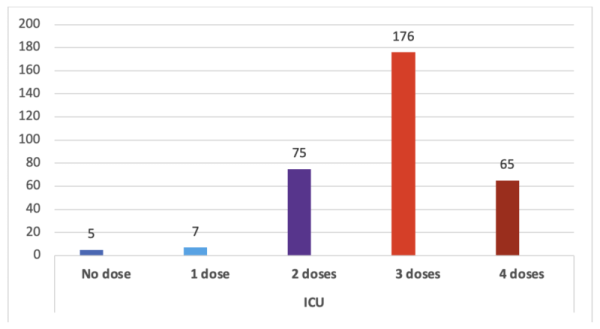
The claim that the unvaccinated are “significantly overrepresented” in Covid-19 hospital admissions and ICU occupancy is not just misleading, it’s downright false. Seriously, do they look at the data in their own reports before drawing policy conclusions?
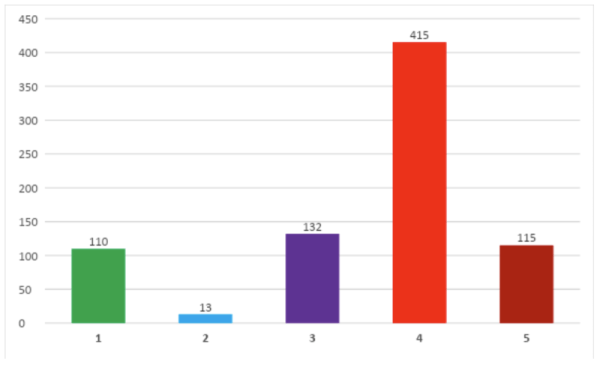
As knowledge about the rapidly fading efficacy of the vaccines, and in particular of each successor booster dose, has firmed, and also as the vaccine escape properties of the newer variants of Covid-19 have become better known, the equivalent question now is: are we into the era of the pandemic of the triple -vaccinated? The biggest strain on NSW hospitals and ICU beds is coming from their numbers.
Public health officials can talk and dissemble all they want about the baselines for comparisons and pretend to possess great sophistication in their understanding of the current state of the disease. They still cannot spin their way out of the hard data.
Instead they are exhibiting a severe case of cognitive dissonance in encouraging the double-vaccinated to get boosted and double-boosted. The ineffectiveness of vaccines in reducing hospital admissions and ICU demand is in itself sufficient to torpedo vaccine mandates. Doubts on their efficacy and concerns about their adverse effects and long-term safety further strengthens the case against mandates.
Ramesh Thakur, a former United Nations Assistant Secretary-General, is emeritus professor in the Crawford School of Public Policy, The Australian National University.
CHD Demands D.C. Schools Rescind COVID Vaccine Mandate, Says It Violates Federal Law
By Megan Redshaw | The Defender | July 25, 2022
Schools in Washington, D.C., will require all students ages 12 and older to get the COVID-19 vaccine before they can attend school in the fall, despite warnings from legal experts who say the mandate violates federal law.
The Office of the State Superintendent of Education announced on July 19 that student immunization requirements for the upcoming 2022-2023 school year will include the COVID-19 vaccine for all students who are of an age for which there is a vaccine fully approved by the U.S. Food and Drug Administration (FDA).
“On July 8, 2022, the FDA fully approved the COVID-19 vaccine commonly known as the Pfizer-BioNTech COVID-19 Vaccine for individuals 12 to 15 years old,” said State Superintendent of Education Christina Grant in a press release.
“The approval of the Pfizer-BioNTech COVID-19 vaccine for individuals 12 to 15 means that, unless exempted, any student age 12-15 at the start of the 2022-23 school year must have received the primary COVID-19 vaccine series or have started receiving the shot by Sept. 16, 2022,” she said.
“We want to make sure that all of our students have everything they need for a healthy start to the school year,” Grant added. “This means making sure children see their primary medical provider for a well-child visit and receive all needed immunizations.”
D.C. law requires students in all area schools, including private, parochial and independent schools, to be fully compliant with mandated vaccinations, unless they have an approved exemption. The law also requires schools to verify immunization certification for all students.
The requirement was detailed in a law the D.C. Council approved last year and is the first legislation of its kind in the region.
CHD demands D.C. Schools rescind mandate
In a letter sent today to Grant, Robert F. Kennedy, Jr., chairman and chief legal counsel for Children’s Health Defense (CHD), asked Grant to rescind the program or CHD would sue to overturn the mandate.
Kennedy said Grant’s press release was incorrect because the Pfizer-BioNTech COVID-19 vaccine was never fully approved and still remains under Emergency Use Authorization (EUA).
The FDA earlier this month granted full approval to Pfizer’s Comirnaty COVID-19 vaccine for adolescents 12 through 15 years old, without convening its vaccine advisory panel.
In August 2021, the agency granted full licensing of the Comirnaty vaccine for ages 16 and older.
However, there are no Comirnaty-labeled vaccines available in the U.S., for any age group.
Although courts have upheld many childhood vaccination requirements for licensed and approved vaccines, no court has ever upheld a mandate for schoolchildren for an EUA vaccine, according to Kennedy.
Kennedy wrote:
“In fact, a District of Columbia United States District Court held that EUA vaccines cannot be mandated to soldiers in the U.S. military, who enjoy far fewer rights than civilians. Doe #1 v. Rumsfeld, 297 F.Supp.2d 119 (2003). That court held: ‘… the United States cannot demand that members of the armed forces also serve as guinea pigs for experimental drugs.’ Id. at 135.
“Federal law 21 U.S.C. § 360bbb-3(e)(1)(A)(ii)(III) requires that the person to whom an EUA vaccine is administered be advised, ‘of the option to accept or refuse administration of the product, of the consequences, if any, of refusing administration of the product, and of the alternatives to the product that are available and of their benefits and risks.’
“The reason for the right of refusal stems from the fact that EUA products are by definition experimental.
“Under the Nuremberg Code, a universal legal norm, no one may be coerced to participate in a medical experiment. Consent of the individual is ‘absolutely essential.’ The liability for forced participation in a medical experiment, not to mention liability for injury from such coerced medical intervention, may be incalculable.”
Commenting on the D.C. mandate, CHD President Mary Holland said, “It violates fundamental human rights and international law to force people, and especially children, to take experimental medical products.”
“We sincerely hope the District will reconsider its misguided policy for schoolchildren,” Holland added.
Another organization — Liberty Counsel — said it may also challenge the District of Columbia’s vaccine mandate.
“There is no FDA-approved COVID shot available and therefore, individuals have a right under the emergency use authorization to refuse these shots,” Matthew Staver, founder and chairman of Liberty Counsel, told The Epoch Times.
Under the Federal Food, Drug, and Cosmetic Act, people receiving an EUA product must be advised that some benefits and risks “are unknown” and given the “option to accept or refuse administration of the product.”
“It is your choice to receive or not receive [the vaccine],” Staver said. “Should you decide not to receive it, it will not change your standard medical care,” according to FDA fact sheets on EUA COVID-19 vaccines.
Several other school systems have attempted, so far unsuccessfully, to implement a COVID-19 vaccine mandate:
• Louisiana: The Louisiana Department of Health in May said it would no longer seek to make COVID-19 vaccines mandatory for the upcoming school year because the shot had not received full FDA approval for people under the age of 16.
The decision came after CHD and thousands of concerned parents on March 16 filed an amicus brief in a lawsuit seeking to stop the Louisana Department of Health from adding COVID-19 vaccines to the state’s school immunization schedule.
The joint lawsuit was filed in December 2021, by Louisiana Attorney General Jeff Landry and state Rep. Raymond Crews against Gov. John Bel Edwards after he announced COVID-19 vaccines would be mandatory for all children age 5 and over at public or private schools.
• Los Angeles: Los Angeles Unified School District (LAUSD) Superintendent Alberto Carvalho on April 28 recommended the district postpone its COVID-19 student vaccination mandate until at least July 2023 because the FDA had not fully approved the COVID-19 vaccine for all ages covering grades 7 through 12.
LAUSD officials announced last fall students 12 and older would be required to be vaccinated by the start of the 2022-2023 school year but delayed the mandate because tens of thousands of students still had not complied with the requirement.
• Washington: The Washington State Board of Health in April voted unanimously against adding COVID-19 vaccines to the requirements for students to attend K-12 schools this fall after its advisory group recommended against the requirement. The board said more data was needed about vaccines for ages 5 to 11 and raised concerns that the Pfizer-BioNTech vaccine has yet to be fully approved for ages 5 to 15.
Megan Redshaw is a staff attorney for Children’s Health Defense and a reporter for The Defender.
© 2022 Children’s Health Defense, Inc. This work is reproduced and distributed with the permission of Children’s Health Defense, Inc. Want to learn more from Children’s Health Defense? Sign up for free news and updates from Robert F. Kennedy, Jr. and the Children’s Health Defense. Your donation will help to support us in our efforts.
Ugly Covid Lies
By Ron Paul | July 25, 2022
After two years of unprecedented government tyranny in the name of fighting a virus, the prime instigators of this infamy are walking free, writing books, and openly pretending they never said the things they clearly said over and over.
Take Trump’s White House Covid response coordinator Deborah Birx, for example. She was, as the Brownstone Institute’s Jeffrey Tucker points out in a recent article, the principal architect of the disastrous “lockdown” policy that destroyed more lives than Covid itself. Birx knew that locking a country down in response to a virus was a radical move that would never be endorsed. So, as she admits in her new book, she lied about it.
She sold the White House on the out-of-thin-air “fifteen days to slow the spread” all the while knowing there was no evidence it would do any such thing. As she wrote in her new book, Silent Invasion, “I didn’t have the numbers in front of me yet to make the case for extending it longer, but I had two weeks to get them.”
She was playing for time with no evidence. As it turns out, she was also destroying the lives of millions of Americans. The hysteria she created led to countless businesses destroyed, countless suicides, major depressions, drug and alcohol addictions. It led to countless deaths due to delays in treatment for other diseases. It may turn out to be the most deadly mistake [?] in medical history.
As she revealed in her book, she actually wanted to isolate every single person in the United States! Writing about how many people would be allowed to gather, she said: “If I pushed for zero (which was actually what I wanted and what was required), this would have been interpreted as a ‘lockdown’—the perception we were all working so hard to avoid.”
She wanted to prevent even two people from meeting. How is it possible that someone like this came to gain so much power over our lives? One virus and we suddenly become Communist China?
Last week in a Fox News interview she again revealed the extent of her treachery. After months of relentlessly demanding that all Americans get the Covid shots, she revealed that the “vaccines” were not vaccines at all!
“I knew these vaccines were not going to protect against infection,” she told Fox. “And I think we overplayed the vaccines. And it made people then worry that it’s not going to protect against severe disease and hospitalization.”
So when did she know this? Did she know it when she told ABC in late 2020 that “this is one of the most highly-effective vaccines we have in our infectious disease arsenal. And so that’s why I’m very enthusiastic about the vaccine”?
If she knew all along that the “vaccines” were not vaccines, why didn’t she tell us? Because, as she admits in her book, she believes it’s just fine to lie to people in order to get them to do what she wants.
She admits that she employed “subterfuge” against her boss – President Donald Trump – to implement Covid policies he opposed. So it should be no surprise that she lied to the American people about the efficacy of the Covid shots.
The big question now, after what appears to be a tsunami of vaccine-related injuries, will anyone be forced to pay for the lies and subterfuge? Will anyone be held to account for the lives lost for the arrogance of the Birxes and Faucis of the world?
Copyright © 2022 by RonPaul Institute.
An idea about stopping this mess
By Meryl Nass | July 24, 2022
Let’s create a pledge, and ask everyone who agrees to sign it. We have a nearly identical pledge that citizens then ask ALL candidates for elected office to sign, or we note that they refused.
The concept is to get millions of signatures against all the emergency rules and mandated vaccines that have destroyed economies, jobs, kept people from home and work, mandated useless masks and 6 foot distancing, initiated vaccine passports and numerous other restrictions, and have maintained the emergency way beyond any rational need.
If enough people sign, the candidates will be forced to sign or be publicly exposed as in favor of the emergency regs and mandatory shots, possibly forever… basically in favor of the Great Reset.
Here is an initial version of the sort of pledge I envision:
- I support laws to revoke all emergency laws, declarations, rules and regulations immediately (examples include: PREP Act, Bioshield Act, PAHPRA, Emergency State Health Power Acts, International Health Regulations of the WHO that transfer authority for pandemic management and/or declare public health emergencies).
- If I am a candidate, I pledge to introduce and support such legislation as my highest priority.
- I support laws explicitly protecting bodily autonomy and preventing the imposition of vaccine or other medical mandates.
- If I am a candidate, I pledge to support such legislation as my next higest priority.
Who agrees? Who has a better idea? Who can help craft the best language? Who will collect signatures?
Meryl
Israeli Soldiers Kill Two Palestinians, Injure Nineteen, In Nablus

IMEMC | JULY 24, 2022
Israeli soldiers killed two Palestinians and injured nineteen, including one who suffered a serious gunshot wound to the head, in the Old City of Nablus, in the northern part of the occupied West Bank on Sunday at dawn.
The Palestinian Red Crescent Society (PRCS) has confirmed that the soldiers killed Abboud Sobeh, 29, and Mohammad al-Azizi, 22, in the al-Yasmina neighborhood in Nablus’s Old City.
The PRCS added that the soldiers shot nineteen other Palestinians, including ten who were shot with live fire, among them one who was shot in the head and is in critical condition.
The incidents took place after undercover Israeli soldiers infiltrated Nablus before many armored military vehicles invaded it from several directions, resulting in exchanges of fire between the invading soldiers and Palestinian resistance fighters.
The soldiers surrounded a home where several Palestinian resistance fighters were located and exchanged fire with them for several hours before the army fired a few missiles at the property, killing the two young men, while the five others managed to escape unharmed.
The missiles caused excessive damage to the home and several surrounding homes, buildings, and mangled cars parked on the sides of the street.

The soldiers withdrew from Nablus a few hours after killing the two Palestinians and wounding twelve, leaving massive destruction to homes and buildings.
Nablus Abu Rudeina, the spokesperson of the Palestinian President, denounced the invasion, the killing of the two Palestinians, and the injuring of the twelve and said that Israel is only interested in escalation and more violence.
‘Disloyal’ Palestinians can be stripped of citizenship and made stateless, rules Israel Supreme Court
MEMO | July 22, 2022
Palestinians can be stripped of their citizenship and made stateless; the Israeli Supreme Court ruled yesterday in a judgement that further reinforces the apartheid status of the occupation state.
Israeli citizens that are found to be in “breach of loyalty” can have their citizenship revoked, but rights groups insist that the policy will only be applied to non-Jews even if it makes them stateless.
Many countries have laws that allow revocation of citizenship, a trend that has grown over the past two decades following the start of the so called “war on terror.” Though such a policy is highly controversial because it is primarily directed at non-white populations, no government has exercised such draconian powers if it makes individuals stateless.
Under international law no government is allowed to strip citizens of their citizenship if it leads to statelessness.
Yesterday’s ruling addressed a 2008 Citizenship Law in Israel that gives the state authority the ability to revoke citizenship based on actions that constitute a “breach of loyalty”. It came following separate appeals in the cases of two Palestinian citizens of Israel who were convicted of carrying out attacks that killed Israeli citizens. The two were handed long sentences but the state sought to strip them of citizenship.
The Supreme Court denied the removal of citizenship in these two cases based on what has been described as “serious procedural flaws” but ruled that the practice itself was constitutional, even if a person became stateless as a result.
A joint statement in response to the ruling by the Association for Civil Rights in Israel (ACRI) and Adalah, an Arab rights group, reported in Reuters, called the law discriminatory and said it “will likely be used exclusively against Palestinian citizens of Israel”. Some 20 per cent of Israeli citizens are Palestinians. Nearly all are descendants of Israel’s ethnic cleansing in 1947/48 which drove the indigenous non-Jewish population out.
“There are many cases of Jews in Israel who took part in terror and not even once has the interior ministry thought to appeal to revoke their citizenship,” the ACRI’s Oded Feller told Reuters. “The only cases that were submitted to the court were of Arab citizens.”
Featured Video
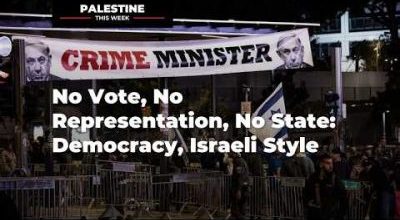
No Vote, No Representation, No State: Democracy, Israeli Style
or go to
Aletho News Archives – Video-Images
From the Archives
Sanctions, War and the Policy of Dual Containment
By SASAN FAYAZMANESH | March 17, 2008
It is now nearly three decades since the Unites States adopted the policy of dual containment of Iran and Iraq. While much has been written about the containment of Iraq, there has been very little in-depth analysis of this policy when it comes to Iran. In a book that is going to be released on March 31, 2008, entitled The United States and Iran: Sanctions, Wars and the Policy of Dual Containment (Routledge), I attempt to address this shortcoming by investigating when and why the US policy of containment of Iran came about, how it evolved, and where it stands today.[1] To the extent that Israel has been involved in US policy making, the study will also include the role that Israel has played in the containment of Iran. Also, since the fate of Iran has been inextricably linked to that of Iraq, occasionally the investigation will overlap with the containment of Iraq.
The policy of dual containment of Iran and Iraq originated during the Carter Administration, but it was not until the Clinton Administration that the expression “dual containment” became popular. … continue
Blog Roll
 Aletho News
- NATO chief advocates war of aggression
- No Vote, No Representation, No State: Democracy, Israeli Style
- Zionist Bought Senate Blocks Information About American Citizens Killed By Israel
- While Gaza dominates the UN, these are the people keeping it alive
- New Report: “Scholasticide and Genocide in Gaza: Assessment, Testimonies and Legal Analysis”
- ‘THAAD Delusion’: Iran war exposes US missile shield limits – The Atlantic
- Moscow issues warning to NATO over Russian exclave
- Yes, the Iran war has destroyed Trump’s presidency
- The fallacy of US delusions about Iran’s economic collapse
- Hezbollah denies Syria cell link, warns of Israeli plan to sow discord
- If Americans Knew
- Mamdani releases plan to combat antisemitism and hate crimes in New York City
- Iran’s Revolutionary Guards Publish Letter to the American People
- DMFI launches $1 million ad campaign supporting Virginia’s Elaine Luria
- US Senate blocks resolution seeking report on Americans killed by Israel
- Israeli Attacks Kill Ten Palestinians in Gaza
- Massacre at Minab: The School That Became a Grave
- Israeli media: The IDF Shows It Doesn’t Turn a Blind Eye; It Actively Emboldens Settler Havoc
- As settlers ravage West Bank, Israeli forces kill 10 in Gaza – Daily Update
- New Report: “Scholasticide and Genocide in Gaza: Assessment, Testimonies and Legal Analysis”
- Ex-Biden officials are desperate for a Gaza scapegoat
- No Tricks Zone
- Green Energy Debacle: German Expert Professor Fritz Vahrenholt Warns Of Severe Economic And Social Consequences
- Two More Paleo Reconstructions Affirm Meters-Higher Sea Levels Across Ireland, Brazil 7000-6000 Years Ago
- New Study: Earth And Venus Surface Warmth Largely Explained By Convection And Lapse Rate, Not CO2 Or Radiation
- 2025 Nature Paper Claiming Worsening Global Drought Gets RETRACTED …Heavily Flawed
- New Study: ‘Global Drought Shows No Detectable Recent Acceleration Under Climate Warming’
- Economic Masterminds: German Socialists Suggest Taxing Productivity Gains Stemming From Using AI
- The South China Sea Has Not Been Cooperating With The Climate Change Narrative
- Energy Crisis: Germany Enters Heating Season With Historically Low Gas Reserve Fill Levels
- New Study: The Antarctic Ice Sheet Gained Mass From 2020-2024 Due To Staggering Snow And Ice Accumulation
- Study: Ocean Heating Rates From Thousands Of Years Ago ‘Dwarf’ Modern Ocean Heating Rates

