Ruth Bader Ginsburg… If only she had supported equal rights for everyone

Ruth Bader Ginsburg receives top Israeli award in Israel, July 4, 2018.
(L-R: former Israeli Supreme Court Judges Miriam Naor & Esther Hayut; chairman of Genesis Prize Foundation Stan Polovets; RBG; former presidents of Israeli Supreme Court Aaron Barak & Dorit Beinich.)
Ruth Bader Ginsburg commanded immense respect, adulation, and influence. She spoke out against racism and discrimination, and has been called ‘a revolutionary.’
Some have written: ‘Even to the end of her life, she remained committed to our mantra: None are free, until all are free…’ Progressive groups are sending out emails about continuing ‘her legacy’ of ‘fighting for justice…’ New York is planning to erect a statue in her honor…
Imagine the impact she could have had if she’d included Palestinians in her concerns, and spoken out against Israeli violence and apartheid, instead of remaining silent and endorsing Israel – established and maintained through ethnic cleansing…
By Alison Weir | If Americans Knew | September 22, 2020
Recently, Israel’s Ha’aretz newspaper, a major daily sometimes considered the New York Times of Israel, has published several eulogies to Supreme Court Justice Ruth Bader Ginsburg.
Ginsburg was extremely popular in Israel, and the love was returned. Former Israeli Supreme Court President Dorit Beinisch writes that Ginsburg was “a true friend of Israel.”
Ginsburg’s commitment to Israel was exemplified in 2018, when she traveled to Israel for the fifth time. The purpose of her trip was to accept, in the words of Ha’aretz, an award from an organization “snubbed earlier this year by actor Natalie Portman.”
The action by Portman, an Israeli-American star, had caused major controversy in Israel. She had turned down what has sometimes been called “Israel’s Nobel Prize.”
Portman said that recent events in Israel had been “extremely distressing,” and she did “not feel comfortable participating in any public events in Israel.” Portman said she could “not in good conscience move forward with the ceremony.”
Portman explained on Instagram that Israeli Prime Minister Netanyahu and Israel’s “mistreatment of those suffering from today’s atrocities” had caused her to refuse the extremely prestigious prize – and one accompanied by two million dollars.
A follow up article in Ha’aretz about the controversy showed that on the day of Portman’s Instagram post about “today’s atrocities,” a UN envoy had blasted Israel for shooting children. Israeli forces had just shot dead four Palestinians, including a 15 year old boy, and wounded 156 others. (Over the past 20 years Israeli forces have killed over 2,000 Palestinian children, while Palestinian resistance groups have killed 134 Israeli children.)
The most recent deaths had taken place during during Gaza’s massive “Great March of Return,” an unarmed uprising in Gaza against Israel’s suffocating blockade and confiscation of Palestinian land. Thousands of Gazan men, women, and children had been protesting weekly since the end of March, and Israeli forces were shooting demonstrators every week.
Portman’s rejection of the prize, and Israel’s killing of unarmed demonstrators, didn’t stop Ginsburg from accepting the award. In fact, the outspoken Ginsburg doesn’t seem to have even commented about the Portman controversy, or Israel’s daily atrocities in Gaza.
Ginsburg’s silence is particularly noteworthy given her long history of advocacy for women, and an event that occurred the day before the awards ceremony: Thousands of Palestinian women and girls in Gaza had marched in a women’s march against Israeli oppression, while a group of Israeli women marched in Israel in solidarity with them.
According to reports, the Gaza marchers included “mothers, wives, daughters and sisters of those killed and injured during the Great March of Return protests, as well as female journalists and university students.”

Gaza women’s march, July 3, 2018. (Middle East Eye )
As usually happens in such protests, Israeli forces were immediately deployed against the nonviolent demonstrators, and soldiers used live ammunition, shooting three and injuring 130.

A Palestinian woman injured by Israeli forces while she participated in the women’s march in Gaza on July 3, 2018. ((MEE/Mohammed Asad))
The next day – the day that Ginsburg was to receive the award – Ha’aretz featured an article headlined: “Israeli Women Rally From Across the Border in Solidarity With Gaza Women’s March.” The article reported: “A group of about 50 activists gathered and marched in solidarity on Israel’s side of the Gaza border Tuesday evening during the first planned women’s march of the ongoing Gaza protests.” The article featured several photos, including one of a protestor wounded by Israeli forces:

An injured women lies on a stretcher in Eastern Gaza on July 3, 2018. (Ha’aretz )
Apparently untroubled by this violence against Palestinian women, that evening Ginsburg accepted her award in an elegant ceremony in Tel Aviv. According to AP, her acceptance speech “cited Holocaust diarist Anne Frank” and “touched on [Ginsburg’s] fight for women’s rights.” AP noted that she “often cites her Jewish heritage” as a source for her “sensitivity to the plight of oppressed minorities.”
The award honored Ginsburg “for her enormous legal contribution to advancing the protection of women’s rights, the right to equality and the rights of all human beings.” The Israeli audience gave her a “rapturous reception.”
Major celebrity, cultural icon, AIPAC
One of the recent Ha’aretz articles about Ginsburg states that she was “the first Jewish candidate to sit on the court since the resignation of Justice Abe Fortas in 1969.” (Fortas, who resigned amid accusations of corruption, had helped pave the way for dual citizenship with Israel in 1967.)*
Over the years, Ginsburg has become a major celebrity. As Ha’aretz reports:
During her 27 years on the court, Ginsburg gained millions of fans and admirers around the world, and eventually became a cultural icon in the United States, the subject of movies, museum exhibitions, and books for adults and children alike. A 2019 film about her early professional life, “On the Basis of Sex,” was a modest box office hit, with actress Felicity Jones portraying the jurist. But it was the 2018 documentary about Ginsburg, “RBG,” that created a real artistic buzz, including an Academy Award nomination for best documentary.
At the same time, Ginsburg grew to be a major influence on the Supreme Court. Ha’aretz notes: “Ginsburg established herself as the de facto leader of the Supreme Court’s liberal wing. Together with justices Stephen Breyer, Elena Kagan and Sonia Sotomayor…”
One of the cases the court considered during this time concerned the notorious pro-Israel lobby organization AIPAC (American Israel Public Affairs Committee). AIPAC has long been considered the most powerful organization for a foreign country in the US.
In 1997 a federal court found that AIPAC and 27 pro-Israel political action committees were guilty of violating federal election laws. The individuals who had initiated the case were ebullient, believing that the ruling could help loosen the “stranglehold” that Israel’s lobby had on U.S. Middle East policy.
Their excitement was short lived, however. In 1999 the case went to the Supreme Court, which, with Ginsburg’s help, overturned the ruling, 6-3. Antonin Scalia wrote the dissenting opinion.
Separation of church and state?
The Jewish Forward reports: “Among the principles that were dear to Ginsburg’s heart as she presided in the Supreme Court for nearly three decades was a dedication to the separation of church and state.”
The article states: “The first Jewish woman on the Supreme Court, Ginsburg dedicated herself to assuring that Christianity was not privileged by the government above other religions.”
Yet, the Israeli system is based on a close connection between religion and the state, and there is systemic discrimination against Christians, Muslims, and non-Jews in general. As a prominent Israeli author wrote, there is “no separation of synagogue and state” in Israel.
A few weeks before Ginsburg decided to accept the Genesis award, Israel blocked hundreds of Palestinian Christians from praying at the Church of the Holy Sepulchre. The month before, Christian leaders protested what they said was Israel’s flagrant attempt to “weaken the Christian presence in Jerusalem.” Such stories go on and on and on.
Changing ‘social norms’

U.S. Supreme Court Justice Ruth Bader Ginsburg with former Israeli Supreme Court President Dorit Beinisch, in Washington in 2017. (Ha’aretz, Yaron Ron)
Former Israeli Supreme Court president Beinisch writes that Ginsburg has had historic influence:
“We often wonder how legal rulings can change social norms. These are long-term processes, and we do not always get to see the results. But Ginsburg was able to do so during her lifetime – to look back and to see her extensive influence…”
Beinisch notes:
“I cannot think of another legal figure who had such a profound influence on and awareness of the daily lives of the society in which they lived as she did, or who was as popular as she was.”
If Ginsburg had joined the many Israelis, Jewish Americans, and others of all religions, races, and ethnicities who have begun to speak out against Israel’s long documented human rights abuses, and in affirmation of Palestinian rights, there seems little doubt that she could have had a significant impact. Yet, she remained silent.
But it’s not too late for others. When people proclaim that no one is free until everyone is free, they can truly mean everyone, including Palestinians.
Three years ago Kathryn Shihadah wrote an in-depth analysis of Ginsburg that provides much essential information:
Ruth Bader Ginsburg: at 84, where does she get her PEP (Progressive Except Palestine)?
by Kathryn Shihadah
The iconic and even trending Supreme Court Justice Ruth Bader Ginsburg (lovingly known to fans as Notorious RBG or Ruth Badass Ginsburg) came this close to receiving the 2018 Genesis Prize, aka the “Jewish Nobel,” awarded yearly to Jews who have attained excellence and recognition in their fields, and who inspire others in their dedication to the Jewish community, Jewish values, and the State of Israel.
The award comes with a $1 million payout, and there, as they say, was the rub.
Ha’aretz reports that the prize was taken away from Ginsburg (and given to Natalie Portman) because the committee’s legal advisor discovered a rule against awarding monetary prizes to US judges. She had already decided to donate half of her prize money to women’s groups in the US, and the other half to equivalent organizations in Israel. Apparently her office had even contacted the groups and told them they had some big bucks coming their way.
Well, the charities got stiffed, but Ginsburg got a consolation prize: a new and prestigious award was created for her – the Genesis Prize for Lifetime Achievement. She will receive the award during a ceremony next summer.
Does Ginsburg meet all of the qualifications for a Genesis award? She has indeed attained excellence and recognition; no doubt she has been an inspiration – to Jews and Gentiles alike – as she has beaten the odds and risen to the very top of her field. Is she “dedicated to Jewish community, Jewish values, and the Jewish State”? Let’s do some sleuthing to find out.
A little background
Ginsburg was born on March 15th, 1933 in Brooklyn, New York. She fought her way past gender discrimination (one of 9 women in a class of 500 at Harvard Law School) and became only the second female and the sixth Jewish justice to be appointed to the Supreme Court.
Religiously, Ginsburg became non-observant when, at her mother’s death, she saw up close the second-class role of women in Orthodox Judaism. She has worked tirelessly for women’s rights throughout her distinguished career.
Though she is secular, Ginsburg has always cherished her Jewish identity:
My heritage as a Jew and my occupation as a judge fit together symmetrically. The demand for justice runs through the entirety of Jewish history and Jewish tradition. I take pride in and draw strength from my heritage, as signs in my chambers attest: a large silver mezuzah on my door post, [and the Hebrew words] from Deuteronomy: “Zedek, zedek, tirdof” — “Justice, justice shall you pursue.”
Check the box marked “Jewish values.”
Moving on to “Jewish community,” just look back to last September. Ms. Ginsburg surprised members of a Washington DC synagogue when she came to speak at their Rosh Hashanah service. She talked about faith, about her fellow Jewish justices over the years and the views they have shared. She reminded worshipers that “the Jewish religion is an ethical religion. That is, we are taught to do right, to love mercy, do justice.” And she remarked that their shared experience as Jews makes them compassionate: “If you are a member of a minority group, particularly a minority group that has been picked on, you have empathy for others who are similarly situated.”
Ginsburg has pursued justice wholeheartedly all her life, and has throughout her career advocated for progressive causes. In 1972, she co-founded the Women’s Rights Project at the ACLU, and fought more than 300 gender discrimination cases between 1973 and 1974.
But these admirable convictions we see in Ginsburg that are common among many Americans – empathy toward the marginalized, advocacy for defenseless – suddenly evaporate in certain situations. Perhaps it’s subconscious, but there lurks another loyalty ready to override the cause of true justice and compassion. Ruth Bader Ginsburg is among the many influential members of the P.E.P. Club: Progressive Except Palestine.
For someone dedicated to liberty and justice for all, she is resoundingly silent on the issue of Palestine. Nowhere in her recently published collection of writings, My Own Words, do the words “Palestine” or “Palestinian” appear. Even “Arab” is nowhere to be found, although she discusses the Holocaust, Zionism, and Israel.
Ginsburg was poised to donate $500,000 to women’s organizations in Israel, a country which – surely she has heard – has been flagrantly violating the human rights of Palestinians for decades, denying them the most basic justice. This is a country in which many rock stars fear to book a concert, lest they be ostracized by the moral majority for pandering to an apartheid state – but Ginsburg was about to drop a cool half a mil.
“Zedek, zedek, tirdof” – “Justice, justice shall you pursue”…except Palestine?
Well, at least we can check the most important box of all: the one marked “dedication to the State of Israel.”
This leaning is no surprise, given Ginsburg’s admiration for one particular former US Supreme Court justice.
The Honorable Louis Brandeis
Ruth Bader Ginsburg is a big fan of the Supreme Court’s first Jewish justice, Louis Dembitz Brandeis. Brandeis is revered today as a great judge, but at the time of his appointment – 1916 – he was recognized by some as “unscrupulous” in his methods and at times “unethical” in his behavior.
Distinguished historian Bruce Allen Murphy revealed that Brandeis was involved in some covert pursuits for many years, both before and during his time on the Supreme Court. The fact that he and his primary cohort, Felix Frankfurter, kept their work secret indicates that they knew it was – or at least looked – unethical.
Brandeis’ endeavors included (but were not limited to) advancing the Zionist agenda, both in the US and internationally. Murphy describes his work in general as “part of a vast, carefully planned and orchestrated political crusade.”
Israeli professor Dr. Sarah Schmidt described a clandestine society of which Brandeis was a part: “a secret underground guerilla force determined to influence the course of events in a quiet, anonymous way.” The most ambitious young Jewish men were recruited for the work. Their secret initiation ceremony included the charge:
You are about to take a step which will bind you to a single cause for all your life…[Y]ou will be fellow of a brotherhood whose bond you will regard as greater than any other in your life – dearer than that of family, of school, of nation. By entering this brotherhood, you become a self-dedicated soldier in the army of Zion. Your obligation to Zion becomes your paramount obligation…It is the wish of your heart and of your own free will to join our fellowship, to share its duties, its tasks, and its necessary sacrifices.
Brandeis also served as president of the Provisional Executive Committee for Zionist Affairs – essentially the leader of the world’s Zionists. He spent several months during 1914 – 1915 on a speaking tour to build a network of support for the “Jewish homeland,” underscoring the goals of self-determination and freedom.
In 1916, President Woodrow Wilson named Brandeis to the Supreme Court. As required, Brandeis officially resigned from his formal affiliations, including stepping down from his leadership role in Zionism. However, he zealously continued his work on a more informal basis, even from his Supreme Court chambers. Later, he would persuade the next 2 Jewish justices – Cardozo and Frankfurter – to join the ranks of the Zionist Organization of America, assuring a continued, subtle partiality toward the Jewish project.
Brandeis is tapped
In fact, Brandeis remained so deeply involved in Zionism that he was chosen by a leader of the movement for a very important job: that of, possibly, helping to turn the tide of World War I for the British.
Great Britain was in desperate need of an ally in the war, and the Zionists were in need of an ally in their quest for a homeland. Brandeis was tasked with delivering the United States as an ally to Great Britain; Great Britain would reimburse the Zionists with the Balfour Declaration.
Samuel Landman, secretary of the World Zionist Organization, claimed in a 1936 article in World Jewry, that it was “Jewish help that brought USA into the war on the side of the Allies.” The goal was not victory for the Allies, but real estate in Palestine, so Brandeis and associate Felix Frankfurter reportedly worked to ensure the war would last until Palestine was in the bag. They even reportedly sabotaged a potential opportunity to end the war in May 1917 (18 months early), which would have saved much destruction and many lives, including Brandeis’ fellow Americans.
Eventually, of course, Germany was defeated. According to historian Henry Wickham Steed, one of Germany’s top generals considered the Balfour Declaration to be “the cleverest thing done by the Allies in the way of propaganda,” and wished Germany had thought of it first.
Landman further stated that Germany was aware of the Jewish connection, and, chillingly, this “contributed in no small measure to the prominence which anti-Semitism occupie[d] in the Nazi program” only a few decades later. This horrific irony can not be overstated.
“Never again”
Ruth Bader Ginsburg spoke of those days in 2004 at the Holocaust Memorial Museum:
Hitler’s Europe, his Holocaust Kingdom, was not lawless. Indeed, it was a kingdom full of laws, laws deployed by highly educated people—teachers, lawyers, and judges—to facilitate oppression, slavery, and mass murder. We convene to say “Never again,” not only to Western history’s most unjust regime, but also to a world in which good men and women, abroad and even in the USA, witnessed or knew of the Holocaust Kingdom’s crimes against humanity, and let them happen…
In striving to drain dry the waters of prejudice and oppression, we must rely…upon the wisdom of our laws and the decency of our institutions, upon our reasoning minds and our feeling hearts. And as a constant spark to carry on, upon our vivid memories of the evils we wish to banish from our world.
And indeed, Ginsburg has famously spent years of her life checking America’s laws against the rubric of our Constitution to banish what evil she can from America.
But as a highly intelligent woman, in the Information Age, is it even remotely possible that she is not aware of the opinions of progressive Jewish anti-Zionist voices from the time of Brandeis, like Alfred Lilienthal and Rabbi Elmer Berger, or the historians of our time who have brought to light the folly of early Zionism, like Noam Chomsky, Norman Finkelstein, and Ilan Pappé? (The Palestinian historians who first wrote about this, sadly, are less likely to have shown up on her radar.)
Can she not know about the displacement of 750,000 Palestinians in the Nakba? Or the Deir Yassin massacre? Or a hundred other stories of injustice imposed on a people because of where they lived by another people who had been mistreated because of what they believed?
To be passionate about justice and yet ignore this gross injustice requires a studied unconcern. “Progressive Except Palestine” has mentors in the highest places, and Ginsburg has a friend who may be among the best.
Meet Aharon Barak
Former Israeli supreme court president Aharon Barak, partly educated at Harvard, talks some good talk, the kind that would resonate with Americans:
Democracy has its own internal morality, based on the dignity and equality of all human beings…Most central of all human rights is the right to dignity. It is the source from which all other human rights are derived.
[E]quality is a fundamental value of every democratic society…. The feeling of the lack of equality is the most difficult of feelings. It undermines the forces that unite society.
And he discusses his home country in language that sounds relatable:
The State of Israel is a State whose values are Jewish and democratic. Here we have established a State that preserves law, that achieves its national goals and the vision of generations, and that does so while recognizing and realizing human rights in general and human dignity in particular. Between these two there are harmony and accord, not conflict and estrangement.
The Israeli legal system is a young system, albeit one with deep historical roots that reflect its Jewish values. It is a legal system that guards its democratic nature despite the existential struggle it has faced since its founding.
No wonder Ginsburg and Barak are close: they share a deep reverence for democracy, and for the Jewish values they like to believe are inherent in their respective countries’ justice systems.
But Barak sees the Israeli court, and Israel itself, as an exceptional world. It is not a simple, safe democracy like America, but a “defensive democracy” that fights daily for its very survival. Barak lives under the delusion that nuclear-capable, Iron-Dome, cruise-missile, armored-personnel-carrier Israel, is under constant “existential threat” from rock-throwing, homemade-missile-launching, underfed Palestinians. Israel was created through ethnic cleansing and is maintained through illegal occupation and blockade, and when Palestinians legally exercise their right to resist, Barak sees this as “terrorism.”
Barak wrote in the Preface to his Yale Law School Faculty Scholarship Series article, “The Role of a Supreme Court in a Democracy,”
we have recognized the power of the state to protect its security and the security of its citizens on the one hand; on the other hand, we have emphasized that the rights of every individual must be preserved, including the rights of the individual suspected of being a terrorist (sic).
It sounds so ethical, but Gideon Spiro knew better and wrote eloquently about “The Barak Method”:
No doubt about it: Barak has succeeded in creating around him a “human-rights man” aura even outside Israel. This is a huge propaganda feat…considering that Barak is, to a large extent, the judicial designer, enabler and backer of the regime of human-rights abuses in the Occupied Territories. [He] legitimized almost all the injustices of the occupation. He has led Israel’s judicial system into the role of indentured servant to the security forces – the IDF, the Shin Bet (domestic secret service), the Mossad and the settlers.
Barak’s time on the bench is replete with examples of Supreme Court benevolence toward individuals suspected of being terrorists (i.e. pretty much every Palestinian who set foot in his courtroom). One such example happened in 1992.
Mass Deportation
Hamas had killed six Israeli soldiers, and in retaliation, the IDF arrested, blindfolded, and deported 415 Palestinians (believed to be Hamas members) to Lebanon.
Human rights organizations immediately petitioned the Israeli Supreme Court – Barak was on call that night – and testimony was heard. It was pointed out that the men had not been given a hearing before the deportation.
The Court ruled: Israel must grant the deportees a hearing – but it would take place a month later.
The deportees spent the month in freezing winter weather. The Red Cross asked to bring them medical aid, but Israel refused. The UN Security Council condemned the mass deportation (full text here).
On January 17, 1993, the hearing in Israel began. A few days later, the Israeli Supreme Court found – unanimously – that in one sense, the deportation orders were not valid, but in another sense, the orders were valid. (Obviously, this is a simplification; find details here and here.)
Punitive house demolition
Another area in which Aharon Barak labored to find the alleged balance between security and human rights is in the area of house demolition. His court recognized the need for proportionality, and concluded that “only when human life has been lost is it permissible to destroy the buildings where the terrorists lived.”
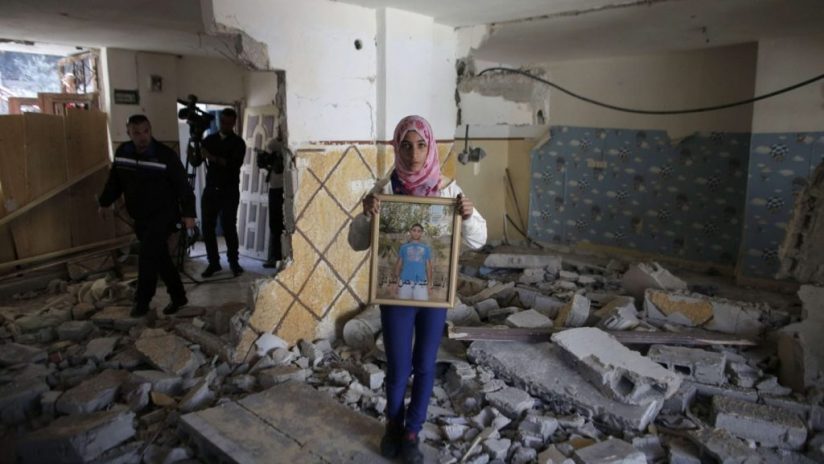
A relative of Abdelrahman Shaludi, a Palestinian who killed two Israelis last month, displays his portrait inside his family home after it was destroyed by Israel in E. Jerusalem. Nov. 19, 2014.
Back in the real world…
House demolition is a violation of international law, and in many cases is collective punishment, which according to the Fourth Geneva Convention, is a war crime. In spite of this – and in spite of the fact that it may actually incite violence instead of deterring it – the practice continues, sanctioned by Israel’s highest court. Nearly 50,000 structures have been demolished since 1967, according to ICHAD, the Israeli Committee Against House Demolitions.
Administrative detention
The struggle was real for Barak and the rest of the Israeli Supreme Court on the issue of administrative detention – holding people for months or years without even charging them with a crime. Once again, they had to choose between protecting fundamental human rights of the individual or protecting “national security.”
They went with national security. And so the practice of administrative detention continues unchecked: Palestinians are arrested without charge and detained for 6 months; their case undergoes “judicial review,” in which a judge looks at their file (without representation from the detainee) and often approves another 6-month term, and another, and another. Some have been held for years. During Barak’s reign, well over a thousand Palestinians were held under administrative detention.
Since 1967, Israeli forces have arrested over 800,000 Palestinians – almost 20% of the Palestinian population. About 40% of the male Palestinians in the occupied territories have been arrested at least once.
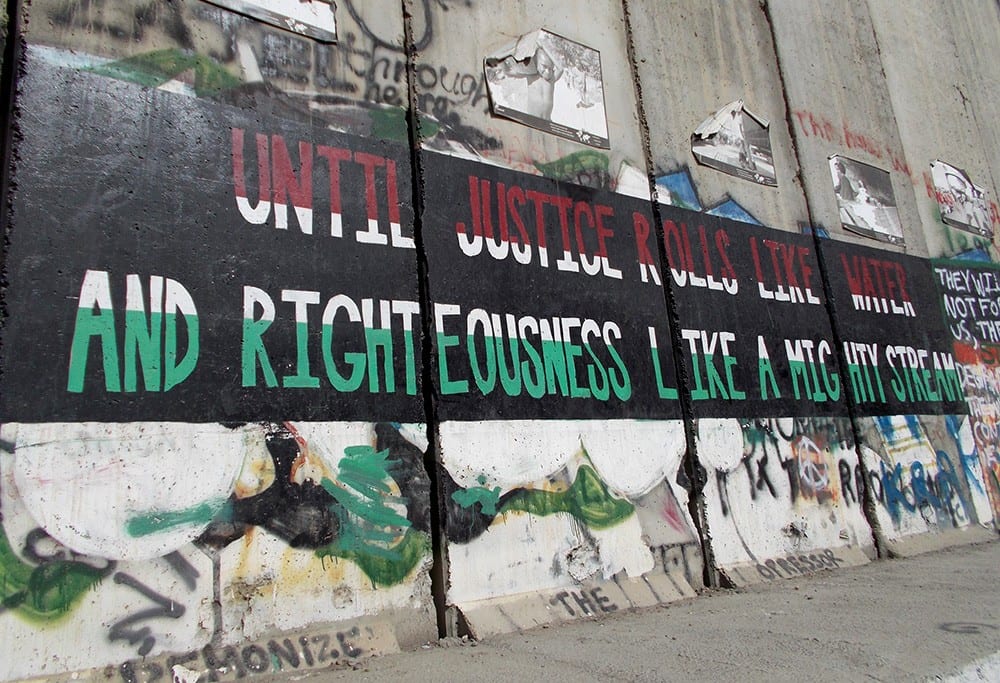
The separation (aka apartheid) wall
It was on Aharon Barak’s watch that construction of the Wall was begun. Correction: “security fence to prevent terror.” The damage done by this “fence” – confiscating Palestinian land, cutting off children from their schools, patients from their doctors, workers from their jobs, families from each other, farmers from their land – this is what Barak termed “proportionate damage.” In 2004 and 2005 he and his Court dropped a few crumbs for the Palestinians in the form of rulings to alter the route of the wall a bit, but at no point did they address the legality of the wall itself.
The rest of the world, however, did address the issue. In 2004, the UN Security Council called on Israel to abide by international law; the General Assembly called on the International Court of Justice to rule on the wall. The ICJ complied, in 2004 finding the wall to be in violation of international law. The Israeli Supreme Court chose, as usual, to ignore near global condemnation, Barak himself claiming “factual superiority” over the ICJ.
Extrajudicial executions (aka targeted killing)
The final verdict of Aharon Barak’s career, the cherry on top of his years of whatever-that-was, looked just like the others. It was all about balance. Harm – even death – to civilians is permitted if there was no better way to manage the situation; harm must be proportionate, that is the civilian “damage” must be comparable to the military advantage achieved. In Barak’s own decisive words, “we cannot determine that a preventative strike is always legal, just as we cannot determine that it is always illegal.” So, kill if you must, and fall on the mercy of the Court (wink, wink).
Torture (aka moderate physical pressure)
Aharon Barak had a few words on the issue of torture, which Justice Ginsburg found compelling. She explained in a recent interview:
The police think that a suspect they have apprehended knows where and when a bomb is going to go off…Can the police use torture to extract that information? And in an eloquent decision by Aharon Barak, then the chief justice of Israel, the court said: ‘Torture? Never.’
Barak himself elaborated: “They act against the law, by violating and trampling it, while in its war against terrorism, a democratic state acts within the framework of the law and according to the law.”

An Israeli Peace activist demonstrate a torture techniques used by Shin Bet interrogators against Palestinian prisoners.
But once again, the actions of the State speak louder than the words of the Court.
The ruling to which Ginsburg referred left a “narrow opening for torture: a defense of “necessity,” which allows for interrogators, during “extraordinary circumstances” (for example, in a “ticking time bomb scenario,” when innocent lives, according to Israeli officials, are believed to be in the balance), to independently choose to break the no-torture law. Later, if torturers are taken to court for it, they may use the “necessity defense.”)
That “narrow opening” has proved to be wide and welcoming.
According to a 2016 Ha’aretz article, over 1,000 complaints of torture have been registered against Israel’s General Security Service, Shin Bet, since 2001. Not a single criminal investigation has ever been launched by the one investigator that the department employs.
It has been reported that 70-90% of the time, detained men, women and children are not permitted to speak to anyone – including a lawyer – until they have “confessed.” And once that confession has been obtained, whether it is genuine or not, there is no recanting.
Caution: PEP causes selective blindness
While Justice Ruth Bader Ginsburg has done great things for women and minorities, and is no doubt a woman of compassion and conscience, she shows all of the symptoms of P.E.P. Prognosis: if the anti-BDS law (Israel calls BDS an “Israel de-legitimization program”) comes before the Supreme Court, will she uphold it, limiting our free speech and support for human rights? Or if the Taylor Force Act comes up for judicial review – the law which would effectively deprive Palestinian widows of their “survivor benefits” (Israeli hasbara calls it a “terrorism incentivizing program”), would Ginsburg sympathize with women and orphans when they are Palestinian?
It is likely that she has seen reports of the humanitarian crisis in Gaza and the rampant and illegal settlement-building in the West Bank and East Jerusalem, but there is no indication that these issues have penetrated her consciousness. If they had, one expects she would be in a moral quandary –what does one do with a lifetime of unexposed bias when light finally shines on it?
Conclusion
Lady Justice is the traditional symbol of our judicial systems. Her attributes include a blindfold – to represent impartiality and a total absence of bias; a balance – to represent the weighing of the evidence as the only source of a decision of guilt or innocence; and a sword – to represent the authority of the court, and the swiftness of the meting out of justice.
“Progressive Except Palestine” is, sadly, a reality for too many people of all faiths and and people of no faith. The result? Where justice ought to be applied impartially, objectivity becomes impossible when Israel is part of the equation. Where guilt or innocence should be determined based on evidence, the label “terrorist” makes guilt a foregone conclusion. And where justice should be meted out swiftly, only injustice seems to move at that pace.
And when one of America’s Supreme Court justices is complicit in this, there is little hope of improvement.
* The situation has progressed substantially since Ginsburg’s 1993 appointment, when she was the only Jewish member of the Supreme Court. In recent years five of the nine Supreme Court justices have been minorities, including three Jewish justices, and If Obama’s nomination had gone through, there would have been four, while none of the Justices have been Protestant Christians, the largest religious group in the US – a situation that some felt was worthy of comment.
Alison Weir is executive director of If Americans Knew, president of the Council for the National Interest, and author of Against Our Better Judgment: The Hidden History of How the U.S. Was Used to Create Israel.
Kathryn Shihadah is a staff writer for If Americans Knew.
No, the U.S. Supreme Court Will Not Save Us
By John W. Whitehead | The Rutherford Institute | September 21, 2020
The U.S. Supreme Court will not save us.
It doesn’t matter which party gets to pick the replacement to fill Justice Ruth Bader Ginsberg’s seat on the U.S. Supreme Court. The battle that is gearing up right now is yet more distraction and spin to keep us oblivious to the steady encroachment on our rights by the architects of the American Police State.
Americans can no longer rely on the courts to mete out justice.
Although the courts were established to serve as Courts of Justice, what we have been saddled with, instead, are Courts of Order. This is true at all levels of the judiciary, but especially so in the highest court of the land, the U.S. Supreme Court, which is seemingly more concerned with establishing order and protecting government interests than with upholding the rights of the people enshrined in the U.S. Constitution.
When presented with an opportunity to loosen the government’s noose that keeps getting cinched tighter and tighter around the necks of the American people, what does our current Supreme Court usually do?
It ducks. Prevaricates. Remains silent. Speaks to the narrowest possible concern.
More often than not, it gives the government and its corporate sponsors the benefit of the doubt, which leaves “we the people” hanging by a thread.
Rarely do the justices of the U.S. Supreme Court venture beyond their rarefied comfort zones.
Every so often, the justices toss a bone to those who fear they have abdicated their allegiance to the Constitution. Too often, however, the Supreme Court tends to march in lockstep with the police state.
In recent years, for example, the Court has ruled that police officers can use lethal force in car chases without fear of lawsuits; police officers can stop cars based only on “anonymous” tips; Secret Service agents are not accountable for their actions, as long as they’re done in the name of “security”; citizens only have a right to remain silent if they assert it; police have free reign to use drug-sniffing dogs as “search warrants on leashes,” justifying any and all police searches of vehicles stopped on the roadside; police can forcibly take your DNA, whether or not you’ve been convicted of a crime; police can stop, search, question and profile citizens and non-citizens alike; police can subject Americans to virtual strip searches, no matter the “offense”; police can break into homes without a warrant, even if it’s the wrong home; and it’s a crime to not identify yourself when a policeman asks your name.
The cases the Supreme Court refuses to hear, allowing lower court judgments to stand, are almost as critical as the ones they rule on. Some of these cases have delivered devastating blows to the lives and rights enshrined in the Constitution. By remaining silent, the Court has affirmed that: legally owning a firearm is enough to justify a no-knock raid by police; the military can arrest and detain American citizens; students can be subjected to random lockdowns and mass searches at school; and police officers who don’t know their actions violate the law aren’t guilty of breaking the law.
You think you’ve got rights? Think again.
All of those freedoms we cherish—the ones enshrined in the Constitution, the ones that affirm our right to free speech and assembly, due process, privacy, bodily integrity, the right to not have police seize our property without a warrant, or search and detain us without probable cause—amount to nothing when the government and its agents are allowed to disregard those prohibitions on government overreach at will.
This is the grim reality of life in the American police state.
In fact, our so-called rights have been reduced to technicalities in the face of the government’s ongoing power grabs.
In the police state being erected around us, the police can probe, poke, pinch, taser, search, seize, strip and generally manhandle anyone they see fit in almost any circumstance, all with the general blessing of the courts.
This is what one would call a slow death by a thousand cuts, only it’s the Fourth Amendment being inexorably bled to death by the very institution that is supposed to be protecting it (and us) from government abuse.
Remember, it was a unanimous Supreme Court which determined that police officers may use drug-sniffing dogs to conduct warrantless searches of cars during routine traffic stops. That same Court gave police the green light to taser defenseless motorists, strip search non-violent suspects arrested for minor incidents, and break down people’s front doors without evidence that they have done anything wrong.
Make no mistake about it: this is what constitutes “law and order” in the American police state.
These are the hallmarks of the emerging American police state, where police officers, no longer mere servants of the people entrusted with keeping the peace, are part of an elite ruling class dependent on keeping the masses corralled, under control, and treated like suspects and enemies rather than citizens.
Whether it’s police officers breaking through people’s front doors and shooting them dead in their homes or strip searching motorists on the side of the road, in a police state such as ours, these instances of abuse are not condemned by the government. Rather, they are continually validated by a judicial system that kowtows to every police demand, no matter how unjust, no matter how in opposition to the Constitution.
In this way, the justices of the United States Supreme Court—through their deference to police power, preference for security over freedom, and evisceration of our most basic rights for the sake of order and expediency—have become the architects of the American police state.
So where does that leave us?
Given the turbulence of our age, with its police overreach, military training drills on American soil, domestic surveillance, SWAT team raids, asset forfeiture, wrongful convictions, profit-driven prisons, and corporate corruption, the need for a guardian of the people’s rights has never been greater.
Yet as I make clear in my book Battlefield America: The War on the American People, neither the president, nor the legislatures, nor the courts will save us from the police state that holds us in its clutches.
So we can waste our strength over the next few weeks and months raging over the makeup of the Supreme Court or we can stand united against the tyrant in our midst.
After all, the president, the legislatures, and the courts are all on the government’s payroll.
They are the police state.
Constitutional attorney and author John W. Whitehead is founder and president of The Rutherford Institute. His new book Battlefield America: The War on the American People is available at www.amazon.com. Whitehead can be contacted at johnw@rutherford.org.
Rights groups: UAE hired 450 mercenaries to carry out assassinations in Yemen
![UAE mercenaries in Yemen [Twitter]](https://i0.wp.com/www.middleeastmonitor.com/wp-content/uploads/2020/09/uae-mercenaries.png?resize=1200%2C800&quality=85&strip=all&zoom=1&ssl=1)
UAE mercenaries in Yemen [Twitter]
MEMO | September 19, 2020
The United Arab Emirates (UAE) has hired thousands of mercenaries and deployed 450 of them in Yemen to carry out high-profile assassinations, the International Institute for Rights and Development, and the Rights Radar Foundation revealed on Thursday.
These remarks came in a statement that the International Institute for Rights and Development and the Rights Radar Foundation read during the 45th session of the United Nations (UN) Human Rights Council held in Geneva.
“The International Institute for Rights and Development and Rights Radar Foundation are deeply concerned about the escalation of assassination cases in Yemen by the mercenaries,” the statement read.
It added:
The UAE hired American mercenaries to carry out high-profile assassinations in Yemen. They conducted several operations in Aden and several cities, resulting in the assassinations of dozens of politicians and public figures during the past five years of conflict in Yemen.
According to the statement: “Among 30,000 mercenaries from four Latin American countries hired by the UAE, at least 450 mercenaries have been deployed to Yemen after they received training by US trainers.”
“They take advantage of the UN’s disregard for their human rights abuses in Yemen to continue their crimes with no accountability.”
In the statement, the rights groups confirmed that: “Over 80 per cent of Yemeni politicians, lawmakers and media professionals have been displaced locally or globally, seeking safety as they become potential targets for assassination.”
The rights groups warned that “the right to life in Yemen is in extreme danger,” stressing that the situation: “Needs the UN to offer effective action not just kind words. Enough is enough.”
Knesset rejects bill to ensure full equality between all Israeli citizens
MEMO | September 18, 2020
The Israeli parliament, the Knesset, has rejected a bill presented by Yousef Jabareen on behalf of the Arab Joint List intended to ensure full equality for all of Israel’s citizens, regardless of their ethnicity or religious affiliation.
Jabareen presented his bill in advance of the 20th anniversary of the Aqsa Intifada, which has became a cornerstone in the collective consciousness of Israel’s Arab citizens, who make up 20 per cent of the population. They suffer from institutional discrimination, exclusion and hostility.
Despite the bill highlighting the need for human rights and democracy to be available to all in the Zionist state, it was rejected by a majority of the ruling coalition and opposition parties.
“What I am proposing to you is first and foremost a peace treaty between the state and its Arab citizens, before addressing what is beyond its borders,” Jabareen told the right-wing MKs who attacked his proposed legislation. “Peace with Arab citizens is realised when the state secures their equal status in their home.”
The text of the bill emphasised that democratic principles should be applied to all citizens in the state: “Israel is a democratic state that guarantees equal rights, based on the principles of human dignity, freedom and equality, in the spirit of the United Nations Universal Declaration of Human Rights” while providing that “the state ensures equal and legal protection for all citizens, and fully guarantees national, cultural, linguistic and religious specificity to both Arabs and Jews.” It stressed that Arabic and Hebrew are the official languages of the state, and both have equal status in all posts and workplaces of the legislative, executive and judicial authorities.”
The parliamentarians of “the only democracy in the Middle East” rejected the bill, thus cementing further the apartheid nature of the Zionist state and highlighting the racist nature of its founding ideology.
Four ex-directors of French Shia Muslim centre arrested
![French policemen in Paris, France on 18 March 2017 [Mustafa Yalçın/Anadolu Agency]](https://i1.wp.com/www.middleeastmonitor.com/wp-content/uploads/2017/03/20170318_2_22483558_20003387.jpg?resize=1200%2C800&quality=85&strip=all&zoom=1&ssl=1)
MEMO | September 17, 2020
Four ex-directors of a Shia Muslim centre in France have been arrested over concerns they continued to run the organisation despite it being disbanded by authorities in March last year, Agence France Presse (AFP) reports.
The four directors were taken into custody on Tuesday. Three have been remanded in custody, while one was freed over health concerns.
French prosecutors are reportedly investigating the four men for “participation in or maintenance of a dissolved association”, AFP quoted local sources as saying.
The centre was disbanded last year over allegations members were inciting armed jihadism and condoning the actions of regional players, such as Hezbollah, designated as terrorist organisations by the French government.
According to the report, members of the centre also propagated hate speech and anti-Semitism, as well as inciting violence.
The French court, which confirmed the centre’s closure after an appeal last June, said the activities of the organisation amounted to “propaganda intended to glorify the armed struggle and to provoke hatred and violence”, Le Monde reported.
“In the Zahra Centre, sermons are given which call for a fight against Zionism, against Israel and against Saudi Arabia and which, for some, legitimised armed jihad”, the French daily quoted court officials as saying.
According to the AFP report, the four continued preaching at the Zahra Centre’s site in northern France as well as on social media, despite last year’s order to cease and desist, leading to their arrests.
The Zahra Centre was founded in 2009 by Yahia Gouasmi, an Algerian-born Frenchman who also established an anti-Zionist political party in France in the same year. He is believed to have frequently spoken in support of Hezbollah, according to AFP.
The Zahra Centre was also subject to police scrutiny in October 2018, when local authorities raided the group’s headquarters over suspicions of links to terrorist organisations, Reuters reported.
At least 200 police officers, including elite troopers from Paris, took part in the pre-dawn raid on the Zahra Centre, discovering and seizing a cache of illegal weapons. Three people were remanded in custody over the discovery and the organisation’s French financial assets were frozen.
At Least 37 Million People Displaced by US War on Terror, Study Finds
Sputnik – 08.09.2020
A new report by the Costs of War Project has found that at least 37 million people have been displaced by the US War on Terror; however, the group warns that the estimate is conservative and the real total could be far higher.
According to a report published on Tuesday by the Costs of War Project at Brown University’s Watson Institute of International and Public Affairs, at least 37 million people have been displaced, either internally or been forced to become refugees, in eight different countries as a result of the US War on Terror, begun in 2001.
For comparison, the population of the US state of California is 39.5 million, and the population of Canada is 37.59 million. However, the researchers warn that is a “very conservative” estimate, as the true number could be closer to between 48 and 59 million people.
The report focused on eight conflicts, including declared and undeclared war zones, where the US has carried out military operations under the guise of destroying international terrorism: Afghanistan, Pakistan, Iraq, Syria, Libya, Yemen, Somalia and the Philippines.
The group’s data was compiled from the United Nations High Commissioner for Refugees (UNHCR), the Internal Displacement Monitoring Center (IDMC), the International Organization for Migration (IOM) and the UN Office for the Coordination of Humanitarian Affairs (OCHA).
In Afghanistan, some 5.3 million people have been displaced in total since 2001, although this number is in considerable dispute, as the researchers concluded that 2.1 million Afghans had fled the country since 2001, but they also found evidence that as many as 2.4 million had fled just between 2012 and 2019. Another 3.2 million have been displaced internally. The researchers noted, however, that war and civil turmoil in the Central Asian country has continued almost nonstop since the late 1970s.
In neighboring Pakistan, the US war near the Afghan border has displaced some 3.7 million people, including 360,000 refugees abroad and 1.56 million from the border area.
Meanwhile in Libya, where the US supported the 2011 overthrow of longtime leader Muammar Gaddafi, at least 1.2 million people have been displaced in what the IDMC called a “state collapse trigger[ed] mass displacement.” At the start of 2020, the report notes, 451,000 remained internally displaced, and the civil war continues to rage.
Iraq has the largest total number, with 9.2 million people displaced by several wars. In March 2003, the US launched a massive invasion of Iraq to overthrow Saddam Hussein, and the brutal counterinsurgency war that erupted afterward had displaced some 4.7 million people by 2007. While the US war in Iraq officially ended in 2011, war erupted again just three years later in 2014, when Daesh roared into existence, and the US once again became involved in major combat operations in Mesopotamia. By 2020, 650,000 Iraqis remained refugees abroad, and 1.4 million had been internally displaced.
In neighboring Syria, where Daesh first established its would-be caliphate amid a civil war raging since 2011, the US became involved at several distinct levels over the years. The report was very truncated in its analysis, looking just at the five provinces where US forces fought on the ground – Aleppo, al-Hasakah, al-Raqqa, Deir ez-Zor and Homs – and only since 2017.
By those criteria, 7.1 million had been displaced, including 470,000 internally. However, 220,000 of those have been just since October 2019, when the Turkish invasion of eastern Syria pushed 220,000 Kurds from their homes, including 17,900 who crossed the border into Iraq for safety.
However, the report notes that if a different metric were used – one including all of Syria beginning in 2013, when the US started arming Syrian rebel militias – the number of displaced persons increases massively to between 44 and 51 million people.
In Somalia, where the US has waged or supported wars for decades, “virtually all Somalis have been displaced by violence at least once in their life,” the Norwegian Refugee Council is quoted as saying in the report. From a population of 15 million, some 4.2 million have been displaced by US operations, including 80,000 refugees and 3.4 million internally displaced persons.
Like Somalia, Yemen has seen war rage for decades. The US began airstrikes in Yemen in 2002, pursuing al-Qaeda in the Arabian Peninsula, but conditions deteriorated catastrophically in 2015, when Saudi Arabia and several of its allies, including the US, launched a war against the Yemeni Houthi movement.
The ongoing war, in which Saudi, Emirati and Moroccan aircraft have bombarded the country and supported militias on the ground as well as forces loyal to ousted Yemeni President Abdrabbuh Mansur Hadi, has displaced 4.4 million people. In 2019 alone, 400,000 more people were displaced. According to the OCHA, 100,000 Yemenis have been killed by combat operations since 2015, and another 130,000 have died from hunger and disease.
The Philippines is the only country on the list not located in southwestern Asia or northern or eastern Africa. However, the US-supported military operations in Mindanao against groups such as the Moro Islamic Liberation Front, Abu Sayyaf and the Maute Group have displaced some 1.7 million Filipinos, nearly all of them internally.
“In documenting displacement caused by the US post-9/11 wars, we are not suggesting the US government or the United States as a country is solely responsible for the displacement. Causation is never so simple,” the authors note in the report. “Causation always involves a multiplicity of combatants and other powerful actors, centuries of history, and large-scale political, economic, and social forces. Even in the simplest of cases, conditions of pre-existing poverty, environmental change, prior wars, and other forms of violence shape who is displaced and who is not.”
Morsi’s son killed by lethal injection: Lawyers
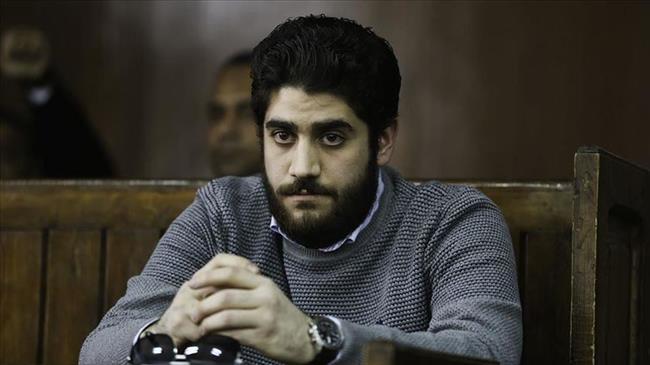
Abdullah Morsi, late son of Egypt’s former president Mohamed Morsi
Press TV – September 8, 2020
A law firm representing the family of Egypt’s late former president Mohamed Morsi concludes that the death of his youngest son, Abdullah, last year was caused by injection of a “lethal substance.”
“Information now disclosed appears to confirm that Abdullah was transported in his car a distance of more than 20 kilometers (12 miles) to a hospital after he took his last breath, as a result of having been injected with a lethal substance,” said a statement by the London-based Guernica 37 International Justice Chambers.
“He was not transferred to nearby hospitals, intentionally, until after he had died,” added the statement cited by the Middle East Eye (MEE) news and opinion website.
The Egyptian government claimed the 25-year-old had died of a heart attack while driving.
The law firm said, “It is quite clear that certain elements of the state were aware of this fact that is only now coming to light.”
Prior to his death, Abdullah had named several individuals, including current Interior Minister Mahmoud Tawfiq and Mohamed Shereen Fahmy, the judge who oversaw the Morsi’s trial, as “accomplices” in the “assassination of the martyr, President Morsi.”
The Egyptian leader died during a trial session at a court in the capital Cairo on June 18, 2019 after spending some six years behind bars, Egyptian authorities say.
Last month, the MEE quoted Morsi’s son Ahmed as saying that the ex-head of state and Abullah were both murdered in a state-sanctioned scheme.
Morsi became Egypt’s first democratically elected president in 2012, one year after a popular uprising led to the ouster of strongman Hosni Mubarak and ended his 30-year rule.
He was deposed in July 2013 in a military coup led by Egypt’s former army chief and current President Abdel Fattah el-Sisi, and was immediately arrested.
The coup was followed by a hugely deadly crackdown on members and supporters of the country’s Muslim Brotherhood, to which Morsi used to be affiliated.
Amazon Drone Deliveries: The Greatest Threat To Privacy Americans Have Ever Seen
MassPrivateI | September 3, 2020
Americans have not seen a greater threat to our privacy than the move towards drone deliveries. This includes Amazon Ring doorbells surveilling families and neighborhoods under the guise of public safety a few years ago.
According to an article in the LA Times, the FAA cannot wait for Amazon to use drones to deliver packages to households across the country.
“This certification is an important step forward for Prime Air and indicates the FAA’s confidence in Amazon’s operating and safety procedures for an autonomous drone delivery service that will one day deliver packages to our customers around the world,” David Carbon, an Amazon vice president who oversees Prime Air, said in a statement.
Amazon joins a growing list of companies using drones to deliver packages to Americans.
“Wing, with partners Walgreens and FedEx Corp., has been conducting limited drone deliveries under a similar FAA approval in Virginia since last year. UPS flies medical supplies within a hospital campus in Raleigh, N.C. Other smaller companies and start-ups are also seeking expanded FAA approvals.”
It has become commonplace for the mass media to pander to Big Tech. In fact the LA Times went out of its way to praise drone deliveries.
“Amazon and other companies hoping to revolutionize the retail world with drones have made significant strides in recent years. They’ve invented new devices and shown, at least on a limited scale, that they’re capable of flying relatively long distances and carrying the payloads necessary for packages.”
One thing became clear after reading approximately 10 news articles about the FAA approving Amazon’s drone delivery fleet. Not a single news article would address the giant elephant in the room: Privacy.
Drone deliveries threaten the privacy of EVERYONE.
What will happen to Americans privacy once private companies begin flying down our streets? Drones will fly over people’s yards while voyeuristic pilots invade everyone’s privacy. Was someone taking a shower or getting undressed in their window? Don’t worry, Amazon will have real-time video of it. Was someone sunbathing in their backyard? Amazon will know.
If someone is smoking marijuana in their home or yard, Amazon will know. When someone is looking at porn on the computer and it’s facing a window, Amazon will know. The list of how delivery drones will destroy everyone’s privacy is nearly endless.
Why would a federal agency be excited to let corporations create drone delivery fleets, besides the obvious privacy concerns?
There are two obvious reasons that come to mind.
Reason number one, once the public accepts delivery drones flying over their homes, law enforcement drones will surely follow.
How long will it take for law enforcement to insist that the FAA allow them to fly drones over people’s homes and backyards, for public safety? How long will it take law enforcement to equip those drones with facial recognition/thermal imaging and license plate readers?
The second reason why the FAA is so excited about drone deliveries is an easy one. It allows law enforcement to subpoena drone footage from delivery companies. I would not be surprised to find out that law enforcement has backdoor access to drone delivery footage.
We have already seen how Amazon’s Ring doorbell service has created a network of neighborhood spies while working hand-in-hand with local law enforcement.
Delivery companies will be morally bound to report suspicious or illegal activity to law enforcement, essentially turning drone delivery pilots into agents of the state.
Is that drone delivery pilot spying on you? Most definitely. Is that drone delivery pilot recording everything they see? Most assuredly. Is that drone delivery pilot reporting what they see to law enforcement? Most certainly.
Is the FAA using drone delivery companies as a tool to advance public surveillance? Unquestionably. Is this the future of America? Undoubtedly, unless we stop drone deliveries now!
Turkish-backed militants steal electricity poles, transmission towers in Syria’s Hasakah: SANA
Press TV – August 31, 2020
Turkish-backed Takfiri militants have stolen electricity poles and transmission towers in the northern sector of Syria’s northeastern province of Hasakah, as they continue to commit various crimes against local populations.
Syria’s official news agency SANA, citing local sources, reported on Monday that the militants have dismantled utility poles as well as pylons in the villages of Matleh, Lazqa and Tal Sakhir in the eastern countryside of the key border town of Ra’s al-Ayn, and transported them to their warehouses in order to sell them to Turkish scrap metal merchants.
The development came only a day after Turkish-sponsored militants stole agricultural machinery, power generators and submersible pumps from farmers in Abah village, which lies southwest of Ra’s al-Ayn.
On October 9, 2019, Turkish forces and Ankara-backed militants launched a long-threatened cross-border invasion of northeastern Syria in a declared attempt to push Kurdish militants affiliated with the so-called People’s Protection Units (YPG) away from border areas.
Ankara views the YPG, which is supported by the White House, as a terrorist organization tied to the Kurdistan Workers’ Party (PKK), which has been seeking an autonomous Kurdish region in Turkey since 1984.
Raqqah homeowners fight against illegal confiscation of their properties
Elsewhere in the northwestern Syrian city of Raqqah, homeowners are battling the illegal confiscation of their properties by US-sponsored militants affiliated with the so-called Syrian Democratic Forces (SDF).
Wael, a local man who fled the city for Homs in 2014 when Daesh Takfiri terrorist group took over Raqqah as its de facto Syrian capital and ruled it with an iron fist under a self-proclaimed caliphate, told London-based online news outlet Middle East Eye that he cannot work out why the house he had lived in for 30 years has now been confiscated by SDF officials.
“I asked some of my neighbors to ask the authorities to give me my house back, but their response was: ‘Why does he live in Homs? Tell him to come, and we can protect him from Daesh’,” he said.
“The ironic thing is that the family who now live in my house is the family of one of SDF’s judges. So if the people who are supposed to be responsible for justice act like this, what hope do we have from the rest of those in power?” the 50-year-old Christian wondered.
Maher, a neighbor who has been trying to help Wael get back his house, said the local population continues to suffer under the SDF’s control.
“The SDF has started to make the same mistakes that Daesh made before them. For example, in our neighborhood alone, SDF has seized 25 out of 64 civilians’ apartments,” he stressed.
Every armed group that takes control of Raqqah is worse than the one before it, Maher said, adding that it was the civilians who bore the greatest brunt of the war.
“SDF started confiscating civilians’ houses about a year and a half ago. These are the same violations that Daesh and the [so-called] Free Syrian Army had carried out in the past,” the father of three noted.
Security conditions are reportedly deteriorating in SDF-controlled areas in Hasakah, Dayr al-Zawr and Raqqah provinces of Syria amid ongoing raids and arrests of civilians by the militants.
Local Syrians complain that the SDF’s constant raids and arrest campaigns have generated a state of frustration and instability, severely affecting their businesses and livelihood.
Residents accuse the US-sponsored militants of stealing crude oil and refusing to spend money on service sectors.
Local councils affiliated with the SDF have also been accused of financial corruption.
Palestinian student Nizar Issa Qaddoumi forcibly kidnapped by Israeli occupation forces
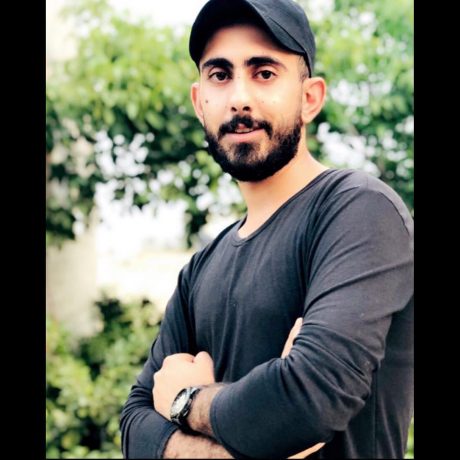
Samidoun Palestinian Prisoner Solidarity Network | August 31, 2020
Israeli occupation forces abducted Nizar Issa Qaddoumi, 26, on the evening of Monday, 31 August, 2020, as he worked at the Al-Natour gas station in Tulkarem. Nizar, a student at Kadoorie – Palestine Technical University, is the latest Palestinian student to be seized by occupation forces in a violent kidnapping.
In the video below, Israeli occupation forces, driving a civilian van and wearing civilian clothes, drive into the gas station. When Nizar approaches them for service, they spring out of the van, attacking, grabbing and beating him over the head while brandishing handguns, presumably threatening Nizar’s Palestinian coworkers. They force Nizar into the back of the van and drive off toward an unknown location – another example of the daily injustices and violence imposed on Palestinian life by Israeli colonialism.
There are currently over 200 Palestinian university students in Israeli prisons, and Israeli occupation forces routinely invade Palestinian university campuses and students’ homes, interrogating them and imprisoning them – either in administrative detention without charge or trial, or by dragging these civilian students before military courts for participating in student activities like campaigns, book fairs and demonstrations on campus.
Samidoun Palestinian Prisoner Solidarity Network urges student organizations and people of conscience around the world to organize for the freedom of Palestinian student prisoners – and all Palestinian political prisoners held in Israeli jails by putting pressure on governments to end their support for the Israeli occupation regime and escalating the boycott of Israel and the corporations that profit from colonialism, such as HP and G4S.
Featured Video

Houthis Don’t Have to Conquer Saudi Arabia to Make It Pay
or go to
Aletho News Archives – Video-Images
From the Archives
A Lesser “Grade” of Human
By Michael Hoffman | Revelation of the Method | January 3, 2024
Will the more than 100 Iranians killed by terrorist bombs today be mourned in the West as victims of terrorism? Certainly not. Allied doctrine has it that the killing of Israeli or American civilians is a crime of cosmic proportions, while shedding the blood of “enemy” women and children is perfectly acceptable; indeed commendable.
The West does not memorialize the hundreds of thousands of civilians bombed by the U.S. in Serbia, Iraq, Afghanistan and every major German city 1943-1945. America’s fire-bombing of the city of Tokyo by General Curtis LeMay in March 1945 was followed by Harry Truman’s atomic incineration of Hiroshima and Nagasaki in August of that year. Truman never had a moment of doubt or regret over the murder of more than a 100,000 Asian children, mothers and non-combatant boys and men. It was business as usual for the “noble” Allies during the “Good War.”
In the West human rights signifies passionate concern only for civilians designated as truly human: Israelis first, then Americans and British, followed by their satraps.
This inhumanity is the legacy of Talmudic ideology, beginning with tractate Sanhedrin 57a from 400 A.D., concerning liability for capital punishment: “If a Jew murders a gentile, he is exempt.”
This teaching of contempt was reiterated in the dogma of Chabad Lubavitch founder Rabbi Shneur Zalman in the 18th century. … continue
Blog Roll
 Aletho News
- Houthis Don’t Have to Conquer Saudi Arabia to Make It Pay
- MOE: Nearly 22,000 Students and Education Workers Killed
- Guterres in Islamabad: Genocide, cowardice, and the cage of Imran Khan
- Johnson, Marandi say Yemen holds upper hand over Saudi Arabia
- False flags won’t save aggressors, Iran FM spokesman says
- The Makkah Pact Enters Into Force: The End of American Dominance or Its New Form?
- NATO’s top generals gather in Kiev
- EU’s continuing expansion – greater threat to Russia
- US Senator Murphy says Pentagon denied him entry to US base in Qatar
- Israel expands “incitement” charge to target Palestinian education and memory
- If Americans Knew
- Three Years of Genocide: How America’s Israel-First Media Filtered Out the Truth
- Israeli war chief briefs ministers on potential war against Palestinian Authority
- New Report: Israel Killed nearly 21,000 Palestinian Students and Education Workers in Past Three Years
- Israel’s flailing chatbot army
- Five Palestinians Killed, Others Injured by Israeli Fire in Gaza
- Israel is rewriting the Palestinian curriculum in East Jerusalem to erase Palestinian identity
- Three years of genocide: Israel turned prisons into killing grounds and torture sites
- Three years of genocide. Words fail. Daily Update
- ‘I’d rather die than go back’: A Palestinian teen’s 10-month nightmare in Israeli jail
- How Jared Kushner’s firm’s investment in an Israeli company could be a major conflict of interest
- No Tricks Zone
- New Study: 50 Years Of The Most Aggressive ‘Net Zero’ Policies Can Only Affect The Global Climate By 0.03°C
- US September “Heat” Was No Record…Many Records Set Decades Ago
- Latest European Green Energy Debacle; Portugal’s Largest Flagship Solar Park Insolvent!
- Green Energy Debacle: German Expert Professor Fritz Vahrenholt Warns Of Severe Economic And Social Consequences
- Two More Paleo Reconstructions Affirm Meters-Higher Sea Levels Across Ireland, Brazil 7000-6000 Years Ago
- New Study: Earth And Venus Surface Warmth Largely Explained By Convection And Lapse Rate, Not CO2 Or Radiation
- 2025 Nature Paper Claiming Worsening Global Drought Gets RETRACTED …Heavily Flawed
- New Study: ‘Global Drought Shows No Detectable Recent Acceleration Under Climate Warming’
- Economic Masterminds: German Socialists Suggest Taxing Productivity Gains Stemming From Using AI
- The South China Sea Has Not Been Cooperating With The Climate Change Narrative

