First COVID-19 Death Reported in Asia’s Largest Slum, Dharavi
teleSUR | April 3, 2020
Asia’s largest slum located in India’s financial capital of Mumbai has reported its first COVID-19 fatality, according to local reports.
The patient, a 56-year-old man, had no travel history and was admitted to a local hospital with a fever on Sunday and tested positive for the new coronavirus on Wednesday, an official of the Brihanmumbai Municipal Corporation (BMC) said, according to Al Jazeera.
The authorities have sealed the building where he lived, which is located in a redeveloped part of the Dharavi slum, local media reported.
Also, seven members of his family were quarantined and tested on Thursday for the virus that causes the COVID-19 disease, the Xinhua news agency said.
Mumbai authorities are concerned over the possible spread of the new coronavirus, as Dharavi is known as the most densely populated slum in Asia. At the same time, a doctor and a worker from a municipal corporation also tested positive.
An estimated 700,000 to 1 million people live crammed in Dharavi – a roughly five-square-kilometer maze of narrow lanes, dilapidated buildings, huts, and open sewers.
Public health experts say it would be difficult to contain the virus if it spread in a slum-like Dharavi where eight to 10 people often share a room.
The population density is about 270,000 per square kilometer, making social distancing almost impossible. Scores of people share water sources and sanitation facilities, Al Jazeera reported.
Dharavi’s cases have raised concern that India may be experiencing community transmission of the disease despite a countrywide lockdown since March 25, as well as exposing the harsh reality and problems of inequality in the country.
For his part, Prime Minister Narendra Modi insisted that “testing, isolation and quarantine” will remain priorities in the coming weeks, ignoring the situation of places like Dharavi, the problems of its population, as well as the needs that have arisen in the public health system in the country.
The death toll due to the COVID-19 in India stands at 62 as of Thursday, according to the latest data, while the number of confirmed cases in the country is around 2,547.
Israel prevents Palestinians from combating COVID-19
By Robert Inlakesh | Press TV | April 3, 2020
As the COVID-19 pandemic death toll grows and the number of those infected creeps past one million confirmed cases, worldwide, the Palestinian health workers of Gaza and the West Bank try desperately to prevent the spread of the virus in the occupied territories. Unfortunately, however, this effort has been severely compromised by the Israeli occupation forces.
An issue almost completely overlooked by Western corporate media, is the issue of Israeli persecution of Palestinians during the ongoing pandemic. This major cover-up comes despite the fact that there is currently round the clock coverage of the impacts of the novel coronavirus.
Israel has continued its brutal policies of mistreatment of Palestinian political prisoners, massive arrest campaigns, break-ins, killings, bombings and even crimes specific to the pandemic, which we are currently living through, such as the destroying emergency clinics which have been set up to deal with the virus outbreak and also the dumping sick Palestinians outside of checkpoints.
If ever there was a time that the world would see unity between the oppressed and the oppressors, it would surely be at a time when the whole world is collectively under attack by an enemy of the collective which is not only infecting and killing people, but destroying the world economy. However, unfortunately, this has not been the case between Palestinians and the Israeli occupation.
Just in the past few weeks alone, Israeli occupation forces have continued arresting and detaining Palestinian minors in both the West Bank and East Jerusalem al-Quds. Also continuing to raid and attack Palestinians who are attempting to self isolate and practice social distancing in order to combat the spread of COVID-19.
On Sunday the 22nd of March, Israeli occupation forces killed a 32 year old Palestinian man, from the village of Nilin (near central Ramallah), in the West Bank. The 32 year old was shot in the head whilst driving his car and according to his family was simply running errands. Since then, dozens more have been shot and severely injured.
Palestinian political prisoners who are currently being held in Israeli prisoners are also fearful for their lives, some announcing hunger strikes over the lack of precautionary measures taken by the Israeli prisons. All Palestinian prisoners will now be essentially in the dark, as social distancing measures are in place, preventing any physical communication with loved ones. On top of this, a recently released Palestinian prisoner has, according to reports, tested positive for the novel coronavirus.
Israeli artillery strikes have also been reported as having hit three different areas inside of the illegally besieged Gaza Strip, just last week. Israel claimed this came after an unspecified number of rockets were fired, no damage was reported inside of Israel however. This bombardment of Gaza ignores the UN global call for ceasefire, which Israel has joined the likes of Saudi Arabia and the United States in already abandoning. Israel has continued running mock raids on Gaza since last week’s airstrikes.
Israel has also been documented as having dumped Palestinians who work in illegal settlements, randomly, outside checkpoints after the workers have displayed signs of sickness. One specific case gathering a lot of attention on social media, the Palestinian Health Ministry later confirmed that the man who had been featured in the video, did not test positive for the virus.
What Israel shows with its dealings with sick Palestinian workers, demonstrates its clearly racist views towards Palestinians, treating Palestinians as if they were animals that can be simply discarded of if they seem to pose a health risk.
According to Israeli Human Rights Organization BTselem, on the 26th of March, the Israeli military stormed the Palestinian village of Khirbet Ibziq, accompanied by a military escort with a bulldozer and two cranes, which they used to demolish an emergency clinic and community housing. The facilities were created to deal with the outbreak of the virus, which the Palestinian Authority, based in Ramallah, are ill-equipped to deal with in the event that the disease becomes more wide spread. The Israeli forces also confiscated equipment being used to combat the spread of COVID-19 on that day.
These are but only a sample of the problems faced by Palestinians under occupation, when it comes to dealing with the outbreak of COVID-19. But without using more examples of racist persecution, it is essential that we ask the question; that if Israel cannot put aside its dehumanizing tactics used against the Palestinian people now and cannot put aside its racism during a global pandemic, what will defeat this divisive mentality of the occupier?
India introduces new Kashmir domicile law, raising fears of demographic manipulation
Press TV – April 2, 2020
India has introduced a new law that would make its citizens eligible to become permanent residents of the Indian-administered Kashmir, raising fears of demographic change in the Muslim-majority, Himalayan region.
The new law, which was announced by the Indian Ministry of Home Affairs on Wednesday and which reportedly is not subject to parliamentary review, will deem any person who has resided in the Indian-controlled Kashmir for a period of 15 years or studied at certain school grades there as “domicile” of the territory.
The new law will also provide domicile status to the children of central government officials who have served in the Indian-controlled Kashmir for a total period of 10 years.
It will also open local jobs to non-residents.
The introduction of the law comes almost eight months after the Indian government stripped the disputed region of its limited autonomy. On August 5 last year, New Delhi revoked Article 370, a constitutional provision that had come into effect in 1949 and had granted special status to Kashmir, allowing it to have its own flag and constitution, among other rights.
In the lead-up to the revocation, India sent thousands of additional troops to the disputed region, imposed a curfew, arrested political leaders, and shut down telecommunication lines.
The new law also comes as the country of 1.3 billion people is under a 21-day lockdown in an attempt to prevent the spread of the new coronavirus, raising speculation that the timing is intentional.
Legalizing settlements?
Residents in the Indian-controlled Kashmir fear that the new law would alter the demographic status of the region, with experts saying it will lead to “demographic flooding.”
“It is a lot to circumvent the law. I think it illustrates clearly that some will not stop from politicking during coronavirus [epidemic],” Siddiq Wahid, a political analyst based in the Indian-controlled Kashmir, said.
“Obviously it is an attempt to change the demographics, not only change but flood it. It will lead to demographic flooding,” Wahid said, according to Al Jazeera.
Sheikh Showkat Hussain, a professor of legal studies based in the region, said the move had already been in the offing.
“The whole purpose of revoking Article 370 was to settle outsiders here and change the demography of the [Jammu and Kashmir] state. Now this provides the modalities and entitles so many categories of Indians whose settlement will be legalized over here.”
India’s ruling Hindu-nationalist Bharatiya Janata Party (BJP) has denied that the new law is an attempt to change the demography of the region.
Kashmir has been split between India and Pakistan since partition in 1947. Both countries claim all of Kashmir and have fought three wars over the territory.
Meanwhile, Muslims elsewhere in India have also been facing abuse and violence.
How It Starts
By Craig Murray | April 1, 2020
The brevity of this post is out of proportion to the enormous importance of the subject. But I want to let you know I am thinking and working on it.
It is a recognised pattern for dictatorship to commence with emergency measures designed to combat a threat. Those emergency measures then become normalised and people exercising arbitrary power find it addictive. A new threat is then found to justify the continuation
It is by no means clear to me that it is a rational response to covid-19 to tear up all of the civil liberties which were won by the people against authority through centuries of struggle, and for which people died. To say that is not to minimise the threat of covid-19. It is also worth pointing out that a coronavirus pandemic was a widely foreseen eventuality. People keep sending me links to various TV shows or movies based on a coronavirus pandemic, generally claiming this proves it is a man-made event. No, that just proves it is a widely foreseen event. Which it is.
The lack of contingency preparedness is completely indefensible. It is partly a result of the stupidity of Tory austerity that has the NHS permanently operating at 100% capacity with no contingency, and partly the result of the crazed just-in time thinking that permeates management in all spheres and eliminates the holding of stock.
It is incredible to me that the UK is willing to throw away some £220 billion and rising on Trident against a war scenario nobody can sensibly define, but was not willing to spend a few million on holding stock of protective clothing for the NHS against the much more likely contingency of a pandemic. What does that say about our society?
Anyway, we are where we are. Nobody knows how deadly this virus is. There have not been, anywhere, sufficient reliable large general population samples to know what percentage of people who get the virus will die. We just do not know how many people in the UK have had it and not got seriously ill. My suspicion is that in a couple of years time it will be discovered the mortality rate was under 1%. But I do not know, and I do not blame the government for making worst assumptions in the absence of reliable scientific evidence. Personally, I am obeying lockdown and would advise others to do so too until the situation is clearer. But I do not want to see the police harassing people for going on a long walk or posting a letter. It really is a problem to have police empowered to stop and question a citizen for just walking in the street. It is also a problem that Peter Hitchens is being reviled for saying, in essence, little more than that. When you can’t criticise restrictions on liberty, you know society has entered a very dark phase indeed.
I would feel much more comfortable if they were open about what they do not know. All the excuses for not testing people rather than admit they did not have the tests rather rattles trust. The ability of the rich and well-connected to access tests also rattles trust.
But none of this justifies rule by fiat – if Parliament cannot sit, I personally believe it would benefit the nations of the UK to have no new laws for a while. There are too many laws already. It does not justify banning political gathering. I don’t recommend anyone to gather, and I don’t imagine they would gather, but the evil of banning political activity is much more serious than the danger of four lonely people in Solihull getting together to talk about coronavirus restrictions.
It certainly does not justify banning jury trials, which the Scottish government has just dropped from today’s Bill after a revolt led by Joanna Cherry. The bill still weakens the defence in trials by allowing pre-taped video evidence and dispensing with the right to cross-examine. If the accusers had been allowed to get away with their lies in the Alex Salmond trial without cross-examination, the result might have been very different. For God’s sake, if you cannot do justice, suspend it. Do not dispense rough justice.
Scotland’s “Sinister” Covid19 Response – Suspend Trial by Jury
Coronavirus (Scotland) Bill removes and undermines hard-won legal protections

OffGuardian | March 31, 2020
The new legal powers sought by Scotland’s devolved law-makers undermine ideas of justice in place for hundreds of years, according to the Scottish Criminal Bar Association.
The new Coronavirus (Scotland) Bill grants sweeping powers to Nicola Sturgeon and the Scottish Parliament, and makes dramatic changes to the criminal justice system.
Among a long list of changes, the Bill seeks to:
- Replace trial by jury with bench trials, presided over by a Judge or local Sheriff
- Remove the maximum time of 140 days an accused can await trial
- Relax hearsay evidence law, allowing judges to hear pre-recorded witness statements that are not open to cross-examination
The new rules, unlike similar Diplock rules used in Northern Ireland in 1970s, do not guarantee an automatic right of appeal.
The Scottish Judiciary claims these powers are vital to protecting people from potential coronavirus infections, whilst following the European Convention on Human Rights requirements for an “effective justice system”.
But the Scottish Criminal Bar Association strongly disagrees.
In a statement on their website, SCBA President Ronnie Renucci QC wrote:
The SCBA believes that these draconian measures seeking to bring about seismic changes to our system of justice are premature, disproportionate and ill-advised. They are at best a knee-jerk reaction to an as yet unquantified problem instigated by panic or at worst, something far more sinister.
A long-form response, going point-by-point through the bill is available here.
Will other countries follow Scotland’s example? It remains to be seen. We will no doubt be discussing this unsettling development more in the future.
Yemen’s Al-Houthi offers to exchange Saudi pilots for Hamas prisoners
MEMO | March 27, 2020
The leader of Yemen’s Houthi movement, Sayyid Abdulmalik Al-Houthi, has made an offer to release Saudi captives in exchange for members of the Palestinian resistance movement, Hamas, being held in Saudi Arabia.
“We are fully prepared to release one of the captured pilots along with four Saudi officers and soldiers,” Al-Houthi said in a televised speech on Al-Masirah. “This will be in exchange for the release of those from Hamas arrested in the Kingdom of Saudi Arabia.”
Last September, Saudi detained 81-year-old Dr Muhammad Saleh Al-Khodari, a prominent member of Hamas who has served as the movement’s officially-acknowledged representative in the Kingdom for 20 years. He was also the head of Hamas’s General Shura (Consultative) Council.
Earlier this month it was reported that the Saudis were preparing to prosecute Palestinians held in its prisons. Al-Khodari and his son, Hani, are among the detainees. Their arrests on “terrorism” charges are seen by some to be politically-motivated following Saudi Arabia’s increasing normalisation of relations with Israel under de facto ruler Crown Prince Mohammad Bin Salman.
Last week the Head of the Hamas Political Bureau, Ismail Haniyeh, urged King Salman Bin Abdulaziz to release the Palestinian prisoners, citing health concerns given the spread of coronavirus Covid-19.
Senior Hamas official Mahmoud Al-Zahar welcomed the proposal by the Houthis: “The initiative of the leader of Ansar Allah has pleased the hearts of all Palestinian resistance fighters,” he was reported as saying by Al Mayadeen.
A statement by Hamas also expressed appreciation for the solidarity and support shown by the Houthis: “We greatly appreciate the spirit of brotherhood and sympathy with the Palestinian people and support for their steadfastness and resistance. We express our thanks for this interest and this self-initiative.”
Speaking on the fifth-anniversary of the US-backed, Saudi-led coalition’s war on Yemen yesterday, Al-Houthi said, “Unfortunately, the regimes of Saudi Arabia and the United Arab Emirates have presented [themselves] as worse than Israel.”
Al-Houthi also said that his movement is “ready for peace and stopping the war if the aggressor is serious about stopping the aggression and siege.” He vowed that the sixth year of the conflict will involve “advanced military capabilities” and will entail new surprises for the coalition. “The general evaluation and studies confirm that the economic losses of the Saudi regime are great and its ambitions have failed,” he added.
The Truth About the United States’ “Continuity of Government” Plans & The Coronavirus Perfect Storm
By Whitney Webb | The Last American Vagabond | March 23, 2020
WASHINGTON DC — Last week, Newsweek published a report entitled “Inside The Military’s Top Secret Plans If Coronavirus Cripples the Government,” which offers vague descriptions of different military plans that could be put into effect if the civilian government were to be largely incapacitated, with a focus on the potential of the current novel coronavirus (COVID-19) pandemic to result in such a scenario.
The article’s author, William Arkin, largely frames these plans as new, though — buried deep within the article — he eventually mentions that such contingency plans can be traced back to the Eisenhower administration (though they were in place before) and have since been developed and updated by most subsequent administrations, largely through the issuance of executive orders. Arkin also points out that some of these “Continuity of Government”, or COG, plans include the “devolution” of leadership and Constitutional authority, which he notes “could circumvent the normal Constitutional provisions for government succession, and military commanders could be placed in control around America.”
Yet, there are key aspects of COG and its development that Arkin leaves out. For instance, in his timeline on how such plans have developed in the post-World War II era, he conveniently fails to mention any of the Reagan administration’s major changes to COG, including the Reagan-era Executive Order on which all current COG programs are based. Indeed, many of the “extra-Constitutional” aspects of COG that Arkin mentions began during the Reagan administration, when these plans were redrafted to largely exclude members of Congress, including the Speaker of the House, from succession plans and even moved to essentially eliminate Congress in the event of COG being implemented, with near total power instead being given to the executive branch and the military. It was also during this time that the “devolution” aspect of COG was hammered out, as it created three president-cabinet “teams” to be stationed in different parts of the country outside of the nation’s capital. Arkin’s decision to not mention how COG was a major focus of the Reagan administration is striking given that that administration poured hundreds of millions of dollars annually into COG planning and development and also conducted COG drills on a regular basis.
Furthermore, the Miami Herald revealed in 1987, that the COG programs of that era were deeply connected to what the Herald termed “a virtual parallel government outside the traditional cabinet departments and agencies” that began operating “almost from the day Reagan took office” and included many of Reagan’s closest advisers, including then-CIA Director William Casey. The Herald further claimed that this “parallel government” had been responsible for the Iran-Contra scandal (i.e. “involved in arming the Nicaraguan rebels”) as well as “the drafting of martial law plans for national emergencies,” i.e. COG, as well as “the monitoring of U.S. citizens considered potential security risks.”
Other key players in those Reagan-era COG developments, such as former Vice President Dick Cheney, former CIA Director James Woosley and former Secretary of Defense Donald Rumsfeld, are also left unmentioned in Arkin’s article. Not mentioning Cheney and Rumsfeld are particularly glaring omissions given that they were involved in the implementation of aspects of those COG plans that went live in the wake of the September 11 attacks, when both men were serving in key posts in the George W. Bush administration.
While Arkin’s omission of the role of the Reagan administration and leading neoconservatives in the development and use of COG is significant, arguably more significant is his failure to mention one of COG’s major components, one that has gone essentially unmentioned by well-known media outlets for well over a decade – Main Core.
The government’s database of “potential troublemakers”

When Reagan issued Executive Order 12656, he created COG plans that could be implemented during “any national security emergency,” which the E.O. loosely defined as “any occurrence, including natural disaster, military attack, technological emergency, or other emergency, that seriously degrades or seriously threatens the national security of the United States.” E.O. 12656 also put the National Security Council (NSC) in charge of developing and administering COG policies. The NSC official placed in charge of this “secret” COG program was Oliver North, whose name would later become infamous for the key role he played in the Iran-Contra Scandal. During the Iran-Contra hearings in the late 1980s, then-Representative Jack Brooks (D-TX) attempted to ask the following question to North: “Colonel North, in your work at the NSC, were you not assigned at one time to work on plans for the continuity of government in the event of a major disaster?” Brooks, however was immediately cut off by Senator Daniel Inouye (D-HI), who stated ” I believe that question touches upon a highly sensitive and classified area, so may I request that you not touch upon that, sir.” Brooks protested, but North was ultimately not required to give an answer.
As the de facto leader of COG development and planning during the Reagan administration, North oversaw the creation of a controversial database that later became known simply as “Main Core.” The Main Core database, first built using the stolen PROMIS software (more information on PROMIS here and here), was essentially a list of American dissidents and “potential troublemakers.” A senior government official with a high-ranking security clearance and service in five presidential administrations described the database to journalist Chris Ketcham in 2008 as follows:
“A database of Americans, who, often for the slightest and most trivial reason, are considered unfriendly, and who, in a time of panic might be incarcerated. The database can identify and locate perceived ‘enemies of the state’ almost instantaneously.”
In 1993, Wired magazine stated that:
“Using PROMIS, sources point out, North could have drawn up lists of anyone ever arrested for a political protest, for example, or anyone who had ever refused to pay their taxes. Compared to PROMIS, Richard Nixon’s enemies list or Sen. Joe McCarthy’s blacklist look downright crude.”
Main Core is the aspect of COG that is most often ignored in reporting on these types of plans, with Arkin’s article being just a more recent example. While most of the rare mentions of COG in the mainstream touch on how those plans would result in the implementation of martial law and the suspension of the Constitution, they even more rarely — if ever — mention Main Core. Indeed, the last “mainstream” reports on Main Core were written over a decade ago — all in 2008 — by Chris Ketcham in Radar, by Scott Horton in Harpers and by Tim Shorrock in Salon.
Given that COG is now creeping back into mainstream reporting, revisiting Main Core is essential as the database still exists and has grown considerably since Oliver North first oversaw its creation in the early 1980s. In Ketcham’s 2008 article on the subject, he quotes then-senior government officials who said that, at the time, the number of “unfriendly” Americans on that database was approximately 8 million. Ketcham further notes that, in the event COG is implemented, these individuals could be subject to anything ranging from “heightened surveillance and tracking to direct questioning and possibly even detention.”
Tim Shorrock, in his coverage of Main Core, noted that the database was seen in use at the White House following the September 11 attacks and there is strong evidence pointing to it having been used by the George W. Bush administration to guide its domestic surveillance activities in the post-9/11 era. A government official who had told a reporter about having seen the database operational at the White House following September 11th “turned white as a sheet” when the reporter mentioned the name “Main Core” specifically. Shorrock’s reporting also details how Main Core includes vast amounts of information on those “unfriendly” Americans, including the fruits of the vast domestic surveillance programs of the NSA and other U.S. federal agencies that continue today and are now set to be expanded due to the current coronavirus crisis.
In a report written last year on the involvement of U.S. and Israeli intelligence and their private sector allies in pushing for new, troubling pre-crime programs, I noted that Main Core is not only available to U.S. intelligence but also Israel’s intelligence apparatus and that Israeli intelligence was involved in the creation and expansion of Main Core. That report also detailed how Main Core was used by members of Reagan’s NSC to blackmail members of Congress, a practice that is likely to have continued under subsequent administrations. It also noted how Main Core today likely involves the same software now used by every U.S. intelligence agency and numerous other federal agencies that is marketed by Palantir, a company created and owned by Trump ally Peter Thiel. Palantir’s software boasts “predictive policing” capabilities and tracks a category of person using the label “subversive,” very much in keeping with the spirit of Main Core.
Main Core and Bill Barr’s Power Grab

Though Main Core was reportedly in use after September 11 to target “unfriendly” individuals for increased domestic surveillance, concern that COG plans in the age of coronavirus could take a more drastic turn and involve the detention of Americans included in that database now seems more plausible than ever. On Saturday, Politico reported that the Department of Justice has demanded new “emergency powers” during the current pandemic and these powers include being able to indefinitely detain Americans without trial. Politico also noted that the DOJ’s controversial new requests “span several stages of the legal process, from initial arrest to how cases are processed and investigated.” Per the DOJ’s requests, indefinite detention would emerge through a new ability whereby the Attorney General or a judge could pause court proceedings whenever courts are “fully or partially closed by virtue of any natural disaster, civil disobedience, or other emergency situation.”
What Politico did not include in its report is that current Attorney General William Barr has spent the past several months fine-tuning and implementing a “pre-crime” program. Officially known as the “National Disruption and Early Engagement Program” (DEEP), it aims to “identify, assess and engage” potentially violent individuals “before they strike.” Barr first announced this program last October in an official memorandum and therein stated that the program was to be implemented sometime over the course of 2020 and would involve “an efficient, effective and programmatic strategy to disrupt individuals who are mobilizing towards violence, by all lawful means.”
A training conference for that program took place this past December and involved members of the Department of Justice, Federal Bureau of Investigation and “private sector partners.” One recent DOJ statement regarding an arrest made last year in Nevada, claimed that that specific case was part of the DOJ’s “National Disruption and Early Engagement Program,” suggesting that this program is already in use — at least in some parts of the country.
In his memorandum, Barr further notes that the program’s “early engagement tactics” were “born of the posture we adopted with respect to terrorist threats” following the September 11 attacks, essentially stating that this pre-crime program will utilize methods from the “War on Terror” domestically and on a massive scale.
Given the context of the current coronavirus crisis, the DOJ’s recent request for sweeping new powers and the role of Main Core in COG plans, one part of Barr’s pre-crime memorandum stands out. In the part of the document where Barr outlines what actions will be taken once an individual is deemed potentially violent or threatening, he writes that those individuals will be subject to detention, court-ordered mental health treatment and electronic monitoring, among other measures.
The possibility of pre-crime detention was also present in the DOJ’s recent request for new “emergency powers” in light of the coronavirus crisis, as it specifically asks that those new powers apply to “any statutes or rules of procedure otherwise affecting pre-arrest, post-arrest, pre-trial, trial, and post-trial procedures in criminal and juvenile proceedings and all civil process and proceedings.” Norman L. Reimer, executive director of the National Association of Criminal Defense Lawyers, told Politico that the inclusion of the term “pre-arrest” likely means that “you could be arrested and never brought before a judge until they decide that the emergency or the civil disobedience is over. I find it absolutely terrifying.”
Thus, if DOJ is granted these new powers it has requested, the William Barr-led Department of Justice will not only be authorized to indefinitely detain Americans without trial, it will be able to detain them without any proof of those detainees having committed a crime or even having plans or the intent to commit a crime. Instead, the DOJ only needs to argue that the individual was “mobilizing towards violence,” an extremely vague phrase that could potentially be used against anyone who expresses discontent with the government or government policy.
Furthermore, with the FBI having recently flagged “conspiracy theorists” (and by extension those who distrust or question government narratives of both past and present) as a “domestic terror threat,” the DOJ could even make the case that failure to blindly trust government narratives presents a threat to the public order. Given that the Main Core database in its current form contains bulk surveillance gathered from social media, phone conversations/messaging apps and even financial information (i.e. purchasing history, etc.) on Americans deemed unfriendly “often for the slightest and most trivial reason,” this unprecedented power grab by the DOJ has an authoritarian and Orwellian potential to target legitimate dissent like never before.
With the specter of COG now snaking its way into mainstream discourse during the coronavirus crisis, it is essential that Americans stay vigilant, as these Orwellian and dystopian “solutions” to allegedly protect us from the current pandemic have been in place long before COVID-19 made its appearance on the world stage or landed on U.S. shores.
It is also essential to remember that COG, Main Core and the DOJ’s pre-crime program were all created and are currently controlled by extremely corrupt and fundamentally untrustworthy individuals who have not only been involved in, innumerable scandals, over the years, but have also installed and supported some of the most authoritarian, savage and horrific dictators the world has ever seen. To trust them with such unprecedented and dangerous powers in a period of national confusion and panic is tantamount to beckoning the horrors of those dictatorships — past and present — to come home to roost.
Its coronavirus response provides more evidence of Israel’s racism
By Motasem A Dalloul | MEMO | March 25, 2020
The coronavirus Covid-19 has spread around the world, with 372,757 confirmed cases and 16,231 deaths according to an updating dashboard run by the World Health Organisation. The Director-General of the WHO, Dr Tedros Adhanom Ghebreyesus, has said that it is “deeply concerned both by the alarming levels of spread and severity” of the virus.
This severity has pushed many countries to put hostilities aside and work together against the virus. Strict measures have been imposed to curb its spread and protect humanity: large gatherings have been banned; schools and universities have been closed; congregational prayers in places of worship have been suspended; and some countries have even released prisoners.
In Israel, however, the response to the virus has simply emphasised its officially-sanctioned racism. For example, on 20 March, the Times of Israel reported that Internal Security Minister Gilad Erdan had decided to release 500 Israeli prisoners into house arrest in an effort to reduce the risk of a coronavirus outbreak in the country’s prisons. Erdan apparently accepted the recommendation of acting Israel Prison Service chief Asher Vaknin. Not a single one of the 5,000 Palestinian prisoners held by Israel — including 180 children, 43 women and 430 detained with neither charge nor trial —is being released, though, not even those with critical health conditions.
According to the Palestinian Prisoners’ Club (PPC), at least four Palestinian prisoners held by Israel has tested positive for coronavirus. However, the Israeli occupation authorities deny this. The PPC pointed to the restrictions imposed by Israel on reporting news from its prisons, so it is in any case unlikely to make such an admission.
Rights group Addameer noted that the Israel Prison Service has banned visits to Palestinian prisoners by family members and lawyers since the outbreak of the virus instead of providing them with hygiene and cleaning materials essential to curb its spread. No other measures appear to have been implemented to protect the prisoners.
“Palestinian prisoners in Israeli prisons and detention centres constantly suffer from clear medical negligence,” explained Addameer. The situation has not changed since the outbreak of the virus. “Despite the fact that prisons are overcrowded and rooms, cells and sections are small, and lack proper ventilation, the IPS is yet to make clear preventive procedures… The prisons lack sterilisers, cleaning materials, and medications such as antibiotics and necessary nutrition.”
Last Thursday, the Palestinian prisoners threatened to launch a hunger strike if measures to protect them against the virus are not implemented. The occupation authorities did nothing for them, prompting them to begin gradual protest action.
The second evidence of Israel’s inherent racism is the inhumane treatment of a Palestinian worker who was thought by Israelis to have contracted coronavirus when he came down with flu-like symptoms. A video on social media showed him being dumped at Israel’s Sira/Maccabim military checkpoint near the occupied West Bank city of Nablus.
The man spoke to Palestinian and Israeli journalists about the incident. He explained that he had suffered from fever and his condition developed to into a normal flu. His employer took him to Ichilov Hospital in Tel Aviv, where he was tested for the coronavirus, but before the result was known, police officers arrived, handcuffed him and took him to the checkpoint where he was dumped; he then collapsed.
While the occupation authorities ordered Israeli employees to stay at home, they decided to block thousands of Palestinian workers in their work places regardless of the measures being taken against the spread of the coronavirus. When a Palestinian worker was thought to have contracted the virus, the Israelis dealt with him with neither compassion nor mercy. Such words are not in the Israeli vocabulary when it comes to dealing with Palestinians.
Other incidents have occurred over the past few weeks, but these two suffice to illustrate Israeli racism.
To conclude, take note of the words of UN Special Rapporteur for the situation of human rights in Palestine, Michael Lynk, who voiced his concerns about Israel’s racism when he observed that the official Israeli publications to increase awareness about the disease were issued “exclusively in Hebrew”.
“This serious imbalance is apparently being addressed after protests, but it highlights the importance of ensuring equality of treatment,” stressed Lynk. “The legal duty, anchored in Article 56 of the Fourth Geneva Convention, requires that Israel, the occupying power, must ensure that all the necessary preventive means available to it are utilised to ‘combat the spread of contagious diseases and epidemics’.”
Yet again, and to the surprise of nobody, least of all the Palestinians, the Israelis are simply ignoring international laws and conventions. And, as usual, the effects could be deadly for the people of occupied Palestine.
As the world turns its attention to the pandemic, Israel is moving forward with military raids

By Lucas Leiroz | March 25, 2020
The West Bank situation is becoming increasingly complicated amid the coronavirus pandemic and territorial disputes between Palestinians and Israelis. At first, the Palestinian Authority and Israel showed signs of cooperation in combating the pandemic. A few weeks ago, joint measures were announced between both sides to contain the epidemic of the new coronavirus in the region. The measures include distribution of cleaning and personal hygiene materials, in addition to virus testing kits and medical equipment.
On the part of Tel Aviv, the total closure of the West Bank was promoted, allowing, however, access for Palestinian workers involved in the construction and agriculture sectors to the Jewish state, which is why the proposal was well accepted by Ramallah. On the part of the Palestinians, the West Bank has also been blocked, but only partially and for two weeks, since last Sunday (March 22), in addition to the implementation of a series of control and quarantine measures.
However, efforts to contain the pandemic have not prevented Israeli incursions into the region, which have increased recently. Ibrahim Melhim, a spokesman for the Palestinian Authority, acknowledged Israeli efforts to contain the coronavirus in the country and in Palestine, but criticized the unstoppable incursions against the Palestinians. “We have very strong round-the-clock coordination with the Israeli side to prevent the coronavirus from spreading (…) At the same time, Israel continues to operate in the Palestinian Territories as if there is no coronavirus crisis (…) They [Israeli forces] continue their raids across the West Bank, arresting people and confiscating lands, and that harms the existing coordination between the PA and Israel putting an additional burden on the Palestinian Authority,” said the spokesman.
Apparently, Israel pretends to collaborate with Palestine to stop the pandemic, when, in fact, it freely promotes its military maneuvers in the region, which go unnoticed by the mainstream media, strongly focused on covering the viral tragedy. In addition, Tel Aviv’s own collaboration to control COVID-19 in the region seems extremely limited. The blocking measures made it impossible, for example, for doctors from the “Physicians for Human Rights” (an Israeli NGO that serves Palestinians free of charge) to move alongside the West Bank, clearly hampering medical care in the region.
Mention should also be made of the fact that Israel, not Palestine, is the major focus of infections by the new coronavirus in the region. Israel has already more than 1,000 officially reported cases of the disease, in addition to one death, and several suspicions. In contrast, Palestine has around 60 infected people. It is clear from these data that the most stringent containment measures should come exclusively from Ramallah, since the Israeli military presence in the region itself poses a serious risk to Palestinian public health.
According to a survey by the Truman Institute for Peace at the Hebrew University of Jerusalem, 63% of Israelis say Israel must help Palestinians during the coronavirus crisis. Vered Vinitsky-Serousse, president of the Institute, said that “the majority of Israelis believe that, when necessary, the government should devise preventive measures to help Palestinians during the Covid-19 epidemic.” The big problem, however, is how these joint maneuvers are conducted. Perhaps the first step to be taken in establishing joint measures is the definitive and immediate end to military incursions in the region, which constantly bring insecurity and terror to the Palestinian people.
The situation of tensions in the region must still be read in the context of the so-called “Deal of the Century”, the “peace” proposal for the conflict between Israelis and Palestinians announced by American President Donald Trump. The “agreement” was celebrated unilaterally by the Washigton-Tel Aviv axis, with no participation of Palestinians, which is why it was rejected by the Palestinian Authority and the Arab League. The document foresaw the annexation of Israeli settlements in the West Bank, leaving around 70% of the region under Palestinian rule – a figure much lower than that proposed by all previous attempts to resolve the conflict. Everything indicates that Israel will not stop its attempts to occupy that territory as much as possible.
It is in this context that the “joint” actions between Israelis and Palestinians must be analyzed with skepticism and suspicion. Are these pandemic containment measures really good, even when behind them the Israeli army expands its occupation in the region with increasingly aggressive incursions? Also, to what extent does Palestine benefit from the help of these joint actions when Israel has an absurdly greater number of infected people? Would Israel be able to help the Palestinians? Or would that aid be a mask for such military incursions? All of these are valid questions.
It is also worth remembering that a few weeks ago, at the end of February, Israel announced the construction of more than 2,000 new settlements in Palestinian territories – and on the same occasion, Netanyahu authorized the construction of other 7,000 units in the East Jerusalem region. These data mean that Israel’s aggressiveness against the Palestinians was increasing recently. Did this aggression really disappear from Tel Aviv’s plans in the face of a “commotion” with public health in Palestine (which is much better than the situation in Israel)? Perhaps, the mainstream media and Human Rights observers should divide their attention between the coronavirus and the conflict in Palestine, before more serious clashes erupt.
Lucas Leiroz is a research fellow in international law at the Federal University of Rio de Janeiro.
Sanctions on Iran, Others Facing Coronavirus Must Be Urgently Re-evaluated: UN
Al-Manar | March 25, 2020
The United Nations rights chief says any sanctions imposed on Iran, among other countries grappling with the coronavirus pandemic, should be “urgently re-evaluated” to support lives of millions of people worldwide.
“At this crucial time, both for global public health reasons, and to support the rights and lives of millions of people in these countries, sectoral sanctions should be eased or suspended,” Michelle Bachelet said in a statement on Tuesday.
She warned, “In a context of global pandemic, impeding medical efforts in one country heightens the risk for all of us.”
She stressed the importance of giving broad and practical effect to humanitarian exemptions from sanctions measures “with prompt, flexible authorization for essential medical equipment and supplies.”
Bachelet pointed in particular to the case of Iran, one of the hardest-hit countries by the pandemic, and said the COVID-19 outbreak was also spreading to neighboring Afghanistan and Pakistan.
She said even before the pandemic, human rights reports had repeatedly emphasized the impact of sectorial sanctions on Iran’s access to essential medicines and medical equipment, including respirators and protective gear for healthcare workers.
Nearly 500,000 people worldwide have been infected and over 17,000 have died of the viral disease, according to the latest tallies.
Iranian Health Ministry spokesman Kianoush Jahanpour said on Tuesday that the number of coronavirus deaths had risen to 1,934 and the total infections to 24,811 during the past 24 hours.
“There have been 122 new deaths and 1,762 new infections since Sunday,” he said. Jahanpour further put the number of patients who have recovered from the viral disease at 8,913.
US President Donald Trump reinstated Washington’s sanctions on Iran in May 2018 after he unilaterally left the 2015 nuclear deal, known as the Joint Comprehensive Plan of Action (JCPOA), signed between Iran and major world powers.
The International Court of Justice (ICJ) — known as the World Court — has ordered the White House to lift the sanctions it has illegally re-imposed on humanitarian supplies to Iran.
The US claims the bans do not get in the way of food and medicine exports to Iran, but the Islamic Republic says Washington has been working to make problems for a Swiss humanitarian channel launched to enable the transfer of commodities to Iran.
In a phone conversation with Tunisian President Kais Saied on Monday, Iran’s President Hassan Rouhani said the United States’ move to prevent the dispatch of medical and humanitarian aid and the facilitation of banking interactions to meet the Iranian people’s needs suffering from the deadly new coronavirus contravenes human and the United Nations regulations.
Rouhani said the US administration has intensified its cruel measures and sanctions against the Iranian people even under the current difficult conditions caused by the virus outbreak.
Palestinian Worker Dumped at Israeli Checkpoint for Exhibiting Coronavirus Symptoms
PNN | March 24, 2020
Yesterday, Israeli occupation forces threw a worker by the side of the road at the “Beit Sira” checkpoint near the city of Nablus, over suspicion of him being infected with the novel Corona virus.
Locals filmed the man and called the medical crews who rushed to save the worker, who was left at the road, unable to move, for around three hours with high temperature.
He was rushed to the National Hospital of Nablus.
Government spokesman Ibrahim Melhem said in his daily briefing on Tuesday morning that the sample of the worker showed that he was not infected with corona-virus.
Consequently, Melhem warned the Palestinian workers from going to the occupation workshops, where they are subjected to inhuman treatment and living conditions.
In the press conference as well, Melhem also announced that a woman was infected with Corona virus while returning to Ramallah from the United States, bringing the number of infected people to 60, including 16 recovered cases.
Melhem also confirmed that the samples taken for a citizen from Kufur Aqab and those in contact with an infected man have not yet emerged.
He added that the health condition of the patients in Bethlehem is stable and all of them are under health supervision.
Suspending the Constitution: Police State Uses Crises to Expand Its Lockdown Powers
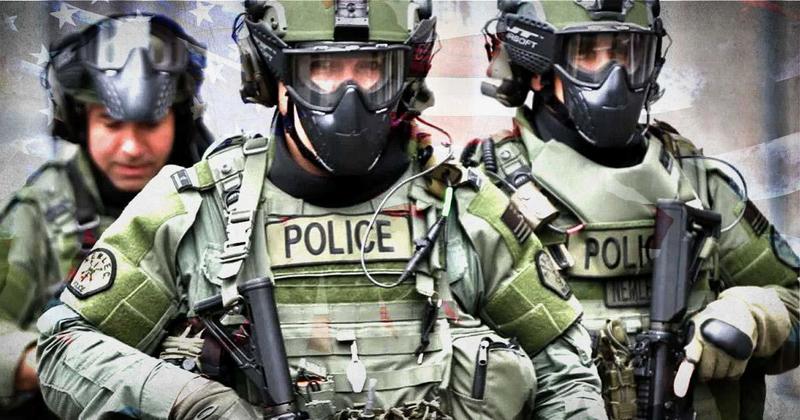
By John W. Whitehead | Rutherford Institute | March 24, 2020
You can always count on the government to take advantage of a crisis, legitimate or manufactured.
This coronavirus pandemic is no exception.
Not only are the federal and state governments unraveling the constitutional fabric of the nation with lockdown mandates that are sending the economy into a tailspin and wreaking havoc with our liberties, but they are also rendering the citizenry fully dependent on the government for financial handouts, medical intervention, protection and sustenance.
Unless we find some way to rein in the government’s power grabs, the fall-out will be epic.
Everything I have warned about for years—government overreach, invasive surveillance, martial law, abuse of powers, militarized police, weaponized technology used to track and control the citizenry, and so on—has coalesced into this present moment.
The government’s shameless exploitation of past national emergencies for its own nefarious purposes pales in comparison to what is presently unfolding.
It’s downright Machiavellian.
Deploying the same strategy it used with 9/11 to acquire greater powers under the USA Patriot Act, the police state—a.k.a. the shadow government, a.k.a. the Deep State—has been anticipating this moment for years, quietly assembling a wish list of lockdown powers that could be trotted out and approved at a moment’s notice.
It should surprise no one, then, that the Trump Administration has asked Congress to allow it to suspend parts of the Constitution whenever it deems it necessary during this coronavirus pandemic and “other” emergencies.
It’s that “other” emergencies part that should particularly give you pause, if not spur you to immediate action (by action, I mean a loud and vocal, apolitical, nonpartisan outcry and sustained, apolitical, nonpartisan resistance).
In fact, the Department of Justice (DOJ) has been quietly trotting out and testing a long laundry list of terrifying powers that override the Constitution.
We’re talking about lockdown powers (at both the federal and state level): the ability to suspend the Constitution, indefinitely detain American citizens, bypass the courts, quarantine whole communities or segments of the population, override the First Amendment by outlawing religious gatherings and assemblies of more than a few people, shut down entire industries and manipulate the economy, muzzle dissidents, “stop and seize any plane, train or automobile to stymie the spread of contagious disease,” reshape financial markets, create a digital currency (and thus further restrict the use of cash), determine who should live or die…
You’re getting the picture now, right?
These are powers the police state would desperately like to make permanent.
Bear in mind, however, that these powers the Trump Administration, acting on orders from the police state, are officially asking Congress to recognize and authorize barely scratch the surface of the far-reaching powers the government has already unilaterally claimed for itself.
Unofficially, the police state has been riding roughshod over the rule of law for years now without any pretense of being reined in or restricted in its power grabs by Congress, the courts or the citizenry.
The seeds of this present madness were sown several decades ago when George W. Bush stealthily issued two presidential directives that granted the president the power to unilaterally declare a national emergency, which is loosely defined as “any incident, regardless of location, that results in extraordinary levels of mass casualties, damage, or disruption severely affecting the U.S. population, infrastructure, environment, economy, or government functions.“
Comprising the country’s Continuity of Government (COG) plan, these directives, which do not need congressional approval, provide a skeletal outline of the actions the president will take in the event of a “national emergency.”
Mind you, that national emergency can take any form, can be manipulated for any purpose and can be used to justify any end goal—all on the say so of the president. Indeed, the U.S. military has reportedly already been given standby orders under COG for this present coronavirus pandemic.
So what is the bottom line here?
We are, for all intents and purposes, one crisis away from having a full-fledged authoritarian state emerge from the shadows, at which time democratic government will be dissolved and the country will be ruled by an unelected bureaucracy.
Thus far, we have at least pretended that the government abides by the Constitution.
The attempts by each successive presidential administration to rule by fiat merely plays into the hands of those who would distort the government’s system of checks and balances and its constitutional separation of powers beyond all recognition.
Remember, these powers do not expire at the end of a president’s term. They remain on the books, just waiting to be used or abused by the next political demagogue.
So, too, every action taken by Trump and his predecessors to weaken the system of checks and balances, sidestep the rule of law, and expand the power of the executive branch of government has made us that much more vulnerable to those who would abuse those powers in the future.
Think on this: the presidential election is right around the corner.
Suddenly, the improbable possibility of any incumbent president attempting to extend the police state’s stranglehold on power by using current events to justify postponing or doing away with an election—forfeiting the people’s rights to govern altogether—and establishing a totalitarian regime seems less far-fetched than it did even a few years ago.
The emergency state is now out in the open for all to see. Unfortunately, “we the people” refuse to see what’s before us. Most Americans, fearful and easily controlled, would sooner rouse themselves to fight for that last roll of toilet paper than they would their own freedoms.
This is how freedom dies.
We erect our own prison walls, and as our rights dwindle away, we forge our own chains of servitude to the police state.
Be warned, however: once you surrender your freedoms to the government—no matter how compelling the reason might be for doing so—you can never get them back.
As I make clear in my book Battlefield America: The War on the American People, no government willingly relinquishes power.
If we continue down this road, there can be no surprise about what awaits us at the end.
The America metamorphosing before our eyes is almost unrecognizable from the country I grew up in, and that’s not just tragic—it’s downright terrifying.
Featured Video

When Israel Is Mighty
or go to
Aletho News Archives – Video-Images
From the Archives
US murdering 1 million Iraqis is democracy, Iran giving yogurt to Iraq is “domination”
By Ali Salaam | American Herald Tribune | July 31, 2017
The New York Times, owned by the Zionist Jewish supremacist Ochs-Sulzberger family, has no problem with Iraqi suffering as long as Iran is not the one behind it.
The Iraq War was a genocide of the Iraqi people by Zionist supremacists in the Bush administration. Over 1 million innocent people were killed based on a lie. American soldiers died in an Israeli war and now an average of 22 soldiers commit suicide every day because their consciences cannot cope with the fact they committed crimes in an illegal war that served no purpose other than to benefit Israel, not America.
Benjamin Netanyahu, Prime Minister of the Zionist regime, once said “We are benefiting from one thing, and that is the attack on the Twin Towers and Pentagon, and the American struggle in Iraq.”
Paul Wolfowitz had his sights on Iraq since his time in the first Bush administration. Former Israeli official and Bush administration official Richard Perle had his eyes on Iraq since at least his authorship of the Clean Break white paper. The Zionist regime had their eyes on Iraq since the 1980s when strategist Oded Yinon wrote his white paper in support of dividing the Arab-Muslim world along ethnic and sectarian lines. The global Zionist lobby has had their eyes on Iraq since Theodor Herzl stated that Eretz Israel’s true borders go from the Nile River in Egypt to the Euphrates River in Iraq. … continue
Blog Roll
 Aletho News
- MEP blasts ‘Euro-Gestapo’ for lecturing Russia on democracy
- Syria May Send Troops to Saudi Arabia Amid War with Ansar Allah
- UK whines about losing billions to ‘Putin tax’
- Baghaei to Rubio: Distorted narratives cannot erase US record of broken commitments
- Houthis Don’t Have to Conquer Saudi Arabia to Make It Pay
- MOE: Nearly 22,000 Students and Education Workers Killed
- Guterres in Islamabad: Genocide, cowardice, and the cage of Imran Khan
- Johnson, Marandi say Yemen holds upper hand over Saudi Arabia
- False flags won’t save aggressors, Iran FM spokesman says
- The Makkah Pact Enters Into Force: The End of American Dominance or Its New Form?
- If Americans Knew
- Suppressing Palestinian resistance: US charity under fire for AI monitoring of Gaza classrooms
- Thousands Are Held in Israeli Torture Camps. This Is What Happens Inside
- Israel puts Gaza’s sick, injured, newborn in peril – Daily Update
- Report claimed Mark Levin used by Israeli government to influence Trump
- Over 2,000 Gazans have died awaiting medical evacuation amid Israel’s continued siege
- How a U.S. Diplomat Suppressed and Altered Reports Critical of Israel
- 5 Palestinians Die from Israeli Strikes in Gaza as Relentless Attacks Continue
- Report: Ceasefire Slows Killing but Leaves Devastation Intact
- Country Music Singer Zach Bryan Breaks Attendance Record at Robert Kraft’s Gillette Stadium While Wearing ‘Free Palestine’ Shirt for Second Night in a Row
- Three years of death and devastation: Israel’s war on Gaza in pictures
- No Tricks Zone
- New Study: 50 Years Of The Most Aggressive ‘Net Zero’ Policies Can Only Affect The Global Climate By 0.03°C
- US September “Heat” Was No Record…Many Records Set Decades Ago
- Latest European Green Energy Debacle; Portugal’s Largest Flagship Solar Park Insolvent!
- Green Energy Debacle: German Expert Professor Fritz Vahrenholt Warns Of Severe Economic And Social Consequences
- Two More Paleo Reconstructions Affirm Meters-Higher Sea Levels Across Ireland, Brazil 7000-6000 Years Ago
- New Study: Earth And Venus Surface Warmth Largely Explained By Convection And Lapse Rate, Not CO2 Or Radiation
- 2025 Nature Paper Claiming Worsening Global Drought Gets RETRACTED …Heavily Flawed
- New Study: ‘Global Drought Shows No Detectable Recent Acceleration Under Climate Warming’
- Economic Masterminds: German Socialists Suggest Taxing Productivity Gains Stemming From Using AI
- The South China Sea Has Not Been Cooperating With The Climate Change Narrative

