New report: Israel’s ‘digital occupation’ of Palestine
MEMO | January 29, 2019
A new report has documented “Israeli control over the Palestinian ICT infrastructure in the West Bank and Gaza and its impact on the digital rights of the Palestinian people” – a form of “digital occupation of the Palestinian telecommunications sector”.
The report – “Connection Interrupted” – has been published by 7amleh – the Arab Centre for the Advancement of Social Media.
According to 7amleh, since Israel’s military occupation of the Palestinian territories began in 1967, the Israeli authorities “took complete control of the ICT infrastructure and sector in the West Bank and Gaza, impeding development and blocking the establishment of an independent network”.
This also made “Palestinians entirely dependent on the Israeli occupation authorities”, states the report.
7amleh noted that Israel’s measures are “in defiance of the Oslo Accords, which stipulate that Israel must gradually transfer control over the ICT sector to the Palestinians, Israel has tightened its control over the Palestinian ICT infrastructure, resulting in severe violations of Palestinian digital rights.”
According to the report, “this digital occupation has resulted in the creation of a severe ICT gap between Palestinians and the rest of the world, violating several human rights including their right to access economic markets.”
“Additionally, Israel’s continuous control over the ICT infrastructure has enabled Israel to monitor all Palestinian online activity, violating their right to privacy and in many cases cooperating with social media companies to censor Palestinians online, a violation of their right to freedom of expression.”
The report also stresses the obligations of third-party states “to ensure that their policies do not recognise or support the illegal Israeli occupation and its practices and instead ensure that Israel abides by their international obligations as an occupying power.”
7amleh urges “an independent Palestinian ICT sector, including access to infrastructure and frequency spectrums, an immediate stop to illegal surveillance and monitoring of the Palestinian population, and for Israel to adhere to its responsibilities and duties as an occupying power.”
Netanyahu to expel international observers out of Hebron
Ma’an – January 29, 2019
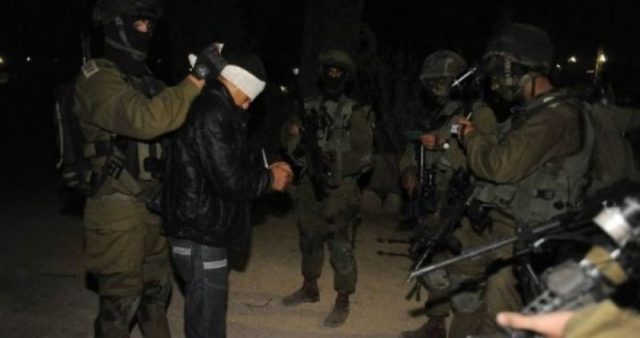
BETHLEHEM – Israeli Prime Minister, Benjamin Netanyahu, announced on Monday evening that Israel will not be renewing the mandate of the Temporary International Presence in Hebron (TIPH).
TIPH has been monitoring the southern occupied West Bank’s city for twenty years; the group’s mandate is renewed every six months; their current mandate expires by the end of the this month.
According to Israeli news outlets, Netanyahu said in a statement “We will not allow the continuation of an international force that acts against us,”
TIPH is an international civilian observer group that, according to its mandate, is tasked with “monitoring and reporting efforts to maintain normal life in the city of Hebron, thus creating a sense of security among the Palestinians in Hebron.” It also reports alleged human rights abuses and violations of accords in the city between Israel and Palestinians. Observers for the group come from Norway, Denmark, Sweden, Switzerland, Italy, and Turkey. TIPH has roughly a dozen staff operating locally and an additional 64 working abroad.
The Old City of Hebron is under full military control by Israel imposing restrictions on the movement of Palestinians living there.
Between 500,000 and 600,000 Israelis live in Jewish-only settlements across occupied East Jerusalem and the West Bank in violation of international law.
The Palestinian government has no jurisdiction over Israelis in the West Bank, and acts carried out by Israeli settlers often occur in the presence of Israeli military forces who rarely act to protect Palestinian residents.
Israel to expel 36,000 Palestinians from Negev
Palestine Information Center – January 29, 2019
NEGEV – Israel’s Minister of Agriculture and Rural Development, Uri Ariel, has put forward a plan to displace about 36,000 Bedouin citizens from their villages in the Negev, Israel Hayom newspaper said on Monday.
The plan, if approved, is set to be implemented in 2019, and it is expected to be completed within four years.
The Israeli authorities are seeking to establish dozens of projects in the area, which requires the transfer of the population to another area, Israel Hayom said.
The Hebrew newspaper noted that the confiscated Bedouin lands are estimated at 260,000 dunums, the largest land grab operation since 1948.
The displacement will start in 2019 and continue for four years with an annual increase in the budget.
Over the ruins of the soon to be abandoned villages, Israel wants to expand the Trans-Israel Highway (Highway 6), an area of 12,000 dunums with 5,000 Arab families living there who Israel intends to transfer to Tel Sheva, Abu Talul and Um Batin.
The Israeli authorities are considering relocating a factory for military industries from the center of Israel to the Negev, a move that entails the transfer of 5,000 Arabs to to Abu Talul, Abu Qrinat and Wadi al-Naam, from Ramat Bekaa.
Israel is further planning to build a high voltage power line over 50,000 dunums of land, posing a threat to 15,000 people who are also included in the displacement plan.
These Bedouin villages do not appear on official Israeli maps, and are not provided basic services, such as water and electricity, by the Israeli authorities. They have no addresses and Israel does not recognize their rights.
Florida bill would censor info on Israel-Palestine in schools, colleges
By Alison Weir | If Americans Knew | January 25, 2019
Three Florida state lawmakers have introduced a bipartisan bill that uses a new, Israel-centric definition of “anti-Semitism” that experts say would censor information about Israel-Palestine in Florida public schools and colleges.
The bill’s sponsor is Republican Mike Caruso of Palm County. The co-sponsors are Democrat Michael Grieco of Miami Beach and Republican Anthony Sabatini of Lake County.
Israel partisans are promoting such bills around the United States at both the state and federal level. The bills are part of an international effort to use an Israeli created redefinition of anti-Semitism to prohibit and even at times criminalize the dissemination of negative facts about Israel.
Entitled “HB 371 Discrimination In Florida K-20 Public Education System,” the bill contains a section on what it calls “anti-Semitism” that is virtually identical to a bill already passed in South Carolina.
Legislation using using the same Israel-centric definition has been introduced in the U.S. Congress.
Section #7 of the Florida bill states that “a public K-20 educational institution must take into consideration anti-Semitism when determining if a practice or act was discrimination on the basis of religion. For purposes of this section, the term ‘anti-Semitism’ means all of the following…” The bill then lists 13 actions that are “anti-Semitic.” Nine of them concern Israel.
The standard, dictionary definition of anti-Semitism, discrimination or hostility against Jews, says nothing about Israel.
The new, Israel-centric definition of anti-Semitism was first formulated by an Israeli government minister in 2004. The official then assisted in procuring the adoption of this formulation in the United States. Israel partisan Hannah Rosenthal adopted it in the U.S. State Department in 2010.
‘Poses threat to free speech’
Numerous analysts oppose the bills on the basis that they violate freedom of speech and academic inquiry.
The Miami New Times reports that the ACLU of Florida plans to track the bill’s progress to ensure that it doesn’t silence political speech. An ACLU Florida spokesperson said that addressing anti-Semitism and all forms of religious discrimination “is crucial, but it does not justify silencing constitutionally protected speech. All Floridians have the right to free speech without the threat of government interference.”
The national American Civil Liberties Union (ACLU) has a record of opposing such legislation, stating that it poses “a serious threat to the First Amendment free speech rights of those on campus who may hold certain political views.”
In a letter of opposition to the federal bill, the ACLU stated: “The First Amendment prevents the federal government from using its great weight to impose severe penalties on a person simply for sharing a political viewpoint critical of Israel.”
An ACLU analysis points out that “anti-Semitic harassment is already illegal under federal law.” The new legislation “does not change that fact, but its overbreadth makes it likely that it will instead silence criticism of Israel that is protected by the First Amendment.”
The article, entitled “The Latest Attack on Free Speech in the Israel-Palestine Debate,” states that there is a “disturbing surge of government-led attempts to suppress the speech of people on only one side of the Israel-Palestine debate. The trend manifests on college campuses, in state contracts, and even in bills to change federal criminal law, but the impact is the same: Those who seek to protest, boycott, or otherwise criticize the Israeli government are being silenced.”
The authors conclude: “These efforts to censor criticism of the Israeli government and advocacy for Palestinian rights do a disservice to the real problem of anti-Semitism in the United States.”
‘Affront to academic freedom’
One of the individuals who helped write the Israel-centric definition, attorney Kenneth Stern, has written that imposing it on campuses is “unconstitutional and unwise.” According to Stein, applying the definition to colleges “is a direct affront to academic freedom.”
Mike Caruso, sponsor of the Florida bill, is serving his first term in the Florida legislature after an extremely close election, winning with a 32-vote margin out of about 80,000 votes cast.
He represents Palm Beach County, known as a particularly pro-Israel area of Florida; approximately one third of the residents are Jewish and there are frequent pro-Israel events in the area. The local Jewish Federation website features a prominent announcement for the 2019 convention of the Israeli American Council, which advocates for Israel.
Recent related legislation
The U.S. House of Representatives earlier this month passed a bill that would force President Trump to appoint a special envoy who would monitor criticism of Israel.
The position was created in 2005 as part of the effort for the U.S. to adopt the Israel-centric definition. The bill has not yet gone to the Senate.
The first Senate bill of 2019, S.1, would finalize a $38 billion package to Israel, the largest military aid package in U.S. history. Attempts to move the bill to a quick vote have stalled while Congress debates the government shutdown.
The bill is sponsored by Florida Senator Marco Rubio, whose major backers include pro-Israel advocates Norman Braman, a Florida businessman, Paul Singer, and casino magnate Sheldon Adelson.
A companion bill, H.R.336, has been introduced in the U.S. House of Representatives.
Alison Weir is executive director of If Americans Knew, president of the Council for the National Interest, and author of Against Our Better Judgment: The Hidden History of How the U.S. Was Used to Create Israel.
A Contrast in Murders

Aiia Maasarwe was a student at La Trobe University. (Photo: via Instagram, Ruba Photography)
By Jeremy Salt | Palestine Chronicle | January 24, 2019
In late January Aiia al Maasarwe, initially described in the Australian media as an ‘Israeli student’, then as an ‘Arab Israeli’ but never as a Palestinian, the correct description, was murdered in Melbourne.
Aiia, a student of Chinese and English, was in Melbourne as an exchange student, had traveled home by tram after watching a comedy show and was talking to her sister in Palestine when she was attacked, raped and killed while walking a kilometer home late at night.
It was a shocking crime and Melbourne was appalled. The tram she had taken, no. 86, stopped at all stops so people could get on with bundles of flowers to be delivered to the crime scene. Government officials, including the Prime Minister, Scott Morrison, made statements expressing their horror.
Compare this with Israel where, to quote The Times of Israel,
“While the murder is major news in Australia, it is not in Israel despite the fact that the two countries have comparable murder rates … no Israeli official has said anything of substance about the killing … while the murder is on the front page of leading Australian newspapers it merits merely a blip on the front page of Israel’s dailies, as will most killings of a not-terror nature.”
In the week after her death, the Israeli embassy in Canberra made contact with the family in Aiia’s home town, Baqa al Gharbiyya, but there was no personal contact from anyone in the government until President Reuven Rivlin wrote to the family.
Baqa al Gharbiyya is not ‘mostly Arab’ as the Australian media, genuflecting to Israel as always, reported but wholly Palestinian. Until Israel began building its apartheid wall in 2000, there was one Baqa: now the wall cuts it into two, Baqa al Gharbiyya (western Baqa), inside pre-1967 Israel, and Baqa al Sharqiyya (eastern Baqa), inside the territories taken in 1967.
Writing in the Guardian, Jennine Khalik, a Sydney-based Palestinian, wrote that while it should not matter where the murdered young woman came from, it did. Either through ignorance or through deliberate suppression, the Australian media insisted that this young Palestinian was an ‘Arab Israeli,’ the official Israeli description of its Palestinian population, and a term rejected by almost all Palestinians.
In keeping with its drive to eradicate Palestine from the map, in every way and at every level, the government of Israel refuses to call its Palestinian population ‘Palestinian.’ It prefers the generic ‘Arab’ which means they come anywhere and could belong anywhere in the Middle East, except in their homeland.
Haifa University professor Sami Smooha carried out a survey in 2017 which showed that only 16 percent of Palestinians living within pre-1967 Israel was willing to be called ‘Arab Israelis.’
They have exactly the same attitude to their Palestinian identity as Palestinians living in the occupied West Bank, occupied Jerusalem and the occupied Gaza Strip. The Palestinians inside pre-1967 Israel are not living in a state of its citizens like other states but a state for and of the Jewish people. By legal definition they are second class, a status deliberately created by discriminatory laws at every level and now reinforced by the passage last year of the nation-state law.
This law, declaring that Israel is a Jewish nation-state, automatically excludes the Palestinian 17.5 per of the population, Sunni or Christian, plus all others (including the Druze who serve in the armed forces) who are not Jewish.
The law is the inevitable product of a racist ideology which never intended Jews to live peacefully with the Palestinians but to live in Palestine instead of them. The consequence has been an endless round of wars with and on neighboring states, plus deepening oppression of the Palestinian people in the further territories stolen in 1967, as well as oppression of Syrians in the occupied Golan. For Israel to survive as a Jewish state on stolen land this is as it must be.
By and large, this process is supported by the Israeli Jewish population, amongst whom racism has been deliberately inculcated by religious and political leaders to the level of hatred of Palestinians, delight in their suffering and endless justification when they are killed.
Let’s get straight to a central issue here. Had the young woman murdered in Melbourne been Jewish, the media would have reported it entirely differently. The story would have been headlines, it would have run for days and there would have been interviews with the family plus phone calls and visits from senior members of the government.
As it was, little attention was paid to the murder in the media and nothing came to the family from the government until Reuven Rivlin sent his letter. From Netanyahu and senior members of the government, there still has been no personal word of condolence for Aiia’s family.
The killing of Aiia can be contrasted with the response to the murder last October of Aisha al-Rabi. Ayesha, from the Nablus district village of Biddya, was in a car with her husband and a daughter when it was pelted with rocks thrown by youths from a nearby settlement.
These twisted youths, the young Zionist pioneers of the present generation, carrying forward the process of occupation and colonization, are hate-filled fanatics. They glory in the death or discomfort of Palestinians. They terrorize, they scrawl anti-Arab graffiti (not anti-Palestinian as they scarcely recognize the Palestinians as human beings let alone as Palestinian) on walls, they harass women and children, they destroy crops and olive trees, they commit acts of arson, they beat and occasionally they murder.
Violence of this nature has tripled in the past year, with 482 ‘incidents’ reported during the 12 months to December compared to 140 for the previous year.
Time to take a stand, one would think, but not in Israel. Even in the most extreme circumstances the violence every excuse is found for the lenient treatment of these settler youths.
Take for example the stoning of the car which killed Ayesha Rabi’a, the mother of eight children. Many stones were thrown, near the Tapuah checkpoint, not just one, and five youths from the nearby settlement yeshiva – a religious seminary where hatred of ‘Arabs’ seems to be high on the agenda – were arrested.
In a state of its citizens, one might expect messages of sympathy to flow towards the family of the murdered woman from senior members of the government. One might expect assurances that justice would be done and the killers punished to the full extent of the law but in an ostensible Jewish state the sympathy flowed in the other direction, towards the families of the youths accused of killing Ayesha.
They were visited by Ayelet Shaked, the so-called ‘justice minister’ in Netanyahu’s coalition government, a vicious racist by any definition.
In 2015 Shaked paid a similar visit to the families of the youths accused of firebombing a Palestinian home at Douma in July, killing three members of the Dawabshe family, husband, and wife and their 18-month-old son Ali, with only five-year-old Ahmad surviving.
Shaked expressed her sympathy with the families’ plight and encouraged one mother to ‘stay strong.’
There was no visit by Shaked or anyone else in the Israeli government to the relatives of the murdered Palestinian family. While public outrage was expressed in demonstrations, settlers continued to celebrate the murders. At a Jewish wedding in Jerusalem in late 2015, guests brandishing Molotov cocktails, knives and guns danced around holding photos above their heads of Ali Dawabsheh which they then proceeded to stab and burn. The persecution of the Dawabsheh family by settlers continued, with a family house being destroyed in May 2018.
In June 2018 the ‘Lod’ (Lydda – ethnically cleansed in 1948) district court ruled out some of the confessions of the accused youths on the grounds that they had been obtained under torture. One of the defendants who had confessed to previous acts of arson, vandalism and the scrawling of hate graffiti on walls was released to house arrest.
Outside the court several dozen ‘hilltop youth’ celebrated, taunting the Dawabsheh grandfather with cries of ‘Where’s Ali? There’s no Ali. Ali is on the grill.’ When Reuven Rivlin condemned Jewish terror he received a spate of death threats. The case against the main defendant continues.
Ayalet Shaked was a member of the Jewish Home party until she broke away recently and founded, along with Naftali Bennett, who also split from the Jewish Home, the Heyemin Hehadash (New Right) party.
This new grouping is being misleadingly defined as ‘conservative’. In fact, it is violently rightwing and racist, effectively a Jewish fascist party. Bennett has boasted of killing ‘Arabs’, while Shaked, like many Zionist racists before her, has compared the Palestinians to snakes.
In the meantime, while all of this goes on inside occupied Palestine, the retiring Israeli army chief, Gadi Eisenkot, has boasted that Israel has carried out thousands of air attacks on Syria in recent years, attacking, in fact, almost on a daily basis.
Many of these attacks have been carried out from Lebanese air space. Some have been made behind the radar shield of civilian aircraft, once behind a Russian military aircraft which was then shot down by Syrian air defenses. A frequent target has been installations around Damascus international airport, prompting the Syrian ambassador at the UN, Bashar al Ja’afiri, to warn that if the UN does not intervene, Syria might be forced to retaliate against Tel Aviv airport.
Eisenkot was the author of the ‘Dahiye doctrine’ according to which the aerial destruction visited on the Beirut suburb of Dahiya – the political headquarters of Hizbullah – in 2006 will be carried out across Lebanon in the next war.
Israel is also campaigning again for war on Iran, if it does not start one by its attacks on Syria. Internally and externally, this racist and violent state, a time bomb planted in the Middle East by the British a century ago, is destined to erupt cataclysmically at some point in the future.
– Jeremy Salt taught at the University of Melbourne, at Bosporus University in Istanbul and Bilkent University in Ankara for many years, specializing in the modern history of the Middle East. Among his recent publications is his 2008 book, The Unmaking of the Middle East. A History of Western Disorder in Arab Lands (University of California Press).
UN Officials Reaffirm that Forcible Transfers are In Breach of Geneva Convention
IMEMC News & Agencies | January 23, 2019
After visiting the Palestinian Sabbagh family, who is facing eviction from its home, in the Sheikh Jarrah neighborhood of occupied Jerusalem, for the benefit of Israeli settlers, United Nations and other officials have again warned that forced eviction and transfer of Palestinians are a breach of Fourth Geneva Convention.
Jamie McGoldrick, Humanitarian Coordinator United Nations Office for the Coordination of Humanitarian Affairs (OCHA) in the occupied Palestinian territory, Gwyn Lewis, Director of West Bank Operations for the United Nations Relief and Works Agency for Palestine Refugees (UNRWA), James Heenan, Head of Office of the United Nations High Commissioner for Human Rights (OHCHR) in the occupied Palestinian territory, and Kate O’Rourke, Country Director of the Norwegian Refugee Council, said in a statement that they visited the Sabbagh family “who face imminent forced eviction from their home in the Sheikh Jarrah neighborhood of East Jerusalem, part of the occupied Palestinian territory, and are at heightened risk of forcible transfer.”
According to the statement, the Sabbagh family is a Palestinian refugee family originally from Jaffa city, who were settled in the neighborhood, along with 27 other families, with the support of the United Nations and the Jordanian government, in the 1950s.
Like other families in the area, for years they have been engaged in a legal dispute opposing efforts by Israeli settler organizations to evict them from their homes. Recently, this legal struggle was deemed unsuccessful as Israeli courts have ruled in favor of the settlers’ claims. Thirty-two members of the Sabbagh family, including six children, now face forced eviction, while an additional 19 members will be directly affected by the loss of the family property, should the eviction take place.
“In the occupied Palestinian territory, strict obligations apply with regard to the prohibition of forcible transfer and forced eviction,” said the officials in the statement. “Along with house demolitions, forced evictions are one of the major factors contributing to the creation of a coercive environment that may result in no other choice for individuals or communities but to leave. Forcible transfer is a grave breach of the Fourth Geneva Convention. Forced evictions contrary to international law also violate the right to adequate housing and the right to privacy, and may be incompatible with other human rights.”
They added, according to WAFA : “In many cases in East Jerusalem, including in Sheikh Jarrah, the forced eviction of Palestinians is occurring within the context of Israeli settlement construction and expansion, illegal under international humanitarian law. An estimated 3,500 Israelis are currently living in settlements established with the support of the Israeli authorities in the heart of Palestinian communities in East Jerusalem. In Sheikh Jarrah alone, more than 200 Palestinians face potential eviction, should they be unsuccessful in similar cases currently before Israeli courts.”
They called on the Israeli authorities “to immediately halt plans to evict the Sabbagh family to prevent further displacement of these refugees, cease settlement construction, and abide by their obligations as an occupying power under international humanitarian law and international human rights law.”
Councils have cut services but spend millions on CCTV

TruePublica | January 23, 2019
Most people in the UK think quite wrongly that they live in a country where freedom and privacy is the basic right of all citizens. The UK currently holds the record for the largest number of CCTV cameras per person. Although Britain contains only contains 1 per cent of the world’s population, its citizens are watched by 20 per cent of the world’s CCTV cameras. Research in 2013 estimated that there are up to six million cameras in the UK, and the network is expected to expand even further, which according to a recent report it has achieved. But there’s more.
To add to worries of illegal state surveillance – “the risk potential for intrusion on citizens has significantly increased both by lawful operators of surveillance camera systems and those individual or state actors who seek to hack into systems,” Surveillance Camera Commissioner Tony Porter said.
In addition, we should not forget the Automatic Number Plate Recognition (ANPR) system. ANPR is one of the largest non-military databases in the UK, with around 9,000 cameras nationally that captures between 25 million and 40 million pieces of data per day, while up to 20 billion “read” records are held.
Porter described this activity as “formidable”, saying:
“The nature of its capabilities to intrude on privacy by building patterns of travel and the provision of imagery should not be underestimated.”
“I firmly believe that this system needs legislative oversight and that the Government should place this system on a statutory footing.”
It is estimated that there are over half a million CCTV cameras in London alone where the average person is photographed or videoed approximately 300 times every single day.
And if mass state surveillance, much of which has been deemed illegal by the highest courts in the land is of concern, then diverting much needed public funds from important social support programmes to surveillance is utterly appalling.
Reported in The Times is an article about how councils are now spending millions of pounds spying on residents despite cutting services in almost every other area.
“Local authorities in England have spent more than three-quarters of a billion pounds on CCTV over the past decade, an increase of 17 per cent a year since 2010. Over the same period councils have reduced spending on street cleaning by 12 per cent, food safety by 16 per cent, trading standards by 32 per cent and libraries by 35 per cent.
Critics said the increase in spending on CCTV while other departments had their budgets cut was “offensive”.”
Big Brother Watch Director, Silkie Carlo, said:
“Research consistently shows that public cameras are ineffective at deterring, preventing or even solving crime, but that too much CCTV does curb citizens’ freedom. The UK is already one of the most surveilled nations in the world, with six million CCTV cameras recording us every day. Surveillance is no substitute for policing and this will prove to be a terrible waste of money.”
Malaysia’s Decision to Bar Israeli Athletes Was Much Needed
By Yousef Aljamal | Palestine Chronicle | January 22, 2019
Malaysia has historically been a strong supporter of the Palestinian people who experienced and continue to experience colonization, military occupation and many forms of discrimination for over 100 years.
In fact, it has always been Malaysia’s policy to support the Palestinian people, who have suffered immensely due to the ongoing Zionist colonization project in Palestine, which resulted in establishing Israel on the ruins of Palestinian homes.
Support for Palestine has been expressed under different Malaysian governments, most notably under the administrations of Tun Dr. Mahathir Mohamad, who has always been vocal in his criticism of Israel’s discriminatory and militant policies.
Palestine has always enjoyed the support of ordinary Malaysians, who exhibited their strong solidarity, often in emotional ways, during times of Israeli wars on the Gaza Strip in 2008-9, 2012 and 2014.
Islam and its shared values among Palestinians and Malaysians have always played a big part in the existing rapport between both nations.
However, due to existing ethnic tensions in the country, solidarity with the Palestinian people, has, at times, seemed confined to the Malay Muslim community.
While such a truth remains paramount, perspectives began to change in recent years, as Chinese and Indian communities developed a keener understanding of the situation in Palestine. Therefore, seeing Chinese and Indian activists at the forefront of Palestine solidarity in Malaysia is no longer a rare event. A reason behind this important shift is the fact that the approach of solidarity itself evolved from a religious-based appeal to a human-rights based one.
The year 2015 saw the first Boycott, Divestment and Sanctions (BDS) conference in the country, held at the University of Malaya, where the importance of boycott as a political tool for change was stressed and thoroughly discussed.
It would not be an exaggeration to say that a radical shift started on that very date. More Malaysians engaged with the BDS movement then, launching campaigns against HP, G4S and other international companies involved in facilitating Israel’s occupation of Palestine.
Therefore, the decision by Prime Minister, Mahathir Mohamad, to ban Israeli athletes is a rational step in that direction.
Last year, Malaysians voted in historical elections that changed their government to what many Malaysians hoped would be in the best interests of their country. The move by the Malaysian government to ban Israeli athletes from participating in an international sports event set to be held in the city of Kuching this year is a representation of this momentous change.
The elections, many hope, would decrease ethnic tensions and bring more justice to all Malaysians.
Palestinians have been suffering under Israeli colonization and military occupation for more than 70 years. Despite massive Palestinian political and territorial compromises, Israel gave up nothing. For example, the Palestine Liberation Organization (PLO) has conceded 78% of historic Palestine in return for peace, which never actualized. To the contrary, the pace of illegal Jewish construction has increased by several folds and military occupation of Palestine is more entrenched than ever before.
This grim reality was the main motive behind the 2005 call by Palestinian civil society to boycott Israel. The BDS movement is the outcome of that collective Palestinian decision.
According to this call, Palestinians demand:
- Ending Israeli occupation and colonization of all Arab lands and dismantling the Apartheid Wall.
- Recognizing the fundamental rights of the Arab-Palestinian citizens of Israel to full equality.
- Respecting, protecting and promoting the rights of Palestinian refugees to return to their homes and properties as stipulated in United Nations Resolution 194.
The truth is this, Israel has never respected Malaysia, its people and national security. The Israeli Mossad is widely believed to have been behind the assassination of Palestinian scholar Dr. Fadi Al-Batsh on a Malaysian soil last year. Thus, Israel has actively been engaged in harming Malaysia’s national security. This alone should be a compelling rationale for Malaysia – which has no diplomatic relationship with Israel anyway – to ban Israeli athletes.
Sports and politics are directly linked as the boycott of the South African Apartheid regime has shown in the past. Malaysia certainly did the right thing by banning Israeli athletes, especially as the Palestinian people are reduced to live in disconnected Bantustans in the West Bank and under a hermetic siege in Gaza.
Malaysians are important in the global solidarity movement, and their support for BDS can prove crucial considering the country’s large and diverse economy. This country, which has often chosen morality over politics can indeed help the Palestinian people end the oppressed Israeli Apartheid regime.
As a Malaysia Alumnus, and a Palestinian who lost two of my siblings because of Israel’s colonization, I call upon every single Malaysian to support equality for all in Palestine, by contributing to our collective struggle through the BDS movement.
Apartheid can only be defeated when we all realize that “a threat to justice anywhere is a threat to justice everywhere.”
A Tale of Two Walls
Congress prefers the Israeli version

Palestinian women walk next to the separation wall in the West bank village of Abu Dis, November 19, 2007. Photo by Anna Kaplan/Flash90.
By Philip Giraldi | Unz Review | January 22, 2019
The demand of President Donald Trump that congress should appropriate money to build a wall securing the nation’s southern border has resulted in the longest federal government shutdown in history with no end in sight. There is considerable opposition to the wall based on two quite different perceptions of border security. The generally “progressive” view is that there is no border threat at all, that the thousands of migrants heading for the U.S. can be assimilated and indeed should be allowed entry because of U.S. government policies in Central America that have created the ruined states that the would-be immigrants have been fleeing.
There is certainly some truth to that argument, though it suggests that the United States should essentially abandon sovereignty over its own territory, which most Americans would reject. The alternative viewpoint, which has a much broader bipartisan constituency, consists of those who do feel that border security is a national priority but are nevertheless critical of building a wall, which will be expensive, possibly ineffective and environmentally damaging. They prefer other options, to include increased spending on the border guards, more aggressive enforcement against existing illegals and severe punishment of businesses in the U.S. that hire anyone not possessing legal documentation. Some also have argued in favor of a national ID issued only to citizens or legal permanent residents that would have to be produced by anyone seeking employment or government services.
Whether the wall will ever be built is questionable, but one thing that is certain is that there is more than enough hypocrisy regarding it to go around. Democratic Presidents including Bill Clinton and Barack Obama when campaigning have called for better border security, as have Democratic Congressional leaders who are now smelling blood and attacking Trump for seeking to do what they have long at least theoretically sought.
Apart from that, many of the Democrats who are currently criticizing the southern border wall on moral grounds have failed to apply the same standard to another infamous wall, that which is being built by Israel. Israel’s “separation wall” is arguably being constructed at least in part using “aid” and charitable money provided by Washington while also being enabled politically by the U.S. government’s acquiescence to the Israeli violations of international law. And if the moral argument for not having a wall to aid suffering refugees has any meaning, it would be many times more so applied to the Israeli wall, which is an instrument in the maintenance of apartheid in areas under Israeli control while also making permanent the stateless status of the more than one million Palestinian refugees, far more in number than the would-be immigrants marching through Mexico.
The Israeli wall is at many points larger and more intimidating than that planned by Trump, and it is also designed to physically and economically devastate the Palestinian population adjacent to it. Israel’s wall is undeniably far more damaging than anything being considered for placement along the U.S.-Mexican border as it operates as both a security measure and a tool for confiscating more Arab land by including inside the barrier illegal West Bank settlements.
There are both physical similarities and differences relating to the two walls. Judging from prototypes, Trump currently appears to favor prefabricated mostly metal sections with barbed wire coils on top that would be high and intimidating enough to deter climbing over. The sections would be set in foundations sufficiently deep to deter most tunneling and there would be sensors at intervals to alert guards to other attempts to penetrate the barrier. Israel’s wall varies in terms of structural material, including large concrete blocks 28 feet high in some areas while other less populated stretches that are considered low security make do with multiple lines of barbed wire and sensors. It is interesting to note that some Israeli companies have apparently expressed interest in building the Mexico wall and, as one of the many perks Israel receives from congress includes the right to bid on U.S. government contracts, they might well wind up as a contractors or subcontractors if the barrier is ever actually built.
As noted above, the principal difference between the U.S. wall and that of Israel is that the American version is all on U.S. land and is engineered to more or less run in a straight line along the border. The Israeli version is nearly 90% built on Palestinian land and, as it is designed to create facts on the West Bank, it does not run in a straight line, instead closing off some areas to the Palestinians by surrounding Arab villages. It therefore keeps people in while also keeping people out, so it is not strictly speaking a security barrier. Indeed, some Israeli security experts have stated their belief that the wall has been only a minor asset in preventing violence directed by Palestinians against Israelis.
If the Israeli wall had followed the Green Line that separated Israel proper from Palestinian land it would be only half the estimated 440 miles long that it will now be upon completion. The extra miles are accounted for by the deep cuts of as much as 11 miles into the West Bank, isolating about 9% of it and completely enclosing 25,000 Palestinian Arabs from areas nominally controlled by the Palestinian Authority. One often cited victim of the barrier is the Palestinian town of Qalqilyah, with a population of 45,000, which is enclosed on all sides by a wall that in some sections measures more than 25 feet high. Qalqilyah is only accessible through an Israeli controlled military checkpoint on the main road from the east and a tunnel on the south side that links the town to the adjacent village of Habla.
The wall is therefore only in part a security measure while also being a major element in the Israeli plan to gradually acquire as much of the West Bank as possible – perhaps all of it – for Israeli settlers. It is a form of collective punishment based on religion to make life difficult for local people and eventually drive them from their homes.
The human costs for the Palestinians have consequently been high. A United Nations 2005 report states that :
… it is difficult to overstate the humanitarian impact of the Barrier. The route inside the West Bank severs communities, people’s access to services, livelihoods and religious and cultural amenities. In addition, plans for the Barrier’s exact route and crossing points through it are often not fully revealed until days before construction commences. This has led to considerable anxiety amongst Palestinians about how their future lives will be impacted… The land between the Barrier and the Green Line constitutes some of the most fertile in the West Bank. It is currently the home for 49,400 West Bank Palestinians living in 38 villages and towns.”
Amnesty International in a 2004 report observed:
“The fence/wall, in its present configuration, violates Israel’s obligations under international humanitarian law… Since the summer of 2002 the Israeli army has been destroying large areas of Palestinian agricultural land, as well as other properties, to make way for a fence/wall which it is building in the West Bank. In addition to the large areas of particularly fertile Palestinian farmland that have been destroyed, other larger areas have been cut off from the rest of the West Bank by the fence/wall. The fence/wall is not being built between Israel and the Occupied Territories but mostly (close to 90%) inside the West Bank, turning Palestinian towns and villages into isolated enclaves, cutting off communities and families from each other, separating farmers from their land and Palestinians from their places of work, education and health care facilities and other essential services. This in order to facilitate passage between Israel and more than 50 illegal Israeli settlements located in the West Bank.”
Of course, the situation has become far worse for Palestinians since the two reports dating from 2004 and 2005. Israel has accelerated its settlement construction and the wall has expanded and shifted to accommodate those changes, making life impossible for the indigenous population.
Any pushback from the United States has been rare to nonexistent, with successive administrations only occasionally mentioning that the settlements themselves are “troubling” or a “complication” vis-à-vis a peace settlement. The first direct criticism of the wall itself took place in 2003, when the Bush administration briefly considered reducing loan guarantees to discourage its construction. Then Secretary of State Colin Powell remarked “A nation is within its rights to put up a fence if it sees the need for one. However, in the case of the Israeli fence, we are concerned when the fence crosses over onto the land of others.”
On May 25, 2005, Bush repeated his concerns, noting that “I think the wall is a problem. And I discussed this with Ariel Sharon. It is very difficult to develop confidence between the Palestinians and Israel with a wall snaking through the West Bank.” In a letter to Sharon he stated that it “should be a security rather than political barrier, should be temporary rather than permanent and therefore not prejudice any final status issues including final borders, and its route should take into account, consistent with security needs, its impact on Palestinians not engaged in terrorist activities.”
Congress is, of course, Israeli occupied territory so its response was directed against Powell and Bush in support of anything Israel chose to do. Then Senator Joe Lieberman complained “The administration’s threat to cut aid to Israel unless it stops construction of a security fence is a heavy-handed tactic. The Israeli people have the right to defend themselves from terrorism, and a security fence may be necessary to achieve this.”
In 2005, Senator Hillary Clinton declared her support for the wall by claiming that the Palestinian Authority had failed to fight terrorism. “This is not against the Palestinian people. This is against the terrorists. The Palestinian people have to help to prevent terrorism. They have to change the attitudes about terrorism.” Senator Charles Schumer, also from New York, added “As long as the Palestinians send terrorists onto school buses and to nightclubs to blow up people, Israel has no choice but to build the Security Wall.”
So, for many in Washington a legal and relatively apolitical wall by the United States to protect its border is a horrible prospect while the Israeli version built on someone else’s land with the intention to damage the local Arab population as much as possible is perfectly fine. The reality is that America’s Establishment, which is dominated by veneration of Israel for a number of reasons, is completely hypocritical, more prepared to criticize actions taken by the United States even when those actions are justified than they are to condemn Israeli actions that amount to crimes against humanity. That is the reality and it is playing out in front of us right now.
Philip M. Giraldi, Ph.D., is Executive Director of the Council for the National Interest, a 501(c)3 tax deductible educational foundation that seeks a more interests-based U.S. foreign policy in the Middle East. Website is www.councilforthenationalinterest.org, address is P.O. Box 2157, Purcellville VA 20134 and its email is inform@cnionline.org.
The White Helmets, alleged organ traders & child kidnappers, should be condemned not condoned
By Vanessa Beeley | RT | January 22, 2019
The White Helmets, “volunteers” who reportedly “rescue Syrians from rubble.” Never in history has such a group been so feted by the elite, or received so many awards from institutions acting as extensions of US and UK hegemony.
A recent panel at the UN Security Council in New York revealed the shocking evidence of White Helmet involvement in organ trafficking in Syria. The lucrative trade of human body parts, bones, blood and organs is one of the most protected and hidden harvests of war.
The potential of White Helmet involvement in these nefarious activities raises questions that must be answered. Why were the shocking revelations met by a wall of silence from corporate media present at the panel in New York?
Not one media outlet pursued the subject, preferring to divert onto more comfortable issues that did not challenge the iconization of the White Helmets that has been the default position for virtually all state-aligned media since the establishment of the group in 2013 in Jordan and Turkey.

© Screenshot from the presentation of Maxim Grigoriev
Above is one of the slides from the presentation of Maxim Grigoriev, director of the Foundation for the Study of Democracy, given to the panel and audience at the UNSC in New York, December 2018.
In July 2017, I had interviewed residents of the East Aleppo districts that had been under occupation of the various extremist armed groups and the White Helmets. Salaheddin Azazi was a resident of the Jib Al Qubbeh area (also mentioned in Grigoriev’s presentation).
Azazi went through the details of the November 2016 Nusra Front attack on civilians trying to flee via the Syrian and Russian-established humanitarian corridors which had been spun by the White Helmets into a “regime” bombing raid that resulted in a civilian massacre. It was a complete misrepresentation of reality which was seized upon by corporate media with no fact checking. My full report on that incident and the White Helmet involvement in the massacre and subsequent theft of civilian belongings from the dead and dying is here.
“The bodies of the dead and dying were left unattended for ten hours in the street after the Nusra Front rocket attack that killed 15 civilians. The White Helmets did not help them, they stole their belongings,” Salaheddin Azazi, resident of Jib Al Qubbeh and eyewitness to events on 30.11.2016, said.

Discussing the November 2016 events in Jib Al Qubbeh with residents Salaheddin Azazi and Ammar Al Bakr, July 2017 © Vanessa Beeley
Azazi and another resident, Ammar Al Bakr (on the right, in above photo) described how the White Helmets were the “runners” for the organ traffickers.
“The White Helmet drivers would take the injured or dead bodies to the Turkish border. Many of the injured had light wounds, nothing that needed hospitalization but the bodies would come back without organs,” said Ammar Al Bakr.
“The bodies, dead and alive, would be inspected in the towns on the borders with Turkey before being taken by Turkish vehicles to the hospitals but if the injured civilian was a child or young and strong they would be taken directly to the hospital in Turkey because their organs had greater value,” Azazi told me.
According to both of these witnesses, the bodies were worth $2000 dead and $3000 if alive and this market was dominated by the White Helmet operatives who profited from cross-border organ trafficking.
Other civilians I met in July/August 2017 confirmed the threat of organ theft which hung over them during the almost five-year occupation of East Aleppo districts by the armed groups and their White Helmet auxiliaries. Families spoke to me of hiding their children if they were lightly injured to prevent the risk of them being abducted and taken to one of three hospitals – Omar Abdulaziz, Al Quds and Zarzour – that allegedly specialized in organ theft in East Aleppo, all of which had been taken over by militant gangs early on in the conflict. I was told that “foreign doctors” were operating in these three hospitals and were in charge of organ extraction. In post-liberation Eastern Ghouta, similar stories abounded.
In January 2019, I visited survivors from the Jaysh Al Islam controlled Tawbah Prison in Douma, Eastern Ghouta (known as Repentance Prison). I met with former prisoners in Adra Al Balad who spoke of the torture and violent abuse they had received after being kidnapped from Adra Al Ummaliya in 2013 by Jaysh Al Islam and Nusra Front. Familiar descriptions of the White Helmets were forthcoming:
“Regarding the White Helmets, they are terrorists and Takfiris […] they have nothing to do with Humanity […] when they used to see an injured civilian, they used to finish them off. If you come to “rescue” a man would you slaughter them? The White Helmets and the terrorists are one and the same, they are hand in hand,” said Hassan Al Mahmoud Al Othman, one of the survivors I spoke to about their experiences as captives of Jaysh Al Islam and Nusra Front during the six years that Eastern Ghouta was occupied.
The evidence against the White Helmets is mounting on a daily basis and will only increase as Idlib is liberated or a political resolution is achieved in the last Syrian province effectively controlled by Hayat Tahrir Al Sham (HTS) a rebrand of Al Qaeda.
Despite this, Western corporate media and NATO-aligned think tanks, policy influencers and NGOs are stubbornly sticking to the “volunteer hero” script. The Observer recently collaborated with Reader’s Digest to produce a slick homage to the White Helmets “rescued” from Syria by Israel in July 2018, entitled ‘The inside story of Canada’s dramatic rescue of the White Helmets out of Syria.’ It depicts the volunteer “bankers and barbers” as heroes and downtrodden saints fleeing for their lives. A far cry from the image portrayed of organ thieves, child abductors and bone peddlers by the Syrian people who lived under the White Helmet regime of sectarian violence and exploitative abuse.
The White Helmet involvement in the “red market” (a term used to describe the multi-billion-dollar trade in human body parts, tissue and organs) should come as no surprise. James Le Mesurier, the former private security and “democratization” expert who founded the White Helmets in Turkey and Jordan was also present in Pristina, Kosovo in 1999 when he worked under the direction of the notorious Bernard Kouchner, co-founder of MSF (Medecins Sans Frontieres) and former French foreign minister.
Kouchner’s tenure in Kosovo was plagued by controversy and accusations of involvement in human and organ trafficking masterminded by the Albanian mafia gangs within the Kosovo Liberation Army (KLA).
Carla Del Ponte, former chief prosecutor for war crimes in former Yugoslavia, detailed these crimes in her book The Hunt: Me and the War Criminals, which was published in 2008 just after Kosovo declared its independence.
In 2010, an interim report by the Council of Europe vindicated Del Ponte’s claims, which had garnered skepticism and criticism from the NATO-aligned media and spokespeople. Del Ponte persistently complained, at the time, that UN authorities in Kosovo were systematically blocking her investigations into crimes committed by the Kosovo Albanians in the KLA and the rebranded Kosovo Protection Corps (KPC).
James Le Mesurier was responsible for the rebranding of the KLA, linked to Al Qaeda at that stage alongside the Albanian warlords, and their transformation into the Kosovo Protection Corps while they were being accused of running cross-border organ trafficking operations.
A blueprint that Le Mesurier seems to be reproducing with the White Helmets in Syria while attempting to maintain an untarnished White Helmet image, at least in the aligned media and PR circles. In reality, there is an entire billionaire-supported industry of NGOs and influential global transformation institutions protecting the White Helmets’ image.
A network of global carpetbaggers enabling the criminal obfuscation of White Helmet crimes against Humanity and denial of justice to the Syrian people whose accusations against the pseudo humanitarian group are systematically silenced and marginalized by the White Helmet acolytes.
The White Helmets have received an unprecedented number of awards and peace prizes, including the Right Livelihood Award 2016 (RLA), the Atlantic Council Freedom Award 2016, Tipperary Peace Prize 2017, Hollywood Oscar 2017 (one win, one nomination in 2018) and they have been nominated for the Nobel Peace Prize for three years running.
According to the RLA website, they “honour and support courageous people and organisations that have found practical solutions to the root causes of global problems”. There is nothing honourable or courageous about the White Helmet crimes against the Syrian people.
The White Helmets have enabled and participated in organ trafficking, one of the deepest root causes of our global problems but the RLA has made no move to retract their award from this group of criminals, thieves and terrorists. They have ignored petitions and statements from groups of peace activists and academics. Instead, in 2018, they published a counter petition signed by 29 former RLA Laureates calling upon all parties to “stop targeting the White Helmets […] in Syria”.
While blaming Russia for the smear campaign against the White Helmets, the petition informs us that “(White Helmet) work is guided by the inherent dignity of human life.” The RLA claims that the evidence against the White Helmets is “unsubstantiated and does not stand up to scrutiny”. One cannot help but wonder; when did they scrutinize the evidence or listen to the huge number of Syrian civilian testimonies that detail the crimes committed by the White Helmets that are most definitely not guided by the inherent dignity of human life?
What all these US Coalition-aligned organizations fail to understand is that Russian media and UN missions do indeed give a voice to the Syrians who are ignored by media in the West. Russia is not the originator of the claims against the White Helmets.
While these organizations, claiming to support peace in Syria and an end to hostility, continue protecting the White Helmets who are responsible for so much of the misery endured by the Syrian people, they forfeit any credibility and become nothing more than a corrupt extension of US supremacism in the region.
Child exploitation, abuse, human trafficking and organ trafficking – which often goes hand in hand with the former – should never be tacitly condoned or covered up and must always be investigated or we have fallen into a moral vacuum from which there is no escape.
I invite all Western media outlets and “peace” promoting institutions to retract their White Helmet accolades and laurels, and to “scrutinize” the evidence before they too are implicated in one of the most heinous crimes ever committed against victims of war.
Vanessa Beeley is an independent investigative journalist and photographer. She is associate editor at 21st Century Wire.
Read more:
Organ theft, staged attacks: UN panel details White Helmets’ criminal activities, media yawns
Featured Video

The Search for Truth: Charlie Kirk’s Assassination One Year Later
or go to
Aletho News Archives – Video-Images
From the Archives
The 9/11 “Double-Cross” Conspiracy Theory
BY LAURENT GUYÉNOT • UNZ REVIEW • SEPTEMBER 6, 2022
Is it true that “9/11 was an inside job”? Yes, insofar as Israel is “inside” the U.S. But for the 9/11 truthers who have identified Israel as the main perpetrators, “9/11 was an inside job” is at best a half-truth, and at worst an integral part of the Zionist operation, like a secondary flag sewn as a lining under the false flag of Islamism. Victor Thorn (1963-2017) wrote in his book 9/11 made in Israel: The Plot Against America (2011): “In essence, the ‘9-11 truth movement’ was created prior to Sept. 11, 2001 as a means of suppressing news relating to Israeli complicity. . . . The slogan ‘9-11 was an inside job’ was quite possibly the greatest example of Israeli propaganda ever devised.” In milder terms, it is “controlled opposition”.
A genuine truth movement would have pointed to Israel as the prime suspect from the start. From day one, it was obvious who would benefit. … continue
Blog Roll
 Aletho News
- Europe’s mounting social chaos… chickens coming home to roost for proxy war against Russia
- US-Russia Diesel Deal Becomes Massive Defeat for Ukraine
- Hormuz and the Looming Economic Catastrophe
- Dhubab offensive, media blitz and the rapid unraveling of Saudi-backed coalition’s new gambit
- Putin Conveys to Trump Iran’s Vision on Possible Conflict Resolution – Kremlin
- The Search for Truth: Charlie Kirk’s Assassination One Year Later
- ‘Harsh reality’: Iran says France seeks monopoly on power and intimidation, not peace for all
- When Will This White House Madness End?
- Huckabee aide goes to ‘unusual lengths’ to portray ‘Israel’ positively
- Trump Announces Diesel Supply Deal With Putin Following Phone Call
- If Americans Knew
- Israeli forces kill another child in Gaza – Daily Update
- Gaza ceasefire exists in name only, say more than 100 organizations
- Nearly 2 Million in Gaza Need Urgent Shelter Assistance as Winter Looms: IOM Chief Warns
- Suppressing Palestinian resistance: US charity under fire for AI monitoring of Gaza classrooms
- Thousands Are Held in Israeli Torture Camps. This Is What Happens Inside
- Israel puts Gaza’s sick, injured, newborn in peril – Daily Update
- Report claimed Mark Levin used by Israeli government to influence Trump
- Over 2,000 Gazans have died awaiting medical evacuation amid Israel’s continued siege
- How a U.S. Diplomat Suppressed and Altered Reports Critical of Israel
- 5 Palestinians Die from Israeli Strikes in Gaza as Relentless Attacks Continue
- No Tricks Zone
- New Study: 50 Years Of The Most Aggressive ‘Net Zero’ Policies Can Only Affect The Global Climate By 0.03°C
- US September “Heat” Was No Record…Many Records Set Decades Ago
- Latest European Green Energy Debacle; Portugal’s Largest Flagship Solar Park Insolvent!
- Green Energy Debacle: German Expert Professor Fritz Vahrenholt Warns Of Severe Economic And Social Consequences
- Two More Paleo Reconstructions Affirm Meters-Higher Sea Levels Across Ireland, Brazil 7000-6000 Years Ago
- New Study: Earth And Venus Surface Warmth Largely Explained By Convection And Lapse Rate, Not CO2 Or Radiation
- 2025 Nature Paper Claiming Worsening Global Drought Gets RETRACTED …Heavily Flawed
- New Study: ‘Global Drought Shows No Detectable Recent Acceleration Under Climate Warming’
- Economic Masterminds: German Socialists Suggest Taxing Productivity Gains Stemming From Using AI
- The South China Sea Has Not Been Cooperating With The Climate Change Narrative

