IRIB slams closure of its social media accounts as ‘clear censorship’
Press TV – August 25, 2018
The Islamic Republic of Iran Broadcasting (IRIB) has condemned a coordinated move to block its channels on social media platforms, describing it as a “clear example of censorship” aimed at preventing the dissemination of truth and alternative viewpoints online.
In a Saturday statement, the IRIB World Service said “stifling independent media” amounts to a “political scandal” taking place in the age of communications and freedom of press.
On Thursday, Google removed 39 YouTube channels linked to the Iranian state broadcaster. Google terminated those accounts, along with six blogs on its Blogger service and 13 Google+ accounts linked with Iran. The move came after Twitter and Facebook also blocked hundreds of accounts on suspicion of possible ties with Iran.
“We identified and terminated a number of accounts linked to the IRIB organization that had disguised their connection to this effort,” Google Vice President Kent Walker said in a statement.
Elsewhere in its statement, the IRIB said Iran’s Spanish-language television channel, Hispan TV, had done nothing but reveal crimes committed by the Israeli regime and its masters and broadcast criminal acts carried out against humanity in Palestine, Yemen and other parts of the world.
It added that Iran’s well-known Arabic-language Al-Alam news network has been for years exposing the plots hatched by enemies of regional countries, including Syria, Iraq, Bahrain, Lebanon and Palestine.
The channel has shown crimes by the Israeli regime in the Gaza Strip and those of Saudi Arabia in Yemen, it said.
Al-Alam and Hispan TV’s YouTube channels are among Iranian social media channels targeted.
The statement emphasized that the IRIB once again slammed the closure of independent Iranian media on social networks and noted that they would always remain loyal to the slogan of defending the oppressed people, disclosing crimes by the global hegemony and its allies in the region and across the world and echoing the voice of the voiceless in the world.
The IRIB said it reserves the right to pursue legal measures against those who have placed limitation on its channels.
These pressures indicate that independent media have “considerably influenced the public opinion” despite widespread propaganda by arrogant powers that fear truth revelation and dissemination, it added.
However, the IRIB channels would continue their path with strength, it pointed out.
Read more:
UNRWA head: ‘One cannot simply wish away 5m people’
MEMO | August 23, 2018
The head of the UN agency for Palestinian refugees has spoken out against efforts underway to see the organisation dismantled, stating: “One cannot simply wish away five million people”.
Pierre Krahenbuhl, Commissioner General for the United Nations Relief and Works Agency for Palestine Refugees in the Near East (UNRWA), made the remarks in an interview with Foreign Policy.
Krahenbuhl also spoke to the impact US funding cuts have already had on URNWA’s operations, noting that in the Gaza Strip, the agency “had to announce cuts to some of our emergency services like community mental health, job creation” and “there was even a risk for our food distribution”.
According to the Swiss diplomat, the protests in response to job cuts led to UNRWA losing control of its compound in Gaza for “about 20 days”.
Asked by Foreign Policy about the claim made by Israel and the Trump administration that “Palestinians are the only people in the world who are allowed to pass their refugee status down through generations,” Krahenbuhl said this was “clearly a misrepresentation”.
“UNRWA, in ways that are no different from the UNHCR [United Nations High Commissioner for Refugees], considers children and descendants of refugees as refugees,” he said, before citing Afghanistan, Angola, Burma, Burundi and Sudan as cases of protracted refugee situations where “the children and grandchildren of the original refugee[s]” are also considered refugees.
“It rests on the notion that family unity, the principle of family unity, is keeping families united and together as one of the key parameters of managing refugee crises,” he added.
Pressed as to what life would be like for refugees were UNRWA to be dismantled – a key demand of many Israeli and US politicians – Krahenbuhl replied:
“If UNRWA didn’t exist tomorrow, and even if UNHCR didn’t exist, the world would still have to tackle the reality of protracted, long-term refugee situations that are impacting the well-being of people, but also the security and stability of states in many parts of the world. One cannot simply wish away five million people”.
Read also:
The plan to end UNRWA will not take away Palestinians’ right of return
Being Pro-Palestinian Doesn’t Make Jeremy Corbyn an Anti-Semite
By As’ad AbuKhalil | Consortium News | August 22, 2018
In the last few decades, public opinion in the West has shifted from the early, post- World War II period. Support for Israel has declined while support for the Palestinians has increased. This shift has been particularly pronounced among youth, especially those who are liberals or leftists.
The view was much different when Israel established its occupation of Palestine in 1948. But Israel has committed too many massacres and perpetrated too many invasions to maintain the status quo. Its war crimes have been televised too often for the world not to notice and popular opinion not to change. Mainstream print media no longer can control the narrative and mold the coverage of Israel and its offenses like it once did.
Still, while the base of the Socialist Party in France or the Labour Party in the United Kingdom has shifted in a more pro-Palestinian direction, much of the leadership of those parties continues to uphold Israeli dogmas. These are the same dogmas which all ruling parties of Europe and the U.S. and its establishment media have adhered to since the occupation began.
The U.S. is a prime example. Although the Democratic base has become more sympathetic to the Palestinians (and less supportive of Israel), the leadership of the Democratic Party has not wavered in its support for military and economic aid to Israel and for its unconditional support for Israeli wars and invasions with the mantra that “Israel has a right to defend itself.” This fact remains as true with Bernie Sanders as it is does with Nancy Pelosi and Hillary Clinton.
Defining Anti-Semitism

Corbyn: Accused
British Labour Party leader Jeremy Corbyn is the exception. Unlike Francois Hollande of France, Corbyn represents the progressive, youthful base of the his party on domestic and foreign policies.
His political rise poses a real problem for Israel. Therefore Tel Aviv’s latest target is Corbyn. Israel finds his stance worrisome because if he were to be elected prime minister, a real possibility, his views could influence a major shift in the foreign policies of other European ruling parties.
Various attempts therefore have been made to malign Corbyn and misconstrue his statements as racist. Corbyn obliged by giving a long interview to an Israeli publication in which he declared support for the occupation state.
But the more he gave in, the more the pressure increased. No matter what he had to say, it was not enough, and the accusation of anti-Semitism has been hurled in his face at an increasingly frenzied pace.
Corbyn’s repeated denunciations of anti-Semitism haven’t been sufficient because this is not really about anti-Semitism and its repugnance. The beef that British Zionists (and other Zionists especially in Israel) have with Corbyn is with his views on Palestine. He was asked to accept—without hesitation or equivocation—an Israeli definition of anti-Semitism, which was provided by the International Holocaust Remembrance Alliance (IHRA).
Insistence on accepting this definition is an attempt to force Corbyn to tailor his statements and beliefs on the Arab-Israeli question to the Israeli position. The Israeli establishment wants to prevent grass-roots views on Palestine among British progressives from being reflected in the stances of party leaders.
The “working” definition of the IHRA in many ways is quite accurate: “Antisemitism is a certain perception of Jews, which may be expressed as hatred toward Jews. Rhetorical and physical manifestations of antisemitism are directed toward Jewish or non-Jewish individuals and/or their property, toward Jewish community institutions and religious facilities.” This statement is indisputable and sums up the various forms of hatred of Jewish people.
Exaggerating Jewish power in society and believing in a global Jewish conspiracy (or promoting grotesque fakes, such as the Protocols of the Elders of Zion) are also manifestations of anti-Semitism. These ideas are not included in the IHRA definition (although some examples in the document later cover those forms).
Other examples the IHRA cites—such as “calling for, aiding, or justifying the killing or harming of Jews in the name of a radical ideology or an extremist religion”—cannot be debated. These vile sentiments are anti-Semitic and indeed represent a repugnant form of hatred. Of course anti-Semitism includes “accusing Jews as a people of being responsible for real or imagined wrongdoing committed by a single Jewish person or group.” (This same blanket denouncement of a group of people applies to Islamophobia today, incidentally.)
Prejudice vs. Propaganda
 The IHRA’s definition of anti-Semitism falters in its “guiding” examples and “illustrations” of anti-Semitism. In this regard, political considerations have been inserted into the definition. Combatting anti-Semitism always is—or should be—a humanitarian concern that goes beyond any political consideration. However, the IHRA reveals a political agenda: “Denying the Jewish people their right to self-determination, e.g., by claiming that the existence of a State of Israel is a racist endeavor.”
This is where we enter into the realm of Israeli propaganda. If one is to declare support for the rights of all religious groups to self-determination except the Jewish people, that would be anti-Semitism. But not every denial of religious rights of self-determination is anti-Semitic. What if one is opposed to the rights of self-determination for all religious groups without exception because one believes that the right of self-determination should be a political, and not religious, right?
Self-determination is tied to nationalist attachment to a piece of land. One has to ensure that a right of self-determination of one people does not impede or obstruct the right of self-determination of another people on the same piece of land. Maxime Rodinson, the French historian and sociologist, once observed, sarcastically, that there is no reason for one to oppose the establishment of a Jewish state, say, on the moon.
To support the right of Jews to self-determination when this self-determination has become bound up with Palestine—and only Palestine, when it wasn’t before the First Zionist Congress in 1897—is to deprive the native population of Palestine from their own right to self-determination.
Opposing the right of self-determination to Jews is not anti-Semitic if one is a) concerned about the right of the native population who were the original inhabitants of the lands or b) opposed to religious rights of self-determination as a matter of secular principle. If I am opposed to Muslim right of self-determination in California, can that be considered Islamophobic, if we follow the same Israeli logic?
As far as declaring Israel a racist state, that is hardly anti-Semitic. Remember, a majority of nations (75 to 35) in the world voted in the General Assembly of the United Nations in November 1975 (long before the U.S. imposed its will on the U.N. after the demise of the Soviet bloc) for the “Zionism-is-racism” resolution (which then was repealed in 1991). That is not in itself anti-Semitic.
Similarly, to accuse the Iranian regime or the Saudi regime of sexism or of repression is not Islamophobic. To criticize a state, or even to work for the dismantlement of its political institution, is not an act of hostility against the people of the state, even if that state—be it Israel, Saudi Arabia or Iran—may speak on behalf of the entire members of a particular religion in the world. (Just last week, the Saudi regime adopted the Israeli playbook and declared that any criticism of the regime is an insult to Islam and to Muslims).
Laws and practices in Israel are racist. Labeling them as such does not malign all Jewish people because all Jewish people should not be held responsible for the actions and crimes of the state of Israel. just as criticizing the misogyny of the Saudi regime is not Islamophobic. (There are, of course, critics of Israel who are anti-Semitic just as there are critics of Saudi Arabia or Iran who are Islamophobic, but the criticism in itself is not necessarily a form of prejudice).
On the contrary, to blame all Jews around the world collectively for the crimes and racism of Israel is anti-Semitism. And the Alliance concedes this last point, although it does not fit with the last example provided above.
Weaponizing the Holocaust
In recent years, Israel has resorted to classic manipulation tactics, perfected over decades, that conflate legitimate criticism about Israel with anti-Semitism. From early on in the history of Israeli immigration to Palestine, Israel attributed Palestinian opposition to its virtual invasion of Palestine to anti-Semitism—as if Palestinians would have been less opposed if Christians, Buddhist, or even other Muslims, were the ones taking over their homeland.
That Israel’s establishment took place in the wake of the horrors of the Holocaust made it easier for the Israeli occupation state to present the takeover of Palestine as a tribute to Holocaust victims. Palestine was not the only place where a haven for Jewish refugees could be found. The takeover treated the native inhabitants of Palestine as though they didn’t exist.
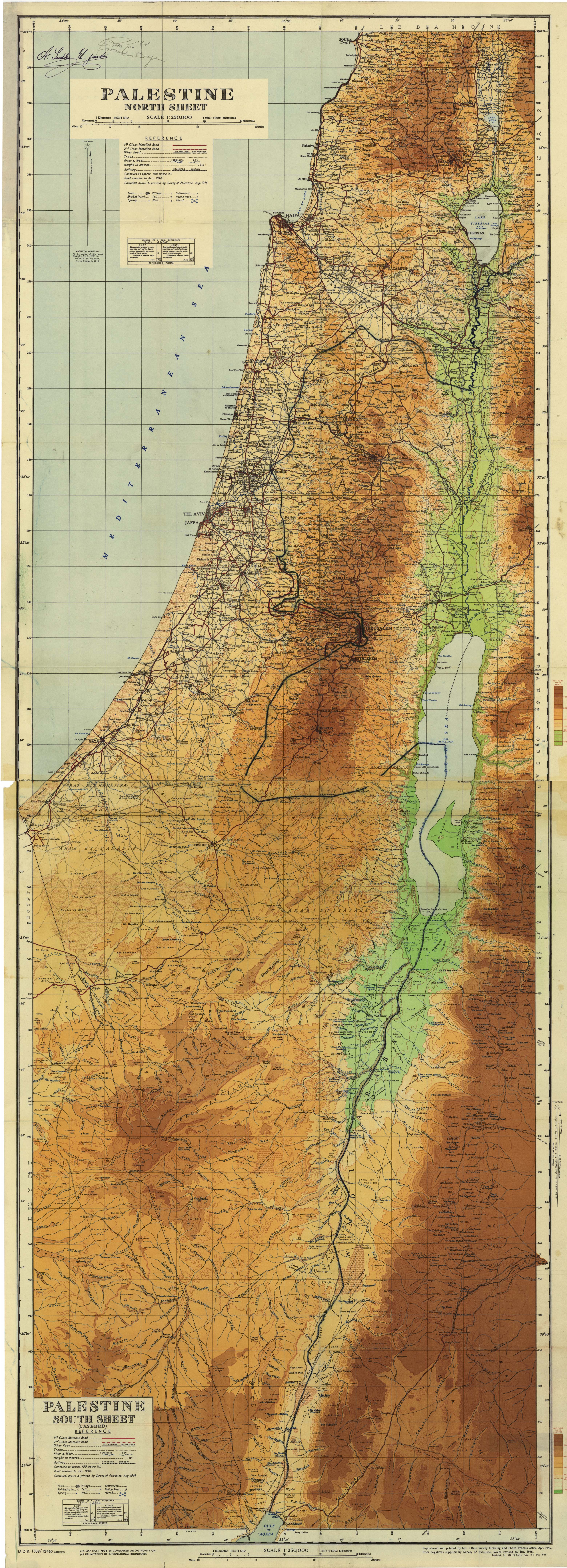
Successive Palestinian and Arab leaders resisting this takeover have been compared to Adolf Hitler. Amos Oz and Elie Wiesel never hesitated to equate the Palestinian national movement with Nazism. Benjamin Netanyahu recently decided to absolve Hitler of responsibility for the Holocaust and to instead blame Haj Amin Husseini, the grand mufti of Jerusalem from 1921-1948, for the designs and execution of Nazi war crimes. The more Israel finds itself in an untenable position, given the changes in world public opinion in favor of Palestinians and their rights, the more Israel and Israelis worldwide invoke the memory of the Holocaust and anti-Semitism to silence critics.
The question of comparing Israeli policies and actions with those of the Nazis is not a simple one. There is indeed a uniqueness to the horrors of the Holocaust that require special respect for its victims. To throw around the word “rape” in situations where there is no rape, is offensive to victims of rape. Similarly, one should not use the word “holocaust” casually because it connotes one of the worst crimes of the last century.
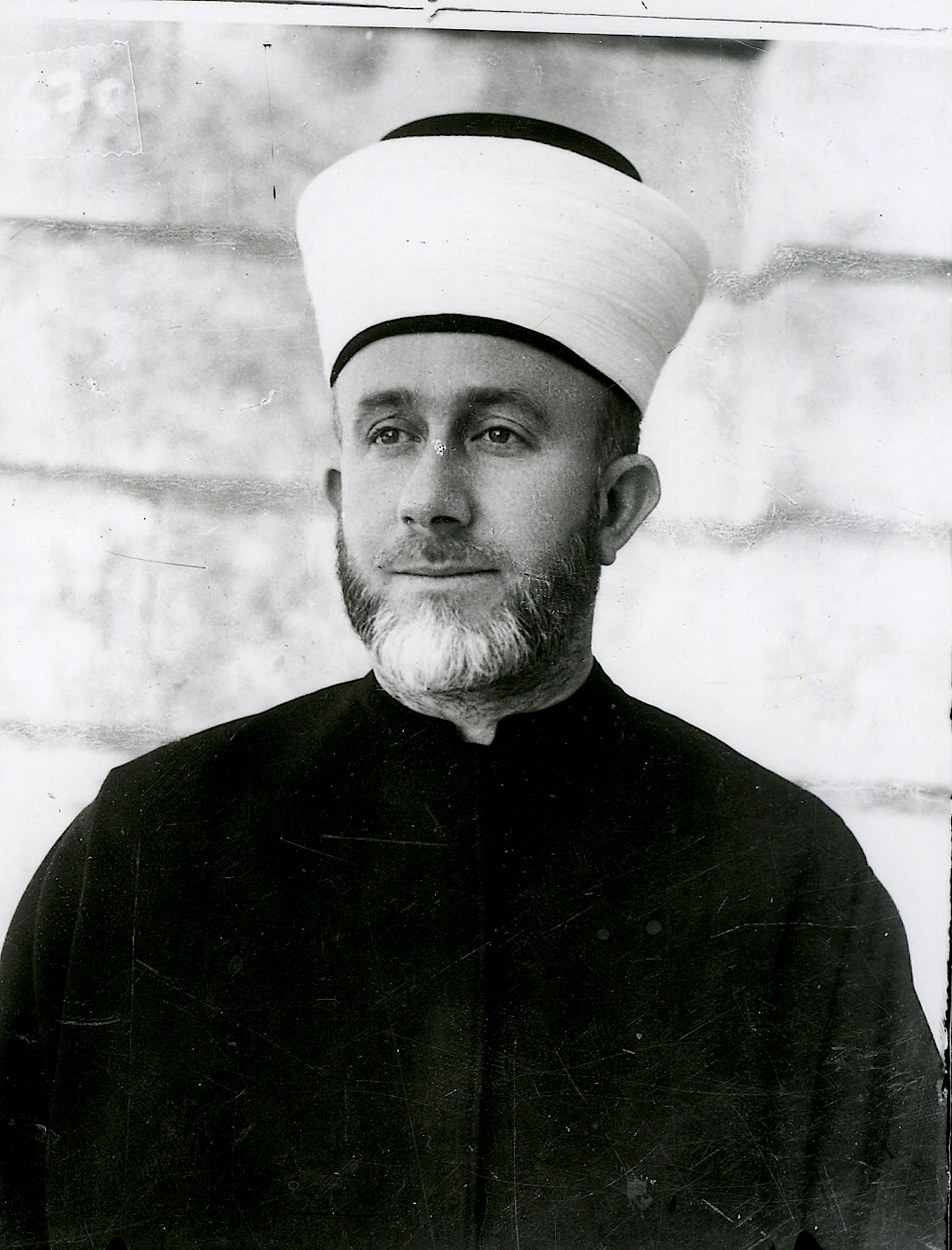
Husseini: Worst than Hitler, says Netanyahu
But Israelis can’t have it both ways. If the reason for their rejection of a comparison between Israel and the Nazi regime is out of respect for the victims of the Holocaust, then why did most—if not all—Israeli organizations (in the U.S. and elsewhere) popularize the comparison between the Syrian regime and the Nazi regime over the last few years of the Syrian war? Why do Israelis compare the Palestinian national movement to Nazism?
The Holocaust Museum in Washington, D.C. took a leading role in the propaganda production about Syria. Shouldn’t that be considered anti-Semitic, if a comparison between Israel and the Nazi regime is anti-Semitic? Either we reject any analogy between the Nazi regime and any other regime regardless of how criminal it is, or we accept it as part of the propaganda of war. Israelis can’t ban others from what they themselves permit themselves to do.
True Lies and False Virtue
Propaganda is how Israel still manages to find new and different ways to silence debate and ostracize dissent. Israel has campaigned to deny tenure to professors who are critical of its abuses (see Norman Finkelstein, Joseph Massad, Steven Salaita and others). Israelis say the Boycott, Divestment, Sanctions (BDS) movement should be legally banned and have lobbied state governments in the United States to ban boycotting Israel, which the ACLU among others see as a violation of the First Amendment. Israel has also launched an app that directs users to make negative social media comments. In general, Israel wants to impose a rigid uniformity of discourse and terms about the Arab-Israeli conflict.
Israelis fight—and kill—Arabs all over the world (Israel has not been shy about murdering Arab scientists, and U.S. media casually report on those assassinations without comments or repudiation). Arabs and non-Arabs cannot speak and write uncensored thoughts about the Arab-Israeli conflict without risking severe repression from the Israeli occupation state, including censorship on social media.
The war on Corbyn is a prominent part of Israel’s war on free speech in the U.K. and elsewhere.
Corbyn and other politicians should be expected to never resort to anti-Semitic expressions. But so far only evidence of his pro-Palestinian statements have been found and that should never be confused with the scourge of genuine anti-Semitism.
As’ad AbuKhalil is a Lebanese-American professor of political science at California State University, Stanislaus. He is the author of the Historical Dictionary of Lebanon (1998), Bin Laden, Islam and America’s New “War on Terrorism” (2002), and The Battle for Saudi Arabia (2004). He also runs the popular blog The Angry Arab News Service.
CIA-Backed Firm Tipped Off Facebook to ‘Inauthentic’ Accounts
Sputnik – August 22, 2018
Facebook removed 652 pages, groups and accounts on Tuesday for “coordinated inauthentic behavior” after it was tipped off to the accounts by FireEye, a cybersecurity firm bankrolled by the Central Intelligence Agency.
The company has attributed the operators of the newly removed accounts to the usual scapegoats: Russia and Iran.
“These were distinct campaigns, and we have not identified any links or coordination between them,” the company said.
Twitter quickly followed suit. “Working with our industry peers today, we have suspended 284 accounts from Twitter for engaging in coordinated manipulation,” Twitter said in a Tuesday statement. “Based on our existing analysis, it appears many of these accounts originated from Iran.”
“The thing that strikes me the most is that it’s so convenient, that all of these pages that Facebook has been taking down and that Twitter has been limiting, are all somehow related — or they say they’re related — to governments or movements or news sources that aren’t very friendly to the United States or that the United States government wants to overthrow,” web developer and technologist Chris Garaffa told Radio Sputnik’s By Any Means Necessary.
“Russia. Iran. TeleSur. Venezuela Analysis. There was a Haitian liberation page that was taken down last week on Facebook as well.”
“You don’t see any German pages, you don’t see any British pages coming down, even if they are doing some sort of sketchy activity,” Garaffa added.
According to Facebook’s head of Cybersecurity Policy, Nathaniel Gleicher, the social media giant got a tip from FireEye, a cybersecurity firm that has received venture capital funding by the CIA since 2009. In a statement, the CIA’s investment arm said it will maintain a “strategic partnership” with FireEye, calling it a “critical addition to our strategic investment portfolio for security technologies.”
The CIA’s venture capital arm is known as In-Q-Tel, which describes itself as a “not-for-profit strategic investor” on its website.
The company was one of the few cyber firms to forensically analyze the alleged hack of the Democratic National Committee. A spokesman for the firm told Defense One that the hackers “wanted experts and policymakers to know that Russia is behind it.”
In March 2017, FireEye CEO Kevin Mandia, a former Air Force cyber crimes investigator, told the Senate Select Committee on Intelligence that the company was able to attribute the blame to Russia based off of “deduction” and “process of elimination.”
One part of the network FireEye identified to Facebook was a page called Quest 4 Truth. According to Gleicher, it “claims to be an independent Iranian media organization, but is in fact linked to Press TV, an English-language news network affiliated with Iranian state media.”

“We’re still investigating, and we have shared what we know with the US and UK governments,” Gleicher wrote. “Since there are US sanctions involving Iran, we’ve also briefed the US Treasury and State Departments.”
“The social media companies are by and large American companies, and they want to be in favor with the US government,” Garaffa told By Any Means Necessary hosts Eugene Puryear and Sean Blackmon. “They will do the bidding of the US government when it comes to data collection [and] when it comes to taking down pages that are not acceptable.”
“It’s a huge PR weapon that the American government has that almost no one else does,” he added.
The investigation came in three parts, according to Facebook. The first netted 74 Facebook pages, 70 accounts, three groups and 76 accounts on Instagram, which is owned by Facebook. Some $6,000 was spent on ads on the platforms, and three events were created.
The second stage included 12 Facebook pages, 66 Facebook accounts and nine Instagram accounts. No money was spent on advertising, and none of the pages had associated events.
The third part of the investigation found 168 Facebook pages, 140 Facebook accounts and 31 Instagram accounts; 25 events were created, and more than $6,000 was spent on ads.
According to Facebook, many of the pages masqueraded as news organizations. Some real news organizations have reported that the accounts were seeking to influence the US midterm elections, but in reality, Facebook just said one of the account groups was discovered as the company stepped up investigation efforts ahead of the midterms.
“Finally, we’ve removed pages, groups and accounts that can be linked to sources the US government has previously identified as Russian military intelligence services,” the company said. “This more recent activity focused on politics in Syria and Ukraine. For example, they are associated with Inside Syria Media Center, which the Atlantic Council and other organizations have identified for covertly spreading pro-Russian and pro-Assad content.”
Facebook has partnered with the Digital Forensics Research Lab to combat so-called fake news. It’s worth noting DFL is an arm of the neoconservative Atlantic Council think tank, which is primarily funded by NATO, Gulf monarchies and the US defense industry.
“The shuttering of progressive media amidst the ‘fake news’ and Russiagate hysteria is what activists been warning all along — tech companies, working in concert with think tanks stacked with CIA officials and defense contractors, shouldn’t have the power to curate our reality to make those already rendered invisible even more obsolete,” Abby Martin, host of “The Empire Files” on TeleSur English, told Sputnik News after Facebook temporarily unpublished the TeleSur English page. “The Empire Files” announced on Wednesday that they were forced to shut down because of US sanctions.
“The Atlantic Council is like a who’s who of the extremely wealthy and NATO countries and allies,” Garaffa said. Since the “content moderation” partnership, there’s been a “massive uptick in removing of any content that goes against the mass media, US propaganda line.”
“So they have this unprecedented control over the narrative and the information that we can see, and these are private companies, but ultimately because of their relationship with the state, they are serving the interests of the state, and the state is actually serving to protect these companies’ interests as well.”
Facebook’s last round of bans came on July 31. That time, the company made no attempt to publicly identify who was behind the “bad actors” on their platform, but said that activity displayed by them was consistent with previously identified activity from the allegedly Kremlin-run troll farm the Internet Research Agency.
That ban included 32 pages and accounts and the main counter-protest to the Unite the Right 2.0 rally held in Washington, DC on August 12 — the one-year anniversary to the deadly Charlottesville, Virginia, protest. One of the six administrators on the account supposedly displayed inauthentic activity. The other five were totally legitimate, the company admitted.
The bans on Tuesday follow a long line of similar ones issued by the company since the 2016 election. The company banned 470 supposedly fake Russian accounts in September 2017; then, on April 3, Facebook banned 70 Facebook accounts, 65 Instagram accounts and 138 Facebook pages allegedly controlled by the Internet Research Agency.
Garaffa underscored the power social media giants wield, as they’re relied on “much more now than most people did on television or newspaper news, because the stream is always on. You’re not picking up the morning edition of the paper, you’re looking at what happened in the last five minutes.”
Detained Journalist Released Under Strict Conditions
IMEMC | August 22, 2018
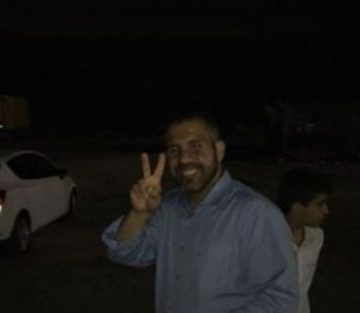 Israeli Authorities released a Palestinian journalist from the central West Bank city of Ramallah on Tuesday evening after forcing him to pay a fine, in addition to preventing him for working in his profession for two months.
The journalist, Ala’ Rimawi, was abducted, along with three other reporters, on July 30th, 2018, for working for the Palestinian Al-Quds Satellite News Agency, after the military and the Israeli political leadership, decided to classify it as a “terrorist agency.”
The three other journalists have been identified as Hosni Anjass, Mohammad Alwan and Qoteiba Hamdan.
It is worth mentioning that Rimawi launched a hunger strike on the first day of his imprisonment on July 30th, 2018.
The ruling to release Rimawi was made by the military court in Ofer prison, built on Palestinian lands in Betunia city, west of Ramallah; the Israeli prosecutor’s office filed three appeals demanding keeping the journalist in prison.
The court ordered the detainee to pay a 10.000 Israeli Shekels fine, in addition to preventing him from resuming his journalism profession, and forcing him under house arrest, for two months.
US Inmates Strike to End ‘Prison Industrial Slave Complex’
Sputnik – August 22, 2018
Prisoners in 17 US states are striking on Tuesday, August 21, on the anniversary of the death of Black Panther prison organizer George Jackson. Inmates are engaging in work stoppages and hunger strikes, among other methods, in a bid to push for better conditions, more rights and an end to prison slavery.
The strike will continue until September 9, the anniversary of the 1971 uprising at Attica Correctional Facility in New York.
A prisoner who helped organize the strike told Sputnik News in April that they’re looking to dismantle the “prison industrial slave complex.” He is incarcerated at Lee Correctional Facility in South Carolina, which saw the deadliest event in US prison history in the past 25 years on April 15. Seven people were killed and more than 20 were injured during the revolt. The strike is meant to protest that violence, as well as poor living conditions in US prisons and the practice of slave labor there.
The 13th Amendment to the United States Constitution abolished slavery — at least that’s what most Americans think. In reality, it forbade “slavery [and] involuntary servitude, except as a punishment for crime.”
That means that in effect, slavery is an ongoing phenomenon in America. Prisoners make all kinds of goods, typically for a rate spanning between zero and a few dollars a day. License plates, textiles, Starbucks coffee cups and many consumer products of are made, at a subsidized rate, often for large corporations, by prisoners. California’s detained workforce has more than 2,000 inmates battling wildfires, including almost 60 minors. They’re making $3 a day as they risk their lives, yet are also forbidden from joining fire departments after their release.
Karen Smith of the Incarcerated Workers Organizing Committee (IWOC), a group formed in 2014 “as a result of the prison organizing that’s been going on since 2010,” by formerly incarcerated members of the Industrial Workers of the World (IWW) union, spoke with Sputnik News on the eve of the strike.
“It became apparent to the IWW that this struggle that incarcerated, working-class brothers and sisters were engaged in was our struggle, and needed a cohesive group to address its needs and to organize alongside them,” she said.
Groups including IWOC, the Free Alabama Movement, Jailhouse Lawyers Speak and Fire Inside have been working with prisoners to organize the strike, which forced all 11 prisons run by the New Mexico Department of Corrections into lockdown Tuesday afternoon.
At the Hyde Correctional Institution in North Carolina, three prisoners were designated as strike organizers and are “facing threats of administrative repression,” IWOC said in a statement.
“Retaliation comes in the form of physical abuse, restricted movement, getting sentenced to solitary confinement — getting your status changed; here in Florida it’s called ‘closed management,” Smith told Sputnik. “Many people who were at the forefront of the prisoner resistance movement here in Florida were labelled a ‘security threat group’ and placed in closed management,” she said before the strike.
“Some of them have been set up with knives and cellphones placed in their belongings, or near them in their dorm, and now are placed in closed management for a year and a half, meaning solitary confinement. Restricted commissary. Phone calls, maybe once a week. They only get to shower at very limited times. And they get taken out one hour a day, if that even happens. I get tons of reports that that doesn’t happen. Or, they go to a slightly larger cage, or a small yard, for an hour before they get put back into confinement. People have lost their visitation [rights]; I’ve lost my visitation rights. People’s personal property is taken, which is, you know, huge when all you have is the photos of your family — the case that you might be in the middle of working on, which so many incarcerated people are — fighting for the freedom.”
Prisoners have 10 demands in 2018. The first and foremost is an improvement to conditions in prisons so that they “recognize the humanity of imprisoned men and women. “Prisoners are tired of the conditions that are breeding violence. Prisoners are tired of the conditions that are breeding hopelessness, and at the end of the day we feel this system, it needs to be changed,” the prisoner at Lee told Sputnik News.
He began by noting the “restrictions” placed on prisoners and the “collective punishment” prison officials hand down over individual infractions. He bemoaned that prisoners are “being warehoused” with “no movement.”
“All they see of their former lives,” Smith said, “is the sky.”
“To get outside and to have sunshine and fresh air, that is a minimal human right,” she said. “And movement already being restricted to a dorm, or a nine by seven cell, for a year and a half, that does immeasurable damage to a person. It also feeds into the dehumanization that the system relies on: breaking people down, separating them from each other, isolating them. People who are already marginalized, already isolated in a lot of ways.”
When it comes to criminals, “it’s easy to sweep their needs aside.”
Americans consider them “less than, this sort of subhuman status that criminals have in our society. The fact that there’s so many of them, people with felony convictions, I think now it can’t be ignored. This label, ‘criminal,’ has been used to oppress and exploit people since the dawn of this country and before that, definitely since the end of slavery in our country,” Smith told Sputnik News.
The strike also calls for the rescinding of three pieces of legislation passed in the 1980s and 1990s that prisoners say rob them of proper channels to address their grievances and prohibit them from ever receiving rehabilitation and parole, thereby making them “sentenced to death by incarceration.” The inmate Sputnik News spoke with said that part of what’s causing tensions in prisons is people being handed “forever sentences” over petty offenses.
Another listed demand calls for an end to “racial overcharging, over-sentencing and parole denials,” noting that black people convicted of crimes against white victims are particularly targeted this way, especially “in southern states.” Other demands call for more rehabilitation services and voting rights.
“Work stoppages are just one of the forms of direct action that prisoners engage in; the others being boycotts, sit-ins, hunger strikes. I think work strikes — it’s a commodity that incarcerated people have access to. They’re forced to work. So it’s a leverage. The prison system relies on them for it to run,” Smith said.
“One of the things we decided, is that part of this is to be work stoppages. What we know is that we have to figure out how to economically impact the system; we’ve got to that point,” the incarcerated man said.
Prisoners are refusing to make telephone calls, which come at huge financial costs, and foregoing use of the commissary, which helps them eat enough food in the face of small portions served by the cafeteria. Prisoners complain of being extorted by commissary prices. According to prison reporter Brian Sonenstein of Shadowproof, a can of soup can cost more than $15.
“We feel that economic boycott, which is why we call for boycott as well through our strike, is more than enough and sufficient to make a serious statement. Usually during the month of August prisoners in certain states and counties already start boycotting anyways; it’s just not publicized a lot,” the prisoner at Lee said. “A lot of prisoners are refusing the little luxuries that we usually have here. We start to forsake those things. So this is one reason we definitely wanted to do it, because we feel like it’s the next right step to take, the next right step to get prisons into the mindframe of stop spending, stop letting these people exploit our families, our friends and even ourselves. Stop exploiting us, because our money, our family, is what keeps the system going. It’s all based on dollars. Everything at the end of the day is based on money. I wish I could say it was based on restorative justice, but it’s not. It’s based on money.”
He added that boycotts “build up the collective struggle.”
The uprising at Lee, the inmate there told Sputnik News, came after 10 days of things reaching a boiling point. “Bad food, bad attitudes from the officers, bad attitudes from the occupants, no movement. They’re constantly taking from us, constantly locking us down — these are the things that began to fill the atmosphere,” he said.
According to the inmate, the violence broke out after guards set up a “gladiator match” between inmates. Guards “watched the bodies pile up” from behind a fence, he said. As he understands it, it’s “policy” in South Carolina.
Similar reports from Oklahoma of guards setting up a “gladiator school” have also surfaced recently, Sputnik News reported.
“With the gang situation, in Florida, we see them shipping people to camps in order to stir conflict to ‘take care’ of people,” Smith told Sputnik News.
Traci Fant of the prison advocacy group Freedom Fighters Upstate South Carolina told local media that since the uprising, inmates at Lee “can’t urinate or defecate in the toilet, because they have to drink the toilet water.” One video posted to Facebook by the group shows inmates inside Lee complaining of the smell of urine and feces, and trash cluttering the hallways.
“At Florida State prison, which is right up the road where our death row is housed, prisoners in several wings in the confinement dorms, which are two-man cells, their toilets are controlled by a flush button that is on the wall at the end of their unit, which the officer has control of, and they use it as a punishment,” Smith said. “They will not flush the toilets, and people are sitting their own feces and urine with hundred-degree temperatures in Florida for days.”
In May, South Carolina officials responded to the uprising by instituting a drone surveillance system. The drones, equipped with night vision and heat-sensing capabilities, add to the already expensive security infrastructure, which includes two guard towers — constructed in part by inmates — at a cost of $237,000. It’s difficult to understand why the drones are viewed as necessary at Lee, as the prison already had a $2.2 million camera system, also with night vision and heat sensing tech, that covers the entire prison.
“The response to that tragedy that left seven dead and so many injured was to ramp up technology to interrupt cell phone signals,” Smith said. “That’s their response to that tragedy; that’s what they see as wrong with that situation: not the deaths, not the violence. That’s status quo in the prison system. It’s the fact that word got out about it.”
Smith noted the discrepancy in spending further: “You can’t get food that is decent or even unspoiled, yet they have those rods for prisoners to walk around that will go off if there’s a cellphone within distance. Major technology that’s interrupting communication [is paid for], yet aspirin is their entire healthcare system at most.”
She called on people to support the strike by spreading the word and contacting prison officials to complain. Currently, IWOC is holding call-in campaigns to do just that. “We need to change our culture,” she said, “Here in Florida, we have a whole unique beast that we’re fighting, where prison guards are actual Ku Klux Klan members, and it’s not criminal for guards to boil people alive — those are what our headlines look like down here.”
“Without outside support, the inside movement dies,” she said. “They don’t have a chance, because nobody is paying attention, and if we don’t take it upon ourselves to pay attention and to contribute to the narrative — and the narrative is being shaped solely by prison administrators, and the people who profit off of prisoners. That narrative has been sold to use for decades, and it’s time that we take it over and have it represent the actual needs of the people.”
The strike follows a long line of similar protests in prisons. In January and February, prisoners in Florida went on strike in a move called Operation PUSH. In 2016, prisoners went on strike in 24 states on September 9.
“The prison resistance movement has been around forever; since — I always like to say — since the Africans came off the slave boats here, the prison resistance movement has been around. It only solidified with the 13th Amendment of the United States Constitution,” the prisoner at Lee said. “There has been a fighting element in the prisons ever since then. There’s been strikes and boycotts.”
“We all consider it part of a budding movement that’s continuing on until — in my viewpoint, we’re looking for abolition at the end of the day,” he said. “Prisoners are tired of the conditions that are breeding violence. Prisoners are tired of the conditions that are breeding hopelessness, and at the end of the day, we feel this system, it need to be changed.”
Battlefield America: The Ongoing War on the American People

By John W. Whitehead | The Rutherford Institute | August 21, 2018
Police in a small Georgia town tasered a 5-foot-2, 87-year-old woman who was using a kitchen knife to cut dandelions for use in a recipe. Police claim they had no choice but to taser the old woman, who does not speak English but was smiling at police to indicate she was friendly, because she failed to comply with orders to put down the knife.
In Alabama, police first tasered then shot and killed an unarmed man who refused to show his driver’s license after attempting to turn in a stray dog he’d found to the local dog shelter. The man’s girlfriend and their three children, all under the age of 10, witnessed the shooting.
In New York, Customs and Border Protection officers have come under fire for subjecting female travelers (including minors) to random body searches that include strip searches while menstruating, genital probing, and forced pelvic exams, X-rays and intravenous drugs at area hospitals.
These are not isolated incidents.
These cases are legion.
This is what a state of undeclared martial law looks like, when you can be arrested, tasered, shot, brutalized and in some cases killed merely for not complying with a government agent’s order or not complying fast enough.
This isn’t just happening in crime-ridden inner cities.
It’s happening all across the country.
America has been locked down.
This is what it’s like to be a citizen of the American police state.
This is what it’s like to be an enemy combatant in your own country.
This is what it feels like to be a conquered people.
This is what it feels like to be an occupied nation.
This is what it feels like to live in fear of armed men crashing through your door in the middle of the night, or to be accused of doing something you never even knew was a crime, or to be watched all the time, your movements tracked, your motives questioned.
This is what it feels like to have your homeland transformed into a battlefield.
“We the people” have now come full circle, from being held captive by the British police state to being held captive by the American police state.
Where we went wrong was in allowing ourselves to become enthralled with and then held hostage by a military empire in bondage to a corporate state (the very definition of fascism).
Unfortunately, we now find ourselves scrambling for a foothold as our once rock-solid constitutional foundation crumbles beneath us. And no longer can we rely on the president, Congress, the courts, or the police to protect us from wrongdoing.
Indeed, the president, Congress, the courts, and the police have come to embody all that is wrong with America.
Certainly, the Constitution’s safeguards against police abuse means nothing when government agents can crash through your door, terrorize your children, shoot your dogs, and jail you on any number of trumped of charges, and you have little say in the matter.
There is no end to the government’s unmitigated gall in riding roughshod over the rights of the citizenry, whether in matters of excessive police powers, militarized police, domestic training drills, SWAT team raids, surveillance, property rights, overcriminalization, roadside strip searches, profit-driven fines and prison sentences, etc.
The president can now direct the military to detain, arrest and secretly execute American citizens. These are the powers of an imperial dictator, not an elected official bound by the rule of law. This mantle is worn by whomever occupies the Oval Office now and in the future.
A representative government means nothing when the average citizen has little to no access to their elected officials, while corporate lobbyists enjoy a revolving door relationship with everyone from the President on down. Indeed, while members of Congress hardly work for the taxpayer, they work hard at being wooed by corporations, which spend more to lobby our elected representatives than we spend on their collective salaries.
As for the courts, they have long since ceased being courts of justice. Instead, they have become courts of order, largely marching in lockstep with the government’s dictates, all the while helping to increase the largesse of government coffers. It’s called for-profit justice, and it runs the gamut of all manner of financial incentives in which the courts become cash cows for communities looking to make an extra buck.
As for the rest—the schools, the churches, private businesses, service providers, nonprofits and your fellow citizens—many are also marching in lockstep with the police state.
This is what is commonly referred to as community policing.
After all, the police can’t be everywhere. So how do you police a nation when your population outnumbers your army of soldiers? How do you carry out surveillance on a nation when there aren’t enough cameras, let alone viewers, to monitor every square inch of the country 24/7? How do you not only track but analyze the transactions, interactions and movements of every person within the United States?
The answer is simpler than it seems: You persuade the citizenry to be your eyes and ears.
It’s a brilliant ploy, with the added bonus that while the citizenry remains focused on and distrustful of each other, they’re incapable of focusing on more definable threats that fall closer to home—namely, the government and its militarized police.
Now it may be that we have nothing to worry about.
Perhaps the government really does have our best interests at heart.
Perhaps covert domestic military training drills really are just benign exercises to make sure our military is prepared for any contingency.
Then again, while I don’t believe in worrying over nothing, there can be no denying that we’re being accustomed to life in a military state.
The malls may be open for business, the baseball stadiums may be packed, and the news anchors may be twittering nonsense about the latest celebrity foofa, but those are just distractions from what is really taking place: the transformation of America into a war zone.
As I document in my book Battlefield America: The War on the American People, if it looks like a battlefield (armored tanks on the streets, militarized police in metro stations, surveillance cameras everywhere), sounds like a battlefield (SWAT team raids nightly, sound cannons to break up large assemblies of citizens), and acts like a battlefield (police shooting first and asking questions later, intimidation tactics, and involuntary detentions), it’s a battlefield.
Imprisoned Palestinian journalist reiterates call for solidarity
Samidoun Palestinian Prisoner Solidarity Network | August 19, 2018
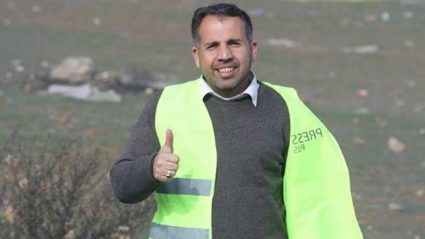 Imprisoned Palestinian journalist and director of Al-Quds TV Alaa Rimawi said on Sunday, 19 August that the arrests carried out by Israeli occupation forces against Palestinian media and journalists are part of a comprehensive attack on Palestinian media, preventing it from doing its work and minimizing its role in publicizing Palestinian realities.
In a statement released by his family and lawyer, Rimawi said that this agenda was clear during the interrogation sessions he was subjected to personally in the past two days. He also noted the cases of journalist Ali Dar Ali, arrested by occupation forces, and the administrative detention of journalist Mohammed Muna, saying that these attacks reflected the same purpose.
Rimawi said in his statement that the occupation considers terms like “martyr,” “occupation,” “steadfastness,” “confrontation” and “resistance” to be “inciting” content. He also noted that the arrests of journalists is meant to keep the situation in Palestine from being covered in the media. “The occupation is carrying out a policy of intimidation with its police and intelligence services. This is clear and obvious, bringing forward the names of journalists to continue these detentions, a threat against every free Palestinian journalists.”
He called for a unified position in support of Palestinian journalists from the International Federation of Journalists, Arab Press Union and other concerned bodies around the world to come together with a unified goal of protecting Palestinian journalists under occupation.
Occupation arrests of Palestinian journalists like Dar Ali, Muna, Lama Khater and others, and the forcible closure of media institutions by military bodies have escalated recently, under various pretexts and charges.
Saudi writer critical of UAE’s regional policies sentenced to 5 years in prison
Press TV – Aug 18, 2018
Saudi authorities have handed down prison sentence to a writer in the conservative oil-rich kingdom as part of a widening crackdown led by Crown Prince Mohammed bin Salman against Muslim preachers, members of the press and intellectuals.
The rights group Prisoners of Conscience, which is an independent non-governmental organization advocating human rights in Saudi Arabia, announced in a post on its official Twitter page that Mohammed al-Hudhaif was sentenced to five years in jail after being found guilty of “ insulting a friendly country.”
The post added that Saudi officials passed the ruling against Hudhaif at the end of a “secret trial” in late May.
The writer had reportedly published posts on his Twitter page, warning about the threats the neighboring United Arab Emirates poses to the Riyadh regime, and the fiendish plans that Emirati officials have for the Middle East region.
The report came only a few days after human rights activists said prominent Saudi Muslim preacher and political dissident Salman al-Odah, who has been in prison since September 2016, has been transferred from Dhahban Central Prison in the Red Sea port city of Jeddah to al-Ha’ir Prison in the capital Riyadh, and is about to stand a secret trial.
Earlier this week, Prisoners of Consciousness also reported that political dissident and Muslim preacher Sheikh Suleiman al-Doweesh had lost his life due to severe torture he was subjected to during criminal investigations.
Saudi Arabia has recently stepped up politically-motivated arrests, prosecution and conviction of peaceful dissident writers and human rights campaigners.
Saudi officials have also intensified security measures in the Shia-populated and oil-rich Eastern Province.
Eastern Province has been the scene of peaceful demonstrations since February 2011. Protesters have been demanding reforms, freedom of expression, release of political prisoners, and an end to economic and religious discrimination against the oil-rich region.
The protests have been met with a heavy-handed crackdown by the regime, with regime forces increasing security measures across the province.
Over the past years, Riyadh has also redefined its anti-terrorism laws to target activism.
In January 2016, Saudi authorities executed Shia cleric Sheikh Nimr Baqir al-Nimr, an outspoken critic of the policies of the Riyadh regime. Nimr had been arrested in Qatif in 2012.
Corbyn’s Labour Party is Being Made to Fail: by Design
By Jonathan Cook | Dissident Voice | August 17, 2018
The Labour party, relentlessly battered by an organised campaign of smears of its leader, Jeremy Corbyn – first for being anti-semitic, and now for honouring Palestinian terrorists – is reportedly about to adopt the four additional working “examples” of anti-semitism drafted by the International Holocaust Remembrance Alliance (IHRA).
Labour initially rejected these examples – stoking yet more condemnation from Israel’s lobbyists and the British corporate media – because it justifiably feared, as have prominent legal experts, that accepting them would severely curb the freedom to criticise Israel.
The media’s ever-more outlandish slurs against Corbyn and the Labour party’s imminent capitulation on the IHRA’s full definition of anti-semitism are not unrelated events. The former was designed to bring about the latter.
According to a report in the Guardian this week, senior party figures are agitating for the rapid adoption of the full IHRA definition, ideally before the party conference next month, and say Corbyn has effectively surrendered to the pressure. An MP who supports Corbyn told the paper Corbyn would “just have to take one for the team”.
In a strong indication of the way the wind is now blowing, the Guardian added:
“The party said it would consult the main [Jewish] communal bodies as well as experts and academics, but groups such as the pro-Corbyn Jewish Voice for Labour have not been asked to give their views.”
No stomach for battle
The full adoption of the IHRA definition of anti-semitism will be a major victory both for Israel and its apologists in Britain, who who have been seeking to silence all meaningful criticism of Israel, and for the British corporate media, which would dearly love to see the back of an old-school socialist Labour leader whose programme threatens to loosen the 40-year stranglehold of neoliberalism on British society.
Besieged for four years, Corbyn’s allies in the Labour leadership have largely lost the stomach for battle, one that was never about substance or policy but about character assassination. As the stakes have been constantly upped by the media and the Blairite holdouts in the party bureaucracy, the inevitable has happened. Corbyn has been abandoned. Few respected politicians with career ambitions or a public profile want to risk being cast out into the wilderness, like Ken Livingstone, as an anti-semite.
This is why the supposed anti-semitism “crisis” in a Corbyn-led Labour party has been so much more effective than berating him for his clothes or his patriotism. Natural selection – survival of the smear fittest for the job – meant that a weaponised anti-semitism would eventually identify Corbyn as its prime target and not just his supporters – especially after his unexpectedly strong showing at the polls in last year’s election.
Worse, Corbyn himself has conceded too much ground on anti-semitism. As a lifelong anti-racism campaigner, the accusations of anti-semitism have clearly pained him. He has tried to placate rather than defy the smearers. He has tried to maintain unity with people who have no interest in finding common ground with him.
And as he has lost all sense of how to respond in good faith to allegations made in bad faith, he has begun committing the cardinal sin of sounding and looking evasive – just as those who deployed the anti-semitism charge hoped. It was his honesty, plain-speaking and compassion that won him the leadership and the love of ordinary members. Unless he can regain the political and spiritual confidence that underpinned those qualities, he risks haemorrhaging support.
Critical juncture
But beyond Corbyn’s personal fate, the Labour party has now reached a critical juncture in its response to the smear campaign. In adopting the full IHRA definition, the party will jettison the principle of free speech and curtail critical debate about an entire country, Israel – as well as a key foreign policy issue for those concerned about the direction the Middle East is taking.
Discussion of what kind of state Israel is, what its policy goals are, and whether they are compatible with a peace process are about to be taken off the table by Britain’s largest, supposedly progressive party.
That thought spurred me to cast an eye over my back-catalogue of journalism. I have been based in Nazareth, in Israel’s Galilee, since 2001. In that time I have written – according to my website – more than 900 articles (plus another few hundred blog posts) on Israel, as well as three peer-reviewed books and a clutch of chapters in edited collections. That’s a lot of writing. Many more than a million words about Israel over nearly two decades.
What shocked me, however, as I started to pore over these articles was that almost all of them – except for a handful dealing with internal Palestinian politics – would fall foul of at least one of these four additional IHRA examples Labour is about to adopt.
After 17 years of writing about Israel, after winning a respected journalism prize for being “one of the reliable truth-tellers in the Middle East”, the Labour party is about to declare that I, and many others like me, are irredeemable anti-semites.
Not that I am unused to such slurs. I am intimately familiar with a community of online stalkers who happily throw around the insults “Nazi” and “anti-semite” at anyone who doesn’t cheerlead the settlements of the Greater Israel project. But far more troubling is that this will be my designation not by bullying Israel partisans but by the official party of the British left.
Of course, I will not be alone. Much of my journalism has been about documenting and reporting the careful work of scholars, human rights groups, lawyers and civil society organisations – Palestinian, Israeli and international alike – that have charted the structural racism in Israel’s legal and administrative system, explaining often in exasperating detail its ethnocractic character and its apartheid policies. All of us are going to be effectively cast out, denied any chance to inform or contribute to the debates and policies of Britain’s only leftwing party with a credible shot at power.
That is a shocking realisation. The Labour party is about to slam the door shut in the faces of the Palestinian people, as well as progressive Jews and others who stand in solidarity with them.
Betrayal of Palestinians
The article in the Guardian, the newspaper that has done more to damage Corbyn than any other (by undermining him from within his own camp), described the incorporation of the full IHRA anti-semitism definition into Labour’s code of conduct as a “compromise”, as though the betrayal of an oppressed people was something over which middle ground could be found.
Remember that the man who drafted the IHRA definition and its associated examples, American Jewish lawyer Kenneth Stern, has publicly regretted their impact, saying that in practice they have severely curbed freedom of speech about Israel.
How these new examples will be misused by Corbyn’s opponents should already be clear. He made his most egregious mistake in the handling of the party’s supposed anti-semitism “crisis” precisely to avoid getting caught up in a violation of one of the IHRA examples Labour is about to adopt: comparing Israel to Nazi Germany.
He apologised for attending an anti-racism event and distanced himself from a friend, the late Hajo Meyer, a Holocaust survivor and defender of Palestinian rights, who used his speech to compare Israel’s current treatment of Palestinians to early Nazi laws that vilified and oppressed Jews.
It was a Judas-like act for which it is not necessary to berate Corbyn. He is doubtless already torturing himself over what he did. But that is the point: the adoption of the full IHRA definition will demand the constant vilification and rooting out of progressive and humane voices like Meyer’s. It will turn the Labour party into the modern equivalent of Senator Joe McCarthy’s House of Un-American Activities Committee. Labour activists will find themselves, like Corbyn, either outed or required to out others as supposed anti-semites. They will have to denounce reasonable criticisms of Israel and dissociate themselves from supporters of the Palestinian cause, even Holocaust survivors.
The patent absurdity of Labour including this new anti-semitism “example” should be obvious the moment we consider that it will recast not only Meyer and other Holocaust survivors as anti-semites but leading Jewish intellectuals and scholars – even Israeli army generals.
Two years ago Yair Golan, the deputy chief of staff of the Israeli military, went public with such a comparison. Addressing an audience in Israel on Holocaust Day, he spoke of where Israel was heading:
“If there’s something that frightens me about Holocaust remembrance it’s the recognition of the revolting processes that occurred in Europe in general, and particularly in Germany, back then – 70, 80 and 90 years ago – and finding signs of them here among us today in 2016.”
Is it not a paradox that, were Golan a member of the Labour party, that statement – a rare moment of self-reflection by a senior Israeli figure – will soon justify his being vilified and hounded out of the Labour party?
Evidence of Israeli apartheid
Looking at my own work, it is clear that almost all of it falls foul of two further “examples” of anti-semitism cited in the full IHRA definition that Labour is preparing to adopt:
“Applying double standards by requiring of [Israel] a behavior not expected or demanded of any other democratic nation.”
and:
“Denying the Jewish people their right to self-determination, e.g., by claiming that the existence of a State of Israel is a racist endeavor.”
One hardly needs to point out how preposterous it is that the Labour party is about to outlaw from internal discussion or review any research, scholarship or journalism that violates these two “examples” weeks after Israel passed its Nation-State Basic Law. That law, which has constitutional weight, makes explicit what was always implicit in Israel as a Jewish state:
- that Israel privileges the rights and status of Jews around the world, including those who have never even visited Israel, above the rights of the fifth of the country’s citizens who are non-Jews (the remnants of the native Palestinian population who survived the ethnic cleansing campaign of 1948).
- that Israel, as defined in the Basic Law, is not a state bounded by internationally recognised borders but rather the “Land of Israel” – a Biblical conception of Israel whose borders encompass the occupied Palestinian territories and parts of many neighbouring states.
How, one might reasonably wonder, is such a state – defined this way in the Basic Law – a normal “democratic” state? How is it not structurally racist and inherently acquisitive of other people’s territory?
Contrary to the demands of these two extra IHRA “examples”, the Basic Law alone shows that Israel is a “racist endeavour” and that we cannot judge it by the same standards we would a normal western-style democracy. Not least, it has a double “border” problem: it forces Jews everywhere to be included in its self-definition of the “nation”, whether they want to be or not; and it lays claim to the title deeds of other territories without any intention to confer on their non-Jewish inhabitants the rights it accords Jews.
Demanding that we treat Israel as a normal western-style liberal democracy – as the IHRA full definition requires – makes as much sense as having demanded the same for apartheid South Africa back in the 1980s.
Unaccountable politics
The Labour party has become the largest in Europe as Corbyn has attracted huge numbers of newcomers into the membership, inspired by a new kind of politics. That is a terrifying development for the old politics, which preferred tiny political cliques accountable chiefly to corporate donors, leaving a slightly wider circle of activists largely powerless.
That is why the Blairite holdouts in the party bureaucracy are quite content to use any pretext not only to root out genuine progressive activists drawn to a Corbyn-led party, including anti-Zionist Jewish activists, but to alienate tens of thousands more members that had begun to transform Labour into a grassroots movement.
A party endlessly obsessing about anti-semitism, a party that has abandoned the Palestinians, a party that has begun throwing out key progressive principles, a party that has renounced free speech, and a party that no longer puts the interests of the poor and vulnerable at the centre of its concerns is a party that will fail.
That is where the anti-semitism “crisis” is leading Labour – precisely as it was designed to do.
Facebook removes pro-Palestinian Occupy London page
RT | August 17, 2018
A Facebook page containing pro-Palestinian posts has been taken down by the social media giant. The latest in a string of pages removed by Facebook, it has renewed claims of “censorship” against the company.
The closure of the Occupy London page, which has garnered more than 150k followers since its opening in 2011, follows the “continual removal of posts related to Palestine”, an Occupy London spokesperson told The Canary.
They added that it is not the first time the social network attempted to “censor” its content.
“It feels like censorship. For months, we faced removal of posts related to Palestine. Perhaps once every few weeks or so, a post would be taken down and admins for the page were frozen out of their personal accounts. Then, today, Facebook unpublished the entire page.
“We want to see our page back up with immediate effect,” he added.
It follows renowned journalist Glenn Greenwald claiming Facebook had bowed to pressure from the Israeli government to silence Palestinian activists. According to an Intercept report, of some 158 requests made by Tel Aviv to Facebook (over just four months) for the removal of Palestinian content, 95 percent were granted.
Facebook has apparently intensified its crackdown on alternative outlets since it joined Apple and video platform YouTube in banning the conspiracy-oriented outlet Infowars.
An event page for a counter-protest against the Unite the Right 2.0 rally in Washington last weekend was also removed because one of the six administrators allegedly showed disingenuous activity.
Venezuelan news outlet, teleSur, which tends to report on affairs which go against the US government position and mainstream media perspective, was removed from Facebook in May. Facebook also removed pages belonging to leftist independent grassroots Venezuela Analysis and Haiti Analysis. They too are highly critical of US foreign policy in Latin America and the Caribbean region.
Featured Video
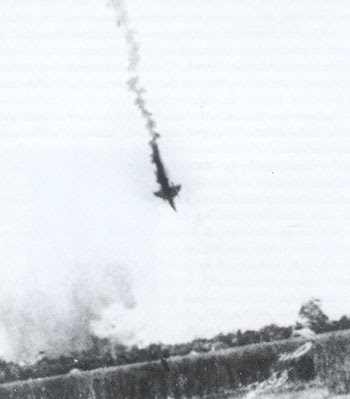
The Failed Air War Over Vietnam
or go to
Aletho News Archives – Video-Images
From the Archives
USS Liberty Massacre: A Pivotal Moment in the Hostile Takeover of America
By Kevin Barrett | Crescent | Dhu al-Qa’dah 24, 1445
In corporate America, hostile takeovers are commonplace. They occur when an aggressor—a larger corporation or rich individuals—seizes control of a smaller corporation without asking permission.
What few recognize is that the United States itself has been subjected to a hostile takeover. Since the aggressor, the illegitimate settler colony known as “Israel,” is much smaller than the US, the takeover has necessarily been surreptitious.
As of June, 2024, Israel’s gradual takeover of the US has become obvious and undeniable—a proverbial “elephant in the living room.” … continue
Blog Roll
 Aletho News
- Yemeni Armed Forces Warn Airlines Against Using Saudi Airports, Exempt Mecca and Medina
- Iran security chief says powers greater than US tried to conquer Iran but ended in ‘dustbin of history’
- Europe’s mounting social chaos… chickens coming home to roost for proxy war against Russia
- US-Russia Diesel Deal Becomes Massive Defeat for Ukraine
- Hormuz and the Looming Economic Catastrophe
- Dhubab offensive, media blitz and the rapid unraveling of Saudi-backed coalition’s new gambit
- Putin Conveys to Trump Iran’s Vision on Possible Conflict Resolution – Kremlin
- The Search for Truth: Charlie Kirk’s Assassination One Year Later
- ‘Harsh reality’: Iran says France seeks monopoly on power and intimidation, not peace for all
- When Will This White House Madness End?
- If Americans Knew
- For three years, Israel has killed a child in Gaza every 71 minutes – Daily Update
- Israeli forces kill another child in Gaza – Daily Update
- Gaza ceasefire exists in name only, say more than 100 organizations
- Nearly 2 Million in Gaza Need Urgent Shelter Assistance as Winter Looms: IOM Chief Warns
- Suppressing Palestinian resistance: US charity under fire for AI monitoring of Gaza classrooms
- Thousands Are Held in Israeli Torture Camps. This Is What Happens Inside
- Israel puts Gaza’s sick, injured, newborn in peril – Daily Update
- Report claimed Mark Levin used by Israeli government to influence Trump
- Over 2,000 Gazans have died awaiting medical evacuation amid Israel’s continued siege
- How a U.S. Diplomat Suppressed and Altered Reports Critical of Israel
- No Tricks Zone
- Germany’s Green Energy Debacle: High Energy Costs Force Kahla Porzellan to Close After 182 Years!
- New Study: 50 Years Of The Most Aggressive ‘Net Zero’ Policies Can Only Affect The Global Climate By 0.03°C
- US September “Heat” Was No Record…Many Records Set Decades Ago
- Latest European Green Energy Debacle; Portugal’s Largest Flagship Solar Park Insolvent!
- Green Energy Debacle: German Expert Professor Fritz Vahrenholt Warns Of Severe Economic And Social Consequences
- Two More Paleo Reconstructions Affirm Meters-Higher Sea Levels Across Ireland, Brazil 7000-6000 Years Ago
- New Study: Earth And Venus Surface Warmth Largely Explained By Convection And Lapse Rate, Not CO2 Or Radiation
- 2025 Nature Paper Claiming Worsening Global Drought Gets RETRACTED …Heavily Flawed
- New Study: ‘Global Drought Shows No Detectable Recent Acceleration Under Climate Warming’
- Economic Masterminds: German Socialists Suggest Taxing Productivity Gains Stemming From Using AI

