The Bipartisan Pandering To Jewish Interests
By Philip Giraldi | American Herald Tribune | April 9, 2018
Most Americans are certainly unaware of the many provisions benefiting Israeli and broader Jewish interests which are inserted into U.S. government legislation and procedural guidelines. Holocaust survivors, which include any Jews who were alive in Europe in 1945, for example, are exempt from the requirement to pay taxes on reparations received from Germany. All other Americans are subject to income taxes on all income, no matter what the source. As the reparations don’t count as income, they are also not included in the calculation of benefits like Medicaid, meaning that a Jewish survivor can have a relatively high income and still receive benefits actually intended for those who are indigent.
In January 2014 the Obama Administration appointed Aviva Sufian to be the Administration’s first Special Envoy for U.S. Holocaust Survivor Services. Her task was to implement policy establishing “… that Holocaust survivors should age in place and avoid the institutional care that health providers and government services generally recommend for the infirm.” That means providing special benefits for survivors that other Americans do not receive, to include expensive in-home care paid for by the taxpayer. The State Department also has a Special Envoy to Identify and Combat Anti-Semitism, which “advances U.S. foreign policy on Anti-Semitism,” whatever that is supposed to mean, as combating anti-Semitism is not a foreign policy and would not appear to be a vital national interest of the United States.
The pandering to Jewish interests is widespread in the federal government and is bipartisan. Israel runs a large trade surplus with the United States because it has free access to the U.S. market and can also bid on government contracts, a privilege normally afforded only to NATO allies. Plus Washington foots the bill for more than 20% of Israeli defense spending, even allowing Israel to use American taxpayer provided dollars to buy weapons from its own defense industry, which competes with that of the U.S.
Indeed, in the past year there has been a virtual flood of legislation that has been favorable to Israel and some Jewish-related issues even though there is no actual interest in play for other Americans. On the contrary, much of the legislation actually denies to citizens and residents the Constitutional rights to free speech and freedom of association. The most recent legislation benefiting Israel and punishing Israel’s host of enemies was rolled into the omnibus spending bill that was signed into law on March 23rd. Israel received additional money for its “defense” while the Palestinians saw money going both to the Palestinian Authority as well as to the United Nations to help refugees in the Middle East cut dramatically.
Twenty-four states are now requiring statements pledging not to boycott Israel from those citizens and organizations that receive government funding or even seek local government employment. Two bills in Congress also seek to define as anti-Semitism any criticism of Israel. On December 12th 2017 the Anti-Semitism Awareness Act was approved by the House of Representatives with 402 affirmative votes and only two libertarian-leaning congressmen voting “no.” The Israel Anti-Boycott Act that is also currently making its way through the Congress would far exceed what is happening at the state level and would set a new standard for deference to Israeli interests on the part of the national government. It would criminalize any U.S. citizen “engaged in interstate or foreign commerce” who supports a boycott of Israel or who even goes about “requesting the furnishing of information” regarding it, with penalties enforced through amendments of two existing laws, the Export Administration Act of 1979 and the Export-Import Act of 1945, that include potential fines of between $250,000 and $1 million and up to 20 years in prison.
Accustomed as I am to learning about the latest Israeli tricks to gain additional money and other forms of support from the American taxpayer, I was recently shocked to read about a case in which a U.S. government employee was actually fired for revealing information that might embarrass the Jewish state. Grant Smith of the Institute for Research Middle Eastern Policy (IRMEP) is reporting how former Los Alamos National Lab nuclear policy specialist James Doyle was fired after he wrote in an article for the International Institute for Strategic Studies journal stating that “Nuclear weapons did not deter… Iraq from attacking Israel during the 1991 Gulf War.” The article had been cleared for publication but an unnamed congressional staffer spotted it and complained. A second review was made and “Doyle’s pay was cut, his home computer searched and he was fired.”
Doyle’s crime was to break the “legislative rule” that no federal government employee can confirm that Israel has nuclear weapons. The rule is ridiculous as the existence of the Israeli nuclear arsenal is well attested, including by Colin Powell, who confirmed that “Israel had over 200 nuclear weapons pointed at Iran.” Powell made the statement when he was out of office but even prominent Israel-firster Senator Chuck Schumer has confirmed the existence of the arsenal without consequence.
The reason for acute Israeli sensitivity on its nukes is the Symington Amendment in Section 101 of the U.S. Arms Export Control Act of 1976 which bans foreign aid to any country that has nuclear weapons and has not signed the Nuclear Non-Proliferation Treaty. Which means that Israel’s annual $3.1 billion in aid might be in jeopardy if Washington were to enforce its own laws, though one cannot imagine that President Donald Trump or the Attorney General will take the necessary steps to do so.
Another sticky bit of law consists of the so-called Leahy Amendments, which prohibit the U.S. Department of State and Department of Defense from providing military assistance to foreign security force units that violate human rights “with impunity.” Israel’s numerous brutal assaults on Gaza, including the current one in which it is shooting dead unarmed demonstrators, is a textbook case for when the Leahy Amendments should be applied, but, of course, they never will be. Even Senator Patrick Leahy, who sponsored the bill they are based on, has been silent when it comes to Israel, as is the entire United States government and the Zionist-dominated mainstream media.
B’Tselem under Investigation for urging Israeli Soldiers Not to Kill Gaza Protesters
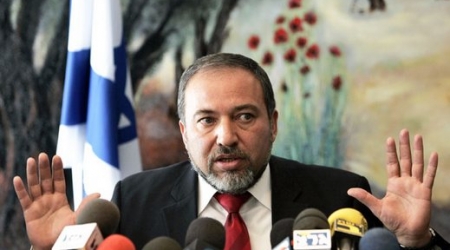
IMEMC News & Agencies – April 8, 2018
Israeli Defense Minister Avigdor Lieberman has asked Israeli Attorney-General Avichai Mandelblit to investigate rights group B’Tselem for asking Israeli soldiers not to kill Gaza protesters.
In a tweet, Liberman urged the state to “probe the heads of B’Tselem for incitement to disobedience after their call for soldiers to refuse orders in defending the border.”
“This subversive and impermanent organisation, together with those who hate Israel and the international media who are trying to delegitimize our soldiers who are acting in a legal and moral manner in a complicated situation,” he says. “We will put an end to this.”
B’Tselem hit back at Lieberman, stressing that live fire to disperse demonstrators is illegal under Israeli law.
In a statement, the human rights group said that the order violates Section 110 of Israel’s penal code, and Lieberman’s efforts to have the group investigated are without merit.
“The defense minister is the one inciting to break the law, and it’s good that the attorney general will now have the opportunity to officially determine this,” B’Tselem says, according to Days of Palestine.
(Al Ray archive image)
Haneyya: Return March battle of awareness
Palestine Information Center – April 7, 2018
 GAZA – Head of Hamas’s Political Bureau Ismail Haneyya on Saturday said that the Palestinian people are capable of challenging the Israeli occupation even under the most difficult circumstances.
Speaking at the funeral of the Palestinian photojournalist Yaser Murtaja in Gaza, Haneyya said that the Great March of Return represents a battle of awareness to emphasize on national constants, most importantly the right of return.
Haneyya praised the courage of journalist Murtaja who sacrificed his life for the sake of conveying truth to the world.
Murtaja died earlier Saturday after he succumbed to a serious injury he sustained after being deliberately shot in the abdomen by an Israeli sniper while covering peaceful protests near the border fence east of Khuza’a town in the southern Gaza Strip.
Hundreds of Palestinian citizens and dozens of journalists took part in Murtaja’s funeral chanting slogans calling for prosecuting Israel’s leaders over their crimes against the Palestinian people.
UK Justification for Refusal to Grant Skripal’s Niece Visa “Doesn’t Hold Water”
Sputnik – April 6, 2018
LONDON – The Russian Embassy in UK criticized on Friday the statement by the UK Foreign Office about the violation of immigration rules by Viktoria Skripal who applied for a UK visa, saying that it “does not hold water” and suggested that the UK Embassy should have assisted Skripal in correcting her application.
Earlier on Friday, media reported that the UK Embassy in Russia denied a visa to Viktoria Skripal, a relative of former Russian intelligence officer Sergei Skripal, who planned to visit her cousin Yulia in the United Kingdom.
“This decision is regrettable and worrying. According to a ‘government source’ quoted by the BBC, the visa was denied because ‘it appears the Russian state is trying to use Viktoria as a pawn.’ This clearly means that the decision has been taken out of purely political considerations,” the embassy said in a statement.
“The Home Office reference to a violation of immigration rules doesn’t hold water. The normal way to correct any violation would be for the British Embassy to advise Ms Skripal on the necessary formalities so as to help her comply with the rules rather than deny the visa altogether,” the statement read further.Earlier, after being denied visa, Viktoria Skripal alleged in an interview with the Sky News that “the British must have something to hide.”
The United Kingdom believes that former Russian spy Sergei Skripal and his daughter Yulia were exposed to the A234 nerve agent in the UK city of Salisbury. The UK government was quick to accuse Russia of involvement in the accident and expel over 25 states expelled Russian diplomats. Russia has refuted all accusations, pointing at the lack of any evidence.
Journalist shot in abdomen by Israel sniper on Gaza border

MEMO | April 6, 2018
A Palestinian video journalist and photographer who had just been contracted to work with MEMO has been hospitalised after being shot by Israeli sniper fire today while covering The Great March of Return near Gaza’s eastern border.
Though wearing a vest marked ‘PRESS’, Yaser Murtaja, co-founder of Ain Media production company, was shot in the abdomen by Israeli snipers perched on a hilltop on Gaza’s border.
Israeli sniper shoots journalist on #Gaza border and now he is in the operation room in hospital. pic.twitter.com/m3Pw21SWRK
— Ahmad Samaan🇵🇸 (@ahmadsaman7) April 6, 2018
Ain Media, which is made up of a dozen Palestinian media professionals, has been covering the events taking place near Gaza’s border with Israel since Friday. In the past, the team have produced work for Al Jazeera Documentaries, BBC Arabic, VICE, Alaraby TV, UNICEF, UNRWA and Oxfam amongst others.
In an interview with MEMO earlier this month, Yaser said that his passion for filming and photography was born out of his desire to document the events taking place in the besieged Gaza Strip and to do what he could to help shed light on the reality of life in Gaza and the plight of fellow countrymen under occupation and blockade.
At least 23 Palestinians have been killed by Israeli forces in Gaza and more than 1,500 others wounded during the Great March of Return, a six-week demonstration and sit-in which started last Friday to mark Palestine Land Day and is calling for the implementation of the Right of Return.

Palestinians come together near Gaza’s eastern border for ‘The Great March of Return’
Demonstrators are demanding that Palestinian refugees be granted their right to return to their towns and villages in historical Palestine, from which they were driven in 1948 to make way for the state of Israel.
In the run-up to the mass demonstrations last week Israel deployed thousands of troops on the border, threatening to use live ammunition against anyone who threatened Israel’s “security infrastructure”.
Skripal relative denied visa to visit UK and return poisoned relatives to Russia
RT | April 6, 2018
Sergei Skripal’s niece has been denied a visa to enter the UK after claiming she would come and take her relatives back to Russia.
Viktoria Skripal had planned to travel to Britain after her uncle Sergei Skripal and his daughter Yulia were exposed to a chemical agent in Salisbury on March 4.
The UK Home Office said on Friday that Viktoria is not being granted a visa to come to the UK. “We have refused a visitor visa application from Viktoria Skripal on the grounds that her application did not comply with the Immigration Rules,” a Home Office spokesman said.
Viktoria was behind the first public statements from either of the Skripals and the world’s media this week when she released a recording of a phone call with her cousin Yulia.
In the clip, the two discussed Viktoria getting a visa. Yulia flatly told her she would not be granted one.
“Vika, nobody will give you a visa,” Yulia said.
She said she and her father were fine and there were no life changing injuries. She gave little detail other than to say they would address one issue at a time.
Russian Ambassador Alexander Yakavenko said the embassy is currently getting its information from the mainstream media, after being locked out of Britain’s investigation. He says requests for access to the Skripals have been repeatedly denied.
Google employees protest work for US military drones
Press TV – April 5, 2018
Thousands of Google employees, including dozens of senior engineers, have signed a letter protesting the company’s involvement in a US military drone project, which has stirred concern among experts who think such cooperation is not ethical.
The Pentagon program is testing the internet giant’s artificial intelligence (AI) system to analyze vast amounts of footage captured by the US military’s unmanned surveillance planes around the world and to establish targets for drone strikes.
More 3,100 staff are thought to have signed a letter to Google CEO Sundar Pichai, demanding that the company pulls out of pilot experiment, called Project Maven.
The program intends to help the Pentagon conduct more precise attacks by drones against targets in other countries, including Syria and Iraq.
“We believe that Google should not be in the business of war,” says the letter. It asks that Google announce a policy that it will not “ever build warfare technology.”
This plan will irreparably damage Google’s brand and its ability to compete for talent,” the letter says. “Amid growing fears of biased and weaponized AI, Google is already struggling to keep the public’s trust.”
Project Maven is one of the many US drone projects aimed at automatically and quickly singling out points of interest so that analysts can work more efficiently in pinpointing new targets.
Google has described its work on Project Maven as “non-offensive” in nature, though the Pentagon’s video analysis is routinely used in counterterrorism operations.
But that explanation has not convinced those Google employees who think their work is being used for attacks that have on many occasions led to civilian deaths.
Through the formation of the Defense Innovation Board in 2016, Silicon Valley has advised American military officials to adopt breakthrough technology developed by technology pioneers such as Microsoft and Amazon.
Google is widely expected to compete with other technology giants for a multiyear, multibillion-dollar contract to provide cloud services to the US Defense Department.
“The argument that other firms, like Microsoft and Amazon, are also participating doesn’t make this any less risky for Google,” the letter says. “Google’s unique history, its motto Don’t Be Evil, and its direct reach into the lives of billions of users set it apart.”
There has been a sharp rise in the number of US drone strikes since US President Donald Trump took office, according to a report published in December by the Bureau of Investigative Journalism. … Full article
Fifty Years Ago the United States Government Killed Dr. Martin Luther King, Jr.
A Review of The Plot to Kill King by William Pepper
By Edward Curtin | April 4, 2018
Very few Americans are aware of the truth behind the assassination of Dr. Martin Luther King, Jr. Few books have been written about it, unlike other significant assassinations, especially JFK’s. For fifty years there has been a media blackout supported by government deception to hide the truth. And few people, in a massive act of self-deception, have chosen to question the absurd official explanation, choosing, rather, to embrace a mythic fabrication intended to sugarcoat the bitter fruit that has resulted from the murder of the one man capable of leading a mass movement for revolutionary change in the United States. Today we are eating the fruit of our denial.
In order to comprehend the significance of this extraordinary book, it is first necessary to dispel a widely accepted falsehood about Dr. Martin Luther King, Jr. William Pepper does that on the first page.
To understand his death, it is essential to realize that although he is popularly depicted and perceived as a civil rights leader, he was much more than that. A non-violent revolutionary, he personified the most powerful force for the long-overdue social, political, and economic reconstruction of the nation.
In other words, Martin Luther King was a transmitter of a non-violent spiritual and political energy so plenipotent that his very existence was a threat to an established order based on violence, racism, and economic exploitation. He was a very dangerous man.
Revolutionaries are, of course, anathema to the power elites who, with all their might, resist such rebels’ efforts to transform society. If they can’t buy them off, they knock them off. Fifty years after King’s assassination, the causes he fought for – civil rights, the end to U.S. wars of aggression, and economic justice for all – remain not only unfulfilled, but have worsened in so many respects. And King’s message has been enervated by the sly trick of giving him a national holiday and urging Americans to make it “a day of service.” Needless to say, such service does not include non-violent war resistance or protesting a decadent system of economic injustice.
Because MLK repeatedly called the United States the “greatest purveyor of violence on earth,” he was universally condemned by the mass media and government that later – once he was long and safely dead – praised him to the heavens. This has continued to the present day of historical amnesia.
 But William Pepper resurrects the revolutionary MLK, and in doing so shows in striking detail why elements within the U.S. government executed him. After reading this book, no fair-minded reader can reach any other conclusion. The Plot to Kill King, the culminating volume of a trilogy that Pepper has written on the assassination, consists of slightly less text than supporting documentation in its appendices, which include numerous depositions and interviews that buttress Pepper’s thesis on the why and how of this horrible murder. It demands a close reading that should put to rest any pseudo-debates about the essentials of the case.
Pepper, an attorney who represented the King family in the 1999 trial that found U.S. officials of the federal (in particular, the FBI and Army Intelligence), state, and local governments responsible for King’s assassination, has worked on the King case since 1977. He met MLK in 1967, after King had read his Ramparts’ magazine article, “The Children of Vietnam,” that exposed the hideous effects of U.S. napalm and white phosphorous bombing on young and old Vietnamese innocents. The text and photos of that article reduced King to tears and were instrumental in his increased opposition to the war against Vietnam as articulated in his dramatic Riverside Church speech (“Beyond Vietnam: A Time to Break Silence”) on April 4, 1967, one year to the day before his execution in Memphis. That speech, in which King so powerfully and publicly linked the war with racism and economic exploitation, foretold his death at the hands of the perpetrators of those abominations.
Devastated by King’s death, and assuming the alleged assassin James Earl Ray was responsible, Pepper retreated from the fray until a 1977 conversation with the Rev. Ralph Abernathy, King’s associate, who raised the specter of Ray’s innocence. After a five hour interrogation of the imprisoned Ray in 1978, Pepper was convinced that Ray did not shoot King and set out on a forty year quest to uncover the truth.
Before examining the essentials of Pepper’s discovery, it is important to point out that MLK, Jr., his father, Rev. M. L. King, Sr., and his maternal grandfather, Rev. A.D. Williams, all pastors of Atlanta’s Ebenezer Baptist Church, were spied on by Army Intelligence and the FBI since 1917. All were considered communist sympathizers and dangerous to the reigning hegemony because of their espousal of racial and economic equality. When MLK, Jr. forcefully denounced unjust and immoral war-making as well, and announced his Poor People’s Campaign and intent to lead a massive peaceful encampment of hundreds of thousands in Washington, D.C., he set off panic in the bowels of government spies and their masters. Seventy-five years of spying on black religious leaders here found its ultimate “justification.” As Stokely Carmichael, co-chairman of the Student Non-violent Coordinating Committee, said to King in a conversation secretly recorded by Army Intelligence, “The man don’t care you call ghettos concentration camps, but when you tell him his war machine is nothing but hired killers, you got trouble.”
It is against this “trouble” that Pepper’s investigation must be set, as that “trouble” is also the background for the linked assassinations of JFK, Malcolm X, and RFK. Understanding the forces behind the military, the spies, and the gunmen who, while operating in the shadows, are actually the second layer of the onion skin, is essential. The government and mainstream corporate media form the outer layer with their collusion in disinformation, lying, and truth suppression, but Pepper correctly identifies the core as follows.
Bombastic, chauvinistic, corporate propaganda aside, where the slaughter of innocents is, and always was, justified in the name of patriotism and national security, it has always and ever been about money. Corporate and financial leaders trusted with the keys to the Republic’s treasure moved from boardrooms to senior government positions and back again. Construction, oil and gas, defense industry, and pharmaceutical corporations, their bankers, brokers, and executives thrive in a war economy. Fortunes are made and dynasties created and perpetuated and a cooperating elite permeates an entire society and ultimately contaminates the world in its drive for national resources wherever they are …. Vietnam was his [King’s] Rubicon …. Here, as never before, would he seriously challenge the interests of the power elite.
MLK was assassinated on April 4, 1968 at 6:01 PM as he stood on the balcony of the Lorraine Motel in Memphis, Tennessee. He was shot in the lower right side of his face by one rifle bullet that shattered his jaw, damaged his upper spine, and came to rest below his left shoulder blade. The U.S. government claimed the assassin was a racist loner named James Earl Ray, who had escaped from the Missouri State Penitentiary on April 23, 1967. Ray was alleged to have fired the fatal shot from a second-floor bathroom window of a rooming house above the rear of Jim’s Grill across the street. Running to his rented room, Ray allegedly gathered his belongings, including the rifle, in a bedspread-wrapped bundle, rushed out the front door onto the adjoining street, and in a panic dropped the bundle in the doorway of the Canipe Amusement Company a few doors down. He was then said to have jumped into his white Mustang and driven to Atlanta where he abandoned the car. From there he fled to Canada and then to England where he was eventually arrested at Heathrow Airport on June 8, 1968 and extradited to the U.S. The state claims that the money Ray needed to purchase the car and for all his travel was secured through various robberies and a bank heist. Ray’s alleged motive was racism and that he was a bitter and dangerous loner.
When Ray, under extraordinary pressure, coercion, and a payoff from his lawyer to take a plea, pleaded guilty (only a few days later to request a trial that was denied) and was sentenced to 99 years in prison, the case seemed to be closed, and was dismissed from public consciousness. Another hate-filled lone assassin, shades of Lee Harvey Oswald and Sirhan Sirhan, had committed a despicable deed.
In the years leading up to Pepper’s 1978 involvement, only a few lonely voices expressed doubts about the government’s case – Harold Weisberg in 1971 and Mark Lane and Dick Gregory in 1977. The rest of the country put themselves and the case to sleep. They are still sleeping, but Pepper is trying with this last book to wake them up. Meanwhile, the disinformation specialists continue with their lies.
While a review is not the place to go into every detail of Pepper’s rebuttal of the government’s shabby claims, let me say at the outset that he emphatically does so, and adds in the process some tentative claims of which he is not certain but which, if true, are stunning.
As with the assassinations of President Kennedy and his brother, Robert (two months after MLK), all evidence points to the construction of patsies to take the blame for government executions. Ray, Oswald, and Sirhan all bear striking resemblances in the ways they were chosen and moved as pawns over long periods of time into positions where their only reactions could be stunned surprise when they were accused of the murders.
It took Pepper many years to piece together the essential truths, once he and Abernathy interviewed Ray in prison in 1978. The first giveaway that something was seriously amiss came with the 1979 House Select Committee on Assassinations’ report on the King assassination. Led by Robert Blakey, suspect in his conduct of the other assassination inquiries, who had replaced Richard Sprague, who was deemed to be too independent, “this multi-million dollar investigation ignored or denied all evidence that raised the possibility that James Earl Ray was innocent,” and that government forces might be involved. Pepper lists over twenty such omissions that rival the absurdities of the magical thinking of the Warren Commission. The HSCA report became the template “for all subsequent disinformation in print and visual examinations of this case” for the past thirty-seven years.
Pepper’s decades-long investigation, not only refutes the government’s case against James Earl Ray, but definitively proves that King was killed by a government conspiracy led by the FBI, Army Intelligence, and Memphis Police, assisted by southern Mafia figures. He is right to assert that “we have probably acquired more detailed knowledge about this political assassination than we have ever had about any previous historical event.” This makes the silence around this case even more shocking. This shock is accentuated when one is reminded (or told for the first time) that in 1999 a Memphis jury, after a thirty day trial and over seventy witnesses, found the U.S. government guilty in the killing of MLK. The King family had brought the suit and William Pepper represented them. They were grateful that the truth was confirmed, but saddened by the way the findings were buried once again by a media in cahoots with the government.
The civil trial was the King family’s last resort to get a public hearing to disclose the truth of the assassination. They and Pepper knew that Ray was an innocent pawn, but Ray had died in prison in 1998 after trying for thirty years to get a trial and prove his innocence (shades of Sirhan Sirhan who still languishes in prison). During all those years, Ray had maintained that he had been manipulated by a shadowy figure named Raul, who supplied him with money and his white Mustang and coordinated all his complicated travels, including having him buy a rifle and come to Jim’s Grill and the boarding house on the day of the assassination. The government has always denied that Raul existed.
Blocked at every turn by the authorities and unable to get Ray a trial, Pepper arranged an unscripted, mock TV trial that aired on April 4, 1993, the twenty-fifth anniversary of the assassination. Jurors were selected from a pool of U.S. citizens, a former U.S. Attorney and a federal judge served as prosecutor and judge, with Pepper serving as defense attorney. He presented extensive evidence clearly showing that authorities had withdrawn all security for King; that the state’s chief witness was falling down drunk; that the alleged bathroom sniper’s nest was empty right before the shot was fired; that three eyewitnesses, including the NY Times Earl Caldwell, said that the shot came from the bushes behind the rooming house; and that two eyewitnesses saw Ray drive away in his white Mustang before the shooting, etc. The prosecution’s feeble case was rejected by the jury that found Ray not guilty.
As with all Pepper’s work on the case (including book reviews), the mainstream media responded with silence. And though this was only a TV trial, increasing evidence emerged that the owner of Jim’s Grill, Loyd Jowers, was deeply involved in the assassination. Pepper dug deeper, and on December 16, 1993, Loyd Jowers appeared on ABC’s Primetime Live that aired nationwide. Pepper writes, “Loyd Jowers cleared James Earl Ray, saying that he did not shoot MLK but that he, Jowers, had hired a shooter after he was approached by Memphis produce man Frank Liberto and paid $1,000,000 to facilitate the assassination. He also said that he had been visited by a man names Raul who delivered a rifle and asked him to hold it until arrangements were finalized …. The morning after the Primetime Live broadcast there was no coverage of the previous night’s program, not even on ABC …. Here was a confession, on prime time television, to involvement in one of the most heinous crimes in the history of the Republic, and virtually no American mass-media coverage.”
In the twenty-five years since that confession, Pepper has worked tirelessly on the case and has uncovered a plethora of additional evidence that refutes the government’s claims and indicts it and the media for a continuing cover-up. The evidence he has gathered, detailed and documented in The Plot to Kill King, proves that Martin Luther King was killed by a conspiracy masterminded by the U.S. government. Much of his evidence was presented at the 1999 trial, while other was subsequently discovered. Since the names and details involved make clear that, as with the murders of JFK and RFK, the conspiracy was very sophisticated with many moving parts organized at the highest level, I will just highlight a few of his findings in what follows. A reader should read the book to understand the full scope of the plot, its execution, and the cover-up.
- Pepper refutes the government account and proves, through multiple witnesses, telephonic, and photographic evidence, that Raul existed; that his full name is Raul Coelho; and that he was James Earl Ray’s intelligence handler, who provided him with money and instructions from their first meeting in the Neptune Bar in Montreal, where Ray had fled in 1967 after his prison escape, until the day of the assassination. It was Raul who instructed Ray to return to the U.S. (an act that makes no sense for an escaped prisoner who had fled the country), gave him money for the white Mustang, helped him attain travel documents, and moved him around the country like a pawn on a chess board. The parallels to Lee Harvey Oswald and Sirhan Sirhan are startling.
 He presents the case of Donald Wilson, a former FBI agent working out of the Atlanta office in 1968, who went with a senior colleague to check out an abandoned white Mustang with Alabama plates (Ray’s car, to which Raul had a set of keys) and opened the passenger door to find that an envelope and some papers fell out onto the ground. Thinking he may have disturbed a crime scene, the nervous Wilson pocketed them. Later, when he read them, their explosive content intuitively told him that if he gave them to his superiors they would be destroyed. One piece was a torn out page from a 1963 Dallas telephone directory with the name Raul written at the top, and the letter “J” with a Dallas telephone number for a club run by Jack Ruby, Oswald’s killer. The page was for the letter H and had numerous phone numbers for H. L. Hunt, Dallas oil billionaire and a friend of FBI Director J. Edgar Hoover. Both men hated MLK. The second sheet contained Raul’s name and a list of names and sums and dates for payment. On the third sheet was written the telephone number and extension for the Atlanta FBI office. (Read Jim Douglass’s important interview with Donald Wilson in The Assassinations, p.479-491.)
- Pepper interviewed four other witnesses who confirmed that they had seen Raul with Jack Ruby in Dallas in 1963 and that they were associated.
- Pepper shows that the alias Ray was given and used from July 1967 until April 4, 1968 – Eric Galt – was the name of a Toronto operative of U.S. Army Intelligence, Eric St. Vincent Galt, who worked for Union Carbide with Top Secret clearance. The warehouse at the Canadian Union Carbide Plant in Toronto that Galt supervised “housed a top secret munitions project funded jointly by the CIA, the U.S. Naval Surface Weapons Center, and the Army Electronics Research and Development Command …. In August 1967, Galt met with Major Robert M. Collins, a top aide to the head of the 902nd Military Intelligence Group (MIG) Colonel John Downie.” Downie selected four members for an Alpha 184 Sniper Unit that was sent to Memphis to back up the primary assassin of MLK. Meanwhile, Ray, set up as the patsy, was able to move about freely since he was protected by the pseudonymous NSA clearance for Eric Galt.
- To refute the government’s claim that Ray and his brother robbed the Alton, Illinois Bank to finance his travels and car purchase (therefore no Raul existed), Pepper “called the sheriff in Alton and the president of the bank; they gave the same statement. The Ray brothers had nothing to do with the robbery. No one from the HSCA, the FBI, or The New York Times had sought their opinion.” CNN later reiterated the media falsehood that became part of the official false story.
- Pepper proves that the fatal shot came from the bushes behind Jim’s Grill and the rooming house, not from the bathroom window. He presents overwhelming evidence for this, showing that the government’s claim, based on the testimony on a severely drunk Charlie Stephens, was absurd. His evidence includes the testimony of numerous eyewitnesses and that of Loyd Jowers, the owner of Jim’s Grill, who said he took the rifle from the shooter in the bushes and brought it into the bar where he hid it. Thus, Ray was not the assassin.
- He presents conclusive evidence that the bushes were cut down the morning after the assassination in an attempt to corrupt the crime scene. The order to do so came from Memphis Police Department Inspector Sam Evans to Maynard Stiles, a senior administrator of the Memphis Department of Public Works.
- He shows how King’s room was moved from a safe interior room, 201, to balcony room, 306, on the upper floor; how King was conveniently positioned alone on the balcony by members of his own entourage for the easy mortal head shot from the bushes across the street. (Many people only remember the iconic photograph taken after-the-fact with Jesse Jackson, Andrew Young, et al., standing over the fallen King and pointing across the street.) Pepper implicates that Reverends Billy Kyles, Jesse Jackson, and, to a lesser extent, Ralph Abernathy were involved in these machinations. He uncovers of the role of black military intelligence agent Marrell McCollough, attached to the 111th MIG, within the entourage. McCollough can be seen kneeling over the fallen King, checking to see if he’s dead.
- Pepper confirms that all of this, including the assassin in the bushes, was dutifully photographed by Army Intelligence agents situated on the nearby Fire House roof.
- He presents evidence that all security for Dr. King was withdrawn from the area by the Memphis Police Department, including a special security unit of black officers, and four tactical police units. A black detective at the nearby fire station, Ed Redditt, was withdrawn from his post on the afternoon of April 4th, allegedly because of a death threat against him. And the only two black firemen at Fire Station No.2 were transferred to another station.
- He names and confirms the presence of Alpha 184 snipers at locations high above the Lorraine Motel balcony.
- He explains the use of two white mustangs in the operation to frame Ray.
- He proves that Ray had driven off before the shooting; that Loyd Jowers took the rifle from the shooter who was in the bushes; that the Memphis police were working in close collaboration with the FBI, Army Intelligence, and the “Dixie Mafia,” particularly local produce dealer Frank Liberto and his New Orleans associate Carlos Marcello; and that every aspect of the government’s case was filled with holes that any person familiar with the details and possessing elementary logical abilities could refute.
- So importantly, Pepper shows how the mainstream media and government flacks have spent years covering up the truth of MLK’s murder through lies and disinformation, just as they have done with the Kennedy and Malcom X assassinations that are of a piece with this one.
But since this is a book review and not a book, I will stop listing Pepper’s very detailed and convincing findings. While he may not have answered every aspect of the case, and may be mistaken in some small details, he has proven beyond a shadow of a doubt the basic fact that James Earl Ray did not kill Martin Luther King, but that this great and dangerous leader was killed by a conspiracy organized at the highest levels of government.
The Plot to Kill King will mesmerize any reader seeking the truth about MLK’s assassination. Even when Pepper, towards the end of the book, offers circumstantial and non-corroborated testimony from witnesses Ronnie Lee Adkins and Johnton Shelby, the reader can’t help but be intrigued and to consider their stories highly plausible given all that Pepper has proven. Adkins claims that his father, a friend of Clyde Tolson, FBI Director J. Edgar Hoover’s deputy, and then he himself, were part of the plot to kill King. This involved politicians, the FBI, MPD, and mafia, including the aforementioned produce dealer Frank Liberto and others, making payoffs with FBI money to various people, including Jesse Jackson (whom Adkins, Jr. claims was a paid FBI informer) and working closely on the details of the assassination. Johton Shelby’s story as recounted in his deposition (2014) to Pepper (reproduced, together with Adkins’ (2009), as appendices in the book), is that his mother, who was working as an emergency room aide at St. Joseph’s Hospital when King was brought there, inadvertently witnessed men spitting on Dr. King as he lay in the emergency room and a doctor putting a pillow over his head and suffocating him to death. Pepper tends to accept these accounts, but says he isn’t completely convinced of all aspects of them. The reader is offered plenty of food for thought concerning these claims.
Besides clearly proving the government’s part in killing Martin Luther King, this book is very important for the way Pepper links the case to those of JFK and RFK, who was murdered two months after King. At the center of all these murders is a trinity of men who were devoted to ending the Vietnam War and all wars, restoring economic justice for all Americans, and eliminating racial inequality. That their goals were the same provides a motive for their murders by forces opposed to these lofty objectives. That their murders clearly involved highly sophisticated operations and cover-ups that could never have been pulled off by “crazed lone assassins” points to powerful forces with those means at their disposal. And when it comes to opportunity, when did the shadowy forces of the deep state ever lack for that?
The ramifications of the MLK assassination profoundly inform our current condition. For anyone who truly cares about peace, love, and justice, The Plot to Kill King is essential reading. William Pepper should be saluted. He has carried on Martin King’s noble legacy.
This is an updated review first published on 28 November 2016 at Global Research.
Featured Video
Seyed M. Marandi: US-Iran War Inevitable: Kuwait and Bahrain May Fall
or go to
Aletho News Archives – Video-Images
From the Archives
Oil and the Israel Lobby
Reknowned economist M. Shahid Alam offers this excellent critique of Noam Chomsky’s defective analysis of the relative influence of Oil versus the Israel lobby over US foreign policy: … continue
Blog Roll
 Aletho News
- ICC ignored ‘very well-documented’ NATO crimes – ex-Libyan minister
- SNSC secretary dismisses US response to Iran’s conditions as ‘inadequate’
- Sanaa says Taiz roads open, secure for residents, warns Saudi forces
- Iraqi resistance group urges Saudi leadership to admit defeat, lift Yemen siege
- Trump’s Retreat: How Al-Aqsa Flood Took Down the US Empire
- Israel’s Military Actions in Lebanon Grossly Violate International Law — Lavrov
- Seyed M. Marandi: US-Iran War Inevitable: Kuwait and Bahrain May Fall
- Leaders Condemn Ansarallah Attack on Saudi Arabia While Ignoring Illegal War Against Yemen
- Leaked: Britain’s Covert Iraqi Psyops Network
- Yemeni Armed Forces Warn Airlines Against Using Saudi Airports, Exempt Mecca and Medina
- If Americans Knew
- An error has occurred; the feed is probably down. Try again later.
- No Tricks Zone
- Germany’s Green Energy Debacle: High Energy Costs Force Kahla Porzellan to Close After 182 Years!
- New Study: 50 Years Of The Most Aggressive ‘Net Zero’ Policies Can Only Affect The Global Climate By 0.03°C
- US September “Heat” Was No Record…Many Records Set Decades Ago
- Latest European Green Energy Debacle; Portugal’s Largest Flagship Solar Park Insolvent!
- Green Energy Debacle: German Expert Professor Fritz Vahrenholt Warns Of Severe Economic And Social Consequences
- Two More Paleo Reconstructions Affirm Meters-Higher Sea Levels Across Ireland, Brazil 7000-6000 Years Ago
- New Study: Earth And Venus Surface Warmth Largely Explained By Convection And Lapse Rate, Not CO2 Or Radiation
- 2025 Nature Paper Claiming Worsening Global Drought Gets RETRACTED …Heavily Flawed
- New Study: ‘Global Drought Shows No Detectable Recent Acceleration Under Climate Warming’
- Economic Masterminds: German Socialists Suggest Taxing Productivity Gains Stemming From Using AI

