Shadi Ma’ali seized by disguised Israeli occupation forces in the heart of Bethlehem
Samidoun Palestinian Prisoner Solidarity Network – March 25, 2018
 Former long-term hunger striker and Palestinian refugee, Shadi Ma’ali, was seized by undercover occupation forces at dawn on Saturday, 17 March in the heart of the city of Bethlehem on Manger Street.
Ma’ali, from Dheisheh refugee camp, was attacked by so-called “mustaribeen,” occupation forces that dress to appear as Palestinians.
Ma’ali, who was on hunger strike for over 40 days in 2015 with five of his comrades to demand an end to administrative detention, has been repeatedly arrested and has spent years in Israeli prisons. His fellow former hunger strikers have also been repeatedly targeted; Nidal Abu Aker is held without charge or trial under administrative detention while Ghassan Zawahreh has been transferred to the military courts after over a year and a half of imprisonment with no charge.
In a statement following Ma’ali’s abduction, the Popular Front for the Liberation of Palestine said that “the abduction… once again raises new questions about the Palestinian Authority security forces and their inability to protect Palestinian citizens or detect and respond to the ‘mustaribeen’ attackers… This crime will not succeed in breaking his will and determination.”
Meanwhile, the military court hearing of wounded Palestinian prisoner Abdel-Aziz Arafa, also from Dheisheh camp, was postponed until 8 April. Arafa was seized on 7 August 2017, the same night that fellow Palestinian refugee Raed al-Salhi was shot by Israeli occupation forces. Salhi was isolated from his family and denied visits in the hospital for a month before he was killed by his injuries. As Salhi was fatally shot, occupation forces also shot Arafa in the leg; he has been held in the Ramle prison clinic and has undergone multiple operations during his detention.
Salhi was a beloved son of the camp who was deeply involved in political organizing, library volunteering and many other aspects of camp life. From an impoverished family, he dedicated his life to the freedom of his people and was shot down, unarmed, by the occupation forces who sought to imprison him for this very reason.
Ahed Abu Ghoulmeh has family visit with wife and daughter for first time since 2009
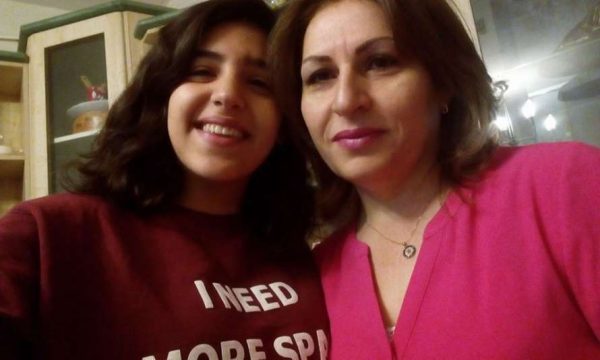
Wafa’ and Rita Abu Ghoulmeh
Samidoun Palestinian Prisoner Solidarity Network – March 25, 2018
The wife and daughter of imprisoned Palestinian leader Ahed Abu Ghoulmeh, 50, were permitted to visit him for the first time in many years at Hadarim prison on 20 March, reported Hadf News.
Wafa’ Abu Ghoulmeh, Ahed’s wife and a Palestinian organizer, and Rita Abu Ghoulmeh, their teen daughter, have been denied visits with Ahed repeatedly over the years. This was the first visit that Wafa’ and Rita were able to conduct together since 2009.
Ahed Abu Ghoulmeh, a leader of the Popular Front for the Liberation of Palestine, is serving a life sentence in Israeli prison; he was abducted with Ahmad Sa’adat and their comrades Hamdi Qur’an, Basil al-Asmar and Majdi Rimawi on 13 March 2006. They had been held in a Palestinian Authority prison in Jericho for the past four years under U.S. and British guard; in 2006, following promises of Palestinian Legislative Council members to release the PA political prisoners, the Israeli occupation violently attacked and destroyed the prison.
Abu Ghoulmeh and his comrades were seized first by the PA and then the occupation forces after the PFLP’s military wing assassinated notorious far-right, racist Israeli Tourism Minister Rehavam Ze’evi in 2001, in response to the assassination of PFLP General Secretary Abu Ali Mustafa by occupation forces using U.S.-made and -provided weaponry.
During his imprisonment, Abu Ghoulmeh has been repeatedly held in solitary confinement and denied family visits; he has been a leader in the prisoners’ movement and participated in prisoners’ leadership councils, hunger strikes and protests.
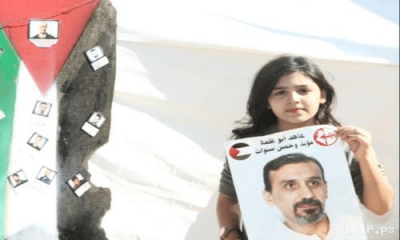
Ahed Abu Ghoulmeh’s daughter Rita in 2013 with a poster of her father
In speaking about the visit, Wafa’ Abu Ghoulmeh expressed the difficulties experienced at the hands of the Israeli occupation for Palestinian families who seek to visit their imprisoned family members, beginning their journey at 5 a.m. to pass all of the Israeli checkpoints. After arriving at the prison, she said, all of the families are searched extensively, accompanied by continuous shouting and screaming from occupation soldiers. She noted that the occupation deliberately delays and detains people during these searches. “On the day of our visit, a number of the prisoners’ family members were held back, including the father of Ahed Tamimi, and her brother was prevented from visiting,” said Abu Ghoulmeh.
Family members are forbidden to bring food, drink or personal items with them. Wafa’ said that she could only speak to her husband over a telephone, behind a glass wall. “One policeman stands behind the prisoner and another behind the visitor. Every word we say is heard by this guard… On the way back, we are subject again to the same procedures and harassment. The visit is a joy for prisoners’ families, but it is not without painful moments, especially when watching prisoners with their children.”
She noted that Hadarim prison, where Ahed Abu Ghoulmeh is held, is a type of mass isolation with 100 Palestinian prisoners; all of the men held there are serving life sentences. It is part of the same complex as HaSharon prison, where the women prisoners are held. She noted that family members are forbidden from bringing educational and political books to prisoners in Hadarim, and only religious books and novels are permitted to enter.
Despite the restrictions and repression imposed by the Israeli occupation, Abu Ghoulmeh is preparing to write a doctoral thesis on the Palestinian prisoners’ movement and the psychological situation of people with high sentences. He has compiled research and written significant portions; however, when he was in Ramon prison, the Israeli prison administration confiscated his writings as well as the archive of educational materials maintained by the prisoners. She noted that Abu Ghoulmeh was looking toward Arab and international universities to complete his education; while a number of European universities reportedly expressed interest in facilitating Abu Ghoulmeh’s continued education, he is unable to attend classes and the supervisor of his work is also imprisoned, Marwan Barghouthi.
She said that a Moroccan university has expressed initial approval of the project but seeks to partner with a Palestinian university. In addition, she said that Abu Ghoulmeh is committed to spending every moment in the prison in research, study or teaching other Palestinian prisoners.
NEO has Come Under Attack
New Eastern Outlook | 25.03.2018
Dear readers,
We deeply regret the fact that readers have been unable to access NEO articles since March 19. This unpleasant fact was a direct result of a massive DDoS attack on our site, likely launched by Washington and its political allies in the West.
On one hand, it’s a truly regretful incident that demonstrates the true face of “American-style democracy” when thinking individuals are prevented access to alternative media through criminal means, illustrating the true state of affairs in the West and around the world as well.
On the other hand, this recent DDoS attack is a testament to the fact that the articles we present to readers leaves certain Western special interests sleepless. Such articles have helped expose their violations of international law in Syria, Iraq, Afghanistan, Libya and other countries where their agenda is being pushed forward by so-called soft power and armed aggression, while bringing bitter misery and death to hundreds of thousands of people.
We express our sincere gratitude to our authors who have been subjected to all sorts of discrimination over the years in various regions of the world for their efforts and contributions to NEO, exposing the troubled times of various nations, but nevertheless continue their humanitarian and educational activities.
However, it’s likely to get worse, as the Under Secretary of State for Public Diplomacy and Public Affairs, Heather Nauert has stated that the State Department believes that fighting Russia, Iran and China-based media sources to be its top priority. To bring down Russia-based media sources alone, US Congress is going to allocate 250 million dollars this year.
But it is highly unlikely that such measures will silence the alternative media, the family of which New Eastern Outlook has been a proud member. We are confident in your support and assistance in exposing the word of truth to more readers.
We would be grateful if those of you who also recently encountered similar oppressive measures of Western intelligence and government agencies, whether it was blocking of social media accounts or blogs for publishing truthful reports to share this information with us via our email – info@journal-neo.org. We are confident that by joining our efforts we can overcome the onslaught of the Western propaganda as the alternative media is prepared to overcame any obstacle to provide people of all countries with truthful and insightful reports.
We are also welcoming you to our social media pages, if you are willing to engage in discussions of our publications.
The New Eastern Outlook editorial board.
What I Saw As an Official Observer to the Russian Elections
By Gilbert Doctorow | Russia – Insider | March 23, 2018
In this piece, I will share impressions from my mission as an international observer to the Russian presidential election. The event was of historic importance given Russia’s rising standing in the world under the leadership of its front-runner candidate in the election, Vladimir Putin, and it has been covered widely in world media.
What will set this account apart from the rest is firstly the focus on one location, the Crimea, which I visited as monitor within a varied delegation of 43. The Crimea, for its part, had unusually high importance to the Russians and to the world at large, because the election there was rightly viewed as a second referendum on the reunification of Crimea with Russia in 2014, and that reunification or annexation, depending on your point of view, underlies much of the acrimonious confrontation today between Russia and the US-led “international community.”
The author interviewed by RT on election day.
A little remarked fact underscores my argument for the key importance of the Crimean vote: the precise date selected to hold the presidential election across the Russian Federation, 18 March. That is the anniversary of the formal unification, the culmination of the Crimean Spring of 2014, which followed by several days the original referendum approving unification. It will be recalled that the validity of that first referendum has been denied by Russia’s Western detractors, who insist the result was forced by the presence of Russian troops in the streets and an atmosphere of intimidation coming from pro- and anti-Russian demonstrations. The vote in 2018 has taken place in a totally calm situation, which removes all possibility of reservations about validity unless violations at polling stations could be identified. At a minimum, the task of a monitoring group such as mine should have been to watch that issue very closely. How that functioned in practice, what I/we actually saw and did will make up the first part of this essay.
The entire force of international observers who spread out across Russia was quite heterogeneous and I will spend some time in the second half of this essay describing us: who we are, why we and not others were present in Russia for election monitoring work. In this second half, I will also discuss something highly important that other commentators have avoided entirely: the fact that the elections come within the context of an intense political, economic and information war between Russia and the West that has in the past couple of years reached the level of the worst days of the Cold War. Consequently, once we look past the technical aspects of the vote, where there is, among serious professionals, a consensus that these elections were well administered and transparent, we find ourselves back in the midst of tendentious interpretation by both sides to the issue, if not outright propaganda. I will not dodge this question, and I do not expect to receive bouquets from anyone. The task before us will be very simple: to try as best I can to give details about the circumstances of the balloting so that the reader can arrive at an independent conclusion. Without naming names, I will produce my evidence from personal experience on the ground that is missing from media accounts till now given their broad brush approach.
What we saw
The bare facts are that voter turn-out in Crimea was similar to turn-out in Russia at large, coming to about 67% while ballots for Putin exceeded by far the Russian average: about 92% for Putin versus the national average of approximately 77% for Putin.
What I am about to say to flesh out these bare bones comes from our group visits to 10 polling stations over the course of as many hours. The first two were in the city of Yalta. The next two were in small villages situated along the main highway running from Yalta north and west to the provincial capital of Simferopol. And the last six were in the city limits of Simferopol. The distance we covered was 80 kilometers. Given the poor state of repair of even roads of regional importance in Crimea, the time in transit, had we not stopped along the way, would have been nearly two hours.
Our group of about 20 traveling together was split between two mini-buses, one predominantly French speaking and the other predominantly German and English speaking. Each bus had local chaperones who, together with those of us monitors fluent in Russian could assist our linguistically handicapped colleagues.
Except for the very last polling station which was close to where we had lunch and was chosen spontaneously by our group without objection from our chaperones, all the polling places had been selected by our hosts in advance, which obviously is not the random selection you would like ideally to have in such an exercise. In several stations we were met by television film crews who were expecting us.
However, we were let loose in the polling stations and could speak directly not only with the senior administrator but also with voters, with the volunteers manning the registration desks, with the monitors from the local social chambers and representatives of the candidates, if any happened to be where we were, given that they moved around all day. That is to say we had every opportunity to hear complaints, to remark any peculiar goings-on, such as organized groups of voters showing up together. There were none. We heard of no scandals, and we saw no demonstrations or protesters of any kind around the polling stations. Instead what we witnessed was an intermittent flow of voters arriving, being processed efficiently, casting their ballots and departing.
In this connection, I want to stress that our group seemed to take its responsibilities rather seriously. To be sure, when we started out in the morning we descended on our first polling booths like a group of aliens – everyone attached to their mobile gadgets and texting, arranging travel on line for their next destinations and not paying much attention to where we were. However, that phase passed quickly and my colleagues took an interest in the here and now throughout the rest of our rather long work day. We had the usual group photos outside a number of polling stations taken not only for official record but using our own mobile phones to create personal souvenirs. And we gave interviews to the waiting television crews, though that was only a minor diversion.
The polling stations we visited were for the most part secondary schools. Some were in buildings of the local civil administration. All were serviceable and well prepared to receive the public. Many of the buildings had several stairs at their entrances. Among them some had permanent ramps, as is becoming very widespread in Russia to accommodate those in wheelchairs, parents pushing baby carriages and the elderly or infirm. Where no permanent ramp existed, temporary wooden ramps were installed, obviously at considerable expense and effort in what are otherwise quite poor districts. The Crimea obviously received no infrastructure investments during the 23 years when it was ruled by post-independence Ukraine, and is simply a poor region, however promising its future development may be.
This effort to facilitate voting also had another dimension, what I will call ambulatory ballot collection. Each station had a small sealed plexiglass ballot box which was taken out by volunteers on visits to voters who were too frail or too ill to come down to the polling station. The numbers of such voters were not big, something like 50 or 60 out of polling districts numbering between 1800 and 2500 registered voters. But the symbolic message was clear: that each citizen, each vote counts.
A special welcome was being offered at all polling stations to young people, specifically to those who had just turned 18 and were voting for the first time. They were each given a paper diploma issued by the city elders. Again, the numbers of such cases were tiny, running from 5 to 10 in the districts we visited, but the welcoming hand was visible.
I have mentioned measures taken by local volunteers to raise voter participation. The biggest effort to ensure eligible voters registered and easily found a voting station convenient to them was done at the federal level via the internet resources of the Central Election Committee using online registration and sms communications. In this regard, the Crimea was no different from any other region of the Russian Federation.
The single biggest impression from visiting polling stations was their sophisticated equipment to guaranty transparency, to empower the broad public to do citizen monitoring over the internet and to efficiently record the votes.
One of the first things we would see on entering the polling stations was the row of voting booths, with simple standardized assemble-disassemble frames and light cloth draw curtains for privacy. That was the only holdover from the simple past. Each polling station now had two sets of “eyes”: CCTV cameras positioned to oversee the voter registration tables and the ballot boxes. These cameras fed live images to the internet and could be viewed by anyone in Russia online. Still more important for guarantying fair elections were the new electronic ballot boxes that were installed in about half the polling stations we visited, the rest being manual count boxes. The automated ballot boxes are autonomous, meaning they are not connected to the web and so are not subject to hacking. They are topped in effect by self-feeding scanners which automatically record each vote. Unlike purely electronic systems, the new Russian boxes receive and store paper ballots, meaning that if any dispute over the automated count arises, a manual count can always be done later.
A peek into some of the plexiglass ballot boxes on our visits showed up only check marks next to Putin’s name. That was about the only indication, wholly unscientific to be sure, of how sentiment was running.
Otherwise the polling stations were notable for being inviting to the public through their engagement of DJs operating simple loudspeakers blaring pop music at the entrances. One of the tunes that came up in various places was telling: “Crimea and Russia Together Forever!” One polling station had costumed teenage entertainers out in front of the building to amuse and babysit smaller kids while their parents were voting. At another polling station, girls and boys aged 8 – 10 wearing military cadet uniforms greeted each arriving voter and sent off the departing voters with a hearty “goodbye.” In that same station, retro patriotism also came up in another form, which possibly was spontaneous, possibly organized in advance: an eight year old girl reciting quite loudly and with good histrionic training a patriotic poem with the repeated refrain “Russia is Rising!”
Voting day ended in Simferopol on a pronounced patriotic note. There was a free pop concert in the main city square which drew a good-natured crowd of several thousand of all ages and ended in a magnificent fireworks display. During the 10 minutes or so of the fireworks, the orchestra and showmen sang the Russian national anthem, which was lustily supported by the entire audience.
To anyone with a recollection of the Soviet Union, all of this collective jollity and distinctly Russian pop music, which was always rather tame, seems all too familiar. However, it was well-intentioned, and it may be that a substantial part of what was promoted as Soviet models and tradition was always just a variation on Russian national culture.
Our work day ended in a municipal administration building of Simferopol where we held a press conference. Five of us with the best command of Russian, myself included, were assigned places on the dais. There were only a handful of journalists in the room, but questions were pitched to us by a moderator and the proceedings were broadcast live by several television crews. This was in lieu of a group report.
* * * *
International Election Observers: who were we?
Russia’s Central Election Commission reportedly issued accreditation to 1,500 international observers whose nominations were put forward by a variety of sponsors, including Russian NGOs, the State Duma and international organizations. Some monitoring was done by diplomats from foreign embassies who requested accreditation, allowing them to visit polling stations and gather information. These monitors would later report only to their respective governments.
I was invited to Russia by a Moscow-based NGO called the Russian Peace Foundation, which entrusted administration of its allotment to a Warsaw based NGO called the European Council for Democracy and Human Rights. The original intention was to invite and accredit 150 individuals from all over the world. In the end, only about 80 monitors arrived in Moscow via this channel, myself included. On the ground, in our Moscow hotel, I saw about half this number, and I never learned where the others may have been lodged. Out of that number only a couple of us were sent to Crimea, where we joined accredited monitors from other pools. We never discussed among ourselves who came from which sponsor group.
In the Crimea-bound contingent, I was the only American, and, one of the handful of fluent Russian speakers. This put me under the spotlight but also heightened my ability to engage the local electoral officials and voters.
The monitors with whom I came into contact, both in my own pool from the Peace Foundation with whom I associated in Moscow and coming from other pools with whom I associated in the small contingent sent to Crimea were all of mixed backgrounds. Some were academics with think tank affiliation, or professional political analysts like myself. Some were elected legislators in their home countries or members of the European Parliament.
The politics of the elected deputies appeared to be mainly from what is called “far Right.” Specifically, I met with a Bundestag deputy from the Alternativ fuer Deutschland, with a French MEP formerly in the Front National and now in a group cooperating with Brexit campaigner and EU skeptic Nigel Farage. There were also a couple of Italian deputies from the Veneto Region said to be members of the Northern League. Though I did not meet with him on the mission, I was aware of the presence in Moscow of one observer coming from the “far Left” party Die Linke. Centrist parties seemed to be absent. Within the contingent sent to Crimea there were also several who fit none of the descriptions above. I have in mind the representative of the President of Pakistan and the representative of the President of Malaysia.
The politic al convictions of those monitors with whom I spent some time could be characterized as ranging from mildly to extremely pro-Russian. Those who were in the latter category constituted perhaps 10% of the total. From our table talk over lunch, I understood that the several very pro-Russian monitors had a latent conflict of interest : they each made some of their professional income in Russia, or, as was the case with one of the Italians, they are developing businesses in Crimea with local partners. From among this sub-group, two were particularly fluent in Russian and presented their propagandistic observations to the local journalists with whom we met in the polling stations and at the press conference. This is how one Crimean newspaper received the choice quotation which it duly published: that “today Crimea is the most democratic place in the world.” An over-the-top assessment that is frankly embarrassing to read.
I would call this case a distortion of the observer mission that was preconditioned by the general background of political, informational and economic warfare being waged between the West and Russia for the past several years. To my knowledge, the Russian Duma had extended invitations to all Members of the European Parliament, but the major centrist parties there opposed sending any representatives to observe elections which they knew in advance would be a sham because of their own ideological anti-Putin prejudices. Thus, who actually came and took part in the monitoring was the result of a self-sorting process. The MEPs and parliamentarians from national legislatures who came did so in the face of moral pressure from the majority of their peers, and they received strict prohibitions in particular against going to Crimea. I saw how one of the French MEPs initially in our Crimea contingent backed out at the very last minute and remained in Moscow to avoid scandals back home.
Propaganda and information warfare on all sides
The fierce political winds in the West against Putin, against Russia directed mainstream US and European media reports on the Russian election campaign for weeks in advance of the vote. The media denounced the process as fake because of the near certainty of the outcome, the re-election of Vladimir Putin. This mind-set even exerted a discernable influence on the most authoritative foreign observation body to come to the elections, the Organization for Security and Cooperation in Europe (OSCE).
The OSCE contingent was the single largest group of international election observers, receiving 580 accreditations. Within that overall number there was a core group of 60 who were deployed in Russia six weeks before the elections. They met with local election boards, candidates’ representatives and others to build an information base on the elections. Then there were 420 additional short-term observers sent by the OSCE Office for Democratic Institutions and Human Rights. And about 100 accreditations for the election-day mission were issued to the OSCE Parliamentary Assembly, who were nearly all European MPs in their respective countries.
I wish to stress that the OSCE did not send any election observers to the Crimea. In a statement issued by the United States Mission to the OSCE on 22 March, the reasons that evidently also guided the OSCE in its entirety are set out with the crystal clarity of a Cold War blast denouncing Russia’s “invasion and occupation of Crimea,” its staging of “illegitimate elections… [with] frequent and severe abuses, specifically targeting the Crimean Tatar community and others opposed to Russia’s occupation.” Russia is charged with coercing Ukrainian citizens in Crimea to vote in illegitimate elections. The 18 March elections are, per the US Mission, “another attempt by Russia to give its purported annexation of Crimea a semblance of legitimacy.”
Without further ado, I condemn this official US statement as an ignorant, willfully blind rejection of the realities on the ground in Crimea that I and other members of our monitoring team unreservedly established.
As for the OSCE monitoring mission to the rest of the Russian Federation, the various constituent groups mentioned above issued two pages of Press Releases on their findings at a press conference held in downtown Moscow the day after the elections. Given the institution’s credibility, that report has received a good deal of attention in global media.
The general conclusions were summarized at the top of the Releases:
“Russian presidential election well administered, but characterized by restrictions on fundamental freedoms, lack of genuine competition, international observers say.”
On the one hand, the OSCE report gave the Russians, and in particular the Central Election Commission, high marks for the professional administration of the elections as witnessed by their teams in the field on election-day. In particular, the press handout mentions as welcome the accuracy of voter lists and the legal changes that enabled voting in polling stations away from the permanent place of residence, a facility which was used by 5.6 million Russians. Tabulation was also assessed positively.
These bland-sounding compliments have to be put in an historical context to be fully savored.
The background is the 2011 Duma elections which were shown by Russian activists at the time to have been fraudulent due to ballot box stuffing, “carousel voting,” i.e. multiple voting and the shepherding of company employees and civil servants to the polling stations by their superiors. Incidents were reported of voter turnout in some districts exceeding 100% of registered voters. These outrages sparked mass street demonstrations that were fanned by encouragement from Western governments and media at the time. The Kremlin took note and instituted several procedural reforms and widespread implementation of CCTV cameras already the next year for the presidential election, which passed without incident and prepared the way for the extensive measures supporting transparency and fair voting that we saw on 18 March 2018. The government also took measures to protect itself and society from the would-be actors of regime change though mass demonstrations: the rules on foreign-sponsored pro-democracy NGOs were tightened, as were rules on public assembly.
On the other hand, the OSCE Press Releases go far beyond the voting mechanisms, far beyond the specifics of this electoral campaign to challenge the entire Russian political culture.
“Elections are a critical part of democracy, but democracy is not only about elections. …. [I]mproving the real state of democracy in Russia requires full respect for people’s rights between elections as well,” Marietta Tidei, head of the delegation from the OSCE Parliamentary Assembly” is quoted as saying on page one of the handout.
The OSCE spokespersons direct attention in particular to limitations on rights of assembly, on free speech in Russia and to media control by the state, with unequal allocation of air time going to the president that short-changed his challengers
Perhaps the most condemnatory remarks in the OSCE Press Release relate to registration of candidates for the presidential race.
“After intense efforts to promote turnout, citizens voted in significant numbers, yet restrictions on the fundamental freedoms, as well as on candidate registration, have limited the space for political engagement and resulted in a lack of genuine competition…”
This was a thinly veiled reference to the rejection of the candidacy application of the famous blogger and corruption-fighter Alexei Navalny, who from the beginning to end was held up in Western media as the only real opponent to Vladimir Putin. This characterization of who was real opposition and who was a “Kremlin project” was itself a highly politicized issue that outside observers would have done better to side-step entirely.
There are several serious problems with the overarching negative analysis by the OSCE, which slotted very nicely into the predisposition of the Western media to trash the Russian elections. Whether by intent or by ignorance, the OSCE authors of the critique of the electoral campaign circumstances acted as the mouthpieces of the opposition candidates, most particularly the Liberal party candidates among whom Ksenia Sobchak was the most visible and vocal. They did not give any thought to counterarguments, which I will present here.
First, there is the issue of applying double standards and expecting the ideal of fair competition for all candidates to the nation’s highest office, when that standard is very rarely if ever met in the West itself. I would name little, neutral Switzerland as one country with credible civic freedoms, campaign and voting procedures. I was about to name here Finland, another small and relatively homogeneous country which always gets high marks on democratic institutions, but then I recalled that a couple of years ago there was a great scandal over abuse of the newly introduced remote voting facility via the internet. That noisy scandal ended in one parliamentary deputy, a party leader and former Minister of Foreign Affairs, being stripped of her mandate for violations. So there can be problems even in Eden.
Then, at the risk of being accused of “what-aboutism,” I am obliged to mention an egregious and relatively recent case of suppression of mass opposition movements in the United States. I have in mind the case of Occupy Wall Street, which broke out in the midst of the Crash of 2008 and was on the point of achieving political traction when it was brutally crushed by police and court actions that blatantly violated constitutional protection of freedom of assembly and speech. No one has ever paid a price for those abridgements of civil liberties which are still enshrined in law and regulations at the local level.
Let me now address the question of Vladimir Putin’s dominance in air time coming from his status and activities as president, not as candidate or debater, which he did not use at all. The OSCE observers ignore that Putin has this dominance 365 days on 365 because he is one of the most widely traveled, most consequential heads of state in the world against whom most any human being in opposition would have a very difficult time. This is precisely why he had the support of 80% of the population in polls held repeatedly in the year leading to the elections.
His popularity after 18 years in power is explained not only by being hyper active but by being hyper-productive for the vast majority of the population. In that time in office national GDP multiplied several times and take home pay of the broad population rose 10 times. Under Putin the poverty rate was cut in half. And in the past 4 years his government restored the nation’s self-confidence over its place as a global leader thanks to the bloodless takeover of the Crimea in March 2014 through perfectly executed psychological warfare in which 20,000 Russian troops from the Sevastopol naval base overcame an equal number of Ukrainian forces on the peninsula with hardly a shot fired and no fatalities. Then came the successful air war against the Islamic State in Syria from 2015 to 2017 that also had negligible cost in Russian military personnel. And finally in the midst of the election, on 1 March President Putin unveiled Russia’s new, state of the art strategic weapons systems which he claimed restored the country’s nuclear parity with the United States. All of these achievements would leave any opposition candidates, however clever, tongue-tied.
Finally, no criticism of restrictions on freedom of assembly or speech can be made in the abstract. They were introduced by the Kremlin in the context of the political war on the country being conducted by the West with especial intensity since the 2014 reunification with/annexation of Crimea. It is indecent to fault the Russians for imperfect democratic institutions when the result of outside pressure has always been to rally the broad public around its leader and to make life very difficult for any opposition.
For anyone with a few gray hairs and recollection of Soviet days going back to the 1960s, the present situation in Russia and the criticism of authoritarianism brings to mind the issues that surrounded the introduction of the détente policy: hard pressure on the Soviet Union under Leonid Brezhnev was known to result in crackdowns on dissent and the rise in the numbers of political prisoners.
Today’s Russia is a far more humane society than the old Soviet Union, but it is a disservice to opponents of United Russia and Vladimir Putin to impose personal and sectoral sanctions as the US-led West has done since 2012, when it introduced the Magnitsky List or accelerated from 2014 to present under the pretext of Russia’s intervention in Ukraine. What is surprising is that the country has virtually no political prisoners (Ksenia Sobchak could list only 16 dubious cases when she and other candidates met with Putin in the Kremlin on 19 March). During the campaign the candidates were able to express the most outrageous attacks on the government and its policies using false accusations, on live national television without any hint of retribution.
Why was the Russian political landscape devoid of serious challengers? The achievements of the incumbent are only part of the story. Another big factor has been the “vertical of control” that Vladimir Putin implemented at the start of his rule 18 years ago to reestablish state power in the face of disintegration and chaos, in the face of local satrapies run by thieves bearing the title of oligarchs. Without broad reinstatement of self-rule at the regional level through direct election of mayors and governors, there is scant possibility of experienced candidates enjoying popular backing rising to challenge a president. There will be more of the same top-down “parties” and rootless power seekers who ran against Putin in 2018. This question of preparing for democratic succession is the single biggest challenge facing Vladimir Putin in his fourth and last mandate.
My conclusion is that in the discussion about the Russian elections of 18 March everybody is using everybody else to score propaganda points. Nonetheless, even in this reality the monitoring missions served the worthy purpose of keeping the local Russian officials on their toes and encouraging transparency, in the Crimea and surely everywhere else. That is a very good thing in itself.
And I end this report with one more encouraging sign that I heard at our press conference in Simferopol that capped our election monitoring mission. We on the dais were interrupted for a short announcement by the head of the Simferopol government who gave tabulation of voter turnout as of 18.00 o’clock. He ended his recitation with this statement to the audience: “these elections are by and for us, Russians, not for anyone else.” Now that is a tremendous leap forward in Russian self-awareness and national pride. They have stopped looking abroad for validation. They have grown up…
For a brief overview of my findings as election observer in Crimea, see my 19 March interview with RT on Red Square.
Gilbert Doctorow is an independent political analyst based in Brussels. His latest book, Does the United States Have a Future? was published on 12 October 2017.
UN rights body adopts 5 anti-Israel resolutions, urges arms embargo
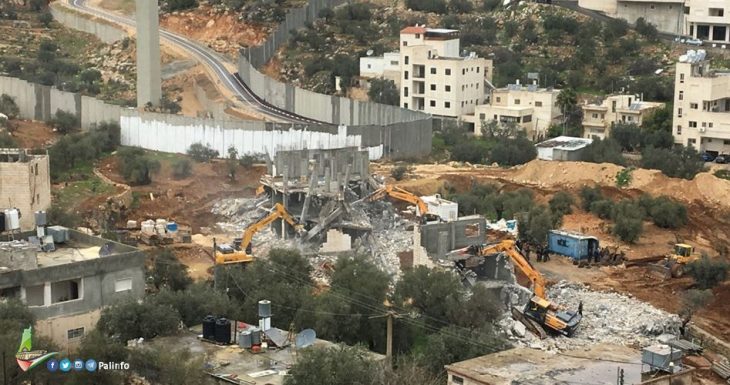
Press TV – March 24, 2018
In a major diplomatic blow to Israel, the United Nations Human Rights Council (UNHCR) has adopted five resolutions against Tel Aviv, urging an international ban on arms sales to the regime over its atrocities in the occupied Palestinian territories.
The resolutions were adopted Friday at the end of the UNHCR’s 37th session, which lasted for a month in Geneva, slamming the Israeli regime’s mistreatment of Palestinians and voicing support for the Palestinians’ cause against the regime’s occupation of their homeland.
One of the resolutions is called “Ensuring accountability and justice for all violations of international law in the Occupied Palestinian Territory, including East Jerusalem (al-Quds).”
The document, which was passed by 27 to 4 votes and 15 abstentions, urged the world community to stop selling arms to the regime in Israel.
The resolution called upon “all states to promote compliance under international law” with regard to Israeli actions “by ensuring that their public authorities and private entities do not become involved in internationally unlawful conduct, inter alia the provision of arms to end users known or likely to use the arms in the commission of serious violations of international humanitarian and/or human rights law.”
Another of the five resolutions calls for an Israeli withdrawal from the Golan Heights, which the regime seized from Syria during the 1967 Six-Day War. Tel Aviv continues to occupy two-thirds of the Syrian territory ever since, in a move that has never been recognized by the international community.
The UN rights body also approved a resolution that called on Israel to withdraw to the pre-1967 lines as well as one that urged the Tel Aviv regime to halt settlement activity.
The fifth document approved on Friday denounced Israel for human rights abuses against the Palestinians.
US gets angry, says losing ‘patience’
Furious over the resolutions, US Ambassador to the United Nations Nikki Haley has slammed the council as “foolish and unworthy of its name,” claiming it is biased against Israel.
She also warned that the US would continue to consider its options regarding membership of the UN panel, saying, “Our patience is not unlimited.”
“When that happens, as it did today, the Council fails to fulfill its duty to uphold human rights around the world. The United States continues to evaluate our membership in the Human Rights Council. Our patience is not unlimited,” Haley said.
The UK also spoke against what it called the council’s bias against Tel Aviv.
Britain opposed the resolutions on the Golan Heights and the one on accountability. It, however, voted in favor of the resolutions on human rights and Palestinian self-determination. The country also abstained on the resolution on settlements.
Under US President Donald Trump, the regime in Israel has stepped up its expansionist policies and crimes against Palestinians.
The regime has been further emboldened by a US decision to transfer its capital from Tel Aviv to the occupied city, in a major policy shift which drew global anger and protests late last year.
The city, which is designated as “occupied” under international law since the 1967 Arab War, is sought by Palestinians as the capital of their future state.
Trinity College Dublin students overwhelmingly back BDS in referendum
MEMO | March 23, 2108
Students at Trinity College Dublin have overwhelmingly voted to support the Palestinian-led Boycott, Divestment, Sanctions (BDS) campaign, with the referendum result announced to cheers and chants.
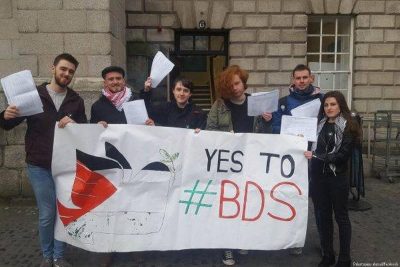 Asked whether Trinity College Dublin Students’ Union (TCDSU) should “accept a long-term policy on Palestine and in support of Boycott, Divestment and Sanctions (BDS)”, 64.5 per cent of students voted in favour (1,287 students of a total of 2,050).
The referendum reportedly saw the highest turnout in recent years. As BDS is a “long-term policy”, it required that 60 per cent or above of the students balloted voted in its favour. The referendum was held after students gathered the necessary 500 signatures to put the vote to the student body.
According to The University Times, the long-term policy mandates the union to support the movement and “comply with the principles of BDS in all union shops, trade, business and other union operations”, as well as to lobby the college and the government to adopt a BDS policy.
“The long-term policy would also see the introduction of a boycott, divestment and sanction implementation group within the union,” the paper added.
The incoming TCDSU President Shane De Rís and President-elect of the Graduate Students’ Union (GSU) Oisín Vince Coulter had both urged students to vote in favour of BDS.
“It isn’t uncommon for students and students unions to campaign for the rights of oppressed people at home and around the globe,” De Rís said.
If we can help make a difference by boycotting, divesting, and sanctioning those organisations complicit the oppression of the Palestinian people, then I think it worthwhile to do so.
Vince Coulter added: “We need to show solidarity again with the struggle of the Palestinian people for peace, justice and human rights.”
Read also:
Israel Moves to Revoke Residency to 12 Palestinians of Jerusalem
Palestine Chronicle | March 22, 2018
Under a recently enacted law, Israel’s Interior Minister Aryeh Deri has expressed his intentions to strip the residency status of 12 Palestinians in Jerusalem, accusing them of being involved in “terror”.
Four of the 12 are elected Parliamentarians affiliated with the Hamas Movement.
The law, passed two weeks ago, gives the interior minister the power to strip the residency documents of any Palestinian on grounds of a “breach of loyalty” to Israel.
But last year, the Supreme Court ruled that the interior minister does not have the power to do so after a petition was filed by rights groups.
In response, the Israeli government enacted the bill two weeks ago, giving the minister the legal means to strip the residency documents of any Palestinian whom he deems a threat.
Rights groups have blasted the new law as racist and illegal.
“East Jerusalem is considered occupied territory under international humanitarian law (IHL) – like all other areas of the West Bank and the Gaza Strip – and its Palestinian residents are a protected civilian population,” Adalah, a Palestinian rights group in Israel, said.
Palestinians in the city are given “permanent residency” ID cards and temporary Jordanian passports that are only used for travel purposes. They are essentially stateless, stuck in legal limbo – they are not citizens of Israel, nor are they citizens of Jordan or Palestine.
The new bill will only worsen the difficult conditions for the 420,000 Palestinians living in occupied East Jerusalem, who are treated as foreign immigrants by the state.
Since 1967, Israel has revoked the status of at least 14,000 Palestinians.
Deri, the interior minister, who was, in the past, convicted of bribery, fraud and “breach of trust”, says this law would allow him to protect the “security of Israeli citizens”.
Taylor Force Act about to sneak through Congress, perpetuating oppression of Palestinians
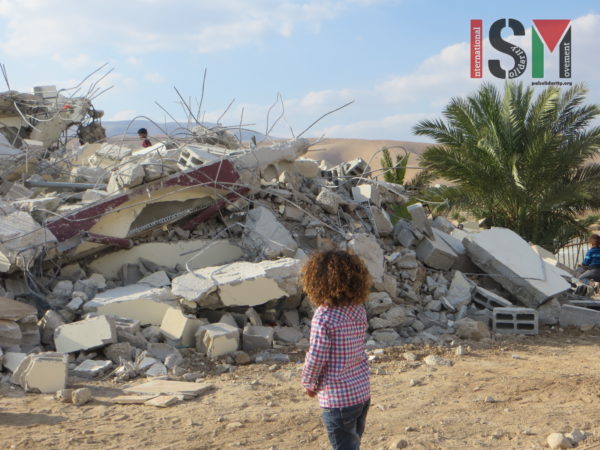
By Kathryn Shihadah | If Americans Knew | March 22, 2018
The Taylor Force Act, which has been working its way through Congress since February 2017, is likely to become law this week, tucked away inside an omnibus spending bill that, if it fails to pass, will result in government shutdown.
The bill (HR1164, S 1697), named after Taylor Force, a young man who was killed by a Palestinian in Tel Aviv in March 2016, is designed to withhold economic assistance to the Palestinian Authority until it stops “making payments to terrorists in Israeli prisons and to the families of deceased terrorists.”
The alleged “pay-to-slay” practice is widely condemned in both houses of Congress because it supposedly incentivizes terrorism.
However, this interpretation of the Palestinian Authority policy is based on a nearly universal misunderstanding of the program, which presupposes Palestinians to be terrorists with a death wish, rather recognizing that they are people who embrace life like everyone else.
In fact, when viewed in its proper context, the Palestinian Authority is providing a valuable social program, not a rebel recruitment tool.
Family assistance
In the US, the family of a service member killed in the line of duty receives a one-time payment to help surviving members deal with financial hardships connected with the loss of their loved one. This “death gratuity” is currently $100,000.
Israel too has a compensation program for families of IDF soldiers killed or injured in the line of duty.
The Palestinian Territories, however, have no official armed forces; their resistance against the occupation is carried out by civilians. In the event of their death, injury, or imprisonment their families still face financial struggles. The Palestinian Authority provides for them through the fund that Congress is trying to bring to an end. (For more detail on the Taylor Force Act, read this and this.)
The fund, which had a budget of $170 million in 2016, makes monthly payments to about 35,000 Palestinian families – averaging under $400 a month. This helps children go to school and get food and medical care in the event the family breadwinner is imprisoned or killed.
According to Palestinian officials, only a small portion of the money goes to families of violent criminals; the majority goes to families of Palestinians who are imprisoned by Israel, many without charges.
A massive number of Palestinians – 800,000 since the beginning of the occupation, mostly men – are also detained by Israel as political prisoners; thousands of others have been killed or injured by IDF soldiers. Their families too need assistance.
Without this social safety net, many Palestinian wives, mothers, and children would be at risk of homelessness and starvation.
Believing the worst
Our Congress has been given an explanation of how the program works, but refuses to accept it: Senator Blunt (R-MO) declared recently, “This is not a welfare system, but a so-called martyr system and we shouldn’t allow the killers and ruthless attackers to be recognized as martyrs in a system that we are part of.” Senator Cotton (R-AR) added, “The taxpayers’ dollars will no longer go to subsidize the murder of American citizens and Israeli citizens.”
Those members of Congress with a modicum compassion (and, perhaps, a wish to prop up the Palestinian Authority?) have insisted that some money for the Palestinian Authority stay in the budget: Rep. Eliot Engel (D-NY) pushed for $37 million in assistance for water treatment (a compromise of $5 million was reached); others fought to keep $500,000 for vaccinations for children and a fund for the East Jerusalem Hospital Network.
The US currently provides about $260 million a year in Palestinian aid. None of this money goes directly into the hands of the Palestinian Authority, but rather funds NGO programs that assist Palestinians. The US also pays out $50 – $100 million each year to Palestinian security forces, which work with Israel to “maintain security” in the West Bank – i.e. clamp down on Palestinian resistance forces.
Enabling injustice
The noteworthy – and unspoken – other side of the coin is American aid to Israel, which continues unimpeded, regardless of Israel’s actions. $10 million a day flows out of our coffers to bankroll Israel’s illegal occupation and blockade, its high-tech wars against the unarmed population of Gaza, and ongoing human rights abuses.
The great irony of this military aid to Israel is that this massive amount of money supports the occupation, which directly contributes to the Palestinians’ economic hardship and desperate need for American aid. The occupation imprisons Palestinians, weaponizes the IDF to shoot and kill, and drives young men occasionally to the hopelessness that turns them to violence. The circle is complete when the US ignores the financial hardship it helped create, and defunds aid through the Taylor Force Act.
Bottom line: US aid finances oppression, Palestinian families face financial hardship, the Taylor Force Act wants to defund their aid.
Is this good for us?
As I wrote when the Taylor Force Act was newly minted:
The Foreign Assistance Act, which “prohibits…assistance to any country which engages in a consistent pattern of gross violation of internationally recognized human rights,” sounds like it can be applied to Israel. Why are we forking over $10 million a day, $3.5 billion a year, to the Israeli government?
The answer is in the fine print of the Act: “except when extraordinary circumstances exist which necessitate continuation of such assistance or the national interest of the United States requires such assistance.” Our leaders seem to think Israel’s continued human rights abuses are in our best interest.
The Taylor Force Act will most likely pass along with the rest of the omnibus bill. At that point we must consider some new strategy to advocate for assistance to Palestinian families in need. An educational program for our Congress members, perhaps – with a test at the end to make sure they were paying attention? A trip to see Gaza, Silwan, and the unrecognized villages of the Negev? Or perhaps a heart transplant?
Kathryn Shihadah is a staff writer for If Americans Knew
Nariman and Ahed Tamimi: Icons of Palestinian Resilience
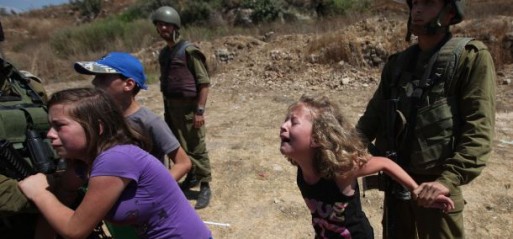
By Bassem Tamimi | MEMO | March 20, 2018
The incarceration of the two most important women in my life, my wife Nariman and daughter Ahed, is not an extraordinary or exceptional case. On the contrary, Palestinians have continued to endure such atrocious behaviour from Israel as an occupying power since the Nakba of 1948. Perhaps my family represents a model of Palestinians in general, and women specifically, who suffer from inhumane practices on a daily basis.
While families in the Middle East and elsewhere celebrate Mother’s Day, my heart aches for my late mother who passed away about three years ago. She died after suffering from a severe illness, while also still grieving the murder of my sister Bassema. About 25 years ago, my sister was brutally beaten to death by a group of Israeli settlers at the entrance of an Israeli court while waiting to see her detained son. During this painful period, I also went through one of the most difficult and life-threatening periods of my life. While incarcerated in an Israeli prison, I sustained a brain hemorrhage that led to a coma, which left me incapacitated for a long period. The day I was released from Israeli prison, my sister was buried; a devastating time for me and my family. While the Palestinian people continue to suffer from this indefinite occupation, it feels as if these devastating days are a never-ending part of our everyday lives.
Such is the case as my wife and daughter continue to be imprisoned by the Israelis. In the early morning hours of 19 December, 2017, over 30 Israeli soldiers invaded my home and imprisoned my 16-year-old daughter, Ahed. The soldiers declared my village a closed military zone and sealed off all entrances and exits. With more than 12 military jeeps, they fired teargas and detonated sound bombs – they came to terrorize my child and family. Ahed was strong, resilient and calm. While sitting chained in an Israeli military jeep, she called, “Don’t worry, I am strong”. Yes, my child will continue to be strong and resilient and perhaps that is why many people idolize her, while others fear her strength.
Prior to the arrest, some Israeli groups launched a vicious campaign against her because she stood tall against Israeli intimidation and brutality. When my wife Nariman attempted to visit her at the Israeli interrogation centre, she was also arrested. Today, these two strong women await justice and freedom.
I should not be surprised by Ahed’s perseverance, strength, and rejection of the occupation. When she was a small child she asked me what ‘occupation’ means. “Fear,” I said. Despite Ahed’s gentle and warm personality, she grew up knowing how to face that fear and to be strong in the face of it. She stood strong against an armed solider and all that he represented in this illegal occupation. All she did was to unwaveringly say no, in her words and actions, to the occupation.
Despite Ahed’s youth, she stood strong and proud against intimidation and threats during her interrogation by the Israeli military. They tried to break her will, but my child won. In a letter sent through her lawyer, Ahed said, “What happened was expected, and when I remember why I am in Israeli prison, my will becomes stronger. This cause deserves a great deal. We have endured difficulties and we will overcome, as I was taught by my parents. The encouragement and enthusiasm I have received has made me immensely happy, however, I hope that the rest of the Palestinian prisoners receive the same support as I have.”
No doubt, I am a proud father, a father of a girl that has become an icon of popular and peaceful resistance. However, my heart is full of sadness and anger as my child is robbed of her childhood.
Despite my family’s long history of peaceful resistance and demonstrations, and both myself and Nariman’s numerous arrests by the Israelis, I cannot hide the fact that I am in distress and fear for Ahed’s future—perhaps because this is her first experience in Israeli prisons and her first time away from home.
Since 2010, Nariman has participated in hundreds of peaceful demonstration organized in our village against the Israeli occupation. Our home was raided hundred times and Nariman was arrested three times—but this did not deter her from continuing her struggle against the occupation. During the course of demonstrations, she rescued countless Palestinian youth who sustained injuries and attacks by the Israeli military. Yet, she was not able to rescue her own brother who was brutally killed by the Israeli military in 2012. Nariman captured the Israeli attacks on video that day, but did not know that she was in fact filming the death of her own brother. Planting the seeds of resilience in Ahed and my children, Nariman continues to be a role model to women everywhere.
The Palestinian people continue to endure hardship and dispossession, from the time of the Nakba in 1948 until today, both at the hands of the Israeli occupying authorities, as well as the terror of illegal Israeli settlers. Palestinians worldwide, whether living under occupation, in the refugee camps, or elsewhere in exile—continue to live a daily Nakba. We in An Nabi Saleh village represent every Palestinian family who continues to endure Israeli policies of disenfranchisement, a policy that deprives Palestinians of the basic human right to live free. Despite these inhuman and illegal policies and practices against our families, and especially against women in particular, Palestinian women have persisted in their fight. In An Nabi Saleh, women and girls are leaders, and their role in peaceful demonstrations is vital, and are considered role models for many women here in Palestine and abroad.
While the Israelis chose Mother’s Day to prosecute Nariman and Ahed, my family, village, and Palestinians worldwide await the day when they, and all political prisoners, are released from Israeli prison. I would like to extend my family’s sincere gratitude to all those who have supported my wife and daughter, especially human rights organizations.
I am a proud husband and father. I am proud of all the women and mothers of Palestine who, with their strength and determination, have taught us to be fearless. I am proud that today, my child’s beautiful face has become a universal symbol of steadfastness, resistance and anti-injustice – like the iconic image of Che Guevara.
Apartheid Israel
By Jonathon Cook | AMEU | 2018 – Volume 51
North from Nazareth’s city limits, a mile or so as the crow flies, is an agricultural community by the name of Tzipori – Hebrew for “bird.” It is a place I visit regularly, often alongside groups of activists wanting to learn more about the political situation of the Palestinian minority living in Israel.
Tzipori helps to shed light on the core historic, legal and administrative principles underpinning a Jewish state, ones that reveal it to be firmly in a tradition of non-democratic political systems that can best be described as apartheid in nature.
More than a decade ago, former U.S. president Jimmy Carter incurred the wrath of Israel’s partisans in America by suggesting that Israeli rule over Palestinians in the occupied territories was comparable to apartheid. While his bestseller book “Palestine: Peace Not Apartheid” broke a taboo, in many ways it added to the confusion surrounding discussions of Israel. Since then, others, including John Kerry, when U.S. secretary of state, and former Israeli prime ministers Ehud Olmert and Ehud Barak, have warned that Israeli rule in the occupied territories is in danger of metamorphosing into “apartheid” – though the moment of transformation, in their eyes, never quite seems to arrive.
It has been left to knowledgeable observers, such as South Africa’s Archbishop Desmond Tutu, to point out that the situation for Palestinians under occupation is, in fact, worse than that suffered by blacks in the former South Africa. In Tutu’s view, Palestinians under occupation suffer from something more extreme than apartheid – what we might term “apartheid-plus.”
There is a notable difference between the two cases that hints at the nature of that “plus.” Even at the height of apartheid, South Africa’s white population understood that it needed, and depended on, the labor of the black majority population. Israel, on the other hand, has a far more antagonistic relationship to Palestinians in the occupied territories. They are viewed as an unwelcome, surplus population that serves as a demographic obstacle to the political realization of a Greater Israel. The severe economic and military pressures Israel imposes on these Palestinians are designed to engineer their incremental displacement, a slow-motion ethnic cleansing.
Not surprisingly, Israel’s supporters have been keen to restrict the use of the term “apartheid” to South Africa, as though a political system allocating key resources on a strictly racial or ethnic basis has only ever occurred in one place and at one time. It is often forgotten that the crime of apartheid is defined in international law, as part of the 2002 Rome Statute that created the International Criminal Court at The Hague. An apartheid system, the statute says, is “an institutionalized regime of systematic oppression and domination by one racial group over any other racial group or groups and committed with the intention of maintaining that regime.” In short, apartheid is a political system, or structure, that assigns rights and privileges based on racial criteria.
This definition, it will be argued in this essay, describes the political regime not only in the occupied territories – where things are actually even worse – but in Israel itself, where Jewish citizens enjoy institutional privileges over the 1.8 million Palestinians who have formal Israeli citizenship. These Palestinians are the remnants of the Palestinian people who were mostly dispersed by the 1948 war that established a Jewish state on the ruins of their homeland. These Palestinian citizens comprise about a fifth of Israel’s population.
Although it is generally understood that they suffer discrimination, the assumption even of many scholars is that their treatment in no way undermines Israel’s status as a western-style liberal democracy. Most minorities in the west – for example, blacks and Hispanics in the U.S., Asians in the U.K., Turks in Germany, and Africans in France – face widespread prejudice and discrimination. Israel’s treatment of its Palestinian minority, it is claimed, is no different.
This is to profoundly misunderstand the kind of state Israel is, and how it relates to all Palestinians, whether they are under occupation or Israeli citizens. The discrimination faced by Palestinians in Israel is not illegal, informal, unofficial, or improvised. It is systematic, institutional, structural and extensively codified, satisfying very precisely the definition of apartheid in international law and echoing the key features of South African apartheid.
It was for this reason that the United Nations’ Economic Social Commission for Western Asia (ESCWA) published a report in 2017 concluding that Israel had “established an apartheid regime that dominates the Palestinian people as a whole,” including its Palestinian citizens. Under severe pressure from Israel and the U.S. , however, that report was quickly retracted, but the reality of apartheid in Israeli law and practice persists.
This argument is far more controversial than the one made by President Carter. His position suggests that Israel developed a discrete system of apartheid after the occupation began in 1967 – a kind of “add-on” apartheid to democratic Israel. On this view, were Israel to end the occupation, the apartheid regime in the territories could be amputated like a gangrenous limb. But if Israel’s treatment of its own Palestinian citizens fits the definition of apartheid, then it implies something far more problematic. It suggests that Jewish privilege is inherent in the Israeli polity established by the Zionist movement in 1948, that a Jewish state is apartheid-like by its nature, and that dismantling the occupation would do nothing to end Israel’s status as an apartheid state.
Citizenship Inequality
Tzipori was founded by Romanian and Bulgarian Jews in 1949 as a moshav, a socialist agricultural collective similar to the kibbutz. It specialized in dairy production, though most of its 1,000 inhabitants long ago abandoned socialism, as well as farming; today they work in offices in nearby cities such as Haifa, Tiberias and Afula.
Tzipori’s Hebrew name alludes to a much older Roman city called Sephoris, the remains of which are included in a national park that abuts the moshav. Separating the moshav from ancient Sephoris is a large pine forest, concealing yet more rubble, in some places barely distinguishable from the archeological debris of the national park. But these ruins are much more recent. They are the remnants of a Palestinian community of some 5,000 souls known as Saffuriya. The village was wiped out in 1948 during the Nakba, the Arabic word for “catastrophe” – how Palestinians describe the loss of their homeland and its replacement with a Jewish state.
The Palestinians of Saffuriya – an Arabized version of “Sephoris” – were expelled by Israel and their homes razed. The destruction of Saffuriya was far from an isolated incident. More than 500 Palestinian villages were ethnically cleansed in a similar fashion during the Nakba, and the ruins of the homes invariably covered with trees. Today, all Saffuriya’s former residents live in exile – most outside Israel’s borders, in camps in Lebanon. But a proportion live close by in Nazareth, the only Palestinian city in what became Israel to survive the Nakba. In fact, according to some estimates, as much as 40 percent of Nazareth’s current population is descended from Saffuriya’s refugees, living in its own neighborhood of Nazareth called Safafri.
Nowadays, when observers refer to Palestinians, they usually think of those living in the territories Israel occupied in 1967: the West Bank, Gaza and East Jerusalem. Increasingly, observers (and peace processes) overlook two other significant groups. The first are the Palestinian refugees who ended up beyond the borders of partitioned Palestine; the second are the 20 percent of Palestinians, some 150,000, who managed to remain on their land. This figure was far higher than intended by Israel’s founders.
It included 30,000 in Nazareth – both the original inhabitants and refugees like those from Saffuriya who sought sanctuary in the city during the Nakba – who avoided being expelled. They did so only because of a mistake. The commander who led the attack on Nazareth, a Canadian Jew called Ben Dunkelman, disobeyed an order to empty the city of its inhabitants. One can guess why: given the high profile of Nazareth as a center of Christianity, and coming in the immediate wake of the war crimes trials of Nazis at Nuremberg, Dunkelman presumably feared that one day he might end up in the dock too.
There were other, unforeseen reasons why Palestinians either remained inside or were brought into the new state of Israel. Under pressure from the Vatican, a significant number of Palestinian Christians – maybe 10,000 – were allowed to return after the fighting finished. A further 35,000 Palestinians were administratively moved into Israel in 1949, after the Nakba had ended, when Israel struck a deal with Jordan to redraw the ceasefire lines – to Israel’s territorial, but not demographic, advantage. And finally, in a far less technologically sophisticated age, many refugees who had been expelled outside Israel’s borders managed to slip back hoping to return to villages like Saffuriya. When they found their homes destroyed, they “blended” into surviving Palestinian communities like Nazareth, effectively disappearing from the Israeli authorities’ view.
In fact, it was this last trend that initiated a process that belatedly led to citizenship for the Palestinians still in Israel. The priority for Israeli officials was to prevent any return for the 750,000 Palestinians they had ethnically cleansed so successfully. That was the only way to ensure the preservation of a permanent and incontrovertible Jewish majority. And to that end, Palestinians in surviving communities like Nazareth needed to be marked out – “branded,” to use a cattle-ranching metaphor. That way, any “infiltrators,” as Israel termed refugees who tried to return home, could be immediately identified and expelled again. This “branding” exercise began with the issuing of residency permits to Palestinians in communities like Nazareth. But as Israel sought greater international legitimacy, it belatedly agreed to convert this residency into citizenship.
It did so through the Citizenship Law of 1952, four years after Israel’s creation. Citizenship for Palestinians in Israel was a concession made extremely reluctantly and only because it served Israel’s larger demographic purposes. Certainly, it was not proof, as is often assumed, of Israel’s democratic credentials. The Citizenship Law is better understood as an anti-citizenship law: its primary goal was to strip any Palestinians outside the new borders – the vast majority after the ethnic cleansing of 1948 – of a right ever to return to their homeland.
Two years before the Citizenship Law, Israel passed the more famous Law of Return. This law effectively opened the door to all Jews around the world to immigrate to Israel, automatically entitling them to citizenship.
Anyone familiar with modern U.S. history will have heard of the Supreme Court decision of 1954 in the famous civil rights case Brown v. Board of Education. The judges ruled that the creation of separate public schools for white and black pupils was unconstitutional, on the grounds that “separate is inherently unequal.” It was an important legal principle that would strike a decisive blow against Jim Crow, the Deep South’s version of apartheid.
If separate is inherently unequal, Israel’s segregated structure of citizenship is the most profound form of inequality imaginable. Citizenship is sometimes referred to as the “foundational right” offered by states because so many other basic rights typically depend on it: from suffrage to residency and welfare. By separating citizenship rights on an ethnic basis, creating Jewish citizens with one law and Palestinian citizens with another, Israel institutionalized legal apartheid at the bedrock level. Adalah, a legal rights group for Palestinians in Israel, has compiled an online database listing Israeli laws that explicitly discriminate based on ethnicity. The Law of Return and the Citizenship Law are the most significant, but there are nearly 70 more of them.
Marriage Inequality
Ben Gurion was prepared to award the remnants of the Palestinians in Israel this degraded version of citizenship because he assumed this population would pose no threat to his new Jewish state. He expected these Palestinian citizens – or what Israel prefers to term generically “Israeli Arabs” – to be swamped by the arrival of waves of Jewish immigrants like those that settled Tzipori. Ben Gurion badly miscalculated. The far higher birth rate of Palestinian citizens meant they continue to comprise a fifth of Israel’s population.
Palestinian citizens have maintained this numerical proportion, despite Israel’s strenuous efforts to gerrymander its population. The Law of Return encourages – with free flights, financial gifts, interest-free loans and grants – any Jew in the world to come to Israel and instantly receive citizenship. More than three million Jews have taken up the offer.
The Citizenship Law, on the other hand, effectively closed the door after 1952 on the ability of Palestinians to gain citizenship. In fact, since then there has been only one way for a non-Jew to naturalize and that is by marrying an Israeli citizen, either a Jew or Palestinian. This exception is allowed only because a few dozen non-Jews qualify each year, posing no threat to Israel’s Jewish majority.
In practice, Palestinians outside Israel have always been disqualified from using this route to citizenship, even if they marry a Palestinian citizen of Israel, as became increasingly common after Israel occupied the rest of historic Palestine in 1967. During the Oslo years, when Palestinians in Israel launched a legal challenge to force Israel to uphold the naturalization of their spouses from the occupied territories, the government hurriedly responded by passing in 2003 the Citizenship and Entry into Israel Law. It denied Palestinians the right to qualify for Israeli residency or citizenship under the marriage provision. In effect, it banned marriage across the Green Line formally separating Palestinians in Israel from Palestinians under occupation. The measure revealed that Israel was prepared to violate yet another fundamental right – to fall in love and marry the person of one’s choice – to preserve its Jewishness.
Nationality Inequality
Most citizens of the United States correctly assume that their citizenship and nationality are synonymous: “American” or “U.S.”
But the same is not true for Israelis. Israel classifies its citizens as holding different “nationalities.” This requires rejecting a common Israeli nationality and instead separating citizens into supposed ethnic or religious categories. Israel has recognized more than 130 nationalities to deal with anomalous cases, myself included. After I married my wife from Nazareth, I entered a lengthy, complex and hostile naturalization process. I am now an Israeli citizen, but my nationality is identified as “British.” The vast majority of Israeli citizens, on the other hand, hold one of two official nationalities: Jewish or Arab. The Israeli Supreme Court has twice upheld the idea that these nationalities are separate from – and superior to – citizenship.
This complex system of separate nationalities is not some arcane, eccentric practice: it is central to Israel’s version of apartheid. It is the means by which Israel can both institutionalize a separation in rights and obscure this state-sanctioned segregation from the view of outsiders. It allows Israel to offer different rights to different citizens depending on whether they are Jews or Palestinians, but in a way that avoids too obvious a comparison with apartheid South Africa. Here is how.
All citizens, whatever their ethnicity, enjoy “citizenship rights.” In this regard, Israel looks – at least superficially – much like a western liberal democracy. Examples of citizenship rights include health care, welfare payments, the domestic allocation of water, and education – although, as we shall see, the picture is usually far more complex than it first appears. In reality, Israel has managed covertly to subvert even these citizenship rights.
Consider medical care. Although all citizens are entitled to equal health provision, hospitals and major medical services are almost always located in Jewish communities, and difficult for Palestinian citizens to access given the lack of transport connections between Palestinian and Jewish communities. Palestinian citizens in remote communities are denied access to basic medical services. And recently it emerged that Israeli hospitals were secretly segregating Jewish and Palestinian women in maternity clinics. Dr. Hatim Kanaaneh, a Palestinian physician in Israel, documents these and many other problems with health care in his book “A Doctor in Galilee.”
More significantly, Israel also recognizes “national rights,” and reserves them almost exclusively for the Jewish population. National rights are treated as superior to citizenship rights. So if there is a conflict between a Jew’s national right and a Palestinian’s individual citizenship right, the national right must be given priority by officials and the courts. In this context, Israel’s rightwing justice minister, Ayelet Shaked, observed in February 2018 that Israel should ensure “equal rights to all citizens but not equal national rights.” She added: “Israel is a Jewish state. It isn’t a state of all its nations.”
The simplest illustration of how this hierarchy of rights works can be found in Israel’s citizenship laws. The Law of Return establishes a national right for all Jews to gain instant citizenship – as well as the many other rights that derive from citizenship. The Citizenship Law, on the other hand, creates only an individual citizenship right for non-Jews, not a national one. Palestinian citizens can pass their citizenship “downwards” to their offspring but cannot extend it “outwards,” as a Jew can, to members of their extended family – in their case, Palestinians who were made refugees in 1948. My wife has relatives who were exiled by the Nakba in Jordan. But with only an individual right to citizenship, she cannot bring any of them back to their homes now in Israel.
This distinction is equally vital in understanding how Israel allocates key material resources, such as water and land. Let us consider land. Israel has “nationalized” almost all of its territory – 93 percent. Palestinian communities in Israel have been able to hold on to less than 3 percent of their land – mostly the built-up areas of their towns and villages – after waves of confiscation by the state stripped them of at least 70 percent of their holdings.
It is not unprecedented in western democracies for the state to be a major land owner, even if Israel’s total holdings are far more extensive than other states. But Israel has successfully masked what this “nationalization” of land actually means. Given that there is no recognized Israeli nationality, Israel does not hold the land on behalf of its citizens – as would be the case elsewhere. It does not even manage the land on behalf of Jewish citizens of Israel. Instead the land is held in trust for the Jewish people around the globe, whether they are citizens or not, and whether they want to be part of Israel or not.
In practice, Jews who buy homes in Israel effectively get long-term leases on their property from a government body known as the Israel Lands Authority. The state regards them as protecting or guarding the land on behalf of Jews collectively around the world. Who are they guarding it from? From the original owners. Most of these lands, like those in Tzipori, have been either seized from Palestinian refugees or confiscated from Palestinian citizens.
Legal Inequality
The political geographer Oren Yiftachel is among the growing number of Israeli scholars who reject the classification of Israel as a liberal democracy, or in fact any kind of democracy. He describes Israel as an “ethnocracy,” a hybrid state that creates a democratic façade, especially for the dominant ethnic group, to conceal its essential, non-democratic structure. In describing Israel’s ethnocracy, Yiftachel provides a complex hierarchy of citizenship in which non-Jews are at the very bottom.
It is notable that Israel lacks a constitution, instead creating 11 Basic Laws that approximate a constitution. The most liberal component of this legislation, passed in 1992 and titled Freedom and Human Dignity, is sometimes referred to as Israel’s Bill of Rights. However, it explicitly fails to enshrine in law a principle of equality. Instead, the law emphasizes Israel’s existence as a “Jewish and democratic state” – an oxymoron that is rarely examined by Israelis.
A former Supreme Court judge, Meir Shamgar, famously claimed that Israel – as the nation-state of the Jewish people – was no less democratic than France, as the nation-state of the French people. And yet, while it is clear how one might naturalize to become French, the only route to becoming Jewish is religious conversion. “Jewish” and “French” are clearly not similar conceptions of citizenship.
Netanyahu’s government has been trying to draft a 12th Basic Law. Its title is revealing: it declares Israel as “the Nation-State of the Jewish People.” Not the state of Israeli citizens, or even of Israeli Jews, but of all Jews around the world, including those Jews who are not Israeli citizens and have no interest in becoming citizens. This is a reminder of the very peculiar nature of a Jewish state, one that breaks with the conception of a civic citizenship on which liberal democracies are premised. Israel’s ethnic idea of nationality is closely derived from the ugly ethnic or racial ideas of citizenship that dominated Europe a century ago. Those exclusive, aggressive conceptions of peoplehood led to two devastating world wars, as well as providing the ideological justification for a wave of anti-semitism that swept Europe and culminated in the Holocaust.
Further, if all Jewish “nationals” in the world are treated as citizens of Israel – real or potential ones – what does that make Israel’s large minority of Palestinian citizens, including my wife and two children? It seems that Israel regards them effectively as guest workers or resident aliens, tolerated so long as their presence does not threaten the state’s Jewishness. Ayelet Shaked, Israel’s justice minister, implicitly acknowledged this problem during a debate on the proposed Nation-State Basic Law in February. She said Israel could not afford to respect universal human rights: “There is a place to maintain a Jewish majority even at the price of violation of rights.”
The hierarchy of citizenship Yiftachel notes is helpful because it allows us to understand that Israeli citizenship is the exact opposite of the level playing field of formal rights one would expect to find in a liberal democracy. Another key piece of legislation, the Absentee Property Law of 1950, stripped all Palestinian refugees from the 1948 war of their right to any property they had owned before the Nakba. Everything was seized – land, crops, buildings, vehicles, farm implements, bank accounts – and became the property of Israel, passed on to Jewish institutions or Jewish citizens in violation of international law.
The Absentee Property Law applied equally to Palestinian citizens, such as those from Saffuriya who ended up in Nazareth, as it did to Palestinian refugees outside Israel’s recognized borders. In fact, as many as one in four Palestinian citizens are reckoned to have been internally displaced by the 1948 war. In the Orwellian terminology of the Absentee Property Law, these refugees are classified as “present absentees” – present in Israel, but absent from their former homes. Despite their citizenship, such Palestinians have no more rights to return home, or reclaim other property, than refugees in camps in Lebanon, Syria and Jordan.
Residential Segregation
Although Tzipori was built on land confiscated from Palestinians – some of them Israeli citizens living close by in Nazareth – not one of its 300 or so homes, or its dozen farms, is owned by a Palestinian citizen. In fact, no Palestinian citizen of Israel has ever been allowed to live or even rent a home in Tzipori, seven decades after Israel’s creation.
Tzipori is far from unique. There are some 700 similar rural communities, known in Israel as cooperative communities. Each is, and is intended to be, exclusively Jewish, denying Palestinian citizens of Israel the right to live in them. These rural communities control much of the 93 percent of land that has been “nationalized,” effectively ensuring it remains off-limits to the fifth of Israel’s population that is non-Jewish.
How is this system of ethnic residential segregation enforced? Most cooperative communities like Tzipori administer a vetting procedure through an “admissions committee,” comprising officials from quasi-governmental entities such as the Jewish Agency, the Jewish National Fund and the World Zionist Organization, which are there to represent the interests of world Jewry, not Israeli citizens. These organizations, effectively interest groups that enjoy a special, protected status as agents of the Israeli state, are themselves a gross violation of the principles of a liberal democracy. The state, for example, has awarded the Jewish National Fund, whose charter obligates it to discriminate in favor of Jews, ownership of 13 percent of Israeli territory. A Jew from Brooklyn has more rights to land in Israel than a Palestinian citizen.
For most of Israel’s history, there was little need to conceal what the admissions committees were doing. No one noticed. If a Palestinian from Nazareth had applied to live in Tzipori, the admissions committee would simply have rejected the applicant on the grounds that they were an “Arab.” But this very effective mechanism for keeping Palestinian citizens off most of their historic homeland hit a crisis two decades ago when the case of the Kaadan family began working its way through Israel’s court system.
Adel Kaadan lived in a very poor Palestinian community called Baqa al-Ghabiyya, south of Nazareth and quite literally a stone’s throw from the West Bank. Kaadan had a good job as a senior nurse in nearby Hadera hospital, where he regularly treated Jewish patients and had on occasion, he told me when I interviewed him in the early 2000s, helped to save Israeli soldiers’ lives. He assumed this should entitle him to live in a Jewish community. Kaadan struck me as stubborn as he was naïve – a combination of personality traits that had got him this far and ended up causing Israel a great deal of legal and reputational trouble.
Determined to give his three young daughters the best opportunities he could manage, Kaadan had built the family an impressive villa in Baqa al-Ghabiyya. While I sat having coffee with him, one of his daughters played the piano with a proficiency that suggested she had a private tutor. But Kaadan was deeply dissatisfied with his lot. His home was grand and beautiful, but Baqa was not. As soon as the family stepped outside their home, they had to wade into the reality of Palestinian life in Israel. Kaadan was proof that it was possible for some Palestinian citizens, if they were determined and lucky enough to surmount the many obstacles placed in their way, to enjoy personal success, but they could not so easily escape the collective poverty of their surroundings.
Like many other Palestinian citizens, Kaadan was trapped by yet another piece of legislation: the Planning and Building Law of 1965. It advanced a core aim of Zionism: “Judaizing” as much land as possible. It achieved this in two main ways. First, communities in Israel were only recognized by the state if they were listed in the Planning Law. Although nearly 200 Palestinian communities had survived the Nakba, the law recognized just 120 or them.
The most problematic communities, from Israel’s point of view, were the dispersed Bedouin villages located among the remote, dusty hills of the semi-desert Negev, or Naqab, in Israel’s south. The Negev was Israel’s biggest land reserve, comprising 60 percent of the country’s territory. Its vast, inaccessible spaces had made it the preferred location for secretive military bases and Israel’s nuclear program. Israel wanted the Bedouin off their historic lands, and the Planning Law was the ideal way to evict them – by de-recognizing their villages.
Today the inhabitants of dozens of “unrecognized villages” – home to nearly a tenth of the Palestinian population in Israel – are invisible to the state, except when it comes to the enforcement of planning regulations. The villagers live without state-provided electricity, water, roads and communications. Any homes they build instantly receive demolition orders, forcing many to live in tents or tin shacks. Israel’s aim is to force the Bedouin to abandon their pastoral way of life and traditions, and relocate to overcrowded, state-built townships, which are the poorest communities in Israel by some margin.
In addition to creating the unrecognized villages, the Planning and Building Law of 1965 ensures ghetto-like conditions for recognized Palestinian communities too. It creates residential segregation by confining the vast majority of Palestinian citizens to the 120 Palestinian communities in Israel that are officially listed for them, and then tightly limits their room for growth and development. Even in the case of Palestinian citizens living in a handful of so-called “mixed cities” – Palestinian cities that were largely “Judaized” after the Nakba – they have been forced into their own discrete neighborhoods, on the margins of urban life.
The Planning Law also drew a series of blue lines around all the communities in Israel, determining their expansion area. Jewish communities were awarded significant land reserves, while the blue lines around Palestinian communities were invariably drawn close to the built-up area half a century ago. Although Israel’s Palestinian population has grown seven or eight-fold since, its expansion space has barely changed, leading to massive overcrowding. This problem is exacerbated by Israel’s failure to build a single new Palestinian community since 1948.
Like the other 120 surviving Palestinian communities in Israel, Baqa had been starved of resources: land, infrastructure and services. There were no parks or green areas where the Kaadan children could play. Outside their villa, there were no sidewalks, and during heavy rains untreated sewage rose out of the inadequate drains to wash over their shoes. Israel had confiscated all Baqa’s land for future development, so houses were crowded around them on all sides, often built without planning permits, which were in any case impossible to obtain. Illegal hook-ups for electricity blotted the view even further. With poor refuse collection services, the families often burnt their rubbish in nearby dumpsters.

Adel Kaadan had set his eyes on living somewhere better – and that meant moving to a Jewish community. When Israel began selling building plots in Katzir, a small Jewish cooperative community located on part on Baqa’s confiscated land, Kaadan submitted his application. When it was rejected because he was an “Arab,” he turned to the courts.
In 2000, the Kaadans’ case arrived at the highest court in the land, the Supreme Court. Aharon Barak, the court’s president who heard the petition, was the most liberal and respected judge in Israel’s history. But the Kaadans’ case was undoubtedly the most unwelcome he ever adjudicated. It placed an ardent Zionist like him in an impossible situation.
On one hand, there was no practice in Israel more clearly apartheid-like than the ethnic-based residential exclusion enforced by the admissions committees. It was simply not something Barak could afford to be seen upholding. After all, he was a regular lecturer at Yale and Harvard law schools, where he was feted, and had often been cited by liberal counterparts on the U.S. Supreme Court as a major influence on their judicial activism.
But while he could not be seen ruling in favor of Katzir, at the same time he dared not rule in the Kaadans’ favor either. Such a decision would undermine the core rationale of a Zionist Jewish state: the Judaization of as much territory as possible. It would create a legal precedent that would throw open the doors to other Palestinian citizens, allowing them also to move into these hundreds of Jewish-only communities.
Barak understood that much else hung on the principle of residential separation. Primary and secondary education are also segregated – and largely justified on the basis of residential separation. Jewish children go to Hebrew-language schools in Jewish areas; Palestinian children in Israel go to Arabic-language schools in Palestinian communities. (There are only a handful of private bilingual schools in Israel.)
This separation ensures that educational resources are prioritized for Jewish citizens. Arab schools are massively underfunded and their curriculum tightly controlled by the authorities, as exemplified by the 2011 Nakba Law. It threatens public funding for any school or institution that teaches about the key moment in modern Palestinian history. Additionally, teaching posts in Arab schools have historically been dictated by the Shin Bet, Israel’s secret police, to create spies in classrooms and common-rooms.
A side-benefit for Israel of separation in residency and education is that Palestinian and Jewish citizens have almost no chances to meet until they reach adulthood, when their characters have been formed. It is easy to fear the Other when you have no experience of him. The success of this segregation may be measured in intermarriages between Jewish and Palestinian citizens. In the year 2011, when the Israeli authorities last issued statistics, there were only 19 such marriages, or 0.03 percent. Israeli Jews openly oppose such marriages as “miscegenation.”
In fact, Israel is so opposed to intermarriages, that it prohibits such marriages from being conducted inside Israel. Mixed couples are forced to travel abroad and marry there — typically in Cyprus — and apply for the marriage to be recognized on their return. Notably, the 1973 United Nations Convention on Apartheid lists measures prohibiting mixed marriages as a crime of apartheid.
Residential separation has also allowed Israel to ensure Jewish communities are far wealthier and better provided with services than Palestinian ones. Although all citizens are taxed on their income, public-subsidized building programs are overwhelmingly directed at providing homes for Jewish families in Jewish areas. Over seven decades, hundreds of Jewish communities have been built by the state, with ready-made roads, sidewalks and public parks, with homes automatically connected to water, electricity and sewage grids. All these communities are built on “state land” – in most cases, lands taken from Palestinian refugees and Palestinian citizens.
By contrast, not one new Arab community has been established in that time. And the 120 recognized Palestinian communities have been largely left to sink or swim on their own. After waves of confiscation by the state, they are on the remnants of private Palestinian land. Having helped to subsidize housing and building programs for millions of Jewish immigrants, Palestinian communities have mostly had to raise their own money to install basic infrastructure, including water and sewage systems.
Meanwhile, segregated zoning areas and separate planning committees allow Israel to enforce much tougher regulations on Palestinian communities, to deny building permits and to carry out demolition orders. Some 30,000 homes are reported to be illegally built in the Galilee, almost all of them in Palestinian communities.
Similarly, most of the state’s budget for local authorities, as well as business investment, is channeled towards Jewish communities rather than Palestinian ones. This is where industrial areas and factories are built, to ensure greater employment opportunities for Jewish citizens and to top up Jewish communities’ municipal coffers with business rates.
Meanwhile, a central government “balancing grant” – intended to help the poorest local authorities by redistributing income tax in their favor – is skewed too. Even though Palestinian communities are uniformly the poorest in Israel, they typically receive a third of the balancing grant received by Jewish communities.
Residential segregation has also allowed Israel to create hundreds of “national priority areas” (NPAs), which receive preferential government budgets, including extra funding to allow for long school days. Israeli officials have refused to divulge even to the courts what criteria are used to establish these priority areas, but it is clearly not based on socio-economic considerations. Of 557 NPAs receiving extra school funding, only four tiny Palestinian communities were among their number. The assumption is that they were included only to avoid accusations that the NPAs were designed solely to help Jews.
Israel has similarly used residential segregation to ensure that priority zoning for tourism chiefly benefits Jewish communities. That has required careful engineering, given that much of the tourism to Israel is Christian pilgrimage. In the north, the main pilgrimage destination is Nazareth and its Basilica of the Annunciation, where the Angel Gabriel reputedly told Mary she was carrying the son of God. But Israel avoided making the city a center for tourism, fearing it would be doubly harmful: the income from the influx of pilgrims would make Nazareth financially independent; and a prolonged stay by tourists in the city would risk exposing them to the Palestinian narrative.
Instead the north’s tourism priority zone was established in nearby Tiberias, on the Sea of Galilee, a once-Palestinian city that was ethnically cleansed during the Nakba and is now a Jewish city. For decades investors have been encouraged to build hotels and tourist facilities in Tiberias, ensuring that most coachloads of pilgrims only pass through Nazareth, making a brief hour-long stop to visit the Basilica.
Although Nazareth was very belatedly awarded tourism priority status in the late 1990s – in time for the Pope’s visit for the millennium – little has changed in practice. The city is so starved of land that there is almost no room for hotels. Those that have been built are mostly located in the city’s outer limits, where pilgrims are unlikely to be exposed to Palestinian residents.
Public transport links have also privileged Jewish communities over Palestinian ones. The national bus company Egged – the main provider of public transport in Israel – has established an elaborate network of bus connections between Jewish areas, ensuring that Jewish citizens are integrated into the economy. They can easily and cheaply reach the main cities, factories and industrial zones. Egged buses, however, rarely enter Palestinian communities, depriving their residents of employment opportunities. This, combined with the lack of daycare services for young children, explains why Palestinian women in Israel have long had one of the lowest employment rates in the Arab world, at below 20 percent.
Palestinian communities have felt discrimination in the provision of security and protection too. Last November the government admitted there was woefully inadequate provision of public shelters in Palestinian communities, even in schools, against missile attacks and earthquakes. Officials have apparently balked at the large expense of providing shelters, and the problem of freeing up land in Palestinian communities to establish them. Similarly, Israel has been loath to establish police stations in Palestinian communities, leading to an explosion of crime there. In December Palestinian legislator Yousef Jabareen pointed out that there had been 381 shootings in his hometown of Umm al-Fahm in 2017, but only one indictment. He said the town’s inhabitants had become “hostages in the hands of a small group of criminals.”
In all these different ways, Israel has ensured Palestinian communities remain substantially poorer than Jewish communities. A study in December 2017 found that the richest communities in Israel – all Jewish ones – received nearly four times more welfare spending from the government than the poorest communities – Palestinian ones. A month earlier, the Bank of Israel reported that Palestinian citizens had only 2 percent of all mortgages, in a sign of how difficult it is for them to secure loans, and they had to pay higher interest charges on the loans.
Among the 35 member states of the Organization for Economic Cooperation and Development (OECD), Israel has the highest poverty rate. This is largely because of poverty rates among Palestinian citizens, augmented by the self-inflicted poverty of Israel’s ultra-Orthodox community, most of whose men refuse to work, preferring religious studies. In evidence of how Israel has skewed welfare spending to benefit poor Jews like the ultra-Orthodox, rather than Palestinian citizens, only a fifth of Jewish children live below the poverty line compared to two-thirds of Palestinian children in Israel.
Back at the Supreme Court, Aharon Barak was still grappling with the conflicting burden of Zionist history and the expectations of American law schools. The judge understood he needed to fudge a ruling. He had to appear to be siding with the Kaadan family without actually ruling in their favor and thereby creating a legal precedent that would let other Palestinian families follow in their path. So he ordered Katzir to rethink its decision.
The Jewish community did so, but not in a way that helped Barak. Katzir responded that they were no longer rejecting the Kaadans because they were Arab, but because they were “socially unsuitable.” Barak knew that would not wash at Yale or Harvard – it too obviously sounded like code for “Arab.” He ordered Katzir to come back with a different decision regarding the Kaadans.
The case and a few others like it dragged on over the next several years, with the court reluctant to make a precedent-setting decision. Quietly, behind the scenes, Adel Kaadan finally received a plot of land from Katzir. Unnerved, cooperative communities across the Galilee started to pass local bylaws – insisting on a “social suitability” criterion for applicants – to pre-empt any decision by the Supreme Court in favor of the Palestinian families banging at their doors.
By 2011, it looked as if the Supreme Court was running out of options and would have to rule on the legality of the admissions committees. At that point, the government of Benjamin Netanyahu stepped in to help out the court. There was no statutory basis for the admissions committees; they were simply an administrative practice observed by all these hundreds of Jewish-only cooperative communities. The Netanyahu government, therefore, pushed through an Admissions Committee Law that year. It finally put the committees on a statutory footing, but also made them embarrassingly visible for the first time.
As the parliament backed the legislation, reports in the western media labeled it an “apartheid law” – conveniently ignoring the fact that this had been standard practice in Israel for more than six decades.
A petition from the legal group Adalah against the new law reached the Supreme Court in 2014. Barak had by this time retired. But in line with his aversion to issuing a ruling that might challenge the racist underpinnings of Israel as a Jewish state, the judges continued not to make a decision. They argued that the law was too new for the court to determine what effect the admissions committees would have in practice – or in the language of the judges, they declined to act because the law was not yet “ripe” for adjudication. The ripeness argument was hard to swallow given that the effect of the admissions committees in enforcing residential apartheid after so many decades was only too apparent.
Even so, the legal challenge launched by the Kaadans left many in the Israeli leadership worried. In February 2018, referring to the case, the justice minister Ayelet Shaked averred that in “the argument over whether it’s all right for a Jewish community to, by definition, be only Jewish, I want the answer to be, ‘Yes, it’s all right’.”
Two Modes of Apartheid
It is time to address more specifically the nature of the apartheid regime Israel has created – and how it mirrors the essence of South Africa’s apartheid without precisely replicating it.
Close to the forest planted over the ruins of the Palestinian homes of Saffuriya is a two-storey stone structure, an Israeli flag fluttering atop its roof. It is the only Palestinian home not razed in 1948. Later, it was inhabited by Jewish immigrants, and today serves as a small guest house known as Tzipori Village. Its main customers are Israeli Jews from the crowded, urban center of the country looking for a weekend break in the countryside.
Scholars have distinguished between two modes of South African apartheid. The first was what they term “trivial” or “petty” apartheid, though “visible” apartheid conveys more precisely the kind of segregation in question. This was the sort of segregation that was noticed by any visitor: separate park benches, buses, restaurants, toilets, and so on. Israel has been careful to avoid in so far as it can this visible kind of segregation, aware that this is what most people think of as “apartheid.” It has done so, even though, as we have seen, life in Israel is highly segregated for Jewish and Palestinian citizens. Residence is almost always segregated, as is primary and secondary education and much of the economy. But shopping malls, restaurants and toilets are not separate for Jewish and Palestinian citizens.
The same scholars refer to “grand” or “resource” apartheid, which they consider to have been far more integral to apartheid South Africa’s political project. This is segregation in relation to the state’s key material resources, such as land, water and mineral wealth. Israel has been similarly careful to segregate the main material resources to preserve them for the Jewish majority alone. It does this through the establishment of hundreds of exclusively Jewish communities like Tzipori. As noted previously, almost all of Israel’s territory has been locked up in these cooperative communities. And in line with its Zionist sloganeering about making the desert bloom, Israel has also restricted the commercial exploitation of water to agricultural communities like the kibbutz and moshav. It has provided subsidized water to these Jewish-only communities – and denied it to Palestinian communities – by treating the commercial use of water as a national right for Jews alone.
A thought experiment using Tzipori Village guest house neatly illustrates how Israel practices apartheid but in a way that only marginally differs from the South African variety. Had this bed and breakfast been located in a white community in South Africa, no black citizen would have been allowed to stay in it even for a night, and even if the owner himself had not been racist. South African law would have forbidden it. But in Israel any citizen can stay in Tzipori Village, Jew and Palestinian alike. Although the owner may be racist and reject Palestinian citizens, nothing in the law allows him to do so.
But – and this is crucial – Tzipori’s admissions committee would never allow a Palestinian citizen to buy the guest house or any home in the moshav, or even rent a home there. The right a Palestinian citizen has to spend a night in Tzipori Village is “trivial” or “petty” when compared to Israel’s sweeping exclusion of all Palestinian citizens from almost all the country’s territory. That is the point the scholars of South African apartheid highlight in distinguishing between the two modes of apartheid. In this sense, Israel’s apartheid may not be identical to South Africa’s, but it is a close relative or cousin.
This difference is also apparent in Israel’s treatment of suffrage. The fact that all Israeli citizens – Jews and Palestinians – have the vote and elect their own representatives is often cited by Israel’s supporters as proof both that Israel is a normal democratic country and cannot therefore be an apartheid state. There are, however, obvious problems with this claim.
We can make sense of the difference by again examining South Africa. The reason South African apartheid took the form it did was because a white minority determined to preserve its privileges faced off against a large black majority. It could not afford to give them the vote because any semblance of democracy would have turned power over to the black population and ended apartheid.
Israel, on the other hand, managed to radically alter its demographic fortunes by expelling the vast majority of Palestinians in 1948. This was the equivalent of gerrymandering the electoral constituency of the new Jewish state on a vast, national scale. The exclusion of most Palestinians from their homeland through the Citizenship Law, and the open door for Jews to come to Israel provided by the Law of Return, ensured Israel could tailor-make a “Jewish ethnocracy” in perpetuity.
The Israeli-Palestinian political scientist Asad Ghanem has described the Palestinian vote as “purely symbolic” – and one can understand why by considering Israel’s first two decades, when Palestinian citizens were living under a military government. Then, they faced greater restrictions on their movement than Palestinians in the West Bank today. It would be impossible even for Israel’s keenest supporters to describe Israel as a democracy for its Palestinian citizens during this period, when they were under martial law. And yet Palestinians in Israel were awarded the vote in time for Israel’s first general election in 1949 and voted throughout the military government period. In other words, the vote may be a necessary condition for a democratic system but it is far from a sufficient one.
In fact, in Israel’s highly tribal political system, Jews are encouraged to believe they must vote only for Jewish Zionist parties, ones that uphold the apartheid system we have just analyzed. That has left Palestinian citizens with no choice but to vote for contending Palestinian parties. The one major Jewish-Arab party, the Communists, was in Israel’s earliest years a significant political force among Israeli Jews. Today, they comprise a tiny fraction of its supporters, with Palestinian citizens dominating the party.
With politics so tribal, it has been easy to prevent Palestinians from gaining even the most limited access to power. Israel’s highly proportional electoral system has led to myriad small parties in the Israeli parliament, the Knesset. All the Jewish parties have at various times participated in government in what are effectively rainbow coalitions. But the Palestinian parties have never been invited into an Israeli government, or had any significant impact on the legislative process. Israel’s political system may allow Palestinian citizens to vote, but they have zero political influence. This is why Israel can afford the generosity of allowing them to vote, knowing it will never disturb a tyrannical Jewish-majority rule.
Palestinian parliament member Ahmed Tibi has expressed it this way: “Israel is a democratic state for Jewish citizens, and a Jewish state for Arab citizens.”
‘Subversive’ Call for Equality
But increasingly any Palestinian presence in the Knesset is seen as too much by Israel’s Jewish parties. When the Oslo process was initiated in the late 1990s, the Israeli and Palestinian leaderships agreed that Israel’s Palestinian citizens should remain part of Israel in any future two-state arrangement. In response, Palestinian citizens began to take their Israeli citizenship seriously for the first time. A new party, Balad, was established by a philosophy professor, Azmi Bishara, who campaigned on a platform that Israel must stop being a Jewish state and become a “state of all its citizens” – a liberal democracy where all citizens would enjoy equal rights.
This campaign was soon picked up by all the Palestinian political parties, and led to a series of documents – including the most important, the Future Vision of the Palestinian Arabs in Israel – demanding major reforms that would turn Israel into either “a state of its citizens” or a “consensual democracy.”
The Israeli leadership was so discomfited by these campaigns that in 2006 the prime minister, Ehud Olmert, held a meeting with the Shin Bet. Unlike usual meetings of the secret police, this discussion was widely publicized. The Israeli media reported that Shin Bet regarded the so-called Future Vision documents as “subversion” and warned that they would use any means, including non-democratic ones, to defeat any campaign for equal rights.
A year later, when Bishara – the figurehead of this movement – was out of the country on a lecture tour, it was announced that he would be put on trial for treason should he return. It was alleged that he had helped Hizbullah during Israel’s 2006 war with Lebanon – a claim even the Israeli newspaper Haaretz dismissed as preposterous. Bishara stayed away. Effectively, the government and Shin Bet had declared war on demands to democratize Israel. As a result, most Palestinian politicians turned the volume down on their demands for political reform.
However, their continuing presence in the Knesset – especially as a succession of governments under Netanyahu has grown ever-more rightwing – has enraged more and more Jewish legislators. For years, the main Jewish parties have used their control of the Central Elections Committee to try to prevent leading Palestinian politicians from standing in parliamentary elections. However, the Supreme Court has – by ever-narrower margins – repeatedly overturned the CEC’s decisions.
Avigdor Lieberman, the Soviet-born Israeli defense minister who has been leading the attack on Palestinian legislators, managed to push through a Threshold Law in 2014 that raised the electoral threshold to a level that would be impossible for any of the three major Palestinian parties to surmount. But in a major surprise, these very different parties – representing Communist, Islamic and democratic-nationalist streams – put aside their differences to create a Joint List. In a prime example of unintended consequences, the 2015 election resulted in the Joint List becoming the third largest party in the Knesset.
For a brief while, and to great consternation in Israel, it looked as if the List might become the official opposition, entitling Palestinian legislators both to gain access to security briefings and to head sensitive Knesset committees.
The pressure to get rid of the Palestinian parties has continued to intensify. In 2016 the Knesset passed another law – initially called the Zoabi Law, and later renamed the Expulsion Law – that allows a three-quarters parliamentary majority to expel any legislator, not because they committed a crime or misdeed but because the other legislators do not like their political views. The law’s original name indicated that the prime target for expulsion was Haneen Zoabi, who is now the most prominent member of Bishara’s Balad party.
According to commentators, it will be impossible to raise the three-quarters majority needed to approve such an expulsion. But in a time of war, or during one of the intermittent major attacks on Gaza, it seems probable that such a majority can be marshaled against outspoken critics of Israel – and supporters of a state of all its citizens – like Zoabi.
In fact, it only requires the expulsion of one member of the Joint List and the other members will be placed in an untenable position with their voters. They will be in the Knesset only because the Jewish Zionist legislators have chosen not to expel them – yet. This is why the Haaretz newspaper referred to the Expulsion Law as the first step in the “ethnic cleansing of the Knesset.”
As Israeli officials seem increasingly determined to abolish even the last formal elements of democracy in Israel, the country’s Palestinian leaders are finding themselves with limited options. Their only hope is to bring wider attention to the substantial democratic deficit in the Israeli polity.
In February, responding to the government’s moves to legislate a Basic Law on “Israel as the Nation-State of the Jewish People,” Knesset member Yousef Jabareen submitted an alternative Basic Law. It was titled “Israel, a Democratic, Egalitarian, and Multi-cultural State.” In any western state, such a law would be axiomatic and redundant. In Israel, the measure stood no chance of gaining support in the Knesset except from Palestinian legislators.
Jabareen admitted in an interview that the bill would be unlikely to secure backing even from the five members of Meretz, by far the most leftwing Jewish party in the parliament. Optimistically, he observed: “I want to hope that Meretz will be among them [supporters]. I have shared with Meretz a draft of the bill, but I have not asked them at this stage to join, in order to give them time to mull things over.”
There could hardly be a more ringing indictment of Israeli society than the almost certain futility of seeking a Jewish legislator in the Knesset willing to support legislation for tolerance and equality.
Featured Video
Seyed M. Marandi: US-Iran War Inevitable: Kuwait and Bahrain May Fall
or go to
Aletho News Archives – Video-Images
From the Archives
Oil and the Israel Lobby
Reknowned economist M. Shahid Alam offers this excellent critique of Noam Chomsky’s defective analysis of the relative influence of Oil versus the Israel lobby over US foreign policy: … continue
Blog Roll
 Aletho News
- ICC ignored ‘very well-documented’ NATO crimes – ex-Libyan minister
- SNSC secretary dismisses US response to Iran’s conditions as ‘inadequate’
- Sanaa says Taiz roads open, secure for residents, warns Saudi forces
- Iraqi resistance group urges Saudi leadership to admit defeat, lift Yemen siege
- Trump’s Retreat: How Al-Aqsa Flood Took Down the US Empire
- Israel’s Military Actions in Lebanon Grossly Violate International Law — Lavrov
- Seyed M. Marandi: US-Iran War Inevitable: Kuwait and Bahrain May Fall
- Leaders Condemn Ansarallah Attack on Saudi Arabia While Ignoring Illegal War Against Yemen
- Leaked: Britain’s Covert Iraqi Psyops Network
- Yemeni Armed Forces Warn Airlines Against Using Saudi Airports, Exempt Mecca and Medina
- If Americans Knew
- How Israel Conquered the Latin American Right
- Agents search Rep. Omar’s Washington home in criminal probe as she vows she won’t ‘be silenced’
- “The Rule Was: ‘Shoot Everyone You See'”
- Israel goes ballistic over Nobel Laureate Navi Pillay
- U.S. May Join Yet Another Middle Eastern War — TCN
- Yellow Line moves again as Israel closes in on trapped Gazans – Daily Update
- Israeli Attacks Kill Seven Palestinians in Gaza Including Six-year-old Girl
- Gaza: Ceasefire Anniversary Marks Year of Failed Promises
- The American Conservative: Mike Huckabee Should Resign
- A C-Section in Shackles: A Palestinian Woman’s Harrowing Birth in Israeli Detention
- No Tricks Zone
- Germany’s Green Energy Debacle: High Energy Costs Force Kahla Porzellan to Close After 182 Years!
- New Study: 50 Years Of The Most Aggressive ‘Net Zero’ Policies Can Only Affect The Global Climate By 0.03°C
- US September “Heat” Was No Record…Many Records Set Decades Ago
- Latest European Green Energy Debacle; Portugal’s Largest Flagship Solar Park Insolvent!
- Green Energy Debacle: German Expert Professor Fritz Vahrenholt Warns Of Severe Economic And Social Consequences
- Two More Paleo Reconstructions Affirm Meters-Higher Sea Levels Across Ireland, Brazil 7000-6000 Years Ago
- New Study: Earth And Venus Surface Warmth Largely Explained By Convection And Lapse Rate, Not CO2 Or Radiation
- 2025 Nature Paper Claiming Worsening Global Drought Gets RETRACTED …Heavily Flawed
- New Study: ‘Global Drought Shows No Detectable Recent Acceleration Under Climate Warming’
- Economic Masterminds: German Socialists Suggest Taxing Productivity Gains Stemming From Using AI

