‘Stop Trying to Kill Me’: Man Urges UK, US to Remove Him From ‘Kill List’
Sputnik – April 12, 2016
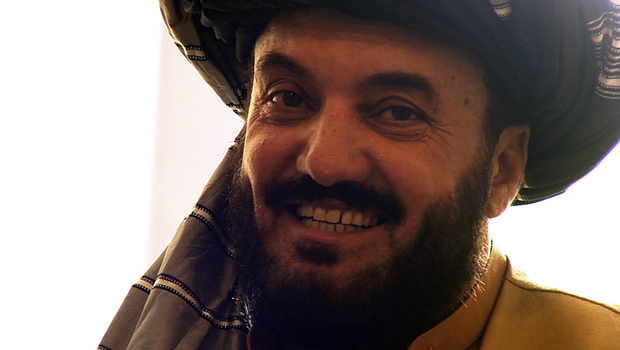
A man claiming to be on a western “kill list” of people to be targeted by US airstrikes has appealed to both the British and American governments to stop trying to kill him.
Malik Jalal, a tribal elder from Waziristan, a border region between Pakistan and Afghanistan, says he has been targeted in at least four drones strikes, narrowly missing what he believes are attempts on his life.
Traveling to Britain following an invitation from Lord Ken MacDonald, the former Director of Prosecutions, Malik Jalal told BBC Radio 4 that he had been warned by various authorities in Waziristan that he is on a western “kill list” adding that his children are “terrified” of dying in an attack.
In one close call, he says a missile hit a car traveling behind him.
“I heard the explosion and the back window of my car shattered. The car behind was in flames and the passengers were in pieces.”
A tribal elder of the region, Malik Jalal believes he is being targeted because of his connection with the North Waziristan Peace committee (NWPC) — a group facilitating peace talks between the Taliban and the Pakistani government.
While Malik Jalal says he plays an important role in trying to bring peace to the region, there have been criticisms of the NWPC, with some suggesting the committee provides Taliban members with a safe haven in Waziristan.
‘I Came Close to Being Bombed Four Times’
In a letter, addressed to UK Home Secretary Theresa May, who is responsible for MI5 and the National Crime Agency (NCA), and Foreign Secretary Philip Hammond, who has responsibility for GCHQ and MI6, Malik Jalal has called for a meeting to clear up concerns that he may be on a government kill list.
“I had a special role to improve security and we were making progress and that’s why I think Americans targeted us […] I came close to being bombed four times, so in the end I realized they were on to me,” he told the BBC.
“I have had to leave Waziristan. In my own family there are six people who are mentally destabilized because of the strikes. In Waziristan there are more than 400,000 people who have mental problems because of the drones. My own son is too scared to go back to Waziristan.”
The US ambassador to the UK has also been copied into the letter, with Malik Jalal calling on Britain to try and influence the US to stop what he believes have been attempts on his life and others in Waziristan.
“I have a peaceful role in Pakistan. I am not involved in terrorism. I came to Britain because I feel like Britain is like a younger brother to America. I am telling Britain that America doesn’t listen to us, so you tell them not to kill Waziristanis.”
Concerns Over Long-Term UK Involvement in US ‘Kill List’
The comments follow the release of an explosive report, accusing British law enforcement and intelligence agencies of drawing up an extra-judicial kill list targeting some of the world’s most wanted terror suspects and drug smugglers.
The report, released by human rights organization Reprieve, claimed that the UK has been a long-time partner in the US’ “shoot to kill” policy in Afghanistan and Pakistan, with the report alleging that drug smugglers, as well as terrorists were among those targeted.
The findings follow a separate Vice News investigation that claimed that UK military personnel were exploiting a legal loophole to play a “critical” role in the US drone kill list program in Yemen.
Citing interviews with more than two dozen current and former British, American and Yemeni officials, UK forces were alleged to have taken part in so-called “hits” in Yemen, “triangulating” intelligence for kill lists, and preparing “target packages.”
The reports of long-time collaboration with the US shoot to kill policy have led to suggestions that UK Prime Minister David Cameron misled parliament on September 7, 2015, when he said that the assassination of two British nationals in Syria was a “new departure” for the UK.
Commenting on the latest developments, Clive Stafford Smith, Director of Reprieve, said: It is horrifying that, in the 21st Century, we have drawn up a list of people we want to kill.
“For a country that loudly proclaims its opposition to the death penalty even after a fair trial, the notion that we would execute him without a trial at all stunningly hypocritical. Malik Jalal puts a very human face on the horror of this policy.”
The UK government has said they don’t comment on matters of intelligence.
Hillary Clinton Justifies her Support for 2009 Coup in Honduras
 (Photo – Gage Skidmore on Flickr)
teleSUR – April 11, 2016
Democratic presidential frontrunner Hillary Clinton did not express any regret Monday about her support for the 2009 coup in Honduras, despite the deteriorating human rights situation, recently highlighted with the murder of prominent Indigenous activist Berta Caceres.
In fact, in an interview with the New York Daily News, in her opinion, the U.S. aid to military and police forces in Central America will eventually pay off just like Plan Colombia.
Plan Colombia was established under the administration of Bill Clinton in 1999 under the guise of fighting the war on drugs. The U.S. aid package, totalling almost US$2 billion, gave 78 percent of the funds to the Colombian military and police for counternarcotics and military operations against the rebel forces.
Despite a long list of studies and evidence that shows that Plan Colombia contributed to human rights abuses by security forces and the rise of paramilitary forces, Clinton took most of the credit for the current peace talks between the government and the FARC rebels, suggesting Plan Colombia brought peace to Colombia.
“I didn’t like the way it looked or the way they did it but (the coup leaders) had a very strong argument that they had followed the constitution and the legal precedence,” she said in an interview with the New York Daily News.
Democratically-elected president Manuel Zelaya was forcibly put on a plane and sent out of the country by the Honduran military in June 2009.
Clinton justified the move despite opposing advice from her top aides, who urged her to declare it a military coup, and to cut off U.S. aid, as some emails leaked in July revealed.
She admitted that the coup leaders “really undercut their argument by spiriting (Zelaya) out of the country in his pajamas, where they sent the military to take him out of his bed and get him out of the country.”
Nevertheless she strongly rejected the idea of cutting U.S. aid for Honduras, claiming this would have harmed the Honduran people, although it is mainly directed to the country’s security forces. It is used to keep the drug war within Honduran borders – as well as to keep Central American migrants running away from drug violence from reaching the United States.
59 Journalists Murdered in Honduras Since Clinton-Backed Coup
teleSUR – April 11, 2016
Since the 2009 U.S.-backed coup that removed President Manuel Zelaya, 59 journalists have been assassinated in Honduras, with four of them being murdered just in 2016 alone.
The most violent year until now has been 2015, with 218 alerts registered and 12 journalists assassinated.
In April 2015, the Honduras National Congress approved the Journalist Protection Law, which included measures like providing police protection when a journalist receives a threat. The law also planned the creation of a center monitoring threat follow-ups, although the government has not yet approved the budget.
In four years of former President Profirio Lobo’s government, 30 journalists were murdered, while in the current government headed by President Juan Orlando Hernandez, 22 journalists have been assassinated in the two years and three months since he took office. These two post-coup presidencies have been accused of systematic human rights abuses and corruption.
The Attorney General’s office has only processed six cases, while only four people have been prosecuted and sent to jail. There has not been any investigation into who ordered these crimes and the motivations behind each one.
Two Smooth Faces of Evil
By Craig Murray | April 12, 2016
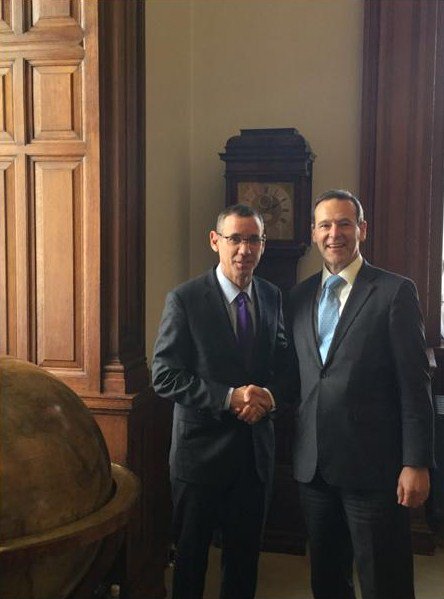
Many of you will recognise one of the faces in this photograph, Mark Regev. He is Israel’s new Ambassador to London and of course was the Israeli government spokesman who justified the massacre of more than 600 women and children in Gaza, and the murder of peace activists aboard the Mavi Marmara.
The other face of evil is Simon McDonald, head of the UK Diplomatic Service. You probably now think I am indulging in hyperbole. But no, I am not.
Simon McDonald was the Foreign Secretary Jack Straw’s Private Secretary at the time of the implementation of the British government’s extraordinary rendition and intelligence from torture programmes. When I became the only member of the UK’s senior civil service to make formal objection to these programmes, it was Simon McDonald who managed Jack Straw’s response in continuing to use torture.
I have indisputable documentary evidence of this, plain despite redactions by the British government censors (redactions which primarily remove all references to the CIA).
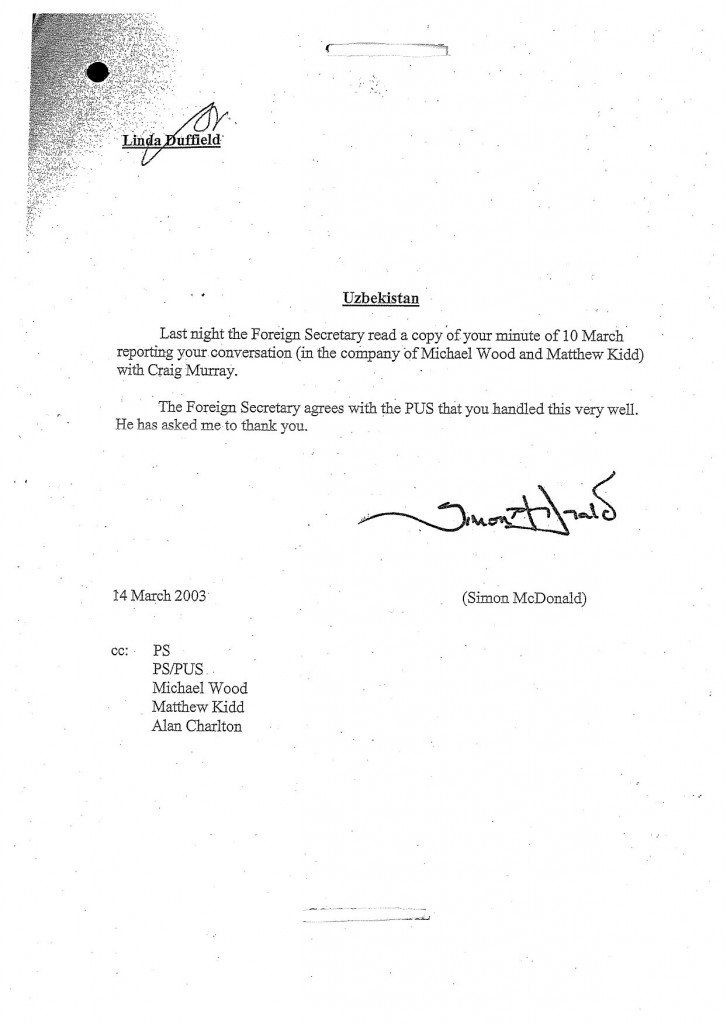
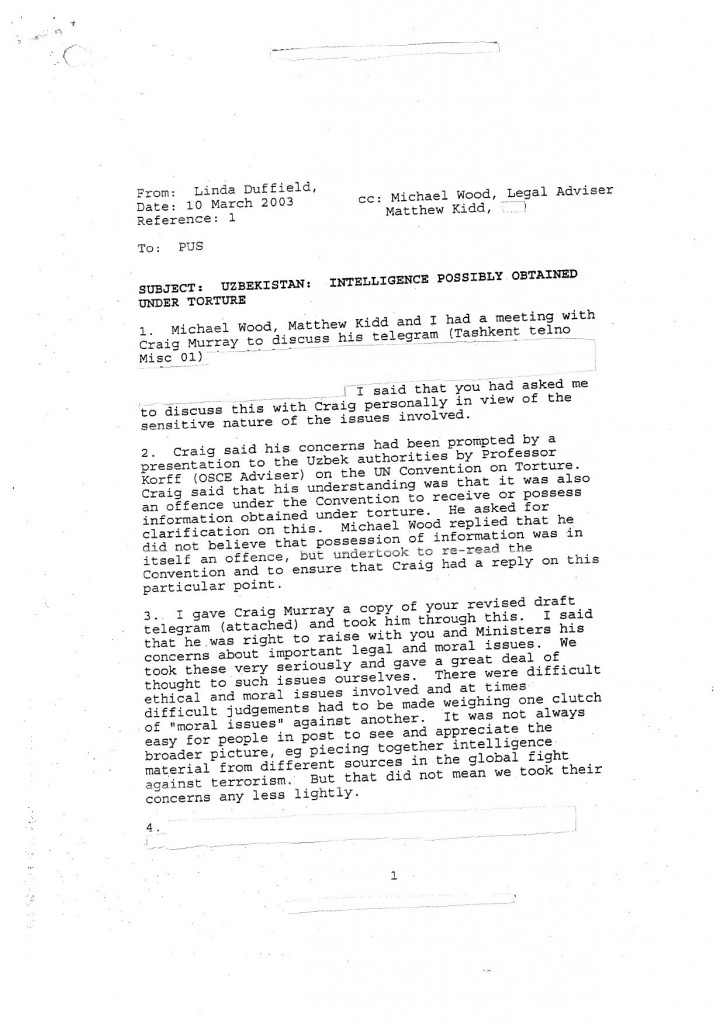
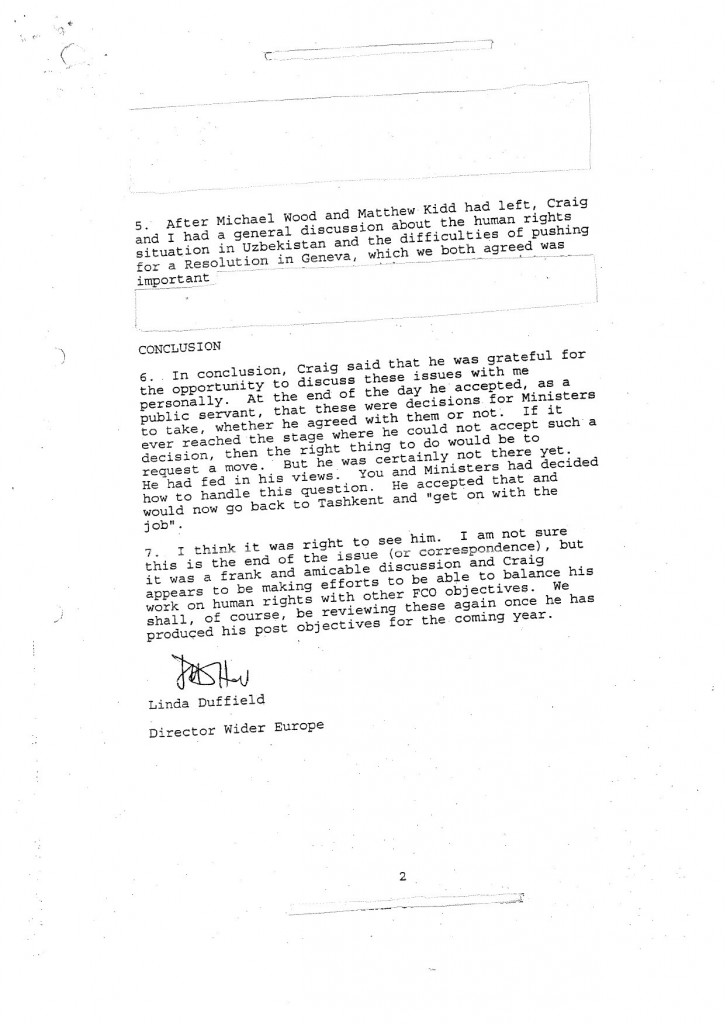
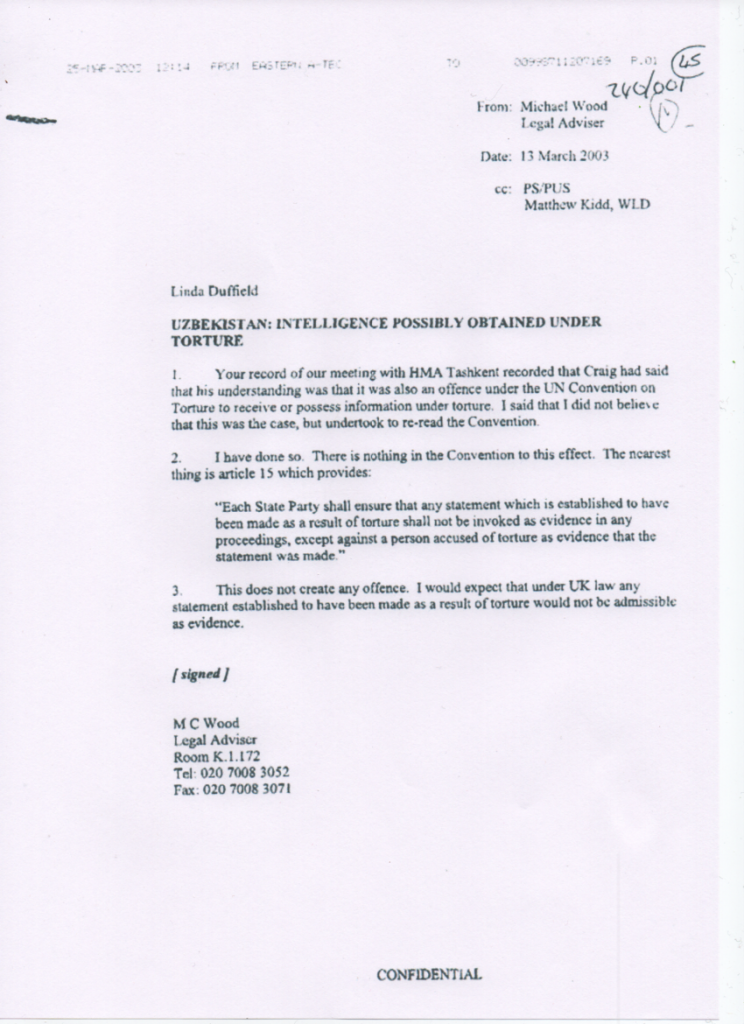
It is put to me frequently that people like McDonald, who were merely implementing a policy of torture, are not evil. That of course is the age old “only doing my job” defence. As somebody who was sacked for refusing to go along with torture, I think I have walked the walk and can describe him as evil. It is also worth noting that, while McDonald meets all new Ambassadors to London, he went far further with Regev than with anybody else. He tweeted out their photo with the message “Happy to see Mark Regev newly arrived Israeli Ambassador, an old friend from Tel Aviv ten years ago.”
Ten years ago, when they were friends in Tel Aviv, was of course the year in which Israel invaded Lebanon and Mark Regev was the chief Israeli spokesman justifying that attack, with its mass civilian casualties. Regev also defended the bombing by Israel of a United Nations observation post.
It is hardly surprising McDonald and Regev became friends at this time, as Gordon Brown’s government were doing everything possible behind the scenes to assist the Israeli invasion. As I wrote at that time
I have just watched on television sixty bodies being buried in a mass grave in Tyre, victims of Israeli bombing. At the same time I saw the odious Kim Howells, Foreign Office minister, arguing that a ceasefire would not solve the problem.
British diplomats at the UK Mission to the United Nations in New York – people I know personally – are putting massive effort into working against a ceasefire. They have the ultimate weapon that they and the US can veto any resolution at the Security Council, but are bending their backs into heading the subject off the agenda.
I hope they are proud of their succesful efforts. For every hour they prevent a ceasefire, on average two more Lebanese children are dying. Israel claims now to have killed 100 Hizbollah fighters. Even if true, that means they are killing two children to every fighter.
McDonald and Regev. Torture meets child-killing. Don’t they make a lovely couple?
‘Arrest arms dealers, not peace campaigners!’ 8 on trial over weapons fair protest
RT | April 11, 2016
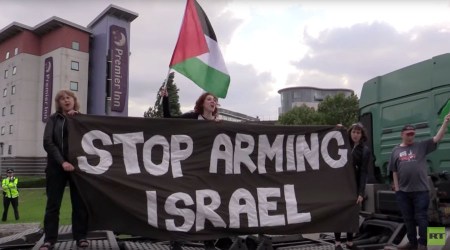
Eight activists are standing trial at Stratford Magistrates Court for disrupting the world’s biggest arms fair, held in London, where deadly merchandise was marketed to repressive regimes such as Saudi Arabia, Bahrain and Azerbaijan.
The campaigners blocked the road leading to the Defence & Security Equipment International (DSEI) in Stratford, London, last September, preventing tanks and weaponry from entering.
The defendants are using a defense of necessity, insisting their actions were justified because they intended to prevent greater crimes taking place around the world.
These include: “The sale of weapons to internally repressive regimes, including Bahrain and Saudi Arabia; the sale of weapons to countries imminently at war and overtly complicit in ongoing war crimes in Yemen, Kurdistan and Palestine; the sale of weapons to regimes that have been widely accused of arming ISIS [Islamic State or IS]; the promotion for sale of weapons that are designed specifically for torture or banned under international law for their capabilities concerning the mass indiscriminate killing of civilians.”
The DSEI arms fair is held every two years in London, and is regularly attended by representatives from repressive regimes. It has also previously provided a platform for weapons dealers to illegally promote arms that are used for torture.
Last September’s event featured stalls from more than 1,500 exhibitors, including arms giants Lockheed Martin, BAE systems, Finmeccanica and others.
Protestors sought to disrupt the fair by locking their bodies together to block access roads outside the Excel Centre, where the fair was held. Several were arrested.
Some protestors, such as Vyara Gylsen – who was arrested after writing a slogan on a military vehicle with a washable marker pen – have since seen criminal charges against them dropped.
The defendants in court this week include Isa Al Aali, a Bahraini activist who was tortured during the Arab Spring uprising in Bahrain.
Green Party activists Angela Ditchfield and Tom Franklin are also among the eight appearing in court.
“The government is supporting and facilitating the sale of weapons that are being used to kill ordinary people, from the West Bank to Yemen and Sudan,” Franklin, 57, of York, said.
“This week we will put the arms trade in the dock and highlight the crimes that the government and the companies at DSEI are complicit in. Arrest arms dealers, not peace campaigners.”
The defendants will be supported by expert witnesses, including former South African MP Andrew Feinstein, who resigned from parliament in 2001 in protest at the government’s refusal to investigate a £5 billion (US$7.12 billion) arms deal.
Amnesty International UK’s Oliver Sprague, who heads up the charity’s arms Control and Policing division, will also give oral evidence, as will Bahrain Institute for Rights and Democracy director Sayed Ahmed, who seeks to improve accountability in the repressive Gulf state.
Last day of demolition order leaves Palestinian family in fear of losing their home
International Solidarity Movement | April 10, 2016
Jerusalem, Occupied Palestine – The 10th of April is the last day of the demolition order on the home of the Totanji family. The family lives in the Sawaneh district in Wadi al-Joz, a village in East Jerusalem near the Old City, which Israel has declared as a ‘National Park’ area. This despite it having always been a residential area. The family received the demolition order over a year and a half years ago, but lost the appeal against the order last month. Today is the last day of the demolition order, which leaves the family fearing that their house maybe demolished tonight.
The house is single-story with 4 bedrooms. However, it is currently the home of 16 people including a 7 month old baby, the granddaughter of the owner of the house. As is the case with other Palestinian families in fear of house demolition, the family does not have any where else to go, and will leave their whole life behind if their house is demolished. Just seven months ago, one of Totanji sons had his house demolished in the same area. This fear of losing one’s home does not just apply to the Totanjis, but also to the rest of the residents in Palestine, due to the huge number of demolitions and demolition orders. In just the last week (31st March-6th April) 14 houses have been demolished in East Jerusalem and the West Bank by Israeli Forces.
Wadi al-Joz is located directly outside the Old City of Jerusalem in a vulnerable area. It is a neighbourhood that suffers from many demolition orders and subsequent demolitions. This is due to Israel declaring parts of the area around the Old City in Jerusalem as a ‘National Park’, to “protect the historical land.” The area covers a huge residential areas containing villages which are already overcrowded including Wadi al-Joz. In addition to the Totanjis, 13 other families in the Sawaneh district in Wadi al-Joz are also in danger of demolition. The information regarding the so called ‘National Park’ was only relayed to these families in the past two years. And whilst Israeli authorities claim that it was declared a park more than 4 decades ago, regardless, this declaration concerning annexed territory is in direct violation of international law.
The family is seeking an international presence to defer the demolition and deter the Israeli authorities. Internationals will be in the house from this evening and for the foreseeable future to prevent the demolition. There is a press conference planned tomorrow morning, 11am on the 11th of April 2016, to announce the opening of a protest tent outside the Totanji family house. The families and the community of Wadi al-Joz invites everyone to attend the protest and to lend coverage to this important event.
Address:
Wadi Al-Joz, neighbourhood of East Jerusalem
Across the Fire Station, behind the Central Market or “Hisbi”
Directions:
From Damascus Gate, follow the Old City Wall towards the Mount of Olives and continue down into Wadi Al-Joz. The home is on a dirt road on the right before you begin to go up the hill to the Mount of Olives. It is about 10-15 minute walk from Damascus Gate. Alternatively, you can drive down from the Mount of Olives past the Ibrahimiya School. The dirt road is on the left at the bottom of the hill just opposite the paved road that goes right into Wadi al-Joz.
Contacts:
Totanji family contact
Aref Tatanji: +972-(0)-508-133-590 (Arabic)
Press conference contact
Nureddin Amro: +972-(0)-525-271-587 (Arabic and English)
ISM media contact
Josephine: +972-(0)-59-740-6401(English)
Further reading:
Background about home demolitions:
House demolitions in International Humanitarian Law (Diakonia)
East Jerusalem: Key Humanitarian Concerns (UN OCHA, August 2014)
The Absentee Property Law in East Jerusalem and Its Implementation: A Legal Guide and Analysis (Norwegian Refugee Council, 2013)
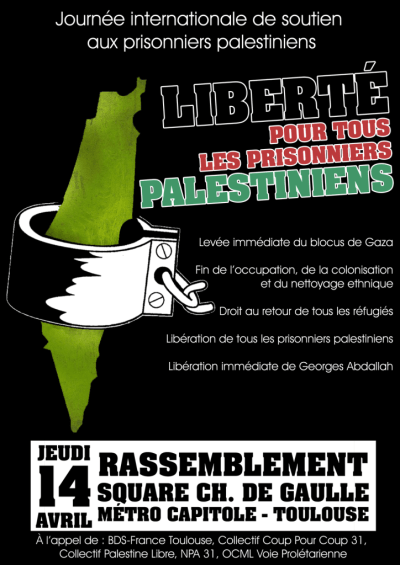
International Day of Solidarity for Palestinian Prisoners – Paris, London, NYC, Toulouse
BDS France Toulouse, Coup Pour Coup 31, NPA31, Collectif Palestine Libre
As of March 2016, there are over 7,000 Palestinians, including more than 100 children, in Israeli prisons, in violation of international law which prohibits an occupying power to imprison in its territory the people of occupied territories.
Since 1967, over 750,000 Palestinians (20% of the total population and 40% of the male population) have been imprisoned by the occupation army. There is no Palestinian family that has been untouched by imprisonment.
 99.74% of Palestinians are convicted by Israeli military courts, the majority of these resulting from forced “plea bargains” (the accused must plead guilty or face a much higher sentence, in a context that they will certainly be found guilty)
Nearly 700 Palestinian prisoners are held under administrative detention, an arbitrary and illegal procedure that allows the Israeli army to detain Palestinians for a period of six months, indefinitely renewable, without charge or trial.
Among the detainees are Palestinian parliamentarians, including Ahmad Sa’adat, General Secretary of the Popular Front for the Liberation of Palestine; Marwan Barghouti, Fateh leader; and several Hamas lawmakers. In April 2015, Khalida Jarrar, member of the Palestinian Legislative Council and advocate for prisoners’ rights, was arrested and sentenced to 15 months in prison. Lawyer and activist Shireen Issawi was convicted along with her brother Medhat Issawi, and sentenced to 4 and 8 years in prison respectively. Medhat Issawi was previosly imprisoned for 20 years!
Palestinian prisoners are subject to torture, sleep deprivation, lack of hygiene and medical care, confinement in tiny cells and sordid, humiliating treatment. A growing number are held in prolonged solitary confinement. Threats, intimidation and denial of family visits are all means of the Israeli occupation to silence the legitimate struggle of the Palestinian people for land and freedom.
Many prisoners went on hunger strike, risking their lives to confront inhumane treatment; for example, Mohammed al-Qeeq ordered to administrative detention in November 2015 and after 94 days of hunger strike, securing his release in May 2016.
As part of the International Day of Solidarity for Palestinian Prisoners, we salute the thousands of Palestinians imprisoned for struggling against the apartheid and ethnic cleansing of their people. We also salute Georges Abdallah, communist activist for the Palestinian cause, imprisoned in France since 1984 for resisting the Israeli invasion of his country, Lebanon.
Let us unite for their release, to end the oldest military occupation in the world, to develop the movement for boycott, divestment and sanctions against the criminal regime of Israel, to demonstrate and popularize the struggle of the Palestinian people.
We demand:
The release of all Palestinian prisoners
The immediate end of the blockade and siege of Gaza
The end of occupation, colonization, and ethnic cleansing of Palestine
The Right of return of all Palestinian refugees
The immediate release of Georges Abdallah
Palestine lives, Palestine will be victorious!
Rassemblement jeudi 14 avril 2016 à 17h30 Square Charles De Gaulle (Métro Capitole).
16 April, Paris: Rally in support of Palestinian Prisoners
Saturday, 16 April
3:00 pm
Place du Chatelet
Paris, France
Facebook: https://www.facebook.com/events/229128724111169/
March via the Boulevard Sebastopol to the Place de la Republique, where we will hold a mass rally to support the 7000 Palestinian political prisoners. We will not forget Georges Ibrahim Abdallah, the great defender of the Palestinian cause, held for 32 years in French prisons at the demand of Israel and the US!
Organizers: CAPJPO-EuroPalestine, Droits Devant, Children of Palestine, Palestine Nanterre, Saint-Ouen Palestine, Friends of Nablus, Collective for the Liberation of Georges Ibrahim Abdallah
16 April, London: Palestine Prisoners Parade
Saturday, 16 April
12:30 pm
Gower Street (Corner of Torrington Place)
London, UK
Facebook: https://www.facebook.com/events/600881743402205/
On the occasion of Prisoners’ Day, we invite you to join us in solidarity with all Palestinians currently languishing in Israeli jails. We will march from Gower street to Trafalgar square along with another march that is being held that day (people against austerity). In keeping with the circus theme that has been used to raise awareness about Abu Sakha, a Palestinian clown currently held in administrative detention, we encourage people to come dressed as colourfully and clowny as you dare! We also encourage as many specific performers as possible (circus artists, musicians, dancers etc). If you have a specific tallent to perform, please get in touch at info@freeabusakha.com or private messaging to www.facebook.com/freeabusakha so we can coordinate the acts.
15 April, NYC: Celebrate resistance before Palestinian Prisoners’ Day
Friday, 15 April
4:00 pm
G4S Office – NYC (19 W 44th St)
Facebook: https://www.facebook.com/events/1042793672451086/
On 17 April each year, Palestinian prisoners, the Palestinian people, and the world mark the International Day of Solidarity with Palestinian Prisoners.
Commemorated since 1974, when the first Palestinian prisoner, Mahmoud Hijazi, was freed in a prisoner exchange with the Palestinian Resistance, 17 April is a day of protests, rallies, marches, forums and more to commemorate the struggle of Palestinians imprisoned in Israeli occupation jails and demand their freedom.
We join with the Palestinian prisoners’ movement in calling on organizations and people of conscience around the world to take action to to express solidarity and call for freedom for Palestinian political prisoners.
Over 7,000 Palestinian prisoners are currently held in Israeli jails. More than 700 of them are held in administrative detention without charge or trial. The others face military courts which convict over 99% of the Palestinians that appear before them. Over 400 Palestinian children as young as 12 years old are held in Israeli prisons.
Every night, Israeli occupation forces conduct violent armed invasions of Palestinian villages, cities, refugee camps and homes, ransacking them and arresting dozens of Palestinians. This comes amid near-daily killings and extrajudicial execution of Palestinians by occupation forces, the demolition of the homes of the families of Palestinian prisoners, new racist laws targeting Palestinians who hold Israeli citizenship, and further escalating repression.
International action has seen some response: G4S, the British-Danish security corporation targeted for a global boycott because of its role in providing security systems, control rooms and equipment to Israeli prisons, has announced it is selling off its Israeli subsidiary and leaving the market entirely. However, it’s critical to keep the pressure on G4S until their equipment and security systems are no longer being used to imprison Palestinians, block their movement at checkpoints, or besiege Gaza.
G4S doesn’t only profit on the imprisonment of Palestinians, of course. Black student movements at Columbia University, the University of California and Cornell University have led in building campus boycotts and divestment against G4S because of its role in private imprisonment in the United States, especially of youth, and have won significant victories. Organizing with movements confronting imprisonment and racist oppression, including the Black movement and the prison divestment movement, is particularly crucial in confronting common oppressors.
Palestinian Prisoners’ Day this year also comes amid international repression of Palestinian organizing – for example, the attacks on BDS in France and the arrest and prosecution of BDS activists – and the imprisonment and persecution of Palestinians and fellow strugglers in international prisons, as in the cases of Georges Ibrahim Abdullah, the Holy Land Five, and Rasmea Odeh. Confronting racism and oppression of all forms comes hand in hand with confronting Zionist settler-colonial racism in Palestine.
After a regular, weekly protest of G4S on Friday, join Samidoun Palestinian Prisoner Solidarity Network as we rally with CUNY Prison Divest and NYC Students for Justice in Palestine on Sunday, 17 April to demand freedom for Palestinian political prisoners and an end to private, for-profit incarceration in the United States:
Israel connects BDS with terrorism while cracking down on German banks
RT | April 10, 2016
Israel’s Public Security Minister has linked the Boycott, Divestment and Sanctions (BDS) movement with terrorism and is threatening German banks using tactics previously employed against Al-Qaeda.
Netanyahu-appointee Gilad Erdan has threatened to coerce German banks to prohibit BDS activists from fundraising through their accounts, not through Israeli legislation, but the laws of other countries where Erdan has “increased awareness among decision-makers in Europe and North America of the anti-Semitic, anti-democratic, and discriminatory nature of the BDS movement, which seeks Israel’s destruction and often has ties to terror-supporting organizations.”
To bring about this “increased awareness,” a taskforce headed by Erdan was launched last year at the cost of 100 million Israeli shekels ($25.5 million) that has been successful in impacting the laws, policies, and enthusiasm for enforcement in a number of countries, particularly the US and UK, where a number of anti-BDS restrictions have employed “anti-democratic” and “discriminatory” methods to clamp down on the movement.
Erdan’s Friday statement in the Jerusalem Post urged the banks to “carefully consider the potential legal, reputational, and ethical consequences of facilitating the activities of BDS groups.”
In response, the bank’s spokesman said “We expressly point out again that Commerzbank adheres to the applicable compliance guidelines and regulations regarding the conduct of an account.”
Ironically, while Erdan is threatening BDS activists with one set of laws, the global grassroots movement is actually trying to pressure Israel to “comply with international law” through the boycott of products and companies that profit from the violation of the rights of Palestinians, particularly violent land grabs.
Inspired by the BDS movement that helped end South African apartheid, supporters of this campaign, which includes Jewish activists contrary to the accusations of anti-semitism, believe it is the only way to push for a solution to the Palestinian-Israeli conflict.
Here are the countries Erdan is counting on to be Israel’s enforcers in its global crackdown on the “terrorist” boycotters.
US
Legislation has been introduced at local, state, and federal levels targeting BDS movements.
At least 16 anti-BDS initiatives were introduced in the US in 2015, including the Trade Promotion Authority legislation that discourages European governments from taking part in BDS activities by threatening to cut off their ability to engage in free trade with the US.
Illinois passed an anti-BDS state law that created a blacklist of foreign companies from which the state pension must divest its funds. South Carolina bans state business with companies engaged in boycotts.
Other anti-BDS bills have been introduced in Congress, New York, New Jersey, and Pennsylvania. New York state currently has legislation on the table, just in time for the New York primary, that would ban state business with companies involved in boycotting Israel, including international banks.
Canada
Earlier this year, Canada passed a motion condemning “any and all attempts” to promote BDS. The country’s new leader Justin Trudeau said the movement had “no place on Canadian campuses” and fully supported Israel’s 2014 Operation Protective Edge against Gaza, despite his “liberal” outlook.
UK
The UK recently banned local authorities and public bodies from participating in BDS. This includes councils, universities, and student unions. The move was welcomed by Conservative MP Eric Pickles who said the BDS movement was an attempt “by the irresponsible left to demonize Israel.”
The UK has had its fair share of BDS victories in the past. Leicester City Council adopted the boycott policy in 2014 along with the National Union of Students the following year.
France
BDS is banned in France as part of a general law that classifies the boycott of a nation or its citizens as a hate crime. It is illegal for councils or legal bodies to boycott Israeli goods.
Last November, a small group of French activists were found guilty of provoking discrimination after holding a small rally calling for the boycott of Israeli goods. They were sentenced to pay €12,000 in damages to the plaintiffs, as well as legal fees.
Germany
While Germany doesn’t have a specific law banning the BDS movement, DAB Bank in Munich announced in February that it would cancel BDS-Kampagne’s account as of next week. DAB is owned by French BNP Paribas.
Palestinians mark 68th anniversary of Deir Yassin massacre
Ma’an – April 9, 2016
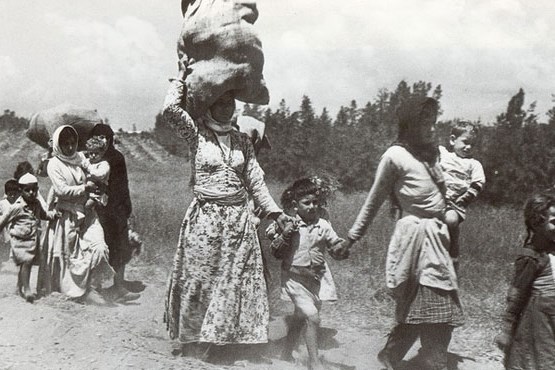
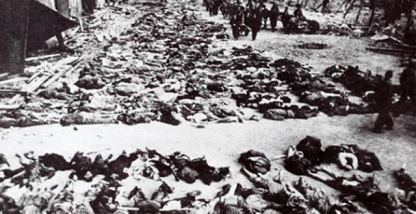
Palestinians on Saturday marked the 68th anniversary of the massacre of more than 100 Palestinians civilians carried out by Zionist paramilitary groups in the village of Deir Yassin in 1948 prior to the establishment of Israel.
Deir Yassin has long been a symbol of Israeli violence for Palestinians because of the particularly gruesome nature of the slaughter, which targeted men, women, children, and the elderly in the small village west of Jerusalem.
The number of victims is generally believed to be around 107, though figures given at the time reached up to 254, out of a village that numbered around 600 at the time.
The Deir Yassin massacre was led by the Irgun group, whose head was future Israeli Prime Minister Menachem Begin, with support from other paramilitary groups Haganah and Lehi whose primary aim was to push Palestinians out through force.
Records of the massacre describe Palestinian homes blown up with residents inside, and families shot down as they attempted to flee.
The massacre came in spite of Deir Yassin resident’s efforts to maintain positive relations with new Jewish neighbors, including the signing of pact that was approved by Haganah, a main Zionist paramilitary organization during the British Mandate of Palestine.
An Israeli psychiatric hospital now lies on the ruins of Deir Yassin, the remainder of which was reportedly bulldozed in the 1980s to make way for Jewish housing and incorporated as a neighborhood of Jerusalem. Streets of the neighborhood hold names of Irgun militiamen who carried out the massacre.
The massacre was one of the first in what would become a long line of attacks on countless Palestinian villages, part of a broader strategy called Plan Dalet by Zionist groups to strike fear into local Palestinians in hopes that the ensuing terror would lead to an Arab exodus, to ensure only Jews were left in the “Jewish state.”
Thus the attack on Deir Yassin took place a month before the UN Partition Plan was expected to be carried out, and was part of reasons later given by neighboring Arab states for their intervention in Palestine.
The combination of forced expulsion and flight that the massacres — what would later become known among Palestinians as the Nakba, or catastrophe — precipitated left around 750,000 Palestinians as refugees abroad. Today their descendants number more than five million, and their right to return to Palestine is a central political demand.
The anniversary of the deadly razing of the village comes as modern day Palestinians in occupied East Jerusalem and the West Bank continue to fight for their livelihood in the face of illegal Israeli settlement expansion, widespread detention campaigns, extrajudicial executions by Israeli forces, and a surge in housing demolitions — most recently leaving 124 Palestinians homeless in a single day.
Featured Video

Saudi Led Destruction of Yemen’s heritage
or go to
Aletho News Archives – Video-Images
From the Archives
Israel: Strategic Ally or Liability?
By Stephen Sniegoski | My Catbird Seat | June 12, 2010
The claim that Israel serves as a valuable ally for the United States is made by both pro-Zionists and much of the anti-war and anti-Zionist Left that is influenced by Noam Chomsky. As a result of the Gaza flotilla massacre, which has caused a world-wide uproar against Israel, the value of Israel to the United States is being publicly questioned in more mainstream foreign policy forums. … continue
Blog Roll
 Aletho News
- The Houthis Are Not an Iranian Proxy
- Europe’s Energy Hypocrisy, Russian LNG Profits and US Dependence
- ICC ignored ‘very well-documented’ NATO crimes – ex-Libyan minister
- SNSC secretary dismisses US response to Iran’s conditions as ‘inadequate’
- Sanaa says Taiz roads open, secure for residents, warns Saudi forces
- Iraqi resistance group urges Saudi leadership to admit defeat, lift Yemen siege
- Trump’s Retreat: How Al-Aqsa Flood Took Down the US Empire
- Israel’s Military Actions in Lebanon Grossly Violate International Law — Lavrov
- Seyed M. Marandi: US-Iran War Inevitable: Kuwait and Bahrain May Fall
- Leaders Condemn Ansarallah Attack on Saudi Arabia While Ignoring Illegal War Against Yemen
- If Americans Knew
- It’s a Genocide, I’m Into It’: Seinfeld Mocks Protest over Palestinian Children Killed
- Universities fire dozens amid pressure from Zionist billionaires
- Gaza’s buildings are collapsing on top of us. But there’s nowhere else to shelter
- Israel kills four-year-old Gaza child – Daily Update
- After Oct 7, IDF policy allowed civilian casualties for even the lowest-ranking targets
- Israel’s Destruction of Southern Lebanon Intensified After the Cease-Fire
- The Last-Minute Decision That Gave Israel Its Name
- The American Conservative: How Trump Made the World Go Nuclear
- Meet the US generals and admirals advancing Israeli policy
- Opinion: Why news organizations should boycott Israel
- No Tricks Zone
- New Study Suggests Large Regions Of The Pacific Ocean Have Been Cooling For The Last 80 Years
- Germany’s Green Energy Debacle: High Energy Costs Force Kahla Porzellan to Close After 182 Years!
- New Study: 50 Years Of The Most Aggressive ‘Net Zero’ Policies Can Only Affect The Global Climate By 0.03°C
- US September “Heat” Was No Record…Many Records Set Decades Ago
- Latest European Green Energy Debacle; Portugal’s Largest Flagship Solar Park Insolvent!
- Green Energy Debacle: German Expert Professor Fritz Vahrenholt Warns Of Severe Economic And Social Consequences
- Two More Paleo Reconstructions Affirm Meters-Higher Sea Levels Across Ireland, Brazil 7000-6000 Years Ago
- New Study: Earth And Venus Surface Warmth Largely Explained By Convection And Lapse Rate, Not CO2 Or Radiation
- 2025 Nature Paper Claiming Worsening Global Drought Gets RETRACTED …Heavily Flawed
- New Study: ‘Global Drought Shows No Detectable Recent Acceleration Under Climate Warming’

