The Murder of Tomas Garcia by the Honduran Military
School of the Americas Watch
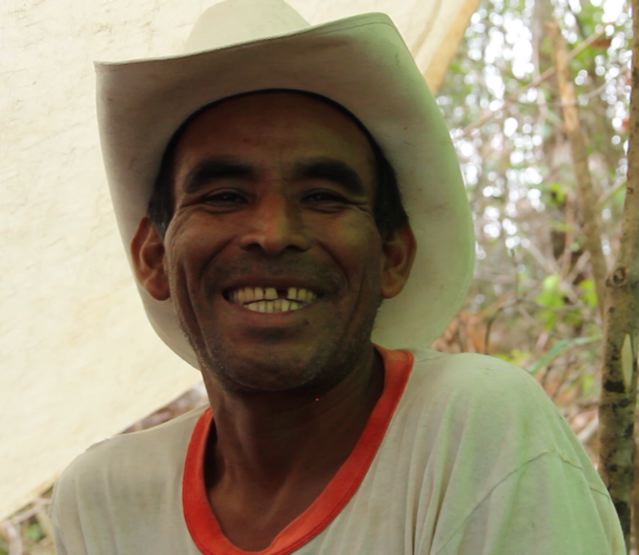 Tomas Garcia was a father of seven who would have turned 50 this December. He was a husband, father, brother, and community leader, serving as an auxiliar and on his community’s Indigenous Council. On Monday, July 15, his life was brutally taken away by the Honduran military when a soldier shot and killed him at close range in broad daylight in front of 200-300 people.He did not have a gun, he did not hurt anyone. His crime? Opposing the construction of a hydroelectric dam being constructed in his Indigenous Lenca community’s territory against their will, in violation of ILO Convention 169 and the Honduran government’s promises to consult Indigenous communities about projects in their territory.Why Tomas?He was one of the first to arrive, leading the delegation that had come to deliver a message to the companies constructing the dam at their installations in Rio Blanco. A soldier fired at him not once, not twice, at least three times from only 6 or so feet away, according to eyewitnesses.
Tomas had gone to the day’s activities with his 17-year old son who was also shot several times, receiving serious injuries in his back, chest, and arm and requiring hospitalization. Two others were also injured by the army’s bullets. According to eyewitnesses, a soldier who had been firing into the air lowered his M-16 and fired multiple shots directly at Tomas. Tomas had recently arrived at the company’s installations as one of those who was at the front of the delegation; the whole group had not even had time to arrive and many were still walking down the hill that leads to the offices. As one woman from the community explained, “We didn’t even have a conversation with them, they didn’t say anything to us. They didn’t even wait for us to say why we there, they didn’t wait for us to say what we had to say. We saw Tomas fall, he fell from shots, including to his head.”
The murder of Tomas Garcia by the Honduran armed forces is only the latest escalation in a systemic campaign of repression against the Rio Blanco Indigenous Lenca people to try to force them into accepting a hydroelectric dam being illegally constructed in their territory. Since April 1, the communities in the area, organized in the Indigenous Lenca organization COPINH, have been blocking the access road to the dam site. The access road, like the dam, is in their ancestral territory, surrounded by their fields of corn, beans, bananas, yucca, and lush forests that they have carefully stewarded for hundreds of years. At first, the Honduran National Police evicted them multiple times – despite them being on their own land. After each eviction, they simply returned to the site.Personnel of the companies building the dam — DESA and SINOHYDRO – threatened COPINH leaders. Community members started receiving death threats from employees of the company who live in the area. Armed men appeared at the site of the roadblock and lurked around at night.
Then on May 17, soldiers from the First Battalion of Engineers, commanded by SOA graduate Col. Milton Amaya, were deployed to the area and have stayed there ever since. They essentially serve as security guards for the dam companies, even driving company machinery to attempt to get it past the roadblock, and live, eat, and sleep at DESA/SINOHYDRO’s installations. Soldiers have repeatedly intimidated those who oppose the dam: they have harassed them, told them they were criminals, came into their yards, held an M-16 up to one of them, threatened women and children, and fired shots when community leaders walked by.i
 Having the police and military on their side only seems to have emboldened company employees to increase their threats and attacks on those who oppose the project. According to testimonies, employees of the company who live in the area attacked a man who had just come from the roadblock with machetes —cutting up his face and sending him to the hospital.They threw rocks at another, and threatened many in the community with death, including children. “I’m going to come to the Roble and you know how you’ll all end up. In pieces.” “I’m going to kill all of you.” ii Bullets passed above the site of the roadblock where people were sitting one Monday afternoon, people in ski masks appeared near the house of a family that is strongly against the dam, unknown figures lurked outside the house of the President of the Indigenous Council, and a known hit man arrived at the site of the roadblock.
In spite of all of this, the Indigenous Lenca people did not give up. Day after day, in the rain or in the heat, in spite of death threats and bullets that passed overhead, men, women, and children came to the roadblock to defend their land. After Tomas’ death, they continue to do so, now continuing forward in his honor, despite the intense accusations against them aimed at discrediting their struggle in the wake of Tomas’ murder.
To justify the death of Tomas Garica, DESA and the military launched a media campaign criminalizing COPINH and the Rio Blanco community. DESA issued a media release claiming that
“because of the violent intervention of the COPINH protestors, Mr. Tomas Garcia died and Mr. Alan Garcia Dominguez was injured. This morning, minor Cristian Anael Madrid Munoz also died, who is the grandson of one of the principal leaders of the zone and was doing agricultural work on his property when he was surprised by the protestors” and that “The actions which occurred today were deliberately premeditated by the principal leaders of COPINH.”
Reading DESA’s release and the corporate news accounts of what occurred, one would think that COPINH itself murdered Tomas Garcia instead of the Honduran military. Area residents who heard TV news accounts got the impression that COPINH was violent and threatening people, not that they were in fact the victims of threats and violence. DESA also accuses the protestors of a second death, which is said to have occurred in a separate location while community members were gathered around the body of Tomas Garcia at the company’s installations, in sight of the police and military. Community leaders report that the Police officer in charge even told them he was a witness that they were all still with him at DESA’s installations when gunshots were heard from up the hill, where Christian Madrid lives. But that doesn’t matter when DESA and Chinese owned SINOHYDRO – the world’s largest dam-building company — are losing money because the subsistence farmers of Rio Blanco refuse to let their river be privatized.
The attacks portraying the protestors as armed further contradict the reality one finds when one visits the zone. The dirt-poor Indigenous farmers of Rio Blanco have machetes and sticks, not guns.As one Indigenous Lenca woman and mother who is a leader in the struggle against the dam explained,
“We don’t have any guns. They do have guns because they are invading our land. They buy big guns to walk around threatening the lives of our compañeros, of all the members of Rio Blanco. They see us as an enemy and walk around with guns. Since they make money selling our land with that they can buy guns to take away the life of another person, another human life.We are all humans in this world… We have to respect each other’s faces. We are all the same.Regardless of how we look, we are children of God.”
The accusations of violence, murder, and possibly even terrorismiii against COPINH are a strategic escalation of the criminalization campaign aimed at destroying COPINH’s ability to resist the Agua Zarca Dam and numerous other projects planned for Indigenous Lenca territory. On May 24, soldiers from the First Battalion of Engineers detained Berta Caceres and Tomas Gomez of COPINH, claiming to have found a gun in their vehicle to try to criminalize them. It appears that soldiers themselves may have placed a gun in their vehicle to fabricate the charges. SOA graduate Milton Amaya, Commander of the First Battalion of Engineers, made accusations in the press. However, the soldiers couldn’t even keep their stories straight and the charges were provisionally dismissed on June 13th. Nevertheless, the state has appealed and is still trying to criminalize Berta. Now, COPINH and the Rio Blanco community have been criminalized and defamed in the press, in an effort to justify the murder of Tomas Garcia and potentially justify criminal charges against COPINH leaders or even more murders in the area. A similar tactic has been used in the Bajo Aguan, where SOA-graduate Col. Alfaro started a media campaign earlier this year accusing the campesinos (small farmers) of being armed and violent to justify the deaths in an area where over 100 small farmers have been murdered.
Why is the Honduran government so invested in breaking Indigenous Lenca resistance to the Agua Zarca Dam project in the remote western mountains of Honduras? The Agua Zarca Dam is not an isolated project but part of the overall scheme of privatization and looting of Honduras’ natural resources in the name of foreign investment. It is part of the “Honduras is open for business” scheme that was embarked upon following the 2009 military coup in Honduras to enrich the Honduran elite and multi-national corporations.Just months after the coup, the Honduran National Congress passed a General Water Law enabling the country’s water resources to be concession to third parties – enabling privatization of rivers.iv Then in 2010, the Congress approved a package of 41 hydroelectric dam projects throughout Honduras, including the Agua Zarca project and other dams in Indigenous territory.v They also passed a new mining law, which has yet to go into effect, and a law creating Special Development Regions, commonly known as model cities. And in July 2013, the Congress passed a law enabling the government to sell off “idle” resources, including natural resources, mining, energy, and more, in order to pay the internal debt.vi
All these laws passed by the post-coup governments are part of the drive to privatize and sell off natural resources – from water, to minerals, to the land itself– for exploitation and profit by corporations, especially foreign corporations. As Honduran President Porfirio Lobo explained at the signing of an agreement with SINOHYDRO to build three other dams on one of Honduras’ longest rivers, “I’m determined to promote these types of projects and make Honduras more open to all foreign investors.” While enriching business executives and investors around the world, this robs Honduran communities, especially Indigenous and campesino communities who live off the land, of the land and resources they depend on to survive.
And so the Honduran military has been dispatched to destroy the resistance of the Rio Blanco Indigenous people just as they have been dispatched to the Bajo Aguan where organized campesinos struggle for land.While Tomas Garcia lived with his wife and seven children in a small house with a dirt floor, the US was sending millions and millions into military aid in Honduras.Some of this aid probably found its way to the unit that used one of its M-16s to murder Tomas and terrorize the Lenca people for standing up for their rights. It is no accident that the military is used to enforce the turning over of Honduras’ natural resources to corporations; this is part of the US neoliberal agenda. US aid includes training, whether at the School of the Americas or by the US military on Honduran soil.For instance, Second Lt. Gonzalez, who was in charge of the soldiers stationed in Rio Blanco, reported he was trained in Special Operations by US military instructors. David Castillo, the Director of DESA, the company building the dam, attended West Point Military Academy and previously served as the Assistant to the Director of Intelligence of the Honduran Armed Forces.vii The military’s effort to criminalize the Rio Blanco community goes up to the highest levels – General Rene Osorio Canales, the Commander of the Honduran Armed Forces who was trained at the School of the Americas, spoke out to publicly justify the military’s murder of Tomas Garcia.viii
“When we heard the shots, we were humiliated.Because we don’t have guns. We have only machetes and wood.They are always accusing us of being armed, saying that we are guerrillas, that we are violent. That’s a lie. What we want is for them to withdraw and leave our territory and our rivers free.As Indigenous people we don’t want this dam to be built in our home.”
“We don’t want the dam built on our land because it affects us a lot. We like to harvest corn and beans, but we no longer could plant our crops. We don’t want the dam and we don’t want them to come violate our rights.”
“We are not criminals.We are people who grow corn.”
“Before the company came here we lived in peace.”
-Rio Blanco community members
[i] Interviews with Rio Blanco community members, May, June, July 2013.
[ii] Testimonies from community members who oppose the dam about threats from company employees who live in the area, June and July 2013.
[iii] http://copinhonduras.blogspot.com/2013/07/solidaridad-de-la-red-nacional-de.html#more
[iv]http://www.defensoresenlinea.com/cms/index.php?option=com_content&view=article&id=2523:comunidades-indigenas-lencas-en-rebelion-contra-depredacion-del-territorio&catid=58:amb&Itemid=181
[v] http://archivo.laprensa.hn/Negocios/Ediciones/2010/09/03/Noticias/Congreso-aprueba-41-proyectos-renovables
[vi] http://www.elheraldo.hn/Secciones-Principales/Pais/Ratificada-ley-para-vender-bienes
[vii] http://www.linkedin.com/pub/david-castillo/39/a55/6a2
[viii]http://www.defensoresenlinea.com/cms/index.php?option=com_content&view=article&id=2695:en-guerra-contra-el-pueblo&catid=42:seg-y-jus&Itemid=159
Photo of Tomas Garcia by Colectivo Ocote
Related article
Honduras: Expanding Palm Oil Empires In The Name Of ‘Green Energy’ And “Sustainable Development”
Written by Rights Action, Rainforest Rescue, Biofuelwatch, and Food First | August 6, 2013
From 6th-8th August, the Roundtable on Sustainable Palm Oil (RSPO) is holding its 4th Latin American Conference on so-called sustainable palm oil in Honduras [1]. Environmental and social campaigners have been shocked to learn that one event sponsor is the palm oil company Dinant Corporation, owned and controlled by Miguel Facusse, the largest landowner in Honduras. They are calling on World Wildlife Fund WWF and three other organisations to withdraw from and denounce the conference being held in Honduras due to the Dinant’s sponsorship of the event and the serious human rights implications [2].
Mr. Facusse was a key supporter and beneficiary of the June 2009 military coup in Honduras [3], has been associated with narco-trafficking [4], and, along with other large oil palm growers, has been linked to the targeted killing of more than 88 members and supporters of peasant organisations since June 2009 in the Aguan Valley [5], one of the main palm oil producing regions in Honduras.
Annie Bird from Rights Action states: “By holding its conference in Honduras and by allowing Dinant Corporation to sponsor the event and hold a stall, the RSPO is turning a blind eye to systemic and severe human rights abuses, including forced evictions of entire communities and over 88 killings for which palm oil companies, especially Dinant, are responsible. The RSPO Conference serves to reinforce the impunity with which the large-scale palm producers operate.”
RSPO is overwhelmingly dominated by the interests of large corporations like Nestlé, Rabobank and Unilever—all linked to cases of “land grabbing” in Asia, Latin America and Africa.” [6]
According to Tanya Kerssen, Research Coordinator for Food First, “The case of Dinant is emblematic of how large, elite-controlled companies use palm oil to expand their control over land and other resources. The RSPO is merely window dressing for this continued corporate expansion, which—whether classed as ‘sustainable’ or not—necessarily means the replacement of forests, biodiversity and food production with a large-scale monoculture crop for biofuel and unhealthy edible oils.” [7]
Guadalupe Rodriguez from Rainforest Rescue adds: “WWF and the three other organisations involved in this RSPO conference must pull out of and denounce this process. They must not, however indirectly, associate themselves with palm oil businessmen involved in repressing, evicting and killing peasants in Honduras’s Aguan Valley.”
The European Commission considers all biofuels from RSPO-certified palm oil to be sustainable and thus eligible for government support [8]. This is despite growing evidence by a large number of organisations, which shows that the RSPO has not been enforcing its own standards on its member companies and cannot guarantee environmental or social sustainability of palm oil [9].
Almuth Ernsting from Biofuelwatch states: “The RSPO Secretariat’s decision to hold a conference in Honduras and allow Dinant Corporation to contribute sponsorship and hold a stall further undermines any pretence that the RSPO’s aim is to make palm oil sustainable. Far from addressing any of the most serious impacts of palm oil production, the RSPO continues to serve as an instrument of greenwashing for the industry”.
NOTES
[1] The Roundtable on Sustainable Palm Oil is a stakeholder forum which provides voluntary certification for palm oil. The great majority of RSPO members represent industry interests. (Conference website: http://rspo2013.com/)
[2] See http://rightsaction.org/action-content/open-letter-world-wildlife-fund-solidaridad-network-snv-netherlands-development for an Open Letter to WWF, Solidaridad, SNV Netherlands Development Organisation and Forest Ethics on this issue.
[3] In June 2009, the democratically elected Honduran government of Manuel Zelaya was overthrown by a military coup. Manuel Zelaya’s government had begun listening to and acting on the demands of peasant organisations for land reform, including in the Aguan Valley region. The land reform process was ended by the military rulers after the coup. Since then, Dinant Corporation and their armed security forces have been collaborating with military forces and police forces in repressing local communities who have been trying to reclaim land controlled by Dinant. See for example: http://www.enca.org.uk/documents/ENCA56_Sep_2012.pdf .
[4] Published Wikileaks Cables revealed that the US embassy in Honduras has had evidence linking Miguel Facusse to drug trafficking since at least 2004 and that several aeroplanes with drugs have landed on his private property. See http://www.thenation.com/article/164120/wikileaks-honduras-us-linked-brutal-businessman#
[5] For a report by Rights Action about killings and other human rights abuses in the Aguan Valley, see http://rightsaction.org/sites/default/files/Rpt_130220_Aguan_Final.pdf .
[6] See, for example: “The bloody products of the house of Unilever” Rainforest Rescue, 2011. https://www.rainforest-rescue.org/mailalert/747/the-bloody-products-from-the-house-of-unilever
[7] For more on the link between palm oil expansion and corporate control, see Kerssen, Tanya. Grabbing Power: The New Struggles for Land, Food and Democracy in Northern Honduras. Food First Books, 2013.
[8] See http://www.rspo.org/news_details.php?nid=137
[9] Previously, over 250 organisations condemned the RSPO for ‘greenwashing’ of palm oil: http://www.biofuelwatch.org.uk/2008/rspo-declaration-english/ . More recently, the RSPO has been denounced for example by Greenpeace and Friends of the Earth; http://www.biofuelwatch.org.uk/2008/rspo-declaration-english/
TSA expands role beyond airports amid growing cases of misconduct
RT | August 7, 2013
Cases of misconduct among airport screeners employed by the Transportation Security Administration (TSA) increased by 26 per cent between 2010 and 2012, according to a new report. It comes as the agency expands its services beyond airport security gates.
The report, which was released last week by the US Government Accountability Office (GAO), found 9,622 cases of misconduct among TSA workers from 2010 through the 2012 fiscal year. It concluded that the agency had insufficient procedures for reviewing and recording the outcomes of misconduct cases.
At the same time, fresh attention has been cast on TSA’s expanding its roles into train terminals and even sporting events in the form of Visible Intermodal Prevention and Response squads, or VIPR teams, which have been assigned to counterterrorism security checks at transportation hubs in the US since 2005.
According to a profile published this week by The New York Times, TSA’s VIPR program now boasts a $100 million annual budget and is growing quickly. The scheme has grown since 2008, consisting of 37 teams in 2012.
Meanwhile, the agency’s records show that it has provided security for over 8,800 “unannounced checkpoints” and other search operations in conjunction with local law enforcement outside of airports. Such events have included the Indianapolis 500 race and both the Democratic and Republican national conventions.
VIPR teams usually comprise of federal air marshals, explosives experts, and baggage inspectors. The squads move through crowds at events and transportation hubs with bomb-sniffing dogs and perform random stops on individuals. Plainclothes members of VIPR teams monitor crowds for suspicious behavior.
“Our mandate is to provide security and counterterrorism operations for all high-risk transportation targets, not just airports and aviation,” TSA administrator John S. Pistole said. “The VIPR teams are a big part of that.”
However, members of Congress and officials at the Department of Homeland Security question whether the teams are properly trained while civil liberties groups wonder what the VIPR teams have to do with TSA’s original mandate to provide security at the nation’s airports.
“The problem with TSA stopping and searching people in public places outside the airport is that there are no real legal standards, or probable cause,” said Khaliah Barnes, administrative law counsel at the Electronic Privacy Information Center.
“It’s something that is easily abused because the reason that they are conducting the stops is shrouded in secrecy.”
Representative Bennie Thompson, a ranking member on the House Homeland Security Committee with oversight of TSA, supports the VIPR teams but remains concerned about warrantless searches and the process of detecting suspicious behavior.
“This is a gray area,” he said. “I haven’t seen any good science that says that is what a terrorist looks like. Profiling can easily be abused,” Thompson told The New York Times.
As for the rising number of offenses among TSA workers, the majority of those listed in the report include attendance and leave violations and excessive absences or tardiness. Only a small fraction represented instances of theft.
Specific violations of screening and security rules were outlined in 20 per cent of the cases profiled in the report. One of those offenses included sleeping while on duty.
Although the GAO report does not indicate high occurrences of issues such as theft, there have still been some high profile cases among the 56,000-strong staff which is spread out among 450 airports across the US.
For example, a TSA officer at Orlando International Airport pleaded guilty to embezzlement and theft after stealing 80 laptop computers and electronics from passenger luggage in 2011. The items were worth $80,000.
Another TSA employee was arrested after allegedly stealing some $50,000 worth of electronics at Fort Lauderdale-Hollywood International Airport the same year, although the GAO does not cite that incident.
It remains to be seen whether the occurrences of misconduct listed in the report will carry over into TSA’s growing role. For the most part, the presence of VIPR teams seems to mostly confuse and irritate the public.
A joint operation in 2012 involving VIPR, Houston police, and local transit officers led to complaints of stops and searches of bags. The deployment yielded a few arrests, mostly for passengers with existing warrants for prostitution and minor drug possession, according to The Times.
“It was an incredible waste of taxpayers’ money,” said Robert Fickman, a local defense lawyer who attended a subsequent meeting in the city packed with angry residents. “Did we need to have TSA in here for a couple of minor busts?”
Lebanese ‘tortured by Mossad agents in Nigeria’
Press TV – August 6, 2013
Two Lebanese nationals, who are on trial in Nigeria, have told a court that they were subjected to torture by Israeli Mossad agents after being arrested.
Mustapha Fawaz and Abdallah Thahini together with another Lebanese national Talal Ahmad Roda were arrested in May after an arms cache was discovered in a residence in the Nigerian city of Kano.
The three Lebanese men reportedly own a supermarket and an amusement park in Abuja, which have been closed since their arrests.
Fawaz told the court on Monday that after he was arrested in Abuja, a security official told him that some “European friends” wanted to ask him some questions.
“I was taken to an interrogation room where I met three Israeli Mossad agents,” he said.
Fawaz also said the interrogators handcuffed his hands behind his back for days, noting he “lost count because they did not allow me to sleep for several days.”
He went on saying, “During the 14 days of interrogation, I was interrogated by six Israeli Mossad agents and one masked white man.”
“I was interrogated in Arabic. I asked to be interrogated in English, but they refused. Most of them are weak in English. They are not Europeans, but Israelis,” he also said, adding no Nigerian official was present during the interrogations.
Thahini gave similar account to the court, saying he collapsed five days after the interrogators did not allow him to sleep.
Related article
- Israel Targets “Hezbollah Cells” in Nigeria (alethonews.wordpress.com)
Mercosur complains to Ban Ki-moon on US global espionage and EU affront towards Bolivia’s Evo Morales
MercoPress |August 5, 2013
Mercosur foreign ministers warned UN Secretary General Ban Ki-moon of the serious implications which the United States global espionage system represents for the international community, during a Monday midday meeting at the UN headquarters in New York.
“We have expressed our concern and warning over the serious implications that these illegal procedures displayed by the government of the US have on the political stability of countries and the necessary mutual trust of the international community members”, said Venezuelan minister Elias Jaua at a press conference following the meeting with Ban Ki-moon.
Jaua was the spokesperson of the Mercosur group of foreign ministers, Antonio Patriota, from Brazil; Hector Timerman from Argentina and Luis Almagro, Uruguay, as well as associate member Bolivia’s David Choquehuanca, because Venezuela since last July holds the rotating chair of the South American trade block.
The ministers thus complied with the formal request from the last presidential summit of Mercosur in Montevideo in mid July, when there was an official release condemning US world espionage, which was revealed by the former intelligence officer and whistle-blower Edward Snowden currently with one year political asylum in Moscow.
“This practice is absolutely in violation of international rights for the safeguard of countries sovereignty and independence, and even more, is in violation of fundamental human rights of the citizens of our countries”, underlined Jaua.
When asked about the reply of Ban Ki-moon to the Mercosur statement, Brazilian minister Patriota said that the top US official “shared the concern” of the block. “UN Secretary General reacted in a way that showed awareness towards the message we transmitted from our presidents”, added Patriota.
During the meeting the ministers also expressed Mercosur ‘deep concern’ because of ‘the abuse and affront’ to Bolivian leader Evo Morales presidential immunity “when he was impeded air space free passage over several European countries under suspicion that his aircraft could be transporting Mr. Snowden”, when he was still stranded in the Moscow airport and hoping to be granted political asylum by some country.
The decision adopted by Spain, France, Italy and Portugal last 2 July “seriously endangered not only the dignity of president Evo Morales, but also his own physical safety since he had to over-fly with limited fuel and was forced to land in Vienna”, explained Jaua.
Snowden who is wanted by Washington for having leaked the existence of a US secret program that operates domestically and internationally to spy on phone and internet communications, was finally granted temporary asylum (one year) in Russia given the difficulties to fly to Latinamerica where several countries had offered to help him.
Precisely asylum was another issue addressed with Ban Ki-moon following on the strong pressure exercised by the US on several Latam countries (Bolivia, Nicaragua and Venezuela) which offered an alternative to Snowden.
“For us Latinamericans the right to asylum is a right all citizens can exercise as well as the right of States to be respected when they extend such a benefit, and it is a principle we are not willing to negotiate” said the Mercosur spokesperson emphatically, who then recalled that ‘this very principle helped to save many lives during the hard years of the military dictatorships suffered by many countries of the region”.
Finally the foreign ministers reiterated their standing concern on two recurring issues: the US blockade on Cuba and Argentina’s claim over Falklands/Malvinas sovereignty.
There is a demand that these two issues “definitively find a solution since they are highly sensitive and of great concern for the Latam region”.
Argentine President Cristina Fernandez was scheduled to meet Ban Ki-moon later in the day in advance of her speech to the Security Council on Tuesday, taking advantage of the fact that Argentina will be holding the presidency of the council during the month of August. The president arrived in New York on Monday morning.
Related article
- S. American states to recall ambassadors from Europe over Bolivian plane incident (alethonews.wordpress.com)
LAWS TO PENALIZE DRUG LORDS BEING TURNED ON THE INNOCENT
By Sherwood Ross | August 6, 2013
State “civil-forfeiture”(CF) laws aimed at drug kingpins are being twisted to confiscate the property of people “never charged with a crime,” The New Yorker magazine (August 12) asserts.
Example: a Philadelphia couple fighting a home eviction after their son sold a small amount of marijuana to an informant.
What’s more, a high proportion of the victims appear to be African-Americans and Latinos, the magazine says.
Example: Tenaha, Texas, where victims of CF actions were motorists who had been pulled over for routine traffic stops, “and the targets were disproportionately black and Latino,” The New Yorker quotes one defense attorney as stating.
Under laws once enacted to penalize drug dealers and their ilk, the authorities using CF “are routinely targeting the workaday homes, cars, cash savings, and other belongings” of the innocent, writes magazine reporter Sarah Stillman.
“In general, you needn’t be found guilty to have your assets claimed by law enforcement; in some states, suspicion on par with ‘probable cause’ is sufficient. Nor must you be charged with a crime or even be accused of one,” Stillman adds.
“Unlike criminal forfeiture, which requires that a person be convicted of an offense before his or her property is confiscated, civil forfeiture is a lawsuit filed directly against a possession, regardless of its owner’s guilt or innocence.”
Owners who wish to contest CF often find that the cost of hiring a lawyer far exceeds the value of their seized goods, the magazine reports. “There’s this myth that they’re cracking down on drug cartels and kingpins,” says Lee McGrath, of the Institute for Justice, of Arlington, Va. In fact, the victims “aren’t entitled to a public defender and can’t afford a lawyer and the only rational response is to walk away from your property, because of the infeasibility of getting your money back.”
Since in many states law enforcement authorities can use CF revenue as they like, the temptation of easy money collides with ethical values. Reporter Stillman writes, in some Texas counties, more than 40 percent of law-enforcement budgets come from forfeiture” so that a system “that proved successful at wringing profits from drug cartels and white-collar fraudsters has given rise to corruption and violations of civil liberties.”
“What stands out to me is the nature of how pervasive and dependent police really are on civil-asset forfeiture—its their bread and butter—and, therefore, how difficult it is to engage in systemic reform,” says Vanita Gupta, a deputy legal director of the ACLU.
Jennifer Boatwright, one of the 140 CF plaintiffs in a suit against Tenaha, Tex., said the county district attorney threatened to put her in jail and her son into child protective services, if she did not sign over $6,000 in her car. “Where are we?” Stillman quotes her as saying. “Is this some kind of foreign country where they’re selling people’s kids off?”
(No, Ms. Boatwright: it’s worse than that. This is some kind of country where the president is ordering illegal drone strikes in foreign countries that are killing children by the score.)
Sherwood Ross can be reached at sherwood.ross@gmail.com
Colombia: Killings of Human Rights Activists Increase by 27%
By Alexandre Bachet | The Argentina Independent | August 5, 2013
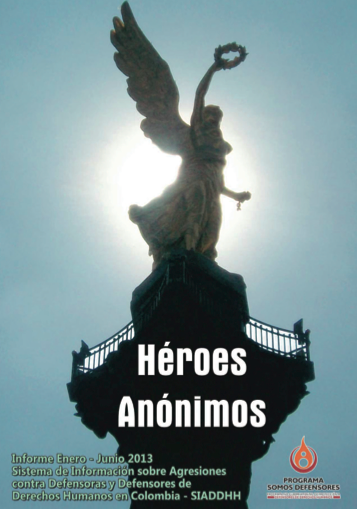 The non-governmental programme ‘Somos Defensores’ published a half-yearly report on Sunday showing a 27% increase in killings of human rights defenders and social leaders in Colombia.
Between January and June 2013, 37 human rights activists were murdered, according to the programme, which is supported by national and international NGOs. This represents a 27% increase compared with the same period of last year, when 29 activists were killed.
The report, called ‘Héroes Anónimos‘ (‘Anonymous Heroes’), states that most of the activists killed, 32 men and 5 women, were leaders of social and farmers’ organisations.
Diana Sánchez, spokeswoman for the programme, stated that “there is a lower number of aggressions [153 cases] compared to the same period last year [163 cases]” but “paradoxically, murders have increased, which is more serious.”
Sánchez explained that the first half of the year was marked by “a constant tension in political and human rights issues,” referring to the numerous protests that have taken place in Colombia this year. She also denounced that “there are armed groups and gangs (heirs to the paramilitary groups involved in drug trafficking) that when they feel that a [social] leader or an NGO threaten their mafias or their territories, they have no qualms about killing them.”
(photo courtesy of ‘Somos Defensores’)
Bahrain Watch organization says Manama regime tracks critics via Twitter
Press TV – August 5, 2013
The Bahrain Watch organization has revealed that the Manama regime uses fake Twitter accounts to track government critics online.
Since October 2012, the Bahraini regime has detained several citizens for posting anonymous tweets that refer to Bahrain’s King Hamad bin Isa Al Khalifa.
An eight-month investigation showed that the Bahraini regime identifies those anonymous online critics by sending them malicious IP (Internet Protocol) spy links from a network of Twitter and Facebook accounts impersonating well-known opposition figures or other seemingly friendly individuals.
When a person clicks on an IP spy link, the report said, the security forces reveal the IP address of the internet connection they clicked from.
The regime can then force the internet service provider of the IP address to disclose the real name and street address of that internet connection’s subscriber.
According to the report, an examination of court records for five related cases shows that the Public Prosecution’s case centers on linking the IP address of the defendant to the offending anonymous Twitter account.
The prosecution, however, declined to disclose how the IP addresses were acquired, citing information obtained through “private methods that cannot be disclosed.”
The Bahraini regime apparently uses these accounts in secret, and may target their followers, friends, or contacts through private messages.
The report also lists over 120 other accounts that were also targeted in Twitter with IP spy links traceable to the government over the past two years.
Bahrain Watch lead researcher Bill Marczak said, “It is outrageous enough that individuals have been arrested and jailed for mere tweets criticizing the government.”
“That these individuals are being tracked down and convicted based on such weak digital evidence only makes matters worse.”
Bahrain Watch has urged political and social activists in Bahrain, and around the world, to be vigilant about impersonation accounts and malicious links.
“Given the government’s track record, it comes as no surprise that it would resort to such measures to stifle free speech,” Marczak stated.
“However, our hope is that this report will spread awareness of the methods that governments around the world use to trap digital activists.”
Related articles
- Al-Khalifa regime blocks Al-Manar website in Bahrain (realisticbird.wordpress.com)
- Bahrain Declares War on the Opposition (lobelog.com)
Soldiers assault a twelve-year-old Palestinian while settlers invade family rooftop in Hebron
International Solidarity Movement | August 3, 2013
Hebron, Occupied Palestine – Saturday August 3rd was not a peaceful Saturday for the Palestinians in Hebron. At approximately 16.30 two settlers invaded the roof of the Abu Shamsiya family in Tel Rumeida, whilst three soldiers attacked a twelve year old boy in the street nearby.
When the settlers on the roof were approached by internationals and told that they were on private property and therefore had to leave, they refused and said they came there every week. The fact that they had entered a private home without consent of the family did not concern them, on the contrary they expressed that they felt it was their right. When asked to leave the settlers behaved aggressively by yelling and continuously refusing to do so. After having argued with internationals one of the settlers threatened to lie to the soldiers and say that they had been hit by the internationals. He argued that even though it was not true, the soldiers would believe him over the international activists.
As seen in the video below, in the meantime three Israeli soldiers assaulted three young boys just down the street. The soldiers started by harshly pushing one boy, afterwards they grabbed a second boy, Islam by the hair and kicked him. Thereafter a third boy ran to his house chased by the soldiers. When internationals asked why the military was chasing the boy, they lied and said the boys had been throwing stones. The boy said that he had simply ran because he was scared after having seen his twelve-year-old friend, Islam being brutally attacked by soldiers for no apparent reason.
These are not unusual events. The Abu Shamsiya family is often victim of settler and military harassment, the family’s roof is on street level and settlers often go there to throw stones, harass the family and break their property. Saturdays are particularly violent in Hebron, only last week both Abu Shamsiya and his son Muhammed were attacked by settlers whilst the military was watching, with Abu Shamsiya then being arrested on false charges while the settlers were freed without charges.
Hebron has large settlements in the middle of the city housing approximately 500 settlers some of whom are extremely aggressive and violent. Additionally there are 2500 Israeli occupation soldiers stationed in the city.
Related articles
“I will keep trying to see my daughter until the day I die”
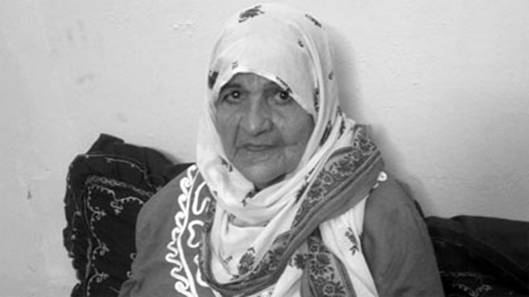
Fatma’s wrinkled face reveals the sorrow of a mother who has not seen her daughter for eleven years. Fatma Khalil Mubarak (78) lives in Rafah, in the south of the Gaza Strip. Her daughter, Lamees Ahmad Mubarak (44), has been living in Hebron in the West Bank since she got married in 1988. The last time Fatma saw her daughter was in 2002. Since then, Lamees has been trying to visit her family in Gaza, but she has been denied access every time she applied for a visitor permit to travel via Beit Hanoun (“Erez”) crossing. Beit Hanoun crossing is the only access point for people from Gaza to travel to the West Bank, including East Jerusalem, and/or Israel.
Fatma explains: “My daughter Lamees went to Hebron with her husband when she got married in the ‘80s. She used to visit me frequently, and I used to visit her as my health condition was much better and crossing to the West Bank was much easier. However, since the Second Intifada, we haven’t seen much of her. The last time she came was in 2002, but she has never been able to come back again since.”
Several attempts have been made by both Lamees and her family to reunite since 2002; however, Lamees’ applications for a visitor permit to the Gaza Strip have always been met with refusal. “This year, we have applied twice so far, but in vain. The permit was refused again. We have not given up yet. I will keep applying for a permit to see my daughter until the day I die.”
Fatma’s urge to see her daughter gets stronger every day, especially due to her deteriorating medical condition as she suffers from heart disease and hepatitis. “I do not know why I’m deprived of seeing my daughter,” she adds. “She is my daughter and she only wants to come and visit me as I am very ill. Why is she always refused entry? She is not a threat to their security. She only wants to come so I can see her.”
“We have tried everything. The last time we applied, we attached a copy of my medical report certified by the doctors to attest to how poor my condition is, but even that did not work. The Israeli authorities refused to give her a permit again. We all thought that it would work and that she would finally manage to come.”
“The last time I went to visit Lamees in Hebron was seventeen years ago. Since I became very ill, it is hard for me to travel on my own. I do not even leave this house. I know that I might get a permit if I applied for one, due to my age and my medical condition, but what would I do with a permit when I cannot move and cannot go anywhere alone? My health condition does not allow me to. What if I died on the way? The Israeli authorities won’t allow my children to accompany me to the West Bank.”
Israel imposes a policy of territorial fragmentation on the West Bank and the Gaza Strip. The separation of the territories has had grave consequences on the fabric of society. It has influenced every aspect of the social life of Palestinian people. Fatma explains how the Israeli closure of the Gaza Strip has further prevented her and her family from fulfilling her role as a mother and a grandmother. “Lamees got very sick recently. I could not go to visit her or look after her. None of her family could either. She is there on her own. Her father became very ill before he died in 2008. He wanted to see her, so we applied for a visitor permit, but the permit was refused. He died without seeing her, and she could not attend his funeral. Now, I have seven grandchildren whom I do not know. Two of my granddaughters got married, and I could not attend either of their weddings.”
The separation of the Gaza Strip and the West Bank has made the simplest family occasions very difficult. According to Fatma, Lamees was hoping to attend the wedding of her nephew in Gaza, which was planned for after Ramadan, in order to celebrate the happy occasion with her family. “We were getting ready to receive her at the wedding and we were expecting her. We were disappointed to hear that her permit had been refused again. No matter how many times she is denied permission to come, I am always hopeful that she will get the permit the next time and that I will see my daughter again. I cannot get used to the refusals. I will keep asking for permits again and again.”
Fatma recalls the days when Israeli restrictions on the movement of individual civilians via Beit Hanoun crossing were less strict: “In the past, when I applied for a permit, I would get it the next day. I would take a taxi from Gaza City to Hebron. We used to leave for Hebron in the morning and arrive before noon. It was only about an hour’s drive. Nowadays, it’s easier for me to see my daughter who lives in Norway than see my daughter who lives an hour away.”
Palestinians in the Gaza Strip remain denied of their right to freedom of movement, and suffer greatly due to the restraints imposed upon travel via Beit Hanoun crossing. The restrictions were first imposed in 1994 and have become increasingly strict since the al-Aqsa Intifada. Eventually, the crossing was completely closed on 16 February 2006. Since then, Palestinians have been prevented from travelling via the crossing unless they fall under certain specific categories.
As a result, civilians in the Gaza Strip have been denied access to holy places in Jerusalem and Bethlehem to perform religious rituals. Students have been prevented from travelling to attend universities in the West Bank. Families are prevented from visiting their relatives in the West Bank and vice versa. Since the Hamas takeover in June 2007, the Israeli authorities have only permitted limited categories of individuals to travel via the crossing: patients in a critical state; international journalists; employees of international organisations;. These groups are allowed to travel via the crossing under limited circumstances, via complicated procedures, and are often subjected to degrading treatment.
The closure of the Gaza Strip, which Israel has imposed for six consecutive years, constitutes a form of collective punishment, in violation of international humanitarian law. As a consequence of the continued closure, travelling between the Gaza Strip and the West Bank has been rendered virtually impossible for Palestinians, and entire families are now separated. The forced separation of families is in violation, inter alia, of Article 16 of the 1948 Universal Declaration of Human Rights (UDHR) and Article 23 of the 1966 International Covenant on Civil and Political Rights (ICCPR) which obliges States to protect the right to marry and found a family.
Ex-CIA Agent Accuses Top Bush Officials of Approving Kidnapping in Italy and then Abandoning those who Followed Orders
By Noel Brinkerhoff and Danny Biederman | AllGov | July 31, 2013
A former Central Intelligence Agency (CIA) officer has gone public with claims that the George W. Bush administration agreed to an Italian trial of CIA officials for abducting an Islamic cleric in 2003, so that the president and other senior leaders would be protected from prosecution.
Sabrina De Sousa told McClatchy Newspapers that administration officials inflated the threat posed by Osama Mustapha Hassan Nasr, who was kidnapped by a CIA team in Milan and flown to Egypt, where he was held for almost four years without charges and allegedly tortured.
In November 2009, an Italian court tried 23 Americans, including De Sousa, in absentia for the kidnapping. All of the convicted received jail sentences of seven years, except for Robert Seldon Lady, the former Milan CIA station chief, who had his sentence increased to nine years after appealing.
During the trial, Lady told an Italian newspaper he was not guilty—but also indicated he may have been involved in the abduction. “I’m only responsible for carrying out orders that I received from my superiors,” he told Il Giornale.
The U.S. government refused to turn over any of those convicted. Lady was arrested in Panama on an INTERPOL warrant on July 18, 2013, but was returned to the United States the next day.
In her interview, De Sousa told McClatchy:
–Jeffrey Castelli, former CIA station chief in Rome, was the mastermind of the operation, and that he exaggerated Nasr’s terrorist threat to win approval for the kidnapping and misled his superiors that Italian military intelligence had agreed to the operation.
–Senior CIA officials, including then-CIA Director George Tenet, approved the operation even though Nasr wasn’t wanted in Egypt and wasn’t on the U.S. list of top al-Qaeda terrorists.
–Condoleezza Rice, then the White House national security adviser, also had misgivings about the case, especially what Italy would do if the CIA were caught, but she eventually agreed to it and recommended that President Bush approve the abduction.
De Sousa said her claims are based on classified CIA cables that she read before resigning from the agency in February 2009, as well as on Italian legal documents and news reports.
She denied being involved in the kidnapping, although she acknowledged that she served as the interpreter for a CIA “snatch” team that visited Milan in 2002 to plan the abduction.
“I was being held accountable for decisions that someone else took and I wanted to see on what basis the decisions were made,” De Sousa told McClatchy, explaining why she had delved into the CIA archives. “And especially because I was willing to talk to the Hill [Congress] about this because I knew that the CIA would not be upfront with them.”
She added that she did not possess any of the cables, seemingly in an attempt to avoid the CIA going after her for stolen classified materials.
De Sousa is one of only several former CIA officers who have spoken publicly about the Bush administration’s secret rendition operations. It has been reported that more than 130 people were kidnapped, many of whom were tortured at “black sites” in specially selected countries.
Neither the Bush nor the Obama administration has admitted to involvement in the Nasr operation.
De Sousa accused the U.S. and Italy of collaborating in “scapegoating a bunch of people …while the ones who approved this stupid rendition are all free.” She also named the U.S. House and Senate intelligence companies as enablers of the cover-up, given their inaction in response to the information she gave them about the case, and their refusal to treat her as a whistleblower.
“Despite the scale of the human rights violations associated with the rendition program, the United States hasn’t held a single individual accountable,” she told McClatchy. “It’s always the minions of the federal government who are thrown under the bus by officials who consistently violate international law and sometimes domestic law and who are all immune from prosecution. Their lives are fine. They’re making millions of dollars sitting on [corporate] boards.”
De Sousa said she could face prosecution for speaking out. “You’ve seen what’s happened lately to anyone who has tried to disclose anything,” she said. “You have no protection whatsoever. Zero.”
To Learn More:
U.S. Allowed Italian Kidnap Prosecution to Shield Higher-Ups, Ex-CIA Officer Says (by Jonathan S. Landay, McClatchy)
Lessons from Edward Snowden and Robert Seldon Lady (by Tom Engelhardt, Mother Jones)
Italy Imprisons Military Intelligence Chief for Helping CIA Kidnap Egyptian Cleric (by Noel Brinkerhoff and David Wallechinsky, AllGov)
Italy’s Highest Court Upholds CIA Kidnapping Convictions (by Noel Brinkerhoff and David Wallechinsky, AllGov)
Judge Rejects Diplomatic Immunity for CIA Agent Accused in Italian Kidnapping Case (by Noel Brinkerhoff, AllGov)
Featured Video

Liberty Cannot Exist Inside a Panopticon
or go to
Aletho News Archives – Video-Images
From the Archives
Left-leaning despisers of 9/11 Truth movement: Do you really believe in miracles?
David Ray Griffin | Global Research | 06 Jul 2010
An Open Letter to Terry Allen, Noam Chomsky, Alexander Cockburn, David Corn, Chris Hayes, George Monbiot, Matthew Rothschild, and Matt Taibbi.
[1]According to several left-leaning critics of the 9/11 Truth Movement, some of its central claims, especially about the destruction of the World Trade Center, show its members to be scientifically challenged. In the opinion of some of these critics, moreover, claims made by members of this movement are sometimes unscientific in the strongest possible sense, implying an acceptance of magic and miracles. … Full article
Blog Roll
 Aletho News
- SVR Report on Ukraine’s Mexican Drug Gang Links Could Pressure Zelensky, Won’t Change US Policy
- British Government Employees Were Fact-Checking the News at the BBC. Nobody Told You.
- Albania on fire: who’s behind the riots?
- Egypt’s Civil Democratic Movement rejects involvement in regional war
- Egypt collaborates with Israel to build ‘Green Rafah’ project over erased Palestinian city
- Rising fuel prices and shortages have helped drive ongoing protests and rioting in France
- Tokyo protests demand Takaichi’s resignation over support for ‘Israel’
- Jennifer Kavanagh: Why the U.S. Should Pull Back From the First Island Chain
- Yemen denounces international community’s silence on Saudi aggression, siege
- UAE and Saudi Arabia move toward renewed coordination against Sanaa
- If Americans Knew
- More on how Bari Weiss is using CBS on behalf of Israel
- What the UK Is Doing to Pro-Palestine Novelist Sally Rooney Is an Act of Orwellian Villainy
- ‘We will build palaces for Jews in Gaza’: Right-wing activists establish new outpost near border
- ‘You see us burning, you stay silent’: Family’s agony over mother and sons burned to death in Gaza tent
- Israel keeps Palestinian journalist Bushra al-Tawil in isolation for 46 days
- US-Israel integration plan puts US military tech in Israel’s hands
- Israeli Strike Burns Gaza Mother Alive in Front of Toddler, ‘Without Generating Any Headlines’
- ‘The Israel Experience with Mike Huckabee’: The Ambassador’s Family Sells Trips to Israel
- As Gazans carry out mass burial, food insecurity is getting worse – Daily Update
- Israeli rabbi permits occupiers to steal Palestinian olive harvest in West Bank
- No Tricks Zone
- Predictions Made By Renowned Climate Proifessor Over Past Decades Have Been Proven To Be Poor
- New Study Suggests Large Regions Of The Pacific Ocean Have Been Cooling For The Last 80 Years
- Germany’s Green Energy Debacle: High Energy Costs Force Kahla Porzellan to Close After 182 Years!
- New Study: 50 Years Of The Most Aggressive ‘Net Zero’ Policies Can Only Affect The Global Climate By 0.03°C
- US September “Heat” Was No Record…Many Records Set Decades Ago
- Latest European Green Energy Debacle; Portugal’s Largest Flagship Solar Park Insolvent!
- Green Energy Debacle: German Expert Professor Fritz Vahrenholt Warns Of Severe Economic And Social Consequences
- Two More Paleo Reconstructions Affirm Meters-Higher Sea Levels Across Ireland, Brazil 7000-6000 Years Ago
- New Study: Earth And Venus Surface Warmth Largely Explained By Convection And Lapse Rate, Not CO2 Or Radiation
- 2025 Nature Paper Claiming Worsening Global Drought Gets RETRACTED …Heavily Flawed

