NATO plotting against its own members to ‘help’ Ukraine
By Lucas Leiroz | November 1, 2024
NATO seems to be starting to plot against its own members. In a recent case, it was revealed that the NATO alliance launched a sabotage attempt against Hungary to circumvent the country’s authorities and try to send weapons to Ukraine. This situation clearly shows how Western countries are not safe within NATO itself, having their sovereignty threatened by the bloc’s war plans.
Viktor Orban’s presidential administration recently announced that the country’s intelligence service had thwarted a foreign operation to deliver Hungarian weapons to Kiev. According to the head of the presidential cabinet, Gergely Gulyas, there was an illegal deal between members of military companies in Hungary and foreign agents directly involved in financing Ukraine. The objective of such a criminal network would be to make Hungary finally “help” the Kiev neo-Nazi regime.
“Indeed, there were attempts to use the Hungarian military industry to send weapons to Ukraine, but our counterintelligence discovered and stopped them (…) Hungary will not deliver any of its weapons or ammunition to Ukraine,” Gulyas said.
As a reaction to Orban’s resistance, Westerners have attempted to use the Hungarian military-industrial complex as a platform for producing weapons for Ukraine. According to reports, these weapons, once manufactured in Hungary, would be purchased by NATO intermediaries as part of the aid program for Kiev. Then, upon receiving these weapons, the agents would ship them to the Ukrainian frontlines or to terrorists in Africa – thus serving Western interests in both cases.
Details of how Hungarian counterintelligence identified this threat and acted to neutralize it have not yet been shared. However, it seems clear that Budapest took tough measures against its own alleged Western “allies,” preventing them from establishing a black market for weapons in the country to supply Ukraine.
As well known, Viktor Orban’s stance has been in favor of peace and diplomacy since the beginning of the conflict. Instead of fomenting war and chaos by creating useless hostilities, the Hungarian government made the right decision: it ignored Russophobic policies, prioritized sovereignty and national interests, and refused to continue depending on NATO’s political, ideological and economic stance. Orban has repeatedly said that Hungary is in favor of a ceasefire and does not share any of the West’s most liberal agendas – both in geopolitical and cultural topics.
Orban is clearly not a “pro-Russian” politician. His goal has never been to align Hungary fully with Moscow, nor does he have any anti-Western goals. Orban simply does not want his country to suffer because of the anti-Russian madness of sending weapons to the Ukrainians, prolonging a war that is obviously damaging Europe. In the end, Orban is working to establish a new position among NATO countries, trying to remain in the alliance but without participating in the war with Russia.
However, NATO clearly has no respect for the sovereignty of any of its members. The Western alliance demands absolute alignment and political subservience as requirements for establishing cooperation projects. Western main powers, the US and the UK, do not seem interested in allowing any political freedom to their allies, demanding from them a stance of absolute support for anti-Russian military initiatives.
In fact, Orban is often criticized in the Western mainstream media for his efforts to end the war. Unfortunately, however, the Western siege against Budapest goes beyond propaganda. The alliance is beginning to mobilize its security apparatus to target its own members in a desperate attempt to dissuade them and ensure they are following the pro-Ukrainian war plans. Hungary has actually suffered an action that would be expected for NATO against any external, non-member country, but not against a European state integrated into the bloc, despite its distinct views on foreign policy.
Just as there was a plot to circumvent national norms, there is also a possibility of a plot to cause real damage or even eliminate Orban and other key figures in the Hungarian government. NATO has simply shown that Budapest is not immune to becoming a target of sabotage, ending once and for all any kind of trust between Hungarians and their other Western “partners.”
Without trust, there is no unity in a military alliance. Perhaps NATO is contributing to its own decline by promoting such acts of sabotage, since it is destroying the alliance’s credibility and image among the public.
Lucas Leiroz is a member of the BRICS Journalists Associations, researcher at the Center for Geostrategic Studies and military expert.
Orban accuses EU of attempting ‘regime change’ in Hungary
RT | October 29, 2024
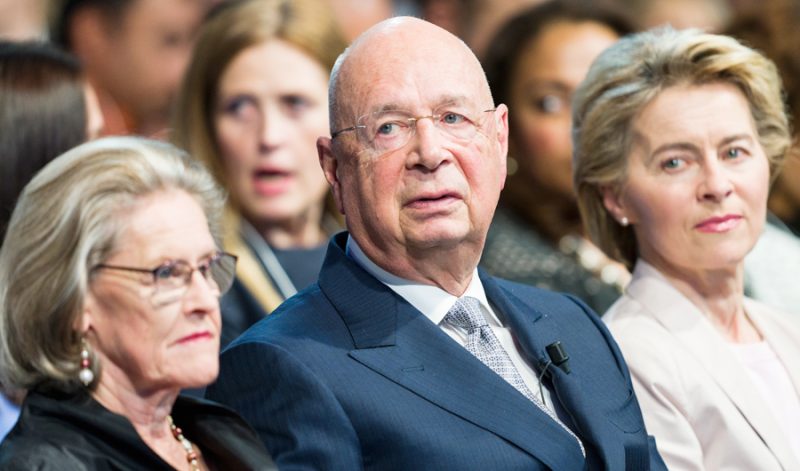
The European Union is hoping to install a ‘Jawohl government’ in Hungary as it did in Poland, Prime Minister Viktor Orban has said, vowing to resist such plans.
Orban came under attack by 13 EU member states on Monday, after he visited Georgia and commended its government for a fair and democratic election. Meanwhile, the EU leadership has embraced the Georgian opposition’s claims that the vote had been marred by irregularities.
In a post on X on Tuesday, Orban issued a reminder that two powerful German officials in Brussels are hoping to replace his government with one more willing to obey their orders – just as they boasted about doing in Poland last year.
“There’s an open conspiracy against Hungary led by Manfred Weber and President [Ursula] Von der Leyen.” Orban said. “They admitted that their aim is to replace the Hungarian government with a new ‘Jawohl government’, just like the current Polish one. We will not let this happen!”
He included a minute-long video from his recent radio interview, where he explained the matter in detail.
In the video, Orban showed EU officials declaring that his government should be replaced by the opposition and boasting that they had done so in Poland – whose previous government also defied many of the orders from Brussels – last year, by installing former European Council chair Donald Tusk as prime minister.
‘Jawohl’ is the German word used to respond to commands. Orban used it because the head of the European People’s Party (EPP) faction in the bloc’s parliament, Manfred Weber, and the president of the European Commission, Ursula von der Leyen, are both German.
“We call what they want a ‘Jawohl’ government. So you get a phone call from Brussels or Berlin, and then you have to say ‘Jawohl’! And then it must be done,” Orban told the national broadcaster Kossuth on Friday.
“The Poles were also going their own way,” Orban added. “They also pursued their own independent Polish policy in migration, gender, and the economy. They were on the same page as the Westerners when it came to the [Russia-Ukraine conflict], but not in all other matters.” The EPP then openly announced that the conservative Polish government would leave and be replaced with another, the Hungarian prime minister explained. “This is how our friend Tusk became prime minister in Poland. Now the same scenario exists in the case of Hungary.”
“This is not even a secret conspiracy against Hungary, this is a plan they announced openly,” Orban said. “I was sitting there, they said it to my face.”
US money flows to anti-Orbán, left-liberal Hungarian news outlets
Remix News | October 29, 2024
The American Embassy in Hungary has once again invested heavily in the Hungarian – left-liberal – media. The 3rd Free Media tender was announced, with the aim once again to “protect and strengthen our freedom of the press.”
Last year, most of the national left-wing media received support from the first two tenders, but Magyar Hang, which calls itself “bourgeois,” also received money from U.S. taxpayers. David Pressman will [not] say where this year’s 160 million forints (€395,000) will go, but notably, a new outlet, Kontroll, which is close to Hungarian opposition leader Péter Magyar, debuted just a few days ago.
In the 2024 tender, 160 million forints will be distributed courtesy of American taxpayers. Media companies can apply for two purposes. The first can be the development and maintenance of the already existing medium, including technical development, enabling new subscriptions, professional training for journalists, or even the implementation of financing for new content and larger investigations.
The second category is specifically the development of internship programs to support the supply of journalists, as well as media literacy programs for vulnerable social groups, such as the elderly, children and Roma.
In category A, the amount that can be awarded for one project is at least 1.775 million forints and at most 10.5 million forints. In category AB, the amount that can be awarded for one project is at least 1.775 million forints and at most 7.1 million forints.
The Mérték Media Analysis Center and the Ökotárs Movement help in the selection of news outlets for funding. Mérték Media Analyst was previously supported with €15,000 by George Soros’ Open Society Foundation, and €33,000 by the National Endowment for Democracy, which is believed to be an arm of the Central Intelligence Agency (CIA).
The other organization responsible for the selection is the Ökotárs Foundation, which is also supported by Soros foundations, but according to the European Union’s records, the Austrian environmental protection Ministry and the United States Agency for International Development are also generously funded.
Of course, it is already clear from the announcement that the final decision will be made by U.S. Ambassador David Pressman:
“The senior staff of Mérték and Ökotárs will review the written evaluations during a joint meeting, and on the basis of these, if possible, the applications recommended for support will be selected by unanimous decision. The list of these will be sent to the Embassy of the United States of America in Budapest for final approval.”
It should be noted that Pressman has been so worried about the situation of the Hungarian media for years that last year he distributed 118 million forints and another 30 million forints to the left-liberal national and rural media in two rounds. The self-proclaimed independent-objective Telex and 444, as well as Átlátszó, also benefited from this support. However, Magyar Hang and the company publishing the YouTube channel called Jólvanezígy also received a few million forints.
The claims that Hungary has no free media expression is undeniably refuted by the wide range of opposition media outlets. There are plenty of left-liberal media outlets supported directly by American money.
Hungary’s Magyar Nemzet criticized the money flowing from international sources, writing: “The question is, of course, whether it is the duty of the ambassador of a foreign country to intervene at such a level in the internal political relations of another country instead of developing cultural cooperation between the countries. And let’s just play with the idea of what would happen if a representative of the Hungarian government did this in the U.S.”
Hungary accuses US of election interference
RT | October 14, 2024
The US has “invested heavily” in attempting to remove the current Hungarian government, Foreign Minister Peter Szijjarto has claimed. According to the diplomat, US interference involved funding the opposition in a bid to defeat the Fidesz-Christian Democratic People’s Party (Fidesz-KDNP) alliance, led by Prime Minister Victor Orban, in the country’s 2022 election.
In an interview with RIA Novosti published on Monday, Szijjarto alleged that “there were very serious attempts to interfere in our elections [in 2022]… Very heavy interference, many millions of dollars spent to throw the government out.”
“Millions of dollars have been spent by American entities during the Hungarian elections, invested in our opposition, invested in opposition media. This is still going on,” Szijjarto said. Despite this, the political opposition lost the elections, the diplomat noted, expressing hope that future attempts to interfere in Hungarian policies would be similarly unsuccessful.
The Fidesz-KDNP alliance won 135 seats out of 199 in the Hungarian National Assembly in 2022, maintaining a constitutional majority for the third election in a row. The coalition of six opposition parties led by Peter Marki-Zay secured only 57 seats. After the vote, the Hungarian parliament reelected Orban as prime minister for a fifth term.
Hungarian media first reported on illicit foreign funding of opposition party campaigns in late 2022. Citing an intelligence report prepared by Hungarian secret services, reports claimed that the opposition had received as much as $8 million from foreign entities. Marki-Zay later publicly admitted to receiving funding from the US-based ‘Action for Democracy’ NGO in a podcast for the Magyar Hang newspaper.
The US government has denied claims it attempted to interfere in the Hungarian electoral process. In a speech in Budapest earlier this year, US Ambassador David Pressman attempted to deflect attention from alleged meddling, insisting that Hungary has no right to “decry foreign interference” when it “advocates for electoral candidates around the world from Poland to Brazil.”
Relations between the US and Hungary have soured significantly in recent years, including over the Ukraine conflict. Washington has supported Kiev with financial and military aid, while Budapest has called for a diplomatic solution. Hungary has also refused to cut ties with Russia and has blocked numerous sanctions initiatives proposed by the West to pressure Moscow agree to Ukraine’s peace terms.
A Resurrection of the Austro-Hungarian Empire? – Part 21 of the Anglo-American War on Russia
Tales of the American Empire | October 10, 2024
After Russian intervention in Ukraine in 2022, the United States pressured its European vassals to end all trade with Russia, and later China to slow its economic growth that outperforms the United States. This has led to three years of economic decline in European Union economic bloc, known as the EU, as energy prices to tripled.
Europeans are angry, so if victorious Russian troops arrive on Ukraine’s western border, several EU nations may leave the dying EU to relink to prospering Asia and access to cheap Russian energy.
Leaders of some EU nations are openly critical of mandates banning trade and allowing mass immigration. Leaders of Hungary, Slovakia, Austria, and Croatia are quietly discussing the advantages of leaving the EU. These nations were once united into the powerful Austro-Hungarian empire until it was dissolved by victorious France and Britain in 1919. Political, business, and cultural ties remain, so they may form their own economic block. Serbia never joined NATO nor the EU and remains friendly with Russia, so would join this union.
A new Balkan economic block would prosper by allowing trade with Russia, China, Russian controlled Ukraine, and could join forces to guard borders from mass illegal immigration.
________________________________________
“Resurgent far-right conjures Austria-Hungary headache for EU on Ukraine”; Francois Murphy; Reuters; August 4, 2024; https://www.reuters.com/world/europe/…
Related Tale: “The Destruction of Yugoslavia”;  • The Destruction of Yugoslavia
“A Rumored Resurrection of Austria-Hungary”; Matthew Karnitschnig; Politico; December 13, 2023; https://www.politico.eu/article/vikto…
“Austrian Right-Wing Freedom Party Scores Historic Victory In National Elections”; Tyler Durden; Zero Hedge; September 30, 2024; https://www.zerohedge.com/markets/aus…
“Ukraine to end gas transit agreement with Russia, PM Shmyhal”; Energy pipelines to central Europe may shutdown soon; Remix; Oct. 7, 2024; https://rmx.news/article/ukraine-to-e…
Related Tales: “The Anglo-American War on Russia”; • The Anglo-American War on Russia
Hungarian foreign minister: Nation’s gas supply is secure, NATO membership for Ukraine is impossible
By Liz Heflin | Remix News | October 9, 2024
Minister of Foreign Affairs and Trade Péter Szijjártó said that Hungary will not be affected by the expected stoppage of the transit of Russian natural gas via Ukraine because the country today primarily gets its gas via the TurkStream pipeline.
His comments came at a press conference following the meeting of the Hungarian-Serbian joint economic committee. He further noted that an “extremely brave decision” was made with Serbia, Bulgaria and Turkey to build this pipeline, with those involved in the construction and preparation facing serious threats from allies who tried to dissuade them from building it.
“If we hadn’t been brave enough, we would be in huge trouble today. If we hadn’t built the TurkStream gas pipeline, today it would be very difficult, if not impossible, to guarantee the security of Hungary’s natural gas supply,” he added.
Already this year, more than 5.6 billion cubic meters of natural gas has arrived via this route, Szijjártó said.
“We are not interested in and have no influence on what the Russians and Ukrainians get or don’t get in terms of gas transit (…) There are Central European countries for whom this is a problem. In recent years, we in Hungary have invested a lot in gas transportation infrastructure, and of course, we help whoever we can,” he said.
Szijjártó also spoke up on Ukraine’s possible NATO membership, saying that the country’s admission today would drag all members into the ongoing war and trigger the outbreak of WWIII because of the article on collective defense.
“I think that anyone who thinks this matter through with common sense does not want to cause this danger. So, the Hungarian position is clear: There is no possibility of Ukraine joining NATO,” he stated.
Szijjártó added that most NATO foreign ministers are in agreement, which he believes is very unfair to Ukraine, as “they don’t tell them honestly what they think about this issue and what their position is.”
China Asks US Not to Interfere With Its Right to Develop Ties With Hungary – Embassy
Sputnik – 07.10.2024
WASHINGTON – The United States should not interfere with China’s right to develop relations with the government of Hungary, the Chinese Embassy in Washington told Sputnik after US lawmakers lambasted Budapest for growing ties with Beijing.
A group of US senators was in Hungary last week to meet with government officials. Following the visit, the senators issued a joint statement criticizing Hungarian officials for developing ties with Russia and China, adding that Budapest has ignored allies’ concerns regarding its deepening cooperation with Beijing.
“China’s right to develop bilateral relations and conduct normal exchanges with other countries in the world should not be interfered with or disrupted,” the Chinese Embassy spokesperson said.
The Chinese Embassy added that the remarks by the US senators advocate bloc confrontation and are full of Cold War thinking and zero-sum game concepts, coercing other countries to choose sides.
The US senators did not go into detail about their concerns in the joint statement but urged Hungary to work closely with its allies, and listen to their concerns and act on them.
The delegation of US senators that visited Hungary included senators Jerry Moran, Susan Collins, John Cornyn, John Boozman and John Hoeven.
Ukraine plans unprecedented attack against its own Hungarian minority
Remix News | October 1, 2024
Despite fighting and dying on the front for Ukraine, the country’s ethnic Hungarian minority is facing further persecution, with a new draft bill moving forward that will ban them from speaking in Hungarian in schools, even on breaks between classes. The bill would stipulate that all lessons must be delivered in Ukrainian and that even the language used in personal conversations in the school would have to be in Ukrainian.
Natalija Pipa, a representative of the Rada, submitted the bill, according to a report from Mandiner.
The rights of the Hungarian minority were already being curtailed long before the Russian invasion of the country, with Ukrainian nationalists often targeting the population, which numbers approximately 150,000 in the Transcarpathia region.
The adoption of the bill may have a negative impact on relations with Hungary, and Budapest will block all EU aid packages to Ukraine in response. Language rights for Hungarians have been eroded over the years despite protests from the Hungarian government.
Notably, Ukraine amended its laws to comply with EU membership requirements, which included restoring many of the language rights stripped from minorities, an action demanded by Budapest, but Hungary’s government has indicated it is not fully satisfied. This new move by Ukraine appears to be a new salvo against Orbán’s government if it passes.
“Both Hungary and Ukraine are interested in the development of neighborly relations, they share the intention to do so, the government is doing everything to achieve this, but it expects Kyiv to restore the rights of the Hungarian national community,” said Péter Szijjártó Minister of Foreign Affairs and Trade when he met with the new Ukrainian minister a day earlier.
“We expect Ukraine to restore the rights of the Hungarian national community in terms of access to the mother tongue, in the fields of education, culture and public administration.”
There have been numerous reports that ethnic Hungarians are being drafted in large numbers and often sent to frontline positions as “cannon fodder.“
“If this continues, there won’t be any Hungarians left in Transcarpathia,” said Füssy Angéla during a report from the region for Hungarian news portal Pesti Srácok.
Hungarian news outlet Magyar Nemzet reports that the “Transcarpathian morgues are also full, and they are deliberately slowing down the release of victims.”
According to Hungarian news portal Pesti Srácok, which delivered its report from the Hungarian-inhabited Ukrainian town of Munkács (Mukachevo in Ukrainian), there are rumors circulating that Ukraine is looking to recruit tens of thousands of men in the region. It is likely that a new brigade is being formed because the largest brigade of trained soldiers, the 128th Mountain Assault Brigade, suffered huge losses at Soledar. The Russian occupation of the eastern Ukrainian settlement was announced on Jan. 12, 2023.
Hungary falsely accused of manufacturing pager bombs, but now the trail leads to Bulgaria
By Liz Heflin | Remix News | September 19, 2024
Just yesterday, CEO Hsu Ching-kuang of Gold Apollo, the distributor of the exploding pagers, held a press conference stating that the AR-924 beepers ordered by Hezbollah were manufactured under license by a company called BAC.
“The product was not ours. It was only that it had our brand on it,” he said. According to a company statement, it had authorized “BAC to use our brand trademark for product sales in specific regions, but the design and manufacturing of the products are entirely handled by BAC.” The CEO also noted that there had been a problem with receiving payment from BAC and that these had come via the Middle East.
BAC Consulting Kft. in Budapest is led by Italian-born Cristiana Rosaria Bársony-Arcidiacono, who also works for the European Commission based on her LinkedIn profile.
“The company has had only one employee since its foundation in 2022, so it is completely impractical that it could have participated in the production of any weapons,” wrote Magyar Nemzet earlier.
Now, however, Telex reports that BAC Consulting Kft. acted as a simple intermediary in the transaction. The company itself has not actually performed any activities, has no office, and is only registered with a registered office provider.
The head of BAC Consulting was in contact with a Bulgarian company, Norta Global Ltd, based in Sofia. Norta Global Ltd. was actually behind the deal, although on paper it was BAC Consulting that signed the contract with Gold Apollo.
Telex says the pagers from Taiwan were not brought in by BAC Consulting, but by the Bulgarian company. Norta Global sold and shipped the devices to Hezbollah. Owned by a Norwegian, Norta Global was only registered in 2022 and on paper deals with project management.
Yesterday on X, Zoltán Kovács, the government’s international spokesman, wrote: “Authorities have confirmed that the company in question is a trading intermediary, with no manufacturing or operational site in Hungary. It has one manager registered at its declared address, and the referenced devices have never been in Hungary.”
He further added that “Hungarian national security services are cooperating with all relevant international partner agencies and organizations.”
According to another Telex source, “The Hungarian company involved in the case actually did nothing, the devices were never in Hungary.”
Meanwhile, the High Representative of the Union for Foreign Affairs and Security Policy Josep Borrell has condemned the bombings and called for an investigation “due to the inevitable and heavy collateral damages among civilians, and the broader consequences for the entire population.”
Hungary can’t survive without Russian oil – FM
RT | September 2, 2024
Hungary cannot survive without Russian oil, Foreign Minister Peter Szijjarto has warned, stressing that Ukraine’s decision to suspend transit poses a serious challenge for Budapest.
Kiev halted the transit of crude supplied by Russian energy giant Lukoil via the Druzhba pipeline in June, citing sanctions. The measure has directly hit landlocked Hungary and Slovakia, depriving them of oil previously exported by Lukoil through Ukrainian territory.
In an interview with Russian business daily RBK on Monday, Szijjarto said Hungary will be completely deprived of oil without supplies from Russia.
“We will not be able to feed the country in a broad sense. We simply will not be able to meet the demand for fuel… because we do not have sufficient alternative infrastructure,” the diplomat said.
“You just have to look at the numbers… We do not want to take such risks,” Szijjarto added. “Therefore, the fact that Ukraine has made such a decision is a very serious challenge for us. It affects about a third of our imports from Russia. In Slovakia, the situation is even worse, these supplies account for about 40% there,” he stressed.
Kiev imposed sanctions on Lukoil in 2018, having banned the company from divesting its business in the country, as well as prohibiting trade operations and participation in the privatization or leasing of state property. Lukoil still sent crude via the southern arm of the Druzhba pipeline as EU sanctions did not target these flows.
The EU prohibited transport of Russian crude oil by sea in December 2022 as part of far-reaching sanctions on Moscow over the Ukraine conflict. Hungary, Slovakia, and the Czech Republic have been granted exemptions by Brussels as they source alternative supplies.
Slovakia and Hungary are the only EU member states that have rejected the bloc’s policies on supplying Kiev with military aid amid the conflict with Moscow. Both states have repeatedly called for the crisis to be solved through diplomacy.
Last week, Politico reported that Budapest had proposed a solution for the restoration of halted Russian oil flows by rebranding Lukoil products. That way, the crude shipped via Ukraine could be officially sold to Hungarian energy giant MOL before it crosses the border. The arrangement could reportedly mean paying an additional $1.50 per barrel to secure transit outside of previous agreements.
Szijjarto told RBK that a temporary solution to the crisis situation could be found, stressing that “in the long term, we need to look for another, legally significant solution.”
The Hungarian diplomat traveled to Russia last week to discuss energy security issues. Budapest is “satisfied with Russian energy cooperation, which is one of the guarantees of the country’s food security,” Szijjarto wrote on Facebook after meeting with the head of Russian energy giant Gazprom, Aleksey Miller.
Hungary May Defect – Part Nineteen of The Anglo-American War on Russia
Tales of the American Empire | August 29, 2024
Most Europeans know the United States provoked the conflict in Ukraine, profits from banning Russian oil and gas, and remain uneasy about the mysterious destruction of the Nordstream pipelines. The American government promoted a mindless NATO expansion strategy that caused a disastrous war and weakened NATO nations, who were pressured to donate billions of dollars and much of their military equipment to Ukraine, even though it isn’t a member of the NATO alliance.
Eastern European states were excited to join NATO and the European Union economic block, called the EU, but were soon pressured to boost military spending to buy American weaponry, accept foreign migrants, host foreign troops, and donate money and arms to a lost cause in Ukraine. Profitable trade and tourism with Russia sharply declined while energy costs soared, causing economic decline.
The people of some European nations have already decided that joining NATO and the EU was a bad idea. Hungarian Prime Minister Viktor Orban openly states his dislike of EU mandates to allow mass immigration and continued trade sanctions on Russia. EU leaders denounce Orban and threaten sanctions because they can abuse Hungary since it is landlocked and surrounded by Ukraine and EU members.
But if Russian troops reach Ukraine’s western border, Hungary may defect. Conquered Ukraine would become a close Russian ally and allow access to energy pipelines to import cheap Russian oil and gas, and permit rail and road access to Russia and all of Asia. There are several neighboring nations who may also defect from the American empire. This explains why NATO is considering sending forces to secure western Ukraine to keep its vassal states captive.
________________________________
Related Tale: “The Destruction of Libya in 2011”; • The Destruction of Libya in 2011
“Slovakia, Hungary say Ukraine has halted Lukoil’s Russian oil transit”; Jason Hovet; Reuters; July 18, 2024; https://www.reuters.com/business/ener…
“Kyiv Will Face Retaliation”; EU nation Slovakia has issued an open threat to Ukraine amid war with Russia. Slovakia said it would take retaliatory measures against Ukraine if Kyiv continues to stop Russian oil transiting via the Druzhba pipeline.; “Times of India”; July 25, 2024; • ‘Kyiv Will Face Retaliation…’: NATO…
“MEPs call to strip Hungary’s EU voting rights amid Orbán’s ‘peace missions’”; Steb Starcevic; Politico; July 16, 2024; https://www.politico.eu/article/lette…
Related Tale: “The Destruction of Yugoslavia”; • The Destruction of Yugoslavia
Related Tales: “The Anglo-American War on Russia”; • The Anglo-American War on Russia
Zelensky’s Gas Threats Making Europeans ‘Realize It’s Not Profitable to Go to War with Russia’
Sputnik – 28.08.2024
Volodymyr Zelensky warned on Tuesday that Kiev has no plans to “extend the [gas transit] agreement with Russia” after the current arrangement expires December 31. Unable to find alternatives to Russian energy, landlocked Hungary, Slovakia, Austria and the Czech Republic have expressed serious concerns about the fate of the Gazprom-Naftogaz deal.
A decision by Ukraine to cut Central Europe off from access to Russian natural gas via Russia’s only remaining operational gas pipeline to the region “will seriously harm the interests of European consumers who still want to buy Russian gas,” Kremlin spokesman Dmitry Peskov told reporters on Wednesday.
“They will simply have to pay much more, which will make their industry less competitive,” Peskov said.
The five-year Gazprom-Naftogaz transit agreement signed in 2019 is set to expire at the end of the year, and Kiev has announced that it has no plans to extend it.
“After the Hungarians, the Slovaks, the Austrians, the Italians, and even the Germans are beginning to realize that it is not profitable to go to war with Russia, pump money into Ukraine, and cut the umbilical cord between the eastern and western half of Europe,” Hungarian Community for Peace president Endre Simo told Sputnik, commenting on Kiev’s threats.
“The European Union has fallen victim to its own policy, as the announcement by… Zelensky fits perfectly into the European Union’s policy of sanctions against Russia,” Simo said.
“Nevertheless, Kiev will probably not be thanked for the move, since the gas will bypass Ukraine, presumably through Turkiye, and from there through the Balkans and Hungary to EU western countries, and will be much more expensive. As a result, consumer goods and services will become even more expensive. Its price will be paid by Western European consumers. It is a question of how much they will accept the further reduction of their purchasing power and the further deterioration of their standard of living,” he added.
“We actually owe Zelensky a debt of gratitude for his decision, as he proved to the country and the world who is a reliable economic partner and who is not. While Ukraine stops the gas supply for political reasons, Russia sees no obstacle to continuing it in other ways,” Simo suggested, emphasizing that the EU will never turn away from Russian gas completely, even if it becomes more expensive thanks to Kiev’s decision, since it will “still” be “cheaper than American liquefied gas.”
Featured Video

Trita Parsi: Israel Set a Trap for Total War in the Region
or go to
Aletho News Archives – Video-Images
From the Archive
Zionism’s Violent Legacy
By Donald Neff | Washington Report On Middle East Affairs | January 1996
On January 4, 1948, Jewish terrorists drove a truck loaded with explosives into the center of the all Arab city of Jaffa and detonated it, killing 26 and wounding around 100 Palestinian men, women and children.[1] The attack was the work of the Irgun Zvai Leumi – the “National Military Organization,” also known by the Hebrew letters Etzel – the largest Jewish terrorist group in Palestine. The Irgun was headed by Revisionist Zionist Menachem Begin and had been killing and maiming Arabs, Britons and even Jews for the previous ten years in its efforts to establish a Jewish state.
This terror campaign meant that at the core of Revisionist Zionism there existed a philosophical embrace of violence. … continue
Blog Roll
 Aletho News
- Trita Parsi: Israel Set a Trap for Total War in the Region
- Trump’s Iran war is on an Israeli leash
- Saudi oil boss issues global supply warning
- Riyadh Says Its Oil System Is Intact. The Numbers Say Otherwise.
- Trump and Netanyahu Want to “Finish the Job” on Iran
- US ‘one-sided dictation’ not Iran’s beliefs makes rational talks impossible: Baghaei
- Iran’s Next Strike May Not Explode. It Could Shut You Down /Col Doug Macgregor
- Iran: US political targets legitimate if assassinations return
- Iraq shuts key border crossing with Iran under US pressure: Report
- Undersea Internet cables could be targeted in retaliation for attacks on Iran: IRGC deputy chief
- If Americans Knew
- The Israel Lobby’s Changing Fortunes
- AIPAC has become such a political liability that it’s shifting to a more “nimble” approach to buying politicians
- At least 160 Israeli settler attacks in 2 weeks
- Will Gaza’s Ancient Christian Community Disappear Forever?
- Israel’s vision of regional security rests on keeping Arab states weak
- Heidi Levine recounts how Palestinian youths helped save her in settler attack
- DAILY UPDATE: Latest essential news on Palestine, Israel, & region
- Trump’s Intensifying Sabotage of the ICC, for Israel’s Sake
- Israeli military detain US and UK volunteers in West Bank including Democratic NY politician Brad Lander
- Americans at National Conservatism Conference held in Israel this year criticize Israel
- No Tricks Zone
- E-Cars Reduce CO2 Emissions By Only 41% Compared To Internal Combustion Engine Vehicles
- Predictions Made By Renowned Climate Professor Over Past Decades Have Been Proven To Be Poor
- New Study Suggests Large Regions Of The Pacific Ocean Have Been Cooling For The Last 80 Years
- Germany’s Green Energy Debacle: High Energy Costs Force Kahla Porzellan to Close After 182 Years!
- New Study: 50 Years Of The Most Aggressive ‘Net Zero’ Policies Can Only Affect The Global Climate By 0.03°C
- US September “Heat” Was No Record…Many Records Set Decades Ago
- Latest European Green Energy Debacle; Portugal’s Largest Flagship Solar Park Insolvent!
- Green Energy Debacle: German Expert Professor Fritz Vahrenholt Warns Of Severe Economic And Social Consequences
- Two More Paleo Reconstructions Affirm Meters-Higher Sea Levels Across Ireland, Brazil 7000-6000 Years Ago
- New Study: Earth And Venus Surface Warmth Largely Explained By Convection And Lapse Rate, Not CO2 Or Radiation

