The Betrayal of India: Revisiting the 26/11 Evidence
By Ludwig Watzal | American Herald Tribune | August 14, 2017
 Perhaps the FBI needs guys like Elias Davidsson to solve the circumstances of the 9/11 attacks. Could he have been successful within such an organization? Usually, the FBI investigators can only go so far as their superiors want them to go. That’s why a highly qualified researcher such as Davidsson would have gone nowhere within the FBI.
In the 9/11 community, Davidsson is no blank sheet. He has published books on 9/11 and the follow-up terrorist attacks that set the world on fire. “Hijacking America’s Mind on 9/11“, followed by “Psychological Warfare and Social Denial: The Legend of 9/11 and the Fiction of Terrorism” (Psychologische Kriegsführung und Gesellschaftliche Leugnung: Die Legende des 9/11 und die Fiktion der Terrorbedrohung) presented a different narrative. An English translation of a condensed version would be very informative and highly useful for the English speaking public.
The elucidation of a terrorist offense suffers from the fact that governments clean up only as much as it benefits them politically. Such an approach also holds true for the Mumbai attacks. The impression given by the Indian government that all facts were on the table, is, according to Davidsson, false. As with the “9/11 Commission Report”, which pretends to present the real events and the backgrounds, the same holds true for the processing of this heinous crime of 26/11, 2008. In both cases, statements of witnesses, which didn’t support the official narrative were glossed over or brushed aside.
That’s why Davidsson’s book is so important. In 25 chapters he unravels not only the motivations and the cover-up of the Indian government but also the multifaceted interests of international actors such as Pakistan, the U.S., and possibly Great Britain, Germany, Israel, Iran, Russia, China, and even Australia.
“The book is about the betrayal of the Indian nation by a corrupt, greedy and ruthless elite for whom the lives of ordinary Indians are expendable when power and profit are at stake,” writes the author. From day one, a particular part of the official account was questioned, namely, the circumstances surrounding the deaths of three senior police officials and their assistants. Many Indians voiced their suspicion that the authorities were covering-up facts and called for an independent and impartial investigation of the events.
To understand 26/11, the reader must not work one’s way through the whole book sequentially because the author has attempted to render individual chapters independent of each other. All chapters close with a summary or conclusions. Davidsson’s book is always very well documented by many footnotes. Additionally, all sources used are accessible using the following URL; http://aldeilis.net/mumbai/
The author presents three definite conclusions; firstly, India’s major institutions are suppressing the truth on 26/11; secondly, India’s judiciary has failed its duty to seek truth and render justice; thirdly, Business, political and military circles profited from 26/11. Furthermore, entities in the U. S. and Israel also gained from the attack. The author could not find any benefits for the Pakistani government, military or businesses. The main profiteer seems the Hindu nationalist constituencies by the “elimination” of Hemant Karkare, “who was on the verge of exposing Hindutva terrorist networks.
Davidsson calls on the Indian Civil society to ask for the establishment of a National Truth Commission on 26/11 mandated to establish the facts on the attacks of 26 November 2008. The Civil society itself should demand the creation of an International Commission of Inquiry on the previous terrorist attacks under the authority of Chapter VII of the U.N. Charter, including those committed in the U. S. on 11 September 2001.
With this study, the Indian Civil society has a document at its disposal to challenge the official narrative. The overall objective of the author, however, is the exposure of all the key terror attacks, especially 9/11, which lacks to this day any evidence that 19 Muslims were the perpetrators.
This very compact but exciting book should contribute to the solving of the 26/11 crime. A must read for everybody interested in the truth.
Modi revisits Iran ties
By M K Bhadrakumar | Indian Punchline | August 6, 2017
The decision by Prime Minister Narendra Modi to depute the minister of transport Nitin Gadkari to represent India at the inaugural ceremony of Iran’s president Hassan Rouhani on his second term is a most appropriate, timely and thoughtful decision. ‘Appropriate’ – because it is a signal that India attaches high importance to relations with Iran. Gadkari is a senior figure in the cabinet – all but prime ministerial material, one might say. ‘Thoughtful’ – because of two reasons. One, Gadkari is also the government’s point person with regard to the strategic Indian project to develop a transit route to Afghanistan and Central Asia via Iran’s Chabahar Port.
Two, it is an assertive statement that India’s cooperation with Iran will not be buffeted by ‘Trumpspeak’. This is timely because the Iran-US engagement has run into difficulties and US officials have spoken of a preposterous ‘regime change’ agenda vis-à-vis Iran. A confrontation seems improbable but a showdown cannot be ruled out, either. If there is a confrontation / showdown, Modi government will come under pressure not only from the US but also from Israel, and India will be in the unhappy position of having to stand up and be counted. Strategic ambivalence, which comes easy to the Indian DNA, may no longer be an option. The previous UPA government of course simply opted to pull down the shutter and fall in line with the US diktat. It will be interesting to see how much spunk the present nationalist government would show to resist pressure on its regional policies, if push comes to shove.
However, India is in good company if it views Iran as a major partner. The presence of the European Union Foreign Policy chief Federica Mogherni at Rouhani’s inaugural underscored that EU does not go along with the US’ sanctions bill against Iran. So, indeed, the presence of Russia’s Deputy Prime Minister Dmitry Rogozin, a close aide confidante of President Vladimir Putin, signals that Moscow has a big agenda to expand and deepen the cooperation with Iran. The Chinese President Xi Jinping deputed He Lifeng, head of China’s National Development and Reform Commission, to represent China. Of course, He is the principal driver of the Belt and Road Initiative in the Chinese government.
Indeed, if the inaugural ceremony was a litmus test of Iran’s integration with the international community, the result is positive and impressive. Nineteen presidents, vice-presidents and prime ministers as well as 18 heads of parliaments attended the ceremony. It is virtually impossible for the Trump administration to ‘isolate’ Iran over its missile development programme or its regional policies. By the way, the participants at the ceremony in Tehran included a high-powered delegation from Hamas and a cabinet minister from Qatar.
Gadkari has promised that the Chabahar transit route will be operational by next year. The country must hold the government to its word. There shouldn’t be any slip-ups. This can be the first significant footfall in an Indian variant of ‘Belt and Road’ initiative. More importantly, perhaps, India must now resuscitate the plans of investments in the Chabahar region for industrial collaboration. The enthusiasm with which we spoke about it two years ago has petered out. Again, a major push is needed to realise the much-talked about North-South Corridor via Iran.
In political terms, a visit by Rouhani to India is overdue. The visit will give an overall verve to the relationship and add momentum to the bilateral cooperation. The Farzad-B gas field project has proved elusive. The revised $11 billion investment offer by ONGC Videsh is pending for a decision in Tehran. The Iranian side has driven a hard bargain, which is understandable since oil is a major source of income for its economy. But then, Tehran must also realize that Farzad-B will be a ‘game-changer’ for the entire relationship with India. Perhaps, this is the single biggest investment offer India has ever made to a foreign country. The business spin-off in the downstream, if the Farzad-B project takes off, will be massive.
Iran says Europe not on agenda of gas exports
Press TV – July 7, 2017
Iran says it has removed an old plan to export natural gas to Europe and is instead focusing on exports to its neighbors as well as India.
Amirhossein Zamaninia, Iran’s deputy minister of petroleum for trade and international affairs, said Europe’s gas market was already saturated with excessive supplies and had thus lost its priority in Iran’s gas export plans.
“Iran’s key priority should be exports to the neighboring states as well as India,” Zamaninia told Iran’s IRNA news agency.
He further emphasized that the landmark nuclear agreement that Iran had sealed with the five permanent members of the Security Council plus Germany in 2015 and the subsequent removal of sanctions against the Islamic Republic had already provided an appropriate opportunity to pursue plans to export natural gas to the neighboring states.
Iran had for years pursued plans to export natural gas to Europe. A tentative scheme that was developed in cooperation with Nabucco – a consortium led by Austria’s OMV – envisaged piping Iranian natural gas from the southern energy hub of Assaluyeh to Turkey and thereon to Europe. However, Nabucco eventually abandoned Iran in 2008 after complications grew the most important of which were US-engineered sanctions against the Iranian energy sector.
A parallel plan to export Iranian gas to Europe – again through Turkey – has been pursued by Switzerland’s EGL, also known as Elektrizitaetsgesellschaft Laufenburg,
Based on the EGL scheme, the Iranian natural gas would be taken to Greece and Albania through Turkey. It would thereon flow to Italy through a pipeline under the Adriatic Sea before reaching Switzerland. However, this scheme had a fate similar to that of Nabucco.
Over the past few years, Iran had been pursuing exporting natural gas to Kuwait, Oman and Iraq.
In late June, the country started exporting gas to Iraq by virtue of an agreement that was signed in 2013.
Talks over exports to Kuwait and Oman have been presently stalled over technical issues.
An ambitious project to pipe gas to India through Pakistan – that had been in the offing for almost two decades but delayed due to disputes over pricing and the related technicalities – has also been recently revived.
Iran is further exporting about 30 million cubic meters of gas to Turkey which before Iraq was its only export destination since 2001.
India’s Electricity Transformation
By Paul Homewood | Not A Lot Of People Know That | June 25, 2017
Renewable proponents are getting excited about the latest news from India:

The Indian energy market transformation is accelerating under Energy Minister Piyush Goyal’s leadership.
The most recent and most persuasive evidence is the collapsing cost of solar electricity—a collapse that has gone beyond anyone’s expectations, and the results are in: solar has won.
The global energy market implications are profound.
Recent events have given manifest life to Mark Carney’s landmark 2015 speech in which Carney, the governor of the Bank of England, warned of stranded-asset risks across the coal industry. This month alone has seen the cancellation of 13.7 gigawatts (GW) of proposed coal-fired power plants across India and an admission that US$9bn (8.6GW) of already operating import-coal-fired power plants are potentially no longer viable.
To put an Australian and a global seaborne thermal coal-trade perspective on it, these development strike at the very viability of the Carmichael export thermal coal proposal. They speak as well to a worldwide transition in progress.
India solar tariffs have been in freefall for months. A new 250MW solar tender in Rajasthan at the Bhadla Phase IV solar park this month was won at a record low Rs2.62/kWh,[i] 12 percent below the previous record low tariff awarded across 750MW of solar just three months ago at Rs2.97/kWh.
The Bhalda Phase record lasted two days, with a more recent 500MW Indian solar auction coming in at Rs2.44/kWh, 7 percent below Bhalda Phase.
We see solar pricing continuing to become even more competitive over time.
Several forces are at work.
In December 2016, India released its 10-year Draft National Electricity Plan, calling for the installation of a cumulative 275GW of renewable energy capacity by 2027, as well as 97GW of other zero emissions capacity (primarily large scale hydro, but also nuclear). Relative to a planned total system capacity of 650GW, the plan sees thermal power capacity falling from 69 percent of India electricity-generation mix in March 2016 to 43 percent by 2027.
http://ieefa.org/ieefa-asia-indias-electricity-sector-transformation-happening-now/
We are supposed to believe that solar power is going to rapidly replace coal. But, in fact, the news is not really new at all, and simply confirms what we knew already from India’s Draft National Plan, published in December 2016, and covered here.
But first, some basic facts.
The National Plan called for:
1) An increase in capacity of wind/solar by 2027 of 215 GW, plus 8 GW and 27 GW of nuclear and hydro respectively.
2) Total electricity requirement would rise from the current level of 1400 TWh, to 2132 TWh by 2027.
3) 50 GW of coal capacity was already under construction.
4) Non fossil fuel capacity would account for 56.5% of total capacity by 2027.
5) Wind/solar/bio would provide 24.2% of total generation by 2027.
The renewable commitment simply mirrored that contained in India’s INDC, although that only specified the period up to 2022.
The IEEAFA report acknowledged that the plan looks ambitious but absolutely feasible.
If we plug these capacities in and extrapolate from current load factors (based on BP data), we can take a look at what electricity generation will look like come 2027.
( The figure for fossil fuels is the balancing number).
| Capacity | Load | Twh | Twh | |
| 2027 | Factor % | 2027 | 2016 | |
| Hydro | 73 | 32 | 205 | 129 |
| Nuclear | 14 | 72 | 88 | 38 |
| Wind | 60 | 19 | 100 | 45 |
| Solar | 205 | 19 | 341 | 12 |
| Bio | 10 | 41 | 36 | 16 |
| Sub Total Low Carbon | 362 | 770 | 240 | |
| Fossil Fuels | 279 | 1362 | 1160 | |
| Total Electricity | 641 | 2132 | 1400 |
In other words, under the Plan, there will still be a big increase in power from fossil fuels, nearly all of which will be coal.
Indeed, the Plan itself states this clearly:

So what about all of these cancellations of coal plants? I’m afraid this is all rather fake news.
As the National Plan also states, there is already a surplus of power capacity in the pipeline, from all sources, and this is naturally putting the squeeze on new projects.
But as the Global Coal Plant Tracker revealed, there is nearly three times as much capacity in the pipeline but not started, as there is under construction. Given that the 50 GW under construction is already more than is needed, it is hardly surprising that projects not even started yet are being shelved.
Indeed, as the table shows, a total of 430 GW has already been cancelled or shelved since 2010.
There is simply nothing unusual at all about recent cancellations.

http://et-advisors.com/wp-content/uploads/ETA-Asia-Coal-Juggernaught_final.pdf
But isn’t solar now cheaper than coal?
Unfortunately, we aren’t comparing like with like. Whilst solar power, particularly in a sunny country like India, has a niche role, it cannot provide power reliably as coal does. As such, it can never play a dominant role.
It is worth bearing mind that we aren’t simply talking about day and night here. For three months every summer, most of India sits under the monsoon, beneath thick cloud and heavy rain.
While some solar power will still be generated, output will be much lower than the rest of the year, and at a time when demand tends to be greatest.
The Indian government is well aware of this, and will continue to ensure that sufficient coal power is always available. Indeed the National Plan also builds in enough coal capacity to cover a 30% reduction in Hydro generation, in case of a failure of the monsoon.
However, just as we are seeing here, coal power plants are suffering financially from competition from renewable energy with little or no marginal costs. Coal plants can only be viable if they are allowed to run at economic load factors.
One of the big problems with India’s electricity market is its curious mix of Central Government, State Government and Private power provision.
Just as in the UK, if India’s electricity system had been designed by electrical engineering experts, rather than developed on an ad hoc basis with conflicting objectives, it would not look like it does now.
And it would also be a lot more efficient!
How RCEP affects food and farmers
GRAIN | June 19, 2017
The Regional Comprehensive Economic Partnership (RCEP) is a mega-regional trade deal being negotiated among 16 countries across Asia-Pacific. If adopted, RCEP will cover half the world’s population, including 420 million small family farms that produce 80% of the region’s food. RCEP is expected to create powerful new rights and lucrative business opportunities for food and agriculture corporations under the guise of boosting trade and investment. Several RCEP countries are also part of the Trans-Pacific Partnership (TPP), another mega-regional agreement setting some of the most pro-big business terms seen in trade and investment deals so far. While the fate of the TPP is uncertain, these two agreements may have to co-exist and there is pressure to align them on numerous points. What will this mean for food and farmers in the region?
1. Land will be grabbed
Most RCEP countries do not allow foreigners to buy farmland. Instead, foreign investors can get leases, permits or concessions with varying types of restrictions. The stakes behind this issue are high because companies and investment funds have been aggressively buying up farmland as a new source of revenue in the last years. In the RCEP countries alone, 9.6 million hectares of farmland have been acquired by foreign companies since 2008. Ownership provides corporations far more control than use rights, but it also drives up land prices and speculation, pushing small farmers out.
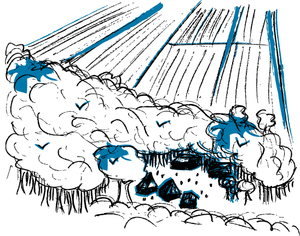
Two chapters of RCEP could have a decisive impact on access to land. According to leaked drafts, the investment chapter proposes a rule that each government must give investors from other RCEP states the same treatment as domestic investors (‘national treatment’). That means they should have the same rights to purchase farmland as domestic investors, unless the government carves out a special exception for this. The draft chapter also contains proposed ‘standstill’ and ‘ratchet’ clauses which, if adopted, would mean that governments have to lock in their current levels of liberalisation, and if they liberalise more than they commit to in RCEP they cannot go back down to the level set by RCEP. The services chapter draft also proposes that foreign service suppliers not be treated less favourably than domestic companies (‘national treatment’). This includes the ability to own farmland for a service-related purpose. Again, countries may be able to squeeze in an exception for agricultural land, but any such exception would be subject to negotiation and have to be agreed to by all parties.
If governments do not make reservations on these provisions for farmland, RCEP could seriously aggravate land grabbing in the region and sabotage agrarian reform processes that are currently under way in some countries. Currently, farmers asserting their rights to land are being subjected to human rights abuses, criminalisation, incarceration and even assassination. For this reason, there are deep fears that if RCEP is adopted, it will intensify militarisation in rural communities.
2. Seeds will be privatised, GMOs may proliferate
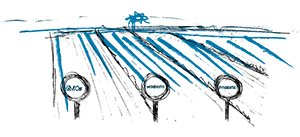
Farmers regularly save seed from one harvest to plant a new crop. Big seed and agrochemical companies like Monsanto and Bayer want to end this practice and force farmers to buy seed each season, so they can boost sales. They do this by lobbying governments to extend intellectual property laws to cover plants and animals. The global seed industry is highly concentrated today with three companies representing more than 60% of global commercial sales. ChemChina is currently in the process of buying Syngenta, one of the world’s top three seed firms. This means that China has a new vested interest in seeing seed laws strengthened under RCEP.
Leaked drafts of RCEP’s intellectual property chapter show countries like Japan and South Korea pushing for all RCEP states to adopt “UPOV 1991”, a kind of patent system for seeds. Under UPOV 1991, farmers are generally not allowed to save seeds of protected varieties. Where limited exceptions are permitted, farmers must pay the seed companies royalties on farm-saved seed. Depending on the country and the crop, royalties can represent a markup of 10-40% over the price of regular commercial seeds, which are already more expensive than farmers’ seed. Civil society groups estimate that UPOV 1991 would raise the local price of seed by 200-600% in Thailand and by 400% in the Philippines.
It could get worse if RCEP moves closer to what was negotiated in the TPP, something which four RCEP states have already agreed to. TPP requires states to allow patents on inventions “derived from plants”, which means genetically modified organisms (GMOs). Right now, GMOs are illegal in all RCEP member countries except for Australia, India, Myanmar and Philippines, plus several provinces of China and Vietnam. And while it’s likely that RCEP will have a chapter aiming to harmonise food safety standards, we have not seen any drafts and do not know how it will regulate GMOs. All of these moves would lead not only to higher seed prices but a loss of biodiversity, greater corporate control and a possible lowering of standards for high risk products such as GMOs.
3. Small dairy and other farmers will go out of business

India is home to 100 million small farmers, most of whom keep livestock. Up until now they have been the backbone of India’s dairy sector, but that situation is now changing. Costs of production are going up while prices paid to farmers are going down, driving many small farmers into dire straits.
RCEP will make things much worse. Frustrated with New Zealand’s failure to conclude a bilateral trade deal with India, NZ dairy giant Fonterra — the world’s biggest dairy exporter — is now looking to RCEP as a way in to India’s massive dairy market. It has openly stated that RCEP would give the company important leverage to open up key markets that are currently protected such as India’s, where it would go head to head with India’s dairy cooperative Amul. As a result, many people fear that Indian dairy farmers will either have to work for Fonterra or go out of business. They will not be able to compete. Similar concerns face dairy farmers in Vietnam, where Fonterra has been investing heavily to increase its presence.
At the same time, some RCEP members like Japan and Australia not only subsidise their farmers tremendously, they also have food safety standards that are incompatible with the small-scale food production and processing systems that dominate in other RCEP countries. This may lead to the growth of mega food-park investments that target exports to such high value markets, as is already happening in India. These projects involve high tech farm-to-fork supply chains that exclude and may even displace small producers and household food processing businesses, which are the mainstay of rural and peri-urban communities across Asia.
4. Fertiliser and pesticide use will go up

Fertiliser and pesticide sales are expected to rise sharply in Asia-Pacific in the next few years, from $100 billion to $120 billion per year by 2021. Agrochemical use is heaviest in China and growing rapidly in India, while imports by the Mekong sub-region are also on the rise. China’s acquisition of Syngenta, the world’s top agrochemical company with more than 20% of the global pesticide market, puts the country in a particularly sensitive position within RCEP.
Beijing will want high levels of ‘market access’, being negotiated under the trade in goods chapter of RCEP, to capitalise on its new position. In January 2017, China already announced that it will scrap export tariffs on nitrogen and phosphorus fertiliser in order to boost its market share abroad. RCEP trade ministers have promised to deliver a deal that immediately cuts tariffs to zero on 65% of trade in goods, followed by a second phase to cut the rest. Farm chemicals are bound to be part of this, resulting in increased residues in food and water, more greenhouse gas emissions and further depletion of soil fertility.
Furthermore, if leaked intellectual property drafts are adopted, RCEP may increase the patenting of other inputs like veterinary medicines, farm machinery, microorganism-based products and agricultural chemicals, and extend their patent terms, making them more expensive.
5. Big retail will wipe out local markets

Over the past five years, Asia-Pacific accounted for more than half of the world’s new food retail sales. Japan is leading this trend, with 7-Eleven and Aeon at the top of food retail sales in the region. Aeon Agri Create, the agriculture production arm of Aeon, has been establishing farms in Japan and Southeast Asian countries like Vietnam. Aeon even aims to push ‘ICT farming’: the use of computers and communication technologies to manage farm operations. In India, the opening up of food retail, including e-commerce, to foreign direct investment (FDI) is almost complete, although many states are yet to adopt FDI in multibrand retail. RCEP would strengthen these trends further.
According to leaked drafts, RCEP’s services chapter may make it impossible for governments to limit the operation of supermarket chains that hail from other RCEP states (‘market access’). Furthermore, the trade agreement may make it illegal for a member government to require a service supplier like Alibaba or Aeon to have a ‘local presence’ in its country or to source food from local producers.
If precedents set by TPP are followed, ICT farming may be boosted under RCEP measures aimed at promoting regional supply chains and e-commerce. China’s Alibaba has just invested $1.25 billion in an online food delivery service, which will rely on more and more high tech facilities that are disconnected from seasons and from local markets. All of these developments pose a real threat to small traders and retailers in Asia.
What to do?
RCEP will usher in a wave of corporate concentration and take over of Asia’s food and agriculture sector. Corporate concentration, as experience in the other regions shows, brings less real choice and higher prices for consumers. In the food sector, it also brings important health and environmental costs from pesticides, excessive processing and chemicals, as well as downward pressure on wages and prices paid to farmers.
The answer is not to reform RCEP but to reject it because it relies on and pushes a corporate model of agriculture that no amount of tweaking will change. Instead, we need to implement policies and initiatives that enable people-led food and agricultural systems to flourish. Only then can trade policies be drawn up to serve these systems – not the other way around.
ACT NOW!
- Get more informed and organise discussions and debates about RCEP in your communities. One resource to check out is the collective open-publishing site http://bilaterals.org/rcep.
- Support the people’s call to stop RCEP and fight for a pro-people trading system that responds to people’s needs not to corporate elites. Contact groups in your country that also signed the call and join forces.
- Go to the RCEP meetings. Demand the public release of negotiating texts to better analyse and build awareness of how the agreement affects the livelihood of people in RCEP member countries. Voice your concerns, as groups have done over several rounds the past months in Perth, Jakarta, Kobe and Manila. The next rounds will be held in Hyderabad (July 2017) and Seoul (later this year).
- Join the region-wide people campaign on RCEP and trade justice, and participate in collective mobilisations like regional days of action
- Keep an eye on http://rceplegal.wordpress.com/, http://keionline.org/ and http://www.bilaterals.org/rcep-leaks for leaked texts and analysis of RCEP chapters.
GRAIN is a small international non-profit organisation that works to support small farmers and social movements in their struggles for community-controlled and biodiversity-based food systems.
India gets the first feel of Trump’s ‘America First’
By M K Bhadrakumar | Indian Punchline | January 25, 2017
Prime Minister Narendra Modi happens to be only the second world leader with whom US President Donald Trump spoke with after the inaugural on January 20. The conversation took place on January 24, two days after Trump spoke with Israeli Prime Minister Benjamin Netanyahu.
Presumably, a long ‘waiting list’ lies on Trump’s table. At any rate, do not feel flattered.
The White House readout of the conversation with PM Modi makes sombre reading. The purple prose characteristic of the halcyon days under the last two US presidencies is absent.
The readout is completely devoid of hyperbole – except in regard of fight against terrorism, which is close to Trump’s heart. In that fight, Trump expects Modi to stand “shoulder to shoulder” with him. Of course, it goes without saying that India must bear its expenses in the fight. Trump intends to go ‘dutch’ with his allies – paying for the US’s expenses if it becomes absolutely unavoidable.
Trump calls India a “true friend and partner in addressing challenges in the world”. It is a statement of fact and it is well-earned. The Modi government has gone more than half way to meet the US’ demands. The signing of the Logistics Agreement itself is a glaring instance where the accord is of no use to India in practical terms and the geopolitical gains are dubious.
Trump and Modi “discussed opportunities to strengthen partnership” in the fields of economy and defence. In Trumpian terms, this means US exports to India, civil and military, are top priority. Unsurprisingly, there was no reference whatsoever to ‘Make in India’. It is unclear whether Modi brought it up. Unlikely.
But then, how does India promote exports for the US industry in the Indian market at this odd time by restarting ‘reforms’ to facilitate greater market access for US exports? The GDP growth is stalling and the priority is to inject some dynamism. Again, the domestic political climate is turning against the ruling party and the smart thing will be populist policies, as Modi has realised.
Arguably, where we can help Trump will be by buying more weapons from American vendors. But Modi will have to throw out of the window all notions of ‘co-production’, ‘joint development’, et al. Trump will sell, Modi should buy. Technology transfer that meets Indian aspirations a la Ashton Carter? Just forget about it.
In regard of regional security, Trump and Modi discussed South Asia and Central Asia (read Afghanistan). India-Pakistan tensions probably figured. Kashmir? (PMO is yet to put out a readout giving its version of the conversation.)
The stunning thing is that Trump didn’t discuss Asia-Pacific or South China Sea. Troubling questions arise: Is Trump aware that there is a historic document titled the U.S.-India Joint Strategic Vision for the Asia-Pacific and Indian Ocean Region, which is displayed on the White House website? Or, is it another Obama legacy that he intends to dump in the waste paper basket?
Ironically, Trump spoke to Modi on the day after tearing up the Trans-Pacific Partnership agreement. Modi should have reminded Trump about the ‘defining partnership’ between the two countries.
Is Trump altogether devoid of emotions? Not really. He was an altogether different man when he spoke with Netanyahu two days ago. Just look at the White House readout, here.
Doesn’t it hurt our national pride that after all this brouhaha about US-Indian defining partnership, Trump didn’t have a similar conversation with Modi. Not that Netanyahu is in a position to make investments in American highways or manufacturing plants and other infrastructure costing trillions of dollars.
Yet, Trump is determined to win the favour of the Jewish lobby. Not that Trump won on Jewish votes. But then, he’s looking ahead. American Jews control the US media and think tanks and the academia – and the Congress – who have been systematically debunking his credibility as president and can make things extremely difficult for his presidency.
We see here another grotesque side of ‘America First’. Don’t bring in ‘values’ and all that crap. Ask what we can do for Trump. Probably, the Foreign Secretary S. Jaishankar should be tasked to do that during his extended tenure in South Block.
The White House readout never once mentions US-Indian affinities based on cherished common values of democracy and human rights and so on. It rankles to see Modi holding a can of worms all by himself.
Without reset India-Israel ties face uncertain future
By M K Bhadrakumar | Indian Punchline | November 23, 2016
The 8-day visit by the Israeli President Reuven Rivlin, which concluded on Monday, turned out to be a low-key affair. Gone are the days when high-level exchanges with Israel used to be sexy events. The novelty has worn off. There was no media hype about Rivlin’s visit. And the ‘demonetisation’ crisis alone cannot account for it.
The point is, an air of stagnation is appearing in the India-Israel relationship. Fundamentally, India has been rapidly transforming in the recent decade and its priorities have changed. Again, the regional and international environment has changed phenomenally.
The Bharatiya Janata Party used to be regarded as excessively ‘Israel-friendly’. Yet, Prime Minister Narendra Modi is still to pay a visit to Israel. Modi visited a few West Asian countries already but all of them belong to the so-called Muslim world – Saudi Arabia, UAE, Turkey and Iran. India’s priorities have been worked out.
Modi’s Iran visit was an eloquent statement in itself. India is undeterred by Israel’s animosities toward Iran. Curiously, while Rivlin was in India, media reports appeared that the ONGC Videsh’s protracted negotiations to strike a multi-billion dollar deal with Iran for the development of the Farzad-B gas field (with estimated reserves of 21.6 trillion cubic feet) have reached the home stretch.
Reuters reported separately that in the month of October, Iran surpassed Saudi Arabia as India’s number one supplier of crude oil – a whopping 789,000 barrels per day as against Saudi Arabia’s 697,000 bpd. India views the Chabahar project as a major geo-strategic initiative. Suffice it to say, Iran is becoming an indispensable partner and that is a geopolitical reality.
On the other hand, remittances from GCC countries to India’s budget work out to a handsome figure of $25 billion or so annually. Interestingly, Saudi Arabia’s Aramco recently had a rival offer to acquire Essar (which ultimately forced the Russian consortium to improve their bid and pay up $13 billion.) The Gulf region is also India’s number one export market.
In short, there is such a lot going for India in the West Asian region. The point is, what is it that Israel can offer? Drip irrigation, water management, recycling, conservation and desalination, dairy farming, polyhouse techniques, bee-keeping – these niches are surely interesting, each in its own way. But, what India desperately needs is massive investments to develop its manufacturing industry and infrastructure, which are crucial for job creation. It needs energy security. It needs to boost export earnings. What can Israel do for India? Ironically, Israel’s focus is exclusively on securing lucrative business for its companies.
Israel’s importance for India lies in defence cooperation. But here again, Israel may be incrementally losing its advantage as an interesting source of advanced military technology that was previously unavailable for India directly from the US. India is increasingly a big market for weaponry, with cut-throat competition setting in among the foreign vendors.
In political terms, too, Israel is of no relevance for India in handling the most consequential relationship in its foreign policy – namely, relations with China. As for the US-Indian relationship, it has matured to a point that India has no more need to leverage Jewish lobbyists. Arguably, Israel’s capacity to influence US policies also should not be exaggerated. Israel pulled all stops to scuttle the P5+1 and Iran negotiations but spectacularly failed to intimidate President Barack Obama.
Israel is palpably nervous about Donald Trump’s likely Middle East policies. Trump’s idea of working with Russia to resolve the Syrian conflict works against Israel’s regional agenda of fragmenting and weakening its neighbors. Continued Israeli support for the al-Qaeda affiliate Nusra Front in Syria will only invite Russian and Iranian retribution. Indeed, India and Israel are not on the same page in regard of the war against terrorist groups in Syria.
All in all, India-Israel relations are at a crossroads. Simply chanting old hackneyed mantras on terrorism, secularism, democracy, et al, won’t suffice. There is danger of stagnation setting in. An India-Israel reset is overdue. A relationship based on negative passions — paranoia, fear complex, insecurities, vanities and false identity — is inherently flawed and cannot have an enduring future in a rapidly changing regional and international environment, howsoever keen the two sides could be to remain relevant to each other.
An editorial in the Jerusalem Post newspaper on Rivlin’s visit calls attention to the stark realities confronting the future of India-Israel ties. No, Sir: we in India don’t have such fears over Kashmir, as you’d have over your occupied territories and illegal settlements.
True, we also have our share of ‘Rabbis’ but Indians are not addicted to Islamophobia; nor do we associate Islam with terrorism as a matter of state policy. No, India does not fancy itself as a ‘regional counterweight’ to Russia or China; we simply don’t suffer from such inferiority complex.
And, it is downright absurd to associate India’s ‘authentic national identity’ with Hindu religion. Worse still, it is an act of self-serving sophistry on the Israeli side to do so. We are an ancient civilization and not an artificial creation by western powers in this part of the world, and we do not need the crutch of religion to define our national identity. We’d prefer to be known by our IT industry and satellites and our eclectic culture.
Prejudices mar Indian view of CPEC
By M K Bhadrakumar | Indian Punchline | October 1, 2016
The reported decision by Asian Development Bank to lend $2.5 billion to Pakistan and be a collateral financier for upgrade of Lahore-Peshawar segment of the Karachi-Peshawar railway line is a significant development. India should analyse it carefully. (Business Standard )
Firstly, Karachi-Peshawar railway line upgrade falls within the ambit of the China-Pakistan Economic Corridor (CPEC). That is to say, ADB is joining hands with China (which is the co-financier for the railway line upgrade) in a CPEC project.
Now, this is a big concessional loan ($2.5 billion at low interest rate less than 2 percent) and it wouldn’t have been possible without approval by Japan and the United States, which dominate ADB’s decision-making. We need to take note that Japan and the US are showing pragmatism here, given the reality that CPEC is a flag carrier of China’s One Belt One Road.
In sum, this is a political affirmation of their interest in Pakistan’s stability and development.
The other salience that emerges here is that it is an extremely untimely and counterproductive move on our part to raise dust on Baluchistan. It complicates India’s relations with not only Pakistan but also with China, considering that a significant segment of the CPEC activity is located in Baluchistan, and, equally, our campaign on Baluchistan will not get a sympathetic ear in the world capitals. It will only make us look small-minded and petulant.
Similar pragmatism toward One Belt One Road as ADB is showing also characterises the attitudes of Asian, Middle Eastern and European countries. No doubt, projects enhancing regional connectivity attract all countries. India probably stands out as solitary exception, in its perspective on One Belt One Road derived exclusively through the geopolitical prism.
Secondly, we need to take note that the CPEC is indeed going ahead despite the ‘hawks’ amongst us hoping against hope that it may not take off. The ADB loan itself wouldn’t have been forthcoming without expert opinion saluting the CPEC. The ADB decision has prompted China to fill in with an additional loan of $5.5 billion for the railway project, which now makes CPEC a $51.5 billion eighth wonder in the world.
Two things become clear. One, China is determined to build Pakistan’s infrastructure development and make its economy resilient. Clearly, it is a ‘win-win’ for China too for a variety of factors at work in regional politics and China’s own national strategies. Two, China usually puts its money (big or small) only where the mouth is, which means it is becoming a stakeholder in Pakistan’s future and prosperity with a long-term perspective.
And where China goes, the US and Japan are bound to follow. Simply put, Indian diplomacy runs into almost-impossible headwinds to ‘isolate’ Pakistan in the prevailing circumstances.
It is about time we wake up and put to ourselves some searching questions. Do we have the ghost of a chance to annex Gilgit-Baltistan and Pakistan-Occupied Kashmir, as the present government is leading the domestic opinion to believe? To my mind, our government is whistling in the dark and leading the public opinion in a wrong direction.
Again, from a regional security point of view, if the POK and Northern Areas of Pakistan, which are hopelessly impoverished regions, are set on a path of infrastructure development and economic activity, there is less chance of them becoming the sanctuaries of terrorist groups. In fact, this is also one consideration China would have. Don’t we have a congruence of interests with China on regional security and stability in this regard? This is one thing.
Besides, if Pakistan integrates these regions politically, doesn’t it open up an interesting avenue to resolve the Kashmir problem? A realistic perspective would be that without any redrawing of boundaries as such, if the Line of Control gets legitimacy as an internationally recognised border – with Pakistan keeping the areas under its control and India keeping J&K as an integral part of it – won’t that be a basis of durable settlement?
Put differently, if Pakistan integrates Northern Areas and POK, it is tantamount to a unilateral move to ‘solve’ the Kashmir problem. We should actually applaud Pakistan if it goes on to integrate those regions just as it plans at present to integrate the tribal areas. Which in turn would also enable India to work out its own terms of integration of J&K in terms of our democratic principles.
Frankly, India’s paranoia over the CPEC has no rationality. It is based on contrived and often trivial arguments lacking basis and/or unsupported by empirical evidence or are outright falsehoods, which are assembled uncouthly with the ulterior motive to arrive at a certain pre-determined conclusion.
The name of the game is Sinophobia – to somehow complicate the Sino-Indian normalization itself. See a paper by the Vivekananda Foundation on the topic titled Implications of the China-Pakistan Economic Corridor.
Featured Video
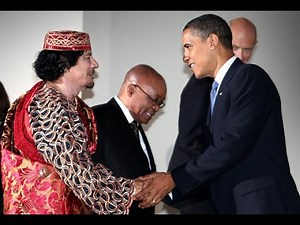
The Destruction of Libya in 2011
or go to
Aletho News Archives – Video-Images
From the Archives
Kiev intends to kill as many Russians as possible – top Zelensky aide
RT | June 15, 2023
Ukraine currently has only one plan, which is a campaign to kill the maximum number of Russians, Mikhail Podoliak, an advisor to the chief of President Vladimir Zelensky’s office, said on the air during a telemarathon on Thursday.
“There is only one plan: the most brutal advance with the maximum killing of Russians on this route,” he said, noting that Kiev “can’t just stop somewhere and say ‘alright, let’s think and talk about something now.’”
“The only possible scenario for Ukraine is to reach its 1991 borders,” he said.
Back in May, Podoliak also proclaimed that his country hates Russia and those who represent it and vowed to “persecute” Russians “always and everywhere.” That followed comments by Kirill Budanov, the head of Ukraine’s military intelligence agency, who boasted that his agents had murdered Russian public figures and pledged that Kiev will “keep killing Russians anywhere on the face of this world.”
Earlier this week, Ukraine’s Defense Minister Aleksey Reznikov revealed that Kiev had been instructed by its Western backers in the early days of the conflict to “kill as many Russians” as it could before surrendering. … continue
Blog Roll
Recent Comments
Bill Francis on NSW Premier Admits New “Securi… Richard Ong on Israeli forces arrest writer a… Bill Francis on How reporting facts can now la… Gemma on Israel’s diamond industr… Bill Francis on Victoria Moves to Force Online… papasha408 on The Empire of Lies: How the BB… loongtip on US Weighs Port Restrictions on… Bill Francis on Chris Minns Defends NSW “Hate… Sheree Sheree on I was canceled by three newspa… Richard Ong on Czech–Slovak alignment signals… John Edward Kendrick on Colonel Jacques Baud & Nat… eddieb on Villains of Judea: Ronald Laud…


 Aletho News
- Ireland’s Simon Harris to Push EU-Wide Ban on Social Media Anonymity
- Drone Attack on Putin’s Residence Planned by Forces Trying to Torpedo Ukraine Peace Push: Expert
- Ukraine launched 91 kamikaze drones at Putin’s state residence – Lavrov
- Ukraine Takes Part in NATO War Games, Further Integrating Into Collective Defense Architecture
- Hungary vows to defy immigrant scheme
- Chinese embassy expresses extreme shock, indignation over demolition of Chinese monument in Panama
- The Epstein Saga: Chapter 3, Those friends in the Secret Service
- Venezuela under siege: Why US escalation could destabilize an entire region
- Italy arrests Palestinian activist amid crackdown on anti-Israel voices
- US Arms Sales to Taiwan Push Region Toward Conflict – Chinese Embassy
- If Americans Knew
- Netanyahu is coming to town, likely with war on his mind – Not a ceasefire Day 80
- Gaza hit with another winter storm – Not a ceasefire Day 79
- When will Israel’s crimes (and US complicity) end? – Not a ceasefire Day 78
- Christmas in the grip of genocide, occupation – Not a Ceasefire Day 77
- Palestinian Christians offer “Kairos,” an alternative Christmas Day sermon – Not a Ceasefire Day 76
- The Faces of AIPAC: the largest pro-Israel lobbying org in the US
- Gazan Christians mark 3rd Christmas under genocide – Not a Ceasefire Day 75
- Israeli scams children with cancer out of millions fundraised for their treatment, BBC finds
- Casey Kennedy Fired from AG Scientific Amid Zionist Troll Campaign Over Track AIPAC Work
- The Hasmoneans: The Jewish Dynasty That Gave Us Hanukkah Is a Symbol of Murder, Not Heroism and Hope
- No Tricks Zone
- Meteorologist Dr. Ryan Maue Warns “Germany Won’t Make It” If Winter Turns Severe
- Merry Christmas Everybody!
- Two More New Studies Show The Southern Ocean And Antarctica Were Warmer In The 1970s
- Der Spiegel Caught Making Up Reports About Conservative America (Again)
- New Study: 8000 Years Ago Relative Sea Level Was 30 Meters Higher Than Today Across East Antarctica
- The Wind Energy Paradox: “Why More Wind Turbines Don’t Always Mean More Power”
- New Study Reopens Questions About Our Ability To Meaningfully Assess Global Mean Temperature
- Dialing Back The Panic: German Physics Prof Sees No Evidence Of Climate Tipping Points!
- Astrophysicist Dr. Willie Soon Challenges The Climate Consensus … It’s The Sun, Not CO2
- Regional Cooling Since The 1980s Has Driven Glacier Advance In The Karakoram Mountains
 Aletho News