MOSCOW – The United States’ claim that the UN sanctions on Iran were restored is misleading as the UN Security Council (UNSC) took no steps leading to the restoration of restrictions, the Russian Foreign Ministry said in a statement on Sunday.
“The US continues to mislead the international community by speculating that the UN Security Council conducted some sort of procedures to restore the effect of UNSC resolutions on Iran sanctions, which were cancelled after the signing of the 2015 Joint Comprehensive Plan of Action (JCPOA)”, the official statement from Russia read.
“The facts are that the UN Security Council did not take any action that would lead to the restoration of old sanctions against Iran. All that Washington does is nothing more than a theatrical performance staged in order to subordinate the Security Council to its policy of ‘maximum pressure’ on Iran and turn this authoritative body into its handy tool,” the statement continued.
Moscow further urged Washington to “have enough courage to face the truth and stop speaking on behalf of the UN Security Council”.
Earlier in the day, US Secretary of State Mike Pompeo welcomed “the return of virtually all previously terminated UN sanctions on the Islamic Republic of Iran” under the snapback mechanism of UN Security Council Resolution 2231.
As stressed in the statement, Resolution 2231 has remained intact and all of its provisions, therefore, must be implemented “in the initially agreed mode and volume on the basis of reciprocity among all states”.
September 20, 2020
Posted by aletho |
Economics, Wars for Israel | Iran, Russia, Sanctions against Iran, United Nations, United States |
Leave a comment
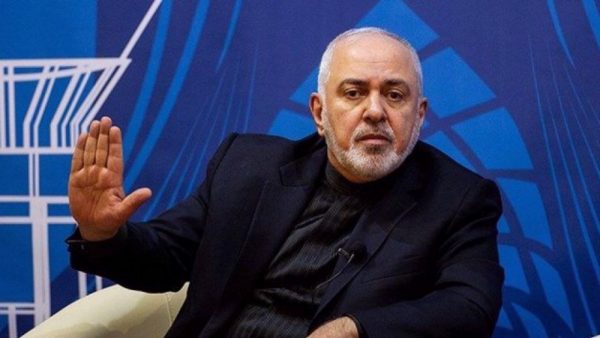
Iranian Foreign Minister Mohammad Javad Zarif
Iran’s foreign minister says the country will meet its strategic needs by purchasing weapons from Russia and China, and has no need for European weapons once the UN embargo is lifted in October.
Mohammad Javad Zarif made the remarks in a televised interview on Saturday night in reaction to a possible initiative by France, Germany, and the UK to restrict the sale of weapons to Iran following the October expiration of the UN arms embargo against the Islamic Republic.
“We haven’t been a customer of European weapons, and they haven’t sold us weapons after the 1979 revolution. … They even ran a campaign during the 1980s imposed war [between Iran and Iraq] to prevent the delivery of arms to Iran,” Zarif said.
“We won’t force them to sell us weapons now, as we don’t need their weapons,” he noted.
Zarif said one-fourth of the arms purchases end up in the Persian Gulf region, while Iran is not part of this trade.
“However, Iran can meet its strategic needs through the countries it interacts with, like Russia and China; though it is self-sufficient in many cases, and is an exporter [of arms] itself,” Zarif said.
Thanks to God’s grace and the efforts of the country’s Armed Forces, “Iran has become self-sufficient in many cases, but in cases of need, other countries will have the right to trade with Iran once the UN embargo is lifted,” the Iranian top diplomat added.
Following a humiliating failure at the UN Security Council to secure an extension of the arms embargo against Iran, the United States recently threatened to use its “secondary” sanctions to block any arms trades with Tehran after the expiry of the UN ban next month.
US Special Representative for Venezuela and Iran Elliott Abrams claimed on Wednesday that Washington could deny access to the US market to anyone who trades in weapons with Tehran.
Sanctions “will have a very significant impact” on arms manufacturers and traders that seek to do business with Tehran, he told reporters.
The US initiative is expected to prevent European companies from selling weapons and military equipment to Iran.
‘Europe trying to save face after failure against US’
Zarif further pointed to the recent statement by France, Germany, and the UK in which they claimed they have “gone beyond their own commitments” towards Iran by launching the Instrument in Support of Trade Exchanges (INSTEX), a European mechanism which was supposed to facilitate trade with Iran amid the US sanctions.
“They are joking. The three self-proclaimed world powers failed to stand up to the US bullying. They failed, even though they may not have made so much efforts,” he said.
“Europeans had 11 commitments to fulfil, and the INSTEX was not even one of them, but a prerequisite for them. They failed to fulfil them and said Americans didn’t let them. If we accept their own words, they admitted Americans have kept them [from doing their part].”
“This is below Europe’s dignity. The economy of the European Union is bigger than America’s. Then why did you fail to resist the US’ bullying, which is now impacting you?” Zarif said, adding that the European statement is just meant to save their face.
His comments came in reaction to a statement by France, Germany and the UK delivered to the IAEA Board of Governors at the September 2020 meeting.
They said in the statement, “The E3 has worked hard to preserve the [2015 nuclear] agreement. We have gone beyond our own commitments to facilitate legitimate trade with Iran, including by introducing the INSTEX mechanism.”
‘Iran not to interfere in US elections’
In his Saturday interview, Zarif also denied the claim that the Islamic Republic is going to interfere in the upcoming US presidential elections.
“Despite Donald Trump’s claim that Iran is waiting for another person, these remarks only serve electoral purposes,” Zarif said.
“Iran is an independent country and does not meddle in US internal affairs,” he added.
Zarif said the US should first try to avoid coup plotting and violating people’s choices in other countries before accusing Iran of interfering in its elections.
He made the remarks in an apparent allusion to the CIA-orchestrated 1953 coup in Iran, which toppled the democratically-elected government of Prime Minister Mohammad Mosaddegh.
‘Israel would defend itself had it possessed enough power’
Zarif further referred to the recent deals signed by the United Arab Emirates and Bahrain to normalize their relations with the Israeli regime in the hope that Tel Aviv could bring them peace and security.
“Our neighbors unfortunately think the regime can defend them. If Israel had such a power, it would have defended itself against the Palestinian Islamic Jihad and Hamas,” Zarif said.
He expressed regret that a regional country is forced to sign a deal with Israel so that Trump can use it for his presidential campaign.
“This happens when a country depends on the US for its defense,” Zarif said.
Bahrain and the UAE signed US-brokered normalization agreements with Israel during a ceremony in Washington on Tuesday.
The controversial event was slammed by many Arab and Muslim figures as a blatant betrayal of the Palestinian cause.
September 19, 2020
Posted by aletho |
Aletho News | European Union, Iran, Israel, Middle East, Sanctions against Iran, United States, Zionism |
Leave a comment
An Iranian supertanker, identified as Honey, has docked at the northeastern Venezuelan port of Jose Terminal with a cargo of 2 million barrels of natural gas liquid (NGL), the Tanker Trackers company said on Monday.
As explained by Tanker Trackers in a thread of tweets, NGL is a light-weight gas condensate that can be refined into things like high octane gasoline and jet fuel. The company opined, however, that this batch of supply will likely be used as “a blending agent to improve flow of Venezuela’s very heavy crude oil in order to boost production.”
While the Venezuelan authorities have not issued a statement on the matter, Venezuelan Foreign Minister Jorge Arreaza shared a post on his Twitter account.
Another three Iranian tankers carrying approximately 131 million liters of gasoline are currently in southern Africa en route to Venezuela, according to the tracking company.
If the Honey tanker went with radars off, as it is assumed in the report, it was likely due to concerns associated with earlier US threats to block Iranian fuel shipments to Venezuela, including by confiscating the vessels and imposing sanctions on the crew.
Iran sent several tankers with fuel cargo to Venezuela earlier this spring and early summer as the Latin American country was struggling to keep up its crumbling oil infrastructure.
September 14, 2020
Posted by aletho |
Economics | Iran, Venezuela |
Leave a comment
Iran’s Foreign Ministry has slammed as “baseless” a report published by the United Nation’s Office of the High Commissioner for Human Rights (OHCHR) alleging Tehran has been sending arms to war-torn Yemen.
“Placing Iran’s name next to those supplying weapons to the Saudi coalition against Yemen is completely wrong,” Foreign Ministry spokesman Saeed Khatibzadeh said in a statement on Thursday.
The spokesperson said while Iran’s name has only been mentioned once in the report, “it also neglects Iran’s pivotal role and assistance in seeking to achieve a political solution to the conflict in Yemen”.
Since March 2015, Saudi Arabia has been waging a war on Yemen with the help of its regional allies and largely assisted by Western-supplied weapons which have been indiscriminately used against Yemeni civilians.
Despite numerous bids to stop arms sales, top Western arms suppliers such as the United States, Britain, Canada, France and Germany have pushed through with lethal weapons shipments to the oil-rich kingdom.
Khatibzadeh said that the OHCHR’s claim of Iran supplying weapons to Yemen amid the Saudi war comes as Western states are openly conducting their sales, “with related figures being published and available”.
“While some of these countries have periodically halted or limited arms to Riyadh due to pressure from human rights groups, the bitter reality is that the lucrative arms trade has persuaded them to ignore their international and moral obligations,” he said.
“They have forgotten that their weapons have been used to kill the Yemenis and destroy the country’s infrastructure. We are consequently seeing the largest humanitarian crisis due to the actions of the Saudi coalition and its arms suppliers,” the Foreign Ministry spokesman added.
Khatibzadeh stressed that while there is no clear evidence about Iranian arms shipments to Yemen, a Saudi-imposed blockade has even stopped Iranian humanitarian aid from reaching the country.
An estimated 100,000 people have so far lost their lives in the Saudi war.
The Saudi war has had a large impact on Yemen’s infrastructure, impairing the impoverished Arab country’s weak industrial, agricultural and medical sectors.
September 11, 2020
Posted by aletho |
Deception, War Crimes | Iran, Saudi Arabia, United Nations, Yemen |
Leave a comment
Iran’s Foreign Ministry has rejected allegations by US technology company Microsoft that Tehran seeks to meddle in Washington’s 2020 presidential elections, blasting US’ own history of interfering in other countries’ affairs.
“The United States is leading active disinformation campaigns against other countries. The US is not in a position to make such a woeful claim,” Foreign Ministry spokesman Saeed Khatibzadeh said in a statement on Friday.
“The US has interfered for decades in the elections of other countries – including Iran – and orchestrated a coup d’état which overthrew Iran’s democratically elected Prime Minster Mohammad Mossadeq,” he said.
The remarks come a day after Microsoft claimed that it had detected Russian, Chinese and Iranian efforts to target “people and organizations involved in the upcoming presidential election”.
The statement claimed that the attempts had sought to attack campaigns associated with both US President Donald Trump and his rival Democrat presidential candidate Joe Biden.
It claimed that most of the attacks had been “detected and stopped by security tools built into our products”.
Speaking on Friday, Khatibzadeh said that Tehran has no interest in the outcome of US elections.
“As we have reiterated over and over, it does not matter who is the president in the White House for Tehran. What matters is that Washington abides by international law, regulations and norms and stops interfering in other countries and honors its commitments,” he said.
Washington, which has sought to impose an overt campaign of “maximum pressure” against Iran ever since withdrawing from the Iran nuclear deal in 2018, has also sought to stifle Iranian media operating across different social media platforms in recent years.
Facebook, Twitter and Youtube have consequently cracked down on pages belonging to credible Iranian figures and media outlets, closing them or limiting their access to international audiences.
September 11, 2020
Posted by aletho |
Deception | Facebook, Iran, Microsoft, Twitter, United States, YouTube |
Leave a comment
Military forces from Iran, China, and Russia are scheduled to take part in joint military exercises with a number of other countries in southern Russia later this month.
China’s Defense Ministry made the announcement in a news release on Thursday and said troops from Armenia, Belarus, Myanmar, and Pakistan would also participate in the drills, code-named “Caucus 2020.”
The ministry added that the exercises, to be held from September 21 to 26, would focus on defensive tactics, encirclement, and battlefield control and command.
The drills have special significance “at this important moment when the entire world is fighting the pandemic,” the ministry said.
The United States administration has insinuated that the coronavirus was artificially developed in a Chinese lab. China has rejected that insinuation.
Iran, China, and Russia have over the past years increased their military and diplomatic cooperation to counter the United States’ hostile policies and extra-territorial presence in their regions.
Late last year, the three countries held four days of naval exercises code-named the “Marine Security Belt” to promote regional security and peace and safeguard international trade in the Sea of Oman and the Indian Ocean.
September 10, 2020
Posted by aletho |
Aletho News | Armenia, Belarus, China, Iran, Myanmar, Pakistan, Russia |
Leave a comment
The US president is reportedly in talks with Iraq’s Prime Minister to bring the current level of US troops in Iraq down to the level of 2015. This change will see troop number coming down from the current 5200 to about 3500, indicating a US ‘drawdown’ from Iraq following the Iraqi parliament’s resolution to force all US troops out of the country. While, on the face of it, these talks indicate a massive ‘respect for the Iraqi sovereignty’ and Trump’s resolve to end the US’ ‘endless wars’, a deep look at the wider regional and American core strategic interests indicates that not only America’s wars are not ending, the ‘drawdown’ does not mean ending region’s militarization too, although it does have some significance for Trump’s own domestic political interests ahead of elections.
For Trump supporters, he is fulfilling yet another of the promises he made during his previous campaign. He is withdrawing from Afghanistan, is bringing home thousands of troops from Germany and has already withdrawn 500 troops from Syria. While this may bode well politically, strategically he is still continuing America’s wars, particularly against Iran. This was indeed what Gen. Kenneth F. McKenzie Jr., the head of the Pentagon’s Central Command, said in a virtual conference organized by the United States Institute of Peace. To quote him:
“As I look at the theater, we remain focused on Iran as our central problem. This headquarters focuses on Iran, executing deterrence activities against Iran, and doing those things”, adding that “The threat against our forces from Shiite militant groups has caused us to put resources that we would otherwise use against ISIS to provide for our own defense and that has lowered our ability to work effectively against them.”
McKenzie’s comments are very much consistent with what the Trump administration has been trying to do against Iran in the form of re-imposition of arms embargoes, a stubborn insistence that has already become a fiasco, indicating how fast the US is losing its ability to unilaterally design global scenarios.
It is, therefore, imperative to understand that bringing US troops level down does not indicate a step towards an imminent US-Iran normalization. For instance, even if the US troops were there to check Iran’s influence, the US is still very much into establishing its political and economic tentacles in Iraq through non-military means. This is evident from the expanding US economic presence in Iraq to supposedly reduce Iraq’s dependence on Iran for meeting its energy needs.
Five US firms, including Chevron Corp, have already signed agreements with the Iraqi government. These agreements were signed on the sidelines of Kadhimi’s recent visit to the US where he discussed with Trump the future of US troops in Iraq and the continuing need for the training of Iraqi troops. Chevron has already been drilling oil in Iraq’s Kurdistan region. With the second largest US oil company now set to establish itself in the mainland Iraq as well, there remains little gainsaying that the US is rapidly allowing for replacing Iraq’s dependence on Iran with Iraq’s dependence on the US. This is a straightforward case of adding Iraq’s economic dependence to its already military dependence on the US.
According to US officials, this move towards increasing Iraq’s indigenous energy and electricity capacity is a part of the larger plan to wean the country away from Iranian influence and connect it more deeply with Arab countries. “It is vital that Iraq’s electricity grid be connected to the GCC. We’ve been working on this, as I’m sure you know, and there’s more work to be done. And so that will continue,” a US official was quoted to have said.
Doing this is crucial for the US as Iraq’s dependence on Iran is seen as the key to the latter’s influence in the former. Iraq’s energy sector is dependent on imports from Iran, and even after the US slapped sanctions on Iran’s energy exports, Iraq continues to import natural gas and electricity from Iran under a special waiver that the US has regularly extended. The US wants to change it.
The US State department has already affirmed that “The Government of Iraq, Gulf Cooperation Council, and United States have renewed their full support for the Gulf Cooperation Council Interconnection Authority (GCCIA) project to connect the electricity grids of Iraq and the GCC. The United States is committed to facilitating this project and providing support where needed. This project will provide much-needed electricity to the people of Iraq and support Iraq’s economic development, particularly in the southern provinces.”
Accordingly, while announcing commercial agreements worth as much as US$8 billion between US energy companies and the Government of Iraq, the US Secretary of Energy Brouillette emphasized the critical role U.S. private investment will continue to play in Iraq’s energy future and stressed the need for “rapid progress towards energy independence from Iran.”
There is no denying that the US presence in Iraq, military or otherwise, remains Iran-centric. A troop drawdown does in no way indicate a US ‘retreat’ from Iraq because of continuous military tensions and rocket attacks by Iran backed militias. While Iran’s influence in Iraq goes way beyond the Iraqi regime, an enhanced US presence indicates that the US will continue to push against Iranian influence through military (the US would still have more than 3000 troops in Iraq) and politico-economic means.
Salman Rafi Sheikh is a research-analyst of International Relations and Pakistan’s foreign and domestic affairs.
September 4, 2020
Posted by aletho |
Economics, Militarism | Iran, Iraq, Middle East, Saudi Arabia, United States |
Leave a comment
The US Justice Department has charged three people in connection with a campaign to collect monetary assistance for the oppressed Yemenis, who are suffering under the years-long Saudi war and blockade.
It claimed that Muzzamil Zaidi and Asim Naqvi, US citizens living in Iran’s holy city of Qom and the American city of Houston, respectively, and Ali Chawla, a Pakistani national residing in Qom, had violated the International Emergency Economic Powers Act.
Justice Department officials alleged that the defendants “have considerable operational links” to the Islamic Revolution Guards Corps (IRGC) and moved US currency from the United States to Iran.
They claimed that Zaidi, Chawla and other members of an organization, called Islamic Pulse, received permission from Leader of the Islamic Revolution Ayatollah Seyyed Ali Khamenei to collect a religious tax on his behalf and send half the money to Yemen.
“Zaidi, Naqvi, and Chawla allegedly raised money in the United States on behalf of Iran’s Supreme Leader, and illegally channeled these dollars to the government of Iran. As a result of today’s charges, their unlawful scheme has been exposed and brought to an end. The US Department of Justice and its National Security Division are committed to holding accountable individuals who operate covert networks within the United States in order to provide support and funds to hostile foreign governments like Iran in violation of US law,” said Assistant Attorney General for National Security John C. Demers.
The Justice Department also said Zaidi, 36, was charged with acting in the US as an agent of the Iranian government without first notifying the Attorney General.
The charges come at a time when the US has been continuing to supply weapons and military equipment to Saudi Arabia despite war crimes committed by the regime in Yemen.
The Yemeni army says Washington arms Saudi Arabia and its regional allies, defines goals for them and is involved in a political cover-up for their acts of aggression.
Saudi Arabia waged the devastating military aggression against its southern neighbor in March 2015 in collaboration with a number of its allied states.
The purported aim was to return to power a Riyadh-backed former regime and defeat the popular Houthi Ansarullah movement that took control of state matters after the resignation of the then president and his government.
The UN refers to the situation in Yemen as the world’s worst humanitarian crisis, with more than half of hospitals and clinics destroyed or closed.
August 29, 2020
Posted by aletho |
Solidarity and Activism | Human rights, Iran, United States, Yemen |
Leave a comment
Iran has urged the international community to pressure the Israeli regime into joining the Non-Proliferation Treaty (NPT).
Deputy Representative of the Islamic Republic to the United Nations Es’haq Al-e Habib says the international community must force Tel Aviv to join the NPT and allow the International Atomic Energy Agency (IAEA) to access its nuclear facilities considering the Israeli regime’s destructive role in the region.
Addressing a virtual meeting on the anniversary of the Comprehensive Nuclear-Test-Ban Treaty (CTBT) on Thursday, Al-e Habib stressed that the destructive role of the United States and Israel has prevented the realization of a Weapons of Mass Destruction (WMD) Free Zone in the Middle East.
He slammed the US’ negative role in preventing the proliferation of nuclear weapons and said with 1,054 nuclear tests, Washington has had the highest number of such tests in comparison to other countries.
He referred to the US as the possessor of the world’s largest nuclear arsenal and the only country to have used nuclear weapons, and said Washington not only has no intention to end testing nuclear weapons and join the Comprehensive Nuclear-Test-Ban Treaty (CTBT) but also continues to modernize and strengthen its nuclear arsenal.
Nuclear disarmament must remain at the top of the international community’s agenda, he said, adding that the nuclear tests must be stopped since they are against the soul of CTBT and commitment to nuclear disarmament as per the Article VI of the NPT.
Israel, which pursues a policy of deliberate ambiguity about its nuclear weapons, is estimated to have 200 to 400 nuclear warheads in its arsenal.
The regime has refused to allow inspections of its military nuclear facilities or sign the NPT.
Under Article VI of the NPT, all parties to the treaty undertake to pursue good-faith negotiations on effective measures related to nuclear disarmament and the cessation of nuclear arms race.
August 28, 2020
Posted by aletho |
Militarism | Iran, Israel, NPT, United States |
Leave a comment
A large explosion rocked the Arab Gas Pipeline in Syria on August 24 causing a blackout in the country’s capital Damascus and multiple other cities and towns.
The explosion occurred between the towns of Ad Dumayr and Adra the a result of a ‘terrorist attack’, according to Minister of Petroleum and Mineral Resources Ali Ghanem. The incident led to a pressure drop and cascading shutdowns of the country’s power stations. Authorities almost immediately extinguished the fire, but as of August 25 morning blackouts were still seen in many towns and even in the capital, with some power restored to hospitals and government buildings.
This is the sixth time that stretch of the gas pipeline has been hit by an explosion over the course of the Syrian conflict, Kharboutli added, refusing to speculate about possible causes of the latest blast. The US envoy for Syrian affairs James Jeffrey insisted that the explosion was likely an attack by ISIS.
Earlier, ISIS claimed responsibility for several drone and rocket attacks on Syria’s oil and gas infrastructure in the Homs desert. In April, a mysterious explosion also erupted on a natural gas pipeline near al-Shadadi in the province of al-Hasakah. This area is in the hands of the Kurdish-dominated Syrian Democratic Forces and the US-led coalition. Then, some sources also accused ISIS cells operating in the area. However, there are many more than just one suspect.
In January, Damascus said divers had planted explosives on offshore pipelines belonging to the Banias refinery on the Mediterranean coast, but the damage had not halted operations. This attack was likely conducted by Israeli forces.
The terrorist attack in Syria took place two days after a top Iranian nuclear official has for the first time described the July 2nd fire at the Natanz nuclear facility as sabotage.
“The explosion at the Natanz nuclear facility was a result of sabotage operations,” Behrouz Kamalvandi, a spokesman for Iran’s Atomic Energy Organization said adding that “Security authorities will reveal in due time the reason behind the blast.”
The fire at Natanz caused severe damage, setting back the development of advanced uranium enrichment centrifuges. On top of this, Iran was targeted by a series of strange explosions and fires at various military and industrial sites across the country.
These developments together with the attacks in Syria and the blast in the Lebanese capital, Beirut, raise more and more concerns that Iran and countries from the Iranian-led Axis of Resistance became a target of a major Israeli-led or even US covert destabilization campaign.
August 25, 2020
Posted by aletho |
Ethnic Cleansing, Racism, Zionism, War Crimes | Iran, Lebanon, Syria, Zionism |
Leave a comment
By Lucas Leiroz | August 25, 2020
A new focus of tensions and uncertainties appears to be emerging in Iran. Recent reports from the Iranian authorities have concluded that the explosion at the Natanz nuclear plant had a criminal cause, most likely caused by a sabotage operation. Not many details have yet been provided about the completion of the investigations. The Iranian government has announced that more information about the case will be released soon but made clear the authorities’ certainty about the criminal nature of the plant’s fire.
In July, a major explosion hit the Iranian nuclear power plant at Natanz, used especially for enriching uranium – an essential activity for the development of nuclear technology. The explosion sparked a huge fire that caught the attention of the media around the world at the time. After the incident, no fatalities or leaks of radioactive materials were reported in the region, so the damage was considered low.
Immediately after the explosion, several rumors were spread about the real nature of the event, as it is common on such occasions. Some of the rumors claimed that Israel had triggered the explosion with the intention of damaging Iran in its nuclear development plans. At the time, all rumors were denied and no “conspiracy theory” was highlighted. Now, after the result of the investigations, such rumors have surfaced, but the Iranian government remains silent about them, stating that the investigations’ data will be revealed later.
Despite the uncertainties surrounding the case, the proximity of the date of the explosion in Natanz with other similar events in Iran brings us intriguing reflections and leaves many questions unanswered. In fact, since June, a series of repeated explosions at Iranian plants has been reported. In June, there was a major explosion at the nuclear power plant at Parchin’s military base in Tehran. This plant is the largest explosive factory for Iranian forces and is therefore a place of great strategic value for the country. Shortly thereafter, there was the event in Natanz, after which, in July, another major explosion occurred at the Isfahan power plant in central Iran. Still, not only plants have been victimized by mysterious explosions in Iran, but also several other facilities: on June 30, an explosion at a clinic in Tehran left 19 dead; in July, two people died in an explosion at a factory also in Tehran; also in July, a major fire in the port of Bouchehr destroyed several vessels, but left no victims. All these incidents have had no well-defined explanation and are therefore the subject of rumors.
The most curious thing is to note that the explosions occurred shortly after Iran intensified its uranium enrichment project. The withdrawal of the US from the 2015 nuclear agreement led Tehran to reconsider the national nuclear plan and to announce the resumption of the uranium enrichment program in the first half of June, on a date coincidentally close to the beginning of the series of explosions. Whether or not there is a causal relationship between both facts, the proximity of the dates is minimally interesting and justifies the suspicions and hypotheses raised by several experts. This is not a mere “conspiracy theory”: the possibility that foreign powers are sabotaging Iran’s nuclear program through some secret operations is quite plausible, regardless of whether it is factual or not.
Since the resumption of the uranium enrichment program, Iran has received several accusations from other countries, mainly from Israel, that it is planning to acquire an atomic bomb. Tehran vehemently denies such accusation, as it has done on many other occasions – according to various statements by Shiite religious leaders, the building of a nuclear bomb is condemnable according to the Islamic religion, so Iran, as an Islamic Republic, could not undertake such project. However, Iranian military progress remains intense and the results are visible. The country recently announced the development of a new long-range ballistic missile, causing even more negative reactions in the West and Israel, where the speech about a possible Iranian nuclear bomb is gaining strength.
In fact, we should expect the Iranian authorities to provide more information about the case and only then express opinions about it. For the time being, the most interesting thing to note is the war of narratives around Iran: even with several pronouncements denying the accusations, the United States and Israel maintain the claim that Tehran is building an atomic bomb as an official state discourse; on the other hand, the opinion of experts on possible sabotage against strategic installations of the Iranian government is classified as a “conspiracy theory” or “false rumor” and is immediately rejected.
There is, of course, an information war around the case. We do not know if it was foreign sabotage – and we may never know – but we do know that such subversive activities really exist and often happen.
Lucas Leiroz is a research fellow in international law at the Federal University of Rio de Janeiro.
August 25, 2020
Posted by aletho |
War Crimes | Iran, Israel, United States |
Leave a comment
By Lucas Leiroz | August 24, 2020
The alliance between Venezuela and Iran seems to be taking new directions. The ties between the two countries began to strengthen in an economic sphere when, in the first half of 2020, Tehran started sending oil ships to Venezuela, circumventing the international trade rules imposed by Washington with the aim of blocking Caracas economically. Earlier this year, Tehran sent several cargoes of gasoline to Venezuela to help the South American country overcome fuel shortages, as well as equipment to help state oil company PDVSA overcome production and export difficulties during the crisis.
The presence of Iranian ships on the Venezuelan coast has been a real affront to the United States, which has always played a role of naval hegemony in the Caribbean. Recently, the United States claimed to have seized four ships carrying Iranian gasoline en route to Venezuela, prompting Washington to tighten sanctions on both countries. But the US was unable to contain the Iranian advance and now the alliance between Caracas and Tehran has advanced into a military step.
Recently, Venezuelan President Nicolás Maduro thanked Iran for helping the South American country overcome US sanctions on its oil industry. At the time, he said that Iran is helping to maintain all Venezuelan national governance but did not elaborate on how this cooperation was taking place. He said it was important to maintain secrecy on the topic because of the economic boycott imposed by the US – which he called a “brutal war”. However, Colombian President Iván Duque said last week that Maduro was interested in buying missiles from Iran, which Venezuelan officials denied, but later Maduro responded that Duke’s statement was a “good idea” and that he had not yet considered it .
Shortly thereafter, Maduro confirmed his interest in buying Iranian weapons. According to the Venezuelan president, Iran, possessing advanced military technology, can be a great partner of the South American country in case of possible attacks by the US. According to Maduro, buying Iranian missiles was not in his plans until the moment that Iván Duque gave him this idea by accusing him in a condemning tone of being acquiring such equipment.
“With Iran having tremendous military technology, buying short, medium and long-range rockets and missiles from Iran to defend against imperialist threats seemed like a good idea, [so] I gave the order to Defense Minister Vladimir Padrino to evaluate all potentialities and possibilities, and if it is possible and convenient, we will buy these missiles at the right time”, said Maduro in an interview with the state television channel” Venezolana de Televisión”. According to the Venezuelan president, the Duke’s pronouncement was intended to attack Venezuela to take international attention away from Colombia’s national problems, such as the massacres and murders perpetrated by drug trafficking militias and the great social crisis generated by the new coronavirus, however, it ended up arousing the Venezuelan government’s interest in buying such Iranian missiles.
Now, it seems that the possibility of buying Iranian missiles is being evaluated by Vladimir Padrino, leader of the Venezuelan Defense, and there is a great likelihood for the negotiations to be concluded, considering that there is a willingness on both sides for international cooperation since they have a common enemy. Looking at the case from a realistic point of view, it is very unlikely that negotiations between Iran and Venezuela started due to Iván Duque’s pronouncement. Both countries were probably already discreetly maintaining this dialogue and the accusatory and condemnatory pronouncement served only as an opportunity to make the news public. In fact, it seems that Duque’s words were a flawed blow: Venezuela was expected to deny the accusations and thus create a scenario of tensions and uncertainties, but, contrary to what was predicted by the Colombia-US coalition, Venezuela has made public its intention to acquire the missiles and now the alliance is almost official.
If the missiles are bought by Caracas, this will be a major blow to the American presence in South America and, at the same time, a major milestone for Iranian international projections. The most important thing to note is that this agreement has a much deeper dimension than mere military trade: everything indicates that it will only be the first step in a major military alliance. Venezuela will have its defense system strengthened and will guarantee greater security against possible attacks by both Americans and Colombians. Likewise, in a possible war against Washington, Iran will have the definitive support of Venezuela – a strategically well located ally, with its coastline pointing to the Caribbean Sea, an important area of American influence.
Lucas Leiroz is a research fellow in international law at the Federal University of Rio de Janeiro.
August 24, 2020
Posted by aletho |
Economics | Iran, Sanctions against Iran, United States, Venezuela |
Leave a comment