Shell-shocked pundits come crawling back to Hillary over Trump’s Iran belligerence… forgetting she’d have started war sooner
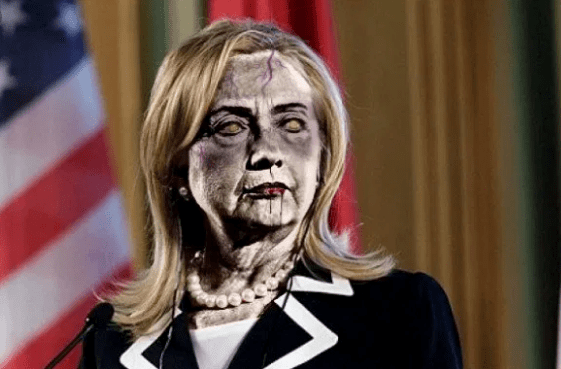
If you squint really hard, it’s ALMOST like she’s in the Oval Office…
RT | January 8, 2020
Social media sang praises of would-be US President Hillary Clinton as actual President Donald Trump seemed headed for all-out war with Iran – even though Clinton had been a much more enthusiastic participant in US wars.
After Iranian missiles struck several US bases Tuesday night, #Resistance twitter wasted no time disavowing the administration they blamed for the hostilities, running into the arms of his arch-rival with the #IVotedforHillaryClinton hashtag.
But claiming Clinton was the less warlike of the two candidates, or would have steered the country away from war with Iran, requires a serious divergence from history. The former Secretary of State once told an interviewer that “I want the Iranians to know that if I’m the president, we will attack Iran.”
That was during her 2008 campaign, and in the middle of a discussion about Iran possibly attacking Israel. Perhaps her stance on the Islamic republic had softened a bit by 2016, enough to justify viewing her as the lesser of two Iran hawks?
Nope. The months leading up to that election saw her parroting Israeli PM Benjamin Netanyahu’s decades-old talking points about Iran “racing toward a nuclear capability,” expanding “secret facilities,” and “defying their international obligations” before she swept in with the nuclear deal and solved all the problems.
Except the deal was negotiated after she was replaced as the top US diplomat by John Kerry. Clinton was on the same side as Trump, demanding ever more sanctions even as the nuclear deal took effect, this time as punishment for Iran’s ballistic missile program.
Beyond interventionist Democrats, she was courted by a bevy of neocons who couldn’t stomach Trump’s anti-interventionist rhetoric. Inveterate warmongers like Robert Kagan and Richard Armitage swooned over the ex-First Lady.
In short order, the infamous clip of Clinton mocking the brutal murder of Libyan leader Muammar Gaddafi – “we came, we saw, he died” – resurfaced on twitter. The so-called “humanitarian” intervention in Libya was largely a creation of Clinton’s State Department, complete with risible wartime propaganda about Gaddafi handing out Viagra so his soldiers could better commit mass rapes, and the continued chaos in that once-advanced state remains a testament to what the region (or world) might look like under her watch.
She wanted a repeat performance in Syria, calling for – and thankfully not getting – a no-fly zone, even while admitting it would “kill a lot of Syrians.”
While Trump lost the popular vote to Clinton, he handily beat her in the Electoral College, which ultimately decides who occupies the White House. Despite her massive advantage in political experience, his promises to bring US troops home attracted significant support. Nearly four years later, however, the US is poised on the brink of a catastrophic expansion of its Forever War.
Iran’s Strikes Against the U.S. Demonstrate the Unipolar System Is Truly Over
By Paul Antonopoulos | January 9, 2020
When U.S. President Donald Trump ordered the assassination of Iranian General Qassem Soleimani, he certainly had not expected that Iran would respond in the way it did by bombarding two U.S. military bases in Iraqi territory. It is likely that his advisers had convinced him that no country in the world had the courage to attack the U.S. so blatantly as no one else had since the Japanese attack on Pearl Harbor during World War II. The Iranians did of course, as was expected by those who understand the ideology of the Islamic Republic that has a deeply ingrained martyrdom complex that stretches back to 680AD when Imam Ali Ibn al-Husayn was killed in Karbala, Iraq.
Trump has claimed that there were no American casualties while Iran has claimed there were at least 80. With the Erbil and Ain al-Assad bases bombarded and several U.S. aircraft, drones and helicopters destroyed, it is unlikely that there were no U.S. casualties – however there is no way in knowing at this time whether there were 80. We can expect Washington to keep the true number of casualties a secret, in complete opposition to Iran who openly celebrate their martyrs.
The Ain al-Assad military base is the largest and most equipped U.S. base in the region, and one of a few U.S. special bases around the world, at the size of about half of Lebanon. The fact that the Americans have deployed their most sophisticated radar systems in Iraq, many of which have been destroyed, demonstrates the ineffectiveness of the Patriot missile defense system. This was despite U.S. forces in the region being put on high alert. This will only be in Russia’s favor as it continues to offer the S-400 system to potential buyers.
Not only did the attack on the Ain al-Assad military base expose the ineffectiveness of the Patriot system, Iran also targeted the Erbil base in Iraqi Kurdistan. This base was a center to try and encourage the Iraqi Kurds to rebel against the central government in order to put pressure on the central Iraqi government. The attack on the Erbil base was a warning that even a U.S. withdrawal into Kurdistan does not make them safe.
It was expected by most commentators that Iran’s retaliation for the martyrdom of Soleimani would be in the form of utilizing its regional paramilitary allies on U.S. positions. By directly attacking U.S. forces brazenly and openly, Tehran has demonstrated that the U.S. are not safe in any part of the region. However, Iran had no choice but to retaliate as not doing so would demonstrate the country’s leadership only had empty rhetoric in defending itself. The U.S. would certainly be more inclined to carry out further attacks against Iran and its allies if Tehran did not respond.
If there is a war going on in Iraq between the U.S. and Iran, it probably will not be limited to one country and will engulf the whole region, and potentially, across the world. Washington cannot be counted on to abide by international laws and regulations. The countries in the region, particularly the Gulf States, should also bear in mind that the presence of U.S. bases on their land will not only fail to provide security, but will also endanger their national security as all states who assist the U.S. in any aggression against Iran will become legitimate targets, as Tehran has already warned.
Rather, the murder of Soleimani has only united Iranians, including those who have been protesting across the country since November, blaming the government for the increased fuel prices and difficult economic situation, ignoring the crippling U.S. enforced sanctions. The major demands of the Iranian people are now for the expulsion of the U.S. military from the region, something that the Islamic Republic’s leadership has loudly and clearly demanded as well.
Since Iran has made its first response to the U.S. so directly, Trump for now is refusing to respond militarily and will impose greater sanctions against Iran. However, Iran has already made the demand that the U.S. withdraw from the region. To achieve this without directly provoking Trump again, Iran is likely to employ the militias it backs in Syria and Iraq to target U.S. military installations. With any Israeli involvement in this war effort, Iran can use Hezbollah and various Palestinian militias to pressure the Jewish state internally and externally.
Therefore, since Iran has already promised to expel the U.S. from the region, the next phase of the anti-U.S. war effort will be asymmetrical warfare by Iran. If Iran engages in asymmetrical warfare, the return of dead and wounded American soldiers will severely hamper Trump’s re-election campaign this year as he originally ran on the ticket of criticizing wars in West Asia when he was competing for the presidency against Hillary Clinton years earlier. The Iranian leadership are now in control of the future of the West Asia and have demonstrated they are willing to retaliate against the U.S. who is seeking to maintain the unipolar hegemonic world order that emerged with the collapse of the Soviet Union in 1991. Iran has once again shown that the 21st century is not one of unipolarity that Washington hopes to maintain, but rather multipolar with several strong middle and Great Powers.
Paul Antonopoulos is a Research Fellow at the Center for Syncretic Studies.
Operation Kayfabe: How Trump and Iran avoided war while both claiming victory
By Nebojsa Malic | RT | January 8, 2020
For a moment there, as missiles were flying, it looked like a US-Iran war was inevitable. Then, just as suddenly, both sides walked away. What happened? The key to figuring it out might just lie in professional wrestling.
Last night, Iran launched two volleys of missiles at two bases in Iraq that house US troops and equipment, calling it revenge for the drone strike that killed General Qassem Soleimani, head of the Islamic Revolutionary Guard Corps (IRGC) Quds Force. US President Donald Trump called him a “terrorist” and a “monster,” but Iranians considered him a beloved war hero, and there was no way the IRGC could let his death go unavenged.
Trump, however, threatened to strike 52 targets in Iran – the same as the number of US embassy staff taken hostage after the 1979 revolution – if any “Americans or American assets” were harmed. Throughout Tuesday, the US president kept oddly quiet on Twitter, choosing only to amplify the anti-Iran messaging of the most hawkish senators, and let the Pentagon and State Department chiefs take the lead in saying there will be no withdrawal from Iraq. It seemed like any Iranian action would guarantee a war.
Democrats, media talking heads and antiwar activists alike were absolutely convinced that Trump was getting into a war with Iran. Everything pointed to it. Any hope that the situation could de-escalate seemed like wishful thinking. Some Hollywood celebs were even pleading with Tehran “please do not kill us,” and asking the Iranian government to hold out till November so Trump can be voted out of office.
So when the US president walked up to the White House podium and addressed the nation on Wednesday – only to announce that his response will be more sanctions and calling for greater NATO involvement, rather than unleash the might of the US military – a lot of people were were left confused, to say the least.
That’s because the American chattering classes forgot what in retrospect seems like a very important detail from Trump’s biography: before he ran for president, before he had a hit reality TV show… he was a superstar of professional wrestling. That’s not surprising, because they believe themselves too elite and too educated for that lowbrow form of entertainment – but Trump’s base does not.
Unlike the internationally known sport, professional wrestling is a specifically North American form of performance art, in which everything is staged but everyone pretends it is real and true. There is even a specific term for maintaining this pretense before the general public: kayfabe.
What if Trump’s threats of bombing Iranian heritage sites or refusing to withdraw from Iraq – even though he campaigned on doing just that – were all part of kayfabe, an act intended to gull the gullible into believing it was all real? Moreover, what if Iran was in on the act and chose to launch the missiles at largely empty warehouses, while giving Americans ample warning via the Iraqis ahead of time, so as to avoid any deaths?
It sounds unbelievable, right? Yet there is no denying that it is precisely how events played themselves out.
Speaking on Wednesday, Trump used standard rhetoric about Iran to bury two very important points that pundits largely missed. One is that the US is now energy independent and therefore far less vulnerable to events in the Middle East than in the 1970s, during the Arab Oil Embargo or the Iran hostage crisis. The other was his direct repudiation of the ‘Albright doctrine’ of US interventionism established in the 1990s with a glib remark.
“The fact that we have this great military and equipment, however, does not mean that we have to use it,” Trump declared.
Those two things, I am fairly confident, were not kayfabe. Expect both to be largely ignored by the chattering classes, though, as they focus on who “caved” first and slowly get back to routine.
What matters at this moment is that the war that seemed inevitable did not actually happen. The IRGC got to tell the Iranian people that their brave soldiers avenged “martyr Soleimani” by smiting the “Great Satan.” Trump got to tell the American people that, since no lives were lost, he could shrug it off as insignificant and walk away. Both of them ended up looking triumphant, while their hysterical critics and doomsayers ended up looking like fools. And let’s remember, in politics and pro wrestling alike, perception is everything.
Iran didn’t want to kill US troops with its strike, it wanted to make point to Trump about its missile tech & resolve. It did that.
By Scott Ritter | RT | January 8, 2020
Iran’s anticipated retaliation for the US assassination of Qassem Suleimani sent a clear signal to Donald Trump that while the current round of violence may be over, Iran stands ready to respond to any future US provocation.
Tehran warned Iraq to spare US soldiers
On Tuesday night, the Iranian nation buried the body of Qassem Soleimani, the charismatic senior Islamic Revolutionary Guard Corps (IRGC) officer assassinated by the US this past week. In the early hours of Wednesday morning, that task completed, Soleimani’s IRGC comrades, acting on the orders of Iran’s Supreme Leader, Ali Khamenei, launched some 22 ballistic missiles from Iranian territory into neighboring Iraq, targeting the huge US air base Al Asad, in western Iraq, and the US consulate in the city of Erbil, in Iraqi Kurdistan.
In the hours following the announcement of these attacks, which were broadcast on Iranian television for the Iranian people, the world held its breath, waiting for the results. Shortly after the missiles were launched, Iran signaled its desire for a diplomatic resolution to the crisis through a tweet sent out by its Foreign Minister, Javad Zarif, who described the attacks as “proportionate measures in self-defense under Article 51 of UN Charter.” Zarif concluded by noting that “We do not seek escalation or war, but will defend ourselves against any aggression.”
The ultimate decision to deescalate, however, was not Iran’s to make. War is not a one-way street, and the enemy always gets a vote. However, in launching its missile attack on US targets in Iraq, Iran appeared to go out of its way to signal that it considered the matter of retaliation for the assassination of Soleimani closed. First and foremost, Iran communicated its intent to strike US targets in Iraq directly to the Iraqi Prime Minister a full two hours prior to the missiles being launched; Iraq then shared this information with US military commanders, who were able to ensure all US troops were in hardened shelters at the time of the attack.
Showing off its new-gen ballistic missiles
But the most important aspect of Iran’s actions was the way its missiles were targeted. For years now, Iran has made significant strides in terms of the reliability, range and accuracy of its ballistic missile force. Gone are the days when Iran’s arsenal consisted solely of inaccurate Soviet-era SCUD missiles.
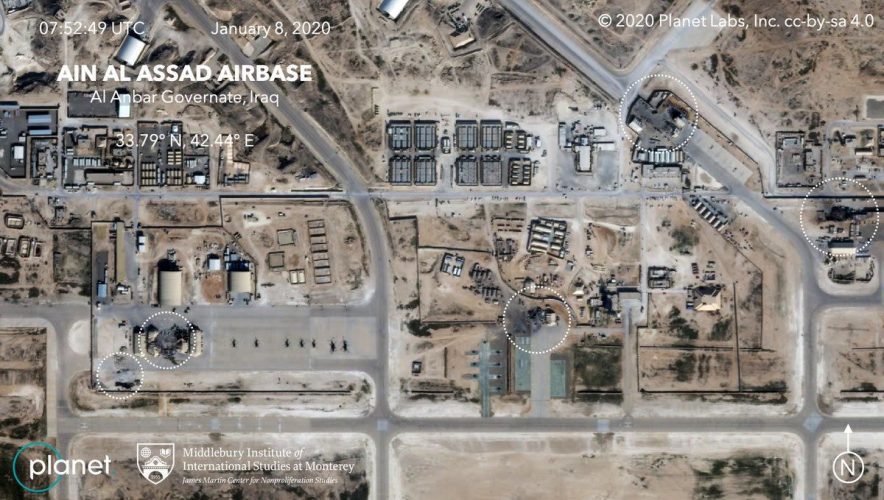
The missile attack on the US incorporated new, advanced missiles—the Qaim 1 and Fahad-110—possessing advanced guidance and control capable of pinpoint precision. Iran had used these weapons previously, striking targets inside Syria affiliated with the Islamic State. But this was the first time these weapons had been used against the US. From the US perspective, the results were sobering. The Iranian missile attacks resulted in no casualties among US, Iraqi or coalition forces stationed in either Al Asad or Erbil. But the lack of lethality, however, is actually Tehran’s way of proving the accuracy of its ballistic missiles.
Commercial satellite images of the Al Asad air base taken after the attack show that the Iranian missiles struck buildings containing equipment with a precision previously only thought possible by advanced powers such as the US, NATO, Russia and China. Iran fired 17 missiles at Al Asad, and 15 hit their targets (two missiles failed to detonate).
Iran also fired five additional missiles at the US consulate in Erbil; US commanders on the ground said that it appeared Iran deliberately avoided striking the consulate, but in doing so sent a clear signal that had it wanted, the consulate would have been destroyed.
Trump had to back down
This was the reality that President Trump had to wrestle with when addressing the American people regarding the state of hostilities between the US and Iran.
Trump had previously promised a massive retaliation should Iran attack any US personnel or facilities. Surrounded by his national security team, Trump had to back down from that threat, knowing full well that if he were to attack Iran, the Iranian response would be devastating for both the US and its regional allies, including Israel, Saudi Arabia and the UAE. The US might be able to inflict unimaginable devastation on Iran, but the cost paid would be unacceptably high.
Trump’s rhetoric was aggressive, however, and his message made it clear that the US still considered Iran to be a rogue state whose pursuit of nuclear technology, ballistic missiles, and regional dominance would be opposed by the US, with force if necessary. But the Iranian missile attack drove home the new reality that, when it came to Iran’s actions in the Persian Gulf, American Presidential rhetoric no longer held sway as it once did.
Ali Khamenei, the Iranian Supreme Leader, drove this point home in a series of tweets claiming to have “slapped” the US in the face for its assassination of Soleimani, emphasizing that the policies pursued by Soleimani seeking the withdrawal of the US from the Persian Gulf region were becoming a reality, citing the recent vote by the Iraqi parliament to evict all foreign troops, including those of the US, from its soil.
President Trump, in his address to the American people, certainly talked the talk when it came to articulating a strong anti-Iranian policy. The real question is whether Trump and the American people are prepared to walk the walk, especially in a world where Iranian missiles are capable of dealing death and destruction on a scope and scale previously unimaginable.
Scott Ritter is a former US Marine Corps intelligence officer. He served in the Soviet Union as an inspector implementing the INF Treaty, in General Schwarzkopf’s staff during the Gulf War, and from 1991-1998 as a UN weapons inspector.
Imam Khamenei: Only a Slap Was Delivered, US Withdrawal from Region Inevitable
Al-Manar | January 8, 2020
Leader of the Islamic Revolution in Iran Imam Sayyed Ali Khamenei said the missiles on US bases in Iraq are only a slap in the face of Washington, stressing that the real retaliation to the assassination of IRGC’s Quds Force General Qassem Suleimani is the US withdrawal from the region.
“Last night, a slap in the face was delivered,” Imam Khamenei said, in a speech broadcast live on state television, referring to the IRGC missiles which were launched at US bases in Iraq, including Ain al-Assad base in Anbar.
“One important issue is what is our duty now?” following Suleimani’s assassination, said the Leader.
“An important incident has happened. The question of revenge is another issue. Military actions in this form are not sufficient for that issue,” he said, referring to the assassination.
“What is important is that America’s corrupt presence must come to an end in this region,” his eminence said, stressing that the US withdrawal from region is “inevitable.”
Elsewhere in his speech, Imam Khamenei praised Suleimani as courageous and devoted.
“Martyr Suleimani challenged Zionists and managed to offer support to Palestinians in Gaza,” he said, adding that the top commander played major role with Hezbollah in defending Lebanon and foiled enemies’ conspiracies in Iraq, Syria.
“Martyrdom of Suelimani revived revolution spirit in Iran.”
” As long as our enemies’ allies don’t target us we won’t hit them,” Imam Khamenei said likely referring to Gulf Arab states.
Iraqi cleric Moqtada al-Sadr says crisis over, after Trump & Iran speak
© Reuters / Alaa al-Marjani
RT | January 8, 2020
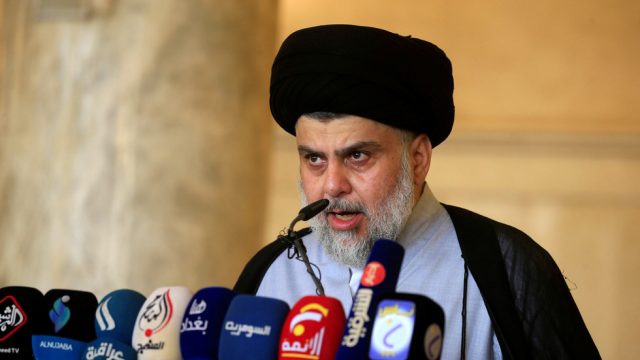
Influential Iraqi cleric Moqtada al-Sadr has declared the “crisis” between the US and Iran over, following statements from the two countries’ leaders in the wake of Tuesday’s Iranian strikes on US bases in Iraq.
Al-Sadr made his pronouncement on Wednesday after US President Donald Trump gave a relatively subdued speech praising Iran’s restraint. Rather than call for retaliation against Iran over a strike that didn’t kill any Americans, Trump merely vowed to impose even more sanctions on the Islamic Republic “until Iran changes its behavior.”
Iran’s President Hassan Rouhani in turn vowed to eventually kick all US troops “out of the region” as the “final answer” to the assassination of General Qassem Soleimani, killed in a US airstrike last week.
Shia religious leader al-Sadr also called on Iraqi militias to be “patient” and not begin any military actions, claiming that a new “strong” government capable of protecting Iraq’s sovereignty would be formed in 15 days and hold early elections. However, Iraq should still evict the foreign troops inside its borders, he said.
The Iraqi foreign ministry condemned Iran’s missile attack on the coalition bases, declaring it a “violation of Iraqi sovereignty” in a statement on Wednesday and emphasizing Iraq was an “independent state.”
“We will not allow it to become a battlefield,” the ministry added.
Iraqi PM Adel Abdul Mahdi stepped down last month after months of massive protests calling for electoral reforms. He has remained in a “caretaker” role while Iraq’s political leaders attempt to move forward. Another prominent Shia cleric, Grand Ayatollah Ali al-Sistani, warned last month that “foreign interference” in the process would not be tolerated.
Zarif: Iran informed Iraqi govt. of missile attack on US bases
Press TV – January 8, 2020
Iranian Foreign Minister says Iran informed the Iraqi government of its retaliatory attack on US bases, reaffirming Tehran’s respect for the sovereignty and territorial integrity of the Arab country.
This measure was carried out with the information passed to the Iraqi government and armed forces as confirmed by the Baghdad government, Zarif said Wednesday.
“We attach high significance to Iraq’s territorial integrity and sovereignty, and we believe security should be [provided] based on mutual respect and [safeguarding] territorial integrity of all regional countries by all,” he added.
The remarks came hours after Iran responded to the US assassination of prominent anti-terror Iranian commander Lieutenant General Qassem Soleimani and his companions, including Iraqi commander Abu Mahdi al-Muhandis, with a barrage of missiles that hit two US bases in Iraq.
In the early hours of Wednesday, Iran launched tens of missiles at two bases housing US troops in Iraq’s western Anbar Province and Kurdistan regional capital, Erbil, in revenge for the assassination of General Soleimani.
Zarif’s remarks came after Iraq’s President Barham Saleh and the speaker of the Iraqi parliament, Mohammed al-Halbusi, said the attack violated the sovereignty of the Arab country.
However, earlier on Wednesday, the spokesman for Iraqi Prime Minister Adel Abdul-Mahdi said the premier had received word from Iran that its response to the US assassination of its top general was either imminent or under way.
“Shortly after midnight on Wednesday we received a verbal message from the Islamic Republic of Iran that the Iranian response to the assassination of martyr Qassem Soleimani had started or was about to start,” Reuters quoted the spokesman as saying.
Elsewhere in his remarks, Zarif said Iran’s missile attack was a military revenge for the top commander, stressing, however, that there is no retaliation proportionate to the assassination of General Soleimani other than the expulsion of US forces from the region.
As declared by Leader of the Islamic Revolution Ayatollah Seyyed Ali Khamenei, Zarif said, the true revenge for General Soleimani’s blood is that the US folly has marked the end of its presence in the region.
“The end of the US presence in the region, which will definitely happen, will herald glad tidings for the region and the generations to come, because the US presence in the region has brought about nothing but destruction and mischief,” he noted.
A Window for Peace
By Craig Murray | January 8, 2020
There is this morning a chink of light to avoid yet more devastation in the Middle East. Iran’s missile strikes last night were calibrated to satisfy honour while avoiding damage that would trigger automatically the next round. The missiles appear to have been fitted out with very light warhead payloads indeed – their purpose was to look good in the dark going up into the night sky. There is every reason to believe the apparent lack of US casualties was deliberate.
Even more important was the Iraqi statement that “proportionate measures” had been “taken and concluded” and they did not seek “further escalation”.
I agree their response was proportionate and I would say that I regard the Iranian action so far, unlike the assassination of Soleimani by the US, legal in international law.
The entire world should congratulate Iran for its maturity in handling the illegal assassination of its General, who was on a peace mission, travelling as a civilian on a commercial flight, carrying a mediation message the US had been instrumental in instigating. If as seems possible the US actively manipulated the diplomatic process to assassinate someone on a diplomatic mission and traveling on a diplomatic passport, that is a dreadful outrage which will come back to haunt them. Life insurance rates for US diplomats no doubt just went up.
It is also worth noting the 2.8% rise in the Lockheed share price in the 24 hours immediately before the Soleimani assassination, outperforming the Dow about three times. That would bear investigation. Arms manufacturers and oil stocks have soared this last few days – and remember that nowadays the vast bulk of financial transactions are bets on the margins of movement, so vast fortunes will have been made out of all this.
The UK has been, as ever, complicit in US crimes. Our laughing called “defence” industry – when were its products last used in self-defence and not colonial adventure? – is tied in to and dependent on the US military machine. The current build-up of US troops and hardware in the Gulf has Mildenhall as a major staging post. We do not have to do this. Whether officially or on a pretext, French airspace was closed to the US military build-up and the Americans have had to fly from the UK, skirting France, around the Atlantic.
In a huge Boris Johnson slap in the face to international law, extra US bombers to attack Iran have been flown into Diego Garcia, in the Chagos Islands. You will recall that is where the UK committed genocide against the population in the 1970s to clear the way for the US military base. Last year, the UK lost a hearing before the International Court of Justice and was subsequently instructed by the UN to decolonise the islands and give them back to Mauritius by last November. The UK simply persisted in its illegal occupation and now is threatening the use of the islands as the base for yet another illegal and destabilising war.
That the UK is a permanent member of the UN security council is a disgrace which surely cannot endure much longer. What the current crisis has shown us is that under Johnson the UK has no future except as a still more compliant servant of whoever occupies the White House.
Wars are easy to start but hard to stop. Trump appears to have calmed, but we cannot rule out a stupid “last word” attack bu the USA. It is to be hoped that Iran now concentrates on using the immense political leverage it has gained to get western troops out of Iraq, which would be a tremendous result for all of us after 17 years. But we cannot rule out hotter heads in the Iranian government insisting on further attacks, or attacks from regional forces whose Tehran authorisation is uncertain. On either side this could yet blow up badly.
I am a sucker for hope, and the best outcome would be for the US and Iran to start talking directly again, and a deal to be made from this break in the logjam that is wider than, and Trump can portray as better than, “Obama’s” nuclear deal and would enable the lifting of sanctions. I am sure Trump will be tempted by the chance to go for this kind of diplomatic coup under the political cover provided him by Soleimani’s assassination. But the US is now so tied in to Saudi Arabia and Israel, and thus tied in to irrational hostility to Iran, that this must be extremely unlikely.
For those of us in Scotland, this is still more reason why Independence must be early. We cannot be tied in to a rogue state. As we march for Independence on Saturday, the potential for war in Iran gives the sharpest reminder why we must leave the UK and form our own, peaceful, law-abiding state.
Iran strikes US bases in Iraq to avenge Soleimani, vows to target Israel and all US bases in the region
Al-Manar | January 8, 2020
The Islamic Republic of Iran began its revenge for the assassination of the martyr Soleimani by launching dozens of ballistic missiles at the US base of Al-Asad in Iraq.
The Islamic Revolutionary Guards announced that the process of revenge for the assassination of the martyr Soleimani had started with the launch of dozens of ballistic missiles against the American base at Al-Asad in Iraq. In a statement, they assert that “At dawn today, in response to the terrorist operation by American forces and in retaliation for the assassination and martyrdom of Quds Force Commander of the Islamic Revolutionary Guards, Qassem Soleimani, and his companions, the aerospace forces of the the Islamic Revolutionary Guards carried out a successful operation bearing the name of the martyr Soleimani by launching dozens of ground-to-ground ballistic missiles against the air base of Ain al-Assad occupied by the US terrorist army. We will later inform the noble Iranian people and all free men of the world of the details of this process.
The Islamic Revolutionary Guards warned “The Great Satan, namely the US regime, that any wicked act, aggression or other hostile movement would face an even more painful and harsh response. […] We warn America’s allies who host US terrorist bases that any territory that is the source of hostile action against the Islamic Republic of Iran will be targeted.” The statement from the Islamic Revolutionary Guards added that “we do not in any way regard the Zionist entity as distinct from the criminal US regime.”
“We recommend that the American people recall their soldiers from the region to avoid further casualties and not to leave the lives of American soldiers threatened because of our peoples’ growing hatred of America,” the statement said.
Public relations within the Revolutionary Guards warned the United States that any response to the strikes “would light the fuse of a widespread and very painful response against the United States in the region.”
The Iranian news agency Mehr reported that “dozens of missiles from the aerospace force of the Islamic Revolutionary Guards targeted the base of Ain al-Assad”, and said that “the attack comes in reprisal for the assassination of the martyred commander Qassem Soleimani, and consisted in the launching of a certain number of ground-to-ground missiles”.
After the news was announced, the sounds of Takbir (Allahu Akbar!) rose from the top of the buildings of the capital, Tehran, expressing popular jubilation at this operation.
A security source told Agence France-Presse that on the night from Tuesday to Wednesday, at least nine rockets landed at the Ein Al-Assad Air base in western Iraq, where American soldiers are stationed. The source said the attack took place in 3 stages.
Use of Fateh missiles in a process of severe revenge
Given the distance between the base of Ain al-Assad and the place from which the Islamic Revolutionary Guard missiles were launched, Fateh ballistic missiles were used in these strikes (range up to 500 kilometers).
U.S. forces and their advisers are stationed at Ain al-Assad Air Base, which is the second largest Air Base in Iraq, after Balad base in Salah al-Din, north of Baghdad. For years, American forces have been present at several Iraqi military and Air Bases in the provinces of Anbar, Salah-al-Din, Nineveh and the capital Baghdad.
Pentagon admits strikes
The Pentagon has announced that Iran fired “more than 12 missiles” at dawn on Wednesday at the Ain al-Assad and Erbil bases used by US forces in Iraq on Wednesday, indicating that it is in currently assessing the damage and studying ways to “respond” to this strike.
Assistant to the Secretary of War for Public Affairs Jonathan Hoffman said in a statement that the department was conducting a “preliminary damage assessment” and was considering a “response” to the attack. He added that on Tuesday evening, “around 5.30pm (10.30pm GMT) on January 7, Iran fired more than 12 ballistic missiles at US and coalition forces in Iraq.” This time corresponds to the exact time martyr Soleimani was killed.
The statement added that it is clear that these missiles were launched from Iran and were aimed at at least two Iraqi military bases used by American and coalition forces in Ain al-Assad and Erbil.
The White House, for its part, said that President Trump is monitoring the situation closely and holding consultations with the National Security Council to discuss developments. White House spokesperson Stéphanie Gresham said, “We are aware of reports of attacks on US facilities in Iraq. The President has been informed and is following the situation closely and is consulting his national security team. ”
Oil prices go up and Nikkei goes down
The oil price per barrel jumped more than 4.5% on Wednesday after Iran launched ballistic missiles at two air bases used by US and coalition forces in Iraq. West Texas Intermediate barrel rose 4.53% to $ 65.54 before declining slightly.
The main Nikkei index of the Tokyo Stock Exchange lost more than 2.4% Wednesday morning. Half an hour after opening, the losses of the Nikkei index on the 225 largest companies listed on the Japanese Stock Exchange reached 2.44%, or 576.26 points, to fall to 22,999.46 points, while the losses of the Topix index, the most important, were slightly lower, reaching 2.20% or 37.90 points to reach 1687.15 points.
Sources: Al-Manar & Iranian sources.
Translation: resistancenews.org
FM Zarif: Iran’s Reprisal Attack in Compliance with UN Charter
Fars News Agency | January 8, 2020
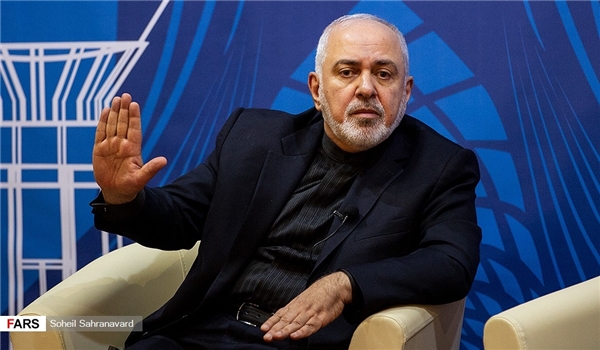
TEHRAN – Iran’s Foreign Minister Mohammad Javad Zarif said his country’s Wednesday missile attacks on Ein Al-Assad falls under the rules of the UN Charter, reminding that Iran has hit the airbase that has been used as the launchpad for assassinating Lieutenant General Qassem Soleimani.
“Iran took and concluded proportionate measures in self-defense under Article 51 of UN Charter targeting [the] base from which cowardly armed attack against our citizens and senior officials were launched,” Zarif wrote on his tweeter page on Wednesday morning.
The top diplomat said his nation “does not seek escalation or war, but will defend ourselves against any aggression”.
The IRGC Aerospace Force started heavy ballistic missile attacks on US Ein Al-Assad airbase in Southwestern Iraq near the border with Syria and a US operated airbase in Erbil in retaliation for the assassination of IRGC Qods Force Commander Lieutenant General Qassem Soleimani.
Ein Al-Assad is an airbase with a 4km runway at 188m altitude from sea levels, which is the main and the largest US airbase in Iraq.
The second IRGC reprisal attack targeted a US military base near Erbil airport in Iraqi Kurdistan Region in the second leg of “Martyr Soleimani” reprisal operation.
All flights have been cancelled at Erbil airport.
The IRGC issued a statement immediately after the attacks, declaring that it has fired tens of ground-to-ground missiles at “the airbase occupied by the terrorist and aggressive army of the United States known as Ein Al-Assad” in reprisal for the martyrdom of IRGC Qods Force Commaner Lieutenant General Qassem Soleimani.
The IRGC warned the US to avoid retaliating the Wednesday attack or else “it will face a more painful and crushing response”.
The IRGC Statement also warned “all the US allied states where the terrorist army has a base, any territory that becomes the origin of any hostile and aggressive action against the Islamic Republic of Iran in any way will be targeted”.
“We believe that the Zionist regime by no means stands aside from the criminal US regime in these crimes.”
The IRGC also called on the American nation to pressure the White House to pull their troops out of the region to avoid further damage and not allow the US rulers to endanger the lives of their military men through increasing hatred.
All Iranian underground missile towns are on alert.
The missile attack came hours before the body of General Soleimani was buried.
Lieutenant General Soleimani was martyred in a targeted assassination attack by the US drones at Baghdad International Airport early on Friday morning.
The airstrike also martyred Abu Mahdi al-Muhandis, deputy commander of Iraq’s Popular Mobilization Forces (PMF), or Hashad al-Shaabi. The two were martyred in an American airstrike that targeted their vehicle on the road to the airport.
Five Iranian and five Iraqi military personnel were martyred by missiles fired by the US drone at Baghdad International Airport.
The attack came amid tensions that started with a US attack on PMF units that killed 28 Iraqi popular forces. A day later, Iraqi people attacked the US embassy in Baghdad.
The targeted assassination attack represents a dramatic escalation by the US toward Iran after months of tensions. The tensions are rooted in Trump’s decision in May 2018 to withdraw the US from Iran’s nuclear deal with world powers, struck under his predecessor.
Featured Video

Trita Parsi: Middle East Unraveling — Are We on the Path to World War?
or go to
Aletho News Archives – Video-Images
New Book
Trans agenda is ‘normalization of sadism’ – US author

RT | September 23, 2026
The US Democratic Party has embraced a transgender agenda that amounts to “the normalization of sadism,” author A.J. Rice has said, warning that radical trans policies would return if the party is allowed to regain power.
Speaking to RT’s America First host Scotty Nell Hughes about his new book, ‘The Curse of the Bearded Lady: How the Trans Mafia Whacked American Sanity’, Rice argued that activists have gained significant influence in schools, medicine, and corporate America while people who questioned the agenda have faced pressure to stay silent.
The author described the “trans mafia” as the sprawling network of people and institutions that have helped the movement gain influence. He singled out parts of academia, wealthy backers, and corporations, and stated that providers of transition-related treatment also have a financial incentive to keep young people in their care indefinitely.
Rice argued that the consequences of these policies ultimately fall on children who are being drawn toward gender-affirming medical treatments and on girls who are expected to share locker rooms or compete in sports with biological males.
He noted that while voters rejected the Democrats’ approach to gender in 2024, the party, which has been “captured by madness,” has since only doubled down and is seeking what is effectively “the normalization of sadism.” … Full report
Blog Roll
 Aletho News
- Integrity Initiative: UK-funded network framed dissent as Russian disinformation for years
- ‘We don’t seek permission to defend our country’: Snippets from President Pezeshkian’s UNGA address
- NATO chief wants Europeans to fight American wars [for Israel]
- German chemicals giant reveals details of downsizing
- Refaat Al-Areer Was The Canary In The Coal Mine In Israel’s War On The Truth
- Israeli election committee bars candidate from Knesset race over Gaza war opposition
- French-Lebanese man files war crimes complaint over Israeli attacks
- Mahan Air Flight Lands in China Despite US Threat against Iranian Airlines
- US eyes $10bn fund to rebuild war-battered Gulf infrastructure
- Trump meets Rodríguez near Maduro’s prison as Venezuela’s oil flows to US
- If Americans Knew
- Caught on Tape: AIPAC CEO Boasted of Controlling Trump’s National Security Officials
- Why Hamas Attacked Israel in October 2023 – Israeli professor Ilan Pappé
- They see them, then kill them: Israeli quadcopters track, deliberately target civilians in Gaza
- Winter could turn Gaza’s treacherous, war-damaged buildings into deathtraps
- Majority of Democratic Voters Want to Prosecute Both Biden and Trump Administration Officials Over Gaza
- As Gaza languishes, world leaders gather at the UN – Daily Update
- Sanctions are collective punishment: immoral and self-defeating
- Phosphorus Munitions Fired by Israel Burn Groves, Orchards in Southern Lebanon
- Israel Carries Out New Ceasefire Violations Across Gaza
- AI – Emphasis on the ‘I’: Israel Is Funding AI Chatbot Propaganda
- No Tricks Zone
- New Study: Earth And Venus Surface Warmth Largely Explained By Convection And Lapse Rate, Not CO2 Or Radiation
- 2025 Nature Paper Claiming Worsening Global Drought Gets RETRACTED …Heavily Flawed
- New Study: ‘Global Drought Shows No Detectable Recent Acceleration Under Climate Warming’
- Economic Masterminds: German Socialists Suggest Taxing Productivity Gains Stemming From Using AI
- The South China Sea Has Not Been Cooperating With The Climate Change Narrative
- Energy Crisis: Germany Enters Heating Season With Historically Low Gas Reserve Fill Levels
- New Study: The Antarctic Ice Sheet Gained Mass From 2020-2024 Due To Staggering Snow And Ice Accumulation
- Study: Ocean Heating Rates From Thousands Of Years Ago ‘Dwarf’ Modern Ocean Heating Rates
- Climate Extremists Target, Attack Large-Scale Power Grid Infrastructure In Germany!
- New Study: Antarctic Ice Melt Has Contributed Less Than 1 Centimeter To Sea Level Rise In The Last 30 Years

