Iran dismisses claims on sending ballistic missiles to Iraq
Mehr News Agency | September 1, 2018
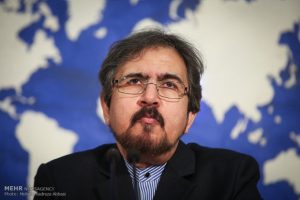 TEHRAN – Iranian Foreign Ministry spokesman has dismissed as ‘unfounded’ and ‘absurd’ some earlier report by Reuters claiming that Iran has supplied some Shia groups in Iraq with missiles.
In a Saturday statement, Iran’s Foreign Ministry Spokesman Bahram Ghasemi dismissed as unfounded and ridiculous what has been reported by certain news outlets and media claiming that Iran has sent missiles to Iraq.
In reaction to a report that has just been released by Reuters claiming Iran has given ballistic missiles to some Shia groups in Iraq and is developing the capacity to build more there, Ghasemi said that such claims are aimed at sowing fear among regional countries in line with their policy of demonizing Iran.
The spokesman of Iran’s Foreign Ministry noted that such unfounded claims are merely aimed at affecting Iran’s foreign relations, especially with its neighbors.
Israel threatens to use nuclear weapons to ‘wipe out’ its enemies
MEMO | August 31, 2018
Standing next to a secretive Israeli atomic reactor earlier in the week, Prime Minister Benjamin Netanyahu threatened to “wipe out” his enemies. In a speech that many will see as the Jewish state breaking its long silence over the possession of nuclear weapons, the Likud leader warned that it has the means to destroy its enemies.
“Those who threaten to wipe us out put themselves in a similar danger, and in any event will not achieve their goal,” he said on Wednesday during a ceremony to rename the complex, near the desert town of Dimona. The site has long been suspected to be the location where Israel has been developing nuclear weapons.
Iran hit back by describing Netanyahu as a “warmonger”. The threat “atomic annihilation” against the Islamic Republic was denounced as “beyond shameless in the gall”.
“Iran, a country without nuclear weapons, is threatened with atomic annihilation by a warmonger standing next to an actual nuclear weapons factory,” Foreign Minister Mohammad Javad Zarif wrote on his official Twitter account.
Zarif also commented on Israel’s nuclear programme saying: “As the world marks Int’l Day against Nuclear Tests, let’s remember that only nuclear bombs in our region belong to Israel and the US; the former a habitual aggressor & the latter the sole user of nukes. Let’s also remember that Iran has called for Nuclear Weapon Free Zone since 1974.”
Israel has never acknowledged possessing nuclear weapons, instead maintaining a policy of “strategic ambiguity”. Foreign reports have put the size of Israel’s nuclear arsenal in the dozens to hundreds of weapons.
Earlier this month a science journal published by Princeton University’s Science and Global Security journal claimed that Israel conducted illegal nuclear test in contravention of international law.
Netanyahu’s remarks came as Israel lobbies world powers to follow the US in exiting a 2015 international deal with Iran that capped the Islamic Republic’s nuclear capabilities.
Iran’s Long-Range Missile Defense System to Be Operational Soon: Commander
Al-Manar | August 31, 2018
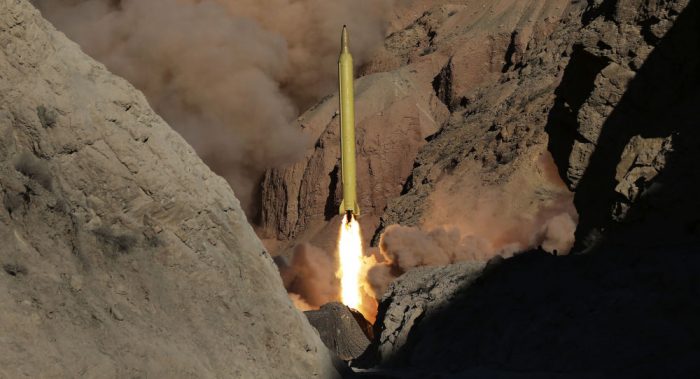
The commander of the Khatam al-Anbia Air Defense Base (the central headquarters of Iran’s Air Defense) said a domestically made long-range missile system will come into service by the end of the current Iranian year (March 20, 2019).
“(Iran’s) air defense industry is completely self-sufficient today,” Brigadier General Alireza Sabahi Fard said in a speech, addressing a congregation of worshipers in Tehran on Friday.
“We have reached the stage of designing and producing indigenized air defense systems, (passing through) the stage of reverse engineering and manufacturing components,” he added.
“Today, our country has achieved self-sufficiency in producing short, medium and long-range ground-to-air missiles,” the commander said.
He further said that the Iranian people will hear good news that a long-range missile system will be coming into service later this year.
Iranian military experts and technicians have in recent years made great headway in manufacturing a broad range of indigenous equipment, making the armed forces self-sufficient in the arms sphere.
Iranian officials have repeatedly underscored that the country will not hesitate to strengthen its military capabilities, including its missile power, which are entirely meant for defense, and that Iran’s defense capabilities will never be subject to negotiations.
Back in February, Leader of the Islamic Revolution Ayatollah Seyed Ali Khamenei called for efforts to maintain and boost Iran’s defense capabilities, hitting back at the enemies for disputing the country’s missile program.
“Without a moment of hesitation, the country must move to acquire whatever is necessary for defense, even if the whole world is opposed to it,” Ayatollah Khamenei said on February 18.
Tehran Slams French FM’s Remarks on Iranian Missile Program
Al-Manar | August 31, 2018
Iranian Foreign Ministry Spokesman Bahram Qassemi criticized French Foreign Minister Jean-Yves Le Drian’s Thursday remarks about Iran’s missile program and said such “unwarranted concerns” are rooted in his “wrong perceptions” of the program.
“The Islamic Republic of Iran has repeatedly declared its clear and transparent stance on unwarranted concerns rooted in some countries’ wrong perceptions and ignorance,” Qassemi said in a statement on Friday.
“The Islamic Republic of Iran has always shown that it has never been fearful of dialogue and negotiation and that it believes in it,” he said.
However, in a situation that the outcome of all efforts of Iran and other world powers (the 2015 nuclear deal) is violated by “the bullying and excessive demands” of France’s partners, there is no reason for Iran to trust and negotiate on “unnegotiable issues”, the spokesman added.
“The world and the French statesmen are well aware that Iran’s regional policy is in line with regional and international peace and security and the fight against terrorism and extremism, and if such a campaign is not pleasant to some countries that basically create tensions and crises, they can reform their policies,” he went on to say.
The remarks came after Le Drian warned Thursday that Iran “cannot avoid” talks on its ballistic missile program and role in Middle East conflicts, as European powers work to rescue the 2015 nuclear deal with Tehran known as the Joint Comprehensive Plan of Action (JCPOA).
Iranian officials have repeatedly underscored that the country will not hesitate to strengthen its military capabilities, including its missile power, which are entirely meant for defense, and that Iran’s defense capabilities will be never subject to negotiations.
The European Union has vowed to counter US President Donald Trump’s renewed sanctions on Iran, including by means of a new law to shield European companies from punitive measures.
Trump on August 6 signed an executive order re-imposing many sanctions on Iran, three months after pulling out of the Iran nuclear deal.
He said the US policy is to levy “maximum economic pressure” on the country.
Trump also restated his opinion that the 2015 Iran nuclear deal was a “horrible, one-sided deal”.
On May 8, the US president pulled his country out of the JCPOA, which was achieved in Vienna in 2015 after years of negotiations among Iran and the Group 5+1 (Russia, China, the US, Britain, France and Germany).
Following the US exit, Iran and the remaining parties launched talks to save the accord.
Syria and Iran Sign Defense Agreement: Defying Outside Pressure
By Peter KORZUN | Strategic Culture Foundation | 29.08.2018
Iranian Defense Minister Amir Hatami visited Damascus Aug. 26-27 in order to have a new military cooperation agreement signed. The move is evidently a response to US and Israeli demands to withdraw Iranian forces from Syria. No details have been provided about the document’s content but it’s logical to surmise it contains a list of mutual obligations in the event that the Iranian military is attacked in Syria.
The deal mentions Iran’s role in the reconstruction of Syria’s defense industry, thus ending any hopes that its military presence in that country will end. According to the Iranian defense chief, the “defense and technical agreement” provides for the continued “presence and participation” of Iran in Syria. He added that an agreement had been reached with Syria that Iran would have “presence, participation, and assistance” in the reconstruction and that “no third party will be influential in this issue.”
The agreement was signed just as the Russia-Turkey-Iran summit was announced, which is scheduled for Sept. 7 in Tehran. Such events normally require thorough preparations. The parties are expected to reach an agreement on further joint steps to achieve progress in Syria. It’s important to align their positions before the UN talks in Geneva, which are slated for Sept. 11-12. UN Special Envoy Staffan de Mistura has invited the “big three” to participate. They can come up with joint initiatives while the US has nothing to offer but its demands for Iran’s withdrawal. It risks being left out in the cold, while diplomatic efforts initiated by other states bear fruit.
This turn of events will hardly be welcome news for those who would like to stymie the peace efforts and impose their own conditions for reaching any settlement of the problem.
The need to end Iranian assistance to Lebanon’s Hezbollah was emphasized during last week’s visit of US National Security Adviser John Bolton to Israel. The parties did not declare war on Iran, but there is no way to stop the supplies from reaching Hezbollah in Lebanon without cutting off the land routes going through Syria. The US official insisted before the visit to Israel that the withdrawal of Iran’s forces from Syria is a prerequisite to any resolution of the conflict.
The US and its allies in Syria find it important to scuttle Syria’s plans to liberate the province of Idlib from the rebels. A false-flag chemical attack is expected to be staged soon, to create a pretext for military action. Once Syria and Iran are in the same boat, it makes no difference which of them is attacked first or where. There have been media reports that a large-scale military operation is in the works and can be expected in August or September.
There is no way to know what exactly Mr. Bolton discussed with the Israeli authorities during his visit to Jerusalem on Aug. 19 but the reports about the military activities at the US al-Shaddadi base in the Syrian province of al-Hasakah emerged soon afterward. The facility has been reported to have been updated to enable the landing and takeoff of heavy cargo aircraft. Ayn al-Arab (Kobani) has also been expanded. In August, shipments of ammunition and military hardware were delivered to several US-controlled facilities in Syria and Iraq. Radars have been transported to the SDF-controlled areas east of the Euphrates River.
Meanwhile, several thousand militants with heavy weaponry and armored vehicles in Syria’s Idlib province are getting ready to launch an offensive against government-controlled regions of Hama and Aleppo. The attack will be targeted at Syrian as well as Iranian and pro-Iranian forces that have been invited in by the Syrian government.
It looks like plans are underway to force Syria to plunge into turmoil once again. In reality, the combat actions have already started. The US and Israel conducted their first joint operation against the Iranian Revolutionary Guards Quds Force and the Iraqi Shiite Khata’ib Hezbollah, their allies, on Aug. 23 near Abu Kamal, which is situated on the highway between Syria and Iraq. President Trump has said so many times and on so many occasions that he wants the Americans to leave Syria but US foreign policy is known for its flip-flops. Whatever is said today may be forgotten tomorrow.
This time, Lebanon may become a new front. It’s widely believed that a war between Israel and Hezbollah is inevitable. In February, US and Israeli troops held an exercise to practice for a potential war with Hezbollah in Lebanon, a country that holds a military agreement with Russia. The offshore drilling contracts Lebanon has signed with other countries, without solving its border dispute with Israel, are spurring the war preparations.
Syria and Iran have defied pressure and demonstrated their resolution not to bow but to protect their right to make independent decisions. They are offering a challenge. If the defense agreement just signed between those two allies provokes a military conflict, it will most certainly spill over to other countries, such as Yemen, Lebanon, and Iraq. It would lead to a long, protracted, and costly war.
Iran hauls US before international court over ‘illegal’ sanctions
Press TV – August 27, 2018
The International Court of Justice has begun hearing a lawsuit brought by Iran against new US sanctions ordered by the Trump administration.
Iran last month lodged a complaint with the Hague-based tribunal, arguing that the sanctions violate the terms of a 1955 friendship treaty between the two countries.
The country opened a lawsuit Monday demanding the UN’s top court order the suspension of the renewed US sanctions.
“The United States is publicly propagating a policy intended to damage as severely as possible Iran’s economy and Iranian nationals and companies,” Iran’s lawyer Mohsen Mohebi told the court.
“This policy is nothing but naked economic aggression against my country,” he said, adding “Iran will put up the strongest resistance to the US economic strangulation, by all peaceful means.”
Tehran has called on the United Nations court to order the immediate lifting of the sanctions, and demanded compensation for damages incurred in their wake.
Sanctions had been lifted under a 2015 nuclear agreement between Iran and six other countries – the US, Germany, France, Britain, China and Russia.
President Donald Trump unilaterally pulled the US out of the deal with Iran in May and pledged to reimpose the most restrictive sanctions on the country.
Washington reinstated the first batch of sanctions in early August and will re-impose the second batch in November which will primarily be meant to undermine Tehran’s oil exports.
The United States’ lawyers will present their arguments on Tuesday. They are expected to argue that the ICJ should not have jurisdiction in the dispute.
The oral arguments, essentially a request by Iran for a provisional ruling, will last for four days, with a decision to follow within a month.
The ICJ was set up in 1946 to resolve international disputes. Its rulings are binding but on rare occasions they have been ignored by certain countries, chiefly the United States.
The US will respond formally in oral arguments on Tuesday, reportedly arguing that the United Nations court should not have jurisdiction in the dispute.
US lawyers will reportedly claim that the friendship treaty signed before the Islamic Revolution in 1979 is no longer valid and that the sanctions Washington has levied against Tehran, do not violate it anyway.
Iran president to host Syrian, Turkish counterpart for Syria talks
Press TV – August 27, 2018
The presidents of Iran, Russia, and Turkey will hold their third round of tripartite summit in Iran next week in an attempt to find ways to end the ongoing crisis in Syria, Turkish state television says.
Iranian President Hassan Rouhani will host his Turkish and Russian counterparts Recep Tayyip Erdogan and Vladimir Putin, respectively, on September 7, state-run TRT Haber television said on Monday.
Private NTV television also said the summit would be held in the northwestern Iranian city of Tabriz as Iran, Russia and Turkey are acting as guarantor states for a peace process in Syria.
The three presidents have previously held summits in the Russian resort city of Sochi in November 2017 and in the Turkish capital Ankara in April.
At the end of their meeting in Ankara on April 4, the Iranian, Russian and Turkish presidents reaffirmed their commitment to work toward achieving a sustainable ceasefire between warring sides in Syria and bringing peace and stability to the war-torn Arab country.
Rouhani, Putin and Erdogan, “reaffirmed their determination to continue their active cooperation on Syria for the achievement of lasting ceasefire between the conflicting parties and advancement of the political process envisaged by UN Security Council Resolution 2254,” said a joint statement issued at the end of the summit.
Addressing their summit in Sochi on November 22, Rouhani lauded the defeat of the Daesh terror group in Iraq and Syria, but underlined the need for continued battle against terrorism until the eradication of all Takfiri terrorist outfits in Syria.
He blamed foreign interference for the conflict in Syria, saying certain countries claiming to be advocates of democracy wrecked havoc in the Arab country to achieve their goals in the region.
Erdogan had previously said that he planned to host a summit in Istanbul on September 7 on the crisis in Syria with Putin, French President Emmanuel Macron and German Chancellor Angela Merkel.
However, press reports over the last weeks have indicated that such a meeting was increasingly unlikely and was set to be replaced by the latest three-way summit in Iran.
A UN spokeswoman said on Friday that United Nations Special Envoy Staffan de Mistura had invited Iran, Russia and Turkey to talks due to be held in Geneva next month on forming Syria’s Constitutional Committee.
“Special Envoy de Mistura continues his consultation on the establishment of a Syrian-led, Syrian-owned and UN facilitated Constitutional Committee within the framework of the Geneva process and in accordance with Security Council Resolution 22-54 2015,” Alessandra Vellucci said at a news conference.
In a meeting with Syrian President Bashar al-Assad in Damascus on Sunday, Iran’s Defense Minister Brigadier General Amir Hatami hailed the steadfastness of the Syrian people and government forces in their battle against terrorism, expressing confidence that they will achieve a final victory in this path.
“Not only regional people, but people around the world are indebted to the fight carried out against terrorists in Syria,” Hatami said.
CIA-Backed Firm Tipped Off Facebook to ‘Inauthentic’ Accounts
Sputnik – August 22, 2018
Facebook removed 652 pages, groups and accounts on Tuesday for “coordinated inauthentic behavior” after it was tipped off to the accounts by FireEye, a cybersecurity firm bankrolled by the Central Intelligence Agency.
The company has attributed the operators of the newly removed accounts to the usual scapegoats: Russia and Iran.
“These were distinct campaigns, and we have not identified any links or coordination between them,” the company said.
Twitter quickly followed suit. “Working with our industry peers today, we have suspended 284 accounts from Twitter for engaging in coordinated manipulation,” Twitter said in a Tuesday statement. “Based on our existing analysis, it appears many of these accounts originated from Iran.”
“The thing that strikes me the most is that it’s so convenient, that all of these pages that Facebook has been taking down and that Twitter has been limiting, are all somehow related — or they say they’re related — to governments or movements or news sources that aren’t very friendly to the United States or that the United States government wants to overthrow,” web developer and technologist Chris Garaffa told Radio Sputnik’s By Any Means Necessary.
“Russia. Iran. TeleSur. Venezuela Analysis. There was a Haitian liberation page that was taken down last week on Facebook as well.”
“You don’t see any German pages, you don’t see any British pages coming down, even if they are doing some sort of sketchy activity,” Garaffa added.
According to Facebook’s head of Cybersecurity Policy, Nathaniel Gleicher, the social media giant got a tip from FireEye, a cybersecurity firm that has received venture capital funding by the CIA since 2009. In a statement, the CIA’s investment arm said it will maintain a “strategic partnership” with FireEye, calling it a “critical addition to our strategic investment portfolio for security technologies.”
The CIA’s venture capital arm is known as In-Q-Tel, which describes itself as a “not-for-profit strategic investor” on its website.
The company was one of the few cyber firms to forensically analyze the alleged hack of the Democratic National Committee. A spokesman for the firm told Defense One that the hackers “wanted experts and policymakers to know that Russia is behind it.”
In March 2017, FireEye CEO Kevin Mandia, a former Air Force cyber crimes investigator, told the Senate Select Committee on Intelligence that the company was able to attribute the blame to Russia based off of “deduction” and “process of elimination.”
One part of the network FireEye identified to Facebook was a page called Quest 4 Truth. According to Gleicher, it “claims to be an independent Iranian media organization, but is in fact linked to Press TV, an English-language news network affiliated with Iranian state media.”

“We’re still investigating, and we have shared what we know with the US and UK governments,” Gleicher wrote. “Since there are US sanctions involving Iran, we’ve also briefed the US Treasury and State Departments.”
“The social media companies are by and large American companies, and they want to be in favor with the US government,” Garaffa told By Any Means Necessary hosts Eugene Puryear and Sean Blackmon. “They will do the bidding of the US government when it comes to data collection [and] when it comes to taking down pages that are not acceptable.”
“It’s a huge PR weapon that the American government has that almost no one else does,” he added.
The investigation came in three parts, according to Facebook. The first netted 74 Facebook pages, 70 accounts, three groups and 76 accounts on Instagram, which is owned by Facebook. Some $6,000 was spent on ads on the platforms, and three events were created.
The second stage included 12 Facebook pages, 66 Facebook accounts and nine Instagram accounts. No money was spent on advertising, and none of the pages had associated events.
The third part of the investigation found 168 Facebook pages, 140 Facebook accounts and 31 Instagram accounts; 25 events were created, and more than $6,000 was spent on ads.
According to Facebook, many of the pages masqueraded as news organizations. Some real news organizations have reported that the accounts were seeking to influence the US midterm elections, but in reality, Facebook just said one of the account groups was discovered as the company stepped up investigation efforts ahead of the midterms.
“Finally, we’ve removed pages, groups and accounts that can be linked to sources the US government has previously identified as Russian military intelligence services,” the company said. “This more recent activity focused on politics in Syria and Ukraine. For example, they are associated with Inside Syria Media Center, which the Atlantic Council and other organizations have identified for covertly spreading pro-Russian and pro-Assad content.”
Facebook has partnered with the Digital Forensics Research Lab to combat so-called fake news. It’s worth noting DFL is an arm of the neoconservative Atlantic Council think tank, which is primarily funded by NATO, Gulf monarchies and the US defense industry.
“The shuttering of progressive media amidst the ‘fake news’ and Russiagate hysteria is what activists been warning all along — tech companies, working in concert with think tanks stacked with CIA officials and defense contractors, shouldn’t have the power to curate our reality to make those already rendered invisible even more obsolete,” Abby Martin, host of “The Empire Files” on TeleSur English, told Sputnik News after Facebook temporarily unpublished the TeleSur English page. “The Empire Files” announced on Wednesday that they were forced to shut down because of US sanctions.
“The Atlantic Council is like a who’s who of the extremely wealthy and NATO countries and allies,” Garaffa said. Since the “content moderation” partnership, there’s been a “massive uptick in removing of any content that goes against the mass media, US propaganda line.”
“So they have this unprecedented control over the narrative and the information that we can see, and these are private companies, but ultimately because of their relationship with the state, they are serving the interests of the state, and the state is actually serving to protect these companies’ interests as well.”
Facebook’s last round of bans came on July 31. That time, the company made no attempt to publicly identify who was behind the “bad actors” on their platform, but said that activity displayed by them was consistent with previously identified activity from the allegedly Kremlin-run troll farm the Internet Research Agency.
That ban included 32 pages and accounts and the main counter-protest to the Unite the Right 2.0 rally held in Washington, DC on August 12 — the one-year anniversary to the deadly Charlottesville, Virginia, protest. One of the six administrators on the account supposedly displayed inauthentic activity. The other five were totally legitimate, the company admitted.
The bans on Tuesday follow a long line of similar ones issued by the company since the 2016 election. The company banned 470 supposedly fake Russian accounts in September 2017; then, on April 3, Facebook banned 70 Facebook accounts, 65 Instagram accounts and 138 Facebook pages allegedly controlled by the Internet Research Agency.
Garaffa underscored the power social media giants wield, as they’re relied on “much more now than most people did on television or newspaper news, because the stream is always on. You’re not picking up the morning edition of the paper, you’re looking at what happened in the last five minutes.”
Which War for Mesopotamia? Iraq Must Choose Between Iran and the US

By Elijah J. Magnier | American Herald Tribune | August 21, 2018
In the coming month, following Eid al-Adha (August 21st), Iraq will be on the horns of a dilemma. The Federal Court has confirmed the results of the manual recount of the May parliamentary elections with insignificant changes to the previously announced results. After the holiday the Iraqi coalition that can assemble more than 165 parliamentary seats will have to choose the new ruler of the country. Whoever is selected as Prime Minister, whether he is pro-US, pro-Iran or even a neutral personality, will not save Iraq from serious consequences and difficult years ahead. If the new government implements the sanctions on Iran announced by interim PM Abadi, internal unrest and insecurity can be expected in the country. Many Iraqis, including some armed groups, will refuse what is perceived as US interference, and US forces themselves will likely come under fire. If the sanctions are not implemented, Iraq will face serious US sanctions in turn, international companies will pull out, and the return of the terrorist group ISIS (ISIL, Daesh) cannot be excluded. Any decision will certainly have a major effect on the economy of Mesopotamia, and perhaps even on its security.
The Iraqi government is normally formed following an agreement between one or more groups with the largest number of MPs, with several Iraqi parties (Shia, Sunni, Kurds and other minorities) holding a smaller representation in the Parliament joining in. The largest coalition is then eligible to select the future Prime Minister within one month of forming a governing coalition. Members of the coalition decide amongst themselves the distribution of power and posts including not only that of Prime Minister, but also Speaker, President and all the other key positions (Vice-Presidents, vice ministers, and the various ministerial positions in the government).
The latest formation to be officially announced is the coalition of Sayroon (Moqtada al-Sadr), al-Nasr (Haidar Abadi), al-Hikma (Ammar al-Hakim) and al-Wataniya (Saleh al—Mutkaq). These groups are still far from reaching the number of MPs necessary to form a government. And this means Iraq risks waiting for several months before seeing a new Prime Minister take power.
The Iraq-Iran borders run for 1,458 km from Shatt al-Arab in the Persian Gulf to Kuh e-Dalanper. Long borders and the large commercial and trade exchange between the two countries (over $12 billion per year) impose a special strategic relationship between Tehran and Baghdad. Moreover, the volume of religious tourism (for pilgrims visiting Imam Reda in Iran and many other shrines of prophets and Imams in Iraq) imposes itself on the countries’ leaders despite political differences. Although the majority in Iraq and Iran are Shia, religious ties do not inhibit the political independence of Iraqi Shia, who are Arabs; their patriotic interests prevail over any shared religious identity.
The Marjaiya in Najaf, led by the highest religious authority in Mesopotamia (and the whole of the Shia world), the Iranian national Grand Ayatollah Sayyed Ali al-Sistani, does not tolerate Iranian interference in Iraqi politics. Some analysts attribute this refusal to differences between the rival theological schools of Najaf (Iraq) and Qom (Iran), but other factors are more important, notably the Marjaiya’s desire for independence and Iran’s heavy hand in dealing with Iraqis. The Marjaiya in Iraq stood firm against Iran’s choice of Prime Minister in 2014, refusing to renew Nuri al-Maliki’s tenure, although the constitution gave him the legal right to become the leader of Iraq since he sat at the head of the largest Parliamentary coalition.
Al-Maliki was called by some “the Shia dictator of Iraq;” he refused to share strategic decision-making with his government and the parties who had helped him remain in power, as had been agreed before his second nomination by all Shia groups. Al-Malki was wrongly accused of being responsible for the emergence of ISIS and its occupation of a third of Iraq in 2014. In fact, neighbouring countries Turkey and Saudi Arabia, and also the leader of Kurdistan Masood Barzani who called ISIS a “Sunni revolution,” supported the group with the aim of partitioning Iraq into three states. In 2014, the US decided to watch ISIS expand and was very slow to intervene in support of the government of Baghdad, unlike Iran who offered arms and advisors to both Baghdad and Kurdistan. The US intervened only when ISIS didn’t stop at the limits of Kurdistan and headed for the oil-rich city of Kirkuk.
I was in Baghdad and Najaf at the time when the Iranian General Qassem Soleimani tried hard to impose first al-Maliki and then the ex-Premier Ibrahim al-Jaafari, but without success. It was not a religious but a political conflict, in which Sayyed Sistani stood firm in opposing Iranian efforts to decide the leadership of the country.
Iraq finds itself in a bind due to the US sanctions on Iran. Any Prime Minister who accepts the unilateral sanctions on Iran will be vilified as an American puppet and will face opposition from both pro- and anti-Iran forces and political groups in Mesopotamia. In fact, the US’s unwise political move of announcing that it is staying in the country “as long as needed,” despite the request of Baghdad that it reduces the number of its 5000 servicemen in the country, is a direct challenge to all Iraqis. It is interpreted by the people in the street I spoke to, and by decision-makers in both Baghdad and Najaf, as an expression of the US will to impose a Prime Minister by force, notably Haidar Abadi.
Iraq finds itself in a bind due to the US sanctions on Iran. Any Prime Minister who accepts the unilateral sanctions on Iran will be vilified as an American puppet and will face opposition from both pro- and anti-Iran forces and political groups in Mesopotamia.
The Iranian leadership needs to sit still, watching from afar the Iraqi internal reaction to the US decision to impose Abadi for a second term before reacting through its domestic allies.
Sources in the Iraqi government say “the Prime Minister ad interim tried to convince political leaders to accept the presence of the US forces in Iraq till an undisclosed date.” Iraqis understand this to mean that there is an agreement between Abadi – eager to stay in power for the second term – and the US – eager to see Abadi remain in power to stand against Iran – that US forces will stay in Iraq even if ISIS no longer controls any city or village in Iraq (vestiges of ISIS remain as insurgents, and outlaws in hiding.)
Both Abadi and the US forces seem unaware of the presence of a strong popular movement among the population. These forces fought against ISIS for over four years and are ready to fight a long insurgency war against the US forces in Iraq, without even asking for Iran’s support, help or guidance. There are many groups who fought against ISIS and among the ranks of the Popular Mobilisation Units (PMU) but returned to their own parties once the war ended and refused to be integrated within the Ministries of Defence or Interior.
The wrong-headed US policy (and not only in Iraq) is even calling for a coalition between Sayyed Moqtada al-Sadr and Haidar Abadi to form a coalition with the largest number of MPs, sufficient to select a new Prime Minister. Some analysts go even further, asking Washington to invite Moqtada al-Sadr to the White House to keep Iraq away from Iran. They seem not to realize that Sayyed Moqtada will be at the head of the first group called upon to fight the US forces in Iraq if these decide to stay longer in Mesopotamia and to impose a leader of Iraq. Moreover, Abadi is incapable of controlling Moqtada who did not hesitate to send his horde to the “Green Zone”, invading various ministries to “pull Abadi’s ears” and call him back in line. Moreover, Moqtada locked the Vice Speaker, a member of the al-Sadr group, and other members of his inner circle in a lavatory at al-Hannnah (Moqtada’s HQ) in Najaf for two days.
Sources within Sayyed Moqtada’s inner circle told me:
“Sayyed Moqtada rejects the implementation of any sanctions against Iran agreed by Abadi and will not accept a new Prime Minister riding into the green zone on a US tank”.
Other forces in Iraq are said to be “watching closely the US forces movement in all the military bases in Iraq”. “If they have bad intentions (to stay in the country) we shall intervene to convince these forces to leave”, said a high-ranking Iraqi source within the popular armed forces-who fought against ISIS over most of the Iraqi territory.
No Iraqi official has explained to the people the advantages and disadvantages of implementing the US unilateral sanctions on Iran. No one has explained what are the risks, what would be the reaction to the US steps and what would be Plan B, if any. Who would compensate the enormous damage to Iraq’s economy that will follow, whether sanctions are accepted or rejected? Iraqis have suffered for more than 11 years of US sanctions during Saddam Hussein’s era and may not be willing to go through this again. But it is their choice, not that of a single person, Abadi–who in fact did not win a majority during the parliamentary election in any Iraqi province.
In Iraq, there is no political consensus over strategic decisions: the unilateral decision on Iran sanctions taken by interim Prime Minister Haidar Abadi needs parliamentary approval so that the representative of the Iraqi people can assume responsibility for taking the country into an unknown future. The Iraqi Foreign Ministry has rejected Abadi’s unilateral decision, and so did most Iraqi political groups with Ministers in the government. The Iraqi Vice President Nouri al-Maliki, Abadi’s Da’wa party, and many others rejected the Prime Minister’s action against Iran and in favor of the US. Many said overtly that “Iraq will certainly not be part of the US plan to hit Iran.”
The Shia groups are not in harmony – many reject Abadi for a second term. Nor are the Sunni groups agreed on a new Speaker (Anbar Governor Mohammad al-Halbusi versus the vice President Usama al-Nujeifi). The Kurds are waiting to see who will form the largest coalition before joining in and imposing their conditions because they will be the ones who tip the political balance for or against Abadi.
The bras de fer between Iran and the US is playing out over the entire Middle East and particularly in Syria, Lebanon, and Iraq. Today, the Iranian General Qassem Soleimani and the US Special Presidential envoy Brett MacGurk are both visiting all Iraqi officials and heads of groups to attempt to influence the Iraqi decisions. It is crucial for both Iran and the US to see a Premier on their side and both seem indifferent to the consequences for the Iraqis of the choice of one side or the other.
It is not so much a question of having a leader with vision but a leader ready to assume almost impossible responsibilities. A choice of wars is knocking at the door of Mesopotamia: another war in Iraq (against the US forces) or an economic war (against Iran.)
Senior Political Risk Analyst, Elijah J. Magnier, is a veteran war correspondent with over 35 years’ experience covering Europe, Africa & the Middle East.
US Indicts Two on Allegations of Spying for Iran on MEK Members in US
Sputnik – August 21, 2018
The Justice Department of the United States charged two people with circumventing US sanctions against Iran, discretely working on behalf of Iran’s government to conduct surveillance on Israeli and Jewish facilities inside the country, and attending MEK events in the US to collect intelligence.
The Justice Department’s National Security Division announced the charges Monday evening.
Ahmadrea Doostdar, 39, of Iranian and US citizenship, and Majid Ghorbani, 59, of Iranian citizenship and whose residence was California, are the two individuals named in the indictment.
Among the alleged offenses ascribed to Doostdar and Ghorbani are collecting identifying information on American citizens who are members of the Mujahedin-e-Khalq (MEK), a group that seeks to overthrow Iran’s current leadership. The group, which has been described as a “cult” by the Washington Post and others, pays John (“Bomb Iran”) Bolton tens of thousands of dollars to speak at MEK rallies, and was designated a terrorist group by the United States Department of State from 1993 to 2012, when Bolton reportedly was able to lobby for its removal.
“In or about July 2017, Doostdar traveled to the United States from Iran in order to collect intelligence information about entities and individuals considered by the government of Iran to be enemies of that regime, including Israeli and Jewish interests, and individuals associated with the MEK, a group that advocates the overthrow of the current Iranian government,” the DOJ said with respect to the indictment.
The DOJ alleges that Ghorbani took pictures at an MEK rally in New York last September and that Doostdar paid him $2,000 cash for 28 pictures during a meeting in Los Angeles a few months later. Ghorbani would later attend the MEK’s rally in Washington, DC, in May 2018 where he “appeared to photograph certain speakers and attendees, which included delegations from across the United States.”
The Justice Department noted that Ghorbani and Dootsdar engaged in a conspiracy to defraud the US.
“Doostdar and Ghorbani are alleged to have acted on behalf of Iran, including by conducting surveillance of political opponents and engaging in other activities that could put Americans at risk,” DOJ’s John Demers said in the August 20 announcement.
Professor Mohammad Marandi on BBC HARDtalk
August 14, 2018
HARDtalk’s Stephen Sackur speaks to Iranian political analyst and erstwhile nuclear talks adviser Mohamed Marandi.
What Do The Winners In Syria Want?
ORIENTAL REVIEW – 17/08/2018
After the liberation of the provinces of Daraa and Quneitra, the Syrian civil war entered a new phase. The available land that was up for grabs by any new liberator — without the need for negotiations with outside actors — was shrinking (one section of the desert under ISIL control does not count – it will soon be cleared out). Only Idlib is left, which is controlled (albeit only in spots and to a limited extent) by Turkey, as well as the environs of al-Tanf and the Kurdish regions located within the American protectorate. And their liberation must be preceded by diplomatic agreements with the protector states.
Decentralization without the Kurds
Negotiations with Turkey took place in Sochi at the very end of July. Those were conducted by Russia and Iran, because Damascus and Ankara have officially severed their diplomatic ties. The Syrian authorities emphasize that the territory of Idlib will eventually be returned to Damascus’s jurisdiction.
No one’s arguing with that. Turkey is not planning on an eternal occupation of Syrian territory, because any benefits from that would be completely outweighed by the financial, PR, and potential military costs Ankara would incur. At some point, the Turkish troops will be forced to quit Syria. But Erdogan has no desire to pull out for free and is demanding a number of conditions be met in return.
These conditions are obvious yet at the same time contradictory. On one hand, Ankara wants to maintain its leverage over post-war Syria, so it is pressing for the local communities (some of which in northwestern and western Syria hold pro-Turkish sentiments) to be granted more rights and powers. On the other hand, the Turks do not want those rights and powers to be extended to the Syrian Kurds, whom Erdogan currently views as one of te biggest threats to Turkey’s national security.
At present it is not possible to meet Turkey’s demands – the constitutional committee is just now getting down to work, and no one understands how to exclude the Kurds from the decentralization process anyway. And ultimately the Iranians are not particularly eager to yield any zones of influence to the Turks — it is clear to everyone that for the foreseeable future, Tehran and Ankara will very likely be competing for the upper hand in the Middle East. In turn, the Turkish authorities are threatening that if Moscow and Tehran give Damascus the green light to conduct a military operation in Idlib without taking Ankara’s interests into account, then Turkey will abandon its attempts to find a resolution under the auspices of the Astana negotiations and could potentially resume military and political assistance to the militants, which might even include sending aid in the form of the Turkish army.
The weak link
As a result, a compromise was apparently reached in Sochi. Damascus, Tehran, and Moscow agreed to temporarily postpone the offensive in Idlib and give Turkey some latitude to handle the threats posed by certain terrorist groups in the region (for example, Hay’at Tahrir al-Sham, which is the latest reincarnation of the al-Nusra Front). In order to do battle against them, the Turks have already established a coalition of militants under Ankara’s control.
However, this compromise is not likely to last long. First of all, because Turkey has thus far been conspicuously unable to cope with the situation (as can be seen, for example, in the regular drone attacks on the Hmeimim air base that originate in Idlib), and there is no guarantee that the situation will change. Second, Damascus is already engaged in a dialog with the Kurds (who have finally become firmly convinced that the Americans will continue to sell them out to the Turks) over the idea of reconciling in exchange for the promise of decentralization. In this, the interests of Damascus and Ankara are partially aligned – the Kurds will not be granted any broad autonomy – but the Syrian authorities are prepared to concede some extremely limited autonomy. And if the Turks object, then – faced with the choice between compromising with the Kurds vs. satisfying the Turks, the Syrians are likely to choose the Kurds.
The Kurds will be chosen because — and this is the third reason — Turkey is the weakest link in the Syrian “triumvirate.” The end of the civil war is not far off, and if Iran and Russia are seeing their own positions strengthening as that day draws nearer, Turkey, on the other hand, is growing weaker. This is being expedited by the rapidly unraveling relationship between Erdogan and the West, as a result of which the Turkish president has been left in a state of semi-isolation, and he cannot afford to damage his relations with Moscow and Tehran as well. Therefore, it is possible that once the desert enclave and the concentration of troops near Idlib have been cleared out in the autumn, the Syrian army will find some pretext for an offensive in the rebel province, and Turkey will remain on the sidelines. The best Ankara can hope for is to have some minor concessions granted.
Syria without Iran?
As for the US — it played no role in the talks in Sochi. “We are sorry that our American colleagues chose to absent themselves from the work aimed at achieving a long-term political settlement in Syria,” noted Alexander Lavrentiev, Russia’s special envoy to Syria. “We remain confident that mutually acceptable solutions can only be worked out through an open dialog.”
However those can also be worked out through a “closed” dialog, which is something that is held regularly (including during the meeting between Putin and Trump). Washington’s position is easy to understand. Donald Trump is ready to pull American troops out of the environs of al-Tanf (in southern Syria), because now that Syrian troops have liberated Deir ez-Zor and the province of Daraa, that base of operations is no longer needed. Trump is also prepared to entertain the possibility of abandoning support for the Syrian Kurds, because they are ill-suited for their role as a force to hold Iran in check and are also creating a host of problems with the Turks.
The only question is — what does Washington want in return? Some media outlets have been circulating the idea that the US and its partner Israel are demanding Iran’s complete withdrawal from Syria. But everyone is well aware that this is unrealistic — the losers cannot order the winner to admit defeat. So it will most likely be an issue of the Iranians having to accept responsibility for pulling their troops and military bases out of the area near the Golan Heights, and Russia having to be responsible for ensuring that Tehran abides by this condition.
So far the negotiations seem to be in their early stages, and one of the key obstacles is the uncertainty of the US and Israel that the Russians will be able to shoulder the responsibility for Iran’s compliance with its obligations once the US troops have been gone from Syria for one, two, or three years. The West believes that Russia’s continued presence in Syria will be on shaky ground, since Iran regards the country as its own domain and will push for outside forces to leave, even friendly ones.
Moscow partially shares this concern (despite being on friendly terms with Tehran), and that is precisely why it is trying to do all it can to use diplomacy to resolve the issue with the Turks themselves, while also pulling Europe into the process of returning the Syrian refugees and restoring the country’s infrastructure. After all, the more outside actors there are in Syria, the less chance that the Iranian leaders in that country will become an undesirable dominating force (which would inevitably happen otherwise). And it makes it even more likely that the process of national reconciliation — which will take more than just a year or two — will culminate in not just an end to the civil confrontation, but also in the long-term peaceful coexistence of the varied peoples and religious sects within Syria.
Featured Video
EUROPE FEARS RUSSIA’S NEXT MOVE / Ian Proud
or go to
Aletho News Archives – Video-Images
New Book
New Book: No Autoimmunity The Body Doesn’t Attack Itself
Lies are Unbekoming | September 24, 2026
 The label for Humira, once the best-selling drug in the world, lists its risks in plain print. One of them, in the label’s own words, is new “autoimmune” disease.
A drug prescribed for a condition labelled autoimmune carries a warning that it can cause a condition labelled autoimmune. That contradiction sits in every box, on a folded paper almost nobody reads.
My new book starts there.
No Autoimmunity: The Body Doesn’t Attack Itself
For seventy years, “your body is attacking itself, and we don’t know why” has ended the conversation for people diagnosed with multiple sclerosis, lupus, rheumatoid arthritis, Hashimoto’s, Type 1 diabetes, Crohn’s and psoriasis. More than eighty conditions now carry the autoimmune label. The diagnosis comes with a prescription for life. It almost never comes with a question about cause.
This book asks the question and answers it from the framework’s own records: its drug labels, its journals, its regulatory filings, and its own experiments. … continue
Blog Roll
 Aletho News
- Merz regime wants ‘secret police’ – opposition
- Israeli settlers terrorize West Bank Palestinians with state-provided drones: Report
- They see them, then kill them: Israeli quadcopters track, deliberately target civilians in Gaza
- Debunked: Trump’s egregious UNGA claims on war against Iran crumble under scrutiny
- Europe was part of the infrastructure of US aggression against Iran: Deputy FM
- New evidence on the Bucha Massacre
- Italy and France debunk reports CIA issued ‘Russian drone threat’ warning
- How Russia is Rewiring the Global South
- Britain’s elites want you ready to die for a war they keep imagining
- Inside Ukraine’s propaganda operation targeting Americans
- If Americans Knew
- Trump betrayed voters with his campaign lies and prioritized a foreign country once he took office
- Netanyahu calls Israel’s war in Gaza ‘opposite of genocide’ in UN speech to near-empty hall
- Settler Kidnappings: Torture, Sexual Abuse and Terrorisation of Palestinian Abductees as Israel Deepens Annexation of West Bank
- Gaza winter nears as 162,000 tents become unusable, raising fears of humanitarian crisis
- Netanyahu says, “It’s the opposite of genocide”; UN says Gaza economy is world’s ‘most severe crisis on record’ – Daily Update
- Israel’s US-Backed Assault on Gaza Has Created the ‘World’s Most Severe Economic Crisis on Record’: UN
- ‘Protecting U.S. Citizens’… From Israel
- ‘This is where I live now, the back of a truck’: a day in the life of a grandmother in Gaza
- In UN Speech, Iran’s President Displays Pictures of Children Killed by US, Brings Attention to Israel’s Nuclear Arsenal
- Israel displaces hundreds of Palestinians amid wave of demolitions in West Bank
- No Tricks Zone
- New Study: Earth And Venus Surface Warmth Largely Explained By Convection And Lapse Rate, Not CO2 Or Radiation
- 2025 Nature Paper Claiming Worsening Global Drought Gets RETRACTED …Heavily Flawed
- New Study: ‘Global Drought Shows No Detectable Recent Acceleration Under Climate Warming’
- Economic Masterminds: German Socialists Suggest Taxing Productivity Gains Stemming From Using AI
- The South China Sea Has Not Been Cooperating With The Climate Change Narrative
- Energy Crisis: Germany Enters Heating Season With Historically Low Gas Reserve Fill Levels
- New Study: The Antarctic Ice Sheet Gained Mass From 2020-2024 Due To Staggering Snow And Ice Accumulation
- Study: Ocean Heating Rates From Thousands Of Years Ago ‘Dwarf’ Modern Ocean Heating Rates
- Climate Extremists Target, Attack Large-Scale Power Grid Infrastructure In Germany!
- New Study: Antarctic Ice Melt Has Contributed Less Than 1 Centimeter To Sea Level Rise In The Last 30 Years

