Syrian conflict is ending but US stays put
By M K Bhadrakumar | Indian Punchline | September 11, 2017
The Syrian government forces have broken through the ISIS’ 3-year long siege of the air base in the eastern city of Dier Ezzor. The dramatic developments in the weekend signifies for all purposes the end of the conflict in Syria. The capture of the city itself is now a forgone conclusion and with that ISIS becomes a spent force in Syria.
The covert US operation to evacuate by helicopter the ISIS commanders in Dier Ezzor last week suggests that the Pentagon accepts that the ISIS saga is ending in Syria, finally. Presumably, the ISIS and its “advisors” will now be reassigned to new theatres – such as Afghanistan. The lingering question will be: Is the US winding up business in Syria? A Russian commentary seems to think so.
On the other hand, there are reports that the rebel forces supported by the US Special Forces (with air cover) are making a dash from northern Syria to take a piece of Dier Ezzor, leaving behind the unfinished business of capturing Raqqa, ISIS’ “capital”. This risks a potential flashpoint involving them and the Russia-supported government forces in a struggle for supremacy in eastern Syria. (Reuters )
At stake are two things – one, seizure of the vast oil fields that lie to the east and north of Dier Ezzor that are the jewel in the crown of the Syrian economy; two, control of the Syrian-Iraqi border along the Euphrates and down south across which a “land bridge” could potentially connect Damascus with Tehran via Baghdad. Thus, both in economic terms as well as for geopolitical reasons, the US (encouraged by Israel) is racing against time in the final phase of the conflict to establish a military presence in the eastern and south-eastern regions of Syria.
The geopolitical reasons are three-fold: a) US would seek a “say” in any Syrian settlement; b) US hopes to challenge Iran’s cascading influence in Syria and Lebanon; and, c) US feels obliged to be a provider of security for Israel. All three factors are inter-connected. The point is, as a report in the Times of Israel underscores, Israel understands its limitations in taking on the Iranian militarily on its own steam. Gen. Yair Golan, former deputy chief of staff in the Israeli military has been quoted as saying in a stunning speech at the Washington Institute of Near East Policy last Thursday,
- We (Israel) live in a world where we cannot operate alone not just because we have no expeditionary forces in Israel… And while we can achieve decisive victory over Hezbollah… and while we can defeat any Shia militia in Syria … we cannot fight Iran alone… So, all right, they could affect us, we could affect them. But it’s all about attrition… If you want to gain something which is deeper, we cannot do it alone. And this is a fact of life. It’s better to admit that. We need to know our limitations.
Suffice to say, Israel will not allow the Trump administration to countenance a total US troop withdrawal from Syria. Put differently, some sort of US presence along the eastern banks of the Euphrates is on the cards on Israel’s insistence. Read an opinion piece titled Trump’s Big Decision in Syria by David Ignatius in the Washington Post last week on the debate in Washington.
Will Russia accept such an outcome? Arguably, it may suit Russia if the US is present in the region in some token form, necessitating, in turn, some sort of continued engagement with Russia, which has always been Moscow’s strategic priority. What about Turkey? Indeed, continued US alliance with the Syria Kurdish militia can only lead to the eventual consolidation of a Kurdistan in northern Syria, which Ankara abhors. But on the other hand, Turkey takes care not to collide with the US in Syria. Equally, Iran’s approach also may not be to simply “sidestep” the token American presence of a few hundred soldiers from the Special Forces and concentrate instead on the serious business of expanding its regional influence in Syria and Lebanon. Indeed, the US is unlikely to directly challenge Russia or Iran in eastern Syria, either.
What matters will be the new facts on the ground. The Syrian government forces (backed by Iranian and Hezbollah militia and Russian air power) have an edge over the US-led thrust from the north of Dier Ezzor. The highway connecting Damascus with Dier Ezzor is open for the first time in years. The Syrian forces are occupying the strategic heights in the region. On the contrary, the US has no reliable local ally other than the Syrian Kurdish militia, who from now onward will be fighting in regions inhabited by Sunni Arab tribes that are even further beyond the borders of their traditional homeland in northern Syria.
In the final analysis, therefore, at some point wisdom will dawn on the Pentagon that it is foolhardy to dream about carving out a “zone of influence” within Syria. With Saudi Arabia Qatar closing shop in Syria, and Jordan coming to terms with the Syrian regime, the US is finding that it is pretty much alone in that desolate region in the middle of nowhere. Some Iranian reports suggest that even the British bulldog is pulling out.
IAEA Doesn’t Check Iran Military Sites for Nukes Because There’s ‘No Reason To’
Sputnik – 01.09.2017
United Nations watchdogs have said that they don’t believe it necessary to search Iranian military sites to verify that they are in compliance with the 2015 Iran nuclear agreement, as they do not suspect any misdoings on the facilities. The US has strongly pushed the UN to inspect Iranian military sites, which have not been investigated thus far.
Over the weekend, US Ambassador to the United Nations Nikki Haley met with officials from the International Atomic Energy Agency (IAEA), the UN-affiliated international organization whose stated purpose is to promote the peaceful, non-military use of nuclear technology. The IAEA has been tasked with ensuring that Tehran abide by their terms of the 2015 Joint Comprehensive Plan of Action (JCPOA) and not produce weapons-grade plutonium or enriched uranium that could be used for nuclear weapons.
Part of the agreement was that the IAEA could send inspectors to Iranian sites, including military ones, if they believed that illegal nuclear activities were being undertaken there. Iran has traditionally been cagey about letting international inspectors into their military complexes to check for nuclear activity, citing national security concerns.
But the administration of US President Donald Trump has been very negative about the JCPOA, which was negotiated in part by Trump’s predecessor, Barack Obama. The hyperbolic American president once called the JCPOA the “worst deal ever negotiated.”
Haley expounded: “They have a very strong verification program in Iran, I was pleased to hear about all that they are doing. Having said that, as good as the IAEA is, it can only be as good as what they are permitted to see. Iran has publicly declared that it will not allow access to military sites, but the JCPOA makes no distinction between military and non-military sites.”
“There are also numerous undeclared sites that have not been inspected yet — that’s a problem,” she said. “I have good confidence in the IAEA, but they are dealing with a country that has a clear history of lying and pursuing covert nuclear programs.”
But IAEA officials declined Washington’s request. “We’re not going to visit a military site like Parchin just to send a political signal,” an anonymous IAEA official told Reuters, referring to the controversial Iranian military base that the IAEA last inspected in 2015.
Instead, IAEA officials stated, they would search only if they suspected Iranian misdoing. The JCPOA only allows for IAEA searches if they can provide a basis for their concerns. Another anonymous IAEA official told Reuters that they hadn’t asked for access to Iranian military sites because they had “no reason to.”
IAEA Director General Yukiya Amano frequently describes his agency as an apolitical one, only concerned with ensuring that states are not engaging in nuclear mischief.
Meanwhile, the US State Department issues a statement to Congress every 90 days regarding whether or not Iran is still in compliance with the JCPOA. Trump has pushed for the State Department to declare Iran noncompliant.
However, the UN, the IAEA, France and Russia have all pushed to keep the JCPOA, and for the US to declare Iran compliant. France and Russia also signed the JCPOA, along with the United Kingdom, China and Germany — and, of course, Iran and the US.
“If [the Trump administration] want to bring down the deal, they will,” the first IAEA official said. “We just don’t want to give them an excuse to.”
Netanyahu’s Sudden Trip to Russia: What’s Israel Worried About?
By Dmitry MININ | Strategic Culture Foundation | 29.08.2017
The stated purpose of Israeli Prime Minister Benjamin Netanyahu’s sudden Aug. 23 trip to Sochi and meeting with the Russian president was to update him about the «scale of Iran’s military footprint in Syria». However, this is something Tel Aviv does with enviable regularity, and since Russia already has a presence on the ground in Syria, Israel would be hard-pressed to be able to offer Moscow any new information on this. Moreover, according to the Israeli press, a less prominent Israeli delegation presented a similar report some time ago in Washington that failed to make much of an impression there.
However, the director of Mossad, Yossi Cohen, and the head of Israel’s National Security Council, Meir Ben-Shabbat, also made the trip to Sochi, in addition to the prime minister, which indicates the particular significance of the meeting for Netanyahu. And DEBKAfile reports that the powwow lasted a full three hours, despite the Russian president’s tight schedule that day.
Israeli analysts surmise that Netanyahu is not only worried about the presence of Iranian volunteer squadrons in Syria, but also about how a quick end to the civil war in that country would not, on the whole, work in Israel’s favor. For example, the joint Lebanese-Syrian operation to rout the last major Islamic State (IS) contingent on the border between the two countries in the western Qalamoun region, 20 km. north of Israel, will soon be winding down. One might expect that once the Syrian Arab Army (SAA) units and their allies are freed up there, they would next turn their attentions to clearing terrorists from the areas bordering Israel, particularly in the region of Quneitra.
Israel, therefore, faces a serious dilemma. The Israelis don’t want to let Damascus re-approach their border near the occupied Golan Heights, for then it will become apparent that Netanyahu’s entire strategy of supporting the Syrian opposition and renouncing Assad has failed. That moment of truth could deal the final blow to his cabinet’s rather precarious position. It would also prove awkward to actually be fighting on the side of al-Qaeda militants from HTS. Even the US gave that idea a very cool reception. Hence this explanation: the «terrifying» country of Iran is on the verge of capturing all of Syria with the help of «Shi’ite militias,» and Israel is firmly drawing «lines in the sand» against Tehran and Lebanon’s pro-Iranian «Hezbollah». If those lines are crossed, that will necessitate the use of all of Israel’s military might.
The problem is compounded by the fact that Russian monitors and peacekeepers (two squadrons of military police from Ingushetia are currently on duty) are stationed at 10 roadblocks, 13 kilometers from what would be the battlefield on the western borders of the southern «de-escalation zone» in Syria. Those peacekeepers have been awarded international recognition, even in accordance with an agreement with the United States. There’s a good reason Israel was not terribly pleased by either the creation of this «de-escalation zone» or by the appearance of the Russian peacekeepers there. It will be quite easy for them to see if Iran’s Revolutionary Guards or agents from Hezbollah are moving in Israel’s direction. Gone are the days when the survival of Damascus largely depended on foreign volunteers. New military divisions and even SAA corps have already emerged, made up of Syrians. Assad has no need to use Iranians or Lebanese to take control of the Israeli border – he has his own units for that. That’s why Netanyahu is so insistent in his attempts to convince Moscow that the Iranians are bound to attack them for some reason. Of course the Iranian divisions in Syria theoretically don’t even possess the heavy weaponry that would make it possible for them to do such a thing. That is entirely in the hands of the SAA and lately also within the Russian advisors’ zone of interest.
Moscow is telling the truth when it claims that it is not only concerned about Israel’s security, it is also prepared to guarantee it. But that security has to be real, not pretend. Both sides need to call a spade a spade. It’s already clear to any unbiased observer that the outcome of the war in Syria is a foregone conclusion. And the victors won’t only be individual politicians like Assad, but also the entire Syrian nation. Clear-sighted politicians should have accepted reality long ago and adjusted their strategy accordingly, without attempting to turn back the hands of time. Only thus will they be in a position to ensure stability, both for themselves and for the region as a whole.
The future evolution of this conflict will largely depend on the US stance. Israeli pundits acknowledge that Netanyahu, despite all his threats, is unlikely to launch a serious military operation in Syria unless he gets some sort of nod from Washington. That’s what would also demonstrate whether the White House is prepared to cross the rickety bridge toward reconciliation in Syria or whether it wants to plunge that country back into total chaos, which, given the current power dynamics, would bode ill for itself. IS is on the verge of total collapse in Syria. Next in line could be America’s allies from the Free Syrian Army.
Maariv, a prominent Israeli newspaper, regretfully observes that the Aug. 23 meeting in Sochi «will not change the sad fact that when it comes to Iran, Israel has no true allies on the international stage». And that publication puts the blame for this on Netanyahu himself, who – when it came down it – proved unable to secure the support of those politicians he is so proud to call his friends – the presidents of the US and Russia.
However, does «friendship» include indulging anything one’s «friend» does, even if what he’s doing is a mistake? After all, it has more than once been explained to Prime Minister Netanyahu that the Iranian troops will depart once the war in Syria ends. That’s even what Tehran is saying. And perhaps it would be better, before it’s too late, to play a role in events on the winner’s side? Even in the absence of diplomatic relations, it’s not so hard to find a way. This would be the most intelligent policy.
Putin and Netanyahu: The World’s Most Powerful President Meets the World’s Most Powerful Liar
By Adam Garrie | Global Research | August 28, 2017
There is no doubt that Vladimir Putin is the world’s most powerful President. By comparison, while China’s Xi Jinping is highly powerful and intelligent, China’s leadership retains a collective element while in Russia, Vladimir Putin maintains an unwritten but obvious veto power over all major decisions. In the United States, the very idea that Donald Trump is an all-powerful President is now laughable even to most Americans, including those who support Donald Trump.
By the same extrapolation it is abundantly clear that Benjamin Netanyahu, the Israeli leader is the world’s most powerful liar. His power comes from the fact that he is in charge of the highest portion of weapons of mass destruction in the Middle East, including nuclear weapons.
His dishonesty is immediately revealed by his statements about Iran. When speaking in front of the Russian President, Netanyahu said, “… where the defeated Islamic State (Daesh) group vanishes, Iran is stepping in”.
This statement is disingenuous on many levels. First of all, Netanyahu stated to Putin that he felt that Iran is a danger and secondly, that this danger is tantamount to that of Daesh.
Iran has not invaded a country in its modern history and there is no evidence to indicate that this will change. By contrast, Israel occupies Syria and Palestine and formerly occupied Lebanon and Egypt. During the course of Syria’s struggle against Takfiri terrorism, Israel repeatedly bombed Syria illegally. Inversely, Iran’s presence in Syria, like that of Russia, is legal according to international law as it is at the behest of the Syrian government.
Secondly, to equate a state like Iran with Daesh is preposterous. Iran is first of all far more powerful than Daesh has ever been. Daesh is a terrorist group which is quickly crumbling in both Syria and Iraq. Iran is a large state with a professional and highly trained armed forces.
Iran however, uses its military and political influence to fight Takfiri terrorism whose methods, and sinister ideology is anathema to the Iranian Constitution and to the values of the Islamic Revolution.
If one is even slightly interested in fighting Daesh, it logical to thank Iran for its valiant efforts against the wicked group which along with Russia are the only two major non-Arab countries which are combatting a group which has set up base across the Arab world.
During his meeting with Vladimir Putin, Netanyahu also said, “Iran is already well on its way to controlling Iraq, Yemen and to a large extent is already in practice in control of Lebanon”.
This again is a lie. Iran controls Iran and no one else. Iran does not have puppet states in the region in the way that America has had and continues to have puppet states and client states throughout the world. What Iran does have and what it has increasingly, is respect in the Arab world. Iranian forces are in Syria because the Syrian government asked for their assistance in fighting Takfiri terrorism and Iran agreed. Russia finds itself in the same position.
Iran has many supporters and admirers in Baghdad and Iran has helped train Iraqi volunteer units which are fighting and winning the battle against Daesh in Iraq. In Lebanon, Hezbollah is of course a pro-Iranian political party, one which holds two Cabinet level ministers in the Lebanese government. Hezbollah’s military aims are defensive. Their primary goal is to prevent further occupations of Lebanon by Israel. Hezbollah also has worked with the Syrian government to fight Daesh and al-Qaeda.
Israel is a country that has fought wars with all of its neighbours and has occupied most of them. Iran by contrast has occupied none of its neighbours but in the 1980s was the victim of a war that Iraq started with western support. The two situations are objectively incomparable.
One does not have to be ‘pro-Iranian’ to realise this fact. It is a fact that the world acknowledges, including elements of the Arab world which are hostile to Iran.
Vladimir Putin wisely refrained from responding to Netanyahu’s anti-Iranian tirade. The nature of modern Russian diplomacy is to quietly execute its objectives without needlessly entering into arguments with extremists.
Previously, when Netanyahu told historical untruths about Iran, Vladimir Putin did intervene, telling Netanyahu that it is best to focus on modern events rather than ancient history.
Israel’s anti-Iranian rhetoric is increasingly unpopular in the wider world. Even in Europe, most companies and many countries would rather do business with Iran rather than enter into an ideological struggle on Israel’s terms.
Only the United States, Saudi Arabia and Saudi’s client states share Israel’s stance about Iran and none of the Arab countries have the ability or in reality the nerve to start a war with Iran that they would clearly not win.
The great pity is not that Netanyahu continues to tell provocative lies about Iran and the wider region, the pity and the danger is that anyone could still believe him. Iran does not threaten any nation with aggressive war, but if Netanyahu’s impassioned rhetoric foments a war, Iran will defend itself. Those interested in peace ought to ignore Netanyahu and work instead for the important cause of greater peace, cooperation and dialogue, not just in the Middle East but in the wider world.
Copyright © Adam Garrie, Global Research, 2017
‘Israel sees Iran as obstacle to its policies’
Press TV – August 25, 2017
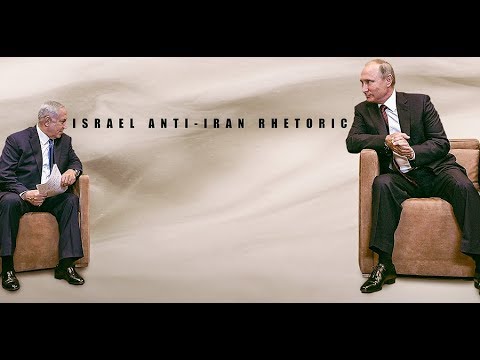
Prime Minister Benjamin Netanyahu has said that Israel felt threatened by Iran’s growing influence in the Middle East. Netanyahu expressed his Iranophobic view in a meeting with Russian President Vladimir Putin in Russia’s Black Sea resort of Sochi on Wednesday. Press TV has asked Scott Rickard, former American intelligence linguist from Tampa, Florida, and Brent Budowsky, a columnist at The Hill from Washington, to give their thoughts on the issue.
Rickard said Tel Aviv is concerned about the fact that the regime could not carry out its old project to spread sectarian divisions and pave the way for dismemberment of the countries in the Middle East region because of the Iranian-led resistance against Israeli policies, not only in the occupied territories of Palestine but also in the whole region.
“Iran is not a threat to Israel whatsoever. The threat that Israel sees is the fact that their Oded Yinon Plan is being put to a hold by Iran,” the intelligence linguist said on Thursday night.
“They (the Israelis) look at Iran as a threat only because they have no influence on their governments and Iran is autonomous and is not under the Zionist influence,” he added.
Since the victory of the Islamic Republic of Iran in 1979, Tehran has been critical of Israel’s policies in the region, whereas “no leaders [of other states] even dared to speak out against Zionism,” Rickard argued.
“Considering Iran a threat in the region is really a fantasy,” which is a propaganda campaign to demonize the Islamic Republic, he said.
During the meeting in Sochi, Netanyahu tried to illustrate a negative portrait of Iran’s support for the Syrian government, but Russian Ambassador to the UN Vasily Nebenzya disappointed Israel by saying that Iran plays a very constructive role in Syria.
Rickard went on to say that the Israelis are trying to sway public opinion by using false intelligence about the Iranian role in Syria.
The analyst opined that the Israeli regime is “not worried about Iran as much as they are worried about the failure of their effort alongside their allies in trying to topple” the Syrian government.
Tel Aviv is afraid of witnessing that “Iran, Russia and Syria have built up a formidable defense” and have shown great resolve and great restraint against being attacked by Israel, he explained.
Iran and Russia alongside the Lebanese Hezbollah movement have played a major role in supporting the Syrian armed forces to defeat Takfiri terrorists and foiling a US-Israeli plot to partition Syria.
Budowsky, the other guest on the panel, said Netanyahu and President Putin were “establishing some understanding of each other’s position to try to avoid any mistakes that could escalate militarily.”
Israel, which has been reportedly aiding and abetting terrorist groups to topple the government in Damascus, considers Iran’s support for President Bashar al-Assad’s fight against the spread of terrorism a threat to its intervention.
The columnist said that Israel is concerned about having Iran near the occupied territories of Palestine as a result of Iranians’ presence in Syria. – Video
Iran, Saudi to Exchange Diplomatic Visits

Al-Manar | August 24, 2017
Iran and Saudi Arabia will soon exchange diplomatic visits, Tehran said, in a possible sign of tensions easing after the arch rivals cut ties last year.
Iranian Foreign Minister Mohammad Javad Zarif told local media the visits would take place after this year’s hajj pilgrimage to Mecca in Saudi Arabia, which is due to start at the beginning of September.
“Visas have been delivered for the two sides. The final steps need to be completed so our diplomats can go inspect our embassy and consulate in Saudi Arabia and for Saudi diplomats to come inspect their embassy and consulate,” Zarif told news agency ISNA.
Zarif urged Riyadh to reconsider its foreign policy.
“Saudi Arabia’s behavior goes against its own interests. We want security and stability throughout the region and insist on the need to fight against the dangers that threaten us all,” he said.
“Saudi Arabia has not benefited from two years of war and horrific acts against the Yemeni people, on the contrary,” he said. “It’s the same in Syria or in Bahrain. We hope they will choose another path.”
US military constructing new base in Iraq’s Kurdish region: Report
Press TV – August 22, 2017
The US military is reportedly building a new permanent base in Iraq’s semi-autonomous Kurdistan region as part of attempts to perpetuate its occupation of the conflict-ridden Arab country indefinitely, regardless of all opposition from religious figures and people from all walks of life.
Iraq’s Kurdish-language Rudaw television network reported on Tuesday that the base is being constructed in Kariz village of Zummar district, located 60 kilometers northwest of Mosul, stressing that 60 percent of the work has already been done.
The report added that 120 US soldiers and 300 long-range artillery systems have also been stationed in the area.
Hassan Khalo Ali, a Kurdistan Democratic Party (KDP) official, said the base is being built on an area of 20 acres of land, local people can see helicopters continuously taking off and landing and entering the base is prohibited in every way to ordinary people.
The new US base would mark the fifth of its kind in Iraq’s Kurdish region.
A Kurdish military official, requesting anonymity, said US officials, President of the Kurdistan Regional Government (KRG) Masoud Barzani as well as officials from the Ministry of Peshmerga have reached a tripartite agreement on the construction of the base.
The Kurdish official went on to say that the base will help Americans to monitor movements in a vast expanse of land, which stretches from the western bank of the Tigris river to Tal Afar city, located 63 kilometers west of Mosul.
Meanwhile, Deputy Peshmerga Minister Sarbast Lazgin said the base will be a reinforcement facility for Tal Afar liberation operation.
On American bases in Iraq’s semi-autonomous Kurdistan region, Lazgin stated that a joint operations room is now operating in Erbil, noting that there are US military bases in Harir and Khazir sub-districts of Shaqlawa district.
The report comes as Iraq’s Kurdistan region plans to hold an independence referendum late next month.
Turkish Foreign Minister Mevlut Cavusoglu told the state-run TRT Haber television news network on August 16 that the vote will lead to “civil war” in Iraq.
Hoshyar Zebari, a close adviser to Kurdistan Regional Government (KRG) President Massoud Barzani, told Reuters on August 12 that Kurdish authorities were determined to hold the referendum on September 25 irrespective of all objections.
In June, Iraqi Prime Minister Haider al-Abadi described as untimely the decision by Barzani to hold the referendum.
“We have a constitution that we’ve voted on, we have a federal parliament and a federal government… The referendum at this time is not opportune,” Abadi said on June 13.
Iran has also expressed opposition to the “unilateral” scheme, underlining the importance of maintaining the integrity and stability of Iraq and insisting that the Kurdistan region is part of the majority Arab state.
Russia throws weight behind Iran’s missile program
Press TV – August 16, 2017
Iran’s defensive missile program is part of its “national interests,” Russian Foreign Minister Sergei Lavrov says, asserting that the new US sanctions against the Islamic Republic over its missile activities are “illegitimate” and only harm the nuclear deal between Tehran and the P5+1.
Speaking to reporters in a news conference on Wednesday, Lavrov said Iran’s development of an array of ballistic missiles was not in violation of the UN Security Council’s Resolution 2231, adopted in July 2015 to endorse the landmark nuclear agreement, known as the Joint Comprehensive Plan of Action (JCPOA.)
“The missile program is Iran’s internal affair. Iran is not prohibited from having it,” Lavrov said. “The UN Security Council’s resolution contains no legal bans on that score.”
‘Illegitimate’ pressure
The top Russian diplomat warned the US against upsetting the balance of the deal in favor of its own interests by resorting to unilateral measures.
Washington has on several occasions slapped new sanctions against Iran over its missile program, most recent of which was on July 28.
“Unilateral sanctions are essentially illegitimate. When these sanctions are used to upset the balance on a certain problem in favor of some party, and such a balance was achieved on the Iranian nuclear program, these are irresponsible moves, which may upset and undermine that balance,” Lavrov said.
“One should not come up with such provocations, since the issue at hand is the interests of a vast region where we would like to secure a non-nuclear status rather than some individual country’s national interests,” he added.
Iranian President Hassan Rouhani warned earlier this week that Tehran’s nuclear program could quickly return to its pre-JCPOA status in case the US continued its hostile attitude.
“I do hope that this will not happen,” Lavrov said. “I also hope that the United States will not violate its commitments to the Joint Plan, either.”
He noted that both the International Atomic Energy Agency (IAEA) and the administration of US President Donald Trump had time and again confirmed Iran’s compliance to the deal.
Russia against ‘suffocating’ North Korea
Elsewhere, Lavrov weighed in on the aggravating tensions between the US and North Korea and said Russia was not in favor of economic sanctions that were meant to “suffocate” Pyongyang and its people.
“We cannot support the ideas that some of our partners continue to nourish and that are aimed literally at the economic suffocation of North Korea with all the negative, tragic humanitarian consequences for the North Korean citizens,” Lavrov said, noting that the possibilities for economic pressure on North Korea had almost been “exhausted.”
The standoff was intensified earlier this month after Trump threatened Pyongyang with “fire and fury” over its missile program. The North hit back by threatening a missile strike against the US Pacific territory of Guam.
“We are noting that this rhetoric has quieted down recently, and it is probably to be hoped that the hot heads have cooled down,” Lavrov said.
The LOCKERBIE Bombing: Who Really Did Carry Out the Worst Terrorist Attack in British History…?

The Burning Blogger of Bedlam | July 27, 2017
The Lockerbie bombing in 1988 was perhaps the 9/11 of its time. While it didn’t result in the kind of phony Global ‘War on Terror’ that was conducted after 9/11, it did give the US and Britain the platform for beginning a targeted downfall of a particular nation and society, this being Libya.
This was accomplished the same way in Libya as it was accomplished in Iraq: first by years and years of crippling sanctions and forced hardship (via the UN),then by all-out destruction against a nation that is no longer able to defend itself (Iraq in 2003, Libya in 2011).
There are essentially two ways to look at Lockerbie.
One, the most important, is as a criminal investigation of an act of mass murder. The other is as a prolonged political or geo-political tool serving multiple purposes. Both are worth revisiting; particularly as the ghost of Lockerbie (and all of its victims) has reappeared in news media in the last few weeks.
Revisiting the subject of Lockerbie is important both as a study of geo-politics and the place of political terrorism within that arena and as a study in history and how it relates to contemporary events.
I want to take a broad overview of the Lockerbie subject here, touching on all of those areas: this article will cover (1) the reasons why the ‘official’ story of Lockerbie is so problematic and disputed, (2) the release of the ‘Lockerbie Bomber’ from prison in Scotland and why it happened, (3) the political and geopolitical motives and consequences of the Lockerbie trial and verdict, and finally (4) the many different theories as to who really did carry out the Lockerbie bombing and why.
The official story remains that the Lockerbie bombing was the doing of the Libyan, Abdelbasset al-Megrahi, who – at the time – had been in charge of security for Libyan airlines.
Abdelbasset al-Megrahi was jailed for 27 years, but died of prostate cancer, aged 60, in 2012. On his deathbed, he continued to claim he was innocent of the bomb that ripped apart Pan-Am Flight 103 over Lockerbie, Scotland, in December 1988, killing 270 civilians.
It remains the worst act of terrorism in British history.
As was being reported in media outlets a fortnight or so ago, the family of the convicted Lockerbie bomber Abdelbaset al-Megrahi is involved in a new bid to appeal against his conviction.
They are not alone in this move, but also have the support of Dr Jim Swire, who lost his daughter Flora in the bombing of Pan Am Flight 103, and Rev John Mosey, who lost his daughter Helga.
Like 9/11, the Lockerbie bombing of Pan-Am Flight 103 invited numerous conspiracy theories and claims of a cover up. And with good reason.
There were Scottish investigators questioning the official verdict all along, with claims that the key piece of evidence – the bomb timer – had been planted on the scene by a CIA operative, while the expert who examined the timer admitted to having manufactured it himself and the crucial witness who connected the bomb to the suitcase later admitted to having been paid $2 Million to lie in the trial.
Abdelbaset al-Megrahi sat in a prison cell in Scotland for years for a crime he hadn’t convincingly been proven guilty of; even when the Scottish government decided to send him back to Libya on compassionate grounds (because of his prostate-cancer), Washington and Westminster still both objected and numerous commentators accused Scotland of being ‘soft’.
And when Megrahi was filmed receiving a hero’s welcome by Saif Gaddafi and a large crowd upon returning home, much of Western media was full of condemnation that these people were ‘celebrating a terrorist’.
Many condemned this as a gross insult to the victims of Lockerbie. If Megrahi’s guilt could be proven beyond reasonable doubt, this attitude would be valid: but if it can’t, then the bigger insult to those victims is the cover-up and the obfuscation of evidence that has continued to this day.
Jim Swire, the spokesman of UK Families Flight 103, and whose daughter was killed in the Lockerbie bombing, has repeatedly expressed grave doubts about the official version of events.
Hans Köchler, the Austrian jurist appointed by the UN to be an independent observer at the Lockerbie trial, expressed concern about the way it was conducted (particularly the suspicious role played by two US Justice Department officials who, according to him, sat next to the Scottish prosecuting counsel throughout the process and appeared to be giving them instructions).
Köchler would later describe al-Megrahi’s conviction as “a spectacular miscarriage of justice”. Jim Swire, who also was present through the trial, then launched the ‘Justice for Megrahi’ campaign, being utterly unconvinced by the official verdict.
Professor Robert Black QC, among others, also maintains that Abdelbasset al-Megrahi was innocent of the Lockerbie bombing, the entire case hinging on the shaky testimony of a single, highly dubious, witness in Malta (a shopkeeper named Tony Gauci, who, years after the trial, was described by Lord Advocate, Lord Fraser of Carmyllie, as being “an apple short of a picnic”).
This same man, it later emerged, had been paid $2 million by the CIA for his testimony against Megrahi, while his brother – a man entirely unrelated to the case – was also paid $1 million.
Professor Black, upon visiting al-Megrahi in prison in 2007, referred to the “wrongful conviction” of an “innocent man”.
Key evidence presented at the trial (e.g. timer fragment, parts from a specific radio cassette model, clothing bought in Malta, bomb suitcase originating at Luqa Airport) had likely been fabricated for the political purpose of incriminating and then punishing Libya. It was openly known that vital evidence had been tampered with (see here, for example).
A lot of these key problems were covered in the very good Al-Jazeera investigation/documentary ‘Lockerbie: Case Closed’ (see here). American Radio Works also examined the Lockerbie case in 2000, seemingly coming to the conclusion that the case against Libya and al-Megrahi wasn’t convincing.
In a report on the Lockerbie trial, Köchler, a university professor, said “It was a consistent pattern during the whole trial that – as an apparent result of political interests and considerations – efforts were undertaken to withhold substantial information from the Court.”
Hans Köchler was the only international observer to submit comprehensive reports on the Lockerbie trial and appeal proceedings to the Secretary-General of the United Nations. In the June 2008 edition of the Scottish lawyers’ magazine The Firm, Dr Köchler referred to the ‘totalitarian’ nature of the Lockerbie appeal process. Particularly interesting was his statement that it “bears the hallmarks of an intelligence operation”.
Certainly, the dubious elements in the investigation process and the illegitimacy of the trial are more than enough to suggest that US agencies were trying very hard to cover something up.
Calls in Scotland for al-Megrahi’s release began with the Moderator of the General Assembly of the Church of Scotland in 2003, particularly after Nelson Mandela had called on Western Churches to intervene in what he called a major “miscarriage of justice”.
Within a few years, even Arab League representatives were referring to al-Megrahi not as a terrorist but as a ‘political hostage’ being held in Scotland. It was calling for al-Megrahi’s release and was even endorsing Gaddafi’s claims for compensation from Britain due to the damage done to Libya’s economy from 1991 to 1999.
Appeals for al-Megrahi’s release or a re-opening of the case were resisted and rejected, however, for several years, leading to al-Megrahi withdrawing his own appeal in August 2009.
At this time, Scottish Minister Christine Grahame (of the SNP) wrote “There are a number of vested interests who have been deeply opposed to this appeal continuing as they know it would go a considerable way towards exposing the truth behind Lockerbie… In the next days, weeks and months new information will be placed in the public domain that will make it clear that Mr Megrahi had nothing to do with the bombing of Pan Am 103.”
When al-Megrahi was eventually released, it was on compassionate grounds and was framed simply as an act that would allow him do die in Libya.
Washington and Westminster – along with much of the media – were furious with the Scottish courts, insisting that al-Megrahi should remain in prison in Scotland.
But the crucial thing about al-Megrahi’s release to Libya was the way it was framed as an act of compassion that had no bearing on the previous trial or on the official verdict concerning his guilt.
Megrahi’s withdrawing of his own appeal just shortly before he was released on compassionate grounds presumably means a deal was made to allow him to go home and die in Tripoli, so long as he remained officially ‘The Lockerbie Bomber’ and the case was not to be re-opened.
The scenes of al-Megrahi landing at Tripoli Airport, being met personally by Saif al-Islam Gaddafi, and being greeted by hundreds of young Libyans waving Libyan and Scottish flags were played across Western media and presented as ‘proof’ that Scotland had made the wrong choice – and that the Libyans were celebrating the ‘Lockerbie Bomber’. However, al-Megrahi’s return home had also happened to coincide with celebrations of forty years of the Libyan Arab Republic.
At any rate, within two years of this, that same Libyan Arab Republic was in ruins, NATO warplanes were bombing the entire country back into the stone age, and al-Megrahi would die shortly after this, still being regarded by most of the world as ‘The Lockerbie Bomber’.
In late 2011, after she had finished celebrating Gaddafi’s brutal murder in Sirte, Washington psychopath Hillary Clinton was calling for Abdelbaset al-Megrahi to be forced to go back to jail in Scotland – a request that was ultimately rejected.
If we consider – as we’re doing here – that the Lockerbie bombing wasn’t carried out by Al-Megrahi or Libya (and evidence suggests it wasn’t), then we have to wonder who did carry out Lockerbie. And whether the intention of that false-flag operation (with 207 civilian deaths) was to create a *reason* to impose the sanctions, a reason to cripple Libya’s growth and economy and to be able to firmly declare Gaddafi’s Libya a ‘terrorist state’: all designed to cripple Gaddafi’s position and to, in international terms, back him and his state into a corner, while also serving to rubber-stamp the perception of Gaddafi as the Great Villain.


Anyone who grew up in the 80s will remember this portrayal of Gaddafi as the Big Bad Villain (or ‘Mad Dog of the Middle East’, as Ronald Reagan called him) in the same way that Saddam Hussein would later be portrayed or as Osama bin Laden would later be presented as the emblematic evil mastermind of anti-Western schemes.
In fact, in many ways, Lockerbie and Gaddafi were the dry run for what would later be 9/11 and Bin Laden – a major, terrible terrorist act of mass murder and an iconic caricature of a Big Bad Monster/Villain from the East. By the late 90s, the idea of Gaddafi as the great villainous threat to the West had run out of steam and the focus was shifted instead onto Saddam Hussein and then Osama bin Laden.
Ironically, as I’ve pointed out before, it remains a fact that Gaddafi had actually been the first world leader to issue an arrest warrant for Bin Laden, long before the US or its allies did.
Lockerbie, the Berlin disco bombing and the shooting of Yvonne Fletcher in London (all three of which had serious doubts around them from the beginning – I covered the Yvonne Fletcher shooting somewhat in this post on the 7/7 London Bombings and the Berlin Disco bombing somewhat in the ‘Libya Conspiracy‘ book) can all be argued to have been programs conducted by UK/US intelligence (possibly in concert with agencies from other governments) to permanently vilify Gaddafi’s Libya and thus justify ongoing sanctions and the likelihood of the country’s decline.
This is an extremely important point: the sanctions imposed on Libya (after Lockerbie) were designed to reverse the country’s success and its attainment of self-sufficiency, to cripple the nation with deprivation and incite ill-feeling.
The only way offered to end the sanctions program was for Libya to pay what was reckoned to be the biggest compensation package ever imposed onto any country – Libya would have to pay a total of $10 Billion to the Lockerbie victims’ families.
The other condition was that Gaddafi also had to formally acknowledge responsibility in the UN for his officials’ orchestrating of the Lockerbie bombing. Gaddafi eventually went along with these demands, but to his domestic audience he permanently denied any responsibility or involvement in Lockerbie and told his people that the extortionate reparations Libya was having to pay wasn’t an admission of guilt, but merely the price having to be paid in order for Libya to re-enter the international community.
In other words, he took the official blame for Lockerbie in order to try to end the sanctions, but all the while he insisted it was a lie.
In 2011, he probably found himself wishing he hadn’t bothered; because it was all for nothing.
US whistleblower Susan Lindauer told RT in 2011 that, the summer before the ‘Arab Spring’ uprising, Gadaffi had in fact been pressuring US, British, French and Italian oil companies to reimburse Libya for the cost of those payments to the families of the Lockerbie bombing.
In that context, it’s also hardly surprising that come 2011 and as Western governments were bombing Libya and targeting Gaddafi for assassination, the Lockerbie business got dragged out repeatedly in the media to act as a timely reminder of why Gaddafi was so terrible and needed to be killed.

By this point, the suggestion was now even being made that Gaddafi had ordered the Lockerbie bombing personally (which had never been suggested before).
Arguably, however, the destruction of Libya in 2011 was the desired end-point of a geo-political timeline that Lockerbie had been a crucial part of.
That being so, and with Gaddafi dead and Libya in ongoing chaos, it is arguably no longer as important whether the truth about Lockerbie comes out or not. Most of the key figures in the Gaddafi era regime are either dead or in jail.
Abdelbasset al-Megrahi himself died just months after Gaddafi was killed and the old Libyan state was overthrown.
All of that long-term geo-political scheming to overthrow Gaddafi is over – so it is possible that new investigations might be ‘allowed’ to uncover more of the true story behind the bombing of Pan-Am Flight 103.
Aside from all of the dubious elements in the Lockerbie trial and the questionable processes, what also strikes me as telling is the commitment of al-Megrahi’s family to clearing his name: especially given that Al-Megrahi is dead and the state accused of planning Lockerbie has long since been overthrown.

Al-Megrahi himself (pictured here in his final days of life, in Tripoli) was continuing to insist on his innocence right up to his dying days and, in fact, had asked Jim Swire to continue to fight to clear his name after he died.
Why would a guilty man bother to do that? Terrorists generally claim their acts of terrorism. Moreover, Megrahi was already free by that point and was in no danger of going back to jail.
If al-Megrahi didn’t carry out Lockerbie, who did?
There have long been plenty of theories.
The Popular Front for the Liberation of Palestine: General Command (PFLP-GC) was the first suspect, based on a threat it had issued against US and Israeli interests before Lockerbie occurred. Iran was also in the frame very early – and remains a key suspect for some people – with its motive thought to be revenge for the July 1988 shooting down of Iran Air Flight 655 by the USS Vincennes. Former British diplomat Patrick Haseldine suggested that the bombing of Pan-Am Flight 103 had in fact been an assassination operation by South Africa’s apartheid government, targeting UN Commissioner for Namibia, Bernt Carlsson.
Another widely held theory implicates CIA agents involved in drug-running operations. This was in fact the basis for Allan Francovich’s 1994 movie The Maltese Double Cross.
Here’s a very interesting piece of film on the drug connection to Pan-Am Flight 180.
A renowned terrorist from that time, Abu Nidal, allegedly later confessed to the Lockerbie bombing (unlike al-Megrahi, who, even on his deathbed, insisted he was innocent), while the controversial blogger Joe Vialls later put forward another theory that the bomb was detonated remotely and also attributed the crime to a CIA/Mossad operation. Vialls did a lot of work on tracking the Lockerbie trial, which is worth consulting – whether you agree with his take or not.
On the subject of Abu Nidal, it is worth making note of the claims that the ‘notorious Palestinian mercenary’ was in fact a US spy and a Mossad operative.
Patrick Seale’s book Abu Nidal: A Gun For Hire makes a very convincing case that the notorious ‘Black September’ terrorist was a full Mossad agent, servicing an Israeli agenda. Nidal was involved in a long line of terrorist atrocities.
The fact that Nidal was reported – even by mainstream newspapers – as having allegedly confessed to Lockerbie is therefore very interesting.

If he was a Mossad agent and US spy, then many of those terrorist acts (including ‘Black September’ and other acts of alleged Palestinian terrorism) would’ve presumably been false-flag ops – and that would seem to make him a very solid candidate for Lockerbie.
I am not endorsing any specific theory or conclusion here: merely arguing that it is probably time for Abdelbasset al-Megrahi to be exonerated and for the Lockerbie investigation to be re-opened in a big way.
In 2008, journalist Hugh Miles published a piece in The Independent, in which he further explored the question of who was behind the Lockerbie bombing; ‘all I know,’ he wrote, ‘is that it wasn’t the man in prison’.
In the article, he draws attention to a convicted Palestinian terrorist named Abu Talb and a Jordanian triple-agent named Marwan Abdel Razzaq Khreesat. ‘Both were Iranian agents; Khreesat was also on the CIA payroll,‘ he explained. ‘Abu Talb was given lifelong immunity from prosecution in exchange for his evidence at the Lockerbie trial; Marwan Khreesat was released for lack of evidence by German police even though a barometric timer of the type used to detonate the bomb on Pan Am Flight 103 was found in his car when he was arrested…‘
There is clearly no shortage of theories and avenues for investigation concerning the Lockerbie bombing.
There is also – and has been for decades – a concerted agenda at the governmental level to prevent any further investigation and to, instead, maintain the official story.
Read more: ‘The Libya Conspiracy: A Definitive Guide to the Libya Intervention‘, ‘The Life & Death of Gaddafi’s Libya: A Study of the Libya That No Longer Exists‘, ‘Muammar Gaddafi: A Psychological Profile of Man, Myth & Reality‘…
Featured Video

Death Spikes & Rising Cancer In Our Youth Explained
or go to
Aletho News Archives – Video-Images
From the Archives
Politicians lie
By Mazin Qumsiyeh | Popular Resistance | August 18, 2013
There is no way to say this truth nicely: Politicians lie. That includes Japanese, American, Egyptian, Israeli, and Palestinian politicians! Is there something more common sense than that? Yet, so many citizens around the world believe their own politicians or wistfully acknowledge lies but think it is part of the job needed to run things. They believe even when politicians contradict themselves blatantly. This phenomenon is rather remarkable. It is a dissonance and disconnect from reality that many seem oblivious to. It is very dangerous because it can lead to accepting rationales for going to war. These can be deadly wars that lead to millions of lives lost as happened in what was called World War 1 and WW2. Even when incredible and declassified evidence abound, politicians continue to lie and old mythologies refuse to die. Here are just a few of the countless lies told to us over the past few decades… continue
Blog Roll
 Aletho News
- Iraqi resistance group vows to stage airport sit-ins over Iran aerial blockade
- Turkish parliament to review Saudi-Pakistan defense pact next month
- DEATH SPIKES & RISING CANCER IN OUR YOUTH EXPLAINED
- Iran offers Trump deal before US election
- Merz regime wants ‘secret police’ – opposition
- Israeli settlers terrorize West Bank Palestinians with state-provided drones: Report
- They see them, then kill them: Israeli quadcopters track, deliberately target civilians in Gaza
- Debunked: Trump’s egregious UNGA claims on war against Iran crumble under scrutiny
- Europe was part of the infrastructure of US aggression against Iran: Deputy FM
- New evidence on the Bucha Massacre
- If Americans Knew
- Trump betrayed voters with his campaign lies and prioritized a foreign country once he took office
- Netanyahu calls Israel’s war in Gaza ‘opposite of genocide’ in UN speech to near-empty hall
- Settler Kidnappings: Torture, Sexual Abuse and Terrorisation of Palestinian Abductees as Israel Deepens Annexation of West Bank
- Gaza winter nears as 162,000 tents become unusable, raising fears of humanitarian crisis
- Netanyahu says, “It’s the opposite of genocide”; UN says Gaza economy is world’s ‘most severe crisis on record’ – Daily Update
- Israel’s US-Backed Assault on Gaza Has Created the ‘World’s Most Severe Economic Crisis on Record’: UN
- ‘Protecting U.S. Citizens’… From Israel
- ‘This is where I live now, the back of a truck’: a day in the life of a grandmother in Gaza
- In UN Speech, Iran’s President Displays Pictures of Children Killed by US, Brings Attention to Israel’s Nuclear Arsenal
- Israel displaces hundreds of Palestinians amid wave of demolitions in West Bank
- No Tricks Zone
- New Study: Earth And Venus Surface Warmth Largely Explained By Convection And Lapse Rate, Not CO2 Or Radiation
- 2025 Nature Paper Claiming Worsening Global Drought Gets RETRACTED …Heavily Flawed
- New Study: ‘Global Drought Shows No Detectable Recent Acceleration Under Climate Warming’
- Economic Masterminds: German Socialists Suggest Taxing Productivity Gains Stemming From Using AI
- The South China Sea Has Not Been Cooperating With The Climate Change Narrative
- Energy Crisis: Germany Enters Heating Season With Historically Low Gas Reserve Fill Levels
- New Study: The Antarctic Ice Sheet Gained Mass From 2020-2024 Due To Staggering Snow And Ice Accumulation
- Study: Ocean Heating Rates From Thousands Of Years Ago ‘Dwarf’ Modern Ocean Heating Rates
- Climate Extremists Target, Attack Large-Scale Power Grid Infrastructure In Germany!
- New Study: Antarctic Ice Melt Has Contributed Less Than 1 Centimeter To Sea Level Rise In The Last 30 Years

