Iran fights US appropriation of $1.7 billion
Press TV – October 2, 2015
The Central Bank of Iran (CBI) has filed an appeal against a US court ruling to turn over Iranian funds worth $1.75 billion to alleged families of the victims of the 1983 bombing in Beirut.
The US Supreme Court says it has agreed to consider the appeal by the CBI which contends the ruling violates a 1955 US-Iran treaty.
The money, currently held in a trust account in New York, was ruled by the city’s court of appeals in 2014 to be handed over to the families of the victims. They accuse Iran of providing material support to carry out the attack which killed 241 US troops.
Iran denies the accusations. The country also says the ruling violates a treaty between the US and Iran which bans expropriation of one country’s properties in the territory of the other.
The legal battle comes at a delicate time as Iran and the United States seek to implement an accord signed in July to put their nuclear differences to rest.
The Obama government has urged the high court not to take up the case.
The US Congress has waded into the dispute, passing a law in 2012 to implement the court ruling. The tribunal must now decide whether the chambers have violated the US Constitution by dictating the outcome of a court case.
Iran: most developed country in Muslim world thanks to Western sanctions
Pravda – 30.09.2015
How does the Iranian economy feel after 40 years of the economic blockade? How can Russia and Iran develop cooperation in the future? Pravda conducted an interview on the subject with Rosnano investment director, Vadim Veschezerov.
“A lot has been said recently about the Russian-Iranian cooperation in the field of high technologies. Can Russia and Iran cooperate in the high-tech industry instead of oil and fruit?”
“In my view, this is exactly where we can work together most effectively. Russia and Iran are competitors when it comes to oil. Fruit is growing in many other countries of the world, not just in Iran. Iran is an interesting country, because this is the only highly developed, high-tech country of the Islamic world. In all other countries of the Islamic world, even if they have ultramodern industry, they have achieved it with someone else’s help. Iran has achieved everything alone. In some areas, Iran is a big player. Iran has a very good chemical industry and the world’s only independent pharmaceutical industry.
“I’m not talking about the nuclear program of Iran. Unlike Pakistan and other countries, Iran had no opportunity to borrow – the country was doing everything alone.”
“Has Russia lost the moment for developing cooperation with Iran? We had a unique opportunity, when Iran was living in a blockade, but now there are plenty of Americans and Europeans there.
“We have two or three years. I am personally studying the events that are now happening in the country. Unfortunately, we have very few people in Russia, who realize the peculiarities and structure of Iran, or how to build relationships with the Iranian side.
“Technically, we must explore every area where we can cooperate. In almost 40 years of blockade, the Iranians have learned to do many things and they have reached great progress, but, of course, they can not do everything. For example, their electronics is a very weak point. They are interested in chemistry, mathematics and computer science.
Not that long ago, the secretary of the Supreme Coordination Council of Free and Special Economic Zones of Iran, Akbar Torkan, named five main branches of classical economics that in his view are interesting for foreigners. They are petrochemical, automotive, power generation, steel and cement industries.
“Any industry needs high technologies. In Iran, there is a very strong group of companies working in the field of nanotechnology – this is a priority direction for them. This area is entrusted to the Iranian Council for the development of nanotechnologies.
“We must not forget that the country has been living under the conditions of economic blockade for 40 years. They have learned not only to survive, but to develop independently. As they say: “Thank you, America. You’ve turned us from consumers to entrepreneurs.”
“In what areas does Rosnano intend to cooperate with Iran?”
“We are most attracted to pharmaceuticals. We have something that interests the Iranian side – drugs and medical devices. In Iran, there are very interesting medical devices and medications that can be potential on the international market. In India, the pharmaceutical industry is completely built on copying others, and the Iranians have their own their developments.
“They have a very unique system to encourage scientists and engineers to go into business. For example, if you offer a startup in the high-tech industry, the state can pay a share in the company for you. In three or four years, if you fulfill the agreement with the state, if you create a product, a medication or something else, the state will sell you this share for one real.
“Now that the sanctions are being removed, Russian energy companies have many opportunities in Iran. The USSR had built most of the Iranian energy industry – and they remember that.”
Interview conducted by Said Gafurov
Can Washington Get a New Military Base in Central Asia?
By Vladimir Odintsov – New Eastern Outlook – 30.09.2015
The special attention that the United States has been paying to Central Asia, while actively seeking ways to implement a strategy of global leadership in the region that is now fully recognized as the center of Eurasia, has been covered in numerous articles, including those published in NEO.
According to the geopolitical concept of the recognized American political scientist Zbigniew Brzezinski: Those who control Eurasia control the world. Therefore, Washington’s steps to strengthen American influence in the region in the long run are completely predictable. The pivotal role in this policy is played by the US military bases in the region and military cooperation ties. After all, according to the globalist logic of the White House, American influence in any region must be supported by the “adequate” military force. The 9/11 events in the US and the consequent anti-terrorist intervention in Afghanistan have become a pretext for a major military deployment of American and NATO troops in Central Asia.
By the way, the ongoing engagement of US troops in Afghanistan confirms the notion that the presence of US and NATO forces in this country has little to do with the “struggle for democracy”. The true purpose of the military intervention in Afghanistan was the creation of powerful military bases, as the geographical position of this country is pretty unique in terms of the strategic freedom it provides. From this area Washington can launch a massive attack against Russia’s Urals and Siberia, different facilities in Central Asia, Iran, Pakistan, India and China. For this reason from the very start of the US invasion of Afghanistan, Shindand and Bagram Air Bases were transformed into massive construction sites where a large number of surface and underground facilities being built.
It happens so that for Pentagon Central Asia serves as a base for applying pressure on Russia, China, Iran and the entire Eurasian continent, it also plays a pivotal role in the post-conflict settlement in Afghanistan, since it may form a joint military alliance under the banner of opposition to the Islamic state.
In an effort to strengthen its positions in Central Asia under the above mentioned pretext, the United States has sent invitations to join the anti-ISIL military coalition to both Uzbekistan and Tajikistan. To add some momentum to the matter the Deputy Assistant Secretary for Central Asia at the U.S. Department of State Daniel Rosenblum has recently visited Tashkent, while the commander of United States Central Command general John Lloyd James Austin III made a trip to Dushanbe. In the course of their visits American emissaries discussed the situation in Afghanistan, regional security, and the advantages of cooperation with the United States “in the fight against international extremism” with regional authorities. Of course, a particular emphasis was made on the “need” to stay away from integration with Russia.
It is clear that in dealing with Uzbekistan and Turkmenistan “messengers of Washington” tried to make active use of the fact that those states today are free from obligations of the Collective Security Treaty Organization, which is headed by Russia, and therefore they are free to pursue military cooperation with the US. Therefore, Washington and Tashkent signed a document that provides the latter with free shipments of military equipment in the next five years. American equipment, trucks, military vehicles for a total worth of 6.2 million dollars will be just granted to this Central Asian state. This year, the United States has handed over to Uzbekistan armored class M-ATV, as well as armored repair and recovery equipment to support them, 308 cars and 20 repairs trucks with a total cost of at least 150 million dollars.
In dealing with Uzbek authorities American envoys had to mind the fact that the country entered the international counter-terrorism coalition immediately after September 11, 2001, while establishing special relations with a number of Western countries. As a result, the territory of the Republic at the time was housing a US military base, while the German Air Force had the opportunity to use the airfield in Termez, near the border with Afghanistan. Cooperation with Germany has been prolonged recently for a couple more years, though Tashkent is stressing the fact that the airfield in Termez is not a foreign military base. There’s little wonder to this fact, since the presence of foreign military bases was prohibited by law in Uzbekistan after the Andijan events, therefore in 2005 at the request of the Uzbek authorities American soldiers had to pack and leave.
Uzbekistan, is seeking ways to retain non-aligned status, and has no plans to allow any foreign military bases on its territory, on top of that it remains reluctant to send Uzbek troops abroad. This was pretty much the answer that the President of Uzbekistan Islam Karimov has given to Washington’s offer to join a coalition against the Islamic state.
However, Washington’s attempts to strengthen its military and political influence in Central Asia are far from over. Such efforts will certainly continue, despite the apparent reluctance of regional players to burden themselves with military obligations to the United States. America has severely damaged its reputation, therefore nobody believes in its peacemaking aspirations anymore, since the wars it has been waging are only leading to the suffering and misery of the civilian population of the countries it invades.
At UN, Rouhani Accuses US of Terrorism
Sputnik – 28.09.2015
 Hassan Rouhani addressed the United Nations General Assembly on Monday afternoon, discussing matters such as the Hajj pilgrimage disaster and the Iran nuclear deal.
Rouhani made the conclusion that the US and Israel are to blame for regional terrorism.
“We propose that the fight against terrorism be incorporated into a binding international document and no country be allowed to use terrorism for the purpose of intervention into the affairs of another country,” Rouhani said in an address to the UN General Assembly.
Moving to Iran’s relationship with the international community, Rouhani stated that he was “proud” to start a “new chapter” of engagement with the world.
He then praised the Iran nuclear deal and the negotiating partners involved. Rouhani appreciated that the deal was unanimously approved by the UN Security Council.
Russia, Iran, Iraq & Syria setting up ‘joint information center’ to coordinate anti-ISIS operations
RT | September 26, 2015
Russia, Iran, Iraq and Syria have agreed to establish a joint information center in Baghdad to coordinate their operations against Islamic State (IS, formerly ISIL/ISIS) militants, according to sources.
“The main goal of the center will be gathering, processing and analyzing current information about the situation in the Middle East – primarily for fighting IS,” a military-diplomatic source told Russian news agencies on Saturday.
The information center in the Iraqi capital will be headed by an officer of one of the founding countries on a rotating basis. Rotation will take place every three months. According to the source, Iraq will run the center for the next three months.
Russia, Iran, Iraq and Syria may also use the information center to coordinate anti-IS combat plans, the source said, adding that the agreement is a milestone for uniting the region’s countries in the war on terrorism – primarily on Islamic State militants.
On Friday, the US TV-Channel Fox News reported the four countries were establishing a “coordination cell” in Baghdad, but Dmitry Peskov, spokesman for Vladimir Putin, denied this. “We have already said there are many reports which are not true,” he told news agencies.
Recent media reports indicate Russia is boosting its cooperation with Syria and other Middle East countries in the fight against terrorism.
Western media say Russia is sending warplanes and tanks to Syria and building a military base in Latakia, but Russian officials deny this, saying Moscow is continuing to supply Syria with weapons in accordance with bilateral contracts.
“Russia has never made a secret of military-technical cooperation with Syria. Our country has long been supplying weapons and military equipment to Syria under the existing bilateral contracts,” Foreign Ministry spokeswoman Maria Zakharova said in a statement on September 9.
Syria hopes that Russia’s counter-terror policy will be more effective than the US-led anti-IS coalition.
“Moscow is acting within the framework of international law, respecting the sovereignty of our country and in coordination with Syria,” Syrian Foreign Minister Walid Muallem told RT. “We do not hide anything under the table. We regard Russia as our friend and strategic ally which is honest in its actions.”
Russia has long insisted on the creation of an international anti-terrorist coalition, to coordinate the efforts with the Syrian Army in combating the jihadists on the ground.
Who Fact-Checks The Fact-Checkers?: PolitiFact and Ted Cruz Both Get the Iran Deal Wrong
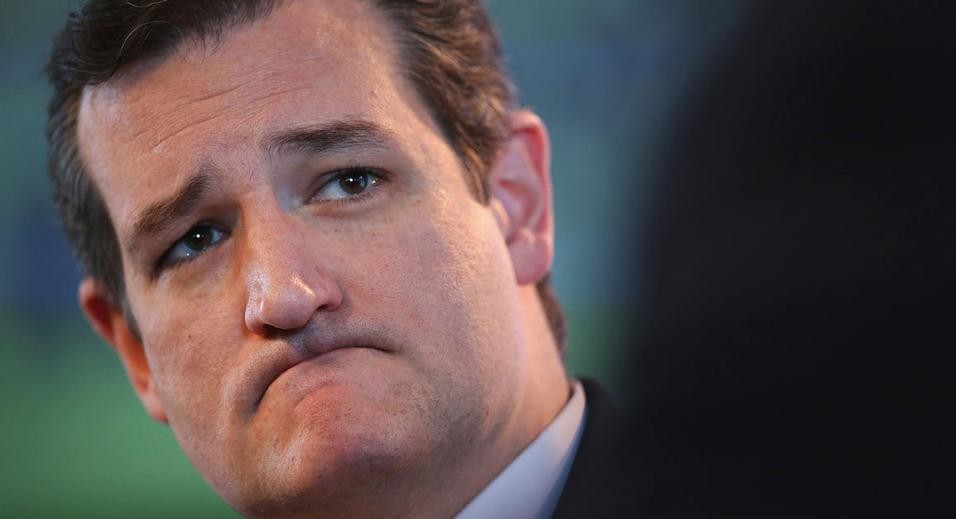
By Nima Shirazi | Wide Asleep In America | September 18, 2015
Presidential candidate Ted Cruz and the Tampa Bay Times’ Pulitzer Prize-winning fact-checking website PolitiFact were at each others’ throats last week over recent comments Cruz has made about the nuclear deal – officially known as the Joint Comprehensive Plan of Action (JCPOA) – reached this past July between Iran and six world powers.
The main reason for the spat is simple: Ted Cruz lies a lot.
In response to a particularly blustery claim made by the Texas Senator at a rally opposing the nuclear accord, which restricts Iran’s nuclear energy and uranium enrichment programs – reaffirming their purely peaceful nature – in exchange for a lifting of international sanctions, PolitiFact decided to investigate whether Cruz was telling the truth. (Spoiler: he wasn’t, and rarely does.)
At the rally, and afterward on Twitter, Cruz declared that the JCPOA “will facilitate and accelerate the nation of Iran acquiring nuclear weapons.” Even for a demagogic blowhard like Cruz, this is a ridiculous thing to say. Beyond the fact that we’ve heard for over three decades that the advent of an Iranian nuke is just around the corner – only a few years, maybe two years, a year and half, 12 months, six weeks away! – and these estimates have never been based upon credible evidence, the enhanced monitoring and inspections implemented under the new deal effectively prevent any possible Iranian move toward weaponizing its program for at least a decade, probably far longer. And that’s if Iran does the thing it’s never ever done: decide to build a nuclear weapon at exactly the time when its program is under the most intensive scrutiny of any nation’s program in history. The claim is absurd on its face.
Needless to say, it wasn’t too difficult for PolitiFact to judge this statement false.
But PolitiFact’s own understanding of the parameters of the Iran deal itself was surprisingly rife with errors, something that absolutely shouldn’t happen in a fact-checking article. The details, relayed by the website’s editors Louis Jacobson and W. Gardner Selby, were rendered this way:
Specifically, the deal requires Iran to give up 97 percent of its stockpile of highly enriched uranium, the kind needed to make nuclear weapons, as well as most of the centrifuges it can use to enrich uranium. In addition, Iran agrees to only enrich uranium to a level unsuitable for weapons for 15 years, and to cease production of plutonium, the other element that can be used to build a bomb. Known nuclear sites would be monitored for 15 years to confirm compliance, and inspectors would have the ability to enter undeclared sites suspected of nuclear use, though with possible delays of up to 24 days.
PolitiFact gets a bunch wrong here.
“Highly enriched uranium”
First, the deal does not require “Iran to give up 97 percent of its stockpile of highly enriched uranium, the kind needed to make nuclear weapons.” Why not? Because Iran doesn’t have any highly enriched uranium to give up.
This is a common mistake made by commentators, politicians, journalists, and pundits who should all know better. The fact is Iran has never enriched uranium above 19.75 percent U-235, which is defined by the IAEA itself as “low enriched uranium.” This is quite uncontroversial – no one, from the International Atomic Energy Agency (IAEA) to the U.S. intelligence community to the Israeli Mossad to non-proliferation experts, have ever claimed that Iran has produced a stockpile of highly enriched uranium (HEU). Iran has only ever produced low enriched uranium (LEU) – to levels of under 5 percent and under 20% – useful only as reactor fuel or medical isotopes, respectively, not bombs (which require enrichment levels of over 90 percent).
Furthermore, the IAEA has confirmed that, “since 20 January 2014, Iran has not produced UF6 enriched above 5% U-235 and all of its stock of UF6 enriched up to 20% U-235 has been further processed through downblending or conversion.” Additionally, as the agency has long confirmed, “All of the enrichment related activities at Iran’s declared facilities are under Agency safeguards, and all of the nuclear material, installed cascades, and feed and withdrawal stations at those facilities are subject to Agency containment and surveillance.”
What the JCPOA actually does, in this regard, is limit Iranian enrichment of uranium to no more than 3.67 percent U-235 LEU and, as the Arms Control Association notes, eliminates roughly 97 percent of Iran’s current LEU stockpile, capping it at a mere 300kg for 15 years.
“Production of plutonium”
PolitiFact also erroneously claims that, under the deal, Iran must “cease production of plutonium,” which makes no sense considering Iran has never produced plutonium. As I noted earlier this month, “Before it can be stockpiled, plutonium must first be extracted and reprocessed from the spent uranium fuel of an operational nuclear reactor. Iran has never done this and doesn’t even have a reprocessing plant. Iran has literally never extracted plutonium from a reactor core, let alone stockpiled it…”
In short, Iran can’t “cease” doing something it’s not – and never has been – doing.
Inspections
PolitiFact’s explanation of inspection parameters under the JCPOA is also disingenuous. By claiming that Iran’s “[k]nown nuclear sites would be monitored for 15 years to confirm compliance,” PolitiFact is implying that Iran’s nuclear infrastructure is not already under safeguards and constant monitoring, which it is – and has been for years, if not decades. Iran’s nuclear facilities have long been subject to the most intrusive and consistent inspection regime in the world.
The deal only strengthens this regime, allowing constant and immediate access to all declared nuclear sites and also to non-nuclear sites like centrifuge assembly workshops, centrifuge rotor production workshops and storage facilities, and uranium mines and mills, which, as nonproliferation expert Jeffrey Lewis has pointed out, “are not safeguarded anywhere else in the world.” This enhanced and unique access will last, in many cases, as long as 20-25 years.
PolitiFact’s language also suggests inspections of nuclear sites will cease after a decade and a half. This is totally wrong. In fact, all of Iran’s declared nuclear sites will remain under IAEA safeguards and surveillance in perpetuity, as mandated by the Nuclear Nonproliferation Treaty, to which Iran has been a party since its advent in 1968.
Even PolitiFact’s understanding of “possible delays of up to 24 days” is dubious, as this is the absolute maximum amount of time that access to a potentially suspect facility could be delayed through a process agreed to by all seven international parties (eight, if you include the European Union) to the JCPOA.
In truth, under the deal, the IAEA’s request to visit a suspect site “triggers a 24-day clock under which Iran and the IAEA have 14 days to come to an agreement on access. If not, the Joint Commission, created by the JCPOA, has seven days to make a determination on access, and if at least five of the eight members vote to allow the IAEA to investigate, Iran has three days to comply,” explains the Arms Control Association. At that point, the very first time this review protocol is tested to this extent, there’s a good chance the process of re-implementing sanctions on Iran would begin, rendering the tents of the JCPOA inoperable and signaling the imminent, if not immediate, collapse of the agreement altogether.
Who Fact-Checks the Fact-Checkers?
PolitiFact has rightly taken Ted Cruz to task for his false claims.
[In a petulant retort to being fact-checked, Cruz published even more lies in The National Review, declaring, among other things, that Iran cheated on a previous nuclear accord (it didn’t), that Iran is allowed “in certain circumstances” to “inspect itself, and report back on the ‘results’” (it’s not, not even close), and that the deal enables “Iran to finish their ongoing ICBM research and develop a missile that can carry a nuclear warhead across the Atlantic to America” (which is, simply, asinine).]
But in its own explanation of the Iran deal, PolitiFact repeats a number of baseless canards that have often been used by anti-diplomacy Iran hawks and deal-supporting liberal interventionists alike to mislead the public about the Iranian nuclear program and its capabilities.
For a “fact-checking journalism website aimed at bringing you the truth in politics,” PolitiFact should make sure to check itself before it, well, you know.
Iran denies AP report on Amano mission in Tehran
Press TV – September 19, 2015
Iran has dismissed a report claiming that the upcoming visit to the Iranian capital, Tehran, by the director general of the International Atomic Energy Agency (IAEA) is aimed at securing interviews with Iranian nuclear scientists.
“Some international media release biased reports with certain motives and this is not a new practice,” said Behrouz Kamalvandi, the speaker for the Atomic Energy Organization of Iran (AEOI), on Saturday.
The visit by UN nuclear agency’s chief Yukiya Amano is intended to pave the way for the “implementation” of the road map signed between Iran and the IAEA in mid-July, he added.
The remarks came following a report by The Associated Press quoting unnamed diplomats as saying that during his visit, “Amano plans to push for long-delayed interviews with Iranian scientists linked to alleged experiments as well as to discuss a planned inspection of Parchin [military site].”
Earlier in the day, the IAEA announced that Amano will travel to Iran later on Saturday to discuss issues related to the country’s nuclear program.
“The visit will focus on the ongoing cooperation between the IAEA and the Islamic Republic of Iran in the context of the Road-map for the clarification of past and present outstanding issues regarding Iran’s nuclear program,” read the statement issued by the agency, adding that Amano will meet with Iranian officials on Sunday.
On July 14, Iran and the IAEA signed a road map regarding the Islamic Republic’s nuclear work in the Austrian capital city of Vienna. The agreement was reached on the same day Iran and the P5+1 – the United States, Russia, China, France, Britain and Germany – finalized the Joint Comprehensive Plan of Action (JCPOA) in Vienna.
As part of the road map, the IAEA is required to finish its investigations about Iran’s nuclear activities and submit a report to the agency’s board by December 15.
Back on Monday, Amano said Iran has successfully met its obligations as stipulated in the road map, including an August 15 deadline for sending written explanations on its past activities.
Earlier this week, experts from Iran and the UN nuclear watchdog wrapped up a two-day session in Tehran, during which the Iranian team discussed the questions posed by the IAEA on September 8 with regard to Iran’s explanations. According to reports, expert meetings will continue in the city during the first week of the Iranian calendar month of Mehr (late September).
The UN Security Council on July 20 unanimously endorsed a draft resolution turning the JCPOA into international law.
Under the JCPOA, limits will be put on Iran’s nuclear activities in exchange for, among other things, the removal of all economic and financial bans against the Islamic Republic.
Assad Must Go? No, American Arrogance Must Go!
By Andrew Korybko – Sputnik – 15.09.2015
The US’ obsessive insistence that “Assad must go” is the most dangerous expression of American arrogance in years.
White House Press Secretary Joshua Earnest channeled President Obama’s famous chant that “Assad must go” when he claimed during a regular press briefing that:
“The international community has decided that it’s time for Assad to go. He clearly has lost legitimacy to lead. He has lost the confidence of those citizens of his country — at least the ones that — or I guess I should say particularly the ones that he is using the resources of the military to attack.”
The arrogance on display is both stupefying and dangerous. The problem in Syria isn’t, nor ever has been, President Assad – it’s always been the US’ arrogance in dictating demands and then militarily enforcing them after they’ve been rejected.
American Arrogance
Syria’s ills are directly traceable to the failure of American foreign policy in the Mideast. The US rabidly went on a regime change streak that began during the Bush years, with former Supreme Allied Commander of Europe for NATO General Wesley Clark revealing in his 2007 memoirs that a senior general showed him a memo and said:
“‘Here’s the paper from the Office of the Secretary of Defense [then Donald Rumsfeld] outlining the strategy. We’re going to take out seven countries in five years.’ And he named them, starting with Iraq and Syria and ending with Iran.”
Earlier that year, investigative journalist Seymour Hersh wrote an expose in The New Yorker in which he detailed, among other proposed regional regime change specifics, that the Bush Administration was planning to use the Muslim Brotherhood to launch a Gulf-funded sectarian war against the Syrian government.
At the time, the reason was supposedly because of Damascus’ closeness to Tehran, but later information as reported by The Guardian reveals that the decision to build a Friendship Pipeline between Iran, Iraq, and Syria in 2010, and Damascus’ rejection of a similar one from Qatar, likely had a lot to do with why the anti-government terrorist plan was pushed forward for activation the year after.
Beginning in 2011, the Mideast was rocked by the so-called “Arab Spring”, which Russian General Chief of Staff Valery Gerasimov would in hindsight categorize as a theater-wide Color Revolution during an official conference on the topic last year in Moscow.
What the US had wanted to do is overthrow all of the Mideast’s republics (even those allied with the US such a Egypt) in order to bring a transnational Muslim Brotherhood clique to power in each of them that would thus make it a lot easier to control the entire region.
Think of it as the neocons’ version of a 21st-century communist party, but directed towards control of the Mideast and not Europe (which has the EU for that).
The Gulf Monarchies were not targeted because of their staunch pro-American allegiance and the potential that any domestic disruption would have in upsetting the US’ economic interests there.
Between the pro-American Gulf Monarchies and the pro-American EU thus lay a handful of republics that weren’t so firmly under the US’ sway (or not at all influenced by it like Syria), so in order for the US to securely control the broad swatch of Afro-Eurasia stretching from Iceland to Yemen, it needed to overthrow those governments, ergo the “Arab Spring” Color Revolutions.
The People’s Will
But something went wrong as it always does with the US’ plans, and it was that the Syrian people wholeheartedly rejected the Muslim Brotherhood’s ploy at regime change, instead favoring to preserve the secular and multicultural society that Syrian civilization is historically known for.
For this simple reason, the Color Revolution attempt was a dismal failure from the very beginning, hence why the US and its allies (notably Turkey, Qatar, and Saudi Arabia) sought to transform it into an Unconventional War by arming their proxies and ordering them to escalate their soft coup attempt into a hard one.
The resultant Hybrid War that’s been raging for the past four and a half years is thus a manifestation of the US’ geopolitical obsession for regime change. Far from realizing that the people had resoundingly rejected such an approach from the very beginning, the US and its allies dug in by reinforcing their proxy elements inside the country and allowing foreign fighters to flood into Syria via the Turkish border.
Amidst this external onslaught being launched against them, the Syrian people continued to bravely soldier on and democratically show the rest of the world that they supported their government.
A constitutional referendum in 2012 passed by an 89% margin and with the participation of 57% of the population, while President Assad was reelected in 2014 with 88.7% of the vote in which 73% of the electorate took part.
Both sets of numbers trump the civil society participation and political legitimacy of Western countries and their leaders, and as President Assad once said, there is no way he could remain in office during this war if he didn’t truly have the support of the vast majority of the population.
It’s also telling that most of the country’s refugees haven’t fled the country, but have instead decided to stay in their homeland and seek safety under the protection of the Syrian Arab Army, which currently provides security to around 80% of Syria’s citizens.
Be that as it is, the US and its allies stubbornly ignored the people’s will, and instead continued to blindly pump weapons and fighters into the country in clear confirmation of the adage that insanity is “repeating the same thing over again but expecting different results”.
Ground Zero In The War On Terror
All of those fighters and weapons that the US and its allies were shipping into Syria were bound to lead to some major problems, chief among them the rise of ISIL, but this was actually predicted and supported by the US government a couple years ago. Judicial Watch published a declassified report that it received in May from a Freedom Of Information Act request that proves that the Pentagon’s Defense Information Agency thought that:
“If the situation unravels there is the possibility of establishing a declared or undeclared Salafist principality in Eastern Syria (Hasaka and Der Zor), and this is exactly what the supporting powers to the opposition want, in order to isolate the Syrian regime, which is considered the strategic depth of the Shia expansion (Iraq and Iran).”
This bombshell dovetails with what Syrian Ambassador to Russia Riyad Haddad recently said in an interview where he accused the US of using terrorism to promote regime change in his country. President Putin followed up at the CSTO summit by warning countries of the risks inherent in employing double-standards towards terrorists and directly or indirectly using them to further certain tactical objectives.
In order to stem the tide of terror that the US unleashed in the Mideast, Russia is rapidly moving forward with assembling an inclusive anti-ISIL coalition, and President Putin is expected to use his keynote speech at the UN General Assembly later this month to make his case that the situation is far too pressing to care about regime change, and that the world must unite in supporting Syria as it fights on its behalf on the frontlines against terror.
American arrogance got the world into this mess, but if you ask Russia, it’ll be Syrian humility that gets it out in one piece.
Read more:
EU Migrant Crisis: Coincidence or Plot Aimed at Starting Military Operation in Syria?
Israel Lobby, Neocon Media Continue Campaign Against Iran
By Richard Silverstein | Tikun Olam | September 16, 2015
 The dust has barely settled on Pres. Obama’s Congressional victory regarding the Iran nuclear deal, but the Israel Lobby and its assets in the media world refuse to give up, despite their loss.
The Washington Post, known for its hawkish editorial positions on Middle East issues and Israel in particular publishes Michael Gerson, a resident neocon evangelical (one-quarter Jewish, no less), who was George Bush’s chief speechwriter for five years.
Gerson just published a doozy of an attack piece on Iran full of exaggerations, distortions and outright falsehood. But one element in particular cries out for exposure. Ripping a page from George Jahn’s book (see below), Gerson writes this:
As President Obama was busy twisting congressional arms to prevent repudiation of the agreement, the Iranian regime has been systematically humiliating him.
Almost immediately, bulldozers began sanitizing the Parchin nuclear complex, where Iran is suspected to have researched the weaponization of nuclear technology…
Let’s unpack the lies in this passage. First, Parchin is not, nor ever was a “nuclear complex.” There were claims offered by unnamed “intelligence sources” to the IAEA that Iran did research on nuclear triggering devices at Parchin. In its report, the IAEA says such claims have been made about Parchin. But that report makes clear that there has never been any proof offered to substantiate this claim. So what we know for sure is that Parchin has been a military site for 85 years. That is all that we know.
When George Jahn made the same claim in a story he wrote for the AP, Muhammad Sahimi and I and a dozen or more other journalists and analysts took him to task for this and other mistakes he made in his report (and this wasn’t the first time he’d made such blatantly false claims and errors). As a result, AP buried the original story by changing its original URL. That is now the link for a correction published by the news agency:
In a story Aug. 19 about an arrangement over alleged past nuclear weapons work between Iran and the International Atomic Energy Agency, The Associated Press erroneously referred to Parchin as a “nuclear site. In fact, it’s a military site where some believe nuclear work occurred.
Apparently Gerson, stuck in his neocon bubble, never got the memo.
The op-ed further mangles the truth in this passage:
Ten days after the deal was announced, Quds Force commander Qasem Soleimani flew to Moscow (in defiance of a U.N. travel ban) to meet with Russian Defense Minister Sergei Shoigu and President Vladimir Putin. In short order, Iranian and Russian military forces began arriving in Syria
It’s true that Soleimani did travel to Russia and hold such meetings. And new Russian military equipment and forces began arriving in Syria after that. But there has been no escalation in Iranian involvement in Syria. Iranian forces did not “begin arriving in Syria” after the visit to Moscow. There have been Iranian forces there for several years. But there has been no increase as Gerson implies. The link, that he offers to support his claim, is to a NY Times article which highlights Russia’s escalating presence in Syria, but says nothing about any similar Iranian development. Therefore, Gerson’s narrative that Iran is thumbing its nose at the U.S. president, who hasn’t manned up against this perfidious enemy, is ludicrous.
Here is another unsubstantiated Gerson claim:
[In the aftermath of the deal] Iran is effectively announcing that it will be more aggressive in the region after the deal, not less.
On the contrary says Barbara Slavin of the Atlantic Council, quoting an Iranian academic close to the Rouhani government:
Contrary to the impression many in Washington seem to have that Iran will inevitably double down on intervention in regional conflicts, some members of the Iranian policy elite are advocating retrenchment to focus on repairing Iran’s sanctions-battered economy, according to Nasser Hadian, a Tehran University professor of political science who is close to the government of President Hassan Rouhani.
In a new paper to be presented Sept. 14 at the Atlantic Council… Hadian wrote that a “pro-minimal engagement” camp is arguing that Iran should reduce its intervention in neighboring states to “a bare minimum.”
Hadian does not identify who is in this camp, telling Al-Monitor that those having these views have not yet chosen to make them public. But he said that they include “key figures … among conservatives, radicals, reformers, the military, research institutions, and secular and religious people.”
So Michael Gerson, who knows gornisht fun gornisht about the views of Iran’s leaders tells us the Iranians want to take over the world, or at least their own little part of it. While an Iranian political scientist with close connections to the country’s leadership tells us the exact opposite. Gee, I know who I’d believe.
Let’s hope the editors at the Post are as diligent as those at AP in correcting their columnists errors. Especially ones like this which poison political debate on an issue critical to world peace and U.S.-Iran relations.
Gerson may want to brush up his nuclear “Shakespeare” by talking with former Israel Atomic Energy Commission director-general, Uzi Elam, who wrote a new op-ed in Haaretz, All in All, a Good Agreement (behind Hebrew paywall–there is a way to circumvent it). Among the points Elam makes in favor of the agreement is that in the fifteen years it is in effect Iran will not have enough uranium to produce “a single bomb.”
Iran, Israel and U.S. Subservience
By Robert Fantina | CounterPunch | September 11, 2015
As the United States Congress debates whether or not to accept an agreement that the U.S. and five other nations reached with Iran, regulating that nation’s nuclear program, the media keeps a less-than-rapt public informed. Each day, news pundits first speculate on how this or that senator may vote, and then when some senator announces his or her position, it is tallied up as a ‘yes’ or ‘no’, and a victory or defeat for President Barack Obama.
As all this takes place, some odd but revealing statements have been made. Let us first look at just two, both from Democrats, one from a senator voting for the deal, and one who opposes it, and see what they tells us.
Colorado Senator Michael Bennett, in endorsing the deal, made this astonishing statement: “Our primary objectives are to prevent Iran from having a nuclear weapon, make sure Israel is safe and, if possible, avoid another war in the Middle East.”
As this writer is wont to do, let us break this statement down to its component parts. We will look at Mr. Bennett’s ‘primary objectives’.
“Prevent Iran from having a nuclear weapon”. Well, the fewer nuclear weapons in the world, the better. But why are some countries allowed to have them, and others not? The only nation in the world ever to have used nuclear weapons, the U.S., has a large stockpile, and has done nothing to reduce it. Please note that the U.S. has been at war with one country or another for most of its long and bloody history, so the fact that it has nuclear weapons is certainly a great risk to the world. Former President Richard Nixon is said to have considered using nuclear weapons in Vietnam. Why is Iran being singled out as not allowed to have such weapons when the U.S. can have them?
“Make sure Israel is safe”. See how quickly we get to the crux of the matter? Israel’s safety, for Mr. Bennett, is of paramount importance. And if Iran were to develop nuclear weapons, then Israel wouldn’t be the only Middle East country with them.
There is always so much concern about Israel’s safety! Does the U.S. not care about the safety and security of other Middle Eastern nations? We know that Iraq’s security is not of any interest to the U.S., or it wouldn’t have destabilized Iraq by invading it in 2003. And with Israel assassinating Iran’s nuclear scientists, there can’t be too much concern about that nation’s internal security.
And what about Palestine? Israel increasingly steals Palestinian land, but no U.S. politician ever talks about the national security of Palestine.
U.S. spokespeople always proclaim that Israel is the U.S.’s only ally in the Middle East. Perhaps if the U.S. would stop bombing the men, women and children of other Middle Eastern countries, and would be a little more equitable in its foreign aid distribution (currently, Israel gets more foreign aid from the U.S. than all other countries combined), it might find that it suddenly would have more friends in the Middle East. It has been said that before the bloody, murderous and genocidal establishment of Israel in 1948, the U.S. had no enemies in the Middle East.
Why, then, might Mr. Bennett be so concerned about Israel? Could it be the $108,766.00 in donations from Israeli lobbies that he received between 2009 and 2015? Perhaps we will dismiss that notion, and say that Mr. Bennett is a statesman, rising above such petty things as campaign contributions, and only doing what he feels, in his heart of hearts, is best for the U.S. citizenry, come what may. When pigs fly.
“If possible, avoid another war in the Middle East.” So, as an afterthought, after concerns about Israel’s security have been addressed, perhaps avoiding a war isn’t such a bad idea. This is not the usual U.S. way; diplomacy isn’t high on the list of characteristics held by most of Congress. There isn’t a lot of muscle-flexing and chest-thumping involved in diplomacy, and what’s a little blood of U.S. citizens, and lots of it of foreign citizens, when such macho displays of power are to be demonstrated?
Now, to the opposition. Democratic Senator Ben Cardin of Maryland, who greatly distrusts Iran, said this: “There cannot be respect for a country that actively foments regional instability, advocates for Israel’s destruction, kills the innocent and shouts ‘Death to America.’” Again, we will look at the component parts.
Mr. Cardin is critical of nations that
1 ‘Actively foment regional instability’. The U.S. is causing untold suffering and ‘regional instability’ through drone strikes and support for repressive regimes or rebel groups throughout the region. One would like to hear Mr. Cardin oppose such active fomenting of regional instability.
2 ‘Advocate for Israel’s destruction’. Once again, Israel is foremost in the mind of another senator, as he looks at the nuclear agreement with Iran. Israel, of course, acts to destroy Palestine with full U.S. support, but that, as mentioned above, isn’t a concern.
Between 2009 and 2015, Mr. Cardin received $241,293.00 from Israeli lobbies. We will wonder again if this, perhaps, didn’t factor in strongly in Mr. Cardin’s deliberations.
As might be expected, the multitudinous Republican presidential candidate wannabes were universally opposed to the agreement. Oddly (not!), Israel was a major factor in their criticisms. The following are just a few of their comments.
Wisconsin Governor Scott Walker: “The deal rewards the world’s leading state sponsor of terrorism with a massive financial windfall, which Iran will use to further threaten our interests and key allies, especially Israel.” No, Mr. Walker, by any objective means, it is the U.S., not Iran, that is the world’s leading state sponsor of terror.
Former Arkansas Governor Mike Huckabee: “As president, I will stand with Israel and keep all options on the table, including military force, to topple the terrorist Iranian regime.” It sounds as if Mr. Huckabee wants ‘regime change’: when have we heard this before? Oh yes, that was President George W. Bush’s mantra when he sent soldiers in to ‘fix’ Iraq. We all know how well that turned out. Mr. Huckabee further said: “A threat to Israel is a threat to America.” No, it simply is not. Also, preventing Iran from developing nuclear weapons doesn’t seem to constitute a threat to any nation, with the possible exception of Iran.
Senator Lindsay Graham weighed in with these pearls of wisdom: “You’ve put Israel in the worst possible box. This will be a death over time sentence to Israel if they don’t push back.” It is interesting to note that between 2009 and 2015, Mr. Graham received $286,350.00 from Israeli lobbies.
It is no secret where this great anxiety for Israel originates; money talks in the U.S., and Israeli lobby groups speak loudly. What is disturbing is how it takes precedence over every other concern, to the point where elected officials are willing to wage war to protect an apartheid nation, censured more by the United Nations than any other country on the planet. This is the nation whose interests the U.S. puts front and center, before its own. This is the nation that receives billions of dollars in U.S. aid annually, as U.S. cities decay. This is the nation for which the U.S. will jeopardize the lives of its young citizens, by disdaining diplomacy and using war as the dominant means of ‘leading’ in the world.
That leading politicians so blatantly state their adoration for Israel should give every U.S. citizen cause for concern. It is time for justice and human rights to be enshrined as the hallmarks of U.S. foreign policy. As that has never been the case, it will be difficult to introduce it now. But it must be done; the world has suffered for too long because of the U.S.
Biden will ‘beg’ American Jewish leaders for Iran agreement: Analyst
Press TV – August 28, 2015
US Vice President Joe Biden will go to Florida to “beg” American Jewish leaders to allow Washington to have its nuclear agreement with Iran, says a political commentator.
“Something this critically important to American foreign policy means only one thing… begging to powerful Jews to let America have its deal,” said David Christie, a broadcast journalist based in New York.
Christie made the remarks in an interview with Press TV on Friday while commenting on Biden’s plan to visit Jewish leaders in Miami next week.
Biden’s office said in a statement that he will “participate in a discussion organized by [chairwoman of the Democratic National Committee] Debbie Wasserman Schultz to discuss the Iran deal with leaders in the Jewish community.”
The vice president, who has played an important behind-the-scenes role in the Obama administration’s lobbying push for the agreement approval by Congress in September, hopes to win support from Wasserman Schultz who has not announced her position on the issue.
“The best way to do that is for Joe [Biden] to make a pilgrimage to Miami so he can pay homage to the one group that has been at the core of our bizarre obsession with forging a nuclear deal with a country that can never be a threat to us in the first place,” said Christie.
Iran and the P5+1 group of countries — the US, Britain, France, Russia, China, and Germany – announced the conclusion of nuclear negotiations in the Austrian capital, Vienna, on July 14. The US Congress will vote on the agreement in September.
Under the agreement, known as the Joint Comprehensive Plan of Action, restrictions will be put on Iran’s nuclear activities in exchange for, among other things, the removal of all economic sanctions against the Islamic Republic.
“Indeed, none of our hysterical pre-occupation within an Iranian deal would even exist if it weren’t for what has become the mission in life for all US politicians and of course, that is to serve and protect Israel at all—and I mean—all costs,” said the journalist.
Featured Video

Death Spikes & Rising Cancer In Our Youth Explained
or go to
Aletho News Archives – Video-Images
From the Archives
Politicians lie
By Mazin Qumsiyeh | Popular Resistance | August 18, 2013
There is no way to say this truth nicely: Politicians lie. That includes Japanese, American, Egyptian, Israeli, and Palestinian politicians! Is there something more common sense than that? Yet, so many citizens around the world believe their own politicians or wistfully acknowledge lies but think it is part of the job needed to run things. They believe even when politicians contradict themselves blatantly. This phenomenon is rather remarkable. It is a dissonance and disconnect from reality that many seem oblivious to. It is very dangerous because it can lead to accepting rationales for going to war. These can be deadly wars that lead to millions of lives lost as happened in what was called World War 1 and WW2. Even when incredible and declassified evidence abound, politicians continue to lie and old mythologies refuse to die. Here are just a few of the countless lies told to us over the past few decades… continue
Blog Roll
 Aletho News
- From Unipolar Universalism to Multipolar Civilizational Distinctiveness
- RSF military group defects, joins Sudanese army: State media
- Ireland goalkeeper refuses to play ‘Israel’ as squad weighs boycott
- China pushes back against US on Cuba, Iran
- Ukrainian Soldiers, Potential Mercenaries: Have Gun, Will Travel!
- Burnham’s UN debut… A masterclass in British disinformation
- Iran flights continue despite US aviation sanctions
- Global Tipping Points Lead the World Into a State of Entropy
- The day-after at the White House: USA and Xi Jinping
- The Geopolitical Balance in the Red Sea: The UAE Being Displaced by New Players
- If Americans Knew
- Deconstructing Netanyahu’s pants-on-fire UN rant – Daily Update
- Trump betrayed voters with his campaign lies and prioritized a foreign country once he took office
- Netanyahu calls Israel’s war in Gaza ‘opposite of genocide’ in UN speech to near-empty hall
- Settler Kidnappings: Torture, Sexual Abuse and Terrorisation of Palestinian Abductees as Israel Deepens Annexation of West Bank
- Gaza winter nears as 162,000 tents become unusable, raising fears of humanitarian crisis
- Netanyahu says, “It’s the opposite of genocide”; UN says Gaza economy is world’s ‘most severe crisis on record’ – Daily Update
- Israel’s US-Backed Assault on Gaza Has Created the ‘World’s Most Severe Economic Crisis on Record’: UN
- ‘Protecting U.S. Citizens’… From Israel
- ‘This is where I live now, the back of a truck’: a day in the life of a grandmother in Gaza
- In UN Speech, Iran’s President Displays Pictures of Children Killed by US, Brings Attention to Israel’s Nuclear Arsenal
- No Tricks Zone
- New Study: Earth And Venus Surface Warmth Largely Explained By Convection And Lapse Rate, Not CO2 Or Radiation
- 2025 Nature Paper Claiming Worsening Global Drought Gets RETRACTED …Heavily Flawed
- New Study: ‘Global Drought Shows No Detectable Recent Acceleration Under Climate Warming’
- Economic Masterminds: German Socialists Suggest Taxing Productivity Gains Stemming From Using AI
- The South China Sea Has Not Been Cooperating With The Climate Change Narrative
- Energy Crisis: Germany Enters Heating Season With Historically Low Gas Reserve Fill Levels
- New Study: The Antarctic Ice Sheet Gained Mass From 2020-2024 Due To Staggering Snow And Ice Accumulation
- Study: Ocean Heating Rates From Thousands Of Years Ago ‘Dwarf’ Modern Ocean Heating Rates
- Climate Extremists Target, Attack Large-Scale Power Grid Infrastructure In Germany!
- New Study: Antarctic Ice Melt Has Contributed Less Than 1 Centimeter To Sea Level Rise In The Last 30 Years

