Iran’s Khamenei says nuclear talks will ‘lead nowhere’
Al-Akhbar | February 17, 2014
Iran’s top decision-maker Ayatollah Ali Khamenei said on Monday that while he is not against a resumption of nuclear negotiations with the world’s major powers, the talks will “lead nowhere”.
“Some of the officials of the previous government as well as the officials of this government think the problem will be resolved if they negotiate the nuclear issue,” Khamenei said in remarks published on his website Khamenei.ir.
“I repeat it again that I am not optimistic about the negotiations and they will lead nowhere, but I am not against them,” he added.
Iran is due to resume talks on Tuesday in Vienna with the P5+1 powers – Britain, France, the United States, Russia and China plus Germany – aimed at reaching a comprehensive accord on its controversial nuclear program following a landmark interim deal in November.
Under the interim deal, Iran agreed to freeze some nuclear activities for six months in exchange for modest sanctions relief and a promise by Western powers not to impose new restrictions on its hard-hit economy.
Western powers and Israel, which is the only country in the region to have a nuclear arsenal, have long suspected Iran is pursuing a nuclear weapons capability alongside its civilian program, charges with no evidence and constantly denied by Tehran.
Khamenei said Iran would abide by its pledge to pursue the negotiations.
“The work that has been started by the foreign ministry will continue and Iran will not violate its commitment, but I repeat it again, it will lead to nowhere,” Khamenei said.
Iranian Foreign Minister Mohammad Javad Zarif, who is leading Tehran’s negotiating team, arrived in Vienna on Monday. He is scheduled to meet EU foreign policy chief Catherine Ashton over a working dinner.
Iranian media reported the negotiations would officially begin at 0830 GMT on Tuesday.
(AFP, Al-Akhbar)

Big Media Again Pumps for Mideast Wars
By Robert Parry | Consortium News | February 4, 2014
Journalistically, there’s a problem with this passage from Monday’s New York Times: “Defense Minister Moshe Yaalon of Israel … castigated Iran as being dedicated to a nuclear weapon and acting to deceive, and he repeated Israel’s warning that it would not allow Iran to get a nuclear weapon.” Can you tell what the flaw is?
If the New York Times were acting in a professional and objective manner, the next line would have read something like: “Of course, Israel itself developed a nuclear bomb in secret decades ago and now has possibly the most sophisticated undeclared nuclear arsenal on earth.” But the Times chose not to remind its readers of Israel’s stunning hypocrisy as a rogue nuclear-armed state condemning Iran for supposedly harboring a desire for a nuke, a weapon that Iran doesn’t have and says it doesn’t want.
That sort of double standard is common in the mainstream U.S. news media when reporting on Israel and its Muslim adversaries. But to let an Israeli official get away with castigating Iran for contemplating something that Israel has already done – without mentioning the hypocrisy – is a clear violation of journalistic standards. Indeed, it is evidence of bias.
Meanwhile, the neocon editors of the Washington Post are continuing their new campaign to pressure President Barack Obama into issuing more military ultimatums to Syria, another Israeli “enemy.” The logic seems to be that if Obama keeps issuing ultimatums eventually Syria won’t comply or won’t be able to comply, thus creating a casus belli, much as when President George W. Bush demanded that Iraq surrender WMD that it didn’t have.
In a double-barreled blast on Tuesday, the Post published a lead editorial and then a separate op-ed by its editorial-page editor Fred Hiatt making essentially the same argument – that Obama’s diplomacy over Syria has failed and that it’s time for more military threats or even a military intervention in Syria’s civil war. That “theme” was quickly picked up by other U.S. news outlets, including “liberal” MSNBC.
Yet, the real problem with Obama’s Syria strategy is that it is still based on his blustering pronouncements during Campaign 2012 when he was trying to sound tough in order to fend off the more hawkish, neocon rhetoric of Republican Mitt Romney.
During that period, Obama was drawing “red lines” regarding Syria and declaring that Syrian President Bashar al-Assad “must go.” Obama insisted that the purpose of any peace talks must be to dissolve Assad’s government and replace it with one organized by Assad’s opponents, in other words, Assad’s negotiated surrender.
But that was never realistic, however unsavory Assad and his regime might be. He still represents major segments of Syrian society, including blocs of Alawites (an offshoot of Shiite Islam) and Christians. Plus, the strongest part of the rebel movement, seeking Assad’s ouster, is the contingent of radical jihadists representing extreme Sunni groups, including some affiliated with al-Qaeda and some even more extreme who are vowing to exterminate the Alawites and other “heretics.”
Baiting Obama
In the midst of this complex and dangerous mix, the Post’s neocon editors are baiting Obama to stop being so weak, so “inert,” as Hiatt wrote.
On Sunday, the Post’s editors demanded that Obama issue a new military ultimatum regarding delays in Assad’s delivery of chemical weapons to a UN agency for destruction. On Tuesday, the argument was that Obama must intervene militarily to prevent Syria from becoming a base for al-Qaeda militants to plot attacks against the American “homeland.”
“Once again, terrorists linked to al-Qaeda may be using territory they control to plot attacks against the United States, even as [Secretary of State John] Kerry pursues his long-shot diplomacy and Mr. Obama offers excuses for inaction,” the Post’s editorial read.
“With or without U.N. action, it is time for the Obama administration to reconsider how it can check the regime’s crimes and the growing threat of al-Qaeda. As Mr. Kerry reportedly conceded, for now it has no answers.”
Hiatt reiterated the same points in his companion op-ed: “It is no secret that the Obama administration’s Syria policy, to the extent that one exists, is failing. Now the man with the unenviable task of implementing that policy, Secretary of State John F. Kerry, has acknowledged as much, according to two U.S. senators who spoke with him Sunday, John McCain (R-Ariz.) and Lindsey O. Graham (R-S.C.).
“Kerry said that the Geneva negotiating process hasn’t delivered, they said, and that new approaches are needed. … Now, though, a new factor has emerged. Last week, in Senate testimony that got less attention than it deserved, Obama’s director of national intelligence, James Clapper, said Syria ‘is becoming a center of radical extremism and a potential threat to the homeland.’”
Hiatt continued: “Havens in Syria, in other words, could play the same role that Afghan refuges offered al-Qaeda before 9/11. As the West cold-shouldered moderate and secular forces, extremist ranks have swelled in Syria to as many as 26,000, including 7,000 foreigners, Clapper said.”
Not surprisingly, given the always-hawkish views of McCain and Graham, their proposed “new approaches” to this new threat involved military interventions in Syria. Graham wanted to unleash armed drones over the country, while McCain called for establishing “a safe zone in which to train the Free Syrian Army and care for refugees, protected by Patriot missiles based in Turkey,” Hiatt wrote.
Which Side?
Of course, a big part of the Syrian problem is that al-Qaeda-connected extremists are fighting as part of the rebel coalition against Assad’s army. Indeed, the jihadists are considered, by far, the most effective part of the rebel force. To a significant degree, the Sunni jihadists – funded and armed by Saudi Arabia and other Persian Gulf states – are the rebel army.
In other words, the semantic trick that the Post is pulling off is to conflate the existence of al-Qaeda affiliates in Syria with the Syrian government when they are actually on opposite sides, bitterly fighting one another. The Post’s argument is a bit like blaming Fidel Castro for harboring al-Qaeda operatives in Cuba without mentioning that they are locked up at the U.S. military base at Guantanamo and thus outside Castro’s control.
Currently, the Syrian government is engaged in a brutal campaign to root out these “terrorists” – as well as other armed rebels – and is killing lots of civilians in the process. While there may be no easy solution to this catastrophe, the idea of another U.S. military intervention could easily lead to even more death and destruction.
As Hiatt noted, “Obama has doubted that the United States could intervene in such a messy conflict without making things worse. He reportedly worries that even a limited commitment would inexorably suck the nation into something deeper. There certainly is no public clamor to intervene.”
But lack of public support for another Mideast war is no concern to Hiatt and other Post editors who have never really apologized for helping to mislead the American people into the Iraq invasion which resulted in the deaths of nearly 4,500 U.S. soldiers and hundreds of thousands of Iraqis. Indeed, the Iraqi bloodbath — initiated by President Bush and promoted by the neocons — has already been forgotten, as the Post cited the Syrian civil war as the worst humanitarian disaster since the Rwanda genocide in the 1990s, jumping over the Iraqi carnage of the past decade.
Now, Hiatt and the other neocons are promoting “themes” designed to maneuver Obama into another Mideast conflict, pushing the hot button of al-Qaeda “refuges” as if Assad is protecting the extremists, not trying to kill them.
Yet, if preventing al-Qaeda from establishing a safe haven in Syria is now the top U.S. concern – and not just the latest neocon excuse for another U.S. invasion of a Muslim country – then a more logical approach might be to seek a power-sharing arrangement between Assad’s government and the more moderate opposition, creating a united front against the jihadists.
Such an agreement could be followed by a coordinated strategy to rid Syria of these extremists. Obama also might put the squeeze on the Saudis and other oil-rich sheiks to stop funding the Sunni jihad inside Syria.
But the U.S. insistence that Assad negotiate his own surrender – especially when his forces have gained the upper hand militarily – will simply ensure more fighting and killing, while the neocons ramp up their pressure on Obama for one more “regime change.”
~
Investigative reporter Robert Parry broke many of the Iran-Contra stories for The Associated Press and Newsweek in the 1980s. You can buy his new book, America’s Stolen Narrative, either in print here or as an e-book (from Amazon and barnesandnoble.com).
Related articles


Iran: Over 20 nationals jailed in US on sanctions charges
Press TV – February 9, 2014
Iran says the United States has imprisoned more than 20 Iranian nationals over allegations of violating Washington’s sanctions regime against Tehran.
“The US government has arrested more than 20 Iranian nationals over the unfounded allegation of breaching US’s unilateral and illegal sanctions against the Iranian nation and [it] has so far taken no measure to release these innocent citizens despite [Iran’s] follow-up through diplomatic and legal channels,” Iran’s Foreign Ministry Spokeswoman Marzieh Afkham said on Sunday.
She added that Iran’s Foreign Ministry would continue to pursue and seek to secure the rights and freedom of these innocent Iranians.
She further dismissed claims about the detention of American nationals in Iran.
“No American national is in custody or prison in the Islamic Republic of Iran,” the Iranian spokesperson said.
She said the two people that the US authorities and media say are in custody in Iran are actually Iranian citizens and will have to be held accountable before the law while enjoying their full legal rights.
US penalizes companies for doing business with Iran
Press TV – February 7, 2014
The United States has penalized nearly three dozen companies and individuals in eight countries, accusing them of evading unilateral sanctions against Iran.
The move is aimed at blunting “an atmosphere of optimism” that has resulted from an interim nuclear deal reached between Iran and six world powers late last year, the New York Times reports.
The US Treasury Department said the targeted entities operated in Turkey, Spain, Germany, Georgia, Afghanistan, Iran, Liechtenstein and the United Arab Emirates.
The announcement marks the second time the Obama administration has penalized businesses since the deal was inked on November 24 and put into effect last month.
As part of the current agreement, the West offered Tehran modest sanctions relief in return for Iran taking steps to limit its uranium enrichment activities. The deal called for negotiation of a full agreement within a year.
Many members of Congress and Israel have denounced the agreement, arguing that the easing of sanctions disproportionately favored Iran.
Washington has said it will continue to enforce existing sanctions until a more comprehensive deal is reached. “We strongly believe that sustaining sanctions pressure will be critical,” a senior US Treasury Department official said in a conference call with reporters on Thursday.
A recent visit to Iran by a French delegation of more than 100 businesspeople has greatly irritated senior US officials.
Secretary of State John Kerry called his French counterpart, Laurent Fabius, on Tuesday to express concern about the business delegation.
In testimony to the Senate Foreign Relations Committee on Tuesday, Wendy Sherman, under secretary of state for political affairs and the Obama administration’s top negotiator with Iran, said Kerry and other senior US officials believe these trade visits are “not helpful.”
“Tehran is not open for business because our sanctions relief is quite temporary, quite limited and quite targeted,” Sherman said.
David Cohen, top Treasury sanctions official, also warned that companies or governments still risk heavy penalties under United Nations, US or European sanctions if they expanded trade with Iran.
The Treasury prohibits companies and individuals from carrying out financial transactions with Iran under US jurisdiction.
Misread Telexes Led Analysts to See Iran Nuclear Arms Programme
By Gareth Porter | IPS | February 5, 2014
When Western intelligence agencies began in the early 1990s to intercept telexes from an Iranian university to foreign high technology firms, intelligence analysts believed they saw the first signs of military involvement in Iran’s nuclear programme. That suspicion led to U.S. intelligence assessments over the next decade that Iran was secretly pursuing nuclear weapons.
The supposed evidence of military efforts to procure uranium enrichment equipment shown in the telexes was also the main premise of the International Atomic Energy Agency’s investigation of Iran’s nuclear programme from 2003 through 2007.
But the interpretation of the intercepted telexes on which later assessments were based turned out to have been a fundamental error. The analysts, eager to find evidence of an Iranian nuclear weapons programme, had wrongly assumed that the combination of interest in technologies that could be used in a nuclear programme and the apparent role of a military-related institution meant that the military was behind the procurement requests.
In 2007-08, Iran provided hard evidence that the technologies had actually been sought by university teachers and researchers.
The intercepted telexes that set in train the series of U.S. intelligence assessments that Iran was working on nuclear weapons were sent from Sharif University of Technology in Tehran beginning in late 1990 and continued through 1992. The dates of the telexes, their specific procurement requests and the telex number of PHRC were all revealed in a February 2012 paper by David Albright, the executive director of the Institute for Science and International Security, and two co-authors.
The telexes that interested intelligence agencies following them all pertained to dual-use technologies, meaning that they were consistent with work on uranium conversion and enrichment but could also be used for non-nuclear applications.
But what raised acute suspicions on the part of intelligence analysts was the fact that those procurement requests bore the telex number of the Physics Research Center (PHRC), which was known to have contracts with the Iranian military.
U.S., British, German and Israeli foreign intelligence agencies were sharing raw intelligence on Iranian efforts to procure technology for its nuclear programme, according to published sources. The telexes included requests for “high-vacuum” equipment, “ring” magnets, a balancing machine and cylinders of fluorine gas, all of which were viewed as useful for a programme of uranium conversion and enrichment.
The Schenck balancing machine ordered in late 1990 or early 1991 provoked interest among proliferation analysts, because it could be used to balance the rotor assembly parts on the P1 centrifuge for uranium enrichment. The “ring” magnets sought by the university were believed to be appropriate for centrifuge production.
The request for 45 cylinders of fluorine gas was considered suspicious, because fluorine is combined with uranium to produce uranium hexafluoride, the form of uranium that is used for enrichment.
The first indirect allusion to evidence from the telexes in the news came in late 1992, when an official of the George H. W. Bush administration told The Washington Post that the administration had pushed for a complete cutoff of all nuclear-related technology to Iran, because of what was called “a suspicious procurement pattern”.
Then the Iranian efforts to obtain those specific technologies from major foreign suppliers were reported, without mentioning the intercepted telexes, in a Public Broadcasting System “Frontline” documentary called “Iran and the Bomb” broadcast in April 1993, which portrayed them as clear indications of an Iranian nuclear weapons programme.
The producer of the documentary, Herbert Krosney, described the Iranian procurement efforts in similar terms in his book “Deadly Business” published the same year.
In 1996, President Bill Clinton’s CIA Director John Deutch declared, “A wide variety of data indicate that Tehran has assigned civilian and military organisations to support the production of fissile material for nuclear weapons.”
For the next decade, the CIA’s non-proliferation specialists continued to rely on their analysis of the telexes to buttress their assessment that Iran was developing nuclear weapons. The top-secret 2001 National Intelligence Estimate bore the title “Iran Nuclear Weapons Program: Multifaceted and Poised to Succeed, but When?”
Former IAEA Deputy Director General for Safeguards Olli Heinonen recalled in a May 2012 article that the IAEA had obtained a “set of procurement information about the PHRC” – an obvious reference to the collection of telexes – which led him to launch an investigation in 2004 of what the IAEA later called the “Procurement activities by the former Head of PHRC”.
But after an August 2007 agreement between Iran and IAEA Director-General Mohamed ElBaradei on a timetable for the resolution of “all remaining issues”, Iran provided full information on all the procurement issues the IAEA had raised.
That information revealed that the former PHRC head, Sayyed Abbas Shahmoradi-Zavareh, who had been a professor at Sharif University at the time, had been asked by several faculty departments to help procure equipment or material for teaching and research.
Iran produced voluminous evidence to support its explanation for each of the procurement efforts the IAEA had questioned. It showed that the high vacuum equipment had been requested by the Physics Department for student experiments in evaporation and vacuum techniques for producing thin coatings by providing instruction manuals on the experiments, internal communications and even the shipping documents on the procurement.
The Physics Department had also requested the magnets for students to carry out “Lenz-Faraday experiments”, according to the evidence provided, including the instruction manuals, the original requests for funding and the invoice for cash sales from the supplier. The balancing machine was for the Mechanical Engineering Department, as was supported by similar documentation turned over to the IAEA. IAEA inspectors had also found that the machine was indeed located at the department.
The 45 cylinders of fluorine that Shahmoradi-Zavareh had tried to procure had been requested by the Office of Industrial Relations for research on the chemical stability of polymeric vessels, as shown by the original request letter and communications between the former PHRC head and the president of the university.
The IAEA report on February 2008 recorded the detailed documentation provided by Iran on each of the issues, none of which was challenged by the IAEA. The report declared the issue “no longer outstanding at this stage”, despite U.S. pressure on ElBaradei to avoid closing that or any other issue in the work programme, as reported in diplomatic cables released by WikiLeaks.
The IAEA report showed that the primary intelligence basis for the U.S. charge of an Iranian nuclear weapons programme for more than a decade had been erroneous.
That dramatic development in the Iran nuclear story went unnoticed in news media reporting on the IAEA report, however. By then the U.S. government, the IAEA and the news media had raised other evidence that was more dramatic – a set of documents supposedly purloined from an Iran laptop computer associated with an alleged covert Iranian nuclear weapons programme from 2001 to 2003. And the November 2007 NIE had concluded that Iran had been running such a programme but had halted it in 2003.
Despite the clear acceptance of the Iranian explanation by the IAEA, David Albright of ISIS has continued to argue that the telexes support suspicions that Iran’s Defence Ministry was involved in the nuclear programme.
In his February 2012 paper, Albright discusses the procurement requests documented in the telexes as though the IAEA investigation had been left without any resolution. Albright makes no reference to the detailed documentation provided by Iran in each case or to the IAEA’s determination that the issue was “no longer outstanding”.
Ten days later, the Washington Post published a news article reflecting Albright’s claim that the telexes proved that the PHRC had been guiding Iran’s secret uranium enrichment programme during the 1990s. The writer was evidently unaware that the February 2008 IAEA report had provided convincing evidence that the intelligence analyst’s interpretations had been fundamentally wrong.
Permanent deal with Iran impossible: Netanyahu
Press TV – January 27, 2014
Israel’s prime minister says a permanent nuclear agreement between Iran and world powers is impossible as Tehran has made it clear that it will not dismantle its centrifuges.
Benjamin Netanyahu’s remarks came shortly after Iran’s President Hassan Rouhani stipulated that Tehran would not dismantle any of its existing centrifuges “under any circumstances,”.
“It is part of our national pride, and nuclear technology has become indigenous … And recently, we have managed to secure very considerable prowess with regards to the fabrication of centrifuges,” said Rouhani in an exclusive interview with CNN news network on Wednesday on the sidelines of the World Economic Forum (WEF) in Davos, Switzerland.
In a weekly cabinet meeting on Sunday, Netanyahu said, “If Iran stands by that statement that means that a permanent agreement – which is the goal of the entire diplomatic process with Iran – cannot succeed.”
He also added that US Secretary of State John Kerry has pledged Washington will maintain the existing sanctions against Tehran.
On November 24, 2013, Iran and the six major world powers – Russia, China, the US, France, Britain and Germany – inked the nuclear accord in the Swiss city of Geneva. The two sides started implementing the agreement as of January 20.
Under the Geneva deal, the six countries undertook to provide Iran with some sanctions relief in exchange for Iran agreeing to limit certain aspects of its nuclear activities including a voluntary suspension of its 20 percent uranium enrichment program.
Nuclear-armed Israel has publicly announced its opposition to the Geneva deal.
U.S. “Dismantling” Rhetoric Ignores Iran’s Nuclear Proposals
By Gareth Porter | IPS | January 25, 2014
Iran’s pushback against statements by Secretary of State John Kerry and the White House that Tehran must “dismantle” some of its nuclear programme, and the resulting political uproar over it, indicates that tough U.S. rhetoric may be adding new obstacles to the search for a comprehensive nuclear agreement.
Iranian Foreign Minister Mohammad Javad Zarif said in an interview with CNN’s Jim Sciutto Wednesday, “We are not dismantling any centrifuges, we’re not dismantling any equipment, we’re simply not producing, not enriching over five percent.”
When CNN’s Fareed Zakaria asked President Hassan Rouhani, “So there would be no destruction of centrifuges?” Rouhani responded, “Not under any circumstances. Not under any circumstances.”
Those statements have been interpreted by U.S. news media, unaware of the basic technical issues in the negotiations, as indicating that Iran is refusing to negotiate seriously. In fact, Zarif has put on the table proposals for resolving the remaining enrichment issues that the Barack Obama administration has recognised as serious and realistic.
The Obama administration evidently views the rhetorical demand for “dismantling” as a minimum necessary response to Israel’s position that the Iranian nuclear programme should be shut down. But such rhetoric represents a serious provocation to a Tehran government facing accusations of surrender by its own domestic critics.
Zarif complained that the White House had been portraying the agreement “as basically a dismantling of Iran’s nuclear programme. That is the word they use time and again.” Zarif observed that the actual agreement said nothing about “dismantling” any equipment.
The White House issued a “Fact Sheet” November 23 with the title, “First Step Understandings Regarding the Islamic Republic of Iran’s Nuclear Program” that asserted that Iran had agreed to “dismantle the technical connections required to enrich above 5%.”
That wording was not merely a slight overstatement of the text of the “Joint Plan of Action”. At the Fordow facility, which had been used exclusively for enrichment above five percent, Iran had operated four centrifuge cascades to enrich at above five percent alongside 12 cascades that had never been operational because they had never been connected after being installed, as the International Atomic Energy Agency (IAEA) had reported.
The text of the agreement was quite precise about what Iran would do: “At Fordow, no further enrichment over 5% at 4 cascades now enriching uranium, and not increase enrichment capacity. Not feed UF6 into the other 12 cascades, which would remain in a non-operative state. No interconnections between cascades.”
So Iran was not required by the interim agreement to “dismantle” anything. What Zarif and Rouhani were even more upset about, however, is the fact that Kerry and Obama administration spokespersons have repeated that Iran will be required to “dismantle” parts of its nuclear programme in the comprehensive agreement to be negotiated beginning next month.
The use of the word “dismantle” in those statements appears to be largely rhetorical and aimed at fending off attacks by pro-Israel political figures characterising the administration’s negotiating posture as soft. But the consequence is almost certain to be a narrowing of diplomatic flexibility in the coming negotiations.
Kerry appears to have concluded that the administration had to use the “dismantle” language after a November 24 encounter with George Stephanopoulos of NBC News.
Stephanopoulos pushed Kerry hard on the Congressional Israeli loyalist criticisms of the interim agreement. “Lindsey Graham says unless the deal requires dismantling centrifuges, we haven’t gained anything,” he said.
When Kerry boasted, “centrifuges will not be able to be installed in places that could otherwise be installed,” Stephanopoulos interjected, “But not dismantled.” Kerry responded, “That’s the next step.”
A moment later, Kerry declared, “And while we go through these next six months, we will be negotiating the dismantling, we will be negotiating the limitations.”
After that, Kerry made “dismantle” the objective in his prepared statement. In testimony before the House Foreign Affairs Committee December 11, Kerry said the U.S. had been imposing sanctions on Iran “because we knew that [the sanctions] would hopefully help Iran dismantle its nuclear programme.”
White House spokesman Jay Carney dismissed Zarif’s comment as “spin” on Iran’s commitments under the Joint Plan of Action “for their domestic political purposes”.
He refused to say whether that agreement involved any “dismantling” by Iran, but confirmed that, “as part of that comprehensive agreement, should it be reached, Iran will be required to agree to strict limits and constraints on all aspects of its nuclear programme to include the dismantlement of significant portions of its nuclear infrastructure in order to prevent Iran from developing a nuclear weapon in the future.”
But the State Department spokesperson, Marie Harf, was much less categorical in a press briefing January 13: “We’ve said that in a comprehensive agreement, there will likely have to be some dismantling of some things.”
That remark suggests that the Kerry and Carney rhetoric of “dismantlement” serves to neutralise the Israel loyalists and secondarily to maximise U.S. leverage in the approaching negotiations.
Kerry and other U.S. officials involved in the negotiations know that Iran does not need to destroy any centrifuges in order to resolve the problem of “breakout” to weapons grade enrichment once the stockpile of 20- percent enriched uranium disappears under the terms of the interim agreement.
Zarif had proposed in his initial power point presentation in October a scheme under which Iran would convert its entire stockpile of 20-percent enriched uranium into an oxide form that could only be used for fuel plates for the Tehran Research Reactor.
U.S. officials who had previously been insistent that Iran would have to ship the stockpile out of the country were apparently convinced that there was another way to render it “unusable” for the higher-level enrichment necessary for nuclear weapons. That Iranian proposal became the central element in the interim agreement.
But there was another part of Zarif’s power point that is relevant to the remaining problem of Iran’s stockpile of low-enriched uranium: Iran’s planned conversion of that stockpile into the same oxide form for fuel rods for nuclear power plants as was used to solve the 20-percent stockpile problem.
And that plan was accepted by the United States as a way of dealing with additional low-enriched uranium that would be produced during the six-month period.
An element included in the Joint Plan of Action which has been ignored thus far states:
Beginning when the line for conversion of UF6 enriched up to 5% to UO2 is ready, Iran has decided to convert to oxide UF6 newly enriched up to 5% during the 6 month period, as provided in the operational schedule of the conversion plant declared to the IAEA.
The same mechanism – the conversion of all enriched uranium to oxide on an agreed time frame — could also be used to ensure that the entire stockpile of low-enriched uranium could no longer be used for “breakout” to weapons-grade enrichment without the need to destroy a single centrifuge. In fact, it would allow Iran to enrich uranium at a low level for a nuclear power programme.
The Obama administration’s rhetoric of “dismantlement”, however, has created a new political reality: the U.S. news media has accepted the idea that Iran must “dismantle” at least some of its nuclear programme to prove that it is not seeking nuclear weapons.
CNN Anchor Chris Cuomo was shocked by the effrontery of Zarif and Rouhani. “That’s supposed to be the whole underpinning of moving forward from the United States perspective,” Cuomo declared, “is that they scale back, they dismantle, all this stuff we’ve been hearing.”
Yet another CNN anchor, Wolf Blitzer, who was an official of the American-Israel Public Affairs Committee before becoming a network journalist, called Zarif’s statements “stunning and truly provocative,” adding that they would “give ammunition” to those in Congress pushing for a new sanctions bill that is clearly aimed at sabotaging the negotiations.
The Obama administration may be planning to exercise more diplomatic flexibility to agree to solutions other than demanding that Iran “dismantle” large parts of its “nuclear infrastructure”.
But using such rhetoric, rather than acknowledging the technical and diplomatic realities surrounding the talks, threatens to create a political dynamic that discourages reaching a reasonable agreement and leaves them unresolved.
Iranian Officials Respond to John Kerry’s “Military Option” Threat
By Nima Shirazi | | Wide Asleep in America | January 24, 2014
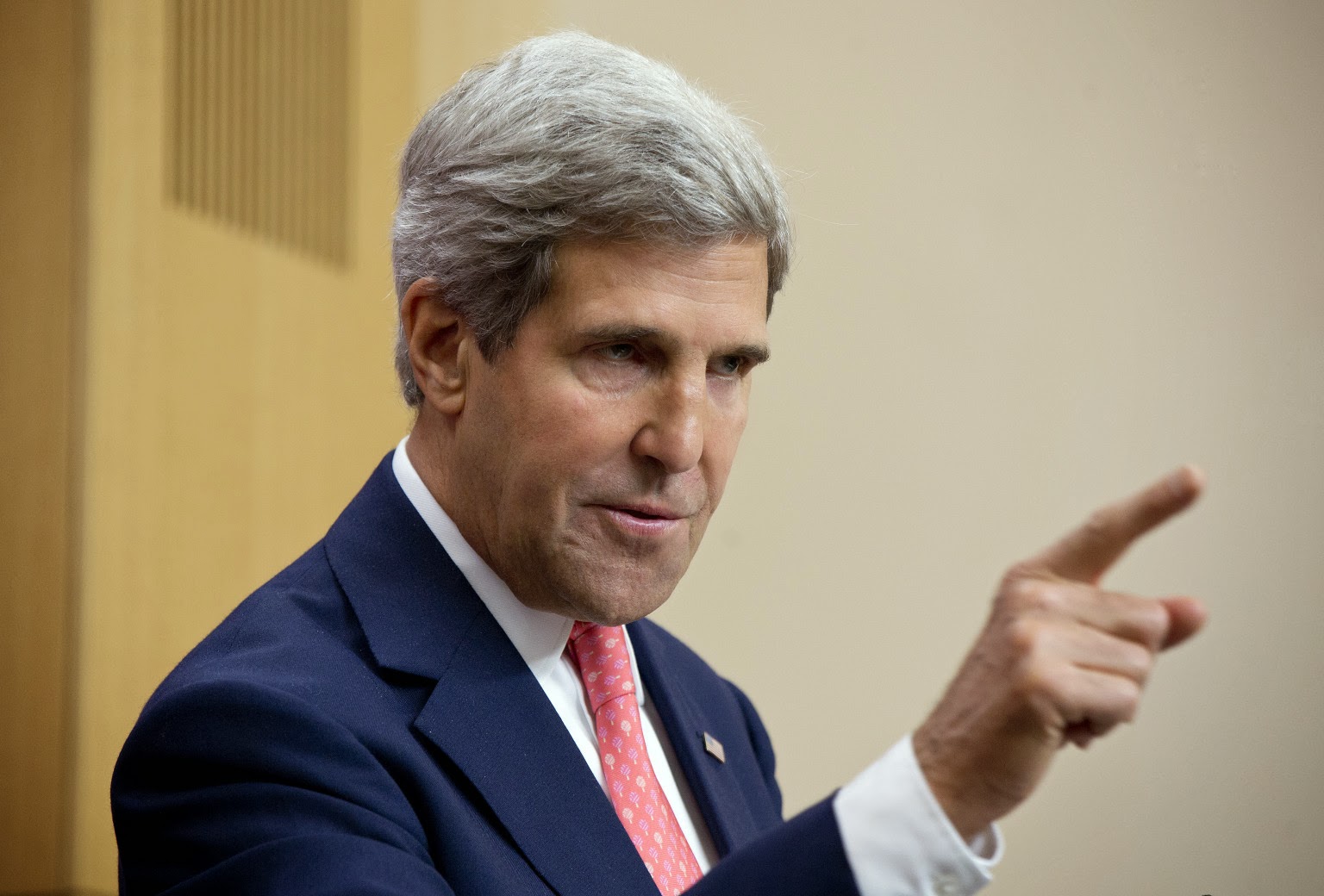
In response to recent comments by U.S. Secretary of State John Kerry regarding a potential military strike on Iran, Brigadier General Seyyed Masoud Jazayeri – Iran’s deputy chief of staff – said in an interview that, in the event of an attack, American interests in the region would be “completely destroyed.”
Speaking to Al Arabiya this week, Kerry defended the interim international deal over Iran’s nuclear program and the alleviating of some sanctions, but declared that if Iran were to back out of its commitments, “the military option of the United States is ready and prepared to do what it would have to do.”
Such rhetoric is par for the course for American officials focused on diplomacy, but still eager to appear bellicose and aggressive to certain influential communities and audiences.
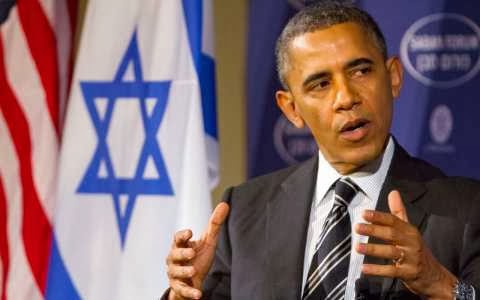 |
| President Barack Obama |
Last month, in a conversation at the Brookings Institution’s Saban Center, a pro-Israel think tank in Washington, DC, President Barack Obama said much of the same. “What I’ve consistently said is even as I don’t take any options off the table,” Obama told Haim Saban, the organization’s Israel-obsessed billionaire benefactor, “what we do have to test is the possibility that we can resolve this issue diplomatically.”
The president repeated this a number of times during the conversation. “The best way for us to prevent Iran from getting a nuclear weapons is for a comprehensive, verifiable, diplomatic resolution, without taking any other options off the table if we fail to achieve that,” he said, adding later that “when the President of the United States says that he doesn’t take any options off the table, that should be taken seriously.”
Following Obama’s own appearance, Secretary Kerry also addressed the Saban conference in December. He assured the attendees that “as we negotiate, we will continue to be perfectly clear that, for Iran, the price of noncompliance, of failing to satisfy international concerns about the nuclear program, will be that we immediately ratchet up new sanctions, along with whatever further steps are needed to prevent Iran from acquiring a nuclear weapon, including – as President Obama just made clear – a military option, if that were necessary.”
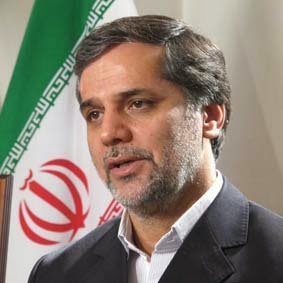 |
| MP Hossein Naqavi Hosseini |
In his own recent comments, General Jazayeri emphasized that the U.S. government is well aware that “the military option against Iran is not practical.”
Hossein Naqavi Hosseini, an Iranian parliamentarian and spokesman for the Majlis’ National Security and Foreign Policy Committee, reacted to Kerry’s new comments by saying, “These statements are indicative of the U.S. double standards and will bring about nothing but tarnishing the US image,” adding, “Definitely, we also announce that if the P5+1 (five permanent members of the UN Security Council plus Germany) commit the least breach of the Geneva agreement, we will also have all the options on our table.”
“Under pressures by the Zionist lobby, the U.S. adopts dual policies; on the one hand, they talk about agreement and positive relations with Iran, but on the other hand, they use an intimidating tone,” Hosseini said.
Related article

Oil majors eager to enter Iran market: Zangeneh
Press TV – January 25, 2014
Iran’s oil minister says major world oil companies have voiced readiness to set up shop in the country.
Oil giants attending the World Economic Forum (WEF) in the Swiss city of Davos announced that they were interested to enter the Iranian market, said Bijan Namdar Zangeneh in Tehran after returning from Davos where he attended the conference.
“Iran’s presence at the Davos meeting was very positive and the reaction of prominent international corporations attests to that,” he said.
Zangeneh touched upon his meetings with high-ranking officials of oil companies at the WEF, and said, “These companies were interested in working in Iran and many of them arranged plans for talks.”
He also referred to the Oil Ministry’s plans to develop a new model for oil contracts, and noted that a committee was set up four months ago to examine the existing contracts and pinpoint the merits and demerits of the structure of buy-back deals.
“We are holding talks with oil companies to have their viewpoints as well,” Zangeneh pointed out.
The new model of contracts should fulfill the expectations of the government and, at the same time, attract oil firms, the Iranian minister said.
A draft of the model will be ready by next month and it will be discussed at a meeting of experts in Tehran, Zangeneh projected.
On the sidelines of the OPEC ministerial meeting in Vienna in early December 2013, Zangeneh said Tehran would like to see seven oil giants – namely Total, Royal Dutch Shell, Norway’s Statoil, Eni and British Petroleum, as well as the US Exxon and Conoco – make investment in the Islamic Republic’s energy sector once US-led sanctions are lifted.
On January 20, the Council of the European Union suspended part of the sanctions it had imposed against Iran following the Geneva nuclear deal between Tehran and the Sextet of powers – the United States, Britain, France, China, Russia and Germany.
The new measure incorporates suspension of a 2012 ban on insuring and transporting Iran’s crude oil and the sanctions on trade in gold, precious metals and petrochemical products.
Outside Forces Seeking Palestinian-Hezbollah Conflict
By Franklin Lamb | Al-Manar | January 23, 2014
Ain el Helweh camp, Lebanon – It isn’t just the Zionist regime still occupying Palestine six decades after the Nakba; one can sense the carnivorous drooling from Tel Aviv to Amman, from Riyadh and the Gulf Kingdoms all the way to Washington DC and beyond—drooling and salivation over their project to promote tensions between the Palestinian Resistance and what is in some respects its historic offspring—Hezbollah.
The hostile forces gathered against the Tehran-Damascus-Hezbollah-Palestine Resistance alliance are reportedly hard at work on yet another scheme to weaken, and possibly destroy, all four. It won’t be easy, but it is a key game plan among those still seeking regime change in Syria.
Even as some of these governments deceptively play down their central goal of regime change in public, they appear to be fantasizing that by building up the Lebanese army—with a pledged $3 billion from Riyadh—that Lebanese troops can be induced to confront Hezbollah and its allies, this in what seems to be a “beat em or bleed em” strategy.
Patrick Cockburn, writing recently in the UK Independent and Counterpunch, gave a digest of anti-Shia hate propaganda being spread by Sunni religious figures, clerics financially backed by, and in some cases based in, Saudi Arabia and the Gulf monarchies. Cockburn noted accurately that what is being painstaking laid is the groundwork for a sectarian civil war engulfing the entire Muslim world.
Efforts to egg on a confrontation between Palestinians and Hezbollah have increased over the past three months in Lebanon’s camps, stemming principally from some of the local Sunni and Christian power centers. Support is being seen for various “militia of the month” groups, those terrorizing the population of the Syrian Arab Republic.
Moreover, the Takfiri Al-Nusra Front leader Abou Mohammed al-Joulani insists his organization is active on Lebanese soil in order to help the Sunnis, including Palestinians, face the “injustice” of Shiite Hezbollah. “Lebanon’s Sunni are requesting that the mujahideen intervene to lift up the injustice they are suffering from at the hands of Hezbollah and similar militias,” he said recently in an interview on Al-Jazeera.
Shiite-populated areas across Lebanon have been the target of terror attacks even before Hezbollah entered the fighting on the side of the Syrian government in May 2013, but those terror attacks have intensified recently. Four car bombings have targeted southern Beirut in recent months, while a number of IED attacks have occurred in Lebanon’s Beqaa Valley.
The head of the Islamic Jihadist Movement in Ain al-Hilweh camp voiced fears on January 8 of a possible armed sectarian confrontation between Hezbollah and Palestinian refugees in Lebanon if the party did not revise its policies at home and in Syria. Sheikh Jamal Khattab told the Daily Star that should fighting erupt between Palestinians and Hezbollah the conflict could be even worse than the “war of the camps” (read: massacres) of the 1980s, when that conflict was not considered particularly sectarian. Today, says Sheikh Khattab, it would be different. Today it would be a Sunni vs. Shia war, with regional and international consequences, given the poisonous sea-change in sectarian relations since the invasion of Iraq in 2003.
In Ain al-Hilweh and other camps, posters of local men killed while fighting alongside Takfiri groups in Syria, or against U.S. troops in Iraq, are tacked up throughout the camp. Lebanese security sources claim that Palestinian Islamist groups in Ain al-Hilweh have all finalized preparations to for a possible conflict with the Hezbollah’s organized and trained “Resistance Brigades.” These organizations include Usbat al-Ansar, Jund al-Sham, Fatah al-Islam, and other Salafist groups, and supporters of the controversial fugitive Sheikh Ahmad al-Assir, and rumors abound that some of these elements are being financed by certain of the six Gulf Cooperation Council states as well as some Lebanese pro-Western March 14 parties. Apparently the consideration among such groups and their sponsors is that conditions in Lebanon are ripe for an expanded war against “Shia infidels,” and reportedly plans are now in place to bring it here, with several groups that are now fighting in Syria pledging to widen the Sunni-Shia war into Lebanon.
For their part, some pro-Hezbollah groups and many Lebanese citizens are suspicious of possible Palestinian involvement in recent terror attacks in Dahiyeh and the recent bombing of the Iranian Embassy. In point of fact, one of the two suicide bombers who attacked the Iranian Embassy on November 17 was Mouin Abu Dahr, a known pro-Palestinian whose mother is a Shiite and his father a Sunni. Ain al-Hilweh of course has also been in the spotlight with the arrest of Majed al-Majed, the leader of the Al-Qaeda-affiliated Abdullah Azzam Brigades. Majed is believed to have lived in the camp since 2012.
Clearly Israel and its new—as well as its longtime—allies seek a Sunni-Shia war, and the sooner the better. Also favored is a continuation of the Syria crisis for the reason that they consider Hezbollah to be squandering some of its best fighters and commanders and well as its weapons stores. Western Diplomats have spoken about US-Israeli hopes that Syria will be Hezbollah’s Achilles heel and Iran’s Vietnam, and Israeli media have commented on views by some officials that Hezbollah has shifted its attention toward Syria and away from the southern front with occupied Palestine.
Time will tell.
Hezbollah maintains it is using only five percent of its capacity to confront Israel, and according to one source close to the Resistance: Hezbollah has self-sufficiency when it comes to the missiles, strategic and non-strategic weapons. All these weapons are quite abundant. Any additional equipment will constitute a negative factor because there is no need for them. All the weapons that are manufactured by Iran or owned by Syria are also available for Hezbollah. The land forces and the Special Forces fighting in Syria have acquired a lot of practical and intelligence related experience and a force of maneuvering on the land. This experience will be used when the war with Israel begins again.
The Sunni and the Shia, just as with the Palestinians and Hezbollah, need each other for many reasons, including confronting growing Islamophobia, anti-Arab hate propaganda, and the deepening and broadening apartheid occupation of Palestine.
All must work to tamp down their differences publicly and privately while endeavoring to neutralize sectarian provocateurs, Sunni as well as Shia—domestic and regional as well as international—provocateurs that today are seeking internecine and sectarian violence in order to weaken both sects, and even all of Islam.
Related article
Israel lobby has Economist on the run
By Jonathon Cook | January 21, 2014
The Economist has found itself at the centre of another of those “anti-semitic cartoon” rows. The cartoon has upset the Israel lobby because it shows, well, that the Israel lobby has a lot of influence in Congress. The article it illustrated refers to President Obama’s attempts to reach a deal with Iran, a diplomatic process being subverted by AIPAC’s efforts to persuade Congress to intensify sanctions.
And just to prove how little influence the lobby really has, it has made a huge fuss (again) about anti-semitism and the Economist has … quickly pulled the cartoon (from this article). So just how anti-semitic is it? Here it is for you to judge:

In fact, I’m not sure if you’ll notice the Star of David on the cartoon.
To my mind, this cartoon underestimates the influence of the Israel lobby in Congress, certainly on issues relating to the Middle East – which, after all, is what the cartoon is about. Most analysts, even very conservative ones, nowadays concede that the lobby is extremely powerful in Congress, as occasionally do lobby members themselves.
The Israeli media have regularly noted that the Israel lobby is the chief driver for intensified sanctions against Iran.
There’s nothing secret about this. It is on AIPAC’s website: “Congress must pass legislation that will increase the pressure on Iran and ensure any future deal denies Tehran a nuclear weapons capability”.
There is also nothing new about this relationship. A British intelligence report shortly before the British left Palestine in 1948 referred to the “effective pressures which Zionists in America are in a position to exert on the American administration”.
Here are just a few relevant quotes on the lobby’s powers:
Former US President Jimmy Carter: “It’s almost politically suicidal … for a member of Congress who wants to seek reelection to take any stand that might be interpreted as anti-policy of the conservative Israeli government.”
A Congressional staffer supportive of Israel told journalist Michael Massing: ”We can count on well over half the House – 250 to 300 members – to do reflexively whatever AIPAC wants.”
During an interview, AIPAC official Steven Rosen put a napkin in front of him and said: “In twenty-four hours, we could have the signatures of seventy senators on this napkin.”
Former AIPAC staffer M J Rosenberg recounts a conversation with Tom Dine, AIPAC’s executive director in the 1980s. Dine told him he did not think a US president could make Israel do anything it didn’t want to do given the power of AIPAC and “our friends in Congress.”
James Abourezk, former Senator from South Dakota, said: “I can tell you from personal experience that, at least in the Congress, the support Israel has in that body is based completely on political fear – fear of defeat by anyone who does not do what Israel wants done.”
Uri Avnery, veteran Israeli journalist and former Israeli MP: “For five decades, at least, US Middle East policy has been decided in Jerusalem. Almost all American officials dealing with this area are, well, Jewish. The Hebrew-speaking American ambassador in Tel Aviv could easily be the Israeli ambassador in Washington.”
Note too this interesting figure: Since 2000, members of Congress and their staffs have visited tiny little Israel more than 1,000 times. That’s almost twice the number of visits to any other foreign country. Roughly three-quarters of those trips were sponsored by AIPAC. These trip are particularly popular with Congress members who serve on foreign policy–related committees.
Iran, Syria and the Tragicomedy of U.S. Foreign Policy
By Flynt Leverett and Hillary Mann Leverett | Going to Tehran | January 20, 2014
Today is Martin Luther King Day in the United States and we urge our readers to re-read a piece we wrote previously honoring his extraordinary insight. It is also the day on which implementation of the Joint Plan of Action that the P5+1 and Iran announced on November 24 formally commences. And, of course, two days from now, the Geneva II conference on the Syrian conflict is scheduled to take place.
In anticipation of the beginning of implementation of the Joint Plan of Action, negotiations on prospective “final” nuclear deal, and the Geneva II conference, Hillary taped an interview with Scott Horton for Pacifica Radio. It was broadcast/posted yesterday; click here to listen.
Regarding President Obama’s ongoing struggle with the Senate over Iran policy, Hillary cautions against premature claims of “victory” for the Obama administration’s efforts to avert new sanctions legislation while the Joint Plan of Action is being implemented. She points out that “the foes of the Iran nuclear deal, of any kind of peace and conflict resolution in the Middle East writ large, are still very strong and formidable. For example, the annual AIPAC policy conference—a gathering here in Washington of over 10,000 people from all over the country, where they come to lobby congressmen and senators, especially on the Iran issue—that will be taking place in very early March. There’s still a lot that can be pushed and played here.”
To be sure, President Obama and Secretary of State John Kerry “have put a lot of political capital on the line.” No other administration has so openly staked out its opposition to a piece of legislation or policy initiative favored by AIPAC and backed by a bipartisan majority on Capitol Hill since the 1980s, when the Reagan administration successfully defended its decision to sell AWACs planes to Saudi Arabia. But, Hillary notes, if the pro-Israel lobby is able to secure a vote on the new sanctions bill, and to sustain the promised veto of said bill by President Obama, “that would be such a dramatic blow to President Obama, and not just on his foreign policy agenda, but it would be devastating to his domestic agenda.” So Obama “has a tremendous amount to lose, and by no means is the fight anywhere near over.”
Of course, to say that Obama has put a lot of political capital on the line over the sanctions issue begs the question of whether he is really prepared to spend the far larger amounts of capital that will be required to close a final nuclear deal with Tehran. As Hillary points out, if Obama were “really trying to lead this country on a much more constructive, positive trajectory after failed wars and invasions in Iraq and Afghanistan and Libya—Libya entirely on President Obama’s watch—[he] would be doing a lot more, rather than just giving these lukewarm talks, basically trying to continue to kiss up to major pro-Israel constituencies, and then trying to bring in some of political favors” on Capitol Hill.
Compare Obama’s handling of Iran and other Middle East challenges to President Nixon’s orchestration of the American opening to China—including Nixon’s willingness to “break the crockery” of the pro-Taiwan lobby—and the inadequacy of Obama’s approach become glaringly apparent. And that, Hillary underscores, is why we wrote our book, Going to Tehran—because “we think it’s absolutely essential for President Obama to do what Nixon did and go to Tehran, as Nixon went to China,” for “the Middle East is the make-or-break point for the United States, not just in our foreign affairs but in our global economic power and what we’re able to do here at home. If we can’t get what we’re doing in the Middle East on a much better, more positive trajectory, not only will we see the loss of our power, credibility, and prestige in the Middle East, but we will see it globally.”
Getting the nuclear issue right is, arguably, just one piece of the project of realigning U.S.-Iranian relations—but it is a uniquely critical piece. As Hillary notes, in Iran, “they see reaching a nuclear deal with the United States as absolutely essential [to any prospect of broader realignment]—even though they absolutely believe it is a ‘show’ issue. For if they could get the United States to accept the Islamic Republic of Iran with nuclear capability, this is the essential step to getting it to accept Iran as an independent, sovereign power.” Of course, that is something Western governments have been manifestly unwilling to do for decades, going back even decades before the 1979 Iranian Revolution. For the Iranians, “if they can get the United States to recognize their independence and sovereignty through this nuclear deal, recognizing Iran’s right to nuclear capability, that’s [how] you can open the way to go forward.”
But, “if negotiations with the United States fail, the thinking in Iran—and I was just there a couple of months ago—is that this will show both Iranians inside Iran and (this is critically important) countries like China, in other emerging markets…that Iran was the rational actor here. Iran tried its best to work within a framework of international law, the Nuclear Non-Proliferation Treaty, but it was the United States, as it has treated key countries in the Middle East for decades, that was unwilling to work within the parameters of international law and to recognize basic sovereign and treaty rights. That’s their Plan B—if the United States can’t do the deal, they still come out ahead in terms of important actors both at home and abroad.”
On Syria, Hillary suggests that the growing Western focus on al-Qa’ida-like jihadis in opposition ranks obscures a much more important point—even if al-Qa’ida-like elements had not permeated the opposition, why does the United States think it should be supporting armed rebels to overthrow the recognized government of a UN member state? As Hillary recounts, “This didn’t work in Iraq (before al-Qa’ida was there; of course, now al-Qa’ida is there, after we said we had a dog in that fight), it didn’t work in Libya, it didn’t work in Afghanistan. The idea that when we choose to become involved in a fight, it’s going to turn out to help us is just not borne out by history, but we continue to make the mistake.”
As for an appropriate American approach to the Syrian conflict and other Middle Eastern challenges, Hillary says that the United States shouldn’t just “go home and essentially be isolationist. I believe very much in free trade, and I believe very much in diplomacy and conflict resolution. And there does need to be real conflict resolution in Syria.” In this regard,
“We have a real asset in Lakhdar Brahimi, the UN envoy. He has worked on exactly these kinds of problems in Iraq, in Lebanon, in Somalia, in Haiti, and in Afghanistan, where I worked with him personally for about two years. And in each of those situations, he didn’t come up with a fantastic, Pollyanna government for each of these places. But he has a core formula [that] would really help to stop the destabilization and killing that we see in Syria, which is: you work with the sitting government, and you work with forces on the ground to gradually bring them into not a liberal democracy, but into a much more representative and inclusive power-sharing arrangement…You’re not going to get great ‘good governance,’ with no corruption and fantastic human rights treatment—but you will, over time, have a much more stable environment, where far fewer people are killed, and the opportunity for that country to politically reconstitute itself along its own lines, its own values, and its own position in the world.”
Hillary’s interview preceded the tragicomic antics surrounding UN Secretary-General Ban Ki-moon’s invitation to Iran to participate in Geneva II—which Ban spinelessly rescinded less than 24 hours later after tantrum-like outbursts from the Syrian National Council and (more consequentially) strategically witless (and utterly predictable) pressure from the Obama administration. Clearly, the Brahimi formula is not going to be given a chance to work in Syria anytime soon—but something like it will probably prove critical to any eventual political settlement to the conflict there.
In the interview, Hillary also discusses Iran’s internal political dynamics regarding a possible improvement in relations with the United States, the strategic incoherence of Israeli and Saudi opposition to any U.S. opening to the Islamic Republic, continuing Western mythmaking about Iran’s “nuclear weapons” program, and more.
Finally, as the Joint Plan of Action formally goes into effect, we want to call attention to two recent posts on Dan Joyner’s Arms Control Law that do an excellent job criticizing some of the more egregious distortions of the Nuclear Non-Proliferation Treaty (NPT) and international law more generally that various American pundits have advanced in their bloviations about the Joint Plan. One, see here, lambastes Orde Kittrie’s assertion that the implementing agreement for the Joint Plan—not the Joint Plan itself, mind you, but the implementing agreement—is actually a secret treaty; the other, see here, takes on the chronically wrong Ray Takeyh. His latest missive, misrepresenting the Additional Protocol to the NPT, is co-authored by Mitchell Reiss, who appeared in advertisements publicly advocating for the MEK—many of whose advocates acknowledge receiving at least $20,000 per endorsement—while the U.S. government still designated it as a foreign terrorist organization.
Featured Video

AIDS Inc. by Gary Null (2007)
or go to
Aletho News Archives – Video-Images
From the Archives
Clash of Civilization, Iran Part II
By Jamal Kanj – Intifada-Palestine.com – January 14, 2011
Israel’s survival kit is: perpetuate conflict, insecurity to rationalize collective hate and finally playing victim.
Devoid of conflict, Israel implodes internally; without hate, Zionism loses its justification; and playing eternal victim to continue blackmailing the West. Absence of this holy trinity, Israel ceases to exist.
From its inception, the house of Zion has mastered exploiting adversarial powers to advance Israel’s cause. For instance, their influence over the Democratic Party in the US began with President Truman’s bid for 2nd term election in 1948.
Responding to strong opposition from Secretary of State General George Marshall and Department experts urging against recognition of Israel, President Truman replied: “I’m sorry gentlemen but I have to answer to hundreds of thousands [Jewish voters] who are anxious for the success of Zionism. I do not have hundreds of thousands of [voting] Arabs among my constituents”
Zionists influence over liberal American politics was matched with the doctrinal school of Conservative theoreticians aligning the Republican Party’s platform with Israel’s objectives. The Neoconservative Zionists, coined Zioncons, invented the “Clash of Civilization” concept to fight Israel’s wars. … continue
Blog Roll
 Aletho News
- Merck Virologists Admitted to Falsely Certifying Vaccine Efficacy
- Mandatory Folic Acid for every man, woman & child
- Pro-Palestine protesters arrested outside UK’s ruling Labour Conference in Liverpool
- Mauritius denies landing permit to flight from Israel, forcing cancellation: Tour operator
- Israeli finance minister calls for genocidal war on West Bank, annexation of south Lebanon
- 12 Things Your Psychiatrist Was Trained Not to Tell You
- From Unipolar Universalism to Multipolar Civilizational Distinctiveness
- RSF military group defects, joins Sudanese army: State media
- Ireland goalkeeper refuses to play ‘Israel’ as squad weighs boycott
- China pushes back against US on Cuba, Iran
- If Americans Knew
- Israel forces Gazans to live in constant peril – Daily Update
- Deconstructing Netanyahu’s pants-on-fire UN rant – Daily Update
- Trump betrayed voters with his campaign lies and prioritized a foreign country once he took office
- Netanyahu calls Israel’s war in Gaza ‘opposite of genocide’ in UN speech to near-empty hall
- Settler Kidnappings: Torture, Sexual Abuse and Terrorisation of Palestinian Abductees as Israel Deepens Annexation of West Bank
- Gaza winter nears as 162,000 tents become unusable, raising fears of humanitarian crisis
- Netanyahu says, “It’s the opposite of genocide”; UN says Gaza economy is world’s ‘most severe crisis on record’ – Daily Update
- Israel’s US-Backed Assault on Gaza Has Created the ‘World’s Most Severe Economic Crisis on Record’: UN
- ‘Protecting U.S. Citizens’… From Israel
- ‘This is where I live now, the back of a truck’: a day in the life of a grandmother in Gaza
- No Tricks Zone
- New Study: Earth And Venus Surface Warmth Largely Explained By Convection And Lapse Rate, Not CO2 Or Radiation
- 2025 Nature Paper Claiming Worsening Global Drought Gets RETRACTED …Heavily Flawed
- New Study: ‘Global Drought Shows No Detectable Recent Acceleration Under Climate Warming’
- Economic Masterminds: German Socialists Suggest Taxing Productivity Gains Stemming From Using AI
- The South China Sea Has Not Been Cooperating With The Climate Change Narrative
- Energy Crisis: Germany Enters Heating Season With Historically Low Gas Reserve Fill Levels
- New Study: The Antarctic Ice Sheet Gained Mass From 2020-2024 Due To Staggering Snow And Ice Accumulation
- Study: Ocean Heating Rates From Thousands Of Years Ago ‘Dwarf’ Modern Ocean Heating Rates
- Climate Extremists Target, Attack Large-Scale Power Grid Infrastructure In Germany!
- New Study: Antarctic Ice Melt Has Contributed Less Than 1 Centimeter To Sea Level Rise In The Last 30 Years

