Israel has recently decided to increase its number of official statements supporting closer relations with Saudi Arabia. As the West and Iran struck their nuclear deal, Israeli media leaks on secret meetings between representatives from the two countries intensified, prompting the Arab press to treat Riyadh and Tel Aviv as allies.
The Saudi-Lebanese media tycoon Waleed bin Talal only helped to reinforce this image by saying, “The kingdom, along with other Arab and Sunni Muslim countries, supports an Israeli attack on Iran to destroy its nuclear program.” This begs the question: Is it in the interest of Arabs to accuse Saudi of having an alliance with Israel?
There is very little evidence in the kingdom, officially and on the popular level, of any sentiment in favor of establishing ties with the Zionist state. One can only imagine the amount of US pressure Riyadh was subjected to after the invasion of Iraq and the September 11 attacks to open up to Israel.
So let us agree that there is no love lost between Saudi and Israel, but the Gulf monarchy is deeply antagonistic to Iran and fears Tehran’s regional influence. Add to that Western media analysis suggesting that the region is undergoing a shift in alliances, in which the US and Iran could return to their strategic partnership from the days of the Shah.
Undoubtedly, there is a meeting of interests between Riyadh and Tel Aviv in Syria, where both want the undoing of the Bashar al-Assad regime and its regional allies, Hezbollah and Iran. “It is our hope that Israel and Saudi initiate positive relations,” Israeli Prime Minister Benjamin Netanyahu is recently reported to have said, adding, “We have common interests in the economy and in regional politics.”
It appears that it is in the interest of Israel to publicly declare improving ties with Saudi Arabia, given the number of official statements and media leaks about the matter. For Tel Aviv, this is not only useful against Hezbollah and Iran, but Israel hopes that this will give it Arab cover to sign a peace agreement that is unfavorable to the Palestinians.
All indications suggest that, sooner or later, there will be a Saudi-Iranian summit, despite the tensions that exist today. Riyadh is in no rush for such a meeting, given its relatively weak position at this juncture. Tehran, too, is in no hurry – other Gulf nations are lining up to visit Iran, as was the case with the Emirates recently.
Rather than adopt Israel’s statements and leaks, it is more important that the Arabs protect Saudi from Zionist influence, perhaps by advising the kingdom to make adjustments in its foreign relations, particularly toward Syria and Iran. And in fact, reports suggest that there are active attempts by mediators to help mend fences between these countries, with many obstacles still preventing any breakthrough in the near future.
December 3, 2013
Posted by aletho |
Ethnic Cleansing, Racism, Zionism, Timeless or most popular | Iran, Israel, Saudi Arabia, Syria, Zionism |
Leave a comment
Can Europe be trusted? Certainly, this is an important question on the mind of many Iranians, in light of the surprise news that a precious few days after signing the Geneva agreement on November 24th, the European Union (EU) imposed new sanctions on Iran, by targeting 17 Iranian shipping companies, decried by Iran’s Foreign Ministry spokesperson as “illegal.”
Per the terms of the Geneva agreement, the “5 + 1” nations have agreed not to impose any new sanctions on Iran for the duration of this “interim agreement” that stipulates a six-months timeline for negotiating a final status agreement, subject to further extension by both sides’ consent.
It therefore comes as a shocking surprise to many people both inside and outside Iran that instead of moving to ease the sanctions, the most immediate European follow-up action has been the intensification of the Iran sanctions. There is no valid justification for this move, which clearly contradicts both the letter and the spirit of the Geneva agreement, reflecting instead a counter-productive and obstructionist tendency on the part of the European officials, who may be addicted to Iran-bashing and find it rather difficult to re-track themselves toward the unknown territory of “Iran detente.”
But, of course, the Geneva agreement is in Europe’s own interest, seeing how over the past 8 years the continent’s once thriving trade with Iran has languished, which can be resurrected as a result of good-faith diplomacy toward Iran in the weeks and months to come. Already, there are reports of various European auto and other companies embracing the positive development in Geneva and preparing themselves to re-engage with Iran, awaiting clear policy guidelines by the EU so that their present concerns regarding the prohibitions on doing business with Iran are fully addressed.
Henceforth, it is vitally important for the EU officials not to drag their feet on implementing the terms of the Geneva agreement; otherwise, some provisions such as those with respect to the easing of the sanctions affecting the European insurance companies would not be implemented in a timely fashion, thus resulting in a partial lack of the fulfillment of sanctions’ relief promised by the West.
Unfortunately, the history of Europe’s nuclear negotiations with Iran during the past decade leaves a lot to be desired, warranting a healthy Iranian skepticism. Case in point, exactly nine years ago, the EU3 (i.e. France, Germany, and England) signed an agreement with Iran, the so-called Paris Agreement in November 2004, that was hailed in the Western media as a “major breakthrough” and raised the expectation for an end to the Iranian nuclear standoff.
One key element of the Paris Agreement was, as this author pointed out in a New York Times report back then, its recognition of “Iran’s rights under the NPT standards… without discrimination.” Naturally, Iran fully expects the same willingness on the part of Western governments to acknowledge and respect Iran’s full nuclear rights including the right to possess a peaceful nuclear fuel cycle (via an indigenous uranium enrichment program), which was expressly mentioned in the Paris Agreement.
Sadly, as this author has fully documented in his book, Iran’s Nuclear Program: Debating Facts versus Fiction (2006), the Europeans ended up reneging on their promises in the Paris Agreement, by failing to provide the promised incentives and, worse, by reversing themselves on Iran’s enrichment rights under pressure by the US, which was opposed to this aspect of the agreement from the outset.
As a result, none of the “objective guarantees” regarding technical, nuclear, and other cooperation with Iran, as well as the promise of regional security cooperation, ever materialized, thus setting the stage for the agreement’s subsequent breakdown, fully blamed on Iran by the hypocritical European officials, who consistently failed to direct their criticisms at their own shortfalls.
This was interpreted as an example of bad-faith negotiation and “broken promises” by, among others, Iran’s envoy to the United Nations at the time, current Iranian Foreign Minister Mohammad Javad Zarif, in a seminal article in Columbia University’s journal of international affairs.
In the light of the above-said, the important question is, of course, whether or not the Geneva agreement is destined to have the same fate as the Paris Agreement? Lest we forget, the West’s failure to accept blame for the breakdown of the Paris Agreement played a crucial role in the dispatching of Iran’s nuclear file to the UN Security Council and the subsequent imposition of several rounds of UN sanctions on Iran, despite the absence of any formal and proper finding of “non-compliance” by the International Atomic Energy Agency (IAEA).
Drawing lessons from the past, the history of incoherent and contradictory European behavior after signing the Paris Agreement mentioned above is a fresh reminder of the potential perils facing the Geneva agreement, which can easily derail it absent the political will on the part of EU officials and lawmakers to withstand the avalanche of anti-Iran pressure, some of which stems from certain governments in the region.
As a result, from Iran’s vantage point, the Western governments’ full compliance with the terms of the Geneva agreement is a must, which, as stated above, requires the issuance of new policy guidelines with respect to the easing of sanctions cited in the agreement.
Following the agreement, a joint commission consisting of officials from Iran and the “5 + 1” nations will be formed shortly to oversee the simultaneous implementation of the pledges made by both sides and to resolve any potential problems in this connection. Only then can full Iranian confidence in Europe’s good-faith negotiation be restored and the troubled Iran-EU relations gradually heal.
For now, however, the news of new EU sanctions in the aftermath of the Geneva agreement is simply a fresh log to the Iranian collective memory of past European behavior (of broken promises and reneged contracts), yet another reminder that the the continent’s policy-makers continue to be infected by the legacy of Euro-centric post-colonialism, requiring a cognitive leap forward, presently held at bay by the lingering distortions of what the late Edward Said aptly labeled as “Orientalism.”
With the EU policy on Iran clearly showing the traces of “Orientalism,” the path forward in Iran-EU relations must be explored on all levels, including at the normative and cognitive level, given the ‘cognitive dissonance’ of contradictory behavior toward Iran mentioned above.
Europe’s failure to resolve this problem will undoubtedly affect their level of commitment to their own pledges reflected in the Geneva agreement and thus set the stage for a policy vicious circle regarding Iran. It is time for Europe to break the spell of this vicious circle and demonstrate a collective evolution, following the norms of international affairs in showing respect and reciprocity to the nation of Iran, a cradle of world civilization.
December 3, 2013
Posted by aletho |
Deception, Timeless or most popular, Wars for Israel | European Union, Iran, Kaveh L. Afrasiabi, Sanctions against Iran |
Leave a comment
You cannot negotiate with Iran. That is what they told us for years. The Iranian leadership is too fanatical, they are not rational actors, they are “not like us.” One US official even recently said that deception is part of the Iranian DNA. But just over a week ago negotiations between the five permanent UN Security Council Members plus Germany and the Iranians produced an historic agreement that may be the first step toward a new era in US relations with the Middle East.
As Middle East expert Eric Margolis pointed out this week, for Iran’s major concessions it will only receive “$7 billion – of its own money, which has been frozen abroad by US-led sanctions.” That sounds like quite a bit of compromise for such a “fanatical” country.
Earlier this summer the same people made the same arguments about Syria. You cannot negotiate with Syrian President Assad, they said. He is insane; he is another Hitler. But not only was it possible, a deal was signed ending the threat of a US strike in exchange for Syria agreeing to give up its chemical weapons and the ability to manufacture new ones. Syria upheld its end of the agreement and the chemicals were all accounted for on schedule.
Why have the interventionists, the neocons, and the special interest groups claimed for so long that negotiation and diplomacy was tantamount to surrender; that countries such as Iran and Syria “only understand force”? It is because these groups are afraid of diplomacy. They do not want a peaceful resolution to these conflicts. They see US foreign relations only in the starkest terms: do what we say and we will give you aid, disobey us and we will bomb you.
Now the warmongers who call themselves “foreign policy experts” have been exposed. The whole world sees that they are wrong. Their advice is bad. Their limited vision of how foreign affairs should be conducted is actually dangerous to the United States. It is now clear that there are workable alternatives.
As with the US threats against Syria, public opinion polls on talks with Iran demonstrate that the American people are solidly behind diplomacy and opposed to another war. According to one recent poll, Americans support the deal reached with Iran by a margin of two-to-one.
Congress, however, is once again far behind the American people. Even as US negotiators were reaching agreement with their Iranian counterparts, US representatives and Senators were drafting legislation to increase sanctions on Iran. Instead of listening to the American people, many in Congress seem attached to special interests like the Israel and Saudi lobbies, which oppose anything less than full Iranian capitulation. Israel refuses to join the Non-Proliferation Treaty yet it seeks to dictate the rules of the treaty to those who have signed it. Saudi Arabia is desperate to control the region politically and economically, and it views an Iran that is free to sell oil and other products on the open market as a threat to Saudi power.
For too long both Israel and the Saudis have benefited from a US military guarantee. It has created “moral hazard” that only encourages more belligerent behavior on both of their parts. It remains to be seen whether this six month trial period will develop into a permanent move toward normalization of relations with Iran. What if Congress refuses to give Iran its own money back? But we are moving in the right direction and we should be optimistic.
A better US relationship with Iran may signal the beginning of the end of US meddling in the region and serve as an incentive for Saudi Arabia, Israel, and the Gulf States to solve their problems themselves. This would be a great boost to US national security, just as an Iran open to US business and trade would be a great boost to our economic security. Is peace finally breaking out? Let’s hope so.
December 1, 2013
Posted by aletho |
Mainstream Media, Warmongering, Militarism, Wars for Israel | Iran, Israel, Middle East, Ron Paul, Saudi Arabia, Syria, United States |
Leave a comment
Listening to Benjamin Netanyahu rant about Iran’s non-existent nuclear weapons program, who can seriously claim — as many Jewish, both religious and secular, and non-Jewish critics of Israel attempt to do — that the Zionist-created “Jewish state” has nothing to do with Judaism?
Lighting the candles on the second night of Hanukkah at the Wailing Wall in Jerusalem, the Israeli leader was quoted by Arutz Sheva, an Israeli media network identifying with Religious Zionism:
Relating to the holiday of Hanukkah, also known as the Festival of Lights, Prime Minister Binyamin Netanyahu on Thursday called Iran “the greatest darkness” threatening the world and said that Israel would be the “light to the nations” when it came to Iran’s nuclear program.
The term “light to the nations” originated from verses in the Book of Isaiah, believed to have been written during and after the Babylonian exile (597-538 BC), an event that continues to have a destructive influence on world history:
“Yea, He saith, ‘It is too light a thing for you to be My servant, to establish the tribes of Jacob, and to restore the scions of Israel, and I shall submit you as a light unto the nations, to be My salvation until the end of the earth’ (Isaiah, 49:6)
“I the LORD have called unto you in righteousness, and have taken hold of your hand, and submitted you as the people’s covenant, as a light unto the nations” (Isaiah, 42:6)
“And unto your light, nations shall walk, and kings unto the brightness of your rising” (Isaiah, 60:3)
The context of these three references from the Book of Isaiah are a promise to the exiled notables of Israel, in which a God of their own creation will restore them to the holy land supposedly promised them by this invented God, and this return will cause the rest of the nations to open their benighted goyish eyes, and look up to the Chosen people as a mentor for spiritual and moral guidance for the entire world.
But in light of Netanyahu’s unhinged reaction to the possibility of an international rapprochement with Tehran, the nations had better be very wary of any political “mentor” who takes Isaiah’s 2,600-year-old prophecies as a guide to modern-day international relations.
Post Script:
Isaiah 2:4: And he shall judge among the nations, and shall rebuke many people: and they shall beat their swords into plowshares, and their spears into pruning hooks: nation shall not lift up sword against nation, neither shall they learn war any more.
That pacifist-sounding verse from Isaiah presumably refers to the messianic age when the nations are expected to pay tribute to the Jewish Messiah at the Temple in Jerusalem.
Hasn’t Netanyahu been doing his utmost to realize Isaiah’s vision that every other nation (so far only those in the Middle East) “beat their swords into ploughshares” i.e. unilaterally disarm in order to leave Israel the undisputed “judge among the nations”?
Follow Maidhc Ó Cathail on Facebook and Twitter @O_Cathail.
December 1, 2013
Posted by aletho |
Supremacism, Social Darwinism, Timeless or most popular | Benjamin Netanyahu, Book of Isaiah, Hanukkah, Iran, Israel, Light Unto the Nations |
Leave a comment
I imagine myself walking down to the Beirut train station, boarding the 4pm bullet train that will steam off toward Damascus, heading across the great plains to the east to Baghdad. In a day we’ll be in Iran and then at Mashad there is a choice: one could go south through Pakistan to Delhi, or one would take the longer journey to Beijing via Samarkand. This would be the Great Asian Express that links one end of the massive continent to the other.
But it is impossible. War in Syria stops the train before it has even begun. Instability in Iraq intimates that the tracks would be blown up before they can be laid down. Iran is far more stable, which is why it has begun to build a train line that would link Turkey to Turkmenistan through northern Iran. Afghanistan, Pakistan and India are unable to create a modus vivendi that would welcome such a train, or indeed an oil and gas pipeline that might run parallel to it, bringing Iranian fuel to the consumers of the subcontinent. Central Asia oscillates between long periods of calm and bursts of dangerous violence.
A train itinerary such as the one I described sounds like a dream history – impossible even. But it is not so out of our time. The Trans-Asian Railway comes out from the 1960s, a historical artefact, a project of the UN Economic and Social Commission for Asia and the Pacific that was finally brought to the stage of an inter-governmental memorandum of understanding in 2006. This Iron Silk Road is to run from Singapore to Istanbul. The project has no timetable. Parts of it are already present, and parts of it are in the maddening future. But some of it will form part of the China-Iran rail link which is expected to go into production within a decade, and will form part of the Istanbul to Tehran route that is also already in production. Not so far that regional future.
Regionalism
Regionalism rests on the mantle of geography. Attempts to isolate a country for ideological reasons do not always work. The West, since 2003 at least, has attempted to isolate Iran but it cannot do so – Afghanistan, under US occupation, buys half its oil from Iran. It cannot do otherwise. Any other source would be ridiculously overpriced. The US embargo of Iran had to be violated despite the fact that it was US money in Afghan hands that was buying the Iranian oil.
Pressure from the US and the desire of the Indian political and economic elites for a close link with the US befuddled India’s Iran policy between 2003 and 2013. India is the second largest importer, after China, of Iranian oil. In the halls of the Non-Aligned Movement, India is a country that is greatly respected.
Through a nuclear deal – as I detail in my new report on India’s Iran policy, the US was able to push India to vote against Iran twice at the International Atomic Energy Agency (IAEA) meetings in exchange for being brought out of the nuclear winter itself. As the sanctions regime on Iran tightened, India found it hard to buy oil from Iran and coldness between the countries set in as a result of India’s seeming eagerness to toe the US line. But beneath the surface of the IAEA votes and the statements against the buying of Iranian oil, linkages deepened – on oil buying certainly but also on the trade in pharmaceuticals and wheat as well as on the Indo-Iranian construction of a port in south-eastern Iran (at Chabahar). The sanctions regime had certainly throttled Iran, but it could not sunder fully the imperatives of regional trade.
On Sunday, November 24, the P5 (China, France, Russia, the United Kingdom and the United States) + 1 (Germany) signed a deal with Iran to end the siege on the latter. The P5+1 promised to ease the sanctions regime in exchange for Iran’s disavowal of a nuclear weapon.
India welcomed the deal, suggesting that it was along the grain not only of Indian policy but also of the BRICS declaration from 2013 (“We believe there is no alternative to a negotiated settlement to the Iranian nuclear issue. We recognize Iran’s right to peaceful use of nuclear energy consistent with its international obligations, and support resolution of the issues involved through political and diplomatic means and dialogue,” was the wording of the eThekwini Declaration).
India’s oil firms promised to hastily transfer arrears held in Indian banks for oil purchased during the previous years (now totalling $5.3 billion), and to increase orders for Iranian oil. The latter would be facilitated by the end to the pressure on insurance firms who then refused to underwrite oil tankers coming out of Iran.
India’s Foreign Secretary Sujatha Singh met with Iran’s Deputy Prime Minister Ebrahim Rahimpour on Monday, November 25, and agreed that there is “considerable untapped potential to develop economic cooperation between the two countries particularly in the area of energy and transit.” India and Iran have already been at work building the Chabahar port, and India is building a 900 km train track to link the port to the Hajigak region in Afghanistan. Dreams of oil and gas pipelines and train lines remained suspended over the gathering like a huge exclamation mark.
What these developments indicate is that the time of US primacy is now over and the time of multipolar regionalism is at hand. From 1991 to the present, the US had attempted to forge strong bilateral ties with its chosen allies and sought to knit those allies into a planetary security web of military bases and inter-operatable armed forces; this was the hub and spoke system that James Baker had written about in 1992. That system meant that regional ties had to be sacrificed for the close linkages to the United States. Latin America, through the Bolivarian dynamic, was the first region to exit from the US strategy and create its own regional architecture (for political, economic and social linkages). An over-extended US military presence in Asia and the collapse of the finance-led economic model in 2008 weakened the US considerably.
The example of Latin America gave confidence for the new India-Brazil-South Africa (IBSA) formation, the antecedent of the BRICS bloc. With the quiet emergence of the BRICS bloc in the context of a weaker West, it was inevitable that the siege of Iran would have to be lifted. China’s Foreign Minister Wang Li uncharacteristically told the Chinese media that his country played a crucial role in concluding the deal. Pressure from Russia and China on the European Union pushed them to bring a wayward France in line. No longer can an imperial foreign policy dominate international policy without challenge. That is the lesson of the Iranian deal.
Vijay Prashad is the Edward Said Chair at the American University of Beirut, Beirut, Lebanon. His most recent book is The Poorer Nations: A Possible History of the Global South.
November 30, 2013
Posted by aletho |
Economics, Timeless or most popular | Afghanistan, BRICS, China, India, Iran, Trans-Asian Railway, United States |
Leave a comment
The first four years of the Obama Administration were marked by imposing an unprecedented set of sanctions and military threats against Iran. However, since July 2013 fewer sanctions have been imposed and less military threats issued. Indeed, the Obama Administration—along with some of the other four members of the United Nations Security Council and Germany, commonly known as the P5+1—appeared to be sincere in trying to resolve the nuclear dispute with Iran. They withstood pressures coming from Israel, its lobby groups and proxies in the US Congress and they pushed for a deal with Iran. In the end, a six-month accord between the P5+1 and Iran was reached on November 24, 2013, after a long and unprecedented set of negotiations. Will this accord last, and will it lead to a longer agreement? Was the deal the result of draconian sanctions imposed on Iran, as President Obama would have us believe? Was it the result of the election of President Hassan Rouhani and his promise of “constructive engagement,” as most people believe? Or could it be that President Obama’s policy toward Iran is changing?
In order to answer the above questions, a detailed examination of the Obama Administration’s policy of “tough diplomacy” is necessary. I have made such an analysis in Containing Iran: Obama’s Policy of “Tough Diplomacy.”[1] The book is a continuation of a pervious book that was published in 2008 on the dual containment of Iran and Iraq.[2] The latter dealt with nearly three decades of attempts by the US and Israel to “contain” Iran, and it was concluded before President George W. Bush left office. The new book starts where the earlier book left off and follows the first four years of the Obama Administration’s policy toward Iran.
President Barack Obama came to office promising engaging Iran. Yet, in reality his administration followed the policy of “tough diplomacy,” which included, among other acts, imposing “crippling sanctions” against Iran. Indeed, a close look at the Obama Administration’s Iran policy reveals certain continuity between this policy and the policy of “dual containment” pursued by the previous administrations, particularly by the George W. Bush Administration.
Given the history of containment policy, it was not difficult to predict prior to the 2008 presidential election that regardless of the outcome, the US foreign policy toward Iran would be determined largely by Israel and its various lobby groups in the US, especially American Israel Public Affairs Committee (AIPAC) and the Washington Institute for Near East Policy (WINEP). Indeed, it was easy to foresee that if Obama became president, Dennis Ross, Obama’s closest advisor on Iran and the former director of WINEP, would play a leading role in determining the policy. Based on Ross’s writings and WINEP’s publications, one could expect that Obama would pursue a “tough” or “aggressive diplomacy” with Iran. The diplomacy, as Ross and WINEP had formulated, was intended to give an ultimatum to Iran in some face to face meetings, telling Iran to either accept the US-Israeli demands or face aggression, including, ultimately, a naval blockade and military actions. The meetings were also intended to create the illusion of engaging Iran in negotiations and, in so doing, gaining international support for the subsequent aggressive actions.
What was expected in fact happened. Once Obama came to office Dennis Ross became special advisor to the Secretary of State for the “Gulf and Southwest Asia,” then special assistant to President Obama and his senior director for the “Central Region.” Thus, once more, an individual associated with WINEP became the main architect of Iran policy and in that capacity continued, with some modifications, the same policy that had been pursued by the Bush Administration.
It should, of course, be noted that besides Ross—who left his position at the end of 2011 and rejoined WINEP—there have been other Iran policy makers close to Israel and its lobby groups in the Obama Administration. One such person, who also left office in 2011, was Stuart A. Levey, the former Under Secretary for Terrorism and Financial Intelligence. Levey, a leftover from the Bush Administration, managed to carry on a crusade against Iran by formulating and implementing financial sanctions against Iran. Another person who left his position in February of 2013 and, subsequently, became president of the Israeli lobby group “United Against Nuclear Iran” (UANI) was Obama’s special assistant for arms control, Gary Samore. Nevertheless, for the most part the Obama Administration policy toward Iran proceeded along Ross’s policy of “tough” or “aggressive diplomacy.” How the policy was implemented is briefly discussed below.
As mentioned earlier, one of the main aims of the policy of “tough diplomacy” was to create the impression that the US is trying its best to engage Iran. This was tried soon after President Obama took office. For example, Obama’s message of March 21, 2009, on the occasion of the Persian New Year, was intended to create such an impression. To the uninitiated the message appeared to be conciliatory. But to those familiar with the history of the US-Iran relations, the message contained nothing that was essentially new and, indeed, accused Iran of some of the same charges that the Israeli lobby had concocted since the 1990s. Actually, a few days later Obama showed how little the US policy had changed when in his trip to Prague he spoke about a “real threat” posed by Iran to its “neighbors and our allies” and advocated the same missile defense system proposed by the Bush Administration.
By the summer of 2009, while numerous unilateral sanctions were being renewed, passed or contemplated, the Obama Administration was working hard to pass the fourth multilateral, United Nations Security Council sanctions resolution against Iran. In order to get the Russian vote in the Security Council, in July 2009 Obama offered the Russians a quid pro quo: in exchange for a deal on the expiring 1991 Strategic Arms Reduction Treaty and postponing the US deployment of anti-missile system in Europe, Russia would agree to impose harsher sanctions against Iran. Later, the Obama Administration sweetened the deal by promising to drop the deployment of an anti-missile system in Europe altogether.
On October 1, 2009, Iran held a meeting with the P5+1. This was followed by three other meetings, one on October 19, 2009, and two others in December
2010 and January 2011. The first two meetings centered mainly on the swap of Iran’s low enriched uranium for higher enriched uranium intended to be used by a reactor in Tehran that produces isotopes for medical purposes. The swap deal was viewed by many, both inside and outside of Iran, as a ploy by the US to get enriched uranium out of Iran and then give Iran an ultimatum to stop any further enrichment or face the fourth round of UN sanctions. Even some US officials described the deal as a clever ploy.
Under massive pressure at home, President Ahmadinejad’s government, which had originally agreed to the swap, tried to modify the deal. Yet, the Obama Administration rejected any modification and began the final push for the fourth round of UN sanctions. By this time many US officials, including Secretary Clinton, were admitting openly that the Obama Administration’s policy had been, throughout, not just an “engagement policy” but a “two-track policy” and that it was now time for the “pressure track.” This was, indeed, similar to the “carrot and stick policy” of the Bush Administration, which was always no more than offering Iran a stick.
What stood between Iran and a new Security Council resolution however, was China, which was opposed to additional UN sanctions. The Obama Administration therefore cajoled China, twisted its arms, and even threatened it financially, to make it go along with the new set of sanctions. By mid-March 2010 China’s resistance to slow down the US-Israeli push had weakened, and toward the end of March China agreed to discuss the US proposal for the fourth round of UN sanctions. Now, the only stumbling block in getting a near unanimous vote in the Security Council was the presence of three non-permanent members on the Security Council, Turkey, Brazil and Lebanon, which opposed the sanctions despite massive pressure by the US to make them go along.
On May 17, 2010, Brazil and Turkey struck a deal with Iran for swapping enriched uranium, almost the same deal that had been offered by the P5+1 to Iran in October 2009. The only difference between this so-called tripartite agreement and the US proposed swap deal was that Iran would send the low enriched uranium to Turkey rather than Russia, as it had been initially proposed. The Obama Administration rejected the tripartite agreement, making it clear that the original swap deal proposed was a ploy and that the ultimate intention of the US had been, all along, to use the deal to impose, in the language of Benjamin Netanyahu and Hillary Clinton, “crippling sanctions” against Iran.
On June 9, 2010, Resolution 1929, the fourth UN sanctions resolution against Iran, was passed by the Security Council, with Brazil and Turkey voting “no” and Lebanon abstaining. This was, of course, the same resolution that the Bush Administration was unable to pass due to time running out. The passage of the resolution officially ended the “diplomacy” phase of the Obama Administration’s Iran policy. After this multilateral sanction the US and EU intensified their unilateral sanctions, despite Russia’s protest that the measures were exceeding the parameters agreed upon and reflected in the UN Security Council resolution.
With the Obama Administration giving the green light, the US Congress passed, on June 24, 2010, one of the most severe unilateral sanctions acts against Iran, the Comprehensive Iran Sanctions, Accountability, and Divestment Act (CISADA). The act had been in the pipeline for some time, but had been held back until the passage of the UN Resolution 1929. CISADA, which was signed by President Obama on July 1, 2010, strengthened the harshest sanctions act passed during the Clinton era, the Iran-Libya Sanctions Act.
After CISADA much of the new sanctions against Iran were enacted by the State and Treasury Departments, particularly under the leadership of Stuart Levey and his successor, David Cohen. In addition, there were once again repeated talks of possible military attacks on Iran by Israel, the US or both. These were not just the usual talks by the Israelis, neoconservatives or media pundits, but threats made by some high officials in the Obama Administration, such as the Chairman of the Joint Chiefs of Staff Mike Mullen who stated on NBC’s “Meet The Press” on August 1, 2010, that “military actions have been on the table and remain on the table.” The push for attacking Iran intensified in late October and early November of 2010 as more Israeli and American officials and media pundits appealed to President Obama.
The combination of continuous threats and increasing sanctions affected the Iranian economy. In the fall of 2010 the value of Iran’s currency fluctuated wildly. The fluctuation was clearly a manifestation of uncertainty, speculation and fear that were mostly caused by the cumulative effect of sanctions. The sanctions were also exacerbating the rate of inflation in Iran and reducing the rate of growth of the economy. For example, while the rate of growth in Iran’s real GDP in 2007 was 7.8%, the rate for 2010, according to the April 2011 report of the International Monetary Fund, was only 1.0%. The same report forecasted the rate of growth in Iran’s real GDP for 2011 to be 0%.
The Obama Administration appeared to be fully aware of the toll that the sanctions were taking on the Iranian economy and adopted a wait-and-see attitude, despite the pressure exerted on it by Israel and its supporters to engage in military adventures against Iran. It also appears that the current administration found various forms of sabotage—such as the introduction of the Stuxnet computer worm in the Iranian nuclear facilities, assassination of Iranian nuclear scientists—as well as agitation among separatist movements in Iran, quite useful in containing Iran. The issue of human rights violations in Iran also became a tool in the hands of the Obama Administration to mount verbal attacks against Iran.
By the end of 2010 the US policy toward Iran was back on the same track that it had been for over thirty years, a blatant containment policy. In other words, the policy of “tough diplomacy” had no more “diplomacy” left in it; it was simply a tough policy. The two meetings between Iran and the P5+1, on December 6, 2010, and January 21, 2011, were therefore devoid of any substance and merely provided forums for the two sides to express their grievances.
With the advent of the so-called Arab Spring, and the preoccupation of the US, Europe and Israel with the revolutionary upheavals in the Middle East, there were less news reports in the popular US media about Iran and the need to contain it. Indeed, to the extent that the “Arab Spring” challenged some aspects of the old order in the Middle East and created uncertainty about the future of this order, the pressure on Iran slightly subsided. But once the dust started to settle, the attention turned, once again, toward Iran, and the push by Israel, its lobby groups, and supporters in the US Congress, to intensify sanctions and threaten Iran militarily resumed. Moreover, the campaign of assassinating Iranian nuclear scientists, sabotaging Iranian nuclear facilities and trying to stir up ethnic tensions intensified.
In addition, there was increasing pressure on the International Atomic Energy Agency (IAEA) to accept the US demands. Under IAEA’s new director, Yukiya Amano—who was the preferred candidate of the West to replace Mohamed ElBaradei as the Director General of IAEA in 2010—Iran has faced harsh and confrontational reports about its nuclear activities. Indeed, the November 8, 2011 report of IAEA on Iran’s implementation of the Nuclear Non-Proliferation Treaty (NPT) Safeguards Agreement was the harshest ever. The subsequent reports have continued to be confrontational.
Sanctions and threats of military action against Iran intensified after the November 2011 IAEA report. What Israel, its lobby groups, and their supporters in the US government wanted most was sanctioning the Iranian Central Bank. Such a sanction had been considered since the presidential election of 2008. The sanction was finally included in the 2012 National Defense Authorization Act, which President Obama signed on December 31, 2011 and has been implemented ever since. In January 2012, the Council of European Union passed similar sanctions against the Central Bank and the energy sector of Iran. In addition to these sanctions, there were repeated talks of possible military attacks on Iran by Israel, the US or both. For the most part, however, the threats, particularly by Israel, had been used to impose more severe sanctions.
Beginning in April of 2012 Iran and the P5+1 held five more rounds of meetings, including meetings at the technical level. These meetings, similar to the earlier ones, produced no agreement between the two sides. It was, indeed, difficult to expect any agreements as long as more and more draconian sanctions were being levied against Iran and there were repeated talks of military attacks.
In the final analysis, the Obama Administration’s policy of “tough diplomacy” had mostly followed the script written by individuals associated with Israel and its lobby groups. The policy was similar to those pursued by the neoconservatives under the previous administration. But while the “carrot and stick policy” of the Bush Administration was implemented in a brutish way, the Obama Administration’s “two-track policy” had been carried out in a more refined way.
At the end of President Obama’s first term in office, the combination of continuous threats and increasing sanctions had brought about massive economic hardship in Iran. However, these difficulties did not translate into what the architects of the policy of “tough diplomacy” had been waiting for, that is, widespread discontent in Iran. Nor did the sanctions result in a complete collapse of the Iranian economy. The fate of the policy of “tough diplomacy” therefore remained uncertain. This was even more so, since by the end of Obama’s first term in office, some of the old guard responsible for formulating or implementing the policy, such as Dennis Ross, Stuart Levey, Gary Samore, and Hillary Clinton, had either left the administration or were leaving it.
It is too early to evaluate the changes that have occurred in the composition of the new Obama Administration’s foreign policy team and their approach to Iran. However, it seems that with the departure of some of the old guard and the arrival of a new crew—such as Secretary of State John Kerry and Secretary of Defense Chuck Hagel—the failed policy of “tough diplomacy” is withering away. True, the new crew, particularly Hagel, had to go through the mandatory vetting process by the Israeli lobby groups and publicly kowtow to Israel before being confirmed. Nevertheless, some of the newcomers, who were well versed with the power of Israel in formulating US foreign policy in the Middle East, could see that continuing the policy of “tough diplomacy” would ultimately lead to another war that the US could neither afford nor win.
One indication of the changing policy appears to be a softening in the position of the US in the meetings between Iran and the P5+1. In the last high level meetings, during the first term of President Obama, which took place in June 2012, Iran was told to “stop, shut and ship.” This meant, according to a summary provided by EU’s representative Catherine Ashton, a three step proposal to Iran: “stopping 20 percent enrichment activities, shutting the Fordow nuclear facility and shipping out stockpiled 20 percent enriched nuclear materials.”
The above proposal changed considerably in the second term of Obama’s presidency. In February of 2013, when the P5+1 and Iran meetings resumed, there was no more talk of “stop, shut and ship.” Instead, according to various news sources, Iran was asked to implement “voluntarily” three things in six months: 1) significantly restrict its accumulation of 20% enriched uranium, but keep sufficient amount to fuel its Tehran Research Reactor (TRR); 2) suspend enrichment at Fordow underground facility and accept conditions that constrain the ability to quickly resume enrichment at Fordow; and 3) allow more regular and thorough monitoring of its nuclear facilities by the International Atomic Energy Agency. As I wrote at the time, not only had the US blinked, but it had tacitly recognized Iran’s right to enrich uranium, at least in the short-run. The Iranian negotiator at the time, Saeed Jalili, responded to these proposals by saying that they were more “realistic,” “positive,” and “closer to Iran’s position.” However, Iran argued that the so-called sanctions relief was not proportional to what was being demanded from Iran and that the endgame, i.e. what would happen after six months, remained unclear. With the Presidency of Ahmadinejad ending, and the presidential election in Iran on the horizon, no further high level meetings took place and no agreements were reached.
The new President of Iran, Hassan Rouhani, and his Foreign Minister, Iranian Foreign Minister Mohammad Javad Zarif, picked up the negotiations between Iran and the P5+1 where it had been left off under Ahmadinejad’s government. Even though what Iran proposed at the first round of meetings was kept relatively secret, from various leaked reports one can surmise that the proposal was a modified version of the earlier P5+1’s offering. Iran apparently proposed to: 1) freeze its production of 20% enriched uranium and convert the stock of such uranium into fuel rods for the TRR; 2) relinquish spent fuel from a yet-to-be-operational Arak heavy water reactor; 3) sign the so-called Additional Protocol—which would allow for the most intrusive inspection of Iran’s nuclear facilities by the IAEA—once unilateral and multilateral sanctions were lifted.
Iran also proclaimed, as it had done since the beginning of such meetings, that its “inalienable right” to enrich uranium under Article IV of the NPT must be recognized. But Article IV merely states: “Nothing in this Treaty shall be interpreted as affecting the inalienable right of all the Parties to the Treaty to develop research, production and use of nuclear energy for peaceful purposes without discrimination.” This is a broad and vague statement that does not spell out any specific “inalienable right,” including the right to enrich uranium. The adversaries of Iran have used the ambiguity in the language to argue that Iran does not have the right to enrich uranium. Iran has been fully aware of this dispute and, even if it publicly insists upon recognizing such a right, it knows that there is nothing in the law about such a specific right. Indeed, the law must be rewritten at some point to specify the “inalienable right.”
The accord that Iran signed with the P5+1 on November 24, 2013, had some elements of what was offered to Iran in February 2013, during Ahmadinejad’s government, and the counter offers made by Iran under President Rouhani.[3] For example, on the issue of uranium enrichment, Iran conceded not to enrich uranium above 5% for six months and either to convert the existing 20% enriched uranium into fuel or dilute it. This concession did not affect Iran, since Iran did not need any more 20% enriched uranium for TRR.
As far as Fordow was concerned, there was remarkably no more demand for its suspension. However, according to the agreement, there should be no “further advances” of activities at Fordow. The same was stated with regard to the Natanz Fuel Enrichment Plant and Arak reactor. This meant that the Arak reactor would not become operational for six months, a new demand that had been put forward as a result of pressure from Israel and its lobby groups. This concession, too, did not affect Iran very much, since starting this reactor had been postponed a number of times and, according to the last report of the IAEA, the start-up was not even achievable in the first quarter of 2014.
As far as the issue of allowing more regular and thorough monitoring of Iran’s nuclear facilities by the IAEA was concerned, Iran conceded. Without going into details, the accord called for “enhanced monitoring” by the IAEA of certain nuclear sites and facilities related to its nuclear program. But, again, this concession did not harm Iran, since Iran had persistently argued that it has nothing to hide and many of its nuclear facilities were already being monitored intrusively.
In exchange for these concessions, Iran was offered, in a nutshell: 1) a “pause” on “efforts to further reduce Iran’s crude oil sales”; 2) suspension of US and EU sanctions on Iran’s petrochemical exports, gold and other precious metals, auto industry, spare parts for safety of flight for Iranian civil aviation; 3) no “new nuclear-related UN Security Council sanctions” or “EU nuclear-related sanctions,” and a US “refrain from imposing new nuclear-related sanctions”; 4) establishment of “a financial channel to facilitate humanitarian trade for Iran’s domestic needs using Iranian oil revenues held abroad”; and 5) an increase in “the EU authorisation thresholds for transactions for non-sanctioned trade to an agreed amount.” Some of these offers were similar to those offered to Iran during Ahmadinejad’s government, which, at that time, were deemed by Iran not to be proportional to the concessions.
The last section of the accord dealt with the clarification of the endgame that the Iranian negotiators during Ahmadinejad’s government had asked for. Under “Elements of the final step of a comprehensive solution,” the parties agreed that within a year they will reach a long term accord that would: 1) “Reflect the rights and obligations of parties to the NPT and IAEA Safeguards Agreements”; 2) “Comprehensively lift UN Security Council, multilateral and national nuclear-related sanctions”; 3) “Involve a mutually defined enrichment programme with mutually agreed parameters”; 4) “Fully resolve concerns related to the reactor at Arak”; 5) “Fully implement the agreed transparency measures and enhanced monitoring. Ratify and implement the Additional Protocol, consistent with the respective roles of the President and the Majlis”; and 6) “Include international civil nuclear cooperation.”
The above third element seems to tacitly recognize some sort of enrichment “right.” Indeed, the fact that Iran is allowed to continue enrichment at a low level for the short-run makes denying it the right in the long-run difficult. Nevertheless, as I argued in my recent book, the devil is always in the detail. We do not know how the above agreement will be interpreted in the future and whether it will be used in a deceptive way by the P5+1 to halt Iran’s nuclear program altogether. A similar agreement between Iran and the EU3 (France, Britain and Germany) in 2004—termed the Paris Agreement, which called for a temporary freeze of uranium enrichment in Iran—was used by the EU3 to permanently halt enrichment. Moreover, we do not know if Israel, its lobby groups and its surrogates in the US Congress, will be able to derail the agreement.
In conclusion, the new agreement between Iran and the P5+1, however it is interpreted and wherever it will lead, is not simply the result of the election of President Rouhani in Iran. Much of the agreement was already on the table before the new administration in Iran arrived. Rouhani and his team changed the tactic of negotiation, speeded up the process, and accepted what had been offered to Iran under Ahmadinejad’s government. The agreement was also not due to the success of the policy of “tough diplomacy.” On the contrary, it was the result of the failure of the policy. The policy of sanctioning Iran intensively was intended to collapse the Iranian economy, bring the masses into the street and prepare the ground for military actions. But, even though the draconian sanctions caused extreme hardship in Iran, the economy did not collapse and Iranians did not pour into the streets. Indeed, according to many reports, most people in Iran blamed the economic hardship on the sanctions. This caused the Iranian government to dig in its heels deeper and try to ride out the sanctions with what they called the resistance economy. Had it not been for the policy of “tough diplomacy,” a settlement with Iran could have been reached sooner. In that case, ironically, Iran’s nuclear program would not have been as advanced as it is today.
Sasan Fayazmanesh is Professor Emeritus of Economics at California State University, Fresno. His new book Containing Iran: Obama’s Policy of “Tough Diplomacy” will be available in December, 2013. He can be reached at: sasan.fayazmanesh@gmail.com.
Notes
[1] This essay is partly based on the introduction to Containing Iran: Obama’s Policy of “Tough Diplomacy”: http://www.c-s-p.org/Flyers/Containing-Iran–Obama-s-Policy-of–Tough-Diplomacy-1-4438-5247-3.htm.
[2] See The United States and Iran: Sanctions, Wars and the Policy of Dual Containment: http://www.amazon.com/The-United-States-Iran-Containment/dp/0415612691.
[3] For a copy of the agreement see: http://www.ft.com/cms/d0fa3682-5523-11e3-86bc-00144feabdc0.pdf.
November 30, 2013
Posted by aletho |
Book Review, Progressive Hypocrite, Timeless or most popular, Wars for Israel | Iran, Israel, Obama, Stuart A. Levey, Washington Institute for Near East Policy |
Leave a comment
French automakers PSA Peugeot Citroen and Renault are planning to return to Iran’s market following a recent nuclear deal reached between Tehran and six major world powers in Geneva which will ease sanctions on auto industry.
According to the Geneva deal, the EU and US sanctions on Iran’s petrochemical export, gold and precious metals and auto industry as well as the supply of spare parts for the Iranian airplanes would be suspended.
French auto giants are poised to resume vehicle sales in Iran to reclaim their share of the huge Iranian market they lost after the implementation of sanctions against Tehran over its nuclear energy program in 2011.
Peugeot and Renault are among Western companies sending representatives to a crucial auto conference that was to open in the Iranian capital, Tehran, on Saturday.
Their participation in the conference has been interpreted by the media as a sign to mark their early return to the Iranian market before other competitors.
Renault and Peugeot have been production partners of Iran’s domestic majors – Iran Khodro and SAIPA.
Official data show the sanctions against Iran led to the unemployment of 100,000 workers and undermined the output of the two French giants.
A day after the nuclear deal between Iran and the six countries, Peugeot’s shares soared 4.50 percent to 10.69 euros and Renault rose 1.43 percent to 65.35 euros.
Iran used to be Peugeot’s second-biggest market in car sales volumes before Western sanctions against Tehran were toughened. In 2011, Iran accounted for 13 percent of Peugeot’s annual sales.
Peugeot has experienced an estimated four billion euros in lost sales after cutting ties with Iranian automaker Iran Khodro in February 2012 under pressure from its American partner company General Motors.
On July 26, Renault reported a huge fall in profits for the first half of 2013 after writing off the entire value of its business in Iran due to the US-led sanctions against Tehran.
The firm took a 512-million-euro (680-million-dollar) charge after halting its activities in Iran.
Last year, Renault sold a total of 100,783 vehicles in Iran, and had a 10-percent market share. The Middle Eastern country was Renault’s eighth-biggest global market by sales, above Italy where Renault sold 96,144 units and Spain where it sold 83,366 cars.
On November 24, Iran and the five permanent members of the United Nations Security Council – Russia, China, France, Britain and the US – plus Germany sealed an interim deal in the Swiss city of Geneva to lay the groundwork for the full resolution of the West’s decade-old dispute with Iran over its nuclear energy program.
November 30, 2013
Posted by aletho |
Economics, Wars for Israel | Iran, Iran Khodro, Peugeot, Press TV, PSA Peugeot Citroën, Renault, Sanctions against Iran |
Leave a comment
The Israel Lobby likes to say (and hear members of Congress saying it as well) that there isn’t an inch of daylight between Israel and U.S. political leaders. And that’s generally so. But I’ve just read a memo produced by Aipac which diverges from the Israeli government’s absolutist approach to Iranian nukes. Netanyahu’s position is that Iran must not have any enrichment capacity. Essentially, it must renounce its entire nuclear program.
This memo takes a different view:
Now that the P5+1 has inked an initial agreement with Iran, America must not only ensure full Iranian compliance but also insist that any final deal deny Tehran a nuclear weapons capability.
…Congress has provided the leverage to spur Iran to seek talks; now it must press the administration to negotiate a verifiable agreement that will prevent Iran from ever building nuclear weapons.
Interestingly, this is precisely the Obama administration position. And the divergence between these two positions has caused no end of heartburn between Bibi and Barack. So why does Aipac take the president’s point of view on this and not Israel’s?
There are a number of reasons: first, because while Aipac may be many bad things, it isn’t stupid. It knows that polls show Americans support the Geneva agreement by a two to one margin. Though I haven’t heard of any polls of Jewish opinion, my strong suspicion is that American Jews support it in comparable numbers. So Aipac figures: why rock the boat?
They’ve just been stung by Congress and the president’s refusal to endorse military action against Syria. They don’t want to go down that road again. One thing that is very important to the Israel Lobby group is to be a winner. It hates to lose. It always wants to ensure that Israel’s “enemies” in Congress are the losers, but never Aipac itself.
Further, the group is trying to take a longer-term view. It has six months either to turn American opinion against the deal or to watch as it unravels. It must believe it’s better than even money that the signatories will find a fly in the ointment that will cause the agreement to collapse. Either the Iranians will be resistant or the French will develop a backbone and come to the rescue; or a terrorist attack will derail the process.
Of one thing you can be sure: Aipac is not in disagreement with the Israelis. Aipac wants precisely what Israel wants: not just an end to Iran’s nuclear program, but regime change. The difference between the two is that Israel doesn’t sugar-coat its position, while Aipac finely calibrates its agenda according to which way the political winds are blowing. As of now, they’re not blowing Israel’s way.
In fact, the DC Lobby organization wants to have it both ways. It wants to agree with the administration that the essential goal is stopping an Iranian bomb. But it also wants to keep in its back pocket the chance for advancing Israel’s demand for no nuclear enrichment:
The interim agreement does not require that Iran come into compliance with six mandatory U.N. Security Council resolutions, which demand Iran suspend all enrichment, reprocessing, and heavy water activity…
Here, Aipac infers that the mere fact of Iran having any enrichment capability gives it a path toward a bomb:
Any final agreement must deny Iran both uranium and plutonium paths to develop nuclear weapons.
Any final deal will likely preclude Iran from developing nukes, but it will not shut down its uranium enrichment. No pragmatic observer of this process believes this will happen. So even the intimation that you support shutting down this aspect of Iran’s program means you really support Israel’s absolutist position–you’re just too slick or frightened to say it outright.
Aipac does contradict the administration position in one significant way: it endorses ever more draconian sanctions against Iran. Though it understands this brings it into conflict with the President, it couches its position as supporting his goals: to bring Iran to the table and make it more willing to give up its supposed goal of building nukes.
This memo doesn’t mention that if the Lobby wins and sanctions worsen, the current official U.S. policy of reaching a deal with Iran will be dead. That would leave Aipac as the last man standing in the debate. A diplomatic solution will be gone and the only thing remaining will be the military option–Israel and the Lobby’s preferred course.
There are several problematic passages in the memo. Here it outright distorts the agreement:
Iran will retain all of its nuclear material and will be able to continue the research and development aspects of its program….The agreement imposes no restrictions on Iran’s nuclear weaponization efforts…
This is actually not true. Iran has a large amount of 20% enriched uranium. Under the deal, a significant portion of it would be reprocessed so that it could not be used as part of any weapons-making process. This is extremely important since Iran’s 20% enriched material is what would be needed to make a bomb. Without that, it can’t proceed toward nuclearization.
The willful misunderstanding of the Geneva protocol continues here:
Iran thus far has denied inspectors access to key facilities, such as Parchin, where the IAEA suspects nuclear weapons-related experiments have been conducted.
The deal actually gives inspectors access to Iran’s most secret facility, Fordo, and also gives them access to the heavy water reactor at Arak. These are both facilities that have been largely or wholly off-limits to the IAEA.
November 29, 2013
Posted by aletho |
Ethnic Cleansing, Racism, Zionism, Militarism, Wars for Israel | AIPAC, American Israel Public Affairs Committee, Iran, Israel, United States, United States Congress, Zionism |
Leave a comment
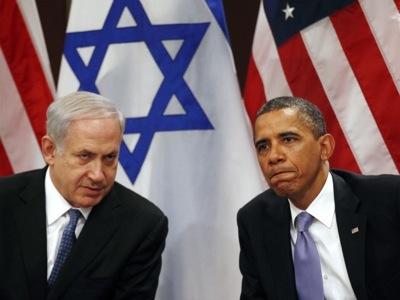
The US and Israel are planning to conduct a joint military drill in an effort to threaten Iran towards the end of the six-month period when an interim deal between Iran and the five permanent members of the UN Security Council plus Germany expires.
The drill is aimed at sending a threatening message to Iran while US President Barack Obama says “we cannot commit ourselves to an endless cycle of conflict.”
Time magazine broke the story of the planned US-Israeli military exercise on Thursday, citing a top Israeli official who said, “The strategic decision is to continue to make noise.”
“In May there’s going to be a joint training exercise with the Americans,” said the official who spoke on condition of anonymity. “It’s going to be big.”
The planned war game comes after the interim nuclear deal between Iran and the P5+1 intensely angered Israelis.
As part of the interim deal, which was announced on November 24, Iran has agreed to limit certain aspects of its nuclear activities, and the United States and its allies have agreed to lift some of the economic sanctions and offer access to a portion of the revenue that Tehran has been denied through these sanctions. No additional sanctions will be imposed.
The deal infuriated Israeli Prime Minister Benjamin Netanyahu who called it “a historic blunder.”
The American Israel Public Affairs Committee (AIPAC), the most powerful pro-advocacy group in the US, also called on US Congress to impose new sanctions on Iran.
Meanwhile, a recent Reuters/Ipsos poll has shown that the American people support the deal over Iran’s nuclear energy program by a 2-to-1 margin.
November 28, 2013
Posted by aletho |
Ethnic Cleansing, Racism, Zionism, Militarism, Progressive Hypocrite, Wars for Israel | American Israel Public Affairs Committee, Iran, Israel, Press TV, Sanctions against Iran, United States, Zionism |
Leave a comment
Last Saturday, the ink on the historic “interim agreement” signed in Geneva had not dried yet when the early signs of trouble with the deal and its roadmap for a comprehensive final agreement emerged in the form of US Secretary of State’s explicit denial that the deal had recognized Iran’s right to enrich uranium.
Since then, John Kerry has repeated this claim, flatly contradicted by his Iranian counterpart, Mohammad Javad Zarif, on a half dozen occasions, thus raising questions regarding US’s sincerity.
Not only that, within hours of the late night breakthrough in Geneva, the White House published a “fact sheet” about the content of the agreement, which has now been contested by Iran’s Foreign Ministry as inaccurate, misleading and “one-sided interpretation.” As expected, there is absolutely no reference in this “fact-sheet” to Iran’s nuclear rights, including the right to enrich uranium, an important step in manufacturing fuel for the country’s reactors, which is enshrined in the articles of Non-Proliferation Treaty (NPT).
Indeed, one of the main problems with the US’s approach toward the Iran nuclear issue is, and always has been, its complete obliviousness toward and lack of respect for Iran’s inalienable nuclear rights, which are the centerpieces of Iran’s negotiation strategy.
Little wonder, then, that US President Barack Obama in his post-Geneva outreach to the Israeli Prime Minister Benjamin Netanyahu has reportedly emphasized the “shared goals” vis-à-vis Iran’s nuclear program, namely, the dismantling of Iran’s “nuclear weapons capability” that stems from its uranium enrichment program.
Israel has now dispatched a technical team to Washington to coordinate the US’s effort with respect to the final status agreement with Iran. This will probably mean even less of a “tactical difference” between US and Israel in the coming months with respect to Iran.
There is now even a shared US and Israeli linguistic (and policy) emphasis on “dismantling” the Iranian nuclear program. The word “dismantle” has seeped in the public statements of John Kerry, in contrast to his earlier hints at respecting Iran’s right to enrich uranium, e.g. in Financial Times in 2009.
Case in point, in his interview with ABC network on November 24th, Kerry stated, “While we are negotiating for the dismantling, they will not grow their program.” This echoed Kerry’s earlier admission, on November 10, 2013, that the US “is aiming to get Tehran to halt further nuclear development as a first step toward a complete dismantling of the program.”
By all indications, the US is pursuing this objective through a phased “roll back strategy,” whereby the Iranian nuclear energy program would be targeted for a gradual dismantling, in light of the statement by Tony Blinken, the US Deputy National Security Adviser, that “if we could have gotten an entire freeze of their program right away in one fell swoop, we would have done that.” This recalls Kerry’s other interview, with CBS’s Face the Nation on November 24, when he responded to the question of whether the agreement calls for the dismantling of some of Iran’s programs by saying “Not yet. That’s correct. Not yet. But you don’t get everything at first step. You have to go down the process here.”
The interim agreement is thus viewed by the US as a milestone in achieving the initial objectives of this “roll-back” strategy – by destroying Iran’s 20-percent enriched uranium, halting the completion of Arak heavy water reactor and the installation of new centrifuges, freezing the number of centrifuges and imposing a low-ceiling on enrichment – according to Kerry “3.5 percent,” even though the agreement specifically says 5 percent, and subjecting Iran’s program to unprecedented intrusive inspection, including “a number of facilities we have never been in before,” to paraphrase Kerry.
Since collecting information on Iran’s nuclear energy program is a must for the “roll-back” strategy, the US hopes that the implementation of the interim agreement will prove vital, given the American persistence on keeping the “military option on the table.” Equally important is “reversing key aspects of the Iranian program” via this deal, which Kerry has been fond of repeating since co-signing the deal in Geneva.
As for the agreement’s concluding statements that refer to Iran’s enrichment program in a final agreement, Kerry has put the emphasis on the sentence that subjects this to “mutual agreement.” In other words, Iran’s NPT right is now threatened with a contractual atrophy that subjects this right to the prerogatives of a select few governments and thus shrinks and compromises it.
The full text of that important paragraph is as follows: “Involve a mutually defined enrichment program with mutually agreed parameters consistent with practical needs, with agreed limits on scope and level of enrichment activities, capacity, where it is carried out, and stocks of enriched uranium, for a period to be agreed upon.”
In addition, Kerry has repeatedly turned attention to the agreement’s reference to the UN sanctions resolutions on Iran, which call for the suspension of Iran’s enrichment and reprocessing activities. In other words, as far as the US is concerned, the inclusion of the passage on UN resolutions is yet another stab at Iran’s defense of its right to enrich.
Notwithstanding the above-said, there is very little doubt that the US’s intention of the “first step” interim agreement is to downgrade the Iranian nuclear energy program and move steadily along the path of complete dismantling and dispossession of Iran’s nuclear fuel cycle.
Another point: the agreement places some of Iran’s centrifuges in standby, i.e. spinning without enriching, which can be hazardous to the equipment after a while, causing equipment decay and failure. Both the standby and shut down options have clear consequences for the physical condition of the centrifuges, which is why it is important not to extend this agreement beyond the six months. On this account alone, the US will likely drag its feet on a final deal, hoping that Iranian centrifuge program will increasingly suffer as a result of a lengthy state of ‘limbo.’
Consequently, it is important from Iran’s vantage to correctly tabulate what a “win” for the other side entails, and whether or not the “win-win” is balanced and evenly distributed, rather than triggering a process whereby the other side’s “win” would accumulate over time at Iran’s expense. In that case, it would simply culminate in a “lose-win,” to the detriment of Iran’s interests.
Of course, this is not even to mention the “psychological warfare” behind the White House “fact-sheets” hoopla about allowing the release of measly 4.2 billion of Iran’s oil proceeds in the next six months, while keeping the rest in an escrow. Clearly, the US’s intention is to weaken not only Iran’s resolve but also the spirit of resistance and national dignity, as part and parcel of its nuclear “roll-back.”
Yet, despite all the US’s clever “smart power” maneuvers mentioned above, what is rather remarkable about Iran’s counter-strategy, based on deft, skillful negotiation strategy, is how those maneuvers are neutralized and a broader anti-sanctions, pro-Iran momentum has been generated that is bound to grow stronger and introduce greater fissures between US and its Western partners, who happen to have greater vested economic interests with Iran. And this is precisely why Iran’s “win” in this stage of the nuclear game is irrefutable.
November 27, 2013
Posted by aletho |
Deception, Economics, Wars for Israel | Iran, John Kerry, Sanctions against Iran, United States |
Leave a comment
Tehran has strongly rejected Washington’s interpretation of the long-awaited interim nuclear agreement reached by the P5+1 nations in Geneva, as Iran’s Foreign Ministry labeled the factsheet released by the US a “one-sided interpretation.”
The agreement, reached over the weekend in Geneva, outlines a framework for continued negotiations with Tehran, including a deal which is yet to be finalized. However, Iran now claims that the American factsheet, posted a few hours after the deal was announced on the website of the White House, has omitted some key points and is misleading the public by adjusting the language of the original agreement.
A spokeswoman for Iran’s Foreign Ministry, Marziyeh Afkham, came out with the following statement published by the Fars news agency on Tuesday:
“What has been released by the website of the White House as a factsheet is a one-sided interpretation of the agreed text in Geneva and some of the explanations and words in the sheet contradict the text of the Joint Plan of Action [the title of the Iran-powers deal], and this factsheet has unfortunately been translated and released in the name of the Geneva agreement by certain media, which is not true.”
The spokeswoman gave no further details.
Iran, together with the P5+1 nations – the five permanent members of the UN Security Council and Germany – agreed on Sunday that the former will curb a substantial portion of its nuclear activities for a period of six months, which will be spent finalizing the conditions of the deal.
In light of the recent crippling economic sanctions against Iran, Western parties agreed to lift some, including those on gold, precious minerals, the auto sector and petrochemical exports. According to the American factsheet, this is a potential $1.5 billion in revenue for Iran. Additionally, it could also be getting an additional $4.2 billion in oil revenues.
Furthermore, “$400 million in governmental tuition assistance [may also be] transferred from restricted Iranian funds directly to recognized educational institutions in third countries to defray the tuition costs of Iranian students,” DC officials told the Washington Free Beacon, which reported on the story.
However, a key aspect in Iran’s nuclear program – its ability to enrich uranium – was claimed by the Foreign Ministry to differ in nature from the US interpretation.
Some key points from Tehran’s version, which was published by Fars, are as follows:
“This comprehensive solution would enable Iran to fully enjoy its right to nuclear energy for peaceful purposes under the relevant articles of the NPT in conformity with its obligations therein.”
“This comprehensive solution would involve a mutually defined enrichment program with practical limits and transparency measures to ensure the peaceful nature of the program,” it also says.
And finally, the draft stipulates that “this comprehensive solution would constitute an integrated whole where nothing is agreed until everything is agreed.”
Afkham went on to explain that the above Joint Plan of Action, which is four pages in length, includes terminology chosen in collaboration by all the parties to the Geneva agreement. The spokeswoman added that the accuracy and choice of words is the precise reason the P5+1 agreement took such time to finalize, with particular emphasis given to the importance of its phrasing by Tehran.
Early Sunday morning, however, saw the release of a markedly different text, prompting the Iranian Foreign Ministry to release what is says is the real version of the agreement.
The Washington Free Beacon spoke to White House officials, who said that the “P5+1 and Iran are working on what the timeframe is” adding that the final details of the draft agreement are still being ironed out. They declined to elaborate on what this means.
One thing that remains certain is while those details are being worked out, Iran retains the right to continue enriching uranium. Its right to do so has been the hottest subject of debate and is what landed it in hot water with the US, leading to Western sanctions.
Israeli leader Benyamin Netanyahu called the agreement a flat-out “mistake,” while US President Barack Obama, despite welcoming the deal, said the toughest sanctions will remain in place, while other offers listed in the agreement could easily be retracted.
November 27, 2013
Posted by aletho |
Deception | Iran, United States |
Leave a comment
WASHINGTON – The “first step” agreement between Iran and the United States that was sealed in Geneva over the weekend is supposed to lead to the negotiation of a “comprehensive settlement” of the nuclear issue over the next six months, though the latter has gotten little attention.
But within hours of the agreement, there are already indications from senior U.S. officials that the Barack Obama administration is not fully committed to the conclusion of a final pact, under which economic sanctions would be completely lifted.
The administration has apparently developed reservations about such an “end state” agreement despite concessions by the government of President Hassan Rouhani that were more far-reaching than could have been anticipated a few months ago.
In fact the Rouhani government’s moves to reassure the West may have spurred hopes on the part of senior officials of the Obama administration that the United States can achieve its minimum aims in reducing Iran’s breakout capacity without giving up its trump cards—the harsh sanctions on Iran’s oil expert and banking sectors.
The signs of uncertain U.S. commitment to the “end state” agreement came in a background press briefing by unidentified senior U.S. officials in Geneva via teleconference late Saturday night. The officials repeatedly suggested that it was a question of “whether” there could be an “end state” agreement rather than how it could be achieved.
“What we are going to explore with the Iranians and our P5+1 partners over the next six months,” said one of the officials, “is whether there can be an agreed upon comprehensive solution that assures us that the Iranian programme is peaceful.”
The same official prefaced that remark by stating, “In terms of the ‘end state’, we do not recognise a right for Iran to enrich uranium.”
Later in the briefing, a senior official repeated the same point in slightly different words. “What the next six months will determine is whether there can be an agreement that… gives us assurance that the Iranian programme is peaceful.”
Three more times during the briefing the unnamed officials referred to the negotiation of the “comprehensive solution” outlined in the deal agreed to Sunday morning as an open-ended question rather than an objective of U.S. policy.
“We’ll see whether we can achieve an end state that allows for Iran to have peaceful nuclear energy,” said one of the officials.
Those carefully formulated statements in the background briefing do not reflect difficulties in identifying what arrangements would provide the necessary assurances of a peaceful nuclear programme. Secretary of State John Kerry declared at a press appearance in Geneva, “Folks, it is not hard to prove peaceful intention if that’s what you want to do.”
The background briefing suggested that in next six months, Iran would have to “deal with” U.N. Security Council resolutions, which call for Iran to suspend all enrichment activities as well as all work on its heavy reactor in Arak.
Similarly, the unnamed officials said Iran “must come into compliance with its obligations under the NPT and its obligations to the IAEA [International Atomic Energy Agency].”
Those statements appeared to suggest that the administration would be insisting on a complete end to all enrichment, at least temporarily, and an end to all work on Arak.
The actual text of the agreement reached on Sunday states, however, that both the six powers of the P5+1 and Iran “will be responsible for conclusion and implementation of mutual near-term measures,” apparently referring to the measures necessary to bring Security Council consideration of the Iran nuclear issue to a conclusion.
The Obama administration has yet to release an official text of the “first step” agreement, although the official Iran Fars new agency released a text over the weekend.
Iran has demonstrated its determination to achieve such an agreement by effectively freezing and even partially reversing its nuclear programme while giving the IAEA daily access to Iran’s enrichment sites.
The Washington Post story on Sunday cited Western officials in Geneva as saying that the Iranian concessions “not only halt Iran’s nuclear advances but also make it virtually impossible for Tehran to build a nuclear weapon without being detected.”
But since the early secret contacts with Iran in August and September, the Obama administration has been revising its negotiating calculus in light of the apparent Iranian eagerness to get a deal.
In mid-October, Bloomberg’s Jeffrey Goldberg reported that the White House and State and Treasury departments were interested in an idea first proposed in early October by Mark Dubowitz, the executive director of the Foundation for the Defense of Democracies, who had lobbied the Obama administration successfully for the sanctions aimed at cutting Iranian oil export revenues.
The Dubowitz proposal was to allow Iran access to some of its own money that was sitting in frozen accounts abroad in return for “verified concessions” that would reduce Iranian nuclear capabilities.
Meanwhile the United States and other powers would maintain the entire structure of the sanctions regime, at least in the interim period, without any change, Goldberg reported, “barring something like total capitulation” by Iran.
The scheme would give greater rewards for dismantling all but a limited number of safeguards than for lesser concessions, according to Goldberg’s report, based on information from “several officials”.
And if Iran refused, the plan would call for even more punishing sanctions against Iran’s natural gas sector.
That was essentially the policy that the Obama administration adopted in the negotiations in Geneva. In the first step agreement, Iran agreed to stop all enrichment to 20 percent, reduce the existing 20 percent-enriched stockpile to zero, convert all low enriched uranium to a form that cannot be enriched to higher level and allow IAEA inspectors daily access to enrichment sites.
In return for concessions representing many of its key negotiating chips, Iran got no relief from sanctions and less than seven billion dollars in benefits, according to the official U.S. estimate.
But the Iranian concessions will hold only for six months, and Iran has made such far-reaching concessions before in negotiations on a preliminary that anticipated a later comprehensive agreement and then resumed the activities it had suspended.
In the Paris Agreement of Nov. 15, 2004 with the foreign ministers of the UK, Germany, France, Iran agreed “on a voluntary basis, to continue and extend an existing suspension of enrichment to include all enrichment related and reprocessing activities”.
That meant that Iran was giving up all work on the manufacture, assembly, installation and testing of centrifuges or their components. Supreme Leader Ayatollah Ali Khamenei was under the impression it was an open-ended suspension and initially opposed it.
Khamenei relented only after Hassan Rouhani, then the chief nuclear policy coordinator and now president, and other officials, assured him that it was a temporary measure that would endure only until an agreement was reached that legitimised Iran’s enrichment or the determination that the Europeans were not serious, according to Ambassador Hossein Mousavian’s nuclear memoirs.
After the Europeans refused to negotiate on an Iranian proposal for a comprehensive settlement in March 2005 that would have provided assurances against enrichment to weapons grade, Khamenei pulled the plug on the talks, and Iran ended its suspension of enrichment-related activities.
The United States had long depended on its dominant military power to wage “coercive diplomacy” with Tehran, with threat of an attack on Iran as its trump card. But during the George W. Bush administration, that threat begn to lose its credibility as it became clear that the U.S. military was opposed to war with Iran over its nuclear programme.
Obama administration officials are now acting as though they believe the sanctions represent a diplomatic trump card that is far more effective than the “military option” that had been lost.
Some news stories on the “first step” agreement have referred to the possibility that the negotiations on the final settlement could stall, and the status quo might continue. But the remarks by senior U.S. officials suggest the administration may be hoping for precisely such an outcome.
Gareth Porter, an investigative historian and journalist specialising in U.S. national security policy, received the UK-based Gellhorn Prize for journalism for 2011 for articles on the U.S. war in Afghanistan.
November 26, 2013
Posted by aletho |
Deception, Progressive Hypocrite | International Atomic Energy Agency, Iran, John Kerry, Sanctions against Iran, United States |
Leave a comment

 Aletho News
