Hamas demands return to agreed-upon ceasefire deal, calls new talks ‘cover for Israeli massacres’
The Cradle | August 12, 2024
Hamas has called on mediators in the ceasefire and prisoner exchange talks to present a plan to implement the proposal agreed to by the resistance movement in early July and to oblige Israel to do so as well.
“We demand that the mediators submit a plan to implement what they presented to the movement and that we agreed to on 2 July 2024, based on Biden’s vision and the Security Council resolution, and oblige the occupation to do so, instead of going to more rounds of negotiations or new proposals that provide cover for the occupation’s aggression and give it more time to perpetuate the war of genocide against our people,” Hamas said on 11 August.
The Hamas statement also said Israel’s assassination of political bureau chief Ismail Haniyeh and the continuation of its massacres against civilians in Gaza prove its intentions of preventing a ceasefire deal.
Senior Hamas official Osama Hamdan told Al-Araby on Sunday that if there is no real pressure by the US president on Israel, “he does not have anything to bet on to make the [upcoming] negotiations successful].”
He added that Washington falsely guaranteed Israel’s acceptance of the proposal presented by Joe Biden, adding that “it is time” to oblige Israel to do so.
Biden unveiled a permanent ceasefire plan in late May, claiming Israel had also agreed to the proposal. Yet Israeli Prime Minister Benjamin Netanyahu remained insistent on having the right to continue the war and pursue Hamas after the captives’ exchange, a position which he has stuck to until now.
US and Qatari mediators eventually updated the Biden plan and presented it to Hamas in early July. The resistance movement proposed amendments to the revised plan on 3 July, which Israeli sources said were positive and could enable a deal to pass.
Yet Netanyahu’s position on pursuing the war’s goals, despite talks for a permanent ceasefire, obstructed the negotiations and prevented an agreement from being reached.
Israel had also rejected a proposal agreed to by Hamas on 6 May.
“The plan I put together, endorsed by the G7, endorsed by the UN Security Council, et cetera, is still viable. And I’m working literally every single day – and my whole team – to see to it that it doesn’t escalate into a regional war. But it easily can,” Biden said on 11 August.
Washington has been beefing up its presence across the region to defend Israel from the Resistance Axis, which has vowed to respond to the recent Israeli attacks on Tehran and Beirut.
Hamas’ statement came two days after Netanyahu’s office said Israel would send mediators to upcoming ceasefire talks, scheduled for 15 August, “to finalize the details of the implementation of the agreement framework.”
In a statement on Monday, the Popular Front for the Liberation of Palestine (PFLP) said, “It is unreasonable to hold any negotiations while the occupation’s crimes continue in shelters, schools, displacement tents, and hospitals.”
New negotiations are “meaningless as long as the aggression government and war criminals have not provided clear and declared approval of the formulation that was originally presented by them and adopted by US President Joe Biden,” the PFLP added.
Israel is a state built on lies and will continue promoting lies
By Motasem A Dalloul | MEMO | August 12, 2024
Additionally, [the named targeted included] “three elderly civilians who had no connection to the military action were also among the victims, including a school principal … an Arabic language teacher, … and six civilians, some of whom were even Hamas opponents.”
Iran finesses its deterrence strategy
By M. K. BHADRAKUMAR | Indian Punchline | August 12, 2024
The latest Israeli spin has it that Iran cannot make up its mind whether to retaliate or not for the killing of Hamas leader Ismail Haniyeh on July 28 while on a visit to Tehran for the inaugural of President Masoud Pezeshkian.
The hypothesis here is that there must be a standoff between Pezeshkian and hardliners of the Islamic Revolutionary Guard Corps (IRGC) with the new president pushing back against any aggressive strategy against Israel.
Prima facie, it is a ridiculous spin. But Iran rebutted it, nonetheless, with the Acting Foreign Minister Ali Bagheri Kani stating as recently as on Saturday night that Tehran “will make the aggressor Israeli regime pay the price for its aggression in a legitimate and decisive action.” Those were carefully chosen words.
But how come Iran didn’t act for a fortnight already? Several factors are in play here. First, Pezeshkian has not yet formed his government. He submitted his list of proposed ministers to the Parliament for approval only yesterday. The executive branch of the government is carrying on with day-to-day functioning.
Nonetheless, according to Russian media, Pezeshkian did speak about Iran’s retaliatory strike against Israel at a meeting with the visiting Russian Security Council Secretary Sergei Shoigu on July 5 in Tehran.
That said, do not rule out that there could be some calibration in the timing. After all, Israel is in panic and reports say people stay awake at night fearing Iranian attack. According to IRNA, Prime Minister Benjamin Netanyahu, for all his bravado, evacuated four of Israel’s important intelligence and security bases in Tel Aviv.
Second, Iran will not act as “spoiler” when regional states and the US are pulling all stops to pick up the threads of the Gaza ceasefire talks between Hamas and Israel. The fact that Israel agreed to the talks on Thursday suggests that Netanyahu also sees advantages in returning to the negotiating table.
Of course, Iran will also be carefully weighing the scale of its attack on Israel. After all, Haniyeh was killed in a covert operation in which there was no Iranian casualty.
However, the clincher is going to be the progress in the upcoming talks. Iran may altogether postpone the operation if the Israeli side gives guarantees at the talks not to invade Lebanon and withdraws troops from the Gaza Strip.
Tehran could potentially reconsider its position if a radical change occurs in the situation in the region following the conclusion of a truce between Hamas and Israel. Expectations are running high. And, make no mistake, Tehran has a much closer equation with Yahya Sinwar than it had with Haniyeh.
Therefore, the high-stakes diplomacy this week leading to the talks scheduled for Thursday to secure a hostage and ceasefire deal in Gaza becomes an inflection point.
Iran’s UN mission in New York said in a statement on Friday, “Our priority is to establish a lasting ceasefire in Gaza. Any agreement accepted by Hamas will also be recognised by us.” The statement reiterated Iran’s right to self-defence against Israel but also added, “However, we hope that our response will be timed and conducted in a manner not to the detriment of the potential ceasefire.”
Tehran is intensely conscious that the outcome of the Hamas-Israel talks (with the participation of CIA Director William Burns) in terms of the release of American hostages is the stuff of Joe Biden’s presidential legacy as much as it holds the potential to burnish the prospects of the Democratic Party candidate Kamala Harris in the November election.
Jordan is acting as go-between to enable Washington and Tehran to sensitise each other their respective problematic borderlines. Jordanian Foreign Minister Ayman Safadi visited Tehran on August 4 for talks with Ali Bagheri. They met again on the sideline of the OIC extraordinary meeting in Jeddah on August 7 (which was by the way, a diplomatic coup for Tehran.) In between, Biden spoke with King Abdullah of Jordan.
The White House readout said Biden and Abdullah “discussed their efforts to de-escalate regional tensions, including through an immediate ceasefire and hostage release deal. The President thanked His Majesty for his friendship, and affirmed unwavering US support for Jordan as a partner and ally in promoting regional peace and security.”
Meanwhile, Biden is using all channels available to moderate Iran’s attack on Israel. The Americans have also openly dissociated themselves from the killing of Haniyeh. They have reportedly conveyed to Tehran that an escalation is fraught with the risk of a US-Iran conflict, which is avoidable.
Finally, in the range of discourses over Iran’s retaliation, what is overlooked generally is that Iranians invariably have a strategy, unlike Israelis who resort to knee-jerk reactions. Therefore, the ‘big picture’ becomes important here.
Iran is not looking for war, especially when it has done exceedingly well so far to cut losses and turn the table on Israel in a cost-effective manner. Israel’s international image is in the mud and not all the freshwater in the Sea of Galilee can wash off the filth.
Iran’s number one priority will be to have the western sanctions removed. Supreme Leader Khamenei’s deal with Pezeshkian quintessentially narrows down to improving the economy by getting rid of sanctions and making it possible for Iran to gain its rightful place in the international order by using its vast resources optimally.
All major pronouncements by Pezeshkian have signalled his prioritisation of Iran’s relations with the West. Quite obviously, Pezeshkian is walking a tight rope, as Javad Zarif’s announcement of his resignation as the president’s deputy for strategic affairs shows. Zarif is reportedly peeved that the steering committee responsible for candidate selection picked only three out of the 19 names he had proposed for the cabinet posts!
Be that as it may, Abbas Araghchi, introduced as the new Minister of Foreign Affairs, had served for 8 years as the deputy to Zarif during Hassan Rouhani’s presidency, playing a key role in the nuclear negotiations (JCPOA) with the Obama administration. The European powers see Araghchi as a ‘moderate.’ Indeed, he makes an effective interlocutor for Tehran in western capitals — and it is the clearest signal so far that Iran’s foreign policy trajectory is leaning toward constructive engagement of the West.
Smart thinking involves the brain getting precedence over brawn. That is where Iran scores over the die-hard Zionists in Tel Aviv who are still wallowing in the culture of the Nakba.
Iran shrewdly assessed at a very early stage that contradictions were inevitable in Biden-Netanyahu equations post-October 7 and the Greater Israel agenda and the US’ Indo-Pacific strategy are pulling in opposite directions.
Equally, Iran has drawn the correct conclusions out of the standoff in April where it displayed its formidable military capability to inflict pain on Israel while also prompting the US to prevail upon the latter not to react! In the entire chronicle of US-Iran tango since 1979, such a thing never happened before.
Why should Tehran give up that pathway leading to the rose garden? For sure, Tehran will inflict even greater pain on Israel than in April. But, fundamentally, the 900-pound gorilla in Tel Aviv has to be tamed with a smart admixture of hard and soft power — and, it also involves the West. And to that end, Iran will restrain itself and remain a nuclear threshold state.
“An Intricate Fabric of Bad Actors Working Hand-in-Hand” – So is war Inevitable?
By Alastair Crooke | Strategic Culture Foundation | August 12, 2024
Walter Kirn, an American novelist and cultural critic, in his 2009 memoir, Lost in the Meritocracy, described how, after a sojourn at Oxford, he came to be a member of ‘the class that runs things’ – the one that “writes the headlines, and the stories under them”. It was the account of a middle-class kid from Minnesota trying desperately to fit into the élite world, and then to his surprise, realising that he didn’t want to fit in at all.
Now 61, Kirn has a newsletter on Substack and co-hosts a lively podcast devoted in large part to critiquing ‘establishment liberalism’. His contrarian drift has made him more vocal about his distrust of élite institutions – as he wrote in 2022:
“For years now, the answer, in every situation—‘Russiagate,’ COVID, Ukraine—has been more censorship, more silencing, more division, more scapegoating. It’s almost as if these are goals in themselves – and the cascade of emergencies mere excuses for them. Hate is always the way,”
Kirn’s politics, a friend of his suggested, was “old-school liberal,” underscoring that it was the other ‘so-called liberals’ who had changed: “I’ve been told repeatedly in the last year that free speech is a right-wing issue; I wouldn’t call [Kirn] Conservative. I would just say he’s a free-thinker, nonconformist, iconoclastic”, the friend said.
To understand Kirn’s contrarian turn – and to make sense of today’s form of American politics – it is necessary to understand one key term. It is not found in standard textbooks, but is central to the new playbook of power: the “whole of society”.
“The term was popularised roughly a decade ago by the Obama administration, which liked that its bland, technocratic appearance could be used as cover to erect a mechanism for a governance ‘whole-of-society’ approach” – one that asserts that as actors – media, NGOs,corporations and philanthropist institutions – interact with public officials to play a critical role not just in setting the public agenda, but in enforcing public decisions.
Jacob Siegel has explained the historical development of the ‘whole of society’ approach during the Obama administration’s attempt to pivot in the ‘war on terror’ to what it called ‘CVE’ – countering violent extremism. The idea was to surveil the American people’s online behaviour in order to identify those who may, at some unspecified time in the future, ‘commit a crime’.
Inherent to the concept of the potential ‘violent extremist’ who has, as yet, committed no crime, is a weaponised vagueness: “A cloud of suspicion that hangs over anyone who challenges the prevailing ideological narratives”.
“What the various iterations of this whole-of-society approach have in common is their disregard for democratic process and the right to free association – their embrace of social media surveillance, and their repeated failure to deliver results …”.
Aaron Kheriaty writes:
“More recently, the whole of society political machinery facilitated the overnight flip from Joe Biden to Kamala Harris, with news media and party supporters turning on a dime when instructed to do so—democratic primary voters ‘be damned’. This happened not because of the personalities of the candidates involved, but on the orders of party leadership. The actual nominees are fungible, and entirely replaceable, functionaries, serving the interests of the ruling party … The party was delivered to her because she was selected by its leaders to act as its figurehead. That real achievement belongs not to Harris, but to the party-state”.
What has this to do with Geo-politics – and whether there will be war between Iran and Israel?
Well, quite a lot. It is not just western domestic politics that has been shaped by the Obama CVE totalising mechanics. The “party-state” machinery (Kheriaty’s term) for geo-politics has also been co-opted:
“To avoid the appearance of totalitarian overreach in such efforts”, Kheriaty argues,“the party requires an endless supply of causes … that party officers use as pretexts to demand ideological alignment across public and private sector institutions. These causes come in roughly two forms: the urgent existential crisis (examples include COVID and the much-hyped threat of Russian disinformation) – and victim groups supposedly in need of the party’s protection”.
“It’s almost as if these are goals in themselves – and the cascade of emergencies mere excuses for them. Hate is always the way”, Kirn underlines.
Just to be clear, the implication is that all geo-strategic critics of the party-state’s ideological alignment must be jointly and collectively treated as potentially dangerous extremists. Russia, China, Iran and North Korea therefore are bound together as presenting a single obnoxious extremism that stands in opposition to ‘Our Democracy’; versus ‘Our Free Speech’ and versus ‘Our Expert Consensus’.
So, if the move to war against one extremist (i.e. versus Iran) is ‘acclaimed’ by 58 standing ovations in the joint session of Congress last month, then further debate is unnecessary – any more than Kamala Harris’ nomination as Presidential candidate needs to be endorsed through primary voting:
Candidate Harris told hecklers on Wednesday, chanting about genocide in Gaza, ‘to pipe down’ – unless they “want Trump to win”. Tribal norms must not be challenged (even for genocide).
Sandra Parker, Chairwoman of the political advocacy arm for the three thousand members of Christians United for Israel (CUFI) was advising on correct talking points, the Times of Israel reports:
“The rise of Republican far right-wingers who spurn decades of (bi-partisan) pro-Israel orthodoxies, favouring isolationism and resurrecting anti-Jewish tropes is alarming pro-Israel evangelicals and their Jewish allies… The break with decades of assertive foreign policy was evident last year when Sen. Josh Hawley derided the “liberal empire” that he dismissively characterised as bipartisan “Neoconservatives on the right, and liberal globalists on the left: Together they make up what you might call the uniparty, the DC establishment that transcends all changing administrations””.
At the CUFI talking points conference, the fear of increased isolation on the Right was the issue:
“You’re going to see that adversaries will see the U.S. as in retreat” – should isolationists get the upper hand: Activists were advised to push back: Should lawmakers claim that NATO expansion is what triggered Russia’s invasion of Ukraine: “Should anybody begin to make the argument that the reason the Russians have moved in on Ukraine – is because of NATO enlargement – can I just say that this is the age-old ‘blame America trope,’” the Chair advised the assembled delegates.
“They have the strain of isolationism that’s – ‘Let’s just do China and forget about Iran, forget about Russia, let’s just do one thing’ – but it doesn’t work that way,” said Boris Zilberman, director of policy and strategy for the CUFI Action Fund. Instead, he described “an intricate fabric of bad actors working hand in hand”.
So, to get to the bottom of this western mind-management in which appearance and reality are cut from the same cloth of hostile extremism: Iran, Russia and China are ‘cut from it’ likewise.
Plainly put, the import of this “behavioural-engineering enterprise (it no longer having much to do with the truth, no longer having much to do with your right to desire what you wish – or not desire what you don’t wish)” – is, as Kirn says: “everyone is in on the game”. “The corporate and state interests don’t believe you are wanting the right things—you might want Donald Trump— or, that you aren’t wanting the things you should want more” (such as seeing Putin removed).
If this ‘whole of society’ machinery is understood correctly in the wider world, then the likes of Iran or Hizbullah are forced to take note that war in the Middle East inevitably may bleed across into wider war against Russia – and have adverse ramifications for China, too.
That is not because it makes sense. It doesn’t. But it is because the ideological needs of ‘whole of society’ foreign-policy hinge on simplistic ‘moral’ narratives: Ones that express emotional attitudes, rather than argued propositions.
Netanyahu went to Washington to lay out the case for all-out war on Iran – a moral war of civilisation versus the Barbarians, he said. He was applauded for his stance. He returned to Israel and immediately provoked Hizbullah, Iran and Hamas in a way that dishonoured and humiliated both – knowing well that it would draw a riposte that would most likely lead to wider war.
Clearly Netanyahu, backed by a plurality of Israelis, wants an Armageddon (with full U.S. support, of course). He has the U.S., he thinks, exactly where he wants it. Netanyahu has only to escalate in one way or another – and Washington, he calculates (rightly or wrongly), will be compelled to follow.
Is this why Iran is taking its time? The calculus on an initial riposte to Israel is ‘one thing’, but how then might Netanyahu retaliate in Iran and Lebanon? That can be altogether an ‘other thing’. There have been hints of nuclear weapons being deployed (in both instances). There is however nothing solid, to this latter rumour.
Further, how might Israel respond towards Russia in Syria, or might the U.S. react through escalation in Ukraine? After all, Moscow has assisted Iran with its air defences (just as the West is assisting Ukraine against Russia).
Many imponderables. Yet, one thing is clear (as former Russian President Medvedev noted recently): “the knot is tightening” in the Middle East. Escalation is across all the fronts. War, Medvedev suggested, may be ‘the only way this knot will be cut’.
Iran must think that appeasing western pleas in the wake of the Israeli assassination of Iranian officials at their Damascus Consulate was a mistake. Netanyahu did not appreciate Iran’s moderation. He doubled-down on war, making it inevitable, sooner or later.
Pentagon Chief Orders Nuclear Submarine Deployment to Middle East
Sputnik – 12.08.2024
WASHINGTON – US Defense Secretary Lloyd Austin has ordered the USS Georgia nuclear submarine to be deployed to the Middle East and the deployment of the Abraham Lincoln aircraft carrier to the region to be accelerated, the Pentagon said on Sunday following Austin’s conversation with Israeli Defense Minister Yoav Gallant.
“Secretary Austin has ordered the USS ABRAHAM LINCOLN Carrier Strike Group, equipped with F-35C fighters, to accelerate its transit to the Central Command area of responsibility, adding to the capabilities already provided by the USS THEODORE ROOSEVELT Carrier Strike Group. Additionally, the Secretary has ordered the USS Georgia (SSGN 729) guided missile submarine to the Central Command region,” the Pentagon said.
During the phone call, the parties discussed efforts to achieve a ceasefire in Gaza and measures to protect Israel. In particular, Austin emphasized the US readiness to take all necessary steps to protect its Middle Eastern ally.
Hamas rejects Israeli claim of having command center in bombed Gaza school
Press TV – August 11, 2024
The Palestinian Hamas resistance group has dismissed the Israeli military’s allegations that it had set up a “command and control center” at a school compound housing displaced Palestinian families in Gaza City, where more than 100 people were killed and dozens wounded in a dawn strike.
The Gaza-based group, in a statement, also denied the Israeli claim that 19 resistance fighters from Hamas and Islamic Jihad movements were killed in the assault on the al-Tabin school in Gaza City’s al-Daraj neighborhood as “false and baseless.”
“Such claims have made been in an attempt to justify the heinous crime amid widespread international criticism,” the statement read.
“We emphasize there was not a single armed individual among those martyred in Saturday’s massacre. They are all civilians who were targeted while performing morning prayers. The victims include children, civil servants, university professors and religious figures, most of whom have no connection whatsoever to any political or military party,” Hamas noted.
The Palestinian resistance group went on to describe the Israeli attack on the Gaza school as “among thousands of massacres committed by the criminal and Nazi Israeli regime in the Gaza Strip. The Zionist entity deliberately and intentionally targets unarmed civilians,” in the coastal sliver.
“The occupying regime purposely spreads such lies after every massacre it perpetrates [in Gaza] in order to justify the horrendous crimes, which are now conspicuous to all,” Hamas added.
Israel’s list of ‘terrorists’ killed in latest massacre exposed as civilians
The Cradle | August 11, 2024
The Israeli army has falsely claimed that over a dozen out of more than 100 civilians massacred in its strike on a Gaza school on 10 August were “terror operatives” belonging to Hamas and the Palestinian Islamic Jihad (PIJ) movement.
Chairman of the Euro-Med Human Rights Monitor Ramy Abdu and Gaza journalist Motasem Dalloul, both of whom knew some of the victims personally, were among many who picked apart Israel’s claims.
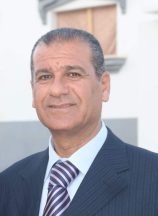 Abdu revealed via social media that two of those listed as “operatives” were, in fact, civilians who had been killed in earlier Israeli attacks.
Munther Daher, listed as a PIJ operative in Tel Aviv’s infographic of “terrorists” it said were eliminated in the attack, was a regular citizen who was killed alongside his sister on Friday, one day before the strike on the school, Abdu revealed in an X thread exposing the Israeli claims.
Yusuf al-Wadiya, listed by Israel as a Hamas operative, was also killed in his home two days before the massacre.
Another one of the names on Israel’s list is Muhammad Hamid al-Taif. He was not linked to any political activity and worked as an English teacher, but is listed as a Hamas operative.
Abdulaziz al-Kafarna, an elderly man who worked in Gaza’s public services sector and serves as the deputy mayor of Beit Hanoun in the northern strip, is listed as a Hamas “emergency committees operative.”
“Four of [those on Israel’s list] were from the Jaabari family, whom I personally know—they never engaged in any political or military activities. Another was an imam, one was my neighbor from the Habib family who had a serious dispute with Hamas,” the Euro-Med chairman said.
 Another victim of the Israeli massacre was Yousef al-Kahlout, an Arabic language university professor who was listed as a member of Hamas’ “central leadership.”
“Israel lives on lies,” the Euro-Med chairman wrote in his thread.
The Israeli army bombed a school full of displaced Palestinians near Gaza City on 10 August, killing over 100 people and injuring others. The strike on the Tabi’in school took place as the displaced Gazans were performing morning prayers.
Gaza’s Civil Defense said the school was bombed with three missiles, including at least one 2000 kg MK-84.
“Our assessment is that the massacre … is the third largest disaster in terms of scale following the massacres at Maamadani (Baptist) Hospital and Al-Mawasi in Khan Yunis,” the civil defense said.
Al-Mayadeen‘s correspondent in Gaza reported on 11 August that “paramedics have counted each 70 kg of remains as one martyr, due to remains being so scattered.”
The Israeli military issued a statement acknowledging that precision munitions were used in the strike, justifying the killings by claiming Hamas uses civilians as human shields.
Israeli forces have been committing near-daily massacres against Palestinian civilians in the Gaza Strip.
Indonesia, Malaysia urge UN to forge consensus against Israel after latest massacre in Gaza
Press TV – August 11, 2024
Indonesia and Malaysia have urged the United Nations to reach a general agreement against Israel after its latest massacre in the Gaza Strip.
More than 100 Palestinians were killed on Saturday in an Israeli airstrike on a school sheltering displaced people in the east of the Gaza Strip. The Israeli regime has attacked schools at least 21 times in the past 40 days.
Southeast Asian nations have been critical of the Israeli regime, vocally supporting the defenseless Palestinian people trapped and massacred by the Zionist war machine in the besieged Gaza Strip.
On Sunday, both Indonesia and Malaysia called on the UN to unite against Tel Aviv to stop the mass killing of civilians in Gaza.
“The international community should no longer tolerate and accept the belligerence of Israel,” the Malaysian Ministry of Foreign Affairs said in its statement.
“Malaysia continues to call for Israel’s allies to compel Israel to immediately stop the killings of innocent Palestinians, and to stop providing Israel with the tools to continue this genocide. An immediate, urgent and decisive action by the UN Security Council is needed to enforce a permanent ceasefire.”
Malaysia said that Israel has shown “that it has no desire for peace” and urged other Muslim countries under the 57-member Organization of Islamic Cooperation to come together and work with UN member states to demand Tel Aviv comply with the UN Security Council resolution passed in June, which called for a ceasefire in Gaza.
The Israeli regime’s airstrike on Saturday sparked a new wave of international condemnation, with the UN Human Rights Office saying that it was at least the 21st attack on schools-turned-shelters that it has recorded since July 4.
Indonesia has also joined growing calls for the UN Security Council to “immediately conduct a comprehensive investigation” into the Al-Tabin school massacre.
“Indonesia also calls upon the international community to unite in stopping the crimes against humanity and genocide committed by Israel,” the Indonesian Ministry of Foreign Affairs said. “Israel must be held accountable for all these crimes, and all forms of impunity must be brought to an end.”
Backed by the US-led Western allies, the Israeli regime has since October launched a genocidal war on Gaza, enforcing a deadly siege of the Palestinian land by stopping the flow of potable water, medicine, and electricity into the coastal territory.
Israeli forces’ genocidal war on Gaza since early October has killed nearly 40,000 people, most of them women and children, with some 91,000 more injured.
China supports Iran in defending its security, sovereignty: Foreign minister
Press TV – August 11, 2024
Chinese Foreign Minister Wang Yi says Beijing supports Iran in defending its “sovereignty, security and national dignity” amid Tehran’s promise to harshly punish Israel over the assassination of Ismail Haniyeh, the head of the political bureau of the Hamas resistance movement.
In a phone call with Iran’s Acting Foreign Minister Ali Bagheri Kani on Sunday, Wang repeated Beijing’s denunciation of the Hamas chief’s assassination in Tehran late last month, the Chinese Foreign Ministry said in a statement.
He said the strike against Haniyeh had violated Iran’s sovereignty and posed a threat to regional stability.
He added that the killing of Haniyeh had “directly undermined the Gaza ceasefire negotiation process and undermined regional peace and stability.”
Haniyeh was assassinated on July 31, while he was in Tehran to attend the swearing-in ceremony of Iran’s President Masoud Pezeshkian.
The Islamic Revolution Guards Corps (IRGC) said Haniyeh’s assassination was designed and executed by Israel, with support from the US administration.
Leader of the Islamic Revolution Ayatollah Seyyed Ali Khamenei has warned the Israeli regime of a “harsh response” for Haniyeh’s assassination, saying it was the Islamic Republic’s duty to avenge the Palestinian resistance leader’s blood.
Four Palestinian women, one child injured in settler attack in West Bank
Palestinian Information Center – August 10, 2024
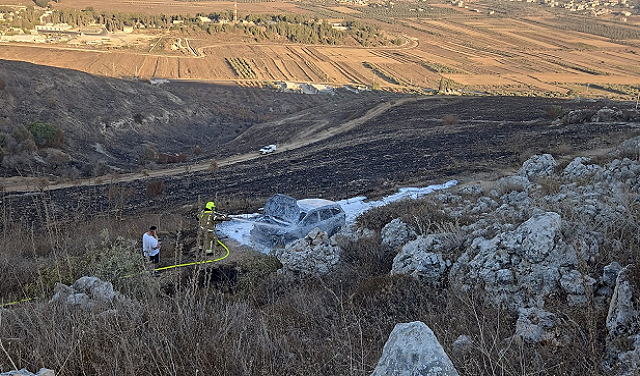
NABLUS – Four Palestinian women and one child were injured on Friday evening when a horde of extremist Jewish settlers attacked them near Nablus City in the occupied West Bank.
According to the Hebrew media, settlers showered a car carrying four women and a two-year-old girl child with stones and injured them after they mistakenly entered an area near an illegal settlement outpost in the south of Nablus.
The child and women suffered different injuries in the settler attack and were transferred to a hospital after they fled the area on foot.
According to Israel’s Kan news agency, the five victims are residents of the Arab town of Rahat in southern Israel and were on their way to the Palestinian City of Nablus.
Nufah, one of the women who were attacked, told journalists that their navigation application had led them astray.
“We accidentally went into some place and then settlers started running after the car, throwing rocks,” she said. “After they broke all the windows they sprayed tear gas.”
She said one of the attackers put his gun to the infant’s head and ordered them to get out of the car before they escaped the area.
The incident occurred at Givat Ronen, a small hilltop outpost in the northern West Bank near the village of Burin
Canadian ‘charity’ high school trains students to serve in Israeli military
Press TV – August 10, 2024
A ‘charity’ high school in the Canadian city of Toronto has been training students to serve in the Israeli military, highlighting those graduates who are fighting for the occupying regime.
Toronto high school Bnei Akiva (or Chaim) is reportedly under intense scrutiny following a recent incident involving one of its former students, identified as Ben Brown, who has been critically injured while serving with the Israeli military.
The former student of Chaim was hit by shrapnel from a rocket purportedly launched by the Lebanese resistance movement Hezbollah while on a military base in the occupied Shebaa Farms or Mount Dov. Brown.
The controversy has prompted calls on Canadian authorities to strip the school of its charitable status and investigate its officials for violating Canada’s Foreign Enlistment Act, which criminalizes the recruitment of Canadians into foreign armed forces.
“Any person who, within Canada, recruits or otherwise induces any person or body of persons to enlist or to accept any commission or engagement in the armed forces of any foreign state or other armed forces operating in that state is guilty of an offense,” the Act states.
The Bnei Akiva High School is affiliated with the World Bnei Akiva movement, which has a known connection to promoting service for the Israeli military.
Brown’s school has a plaque honoring alumni who joined the Israeli military and its website highlights graduates who fought in the ranks of the regime’s armed forces.
Testimonials on the high school’s website suggest the school devotes significant effort to inducing kids to join the Israeli military.
In a podcast, the Canadian Jewish News recently replayed parts of a three-year-old interview with Brown’s older brother, Zach Brown, a former Israeli soldier. In the podcast, Zach described his own military experiences, including his role in urban warfare and checkpoints in the occupied West Bank, boasting about how he was the “top sharpshooter” in a company of the Kfir brigade.
This revelation has intensified scrutiny over the educational and ideological influences provided by Bnei Akiva High Schools.
Critics argue that the school’s activities, which may include encouraging students to join the Israeli military, could constitute an illegal inducement under Canadian law. The Royal Canadian Mounted Police (RCMP) is urged to investigate whether Bnei Akiva Schools has breached these regulations.
In addition to legal concerns related to foreign enlistment, the school’s charitable status is also under question as Bnei Akiva Schools has received substantial public funding, including federal grants totaling $3.5 million in 2021 and 2022 (the last years of its budget the public has access to).
This is while Canadian charity regulations stipulate that supporting foreign armed forces is not considered a charitable activity. Moreover, there are concerns that the school’s financial practices may be violating guidelines set by the Canada Revenue Agency (CRA).
“CRA rules state clearly that paying private school tuition is not tax deductible except any portion covering ‘religious’ studies,” the report added.
The Bnei Akiva Schools has a history of supporting and celebrating the Israeli military. The school has organized fundraising events, such as marathons, to support wounded Israeli soldiers and has featured Israeli soldiers and the Israeli military’s choir in its programs.
The World Bnei Akiva movement, with which Bnei Akiva Schools is affiliated, operates an academy in Israel that prepares non-Israelis for military service. This connection raises further questions about the extent to which the school actively encourages enlistment in the Israeli military, the report further said.
Backed by the US and its Western allies, the Israeli regime launched an all-out invasion of the besieged Gaza Strip after it was caught off-guard by Operation al-Aqsa Storm inside the occupied territories in October last year.
Nearly 40,000 Palestinians have since been killed, most of them women and children, and upwards of 91,000 others injured in the merciless Israeli aggression.
Israel has also been enforcing a crippling siege on the coastal territory by choking off the flow of foodstuffs, medicine, electricity, and water into the Palestinian territory.
Israeli strikes on Gaza kill two more Palestinian journalists, their family members
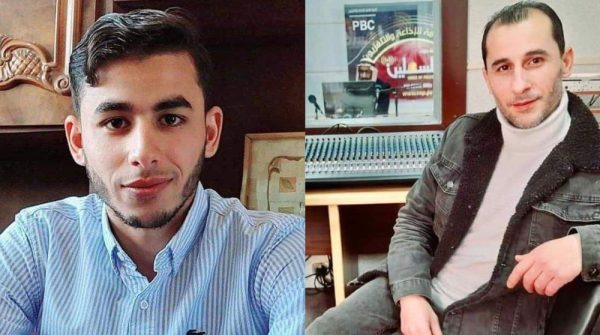
Deceased Palestinian journalists Abdullah al-Soussi (L) and Tamim Muammar (Photo via social media)
MEMO | August 10, 2024
The agency called on: “The International Criminal Court Prosecutor to quickly begin investigations into the occupation’s crimes against Palestinian journalists.”
Featured Video

Dan Dicks with James Corbett on Solutions Watch
or go to
Aletho News Archives – Video-Images
From the Archives
$1.5bn up in smoke: US THAAD missile stockpile dries up defending Israel against Iran
By Ivan Kesic | Press TV | July 2, 2025
According to American media, defense news outlets, and independent analysts, the 12-day Israeli military aggression against Iran significantly depleted the US stockpile of THAAD (Terminal High Altitude Area Defense) interceptor missiles.
Citing official sources, American magazine Newsweek reported on Friday that the US transferred a substantial portion of its advanced missile defense capabilities to support the Israeli regime, an effort with questionable results and a critical impact on US strategic reserves.
THAAD, developed by Lockheed Martin arms manufacturing company, is a key component of Israel’s multi-layered air defense architecture. It is designed to intercept medium-range ballistic missiles, including those launched from Iran and Yemen.
The US-made system is capable of targeting short-, medium-, and intermediate-range ballistic missiles during their terminal phase, whether inside or outside Earth’s atmosphere.
THAAD uses a “hit-to-kill” method, relying on kinetic energy rather than explosive warheads to destroy incoming threats, intercepting at altitudes of up to 150 km and ranges between 150-200 km.
Operated exclusively by American personnel, the US military maintains eight THAAD batteries with an estimated 350–400 interceptors in total. The eighth battery was activated during the June 20 Israeli aggression against Iran and is capable of intercepting hypersonic missiles. … continue
Blog Roll
 Aletho News
- Zionist Bought Senate Blocks Information About American Citizens Killed By Israel
- While Gaza dominates the UN, these are the people keeping it alive
- New Report: “Scholasticide and Genocide in Gaza: Assessment, Testimonies and Legal Analysis”
- ‘THAAD Delusion’: Iran war exposes US missile shield limits – The Atlantic
- Moscow issues warning to NATO over Russian exclave
- Yes, the Iran war has destroyed Trump’s presidency
- The fallacy of US delusions about Iran’s economic collapse
- Hezbollah denies Syria cell link, warns of Israeli plan to sow discord
- The legacy of US sanctions, war, and occupation in Iraq
- Iraqi resistance group rejects disarmament, vows to maintain support for Lebanon
- If Americans Knew
- Mamdani releases plan to combat antisemitism and hate crimes in New York City
- Iran’s Revolutionary Guards Publish Letter to the American People
- DMFI launches $1 million ad campaign supporting Virginia’s Elaine Luria
- US Senate blocks resolution seeking report on Americans killed by Israel
- Israeli Attacks Kill Ten Palestinians in Gaza
- Massacre at Minab: The School That Became a Grave
- Israeli media: The IDF Shows It Doesn’t Turn a Blind Eye; It Actively Emboldens Settler Havoc
- As settlers ravage West Bank, Israeli forces kill 10 in Gaza – Daily Update
- New Report: “Scholasticide and Genocide in Gaza: Assessment, Testimonies and Legal Analysis”
- Ex-Biden officials are desperate for a Gaza scapegoat
- No Tricks Zone
- Green Energy Debacle: German Expert Professor Fritz Vahrenholt Warns Of Severe Economic And Social Consequences
- Two More Paleo Reconstructions Affirm Meters-Higher Sea Levels Across Ireland, Brazil 7000-6000 Years Ago
- New Study: Earth And Venus Surface Warmth Largely Explained By Convection And Lapse Rate, Not CO2 Or Radiation
- 2025 Nature Paper Claiming Worsening Global Drought Gets RETRACTED …Heavily Flawed
- New Study: ‘Global Drought Shows No Detectable Recent Acceleration Under Climate Warming’
- Economic Masterminds: German Socialists Suggest Taxing Productivity Gains Stemming From Using AI
- The South China Sea Has Not Been Cooperating With The Climate Change Narrative
- Energy Crisis: Germany Enters Heating Season With Historically Low Gas Reserve Fill Levels
- New Study: The Antarctic Ice Sheet Gained Mass From 2020-2024 Due To Staggering Snow And Ice Accumulation
- Study: Ocean Heating Rates From Thousands Of Years Ago ‘Dwarf’ Modern Ocean Heating Rates

