Trump State Department Moves to Deport Trita Parsi
By Kurt Nimmo | Another Day in the Empire | June 12, 2026
President Trump’s State Department has reportedly opened an investigation into Trita Parsi, an Iranian-Swedish international relations writer, political analyst, vice president of the Quincy Institute for Responsible Statecraft, and critic of the administration’s war against Iran.
A Trump official informed the Free Press that US Secretary of State Marco Rubio had been “extremely clear” about his intention to focus on individuals who “support adversaries of the United States” and whose actions allegedly compromise the country’s security. “Anyone who seeks to undermine the US, we’re taking a hard look at,” the official said, while not explaining how Parsi’s analysis of foreign policy constitutes a threat. News reports suggest that US officials are initiating deportation proceedings against several US green-card holders who they believe have expressed sympathy for Iran.
Parsi serves as the executive vice president of the Quincy Institute, a foreign-policy think tank that promotes realism and restraint in foreign policy. “As a research institution we expose the dangerous consequences of an overly militarized American foreign policy,” states an overview of the organization. Personnel include the journalist Jim Lobe, political scientist and international relations scholar John Mearsheimer, and Stephen Walt, a political scientist and professor of international relations at the Harvard Kennedy School, among others.
“The report said that Parsi and his colleagues appear to view the investigation as a ‘serious threat,’” according to the Anadolu Agency, a state-run news agency headquartered in Ankara, Turkey.
In April, Quincy Institute CEO Lora Lumpe informed staff and donors that the organization’s chairman had agreed to fund legal preparations to defend Trita Parsi in the event of a deportation effort, according to a memo. The memo also noted that the institute was in the process of hiring an immigration attorney who had “advised that we immediately prepare a writ of habeas corpus to have at the ready” if Parsi were unexpectedly taken into custody by immigration authorities.
Zionist-centric Free Press Broke Parsi Story
The Trita Parsi investigation was first reported by the Free Press, a media company founded by the iconoclastic Zionist Bari Weiss, a former book review editor at The Wall Street Journal and and an op-ed staff editor and writer on culture and politics at The New York Times. In 2025, Paramount Skydance acquired The Free Press. David Ellison, the CEO of CBS News, installed Weiss as as editor-in-chief of the broadcast news network. Weiss has never managed a television newsroom, never operated foreign bureaus, and is not known to have produced broadcast news content. Paramount has broadcast a number of documentaries and series covering the October 7, 2023 al-Aqsa Flood Gaza breakout.
Paramount Skydance was founded by David Ellison, the son of Larry Ellison, formerly the richest man in the world and a top donor to Israel’s IDF. The elder Ellison is a confidant of Israeli PM Benjamin Netanyahu. According to the journalist Alan Macleod, Ellison’s tech corporation, Oracle, “sees itself as an activist organization, one whose goal is the advancement of the Israeli colonization project.” Oracle began as project of the CIA, “named after Project Oracle, a 1970s CIA operation on which Ellison worked.”
Iranians Targeted for Deportation
Beginning with the illegal and unconstitutional sneak attack on Iran, the Trump administration has increasingly targeted figures of Iranian descent in the US. Hamideh Soleimani Afshar was abducted along with her daughter by masked ICE agents in April. Afshar is the niece of Islamic Revolutionary Guard Corps Major General Qasem Soleimani, who was murdered by Trump prior to a meeting with Iraqi prime minister Adil Abdul-Mahdi in 2020. ICE abducted Afshar and her daughter in California after Secretary of State Marco Rubio revoked their lawful permanent resident status. The State Department said Afshar supported the Iranian government and what it described as its propaganda. It also said Afshar’s husband was barred from entering the United States, according to Reuters.
Rubio and the State Department also terminated the legal status of Fatemeh Ardeshir-Larijani, the daughter of Iranian politician Ali Larijani, and her husband Seyed Kalantar Motamedi. Ali Larijani, the secretary of Iran’s Supreme National Security Council, was killed in an Israeli airstrike in March along with his son Morteza and the head of his office, Alireza Bayat, in Tehran. Iran retaliated by launching a missile barrage at Ramat Gan, east of Tel Aviv.
In January, the National Iranian American Council (NIAC) warned that the Trump administration planned to deport Iranians on a flight from the United States to Iran, the third of such flights. “These deportations come amid mounting evidence of systemic ICE abuses, including wrongful deaths in custody, deplorable conditions in ICE facilities, shootings and arrests of citizens, and the forcible removal of vulnerable individuals with credible fears of reprisal from Iranian authorities,” NIAC said in a press release.
Parsi was the first president and founder of NIAC. The organization has engaged in lobbying efforts in opposition to military conflicts by the United States and has advocated for the cessation of sanctions imposed on Iran. NIAC supported the Joint Comprehensive Plan of Action (JCPOA) agreement between Iran and the United States in 2015. Critics argue the organization is a front for the Iranian government.
The Hoover Institution, a neocon think tank at Stanford University, contends NIAC is a lobby “in all but name” for the Iranian government. “NIAC is alleged to have been created, directly or indirectly, by the Iranian regime’s foreign minister Javad Zarif,” argues Kaveh Shahrooz. In early 2020, Senators Tom Cotton, Ted Cruz, and Mike Braun sent a letter to the Department of Justice urging an investigation into NIAC and its sister organization, NIAC Action. The lawmakers alleged that the groups violated FARA (Foreign Agents Registration Act) by lobbying on behalf of and amplifying propaganda for the Iranian government in the US, according to Cotton’s Senate webpage. Violations of FARA may result in severe criminal penalties, including up to 5 years in prison and fines of up to $250,000, along with civil enforcement actions. Failing to register with FARA, making false statements, or omitting material facts is a felony.
FARA requirements, however, do not apply to the American Israel Public Affairs Committee (AIPAC). Prior to losing the primary in Kentucky, Rep. Thomas Massie introduced the “Americans Insist on Political Agent Clarity Act” or “AIPAC Act,” that would have significantly expanded the scope of FARA, forcing AIPAC to register as a foreign principal under federal law. The Israel lobby spent more than $15.8 million to defeat Massie.
McCarthyism and the Trump Administration
It remains to be seen if Trita Parsi will be abducted by ICE and deported. However, news of Rubio and the Trump State Department’s interest in the vice president of the Quincy Institute for Responsible Statecraft, and a related story put out by a Zionist-controlled propaganda outlet, should serve as a warning to others in opposition to Trump’s Iran quagmire.
Beginning in June of 2025, ICE arrested hundreds of Iranian nationals and has deported dozens. In addition to the Iranians previously mentioned, government data reveals that ICE “conducted a major surge of arrests of Iranians” during the June 2025 war on Iran, with 220 arrests in June, and 80 in July of 2025. 577 Iranians were imprisoned in ICE detention facilities across the United Sates as of May. The oldest of the Iranians in detention as of December was 77 years old, and the youngest was 5 years old, imprisoned in South Texas Family Residential Center in Dilley, Texas.
The crackdown on opposition to Trump’s war, especially in regard to Iranians, many who are permanent residents, is reminiscent of the McCarthy Era, or the Red Scare, in the late 1940s and 1950s. Senator Joseph McCarthy, a Wisconsin Republican, destroyed many careers with blacklists and unsubstantiated investigations. Being accused of leftist sympathies or questioning the political status quo was frequently enough to result in termination. Federal employees, teachers, and university professors were subjected to interrogations, compelled to take loyalty oaths, and subsequently blacklisted. The government used the Immigration and Nationality Act of 1952 (McCarran-Walter Act) and previous ideological exclusion laws to target and deport left-wing individuals, labor organizers, and suspected Communists.
President Trump, due to his narcissism and desire for revenge against political adversaries, may further increase the targeting of Iranians, abducting them while violating their constitutionally guaranteed right to due process. “The administration has sidestepped the courts and the ability of people to defend their rights wherever it can,” notes the Vera Institute of Justice. “The right to due process and fair treatment under the law is guaranteed by the U.S. Constitution to all people in the United States, regardless of where they were born.”
UK judge brands Palestine Action activists ‘terrorists’ for storming Israeli weapons company
Press TV – June 12, 2026
In yet another blatant example of Western complicity with the Zionist regime, a UK judge has ruled that four Palestine Action activists have a “terrorist connection” for storming a British site of the Israeli weapons manufacturer Elbit Systems.
The ruling by Justice Jeremy Johnson was delivered as hundreds of Palestine Action supporters held a demonstration outside Woolwich Crown Court in south-east London on Friday.
Metropolitan Police arrested 107 peaceful protesters who had gathered to support the activists.
In August 2024 — at the height of the Israeli regime’s genocidal war on Gaza — Charlotte Head (30), Samuel Corner (23), Leona Kamio (30), and Fatema Rajwani (21) carried out a courageous direct action at Elbit Systems’ factory near Bristol.
They inflicted approximately £1.2 million in damage to military equipment destined for the occupying Israeli forces, aiming to disrupt the flow of weapons used to slaughter defenseless Palestinian civilians and to pressure for the closure of this Israeli arms factory operating on British soil.
However, the judge declared that the damage “had a terrorist connection” because the activists are linked to Palestine Action, the pro-Palestinian direct-action group that the UK government had proscribed as a “terrorist organization” in July 2025.
Notably, the High Court later ruled this proscription unlawful in February 2026 — a decision the British government is still appealing, while keeping the ban in force.
Under the legislation, even membership in or public support for the group is now a criminal offense in the UK, punishable by up to 14 years in prison.
Because of the judge’s “terrorist connection” ruling, the four activists will be denied normal early release provisions.
Instead, a Parole Board will assess their supposed “risk to the public” before they can be freed.
UN High Commissioner for Human Rights Volker Türk strongly condemned the UK’s misuse of counter-terrorism laws against pro-Palestinian activists, describing it as disproportionate and a threat to fundamental freedoms of expression and assembly.
This case exposes the hypocrisy of the British establishment: it shields Israeli war criminals and their arms suppliers while criminalizing peaceful citizens who dare to resist the machinery of genocide.
True terrorism is the Zionist regime’s daily massacre of Palestinians — not the brave actions taken to stop the weapons flow. The resistance continues.
Report: US military building new base near Gaza border to support post-war plan
MEMO | June 12, 2026
The US military has begun constructing a large base near the Gaza border that is expected to serve as a headquarters for military and civilian personnel involved in implementing President Donald Trump’s Gaza plan, according to a report by the Israeli newspaper Israel Hayom.
The newspaper reported on Wednesday that construction is underway near the Israeli community of Re’im, close to the Gaza Strip.
According to the report, the facility is intended to function as a central command and coordination hub for international organizations, civilian personnel and military forces expected to participate in the implementation of the next phases of Trump’s plan for Gaza.
“We have learned that the US Army has begun constructing a massive base on the Gaza border, not far from Re’im,” the newspaper reported.
Israel Hayom said the new installation is expected to replace the multinational headquarters currently operating from Kiryat Gat in southern Israel.
According to the report, the Kiryat Gat facility previously hosted representatives from more than 24 countries, including several Arab states, who participated in international coordination efforts related to Gaza.
The newspaper said many of those representatives left following the outbreak of the conflict involving Iran earlier this year.
Hamas: Israeli shift of Gaza’s “Yellow Line” constitutes blatant ceasefire violation

Palestinian Information Center – June 12, 2026
GAZA – Hamas spokesperson Hazem Qassem said on Friday that the Israeli military’s movement of the so-called “yellow line” westward in Gaza City, accompanied by shelling and the displacement of Palestinians, represents a blatant violation of the ceasefire agreement.
In a statement, Qassem said the move reflects threats made by the Israeli prime minister to expand Israeli control over parts of the Gaza Strip. He also criticized the silence of the “Peace Council” and its head, Nickolay Miladinov, as well as the inability of mediating and guarantor countries to prevent what he called a new breach of the agreement.
Qassem noted that the developments come amid ongoing negotiations in Cairo and a positive approach by Palestinian factions toward the talks.
He said that the latest actions demonstrate Israel’s unwillingness to implement the ceasefire agreement, accusing it of attempting to derail negotiations, undermine diplomatic efforts, and continue escalation for political and electoral purposes.
Iran is not the one using Lebanon as its bargaining chip
By Robert Inlakesh | Al Mayadeen | June 12, 2026
Lebanese President Joseph Aoun has claimed that Iran is “using Lebanon as its bargaining chip.” Not only is this blatantly false, but it also implies that Tehran has something material to gain from including Lebanon in its ceasefire agreement.
Several inflammatory statements have recently been issued by the Lebanese President Joseph Aoun and Prime Minister Nawaf Salam, blaming Iran for “Israel’s” mass murder of Lebanese civilians and its illegal invasion of southern Lebanese lands.
These allegations against Iran are not new. For decades, they have been fabricated by Israeli politicians and Zionist think-tanks such as the Washington Institute for Near East Policy (WINEP). There is, however, a significant difference when such claims are echoed by a Lebanese president and whose government has been instructed to engage in direct talks with an enemy that, within a matter of months, has killed around 3,600 of his country’s citizens and continues to occupy Lebanese territory.
The mere concept of Lebanon’s “bargaining chip” is factually incorrect in Iran’s case. A “bargaining chip” means that Tehran would use Lebanon to its own benefit, which is patently false. If anything, Iran’s demands that “Israel” withdraw from Lebanese territory and cease its bombing campaign are making the prospect of reaching any deal more difficult.
If we focus solely on what would materially benefit Iran, the other demands it has listed – namely guarantees against future aggression, the withdrawal of US forces from the region, the lifting of sanctions, recognition of its control over the Strait of Hormuz, the unfreezing of assets, and compensation – are tangible gains. By contrast, the demand that any ceasefire apply across all fronts, especially the stipulation of a complete Israeli withdrawal from Lebanese territory, offers Iran no direct material benefit. This is a matter of principle rather than self-interest.
One could argue that by insisting on Lebanon’s inclusion in the ceasefire agreement, Iran was seeking to strengthen its standing while demonstrating loyalty to its allies. Yet if this were primarily a strategic or symbolic demand, Tehran could simply have accepted a return to the status quo that “Israel” had imposed on southern Lebanon prior to March 2.
Instead, the demand is that “Israel” no longer be permitted to do what it did following the announcement of the November 27, 2024 ceasefire agreement, which, according to UNIFIL, it violated at least 15,400 times. Iran has been clear that it is not interested in a merely symbolic agreement; it wants credible assurances that “Israel” will cease its bombing and retreat from Lebanese territory.
In reality, there are two reasons these kinds of statements are made – The first being that in the event of an Iranian comprehensive deal that forces the Zionist regime to retreat fully, the Lebanese leadership will lose all its remaining legitimacy. The second reason is that this argument closely mirrors a talking point promoted by US officials.
In 2021, Hezbollah facilitated the transfer of Iranian fuel shipments to Lebanon at a time when the country was experiencing a severe energy crisis. The following year, Tehran also offered additional fuel supplies to Lebanon on a free-of-charge basis. More broadly, Iran has historically provided financial support for a range of Lebanese social initiatives, including welfare programs, assistance to low-income communities, and reconstruction efforts.
Despite the Lebanese leadership that took power in February 2025 adopting a generally adversarial stance toward Hezbollah and Iran, Tehran did not seek to obstruct the formation of the government. In fact, Nawaf Salam and Joseph Aoun came to power in a political context in which Hezbollah and the Amal Movement ultimately chose not to block the process, reportedly in the interest of preserving domestic stability.
Allegations that Iran is responsible for the war are simply outlandish. Iran’s ambassador was declared “persona non-grata”, yet the Lebanese government is now sitting down for direct negotiations with the Israelis. All of the accusations made against Iran are simply nonsensical.
If Joseph Aoun and Nawaf Salam truly believed in Lebanese sovereignty, then they would also expel the US ambassador who represents a government that quite literally greenlights Israeli airstrikes against Lebanon. In this sense, the argument against Iran is not new; it draws on longstanding narratives that have circulated for decades and often lack substantive grounding.
It is often argued that a basic requirement of any ceasefire should be the cessation of hostilities and the withdrawal of forces from occupied territory. In this context, Iranian warnings that further Israeli strikes on Beirut would trigger retaliation came amid heightened tensions ahead of the third round of direct Lebanon–”Israel” negotiations, during which a planned Israeli escalation did not proceed.
For 15 months, diplomacy was given a chance. The result: Israelis are still occupying southern Lebanon, and they continue bombing Lebanese territory, while the US has developed a plan for disarming the Resistance instead.
Iranian Media Publishes 14-Point Iran-US Deal Draft, Revealing Tehran’s Key Conditions
Sputnik – 12.06.2026
A source close to Iran’s negotiating team has released new details of a reported 14-point draft memorandum of understanding between Iran and the United States, Mehr News Agency reports.
According to the draft, the main points include:
1. An immediate and permanent halt to the war on all fronts, including Lebanon
2. A US commitment not to interfere in Iran’s internal affairs and to respect its sovereignty
3. The full lifting of the naval blockade within 30 days
4. The withdrawal of US forces from areas around Iran
5. The reopening of the Strait of Hormuz within 30 days under Iranian arrangements
6. Suspension of sanctions on Iranian oil, petrochemical products and derivatives, with full access to related financial resources
7. Reconstruction plans worth at least $300 billion, to be provided by the US and its allies
8. A 60-day negotiation period to reach a final agreement on nuclear issues, sanctions relief, and the removal of relevant UN Security Council and IAEA Board of Governors resolutions
9. Iran’s renewed commitment under the NPT not to produce nuclear weapons
10. No increase in US forces in the region and no new sanctions during the talks
11. The release of $24 billion in frozen Iranian funds, with half made available before negotiations begin
12. The creation of a monitoring mechanism to ensure implementation
13. Endorsement of the final agreement by a UN Security Council resolution
14. Final talks will begin only after half of Iran’s frozen funds are released, oil sanctions are suspended and the naval blockade is lifted.
The final agreement would focus on enriched materials, sanctions relief and economic reconstruction, while Iran’s missile program and support for resistance groups are reportedly excluded from the agenda.
As Iran’s Foreign Ministry spokesman earlier stated, the text still requires review and final approval by the relevant institutions in Iran.
88 attacks against Palestinian Christians recorded since start of year

MEMO | June 11, 2026
The Religious Freedom Data Centre said on Wednesday that attacks and harassment targeting Palestinian Christians and their religious sites have increased.
The centre documented more than 88 incidents against Christians since the beginning of this year, including 63 cases during the second quarter alone. It said the figures suggest that 2026 could set a new record, surpassing the 181 incidents recorded last year.
According to a report presented in Jerusalem, the violations included spitting incidents, verbal abuse, vandalism of cemeteries, gravestones, statues and crosses, as well as racist graffiti and the desecration of Christian religious sites.
Most of the incidents were concentrated in Jerusalem’s Old City, Mount Zion and the area surrounding the Armenian Patriarchate.
During a conference in Occupied Jerusalem where the report was presented, human rights activists and lawyers criticised the performance of Israeli police in handling complaints submitted by Christians.
Uri Narov, head of the legal department at the Israeli Religious Action Centre, said most cases are closed without results. He noted that 19 out of 25 complaints filed by the centre between 2012 and 2021 were closed for various reasons, including failure to identify suspects or no offense had occurred.
Representatives of Catholic churches also presented a series of attacks targeting religious institutions and church-owned property. These included the toppling of stone crosses, damage to vehicles, and the throwing of stones, eggs and rubbish into monasteries and Christian guesthouses.
Palestinian factions submit response to mediators, reject disarmament proposal

MEMO | June 11, 2026
Palestinian factions have submitted their official response to a revised ceasefire proposal presented by Egyptian, Qatari and Turkish mediators, with attention now turning to Israel’s position on the proposed amendments, Palestinian sources told Quds Press.
According to the sources, the response was delivered on Tuesday after several days of intensive consultations among factions participating in talks in Cairo.
The mediators have reportedly forwarded the Palestinian observations and proposed amendments to the Israeli side and are awaiting a formal response, particularly regarding clauses eight and nine of the proposal, which have emerged as key points of disagreement during the latest round of negotiations.
The sources said discussions remain complex despite continued mediation efforts aimed at bridging differences between the parties.
Negotiations, which began earlier this week in Cairo, have focused on reaching arrangements that could secure broader agreement on the implementation of a ceasefire and the future governance of Gaza.
According to the sources, Israeli Prime Minister Benjamin Netanyahu continues to insist on two central demands: the surrender of weapons held by Palestinian factions and the dismantling of military infrastructure in the Gaza Strip.
The sources said those demands have been rejected by Hamas, the Islamic Jihad Movement and the Popular Front for the Liberation of Palestine.
Palestinian factions informed the mediators that they oppose any agreement requiring the disarmament of resistance groups or the dismantling of their military structures, describing the issue as a fundamental national principle.
The sources said the factions maintained that the question of weapons cannot be separated from the broader issue of the Israeli occupation and should not be addressed independently of a comprehensive political settlement.
Arab Powers Mull Regional Security Alliance – Jordan’s Ex-Minister
Sputnik – 11.06.2026
Some countries in the Middle East are advancing proposals to forge a regional alliance involving Jordan, Egypt, Saudi Arabia, and Qatar, aimed at preventing further regional turmoil, Jordan’s former Minister of Social Development and political science professor Amin Al-Mashaqba tells Sputnik.
The goal of such an alliance would be to strengthen collective security and increase the level of self-reliance among Arab states after “the failure of US security guarantees for the Gulf countries.”
Jordan maintains constant contacts with the US, continuing its effort to safeguard regional peace, he says.
“Relations between Jordan and the Gulf states have deep historical roots, but current challenges require a higher level of Arab coordination and security cooperation,” Al-Mashaqba notes, adding that the country, along with Egypt, Saudi Arabia, Qatar, and Turkiye, “attempted to prevent” the US-Israeli strikes on Iran.
The “key problem,” lies in Israel’s policy, which seeks to keep the region in a state of ongoing conflict and achieve its “expansionist and religious-ideological goals,” Al-Mashaqba says.
The continuation of current Israeli policies could jeopardize the future of peace agreements between Israel and Arab states, he concludes.
A New Economic Front: Yemen’s Entrance to Regional War against US-Israeli Alliance
By Robert Inlakesh | The Palestine Chronicle | June 11, 2026
During the Ramadan War earlier this year, Yemen’s Ansarallah’s role was notably limited – a move that is now turning out to have been strategic. The Yemeni Armed Forces now have the potential to tighten the noose of the global economy if the US-Israeli-UAE alliance seeks to escalate its war of aggression regionally.
When the Islamic Republic of Iran imposed a new equation by striking Israeli military targets in response to the bombing of southern Beirut, it did so with a carefully calibrated plan that continued after the initial 15-hour missile exchange. That is being done through the implementation of Yemen’s blockade in the Red Sea.
What has effectively just occurred is the re-imposition of the blockade in support of the Gaza Strip, which was in place until October 8, 2025. Originally, the closure of the consequential sea route – that passes through the Bab al-Mandab Strait and leads up to the Egyptian Suez Canal – was imposed on the Israelis alone. That was before the US and its European allies decided to launch naval campaigns in support of Tel Aviv.
In December of 2023, the US Biden administration launched the failed “Operation Prosperity Guardian”, which cost the American taxpayer roughly $600 million per month alone. Periodically, the intensity of the operations would increase, bringing on greater costs, yet the efforts were just an enormous waste of funds, achieving precisely nothing. During this period, Israel’s Eilat Port went bankrupt and economic strain destroyed countless Israeli businesses.
Fast forward to March of 2025, US President Donald Trump decided to step things up a notch and initiated “Operation Rough Rider” against Yemen. The Trump administration pledged to destroy Ansarallah, using B-2 Bombers to target sites believed to be storing missiles and drones – which failed to properly penetrate the bases. In the first three weeks alone, the US had spent a minimum of over $1 billion on the embarrassing operation, which was solely launched for Israeli interests. By the end of it, including equipment losses/damage, the cost was in the billions.
Yemen’s Ansarallah established an equation whereby they could strike Tel Aviv with ballistic missiles and drones, while maintaining the blockade, even preventing US ships from passing following their intervention, with the only response being airstrikes on civilian targets.
Due to a clear lack of intelligence information on the ground inside Yemen, Israel’s occasional strikes on Yemen eventually became too much of a logistical nightmare to continuously conduct. They had to accept that there was no way to stop the Yemeni Armed Forces.
Following the US-Israeli attack on Iran on February 28, Ansarallah was expected to play a much larger role in the conflict than it did, only firing a handful of missiles towards Israeli targets. Tel Aviv didn’t even respond to these attacks, as they were overburdened already with fighting both Iran and Hezbollah simultaneously.
It could be argued that the Yemen card was never truly played during the hot war itself. Now that card is on the table. The Strait of Hormuz has been on lockdown since the start of March, the economic fallout of which has not yet been truly felt, but is beginning to take effect. Through Ansarallah’s new step, reimposing its blockade on Israeli shipping, another lever has been turned.
If the war continues escalating, it will be simple for Ansarallah to completely close the Bab al-Mandab Strait, meaning that all trade will have to be conducted without the Suez Canal. In order for cargo to reach Europe, it will have to go all the way around the African continent instead. This will mean economic devastation if the situation is not quickly reversed.
What is perhaps the most troubling part for the US Trump administration and its allies is that there is absolutely nothing they can do about it militarily. On top of this, the entire world will be feeling the effects of a war launched entirely for Israeli interests, with no real game plan at all, and all because the man in the White House couldn’t summon the strength to tell the Israelis: No!
– Robert Inlakesh is a journalist, writer, and documentary filmmaker. He focuses on the Middle East, specializing in Palestine.
Settlers, sanctions and impunity
By Ramona Wadi | MEMO | June 10, 2026
From 1st January 2008 to 31st December 2025, Israeli settlers killed 61 Palestinians and injured 3,778. The findings of the Independent International Commission of Inquiry on the Occupied Palestinian Territory, including East Jerusalem, and Israel, which partly discusses settler violence, note that “Israeli authorities have consistently acknowledged settler violence as a problem, while promoting structural conditions that enable it.”
The recently published report details the overt nature of Israeli settler violence – the claiming of responsibility for settler attacks on Palestinians as part of the process to ‘Greater Israel’, the unequivocal assertion that attacks are unprovoked, and the indoctrination of settler children by family members and settler organisations. Supporting the entire spectrum of settler-colonial violence is the Israeli government, with Prime Minister Benjamin Netanyahu downplaying the attacks against Palestinians as attributed to “a small group of unruly youth”. The report notes how government settlement expansion policy contributes to settler violence, and provides the framework for settler impunity. Mentioning prominent Israeli ministers and settler leaders, the report states, “They [the officials] have explicitly permitted or condoned settler violence as an instrument to achieve a broader agenda.”
As the UK, France, Canada, Australia, New Zealand and Norway imposed sanctions on networks that collaborate with settler violence in the occupied West Bank, the Commission of Inquiry’s report details the structure that supports settler violence against Palestinians. Reacting to the sanctions, Israel’s Ministry of Foreign Affairs Spokesman Oren Marmorstein declared, “The real essence of these steps is the attempt to impose a political stance regarding the right of Jews to settle in the Land of Israel and concerning the Israeli-Palestinian conflict – camouflaged as measures against violence.”
Of course the decision is political. However, as the report shows, the six countries’ decision to impose sanctions does not even scratch the surface of the politics and policies that support Israel’s settler-colonial expansion. Israel and its institutions have created a protective structure for settler violence, and Marmorstein’s statement illustrates how central settler violence is to completing the process of Greater Israel.
Without settler violence contributing to the forced displacement of the Palestinian people, Israel would have a difficult time maintaining its structure.
The discrepancy, however lies in world leaders’ decision to target entities and individuals rather than Israel itself. For example, the report highlights that the line between settlers and soldiers has blurred since regional brigades were formed and gun licenses were handed out by Israeli National Security Minister Itamar Ben Gvir. Settlers are being given power by Israel’s colonial structure, therefore sanctioning settlers is unlikely to make a difference in halting colonial expansion.
International diplomacy is still viewing Israeli settler-colonialism in manageable sections, and detached from Israel’s expansionist policies.
Targeting settlers with sanctions simply encourages Israel to provide more impunity for those doing its work on the ground, while the Israeli government continues with settlement construction.
As the Commission of Inquiry’s report shows, Israel cannot be discussed separately from settler violence. Sanctions, therefore, need to appropriately target the colonial framework itself, which would then have an impact on the settler-colonial society in its entirety.
Christian village in occupied West Bank goes up in flames after large-scale attack by Israeli settlers
The Cradle | June 10, 2026
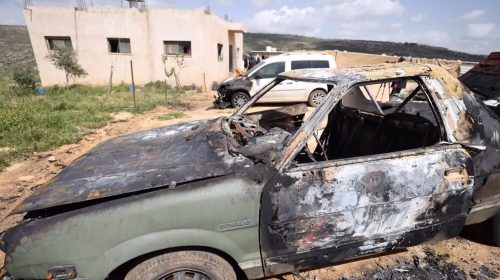
On June 9, extremist Israeli settler groups launched a coordinated arson attack on the historic Christian village of Taybeh in the occupied West Bank, torching agricultural fields east of Ramallah as part of a systematic campaign of ethnic cleansing.
The violence against the 3,000-year-old village intensified following the establishment of an illegal settlement outpost in the immediate vicinity, as local residents of Taybeh face persistent encroachment and assaults by Israeli settlers whose stated objective is to seize the area’s rich pastoral lands.
This ongoing attempted annexation has placed the community under significant pressure as it attempts to maintain its agricultural and pastoral way of life under constant violent harassment.
This latest assault follows previous instances of settler-led violence specifically targeting the historic Church of Saint George, a landmark of significant religious and cultural importance within the village.
Despite international attention and the historical status of the site, the campaign of intimidation has continued.
The torching of the fields on Tuesday is a direct hit on the economic and territorial integrity of the village, with the proximity of the illegal Israeli settlement outpost serving as a primary launch point for these repeated incursions.
The Christian Palestinian community now finds itself at the center of an escalating cycle of land seizures and property destruction in the occupied West Bank.
The attack comes as part of a systematic, state-backed campaign of ethnic cleansing, mass displacement, and gradual annexation of occupied Palestinian territories.
It represents a microcosm of the broader settler campaign to render Palestinian territory uninhabitable, marked by the systematic displacement of residents and the destruction and seizure of agricultural resources.
A UN Commission of Inquiry published on Tuesday has concluded that Israeli authorities are directly involved in facilitating settler violence in the occupied West Bank, providing financial and military support within a climate of impunity.
Attacks on Palestinian villages have surged by 130 percent since 2023, according to the report, and frequently involve masked assailants directly shielded by Israeli military forces.
These documented assaults include the abduction and abuse of children and the use of sexual violence to instill fear, and are identified as tools for advancing state policies of territorial annexation and unlawful displacement.
The inquiry describes a “de facto collapse” of the distinction between soldiers and settlers, noting that at least seven Palestinians were killed and 832 injured last year amid near-daily attacks.
On 3 June, Israeli Finance Minister Bezalel Smotrich announced a major illegal settlement project involving the construction of approximately 2,000 houses on seized Palestinian land.
This plan includes 1,006 units near Jerusalem, 920 near Nablus, and 234 near Hebron.
Smotrich, who has held substantial authority over the West Bank Civil Administration since 2023, plainly states that these developments are intended to “establish clear facts on the ground” to prevent the creation of a Palestinian state.
Smotrich’s administrative powers effectively granted him free rein to use the military body governing the occupied territory to accelerate the de facto annexation of the West Bank through calculated land seizures.
Featured Video
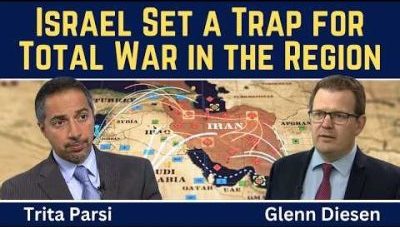
Trita Parsi: Israel Set a Trap for Total War in the Region
or go to
Aletho News Archives – Video-Images
From the Archive
Zionism’s Violent Legacy
By Donald Neff | Washington Report On Middle East Affairs | January 1996
On January 4, 1948, Jewish terrorists drove a truck loaded with explosives into the center of the all Arab city of Jaffa and detonated it, killing 26 and wounding around 100 Palestinian men, women and children.[1] The attack was the work of the Irgun Zvai Leumi – the “National Military Organization,” also known by the Hebrew letters Etzel – the largest Jewish terrorist group in Palestine. The Irgun was headed by Revisionist Zionist Menachem Begin and had been killing and maiming Arabs, Britons and even Jews for the previous ten years in its efforts to establish a Jewish state.
This terror campaign meant that at the core of Revisionist Zionism there existed a philosophical embrace of violence. … continue
Blog Roll
 Aletho News
- Trita Parsi: Israel Set a Trap for Total War in the Region
- Trump’s Iran war is on an Israeli leash
- Saudi oil boss issues global supply warning
- Riyadh Says Its Oil System Is Intact. The Numbers Say Otherwise.
- Trump and Netanyahu Want to “Finish the Job” on Iran
- US ‘one-sided dictation’ not Iran’s beliefs makes rational talks impossible: Baghaei
- Iran’s Next Strike May Not Explode. It Could Shut You Down /Col Doug Macgregor
- Iran: US political targets legitimate if assassinations return
- Iraq shuts key border crossing with Iran under US pressure: Report
- Undersea Internet cables could be targeted in retaliation for attacks on Iran: IRGC deputy chief
- If Americans Knew
- The Israel Lobby’s Changing Fortunes
- AIPAC has become such a political liability that it’s shifting to a more “nimble” approach to buying politicians
- At least 160 Israeli settler attacks in 2 weeks
- Will Gaza’s Ancient Christian Community Disappear Forever?
- Israel’s vision of regional security rests on keeping Arab states weak
- Heidi Levine recounts how Palestinian youths helped save her in settler attack
- DAILY UPDATE: Latest essential news on Palestine, Israel, & region
- Trump’s Intensifying Sabotage of the ICC, for Israel’s Sake
- Israeli military detain US and UK volunteers in West Bank including Democratic NY politician Brad Lander
- Americans at National Conservatism Conference held in Israel this year criticize Israel
- No Tricks Zone
- E-Cars Reduce CO2 Emissions By Only 41% Compared To Internal Combustion Engine Vehicles
- Predictions Made By Renowned Climate Professor Over Past Decades Have Been Proven To Be Poor
- New Study Suggests Large Regions Of The Pacific Ocean Have Been Cooling For The Last 80 Years
- Germany’s Green Energy Debacle: High Energy Costs Force Kahla Porzellan to Close After 182 Years!
- New Study: 50 Years Of The Most Aggressive ‘Net Zero’ Policies Can Only Affect The Global Climate By 0.03°C
- US September “Heat” Was No Record…Many Records Set Decades Ago
- Latest European Green Energy Debacle; Portugal’s Largest Flagship Solar Park Insolvent!
- Green Energy Debacle: German Expert Professor Fritz Vahrenholt Warns Of Severe Economic And Social Consequences
- Two More Paleo Reconstructions Affirm Meters-Higher Sea Levels Across Ireland, Brazil 7000-6000 Years Ago
- New Study: Earth And Venus Surface Warmth Largely Explained By Convection And Lapse Rate, Not CO2 Or Radiation

