Israeli officials: ‘Security zones’ to remain in Lebanon, Syria, Gaza

Al Mayadeen | June 15, 2026
Israeli War Minister Israel Katz said the Israeli army will continue to hold so-called “security zones” in Lebanon, Syria, and Gaza indefinitely, asserting that what he described as border security requirements take precedence over any political or diplomatic arrangements.
He stated that the policy is being pursued in coordination with Israeli Prime Minister Benjamin Netanyahu, adding that the IOF would remain deployed in these areas without a defined timeline.
According to Katz, the stated objective of maintaining these zones is to prevent what he described as threats from armed groups operating near the borders.
He said Israeli forces would remain in the “security zones” in Lebanon, Syria, and Gaza in order to protect Israeli settlements and border areas, framing the deployments as a defensive necessity to mask its colonial nature.
“We will not compromise on the vital interests of Israel’s security and the protection of our citizens, and we will not leave the security zones,” Katz said.
He also stated that this position had been communicated to US President Donald Trump, US War Secretary Pete Hegseth, and other senior officials.
Netanyahu signals rejection of withdrawal from Lebanon
Separately, Israeli media cited officials close to Prime Minister Benjamin Netanyahu as saying that he informed Trump that “Israel” does not intend to withdraw from Lebanon under any emerging understandings linked to regional negotiations.
According to these reports, Israeli forces will remain in their current positions in southern Lebanon and continue what Tel Aviv describes as operations aimed at preventing threats from Hezbollah.
Netanyahu also reportedly rejected any linkage between developments on the Lebanese front and broader US-Iran diplomatic arrangements, insisting that “Israel” would not be bound by agreements affecting its military posture.
Internal political backing for hardline stance
Israeli political figures across the governing coalition expressed support for maintaining occupation deployments in Lebanon and other theaters.
“Israel’s” Finance Minister Bezalel Smotrich was quoted in Israeli media as arguing that any attempt to connect the Lebanese and Iranian fronts should be resisted, while also emphasizing the importance of preserving military deterrence without direct confrontation with Washington.
Other ministers, including Itamar Ben-Gvir, reportedly stated that any US-brokered agreement with Iran would not be binding on “Israel”, asserting that Tel Aviv would continue to determine its own security policy independently.
Energy Minister Eli Cohen and Transport Minister Miri Regev also stressed the need to maintain what they described as clear deterrence while avoiding unnecessary escalation with the US administration.
Israel Fails to Sabotage Islamabad Accord… At Least for Now
By Larry C. Johnson | SONAR21 | June 14, 2026
Well, when news broke that Israel had bombed the southern suburb of Beirut on Sunday afternoon, the Iranians started gearing up for promised retaliation only to be dissuaded by a Donald Trump bribe. Iran and the US reportedly were closing in on an agreement based on Iran’s 14-point plan when the Israeli strike in Lebanon threw everything into chaos. Iran quickly started ramping up for a renewed missile strike on Israel, but Donald Trump rump reportedly offered Iran financial incentives to not attack Israel.
Iranian media outlet Mehr reported that a 14-point memorandum of understanding between the US and Iran calls for the release of $24 billion in frozen Iranian assets during a 60-day negotiation period, with half of that — $12 billion — required to be made available to Iran before negotiations even begin. The MOU also reportedly includes immediate and permanent cessation of war on all fronts including Lebanon, a US commitment not to interfere in Iran’s internal affairs, lifting of the naval blockade within 30 days, and reopening of the Strait of Hormuz under Iranian arrangements.
Trump essentially offered Iran a bribe to not attack Israel. Hedeclared on Truth Social that the US deal with Iran was “now complete,” authorizing the toll-free reopening of the Strait of Hormuz and the immediate removal of the US.naval blockade, instead of waiting 30 days. He also agreed that Iran could receive the $12 billion as soon as the ceasefire agreement was signed on Friday.
With that change, the Supreme National Security Council of Iran confirmed the achievement of an agreement between the United States and Iran:
“The Islamic Republic of Iran, under the leadership of its martyred leader, has completed its success over the American-Zionist enemy and, under the guidance of the Supreme Leader of the system (may God protect him), with the support of the entire nation and the diligent efforts of Islam’s warriors, after a difficult and intensive several months of negotiations and based on the resolution of the Supreme National Security Council, finalized the text of the Memorandum of Understanding regarding negotiations to end the war (negotiations in Islamabad) between Iran and the United States on the evening of June 14.
According to the agreements reached, the war and military operations on all fronts, including Lebanon, will end immediately and forever from tonight, and the naval blockade against Iran will be immediately and fully lifted. The signing of this Memorandum of Understanding will be officially carried out on Friday, June 19. Negotiations for the final agreement will be postponed until the other party fulfills its obligations in accordance with the Memorandum of Understanding. The Islamic Republic of Iran highly values the efforts of the Islamic Republic of Pakistan and the government of Qatar.”
But before you start popping champagne corks you must understand that Trump administration officials — mostly unnamed — are painting a different picture of the agreement. For example, asenior U.S. official rejected Iran’s claim that it would receive $12 billion in frozen assets unconditionally before the start of the 60-day negotiations, describing the assertion as “a spin,” Axios reports:
This is completely not true. This is a pay-for-performance deal, and no frozen funds will be released without the Iranians implementing their commitments,” the official said.
The point is simple… Major differences remain between the US and Iran regarding the details of the proposed MOU. Even if those details are eventually ironed out and a letter signed on Friday with both sides confirming their mutual agreement to the 14 prinicipals spelled out in the final MOU, this will mark the start of a negotiations process that will last at least two months, if not longer. And, at any time in the succeeding days, a US or Israeli violation of the MOU will likely lead Iran to renew its attacks on Israeli and/or US military targets.
US must cut military, intelligence assistance to Israel to protect Iran deal: Ex-Trump official
Press TV – June 15, 2026
A former official in US President Donald Trump’s administration says cutting US assistance to Israel could help strengthen the agreement between Tehran and Washington, amid the Tel Aviv regime’s continuous attempts to sabotage regional peace.
Joe Kent, who left the administration after disagreements over the United States’ joint unprovoked aggression against Iran alongside the regime, made the remarks in a post on X on Monday.
He welcomed the prospect of the conclusion of a memorandum of understanding between Tehran and Washington that could be followed by an agreement.
Kent said the durability of any agreement with Iran could be improved if the United States reconsidered its military and intelligence support for the regime, saying that Israeli officials have opposed efforts to achieve a diplomatic settlement.
The former Trump administration official said Washington should seek to eliminate factors that could prompt the US to resume the aggression “on Israel’s terms.”
A day earlier, Iran’s Foreign Ministry had announced that the MoU had been finalized and would be officially signed in Switzerland on Friday.
On April 7, Trump announced a ceasefire in the aggression, which had begun targeting the Islamic Republic on February 28 amid widely-reported Israeli instigation.
The announcement came amid decisive and successful Iranian retaliation and after the Islamic Republic announced closure of the Strait of Hormuz to enemies and their allies.
Following the announcement, though, the Israeli regime would keep violating another ceasefire in Lebanon, despite Tehran’s insistence that cessation of aggression should encompass all fronts.
Kent also advocated reducing the US military footprint at bases in the Persian Gulf’s littoral states.
“We should also quietly get our troops out of the bases in the [Persian] Gulf that can be reached by Iran,” he wrote.
Iran’s retaliation featured strikes on American outposts in the Persian Gulf’s coastal states that had allowed their territories to be used as launchpads for attacks on the Islamic Republic.
Iran deputy FM says MoU with US finalized, to be signed in Geneva on Friday

Press TV – June 14,2026
Iran’s Deputy Foreign Minister for Legal and International Affairs has announced that the memorandum of understanding (MoU) between Iran and the United States has been finalized and will be officially signed on Friday in Switzerland, while also declaring the immediate end of the US naval blockade and the permanent cessation of war on all fronts.
In remarks carried by Iranian media on Sunday, Kazem Gharibabadi confirmed that the text of the Islamabad MoU has been finalized.
“The official signing of the Islamabad memorandum of understanding will take place on Friday in Switzerland,” he said.
“Starting tonight, the US naval blockade against Iran will be terminated,” Gharibabadi added, declaring “the immediate and permanent end of the war and military operations on various fronts, including Lebanon.”
The announcement follows weeks of intensive negotiations mediated by Pakistan, with support from Qatar, Saudi Arabia and Turkey.
The finalization of the MoU brings an end to the US-Israeli war of aggression against Iran, which began on February 28.
With one strike, Netanyahu tries to kill two peace deals
Netanyahu knew exactly what he was doing when he defied Trump’s red line and struck Beirut this morning
By Trita Parsi | June 14, 2026
It’s important to understand that, contrary to Donald Trump’s quip to Barak Ravid that Netanyahu has “no f***ing judgment,” the Israeli Prime Minister knows exactly what he is doing: With a set of strikes at the Dahiyeh neighborhood in Beirut, he is trying to kill both the pending US-Iran peace deal and the fragile peace between Israel and Lebanon that would come with it.
There is a further strategic dividend. Netanyahu is also seeking to preempt Iran’s attempt to establish a new regional deterrence equation—one in which attacks on Beirut, and potentially on Lebanon more broadly, would trigger a direct Iranian response against Israel. By striking now, he is not merely targeting an adversary; he is challenging the emergence of a regional order that would constrain Israel’s freedom of military action.
Netanyahu even posted a video on his Twitter bragging about the attack.
The exchange of fire between Israel and Iran last week was about far more than retaliation. After Israel defied President Trump and struck Beirut’s Dahiyeh neighborhood, Iran responded by attacking Israel directly—the first time Tehran had launched strikes on Israel in response to an Israeli attack on Lebanon. Israel defied Trump once more and retaliated against Iran, prompting another Iranian response, after which Israel confined its next strike to southern Lebanon rather than Beirut.
The cycle reflected Iran’s attempt to establish a new regional equation: that attacks on Lebanon would no longer be cost-free for Israel, but would carry the risk of direct Iranian retaliation. For the first time in decades, a major regional power was seeking to place hard-power constraints on Israel’s freedom of military action beyond its borders.
Having reestablished its own deterrence, Tehran was now attempting to establish extended deterrence to its partners as part of a broader effort to rebuild its forward-defense posture. Israel, unsurprisingly, viewed this as a direct challenge to its long-standing freedom of maneuver and moved quickly to prevent the new doctrine from taking hold.
Of course, extended deterrence can not be established through a single exchange of fire. At a minimum, it would require several rounds of action and reaction before either side accepted it as a new reality. And even then, it would never be foolproof. Tehran understands that its purpose cannot simply be to eliminate Israeli strikes on Lebanon, but to force Israeli leaders to think twice before authorizing them by attaching a new and significant cost: the likelihood of direct Iranian retaliation.
It was therefore clear that Netanyahu had not abandoned the fight. Yet for several days, even as Hezbollah and Israel continued to exchange fire, he refrained from striking Beirut’s southern suburbs and testing Iran’s new red line.
But today, just hours before President Trump was expecting Iran to sign a memorandum that would end the U.S.-Iran war and reopen the Strait of Hormuz, Netanyahu crossed both Tehran’s and Trump’s red line: keeping Beirut out of the conflict.
Netanyahu clearly timed this for maximum impact. With a single set of strikes, Netanyahu may have advanced two goals at once—torpedoing Trump’s peace deal and preventing the emergence of a new deterrence equation that would impose meaningful constraints on Israel’s military operations in Lebanon.
A diplomat involved in the talks told Fox News that: “This is a clear attempt by Israel to sabotage the President’s deal and drag the United States back into war.”
Trump, meanwhile, is once again reportedly “pissed off” at Netanyahu. In a Truth Social post, the president declared that the strike on Beirut “should not have happened,” while pointedly questioning whether it was a proportionate response to Hezbollah’s latest attack on Israel.
“Israel has the right to defend itself against threats,” Trump wrote, “but the attack it was responding to was very small and meaningless. Nobody was hurt, injured, or killed, and it should not disrupt this important process.”
The statement was notable not merely for its criticism of Netanyahu, but for what it implied: that Israel’s strike was neither militarily necessary nor diplomatically prudent at a moment when a potential breakthrough with Iran appeared within reach.
Washington is frustrated by Tehran’s insistence that Trump rein in Israel, even as American officials believe Iran has failed to similarly restrain Hezbollah. It is equally frustrated that a deal it urgently wants with Iran is now being held hostage by Israel, ironically at the request of the Iranians, since it is Tehran that insists that any ceasefire must be region-wide and prevent Israel from having the ability to restart the war.
That frustration is understandable. But Washington must also recognize a basic reality: the only way to delink a U.S.-Iran agreement from the Israel-Lebanon conflict is to delink the United States itself from Israel’s recurring resort to military escalation.
As long as Israel retains the capacity to drag the United States back into conflict, Tehran will see little reason to separate diplomacy with Washington from the wars Israel chooses to start and pull the US into.
Indeed, the principal reason Tehran insists on a region-wide ceasefire is to deny Israel the ability to draw the United States into yet another war with Iran itself.
If Trump were to clearly establish that the United States would neither participate in nor defend an unjustified Israeli military escalation, Tehran might no longer see the need to link a U.S.-Iran accord to the Israel-Lebanon front.
Such a calculated distancing from Israel would serve American interests in any case. But the need for it has rarely been more apparent than it is today.
Iran warns ‘no point’ in deal with US if Israel remains unrestrained
The Cradle | June 14, 2026
Iran’s Parliament Speaker Mohammad Bagher Ghalibaf warned in a statement on 14 June that there is “no point” in continuing efforts to reach a deal with Washington if Tel Aviv remains unrestrained, a few hours after a new Israeli attack on Lebanon’s capital.
“The Zionists’ aggression against the southern suburb [of Beirut] once again demonstrated that the US either lacks the will to uphold its commitments or lacks the ability to do so,” Ghalibaf said.
“You cannot gain concessions by giving the [Israeli] regime a green light. The ‘good cop, bad cop’ game has grown old. If you lack the will and the ability to fulfill your commitments, then there is no point in speaking about continuing down this path,” the parliament speaker added.
Meanwhile, Brigadier General Mohammad Jafar Asadi, deputy commander and deputy inspector of the Iranian military’s Khatam al-Anbiya Central Headquarters, said Israel’s attack on Beirut’s southern suburb will not go unanswered.
“If you seek an agreement or understanding, you must discipline the Zionist regime. If this rabid dog is not controlled, it will bite your leg before the ink is dry on the agreement,” said Ebrahim Rezaei, spokesperson for the Iranian parliament’s Foreign Policy and National Security Committee.
The latest Israeli airstrike on the Lebanese capital took place earlier on Sunday afternoon. The attack hit a building in the southern suburb’s Ghobeiry area.
According to the Lebanese Civil Defense, three people were killed and six others injured.
The Israeli army claimed it bombed a “command center belonging to the Hezbollah terrorist organization in Beirut.”
“The targeted command center was being used by Hezbollah operatives to advance terrorist plans against the citizens of the State of Israel,” the Israeli military added, calling its deadly attack on Beirut a “precise strike.”
The new attack on Beirut coincides with intensive Pakistani mediation to secure a Memorandum of Understanding (MoU) between the US and Iran.
Among Tehran’s terms is a full ceasefire in Lebanon and an end to Israel’s wars, attacks, and occupation across the region.
Following an Israeli attack on Beirut earlier this month, Iran carried out a ballistic missile attack on an Israeli air base and vowed harsher retaliation in response to any new attacks on the Lebanese capital.
Trita Parsi: Iran War Ends Today? Threats of Deporting Trita Parsi
Glenn Diesen | June 13, 2026
Trita Parsi discusses the efforts to have him deported for criticising the Iran War, and also comments on Pakistan’s Prime Minister arguing a peace agreement will be signed within the next 24 hours.
Parsi is the co-founder and Executive Vice President of the Quincy Institute for Responsible Statecraft.
Follow the Substack of Trita Parsi: https://tritaparsi.substack.com/
Follow Prof. Glenn Diesen:
- Substack: https://glenndiesen.substack.com/
- X/Twitter: https://x.com/Glenn_Diesen
Patreon:  / glenndiesen
Support the research by Prof. Glenn Diesen:
- PayPal: https://www.paypal.com/paypalme/glenn…
- Buy me a Coffee: buymeacoffee.com/gdieseng
- Go Fund Me: https://gofund.me/09ea012f
India signals rethink over West Asia
By M. K. BHADRAKUMAR | Indian Punchline | June 13, 2026
Make no mistake, Modi Government is squarely blaming the US for the attack on ships in Strait of Hormuz killing seven Indian sailors. Protests have been lodged with the US charge d’affaires twice in 3 days, the second demarche being in notably harsher tone despite the news trickling from the Persian Gulf region, Pakistan and US that an MOU has been all but negotiated for signature lifting the American naval blockade of Iranian ports.
The salience of the Indian demarche lies in the following directions:
1. The US was provoking Delhi, which has resolutely pushed back — Washington’s silence in rebutting the Indian accusation is deafening.
2. There is no interest whatsoever in Delhi to adopt a median line apportioning blame between DC and Tehran (contrary to what some Indian newspapers have prioritised).
3. Stemming from the above, it sands to reason that Delhi has begun a comprehensive review of its tilt toward the US-Israeli axis and the earlier short-sighted delusional thinking that Abraham Accords would be the gateway to peace in West Asia.
4. Conceivably, the door opens — now that it is a matter of time before sanctions against Iran are lifted — for a full-throttle engagement of Iran which is going to be a towering presence in the geopolitics of our region, that would, hopefully, correct the distortions that crept into India’s foreign policy strategies in West Asia during the past decade.
5. No doubt, this is a major diplomatic shift on India’s part. World media has taken note. The foreign policy establishment is adjusting with alacrity in real time — an extraordinary spectacle in itself, to put it mildly, considering the manifest reluctance to indulge in public diplomacy critical of American moves — to the new imperatives of conducting a ‘transactional relationship’ with the US that take into account not only the domestic sentiments but also the global situation as well as the humiliating defeat — arguably, the most far-reaching defeat in the modern history— of the Americans in West Asia.
6. Finally, most important, Opposition leader Rahul Gandhi’s stance on West Asian developments seeking a course correction to the illogical pro-US tilt in India’s foreign policies stands vindicated, which in turn would necessitate a jettisoning of unilateralism in foreign policy moves and a return to the process of consensus-making, which had served India’s interests historically and used to be integral to the country’s political culture and civilisational traits.
Israeli Ex-Navy Chief admits massive damage from Iran missiles
Al Mayadeen | June 12, 2026
Former Israeli occupation Navy Commander Eliezer Marom has acknowledged the growing threat posed by Iran’s missile arsenal, admitting that Iranian strikes have inflicted substantial damage on “Israel”.
Speaking to the Israeli newspaper Maariv, Marom said, “We have seen what even limited barrages of Iranian missiles can do. The damage here in Israel is enormous, enormous. A significant portion of this damage remains unseen and unknown to the public due to military censorship.”
He further warned that Iran is maintaining “an immense pace of ballistic missile production.”
The destructive potential of Iran’s missile capabilities
Marom’s remarks come amid increasing Israeli concern over the advancement of Iran’s military capabilities and the impact of its missile operations. His comments follow Iran’s retaliatory response to the Israeli aggression on Beirut’s southern suburbs last Sunday, during which Tehran launched strikes against a number of sensitive sites across northern occupied Palestine.
The latest escalation has underscored the destructive potential of Iran’s missile capabilities, with Tehran reportedly inflicting significant losses on the occupation entity in response to Israeli aggression against both Iran and the broader Axis of Resistance.
Despite the scale of the damage, Israeli authorities continue to withhold details of many losses under military censorship, drawing scrutiny over efforts to preserve public morale and sustain claims of strategic success.
No return to pre-war status for Strait of Hormuz – Iran’s top diplomat
RT | June 13, 2026
Iranian Foreign Minister Abbas Araghchi has said that control over the strategically vital Strait of Hormuz will not return to its pre-war status.
The minister made the remarks as the US and Iran are finalizing a deal to end the conflict, which began on February 28 with joint US-Israeli bombardments of Iranian territory and the assassination of senior officials, including the country’s longtime supreme leader, Ali Khamenei.
The waterway, which normally handles around a quarter of the world’s seaborne oil and LNG trade, has largely remained closed throughout the war, although President Donald Trump said the US military had helped guide more than 200 ships through the strait.
“The Strait of Hormuz lies under the sovereignty of Iran and Oman. The administration of the waterway will not return to its pre-war arrangement. Iran and Oman will soon issue a joint statement outlining a new framework for the administration of the Strait of Hormuz,” Araghchi said on Friday, according to Iranian media.
The diplomat said Iran would charge passing ships service fees. Tehran had previously insisted that it maintained full sovereignty over the strait and would collect tolls.
Araghchi said that, under the memorandum of understanding awaiting final approval, the US would, “for the first time in 47 years,” commit to respecting Iran’s sovereignty and non-interference in its domestic affairs. The agreement would also declare an end to the conflict on all fronts, including in Lebanon, he said.
Iran most recently declared the strait closed to all ships in response to US strikes on Tuesday and Wednesday. Trump later said he had called off the attack in an effort to advance peace talks, expressing confidence that an agreement could be signed as early as this weekend.
EU state lifts arms embargo on Israel after spy scandal
RT | June 12, 2026
Slovenian Prime Minister Janez Jansa has lifted an embargo on arms sales to Israel after allegedly enlisting the help of an Israeli private intelligence firm to oust his left-wing, pro-Palestine predecessor.
Jansa’s government announced the decision on Thursday, adding that it would also overturn an entry ban on Israeli Prime Minister Benjamin Netanyah, National Security Minister Itamar Ben Gvir, and Finance Minister Bezalel Smotrich.
“This will restore the conditions for a normal political dialog with Israel,” the Slovenian Defense Ministry said in a statement, adding that the move would help “strengthen the role of the Republic of Slovenia in the efforts to achieve a lasting peace in the Middle East.”
Former Slovenian Prime Minister Robert Golob barred the export of military goods to Israel and banned the import of goods from illegal Israeli settlements in the West Bank in August. One year earlier, he had recognized the State of Palestine and declared Israel’s war on Gaza to be “genocide.”
Last December, Jansa met with executives from Black Cube, an Israeli private intelligence firm founded by Israel Defense Forces intelligence veterans, whose advisory board includes two former Mossad directors. Three months later, and with parliamentary elections drawing near, covertly-recorded video footage emerged on social media, showing associates of Golob’s Svoboda party discussing corruption within the Slovenian government.
The videos, which Black Cube admitted to filming, weakened Golob’s standing ahead of the election, but Svoboda managed to beat Jansa’s Slovenian Democratic Party by a margin of 0.67%. However, Golob’s coalition lost its majority and was unable to form a government. Jansa, who served three previous stints as Slovenia’s prime minister, built a right-wing coalition and took office last week.
Slovenia’s Intelligence and Security Agency (SOVA) has since determined that Black Cube deliberately attempted to “influence democratic elections” by releasing the videos. “This interference was most likely commissioned from within Slovenia,” the agency concluded, without directly accusing Jansa of hiring the Israeli spies.
While it is unclear whether the Israeli government knew about or officially sanctioned Black Cube’s work in Slovenia, Israeli officials welcomed Jansa’s return to office and reversal of Golob’s policies.
“I commend Slovenian PM Janez Jansa for his swift and just decision to lift the distorted anti-Israeli measures taken by Slovenia’s previous government,” Israeli Foreign Minister Gideon Sa’ar wrote on X on Thursday, hailing Jansa as “a bold leader and a true friend of Israel.”
French watchdog reveals Israeli propaganda firm meddled in New York, Scottish, African elections
The Cradle | June 12, 2026
On 11 June, French disinformation and digital interference watchdog Viginum linked Israeli firm BlackCore to digital influence and propaganda campaigns across Europe, Africa, and the US.
Viginum Chief Marc-Antoine Brillant and French Prime Minister Sebastien Lecornu identified global operations in France, Scotland, Angola, Togo, and New York City.
“Our investigations did not make it possible to identify the sponsor or sponsors, if indeed they exist, behind this foreign digital interference,” Brillant told Reuters.
The report identified BlackCore-linked accounts targeting Scottish First Minister John Swinney, who has described Gaza as a “man-made humanitarian catastrophe.”
Earlier investigations by Viginum revealed that BlackCore had targeted hard-left France Unbowed party candidates in Marseille, Toulouse, and Roubaix using automated accounts and data leaks, as well as fabricated sexual violence allegations against some candidates.
The latest investigations suggest that in the US, the firm allegedly meddled in New York City municipal elections, which were won by Zohran Mamdani, with Brillant confirming the same “modus operandi” from the French campaigns was utilized, though it remains unclear who the specific targets were or who sponsored the operation.
While Mamdani’s victory was received positively by younger progressive members of the Jewish community in New York, traditional pro-Israel backers were unsettled by his outspoken support for Palestine.
Lecornu sought a formal diplomatic explanation from Israel, stating, “I do not doubt for a single instant that if a French private group, from French soil moreover, had engaged in foreign digital interference in Israel, they would have done the same to its ambassador on site.”
Reuters reported that BlackCore removed its entire online presence following inquiries from the news agency. The Israeli firm describes itself as “an elite influence, cyber, and technology company built for the modern era of information warfare.”
In early May, Israel had authorized an unprecedented $730 million propaganda budget for 2026, marking a fourfold increase with the aim of reversing the global decline in public perception following its genocide in Gaza, and the many aggressions towards its surrounding countries that followed.
Israeli Prime Minister Benjamin Netanyahu had designated this narrative offensive as the “Eighth Front” of the Israel’s various wars.
The operation functions as what analysts call a “Digital Iron Dome” designed to suppress dissenting online content through AI-driven surveillance and mass reporting while simultaneously flooding social media platforms with state-sponsored narratives.
Researchers have identified expanding state-backed efforts to shape global discourse through AI, paid influence, and covert campaigns.
In the US, millions of dollars were channeled through entities linked to US President Donald Trump to automate state-engineered narratives on social media and AI platforms like ChatGPT and Claude.
Featured Video
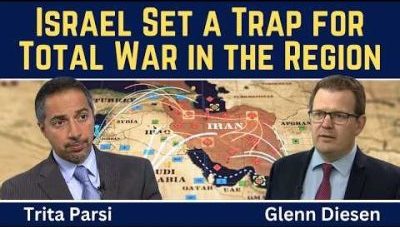
Trita Parsi: Israel Set a Trap for Total War in the Region
or go to
Aletho News Archives – Video-Images
From the Archive
Zionism’s Violent Legacy
By Donald Neff | Washington Report On Middle East Affairs | January 1996
On January 4, 1948, Jewish terrorists drove a truck loaded with explosives into the center of the all Arab city of Jaffa and detonated it, killing 26 and wounding around 100 Palestinian men, women and children.[1] The attack was the work of the Irgun Zvai Leumi – the “National Military Organization,” also known by the Hebrew letters Etzel – the largest Jewish terrorist group in Palestine. The Irgun was headed by Revisionist Zionist Menachem Begin and had been killing and maiming Arabs, Britons and even Jews for the previous ten years in its efforts to establish a Jewish state.
This terror campaign meant that at the core of Revisionist Zionism there existed a philosophical embrace of violence. … continue
Blog Roll
 Aletho News
- Trita Parsi: Israel Set a Trap for Total War in the Region
- Trump’s Iran war is on an Israeli leash
- Saudi oil boss issues global supply warning
- Riyadh Says Its Oil System Is Intact. The Numbers Say Otherwise.
- Trump and Netanyahu Want to “Finish the Job” on Iran
- US ‘one-sided dictation’ not Iran’s beliefs makes rational talks impossible: Baghaei
- Iran’s Next Strike May Not Explode. It Could Shut You Down /Col Doug Macgregor
- Iran: US political targets legitimate if assassinations return
- Iraq shuts key border crossing with Iran under US pressure: Report
- Undersea Internet cables could be targeted in retaliation for attacks on Iran: IRGC deputy chief
- If Americans Knew
- The Israel Lobby’s Changing Fortunes
- AIPAC has become such a political liability that it’s shifting to a more “nimble” approach to buying politicians
- At least 160 Israeli settler attacks in 2 weeks
- Will Gaza’s Ancient Christian Community Disappear Forever?
- Israel’s vision of regional security rests on keeping Arab states weak
- Heidi Levine recounts how Palestinian youths helped save her in settler attack
- DAILY UPDATE: Latest essential news on Palestine, Israel, & region
- Trump’s Intensifying Sabotage of the ICC, for Israel’s Sake
- Israeli military detain US and UK volunteers in West Bank including Democratic NY politician Brad Lander
- Americans at National Conservatism Conference held in Israel this year criticize Israel
- No Tricks Zone
- E-Cars Reduce CO2 Emissions By Only 41% Compared To Internal Combustion Engine Vehicles
- Predictions Made By Renowned Climate Professor Over Past Decades Have Been Proven To Be Poor
- New Study Suggests Large Regions Of The Pacific Ocean Have Been Cooling For The Last 80 Years
- Germany’s Green Energy Debacle: High Energy Costs Force Kahla Porzellan to Close After 182 Years!
- New Study: 50 Years Of The Most Aggressive ‘Net Zero’ Policies Can Only Affect The Global Climate By 0.03°C
- US September “Heat” Was No Record…Many Records Set Decades Ago
- Latest European Green Energy Debacle; Portugal’s Largest Flagship Solar Park Insolvent!
- Green Energy Debacle: German Expert Professor Fritz Vahrenholt Warns Of Severe Economic And Social Consequences
- Two More Paleo Reconstructions Affirm Meters-Higher Sea Levels Across Ireland, Brazil 7000-6000 Years Ago
- New Study: Earth And Venus Surface Warmth Largely Explained By Convection And Lapse Rate, Not CO2 Or Radiation

