UNRWA calls for unimpeded passage into Gaza for vital goods
MEMO | August 25, 2020
The UN Relief and Works Agency for Palestine Refugees in the Near East (UNRWA) called on Tuesday for all vital goods to be granted unimpeded passage into the besieged Gaza Strip, including fuel for electricity. UNRWA made the appeal against the background of 14 years of an illegal blockade and the socio-economic impact of the COVID-19 pandemic.
“The agency in Gaza is extremely concerned about the closure of the lone power plant since last Tuesday, 18 August,” UNRWA said. “The closure of the plant has caused the power feed to decline to two or three hours per day, followed by 20 hours of interruption.”
This, explained UNRWA, will have a negative impact on the wellbeing and safety of the people of Gaza and devastating effects on the Strip’s vital services, including hospitals. “Thus, this puts at risk the lives and health of nearly two million people, including 1.4 million registered Palestine refugees.”
The official statement from the UN agency pointed out that, “Under international humanitarian law, the passage of all relief consignments, in this case fuel for electricity, should not be prevented.”
Commenting on the situation in the Gaza Strip, the Director of UNRWA Affairs in the Palestinian territory, Matthias Schmale, said that the call is being made to all concerned parties to maintain a supply of electricity that is sufficient to meet the basic needs of the civilian population. “UNRWA is, furthermore, concerned about other measures perceived as punitive to the civilian population, such as closing down the fishing zone, as well as the escalating tensions and military activities.”
Gaza, Schmale pointed out, has now been hit by air raids for more than ten nights in a row. “All parties must show utmost restraint and protect the civilian population with full respect for their dignity and human rights.”
Pompeo Lands in Sudan to Push Normalization with Israel
Palestine Chronicle | August 25, 2020
US Secretary of State Mike Pompeo landed in Sudan on Tuesday on a tour urging more Arab countries to normalize ties with Israel, following the US-brokered Israel-UAE agreement.
Pompeo, the first American top diplomat to visit Sudan since 2005, arrived on a historic “first official non-stop flight” from Tel Aviv, he tweeted from the plane.
Israel remains technically at war and has no formal diplomatic relations with Sudan, which for years supported hardline Islamist forces under its former strongman Omar al-Bashir.
But its new transitional government has vowed to break with the Bashir era following his ouster last year amid popular pro-democracy protests.
Pompeo was to meet Prime Minister Abdalla Hamdok and Sovereign Council Chair General Abdel Fattah al-Burhan to discuss continued US support for the civilian-led transitional government “and express support for deepening the Sudan-Israel relationship”, the State Department said.
Sudan, which has launched sweeping social and political reforms, now hopes Washington will soon take it off its blacklist of state sponsors of terrorism as it seeks to fully re-integrate into the international community.
Closer ties with US ally Israel would help, and both sides have already taken a series of steps, muddied however by mixed messaging from Sudan.
The Pompeo visit comes as Sudan is in deep economic crisis — having suffered decades-long US sanctions and the 2011 secession of the country’s oil-rich south.
Grappling with high inflation and the coronavirus pandemic, the country badly needs to attract more foreign aid and investment.
UAE snubs three-way meeting with US, Israel over F-35 spat
Press TV – August 25, 2020
The Emirati envoy to the UN has reportedly snubbed a meeting with his Israeli and American counterparts after Tel Aviv spoke out against Abu Dhabi’s potential acquisition of American F-35 warplanes despite a normalization deal between the two sides.
The meeting had been scheduled for Friday at the UN headquarters in New York among Lana Nusseibeh, Gilad Ardan, and Kelly Kraft as a means of celebrating the August 13 deal that enabled “full normalization” of relations between the United Arab Emirates (UAE) and the occupying regime.
Israel’s Walla news site, however, reported on Monday that the Emirati official had opted out of the meeting a week after Israeli Prime Minister Benjamin Netanyahu’s office said he had opposed the sale of F-35s and other advanced weapons to any country in the Middle East, including Arab countries that have peace agreements with Israel.
Netanyahu also rejected earlier reports that he had given the green light to such sales to the UAE as part of the normalization deal.
Walla further said Emirati officials would refrain from holding any such high-level meetings with Israeli officials until Netanyahu “clarifies” his position on potential sales of the F-35s to Abu Dhabi.
Tel Aviv claims to have a “military edge” in the region and invariably pressures Washington into helping it retain the self-proclaimed primacy.
The UAE says the peace agreement with Israel should remove “any hurdle” for Abu Dhabi to purchase the advanced jets.
“We have legitimate requests that are there. We ought to get them,” said Emirati Minister of State for Foreign Affairs Anwar Gargashin an interview with the Atlantic Council on Thursday. “The whole idea of a state of belligerency or war with Israel no longer exists” following normalization.
Observers say the complications that have followed the UAE-Israel normalization agreement point to the flimsy nature of their relations, which have been received with uniform opposition from all Palestinian factions and many other countries.
Speaking alongside Netanyahu during a trip to the occupied city of Jerusalem al-Quds, US Secretary of State, reiterated America’s commitment to protecting Israel, while suggesting that Washington could rethink selling the warplanes to the UAE.
“The United States has a legal requirement with respect to [Israel’s alleged] qualitative military edge, and we will continue to honor that,” Pompeo said, adding the US “will now continue to review” its military ties with the UAE.
As per America’s Israel policy, Washington has to take protecting Israel’s security into consideration before selling any weapons to countries in the Middle East region.
With that in mind, the US has so far sold 16 of the warplanes to the occupying regime and plans to add dozens more to the fleet.
Reports say the explosion at Iranian nuclear plant had a criminal cause
By Lucas Leiroz | August 25, 2020
A new focus of tensions and uncertainties appears to be emerging in Iran. Recent reports from the Iranian authorities have concluded that the explosion at the Natanz nuclear plant had a criminal cause, most likely caused by a sabotage operation. Not many details have yet been provided about the completion of the investigations. The Iranian government has announced that more information about the case will be released soon but made clear the authorities’ certainty about the criminal nature of the plant’s fire.
In July, a major explosion hit the Iranian nuclear power plant at Natanz, used especially for enriching uranium – an essential activity for the development of nuclear technology. The explosion sparked a huge fire that caught the attention of the media around the world at the time. After the incident, no fatalities or leaks of radioactive materials were reported in the region, so the damage was considered low.
Immediately after the explosion, several rumors were spread about the real nature of the event, as it is common on such occasions. Some of the rumors claimed that Israel had triggered the explosion with the intention of damaging Iran in its nuclear development plans. At the time, all rumors were denied and no “conspiracy theory” was highlighted. Now, after the result of the investigations, such rumors have surfaced, but the Iranian government remains silent about them, stating that the investigations’ data will be revealed later.
Despite the uncertainties surrounding the case, the proximity of the date of the explosion in Natanz with other similar events in Iran brings us intriguing reflections and leaves many questions unanswered. In fact, since June, a series of repeated explosions at Iranian plants has been reported. In June, there was a major explosion at the nuclear power plant at Parchin’s military base in Tehran. This plant is the largest explosive factory for Iranian forces and is therefore a place of great strategic value for the country. Shortly thereafter, there was the event in Natanz, after which, in July, another major explosion occurred at the Isfahan power plant in central Iran. Still, not only plants have been victimized by mysterious explosions in Iran, but also several other facilities: on June 30, an explosion at a clinic in Tehran left 19 dead; in July, two people died in an explosion at a factory also in Tehran; also in July, a major fire in the port of Bouchehr destroyed several vessels, but left no victims. All these incidents have had no well-defined explanation and are therefore the subject of rumors.
The most curious thing is to note that the explosions occurred shortly after Iran intensified its uranium enrichment project. The withdrawal of the US from the 2015 nuclear agreement led Tehran to reconsider the national nuclear plan and to announce the resumption of the uranium enrichment program in the first half of June, on a date coincidentally close to the beginning of the series of explosions. Whether or not there is a causal relationship between both facts, the proximity of the dates is minimally interesting and justifies the suspicions and hypotheses raised by several experts. This is not a mere “conspiracy theory”: the possibility that foreign powers are sabotaging Iran’s nuclear program through some secret operations is quite plausible, regardless of whether it is factual or not.
Since the resumption of the uranium enrichment program, Iran has received several accusations from other countries, mainly from Israel, that it is planning to acquire an atomic bomb. Tehran vehemently denies such accusation, as it has done on many other occasions – according to various statements by Shiite religious leaders, the building of a nuclear bomb is condemnable according to the Islamic religion, so Iran, as an Islamic Republic, could not undertake such project. However, Iranian military progress remains intense and the results are visible. The country recently announced the development of a new long-range ballistic missile, causing even more negative reactions in the West and Israel, where the speech about a possible Iranian nuclear bomb is gaining strength.
In fact, we should expect the Iranian authorities to provide more information about the case and only then express opinions about it. For the time being, the most interesting thing to note is the war of narratives around Iran: even with several pronouncements denying the accusations, the United States and Israel maintain the claim that Tehran is building an atomic bomb as an official state discourse; on the other hand, the opinion of experts on possible sabotage against strategic installations of the Iranian government is classified as a “conspiracy theory” or “false rumor” and is immediately rejected.
There is, of course, an information war around the case. We do not know if it was foreign sabotage – and we may never know – but we do know that such subversive activities really exist and often happen.
Lucas Leiroz is a research fellow in international law at the Federal University of Rio de Janeiro.
In Blow to US Efforts, Morocco Says No to Normalization with Israel
Palestine Chronicle | August 24, 2020
Morocco will not follow the lead of the United Arab Emirates and normalize with Israel, the country’s Prime Minister Saad-Eddine El-Othmani said during a high-level political meeting late on Sunday.
El-Othmani told members of his Justice and Development Party that Morocco “refuses to normalize relations with the Zionist entity (referring to Israel) because this will embolden it to further breach the rights of the Palestinian people.”
The top Moroccan official reiterated that the country’s King, government and people will remain steadfast in defense of the rights of the Palestinian people and Al-Aqsa Mosque, located in occupied Palestinian East Jerusalem (Al-Quds).
“In 1993, Morocco and Israel had low-level diplomatic ties following the signing of the Oslo Accords between the Palestinians and Israel,” Anadolu news agency reported on Monday.
“However, Rabat suspended the relations with Israel following the outbreak of the Palestinian uprising in 2000,” Anadolu added.
On August 13, Israel and the UAE have reached a deal that is expected to lead to “full normalization of relations” between the small Arab nation and Israel in an agreement that US President Donald Trump brokered.
Sudan parties reject normalising ties with Israel
MEMO | August 24, 2020
Sudan’s Ba’ath and Popular Congress parties have rejected any attempt to normalise ties with Israel, considering it an occupation power in Palestine, Quds Press reported yesterday.
Both parties said in a joint statement issued on Saturday that “Israel is an occupation state that occupies beloved Palestine.”
They stressed that “it is impossible and it is not right to normalise relations with the Israeli occupation state.”
Meanwhile, the Sudanese Communist party declared its opposition to the normalisation of ties with Israel, reiterating its support for Palestinian rights and principles.
These statements came following remarks made by the former spokesman of the Sudanese Exterior Ministry Haidar Badawi who said that his country is looking forward to normalising ties with Israel.
The ministry denied his remarks and sacked him.
However, the Deputy Head of Sudan Sovereignty Council Mohamed Hamdan Dagalo has recently met with a senior Israeli official in the UAE and discussed promoting his country’s relations with Israel.
This comes just weeks after US President Donald Trump announced a peace deal between the UAE and Israel brokered by Washington.
Abu Dhabi said the deal was an effort to stave off Tel Aviv’s planned annexation of the occupied West Bank, however, opponents believe normalisation efforts have been in the offing for many years as Israeli officials have made official visits to the UAE and attended conferences in the country which had no diplomatic or other ties with the occupation state.
Netanyahu repeated on 17 August that annexation is not off the table, but has simply been delayed.
READ ALSO: Sudan’s foreign policy is in question following the revelation of secret talks with Israel
Hezbollah shoots down intruding Israeli drone
Press TV – August 23, 2020
The Lebanese resistance group Hezbollah says it has shot down an Israeli drone that had violated the country’s airspace.
The drone was downed near the border town of Aita al-Shaab, Hezbollah said in a statement.
It also said that the drone is currently in the possession of the resistance group.
The Israeli military later confirmed that the drone fell in the Lebanese territory, but added that there was no concern of information being leaked.
The shoot-down of the Israeli drone came one day after Hezbollah Deputy Secretary General Sheikh Naim Qassem said the Lebanese resistance movement will neither allow Israel nor its sponsors the chance to launch an aggression against Lebanon, warning the Tel Aviv regime and its allies of a heavy price.
“We will neither give Israel nor anyone who recognizes it the opportunity to launch an attack without paying the price. We will not capitulate to those who wish to rob us of our honor and victory… We want to protect Lebanon, its sovereignty and independence, whereas they [those who recognize Israel] do not care if Israel is still occupying our lands,” Sheikh Qassem said during a ceremony in the Lebanese capital Beirut late on Friday.
Lebanon’s government, Hezbollah and the UN Interim Force in Lebanon (UNIFIL) have repeatedly condemned Israel’s overflights, saying they are in clear violation of UN Security Council Resolution 1701 and the country’s sovereignty.
UN Security Council Resolution 1701, which brokered a ceasefire in the war of aggression Israel launched against Lebanon in 2006, calls on Tel Aviv to respect Beirut’s sovereignty and territorial integrity.
In 2009, Lebanon filed a complaint with the UN, presenting over 7,000 documents pertaining to Israeli violations of Lebanese territory.
How the UK Government Provides Cover for Israel’s Crimes
By Stuart Littlewood | American Herald Tribune | August 22, 2020
MP Alister Jack has finally replied to my question asking where he and the UK government stand on the threat by Israel to annex more Palestinian territory known as the West Bank. It seems the Government has urged them not to do it.
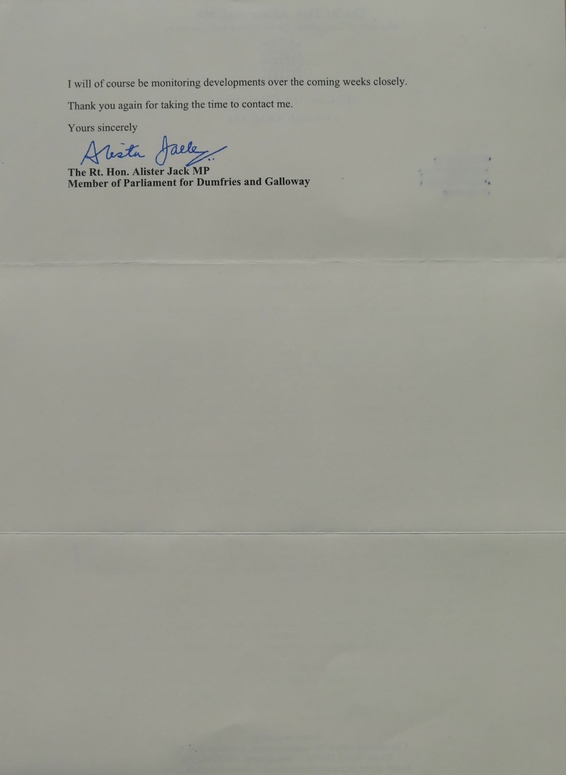
I doubt if his letter reproduced here, is his own work. It is sprinkled with the humbug and deceit repeated for decades by Tory and Labour governments and was likely penned at least 20 years ago by a Foreign Office scribbler vaccinated with an Israeli embassy gramophone needle. It is still used as a reply template by MPs and ministers who dare not speak their own minds or are plain clueless.
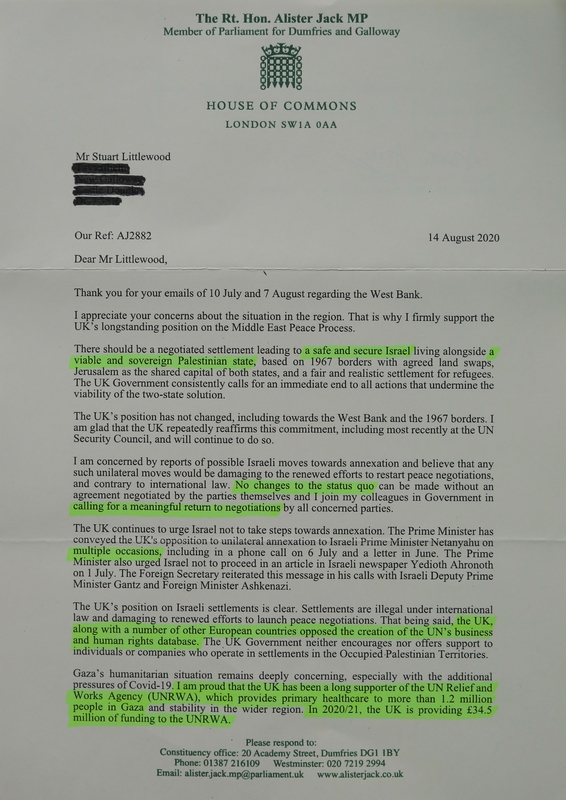
As usual, Her Majesty’s Government wants “a safe and secure Israel” but only “a viable and sovereign Palestinian state”. What a deplorable statement. Viable means workable in the most meagre sense. And when it comes to safety and security why can’t Mr. Jack be evenhanded? His words (if they are indeed his) express clear racial prejudice favouring the wellbeing and prosperity of one people at the expense of another which, I’d have thought, deserves a sharp rap on the knuckles.
He says there can be no changes to the status quo without a negotiated agreement between the parties. Mr Jack is surely aware that the status quo is itself illegal and breaches umpteen UN resolutions. And why does he feel the Palestinians must ‘negotiate’ their freedom? Picture the scene with the invader holding a gun to the head of the victim whose land the invader has occupied under brutal military control and in defiance of international law for 70+ years. Why is Mr Jack joining his colleagues in calling for more lopsided negotiations instead of pushing for law and justice?
‘Nothing shall be done to prejudice the rights of non-Jewish communities….’ Sorry, forget that.
So many experts are saying that a negotiated two-state solution is impossible. Does anyone seriously think the Israelis will voluntarily give up their ill-gotten territorial gains which are crucial to their Greater Israel dream? The only peaceable way to change their mind is through the persuasive power of BDS and other sanctions. For that reason BDS is under relentless Zionist attack and is fiercely opposed by the servile UK Government. The reason why the West endlessly woffles about ‘negotiations’ is their cowardly failure ever since 1948 to confront Israel’s greedy ambition for expansion and domination. That inconvenient bit in Britain’s 1917 pledge to Rothschild and the Zionist Federation about “it being clearly understood that nothing shall be done which may prejudice the civil and religious rights of existing non-Jewish communities in Palestine” is best forgotten. It’s so much easier for the UK Government to say and do nothing while their Zionist ‘friends’ surreptitiously complete their programme of creeping annexation. And never mind the 70+ years of grief this has caused innocent Palestinians.
Mr Jack refers to Boris Johnson’s article in Yedioth Ahronoth which appeared on the very day Netanyahu was supposed to be carrying out his crazed threat. “Annexation would represent a violation of international law…. I profoundly hope that annexation does not go ahead,” he wrote. “If it does, the UK will not recognize any changes to the 1967 lines, except those agreed between both parties.” But Israel has repeatedly violated international law and repeatedly been rewarded, so why should it care what the UK thinks about boundary changes? They have been changing all the time. Israel’s annexation of East Jerusalem (including the Old City) in 1967 was a flagrant breach of international law, and what did the UK or anyone else do about it? “I want to see an outcome that delivers justice for both Israelis and Palestinians,” says Johnson absurdly. He has no interest in justice otherwise he’d be leading the charge for implementing international law and UN resolutions which have already ruled on the issue.
As for Israel’s annexation misfire, it looks like world hostility gave Netanyahu cold feet and he and Trump cast around in desperation for a face-saver. They found it the United Arab Emirates’ ‘MBZ’ with whom they cobbled a deal for full diplomatic relations between Israel and the UAE provided Israel suspended annexation, and this is touted as a triumph. No-one of course insisted on actually abandoning annexation and you can bet the piecemeal ethnic cleansing, destruction of Palestinian homes and confiscation of their lands will continue unabated.
Mr. Jack then says he’s proud that the UK supports UNRWA and is providing £34.5 million funding this year. If the Palestinians were allowed their universal right to freedom of movement and self-determination in their homeland there’d be no need to keep throwing our tax money at agencies like UNRWA. It’s scandalous that money for our own schools and hospitals has been diverted to subsidise Israel’s long-running programme of thieving, collective punishment, dispossession and the trashing of the Palestinian economy.
Mr Jack goes on to say: “The UK’s position on Israeli settlements is clear.” Well no, it isn’t. They are illegal and even constitute a war crime yet the UK Government doesn’t mind if companies or individuals profiteer from using and endorsing those squats to the detriment of the Palestinians. And he seems to agree with his government’s opposition to the UN’s business and human rights database. Back in March 2016, UN Human Rights Council resolution 31/36 mandated the High Commissioner’s Office to produce a database of all businesses engaged in activities related to Israel’s settlement enterprise and having implications for the rights of the Palestinian people. Fair enough, you might think. But a year ago 103 local, regional and international organizations felt it necessary to call on the High Commissioner to release the Database expressing deep concern that the document and names of the companies facilitating the settlement programme had been withheld from circulation for 3 years due to political pressure. In the meantime the Israeli government had escalated the construction of new squats and broadcast its intention to formally annex parts of the West Bank in further violation of international law.
“The Database will bring an important degree of transparency on the activities of businesses which contravene rules and principles of international humanitarian and human rights law as a result of their operations in or with illegal Israeli settlements,” they said.
Amnesty International commented: “Naming the businesses which profit in the context of this illegal situation sends a clear message from the international community that settlements must never be normalized. These companies are profiting from and contributing to systematic violations against Palestinians.”
And Lawyers for Palestinian Human Rights said: “The UK Government abstained on the vote of this Human Rights Council resolution in March 2016…. It was the only state to declare that the database was ‘inappropriate’ and that ‘it would not co-operate in the process’ of its implementation.” LPHR felt that the reasons given for the Government’s position “did not individually or cumulatively amount to an adequate basis for justifiably opposing the UN Database”. One such reason was that the UK Government thought the Human Rights Council should focus on states rather than private companies. LPHR says this contradicts the UK’s earlier agreement, along with the rest of the international community, that companies as well as states have vital responsibilities in protecting and advancing respect for human rights.
I won’t trouble Mr Jack for an explanation for all this. It’s enough that voters and campaigners are aware of the skullduggery.
The Hezbollah-France Twist
By Ghassan Kadi for the Saker Blog | August 20, 2020
The intriguing twists and turns following the catastrophic explosion at Beirut’s Sea Port have thus far had international repercussions, beginning with the visit of French President Marcon to Beirut just three days after the disaster; a visit that could hardly be classified as a visit of a foreign head of state to another country.
Marcon did not go to Lebanon just to meet with Lebanese President Aoun, even though the two did meet.
Macron met with the political leaders of Lebanon; aka the traditional power brokers, including the heads of militia who have steered Lebanon into the 1975-1989 civil war, destroyed the state that was once called the Switzerland of the East, and continued to rule Lebanon thereafter, leading to its almost total demise.
Macron’s visit left behind major pointers:
- With the arrogance of a returning colonial head, he literally told the Mafia leaders that he does not trust them. He announced that foreign aid will not be handed to Lebanese authorities and that they all benefited from the collapse of the Central Bank and that they know that he knows that.
- He shunned the Lebanese President Aoun at his news conference that followed his meeting with him and had him literally pushed away. This humiliation is forever etched on film.
- He promised to return to Lebanon on the 1st of September, the centennial anniversary of Lebanon in its current political and geographical form. He gave the leaders until that date to resolve the endemic problem of corruption otherwise he would bring in a new pact.
- What was least reported about his visit was his insistence that Hezbollah was represented in his meeting with Lebanon’s political leaders.
According to international law, French President Macron has no business interfering with Lebanese politics. Reality stipulates otherwise. What Marcon said to Lebanese leaders on the August 7 visit is tantamount to saying that France created Lebanon a hundred years ago, then left it later in Lebanese hands, but the Lebanese failed, and that the leaders have until the 1st of September 2020 (the centenary of the State) to fix it. Either way, Marcon will be back on the 1st of September to recreate Lebanon with or without them.
A few days after his departure, Western frigates steamed into Beirut’s devastated Sea Port and without any coordination with what is left of the Lebanese authorities.
With the military vessels came aid, medical aid in the form of field hospitals, medicines, as well as food and fuel aid, all of which are most welcome and needed by Lebanon. Of note was the ‘miraculous’ international attention and focus on a country and people who have been robbed by their own leaders and punished by the West for having Hezbollah involved in the political process of administering the country.
It would be foolhardy to assume that the Beirut Sea Port disaster and the decision for the UAE and Israel to formally establish a diplomatic relationship a few days later were events that were connected and deliberately planned and timed. Such initiatives take much time to develop. That said, the Beirut disaster might have lubricated some rusty deadlocks and facilitated some movements, decisions, and possibly generated some unforeseeable domino effects.
Whichever way seen, the situation in Lebanon reached a breaking point, perhaps only salvageable by way of radical measures including steps to save its people from certain famine.
As a secular Syrian/Lebanese Levantine who is patriotic and endeavours to see the Levant united, strong and in a position of self-determination, I cannot see a more important political objective to pursue other than achieving the ability of self-determination. After all, this is what all self-respecting people demand and expect.
In the following few paragraphs, I am stating historical facts that do not necessarily reflect my point of view.
Egypt took upon itself the slogan of ‘total liberation of Palestine’ during the era of Egyptian President Nasser from 1952 to 1970. But his successor, Sadat, was the first to sign a peace treaty with Israel in 1978. Nearly a decade earlier however, Jordan expelled the PLO from its territory, inadvertently sending its fighters to Lebanon. In 1969, and after a number of clashes between the Lebanese Army and the PLO, a deal was brokered by Egyptian President Nasser between the Lebanese Government and the PLO and which allowed the PLO to use Lebanese soil to launch attacks on Israel. That was known as the Cairo Accord.
For better or for worse, the Cairo Accord marked the end of Lebanon as a neutral state and put it in the forefront of confrontation with Israel.
If we apply the above to the politics and political positions within Lebanon, please allow me to put on the hat of the devil’s advocate and speak on behalf of the anti-Axis of Resistance sector.
As other Arab states have walked away from their roles in being defendants of the Palestinian cause and sold out to the Western Road Map one way or another, many Lebanese who have lived and were brought up with the concept that Lebanon was/is the Switzerland of East, neither accept nor understand why it suddenly became the spearhead of resistance against the Israeli/American/NATO-based influence of hegemony.
If we add to this predicament the modus operandi of Israel and its Western backers, where adversaries and potential ones are given ultimatums to comply to their agendas or face decimation, then Lebanon has been placed in a very dangerous position, and in reality, it was.
Prior to this, after two decades of Arab-Israeli wars, Lebanon remained neutral. Even during the 1967 so-called Six-Days-War, Lebanon maintained its neutral stance and did not partake. With Egypt signing a peace treaty with Israel, and Jordan following, the Axis-of-Resistance was transformed and reduced to the North-East borders of Israel; ie the Syrian/Lebanese-Israeli borders.
Many Syria haters condemn Syria for not opening its borders for direct confrontation with Israel since 1967. What those critics fail to understand is that Syria was not equipped sufficiently to fight a conventional war with Israel; especially after the dismantling of the USSR. Syria however did everything within her power to provide the Axis-of-Resistance forces in Lebanon with all support possible to engage in asymmetric wars with Israel, and the investment paid dividends; the most impressive of which was the liberation of South Lebanon from Israeli forces in May 2000.
Many Lebanese will disagree with the above and proclaim that Lebanon was left alone. In more ways than one, they are right given that, notwithstanding Syria’s support, all of the military confrontations actually took place on Lebanese soil. This ultimately meant that the entire onus of the Arab cause of confrontation with Israel has been thrown on the shoulders of the little state of Lebanon.
Many Lebanese are supportive of this view, including pro Axis-Of-Resistance Lebanese who feel that they have been sold out by Arab complacency and treachery.
In reality, Arabs have to make up their minds and do this collectively. They must either decide to resist the American/Israeli Road Map or agree to endorse it. Neither stand is being taken where instead they stand on a half-way mark; a mark that does not hurt them, but is devastating Lebanon.
Recently, the Arabian Gulf states publicly made direct and indirect indications of desiring peace with Israel. However, they lacked the fortitude to sign peace agreements despite often working together covertly and at times overtly. In the last few days, the United Arab Emirates decided to break the mould and establish reciprocal diplomatic relationships with Israel. This came as no surprise.
Of interest is that Lebanese President Aoun appears to be capitalizing on this event in order to extract himself out of the corner he painted himself in.
Beaten, abandoned and shunned, in a recent address, Aoun hinted to the possibility of negotiating peace with Israel.
Aoun has a long history of a revolving door when it comes to changing allies and enemies. As Army Chief in the early 1980’s, he was an ally of the Christian Militia (Lebanese Forces) and jointly fought the Syrian Army presence in Lebanon. Later that decade, he turned against the ‘Lebanese Forces’ and, in the midst of a sectarian civil war, engaged himself in a bitter Lebanese Christian Maronite versus Christian Maronite battle, causing much devastation to an already shattered Beirut and neighbouring areas. This was just before he was forced into exile in France by the Syrian Army, only to return to Lebanon fifteen years later as an ally of Syria and Hezbollah in 2005.
In his ascendance to the Presidency in 2016, an achievement finally reached at the age of 80, unlike others who virtually inherited the position from their elders, Aoun displayed, at least publicly, a spark which many interpreted as coming from the fact that he, independently, built his own political career.
Senile as he may appear, and under the influence of his highly corrupt son-in-law, Gebran Bassil, he is possibly still capable of finding alternative ways to survive, at least for the continuation of his legacy that could see his son-in-law at the presidential helm.
According to a private political source from a friend who is well connected, away from the public eye, some negotiations are underway between France and Hezbollah. The insistence of France to have Hezbollah represented in the wider meeting of Lebanese leaders with Marcon was only meant to be an introduction for further talks, and specifically to more bilateral talks that involve France and Hezbollah. According to the friend, Macron is trying to push for a French initiative that breaks the deadlock between Hezbollah and the West. The details of such talks are not clear yet, but all parties to be involved will be asked to accept certain concessions.
As a matter of fact, it has been reported recently that Macron has told Trump that the American sanctions on Lebanon are counterproductive. This makes one wonder if this is an attempt on the part of Macron to bolster his initiative with credibility and support from Hezbollah. With this said, Macron will have to take a very long shot to be trusted by Hezbollah, if this is achievable at all.
In the meantime, President Aoun is quite aware of this and is feeling excluded and abandoned, even by Lebanon’s traditional ‘mother’; ie France. He is in desperate need to resurrect his position.
In touting peace talks with Israel, Aoun seems to be making three pertinent statements. He is signaling to Hezbollah that he is prepared to sever his political alliance with them, but more importantly, he is signaling to the whole West, primarily to the USA, that he is a viable negotiation partner, desirous to sign a peace treaty with Israel. He knows how such words resonate to American foreign policy architects. Most importantly perhaps, Aoun is signaling to Macron that it is pay-back time. He is showing Marcon the finger and reciprocating his ‘undiplomatic’ demeanour, presenting to him that he is prepared to marginalize Marcon and France as a whole by directly talking to America, leaving France out of a new historic Middle East peace deal.
Such a desperate attempt may lure America to sit at the negotiating table with Aoun, but it will not resolve the anger and agitation against the leadership regarding the numerous domestic problems leading up to the Sea Port disaster and what followed.
Will the USA swallow Aoun’s bait and go out of its way to save his hide? No one knows. What seems inevitable is that, with or without any warming up of relations between France and Hezbollah, Hezbollah is undertaking much restructuring and reinvention. Hezbollah leadership is quite aware that the time of its political alliance with Aoun is over one way or another, and is currently considering the implementation of many changes, albeit their details remain unclear.
The events of the next few weeks, especially following the upcoming second visit of Macron on the 1st of September, will be pivotal in deciding the fate and roles of all stakeholders and entities that have held the fate of Lebanon in their hands.
Gaza health official: Electricity cuts threaten lives of 120 newborn babies
MEMO | August 20, 2020
Consultant paediatrician and Chairman of the Gaza Neonatal Network (GNN) Dr Nabil Al-Baraqoun warned on Wednesday that the frequent electricity outages threaten the lives of 120 newborn babies currently being taken care of in intensive care incubators in Gazan hospitals.
Dr Al-Baraqoun explained that the 135 neonatal incubators are all powered by electricity, noting that the frequent power cuts and the use of alternative energy sources cause damage to medical devices such as incubators, resuscitation equipment and ventilators, which could cause complications for the infants, and even deaths.
He clarified that the alternation in using alternative energy sources like power generators and solar energy do not provide adequate energy to the incubators.
‘People of the Cave’: Palestinians Take their Fight for Justice to the Mountains
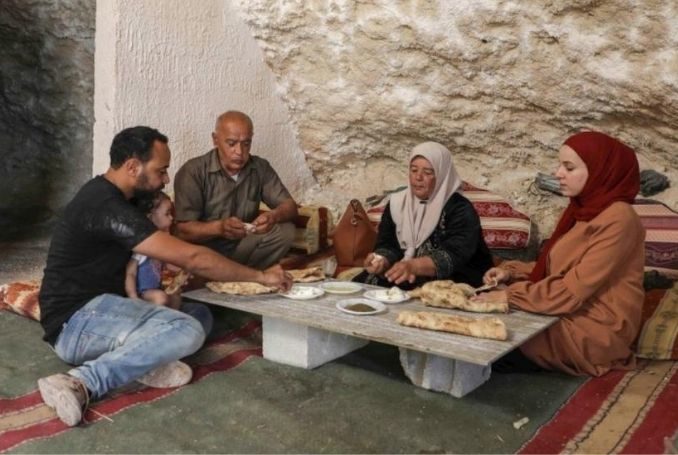
Ahmed Amaranth (L) and his family live in a cave home and now face Israeli eviction. (Photo: via Twitter)
By Ramzy Baroud | Palestine Chronicle | August 19, 2020
Palestinians are not going anywhere. This is the gist of seven decades of Palestinian struggle against Zionist colonialism. The proof? The story of Ahmed Amarneh.
Amarneh, a 30-year-old civil engineer from the northern West Bank village of Farasin, lives with his family in a cave. For many years, the Amarneh family has attempted to build a proper home, but their request has been denied by the Israeli military every time.
In many ways, the struggle of the Amarnehs is a microcosm of the collective struggle of Farasin; in fact, of most Palestinians.
Those who are unfortunate enough to be living in areas of the West Bank, designated by the Oslo II Accord of 1995 as Area C, were left in a perpetual limbo.
Area C constitutes nearly 60% of the overall size of the West Bank. It is rich with resources – mostly arable land, water and ample minerals – yet, relatively sparsely populated. It should not be surprising why right-wing Israeli Prime Minister, Benjamin Netanyahu, wants to annex this region. More land, with fewer Palestinians, has been the guiding principle for Zionist colonialism from the outset.
True, Netanyahu’s annexation plan, at least the de jure element of it, has been postponed. In practice, however, de facto annexation has been taking place for many years, and, lately, it has accelerated. Last June, for example, Israel demolished 30 Palestinian homes in the West Bank, mostly in Area C, rendering over 100 Palestinians homeless.
Additionally, according to the United Nations Office for the Coordination of Humanitarian Affairs (OCHA), Israeli army bulldozers destroyed 33 non-residential structures as well. This is “the same number (of homes) demolished throughout the entire first five months of 2020,” OCHA reported.
Unfortunately, Farasin, like numerous other Palestinian villages and communities across Area C, has been singled out for complete destruction. A small population of approximately 200 people has been subjected to Israeli army harassment for years. While Israel is keen on implanting Jewish communities in the heart of the occupied West Bank, it is equally keen on disrupting the natural growth of Palestinian communities, the indigenous people of the land, in Area C.
On July 29, Israeli forces invaded Farasin, terrorizing the residents, and handed over 36 demolition orders, according to the head of the Farasin village council. Namely, this is the onset of ethnic cleansing of the entire population of the village by Israel.
Ahmed Amarneh and his family also received a demolition order, although they do not live in a concrete house, but, rather, in a mountain cave. “I didn’t make the cave. It has existed since antiquity,” he told reporters. “I don’t understand how they can prevent me from living in a cave. Animals live in caves and are not thrown out. So let them treat me like an animal and let me live in the cave.”
Amarneh’s emotional outburst is not misleading. In a recent report, the Israeli rights group B’tselem, has listed some of Israel’s deceptive methods used to forcefully remove Palestinians from their homes in Area C or to block any development whatsoever within these Palestinian communities.
“Israel has blocked Palestinian development by designating large swathes of land as state land, survey land, firing zones, nature reserves and national parks,” according to B’tselem. Judging by the systematic destruction of the Palestinian environment in the West Bank, Israel is hardly interested in the preservation of animals, either. The ultimate goal is the allocation of “land to settlements and their regional councils,” B’tselem argues.
Therefore, it should not come as a surprise that, for example, as of November 2017, only 16 of the 180 Palestinian communities in Area C have been approved for development. The rest are strictly prohibited.
Between 2016 and 2018, of the 1,485 Palestinian applications for construction and development in these areas, only 21 permits have been approved.
These unrealistic and draconian measures leave Palestinian families with no option but to build without a permit, eventually making them targets for Israeli military bulldozers.
Hundreds of families, like that of Ahmed Amarneh, have opted for alternative solutions. Failing to obtain a permit and wary of the imminent demolition if they build without one, they simply move to mountain caves.
This phenomenon is particularly manifest in the Hebron and Nablus regions.
In the mountainous wasteland located on the outskirts of Nablus, the wreckage of abandoned homes – some demolished, some unfinished – is a testimony of an ongoing war between the Israeli military, on the one hand, and the Palestinian people, on the other. Once they lose the battle and are left with no other option, many Palestinian families take their belongings and head to the caves in search of a home.
Quite often, the fight does not end there, as Palestinian communities, especially in the Hebron hills region, find themselves target to more eviction orders. The war for Palestinian survival rages on.
The case of Ahmed Amarneh, however, is particularly unique, for rarely, if ever, Israel issues a military order to demolish a cave. When the cave is demolished, where else can the Amarneh family go?
This dilemma, symptomatic of the larger Palestinian quandary, reminds one of Mahmoud Darwish’s seminal poem, “The Earth is Closing on Us”:
“Where should we go after the last frontiers?
Where should the birds fly after the last sky?
Where should the plants sleep after the last breath of air?”
However depressing the reality may be, the metaphor is undeniably powerful, that of savage colonialism that knows no bounds and Palestinian steadfastness (sumoud) that is perennial.
Often buried within the technical details of oppression – Area C, home demolition, ethnic cleansing and so on – is the tenacity of the human spirit, that of the Amarneh family and hundreds of other Palestinian families, who have turned caves into loving homes. It is this unmatched perseverance that makes the quest for justice in Palestine, despite the innumerable odds, possible.
– Ramzy Baroud is a journalist and the Editor of The Palestine Chronicle. He is the author of five books. His latest is “These Chains Will Be Broken: Palestinian Stories of Struggle and Defiance in Israeli Prisons” (Clarity Press, Atlanta). Dr. Baroud is a Non-resident Senior Research Fellow at the Center for Islam and Global Affairs (CIGA), Istanbul Zaim University (IZU).
Featured Video

The Search for Truth: Charlie Kirk’s Assassination One Year Later
or go to
Aletho News Archives – Video-Images
From the Archives
The 9/11 “Double-Cross” Conspiracy Theory
BY LAURENT GUYÉNOT • UNZ REVIEW • SEPTEMBER 6, 2022
Is it true that “9/11 was an inside job”? Yes, insofar as Israel is “inside” the U.S. But for the 9/11 truthers who have identified Israel as the main perpetrators, “9/11 was an inside job” is at best a half-truth, and at worst an integral part of the Zionist operation, like a secondary flag sewn as a lining under the false flag of Islamism. Victor Thorn (1963-2017) wrote in his book 9/11 made in Israel: The Plot Against America (2011): “In essence, the ‘9-11 truth movement’ was created prior to Sept. 11, 2001 as a means of suppressing news relating to Israeli complicity. . . . The slogan ‘9-11 was an inside job’ was quite possibly the greatest example of Israeli propaganda ever devised.” In milder terms, it is “controlled opposition”.
A genuine truth movement would have pointed to Israel as the prime suspect from the start. From day one, it was obvious who would benefit. … continue
Blog Roll
 Aletho News
- Europe’s mounting social chaos… chickens coming home to roost for proxy war against Russia
- US-Russia Diesel Deal Becomes Massive Defeat for Ukraine
- Hormuz and the Looming Economic Catastrophe
- Dhubab offensive, media blitz and the rapid unraveling of Saudi-backed coalition’s new gambit
- Putin Conveys to Trump Iran’s Vision on Possible Conflict Resolution – Kremlin
- The Search for Truth: Charlie Kirk’s Assassination One Year Later
- ‘Harsh reality’: Iran says France seeks monopoly on power and intimidation, not peace for all
- When Will This White House Madness End?
- Huckabee aide goes to ‘unusual lengths’ to portray ‘Israel’ positively
- Trump Announces Diesel Supply Deal With Putin Following Phone Call
- If Americans Knew
- Israeli forces kill another child in Gaza – Daily Update
- Gaza ceasefire exists in name only, say more than 100 organizations
- Nearly 2 Million in Gaza Need Urgent Shelter Assistance as Winter Looms: IOM Chief Warns
- Suppressing Palestinian resistance: US charity under fire for AI monitoring of Gaza classrooms
- Thousands Are Held in Israeli Torture Camps. This Is What Happens Inside
- Israel puts Gaza’s sick, injured, newborn in peril – Daily Update
- Report claimed Mark Levin used by Israeli government to influence Trump
- Over 2,000 Gazans have died awaiting medical evacuation amid Israel’s continued siege
- How a U.S. Diplomat Suppressed and Altered Reports Critical of Israel
- 5 Palestinians Die from Israeli Strikes in Gaza as Relentless Attacks Continue
- No Tricks Zone
- New Study: 50 Years Of The Most Aggressive ‘Net Zero’ Policies Can Only Affect The Global Climate By 0.03°C
- US September “Heat” Was No Record…Many Records Set Decades Ago
- Latest European Green Energy Debacle; Portugal’s Largest Flagship Solar Park Insolvent!
- Green Energy Debacle: German Expert Professor Fritz Vahrenholt Warns Of Severe Economic And Social Consequences
- Two More Paleo Reconstructions Affirm Meters-Higher Sea Levels Across Ireland, Brazil 7000-6000 Years Ago
- New Study: Earth And Venus Surface Warmth Largely Explained By Convection And Lapse Rate, Not CO2 Or Radiation
- 2025 Nature Paper Claiming Worsening Global Drought Gets RETRACTED …Heavily Flawed
- New Study: ‘Global Drought Shows No Detectable Recent Acceleration Under Climate Warming’
- Economic Masterminds: German Socialists Suggest Taxing Productivity Gains Stemming From Using AI
- The South China Sea Has Not Been Cooperating With The Climate Change Narrative

