Thousands of Russia immigrants to Israel left again after getting passports
MEMO | December 19, 2019
Thousands of immigrants to Israel from the former Soviet Union “may have come only to receive an Israeli passport before moving back abroad”, reported JTA, with the total such cases amounting to up to a quarter of all Russian immigrants.
The article, citing reporting done by Israeli weekly newspaper Makor Rishon, described how “a cottage industry of companies promising expedited Israeli citizenship, and the passport that comes with it” emerged in Russia, “since the passage of a law allowing new immigrants to receive the travel document within the first three months of [moving to Israel]”.
According to the report, “for many in the post-Soviet world, an Israeli passport is considered as desirable as a European Union passport is to Israelis.”
Now, Russian “fixers” are advertising that they can help those able to emigrate to Israel to obtain Israeli citizenship “within two days” for “a cost of thousands of euros”.
JTA added that, according to Makor Rishon,
Under certain circumstances… the three-month period can be shortened to as little as a day, and some immigrants have even been able to receive their passports without having to leave Ben Gurion International Airport.
Based on data from Israel’s Ministry of Immigrant Absorption, it is estimated that approximately 8,500 immigrants from the former Soviet Union “have come just for the passport before immediately leaving the country”.
One official from the Jewish Agency suggested that as many as 25 per cent of the immigrants came for a passport and “left the country immediately after receiving it”.
In 2018, roughly 10,500 Russians and 6,400 Ukrainians emigrated to Israel, “which was the first year that the majority of new immigrants were not considered Jewish under…Jewish religious law”.
US Middle East Policy in a Future Democratic Administration
By As`ad AbuKhalil – Consortium News – December 18, 2019
It is too early to speculate on the prospects of a Democratic administration for next year’s election. If a switch in the party occupying the White House occurs, it would be significant for the direction of domestic policy. But less change should be expected in foreign affairs. In fact, a Democratic president could easily produce more wars and military intervention than Donald Trump. Democratic voters should expect that as they shop among the candidates.
Trump wanted to withdraw troops from Afghanistan, Iraq and Syria and those positions have been rejected not only by the military establishment but also by the overwhelming majority of Democrats and Republicans in Congress. Mainstream media have become a central element in the war lobby: They only cheered Trump when he bombed Syria, and called for more bombing.
With both parties now serving as the lobby for unending wars in the Middle East, a Democratic president is likely to expand U.S. military involvement and intervention. In Syria, it will be in the name of helping the Kurds or fighting terrorism or whatever other excuse they will produce.
None of this is to say that Trump has presided over an era of peace in the Middle East region; far from it. Trump inherited a full legacy of war and conflict from his predecessors and while he tried to disengage from some of those conflicts he was unable to do so due to heavy pressure from the military establishment (which seems to have unofficial control over editorial pages of mainstream newspapers); the foreign policy elite in Congress, and from think tank world in Washington, D.C. Trump also continued the long-standing U.S. policy of subsidizing Israeli aggression and occupation.
Trump’s policies toward the Middle East are most likely to have greatest impact on occupied Palestine, but such is the record of every U.S. president: every president wants to prove he is more pro-Israel than his predecessor.
Not Always Eye to Eye
The Democratic candidates do not necessarily see eye-to-eye on U.S. foreign policy priorities. Pete Buttigieg, for example, represents the traditional “muscular” (how is that for patriarchal terminology in U.S. foreign policy?) viewpoint of American foreign-policy — and domestic policy as well. Buttigieg is the Democrat that Wall Street and the military industrial complex appear most to support. He’s also become mainstream media’s favorite Democrat because he embraces U.S. foreign policy dogma and veers away from a progressive domestic agenda.
For many decades Israel has had a wish list of what it wants the U.S. to accomplish on its behalf, not only for the Arab-Israeli conflict, but for the region as a whole. In all those years, Israeli wishes have been largely fulfilled, under Democratic and Republican administrations alike.
Israel no longer has to spy on the U.S. military. Instead it has succeeded in getting the U.S. to share raw satellite intelligence data. Over the years, Israel has obtained the loan guarantees it sought to build settlements and spend more on its military aggression.
Israel has persuaded the U.S. to share more of its military technology and intelligence on Arab countries (including key U.S. allies.) Under former President Barack Obama, the steady supply of U.S. funding of the Israeli military war machine hit an unprecedented level. Obama committed the U.S. to basically subsidizing Israel occupation and aggression for the next 10 years. Israel today remains the only country with the per capita income of a developed country that continues to rely on U.S. foreign aid.
Absent From Debates
Foreign policy does not figure prominently in the Democratic debates or in candidates’ stump speeches. But there has been a significant shift this year compared to previous years, especially since 1983, when I first arrived in the United States.
It was customary then for Democratic presidential candidates to outdo each other in shows of fanatical loyalty to Israeli interests. I remember how every presidential candidate — during the 1980s and 90s and even after — was eager to prove his intent on relocating the U.S. Embassy from Tel Aviv (occupied Jaffa) to occupied Jerusalem. The competition was over who would be the fastest.
So, when Democratic pundits today express outrage over Trump’s relocation of the embassy they should remember that the seeds of this step began with Democrats such as President Bill Clinton and a party then of strident Zionism.
Not that the Republican Party was less loyal to Israel. But it had at least some leaders who were were willing to criticize Israel. By contrast, the Democrats had no equivalent to Charles Percy or Charles Mathias — two highly influential Republican senators who were willing to violate the conventional wisdom on Israel. [The Jewish vote was overwhelmingly Democrat in those days.]
Shift in Democratic Base
In recent years, however, the base of the Democratic Party has caused that to change. Hillary Clinton’s endorsement of the Iraq war; the Democrats’ enabling of the George W. Bush administration’s war on Iraq and the debacles brought by the war on terrorism all spread disillusionment with the party’s foreign policy dogma. While the Democratic Party’s foreign policy may not have shifted much in Congress, the changing tide was evident in the party’s liberal base in 2016, when Senator Bernie Sanders’ less blindly pro-Israel position (only measured by the criterion of conventional Democratic Zionism) opened a gap with his establishment rival, former Secretary of State Hillary Clinton.
It would be a stretch to say Trump radically altered the contours of U.S. foreign-policy towards the Middle East, specifically towards Israel. His policies are merely the culmination of a decades’ old, whole-hearted U.S. endorsement of Israeli aggression and occupation.
A Democratic administration is unlikely to even alter Trump’s course on Israeli settlements or the location of the U.S. embassy.
U.S. opposition to Israeli settlements has been softening for many years. With the exception of George Herbert Walker Bush, successive presidents since Ronald Reagan have largely allowed Israel to continue to expand settlements with very little rebuke. This paved the way for the Trump administration, in November, to change the U.S. position on those settlements. Declared illegal under international law since the end of the 1967, the Trump team declared them legal.
Given a staunchly pro-Israel Congress, a Democratic president is unlikely to do anything about that.
It would let Israel keep building new settlements and refrain from moving the U.S. embassy back to Tel Aviv (occupied Jaffa). The new embassy location, after all, has been sought by the U.S. Congress, by both Republicans and Democrats, since at least the 1990s.
A possible exception is Sanders (who nevertheless prefaces every remark he makes on Israel by asserting that he is “100 percent pro-Israel.”) A Sanders administration might go back to registering U.S. disapproval of settlements. Sanders has even expressed willingness to levy economic sanctions against Israel in reprisal for the settlements. But these promises could be hard to keep if he became president and had to face the entrenched vigilance in Congress against any measures it deems harmful to the interests of Israel.
As’ad AbuKhalil is a Lebanese-American professor of political science at California State University, Stanislaus.
From a Blessing to a Curse: How UN Resolution 2334 Accelerated Israel’s Colonization in the West Bank
By Ramzy Baroud | Palestine Chronicle | December 18, 2019
Three years ago, the United Nations Security Council passed Resolution 2334. With fourteen members voting in favor and one abstention, the Resolution was the equivalent of a political earthquake. Indeed, it was the first time in many years that the international body roundly condemned Israel for its illegal settlement policies in the Occupied Palestinian Territories. Unlike previous attempts at holding Israel accountable, this time, the Americans did nothing to protect its closest ally.
What has happened since then, however, has been a testimony to the failure of the UN to furnish meaningful mechanisms that would force violators of international law, like Israel, to respect international consensus. In some way, 2334, although externally supportive of Palestinian rights, turned out to be one of the most costly decisions ever made by the international institution.
Immediately after the adoption of 2334 on December 23, 2016, Israel thumbed its nose at the whole world by announcing, twice in the following January, plans to construct thousands of new homes in illegal Jewish settlements in the occupied West Bank.
At the time, Israeli Prime Minister, Benjamin Netanyahu, and his then-Defense Minister, Avigdor Lieberman, rationalized the provocative moves as a “response to the housing needs” within the settlements. Nothing could have been further from the truth, as the subsequent three years demonstrated.
Now, it has become clear that the settlement expansion was part of a much larger strategy aimed at killing any chance of establishing a contiguous and viable Palestinian State and parting ways with the so-called “land for peace formula”, itself molded through years of American mediation and “peace process”.
The Israeli strategy was a complete success. Thanks to the blank cheque issued by the Trump administration to Israel’s right-wing government coalition, Israeli politicians are now openly plotting what was once nearly unthinkable: the unilateral annexation of major Jewish settlement blocks in the West Bank along with large swathes of the Jordan Valley.
Throughout the last three years, Washington has turned a blind eye to Israel’s sinister designs. Worse, it has fully embraced and validated the Israeli political discourse, while taking every necessary measure to provide a cover for Israeli actions. The declaration by US Secretary of State, Mike Pompeo, on November 18 that Jewish settlements “are not inconsistent with international law” is but one of many such positions adopted by Washington to pave the road for Israel’s insolence and violation of international law.
Retrospectively, President Obama had the chance to do more than merely abstaining from voting against a UN Resolution – which lacked any enforcement mechanism, anyway – by using the generous US financial aid to Israel as a bargaining chip. That way, he could have potentially forced Netanyahu to freeze settlement expansion altogether. Alas, Obama did the exact opposite – as he bankrolled the Israeli military and financed every Israeli war on Gaza. Instead, his belated move opened the stage for the Trump administration to unleash a cruel war on Palestinians and international law, as well.
It seems that the two-year term of US Ambassador to the UN, Nikki Hailey, was mainly dedicated to rectifying the supposed “betrayal” of the Obama administration of Israel. In the name of defending Israel against imaginary global “anti-Semitism”, the US severed its ties with several UN organizations, eventually isolating Washington itself from the rest of the world.
With the UN being designated as the common enemy by both Washington and Tel Aviv, international law was rendered irrelevant. Gradually, the US government fortified its protective shield around Israel, thus making 2334 and many other UN resolutions meaningless. In other words, the US managed to turn international consensus regarding the illegality of the Israeli occupation of Palestine into an opportunity for Tel Aviv to disown any commitment, not only to the UN, but to the so-called two-state solution, and the “peace process”, as well.
While Israel accelerated its settlement projects unhindered, the US ensured that the Palestinian leadership is denied the opportunity to fight back, even if symbolically, through the various international institutions and any available political and legal platform. This was engineered through systematic economic warfare, which saw the cutting of all aid to the Palestinian Authority in August 2018, followed, a week later, by stopping all funds to the UN organization responsible for the welfare of Palestinian refugees, UNRWA.
US-Israeli war on Palestinians was staged on two fronts. One front focused on the seizure of more Palestinian land, the building of new and the expansion of existing settlements, as a precursor of the imminent steps of annexing most of the West Bank. The other front witnessed the relentless US administration’s pressure on Palestinians through political and financial means.
Three years after 2334, a new status quo is upon us. Gone are the days of traditional American “peace-making” and its adjoining elaborate discourse centered on a two-state and other make-believe solutions. Now, Israel is single-handedly formulating its own “vision” for a future that is designed to meet the expectations of the country’s unhinged and ever-growing right-wing constituency. As for the US, its role has been relegated to the cheerleader, unfazed by such seemingly trivial matters as that of international law, human rights, justice, peace or even regional stability.
Shortly after being appointed as Israel’s new Defense Minister on November 9, Naftali Bennett has taken the dangerous and consequential decision of building a new Jewish settlement in the occupied Palestinian city of Al-Khalil (Hebron). Naturally, Jewish settlers rejoiced as they will finally see the destruction of the old Hebron market, which is older than Israel itself, and the potential for further settlement expansion and more annexation in the city.
At the same time, Palestinians are cringing, for a move against Hebron is the final proof that Israel is now operating in Palestine without the slightest fear of political or legal repercussions. Not only did UN Resolution 2334 fail to hold Israel accountable, it, in some way, facilitated further Israeli expansion in the West Bank, paving the road for the annexation that will surely follow.
– Ramzy Baroud is a journalist and the Editor of The Palestine Chronicle. He is the author of five books. His latest is “These Chains Will Be Broken: Palestinian Stories of Struggle and Defiance in Israeli Prisons” (Clarity Press, Atlanta). Dr. Baroud is a Non-resident Senior Research Fellow at the Center for Islam and Global Affairs (CIGA), Istanbul Zaim University (IZU). His website is www.ramzybaroud.net
Turkey denies UK news report attacks against Israel planned on its soil
![Hamas chief Ismail Haniyeh informs Hanna Nasser, head of the Palestinian Central Election Commission, that Hamas agrees to the plan for holding Palestinian elections [Mohammed Asad/Middle East Monitor]](https://i0.wp.com/www.middleeastmonitor.com/wp-content/uploads/2019/11/30-016-8-2019mo-asad-hamas-electionsIMG_0122.jpg?resize=1200%2C800&quality=85&strip=all&ssl=1)
Hamas chief Ismail Haniyeh informs Palestinian Central Election Commission head Hanna Nasser that Hamas agrees to Palestinian election plans [Mohammed Asad/Middle East Monitor]
MEMO | December 18, 2019
The British newspaper the Telegraph has accused Turkey of allowing Hamas to conduct terror attacks on Israel from Istanbul, claims Ankara has denied.
In a report published today, which cited information allegedly gained by Israeli police and security sources from interrogations of the group’s detained suspects, the paper claimed that Hamas’ operations in Jerusalem and the West Bank are being plotted from Turkish soil with authorities there turning a blind eye.
One such operation was a plot to assassinate the mayor of Jerusalem and the national police commissioner.
The report was released only days after Turkish President Recep Tayyip Erdogan hosted Hamas chief Ismail Haniyeh in Istanbul as part of the latter’s foreign tour.
Turkish President Recep Tayyip Erdogan is reported to have reassured the Hamas official that “We will keep on supporting our brothers in Palestine.” Haniyeh and his party then praised the president for his continued support and “positions vis-a-vis the Palestinian people and their just cause”.
The report also cited accusations by Israeli officials that Turkey has broken a commitment made in 2015 between it and the US, which forbade the country from allowing Hamas to plan operations against Israel as a result of the latter’s continued occupation of Palestinian territories.
According to the report, Israel’s Foreign Ministry stated that “Israel is extremely concerned that Turkey is allowing Hamas terrorists to operate from its territory, in planning and engaging in terrorist attacks against Israeli civilians.”
The accusations levelled at Turkey and Erdogan add to the Jewish State’s long-time criticism of the Republic’s hosting of figures associated with Hamas, the political party which runs the besieged Gaza Strip, and its ties to the Palestinian cause as a whole. While Turkey perceives talking with Hamas as a viable option to provide solutions to end the Israeli-Palestinian conflict and further the establishment of an independent Palestinian state, Israel sees it as accommodating a “terrorist group” which fights against its continued occupation of Palestinian territories.
The accusations by the Telegraph and its report have been strongly denied and refuted by Turkey, with a diplomatic source saying that Hamas is “not a terrorist organisation”.
The Palestinian movement has slammed the report as “baseless” due to the fact that “Hamas’ resistance activities are conducted only in the land of occupied Palestine.”
Israeli media campaign targets Palestinian journalist as well as Jeremy Corbyn

Palestinian journalist Walid Mahoumd (Photo from Twitter)
By Robert Inlakesh | Press TV | December 18, 2019
On Sunday, in the wake of the UK election, the Israeli media released a fabricated story, accusing a well-known Palestinian journalist in Gaza of being part of Hamas and an administrator on the ‘We Support Jeremy Corbyn’ Facebook page.
The story was first published on Tazpit (TPS) News, an Israeli media agency, and was later picked up by Right Wing press in the United States. The information was then repeated throughout Israeli media in both English and Hebrew. By Monday, the Jeremy Corbyn supporting group, that has over 70,000 members, was labeled as an “influential” group linked to Hamas by The Times of Israel.
But the story in of itself was built on erroneous claims. The Gazan journalist Walid Mahoumd – referred to by another alias, Walid Abu Rouk, by the Israeli media – is to the best of his own knowledge, not a Hamas member. There is also no information that has been provided to corroborate this claim and when I questioned him on the issue he had the following to say.
“I am not a member of Hamas. I cannot recall when I was made an administrator on the page. I have never posted anything on the page about Jeremy Corbyn. This is not the first time they have attacked me like this. They just want anything to attack Corbyn.” Needless to say, this was not what the original article on the matter from TPS quoted him saying.
TPS News claim that they spoke to Walid over the phone and that he confirmed to them that he had maintained a role as a manager of the page until recently and still has connections to pro-Corbyn activists. But when I reached out to Walid Mahmoud, he told me that he was called by an Israeli journalist about a month ago, who “bragged about being in the army and now being a journalist.” He told me that he declined to comment for the Israeli news outlet as he boycotts Israel. Walid said that the Israeli spoke to him in Arabic and bragged about his role in COGAT (Coordination of Government Activities in the Territories), which participates directly in enforcing Israel’s occupation of the West Bank and besiegement of Gaza.
In a Facebook post, Walid Mahmoud has written that he now fears for his life, due to being labeled a Hamas member and that Israel could now justify targeting him in an attack, such as an airstrike against his home. He also stresses that the man, who called him to ask for information had threatened him if he did not cooperate.
Jeremy Corbyn, the leader of Britain’s Labour Party, has over the course of his election campaign endured a relentless campaign from pro-Israeli groups and beyond, accusing his Party of anti-Semitism. One of the smears used against Corbyn is that he referred to Hamas as his friends. It would be perceived that those who created this story, did so believing that tying a Facebook page, which disseminates information about Corbyn, to Hamas, would hurt Corbyn in the elections.
The problem with the numerous articles written by the likes of The Jerusalem Post about Walid’s alleged links to Hamas, is that they have no verifiable information which could possibly prove the well-known journalist’s connection to the governing force in Gaza, nor his position on the Facebook page itself. This leaves many to the assumption that the claim being made is based upon the racist notion that all Gazans are somehow linked to Hamas, a theme which Israel used repeatedly when justifying its recent murder of over 300 protesters in Gaza’s Great Return March.
Walid Mahmoud is a journalist, photojournalist, and peace activist who resides in Khan Yunis (southern Gaza Strip). He is someone that I have personally known for around four years now. He has written in English for the likes of Al Jazeera and Middle East Eye and his work on the ground in Gaza has been shared by progressive Jewish groups in the United States such as Jewish Voice For Peace.
Walid has quite literally put his life on the line to bring the world information from the Gaza Strip, witnessing his colleagues die in front of his eyes from Israeli fire in the Great Return March. On the 30th of March this year, he was even shot at by an Israeli sniper and barely escaped death, with his camera blocking the bullet from hitting his head.
During Israel’s 2014 bombardment of the Gaza Strip, which it dubbed ‘Operation Protective Edge,’ Walid’s home was bombed by Israeli missile fire. Walid Mahoumd has endured living through Israeli occupation when he was younger, followed by eight large-scale military operation by Israel against Gaza after the enforcement of the illegal siege.
Now, he is being punished for merely talking about what he sees around himself. If for instance, he is to travel now, it wouldn’t be hard to imagine this process being made more difficult for him and his family. Hamas is considered by most Western countries to be “a terrorist organization” and despite not being a member, he could be perceived as such due to the numerous articles online claiming this.
Walid told me that he would like to take legal action against TPS for their smears and urges all those who published this disinformation to take it down. However, because he lives in Gaza this suing an Israeli news outlet will be an extremely difficult process. All of this trouble coming Walid’s way because of an article, which reads like a conspiracy theorist blog post claiming proof of deceased rapper Tupac Shakur being alive and well in Cuba.
The TPS article claims to have sources inside of Gaza, which they say told them about a supposed Hamas connection to Abu Rouk, yet they fail to provide the names of any such sources. It claims to have intelligence about London-based activists making Walid Mahmoud an administrator of the ‘We Support Jeremy Corbyn’ page, yet they provide no names of those who supposedly made him an administrator. TPS News then claim that Walid, under the supervision of Hamas, still communicates with London Labour activists.
Instead of providing any material evidence of such libelous claims, the article then goes on to claim that because Walid Mahmoud writes for MEMO, Al Jazeera, and the Middle East Eye, that he is therefore connected directly to the Muslim Brotherhood.
What made matters worse was that prominent Islamaphobe Robert Spencer then decided to post this information on his blog site ‘Jihad Watch,’ making Walid a potential target for online Islamaphobic hate mail.
Walid in a Facebook post on the whole matter writes the following points to clear up the situation from his own perspective:
“1- At no point in time was I ever associated with Hamas. I have even been arrested and interrogated by Hamas before in regard to my humanitarian work in Gaza. I’m entirely politically unaffiliated and only represent myself.
2- I was invited to be a co-admin on a pro-Corbyn fan page because I was asked to post occasional updates about daily life in Gaza under blockade. I used my own name for every post I made, without ever hiding.
3- There’s no way I would ever interfere with the UK election — I never posted a single post on the Corbyn Fan page supporting Mr. Jeremy Corbyn or even discussing the Labour Party.
4- I’ve only learned about (and became very fond of) Mr. Corbyn through his crucial support and recognition of our basic humanity, something that usually is ignored by other British politicians. I was never asked to run any activities supportive of him by any party whatsoever.
5- The Israeli journalist, Baruch Yedid, who fabricated this report about me relies only on one anonymous source falsely claiming that my ‘excellent command of English’ is why I was chosen by Hamas. This is total nonsense.”
Robert Inlakesh is a journalist, writer and political analyst, who has lived in and reported from the occupied Palestinian West Bank. He has written for publications such as Mint Press, MEMO, and various other outlets. He specializes in analysis of the Middle East, in particular Palestine-Israel. He also works for Press TV as a European correspondent.
ICC Prosecutor Bensouda ‘Biased In Favour Of Israel – Unwilling to Deliver Justice for Palestine’
By Iqbal Jassat | Media Review Network | December 17, 2019
Whoever has any suspicion that the ICC’s reluctance to prosecute Israel for war crimes is due to pro-Israel bias by its prosecutor, have been spot on.
In a timely intervention, South Africa’s highly respected jurist Professor John Dugard, has called for an urgent investigation into the fitness of Fatou Bensouda to continue holding her position as the Prosecutor at the International Criminal Court (ICC).
Speaking at an event at an Assembly of State Parties to the Rome Statute, The Hague, Dugard raised a number of crucial concerns about Bensouda’s pro-Israeli bias.
Dugard is no push over. As Emeritus Professor of Law at the universities of Leiden and the Witwatersrand he served as Special Rapporteur on the Human Rights Situation in the Occupied Palestinian Territory, from 2001 to 2008. And as a former Judge ad hoc at the International Court of Justice; and a member of the Advisory Board of The Rights Forum, his opinions are highly regarded.
In his presentation, Dugard said it’s become abundantly clear that the Office of the Prosecutor (OTP) is determined not to open an investigation into crimes committed by Israel in Palestine and against the Palestinian people.
He pointed out that despite ten years of preliminary examinations and overwhelming evidence, he found it strange that Bensouda has found no basis to proceed to the next stage of the investigation.
Dugard alluded to the fact that Bensouda refused to do so in the midst of four Human Rights Council’s independent fact-finding mission reports, an advisory opinion of the International Court of Justice, resolutions of the Security Council and General Assembly, numerous Israeli, Palestinian and international NGO reports, extensive TV coverage and video recordings depicting and testifying to war crimes and crimes against humanity.
Shockingly, despite overwhelming grounds for prosecution, Bensouda in her latest report, fails to give a straight and reasoned explanation for her failure to commence an investigation. Though her persistent refusal to proceed makes no sense, Dugard is satisfied that there is more than sufficient evidence to support a finding that Israel has committed war crimes by using excessive and disproportionate force and violence against civilians in Gaza and the West Bank.
In his submission, Dugard said he is convinced the evidence is clear that Israel’s settlement enterprise constitutes apartheid and has resulted in the forcible displacement and transfer of thousands of Palestinians from their homes, meaning that it “has committed crimes against humanity”.
He explained that the law is clear on the crime of the transfer by an Occupying Power – Israel – of parts of its civilian population into the occupied territories of the West Bank and East Jerusalem. He emphatically insisted that due to both the law and facts being clear, there existed no possibility whatsoever of dispute or debate.
Dugard spelled out the relevant imperatives of the Rome Statute which render Israel’s conduct as war crimes. In addition he cited articles of the Fourth Geneva Convention as well as provisions of customary international law. And in setting out the facts, Dugard reminded his audience that 700,000 Jewish Israeli settlers live in about 130 settlements in the West Bank and East Jerusalem. These settlements are clearly within Occupied Palestinian Territory – as held by the International Court of Justice.
Thus if the evidence clearly provides a reasonable basis to believe that a crime within the jurisdiction of the Court has been committed, “culpable failure to take steps to suppress a crime when under a duty to do so makes the Prosecutor complicit in the commission of the crime”, claimed Dugard. “There is overwhelming authoritative support for the conclusion that Israel’s settlements are illegal under international law.”
The International Court of Justice unanimously held the settlements have been established in breach of international law. Likewise the UN Security Council has condemned settlements as illegal, most recently in 2016 in Resolution 2334. And Dugard reiterated that even Israel’s own legal adviser Theodor Meron advised that they were illegal when Israel embarked upon this colonial enterprise.
The conclusion drawn by Dugard on why Besouda refuses to indict Israel is that non-legal, political factors have guided her decision. Clearly a stinking rebuke and damning indictment of the OTP, unambiguously accusing Bensouda of ignoring legal imperatives.
Why would Fatou Bensouda be in dereliction of her duty?
In his own words Dugard explained as follows:
“As I see it, there are two possibilities: a deliberate collective decision by the Prosecutor, her deputy and senior officers not to prosecute; or in articulated factors that have led the Prosecutor and her staff to a bias in favour of Israel.”
And unsurprisingly the most likely reason for it would be fear of retaliation from Israel and the United States. Or as Dugard further explained, it might be sensitivity to the widespread view prevalent among European states that the ICC is too fragile an institution to withstand the backlash that might follow such an investigation.
In an interesting background check on Bensouda, Dugard advanced additional factors in what he referred to as her “life-history, particularly in The Gambia” to provide some indication of unarticulated reasons for her decision to protect Israel. During the repressive reign of Yahya Jammeh in The Gambia, Bensouda served as Minister of Justice.
“Repression was the order of the day as human rights vigorously suppressed. The Minister of Justice (Bensouda) could not remain aloof from this. That she was involved in this process of repression has become clear from evidence before The Gambian Truth, Reconciliation and Reparations Commission.”
These shocking facts certainly make a compelling case to have Bensouda removed from her position. Its unimaginable to have the ICC tainted by having its Prosecutor implicated in torture, detention without trial and denial of legal representation during her term in the cabinet of Gambia’s brutal dictator.
It is inexplicable that the world has been silent on the extremely compromised position of Bensouda, limiting her ability to deliver justice for the Palestinian people. Her failure to do so is a tragic reflection of the pervasive levels of injustice that have polluted not only the ICC but most if not all international platforms entrusted to dispense justice.
Iqbal Jassat
Exec Member
Media Review Network
Johannesburg
South Africa
Israel Bars Entry of Winter Clothing as Palestinian Detainees Suffer Harsh Winter Conditions
IMEMC News & Agencies – December 17, 2019
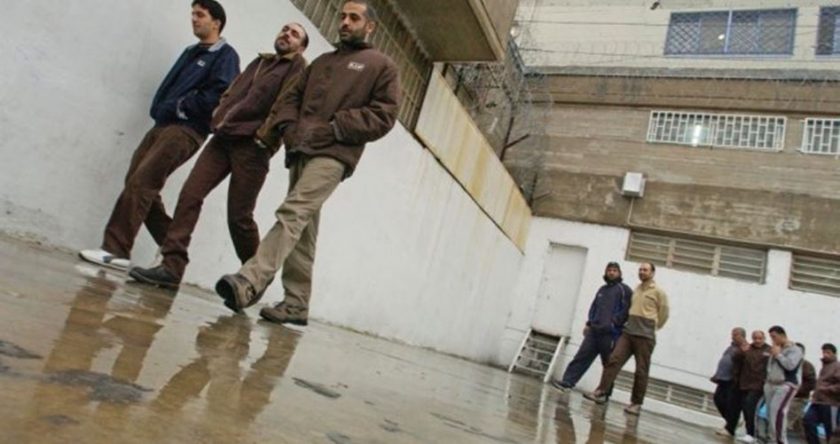
The Palestine Prisoners Centre for Studies has called on international humanitarian and human rights institutions, foremost of which is the Red Cross, to exert pressure on Israeli Prison Services (IPS) to provide winter clothing and covers desperately needed during the severe cold season.
The spokesperson for the Centre, Riyad Al-Ashqar, explained that Palestinian detainees in all facilities suffer harsh conditions in the winter season, due to acute shortage of clothes, winter blankets, and heating devices, especially in prisons located in the desert areas — namely the Negev, Nafha, Beersheba, and Rimon. This is in addition to the fact that some sections in a number of prisons are composed of tents that do not protect from the cold, many of which are old and worn out, allowing rain water to enter.
Al-Ashqar noted that IPS does not allow the entry of blankets and winter clothing for detainees, except in very limited quantities which are insufficient for cover. It also banned certain items from the canteen, and those which are available have a very high price. Additionally noted was the presence of a large number of recently jailed detainees who lack resources, due to their inability to visit in the first six months of detention.
He also explained that the extreme cold in the Negev leads to the freezing of limbs, with no means of heat, in addition to the lack of a permanent hot water supply. These cold climates will continue for several months, affecting many detainees with various diseases, especially of the bone, in addition to rheumatism, arthritis, back pain, and chest diseases, with a lack of medical care and medications needed for treatment.
He added, according to Al Ray, that IPS intends to increase the suffering of the detainees, in winter, through many repressive practices, foremost of which involves the storming of rooms and tents, justifying the practice of taking them out to open places, late at night, where they sit in open areas for long hours, in freezing cold and rain. They are additionally forced to stand for the daily count in the very early morning or evening, in the cold or rain.
The Centre has called for urgent intervention, by human rights institutions, to provide all the necessary items to protect them from cold, rain, and diseases.
(edited for the IMEMC by c h r i s @ i m e m c . o r g)
Sudan closing Hamas, Hezbollah offices to rebuild US ties
MEMO | December 17, 2019
In an attempt to re-establish ties with the US and to lift sanctions imposed on it, Sudan is set to shut the offices of the Hamas and Hezbollah resistance movements in the country, both defined as terrorist organisations by America, according to a source cited by Middle East Eye (MEE).
The decision follows Sudanese Prime Minister Abdallah Hamdok’s visit to Washington earlier in the month. Hamdok became the first leader of Sudan to visit America since 1985 and he held talks aimed at bridging the relationship between the two states after years of sanctions and international isolation, especially with Sudan being placed on the US list of states sponsors of terrorism after hosting former Al-Qaeda leader Osama bin Laden in the nineties.
Post-revolutionary Sudan witnessed the ousting of long-term President Omar Al-Bashir who is currently serving a two-year sentence on charges of corruption, and the inauguration of the country’s first civilian prime minister in three decades. Hamdok has argued for the necessity of Sudan being removed from the US’ blacklist citing the need to improve the economic situation, which is edging towards hyperinflation leaving Sudan among the countries with the highest inflation in the world. The economic crisis is primarily what brought protestors out onto the streets last year. Addressing the UN General Assembly in September, Hamdok said that the revolution aimed at ending Sudan’s pariah status, reiterating that Sudan inherited international sanctions and that “it was the former regime that supported terrorism”, not Sudan’s people.
The Sudanese source who spoke to MEE said: “The government will close the offices of Hamas and Hezbollah and any other Islamic groups designated as terrorist groups that has presence in Sudan, because Sudan has nothing actually to do with these groups and the interests of Sudan are above everything.”
However, the office closures are likely symbolic in nature, said Cameron Hudson, senior fellow at the Atlantic Council Africa Centre, given that operations of both organisations have been dormant in the country for years. “The announcement that they are formally closing the offices suggests to me that they were essentially dormant, although not formally closed,” he said.
Nevertheless, the move is interpreted by some as a gradual alignment of Khartoum with the interests of the US and its regional allies. In 2016 Sudan ended diplomatic ties with Iran in the wake of the attacks by protestors on the Saudi embassy in Tehran which was in response to the execution of the Saudi Shia cleric and activist Sheikh Nimr Al-Nimr. Two months prior to the severing of ties with Tehran, Sudan reportedly received $2.2 billion for taking part in the Saudi and UAE-led coalition in Yemen, although Sudan is now scaling back its military involvement in the conflict.
Israel for its part had accused Sudan of channelling arms from Iran to Hamas in the Gaza Strip via Egypt’s Sinai desert and is alleged to have bombed Sudanese munitions warehouses and factories in the past.
Sudan has also sought Qatar’s support in its efforts to be removed from the US list of state sponsors of terrorism, which it expressed at a reception hosted by Qatar’s Ambassador to Khartoum, ahead of Qatar’s National Day.
Trump’s peace plan calls for a ‘New Palestine’ in Gaza
MEMO | December 17, 2019
Details of US President Donald Trump’s peace deal for the Middle East, dubbed the “deal of the century”, have allegedly been obtained by Lebanese TV station Al-Mayadeen.
While the report has not been officially confirmed, the draft specifies the timetable and methods of the plan and discusses a trilateral peace agreement between the Palestinian Authority, Hamas and Israel, according to the Jerusalem Post.
A state named “New Palestine” will be established in the West Bank and Gaza Strip, except for the territories already occupied by Israel. This will force Palestine to pay Israel for protection against international aggression.
Jerusalem will not be divided in the agreement and will instead be shared by Israel and “New Palestine” with Arab residents of Jerusalem registered as residents of the new Palestinian state and not of Israel.
The process of the so-called “deal of the century” project announced by the Trump administration to resolve the Palestinian-Israeli conflict began with the closure of the Palestine Liberation Organisation (PLO)’s office in Washington and US recognition of Jerusalem as the “unified capital” of the state of Israel.
And which has since seen the US embassy moved to Jerusalem; acceptance of the “legitimacy” of Israeli settlements in the occupied Palestinian territories; recognising Israeli sovereignty over the occupied Syrian Golan Heights; efforts to have UNRWA closed down; and recognition of the “Jewishness” of the state.
Al-Aqsa Mosque is currently administered by the Islamic Waqf, an arm of the Jordanian Ministry of Sacred Properties, but secured by Israeli police. According to the reported draft, the responsibility for Al-Aqsa Mosque will be put in the hands of Saudi Arabia.
![Israeli settlers seen in the the Al-Aqsa Mosque Compound, during the Jewish holiday of Sukkot, on 17 October 2019 [Kudüs İslami Vakıflar İdaresi/Handout/Anadolu Agency]](https://i0.wp.com/www.middleeastmonitor.com/wp-content/uploads/2019/10/20191017_2_38793703_48561014-e1571483528570.jpg?resize=933.5%2C622&quality=85&strip=all&ssl=1)
Israeli settlers seen in the Al-Aqsa Mosque Compound, during the Jewish holiday of Sukkot, on 17 October 2019 [Kudüs İslami Vakıflar İdaresi/Handout/Anadolu Agency]
The Jerusalem Municipality would become responsible for the entire city of Jerusalem, but the Palestinian state would be responsible for education and would pay the Israeli municipality taxes and utilities, which means, Jerusalem will remain united under mostly Israeli control, reported the Jerusalem Post.
The project, which demands immediate demilitarisation of Hamas, as the “New Palestine” will be banned from having an army, has already been approved by the US, the European Union and Gulf states, according to Al-Mayadeen.
Within five years, a seaport and airport will be created for the Palestinian state, and until then, Palestinians will be able to use Israeli ports.
The US, EU and Gulf states, will shoulder the financial burden of the plan, which is expected to cost about $30 billion over a five-year period, the ultra-Orthodox Hamodia newspaper reported.
Trump Creates a New Nation
Executive order implies that “Jewishness” is now a nationality
By Philip Giraldi • Unz Review • December 17, 2019
The pandering by Donald Trump and those around him to Israel and to some conservative American Jews is apparently endless. Last Wednesday the president signed an executive order that is intended to address alleged anti-Semitism on college campuses by cutting off funds to those universities that do not prevent criticism of Israel. To provide a legal basis to defund, the administration is relying on title VI of the Civil Rights Act of 1964, which prohibits any discrimination based on race, color or national origin. Since the Act does not include religion, Trump’s order is declaring ipso facto that henceforth “Jewishness” is a nationality.
The executive order does not mention Israel by name, but it does state that its assumptions are based on “the non-legally binding working definition of anti-Semitism adopted on May 26, 2016, by the International Holocaust Remembrance Alliance (IHRA), which states, ‘Antisemitism is a certain perception of Jews, which may be expressed as hatred toward Jews. Rhetorical and physical manifestations of antisemitism are directed toward Jewish or non-Jewish individuals and/or their property, toward Jewish community institutions and religious facilities’; and (ii) the ‘Contemporary Examples of Anti-Semitism’ identified by the IHRA, to the extent that any examples might be useful as evidence of discriminatory intent.”
The IHRA “contemporary examples” supplementing the basic description are important. They considerably broaden the definition of anti-Semitism, to include “Accusing Jewish citizens of being more loyal to Israel, or to the alleged priorities of Jews worldwide, than to the interests of their own nations” and “claiming that the existence of a State of Israel is a racist endeavor.” The examples also included holding Israel to a higher standard than other nations when criticizing it, and IHRA offers no possible mitigation even if the accusations are, in the case of the behavior of some Jews and of Israel, accurate.
Those who are confused because in the past expressions like “Italian” or “Irish” or “British” meant actual countries should recognize that Trump-speak never respects any connection with reality when there is political advantage just sitting out there waiting to be snatched and exploited. And that imperative is considerably multiplied when one is referring to either the state of Israel or of Jews in general, particularly as seen by the Trump White House, which clearly and repeatedly sends the message that it reveres both. Trump’s order will in effect constitute a government-promoted argument that Jews are a people or a race with a collective national origin, like Italian or Polish Americans, an assertion that clearly is untrue.
In fact, suppressing criticism of Israel on college campuses using a “weaponized” claim of anti-Semitism has long been a major foreign policy objective of the Israeli government even though nonviolent assembly and free speech are guaranteed by the U.S. Constitution. Congress has several times considered a comprehensive Anti-Semitism Awareness Act, though it has not passed due to legitimate free speech concerns. The nonviolent Boycott, Divestment and Sanctions movement (B.D.S.), which is very active on American campuses, has been particularly targeted and criticism of it is frequent in the media and from Congress while also emanating from the White House. As most accredited colleges receive federal funding, which can be considerable at a major research university, the executive order will create a major dilemma over how to respond, particularly for those schools that have Middle East study programs.
Work on the presidential executive order was initiated in the summer inside the White House by a team led by Jared Kushner, Trump’s son-in-law and senior adviser, together with his close aide special assistant to the president Avi Berkowitz. They sought to develop a formula whereby government policy would equate anti-Zionism with anti-Semitism, and Donald Trump both agreed with that assessment and followed through on it. On December 8th he promised to take action against B.D.S. and other critics in a speech delivered before the Israeli-American Council. The speech is worth reading in full by anyone who is concerned that the United States now has a government that favors one already privileged, wealthy and powerful constituency in particular and is not committed to upholding the civil liberties of all Americans.
Israel is an apartheid state. Covering up for its crimes against humanity as well as its war crimes is something of a growth industry in the United States, with Zionist billionaire oligarchs launching new foundations on a regular basis. Jewish power in the U.S. means that Israel always has been given a pass, even when it deliberately attacked and sought to sink the U.S.S. Liberty, an American Naval vessel in international waters in 1967. Thirty-four crewman died in the assault. The subsequent investigation of the attack was whitewashed by the president, secretary of state and the Navy department while the survivors were threatened with imprisonment if they revealed what had occurred. That is how a powerful and ruthless Israel acting through its traitorous domestic proxies operates and it illustrates how feeble the Establishment is in standing up to it.
This latest outrage, in which free speech and association will be denied to benefit one group on the basis of its claimed perpetual victimhood, had its genesis earlier this year when the federal government’s Education Department ordered Duke University and the University of North Carolina at Chapel Hill to reorganize the Consortium for Middle East Studies program run jointly by the two colleges in part based on their failure to include enough “positive” content relating to Judaism. The demand came with a threat to suspend federal funding of Title VI Higher Education Act international studies and foreign language grants to the two schools if the curriculum were not changed.
The Education Department was particularly irate over a conference in March called “Conflict Over Gaza: People, Politics and Possibilities.” A Republican congressman was outraged by the development and asked Secretary DeVos to investigate because the gathering was full of “radical anti-Israel bias.”
Coverage of the story revealed that “Betsy DeVos, the education secretary, has become increasingly aggressive in going after perceived anti-Israel bias in higher education.” Her deputy who has served as a focal point for the effort to root out anti-Israel sentiment is Assistant Secretary of Civil Rights Kenneth L. Marcus, who might reasonably be described as “a career pro-Israel advocate,” the founder and president of the Louis D. Brandeis Center for Human Rights Under Law, which he has used to exclusively defend the rights of Jewish groups and individuals against BDS and other manifestations of Palestinian pushback against the Israeli occupation of their country. He has not hesitated to call opponents anti-Semites and has worked with Jewish students to file civil rights complaints against college administrations, including schools in Wisconsin and California. In an op-ed that appeared, not surprisingly, in The Jerusalem Post, he observed that even when student complaints were rejected, they created major problems for the institutions involved. “If a university shows a failure to treat initial complaints seriously, it hurts them with donors, faculty, political leaders and prospective students.”
Last year Kenneth Marcus reopened an investigation into alleged anti-Jewish bias at Rutgers University that the Obama Administration had closed after finding that the charges were baseless. Marcus indicated that the re-examination was called for as his office in the Education Department would henceforth be using the IHRA-derived State Department definition of anti-Semitism that also includes “denying the Jewish people their right to self-determination,” making virtually all criticism of Israel a civil rights violation or even a hate crime.
Critics of the Trump move, many of whom are themselves Jewish, are uncomfortable with being placed by government into one category, noting inter alia that ALL students are de facto already protected by Title VI, which has been interpreted as making all forms of discrimination illegal. And they also note that the law was never intended to protect individuals whose feelings were hurt or who claim to be unwelcome or even threatened by someone saying something that they disapprove of. Since such protection is clearly the intention of the executive order, it is undeniable that the Trump’s latest ploy is little more than a mechanism to pressure colleges into effectively banning B.D.S. and other groups critical of Israel.
And the order itself raises at least one unpleasant thought: if “Jewishness” is a nation even though it is demonstrably not one, what is the alleged Jewish nationality all about? Is this just one more example of the politics of Jewish identity or is it really some form of dual loyalty, with American Jews divided between those who are loyal to the U.S. and those who are loyal to some supra-nationality or allegiance? The fact is, that Donald Trump himself has several times expressed the view that American Jews, particularly those who are politically liberal, should be more loyal to Israel.
Trump’s maneuver is unfortunately part of a well-funded and highly coordinated federal and state campaign to pass laws to criminalize critics of Israel. And the issue has also surfaced within the Democratic Party among those campaigning for the presidential nomination. Speaker Nancy Pelosi forced Representative Ilhan Omar to apologize after she criticized proposed anti-boycott legislation. More recently Bernie Sanders is being smeared as an anti-Semite even though he is Jewish because he associates with critics of Israel and has spoken out in favor of defending free speech while also supporting Palestinian rights.
There is a certain irony in all of this political theater, that the wealthiest and most powerful identifiable group in the United States should yet again be playing the victim is in itself astonishing. And making it a crime to deny Israel legitimacy while at the same time denying the same thing to Palestinians should give anyone pause.
And there is also considerable hypocrisy in that pro-Israel groups on campus have been if anything better funded and more aggressive in promoting their point of view than B.D.S. has been without any consequences. Canary Mission, for example, claims to “document people and groups that promote hatred of the U.S.A., Israel and Jews on North American college campuses” by posting their names, photos and personal information on its website. Israeli-American real estate investor and billionaire Adam Milstein is reported to be its principal funder while the site’s listings have been allegedly used by the Israeli border security officials to deny entry to pro-B.D.S. American citizens and also with potential employers to deny applicants jobs.
The Lawfare Project’s Campus Civil Rights Project meanwhile helps aggrieved Zionist students to “take legal action to ensure that schools live up to their legal obligations to protect Jewish students from anti-Semitic harassment, intimidation, and discrimination.”
So here we are again. Special privileges for the perpetual victims. And no one in the media is willing to tell it like it is, while the handful of meek voices in congress have been effectively silenced. So sad, particularly as an election year is coming up and there will undoubtedly be much more of this. When the Israelis occupy nearly all of the West Bank with Donald Trump’s approval and start “relocating” the existing population, who will be around to speak up? No one, as by that time saying nay to Israel will be a full-fledged hate crime and you can go to jail for doing so.
Philip M. Giraldi, Ph.D., is Executive Director of the Council for the National Interest, a 501(c)3 tax deductible educational foundation (Federal ID Number #52-1739023) that seeks a more interests-based U.S. foreign policy in the Middle East. Website is councilforthenationalinterest.org, address is P.O. Box 2157, Purcellville VA 20134 and its email is inform@cnionline.org.
Jordan protests expected ahead of Israel gas deal
MEMO | December 16, 2019
Jordan is expected to witness a wave of popular protests as the implementation of a $10 billion gas deal with Israel looms on the horizon. Activists and lawmakers in the Hashemite Kingdom have been calling on the government to cancel the agreement with Israel, saying that the US has forced Jordan to sign the deal despite its economic and moral prejudices.
According to its opponents, the agreement about “the gas stolen from Palestine” stipulates that if any gas fields are discovered in Jordan during the lifespan of the deal, the buyer (Jordan) may not reduce the import price by more than 20 per cent.
Campaigners calling for the cancellation of the agreement have asked for a meeting next Tuesday to discuss ways to convince the government to cancel it. The Coordinator of the national campaign to cancel the gas agreement with Israel, Hisham Al-Bustani, told Quds Press : “There are two ways to confront the agreement with its imminent implantation date at the beginning of next month. We either press parliament to stop its implementation, or wait for popular escalation through vigils.”
Raed Al-Khazaaleh is the Chairman of the Foreign Affairs Committee in the Jordanian House of Representatives. He has also called for the gas agreement with Israel to be cancelled. Anyone who signed it, he insists, must be held accountable.
In 2016, Israel signed a $10 billion deal with the Jordan Electric Power Company to supply Amman with natural gas for 15 years. The agreement will provide the Kingdom with approximately 45 billion cubic metres of gas from the Leviathan offshore gas field.
Israel has previously stated that some of the deal’s revenues will be paid towards the military budget. It is expected to start pumping gas to Jordan in January.
Featured Video
Seyed M. Marandi: US-Iran War Inevitable: Kuwait and Bahrain May Fall
or go to
Aletho News Archives – Video-Images
From the Archives
Oil and the Israel Lobby
Reknowned economist M. Shahid Alam offers this excellent critique of Noam Chomsky’s defective analysis of the relative influence of Oil versus the Israel lobby over US foreign policy: … continue
Blog Roll
 Aletho News
- ICC ignored ‘very well-documented’ NATO crimes – ex-Libyan minister
- SNSC secretary dismisses US response to Iran’s conditions as ‘inadequate’
- Sanaa says Taiz roads open, secure for residents, warns Saudi forces
- Iraqi resistance group urges Saudi leadership to admit defeat, lift Yemen siege
- Trump’s Retreat: How Al-Aqsa Flood Took Down the US Empire
- Israel’s Military Actions in Lebanon Grossly Violate International Law — Lavrov
- Seyed M. Marandi: US-Iran War Inevitable: Kuwait and Bahrain May Fall
- Leaders Condemn Ansarallah Attack on Saudi Arabia While Ignoring Illegal War Against Yemen
- Leaked: Britain’s Covert Iraqi Psyops Network
- Yemeni Armed Forces Warn Airlines Against Using Saudi Airports, Exempt Mecca and Medina
- If Americans Knew
- How Israel Conquered the Latin American Right
- Agents search Rep. Omar’s Washington home in criminal probe as she vows she won’t ‘be silenced’
- “The Rule Was: ‘Shoot Everyone You See'”
- Israel goes ballistic over Nobel Laureate Navi Pillay
- U.S. May Join Yet Another Middle Eastern War — TCN
- Yellow Line moves again as Israel closes in on trapped Gazans – Daily Update
- Israeli Attacks Kill Seven Palestinians in Gaza Including Six-year-old Girl
- Gaza: Ceasefire Anniversary Marks Year of Failed Promises
- The American Conservative: Mike Huckabee Should Resign
- A C-Section in Shackles: A Palestinian Woman’s Harrowing Birth in Israeli Detention
- No Tricks Zone
- Germany’s Green Energy Debacle: High Energy Costs Force Kahla Porzellan to Close After 182 Years!
- New Study: 50 Years Of The Most Aggressive ‘Net Zero’ Policies Can Only Affect The Global Climate By 0.03°C
- US September “Heat” Was No Record…Many Records Set Decades Ago
- Latest European Green Energy Debacle; Portugal’s Largest Flagship Solar Park Insolvent!
- Green Energy Debacle: German Expert Professor Fritz Vahrenholt Warns Of Severe Economic And Social Consequences
- Two More Paleo Reconstructions Affirm Meters-Higher Sea Levels Across Ireland, Brazil 7000-6000 Years Ago
- New Study: Earth And Venus Surface Warmth Largely Explained By Convection And Lapse Rate, Not CO2 Or Radiation
- 2025 Nature Paper Claiming Worsening Global Drought Gets RETRACTED …Heavily Flawed
- New Study: ‘Global Drought Shows No Detectable Recent Acceleration Under Climate Warming’
- Economic Masterminds: German Socialists Suggest Taxing Productivity Gains Stemming From Using AI

