One month ago, I initiated here at Unz.com a discussion of the role of American Jews in the crafting of United States foreign policy. I observed that a politically powerful and well-funded cabal consisting of both Jewish individuals and organizations has been effective at engaging the U.S. in a series of wars in the Middle East and North Africa that benefit only Israel and are, in fact, damaging to actual American interests. This misdirection of policy has not taken place because of some misguided belief that Israeli and U.S. national security interests are identical, which is a canard that is frequently floated in the mainstream media. It is instead a deliberate program that studiously misrepresents facts-on-the ground relating to Israel and its neighbors and creates casus belli involving the United States even when no threat to American vital interests exists. It punishes critics by damaging both their careers and reputations while its cynical manipulation of the media and gross corruption of the national political process has already produced the disastrous war against Iraq, the destruction of Libya and the ongoing chaos in Syria. It now threatens to initiate a catastrophic war with Iran.
To be sure, my observations are neither new nor unique. Former Congressmen Paul Findley indicted the careful crafting of a pro-Israel narrative by American Jews in his seminal book They Dare to Speak Out: People and Institutions Confront Israel’s Lobby, written in 1989. Professors John Mearsheimer and Stephen Walt’s groundbreaking book The Israel Lobby and U.S. Foreign Policy said much the same thing nine years ago and discussions of Jewish power do emerge occasionally, even in the mainstream media. In the Jewish media Jewish power is openly discussed and is generally applauded as a well-deserved reward bestowed both by God and by mankind due to the significant accomplishments attributed to Jews throughout history.
There is undeniably a complicated web of relationships and networks that define Israel’s friends. The expression “Israel Lobby” itself has considerable currency, so much so that the expression “The Lobby” is widely used and understood to represent the most powerful foreign policy advocacy group in Washington without needing to include the “Israel” part. That the monstrous Benjamin Netanyahu receives 26 standing ovations from Congress and a wealthy Israel has a guaranteed income from the U.S. Treasury derives directly from the power and money of an easily identifiable cluster of groups and oligarchs – Paul Singer, Sheldon Adelson, Bernard Marcus, Haim Saban – who in turn fund a plethora of foundations and institutes whose principal function is to keep the cash and political support flowing in Israel’s direction. No American national interest, apart from the completely phony contention that Israel is some kind of valuable ally, would justify the taxpayers’ largesse. In reality, Israel is a liability to the United States and always has been.
And I do understand at the same time that a clear majority of American Jews, leaning strongly towards the liberal side of the political spectrum, are supportive of the nuclear agreement with Iran and do not favor a new Middle Eastern war involving that country. I also believe that many American Jews are likely appalled by Israeli behavior, but, unfortunately, there is a tendency on their part to look the other way and neither protest such actions nor support groups like Jewish Voice for Peace that are themselves openly critical of Israel. This de facto gives Israel a free pass and validates its assertion that it represents all Jews since no one important in the diaspora community apart from minority groups which can safely be ignored is pushing back against that claim.
That many groups and well-positioned individuals work hand-in-hand with the Israeli government to advance Israeli interests should not be in dispute after all these years of watching it in action. Several high level Jewish officials, including Richard Perle, associated with the George W. Bush Pentagon, had questionable relationships with Israeli Embassy officials and were only able to receive security clearances after political pressure was applied to “godfather” approvals for them. Former Congressman Tom Lantos and Senator Frank Lautenberg were, respectively, referred to as Israel’s Congressman and Senator, while current Senate Minority Leader Chuck Schumer has described himself as Israel’s “shomer” or guardian in the U.S. Senate.
A recent regulatory decision from the United Kingdom relates to a bit of investigative journalism that sought to reveal precisely how the promotion of Israel by some local diaspora Jews operates, to include how critics are targeted and criticized as well as what is done to destroy their careers and reputations.
Last year, al-Jazeera Media Network used an undercover reporter to infiltrate some U.K. pro-Israel groups that were working closely with the Israeli Embassy to counter criticisms coming from British citizens regarding the treatment of the Palestinians. In particular, the Embassy and its friends were seeking to counter the growing Boycott, Divestment and Sanctions movement (BDS), which has become increasingly effective in Europe. The four-part documentary released late in 2016 that al-Jazeera produced is well worth watching as it consists mostly of secretly filmed meetings and discussions.
The documentary reveals that local Jewish groups, particularly at universities and within the political parties, do indeed work closely with the Israeli Embassy to promote policies supported by the government of Prime Minister Benjamin Netanyahu. It also confirms that tagging someone as an anti-Semite has become the principal offensive weapon used to stifle any discussion, particularly in a country like Britain which embraces concepts like the criminalization of “hate speech.” At one point, two British Jews discussed whether “being made to feel uncomfortable” by people asking what Israel intends to do with the Palestinians is anti-Semitic. They agreed that it might be.
The documentary also describes how the Embassy and local groups working together targeted government officials who were not considered to be friendly to Israel to “be taken down,” removed from office or otherwise discredited. One government official in particular who was to be attacked was Foreign Office Minister Sir Alan Duncan.
Britain, unlike the U.S., has a powerful regulatory agency that oversees communications, to include the media. It is referred to as Ofcom. When the al-Jazeera documentary was broadcast, Israeli Embassy political officer Shai Masot, who reportedly was a Ministry of Strategic Affairs official working under cover, was forced to resign and the Israeli Ambassador offered an apology. Masot was filmed discussing British politicians who might be “taken down” before speaking with a government official who plotted a “a little scandal” to bring about the downfall of Duncan. Labour Party leader Jeremy Corbyn, who is the first head of a political party in Britain to express pro-Palestinian views, had called for an investigation of Masot after the recording of the “take down” demand relating to Duncan was revealed. Several Jewish groups (the Jewish Labour Movement, the Union of Jewish Students and We Believe in Israel) then counterattacked with a complaint that the documentary had violated British broadcast regulations, including the specific charge that the undercover investigation was anti-Semitic in nature.
On October 9th, Ofcom ruled in favor of al-Jazeera, stating that its investigation had done nothing improper, but it should be noted that the media outlet had to jump through numerous hoops to arrive at the successful conclusion. It had to turn over all its raw footage and communications to the investigators, undergoing what one source described as an “editorial colonoscopy,” to prove that its documentary was “factually accurate” and that it had not “unfairly edited” or “with bias” prepared its story. One of plaintiffs, who had called for critics of Israel to “die in a hole” and had personally offered to “take down” a Labour Party official, responded bitterly. She said that the Ofcom judgment would serve as a “precedent for the infringement of privacy of any Jewish person involved in public life.”
The United States does not yet have a government agency to regulate news stories, though that may be coming, but the British tale has an interesting post script. Al-Jazeera also had a second undercover reporter inserted in the Israel Lobby in the United States, apparently a British intern named James Anthony Kleinfeld, who had volunteered his services to The Israel Project, which is involved in promoting Israel’s global image. He also had contact with at least ten other Jewish organizations and with officials at the Israeli Embassy,
Now that the British account of “The Lobby” has cleared a regulatory hurdle the American version will reportedly soon be released. Al-Jazeera’s head of investigative reporting Clayton Swisher commented “With this U.K. verdict and vindication past us, we can soon reveal how the Israel lobby in America works through the eyes of an undercover reporter. I hear the U.S. is having problems with foreign interference these days, so I see no reason why the U.S. establishment won’t take our findings in America as seriously as the British did, unless of course Israel is somehow off limits from that debate.”
Americans who follow such matters already know that groups like the American Israel Public Affairs Committee (AIPAC) swarm over Capitol Hill and have accomplices in nearly every media outlet. Back in 2005-6 AIPAC Officials Steve Rosen and Keith Weissman were actually tried under the Espionage Act of 1918 in a case involving obtaining classified intelligence from government official Lawrence Franklin to pass on to the Israeli Embassy. Rosen had once boasted that, representing AIPAC and Israel, he could get the signatures of 70 senators on a napkin agreeing to anything if he sought to do so. The charges against the two men were, unfortunately, eventually dropped “because court rulings had made the case unwinnable and the trial would disclose classified information.”
And Israeli interference in U.S. government and elections is also a given. Endorsement of Mitt Romney in the 2012 presidential election by the Netanyahu government was more-or-less carried out in the open. And ask Congressmen like Paul Findley, Pete McCloskey, William Fulbright, Charles Percy and, most recently, Cynthia McKinney, what happens to your career when you appear to be critical of Israel. And the point is that while Israel calls the shots in terms of what it wants, it is a cabal of diaspora American Jews who actually pull the trigger. With that in mind, it will be very interesting to watch the al-Jazeera documentary on The Lobby in America.
With his declaration Friday that the Iran nuclear deal is not in the national interest, President Donald Trump may have put us on the road to war with Iran.
Indeed, it is easier to see the collisions that are coming than to see how we get off this road before the shooting starts.
After “de-certifying” the nuclear agreement, signed by all five permanent members of the Security Council, Trump gave Congress 60 days to reimpose the sanctions that it lifted when Teheran signed.
If Congress does not reimpose those sanctions and kill the deal, Trump threatens to kill it himself.
Why? Did Iran violate the terms of the agreement? Almost no one argues that — not the UN nuclear inspectors, not our NATO allies, not even Trump’s national security team.
Iran shipped all its 20 percent enriched uranium out of the country, shut down most of its centrifuges, and allowed intrusive inspections of all nuclear facilities. Even before the deal, 17 U.S. intelligence agencies said they could find no evidence of an Iranian nuclear bomb program.
Indeed, if Iran wanted a bomb, Iran would have had a bomb.
She remains a non-nuclear-weapons state for a simple reason: Iran’s vital national interests dictate that she remain so.
As the largest Shiite nation with 80 million people, among the most advanced in the Mideast, Iran is predestined to become the preeminent power in the Persian Gulf. But on one condition: She avoid the great war with the United States that Saddam Hussein failed to avoid.
Iran shut down any bomb program it had because it does not want to share Iraq’s fate of being smashed and broken apart into Persians, Azeris, Arabs, Kurds and Baluch, as Iraq was broken apart by the Americans into Sunni, Shiite, Turkmen, Yazidis and Kurds.
Tehran does not want war with us. It is the War Party in Washington and its Middle East allies — Bibi Netanyahu and the Saudi royals — who hunger to have the United States come over and smash Iran.
Thus, the Congressional battle to kill, or not to kill, the Iran nuclear deal shapes up as decisive in the Trump presidency.
Yet, even earlier collisions with Iran may be at hand.
In Syria’s east, U.S.-backed and Kurd-led Syrian Democratic Forces are about to take Raqqa. But as we are annihilating ISIS in its capital, the Syrian army is driving to capture Deir Ezzor, capital of the province that sits astride the road from Baghdad to Damascus.
Its capture by Bashar Assad’s army would ensure that the road from Baghdad to Damascus to Hezbollah in Lebanon remains open.
If the U.S. intends to use the SDF to seize the border area, we could find ourselves in a battle with the Syrian army, Shiite militia, the Iranians, and perhaps even the Russians.
Are we up for that?
In Iraq, the national army is moving on oil-rich Kirkuk province and its capital city. The Kurds captured Kirkuk after the Iraqi army fled from the ISIS invasion. Why is a U.S.-trained Iraqi army moving against a U.S.-trained Kurdish army?
The Kurdistan Regional Government voted last month to secede. This raised alarms in Turkey and Iran, as well as Baghdad. An independent Kurdistan could serve as a magnet to Kurds in both those countries.
Baghdad’s army is moving on Kirkuk to prevent its amputation from Iraq in any civil war of secession by the Kurds.
Where does Iran stand in all of this?
In the war against ISIS, they were de facto allies. For ISIS, like al-Qaida, is Sunni and hates Shiites as much as it hates Christians. But if the U.S. intends to use the SDF to capture the Iraqi-Syrian border, Syria, Iran, Hezbollah and Russia could all be aligned against us.
Are we ready for such a clash?
We Americans are coming face to face with some new realities.
The people who are going to decide the future of the Middle East are the people who live there. And among these people, the future will be determined by those most willing to fight, bleed and die for years and in considerable numbers to realize that future.
We Americans, however, are not going to send another army to occupy another country, as we did Kuwait in 1991, Afghanistan in 2001, and Iraq in 2003.
Bashar Assad, his army and air force backed by Vladimir Putin’s air power, the Islamic Revolutionary Guard Corps of Iran, and Hezbollah won the Syrian civil war because they were more willing to fight and die to win it. And, truth be told, all had far larger stakes there than did we.
We do not live there. Few Americans are aware of what is going on there. Even fewer care.
Our erstwhile allies in the Middle East naturally want us to fight their 21st-century wars, as the Brits got us to help fight their 20th-century wars.
But Donald Trump was not elected to do that. Or so at least some of us thought.
President Donald Trump’s move to decertify the Iranian nuclear Joint Comprehensive Plan of Action (JCPOA), entered into a little over two years ago, was applauded by Israel, Saudi Arabia and a couple of Persian Gulf States, but by no one else. Quite the contrary, as the European and Asian co-signatories on the agreement, having failed to dissuade Trump, have clearly indicated that they will continue to abide by it. Also, the decision to kick the can down the road by giving Congress 60 days to increase pressure on Tehran in an attempt to include other issues beyond nuclear development like its ballistic missile program and labeling the country’s Revolutionary Guard as a terrorist group are likely to create confusion as Washington is unable to communicate directly with Iran. That uncertainty could possibly lead to a fraught-with-danger Iranian decision to withdraw completely from the agreement.
The Trump speech could reasonably be described as embracing an “Israel-First” and “Saudi-Second” perspective that might plausibly suggest that it was actually drafted by their respective foreign ministries. Contrary to Trump’s campaign pledges, it might also be characterized as an “America-Last” speech, since it actually encourages nuclear proliferation while rendering it even more difficult for anyone to respect the agreements entered into by the United States government.
Fred Kaplan sums up the speech’s fundamental dishonesty with considerable clarity by observing that “It flagrantly misrepresents what the deal was meant to do, the extent of Iran’s compliance, and the need for corrective measures. If he gets his way, he will blow up one of the most striking diplomatic triumphs of recent years, aggravate tensions in the Middle East, make it even harder to settle the North Korean crisis peacefully, and make it all but impossible for allies and adversaries to trust anything the United States says for as long as Trump is in office.”
Former senior CIA analyst Paul Pillar has also dissected the untruths and false analogies that made up the bulk of the Trump speech. In short, Pillar argues that the president is using faulty analysis to end a program that is working and that employs unprecedented intrusive inspections to guarantee that Iran can make no progress towards having a nuclear weapon for at least eight more years and quite likely for even longer. Against that, Iran could well end its cooperation and, out of fear of U.S. attack, might well turn towards possession of a nuclear arsenal to guarantee its own survival. Pillar calls ending JCPOA now because Iran just might develop a weapon after it expires in 2025 as “committing suicide because of fear of death.”
In a second highly partisan international action last week, the United States led a march out the door of the United Nations Educational, Scientific and Cultural Organization due to its alleged “bias against Israel.” UNESCO had enraged Prime Minister Benjamin Netanyahu by declaring that the Old City of Hebron and the associated Cave of the Patriarchs on the West Bank is an endangered Palestinian world cultural heritage site. A few hundred Israeli settlers live in Hebron, guarded by the Israeli Army, amidst 200,000 Palestinians who, according toThe Guardian, “have long lived under harsh restrictions in the city, which is one of the starkest symbols of the Israeli occupation.” The U.S. is also threatening to pull out of the U.N.’s Human Rights Council “to protect Israel.”
Taken together, the two decisions made by the White House indicate a shift in the foreign policy team advising the president. One must now acknowledge that America’s United Nations Ambassador Nikki Haley, apparently operating in collusion with former UN Ambassador John Bolton, has become the most influential foreign policy voice whispering in the president’s ear, quite possibly because she is saying exactly what he wants to hear in terms of simplistic but rarely reality based responses to complex situations. That Haley, an inexperienced and instinctively aggressive ideologue who is closely aligned to Israeli thinking, should occupy such a position with an equally ignorant president ought to concern anyone who seeks to avoid a major conflagration with either Iran and North Korea, or even with both. Haley is also no friend of Russia, having once crudely advised Moscow to “choose to side with the civilized world.”
Secretary of State Rex Tillerson, Chairman of the Joint Chiefs of Staff General Joseph Dunford and Secretary of Defense James Mattis, apparently joined by National Security Council chair H.R. McMaster, urged renewal of the Iran certification based on the fact that Tehran was compliant but were overruled. Even Israel’s former National Security Adviser Uzi Arad had publicly urged both the White House and Congress not to reject the JCPOA. The emergence of Haley advised by Bolton is a shift to the right in an administration that is already leaning towards the military option as its preferred diplomatic tool, also suggesting somewhat ominously that neoconservative foreign policy is again dominant in Washington.
Other commentators including Eli Clifton, have observed that Trump might well have been heavily influenced by major Republican donors including Paul Singer, Bernard Marcus and Sheldon Adelson to step up the pressure on Iran. Adelson has, in fact, called for unilaterally “nuking” the Iranians. Marcus has said that “I think that Iran is the devil.”
The real objective of the Trump White House is not to “fix” the Iran deal, which would be impossible both because Iran and the other signatories would not agree to it and because there is nothing that needs repair. As Paul Pillar and Fred Kaplan note, it is working. The real objective is to blow up the agreement completely as it is an impediment to going to war and bringing about regime change in Tehran by force. That is what Prime Minister Benjamin Netanyahu and Senators like John McCain, Lindsey Graham and Tom Cotton have been intent on doing and they have hardly been shy about expressing themselves. The choice is therefore quite simple. Do we Americans, 60% of whom support keeping the arrangement, want to maintain an inspection regime that deprives Iran of the ability to develop a nuclear weapon for the foreseeable future or do we want to go back to square one without any restrictions on what Tehran will choose to do. It would seem to me that the clear right choice is to stay the course.
In 1973 Irving Kristol, the godfather of the Neoconservative movement, made a stunning statement which is still relevant to understanding the Israeli influence in US foreign policy. Kristol said:
“Senator McGovern is very sincere when he says that he will try to cut the military budget by 30%. And this is to drive a knife in the heart of Israel… Jews don’t like big military budgets. But it is now an interest of the Jews to have a large and powerful military establishment in the United States…
“American Jews who care about the survival of the state of Israel have to say, no, we don’t want to cut the military budget, it is important to keep that military budget big, so that we can defend Israel.”
Read the statement again very carefully. A big military budget, said Kristol, is only good for Israel, not America or much of the Western World. In other words, precious American soldiers who go to the Middle East to fight so-called terrorism are just working for Israel, not for America.
So, whenever the Neocons use words such as “democracy” or “freedom,” they are essentially conning decent Americans to support Israel’s perpetual wars. John Tirman, Principal Research Scientist and Executive Director of the Center for International Studies at Massachusetts Institute of Technology, is saying similar things in his book The Death of Others.[1]
In fact, warmongers like Henry Kissinger do not consider American soldiers as decent human beings. Kissinger said very explicitly that military men are “dumb, stupid animals to be used as pawns in foreign policy.”[2]
People like Kissinger have been killing those “dumb, stupid animals” like chickens in the Middle East for decade. Keep in mind that at least 4,486 American soldiers have already lost their precious lives in Iraq.[3] At least 6,845 Americans died and 900,000 were wounded in Iraq and Afghanistan.[4] In the space of eight years alone, the Iraq war has taken the lives of at least 116,000 civilians.[5] Under Obama, at least 2,500 Americans died in Iraq and Afghanistan.[6] And what have those soldiers received in return? Well…
“The wars in Afghanistan and Iraq have produced more disability claims per veteran than other wars on the books, including Vietnam, Korea and World War II. While Vietnam extracted a far higher death toll – 58,000 died in that war – the total number of documented disabilities suffered by recent veterans is approaching that of the earlier conflict, according to VA documents.”[7]
This is just the tip of the iceberg. If you think that the Zionist project has always been in the business of rebuilding countries it has literally destroyed, think again. Tirman writes:
“The money that did finally arrive in Afghanistan, if not siphoned off by President Karzai and his allies, frequently aided American or other foreign contractors who were in some cases doing the work Afghans could do. Even the best intentions were skewed. ‘Instead of giving aid money for Afghan schools to the Ministry of Education, for example, the U.S. Agency for International Development (USAID) funds private American contractors to start literacy programs for adults,’ wrote Ann Jones, a veteran of Afghan reconstruction. ‘As a result, Afghan teachers abandon the public schools and education administrators leave the Ministry for higher paying jobs with those contractors, further undermining public education and governance.’
“In several locales, the contractors and USAID workers felt compelled to spend money faster than it could usefully be absorbed; private American firms would not get renewed contracts if their financial ‘burn rate’ left over funds at the end of the year, leading to shoddy workmanship and other waste. Frequently, outright fraud and failed projects were the result. To a troubling extent, Afghanistan also witness the uneasy marriage of security and development–projects like building roads but were essential to the U.S. military.
“The failure of both security and development in Afghanistan is attributable to the social and political dynamics that were misread by U.S. officials… By framing the deaths of innocents as mistakes, the U.S. sought to avoid the deeper moral and legal questions as to whether it was attacking legitimate military targets; whether such actions satisfied the proportionality rule; and whether its ground forces were placing themselves at sufficient risk in order to mitigate the horrors of war for innocent civilians.’
“The typical story was a U.S. warplane or helicopter killing ‘terrorists’ that turned out to be no more than civilians at a social gathering. A dispute over who was killed and why would occasionally be visible in the Western press, with villagers claiming civilians were the victims and the military spokesman insisting they were terrorists. Evidence would be brought forward, typically by eyewitnesses, and the American or NATO commanders would retreat to the safe confines of ordering an investigation into the ‘tragic incident.’”[8]
Neocon hawks like Max Boot know that American soldiers are dying by the thousands for Israel. As a result, Boot proposed what seemed to be a diabolical project in 2005, and here it is:
“The military would do well today to open its ranks not only to legal immigrants but also to illegal ones and, as important, to untold numbers of young men and women who are not here now but would like to come.
“No doubt many would be willing to serve for some set period in return for one of the world’s most precious commodities — U.S. citizenship.”
Did you catch that? The U.S. military should open its ranks to everyone, both legal and illegal, so that they can go ahead and die in the Middle East. Boot never told the American people about the cost of this diabolical plan. He never told people that no country on earth can survive with that principle.
What we are seeing here is that the deaths of American soldiers in the Middle East aren’t enough for Boot. He has to enlist other Goyim in his essentially Talmudic plan. If people like Max Boot aren’t dangerous to America and much of the world, then no one is. It was good that Tucker Carlson told Boot to pick up a decent job like house painting.
[1] John Tirman, The Deaths of Others: The Fate of Civilians in America’s Wars (New York: Oxford University Press, 2011).
[2] Quoted in Bob Woodward and Carl Bernstein, The Final Days (New York: Simon & Schuster, 1976), 194.
[3] H. A. Goodman, “4,486 American Soldiers Have Died in Iraq. President Obama Is Continuing a Pointless and Deadly Quagmire,” Huffington Post, November 17, 2014.
[4] H. A. Goodman, “6,845 Americans Died and 900,000 Were Injured in Iraq and Afghanistan. Say ‘No’ to Obama’s War,” Huffington Post, February 12, 2015.
[5] David Blair, “Iraq war 10 years on: at least 116,000 civilians killed,” Telegraph, March 15, 2013.
[6] Tessa Stuart, “Some 2,500 Americans Have Died in Afghanistan and Iraq Under Obama,” Rolling Stone, May 30, 2016.
[7] Chris Adams, “Millions went to war in Iraq, Afghanistan, leaving many with lifelong scars,” McClatchy Newspapers, March 14, 2013.
Diplomacy is a juggling act, an endless struggle to keep all the balls in the air. There are times when dropping one ball to keep the others going may seem like the prudent thing to do – and at other times letting them all drop and starting over again makes more sense. The United States faces this predicament in the Middle East. Perhaps there are too many balls in the air, when the focus should be on the few that are really important.
While everyone was focused on what US President Donald Trump had to say on Friday regarding the Joint Comprehensive Plan of Action (known as the Iran deal), what got overlooked is that he also unveiled a brave new Iran strategy for the post-Islamic State era.
In a rare gesture, King Salman called Trump on Saturday to express his delight over the latter’s resolute strategy and aggressive approach toward Iran. Salman welcomed Trump’s leadership role in the Middle East in recognizing the magnitude of the “challenges and threats” posed by Iran and stressed the need for “concerted efforts.”
Trump responded warmly, appreciating Salman’s support and expressing keenness to work together on issues relating to world peace and security and also enhancing the countries’ bilateral ties.
Trump’s Iran strategy is a dream project for Saudi Arabia and the UAE – and for Israel. It may seem like a relaunch of the old enterprise to contain Iran, built around an alliance system involving the US and its regional allies. But the circumstances today are different. The US and its allies stare at defeat in the Syrian conflict and are circling their wagons to stave off an ignominious rout with long-term consequences. Faced with Iran’s surge, Saudi Arabia and the UAE are willing to proclaim a convergence of interests with Israel.
Clearly, Moscow surmising that the US-Saudi strategic relationship has weakened is premature. The axis with Iran is the only show in town for Russia on the Middle Eastern chessboard – whether or not it is Moscow’s preferred choice. President Vladimir Putin is heading for Tehran on November 1.
The Iran deal will not be in jeopardy in the foreseeable future and, arguably, Tehran’s dependence on Moscow on that front is not critical. On the other hand, Britain, France and Germany have drawn together and mooted a proposal that their heads of government articulated in an extraordinary joint declaration on Friday to “constructively engage” with Iran to address their shared concerns over its regional policies.
Tehran will be open to a constructive engagement with Western powers to comprehensively address mutual security concerns, although how enthusiastic the Trump administration will be about such a process remains to be seen. If Europe’s engagement with Iran over issues of regional security and stability gains traction, the country’s integration will take a great leap forward, and that is something Tehran desires.
Enter Turkey. The Turkish deployment to Idlib province in northern Syria was seen as a move toward implementation of the Astana accord on setting up a “de-escalation” zone in that region with tacit Russian and Iranian backing. But Turkey’s number one priority appears to be to pre-empt a westward expansion by Syrian Kurds toward the coastal region of Latakia to establish a contiguous “homeland.”
Turkey hopes to outflank the Kurds and thereafter push back at their canton in Afrin. Turkey seems to be planning a prolonged military presence in northern Syria. This must be causing disquiet in Moscow. The exceptionally strong denunciation by Damascus on Saturday of the Turkish deployment to Idlib must have been made with Moscow’s approval.
However, what Moscow cannot take for granted is the deep chill in Turkish-American relations. Much depends on the new phase of the Syrian conflict beginning now, after the defeat of ISIS in its capital Raqqa and the capture by Syrian government forces (and allied militia with Russian airpower) of Mayadin on the Euphrates River (adjacent to the rich oil fields of al-Omar in Deir al-Zour province.)
The US faces a Hobson’s choice. It has the option of extricating itself from the Syrian conflict at this stage, claiming victory in the defeat of ISIS in Raqqa. But this would mean abandoning its Kurdish allies to their fate. Of course, if the US exercises this option, it paves the way for mending relations with Turkey.
But then, the flip side is that it also means a seamless expansion of Iranian influence in both Iraq and Syria and a possible Iranian presence in the Eastern Mediterranean. That, of course, would make a mockery of the tough strategy announced by Trump to counter Iran’s regional policies.
On the contrary, if the US intends to play a greater role in Syria following the capture of Raqqa (such as blocking Iran’s land route to Syria), it would require substantial, open-ended troop deployment to delay and harass the expansion of Iranian influence. Clearly, this is what the US’s regional allies – Israel, Saudi Arabia and the UAE – are hoping for and what Trump’s new Iran strategy promises to do.
However, a continued US military presence means ongoing dependence on the Kurdish militia. This could spell doom for US-Turkey relations and even prompt Ankara to build an alliance with Russia and Iran – a shared agenda to create conditions on the ground that force the US at some point to cut its losses and withdraw from Syria, as happened, for example, in Lebanon in 1983.
Trump’s Iran strategy infinitely complicates the geopolitical repositioning of the US in the post-ISIS era. He added one more ball at a juncture when his juggling act was already looking improbable.
I have noticed a distinct shift in the focus of the Zionist narrative in the US. For the last forty years or so, Israel has been sold to Americans as a necessary palliative for the Jewish people following the total destruction of the Holocaust. Now, the primary argument advanced is that the Jewish people have been a people tied to the land on which their state is located for a mythically uninterrupted period of time variously described as between 2,000 and 4,000 years.
Tom Segev reports in his book, The Seventh Million, that Holocaust refugees were looked down upon when they arrived in Israel. In the United States the holocaust didn’t become a major part of the Zionist dialogue until the 1970s and we are now suffused with memorials (wikipedia lists 63) to a tragedy that occurred on another continent. While there are certainly groups that commemorate the Irish Famine, the Armenian Genocide and other such tragedies, no tragedy receives the kind of attention that the Holocaust has garnered. Our own complicity in genocide receives relatively scant attention. This is despite the estimated two to four million Africans who died while being transported to be forced into slavery and the multiple genocidal wars with native peoples.
But while the magnificent horrors of the Holocaust have been infinitely portrayed and the movies and books continue to flow, the focus of the narrative has shifted back to a variant to that employed by Zionism’s founders. The basic tenets are that the Jews have ties to the land of Israel that are stronger and somehow more legitimate than that of the Palestinians.
The Palestinians are first scorned for not using that term for themselves until their land was ‘cleansed’ of their presence. This was of course, common everywhere before the rise of nationalism. Before emancipation, Jews themselves identified as a religion and not as a nation. Certainly they were not Israelis before they established Israel. As Shlomo Sand has explored in The Invention of the Jewish People, Jews went through a process of inventing themselves as a nation, and that definition was probably a necessary precursor to ‘finding’ themselves a country. (Maybe as a result of this, Jews now have a unique identity. They are not one race, not all of them are religious and not all claim a right to Palestinian land. As Gilad Atzmon has explored it is the tripart nature of that identity, i.e., religion, race and politics that leave you criticized as racist or anti Semitic if you criticize the politics of Israel.)
But whatever the facts of who called themselves what, the concept that the Palestinians by not calling themselves Palestinians should not be entitled to the land they lived on makes no real sense. Why would my self-proclaimed identity affect my ability to own land? I can own land in California without thinking of myself as a Californian. In fact, some Israelis own land in the US and I presume that they expect the US to make sure they retain their rights as owners.
The next step of this fantastic narrative is that the Palestinians gave up the land by leaving it at some point during the establishment of the state of Israel. By this narrative, the Palestinians gave up all rights to the land either by becoming refugees fleeing from ethnic cleansing and the destruction of their towns or by fighting to keep their land. This is tortured reasoning, but I guess that the idea is that if you don’t submit willingly to your own destruction and somehow survive, then you lose your property and assets.
I don’t know why the primary thrust of the myth has altered but I have a guess. In its initial stages, Israel needed citizens. Nationalism and blood privilege are attractive concepts. Then it seems for a long period Israel was more interested in donations, political capital and investment. As long as Jews supported Israel, Israel did not need them to move there. That has changed. With the full support of President Trump and the tacit support of most of western Europe’s leaders, Israel has been expanding by increasing its so-called settler movement of occupation, approving 12,000 new units in 2017 up from about 3000 in 2016. Netanyahu has announced he will annex the settlements, effectively increasing the size of the State of Israel. Instead of a Nakba there has been an endless stream of mini-Nakbas, just small enough to fall under the indulgent radar of the press.
Israel’s free ‘birthright’ (the name itself proclaims blood privilege) program promotional videos now emphasize coming home to young people who are citizens of other countries. It could be that Israel is working to neutralize the population advantage of the Palestinians.
It is clear that in the new narrative, citizenship is biologically and not geographically determined. It seems odd that so many in the West who claim to oppose racism, so easily accept a race-based system of ethnic cleansing.
Until I came to the US last year, I had never met an Israeli, and only one American Jew. As a third generation Palestinian refugee living in a camp in Lebanon, such opportunities did not exist.
Then, when 85-year-old Mariam Fathalla and I came last year to speak throughout the US and Canada about the views of our community in Lebanon, I suddenly met lots of Jews, and a few Israelis, as well. In fact, it was often Jewish Voice for Peace groups that invited us or were among the co-sponsors of our events, as part of the North America Nakba Tour. This year I am touring with 84-year-old Khawla Hammad. Mariam and Khawla are both survivors of the 1948 Nakba (Palestinian genocide). We are all stateless, without any form of citizenship.
We were also invited by a roughly equal number of Students for Justice in Palestine (SJP) groups on many campuses. Everywhere we went, our presentation was enthusiastically received and our message welcomed. We were so pleased that it was such a success, and we made so many friends and allies (even a border officer we met re-entering the US from Canada last weekend).
But some refused to hear us, and we didn’t expect otherwise. The US is known for having some of the strongest Zionist groups and defenders of “Israel”, so we didn’t really expect to go unchallenged. That’s all right. They will spread their message and challenge ours, and we will do the same to them.
What surprised us, however, was that some of the groups calling themselves “Students for Justice in Palestine” would also challenge us. The first was at Stanford Universitylast year, where they expressed a concern that Alison Weir had come with us to hear our talk, and where I was told that I should not say that “Israel” has no right to exist (which is not part of our presentation, but which is a view held by millions of Palestinians).
This earned us a reputation as “anti-Semites” in some circles, despite the fact that no one has shown anything anti-Semitic in any of our presentations. Some groups also object to statements made by some of the people in our organizing committee, composed of Al-Awda Palestine Right to Return Coalition, the International Solidarity Movement – Northern California and the Free Palestine Movement. But no one has produced any anti-Semitic statements from any of these groups, either. Most recently, we were informed by the SJP group at George Washington University in Washington, DC that our October 19 talk would be cancelled because we were “anti-Semitic”.
Of course, we expect such talk from our Zionist enemies, and we give it little importance. But to hear it from a group that claims to be standing for justice in Palestine? Do these groups really expect to have any credibility among Palestinians when they do this?
We have heard from some of them (including Stanford) that they are under tremendous pressure, and we don’t doubt that this is true. But why isn’t their first priority to defend and promote the voices of Palestinians speaking for themselves? Why don’t they stand up to whatever pressure is being placed upon them, even if they lose allies and are not recognized as a campus group? Do they think they are pursuing justice by allowing themselves to be intimidated? Don’t they care for their integrity?
Of course, we realize that many of these groups actually have plenty of integrity. In fact, last year, immediately after the terrible experience at Stanford, SJP-Pitzer welcomed us with open arms. The same is true of 72 other groups that sponsored or co-sponsored us last year, including other SJP and JVP chapters. What we’re saying is that it’s a disgrace for a group calling itself “Students for Justice in Palestine” to cancel one of our events or to allow itself to be pressured by groups or individuals that clearly do not stand for justice in Palestine and who have appointed themselves gatekeepersof what Palestinians may or may not say about their own genocide or anything else.
As a Palestinian, I request such groups to stop using “Justice in Palestine” in their name. We Palestinians understand what justice does and does not mean, and we do not give you permission to use our name or the name of our country for your corrupted image of justice.
Amena Elashkar is a stateless 23-year-old Palestinian translator and journalist living in the Bourj el-Barajneh refugee camp in Lebanon.
Last November Israel Prime Minister Benjamin Netanyahu said his country “won’t allow Islamic State figures or other enemy actors, under the cover of the war in Syria, to set up next to our borders,” but it appears this has already happened, to the point that a sizable ISIS training camp has been set up just across the Golan Heights border with Israel. Though Syrian al-Qaeda has long been a mainstay in southern Syria along Israel’s border, this constitutes the first widespread public acknowledgement and confirmation of a significant ISIS base of operations in the Golan region.
Israeli media this week is reporting news of the base camp after Israel’s Channel 2 aired an extensive report with video and photographic evidence of what’s being described as a training and recruitment center which has already attracted hundreds of new terror recruits. Channel 2 is one of Israel’s most visible and established news broadcast channels and operates under “The Second Authority for Television and Radio” licensed by the Knesset and the Ministry of Communications. According to the Times of Israel :
Israel’s Channel 2 said the commanders have made their way to an Islamic State-controlled enclave “close to the border” with Israel. They have set up a training camp to which they have recruited 300 local youths, said the report, which showed footage apparently of the camp and training sessions.
Among the commanders is one of Islamic State’s most notorious recruiters, Abu Hamam Jazrawi, the TV report said.
The commanders are also now running Islamic State internet propaganda campaigns from their new base, in place of the former campaign headquarters in Raqqa, the extremists’ former de facto capital in northwest Syria where the fight to oust them has entered what appear to be its final stages.
Featured in Israel’s Channel 2 broadcast: Islamic State training camp (Channel 2 screenshot)
Channel 2 screenshot purporting to show the ISIS base camp just across Israel’s border.
The Channel 2 exposé further notes the presence of multiple senior Islamic State commanders at the camp, which suggests the terror group could be attempting to relocate its assets to Syria’s south as it appears to be crumbling with the onset of SDF, Syrian Army, and Russian forces in the eastern part of the country.
The Times of Israel acknowledges another shocking fact, which has itself become an open secret of sorts among Israeli defense and policy officials: what it calls the long lasting “live and let live” relationship with al-Qaeda in the region. The Times of Israelexplains:
Both the IS-affiliated Khalid ibn al-Walid Army and the Jabhat Fateh al-Sham, formerly the al-Nusra Front, which is linked to al-Qaeda, have been set up on Israel’s borders for years.
Despite a relatively long-lasting “live and let live” relationship with these groups, the IDF has warned of a potential — some say inevitable — conflict with them and has been preparing to respond to cross-border attacks.
Though the IDF has “warned” of some “potential” direct action against the most notorious terrorist groups in the world which seem to be comfortably ensconced within eyesight of Israeli border posts, it has never taken significant direct action against these groups, instead routinely targeting the Syrian army, Iranian-linked militias, and Hezbollah with airstrikes. This is a general reflection of the Israeli strategy of regime change in Syria, which has resulted in a well-documented history of assistance to al-Qaeda affiliated rebel groups.
A Wall Street Journal investigation found that this relationship involved weapons transfers, salary payments to anti-Assad fighters, and treatment of wounded jihadists in Israeli hospitals, the latter which was widely promoted in photo ops picturing Netanyahu himself greeting militants. As even former Acting Director of the CIA Michael Morell once directly told the Israeli public, Israel’s “dangerous game” in Syria consists in getting in bed with al-Qaeda in order to fight Shia Iran.
Channel 2 News and the The Times of Israel also featured an image from a prior video of a lone ISIS militant holding an Islamic State flag with the Israeli side of the Golan border in clear view.
The Times of Israel featured the above image: “Threats from across the border in a video released by an Islamic State affiliate on the Syrian side of the Golan Heights on September 3, 2016.”
In recent years, multiple current and former Israeli defense officials have gone so far as to say that ISIS is ultimately preferable to Iran and Assad. For example, former Israeli Ambassador to the US Michael Oren in 2014 surprised the audience at Colorado’s Aspen Ideas Festival when he said in comments related to ISIS that, “the lesser evil is the Sunnis over the Shias.” Oren, while articulating Israeli defense policy, fully acknowledged he thought ISIS was “the lesser evil.”
Likewise, for Netanyahu and other Israeli officials the chief concern was never the black clad death cult which filmed itself beheading Americans and burning people alive, but the possibility of, in the words of Henry Kissinger, “a Shia and pro-Iran territorial belt reaching from Tehran to Beirut” and establishment of “an Iranian radical empire.”
With Israeli media now widely reporting the Islamic State’s presence along Israel’s border we wonder why such a clear and documented fact isn’t cause for bigger outrage. Though Israel’s Channel 2 bombshell report aired earlier this week, there’s been resounding silence in international press. ISIS is camping out along Israel’s border, yet all we hear about is the supposed “Iranian threat” to Israel’s existence.
Several Palestinian child prisoners in Ofer prison revealed their experiences with torture and mistreatment to Palestinian lawyer Wael Awakah, including beatings and threats by Israeli occupation soldiers and interrogators from the moment of their arrest.
Awakah reported that Waleed Riyad al-Dali, 14 years old, a tenth-grade student and a resident of the village of Biddu in the Ramallah district, was seized on 28 September 2017 at 5:00 pm from the center of his village by undercover Israeli occupation soldiers disguised as Palestinians. He was assaulted and beaten by the soldiers, punched in the head and left bloody by their attack.
Waleed was then taken to a settlement while shackled and blindfolded in a military jeep. He reported being beaten by the soldiers rifle butts and kicked by them during the travel to the settlement. At the settlement military base, Waleed was interrogated; the interrogator threatened to break his hands, refused him food and directed curses and obscene insults at him.
Yazid Akram Humaidan, 15, also a resident of Biddu, was also seized on 28 September from the center of town by undercover Israeli occupation soldiers, who threw him to the ground, punched and slapped him. Yazid said that one of the undercover occupation soldiers stomped on his neck so hard that he feared for his life as he was beaten on the head and face with sharp blows.
Yazid also said that he was screamed at and cursed by interrogators at a nearby settlement and that he was physically weak and tired during interrogation as he had had surgery only two months before.
Hamada Jamal Abu Eid, 16, was also seized by occupation forces operating undercover in Biddu on 28 September. He said that one put a gun to his head before shooting in the air, causing him to fall to the ground where he was beaten on the body and head. He said that he was hit and slapped while being taken to interrogation at a nearby settlement, and that during interrogation himself he was subject to insults and curses.
Awakah said that Hamada continued to appear tired and ill during the interview, with severe and ongoing pain in his head. The three are among approximately 300 Palestinian children held in Israeli jails, mostly in Ofer and Megiddo prison, as well as 10 minor girls held in HaSharon prison.
In addition, the practice of sending children – especially Jerusalemite children – to house imprisonment, highlighted in the September 2017 report of Palestinian prisoners’ human rights associations, has continued. House imprisonment denies children the right to leave their homes, even for study or medical treatment in many cases, and forces parents and adults around them to become jailers at the threat of further punishment and imprisonment.
On 12 October, Jerusalemite teen Bilal Khalil Ghatit was ordered to home imprisonment with the imposition of an “electronic monitoring bracelet” on his ankle. He has already been held under house imprisonment since May, and has been unable to leave his home, go to school or visit relatives. His parents have also become prisoners; one of them must stay at home with him at all times. Bilal was seized in April 2017 by occupation forces who invaded the family home in the Sheikh Jarrah neighborhood of Jerusalem; he was released in May but ordered to house arrest. A ninth-grade student, he has been denied the ability to go to school.
Bilal’s father reported that he pays NIS 180 ($55 USD) for the electronic monitoring device; in the event of any malfunction of the device or even a loss of electricity in the home, the house is subject to violent raids by occupation forces, he noted, recalling the day of Bilal’s arrest, when his room was invaded as he slept and his brother beaten when he tried to intervene.
Another Palestinian child, Adam Hamdan, 14 from Ras al-Amud neighborhood of Silwan in Jerusalem, was also ordered to house imprisonment on 12 October; he was arrested on Tuesday, 10 October as he walked to school and accused of “throwing stones,” one of the most popular charges used by the Israeli occupation to criminalize and imprison Palestinian children and youth.
Samidoun Palestinian Prisoner Solidarity Network denounces the ongoing imprisonment, torture, mistreatment and abuse of Palestinian children at a systematic level by the Israeli occupation. We demand the immediate release of all Palestinian child prisoners in Israeli jails and urge greater international mobilization to support the hundreds of Palestinian children who are jailed each year, subject to solitary confinement and cruel and inhumane treatment, traumatic pre-dawn violent arrest raids and invasions of their homes, confiscation of their right to health and education – all as part of a systematic web of oppression at the hands of the Israeli settler colonial project.
The US President Donald Trump’s statement on Friday regarding Iran turned out to be high on rhetoric but lacking in substance. Simply put, Iran can learn to live with it, as things stand. Prima facie, Trump ‘decertified’ the Iran nuclear deal – that is to say, he refused to certify that Iran is fulfilling its commitments under the agreement. On the other hand, it is an action that falls exclusively within the domain of the relevant US law, and has per se nothing to do with the implementation of the Iran deal.
The point is, Trump has not torn up the agreement. He has instead tossed the ball into the court of the US Congress, leaving it to the lawmakers to impose sanctions against Iran (which would effectively undermine the nuclear deal.) But then, the likelihood of the Congress imposing sanctions (or assuming the political responsibility to destroy the Iran deal) is also very low. Trump probably knows it, too. And, without a re-imposition of sanctions, the nuclear deal is not in any jeopardy.
So, what has been Trump’s game plan? First, his tirade against Iran – even recalling the hostage crisis in 1980 – shores up the traditional concerns of the Republican Party regarding Iran’s role in the Middle East and appeases the Israeli lobby. Second, Trump has taken one more step to fulfill his pledge to undo the legacy of his predecessor (after having scuttled the Trans-Pacific Partnership Agreement and the Paris accord on climate change.) Third, Trump probably calculated that his brinkmanship – stepping up to the line but not killing the nuclear agreement – would enable him to rally the US’ European allies to a joint platform to pressure Iran to rein in its missile program and to moderate its regional policies.
The firm stance taken by the European Union – and UK, France and Germany, in particular – in support of the Iran nuclear deal has proved to be the clincher. The US faces isolation in the international community if it abandons the nuclear deal. An extraordinary joint declaration by the heads of governments of UK, France and Germany underscored that preserving the nuclear deal “is in our shared national security interest.” Having said that, the statement offered cooperation to the US in engaging Iran in constructive dialogue to work toward “negotiated solutions” to the concerns raised by Iran’s ballistic missile program and its regional activities. In sum, US’ European allies have suggested a twin-track approach – on the one hand preserve the nuclear deal while on the other hand independently address “our collective wider concerns” regarding Iran’s foreign and security policies.
The Iranian Foreign Ministry has reacted to Trump’s statement, meeting rhetoric with rhetoric. Evidently, Tehran understands that Trump has left the nuclear deal untouched and the chances are that the agreement may remain in place for the foreseeable future. Tehran will be open to the idea of a “constructive dialogue” with the Western powers on issues of mutual concern. Interestingly, the Iranian statement has reiterated that “Iran will not be the first to withdraw from the deal, but if its rights and interests in the deal are not respected, it will stop implementing all its commitments and will resume its peaceful nuclear program without any restrictions.” The text of the Iranian statement is here.
The United States, Israel and Saudi Arabia have yet to demonstrate that they have the “courage” to attack Iran directly and it is still conventional wisdom among most observers that none of Iran’s self-defined adversaries will ever develop an appetite for a hot war on Iranian soil any time soon.
One of the reasons for this reticence to attack Iran directly, especially where more moderate members of the Pentagon are concerned, is that such an operation would be suicide from a military-strategic point of view. Ultimately, the US would likely lose any war on Iranian soil that was not a nuclear war. The latter option would of course be a cataclysmic disaster for the planet.
This is one of the reasons that the US continues to construct a totally nonfactual narrative about “Iranian terrorism”. Because no such thing exists (on the contrary Iran both fights and is a victim of Takrifi jihadism), the US along with Israel continues to peddle the narrative that the Lebanese party Hezbollah is an ‘Iranian terrorist group’, even though Hezbollah’s latest accomplishment has been destroying ISIS and al-Qaeda in Lebanon while continuing to help the secular Syrian government fight jihadists.
While many pundits highlight the fact that if a US politician articulates the name of any group with an Arabic or Farsi name, it is easy to pass off such a group as a terrorist organisation, this simplistic explanation for Washington’s continued attacks on Hezbollah as an “Iranian terrorist group”, in spite of the fact that Hezbollah is a Lebanese political party and security force, actually bears a far more sinister explanation.
Because many in the US and Israel are in fact afraid of taking on Iran directly, they are actively working to undermine Iran by attacking its smaller allies. The continual demonisation of Hezbollah is clearly defined by the US as an attempt to weaken the appeal of Hezbollah in Lebanon, in order to convince Lebanese Shi’a Muslims to withdraw electoral and moral support for the party, thus eliminating the power of an Iran friendly group in the heart of the Levant.
This is not speculation or conjecture, but a reference to an important US policy document, drafted as a ‘gift’ for Israeli leader Benjamin Netanyahu in 1996. The document known as “A Clean Break” was authored by the future Chairman of the Defense Policy Board Advisory Committee in the Bush administration, Richard Perle. The document was meant to provide guidance for the future of US-Israeli policies in the Middle East.
At the time, it was reportedly dismissed by Neyanyahu as being too extreme, even by Israeli standards, but since 9/11, many of the proposals have either been executed or attempted, including regime change in Iraq and Syria, aggression against Shi’a factions in Lebanon and an increasingly militant approach to Palestine.
Perle’s proposals for Hezbollah make for a reading that is one part frightening and another part laughable. Perle suggests a full-scale campaign to weaken and demonise Hezbollah, something which has clearly failed as Hezbollah’s popularity, even among Christians and Sunnis has only risen since the 1990s, as many Lebanese see Hezbollah as an insurance policy against both Israeli aggression as well as against jihadist terrorism of the ISIS and al-Qaeda variety. The laughable part is when Perle suggests that the Sunni Hashemite Jordanian regime could somehow fill the void left by a would-be weakened Hezbollah, because of alleged latent sentimental attachments among Levantine Shi’as towards the Hashemite dynasty. Such an enlargement would have been far flung even in the 1920s and in 2017, the following segment from “A Clean Break” reads like a bad script to a would-be sequel to Lawrence of Arabia.
“Israel can shape its strategic environment, in cooperation with Turkey and Jordan, by weakening, containing, and even rolling back Syria. This effort can focus on removing Saddam Hussein from power in Iraq — an important Israeli strategic objective in its own right — as a means of foiling Syria’s regional ambitions. Jordan has challenged Syria’s regional ambitions recently by suggesting the restoration of the Hashemites in Iraq. This has triggered a Jordanian-Syrian rivalry to which Asad has responded by stepping up efforts to destabilize the Hashemite Kingdom, including using infiltrations. Syria recently signaled that it and Iran might prefer a weak, but barely surviving Saddam, if only to undermine and humiliate Jordan in its efforts to remove Saddam.
But Syria enters this conflict with potential weaknesses: Damascus is too preoccupied with dealing with the threatened new regional equation to permit distractions of the Lebanese flank. And Damascus fears that the ‘natural axis’ with Israel on one side, central Iraq and Turkey on the other, and Jordan, in the center would squeeze and detach Syria from the Saudi Peninsula. For Syria, this could be the prelude to a redrawing of the map of the Middle East which would threaten Syria’s territorial integrity.
Since Iraq’s future could affect the strategic balance in the Middle East profoundly, it would be understandable that Israel has an interest in supporting the Hashemites in their efforts to redefine Iraq, including such measures as: visiting Jordan as the first official state visit, even before a visit to the United States, of the new Netanyahu government; supporting King Hussein by providing him with some tangible security measures to protect his regime against Syrian subversion; encouraging — through influence in the U.S. business community — investment in Jordan to structurally shift Jordan’s economy away from dependence on Iraq; and diverting Syria’s attention by using Lebanese opposition elements to destabilize Syrian control of Lebanon.
Most important, it is understandable that Israel has an interest supporting diplomatically, militarily and operationally Turkey’s and Jordan’s actions against Syria, such as securing tribal alliances with Arab tribes that cross into Syrian territory and are hostile to the Syrian ruling elite.
King Hussein may have ideas for Israel in bringing its Lebanon problem under control. The predominantly Shia population of southern Lebanon has been tied for centuries to the Shia leadership in Najf, Iraq rather than Iran. Were the Hashemites to control Iraq, they could use their influence over Najf to help Israel wean the south Lebanese Shia away from Hizballah (sic), Iran, and Syria. Shia retain strong ties to the Hashemites: the Shia venerate foremost the Prophet’s family, the direct descendants of which — and in whose veins the blood of the Prophet flows — is King Hussein”.
Of the many things an overzealous Richard Perle got wrong. The most staggering are as follows:
–Underestimating the non-sectarian popularity of the Ba’athist government in Syria
–Not accounting for the Shi’a majority in Iraq who would be politically unleashed in a post-Saddam society
–Overestimating the appeal of the hereditary Jordanian regime to Arabs living in republican states
–Overestimating Jordan’s desire to be anything more than a parking lot for western military hardware
Of course, failing to realise Turkey’s contemporary pivot away from NATO could not have reasonably been foreseen in 1996, but the statements on Turkey still make for perplexing reading with the benefit of hindsight.
Fast forward to the present day when jihad has failed in Syria and Iraq, Hezbollah is more popular than ever in Lebanon (while its opponents are in many ways weaker than ever) and where Iraq has a Shi’a dominated government with openly warm relations with Iran.
Iraq’s present geo-political position is that of the only country in the world where the two most influential countries inside its borders are the United States and Iran. To put this in perspective, imagine a country where the two most influential powers, each with its own troops working with various factions of such a state’s army, were Japan and North Korea.
But this is the awkward reality of modern Iraq, a country whose armed forces coordinate airstrikes with the USA and where in other parts of the country, on the same day, members of Iran’s Islamic Revolutionary Guard Corps, train Iraqi troops and Popular Mobilization Units to fight terrorism. What’s more is that Iraq has recently approached Iran to sign a wide ranging military security pact. All the while, the US maintains multiple military bases in Iraq, in addition to an embassy in Baghdad that is better described as a military fortress.
If the US was intent on ‘containing’ Iran at all costs or even maintaining a power in the Middle East with a track record of not being afraid of Iran, the US could have simply continued to fund and arm Saddam Hussein. In rejecting Saddam and engaging in illegal regime change, the US severely underestimated the potential of a post-Ba’athist Iraq not to devolve into a battle ground of identity politics, one in which sheer mathematics would dictate more pro-Iranian factions than any other.
Now, the US is stuck in the rut that is contemporary Iraq. On the one hand, Iraq has been a major material investment for the US. This is one of the leading explanations for why the US condemned the recent Kurdish secession referendum in northern Iraq. Where Iraqi Kurds were once the go-to faction in Iraq for the US to undermine the old Ba’athist government and since 2003, a faction that the US exploited to promote a so-called ‘Iraqi success story’, today, the US wants to have its Kurdish cake and eat it too. In other words, while the US does not intend to publicly defame Iraqi Kurds, they also seek to preserve the unity of their investment called Iraq.
At least, this is what the US says in public, but privately, this may have already changed. Kurdish secessionists in Iraq decided to include the oil rich Iraqi city of Kirkuk on the map of a would-be Kurdish state, as part of the widely condemned secession referendum process. This has infuriated the Arab and Turkomen population of Kirkuk who see Kurds as attempting to annex a city which is not part of the existing autonomous Kurdish region of Iraq.
Over the last 24 hours reports from Kirkuk detailing intense fighting between the Iraqi military and the Kurdish Peshmerga militia have been flowing in, albeit under the radar due to the media focusing more acutely on Donald Trump’s anti-Iran speech. While most Arab sources describe the battles as being fought between Iraqi Troops and Peshmerga, Kurdish outlets speak of clashes between a “foreign backed Iraqi army” along with Shi’a forces versus Peshmerga.
Thus one sees that generally pro-western and clearly pro-Israel Kurdish writers are proliferating a narrative where a foreign power, meaning Iran, is backing Shi’a Iraqis in a fight against Kurds.
The clear intention is to send the world a false message that the current fight in Kirkuk is an Iranian proxy battle against ‘wholesome Iraqi Kurds’. In reality, when reading between the lines, even in Kurdish propaganda outlets, one realises that the majority Shi’a Iraq army, the Sunni Arabs and Sunni Turkomen of Kirkuk, are all united behind the Iraqi flag against the Kurdish flag. In this sense, a battle which Kurds are trying to paint as a proxy sectarian war, is actually a rare example of Iraqi unity between Arabs and Turkomen, Shi’a and Sunni.
Thus, one sees the blueprint as well as the folly of the US and Israel’s real proxy war against Iran. Having failed in Syria and Lebanon, Iraq is the place where anti-Iranian forces will continue and likely ramp up their long-term anti-Tehran proxy war.
Whereas ISIS failed to destroy Iraq and also failed to limit Iranian influence on Iraq, the Kurds in Iraq will likely be the next proxy force used to attempt and draw Iran into a new conflict in Iraq. In the coming weeks and months, the headlines in fake news outlets warning of an ‘Iran/Hezbollah plot to take over Syria’, will likely be replaced with stories of ‘Iranian terrorists committing atrocities against Iraqi Kurds’. Of course, the more this strategy fails on the battle field, the more absurd the fake news stories will get, just as fake stories about Syrian chemical weapons tend to appear every time Damascus scores a substantial victory against al-Qaeda and ISIS.
The problem with the new plan for more proxy wars with Iran in Iraq, is that in the process, many Iraqi Arabs, as well as Iraqi Turkomen, may revive a pan-Iraqi identity in the process. Furthermore, if pro-Iranian Popular Mobilization Units in Iraq begin fighting for the rights of Sunni Arabs and Turkomen against Kurds, it could actually help to reconcile Iraqi Sunnis with Iraqi Shi’as.
This is the real game-plan against Iran and while it is a dangerous one, it ultimately will not be an effective one. In many ways, it may even be less effective than the attempt to use ISIS and other Takfiri groups to draw Iran into a losing war in the Arab world. Here, the opposite has happened, Iran has worked with legal state partners to cooperate and ultimately secure victory against Takfiri jihadists.
When and if the conflicts in Iraq finally end, the only question remaining will be: What to do with the deeply unpopular US bases in Iraq? There are only two options:
1. Perpetual stalemate
2. A 1975 Vietnam style withdrawal
The United States plans to end Iranian power in Iraq, but it is becoming increasingly likely that Iraq will instead be the graveyard of US hegemony. In many ways, it already is.
I won’t even bother discussing the substance of what Trump had to say today because what he said deserves no such attention. I will quickly mention that yesterday Trump pulled the US out of UNESCO on behalf of Israeli interests. Today he basically announced a tepid, possibly hot, war on Iran. I am tempted to say “so what else is new?”. In fact, nothing, nothing at all.
Take a guess: where would the Empire’s puppeteers meet to finalize and coordinate their plans to attack Iran?
Washington? New York? London? NATO HQ in Brussels? Davos?
Nope.
In Herzilia. Never heard of that place?
The Israeli city of Herzliya is named after Theodor Herzl, the father of modern Zionism, and it has hosted a meeting of the Empire’s Who’s Who over the past several days at the yearly conference of the Herzilia Institute for Policy and Stragegy. For a while, Herzilia truly became the see of the Empire’s inner core of heavy hitters.
(Non-Israeli) speakers included:
Jose Maria Aznar Former Prime Minister of Spain, Matthew Bronfman, Chair of the Budget and Finance Commission, World Jewish Congress, and member of the World Jewish Congress Steering Committee, Amb. Nicholas Burns US Under Secretary of State for Political Affairs, Prof. Alan Dershowitz Felix Frankfurter Professor of Law at Harvard Law School, Senator John Edwards Head of the One America Committee and candidate for the 2008 Democratic presidential nomination, Gordon England US Deputy Secretary of Defense, Dr. Marvin C. Feuer Director of Policy and Government Affairs, AIPAC, Newt Gingrich Former U.S. Speaker of the House of Representatives, Rudolph Giuliani, Former Mayor of New York City and candidate for the 2008 Republican presidential nomination, General the Lord Charles Guthrie of Craigiebank GCB LVO OBE. Former Chief of the Defense Staff and Chief of the General Staff of the British Army, Amb. Dr. Richard Haass President of the Council on Foreign Relations, Stephen E. Herbits Secretary-General of the World Jewish Congress, Amb. Dr. Robert Hunter President of the Atlantic Treaty Association and Former U.S. Permanent Representative to NATO. Senior Advisor at the RAND Corporation in Washington (also serves as Chairman of the Council for a Community of Democracies, Senior International Consultant to Lockheed Martin Overseas Corporation), Amb. Dr. Richard H. Jones United States Ambassador to Israel (also served as the Secretary of State’s Senior Advisor and Coordinator for Iraq Policy), Col. (res.) Dr. Eran Lerman Director, Israel and Middle East Office, American Jewish Committee (also served in the IDF Intelligence Directorate for over 25 years), Christian Leffler Deputy Chief of Staff of the European Commissioner for External Relations and Director for Middle East and Southern Mediterranean, European Commission, The Hon. Peter Mackay Canadian Minister of Foreign Affairs, Senator John McCain U.S. Senator (R) from Arizona and candidate for the 2008 Democratic presidential nomination, Dr. Edward L. Morse Chief Energy Economist, Lehman Brothers, Dr. Rolf Mützenich Member of the German Federal Parliament (SPD) and member of the Committee on Foreign Policy of the Bundestag (and Board Member of the “Germany-Iran Society”), Torkel L. Patterson President of Raytheon International, Inc., Richard Perle Resident Fellow at the American Enterprise Institute (previously served as Chairman of the Defense Policy Board and Assistant Secretary of Defense for International Security Policy), Amb. Thomas R. Pickering Former U.S. Under Secretary of State for Political Affairs (previously served as Senior Vice President of Boeing), Jack Rosen Chairman of the American Jewish Congress (and member of the Executive Committee of AIPAC and of the Council on Foreign Relations), Stanley O. Roth Vice President for Asia, International Relations of the Boeing Company (member of the Council on Foreign Relations), James Woolsey Former Director of the Central Intelligence Agency, and many others.
Pretty much the entire Israeli “Defence” establishment (why does nobody call it “Aggression establishment?) was present too.
Not bad for a “conference”?!
Of course, the main topic at the conference was the upcoming war with Iran. Richard Perle, the “Prince of Darkness”, delivered the keynote and conclusion: “If the Israeli government comes to the conclusion that it has no choice but to take action, the reaction of the U.S. will be the belief in the vitality that this action must succeed, even if the U.S. needs to act with Israel in the current American administration”.
Noticed anything funny in his words? It’s the “world only superpower” which will have the “belief” (?) in the action of a local country and, if needed, act with it. Not the other way around. Makes one wonder which of the two is the world only superpower, does it not?
Anyway – if anyone has ANY doubts left that the Empire will totally ignore the will of the American people as expressed in the last election and strike at Iran, this conference should settle the issue.
Also – there are other indicators and warnings. Besides the two aircraft carrier battle groups at Iran’s shores, AWACs planes and military equipment is being shipped to Turkey, and air bridge of C-17 heavy transport aircraft are delivering weapons to Siniora’s government in Lebanon, and forces are being deployed to Iraq to defend the dug-in US forces from Shia retaliation.
What about the Democratic majority in Congress? Nancy Pelosi, Speaker of the House, settled any doubts whether they would act when she declared at the 2006 AIPAC conference:
“The greatest threat to Israel’s right to exist, with the prospect of devastating violence, now comes from Iran. For too long, leaders of both political parties in the United States have not done nearly enough to confront the Russians and the Chinese, who have supplied Iran as it has plowed ahead with its nuclear and missile technology. Proliferation represents a clear threat to Israel and to America. It must be confronted by an international coalition against proliferation, with a commitment and a coalition every bit as strong as our commitment to the war against terror.”
BTW – Hillary Clinton, the party’s leading contender for the presidential nomination, out-neocons many Republicans when it comes to Iran:
“Let’s be clear about the threat we face now: A nuclear Iran is a danger to Israel, to its neighbors and beyond. The regime’s pro-terrorist, anti-American and anti-Israel rhetoric only underscores the urgency of the threat it poses. U.S. policy must be clear and unequivocal. We cannot and should not – must not – permit Iran to build or acquire nuclear weapons. In order to prevent that from occurring, we must have more support vigorously and publicly expressed by China and Russia, and we must move as quickly as feasible for sanctions in the United Nations. And we cannot take any option off the table in sending a clear message to the current leadership of Iran – that they will not be permitted to acquire nuclear weapons.”
So much for the will of the American people. As Justin Raimondo exclaimed in his recent article about the upcoming war on antiwar.com – isn’t democracy wonderful?!
So count with yet another imperial war of aggression, a barrel of crude at over 100$ and oil shortages, rocketing inflation, job losses, a stagnant real estate market and stock exchange, and a national debt and government deficit which would make even Reagan proud. And plenty of dead Americans (nevermind the Iranians, right?).
But don’t worry: there will still be a huge supply of Chinese-made US flags to wave!
And now here we are, 10 years later. For 10 years I have considered that my prediction of a US attack on Iran was the biggest analytical failure in my career. I now hope and pray that it will remain so and that I will not be proven right. But it sure looks like my prediction will be vindicated.
A couple of months after posting my warning about a risk of a US aggression against Iran I posted another article in which I tried to show that Iran had so many “asymmetrical options” that it could not win a war against Iran. This article is now dated, but those interested can find it here. Let me just repost my conclusions:
In conclusion we can see that Iran would not have to proactively do anything to make the Empire pay for an short and limited attack. Riding out the attack and letting the Neocons pay the political price for their folly would be the most likely Iranian response. In case of a long term major Imperial war against Iran, the Iranians would have a broad variety of “asymmetrical” options from which to choose, none of which would involve shutting down the Strait of Hormuz or chasing US aircraft carriers in the Persian Gulf.
In any scenario, time would always be on the Iranian side while the Empire would very rapidly run out of options to try force an acceptable outcome.
This lack of a viable “exit strategy” would rapidly force the time-pressed Imperial High Command to consider the use of nuclear weapons to avoid getting bogged down in a rapidly worsening situation. Any actual use of nuclear weapons would result into a general collapse of the entire Neocon empire of a magnitude similar to the collapse of the Soviet Union in 1991. In other words, there are no possible winning strategies for an Imperial aggression against Iran.
As I mentioned, this article is dated. It is dated because since 2007 Iran has only become stronger, while the USA has become much, much weaker: not only has the USA been defeated in Syria, but the election of Trump has resulted in such a crisis inside the USA that at this point in time the USA does not even have a foreign policy of any kind and that the various branches of the US government are basically doing whatever the hell they want. As for Trump, he has become AIPAC’s “punk-ass bitch” (sorry for the rude expression, but in this case I cannot think of any combination of words which could more accurately illustrate Trump’s status).
So, the big question is obvious: is that just hot air or will a war happen?
At the risk of deepening what still might be my mistaken prognosis of 2007 I will say that yes, the USA will probably attack Iran. Since there is exactly ZERO chance of Iran caving in to the latest US-Israeli threats, not attacking Iran will now represent a major loss of face and humiliation for Trump and his Neocon masters. So the USA will go to war yet again, not for any rational reason, but solely because Bibi Netanyahu “owns” Trump and Israel “owns” the USA. Yes my dear Americans, far from being “the land of the free and the home of the brave” the USA is a subservient colony of a tiny state in the Middle-East which also happens to be the last officially racist state on our planet. Which makes you neither brave, nor free. Sorry.
The only good news is that once the Neocons fail, there will be political hell to pay for them. Oh sure, their plan is not even to win. What they want is inflict as much damage as possible on Iran (like they did in Lebanon and Gaza), kill as many Iranians as possible, destroy as much of the Iranian infrastructure as they can, before dumping Trump and blaming it all on him. Their hope is that the US Ziomedia will then lynch Trump for starting an unwinnable war against Iran while they, the Neocons, quietly slip away and let Trump face the music. Trump will be impeached, possibly jailed, while Bibi Netanyahu will either get reelected personally, or appoint the next guy in charge. Let the goyim kill each other while we reap the benefits from it all.
Tob shebbe goyim harog, right?
Will that work?
Maybe. I will never commit the mistake of underestimating the stupidity and ignorance of brainwashed people our society is so good at generating, but I will add that this plan also involves a huge risk: if, in the age of the still-not-quite-Big-Brother-controlled Internet the American people finally connect the dots and find out that they fought and lost many wars on behalf of a small cabal of racist Zionists who despise them, then there is a real possibility of a huge blowback against the (aptly-named) Zionist Occupation Government (aka ZOG) which, in turn, might open a Pandora’s box of questions, including what really happened on 9/11.
But that is still a distant possibility at most.
Right now what we are looking at is a slow but steady move towards a US attack on Iran.
As for the Iranians, my heart goes out to them, but I take comfort in the fact that they, being religious, understand that how you live and what you fight for is far more important than how long you live. I saw that President Rouhani serenely declared Trump’s speech as “expletives and a pile of delusional allegations“. He is right.
No country is ever ready for war. Unless it is the aggressor, of course. But Iran is today in much, much better shape than 10 years ago, not only in social, political, economic and military terms, but also in strategic terms: the USA just lost Syria and nobody in the Middle-East believes in the myth of the “invincible superpower” any more than they believe in the myth of “invincible Tsahal”.
As for Hassan Nasrallah, he recommended that the Jews who recently moved to Israel to get the hell out before the next war begin. He is also right. The Iranians are not stupid, they know that the upcoming US attack on Iran was ordered by Israel. This is hardly a secret, the Israelis have been begging for it for years now. An Iranian retaliatory counter-attack on Israel is, therefore, only logical.
The inevitable US defeat against Iran will make the defeats in Syria, Afghanistan and Iraq look like minor disappointments. … Full article
A new documentary, based on an interview with a self-confessed member of the Glennane Gang, gives some insights into allegations that British military intelligence was behind a shocking murder plot to cause the situation in Northern Ireland to “spiral out of control”.
In a documentary, Unquiet Graves: The Story of the Glennane Gang, John Weir, a former officer from the Royal Ulster Constabulary (RUC), alleges that British intelligence tried to persuade paramilitary group Ulster Volunteer Force (UVF) to attack a Catholic primary school at Belleeks in County Armagh.
Weir claimed that the UVF was urged to kill children and teachers in retaliation for the 1976 Kingsmill massacre, in which gunmen stopped a minibus carrying twelve workmen and shot them; only one person survived despite having been shot 18 times.
“The plan that was decided on was to shoot up a school in Belleeks”, he said, adding that the British intelligence plot was to make the situation in Northern Ireland “spiral out of control”. … continue
This site is provided as a research and reference tool. Although we make every reasonable effort to ensure that the information and data provided at this site are useful, accurate, and current, we cannot guarantee that the information and data provided here will be error-free. By using this site, you assume all responsibility for and risk arising from your use of and reliance upon the contents of this site.
This site and the information available through it do not, and are not intended to constitute legal advice. Should you require legal advice, you should consult your own attorney.
Nothing within this site or linked to by this site constitutes investment advice or medical advice.
Materials accessible from or added to this site by third parties, such as comments posted, are strictly the responsibility of the third party who added such materials or made them accessible and we neither endorse nor undertake to control, monitor, edit or assume responsibility for any such third-party material.
The posting of stories, commentaries, reports, documents and links (embedded or otherwise) on this site does not in any way, shape or form, implied or otherwise, necessarily express or suggest endorsement or support of any of such posted material or parts therein.
The word “alleged” is deemed to occur before the word “fraud.” Since the rule of law still applies. To peasants, at least.
Fair Use
This site contains copyrighted material the use of which has not always been specifically authorized by the copyright owner. We are making such material available in our efforts to advance understanding of environmental, political, human rights, economic, democracy, scientific, and social justice issues, etc. We believe this constitutes a ‘fair use’ of any such copyrighted material as provided for in section 107 of the US Copyright Law. In accordance with Title 17 U.S.C. Section 107, the material on this site is distributed without profit to those who have expressed a prior interest in receiving the included information for research and educational purposes. For more info go to: http://www.law.cornell.edu/uscode/17/107.shtml. If you wish to use copyrighted material from this site for purposes of your own that go beyond ‘fair use’, you must obtain permission from the copyright owner.
DMCA Contact
This is information for anyone that wishes to challenge our “fair use” of copyrighted material.
If you are a legal copyright holder or a designated agent for such and you believe that content residing on or accessible through our website infringes a copyright and falls outside the boundaries of “Fair Use”, please send a notice of infringement by contacting atheonews@gmail.com.
We will respond and take necessary action immediately.
If notice is given of an alleged copyright violation we will act expeditiously to remove or disable access to the material(s) in question.
All 3rd party material posted on this website is copyright the respective owners / authors. Aletho News makes no claim of copyright on such material.
 Last year, al-Jazeera Media Network used an undercover reporter to infiltrate some U.K. pro-Israel groups that were working closely with the Israeli Embassy to counter criticisms coming from British citizens regarding the treatment of the Palestinians. In particular, the Embassy and its friends were seeking to counter the growing Boycott, Divestment and Sanctions movement (BDS), which has become increasingly effective in Europe. The four-part documentary released late in 2016 that al-Jazeera produced is well worth watching as it consists mostly of secretly filmed meetings and discussions.
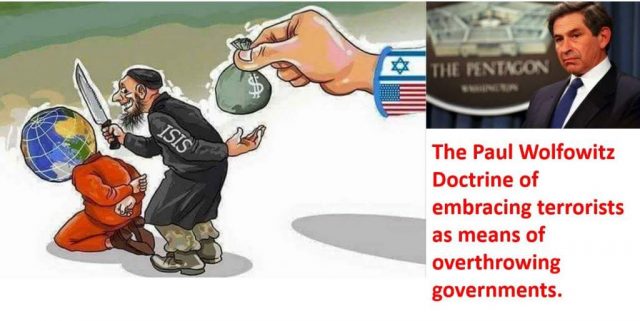


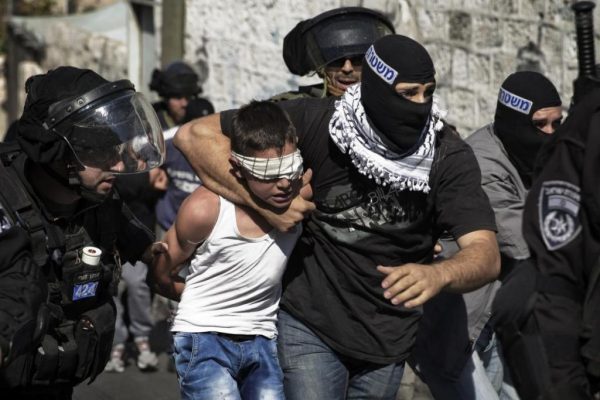
 Aletho News

