More NYT ‘Spin’ on the Syria-Sarin Case
By Robert Parry | Consortium News | April 28, 2017
In blaming Syrian President Bashar al-Assad for the April 4 chemical incident in Khan Sheikhoun, The New York Times and other Western news outlets have made a big deal out of discrepancies in the timing and other details provided by the Syrian and Russian governments.

Crater containing alleged canister in Khan Sheikdoun
The Times and the others also have chided anyone who notes that Assad had no logical reason to undertake a sarin attack since his forces were making solid gains and he had just learned that the Trump administration was dropping the longstanding U.S. goal of “regime change” in Syria.
To those of us outside the mainstream media bubble, there seemed to be little or no military advantage to be gained. Instead, Assad would be risking more international intervention, which has ripped his country apart for the past six years. But the Times and other major outlets dismissed our logic by arguing that Assad was simply announcing his impunity in some particularly brutal Arab-sort-of-way.
However, neither the value that the Times and others placed on the Russian-Syrian timing discrepancies nor the strange explanation of Assad’s motive made any sense. After all, if Assad were making some bizarre public declaration of his impunity, why would he then deny that his forces were responsible? Wouldn’t he simply say, “yes, I did it and I don’t care what anyone thinks”? Isn’t that what impunity means: that you do whatever you want knowing that no one can hold you accountable? Instead, Assad has consistently denied ordering the attack.
The gotcha observation about the time element of the bombings fails the logic test, too. Why would Syria and Russia say Syrian warplanes carried out a conventional attack on Khan Sheikhoun around noon if the actual attack occurred around 6 a.m., as it apparently did? There was nothing to be gained for them by having the timing off by six hours, since the point that Syria and Russia were making was that there were indeed airstrikes but that they were conventional bombs that may have unintentionally struck an Al Qaeda depot holding chemical weapons and thus released them. The timing element was immaterial to that point.
What this apparent timing error suggests is confusion, not “spin,” as the Times insists in a tendentious April 27 video by Malachy Browne, Natalie Reneau and Mark Scheffler, entitled “How Syria and Russia Spun a Chemical Strike.”
The Syrians and Russians appeared perplexed by what had happened. Their officials understood that a conventional airstrike had been carried out and stated what they believed the time was. The time discrepancy either meant the Syrian air-wing commander had dispatched warplanes earlier than expected or that some other entity carried out the 6 a.m. strike. But the Syrians and the Russians would seem to have no reason to lie about this detail.
Intervention by Air
Another false assumption pervading the Western accounts on this and other chemical incidents in Syria is that only the Syrian government and its Russian allies have control of the skies. That is clearly not true. Various military forces, including those of the U.S. and its allies, as well as Israel and – to some degree – the rebels have air capabilities in Syria.
According to Syrian accounts, the rebels have captured some government helicopters and apparently used one in what United Nations investigators were told by multiple eyewitnesses was a staged chemical-weapons attack in 2014 with the goal of sticking the blame on the Syrian regime.
Further, the U.S. and its allies have been conducting airstrikes across much of Syria in campaigns against Islamic State and Al Qaeda-linked terror groups, which have been supported by Saudi Arabia, Turkey, Qatar and other Sunni-led sheikdoms. Turkey has been active, too, with strikes against Kurdish forces. And Israel has hit repeatedly at Syrian targets to promote what it regards as its interests, including destruction of Iranian weapons believed headed to the Lebanese militant group, Hezbollah.
Some – if not all – of these entities had a far stronger motive to create a chemical-weapons incident in Syria on April 4 than the Syrian government did. At the end of March, the Trump administration announced that it was no longer a U.S. priority to overthrow the Assad government, an announcement that upset several of the countries involved in the Syrian conflict, including Turkey, Saudi Arabia, the Gulf States and Israel.
All of them – having committed resources and prestige to achieve “regime change” in Syria – had motive to overturn President Trump’s pronouncement. (Israel has had “regime change” in Syria at the top of its to-do list since at least the mid-1990s.) How better to keep that hope alive than to stage another chemical-weapons attack and blame it on Assad? (Another sarin attack in August 2013 also now appears to have been a staged incident by Al Qaeda that killed hundreds while almost tricking President Obama into ordering a massive U.S. military strike on government forces.)
Shortly after the incident at Khan Sheikhoun, I was told by an intelligence source that U.S. satellite imagery had picked up what looked like a drone in the vicinity at around the time that the poison gas was released. Despite some technical difficulties in tracking its route, the source said the analysts believed that it may have come from a Saudi-Israeli special operations base in Jordan, used to assist the rebels.
There are also other combinations of factors that should have been carefully evaluated before President Trump jumped to his Assad-did-it conclusion and fired off 59 Tomahawk missiles at a Syrian airbase on April 6, but they weren’t given serious thought in the rush to blame Assad.
For instance, Al Qaeda’s clever propagandists could have again staged a chemical attack on the ground by creating a crater in the road and inserting what was purported to be a chemical-weapons canister. The Times and others have noted that the crater was not visible in earlier satellite images but that observation doesn’t mean the crater had to be created by an aerial bomb; a ground explosion or simple digging could have done the trick – with the crushed canister inserted later.
Dubious Narrative

Men allegedly inside crater where sarin bomb landed
The canister-in-the-crater story struck MIT’s technology and national security expert Theodore Postol as particularly odd because on-scene photos showed people climbing into the supposedly sarin-saturated crater wearing minimal protection and not keeling over dead. Postol also said the canister appeared to have been crushed rather than exploded.
There is also the possibility that some third party with access to sarin or other powerful chemical weapons could have delivered the poison gas by air – possibly from that drone – with the rebels either coordinating with that delivery before the fact or reacting to the opportunity after the fact.
The hard truth is that intelligence services from a number of countries could fit the bill in terms of producing sarin or some similar substance that could mimic what Syria once had in its arsenal, although those chemical weapons were supposedly destroyed in 2014 as part of an agreement hammered out by Russia and the United States.
And there are plenty of ruthless intelligence operatives on all sides who would have found the deaths of 80 or so people acceptable collateral damage to advance a geopolitical priority. The timing, so close to the Trump administration’s major announcement that Assad no longer had to go, would have represented a logical motive for such a ruse.
The other problem in assessing what has or hasn’t happened in Syria over the past six years is that all sides, but particularly those seeking “regime change,” have deployed sophisticated propaganda operations to the combat zone.
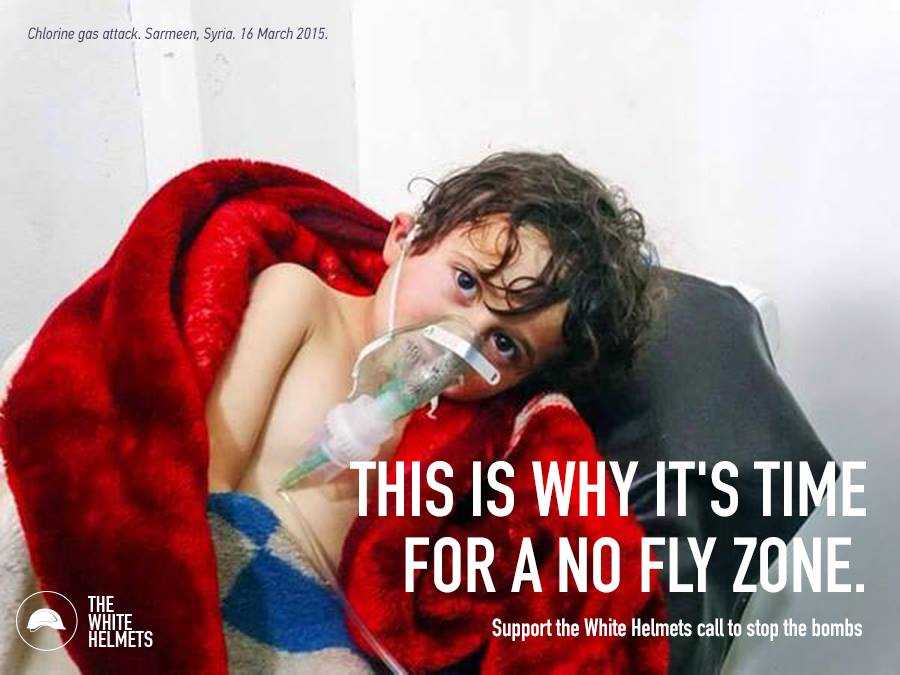
Propaganda designed to justify major US military operation
Anti-regime activists – financed and supplied by the West and the Gulf States – understand the emotional value of showing dying children. These propagandists have regular and uncritical access to major Western media outlets, from the hipsters at VICE to the neocons and liberal-interventionists at The New York Times.
In other words, what is still desperately needed in this latest chapter of the Syrian tragedy is some honest broker who could conduct a serious investigation that isn’t contaminated by all the previous propaganda-infused narratives. But the chances of finding that person or group are slim to none.
Investigative reporter Robert Parry broke many of the Iran-Contra stories for The Associated Press and Newsweek in the 1980s.
100 US Senators Want Israeli High Crimes Suppressed
By Stephen Lendman | April 28, 2017
In an April 27 letter to UN Secretary-General Antonio Guterres, all US senators demanded the world body ignore Israeli high crimes, calling truth-telling “anti-Semiti(c).”
“Too often, the UN is exploited as a vehicle for targeting Israel,” they said.
Fact: Much more needs to be done to hold Israel accountable for high crimes of war and against humanity – for decades of ruthlessly persecuting Palestinians, for committing slow-motion genocide, for attacking its neighbors.
The letter quoted neocon US UN envoy Nikki Haley, saying “(i)t is the UN’s anti-Israel bias that is long overdue for change” – an outrageous perversion of truth.
The senators praised the world body “for disavowing” the important Richard Falk/Virginia Tilley report, calling Israel a racist apartheid regime – “beyond a reasonable doubt.”
The entire US Senate urged the UN “to improve (its) treatment of Israel…” It demands no world body support for the vital global BDS initiative – or any other actions hostile to Israeli interests.
It wants information about its human rights abuses suppressed. It demands support for US interests. It calls truth-telling anti-Israeli “bias.”
All 100 US senators disgracefully signed the letter. Washington and Israel partner in each other’s high crimes – a ruthless axis of evil threatening humanity.
Last week, Haley accused the world body of holding “Israel-bashing sessions.” Ignoring US wars in multiple theaters, she lied claiming “Iran is using Hezbollah to advance its regional aspirations.”
“They are working together to expand extremist ideologies in the Middle East. That is a threat that should be dominating our discussion at the Security Council.”
Iran threatens no one. Neither does Hezbollah. Haley turned truth on its head. So did Tillerson days earlier, irresponsibly accusing Tehran of “alarming ongoing provocations” to destabilize regional countries.
Iranian UN envoy Gholamali Khoshroo debunked his remarks, calling them “misleading propaganda…”
Last week Washington asked which Middle East countries benefit from regional chaos, “and what are the connections between terrorist groups and these states?”
Israel, of course, benefits most. So does America by its belligerent presence in a part of the world not its own – waging endless wars of aggression, supporting terrorist groups it created, wanting pro-Western puppet rule replacing all sovereign independent governments.
Stephen Lendman can be reached at lendmanstephen@sbcglobal.net. His new book is titled Flashpoint in Ukraine: How the US Drive for Hegemony Risks WW III.
Who are the killers?
By Mustafa Barghouti | Arab48 | April 23, 2017
Neither Netanyahu nor his ministers, who are suffering from hysteria as a result of the courageous Palestinian prisoners staging a hunger strike, have hesitated to call the prisoner leaders murderers.
The Israeli racism machine has not stopped making proposals characterised by severe cruelty and disgrace, such as the suggestion made by Israeli Minister of Intelligence and Transportation, Yisrael Katz, to execute prisoners. Defence Minister, Avigdor Lieberman, also suggested that the prisoners on hunger strike are left to starve to death, which is what happened with the Irish activists led by Bobby Sands.
With the same degree of disgrace, the Israel Prison Service decided to build a military field hospital that allows it to use the internationally prohibited method of “force feeding” because civilian doctors and their union refuse to commit this crime against the prisoners.
The brave Marwan Barghouthi does not need anyone to defend him. His article in the New York Times skilfully put the occupation in the docks, and he never killed anyone with his hands. The most important question here is: Who did? What is the record of Israeli leaders themselves? Those who are honoured in some international forums and are even awarded peace prizes.
Wasn’t Menachem Begin a murderer, responsible for the Deir Yassin massacres, as well as the other crimes committed by his organisation, Irgun, such as the bombing of the King David Hotel and the killing of Brits, Palestinians and Jews?
Furthermore, he and Yitzhak Shamir added to their record the assassination of the UN mediator, Count Bernadotte, and other international diplomats.
Didn’t the former Israeli Prime Minister and Defence Minister, Ehud Barak, use his hands and weapon to kill Kamal Nasser, Kamal Adwan, Abu Yousef Al-Najjar and his wife in Beirut? His unit also assassinated the Palestinian leader Abu Jihad in Tunisia.
Wasn’t it Shimon Peres who ordered the Qana massacre, killing women and children in a UN shelter in Lebanon?
Didn’t Netanyahu, Tzipi Livni and Barak all commit war crimes during the successive attacks on the Gaza Strip, which claimed the lives of thousands of martyrs, including hundreds of children? A file of these crimes is now on the ICC’s table.
Do we need to remind the Israeli ministers of Ariel Sharon’s past in the Qibya massacre in 1953, killing the Egyptian prisoners in 1967, and in the Sabra and Shatila massacre, which surpassed all other massacres in atrocity in 1982.
The Palestinian people have not and will not forget.
However, the world must remember. It is its duty to support the struggle of the prisoners who are practicing the most peaceful forms of struggle and the noblest form of popular resistance by staging a hunger strike. This is the only weapon they possess while trapped in Israeli prisons.
On Friday, we participated in a demonstration in the Jerusalem villages near Ofer Prison. We tried hard to raise our voices so that the prisoners inside would hear us, although they don’t need to hear us to know that their entire nation is behind them.
We had young boys with us who were born and lived their entire lives, like their parents, under occupation, oppression and discrimination.
These boys are not in need of incitement to become fighters. Their lives and suffering drives them to this, but their presence reminded us that the future generation of hope and victory is growing and maturing, despite the oppression, torture and attempts to spread frustration and despair; despite the escape of those who grew tired of the burdens of the struggle.
The Palestinian fighters are not killers, they fight for freedom and they create life and hope. They are willing to sacrifice their lives for the sake of their people’s freedom.
I bet the majority of Israeli ministers think of no one else other than themselves, their position and their future wealth.
That is why we are optimistic and they are pessimistic, drowning in their racism.
Translated by MEMO
Israel is Trying to Legitimize Airstrikes on Syria
By Firas Samuri | Inside Syria Media Center | April 27, 2017
According to Reuters, this morning Israeli jets carried out five strikes on depots belonging to Hezbollah close to Damascus International Airport. After the explosion, a fire broke out.
It should be mentioned, that it is not the first time that Israel has launched airstrikes on Syria. On April 21, Israeli aviation targeted Syrian Army positions in the area of Khan Arnabeh in the province of Quneitra. This attack was committed when the government forces were repulsing a large-scale militant offensive.
Israeli Intelligence Minister Israel Katz has already commented on this airstrike, stating that it corresponds completely with Israel’s policy to act to prevent Iran’s smuggling of advanced weapons via Syria to Hezbollah in Iran.
Under the pretext of fighting the Lebanese Islamist militant group, Israel supports Al-Qaeda and ISIS. Moreover, according to Yournewswire.com, Israeli Defense Minister Avigdor Lieberman stated that ISIS doesn’t pose any risk for Israel’s security.
In addition, the Defense Minister accused Bashar Assad of using chemical weapons in Khan Sheikhoun.
Israel also supported the recent U.S. missile strike on Al-Shayrat air base in Homs and Israeli President Reuven Rivlin called on other states to follow the U.S. example.
Apparently, Israel seems to be justifying the U.S. and its own illegal interventions in Syria, which are not aimed at fighting terrorism. Furthermore, the Israeli official discredits and demonizes Assad’s policy, without weighty arguments. Such Israeli actions also reduce the effectiveness of the government troops in the fight against terrorism.
It’s obvious that the current Israeli authorities have chosen the escalation of the Syrian conflict instead of political settlement. Sending new jets to bomb Syria, Israel negates diplomatic initiatives that advocate for the rights of Syrians in Astana and Geneva.
The Israeli attack on Syria has already caused vehement reactions in the international community. Chinese Foreign Ministry Spokesperson Geng Shuang stated that China opposes the use of military force. He also urged the world community to respect the territorial integrity and the sovereignty of Syria.
Decoding the American Jewish Zionists’ Rise to Power
Readings in the Jewish Zionist Control of the United States: Interviews with Francis Boyle, James Petras, and Kim Petersen [Part 4]

By B. J. Sabri | American Herald tribune | April 24, 2017
Previously I argued that the phony war on “islamic terrorism”, the incessant attacks on and indictment of Islam as a violent religion, and the claim to bring so-called “democracy” to a region ruled by “dictators” are ploys for U.S. wars in the Middle East. Real motives instead, I further argued, are driving these wars with the objective to destabilize, remake, or destroy Arab societies, partition all states that are not in line with the U.S. and Israeli policies, and, in short, dismantle the Arab world. Two agendas converge to implement this effort.
The first has for a focus the aims of U.S. hyper-imperialism. Besides submitting the Arab nations to U.S. plans and military control, the quest for uncontested global hegemony is the core of this agenda. While such a quest is intrinsic to the making of the colonialist nature of the American state, the part related to the Arab world is a particular detail within the overall agenda. Explanation: The Arab regions in the Middle East and North Africa enjoy unrivaled geostrategic assets palatable to U.S. imperialism. However, targeting the Arab nations for war, destruction, and partition because of resources or geographic positions makes no sense in modern times unless a wider, deeper agenda is playing out in the U.S. calculation.
This raises a series of questions. What are the forces directing the Arab agenda of the United States? Are these forces responsible for the persistent hostility toward the Arabs and the active destruction of selective states? Did such a plan start with Kissinger-controlled U.S. foreign policy during the Nixon’s presidency or does it go further back in time? Were Sadat’s recognition of Israel, Israel’s invasion of Lebanon, Iraq’s American-induced invasion of Iran and Kuwait, and U.S. war on Iraq in 1991 the preparatory stages for that plan?
A vital question: Do such forces persuade or coerce the United States to oppose all equitable proposals to solve the Palestinian Question? And to close, who is keeping the interventionist agenda going? Who are the proponents of the Fascist Military Pacification Model the United States wants to impose on the Arab nations?
The second agenda belongs to Israel. Considering its complex logistics and interwoven interests with the global aims of the United States, this agenda is partly carried out by Israel and partly by the United States but with European and Arab vassals following orders. Israel’s agenda operates on nine levels each of which comes with own scope, parameters, and application tools:
General Level: To expand the scope of Zionist narratives on Palestine, so-called right of Jews to return to it, fake historical rights, and so on. Films, TV, false archeology, fake research books, internet, propagandists, and all type of media—even cookbooks—are the avenues for such efforts.
American Level: To preserve the duopoly system as is for easy management; keep the White House and Congress under tight Zionist control; keep the display of power as in AIPAC annual pageantries in order to demonstrate system’s obedience and Zionist control; conceive and implement U.S. foreign policy through American Jewish Zionists who occupy key posts in the American system.
America’s European Vassals Level: To keep European states under the U.S. umbrella for a stronger Israeli control.
Russian/Chinese Level: With over one million ethnic Russian Jews living in Israel, Israel has an advantage in Russia through organized Zionist lobbyists and oligarchs. The scope is to keep Russia out of the Middle East—it failed in Syria—and away from the Arabs. As for China, Israel provides American-designed military technology to increase influence thus preempting potential Chinese support for Arab causes.
International Level: The U.S. belligerent posturing toward North Korea is not its own. It is Israeli by all standards and terminologies. Explanation: N. Korea provided military technology to Iran and Pakistan. That is anathema to Israel. If N. Korea were to stop cooperating with countries deemed adversaries to Israel, the U.S. saber rattling would cease instantly. The other scope is to keep flaunting any U.N. resolution critical of Israel using the U.S. hegemon as a buffer.
America’s Arab vassals: The United States has practically ended, on behalf of Israel, the Arab system of nations through wars and interventions. Israel is now poised to submit all Arab regimes—not the peoples—to its military power and political will.
Regional Level: To maintain Israeli superiority by means of American military supplies, as well as its own. However, the United States is now doing the major job by smashing the Arab states–one by one. The partition of Sudan and the pending partition of Iraq, Libya, Syria, and Yemen are examples.
Palestinian Level: To implement the plan to settle the Palestinian Question on Israeli terms. This is how it works. Give the Palestinian a semblance of economic independence within the occupation regime; swallow what remains of historic Palestine; suffocate Gaza to death to stop the resistance; declare a “state” called “Palestine” in Gaza comprising lands taken from Egypt.
Israeli Level: To intensify the Zionization, fascistization, chauvinism, and racism of the Israeli Jewish society. This is important for the continuation of the Zionist project to create a “greater Israel”. Further, the Zionist project was not about creating a “homeland” for the Jews of Europe. It is about Zionist expansions and empire. According to this scheme, turning the racist ideology of and the colonialist core of Zionism into a permanent way of thinking could guarantee the continuation of Israel as a peculiar racist state.
DISCUSSION
What we want to see now is what did American Jewish Zionists do to rise to such an unprecedented power in the United States? There is a flipside to the coin. Was such a rise autonomous or dependent on factors rooted in the American system? In other words, who allowed Jewish Zionists to dominate the United States?
To answer, we need a starting point. Jewish Zionist propaganda would like the uninformed to believe that the United States was already in pre-Zionist sympathies at least since President John Adams. [1] An example of such propaganda outlets is the Zionist website Jewish Virtual Library. This so-called library made a compendium of U.S. presidents who, it claims, supported the idea of “restoring the lands of Israel” to its “people”. [2]
First, U.S. presidents prior to Theodore Roosevelt might have made favorable expressions to certain Jewish individuals. However, I view such expressions as apolitical, superficial, and ceremonial. Moreover, they had no bearing into the future—this was yet to unfold depending on world events. Nor did they set the path for Franklyn D. Roosevelt and his successor Harry Truman to prepare for the installation of a Zionist entity in Palestine. It seems that the “Library” wants to convey the idea that rational political processes brought the United States to side with Zionism and later with Israel. Now, recalling that such “sympathies” might have been made in response to solicitations by Jewish personalities, they were not the political convictions of the American system. However, they became so after Woodrow Wilson publically endorsed the British Mandate for Palestine.
Second, because the American system depends on ideological continuity, it is expected that Roosevelt’s anti-Arab racism and Zionist outlook would pass to his successors. Such passage would also confirm that new patterns of domestic power were emerging. Explanation: in U.S. political settings, the presidents of the imperialist state invariably adopt and further expand on the foreign policies of their predecessors.
The pretense that what those presidents expressed had amounted to recognition of “Jewish claims” on Palestine is baseless. Needless to argue, the fate of Palestine, then under Ottoman rule until the end of WWI, was not a subject for U.S. presidents to decide. Colonialism, however, was the only historical force able to divide conquered nations according to self-interest or consequent to political machinations. Yet, those expressions revealed something interesting— the cultural ignorance of U.S. presidents. Fixated on biblical stories, they interchanged the religious affiliation of Europeans of Jewish faith with the ancient Hebrews. With this, a historical falsehood had been established. Later, this would become the rationalized basis to install a settler state in Palestine.
When American Jewish Zionists twisted the arms of FDR and Harry Truman to make them agree to their demands, and when both presidents gave up under pressure, it became evident that a Jewish Zionist force was born. Under this premise, I view Theodore Roosevelt, Woodrow Wilson, and Franklyn D. Roosevelt as the primary facilitators of U.S. Zionism and its ascending power.
Harry Truman is another story. Although, the Zionist state was born under his watch, he was not that essential in the gestation of Zionism toward power. It is true, however, that Truman, a war criminal and opportunist who sold out to Zionists to garner their vote, was a catalyst in turning American Jewish Zionists into the masters of the United States. Explanation: the installation of Israel gave momentum to the emergent power of Zionists. Still, during the transition from European Jewish invasion of Palestine to the installation of Israel, Truman did nothing but to continue with the moral cowardice and treachery of Franklyn D. Roosevelt toward the Arabs.
To back the views I just presented, I will discuss in this part Theodore Roosevelt and Woodrow Wilson; in the upcoming Part 5, I will discuss Franklyn D. Roosevelt.
Theodore Roosevelt
Ever since New York Jewish Zionists supported his campaign for governor of New York, and later for president, Roosevelt, a racist and an avowed colonialist in the American tradition, set the stage for a long-lasting confrontational U.S. policy toward the Arabs. With that policy came the gradual elevation of American Jewish Zionists to the claimed status of “king makers” of American politics—especially in the making of foreign policy. Here I want to stress one aspect, which is how the hate of the Arabs became synonymous with the Jewish Zionist power. It works like this: If an American individual wants to run for office, he must declare or pledge in advance his support of Israel against all its “enemies”—the Arabs. On the other hand, opposing Israel (or Zionism) on any ground could mean losing elections and careers.
How did Theodore Roosevelt set the stage for a durable anti-Arab policy of the United States?
Let us reprise a quotation that appeared in Part 2. In a private meeting held in 1907, Roosevelt confided:
It is impossible to expect moral, intellectual, and material well-being where Mohammedanism is supreme. The Egyptians, for example, were a people of Moslem fellahin who have never in all time exercised any self-government whatever. Britain’s Lord Cromer, Roosevelt added, is one of the greatest modern colonial administrators, and he has handled Egypt just according to Egypt’s needs, military occupation, foreign tutelage, and Christian patience. [3] [Sic], [Italics added]
Roosevelt’s opinion on regions dominated by Mohammedanism—his word for Islam—was in tune with his bigoted ideology. Anyone, of course, is entitled to his opinion. But when an American president expresses racist remarks debasing peoples and their religion, the implication is enormous. Simply, it means that said president, his administration, and subsequent administrations would most likely take the same path. This is how political states stay in business. Eventually, a nurtured prejudice could evolve into state policy— the systematic destruction of the Original Peoples of the United States and the ideology of the Third Reich are examples. Consequently, it is not farfetched to say that Roosevelt’s prejudice had come a long way. Today, it has become the official philosophy of the United States.
A few decades after Roosevelt, John Kennedy, then a senator from New York, proved the assessment I just made. In search of the so-called Jewish vote, he had to go through the rituals of praise (allegiance) to Zionism and to exempt it from the disasters in the Middle East. In addressing a gathering at B’nai Zion Anniversary, he virtually licked the Zionist rear end without shame, pride, or, at least, a little cultivated historical and cultural knowledge. With his speech (1958), Kennedy proved beyond any doubt that 11 years after the installation of Israel (1947), the power of American Jewish Zionists had become a strong fixture in U.S. politics. He said:
This myth – with which you are all too familiar – is the assertion that it is Zionism which has been the unsettling and fevered infection in the Middle East, the belief that without Israel there would somehow be a natural harmony throughout the Middle East and the Arab world. Quite apart from the values and hopes which the State of Israel enshrines – and the past injuries which it redeems – it twists reality to suggest that it is the democratic tendency of Israel which has injected discord and dissention into the Near East. Even by the coldest calculations, the removal of Israel would not alter the basic crisis in the area. For, if there is any lesson which the melancholy events of the last two years and more taught us, it is that, though Arab states are generally united in opposition to Israel, their political unities do not rise above this negative position. The basic rivalries within the Arab world, the quarrels over boundaries, the tensions involved in lifting their economies from stagnation, the cross-pressures of nationalist – all of these factors would still be there even if there were no Israel. [4]
Comment: I could write a full dissertation on Kennedy’s speech and the excerpt I just cited . . . What Kennedy said is a classic example of political succumbence. It also shows how indoctrinations, political posturing, and the expected benefits from sycophancy seep from a political epoch to another. For instance, in his lengthy speech, he never uttered the words Palestine or Palestinians. And when he talked about the Palestinians kicked out of their lands by Jewish Zionist terrorists, he called them “Arab refugees”. (See pictures of Palestinians kicked out by Zionists in 1948). Beyond that, it confirms that the imperialist state had blindly embraced the Zionist narratives. And to close, it demonstrates a culture of obedience to Zionism, and acute prejudice against the Arabs. Above all, Kennedy’s speech highlighted the ascending power of American Jewish Zionism in the United States.
There is more. Kennedy externalized the standard political making of an American politician seeking office. When candidates confront the issue of Israel and the Arabs before Jewish Zionist gatherings, they invariably become arrogantly offensive toward the Arabs, but exceedingly flattering toward Zionism. (I added Italics to every sentence of the excerpt where a counter-argument can be made to demolish Kennedy’s assertions. I stop here, however, to avoid derailing this article.)
Let us go back to Roosevelt. When he made his racist feelings known, he appeared to have implied that only when Christianity is supreme, intellectual and well-being are guaranteed. In saying so, he gave Jewish Zionists the ideological weapons to fight Arab and Palestinian nationalisms.
To be noted, Roosevelt’ praise for Lord Cromer is revealing. In casting his praise with words such as, “the greatest modern colonial administrators”, he left no doubt that the guiding light of the United States is an ideology that glorifies colonialism and slavery while turning colonialist administrators into symbols of virtue and rectitude.
Aside from supremacist beliefs, Roosevelt’s use of the concept “Christian patience” lacks originality. He plagiarized Rudyard Kipling’s concept of “White’s man burden”. This observation is important: it shows how ideological contagion works. Knowing this little bit about Roosevelt’s sentiments, it should not be surprising, therefore, when he stated it is “entirely proper to start a Zionist state around Jerusalem.” [5]
The question one may ask, what were Roosevelt’s rationales and historic justification for a Zionist state “around Jerusalem”? Why is it “entirely proper to start a Zionist state”? What makes it proper: his ideology or bigotry? Why did he ignore the Palestinians who lived in, around, and beyond Jerusalem?
Woodrow Wilson
From studying how U.S. presidents interacted with Zionism and Israel, we may be able to draw some conclusions. For instance, from Theodore Roosevelt to Herbert Hoover, the trend was to mix theology, mythology, and colonialism. From FDR to George H. W. Bush the tunes changed to include the primacy of imperialism and the usefulness of Israel to America’s global agenda. From Bill Clinton to Donald Trump, theology and mythology resurfaced but this time the fuel is anti-Muslim Christian Zionism, anti-Arab Neocon Jewish Zionism, and the new plans to partition the Arab states.
It is known that the beginning of any process is a tone-setter for the next enterprise. Under this light, Wilson’s way of thinking about a Zionist state acquires special importance. It rested on four grounds: theological dogmas, Manifest Destiney beliefs, colonialist mindset, and on his conviction of the virtues of European colonialist states. When he (under suspicious circumstances [6] ), selected the Jewish Zionist Louis Dembitz Brandeis to be his informal advisor on foreign policy, he set the precedent for the rise of many Jewish Zionist advisors and chiefs of staff to presidents and vice presidents. [7] But when he appointed him to the Supreme Court, he initiated the process of the Zionist penetration into the American state.
To evaluate how Brandeis was working on the mind of Wilson, I am going to quote Jerry Klinger. Klinger is a Jewish Zionist propagandist and a founder of the Jewish American Society for Historic Preservation. In his article Judge Brandeis, President Wilson and Reverend William E. Blackstone changed Jewish history Klinger details the intellectual and ideological interactions Between Wilson and Brandeis:
Brandeis knew and understood Wilson. He understood what influences Wilson would respond to. He understood the soul of President Wilson. Brandeis was a master politician and courtroom manipulator of opinion and direction. Wilson needed to be appealed to on the basis of faith but not by faith alone would the President act. Wilson needed to be sure of his political base of popular support for his actions. He needed to be sure it was the right thing for America. He weighed his actions carefully and not impulsively. [Emphasis added]
He continues further down,
Wilson further understood through Brandeis that there were delicate negotiations going on in Britain for a declaration of intentions regarding Jewish interests once Britain had wrested control of Palestine from the Turks. [Emphasis added]
Most important for Brandeis was that Wilson understood he had significant grassroots American political and faith based support for the establishment of a Jewish homeland in Palestine. The Blackstone Memorial was an American document and not a British document. It was important for Wilson and Brandeis to show that they were not the followers of the British. American foreign policy was not shaped and directed by the British but by American interests. [Emphasis added]
Comment
Well, now that we know how Wilson had gotten his political education on the claims of Zionism, let us move forward. Brandeis is a master manipulator. Klinger’s statement that Brandeis convinced Wilson that “supporting the British plan for Palestine means that American foreign policy was not shaped and directed by the British but by American interests” was a winning tactic. It gave self‑importance to a United States. I view that tactic as an early indication of how American Jewish Zionists intended to manipulate the United States.
Did Wilson comply with the coaching imparted to him by Brandeis?
Certainly, in his book, The Elected and the Chosen: Why American Presidents Have Supported Jews and Israel, page 179, Denis Brian, an Irish Christian Zionist provides an adequate answer:
“Like many previous presidents, Wilson compared the Jews of the old testament with the colonists and the early history of America,”
He then goes on to quote Wilson directly:
Recalling the previous experiences of the colonists in applying the Mosaic Code to the order of their internal life, it is not to be wondered at that the various passages in the Bible that serve to undermine royal authority, stripping the Crown of its cloak of divinity, held up before the pioneer Americans the Hebrew Commonwealth as a model government. In the spirit and essence of our Constitution, the influence of the Hebrew Commonwealth was paramount in that it was not only the highest authority for the principle, “that rebellion to tyrants is obedience to God,” but also because it was in itself a divine precedent for a pure democracy, as distinguished from monarchy, aristocracy or any other form of government. To think that I, the son of the manse, should be able to help restore the Holy Land to its people.”
Comment
Despite academic credentials and a university post, Wilson manifested clear intellectual confusion. First, he mingled between diverse categories of thought. Second, his mix-up was so severe that he bundled theology (divinity, etc.) with mythology as in his “various passages in the Bible”. And, if that were not sufficient, he added to the mixture a dose of political gibberish as in the dictions “pure democracy”, “monarchy”, etc. Then he resorted to colonialism as in his phrase “to help restore … etc.
Not only that, but his approach to important U.S. policy directions that structurally overlooked the existence of the Palestinians—the future victims of his planned “restoration” smacks of ignorance, dishonesty, callousness, and ethical perfidy. I wonder how Wilson would have responded to a question such as this: Mr. President, did you ever think to restore the Original Peoples of the United States to the lands you and your predecessors have stolen by fire, forced relocations, and extermination?
Next, I will discuss Franklyn D. Roosevelt and other issues.
NEXT
Part 5:
Part 6: Interview with Francis Boyle
Part 7: Interview with James Petras
Part 8: Interview with Kim Petersen
NOTES
- The Austrian Nathan Birnbaum coined the term Zionism in 1890. I view any prior similar ideology as pre-Zionist
- Jewish Virtual Library,
- Douglas Little, American Orientalism: The United States and the Middle East since 1945, University of North Carolina Press, 2008, p. 16
- JFK Presidential Library and Museum, Remarks of Senator John F. Kennedy at the B’nai Zion, February 9, 1958
- Quoted in Benjamin Glatt, Today in History: Teddy Roosevelt and the Jews, The Jerusalem Post, 2016
- Alleged Wilson’s adultery was seized to blackmail him. I’m no fan of hoaxes and allegations. However, unbiased research is needed to ascertain validity. The following link provides some background on this issue: The Making of Woodrow Wilson— An American Nero?
- Examples include Henry Kissinger, Samuel Berger, Irving Lewis Libby, David Axelrod, Rahm Emanuel, etc.
*(Trump speaking at AIPAC. Image credit: Lorie Shaull/ flickr).
Shambolic Doings in Washington
Will we survive the next 90 days?

By Philip Giraldi • Unz Review • April 25, 2017
There remains one good thing to say about Donald Trump: he is not Hillary. The boneheaded cruise missile attack in Syria would have occurred even earlier under President Rodham Clinton and there would undoubtedly be no-fly and safe zones already in place. Oh, and Ukraine and Georgia would be negotiating their entries into NATO to make sure that old Vlad Putin would be put on notice and understand that the days of namby-pamby jaw-jaw-jaw that characterized the Obama Administration are now ancient history.
Apart from that, I can only observe dumbstruck how yet again a candidate promising peace and dialogue could be flipped so quickly. Or maybe he never believed in anything he said, which is perhaps more to the point. Be that as it may, we now, after only ninety days in office, have a neo-neocon foreign policy and the folks clustered around their water coolers in the Washington think tanks are again smiling. And as the ruinous Syrian civil war continues thanks to American intervention, there are probably plenty of high fives within Israel’s Benjamin Netanyahu government. Bibi again rules the roost.
The Israelis are no doubt particularly delighted to hear Donald Trump’s latest factually exempt voyage into the outer reaches of the galaxy regarding Iran. Or perhaps The Donald is only having continuing digestive problems dealing with “most beautiful piece of chocolate cake that you’ve ever seen” when dining with mortified Chinese leader Xi Jinping while simultaneously launching cruise missiles intended to send a message to Beijing’s ally Russia. It is inevitably Iran’s turn for vilification, so Trump, while conceding that the Iranians have been compliant with the nuclear weapons agreement they signed, also felt compelled to add that they continue to be a threat and have not entered into the “spirit” of the pact. Apparently the spirit codicil was somehow left out of the final draft, an interpretation that will no doubt surprise the other signatories consisting of Russia, China and the European Union.
To make its point that Tehran is somehow a cheater, the White House has ordered a 90 day review of Iran policy which will empower hardliners in that country in upcoming elections as well as nut cases like Senators John McCain and Lindsey Graham on this side of the Atlantic. Iranian opposition groups like the terrorist Mujaheddin e Khalq (MEK) are already rising to the challenge by floating phony intelligence while Graham is currently advocating a preemptive attack on North Korea, conceding that it would be catastrophic for every country in the region while noting smugly that the carnage and destruction would not reach the United States. Too bad that Pyongyang’s fury cannot be directed straight to Graham’s house in South Carolina.
Graham is reportedly a good dancer and multitasker who can pivot back to Iran effortlessly as soon as Pyongyang is reduced to rubble, so those who want to deal with Iran sooner rather than later should not despair. As things continue to go south nearly everywhere, tension in the Middle East will no doubt lead to a rapidly deteriorating situation in the Persian Gulf that will require yet another ham-handed show of strength by the United States of Amnesia. There will be a war against Iran.
There have been a couple of other interesting stories circulating recently, all demonstrating that when Benjamin Franklin observed that we Americans had created a republic, “if we can keep it,” he was being particularly prescient. Robert Parry has observed that all the fuss about Russiagate is misleading as the only country that interferes with the political process in the U.S. persistently and successfully while also doing terrible damage to our national security is Israel. He wonders when we will have Congress convening investigative commissions to look into Israel-gate but then answers his own question by observing that it will never happen given who controls what in the United States. “No one dares suggest a probe of Israel-gate,” he concludes, but it is interesting and also encouraging to note that some Americans are actually starting to figure things out.
One of the curious things relating to the Russiagate scandal is the issue of who in the U.S. intelligence community leaked highly classified information to the media, a question which somehow seems to have disappeared from whatever final reckoning might be forthcoming. The issue is particularly relevant at the moment because there are reports that the Justice Department is pulling together a case against WikiLeaks founder Julian Assange as part of a possible attempt to remove him forcibly from his refuge in Britain and try him for constituting what CIA Director Mike Pompeo describes as a “hostile intelligence service helped by Russia.” It all suggests that low hanging fruit is fair game while some “official” leakers at high levels are somehow being protected.
To cite another example of Justice Department hypocrisy, three current and four former U.S. officials leaked to Reuters last week’s story about a Russian think tank having created a plan to subvert the U.S. election. If that is so, their identities might be discernible or surmised. Why aren’t they in jail? Or is it that many in government now believe that Russia is fair game and are prepared to look the other way?
It is significant that the recent House Intelligence Committee hearing on Russiagate, featuring FBI Director James Comey and NSA Director Mike Rogers, provided very little new information even as it confirmed troubling revelations that had already surfaced regarding the corruption of the nation’s security services. Given that former Central Intelligence Agency (CIA) head John Brennan and former Director of National Intelligence (DNI) chief James Clapper have been most frequently cited as the Obama administration’s possible bag men in arranging for the generation, collection, dissemination, and leaking of information disparaging to Trump, why weren’t they also being questioned?
The latest focus on Brennan, an Obama/Clinton loyalist who might safely be regarded as the most likely candidate seeking to discredit Team Trump and reap the benefits from Hillary, explores some suspicions about what actually took place last year and how it might have been arranged. The story broke in The Guardian on April 13th, headlined “British spies were first to spot Trump team’s links with Russia.” The article rehashes much old information, but, relying on a “source close to UK intelligence,” it describes how Britain’s NSA equivalent GCHQ obtained information late in 2015 relating to suspect “interactions” between Trump associates and the Russian intelligence. GCHQ reportedly routinely passed the information on to its U.S. liaison counterparts, and continued to do so over the next six months. The information was supplemented by similar reporting from a number of European intelligence services as well as the remaining “Five Eyes”: Canada, Australia and New Zealand.
According to the Guardian source and reporters, who are clearly hostile to Trump, the collection was not directed or targeted but was rather part of random interception of Russian communications. This may or may not be true but it serves as a useful cover story if someone was up to something naughty. And it also makes one wonder about the highly incriminating British intelligence sourced “dossier” on Trump and his associates, which The Guardian strangely does not mention, that appeared in January. Another apparent Guardian source called GCHQ the “principal whistleblower” in sharing the information that led to the opening of an FBI investigation in July 2016, a suggestion that the British role was not exactly passive.
The article goes on to describe how John Brennan, then CIA Chief, was personally the recipient of the material passed hand-to-hand at “director level” because of its sensitivity. So the Guardian article is essentially saying that the information was both routine and extremely sensitive, which would seem to be contradictory. Brennan was reportedly then the driving force behind launching a “major inter-agency investigation” and he briefed selected members of Congress regarding what he had obtained. Shortly thereafter leaks began appearing in the British press followed subsequently by revelations in the media in the U.S.
An October request to the Foreign Intelligence Surveillance Act (FISA) court reportedly was initiated after particularly damaging information was received from Estonia concerning Trump associate Carter Page and also regarding allegations that a Russian bank was funneling money into the Trump campaign. This led to an investigation of Page and the tapping into servers in Trump Tower, where the presidential campaign offices were located. Estonia, it should be noted, was particularly concerned about Trump comments on de-emphasizing NATO and strongly supported a Hillary victory so it is fair to speculate that the intelligence provided might have been cherry picked to make a particular case, but The Guardian fails to make that obvious point.
It is interesting to note how for the first time, in this media account, Brennan surfaces as the central player in the investigation of Team Trump. And it is perhaps not out of line to suggest that the European reporting of information on Trump associates was not exactly due to random collection of information, as The Guardian seeks to demonstrate. It could just as easily have been arranged at the “director level” by Brennan and his counterparts to disrupt the Trump campaign and enhance the electability of Hillary Clinton, which would have directly benefited Brennan and his inner circle as well as the Europeans, all of whom feared a Trump victory. Intelligence can be skewed, “fixed around a policy” or even fabricated and can say whatever one wants it to say so it is fair to suggest that the role of a politically committed John Brennan remains to be explored much more fully.
It is now being reported that Brennan will be summoned to give testimony at a closed House Intelligence Committee meeting on May 2nd. Hopefully his comments will be somehow leaked to the media plus those of James Clapper, who is also scheduled to appear. Nevertheless, one imagines that, as was the case in Comey’s first appearance, both former officials will spend most of their time refusing to confirm or deny anything.
The active participation of Brennan in the background to the 2016 electoral campaign is unprecedented and it is also suggestive of what America’s national security agencies have become, basically creatures of the White House. It is hard to escape the conclusion that Benjamin Franklin would undoubtedly deplore the fact that we have failed to keep the republic that the Founding Fathers bequeathed to us. That would be bad enough, but we are slipping into a pattern of foreign wars based on tissues of lies and deceptions by the very people who are in place to protect us, quite possibly exemplified by unscrupulous and ambitious ladder climbers like John Brennan, who was also the architect of Obama’s assassination policy. If we go to war because of suspected lack of “spirit” in our adversaries or merely because someone in the White House had a piece of chocolate cake and wanted something to talk about over his cup of espresso then we are doomed as a nation.
Israeli travel agencies will soon have to promise not to send tourists to the West Bank
Ma’an – April 24, 2017
BETHLEHEM – Israeli authorities have notified Israeli travel agencies that they will be forced to sign a commitment pledging not to take groups of tourists to the occupied West Bank, according to a copy the notification obtained by Ma’an on Sunday.
In the Hebrew-language document dated April 23, the Border Control Department of the Israeli Population and Immigration Authority notifies travel agencies that as of May 15, the day when Palestinians commemorate the 1948 Nakba, they will have to “attach, with each request to bring a group of tourists into the country, a special form pledging that they will not send tourists to Judea and Samaria,” using the Israeli term for the occupied West Bank.
The document only addresses Israeli tourism agencies, and not individual would-be tourists.
The forms must be signed and sent to one of three Population and Immigration Authority email addresses listed in the document.
The document warns tourism agencies that their requests to bring groups of tourists would “not be processed” if the pledge was not signed and attached.
A spokesperson for the Israeli Population and Migration Authority could not immediately be reached for comment.
If implemented, the new regulation described in the document would be an additional blow to a suffering tourism industry in the occupied West Bank, which already has to contend with numerous unequal laws and restrictions that have crippled the Palestinian market, while investing millions of dollars in the Israeli market.
A number of sites which attract thousands of visitors each year, such as the Nativity Church in Bethlehem, could be affected by this directive.
“Israel’s occupation and colonization of Palestine is not limited only to its military elements, but is also manifested in its use of tourism as a political tool. It is a tool used to strengthen its position as occupying power, and to maintain its domination over Palestinian land and people, but also as an instrument for the dissemination of propaganda to millions of tourists, including politicians, community leaders and journalists who receive free-of-charge first class tours to Israel,” human rights lawyer and legal researcher Amjad Alqasis wrote in 2015.
As current regulations stand, when applying for visas, Israeli tourism agencies only need to submit names and passport numbers, while Palestinian agencies attempting the same are met with administrative obstacles, and cannot guarantee that their visa requests will be accepted.
Tourists who tell Israeli border control officials of their intention to visit the occupied West Bank also face the possibility of undergoing lengthy interrogations, or even deportation for alleged security reasons, or without being provided an explanation at all.
When tourists are able to reach the occupied West Bank, they are then forced to negotiate with hundreds of Israeli checkpoints and other military obstacles that restrict movement for Palestinians both within the West Bank and along its borders with Israel and Jordan.
“Another obstacle to operating a tour is the presence of 500,000 to 600,000 illegal Israeli Jewish settlers currently living in the occupied Palestinian territory,” who “constitute a growing and consistent threat to Palestinian livelihoods,” including Palestinian tour guides, Alqasis noted.
Fools Rush In: Europe Pursues Israel Gas Deal for Political Not Economic Reasons
Sputnik – April 24, 2017
An Israel-Europe gas pipeline deal elevates Israel to the status of a major Mediterranean energy exporter. However, critics suggest the move is about more than mere economics, and serves a number of greater geopolitical objectives – namely, immunizing Israel from criticism and sanctions, and damaging relations between Europe and Russia further.
Ministers from Israel, Greece, Italy and Cyprus, as well as the European Union Commissioner for Climate Action and Energy, signed a joint declaration in April, codifying a commitment to constructing a gas pipeline that will bring newly discovered natural gas in Israel [sic] to Europe.
The pipeline, described by Israeli Energy Minister Yuval Steinitz as “the longest and deepest subsea gas pipeline in the world,” is expected to be in operation by 2025.
Designated as a “project of common interest” by the EU, the pipeline has been marketed by both sides as an ideal alternative to the bloc’s continuing dependence on Russian energy — an overt indication the deal is being pursued for political rather than economic purposes. After all, high infrastructure costs coupled with low gas prices will almost by definition make it considerably dearer than the existing energy relationship between Russia and Europe.
The Atlantic Council Global Energy Center has even suggested the proposed project may never come to fruition, once the commercial difficulties inherent in making it operational become reality. Current European energy demands in no way commercially justify an additional gas supply source for the continent.
Furthermore, independent Palestinian human rights advocacy group Al-Haq has said the pipeline agreement will benefit corporations which directly profit from the occupation of Palestine — incentivizing Israel to maintain its current policy of illegal settlement expansion and its blockade of Gaza. If constructed, the pipeline will pump gas from Israel’s giant Leviathan field, the discovery of which in 2010 transformed Israel from a net importer of energy into a potential regional energy player — the field is estimated to hold around 20 trillion cubic feet of gas. Despite Lebanon arguing Leviathan sits partially in Lebanese waters, Israel has pushed ahead with international deals, selling 39.7 percent to US-based Noble Energy.
In March, Jordan became the first country to sign up for Leviathan gas. The move ignited waves of protest, on the basis the agreement would increase Jordan’s dependency on Israel, and potentially finance Israel’s occupation of Palestine.
Such concerns go beyond reflexive prejudice. Israeli Prime Minister Benjamin Netanyahu has noted the potential of gas deals to insulate the country from international condemnation and action.
“Ensuring the supply of gas is essential not only to the country’s functioning, but also to its existence. I regard the gas supply as a foundation of national security. A country that exports things crucial for other countries has far more power. The ability to export gas makes us more immune to international pressure. We don’t want to be vulnerable to boycotts,” Netanyahu said.
Moreover, in a report, Annexing Energy, Al-Haq noted it was “impossible” to geographically isolate gas fields in mainland Israel and characterize them as separate from the country’s ongoing conflict with Palestine.
“In 2011, Noble Energy, the lead operator of the Leviathan field, unilaterally extracted gas from a joint Palestinian gas field without Palestinian permission as required under customary international law and the Oslo Accords. Israel has also employed a brutal and unlawful naval operation to protect Noble Energy’s gas platforms beside the Gaza Strip, routinely attacking, killing and injuring civilian Palestinian fishermen who fish in the vicinity of Israel’s illegally imposed six-nautical-mile closure of Palestine’s territorial waters,” the report said.
In a perverse twist, the deal also comes at a time when Gaza continues to reel from a major energy crisis, which has seen power cuts lasting as long as 18 hours, and results from Israel blocking the region from developing its own resources.
The Al-Haq report concluded that if Palestinians were permitted to do so, their own energy needs would be satiated, and they would be economically self-sufficient, freed from their current aid dependency.
Featured Video
John Mearsheimer Talking Iran with Iran
or go to
Aletho News Archives – Video-Images
Book Review & Summary
Calling of an Angel: The True Story of Rene Caisse and an Indian Herbal Medicine Called Essiac (1988)
Dr. Gary L. Glum – 30 Q&As – Book Review & Summary
Lies are Unbekoming | October 17, 2026
On June 10, 1975, Dr. Chester Stock, a vice president at Memorial Sloan-Kettering Institute for Cancer Research, wrote to a Canadian nurse named Rene Caisse: “Enclosed are test data in two experiments indicating some regressions in sarcoma 180 of mice treated with Essiac.” The sentence sat in a letter from one of the world’s largest private cancer research centers, concerning an herbal tea an elderly English woman had learned from an Ojibwa medicine man at a northern Ontario mining camp in the 1890s. The tests were terminated the following year after Sloan-Kettering admitted, in sworn affidavit three years later, that they had prepared the injectable solution improperly from the dried material supplied — freezing and thawing the herb rather than boiling it as Rene had instructed. By the time Calling of an Angel was published in 1988, Rene Caisse had been dead for a decade, having treated thousands of cancer patients across fifty-six years in her Bracebridge, Ontario kitchen, never charging a fee, and refusing every offer — from Memorial Sloan-Kettering, the National Cancer Institute, Merck, Parke Davis, and private corporations dangling contracts up to $1 million — to release her formula before the medical establishment admitted her remedy had merit. … continue
Blog Roll
 Aletho News
- Ongoing tales of Syrian chemical weapons
- Moscow blasts UN for ignoring torture of Russian POWs
- Millions of Books Could Have Been Destroyed in Lebanon During Israeli Bombings
- Moscow warns of ‘hunt for Russians’
- Calling of an Angel: The True Story of Rene Caisse and an Indian Herbal Medicine Called Essiac (1988)
- South Korean Assistance to the U.S. in the War with Iran: Between Allied Duty and National Interests
- Pharma- and Gates-Funded GAVI Seeks to Assure Parents
- John Mearsheimer Talking Iran with Iran
- Inside Bill C-22, Canada’s Patriot Act.
- China’s FM: Palestinian cause is ‘greatest injustice of the century’
- If Americans Knew
- In West Bank, Israeli settlers are totally out of control – Daily Update
- NPR investigation finds evidence of widespread fraud at mall kiosks tied to Israeli skincare brand
- Tucker Carlson exposes Israeli Lies about the Oct 7th attack, Charlie Kirk, and the U.S.
- Israel has detained thousands of Palestinian children since Oct 7th – over half spent time in solitary, many uncharged
- Israeli Analysis: Is Netanyahu Planning an ‘October Surprise’ Attack Before Israel’s Election?
- Israeli settlers brutally attack Palestinians and Washington Post female photographer, 65
- Words Have Changed, Occupation Continues: The Reality of the Gaza Ceasefire
- Gaza’s child amputees are growing faster than their prosthetics allow
- Israel keeps Palestinians struggling just to survive–Daily Update
- Israeli firm used online ads to run vast spy operation, researchers say
- No Tricks Zone
- New Study Suggests Large Regions Of The Pacific Ocean Have Been Cooling For The Last 80 Years
- Germany’s Green Energy Debacle: High Energy Costs Force Kahla Porzellan to Close After 182 Years!
- New Study: 50 Years Of The Most Aggressive ‘Net Zero’ Policies Can Only Affect The Global Climate By 0.03°C
- US September “Heat” Was No Record…Many Records Set Decades Ago
- Latest European Green Energy Debacle; Portugal’s Largest Flagship Solar Park Insolvent!
- Green Energy Debacle: German Expert Professor Fritz Vahrenholt Warns Of Severe Economic And Social Consequences
- Two More Paleo Reconstructions Affirm Meters-Higher Sea Levels Across Ireland, Brazil 7000-6000 Years Ago
- New Study: Earth And Venus Surface Warmth Largely Explained By Convection And Lapse Rate, Not CO2 Or Radiation
- 2025 Nature Paper Claiming Worsening Global Drought Gets RETRACTED …Heavily Flawed
- New Study: ‘Global Drought Shows No Detectable Recent Acceleration Under Climate Warming’

