Sen. Cardin demands renewal of anti-Iran sanctions: Jewish Telegraphic Agency
Press TV – April 4, 2016
US Democratic Senator Ben Cardin has pledged to get Congress to renew sanctions against Iran before the end of the year.
The pro-Israeli lawmaker on the Senate Foreign Relations Committee has told Jewish media that there is a general agreement to extend sanctions against Iran before they expire in December 2016.
“There’s general agreement we have to extend the sanctions against Iran, and we need to do it before they expire at the end of this year,” Cardin told Jewish Telegraphic Agency in a recent interview.
Cardin said he could get Democrats behind a simple reauthorization of sanctions, adding they are needed to remain in effect.
“Speaking as the ranking Democrat on the committee, and on behalf of the Democrats, we could get it done quickly if we were to just do that part,” he said, meaning a simple reauthorization of the sanctions, aka Iran Sanctions Act, which were passed in 1996 and reauthorized in 2006. The sanctions must be renewed every 10 years.
Last month, Cardin toured Israel, Saudi Arabia and Qatar, where he met with authorities expressing ‘concern’ over Iran’s growing influence in the region.
At the beginning of this year, US President Barack Obama signed an executive order, lifting the US economic sanctions on Iran after Tehran proved it had fulfilled its commitments undertaken in the Joint Comprehensive Plan of Action (JCPOA) – Iran’s nuclear agreement with the permanent UN Security Council members plus Germany (P5+1) signed last July.
Last month, a group of US Republican senators also introduced legislation to impose new sanctions against Iran over what legislators have described as Tehran’s “support for terrorism and human rights violations.”
With the ‘Iran Sanctions Act’ expiring at the end of this year, GOP senators are making every effort to reauthorize and impose more sanctions on Tehran on the pretext of terrorism, human rights issues, and ballistic missile tests.
Several Republican senators including Marco Rubio and Ted Cruz have signed the new bill, dubbed the “Iran Terrorism and Human Rights Sanctions Act of 2016.”
12-year-old Palestinian children imprisoned, pursued by Israeli occupation soldiers

samidoun – Palestinian Prisoners Solidarity Network | April 4, 2016
The family of 12-year-old Shadi Farrah, imprisoned in a detention center in Tamra, called for international attention and support from human rights organizations for the case of their son.
Farrah has been imprisoned, along with another Palestinian Jerusalemite child, Ahmad Zaatari, 13, since 30 December 2015. They were arrested by Israeli occupation forces and accused of being in possession of a knife and attempted murder based on possessing the knife.
Amjad Abu Asab, head of an East Jerusalem committee for prisoners’ families, said that both children were interrogated repeatedly without the presence of their parents or lawyers, in violation of law. Farrah’s parents noted that their son was in the seventh grade and an avid participant in dabkeh traditional dance.
Earlier, Ahmad’s mother had explained that he had been tortured and mistreated under interrogation, and that he had been threatened with harm to his family members.
 This comes amid the news of Ramzi Abu Ajamia, also 12 years old, a Palestinian refugee living in Dheisheh refugee camp near Bethlehem, currently in hiding from Israeli occupation forces. “I can’t explain why they want me, other than it’s my turn. Tomorrow it will be another kid’s [turn],” said Ramzi, in an interview with Middle East Eye. “Why should I give myself to someone who is going to hurt me. I know what they did to my brother and I won’t offer myself up for that,” he said. “I didn’t do anything, I don’t know what they want from me, and that means they will hurt me because I have nothing to tell them.”
A letter to her family from fellow 12-year-old Palestinian prisoner, Dima Wawi, 12-year-old Palestinian prisoner, was released on Sunday. Al-Wawi writes about the role of other Palestinian women prisoners in taking care of and supporting her. (Translation via Iris Bar.)
“Peace, mercy and blessings of God to you.
My beloved Mom, My dear Dad and brothers.
I miss you all. I want you to know that you are always with me. Do not worry about me, mother, I’m happy and don’t need anything except the knowledge that you are in good health.
Everybody here is taking care of me and helping me, I’m playing and studying, and the only thing I need from you is to know that you are OK.
I know that the prison gates can’t be closed forever
Mom — heart sticker — Dima
Say hello to Dad and my brothers, friends & relatives”
There are over 400 Palestinian children imprisoned in Israeli jails; Defence for Children International Palestine report that over 75% of them suffer mistreatment, torture and abuse under interrogation and imprisonment. The majority of Palestinian children are arrested in violent, late-night military raids that traumatize the targeted children and their entire families.
Seoul Human Rights Film Festival cancels Israeli participation
Palestinian Information Center | April 3, 2016
The Boycott, Divestment and Sanctions (BDS) Movement has achieved another success after it managed to convince organizers of the Seoul Human Rights Film Festival to reject the participation of an Israeli film in the event.
Organizers of the festival sent a message to the producer of the Israeli film, “Third Person,” affirming that it canceled the participation of the film and would send back the registration fee.
“We have met with Palestinian activists and BDS activists and we discussed the participation of your film in the Seoul Human Rights Film Festival, which is an organization active in the field of human rights,” the message read.
“The topic of the film is very important, but we are working with anti-war organizations and thus we have decided to adopt the viewpoint of BDS,” it added.
Third Person is a film produced by an Israeli channel and about people who are intersex and living in Israel.
Israeli military destroys agricultural lands in Gaza
International Solidarity Movement | April 3, 2016

Gaza Strip, Occupied Palestine – At around 9am on Thursday, the 31st March, four Israeli bulldozers entered the Gaza Strip at El Fakhuri. They came in order to destroy agricultural lands located near the border, once again violating the indefinite truce that ended the 2014 Israeli aggression against Gaza.

Meanwhile more than thirty tanks were located along the fence line, pointing at the Palestinian farmers who kept working on their lands despite the great risk that they face doing so.

In less than a month the wheat harvest season will start. The families who own land near the border don’t know what will happen then, as no one seems to do anything to stop the systematic aggression. The wheat harvest is vital for the families ability to feed their children.

France Spies on Lebanon’s Internet
Al-Manar | April 2, 2016
Al-Akhbar newspaper revealed that France has been involved in spying on the internet cable that transmits the cyber services from the French city of Marseille to Lebanon, passing through Egypt.
The Lebanese daily explained that the French intelligence services monitor all the telecommunications operated in Lebanon, knowing that Orange company that is very close to the Zionist entity also supervises the entire process.
Accordingly, the experts urged the Lebanese to take extreme cyber security measures to secure their telecommunication activities.
Report: 647 Palestinians arrested in March; 750 now held in administrative detention

samidoun – Palestinian Prisoner Solidarity Network | April 1, 2016
Four prisoners’ advocacy organizations in Palestine (Palestinian Prisoners’ Society, Addameer Prisoner Support and Human Rights Association, Prisoners Affairs Commission and Al Mezan Center for Human Rights – Gaza) issued a report on Israeli occupation arrests and imprisonment of Palestinians in March 2016. The following is a translation of their report:
647 Palestinians were arrested in the West Bank and Gaza in March 2016, including 128 children and 16 women and girls. This raises the number of arrests since the beginning of the popular uprising in October 2015 to more than 4,767 Palestinians arrested.
The highest number of arrests was in Jerusalem area, with 149 arrests, followed by 110 in Al-Khalil, 88 in Jenin, 87 in Ramallah, 63 in Bethlehem, 62 in Nablus, 30 in Qalqilya, 24 in Tulkarem, 10 in Jericho, 10 in Tubas, 9 in Salfit and 5 from the Gaza Strip.
192 administrative detention orders were issued in March; 95 of those were new orders and 97 of them were renewals of previous administrative detention orders. There are now over 750 Palestinians held without charge or trial under administrative detention in Israeli jails.
There are 68 women and girls imprisoned in Israeli jails, 18 of whom are girls under 18, including the youngest prisoner, Dima Wawi, who is 12 years old. There are over 400 child prisoners in Israeli jails, and 700 ill prisoners.
Repression of Journalists
Over seven Palestinian journalists have been arrested since the beginning of 2016; the offices of satellite channel Palestine Today and Trans Media company were closed by occupation soldiers at dawn in Ramallah on Friday, 11 March. Their equipment was confiscated and bureau chief Farouk Elayyat and journalist Mohammed Amer and camera operator Shabib Shabib were arrested; Amer and Shabib were released after interrogation. On 13 March, journalist Ibrahim Jaradat, also with Palestine Today, was arrested at a mobile military checkpoint. After 20 days of imprisonment, Elayyat and Jaradat were released on 31 March on bail of 2,000 NIS each. Journalist Musab Kufaisheh, 24, was arrested in March as was Mohammed Zaghloul, radio presenter.
Under pressure from the Occupying Power, the French satellite, Eutelsat, removed Palestinian channel Al-Aqsa TV from its broadcast on charges of “incitement.” Palestinian journalists inside Palestine received threats stating that they are under surveillance and threats to “Israeli security.”
The Israeli occupation in November 2015 closed Radio Al-Khalil and Radio Dreams; these closures by occupation forces against media organizations and the ongoing harassment of Palestinian journalists is a continuation of the occupation policy of repressing Palestinians’ expression of their cause and the crimes of the occupation before the world. The occupation is persecuting Palestinian human rights defenders and journalists in an attempt to empty the media and human rights organizations of experienced voices and silence their work, obscure the reality of war crimes and crimes against humanity committed by occupation forces against Palestinian civilians.
Administrative and military actions by the occupation forces against Palestinian journalists and human rights defenders violate international humanitarian law and serve only the purpose of attempting to intimidate Palestinian civilians and pushing them to give up their rinalienable rights. The arrest of journalist violates the Universal Declaration of Human Rights and the International Declaration on Human Rights Defenders. The organizations call on the international community to work and take action to stop these violations.
There are currently 16 Palestinian journalists imprisoned; the longest imprisoned journalist is Mahmoud Issa, serving a life sentence, who was a reporter before his arrest in 1993.
Hunger Strikes in Israeli Prisons
During March a number of prisons engaged in open hunger strikes for various periods against administrative detention without charge or trial, and against solitary confinement, including Yazan Hanani of Beit Furik, Nablus; Daoud Habboub of Ramallah; Mahmoud Al-Fasfous; Alaa Rayyan; and Karam Amer.
Other prisoners are continuing their hunger strikes against administrative detention: Sami Janazrah, Imad Batran, Abdel-Rahim Sawayfeh and Abdul-Ghani Safadi.
Abdullah al-Mughrabi, Nahar al-Saadi, Issam Zeineddine are on hunger strike against solitary confinement, as was Zaid Bseisi. Mohammed Daoud of Dheisheh refugee camp near Bethlehem has launched a hunger strike against his re-imprisonment after his release in the Wafa al-Ahrar prisoner exchange.
Arrest and imprisonment for Facebook posts
The Israeli government has, in recent months, formed a so called “cyber unit” in order to surveil, investigate and prosecute Palestinian social media use, in particular focusing on Facebook. Since October 2015 through mid-March, 148 Palestinians have been arrested due to Facebook posts, with many charged with “incitement;” others have been ordered to administrative detention without charge.
These arrests have focused especially on Jerusalem, and in many cases come in response to written statements of solidarity or support for Palestinian martyrs or prisoners, including publishing their photos. This attempt to suppress Palestinian expression on social media has not only been carried out through arrests and imprisonment, but also official attempts to force Palestinian youth, especially in Jerusalem and Occupied Palestine ’48, to be fired from their jobs over Facebook posts, or forcible transfer them from their homes, especially in Jerusalem.
Donya Musleh, 19, a student at Palestine National University, was arrested on 15 November 2015. Her home in Dheisheh camp was invaded by occupation soldiers and ransacked. She is a student activist, but the military court indictment against her was composed of three items, all of which related to Facebook postings, including comments on photos of wounded and killed Palestinians.
The Israeli indictment in the military courts stated that Musleh published a photo of a Palestinian demonstrator throwing stones with lines of Palestinian poetry about stones; the same indictment said that she published a photo of Moataz Zawahreh, Palestinian youth activist shot dead in Dheisheh while attending a demonstration, again with lines of poetry.
She was also accused of membership in a prohibited organization for posting photos of Palestinian martyrs who were part of the same political party, and on the basis of these postings accused of membership in the organization. The indictment also noted that she received numerous “Likes” on Facebook. The military court held that she “encouraged Palestinians to carry out operations against the security of Israel” by these facebook postings which “disturb public order.”
192 administrative detention orders in March
192 administrative detention orders were issued in March by the Israeli military, including 95 new orders, including orders against two women, six children, two members of the Palestinian Legislative Council and a journalist.
Among the most prominent cases of administrative detention in March were those of Mohammed Amarneh, 17 of Jenin, and Hamza Hammad, 15 of Silwad near Ramallah, ordered imprisoned without charge or trial.
Amarneh was interrogated and denied all accusations, yet administrative detention was used to arbitrarily imprison him. On 16 March 2016 an administrative detention order against him for three months was imposed by the occupation military court, alleging that he is a danger to the security of the area. When inquired as to the specifics by Amarneh’s lawyer, references were made to his Facebook account despite the admission of the prosecution that there was no evidence of any particular Facebook post.
Hammad, 15, was ordered to administrative detention for six months. He was earlier arrested in August 2015 and interrogated for 23 days, during which he was interrogated for lengthy periods and beaten, and was released without indictment. When he was arrested, the soldier arresting him told his mother that he “should be in prison” because his father, Mo’ayyad Hammad is serving a life sentence in Israeli jails, accused of participating in the Palestinian resistance and killing soldiers.
Arrests of Palestinians from Gaza
In March 2016, five Palestinians from the Gaza Strip, including three ill patients seeking treatment, were arrested. One of these was Fadi Al-Sharif, 28, a Palestinian football player with the Al-Hilal Football Club in Gaza City, arrested at Beit Hanoun crossing; he had been issued a permit for treatment at Al-Makassed hospital in East Jerusalem. He was then arrested when attempting to return to Gaza. These arrests came as part of the continuing land and sea blockade on Gaza imposed by the occupation, and its absolute authority over borders and the waters of Gaza, depriving the population of basic human rights. The Beit Hanoun/Erez crossing is used as a trap to arrest Palestinians, especially those who are ill. Palestinians’ need to travel through the crossing is exploited, including being issued a permit to pass and then being detained when arriving at the crossing. In addition, ill people in Gaza are vulnerable to deteriorating health conditions caused by procrastination and delays by occupation forces in requests for permits.
Photo: Tal King (Archive photo)
As Saudi and Allies Bombard Yemen US Clocks up $33 Billion Arms Sales in Eleven Months
By Felicity Arbuthnot | Dissident Voice | April 1, 2016
Sometimes even to the most towering cynic, American hypocrisy is more than breathtaking.
As they lambast their latest “despot”, Syria’s President al-Assad — a man so popular in his country and the region that the US Embassy in Damascu had, by the end of 2006, devised a plan to oust him — arms sales to countries where human rights are not even a glimmer on the horizon have for the US (and UK) become an eye watering bonanza.
The latest jaw dropper, as Saudi Arabia continues to bombard Yemen with US and UK armaments dropped by US and UK-made aircraft, is sales worth $33 Billion in just eleven months to the Gulf Cooperation Council (GCC) according to Defense News.
The GCC, a political and economic alliance of six Middle East countries, comprises of Saudi Arabia, Kuwait, the United Arab Emirates, Qatar, Bahrain and Oman. It was established in the Saudi Capital, Riyadh, in May 1981.
Weapons sold to the alliance since May 2015 have included: “… ballistic missile defense capabilities, attack helicopters, advanced frigates and anti-armor missiles, according to David McKeeby, a spokesman for the State Department’s Bureau of Political-Military Affairs.”
“In addition, the U.S. government and industry also delivered 4,500 precision-guided munitions to the GCC countries in 2015, including 1,500 taken directly from U.S. military stocks – a significant action given our military’s own needs,” he added, stressing: “that the US government would like to continue to strengthen partnerships with Kuwait and Qatar through defense sales and other security cooperation activities.”
A metaphor for our times that “partnerships” are “strengthened” with lethal weapons, not in trade of goods, foods, medical, educational or intellectual exchanges.
A fly or two in the oil of the wheels of the US arms trade is the two year delay in approval of sales 40 F/A-18 Super Hornets to Kuwait and Qatar and also 72 F-15 Silent Eagles to Qatar.
Suspicion has been voiced that this has something to do with a pending US-Israel military financing deal, a suggestion emphatically denied by Washington.
In the meantime as Yemen continues to be blitzed, with the UN stating that eighty percent of the population are in need of humanitarian assistance, 2-4 million are displaced and approaching four thousand dead.
It seems Saudi and its allies have more than enough ordinance to continue the slaughter and more than enough US and UK military advisors to help them in the decimation.
Felicity Arbuthnot is a journalist with special knowledge of Iraq. Author, with Nikki van der Gaag, of Baghdad in the Great City series for World Almanac books, she has also been Senior Researcher for two Award winning documentaries on Iraq, John Pilger’s Paying the Price: Killing the Children of Iraq and Denis Halliday Returns for RTE (Ireland.)
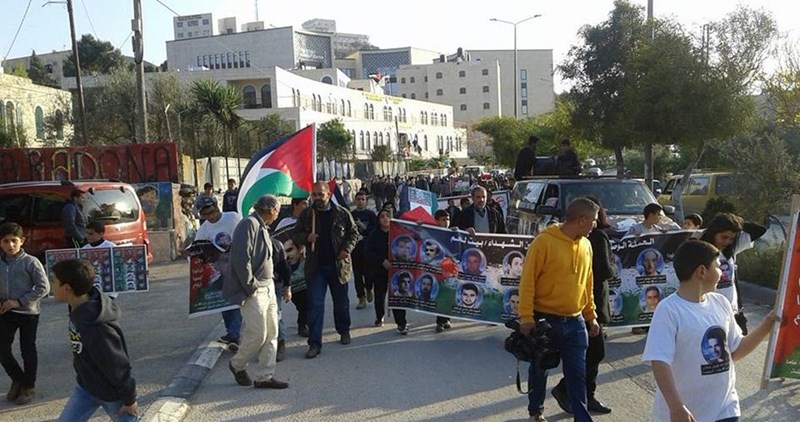
Why do Palestinians commemorate Land Day?
Palestinian Information Center – April 1, 2016
Palestinians commemorated the 40th anniversary of the Land Day on Wednesday, March 30 with various events. To understand the importance of that Day and why it is observed each year we should go back a little bit in history.
In 1976, the Israeli authorities confiscated large areas of Palestinian lands in the Galilee triggering large-scale protests that ended with killing 6 Palestinians and the injury of more than 100 others.
Palestinians all over the world commemorate the Day in marches and rallies to reflect their resilience in facing the Israeli occupation.
The events actually date back to the establishment of Israel in 1948, also known as the Palestinian Nakba (catastrophe), when around 150,000 Palestinians remained in their homes in historical Palestine.
Israel granted them the Israeli nationality, but it kept confiscating their lands and restricting their rights to encourage their migration out of their homeland.
In 1976, the Israeli authorities confiscated vast areas of the lands of these Palestinians in regions with Palestinian majority in the Galilee, a region in northern Palestine.
Israel reacted to the nonviolent protests of Palestinians by gunfire and brutal force. Six Palestinians were slaughtered, more than a hundred injured, and many more arrested.
Resistance Day
Dr. Ghassan Wishah, head of the Department of History and Archeology at the Islamic University of Gaza, stressed the need of informing the world about the importance of this Day, saying, “When Zionists declared the establishment of their state in 1948, they expelled two thirds of the Palestinian people and took over 78% of the their land.”
He added that a significant number of Palestinians persisted in their homes, and Israel started attempts to brainwash them so they would forget about Palestine.
Wishah pointed out, “This Day shows the world that Palestinians insist on their demands, that Israel has failed, and that the new generation is stronger than the older one.”
Demands
Ghassan al-Shami, a political analyst and a specialist in the Palestinian history, said, “We can never forget our land especially with the Israeli occupation stealing thousands of acres and building settlements on a daily basis.”
He stated that hard work is required so that Palestinians would devote more time and effort toward their lands through events on the ground and on social media to put pressure on Israel to stop the Judaization attempts of the Palestinian lands.
Al-Shami stressed the importance of delivering the Palestinian message to the world in all possible ways to win international support for regaining the Palestinian lands and rights.
The French Malaise: ”National security” but for which nation?
By Gearóid Ó Colmáin | American Herald tribune | March 31, 2016
Since the Belgian attacks on March 22nd, there has been much talk of Europe’s need to increase security and modernize methods of mass surveillance and control in all public transport, particularly airports and underground trains. One country in the world has received a considerable degree of publicity in this regard: Israel. The Jewish State is now being held up by the French media as a ‘model of security’ which should be emulated by the European Union.
Henceforth, Israeli security methods are to be employed in our Airports. Travelers parking their cars will be interrogated by police and secret service personnel; passengers will be questioned about their destination and further interrogations will ensue if they are perceived to be engaging in prevarication or showing signs of anxiety or stress. Passenger profiling is to become the norm rather than the exception. People’s travel records will be taken into consideration in assessing whether or not they pose a ‘threat’. This ultimately means that all citizens will be treated as though they were terrorists.
The French media have not been embarrassed about suggesting Israeli security methods be introduced throughout Europe, notwithstanding the fact that Israel is a racist and criminal entity which cruelly keeps over a million people locked up in an open air concentration camp, subjecting the native population of the occupied territory to constant state terror and torture. The pro-Israeli propaganda is being aggressively pushed through both national and regional newspapers throughout France.
An article appeared in Quest France on Sunday March 27 with the headline: L’aéroport de Tel-Aviv, modèlede sécurité- ‘Tel-Aviv Airport, model of security’.
The report describes the interrogation methods mentioned above which are routinely carried out in Tel -Aviv’s Ben Gourion airport. We are also informed that Israeli security experts from the EL AI airline visited Zaventem Airport in Bruxelles shortly after the terrorist attacks in order to assess the site’s security; they were apparently ‘outraged’ by the lax security at the airport. But the reader is not told who was in charge of surveillance at Zaventem Airport. Security at the airport is in fact provided by ICTS, an Israeli company which was set up by former operatives of Shin Bet, Israel’s domestic spy agency. So Israeli experts were ‘outraged’ by the lack of security provided by Israeli intelligence? http://www.ictseurope.com/global-locations/belgium
According to Sott.net :
‘ICTS uses the security system employed in Israel, whereby passengers are profiled to assess the degree to which they pose a potential threat on the basis of a number of indicators, including age, name, origin and behavior during questioning’.
ICTS provided security at Logan Airport in 2001 when the infamous ’19 hijackers’ allegedly boarded their flight to New York on their way to the World Trade Centre. A few months later in December 2001, Richard Reid, who had previously spent time in Israel, boarded a flight in Paris’ Charles De Gaulle airport heading for Miami. He was carrying explosives which he unsuccessfully attempted to detonate on the plane. ICTS, who were in charge of security at Charles De Gaulle airport, failed once again.
ICTS was in charge of London’s bus security system in 2005 during the terrorist attacks there and on Christmas Day 2009 at Schipol Airport, Amsterdam, the Israeli company failed to prevent ‘knicker-bomber, Nigerian ‘terrorist’ Umar Farouk Abdulmutallab, the wealthy son of a former Nigerian MP, who boarded a flight from to Detroit without a passport, while carrying explosives. According to US attorney Kurk Haskel who was an eye-witness, Abdulmutallab was escorted on board the plane by a ‘well-dressed’ man of ‘Indian’ origin who told ticket officials that “the man was from Sudan and that it was typical (to let him on the plane without a passport).”
This strongly suggests the terrorists had security clearances.
So now we have a barrage of media sound bites about the effectiveness of Israeli security and the necessity of introducing further police-state measures in Europe, in spite of the fact that Israeli companies are already providing ‘security’ here and doing a spectacularly dismal job at preventing terrorism!
After the March 22nd attacks in Brussels, a video circulated on the Internet drawing attention to the suspicious behavior of an ”eyewitness’ on France 24 news station after the bombs in Zaventum airport. The ”eye-witness” named Alexandre claims to be a Belgian living in America but his accent is unusual. Alexandre, who is supposed to be in shock and trauma after a brutal terrorist attack, suggests that perhaps European authorities will be forced to adopt security measures similar to those in Israel. Although this ”eye witness” experienced a terrorist attack, he admits that he has ‘ no idea’ what the other victims in the Brussels metro bombs went through. The statements are odd and suspicious but there is no way of proving whether the character is a Mossad agent as the video caption implies.
Nonetheless, it is particularly surreal to find the mass media in France promoting the ‘Israeli security model’ when it is Israeli security companies who are responsible for ‘failing to prevent’ so many terrorist attacks. Of course, the Zionist entity is the only real and long term beneficiary of the War on Terror. As Benjamin Netanyahu himself put it in 2007: ” We are benefiting from one thing, and that is the attack on the Twin Towers and the Pentagon, and the American struggle in Iraq.”
There is no reason to suppose that this recent wave of terrorist attacks in Europe is not also ”benefiting” the Zionist entity.
Promoting emigration and multiculturalism in Europe, propping up Zionist regimes such as Saudi Arabia and Turkey who are Wahhabising Europe’s youth, while at the same time fomenting Islamophobia among European citizens, all these policies serve Israel’s imperial ambitions to rule over all the Arabs and Muslims of the Middle East, while maintaining support in Europe and America by reminding its people every time there is an ‘Islamist’ terrorist attack that this is what Israel is fighting every day.
In his new book Palestine, le malaise Français Franco-Camerounian investigative Journalist Charles Onana shows how the Jewish Lobby in France harassed and demonised President Francois Mitterand for insisting on Yasser Arafat’s visit to France in 1989.
Onana’s study of French government archives prove that the influence of the Jewish Lobby on French foreign policy is deeper and more far-reaching than commonly understood.
Mitterand’s defiance of the Jewish Lobby was continued to a certain extent by President Chirac when he refused to participate in the Zionist-orchestrated war on Iraq in 2003. Since the accession of Nicolas Sarkozy to the French presidency in 2007 and the current regime of François Hollande, Zionism has become almost inseparable from French ruling class ideology. From arch-Zionist Bernard-Henri Lévy’s war on Libya to the war on Syria and a whole series of artificially engineered destabilizations in Africa involving Takfiri Muslims murdering Christians, France has become the bellicose avant-garde of Zionism, carrying out a strategy of chaos which is making the world dangerous for the many but safe for the ‘chosen ones’ and their ever expanding Zionist entity.
Mitterand and Chirac were certainly no friends of French workers nor of the African nations writhing under the yoke of French neo-colonialism, but both leaders had, on the contrary, the merit of setting some limits to Zionist omnipotence. Mitterand’s haughty refusal to ‘apologise’ to Israel on behalf of the French people for the crimes of the Vichy regime, and Chirac’s imperious reprimand of Israeli troops during his visit to Palestine.
[This] contrasts poignantly with the craven, sycophancy of President Hollande’s abasement of the French nation before Israel, when at Netanyahu’s Israeli residence in November 2013 the French president, like a court jester, nauseatingly offered to ” sing a song of love for Israel”.
None of the articles in the French press, published since the Paris and Belgium terrorist attacks mention the criminal ‘negligence’ of ICTS. Instead, we are being told Israeli security is a model we should follow when in fact, we are already living under ‘Israeli security’, the same security agencies who have boasted about committing false flag terrorism against the French public.
In 1979, Israel bombed a factory in France making parts for a nuclear reactor in Iraq. The attack was blamed on ecologists. The Israeli Secret Intelligence Service ( ISIS or Mossad) then proceeded to issue death threats to French engineers working on the project, threatening to kill them and their families if they returned to Iraq. The death threats were issued in the name of an ‘Islamist’ group. All of this was admitted by the Mossad agents themselves in a documentary aired on French television entitled: ‘Droit d’Inventaire: quand le Mossad frappe en France’.
Israel is the only foreign state to have bombed France since the German occupation of the Second World War, a terror campaign admitted by the Zionist entity’s government, yet Israeli companies are providing ‘security’ for French citizens.
Israel’s global role as a pariah state operating outside the norms of international law, flouting all international conventions on human rights, repeatedly committing heinous war crimes and waging wars of aggression, while functioning as a veritable shadow government within the corridors of Western imperial states, this is a problem no nation can continue to ignore. But the few who refuse to ignore it risk their lives.
On March 26 French senator Natalie Goulet received death threats on social media after she wrote a letter to the secretary of state in charge of the budget, requesting clarification for the French government’s policy of giving a 60 percent tax deduction to families who make donations to the Israeli Defense Forces. Although banned in Israel, Betar, the Zionist terrorist militia, regularly issue death threats to their enemies with total impunity from the French state.
But perhaps we should feel ‘safer’ now that the ‘Israeli security model’ is being reinforced as the metropolitan world, our world, slowly metamorphoses into a vast, sprawling Gaza-zone.
Gearóid Ó Colmáin, AHT Paris correspondent, is a journalist and political analyst. His work focuses on globalization, geopolitics and class struggle. His articles have been translated into many languages. He is a regular contributor to Global Research, Russia Today International, Press TV, Sputnik Radio France, Sputnik English, Al Etijah TV, Sahar TV Englis, Sahar French and has also appeared on Al Jazeera. He writes in English, Irish Gaelic and French.
Land Day: Palestinian anti-colonial struggle against land confiscation, for freedom and liberation

samidoun – Palestinian Prisoner Solidarity Network | March 30, 2016
30 March 2016 marks the 40th Land Day, a day of Palestinian struggle against settler colonialism and celebration of the connection of the Palestinian people to the land that continues despite expropriation and dispossession. The day marks the anniversary of the mass upsurge inside Occupied Palestine ’48 on 30 March 1976, in response to an Israeli state attempt to confiscate over 20,000 dunums of land from Palestinians in the Galilee; like today, Israeli “citizenship” has never spared Palestinians from land confiscation and dispossession on their soil.
 Thousands of Palestinians in ’48, those with Israeli citizenship imposed upon them by the state, who remained on the land after 80% of Palestinians were expelled in the Nakba, rose up with a general strike and mass popular protests in the most visible resistance to the Israeli state and its policies of dispossession since the Nakba. They were met with massive state violence, and the killing of six Palestinians – Kheir Mohammad Salim Yasin, Khadija Qasem Shawahneh, Raja Hussein Abu Rayya, Khader Eid Mahmoud Khalayleh, Muhsin Hasan Said Taha and Raafat Ali Al-Zheiri – by the Israeli army as they marched to defend their land.
Just as Palestinians in ’48 face state violence, land confiscation, and the racist policies of Zionism, they also confront imprisonment, arrests and repression. There are currently 75 Palestinian “security” prisoners from Occupied Palestine ’48, housed with fellow Palestinians and facing the same restrictions and denial of rights. Karim Younis, the longest-imprisoned Palestinian prisoner, is from Occupied Palestine ’48 as is his cousin Maher; indeed, six of the seven Palestinian prisoners imprisoned over 30 years for their role in the Palestinian resistance are from Occupied Palestine ’48: Karim and Maher Younis, Walid Daqqa, Rushdi Abu Mukh, Ibrahim Abu Mukh and Ibrahim Bayadseh. Palestinian theater Al-Midan in Haifa was subjected to state scrutiny, repression and denial of funds for its exhibition of Palestinian culture, which included the theatrical performace of a short story by Daqqa.

They have been consistently denied release in both prisoner exchanges with the Palestinian resistance and in Oslo-negotiations-based prisoner releases, as the Israeli state attempts to separate them as “Israeli citizens” from their fellow Palestinian prisoners in releases and labels them a “domestic matter“. At the same time, they are housed with fellow Palestinian prisoners, denied family visits, forced to see family only through glass, and held in solitary confinement while Israeli “criminal” prisoners – and even the rare Israeli Jewish prisoner held as a “security” prisoner for extreme-right violence – are granted temporary releases, their sentences limited and lowered, and allowed lengthy family visits, furloughs, and conjugal visits.
Palestinian prisoners from Occupied Palestine ’48 include the long-time prisoners held since the 1980s as well as Lena Jarbouni, the longest-serving woman Palestinian prisoner; Ameer Makhoul, the imprisoned director of Ittijah, the Union of Arab Community-Based Associations; and Asmaa Hamdan, the 19-year-old Palestinian woman ordered to administrative detention without charge or trial for sending a text message to her family.

The roots of the Israeli military system currently imposed upon Palestinians in the West Bank were derived from British colonial military orders imposed on Palestine – and then on the martial law imposed on Palestinians in occupied Palestine ’48 until 1966, used to undermine all attempts of Palestinians organizing inside their occupied homeland to organize and defend their land.
For example, the Al-Ard movement, which was composed of Palestinians in ’48, founded in 1958, was outlawed in 1964; its very name highlighted the centrality of the land and the struggle to preserve of its Palestinian and Arab identity. The criminalization of the movement only reinforced the defense of the land as central to a movement of indigenous people struggling to defend “the imprisoned land” from colonization.
Cultural resistance was critical for the Palestinians of ’48. Describing the growth of resistance poetry, Ghassan Kanafani wrote, “Many popular poets were put in prison or confined under severe restrictions. And as the trend of popular poetry grew and expanded, the occupying forces extended their tyrannical, measures, killed some poets and prohibited all Arab gatherings. Such measures could not anyhow uproot this trend of resistance but rather kept it dormant for almost five years to burst anew with intense force and vitality.” Poets like Samih al-Qasim and Mahmoud Darwish were imprisoned; the resistance poetry of the prison became a major contribution of the Palestinians of ’48 to Palestinian culture.
Palestinian organizations were outlawed while Palestinians were denied freedom of movement, speech and association; at the same time, the confiscation of Palestinian land continued in an ongoing Nakba; by 1993, over 80% of lands under the control of Palestinians after the Nakba in Israel were confiscated. Palestinians in ’48 were, and are, an integral part of the modern Palestinian revolution as well as fellow victims of Israel’s repression and racist violence.
Palestinians in ’48 are at the center of organizing Palestinian support for all prisoners; as most Palestinian prisoners are held within the 1948 occupied areas, in violation of the Fourth Geneva Convention, Palestinian political leaders and activists engage in visits, demonstrations outside prisons, and campaigns of support. The Palestinian movement in ’48 has played a critical role in supporting, publicizing and defending Palestinian prisoners on hunger strike in Israeli hospitals, including Mohammed al-Qeeq, Khader Adnan, Mohammed Allan and many others.
 Today, 40 years later, Palestinians throughout occupied Palestine continue to resist and confront settlement expansion, land confiscation, racism, Zionism and apartheid. From the expansion of settlements, to the destruction of villages and the confiscation of land, to the ban on Palestinian agricultural products entering Jerusalem, to new racist laws proposed daily atop a racist foundation, the Israeli state continues – and is intensifying – its policy of attempting to sever the Palestinian people from the land of Palestine.
Land Day is a day of anti-colonial struggle for all Palestinians: for Palestinian prisoners, struggling for freedom in their homeland; for Palestinians in ’48, struggling against apartheid, racism, and dispossession; for Palestinians in Jerusalem and the West Bank, struggling against ethnic cleansing, occupation, home demolitions, land confiscation and settlement construction; for Palestinians in Gaza, struggling against siege and the occupation of the skies, seas and borders; for Palestinians in exile and diaspora everywhere, struggling for the right of return and the liberation of the land of Palestine. It is also an international day of anti-colonial struggle that salutes the struggles of indigenous people in North America, Australia, New Zealand and everywhere confronting settler colonialism, genocide and racism, and the liberation movements everywhere confronting imperialism and exploitation of land, people and resources.
As the extreme-right Zionist government of Netanyahu, Ayelet Shaked, Naftali Bennet, Miri Regev, Moshe Ya’alon, Gilad Erdan, Uri Ariel and their compatriots intensify the repression of Palestinians in ’48 and throughout Palestine, it is critical more than ever to intensify our efforts to defend the Palestinian people and Palestinian land, including the campaign to free all Palestinian prisoners. The international campaign for boycott, divestment and sanctions, and the Palestinian call that has inspired and led that campaign, highlights the struggle of Palestinians in ’48 for justice and equality as central to Palestinian freedom and justice in Palestine. On the 40th Land Day, we must escalate global boycott and BDS campaigns and the international isolation of Israel – and the corporations, like G4S, that profit from its oppression and racism.
The occupation of Palestinian land is the central facet of the settler colonial Zionist project in Palestine; Land Day marks the unity of the Palestinian land, people, and cause, everywhere inside and outside Palestine, for defending and liberating the land and people of Palestine.
Historical References:
Featured Video

Why the U.S. Should Pull Back From the First Island Chain
or go to
Aletho News Archives – Video-Images
From the Archives
Only 19.7% of Americans agree with US State Dept on Israeli settlements
… Most American adults of voting age don’t appear willing to reject the applicability of international law to Israel’s ongoing colonization of occupied territories in East Jerusalem, the West Bank and Golan Heights. … Full article
Blog Roll
 Aletho News
- Tokyo protests demand Takaichi’s resignation over support for ‘Israel’
- Jennifer Kavanagh: Why the U.S. Should Pull Back From the First Island Chain
- Yemen denounces international community’s silence on Saudi aggression, siege
- UAE and Saudi Arabia move toward renewed coordination against Sanaa
- How Iran’s two-week retaliatory strikes exposed cracks in US military architecture in Persian Gulf
- The mother of all propaganda: Why the hype over US MOAB strike against Iran is nothing but theater
- Iran says it possesses technology behind US 14-ton GBU bunker-buster
- Trump asks Iran not to retaliate after he strikes Pickaxe Mountain – w/ Prof. Marandi
- Vice President J.D. Vance’s Deceptive ‘Antiwar’ Campaign Speech
- Iran: Palestinians’ rights must not be compromised in Gaza’s future; US, Israel to blame for Hormuz situation
- If Americans Knew
- Israeli rabbi permits occupiers to steal Palestinian olive harvest in West Bank
- Netanyahu’s spin on latest settler attack is laughable – Daily Update
- Israeli soldiers debunk Israel’s talking points
- In West Bank, Israeli settlers are totally out of control – Daily Update
- NPR investigation finds evidence of widespread fraud at mall kiosks tied to Israeli skincare brand
- Tucker Carlson exposes Israeli Lies about the Oct 7th attack, Charlie Kirk, and the U.S.
- Israel has detained thousands of Palestinian children since Oct 7th – over half spent time in solitary, many uncharged
- Israeli Analysis: Is Netanyahu Planning an ‘October Surprise’ Attack Before Israel’s Election?
- Israeli settlers brutally attack Palestinians and Washington Post female photographer, 65
- Words Have Changed, Occupation Continues: The Reality of the Gaza Ceasefire
- No Tricks Zone
- Predictions Made By Renowned Climate Proifessor Over Past Decades Have Been Proven To Be Poor
- New Study Suggests Large Regions Of The Pacific Ocean Have Been Cooling For The Last 80 Years
- Germany’s Green Energy Debacle: High Energy Costs Force Kahla Porzellan to Close After 182 Years!
- New Study: 50 Years Of The Most Aggressive ‘Net Zero’ Policies Can Only Affect The Global Climate By 0.03°C
- US September “Heat” Was No Record…Many Records Set Decades Ago
- Latest European Green Energy Debacle; Portugal’s Largest Flagship Solar Park Insolvent!
- Green Energy Debacle: German Expert Professor Fritz Vahrenholt Warns Of Severe Economic And Social Consequences
- Two More Paleo Reconstructions Affirm Meters-Higher Sea Levels Across Ireland, Brazil 7000-6000 Years Ago
- New Study: Earth And Venus Surface Warmth Largely Explained By Convection And Lapse Rate, Not CO2 Or Radiation
- 2025 Nature Paper Claiming Worsening Global Drought Gets RETRACTED …Heavily Flawed

