Israel has a population of approximately 7.8 million, or a million fewer than the state of New Jersey. It is among the world’s most affluent nations, with a per capita income similar to that of the European Union.[1] Israel’s unemployment rate of 5.8% is better than America’s 7.3%,[2] and Israel’s net trade, earnings, and payments is ranked 30th in the world while the US sits in last place at a dismal 193rd.[3]
Yet, Israel receives more of America’s foreign aid budget than any other nation.[4] The US has, in fact, given more aid to Israel than it has to all the countries of sub-Saharan Africa, Latin America, and the Caribbean combined—which have a total population of over a billion people.[5]
And foreign aid is just one component of the staggering cost of our alliance with Israel.
Given the tremendous costs, it is critical to examine why we lavish so much aid on Israel, and whether it is worth Americans’ hard-earned tax dollars. But first, let’s take a look at what our alliance with Israel truly costs.
Before the Iraq War in 2003
Direct Foreign Aid
According to the Congressional Research Service , the amount of official US aid to Israel since its founding in 1948 tops $121 billion (adjusting for inflation, $233.7 billion as of March 2013), and in the past few decades it has been on the order of $3.1 billion per year.[6] (In 2014, for example, this amounted to $8.5 million every single day.)
But this money is only part of the story. For one thing, Israel gets all of its aid money at the start of each year, rather than in quarterly installments like other countries.[7] This is significant: It means that Israel can start earning interest on the money right away – interest paid by the US since Israel invests these funds in US Treasury notes. In addition, because the US government operates at a deficit, it must borrow money in order to give it to Israel and then pay interest on it all year. Together these cost US taxpayers more than $100 million every year.
Israel is also the only recipient of US military aid that is allowed to use a significant portion annually to purchase products made by Israeli companies instead of US companies. (The costs to Americans caused by this unique perk are discussed below.)
In addition, the US gives roughly $1.6 billion per year to Egypt and Jordan in aid packages arranged largely in exchange for peace treaties with Israel. The treaties don’t include justice for Palestinians, and are therefore deeply unpopular with the local populations.[8]
On top of this, the US gives more than $400 million to the Palestinian Authority each year,[9] much of it used to rebuild infrastructure destroyed by Israel and to bolster an economy stifled by the Israeli occupation.[10] This would be unnecessary if Israel were to end the occupation and allow the Palestinians to build a functioning and self-sustaining economy.
Yet, there’s still much more to the story, because parts of US aid to Israel are buried in the budgets of various US agencies, mostly the Department of Defense. For example, since at least 2006, the American Defense budget has included between $202 and $504 million per year for missile defense programs in Israel.[11]
In all, direct US disbursements to Israel are higher than to any other country, even though Israelis only make up 0.1% of the world’s population. On average, Israelis receive 7,000 times more US foreign aid per capita than other people throughout the world, despite the fact that Israel is one of the world’s more affluent nations.[12] And that number rises significantly when one considers disbursements to Egypt, Jordan, and the Palestinian Authority and Defense spending on behalf of Israel.
Additional Ad hoc support for Israel
Dr. Thomas Stauffer, a Harvard economist and Middle East studies professor who twice served in the Executive Office of the President, wrote a comprehensive report about all components of the relationship with Israel’s cost to American taxpayers for the Washington Report on Middle East Affairs in 2003. He wrote:
“Another element is ad hoc support for Israel, which is not part of the formal foreign aid programs. No comprehensive compilation of US support for Israel has been publicly released. Additional known items include loan guarantees… special contracts for Israeli firms, legal and illegal[13] transfers of marketable US military technology, de facto exemption from US trade protection provisions, and discounted sales or free transfers of ‘surplus’ US military equipment. An unquantifiable element is the trade and other aid given to Romania and Russia to facilitate Jewish migration to Israel; this has accumulated to many billions of dollars.”[14]
Israel has often used its privileged access to US military technology against both the US government and US corporate interests. According to the Associated Press in 2002,
“In France, Turkey, The Netherlands and Finland, Israeli companies have edged such U.S. firms as Raytheon, Northrop Grumman and General Atomics out of arms deals worth hundreds of millions of dollars in recent years. The irony, experts say, is that tens of billions of U.S. tax dollars and transfers of American military technology helped create and nurture Israel’s industry, in effect subsidizing a foreign competitor.”
The AP article quoted a vice president at the Aerospace Industries Association of America, who bluntly said, “We give them money to build stuff for themselves and the U.S. taxpayer gets nothing in return.”[15]
Meanwhile, according to the Christian Science Monitor , Israel has also “blocked some major US arms sales, such as F-15 fighter aircraft to Saudi Arabia in the mid-1980s. That cost $40 billion over 10 years.”[16]
Even worse, Israeli weapons “buttress the arsenals of nations such as China that the United States considers strategic competitors, alarming US military planners,” the Associated Press article went on to report. “[In 2001] US surveillance planes flying along China’s coast were threatened by Chinese fighter jets armed with Israeli missiles… Had Chinese fighter pilots been given the order to fire, they could have brought down the US planes with Israeli Python III missiles… US defense chiefs say Israel sold China the missiles without informing the United States.”[17]
Lost jobs, trade, and standing
One of the most devastating indirect costs of the US alliance with Israel was the Arab oil boycott of 1973. The Arab states imposed the boycott in protest of U.S. support of Israel during the 1973 war, in which Arab countries attempted to reclaim lands Israel had invaded and occupied in 1967.
“Washington’s intervention triggered the Arab oil embargo which cost the U.S. doubly: first, due to the oil shortfall, the US lost about $300 billion to $600 billion in GDP; and, second, the US was saddled with another $450 billion in higher oil import costs,” wrote Stauffer in the Washington Report on Middle East Affairs.[18]
Then there’s the cost in lost jobs. “US policy and trade sanctions reduce US exports to the Middle East about $5 billion a year, costing 70,000 or so American jobs,” Stauffer estimates. “Not requiring Israel to use its US aid to buy American goods, as is usual in foreign aid, costs another 125,000 jobs.”[19]
But perhaps the most damaging cost to the US has been its loss of standing in the Arab and Muslim worlds, where US largesse towards Israel as it commits human rights violations[20] provokes deep resentment. “To many of the world’s Muslims, it places the US taxpayer on the Israeli side of its conflicts with Arabs,” observed the Associated Press article.[21]
According to Harvard professor Stephen Walt, “The 9/11 Commission reported that 9/11 plotter Khalid Sheikh Mohammed’s ‘animus toward the United States stemmed not from his experiences there as a student, but rather from his violent disagreement with US foreign policy favoring Israel.’ Other anti-American terrorists—such as Ramzi Yousef, who led the 1993 bombing of the World Trade Center—have offered similar explanations for their anger toward the United States.”[22]
There are many more potential categories of costs that are even more difficult to quantify. All in all, Stauffer estimates that Israel cost the US about $1.6 trillion between 1973 and 2003 alone—more than twice the cost of the Vietnam war.[23]
Costs since Stauffer’s study in 2003
Israel’s cost to American taxpayers has remained high since Stauffer’s 2003 study. The US currently gives Israel an average of $3 billion a year in military aid, under an agreement signed by the Bush administration to transfer $30 billion to Israel over ten years, starting in 2009.[24]
All of the other extras and costs remain and in some cases have increased since 2003. For example, “Despite a tough economic climate and expected US budget cuts—including drastic cuts to the US military budget—US lawmakers will provide $236 million in fiscal 2012 for the Israeli development of three missile defense programs,” reported Israeli newspaper Haaretz.[25]
In addition, the US government “has provided $205 million to support the Iron Dome, manufactured by Israel’s state-owned Raphael Advanced Defense Systems Ltd. The system uses small radar-guided missiles to blow up in midair Katyusha-style rockets with ranges of 3 miles to 45 miles, as well as mortar bombs… Legislation moving through the Republican-controlled US House of Representatives would give Israel additional $680 million for the Iron Dome system through 2015.”[26]
And if, as many experts believe, the US would not have invaded Iraq without intense and sustained pressure from Washington insiders who advocate actively on behalf of Israel,[27] this adds yet another dimension of staggering cost to the equation: “hundreds of billions of dollars, 4,000-plus U.S. and allied fatalities, untold tens of thousands of Iraqi deaths, and many thousands of other US, allied, and Iraqi casualties,” according to retired US foreign service officer Shirl McArthur.[28]
Nobel Prize-winning economist Joseph Stiglitz and Harvard professor Linda Bilmes put the cost of the Iraq War at over $3 trillion, and incalculably more if you take into account the opportunity costs of the resources spent on this unproductive war. For example, higher oil prices due to the war have had a devastating impact on America’s economy, and so have the surging federal debt and the servicing of that debt. Without the war, the 2008 financial crisis almost certainly would not have been as severe, and the Afghanistan war most likely would have been shorter, cheaper, and more effective.[29]
The Israel lobby and partisans are currently gunning for a war with Iran with the same zeal they showed in the run-up to the 2003 invasion of Iraq.[30] By all estimates, the costs of a war with Iran will be much higher than the Iraq war. In addition to the loss of life, analysts predict, for example, that if Iran’s oil production were taken out of the world market, gas prices would rise 25-70 percent.
If the Straits of Hormuz (straits adjacent to Iran through which 20% of the world’s oil production passes on a daily basis) were attacked or blockaded, the cost of oil would skyrocket to a level never seen before, and the economic recession or depression that followed would be nothing short of “apocalyptic,” according to Matthew Yglesias writing for Slate .[31]
Reasons and Consequences
So now we are back to the question of why America continues to pour money into a state that commits daily human rights violations, defies US strategic interests,[32] provokes rage and resentment among billions of people,[33] competes with and crowds out US interests using technology subsidized by US taxpayers, and sells America’s military secrets to its enemies.[34]
The answer is simple and summed up well by professors Stephen Walt and John Mearsheimer in their ground-breaking article in the London Review of Books , “The Israel Lobby,”[35] and their book The Israel Lobby and US Foreign Policy .[36]
“Why has the US been willing to set aside its own security and that of many of its allies in order to advance the interests of another state?” the article asks. “One might assume that the bond between the two countries was based on shared strategic interests or compelling moral imperatives, but neither explanation can account for the remarkable level of material and diplomatic support that the US provides.
“Instead, the thrust of US policy in the region derives almost entirely from domestic politics, and especially the activities of the ‘Israel Lobby.’ Other special-interest groups have managed to skew foreign policy, but no lobby has managed to divert it as far from what the national interest would suggest, while simultaneously convincing Americans that US interests and those of the other country—in this case, Israel—are essentially identical.”[37]
AIPAC, the American Israel Public Affairs Committee, is consistently ranked in the top two most powerful lobbies in Washington.[38] And it is only one arm of the much larger, multi-faceted, and well-financed Israel lobby.[39]
According to Congressman Jim Moran, “AIPAC is very well organized. The members are willing to be very generous with their personal wealth. But it’s a two edged sword. If you cross AIPAC, AIPAC is unforgiving and will destroy you politically. Their means of communications, their ties to certain newspapers and magazines, and individuals in the media are substantial and intimidating. Every [Congress] member knows it’s the best-organized national lobbying force.”[40]
Senator Joseph Lieberman proudly stated, “Any attempt to pressure Israel, to force Israel to the negotiating table by denying Israel support, will not pass in Congress… Congress will act against any attempt to do that.”[41]
It’s true: The US Congress, along with the executive branch, overwhelmingly support virtually any action or wish of the Israeli government, no matter how at odds with US national interest or security,[42] primarily because of the power of the Israel lobby.[43]
Even when two AIPAC employees were indicted on espionage charges in 2005, and it was determined that they had obtained classified US government information illegally and passed it to Israeli agents, the charges were quietly dropped on technicalities.[44] AIPAC fired both employees and issued a statement that they were fired because their actions did not comport with AIPAC standards.[45] One of the fired employees, Steven Rosen, filed a lawsuit for defamation, claiming his actions were, in fact, common practice at AIPAC.[46]
When Israel attempted to sink a U.S. Navy ship, the USS Liberty , in 1967, killing 34 Americans and injuring over 170, it still failed to put a dent in aid to Israel.[47] Indeed, aid quadrupled the following year.[48]
Though Congressmen receive payments and support from the lobby in exchange for their loyalty, the American taxpayer is left footing the bill. As detailed above, the total cost has run from a bare minimum of $121 billion since 1948 (the cost of foreign aid alone) to $1.6 trillion or more, factoring in Defense appropriations, oil crises, the sinking of the USS Liberty , the heightened risk of terrorism, lost trade and co-opted technology, and countless other factors. If the Iraq war and the increased risk of a war with Iran are factored in, the cost skyrockets even higher.
Critics point out how much brighter our future would be if we had invested these billions or trillions in veteran rehabilitation and care, education, job creation, social security, housing, environmental clean-up and prevention, roads, bridges, health care, and scientific and health research. Or if Americans had simply held onto their tax dollars and used them as they saw fit, in our own economy. If some of the higher estimates are closer to the mark, our support for Israel could easily have covered the $700 billion TARP bailout with a great deal left over for massive stimulus spending and/or tax breaks.
If Israel were using these funds for a good purpose, one could debate whether the price was worth it. But Israel uses most of the money to prolong a 47-year military occupation (which regularly involves gross violations of international law),[49] commit egregious human rights violations,[50] and destroy billions of dollars worth of Palestinian homes and infrastructure[51] (resulting in still more U.S. tax money being sent to Palestinians to rebuild demolished homes, hospitals, and schools), while building illegal, Jewish-only settlements on Palestinian land.[52]
It makes the prospect of peace ever more distant, creates dangerous hostility to the US, placing Americans in peril, and puts the US Congress in violation of the Arms Export Control Act,[53] all for the sake of campaign contributions.
There is no good reason to keep throwing good money after bad in a failed, ill-founded policy. It’s long past time for a fundamental rethinking of the American government’s blank check to Israel.
#
This report was produced by If Americans Knew analysts, particularly Pamela Olson, a President’s Scholar at Stanford University 1998-2002 with a major in Physics, a minor in Political Science, and 1600 GRE scores. Before coming to IAK, Olson lived and worked in the West Bank; worked as a researcher in Moscow, Siberia, and China; and was a research analyst at the Institute for Defense Analysis. She is the author of Fast Times in Palestine.
This analysis updates the groundbreaking 1998 work by Richard Curtiss, “The Cost of Israel to U.S. Taxpayers,” published in the Washington Report on Middle East Affairs. Mr. Curtiss, following military service in World War II, served for 30 years as a career Foreign Service Officer. He received the U.S. Information Agency’s Superior Honor Award and the Edward R. Murrow award for excellence in Public Diplomacy, USIA’s highest professional recognition. Upon retirement, Mr. Curtiss co-founded and the American Educational Trust, which produces the Washington Report on Middle East Affairs. He is also the author of two books on U.S.-Middle East relations. A more extensive bio can be read here.
(Particularly noteworthy is the subsection of this report entitled, “Special Benefits for Israel.)
[8] US Department of State, “State and USAID – FY 2013 Budget,” February 13, 2012. http://www.state.gov/r/pa/prs/ps/2012/02/183808.htm Most of this money goes to elites rather than the general population, adding to the resentment about these policies.
[10] “Sustaining Achievements in Palestinian Institution-building and Economic Growth,” World Bank, September 18, 2011. http://unispal.un.org/pdfs/WBank09-2011_AHLCReport.pdf Quote from the report: “Ultimately, in order for the Palestinian Authority to sustain the reform momentum and its achievements in institution-building, remaining Israeli restrictions must be lifted.” See also: Dan Murphy, “Amid Palestinian statehood push, a grim World Bank report on the West Bank, Gaza,” Christian Science Monitor, September 14, 2011. http://www.csmonitor.com/World/Backchannels/2011/0914/Amid-Palestinian-statehood-push-a-grim-World-Bank-report-on-the-West-Bank-Gaza Quote from the article: “The World Bank says that recent economic growth in Gaza and the West Bank has been almost entirely thanks to foreign aid, that a slowing of foreign aid delivery has presented the PA with a possible fiscal crisis, and that Israeli policies continue to stand in the way of sustainable economic improvement in the territories.”
[13] ‘Illegal transfers’ refers to several instances in which Israel has been accused of violating the Arms Export Control Act, which prohibits the use of US military assistance for purposes other than legitimate self-defense. For example, during Israel’s invasions of Lebanon in 1982 and 2006, the Israeli air force dumped tens of thousands of cluster bomblets over wide civilian areas, resulting in horrific and long-lasting civilian casualties with dubious military utility. That’s not even to begin to touch on daily Israeli violations of human rights in the Palestinian territories. Despite overwhelming evidence of Israeli violations of international law using US-supplied weapons, the US Congress has done little to comply with its own laws against funding such violations.
[24] Shirl McArthur, “A conservative estimate of total direct US aid to Israel: more than $130 billion,” Washington Report on Middle East Affairs, November 2008. http://ifamericansknew.org/stat/130bill.html
[27] John Mearsheimer and Stephen Walt, “The Israel Lobby,” London Review of Books , March 23, 2006. http://www.lrb.co.uk/v28/n06/john-mearsheimer/the-israel-lobby See also: Stephen J. Sniegoski, “The Transparent Cabal: The Neoconservative Agenda, War in the Middle East, and the National Interest of Israel,” Ihs Press, September 1, 2008.
[28] Shirl McArthur, “A conservative estimate of total direct US aid to Israel: more than $130 billion,” Washington Report on Middle East Affairs, November 2008. http://ifamericansknew.org/stat/130bill.html
[36] John Mearsheimer and Stephen Walt, The Israel Lobby and US Foreign Policy, Farrar, Straus and Giroux, August 2007.
[37] John Mearsheimer and Stephen Walt, “The Israel Lobby,” London Review of Books , March 23, 2006. http://www.lrb.co.uk/v28/n06/john-mearsheimer/the-israel-lobby An earlier book by former Congressman Paul Findley, They Dare to Speak Out: People and Institutions Confront Israel’s Lobby, first exposed this in 1985. Findley and others founded the Council for the National Interest to try to counter this.
[38] Jeffrey Birnbaum, “Washington’s Power 25: which pressure groups are best at manipulating the laws we live by?” CNN Money , December 8, 1997. http://money.cnn.com/magazines/fortune/fortune_archive/1997/12/08/234927/index.htm Other top contenders include the American Association of Retired Persons, with over 40 million members, and the National Rifle Association.
[47] The findings of the Independent Commission of Inquiry into the Israeli Attack on the USS Liberty , the Recall of Military Rescue Support Aircraft while the Ship was Under Attack, and the Subsequent Cover-up by the United States Government can be read at http://ifamericansknew.org/us_ints/ul-commfindings.html
[53] The Arms Export Control Act prohibits the use of US military assistance for purposes other than legitimate self-defense. Despite overwhelming evidence of Israeli violations of international law using US-supplied weapons (a few of them outlined in citations above), the US Congress has done little to comply with its own laws against funding these violations.
Israeli Prime Minister Benjamin Netanyahu has reportedly asked the UK government to have hundreds of posters protesting Israeli occupation of Palestine removed from the Tube.
The Haaretz newspaper reported Tuesday that the Israeli prime minister himself had asked that the posters, which may have been posted in their hundreds, be removed.
The posters appeared on Sunday as part of a mass fly-posting effort to mark the annual Israeli Apartheid Week.
The posters on the London Underground trains hit out at a number of targets, including controversial UK private military firm G4S, which is involved in the running of Israeli prisons.
Transport for London (TfL) said that the posters would be taken down.
“It is flyposting and therefore an act of vandalism, which we take extremely seriously,” A TfL spokesman told the Evening Standard.
“Our staff and contractors are working to immediately remove any found on our network,” the spokesman added.
Some Jewish community groups said that the posters amounted to “smears” against Israel.
“These posters are awful smears that do nothing to contribute to peace and dialogue, placing significant strains on inter-community relations across London,” a London Jewish Forum spokesman told Haaretz.
“They are an act of vandalism, seeking to undermine the UK’s relationship with Israel and designed to foster discomfort. We welcome Transport for London’s commitment to quickly remove them.”
The posters were reported Monday as the Palestinian envoy to the UK Manuel Hassassian told the Independent newspaper that the decision to invite Israeli parliament speaker Yuli Edelstein to address an event held in the UK Parliament risked legitimizing Israeli expansionism, given Edelstein’s background.
“Mr Edelstein lives on an illegal Israeli settlement built on Palestinian land and he publicly opposes Palestinian statehood,” Hassassian said.
Edelstein is due to address the British Group Inter-Parliamentary Union in March.
A George Washington University professor has overtly suggested that Israel should “flatten Beirut” — Lebanon’s capital with around 1 million people — in order to allegedly destroy the missiles of Lebanon-based resistance group Hezbollah.
Professor Amitai Etzioni, the prominent American scholar who teaches international relations — and who has taught at a variety of prestigious US universities, including Columbia, Harvard and Berkeley, and who served as a senior advisor in President Jimmy Carter’s administration — made this proposal in an op-ed in Haaretz, the leading English-language Israeli newspaper.
The newspaper, also known as “The New York Times of Israel” represents the liberal wing of Israel’s increasingly far-right politics.
The author wrote a few op-eds that held blunt and aggressive titles; the latest of which originally used the headline, “Should Israel Flatten Beirut to Destroy Hezbollah’s Missiles?” but then was modified to “Should Israel Consider Using Devastating Weapons against Hezbollah Missiles?”
Etzioni cites Israel’s chief of staff, who claims that most of Hezbollah’s missiles are in private homes, an accusation that Israel alleges against all resistance groups in the region to justify Israel’s attacks on civilian areas. But this claim, according to sources, is to justify any Israeli attack on civilian areas, adding that “it has been proven numerous occasions that there were no weapons in the civilian areas Israel bombed in Gaza for instance.”
Etzioni suggests that there can be many Israeli casualties in case Israeli soldiers take part in raids on the alleged houses, explaining “I asked two American military officers what other options Israel has. They both pointed to Fuel-Air Explosives (FAE). These are bombs that disperse an aerosol cloud of fuel which is ignited by a detonator, producing massive explosions. The resulting rapidly expanding wave flattens all buildings within a considerable range.”
Etzioni concludes his piece implying Israel has no other option but to bomb the city of Beirut. “In this way, one hopes, that there be a greater understanding, if not outright acceptance, of the use of these powerful weapons, given that nothing else will do,” he pointed out.
Such claims are similar to the ones Israel used during its 2006 aggression on Lebanon, in which it justified killing large numbers of civilians and dropping over a million cluster bombs by dubiously claiming innocents were being used as human shields.
The article triggered the fury of several Lebanese authors and activists who know the truth is otherwise. “I’m just speechless. It sounds ISIS-like, just eradicating an entire community of people,” wrote Kareem Chehayeb, a Lebanese journalist and founder and editor of the website Beirut Syndrome.
Also, Belén Fernández published an article responding to Etzioini’s op-ed, titled “No, Israel Should Not Flatten Beirut.” In which she pointed out “that Israel has already flattened large sections of Lebanon, in Beirut and beyond.”
She recalls visiting a young man in a south Lebanon village near the Israeli border who “described the pain in 2006 of encountering detached heads and other body parts belonging to former neighbors, blasted apart by bombs or crushed in collapsed homes.”
Etzioni is considered to be one of the prominent American scholars; he was among the 100 most-cited American intellectuals. He has also served as the president of the American Sociological Association. Etzioni served in the Haganah — the army that formed Israel after violently expelling three-quarters of the indigenous Palestinian population — from 1946 to 1948, and then served in the Israeli military from 1948 to 1950.
Hezbollah, the Islamic Resistance group in Lebanon, on the contrary to the claims of Etzion, does not involve civilians and civilian areas in war. The resistance movement does not justify deliberate attacks on civilian areas in wars and does not overpass ethics of war.
Also today, the same group that has been inscribed on the US and Europe black list is the same group that has been protecting the Syrian civilians and fighting a pre-emptive war to prevent Lebanon from being trapped.
In 2014, an anonymous European intelligence officer had said in an interview with al-Akhbar newspaper that “Hezbollah is fighting a battle against terrorism on behalf of the world, so it must be supported, at least in this confrontation”.
“I can say today that the resistance fighters are defending Europe,” he added.
JERUSALEM – Israeli forces on Sunday demolished a Bedouin school for children in the Abu al-Nuwaar community near the town of al Eizariya in the occupied West Bank, a spokesperson for the Al-Jahalin Bedouin community said.
Atallah al-Jahalin told Ma’an that Israeli forces, accompanied by 30 vehicles and a delegation from Israeli’s Civil Administration, raided the area and destroyed the sole school in the community.
Residents said Israeli forces told them the school was demolished because concrete structures were forbidden in the area.
Israeli forces also reportedly seized the contents of the school.
Al-Jahalin added that Israeli forces briefly detained two youths who were protesting the demolition, both of whom were released after the demolition.
After the demolition, primary students held a “sit-in” where the school once stood while wearing their uniforms and holding school books in protest.
On Wednesday, the Coordinator for Humanitarian and UN Development Activities for the occupied Palestinian territory Robert Piper said the number of Palestinians displaced in 2016 is already equivalent to over half of the total number displaced in all of 2015.
Piper called on Israel to immediately halt all demolitions in the occupied West Bank, which he said were in violation of international law.
“Most of the demolitions in the West Bank take place on the spurious legal grounds that Palestinians do not possess building permits,” Piper said.
“But, in Area C, official Israeli figures indicate only 1.5 percent of Palestinian permit applications are approved in any case. So what legal options are left for a law-abiding Palestinian?”
The UN documented 283 homes and other structures destroyed, dismantled, or confiscated between Jan. 1 and Feb. 15.
The measures displaced 404 Palestinians, including 219 children. Another 1,150 Palestinians were also affected after losing structures related to their source of income, according to the UN.
The destruction was focused in 41 locations, many in Palestinian Bedouin or herder communities in Area C, the over 60 percent of the West Bank under full Israeli military control.
Piper highlighted previous statements by UN Secretary-General Ban Ki-Moon that Israeli zoning and planning policies are “restrictive and highly discriminatory.”
“International law is clear — Palestinians in the West Bank have the right to adequate housing and the right to receive humanitarian assistance,” said Piper.
“As the occupying power, Israel is obliged to respect these rights,” the UN official said.
Repeated calls by international bodies for Israel to cease the displacement of Palestinians living in the occupied Palestinian territory have done little in the past to stop ongoing demolitions or settlement expansion onto Palestinian land.
The EU earlier this week condemned Israeli policy regarding demolition and settlement expansion that the body said made the possibility for an independent Palestinian state impossible.
Hebron, Occupied Palestine – On 20th February 2016, the Hebron Defence Committee organised a demonstration under the motto ‘Dismantle the Ghetto, take the settlers out of Hebron’ in occupied al-Khalil (Hebron). Israeli forces attacked the peaceful demonstration with stun grenades and arrested several activists.
Demonstrators marching under the banner of ‘take the settlers out of Hebron’
The demonstration started after the noon-prayer at Ali Bakr mosque and peacefully marched towards the entrance to Shuhada Street in the Palestinian market, chanting against occupation and for their freedom. Once the peaceful march reached Bab al-Baladiyya in the Old City of al-Khalil, Israeli forces quickly started gathering behind the gates that lead directly onto Shuhada Street – that has been closed off for Palestinians since the Ibrahimi Mosque massacre in 1994.
As the Palestinian, Israeli and international activists joined hands in trying to take down the military gate that locks off the access to Shuhada Street for Palestinians, allowing exclusive use for settlers from the illegal settlements only, the Israeli forces suddenly attacked the protestors throwing more than a dozen stun grenades at the crowd of people. While the demonstrators were running for cover, trying to avoid being hit by the stun grenades, the Israeli forces unlocked the military gate and came running into the Palestinian market.
Protestors at the gate leading into Shuhada Street
Israeli forces arrested a total of 12 activists from Hithabrut – Tarabut group and moved them to the Police station for interrogation. While 8 where released, 4 were charged with attacking officers.
Israeli forces using excessive force arresting an activist
As can be seen on this video, Israeli forces attacked several protestors, beating them and threw stun grenades directly at the press – that was visible wearing flag-jackets and helmets reading ‘press’.
The demonstration was held in commemoration of the 1994 Ibrahimi Mosque massacre, in which extremist settler Baruch Goldstein murdered 29 Palestinians and injured more than 120 when he opened fire on whorshippers inside the Ibrahimi mosque.
This video shows examples of Israel’s ongoing policy of executing Palestinians and how Israeli politicians instruct and encourage Israeli forces to shoot to kill any Palestinian suspect.
Six Palestinians died over this past weekend, three of them minors, all of them relatively young. They died in separate incidents that took place throughout the West Bank, from Jenin in the north to Hebron in the south, and although their deaths left a bloody trail throughout the region, they were deemed unfit to print in The New York Times.
According to the Times, we can not say that Palestinians experienced violence when six young people died from gunshot wounds. The word became relevant only when Israelis were the victims.
The story today by Isabel Kershner names the one Israeli killed in this latest attack. It says nothing of the half dozen Palestinians who died at the hands of security forces in recent days. Their names and even the circumstances of their deaths are of no interest to the Times, and they appear only as additional numbers in brief mention of Palestinian dead since the latest “lone wolf” uprising began last October.
Kershner reports that some 160 Palestinians have been killed by Israeli forces in that time, compared with 28 Israelis killed by Palestinians. In the Times’ formulaic explanation for this striking contrast, she throws the blame on Palestinians, saying they were killed during attacks or in “clashes.” (For more on this, see TimesWarp 1-4-16.)
Her story does mention claims that Israeli forces have killed Palestinians who pose no threat. This is a small step forward in Times reporting, and she goes on to quote Israeli Lt. Gen. Gadi Eisenkot, who criticized the use of excessive force and those in the government and military who have encouraged it.
His remarks are evidence that leaders the military and government recognize that Palestinians have died at the hands of trigger happy troops. It’s not unlikely that Times reporters have also known this but made no effort to report it.
Meanwhile, Kershner’s report also fails to inform us of the numbers of injured on both sides, data which provide at least a hint of the violence Palestinians face daily under occupation.
In other words, Israeli police and army have been injuring over a hundred Palestinians weekly during 2016. By contrast, according to OCHA reports, the weekly average of Israelis injured by Palestinians this year is no more than two.
The difference here is a factor of more than 50 to one, yet we have headlines in the Times that point to Palestinian violence as the only news fit to print.
Also missing from Kershner’s story, as usual, is any context for the attacks. The brutal military occupation has no place in her story, and there is no attempt at all to provide the Palestinian attackers with a motive. Readers will have to look elsewhere for the real news here.
Over 400 Palestinians in the occupied West Bank have been displaced due to Israeli demolitions during the first six weeks of, this year, a senior UN official said, Wednesday.
Coordinator for Humanitarian and UN Development Activities for the occupied Palestinian territory, Robert Piper, in a statement, called the number of demolitions “alarming.”
The number of Palestinians displaced in 2016 is already equivalent to over half of the total number displaced in all of 2015, the official said.
According to Ma’an, Piper called on Israel to immediately halt all demolitions in the occupied West Bank, which he said were in violation of international law.
“Most of the demolitions in the West Bank take place on the spurious legal grounds that Palestinians do not possess building permits,” Piper said.
“But, in Area C, official Israeli figures indicate only 1.5 percent of Palestinian permit applications are approved in any case. So what legal options are left for a law-abiding Palestinian?”
The UN documented 283 homes and other structures destroyed, dismantled, or confiscated between Jan. 1 and Feb. 15, many of which were located in the Jordan Valley.
The measures displaced 404 Palestinians, including 219 children. Another 1,150 Palestinians were also affected after losing structures related to their source of income, according to the UN.
The destruction was focused in 41 locations, many in Palestinian Bedouin or herder communities in Area C, the over 60 percent of the West Bank under full Israeli military control.
A number of demolitions carried out took place in Palestinian communities whose lands have been designated by Israel as “closed military zones,” where military exercises have historically been carried out in effort to drive Palestinians from their land.
Piper highlighted previous statements by UN Secretary-General Ban Ki-Moon that Israeli zoning and planning policies are “restrictive and highly discriminatory.”
“International law is clear — Palestinians in the West Bank have the right to adequate housing and the right to receive humanitarian assistance,” said Piper.
“As the occupying power, Israel is obliged to respect these rights,” the UN official said.
Repeated calls by international bodies for Israel to cease the displacement of Palestinians living in the occupied Palestinian territory have done little in the past to stop ongoing demolitions or settlement expansion onto Palestinian land.
The EU, earlier this week, condemned Israeli policy regarding demolition and settlement expansion that the body said made the possibility for an independent Palestinian state impossible.
The Academy of Motion Picture Arts & Sciences announced that it is suing Distinctive Assets, the company distributing a luxury gift bag to Oscar nominees, which this year includes an all-expenses paid trip to Israel sponsored by the Israeli government.
Palestinians had denounced the inclusion of the trip to Israel as a “cynical and desperate” attempt by the Israeli government to fight its increasing international isolation through bribes to celebrities instead of addressing its human rights abuses against them.
Responding to this latest development Omar Barghouti from the Palestinian BDS National Committee (BNC), the broadest Palestinian coalition that leads the global BDS movement, said:
“By distancing itself from the company marketing Israel’s propaganda trip to Oscar nominees, the Academy is taking a step in the right direction. The so-called ‘Oscars swag bag’ has fallen into further disrepute with its association with the Israeli regime of occupation, settler-colonialism and apartheid.”
“The Academy needs to do much more, clearly, to address the serious charges of bias and racism raised by the #OscarsSoWhite campaign as well as Palestinian human rights campaigners, among many others.”
“Campaigners will continue to urge nominees to act with conscience and reject Israel’s latest propaganda attempt to whitewash its war crimes and other egregious violations of human rights. Any artist with a conscience would have similarly declined a free trip paid for by the apartheid regime in South Africa in the 1980s.”
A petition has been launched calling on nominees not to take the free trip to Israel, echoing demands by the Palestinian arts community. The Palestinian Performing Arts Network denounced the hypocrisy by saying Israel deliberately attacks Palestinian art and cultural production.
Oscar nominees Mark Rylance and Asif Kapadia have already promised not to visit Israel professionally as long as the human rights violations persist. Five-time Oscar nominee Mike Leigh, Director Ken Loach and musician Brian Eno today publicly denounced the Israeli government’s propaganda initiative.
Birzeit, Ramallah, Occupied Palestine – Birzeit University administration, Workers’ Union, and students organized a sit-in in solidarity with its former student and head of students council, Journalist Muhammad Al-Qiq, who has been on hunger strike since November 25 against his imprisonment without charges or trial.
Protestors called for immediate and unconditional release for Al-Qiq and all prisoners as key to the realization of justice and comprehensive peace. They demand all academic institutions and international organizations work together to promote and implement campaigns of boycott and sanctions against Israel and its illegal measures against Palestinians.
“Palestinian journalists have always been on the frontline, and Al-Qiq is now experiencing forceful and abusive measures from the Israeli occupation because he practiced his normal right of speech and freedom of expression”, Abu Hijleh added.
On behalf of the Workers’ Union, Salem Thawaba demanded that officials should urgently interfere to end Al-Qiq’s torture. He stressed the importance of unity and reconciliation for Al-Qiq whose health has deteriorated to the point of facing imminent death.
Representatives from the student council assured the student movements will never stop their solidarity events in support for Al-Qiq and all prisoners who are going through a legal struggle on behalf of the whole nation for the sake of the Palestinian cause.
Donald Trump, in his “town hall” appearance in Charleston Wednesday night, said that children on “one side in particular” in the Palestine-Israel conflict are “growing up and learning that these are the worst people.” He apparently believes this is the Palestinian side, for a moment later he added: “I was with a very prominent Israeli the other day. (He) says (a peace agreement is) impossible because the other side has been trained from the time they are children to hate Jewish people.”
I don’t know who the “prominent Israeli” Trump spoke with is. As you can see from the video above, he doesn’t name the person. But I would like to suggest to Donald Trump that he get a copy of the 2011 book Palestine in Israel School Books: Ideology and Propaganda in Education, by Nurit Peled-Elhanan, for in this book he might learn something about the teaching of hate to children–Israeli Jewish children, that is.
Peled-Elhanan, a professor at Hebrew University in Jerusalem, made a study of Israeli school textbooks and discovered that they are filled with racist portrayals of Palestinians–who the textbooks refer to derogatorily as “Arabs.” She believes the portrayals are intended to prepare young Israelis for military service.
“The Arab with a camel, in an Ali Baba dress. They describe them as vile and deviant and criminal, people who don’t pay taxes, people who live off the state, people who don’t want to develop,” Peled-Elhanan said in an interview with The Guardian. “The only representation is as refugees, primitive farmers and terrorists. You never see a Palestinian child or doctor or teacher or engineer or modern farmer.”
She found such portrayals, she says, in “hundreds and hundreds” of books.
“People don’t really know what their children are reading in textbooks. One question that bothers many people is how do you explain the cruel behaviour of Israeli soldiers towards Palestinians, an indifference to human suffering, the inflicting of suffering. People ask how can these nice Jewish boys and girls become monsters once they put on a uniform. I think the major reason for that is education. So I wanted to see how school books represent Palestinians.”
One of the most objectionable things she found is how the history of the founding of the state is taught, the retelling of the events of 1948, including the massacre at Deir Yassin.
“It’s not that the massacres are denied, they are represented in Israeli school books as something that in the long run was good for the Jewish state,” says Peled-Elhanan. “For example, Deir Yassin was a terrible slaughter by Israeli soldiers. In school books they tell you that this massacre initiated the massive flight of Arabs from Israel and enabled the establishment of a Jewish state with a Jewish majority. So it was for the best. Maybe it was unfortunate, but in the long run the consequences for us were good.”
The result? Children grow up and internalize a message–that Palestinians are “people whose life is dispensable with impunity. And not only that, but people whose number has to be diminished.”
Peled-Elhanan is the daughter of the famed Israeli General Matti Peled. Whether that makes her sufficiently “prominent” in Donald Trump’s eyes I do not know, but if he does get elected, and if he does plan to give a peace agreement “one hell of a shot” it would be much to his advantage to learn all he possibly can about Israeli culture and particularly its pervasive racism. Embarking upon such a study just might lead Trump to an understanding of why the conflict in Occupied Palestine has proven to be “the toughest deal in the world right now to make.”
In Palestine, you would be forgiven for thinking that there was no United Nations Special Rapporteur on extrajudicial, summary or arbitrary executions.
The SR, Christof Heyns, in the past 6 years, has never made a country on-site visit to Palestine to get first hand information on the hundreds of cases of Zionist perpetration of extrajudicial, summary or arbitrary executions of the people of Palestine.
Not even the dozens of extrajudicial street executions of Palestinian children and youth carrying the invisible knives of Allege-gate since October 1, 2015 has impelled Heyns to rush to Palestine to ensure the zionist war criminals uphold Palestinian right to life.
In Palestine ‘alleged’ is a synonym for ‘extrajudicial, summary, or arbitrary execution’.
Yes, there is a Palestinian youth intifada, and, yes, there have been acts of resistance to the illegal occupation involving knives, rocks, and cars that have taken some occupier-settler lives.
But the Zionist Occupation Forces (ZOF); i.e., military and police death squads are running amok in Occupied Palestine shooting, seemingly for grisly amusement, innocent Palestinian school children, workers, housewives and youth.
In a wimpy statement on 16 November 2015, SR Heyns welcomed the assurance of the Zionist “Attorney General Yehuda Weinstein to the effect that Israeli security forces are prohibited from firing at a suspected assailant unless an immediate danger to human life cannot otherwise be prevented and that the use of fire must be proportional to the threat.”
You can be certain that the devastated parents of Wisam Qasrawi, 21 who buried their beloved child – transformed from family breadwinner into a martyr by lawless zionist bullets – know Wisam was killed in an indisputable and illegal extrajudicial execution.
Wisam was born in a village, Misilya. It was described for the Palestine Exploration Fund (patron was Queen Victoria) by Royal Engineers’ surveyor Lieutenant Condor in 1881 as a village with ancient wells beneath it and a rounded hilltop above with extensive views north east across the great plain to Nazareth, west to Carmel, and to Jenin behind a neighbouring hill, ‘north west across a broad corn vale’.
Today, Misilya continues its ancient agricultural lineage of growing olives and cereal. Its 3000 residents are close-knit and mainly poor because of the crippling zionist occupation.
Wisam was outgoing, energetic, well liked and had lots of friends with whom he enjoyed playing playstation and billiards at the local cafe. Wisam also had an admirable sense of responsibility; he left school in year 11 to become the family breadwinner because his father had a severe back injury and his mother had small twins plus his other younger siblings to care for. Even while at school he worked as a part-time farm or building labourer to help out.
The early morning of Sunday, January 17th, gave no hint of impending tragedy. Wisam got dressed for his work at a brick/stone factory in Nablus, gave his mother the remaining money in his wallet and armed only with his mobile joined his mate who was giving him a lift as far as the Huwwara checkpoint. He was dropped off about 500 yards from the checkpoint.
Eyewitnesses reported that the heavily armed soldiers were calling out to Wisam, “Come on, come to us”. Wisam walked, relaxed and hands in the air, and at 50 metres military shots burst hitting his chest and head. Typically, he was left to bleed out and die.
Within 10 minutes, even before Wisam’s mate returned to Misilya, the Zionist news reported an alleged attempted stabbing at the Huwwara checkpoint with no soldiers injured (understandable).
By the afternoon the ZOF had made incursions into Wisam’s village, set up checkpoints and closed off the village which was in collective shock, helplessness, anger and mourning.
Wisam’s body was returned at night and respectfully given a martyr’s burial; the body is not washed as usual with scented water and wrapped in a shroud, but the martyr is buried in the clothes in which he/she died and the blood is left unwashed. According to a Hadith – on Resurrection Day, the Shahid’s blood -“Its color saffron, and its odor musk”.
With 68 years of the violent unrestricted bloodletting of martyrs, the scent of this holy musk is tragically Palestine’s oxygen.
Wisam is no more, just as Ehab, Khalil, Ahmad, Ruqayya, Dania, Nihad, Fuad, Naim, and all the other young innocent invisible-knife wielders, are no more.
The UN was set up to maintain international peace, security and human rights for all. In 68 years, the now 192 member states of the UN have not furthered one moment of peace and justice for the people of Palestine.
The Zionist state has over and over, day to day, blatantly violated every UN declaration and convention it has ratified and it has never been suspended or expelled from the UN:
A Member of the United Nations which has persistently violated the Principles contained in the present Charter may be expelled from the Organization by the General Assembly upon the recommendation of the Security Council.
The UN is as fake as the fake knives of Allege-gate. Both are smokescreens for impunity for Zionist brutality and crimes against humanity.
Dr. Vacy Vlazna is Coordinator of Justice for Palestine Matters. She was Human Rights Advisor to the GAM team in the second round of the Aceh peace talks, Helsinki, February 2005 and then withdrew on principle. Vacy was coordinator of the East Timor Justice Lobby as well as serving in East Timor with UNAMET and UNTAET from 1999-2001.
… Most American adults of voting age don’t appear willing to reject the applicability of international law to Israel’s ongoing colonization of occupied territories in East Jerusalem, the West Bank and Golan Heights. … Full article
This site is provided as a research and reference tool. Although we make every reasonable effort to ensure that the information and data provided at this site are useful, accurate, and current, we cannot guarantee that the information and data provided here will be error-free. By using this site, you assume all responsibility for and risk arising from your use of and reliance upon the contents of this site.
This site and the information available through it do not, and are not intended to constitute legal advice. Should you require legal advice, you should consult your own attorney.
Nothing within this site or linked to by this site constitutes investment advice or medical advice.
Materials accessible from or added to this site by third parties, such as comments posted, are strictly the responsibility of the third party who added such materials or made them accessible and we neither endorse nor undertake to control, monitor, edit or assume responsibility for any such third-party material.
The posting of stories, commentaries, reports, documents and links (embedded or otherwise) on this site does not in any way, shape or form, implied or otherwise, necessarily express or suggest endorsement or support of any of such posted material or parts therein.
The word “alleged” is deemed to occur before the word “fraud.” Since the rule of law still applies. To peasants, at least.
Fair Use
This site contains copyrighted material the use of which has not always been specifically authorized by the copyright owner. We are making such material available in our efforts to advance understanding of environmental, political, human rights, economic, democracy, scientific, and social justice issues, etc. We believe this constitutes a ‘fair use’ of any such copyrighted material as provided for in section 107 of the US Copyright Law. In accordance with Title 17 U.S.C. Section 107, the material on this site is distributed without profit to those who have expressed a prior interest in receiving the included information for research and educational purposes. For more info go to: http://www.law.cornell.edu/uscode/17/107.shtml. If you wish to use copyrighted material from this site for purposes of your own that go beyond ‘fair use’, you must obtain permission from the copyright owner.
DMCA Contact
This is information for anyone that wishes to challenge our “fair use” of copyrighted material.
If you are a legal copyright holder or a designated agent for such and you believe that content residing on or accessible through our website infringes a copyright and falls outside the boundaries of “Fair Use”, please send a notice of infringement by contacting atheonews@gmail.com.
We will respond and take necessary action immediately.
If notice is given of an alleged copyright violation we will act expeditiously to remove or disable access to the material(s) in question.
All 3rd party material posted on this website is copyright the respective owners / authors. Aletho News makes no claim of copyright on such material.
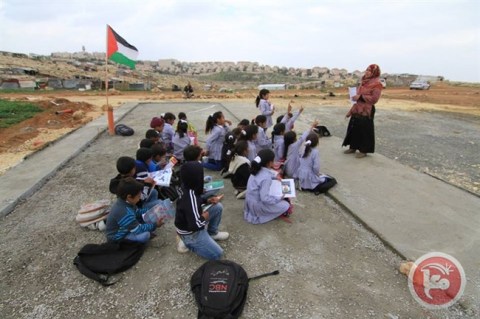


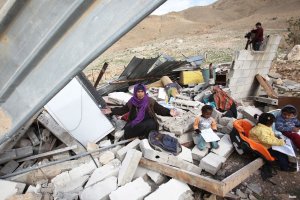 Over 400 Palestinians in the occupied West Bank have been displaced due to Israeli demolitions during the first six weeks of, this year, a senior UN official said, Wednesday.
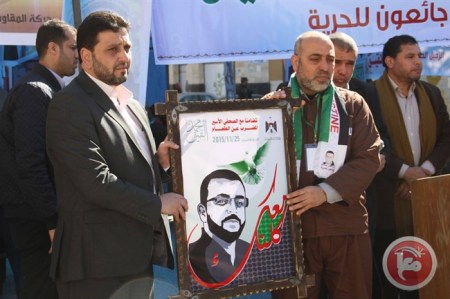 Birzeit, Ramallah, Occupied Palestine – Birzeit University administration, Workers’ Union, and students organized a sit-in in solidarity with its former student and head of students council, Journalist Muhammad Al-Qiq, who has been on hunger strike since November 25 against his imprisonment without charges or trial.
 I don’t know who the “prominent Israeli” Trump spoke with is. As you can see from the video above, he doesn’t name the person. But I would like to suggest to Donald Trump that he get a copy of the 2011 book Palestine in Israel School Books: Ideology and Propaganda in Education, by Nurit Peled-Elhanan, for in this book he might learn something about the teaching of hate to children–Israeli Jewish children, that is.
 Wisam was born in a village, Misilya. It was described for the Palestine Exploration Fund (patron was Queen Victoria) by Royal Engineers’ surveyor Lieutenant Condor in 1881 as a village with ancient wells beneath it and a rounded hilltop above with extensive views north east across the great plain to Nazareth, west to Carmel, and to Jenin behind a neighbouring hill, ‘north west across a broad corn vale’.
 Aletho News
