Settler attacks intensify as Palestinians face systematic displacement
Al Mayadeen | November 24, 2025
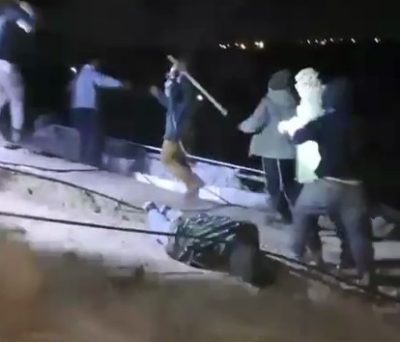
Abdullah Awad, speaking to the Financial Times, describes a reality Palestinians across the occupied West Bank know too well: armed Israeli settlers storming their land with the aim of driving them out. The attack on his family farm near Turmus Ayya, carried out by about 15 masked settlers, left his children screaming as the group smashed their home and equipment.
“The settlers had axelike sticks with nails attached. So, they intended to injure us badly or kill us. Thank God we were awake when they came, so we could move away a bit,” he said. The assault followed years of harassment, but Awad says the violence has intensified since the war on Gaza began: “There were many assaults. This was not the first, and won’t be the last . . . but since the start of the war [in Gaza], they have become more violent. The situation has changed.”
Escalating campaign of settler aggression
Across the West Bank, Palestinians are facing an orchestrated campaign to terrorize communities and seize land. Settlers have attacked farmers, burned property, and raided villages from the northern hills to the southern plains. Videos of settlers beating Palestinians, including one incident in which a masked settler clubbed a woman unconscious, reflect a growing sense of impunity.
Political analyst Ibrahim Dalalsha told FT the pattern is unmistakable, “The settlers are totally emboldened, and the attacks are spreading, in the north, centre and south [of the West Bank]… This time they are really going deep inside.”
Targeting the olive harvest, the backbone of Palestinian rural life
The olive harvest, which sustains thousands of Palestinian families, has become an annual target for settler groups seeking to disrupt livelihoods and claim new territory. This season, attacks have soared. Settlers have torched a mosque in Deir Istiya, burned cars and homes near Beit Lahm, and even stormed an industrial area close to Beit Lid.
According to UN OCHA figures, more than 260 settler assaults resulting in injuries or property destruction were recorded in October, the highest monthly total since monitoring began nearly two decades ago.
Israeli condemnations ring hollow as impunity deepens
Israeli leaders have issued belated statements condemning settler actions, but on the ground, Palestinians say nothing has changed. The army dismantled a single illegal outpost, an exception so rare it drew international attention, while settlers continue attacking communities without consequence.
The settlers who burned the Deir Istiya mosque left graffiti stating: “We’re not afraid of Avi Bluth.”
Their message was aimed at the Israeli general responsible for West Bank operations, a taunt conveying how little fear violent settlers have of the regime’s security forces.
Rights group Yesh Din reports that 94% of settler violence cases were closed without charges in the 18 years before the war on Gaza. Palestinian officials say the situation has only worsened, with the military frequently standing aside, or acting in coordination with settlers during attacks.
Dalalsha said, “In the past, when there were attacks, there were investigations. Palestinians viewed these as a sham. But at least there was a process. These days, we do not hear of anything.”
Forced displacement as policy
Settlement expansion, illegal under international law, has accelerated at a pace Palestinian rights groups describe as intentional and strategic. Reports indicate that since the start of the war on Gaza in 2023, 44 Palestinian communities have been forcibly pushed from their lands through settler assaults combined with military restrictions.
Yair Dvir of B’Tselem put it bluntly, “When you look at what is happening, there is an order to [the attacks] . . . It’s not just individuals and settlers. They are backed by the Israeli system. There is a very clear goal, which is to forcibly displace the Palestinians and force them into the big cities.”
Daily terror in towns under siege
In Sinjil, a town outside Ramallah, a newly built settler outpost has triggered relentless harassment for Palestinians. Mayor Moataz Tawafsha told the FT: “There is no day without an attack. They steal tractors, burn stuff that belongs to the farmers, prevent farmers from reaching their land. Every day. They never stop.”
Near Turmus Ayya, settlers have placed a metal cabin and tent on a Palestinian building left half-finished and raised an Israeli flag above it, a symbolic claim over land that locals have farmed for generations. The new presence has cut Palestinians off from hundreds of hectares of farmland, including thousands of olive trees.
The mayor, Lafi Adeeb Shalabi, says the aim is clear, “They are trying to destroy the history of Palestine . . . This land belonged to our families, to our great great-grandfathers,” he said. “And when we try to defend it, they say we are terrorists.”
A systematic drive to empty Palestinian land
Testimonies from across the West Bank point to a coordinated effort to dispossess Palestinian communities: settlers advancing deeper into Palestinian areas, soldiers restricting movement, homes and farms burned, and entire communities uprooted.
What was once seasonal harassment has evolved into a sustained campaign of displacement.
Airbnb sued in France for rentals in occupied West Bank
MEMO | November 4, 2025
The Association of Jurists for the Respect of International Law (JURDI) has sued Airbnb in France for listing properties in Palestinian territories occupied by Israel in the West Bank, the BFMTV broadcaster said Tuesday, Anadolu reports.
JURDI, a non-profit group in France that advocates for international law regarding the Israeli-Palestine conflict, accuses Airbnb of supporting war crimes by listing the properties in occupied territories in the West Bank. It is asking the court to order the company to remove listings in Israeli settlements.
“By offering these accommodations, Airbnb contributes to the normalization and perpetuation of the colonial regime, by providing financial resources to settlers and legitimizing their presence,” JURDI said in its lawsuit, excerpts of which were seen by BFMTV.
Attorney Helene Massin-Trachez, who is leading the case, said French law prohibits offering contracts that violate public order, arguing that Airbnb was doing exactly that by promoting unlawful rental agreements to clients based in France.
A preliminary hearing has been scheduled for Jan. 13, and if the court rules in JURDI’s favor, Airbnb will have eight days to comply before facing a €5,000 ($5,740) fine for each day of delay.
The company defended its actions when contacted by BFMTV, denying it profits from the international situation and vowed to remain committed to addressing each of the situations “with the greatest care.”
The French Human Rights League (LDH) filed a complaint against Airbnb and Booking.com last month for listing properties in Israeli settlements in Palestinian territories.
The complaint accuses those companies of complicity and aggravated concealment of war crimes, underlining that the platforms promote “occupation tourism” by offering listings in Israeli settlements.
Israel Issues Demolition Orders to Clear Path for Colonial Road
IMEMC | October 24, 2025
Israeli occupation authorities issued demolition orders on Thursday targeting large industrial structures at the entrance of Anata, northeast of occupied Jerusalem in the West Bank.
According to Jerusalem Governorate advisor Marouf Al-Refa’ey, Israeli forces stormed the town’s entrance and distributed demolition notices affecting metal workshops, furniture factories, and storage units.
He stated that the move is part of a long-standing plan to construct a road, traffic circle, and bridge connecting the Anata junction to the Hizma military roadblock.
This infrastructure is linked to the so-called “Greater Jerusalem” scheme and the colonial E1 plan.
Al-Refa’ey emphasized that Israeli authorities are systematically eliminating Palestinian presence along the path of this project. Demolitions in the area have been repeatedly carried out under various pretexts, including lack of permits or proximity to the illegal separation wall.
He warned that the developments at Anata’s entrance and along Az-Za’ayyem Road are part of a broader plan to establish a segregated road system. The goal is to bar Palestinians from using Abu George Road, which leads to the Jerusalem–Jericho highway and is reserved exclusively for illegal paramilitary Israeli colonizers.
In contrast, the Anata/Az-Za’ayyem entrance would be restricted to Palestinian traffic only, connecting Anata, Az-Za’ayyem, and the Hizma checkpoint roundabout.
Soldiers, Settlers Injure 20 Palestinians in Beita

International Solidarity Movement | October 11, 2025
October 10 was the opening of the Zaytoun2025 olive harvest campaign. Here’s a wrap-up of the events:
Beita, South Nablus
About one hundred farmers joined by some 60 Palestinian and solidarity activists, were attacked by armed Israeli citizens and soldiers, near a recently established Israeli settlement in the Jabal Qamas area. The soldiers both ignored the attacks on the farmers and used violence themselves to try and repel the harvesters from their lands, and ignored the assault of Palestinians by the Israeli civilians, and therefore enabling them. The soldiers used tear-gas concussion grenades and physical violence, while the Israeli civilians attacked harvesters with baton blows, stone throwing and by shooting live ammunition.
- 20 injuries were recorded. 11 of the injured Palestinians were evacuated to the Rafidia hospital in Nablus. In addition, one solidarity activist was evacuated to the Belinson hospital after Israeli civilians assaulted her with batons and broke her arm.
- One of the Palestinians suffered a gunshot wound after being shot by an Israeli civilian.
- Three of those injured are journalists: Wahaj Bani Mufleh, Saja al-Alami and Jaafar Astaya, whose car is one of those torched.
- Eight cars were torched by the Israeli civilians.
- An ambulance was attacked and flipped over. An attempt to torch it as well was foiled by Palestinians who came to the crew’s rescue.
Jorish and Aqraba, South-East Nablus
Israeli civilians armed with batons prevented farmers from the two villages accompanied by solidarity activists from accessing their lands in the Wad Issa agricultural area.
Duma, Sout-East Nablus
Israeli soldiers prevented farmers from harvesting their olives in the Houma and Khallet al-Hassad areas, asserting access to these lands requires security coordination with Israeli authorities. The Houma area is in Area B.
Yanoun, East Nablus
Israeli civilians expelled farmers and stole their harvested olives.
Deir Istia, North Salfeet
Israeli civilians harassed harvesters in an attempt to prevent them from accessing their lands near the Yaqir settlement.
Kufer Thulth, East Qalqilya
Settlers attacked harvesters and shepherds, killing several goats.
Farata, East Qalqilya
Israeli civilians shot at farmers harvesting olive with live fire in the presence of Israeli soldiers, who did not intervene. Both the soldiers and Israeli civilians then continued to raid the village, stop residents in the street and question them.
Kobar, North Ramallah
Israeli forces arrested harvesters in their lands near the village.
US deploys abortion law against Israel critics who picketed synagogue
RT | October 1, 2025
The US Justice Department has filed a civil lawsuit against several anti-Israeli protesters, using a law historically applied to protect women entering abortion clinics from pro-life demonstrators.
The complaint, filed on Monday by the DOJ’s Civil Rights Division, could mark the first of more cases to come, Assistant Attorney General Harmeet Dhillon said at a press conference. She argued that the 1994 Freedom of Access to Clinic Entrances Act (FACE) was previously “weaponized” against pro-life activists, while those disrupting religious practices were not targeted.
The case stems from a November 2024 incident in West Orange, New Jersey. Congregation Ohr Torah synagogue was hosting a real estate fair promoting the sale of homes in Jewish settlements in the occupied West Bank. The DOJ maintains that it was “a religious event centered on the Jewish obligation to live in the Land of Israel.”
Around 50 pro-Palestinian demonstrators staged a protest outside, which Dhillon characterized as a “mob.” An altercation broke out involving organizer Moshe Glick and his associate, David Silberberg. The complaint claims that one protester blasted a vuvuzela horn inches from Glick’s ear, an action prosecutors say amounted to a “physical attack” due to potential hearing damage.
Local media reported in February that Glick and Silberberg were charged in connection with the brawl after Glick allegedly pepper-sprayed a protester and struck his head with a metal flashlight. The DOJ complaint, however, described these actions as self-defense. One of the named defendants is accused of choking Silberberg and tackling him to the ground.
The fair was one of several US events promoting settlement property sales that drew pro-Palestinian protests as Israel pressed its military operation in Gaza. Jewish settlements in occupied territories are considered illegal under international law and remain a flashpoint in the broader Middle East conflict.
Enforcement of the FACE Act was reportedly scaled back early in US President Donald Trump’s term in office. In June, the House Judiciary Committee considered a bill introduced this year by Representative Chip Roy to repeal the measure entirely.
UN blacklist expands to 158 firms over Israeli settlement ties
Al Mayadeen | September 27, 2025
The United Nations has expanded its blacklist of companies linked to Israeli settlements in the occupied West Bank, adding 68 firms from 11 countries accused of contributing to violations of Palestinian human rights.
The updated “database of companies,” released Friday by the UN human rights office, now includes 158 businesses, most of them Israeli. Others are headquartered in the United States, Canada, China, Britain, France, Germany, Spain, Portugal, the Netherlands, and Luxembourg.
The list highlights firms engaged in activities deemed supportive of settlement expansion, which much of the international community considers illegal under international law. These include suppliers of construction materials, heavy equipment vendors, and providers of financial, security, and travel services.
Among the latest additions are German building materials giant Heidelberg Materials, Portuguese rail systems provider Steconfer, and Spanish engineering firm Ineco. US-based Expedia Group, Booking Holdings Inc., and Airbnb, Inc. also remain on the list.
First update since 2023
While 68 new companies were named, seven were removed following a UN review of 215 enterprises. The delisted firms include French transport company Alstom and online travel agencies eDreams (Spain) and Opodo (Britain).
“Businesses working in contexts of conflict have a due diligence responsibility to ensure their activities do not contribute to human rights abuses,” said Ravina Shamdasani, spokesperson for the UN human rights office. “We call on businesses to take appropriate action to address the adverse human rights impacts of their activities.”
Shamdasani added that governments also bear responsibility for ensuring that corporations under their jurisdiction are not complicit in rights violations.
The newly flagged companies are concentrated in industries such as construction, real estate, mining, and quarrying. Each was notified of its inclusion and granted the right of reply.
This marks the first update to the database since 2023, when 97 companies were listed, down from 112 in the original 2020 publication. Fifteen firms, including US food conglomerate General Mills, were removed during that previous revision.
Settler arson attack on vital West Bank agricultural hub is blow to Palestinian food security
International Solidarity Movement – Palestine | September 23, 2025
The Mishtil Al-Junaidy Al-Hadith plant nursery in Deir Sharaf, a major West Bank seed distributor and the heart of the region’s agriculture, was set on fire by illegal Israeli settlers on 8 September 2025, costing the owners over three million shekels and seriously damaging the already fragile Palestinian food system.
The footage captured by security cameras shows seven masked settlers descending on the nursery at 8pm to destroy the agricultural hub. Using diesel fuel, the settlers set fire to several buildings, stole supplies, and broke the windows of the main office, destroying seeds, computers, and most importantly, invaluable data centers holding information on agricultural practices in the region, which cannot be retrieved.
The fire department was informed immediately, but the Israeli authorities didn’t permit the firemen to reach the site for 45 minutes, which uninterrupted would only be a ten minute drive from the station in nearby Nablus. The attack was caught on camera, and the Israeli military, Shin Bet and Civil administration all arrived, but – just like past attacks – no updates on the investigation have been provided and no arrests have been made.
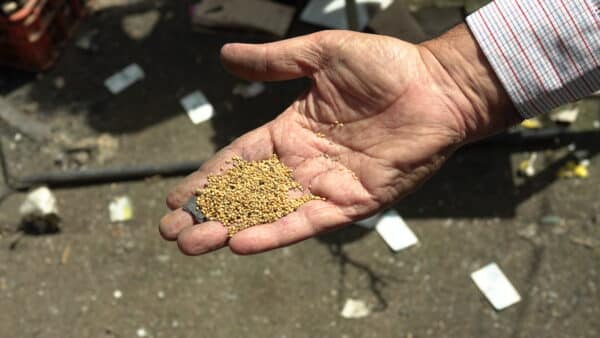
Sameer Al Junaidy, one of the four Al Junaidy brothers who owns and runs the nursery, says he doesn’t hire security because he would rather take damage to the property than put a Palestinian’s life at risk. Unarmed guards would be powerless against armed settlers, who regularly assault and murder local Palestinians.
The nursery is situated next to the illegal Shavei Shomron settlement, one of the West Bank’s first illegal settlements built in 1977 on land seized from Deir Sharaf and An-Naqura. Just before October 7, 2023, illegal settlers established an outpost on the other side of the nursery and have been intent on building a road that goes through it to connect them.
Since then, settlers have attacked the nursery at least five times. Recently, they set fire to bulldozers, a truck, and a forklift owned by the nursery. Settlers have also burned down olive trees, destroyed water pipes, and attacked Palestinians in neighboring communities. Footage from previous attacks that contains the assailants’ faces captured by Al Junaidy has been handed over to police, but no arrests were ever made.
Al Junaidy says that the Israeli Civil Administration told him that they understand how important the center is to West Bank agriculture and communities but they said: “There are two policies on the ground”, and some in the Israeli government want to see the assailants go unpunished. The nursery is also adjacent to Kedumin, the settlement where Israeli far-right Finance Minister Benzamar Smotrich lives, which is in the same council of settlements as Shavei Shomron.
The attack is a devasting blow to an already precarious food system in the besieged territory, bound to raise costs for local farmers who buy their seeds through the company. The nursery produces 80% of the West Bank’s olive tree saplings and all of its almond tree saplings, two crops central to Palestinian food security.
The destruction of over forty years of data could have far reaching impacts on agriculture across the West Bank. The data which has been lost included detailed information on how to best cultivate their thousands of seeds, meaning without this data, farmers may not know the ideal way to cultivate the crops. It is also used by agricultural engineering students at universities across Palestine.
Assaults on the West Bank’s economy and food systems through attacks like this one on the Al Junaidy Nursery are just one tactic in the occupiers’ overall project to ethnically cleanse the territory of all of its Palestinian inhabitants by disconnecting them from their land, their traditions, and the resources they need to survive.
Israeli court issues mass eviction orders against Palestinians in Jerusalem’s Silwan neighborhood
Palestinian Information Center – September 22, 2025
OCCUPIED JERUSALEM – Israeli police forces have ordered dozens of Palestinian families in the Baten al-Hawa area of Silwan, south of the al-Aqsa Mosque, in Occupied Jerusalem to evacuate their homes, threatening the displacement of nearly 300 people in favor of settler groups.
Jerusalemite sources said on Monday that residents of 37 apartments now face forced eviction under a settlement scheme pushed by the “Ateret Cohanim” association, which claims ownership of five dunums and 200 square meters of land in Baten al-Hawa, based on allegations dating back to 1881.
The plan targets between 30 and 35 residential buildings housing 80 families, roughly 600 people, who have lived in the neighborhood for decades with official documentation proving residency.
Zuheir Rajabi, head of the Baten al-Hawa neighborhood committee in Silwan, said 250 residents living in 26 homes received new eviction orders on Sunday from the Israeli central court, aimed at seizing their properties in favor of settlers.
He noted that an additional 11 apartments in three adjacent buildings belonging to the Rajabi families, Yaqub, Nidal, and Fathi, are now under immediate threat, putting about 60 people at risk.
Rajabi condemned the measures as “forced displacement and ethnic cleansing of Jerusalemites to replace them with settlers,” vowing that residents “will remain steadfast in their homes until the very last moment.”
The Basbus family also received eviction notices for their homes, which shelter 30 people in Baten al-Hawa.
Family member Bilal Basbus said they have been engaged in a “battle for existence” for years against demolition and eviction orders targeting their homes overlooking the al-Aqsa Mosque.
He stressed that despite enormous challenges, the family refuses to abandon their homes or comply with occupation orders.
These latest eviction notices are part of a wider Judaization campaign aimed at driving Palestinians out of Jerusalem to make way for settlement groups.
Notably, the Basbus family’s grandparents were expelled from the village of al-Dawayima in 1948 by Zionist militias, and today, settler organizations are pursuing their descendants to displace them once again from their homes in Silwan.
URGENT: A family standing against Israeli army and settler violence, and imminent displacement in the Jordan Valley
International Solidarity Movement – Palestine | September 21, 2025
In the hills of the northern Jordan Valley, one Palestinian family is facing the threat of being displaced from their land. On September 20, the Israeli army issued them a final eviction order — threatening to destroy their tents, farming shelters, animals, and everything they depend on for survival.
This family is the last to remain in their community. Others have already been forced to leave in recent years by Israeli colonisers, who confiscated or destroyed their homes and belongings. Their struggle shows how army actions and settler violence combine to push Palestinians from their land.
Palestinian families’ daily life under threat
The family makes a living from shepherding. With more than 200 sheep and goats, their livelihood depends on access to open grazing. Today, this way of life is nearly impossible. Settlers attack shepherds, block grazing land, and steal animals. To keep their herds alive, the family must now buy fodder, which is costly and reduces the quality of the products they sell.
Two weeks ago, settlers poisoned the family’s water supply. Like all Palestinians in the Jordan Valley, they are not connected to the water network and depend on cisterns. Without safe water, their health and their animals’ survival are in danger. They also live without electricity, relying only on solar panels for minimal power.
In recent weeks, the army has raided the land and their home several times. Soldiers ordered demolitions of shelters, claiming the area is a “military zone.” Family members have been injured multiple times during these raids.
Meanwhile, settlers are expanding, with new outposts being built nearby and existing settlements growing closer. This increases the pressure on the family to leave.
Background on Jordan Valley
The northern Jordan Valley lies in Area C, which makes up over 60% of the occupied West Bank and remains under full Israeli military control. Israel imposes severe restrictions on Palestinians living there on building, farming, and access to basic services. The army often declares Palestinian areas as “firing zones” or “closed military zones,” using these designations to demolish homes, stop grazing, and force families to move. In practice, this clears space for settlements while displacing Palestinians.
For decades, Israel has uprooted entire communities across the Jordan Valley under these policies. Where once there were villages with families, schools, and farmland, only scattered households remain.
What can you do?
Contact your governments and demand they put pressure on Israel to stop its ethnic cleansing campaign in the Jordan Valley and elsewhere. They must:
1 Cancel the eviction order against the families immediately.
2 Stop settler violence such as poisoning, theft, intimidation, and ensure protection of Palestinian civilians as required under international law.
3 End the use of “military zones” as a pretext for displacement
4 Provide access to basic rights: water, electricity, education, and security.
International communities, media, and civil society — it’s time to raise awareness and take action.
This is not only about one family. It is part of a larger effort to remove Palestinians from the Jordan Valley and Area C of the West Bank. This family now stands almost alone, holding on to their land and way of life. If they are displaced, another piece of Palestinian presence in the Jordan Valley will be erased.
Their story must be told and shared. The world needs to see what is happening and act before yet another community disappears.
Belgium announces sanctions against Israel
RT | September 2, 2025
Belgium will recognize Palestinian statehood and impose sanctions on Israel over its war in Gaza, the country’s Foreign Ministry has announced.
The Western European country, which hosts the headquarters of both the EU and NATO, unveiled the measures on Tuesday as pressure grows on Israel to reach a ceasefire with Hamas and allow more humanitarian aid into the besieged Palestinian enclave.
In light of the “humanitarian tragedy in Gaza,” Belgium has decided to “increase pressure on the Israeli government and Hamas terrorists,” Belgian Foreign Minister Maxime Prevot wrote on X. “This is not about punishing the Israeli people, but about ensuring that their government respects international and humanitarian law and takes action to change the situation on the ground,” he added.
The sanctions include a ban on imports of products from Jewish settlements in the West Bank and restrictions on consular assistance for Belgian nationals living in settlements considered illegal under international law.
Brussels will also review procurement involving Israeli companies and blacklist “two extremist Israeli ministers, several violent settlers, and Hamas leaders,” Prevot said. He added that Belgium would push for the suspension of the EU’s trade agreement with Israel.
Several countries, including France, plan to recognize Palestine at the UN General Assembly later this month, drawing strong criticism from Israel.
Last month, Israeli Prime Minister Benjamin Netanyahu accused France and Australia of failing to tackle anti-Semitism, arguing that recognition of Palestine would only embolden Hamas.
Israel has rejected UN warnings of famine in Gaza, where more than 63,500 people have been killed since October 2023, according to local health authorities. West Jerusalem has pledged to allow the delivery of aid, but not through distribution points it claims are controlled by Hamas.
Armed Settler Militia Terrorizes Ibziq, Assaults ISM Volunteers
International Solidarity Movement | August 18, 2025
On the night of August 11th, two ISM volunteers were assaulted, beaten, and robbed by a mob of at least eight armed settlers dressed in full military-style uniforms in the rural shepherding village of Ibziq. The volunteers were engaged in protective presence, which includes documenting illegal intrusions into Palestinian communities and recording and opposing intimidation, threats, and attacks led by Zionist militias against Palestinians across the Jordan Valley.
The settler militia entered the remote village around 7PM in dune buggy-style military vehicles, wearing helmets and balaclavas, and carrying assault rifles. The militia canvassed the village for over an hour, trespassing into community school grounds and upon critical water infrastructure before moving on to block Palestinian traffic and terrorize local residents with threats of arson and theft.
When the settler militia directly entered a Palestinian family’s home, the ISM volunteers—both U.S. citizens, one residing in Jerusalem and the other in Liverpool, UK—intervened by approaching the settlers and stating the militia were illegally encroaching upon Palestinian lands, violating the human rights of Palestinians, and contravening international law.
Although the volunteers had their hands up to indicate that they were unarmed and nonviolent, the militia members pinned one ISM volunteer to the ground and he was repeatedly beaten. Amidst the thrashing, settlers also kicked sand and dirt into the volunteer’s face and eyes multiple times. When the second volunteer began filming, several members of the settler militia turned their rifles on him.
The ISM volunteer recording was held at gunpoint, ordered to his knees, and told he would be shot if he did not obey commands. The militia deliberately aimed laser targeting sights at the volunteer’s genitals, before physically forcing him to the ground and wrenching his arm wrenched behind his back. While held at gunpoint, he was elbowed in the back of the head after his phone was stolen.
Before leaving, the settler militia issued a final direct threat to the Palestinian family, shouting that the village would be attacked and burned down if they did not leave. According to one member of the family, the settlers “threatened to burn us alive.” Both volunteers were evacuated by a Red Crescent ambulance and treated at a nearby hospital in Tubas. Each were later released in stable condition and subsequently returned to Ibziq to resume on-the-ground protective presence with ISM.
According to the local community, the attack was perpetrated by a settler militia rather than active-duty military. However, these settler militias operate alongside and as part of the army, particularly when settlers are in uniform wielding the power and mandate of the state. In Ibziq, the active duty military has also collaborated with settlers on a number of attacks over the last month.
Notably, this assault is part of a broader wave of settler colonial violence and militia aggression sweeping across the occupied West Bank. At present, Palestinian and Bedouin communities are being systematically harassed, attacked, arrested, displaced, and murdered. Settler militia operatives are operating with the full knowledge—and support and protection—of the Israeli Occupation Forces (IOF) and Zionist apartheid regime. In many cases, including this one, settler militia are both afforded impunity and indistinguishable from official IOF soldiers and army units. They are given military vehicles, surveillance equipment, and weapons to collectively intimidate, terrorize, and dispossess Palestinian communities.
Markedly, this is neither an isolated case nor a recent phenomena. The occupied West Bank is however seeing a sharp escalation in racialized hostilities and frontier violence, where armed settlers, emboldened by Israeli policy and army support, are carrying out coordinated attacks on Palestinian life and land. Bedouin communities in particular face systemic racism, militarized demolitions, nighttime raids, and arson attacks, which are all part of a settler colonial project aimed at annexation and the elimination of Palestinian heritage, history, and presence.
ISM calls on international media, human rights organizations, and members of civil society to publicly denounce and take concrete action against the violence and crimes against humanity being committed by the Israeli apartheid regime. The settler militia attack in Ibziq is but one of countless examples of how Palestinian civilians and entire villages continue to be subjected to an illegal occupation, systemic terror, compounding trauma, and an intensifying colonial war that is being waged by the Zionist movement.
Zionism without borders: Annexation and normalization as tools of Arab subjugation
By Mohamad Hasan Sweidan | The Cradle | August 1, 2025
Four weeks after Israel signed the US-brokered Abraham Accords with the UAE and Bahrain on 15 September 2020, Tel Aviv’s Higher Planning Council approved 4,948 new settler units in the occupied West Bank. No public fanfare.
No tanks rolled in – just signatures authorizing another layer of occupation. The first wave of expansion advanced quietly, legitimized by the language of “peace.”
This sequencing deliberately reflects the core logic of Zionist expansion: Normalize when the region submits, colonize when the world blinks.
Where possible, the occupation state’s army conquers land directly. Where resistance or scrutiny makes that unfeasible, the occupation government builds a web of security pacts, trade routes, and intelligence partnerships that extend its reach without a single uniformed soldier. This dual formula, territorial conquest and hegemonic integration, has underpinned Israeli strategy since 1967, and today stretches unimpeded from the Jordan Valley to the Atlantic coast.
Two paths, one destination
“Greater Israel” represents the settler-colonial ambition to annex, settle, and absorb land across historic Palestine and beyond. It is rooted in the Zionist vision of Jewish dominion over the so-called “biblical Land of Israel.” In contrast, “Great Israel” describes the imperial design to dominate the surrounding region through proxies, economic leverage, and security alignments.
Where occupation is costly, Tel Aviv turns to influence. Through deals, destabilization, or coercion, it reshapes the sovereignty of its neighbors. Greater Israel devours land. Great Israel neutralizes independence. Together, they are one project.
Zionist literature makes this plain. Ze’ev Jabotinsky, founder of Revisionist Zionism, demanded sovereignty over all of Mandatory Palestine and Transjordan – “Greater Israel on both sides of the Jordan River” – and rejected compromise with Arabs. In The Iron Wall (1923), he declared that only an unyielding Jewish force could compel Arab acquiescence:
“Zionist colonization, even the most restricted, must either be terminated or carried out in defiance of the will of the native population.”
The occupation state’s first prime minister and Labor Zionist leader, David Ben-Gurion, publicly accepted a partition plan in 1937, but privately described it as “not the end but the beginning.” In a letter to his son, he wrote that a Jewish state on part of the land would strengthen the Zionist project and serve as a platform to “redeem the entire country.” In a June 1938 meeting of the Jewish Agency executive, he said:
“After the formation of a large army … we shall abolish partition and expand to the whole of Palestine.”
Early Zionist leaders did not view borders as final, but as phases. During its first two decades, Israel lacked the military strength or western backing to expand beyond its 1949 borders. Direct confrontation with Arab states risked catastrophe. Instead, Tel Aviv pioneered a subtler doctrine of peripheral infiltration.
Through the “periphery doctrine,” it cultivated covert ties with non-Arab states and oppressed minorities – Shah-era Iran, Turkiye, Kurdish groups in Iraq, and Christian separatists in Sudan. This strategy sowed chaos among Israel’s Arab rivals while embedding Israeli influence in strategic corners of West Asia and Africa. Most recently, the occupation state has made overtures to Druze communities in southern Syria, seeking to replicate this strategy amid renewed instability.
The corridor to colonization
Israel’s integration into the Arab world is now deeper than ever before. Through normalization, Tel Aviv has converted former enemies into partners economically, diplomatically, and militarily. While Egypt and Jordan first formalized ties through Camp David and Wadi Araba, it was the Abraham Accords that opened the floodgates. What followed was a deluge of tech deals, weapons transfers, and commercial partnerships linking the occupation state to the Persian Gulf.
By 2023, Israel’s trade with the UAE had reached $3 billion annually. That figure rose by 11 percent the following year, even as Israel waged genocide in Gaza. Israeli Consul General Liron Zaslansky described trade relations between Abu Dhabi and Israel as “growing, so that we ended 2024 at $3.24 billion, excluding software and services.”
In 2022, Morocco purchased $500 million worth of Israeli Barak MX air defense systems. Rabat also partnered with BlueBird, an Israeli drone firm, to become the first UAV manufacturer in West Asia and North Africa.
This has created a “corridor of influence” that grants Tel Aviv access to new markets, air and sea routes, and intelligence spaces stretching from Casablanca to Khor Fakkan.
On the ground, the war continues
While trade flourishes, colonization accelerates. In 2023, Israeli Prime Minister Benjamin Netanyahu’s ultranationalist government approved 12,855 settler homes – a record for any six-month period. More than 700,000 settlers now occupy the West Bank and East Jerusalem. That figure has grown sevenfold since the early 1990s.
In May 2025, Defense Minister Israel Katz confirmed cabinet approval for the construction of 22 new West Bank settlements, including multiple previously unauthorized outposts. Katz framed the move as necessary to “strengthen our hold on Judea and Samaria” and to “prevent the establishment of a Palestinian state.”
These settlements are not arbitrary. They are connected by Jewish-only bypass roads, fortified by the occupation army, and strategically designed to fragment the occupied West Bank into isolated Palestinian enclaves. This is de facto annexation, defined by a matrix of irreversible facts that eliminates the territorial basis for any future Palestinian state, while avoiding the international fallout of formal annexation.
The “logic” of expansion has also spilled beyond Palestine. In Syria, Tel Aviv now occupies 250 square kilometers across Quneitra, Rural Damascus, and Deraa – territory seized during the collapse of former Syrian president Bashar al-Assad’s government by Al-Qaeda rooted terrorists – Hayat Tahrir al-Sham (HTS) – who now occupy the seat of power in Damascus. HTS was under the leadership of former ISIS chief Abu Mohammad al-Julani. Upon ousting Assad, Julani began using his government name, Ahmad al-Sharaa, and became the de facto president of Syria.
In Lebanon, Israeli forces maintain a presence over 30–40 square kilometers, including Shebaa Farms, Kfar Shuba Hills, and the northern half of Ghajar. Additional outposts and buffer zones stretch along the so-called Blue Line.
Occupation rebranded
Israel’s expansion today is no longer confined to bulldozers and soldiers; it is mediated through trade, tech, and treaties. But make no mistake: normalization has not replaced occupation. It has enabled and accelerated it.
Every Emirati deal, every Moroccan drone line, every Bahraini handshake fuels Tel Aviv’s capacity to deepen its military presence and Judaize more land. Plans are underway to double the number of settlers in the Golan Heights and to deploy armored units along the demilitarized zone.
The ripple effects are already destabilizing the region. Egypt has begun constructing a concrete wall on its border with Gaza to prepare for mass displacement or military spillover. Jordan faces existential peril in the Jordan Valley, where settler expansion is displacing Bedouin communities and draining natural aquifers. Syria and Lebanon remain hemmed in by fortified Israeli positions, with both countries facing increasing pressure from Washington to normalize relations.
Greater Israel devours Arab land. Great Israel colonizes Arab decision-making. One swallows borders. The other swallows sovereignty.
Featured Video

Iran’s Next Strike May Not Explode. It Could Shut You Down
or go to
Aletho News Archives – Video-Images
From the Archive
Zionism’s Violent Legacy
By Donald Neff | Washington Report On Middle East Affairs | January 1996
On January 4, 1948, Jewish terrorists drove a truck loaded with explosives into the center of the all Arab city of Jaffa and detonated it, killing 26 and wounding around 100 Palestinian men, women and children.[1] The attack was the work of the Irgun Zvai Leumi – the “National Military Organization,” also known by the Hebrew letters Etzel – the largest Jewish terrorist group in Palestine. The Irgun was headed by Revisionist Zionist Menachem Begin and had been killing and maiming Arabs, Britons and even Jews for the previous ten years in its efforts to establish a Jewish state.
This terror campaign meant that at the core of Revisionist Zionism there existed a philosophical embrace of violence. … continue
Blog Roll
 Aletho News
- Trump’s Iran war is on an Israeli leash
- Saudi oil boss issues global supply warning
- Riyadh Says Its Oil System Is Intact. The Numbers Say Otherwise.
- Trump and Netanyahu Want to “Finish the Job” on Iran
- US ‘one-sided dictation’ not Iran’s beliefs makes rational talks impossible: Baghaei
- Iran’s Next Strike May Not Explode. It Could Shut You Down /Col Doug Macgregor
- Iran: US political targets legitimate if assassinations return
- Iraq shuts key border crossing with Iran under US pressure: Report
- Undersea Internet cables could be targeted in retaliation for attacks on Iran: IRGC deputy chief
- EU sending ‘biased’ observers to interfere in Serbian election – president
- If Americans Knew
- The Israel Lobby’s Changing Fortunes
- AIPAC has become such a political liability that it’s shifting to a more “nimble” approach to buying politicians
- At least 160 Israeli settler attacks in 2 weeks
- Will Gaza’s Ancient Christian Community Disappear Forever?
- Israel’s vision of regional security rests on keeping Arab states weak
- Heidi Levine recounts how Palestinian youths helped save her in settler attack
- DAILY UPDATE: Latest essential news on Palestine, Israel, & region
- Trump’s Intensifying Sabotage of the ICC, for Israel’s Sake
- Israeli military detain US and UK volunteers in West Bank including Democratic NY politician Brad Lander
- Americans at National Conservatism Conference held in Israel this year criticize Israel
- No Tricks Zone
- E-Cars Reduce CO2 Emissions By Only 41% Compared To Internal Combustion Engine Vehicles
- Predictions Made By Renowned Climate Professor Over Past Decades Have Been Proven To Be Poor
- New Study Suggests Large Regions Of The Pacific Ocean Have Been Cooling For The Last 80 Years
- Germany’s Green Energy Debacle: High Energy Costs Force Kahla Porzellan to Close After 182 Years!
- New Study: 50 Years Of The Most Aggressive ‘Net Zero’ Policies Can Only Affect The Global Climate By 0.03°C
- US September “Heat” Was No Record…Many Records Set Decades Ago
- Latest European Green Energy Debacle; Portugal’s Largest Flagship Solar Park Insolvent!
- Green Energy Debacle: German Expert Professor Fritz Vahrenholt Warns Of Severe Economic And Social Consequences
- Two More Paleo Reconstructions Affirm Meters-Higher Sea Levels Across Ireland, Brazil 7000-6000 Years Ago
- New Study: Earth And Venus Surface Warmth Largely Explained By Convection And Lapse Rate, Not CO2 Or Radiation

